Preserving World’s Biodiversity: Negotiations Convene at FAO Headquarters

Biodiversity, Civil Society, Climate Change, Conferences, Economy & Trade, Environment, Featured, Food & Agriculture, Gender, Global, Headlines, Indigenous Rights, Natural Resources, TerraViva United Nations
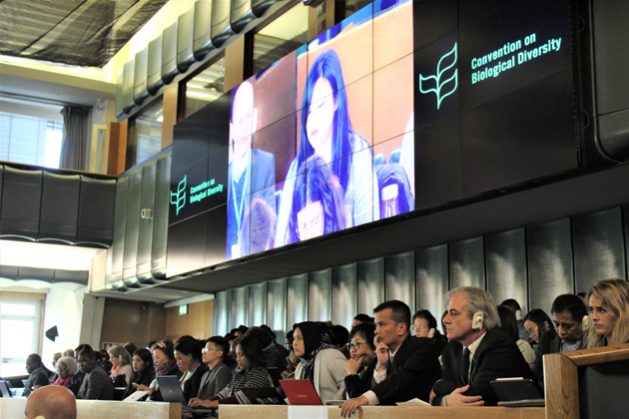
Delegates gather at FAO headquarters to advance negotiations of the post-2020 global biodiversity framework. Credit: Maged Srour/IPS

ROME, Feb 24 2020 (IPS) – “The world out there is watching and waiting for results,” Elizabeth Maruma Mrema warns while talking to IPS regarding the preservation of biodiversity of our planet.


The acting Executive Secretary of the Secretariat of the Convention on Biological Diversity, is referring to a worrying report[1] released by the Food and Agriculture Organization (FAO) which paints a grim picture of the planet.

“Many key components of biodiversity for food and agriculture at genetic, species and ecosystem levels are in decline and evidence suggests that the proportion of livestock breeds at risk of extinction is increasing,” the report says.

The FAO also warns that “nearly a third of fish stocks are overfished, and a third of freshwater fish species assessed are considered threatened”.

These are just some of the critical issues being debated during the open-ended working group on the post-2020 biodiversity framework. This round of negotiations is taking place at FAO headquarters from 24 to 29 February. In the run-up to October’s historic UN Biodiversity Conference, government officials, experts and activists from around the world gathered today at FAO headquarters, Rome, to forge ahead with negotiations. This round of talks was supposed to take place in Kunming, China, on the same dates. Due to the ongoing situation following the outbreak of the novel coronavirus 2019 (COVID-19), it was moved to Rome, Italy.

Background

The fourteenth meeting of the Conference of Parties (COP) to the Convention on Biological Diversity (CBD) had its meeting in Sharm el-Sheikh, Egypt, in 2018. It was here that the working group on the post-2020 global biodiversity framework was appointed. The working group’s mandate was to prepare the text of a framework that would guide the work of the Convention after the year 2020. At the working group’s first meeting held in Nairobi in August 2019, the Open-ended Working Group (WG2020) requested the Co-Chairs and the Executive Secretary to prepare a zero-draft text of the post-2020 global biodiversity framework. This framework is under consideration at its second meeting, which is currently taking place in Rome. The aim of the second meeting of the Working Group is to significantly advance the negotiation of the post-2020 global biodiversity framework, discussing the different aspects of the whole ambitious project.

‘Healthy Diets’ was among the proposed initiatives during the first day of the six-day event at FAO headquarters. The initiative emphasised the importance of ‘geographical indications’ for biodiversity, with examples and experiences from Africa and Eastern Europe. Credit: Maged Srour/IPS

Negotiations in Rome: Promoting a bi-directional approach

In the coming days, the working groups will be divided on a regional basis. They will discuss a wide variety of concerns including biodiversity, food, agriculture and fishing systems, to the importance of promoting an approach that leaves no one outside of this circuit. Civil society, the private sector, indigenous people, local communities, women and youth are all represented to create a functional framework for the whole society and at all levels. Many organisations, like Bioversity International, supported by a host of international agencies, have submitted research reports on biodiversity and food systems. It has also made representations on alternative models for access and benefit-sharing rules, practices and impacts in the Post-2020 Global Biodiversity Framework.

The voice of indigenous people

Key to the discussions is the role of indigenous people in biodiversity and Aslak Holmberg, the representative of the indigenous people, is convinced that policymakers can learn from these groups.

“There is a key message we want to share with other groups here during these negotiations,” he told IPS. “Indigenous peoples and local communities’ management of natural resources is (in fact) conserving biodiversity. (This is) because these management practices are built on a balanced relationship with the respective environment.

“Biological and cultural diversity are linked, and by this, I mean that (for indigenous communities) culture plays a fundamental role in the process of preserving biodiversity: it is in our culture to use our areas in a sustainable way. That is the message we want to share with others”.

The voice of the business sector

Representatives of the private sector too, in particular of the business world, wish to be part of the framework that will result from the negotiations and officially approved in October, in China.
Eva Zabey, Executive Director of the Business for Nature Coalition, told IPS she was grateful to the CBD secretariat for giving business and opportunity to engage and contribute to the zero draft of the post-2020 framework.

This coalition is a unique global group of influential business and conservation organisations participating in the negotiations.

“Forward-thinking businesses are starting to change the way they operate, based on their understanding of the value of nature – but this is still the exception, not the norm,” she told IPS.
“Therefore,” said Zabey, “Political leadership is needed now to transform our economic and financial systems in a way that places nature at the heart of global decision-making. It needs to create a level playing field and a stable operating environment for business.”

Zabey is looking forward to an ambitious post-2020 framework which will facilitate businesses’ involvement and create and positive “policy-business feedback loop,” she said.

Perspectives

Audrey Azoulay, United Nations Educational, Scientific and Cultural Organization (UNESCO) Director-General, perfectly summarised urgency at the negotiation.

Commenting on the global assessment report, she said: “The present generations have the responsibility to bequeath to future generations a planet that is not irreversibly damaged by human activity.”

“Our local, indigenous and scientific knowledge are proving that we have solutions and so no more excuses: we must live on earth differently”.

Zabey echoes Azouley. She said entrepreneurs are increasingly aware that the profit-sustainability ‘conflict’ is no longer feasible or conceivable.

“Companies planning on being successful in the future are starting to realise that financial performance is irrelevant on a dead planet.’

[1] http://www.fao.org/3/CA3129EN/ca3129en.pdf

 

Our Message at Davos: Water & Sanitation Are a Critical Line of Defence Against Climate Change

Civil Society, Climate Change, Development & Aid, Environment, Featured, Global, Headlines, Health, Population, Poverty & SDGs, TerraViva United Nations, Water & Sanitation

Opinion

Tim Wainwright is Chief Executive of WaterAid UK.

Credit: WaterAid/ DRIK/ Habibul Haque

LONDON, Jan 31 2020 (IPS) – There was only one topic on everyone’s lips at Davos this year – climate change. The headlines focused on the cold war between Greta Thunberg and Donald Trump, but there was much greater consensus among those gathered for the annual meeting of the World Economic Forum (WEF).


The Forum itself updated its manifesto for responsible business – with climate right at its core.

Among those calling for urgent action was WaterAid’s own president, His Royal Highness the Prince of Wales. It’s more than 30 years since he last attended Davos and, as he reminded the audience, 50 years since he made his first speech on the environment.

His message was stark, and his call to action challenging: the climate emergency requires nothing less than an overhaul of the current economy, with a new deal for people and planet.

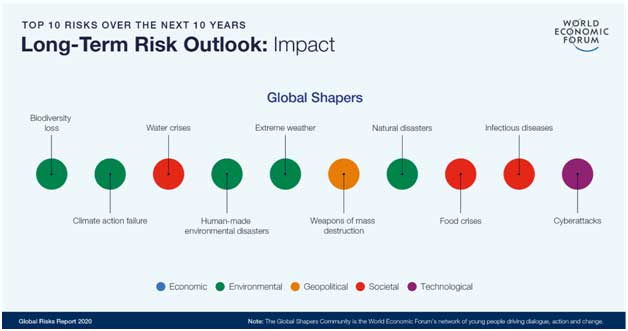
The mood is slowly shifting towards the scale of action needed, given that climate change will affect every part of the economy. This cannot be truer than for water – the WEF has ranked water crises in its top five global risks in terms of likelihood or impact every year since 2012.

Infographic showing the top 10 risks over the next 10 years, according to the World Economic Forum’s 2020 report. Credit: World Economic Forum

The climate crisis is a water crisis, and a threat multiplier

Throughout the forum I had one consistent message: for the world’s poorest, the climate crisis is a water crisis. Yes, it has long-term implications for your businesses and economies. But, first and foremost, it is a question of survival, dignity and justice, with climate change already having devastating impacts on the lives of the people who did least to cause it.

Flooding, storms and droughts, which all impact on how and if people can get clean water, are becoming more frequent and extreme, and these trends are predicted to rise as the climate continues to change. This will undermine the already precarious access to water for billions around the world.

Climate change acts as a huge threat multiplier, worsening existing barriers to these services and rolling back progress already made.

As people living in climate-vulnerable areas experience changing weather patterns, less predictable rainfall, salt water intrusion and increased exposure to disease, water and sanitation become a critical line of defence.

If your water supply comes from a shallow aquifer that fills with sea water, then you can no longer drink it. But if the person designing your water supply has thought of this threat and factored it in, perhaps by drawing on deeper aquifers, then you can carry on living in your neighbourhood.

If your toilets and sanitation systems are constructed to withstand flooding, then your community does not suffer the same level of contamination after flooding as if human waste had been spread by the high waters.

The water and sanitation sector could become a leader in climate adaptation

But we currently lack the level of public and private sector investment and innovation required to deliver the sustainable water services that would benefit poverty reduction, industry and economic development.

This is a huge blind spot for business leaders and politicians, and a missed opportunity for creating a more sustainable future.

Rather than lagging behind, the water and sanitation sector could become a leader in delivering the kind of green infrastructure, services and jobs urgently required to enable adaptation to the worst impacts of climate change.

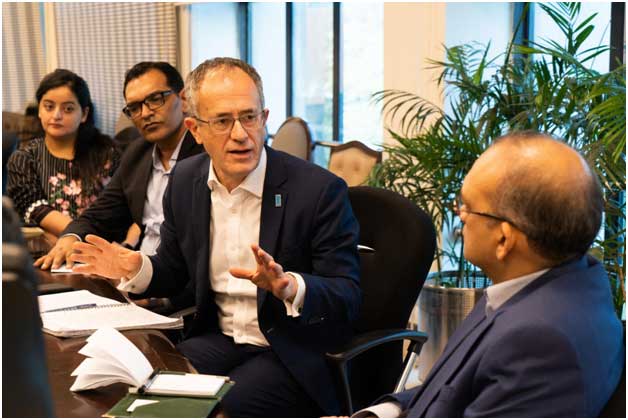
Tim Wainwright, Chief Executive of WaterAid UK, speaking with Hassan Nasir Jamy, Secretary Ministry of Climate Change, at Pakistan’s Ministry of Climate Change in Islamabad, Pakistan. Credit: WaterAid/ Sibtain Haider

Water, sanitation and hygiene are core to a sustainable future

Leaving Davos last year, I was frustrated. I felt that too few understood or discussed the impact climate change would have on the already grave state of the world’s water and sanitation, and the devastating consequences for education, health, productivity and development.

This year, I sensed a greater understanding of the interlinked challenges we face, and with that an air of urgency and proactivity. Businesses are looking for solutions – not just raising concerns.

That is why WaterAid will be one of the organisations working closely with HRH the Prince of Wales as part of his 2020 year of action.

In March, in London, we will bring together the public, private and philanthropic sectors for a high-level summit that will position water, sanitation and hygiene at the forefront of the fight against climate, and work on the solutions that will ensure a sustainable future for all.

And we will continue that work across the WaterAid federation throughout the year, including at the Commonwealth Heads of Government Meeting in Kigali in June, and at the UN Climate Change Conference, COP 26, in Glasgow in November, to help build momentum for decisive action.

In this way we hope WaterAid can play its part in shifting the global trajectory in the coming decade, resulting in a fairer world for the poorest and most marginalised people.

Read our guide Water and resilient business: the critical role of water, sanitation and hygiene in a changing climate to learn more about how businesses can take action.

  Source

Urbanization as a Path to Prosperity

Civil Society, Editors’ Choice, Environment, Featured, Global, Global Governance, Headlines, IPS UN: Inside the Glasshouse, Population, Poverty & SDGs, TerraViva United Nations

Opinion

Chris Wellisz. Credit: Porter Gifford

WASHINGTON DC, Jan 29 2020 (IPS) – Growing up in New York City in the 1970s, Edward Glaeser saw a great metropolis in decline. Crime was soaring. Garbage piled up on sidewalks as striking sanitation workers walked off the job. The city teetered on the edge of bankruptcy.


By the mid-1980s, it was clear that New York would bounce back. But it could still be a scary place; there was a triple homicide across the street from his school on the Upper West Side of Manhattan. Glaeser was nevertheless captivated by New York’s bustling street life and spent hours roaming its neighborhoods.

“It was both wonderful and terrifying, and it was hard not to be obsessed by it,” Glaeser recalls in an interview at his office at Harvard University.

Today, that sense of wonder still permeates Glaeser’s work as an urban economist. He deploys the economist’s theoretical tool kit to explore questions inspired by his youth in New York.

Why do some cities fail while others flourish? What accounts for sky-high housing costs in San Francisco? How does the growth of cities differ in rich and poor countries?

“I have always thought of myself as fundamentally a curious child,” Glaeser, 52, says. Rather than “pushing well-established literature forward,” he seeks to comprehend “something that I really don’t understand when I start out.”

While still a graduate student at the University of Chicago, Glaeser made his mark as a theorist of the benefits of agglomeration—the idea that dense and diverse cities are hothouses of innovation, energy, and creativity that fuel economic growth.

In the years since, his work has ranged across a breathtaking variety of subjects, from rent control and real estate bubbles to property rights, civil disobedience, and carbon emissions.

“For a couple decades now, Ed has been the leading thinker about the economics of place,” says Lawrence Summers, a Harvard professor who served as director of the National Economic Council under US President Barack Obama. “And the economics of urban areas are increasingly being seen as central to broad economic concerns.”

Glaeser and Summers are collaborating on a study of the hardening divide between well-educated, affluent coastal regions of the United States and islands of economic stagnation in what they call the “eastern heartland,” the interior states east of the Mississippi River.

There, in cities like Flint, Michigan, the proportion of prime-age men who aren’t working has been rising—along with rates of opioid addiction, disability, and mortality.

How can policy help? Traditionally, economists have been skeptical of the value of place-based policies like enterprise zones that offer tax breaks to investors, saying it is better to help people, not places.

People, they assumed, would move to where the jobs were. But labor mobility has declined in recent decades, partly because of high housing costs, partly because demand for relatively unskilled factory work has diminished.

Breaking with economic orthodoxy, Glaeser and Summers say that the federal government should tailor pro-employment measures, such as reducing the payroll tax or increasing tax credits to low earners, to fit the needs of economically distressed areas such as West Virginia. They also make the case for boosting investment in education.

As a Chicago-trained economist, Glaeser is a strong believer in the magic of free markets and opposes measures that distort incentives. “I have always been against spatial redistribution, taking from rich areas and giving to poor areas,” he says. “That doesn’t mean that you want the same policies everywhere.”

Urban economics seemed like a natural pursuit for Glaeser. His German-born father, Ludwig, was an architect who taught him how the built environment shapes people’s lives. His mother, Elizabeth, was an asset manager who introduced him to economics. Glaeser recalls how she used the example of competing cobblers to explain marginal cost pricing.

“I remember thinking what an amazing and fascinating thing it is to think about the impact of competition,” he says. He was 10 years old.

In high school, Glaeser excelled at history and mathematics. As a Princeton University undergraduate, he considered majoring in political science before choosing economics, seeing it as a path to Wall Street.

But dreams of a career in finance ended with the stock market crash of 1987, just as he started job interviews. So he opted for graduate school, because “it didn’t seem like I was cutting off many options,” he says.

“Then I got to Chicago, and that was when I really fell in love with economics.”

Glaeser keeps a framed photograph of himself with Gary Becker, the Chicago economist and Nobel prize laureate. Becker taught him that the discipline’s conceptual tools could be used to explore topics that had once been the domain of fields like sociology or anthropology—topics like racial discrimination, fertility, and the family.

“It was that sense of the creative side of economics that could work on a virtually unlimited canvas and try to make sense of any problem that you thought was important—that was the part that was so exciting to me,” Glaeser says.

At the time, Chicago economists Robert Lucas and Paul Romer were developing the so-called endogenous growth theory, which focused on the role of innovation and the exchange of ideas in economic development.

As Glaeser recalls it, Lucas pointed to cities as places where knowledge spillovers occur—meaning people can benefit from other people’s ideas without paying for them. Think of a city like Detroit early last century, where Henry Ford used his experience as chief engineer at the Edison Illuminating Company to start his automobile business.

That concept inspired a groundbreaking 1992 paper, “Growth in Cities.” Glaeser and three co-authors set out to use cities as a laboratory in which to test the new growth theories. Using 30 years of data covering 170 US cities, they found that local competition and diversity, rather than specialization, are the prime motors of urban growth.

The paper instantly made Glaeser a star and earned him a job offer from Harvard.

Glaeser “showed that urban variety, not specialization in one particular thing, was a big driver of employment growth,” says Joseph Gyourko, a professor at the University of Pennsylvania’s Wharton School and a longtime collaborator. “It was Ed’s first really well-cited article, so it did start him on his path.”

Gyourko and Glaeser started working together in the early 2000s, when Glaeser took a year’s sabbatical at Penn. They wondered why some cities, such as Detroit, declined so slowly, and why so many people stayed instead of moving elsewhere. They hit upon a simple answer: housing is durable, and as cities slump, it becomes cheaper to live there.

That insight prompted a related question: Why is housing so much more expensive than the cost of construction in cities like New York and Boston? The answer: land-use restrictions limit density, curbing the supply of housing and driving up prices. It was basic economics, yet until then, urban economists hadn’t focused on the role of regulation.

Glaeser argues that excessive regulation is destructive of the very essence of urban life—density. Cities thrive on the creativity that occurs when people living cheek by jowl exchange ideas and know-how. Sunbelt cities like Houston have grown because an easy regulatory environment keeps housing inexpensive.

To economists like Glaeser, building and zoning regulations are a tax on development. Some level of tax makes economic sense, because construction imposes costs on residents in the form of noise, congestion, and pollution.

But overly stringent regulation, often pushed by residents who want to keep out newcomers and protect their property values, can make housing unaffordable for most people.

Glaeser is similarly skeptical of historic preservation rules, to the dismay of followers of Jane Jacobs, the legendary critic of urban-renewal projects who celebrated the lively street life of New York’s old ethnic neighborhoods.

Glaeser is a big Jacobs fan—he owns an autographed copy of her 1961 classic, The Death and Life of Great American Cities—but argues that her efforts to oppose development in Greenwich Village were at odds with her support for low-income housing.

“I believe that many of our oldest buildings are treasures,” he says. “But don’t simultaneously pretend that that’s a route toward affordability. Affordability is created by mass-produced cheap housing or mass-produced cheap commercial space. And you might not like it aesthetically, but that is the affordable route.”

In 2000, Glaeser published “Consumer City,” a paper he wrote with Jed Kolko and Albert Saiz. In it, he took the concept of agglomeration a step further, arguing that people are drawn not only to the opportunities that cities offer, but also to amenities such as theaters, museums, and restaurants.

“We know that cities can attract the disproportionately young and innovative,” says Richard Florida, a professor of urban studies at the University of Toronto. “Ed was identifying the factors driving that, this whole idea that cities are not only places of production, but places of consumption.”

Glaeser laments policies such as the mortgage interest deduction, which encourages people to buy homes rather than rent apartments; highway subsidies, which make it easier to drive to the suburbs; and a school system that disadvantages inner-city students.

Such policies, he argues, not only are antiurban but also contribute to climate change, because city dwellers, who live in smaller homes and use mass transit, consume less electricity and gasoline than their suburban counterparts.

Surprisingly, he and his wife, Nancy, who have three children, decided to move to the suburbs of Boston several years ago. To Glaeser, it was a perfectly rational decision: the suburbs offer more living space, better schools, and a reasonably fast commute.

Already well known in academia, Glaeser started to reach a broader audience with the publication in 2011 of his bestselling book, Triumph of the City, a lively study of urbanization from ancient Baghdad to modern Bangalore.

His eloquence and enthusiasm make him a sought-after speaker at academic forums and TED Talks. Invariably, he is impeccably attired in well-pressed suits and preaches the gospel of urbanization in crisp, rapid-fire sentences.

Despite his celebrity, he takes teaching seriously. Rebecca Diamond, who attended his advising sessions as a graduate student, said he was generous with his time. “He taught me perspective and not to get too stuck in the weeds,” says Diamond, who now teaches at Stanford University and stays in touch with Glaeser.

Developing-world cities are his latest passion. True to form, he sees them as relatively uncharted territory, neglected both by urban economists, who focus on advanced-economy cities, and development economists, who concentrate on rural areas. They are also growing fast, and their physical and institutional infrastructure are works in progress, so economists’ policy advice can have an impact.

“The ability of economists to make a difference by getting engaged is just very large,” he says. “So, I think it is the new frontier.”

It also takes him to interesting places. His latest research project, with Nava Ashraf and Alexia Delfino of the London School of Economics, took him to the markets of Lusaka, Zambia, to study barriers to female entrepreneurship.

They found women are more likely to go into business if the rule of law is strong enough to help overcome inherently unequal relations with men.

Like Jane Jacobs, Glaeser is big believer in observing what he sees around him. “You don’t really understand a city until you’ve actually walked in the streets,” Glaeser says.

“That’s what makes Ed a first rate applied theorist,” says Gyourko. “You’ve got to get your hands messy in the data. Sometimes data is just walking around.”

While researching Triumph of the City, Glaeser explored places like Mumbai’s Dharavi quarter, which was a “completely magical experience.” Among the world’s most densely populated places, Dharavi hums with entrepreneurial energy, with potters, tailors, and other craftsmen working side by side in cramped, ill-lit quarters.

At the same time, unpaved streets, polluted air, and open sewers are reminders of the downsides of density. But Glaeser doesn’t bemoan the poverty of such places; on the contrary, he says cities attract the poor precisely because they offer opportunity. For the developing world, urbanization is the best path to prosperity.

“For all of their problems, amazing things are happening in India and sub-Saharan Africa and Latin America,” Glaeser says. “And things obviously don’t always go the right direction, but cities have been working miracles of collaboration for thousands of years, and whenever I go to a developing-world city, it is obvious to me that the age of miracles is not over.”

Opinions expressed in articles and other materials are those of the authors; they do not necessarily reflect IMF policy.

  Source

Carbon Markets Can Provide a Crucial Part of the Solution to the Climate Crisis

Climate Change, Conferences, Development & Aid, Economy & Trade, Energy, Environment, Global, Green Economy, Headlines, Labour, TerraViva United Nations

Opinion

Fenella Aouane, Principal Green Finance Specialist, Investment and Policy Solutions Division, Global Green Growth Institute (GGGI)

SEOUL, South Korea, Dec 18 2019 (IPS) – One of the main discussions at the COP25 climate change talks was Article 6, which is designed to provide financial support to emerging economies and developing countries to help them reduce emissions by using global carbon markets. Carbon pricing is an essential piece of the puzzle to curb emissions. Without a value on carbon, there is less incentive to make positive changes, especially in the private sector. The most efficient way to carry this forward is to allow trading of carbon both nationally and internationally, which will ensure the lowest cost of mitigation for participants globally.


Fenella Aouane

The COP25 negotiations in Madrid have largely been dominated by Article 6 negotiations on potential carbon markets as they are perceived by many, including businesses, as a way to generate financial flows to emerging economies and developing countries, and to reduce emissions at the lowest possible cost. Thus, it’s crucial to adopt decisions on Article 6 as rules need to be set to show how such markets will operate – this is the guidance the Article 6 rulebook will create. The sooner the better, overall mitigation in global emissions (OMGE) will be possible under the Paris Agreement through international carbon trading with aspects such as corresponding adjustments, which were lacking under the Kyoto Protocol. Carbon markets are a way to not only manage mitigation emissions cuts, but help to find the lowest cost and therefore a strong motivator for implementing international efforts.

The Global Green Growth Institute (GGGI), a Seoul-based treaty-based international, inter-governmental organization that supports emerging economies and developing country governments transition to a model of economic growth that is environmentally sustainable and socially inclusive, is already involved in several programs, funded by developed country governments such as Norway and Sweden. GGGI is working with the Norwegian Ministry of Climate and Environment on wider policy approaches, which have been made possible under Article 6 of the Paris Agreement through cooperative approaches. This program looks at helping its member and partner governments to identify areas above their Nationally Determined Contribution (NDC) targets, where emissions reductions directly resulting from policy interventions are quantified and transacted. This creates a flow of carbon finance, in exchange for the transfer of the resultant internationally transferred mitigation outcomes (ITMOs). These programs will not only create ITMO transactions but also set up the lasting infrastructure needed for countries to be able to govern and properly account for future transfers, ensuring environmental integrity and transparency.

GGGI has a key role to play. A further good example is GGGI’s recent collaboration with the Swedish Energy Agency (SEA). The two organizations will work together to catalyze international trading of mitigation outcomes in support of the increased climate ambitions needed under the Paris Agreement. Through a joint cooperation, SEA and GGGI will identify and structure mitigation activities and support the establishment of governance frameworks within host countries as required under the developing rulebook of Article 6 of the Paris Agreement, with the goal of completing ITMO transactions.

Although specific rules related to cooperative approaches under Article 6 have yet to be codified, Article 6 aims at supporting the authorization of international emissions trades while avoiding double counting and ensuring environmental integrity, permitting the movement of the related emission reductions between registries, and better linking national emission trading schemes, project-level transactions, and cooperative approaches.

What next? Carbon markets can and should be seen as an opportunity to lower the cost of cutting greenhouse gas emissions and enabling countries to commit to more ambitious targets. At next year’s Glasgow climate change conference, countries need to come forward with more ambitious Nationally Determined Contributions. GGGI’s work on pioneering designs for international carbon transactions over 2020 will help shape how the carbon markets can contribute to this increased ambition. It has also made the 2020 NDCs a priority in support of its Members and will ensure that there is strong support to deliver this next year. We need to come to Glasgow with concrete plans and steps. However, tackling climate change cannot be solved by one government alone. There needs to be high-level political commitment and collective action – these are a must.


EU Policies Don’t Tackle Root Causes of Migration – They Risk Aggravating Them

Civil Society, Development & Aid, Environment, Global, Headlines, Human Rights, Migration & Refugees, TerraViva United Nations

Opinion

Lasse Juhl Morthorst* is a freelance writer and researcher. He mainly works on international politics, development, refugee- and human rights issues.

Credit: United Nations

COPENHAGEN, Dec 17 2019 (IPS) – According to political scientist Zaki Laïdi’s La tyrannie de l’urgence (The tyranny of emergency) from 1999, crisis and emergency situations leave no time for analysis, prevention or forecasting. As an immediate protective reflex, they prevent long-term solutions and pose a serious risk of jeopardising the future.


In emergency situations, participants lack perspective, and durable solutions to human problems are treated according to the logic of immediate results and expectations of direct outcomes.

The effects of globalisation’s deepening and fragmenting landscape highlights how governance with short-term efficiency has become normative when dealing with contemporary challenges.

The so-called European refugee crisis from late 2014 and, if we buy its premise, its aftermath have come to symbolise such an emergency situation.

Contemporary political responses expose the electorate and the parties, who respectively gain and lose in the processes of globalisation.

This socio-political cleavage has allowed centre-right parties to take advantage of nationalistic values, with migration viewed through the lens of security – limitation of migration flows and the fight against terrorist groups – law and order, while the centre-left have had to bridge the working class’s fear of cheap labour and economic competition with the middle-class’s liberal socio-cultural preferences.

The European Union’s reaction towards the crisis and its aftermath cannot be seen as a political crisis reaction per se, since the solutions it initiated to manage migration built on existing legislation and practices, helping to consolidate these as routinising emergency in order to naturalise migration politics.

There is a clear political red line between addressing so-called root causes and managing migration by securing external borders and preventing movement of third-country nationals.

This is anchored in the European Commission’s comprehensive approach in the 1994 Communication to the Council, reconfirmed through the integrated approach at the 1999 European Council meeting in Tampere, and developed at the 2002 Seville meeting, where combating illegal migration and addressing root causes were top of the agenda.

What we are witnessing is rather a political crisis, which has lasted for more than a quarter of a century.

Lasse Juhl Morthorst

How did we get here?

As a result of a sceptical post-1973 oil crisis scenario, addressing root causes of migration emerged in the 1980s, with the aim of improving socio-economic conditions in the countries of migrants’ origin, to prevent unwanted migration towards Europe.

When the European Community was developing the single market, with the fluidity of the EU’s internal national borders to facilitate free internal mobility as an outcome, the fear of losing control of external migration became an increasing concern for member states.

The EU’s migration policies have, with their primary focus on securitisation, come to symbolise a harmful politicisation of humanitarianism, which seems to persist into the new Commission’s 2019-2024 period and very like beyond.

In the following years, little progress was made towards a unified European migration policy. As a result, the Commission proposed the idea of a comprehensive approach to migration in 1994.

This consisted of a threefold focus: action on migration pressure through third-country cooperation, controlling immigration to make it manageable and optimisation of integration policies for legal migrants.

The root cause approach was to be seen as a long-term humanitarian development solution to the migration ‘problem’. The ideas of cooperation and addressing root causes have become the popular political take on the EU’s migration challenges, which rhetorically attempt to circumvent the negative connotations of strict migration control and hostility.

Credit: United Nations

During the last decades, the EU has been searching for a new strategic rationalist raison d’être for its common asylum policy, through harmonisation of the EU asylum legal acts, the Common European Asylum System and attempting to solve the stalemate between member states and intra-institutionally, regarding the Dublin system’s tightening Gordian knot.

The EU has failed to solve the structural and systemic impasse in approaching migration flows, which will not end by continuing harshened border controls and security measures, earmarked development aid, externalisation processes or dubious bilateral agreements.

The EU’s migration policies have, with their primary focus on securitisation, come to symbolise a harmful politicisation of humanitarianism, which seems to persist into the new Commission’s 2019-2024 period and very like beyond.

Nothing new from Brussels?

Ursula von der Leyen’s new Commission is taking office in a situation shaped by vast global challenges of geopolitical turbulence and internal fragmentation, towards which she has proposed a rather pragmatic and strategic approach.

Through her manifesto and mission letters to the designated Commissioners, von der Leyen’s new ‘geopolitical Commission’ will focus on making the EU an outward-looking politically influential global powerhouse, which must protect the Union from omnipresent geopolitical and external value-based challenges.

She has proposed ‘a fresh start’ on European migration policy, via a new pact on migration and asylum, a relaunch of the Dublin reform and a new way of burden sharing (the Achilles heel of the Dublin reform).

In charge of this agenda will be Commission Vice-President for Promoting the European Way of Life Margaritis Schinas (Greece), who will work closely with Ylva Johansson (Sweden), the Commissioner for Home Affairs, and Development Commissioner Jutta Urpilainen (Finland).

There are clear tensions and ambiguity in von der Leyen’s agenda towards migration and development, which has toxically been coined with security politics, as it has to find a ‘common ground on migration by working towards a genuine European security union’.

The external dimensions of migration management are explicitly present in the mission letters to both Schinas and Johansson. In these letters, they are instructed to cooperate with the new High Representative of the Union for Foreign Affairs and Security Policy (Josep Borrell, Spain), to develop a ‘stronger cooperation with countries of origin and transit’ in the case of Johansson and ensure ‘the coherence of the external and internal dimensions of migration’ for Schinas.

The EU’s interaction with third countries and partnerships of border control are narrow and ultimately self-eroding.

Beyond the initial internal focus against the backdrop of the eurozone and financial crises, this aligns closely with the Juncker Commission’s focus on the external dimensions of migration.

In 2015, the European Union Emergency Trust Fund for Africa was founded to intensify cooperation with third countries. Migration is also, beyond the Trust Fund, a central element in EU foreign policy and it has further come to divide views in the debate regarding development policy.

It appears that the Union is proposing to work even more closely with partner countries to tackle human trafficking, secure borders, optimise effective returns and tackle root causes of migration through development initiatives. Schinas confirmed this at his hearing on 3 October 2019.

A reminder from the ‘field’

The collaboration with third countries regarding externalisation of borders is vastly problematic, since in some cases, as a trade-off through the funding of development aid earmarked for increased border control, it comes to support militias and authoritarian and hybrid governments.

A large amount of the support often ends up in quasi security organs of rebel groups, which have been seen continuously abusing human rights.

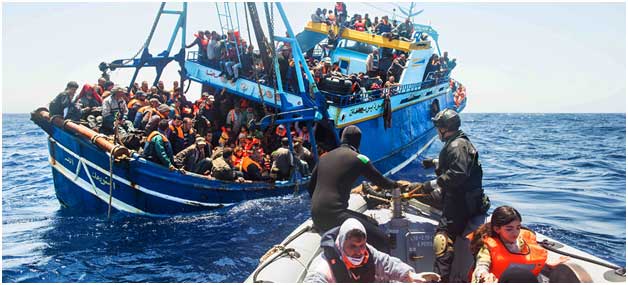
This can presently be witnessed in nations in the Sahel, Maghreb and MENA regions – where tight border control has led to the diversification of pre-colonial circular and reciprocal migrant routes into increasingly perilous areas and methods, along with the risk of promoting economic stagnation, recession and militia isolation.

The diversification of migration routes ultimately creates a favourable environment for the human smugglers that the Union is trying to eliminate.

The EU’s interaction with third countries and partnerships of border control are narrow and ultimately self-eroding. These policies do not tackle any root causes of migration; by aiding regional security units and military forces, they risk limiting democratic accountability and aggravating repression – some of the actual root causes of migration.

Agreements of principles and statements of intention do not compensate for the deflection of focus of an international community’s failure to get to grips with the need of today’s migrants for protection and recognition.

Von der Leyen’s agenda seems like an anachronistic reverberation of the unsuccessful policies introduced more than three decades ago, despite the opportunity to begin abolishing the tyranny of emergency.

*This article first appeared in International Politics and Society (IPS) published by the International Political Analysis Unit of the Friedrich-Ebert-Stiftung, Hiroshimastrasse 28, D-10785 Berlin.

  Source

Social Summit Demands Stronger Commitments in Climate Talks

Civil Society, Climate Change, Conferences, Development & Aid, Economy & Trade, Editors’ Choice, Environment, Featured, Global, Global Governance, Globalisation, Green Economy, Headlines, Human Rights, Indigenous Rights, IPS UN: Inside the Glasshouse, Poverty & SDGs, Regional Categories

Climate Change

One of the continuous protests staged at the Social Summit for Climate Action, meeting Dec. 7-13 parallel to the official 25th Conference of the Parties (COP25) on climate change. The Summit, hosted by the Complutense University of Madrid, is tackling issues such as the controversial trading of carbon credits, human rights in the climate struggle and opposition to the growing production of hydrocarbons. Credit: Emilio Godoy/IPS

One of the continuous protests staged at the Social Summit for Climate Action, meeting Dec. 7-13 parallel to the official 25th Conference of the Parties (COP25) on climate change. The Summit, hosted by the Complutense University of Madrid, is tackling issues such as the controversial trading of carbon credits, human rights in the climate struggle and opposition to the growing production of hydrocarbons. Credit: Emilio Godoy/IPS

MADRID, Dec 9 2019 (IPS) – As the COP25 deliberations enter the decisive final week, representatives of environmental and social organisations gathered in a parallel summit are pressing the governments to adopt stronger commitments in the face of a worsening climate emergency.


In the debates in the week-long Social Summit for Climate Action, which began Dec. 7 parallel to the Dec. 2-13 United Nations 25th Conference of the Parties (COP25) on climate change taking place in Madrid, skepticism has been expressed with respect to the results to come out of the official meeting.

“Nothing good is going to come out of it for Central America, only proposals that are going to make it more vulnerable. The damage is going to become more serious,” Carolina Amaya, representative of the Salvadoran Ecological Unit, told IPS, pointing out that the region is one of the most exposed to the climate crisis, facing persistent droughts, intense storms, rising sea levels and climate migrants.

The social summit is taking place at the public Complutense University, in the west of the Spanish capital, about 15 km from the IFEMA fairgrounds which are hosting COP25 after Chile pulled out on Oct. 30 from holding the event due to massive anti-government protests and social unrest.

The alternative activities, which also end on Friday Dec. 13, include a varied menu of issues, such as free trade and its socioenvironmental impacts, oil drilling in indigenous territories, the protection of forests, and opposition to trading reductions in greenhouse gas (GHG) emissions, which cause global warming.

They are also discussing the monetisation of environmental services, increased funding for the most vulnerable nations, climate justice and attacks against land rights activists.

The Madrid Social Summit is also holding sessions in Santiago de Chile, under the same slogan, “Beyond COP25: People for Climate”, although there are fewer representatives of organised civil society than at previous COPs because of the last minute change of venue.

Civil society groups are also organising activities at their green pavilion within the official COP25 compound of the United Nations Framework Convention on Climate Change (UNFCCC), where their participation is more formal and ceremonious.

The demands of civil society gained visibility thanks to the mass demonstration held in Madrid on Friday Dec. 6, with the participation of Swedish activist Greta Thunberg, the reluctant star of the official conference and social summit.

COP25 is the third consecutive COP held in Europe, this time under the motto “Time to act”.

The deliberations, which enter the crucial phase of the adoption of agreements Tuesday Dec. 10, are focusing on financing national climate policies, rules for emission reduction markets, and the preparation of the update of emissions reductions and funding of the Warsaw International Mechanism for Loss and Damage, designed to assist regions particularly affected by climate change.

COP25 is the climate summit that directly precedes the 2020 entrance into effect of the historic Paris Agreement on climate change, adopted in the French capital in 2015, which left key areas to be hashed out at the current conference, such as the controversial emissions market.

In their statement to the COP, the organisations criticise the economic model based on the extraction of natural resources and mass consumption, blaming it for the climate crisis, and complaining about the lack of results in the UNFCCC meetings.

“The scientific diagnosis is clear regarding the seriousness and urgency of the moment. Economic growth happens at the expense of the most vulnerable people,” says the statement, which defends climate justice “as the backbone of the social fights of our time” and “the broadest umbrella that exists to protect all the diversity of struggles for another possible world.”

At the social summit, the first “Latin American Climate Manifesto was presented on Monday Dec. 9, which lashes out at carbon credit trading, the role of corporations in climate change and the increase in production of hydrocarbons, while expressing support for the growth of agroecology, the defence of human rights and the demand for climate justice.

In addition, indigenous peoples are holding their own meeting, the “indigenous Minga“, with the message “Traditional knowledge at the service of humanity in the face of climate change.” They are demanding respect for their rights, participation in the negotiations and recognition of their role as guardians of ecosystems such as forests.

“We are here to raise our voices and offer our contribution to fight” against the climate emergency, Jozileia Kaingang, a chief of the Kaingang people and a representative of the non-governmental Articulation of the Indigenous Peoples of Brazil, told IPS.

Brazilian indigenous groups are in conflict with the government of far-right President Jair Bolsonaro because of its attempts to undermine their rights and encourage the commercial exploitation of their territories. In fact, the Brazilian government delegation does not include a single indigenous member – unprecedented in the recent history of the COPs.

Faced with this dispute and the critical situation of the Amazon jungle, Brazil’s indigenous people have sent representatives to Madrid to speak out and seek solidarity.

The murder of two leaders of the Guajajara people in northeastern Brazil on Saturday Dec. 7 shook the indigenous delegation. Two murders had already occurred in that native community in the last two months.

In 2017, the States Parties to the UNFCCC adopted at COP23 the Local Communities and Indigenous Peoples Platform for the exchange of experiences and best practices, thereby ensuring the participation of these groups in the negotiations of the convention.

The Platform’s facilitative working group, composed of delegates from seven States Parties and seven indigenous peoples, is currently developing its plan for the period 2020-2021.

Martín Vilela, a representative of the Bolivian Platform for Climate Change umbrella group of local organisations, questioned the effectiveness of the climate summits.

“The agreements are only paper. Emissions continue to rise and countries’ voluntary targets are insufficient. The countries have to be more ambitious if they really want to avoid major disasters,” he told IPS.

Social organizations fear that the Paris Agreement, when it replaces the Kyoto Protocol next year, will be stillborn, because countries are failing to keep their promises, even though scientists are warning that the goal of limiting global warming to 1.5 degrees Celsius is insufficient.

The Agreement sets mandatory emission reduction targets for industrialised countries and voluntary targets for developing countries in the South.

“The countries need to know that we’re monitoring them. We, the organisations, must prepare ourselves to demand better action,” said Amaya from El Salvador.

For her part, Brazil’s Kaingang argued that the climate struggle would only be effective if it includes indigenous peoples.

COP26 will be hosted by Glasgow, Scotland in November 2020, after pre-conference meetings in Germany and Italy.

This article was supported by the COP25 Latin American Journalistic Coverage Programme.