Breaking Latin America’s Cycle of Low Growth and Violence

Civil Society, Economy & Trade, Global Governance, Headlines, IPS UN: Inside the Glasshouse, Latin America & the Caribbean, TerraViva United Nations

Opinion

Credit: Syldavia/iStock by Getty Images via IMF

WASHINGTON DC, Dec 12 2024 (IPS) – Violent crime and insecurity have a disproportionate impact on Latin America and the Caribbean, with severe consequences for socioeconomic development.


Despite representing just 8% of the world’s population, the region accounts for nearly one-third of global homicides. This as well as other alarming statistics highlight the urgent need for comprehensive strategies to address the far-reaching effects of crime and violence.

New research by the IDB and IMF highlights how crime, insecurity and low growth reinforce each other in a vicious cycle that stifles investment, reduces tourism, and accelerates emigration.

Macroeconomic instability—recessions, inflation spikes, and rising inequality—is associated with increased violence. Easily available firearms and organized crime amplify these effects, undermining institutions and the rule of law.

Quantifying the Costs of Crime

A recent IDB paper quantifies the direct losses, estimating that crime and violence cost the region 3.4 percent of GDP annually. These costs stem from productivity losses due to lives lost, injuries, and imprisonment; private-sector expenditures on security; and public spending on police, justice, and prisons.

This is equivalent to 80 percent of the region’s public education budgets and double its social assistance spending. But the impact of crime doesn’t end there. It discourages investment, reduces tourism, and drives emigration, further weakening economic resilience and constraining the region’s future growth.

IMF research reveals that crime hampers innovation and reduces firm productivity, compounding economic stagnation over time. Leveraging geo-localized data on nightlights, the study finds that halving homicide rates in violent municipalities could increase their economic output by up to 30 percent.

At the regional level, as shown in last year’s IMF research, reducing homicide rates to the global average could boost Latin America and the Caribbean’s annual GDP growth by 0.5 percentage points.

Conversely, macroeconomic instability often fuels spikes in violence: a recession in LAC is associated with a 6 percent increase in homicides the following year, while inflation spikes above 10 percent are linked to a 10 percent rise in homicides the year after. Growing inequality further exacerbates the link between economic stagnation and crime.

How can policymakers help break the cycle?

Breaking this vicious circle requires a deeper understanding of its root causes and impacts. Rigorous research and better data are essential for designing public policies that effectively reduce crime. Institutions like the IDB and IMF can generate evidence, monitor crime dynamics, advise member countries, and facilitate discussions.

As the topic has become macro critical in the region, the institutions brought together experts and policymakers in a joint conference a few weeks back.

First, sound economic policy plays a preventive role. Stability, low inflation, robust social safety nets, and opportunities that reduce inequality and expand access to education and employment are critical to breaking the cycle of violence and stagnation.

Financial authorities are also uniquely positioned to weaken criminal networks by addressing illicit markets, curtailing financial flows, and tackling money laundering—cutting off resources that sustain organized crime.

Second, because the impact of crime extends far beyond direct economic costs, economic policymakers must adopt a broader role by targeting high-risk groups, improving crime monitoring, and enhancing interagency coordination.

Effective interventions can deliver transformative results. With IMF support, Jamaica implemented reforms that protected public investment and social spending while successfully halving debt between 2012 and 2022. Community-based interventions supported by the IDB reduced gang violence in 68% of affected neighborhoods.

In Rosario province, Argentina implemented a comprehensive strategy to combat crime, including territorial control of high-risk neighborhoods by the Federal Police, stricter prison systems for high-profile offenders, and collective prosecution of criminal groups under new legislation like the anti-mafia law.

These efforts, alongside progress on a juvenile penal code to deter drug traffickers from recruiting minors, have led to 65% reduction homicides in 11 months. In Honduras, strategic security reforms contributed to a 14% decline in the homicide rate and an 8% increase in public confidence in law enforcement.

Policymakers must prioritize using resources effectively, given the scope of the challenge. Public spending on security in the region is already high—around 1.9 percent of GDP, or 7.4 percent of total public expenditure—and may be even greater where the military and subnational governments are involved.

Finance ministers and fiscal authorities need a full understanding of these costs, covering police, courts, prisons, and related institutions, to ensure funds are allocated efficiently to areas with the highest impact. They also need to monitor them in the same way they surveil other large spending tickets, evaluating their impact and pressing for results.

Transnational Crime Demands Regional Cooperation

Tackling crime solely at the national level isn’t sufficient. Criminal groups operate across borders, making isolated responses ineffective and fragmented. To address this shared challenge, countries must collaborate more closely to develop stronger, more coordinated solutions.

Recognizing the transnational nature of crime, the IDB’s Alliance for Security, Justice, and Development seeks to unite governments, civil society, and private-sector actors. This alliance not only aims to strengthen institutions and enhance cooperation but also supports public policies and mobilizes resources to implement evidence-based solutions that effectively combat organized crime and violence.

Regional collaboration is crucial for disrupting the sophisticated, interconnected networks of organized crime that undermine the rule of law and economic stability. By fostering unified efforts, institutions like the IMF and IDB alongside governments and civil society, have a critical role to play in this effort.

With people’s lives on the line, the true impact of these efforts must be felt on the ground—by creating safer streets, restoring hope in communities, and offering individuals a real chance to thrive economically in a future free from violence.

Ilan Goldfajn was elected president of the Inter-American Development Bank (IDB) on November 20, 2022, and took office on December 19, 2022. He previously served as director of the Western Hemisphere Department at the International Monetary Fund (IMF) in 2022, where he supported countries in implementing IMF programs and contributed to climate change policy dialogue. Earlier, he was an economist at the IMF from 1996 to 1999.

Rodrigo Valdés, a national of Chile, is director of the Western Hemisphere Department since May 2023. Prior to this, Rodrigo was a professor of economics in the School of Government at the Catholic University of Chile. He also held the position of Chile’s Minister of Finance from 2015 to 2017. At the IMF, he also was a deputy director of the IMF European and WHD departments.

Source: IMF Blog

IPS UN Bureau

  Source

Now it’s Officially the Israeli-American Genocide in Gaza

Armed Conflicts, Civil Society, Democracy, Global Governance, Headlines, Human Rights, IPS UN: Inside the Glasshouse, Middle East & North Africa, TerraViva United Nations

Opinion

The International Criminal Court (ICC) Headquarters in The Hague, Netherlands. Credit: ICC
 
ICC issues arrest warrants for Israel, Hamas leadership: what happens next?

ATLANTA, USA, Nov 27 2024 (IPS) – As of last week, in the wake of the Nov. 21 issuance by the International Criminal Court (ICC) of arrest warrants for Israeli Prime Minister Benjamin Netanyahu and former IDF Defense chief Yoav Gallant, all eyes turned to Washington to see the what the response of Israel’s main backer would be.


The charges were for “Crimes Against Humanity” and “War Crimes” for using starvation as a method of warfare in Gaza, something is explicitly forbidden in international law. A HAMAS operative, Muhammad Deif, who may already be dead, was also charged. One would think that the US should find it easy to agree. But what was the message from the Biden White House?

Press spokesperson Karine Jean-Pierre said that the United States of America “Rejects the ICC ruling,” as if the International Criminal Court were just an off-beat punk yelling his head off in Lafayette Park just across from the presidential residence. But the prestigious court in the Hague has no option. It is bound to rule according to the law. It’s actions are neither political nor enacted on a whim.

The international law that created the treaty was endorsed by a host of national governments around the world—except for a few, Israel and the United States being the most prominent.

The US is not a State Party (signatory) to the ICC, even though 124 countries have signed the Rome Statute that created the ICC in 2002. Presidents Clinton and Obama tried to get ratification from the US Senate but failed. George W. Bush and the Neo-Cons flatly rejected the idea of endorsing the statute, not wanting any restrictions on their disastrous plan to attack Iraq.

Just the day before at the United Nations, the Security Council voted overwhelmingly 14-1 to demand a cease-fire in Gaza. But the US, by a single vote –because it has veto power under the rules set up in the wake of WW II—blocked the resolution.

The argument that a cease fire would help bring the hostages home, not hinder their release, was urged by the council but fell on deaf ears.

In a shameful action that will be long remembered throughout the world, the US representative, Deputy Ambassador Robert Wood, raised his hand to block the resolution. These two actions in the same week—flat out rejection of the ICC warrants and blocking a Security Council cease fire resolution intended to relieve massive human suffering, when taken together, mean not only that the United States is fully on board with the endless slaughter of civilians in Gaza under continuous Israeli bombing, but it now supports starving women and children too.

This is a stain that will not go away. Protestors in the streets and on university campuses have long been chanting, “Genocide Joe has got to go!” How out of touch is the near-senile President Biden? How corrupt, misguided, and inhumane do you have to be to make that decision, condemning the United States to be forever labeled as contributing to war crimes?

It’s true that Washington has long supplied arms to Israel, including during this conflict, but to support continued starvation and bombing of civilians as a matter of policy is much worse—either deliberately evil or insanity. No fancy negotiating tricks are allowed when innocent lives are at stake.

And where does the recent Democratic nominee for President, Vice President Kamala Harris, stand on all this? Does she have a voice within the Administration? She pledged repeatedly if elected to increase, not decrease, humanitarian aid to Gaza.

What’s wrong with advocating a cease fire after 13 months of massive, one-sided bloodletting that has killed and wounded nearly 150,000 people among the unfortunate citizens of Gaza?

Let’s define terms: A war is when both sides shoot at each other. A Turkey Shoot is different—the Turkey doesn’t have a chance, and sharpshooters just keep shooting to see who has the best aim. A slaughterhouse is when only one side has all the power and just keeps killing on a massive scale.

Israel’s troops have guns and bombs supplied by the United States, Germany, and the UK, and continues to shoot and bomb people in Gaza long after the other side has ceased firing. If the operation is a manhunt, call it a manhunt. If a reprisal, call it a reprisal. If ethnic cleansing, call it that. If the term “Warsaw Ghetto” is fitting, call it that. But don’t call it a righteous battle if the atrocities keep piling up on just one side with no sign of stopping.

Does anybody know how long it has been since HAMAS has fired rockets, or even machine guns at Israeli troops? You would think that if that were the case the slick Israeli lie machine would trumpet that information. So why not cease firing today, not tomorrow?

Why doesn’t the esteemed American President, “Genocide Joe,” just decide for once to do the right thing?

James E. Jennings, PhD is President of Conscience International, an aid organization that has worked in Gaza over many years.

IPS UN Bureau

  Source

Ensuring Violence-Free Homes for Sri Lankan Women

Civil Society, Crime & Justice, Featured, Gender, Global, Global Governance, Headlines, Human Rights, IPS UN: Inside the Glasshouse, TerraViva United Nations

Opinion

The AKASA safe house is seen in Anuradhapura, Sri Lanka. August 2023. Credit: UN Women/Ravindra Rohana

NEW YORK, Nov 25 2024 (IPS) – A woman’s right to live free from violence is upheld by international agreements like the 1979 Convention on the Elimination of All Forms of Discrimination against Women and the 1993 UN Declaration on the Elimination of Violence against Women.


The International Day for the Elimination of Violence Against Women, observed on November 25th, 2024, serves as a significant platform to raise awareness about gender-based violence. Globally, one in three women experiences physical or sexual violence, mostly by an intimate partner.

In his message for the 2024 International Day for the Elimination of Violence against Women, UN Secretary-General António Guterres stated, “The epidemic of violence against women and girls shames humanity. Every day, on average, 140 women and girls are killed by someone in their own family.

Around one in three women still experience physical or sexual violence. Almost 30 years since the Beijing Declaration and Platform for Action promised to prevent and eliminate violence against women and girls — it’s beyond time to deliver”.

Intimate partner violence (IPV) is a serious public health and human rights concern and affects millions of women worldwide, often remaining underreported and behind closed doors. IPV is particularly acute in South Asia where 35% of ever-partnered women reported experiencing IPV in their lifetime, compared to 20% in Western Europe and 21% in high-income Asia Pacific.

The reasons are complex and include a combination of socio-economic structures, patriarchal attitudes, and prevalent social norms that define gender roles. IPV remains a largely hidden and stigmatized issue, with many women suffering in silence in South Asia.

IPV in Sri Lanka is a significant and pervasive issue. An estimated 40% of women aged 15 years or older reported experiencing physical, sexual, emotional, and/or economic violence or controlling behaviors by a partner in their lifetime. Disturbingly, 21% of the population, or about 4.6 million women, are affected by IPV, given that women constitute 52% of Sri Lanka’s 23.1 million population.

These figures reflect reported cases, but IPV is significantly underreported due to fear of stigma, lack of awareness about available support services, and reluctance to involve authorities in family matters. Many women fear retaliation from their abusers or social ostracism if they speak out.

The Prevention of Domestic Violence Act (PDVA), passed in 2005, provides legal protection for victims of domestic violence in Sri Lanka, allowing them to obtain protection orders against their abusers. The PDVA defines domestic violence as “physical or emotional harm done by a spouse, ex-spouse, or cohabiting partner.” However, its effectiveness has been criticized due to issues with enforcement and limited awareness among both victims and law enforcement.

Despite high levels of educational attainment, 73.5 per cent of Sri Lankan women of working age are out of the labor force, compared to just 26.5% of men. This is mainly due to their engagement in household duties, including care work. Aggravating this situation, women on average earn 27 per cent less than men for one hour of work.

Consequently, many women economically depend on their partners, making it hard to leave abusive relationships. Especially in rural areas, they may lack financial resources or social support to escape violence. This financial vulnerability is a key barrier to addressing IPV in Sri Lanka. Empowering women economically and socially can reduce their dependency on abusive partners.

Among Sri Lankan faith-based communities such as Buddhists, Muslims, Hindus, and Christians, religious leaders are influential authorities on behavior and sources of guidance on proper conduct in relationships, including family and marriage. Therefore, they can play a crucial role in motivating men to cede power and reduce IPV.

This approach, guided more by principles of peace and social justice than by a rights agenda, cannot replace rights-based solutions to end IPV. Therefore, it is necessary to encourage and promote collaboration between faith-based and rights-based organizations to address and end violence against women and girls in Sri Lanka.

Various research shows that the ethnic dimensions of the civil war and the continuing ethnic tensions post-war have worsened the situation for Tamil and Muslim women in Sri Lanka, creating conditions that are likely to keep them entrapped in abusive relationships.

There are also strong associations between IPV and suicidal behavior in Sri Lanka, signaling the need to prioritize violence reduction both on its own and within national suicide prevention strategies.

Empowering women, educating communities, and involving men in the conversation are essential steps toward reducing IPV in Sri Lanka. NGOs like the Women’s Education and Research Centre and international organizations run awareness campaigns to educate people about IPV, its harmful effects, legal rights, and available support services.

These campaigns also engage men and boys in discussions about gender equality and the unacceptability of IPV. The goal is to change societal attitudes that contribute to IPV and make men active partners in promoting non-violent relationships.

In Sri Lanka, several support systems are in place for victims of IPV. Various community organizations and NGOs provide localized support, including shelters and legal aid. The Ministry of Women and Child Affairs operates a toll-free helpline (Dial 1938) that offers counselling and legal support to victims of violence.

Health-sector responses to support women experiencing IPV in Sri Lanka are evolving and currently include two models of integration: GBV desks with facility-level integration, and Mithuru Piyasa, a modified One-Stop Crisis Centre model with some system-wide integration. Additionally, the Ministry of Health has implemented training programs for public health midwives to improve their ability to identify and assist IPV victims.

IPV remains a critical issue in Sri Lanka, influenced by socio-cultural, economic, and legal factors. An effective coordination and information sharing mechanism among the ministries of Health, Women and Child Affairs, and Public Security, at both state and local levels is essential to provide immediate support and empower women experiencing IPV.

Traditional cultural norms in Sri Lanka often view gender roles as rigid, expecting women to be submissive and take on domestic responsibilities. These norms can contribute to the normalization of IPV and limit women’s ability to seek help.

IPV is often seen as a private matter, with victims frequently facing pressure to stay silent. By tackling the economic, political, social, cultural, and other systemic factors that enable IPV, we can create a safer and more equitable environment for all women in Sri Lanka.

Sri Lankan women deserve the fundamental right to a violence-free home life. Achieving this necessitates a unified approach to challenge and transform harmful social norms, enhance the availability and accessibility of support services, and rigorously enforce existing laws.

Only through these coordinated efforts can we create a safer and more equitable society for all women in Sri Lanka.

Shihana Mohamed, a Sri Lankan national, is a founding member and Coordinator of the United Nations Asia Network for Diversity and Inclusion (UN-ANDI) and a US Public Voices Fellow with The OpEd Project and Equality Now on Advancing the Rights of Women and Girls. She is a dedicated human rights activist and a strong advocate for gender equality and the advancement of women.

The author expresses her views in this article in an entirely unofficial, private, and personal capacity. These views do not reflect those of any organization.

IPS UN Bureau

  Source

It’s About our Entire Planet: The Pandemic of Violence Against Women

Civil Society, Crime & Justice, Featured, Gender, Global, Global Governance, Headlines, Human Rights, IPS UN: Inside the Glasshouse, TerraViva United Nations

Opinion

NEW YORK, Nov 25 2024 (IPS) – The 16 Days of Activism to end gender-based violence, started with seeking to eliminate violence against women (VAW). This year’s theme highlights the reality that violence against women and girls is of pandemic proportions. The figures are galling.


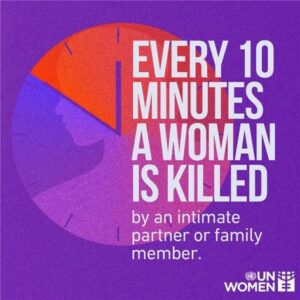
References cite how millions of women and girls suffer physical or sexual violence all over the world; 95% of people trafficked for sexual exploitation in Europe are female; every 10 minutes, partners and family members killed a woman intentionally in 2023; one in three women experience violence in their lifetime; 1 in 4 adolescent girls is abused by their partners.

And more. The 16 Days of Activism is an opportunity to revitalize commitments, call for accountability and actions by diverse decision-makers. 2025 will be the 30th anniversary of the Beijing Declaration and Platform for Action in 2025, described by UN Women as a “visionary blueprint for achieving gender equality and women’s and girls’ rights everywhere”.

Apart from the pandemic scale of the violence against women we are living through – without it being properly declared as a pandemic by governmental authorities – and the horrific data which is on the increase, there are a few pieces of this VAW puzzle that bear stressing.

Lead Integrity’s founding Partner and international activist, Dr Fulata Moyo, who is credited with efforts to institutionalize the World Council of Church’s (WCC) Thursdays in Black campaign, and her successor at leading this and executing a Programme on Just Community of Women and Men, at the WCC – Reverend Nicole Ashwood – stress this centrality of unequal power relations.

Dr Moyo is a strong advocate of mentorship, and yet she reminds us that even this process can be misunderstood as a one-way benefit relationship. Instead, she constantly argues that both mentor and mentoree learn from one another. This insistence on awareness of the mutuality of benefit – and its responsibilities – is a means of righting power imbalances not only among individuals, but in families, societies and nations.

Another Lead integrity founding Partner, Grove Harris – also serving as the UN representative of the Temple of Understanding, and is a strong eco-feminist in her own right – argues cogently that the exploitative violence leveraged on our earth, is a reflection of the exploitative violence perpetuated against women. And vice versa.

In other words, we will need to face a reality that we cannot fight the violence against women and girls, without also struggling to eliminate violence against our planet. These are not separate struggles, but integrated ones.

Lead Integrity’s Senior Advisor and Gender expert, Ms. Gehan AbuZeid expounds further to note that VAW is about endemic structural violence which permeates all domains of life, including ecology, economy, politics, and of course, society.

Inbuilt power relations which prioritize the needs, views, and priorities of one set of humans at the expense of ‘others’ means all our institutions are predisposed to violence against those deemed as more vulnerable by the dominant groups.

Violence against women happens not only because of gendered dynamics per se, but because all of power dynamics around us, are inherently based on exploitative relationships.

This leads to another couple of critical observations – ones which are becoming more taboo to speak of, especially in the kinds of times we live in today. Since the root of VAW are exploitative relationships based on unequal power dynamics, then everyone, every institution and every nation, every initiative, is responsible for ending the structural, the social and the personal forms of these interrelated violent dynamics.

In other words, ending VAW is not, and should not, be left for women alone to end it (even when they may work miracles with male and myriad other allies), nor is it only a matter of legislation – as important as that is. And while we are recognizing the principle and reality of collective responsibility, let us also have the courage to acknowledge that women can be violent towards other women too, and some men are fairly vicious against each other which is statistically related to rising VAW, and as the countless wars around us attest to.

As we consider the collective responsibilities, we need to strengthen our multilateral institutions – not only secular ones, but also those which deliberately seek to partner with different civil society organizations, including those who work to mobilize multi faith and multi stakeholder collaborations.

An example of such a multi-stakeholder and global effort is the first Women, Faith and Climate Change Network, launched at the COP 29 in Baku, Azerbaijan. The Network brings together faith-based and secular, women and male allies, working with governmental, non-governmental and intergovernmental partner institutions, elevating the influence of female faith leaders (including Indigenous ones) to maximize knowledge and impact, to right the power imbalances in each of these diverse institutions, as they work together to eliminate the violence perpetrated against our planet.

We need to ask ourselves this: by continuing to work – and work hard – within our respective silos (secular, religious, feminist, peacemaking, human rights, business, institutional, individual, national, regional, global, etc.), have we not, inadvertently, failed to address the interrelated forms of violence?

And if so, can the recognition of this pandemic of VAW, push us to work better together at a time when we face much polarization and fear – or are we destined to repeat some of the Covid pandemic’s mistakes? If we do, we risk our peaceful co-existence, and – heaven forbid – we may well risk losing the ability to exist on this planet.

Dr Azza Karam is President and CEO of Lead Integrity, and affiliate Professor at Notre Dame University’s Ansari Center for Religion and Global Engagement.

IPS UN Bureau

  Source

Climate Change in Azerbaijan is Putting Women at Increased Risk of Gender-Based Violence

Civil Society, Climate Change, Environment, Featured, Gender, Global, Global Governance, Headlines, Human Rights, IPS UN: Inside the Glasshouse, TerraViva United Nations

Opinion

Credit: UN Women

PARIS, Nov 22 2024 (IPS) – Climate change exacerbates existing gender inequalities and gender-based violence. At COP29 in Azerbaijan, governments have been urged to prioritize gender-responsive climate policies that address the specific needs of women and girls, and serious concerns have been raised about backtracking on women’s rights during these crucial negotiations on climate action.


In Azerbaijan, extreme weather events made worse by global warming and poor environmental management are heightening the risks women and girls face. As the frequency and intensity of climate-related disasters increase, more families are being left vulnerable, accelerating the need for targeted interventions.

Clean World Social Union participated in COP29 to address the critical intersection of gender inequality and the climate crisis, advocating for policies that prioritize the needs and rights of women and girls in the face of environmental challenges.

Clean World Social Union is one of only two civil society organizations in Azerbaijan providing specialist accommodation and support to women escaping gender-based violence. They operate a shelter in the capital city, Baku, housing up to 60 women and children. A second shelter in Ganja, managed by the Public Union “Tamas,” accommodates 25 residents.

Clean World Social Union collaborates with the international women’s rights organization Equality Now to strengthen the legal rights of women and girls in Azerbaijan.

Leyla Suleymanova

Coordinator Leyla Suleymanova spoke to Equality Now about how climate-induced displacement is impacting women in the country and why the government urgently needs to do more in response.

What are some of the ways that climate change is affecting women and girls in Azerbaijan?

Climate change is definitely making women more vulnerable to gender-based violence. We’ve worked with many women from rural areas whose families have lost their homes and livelihoods due to floods, drought, and other environmental crises. People become homeless, their lives have been devastated. Before, they had opportunities to earn money to improve their lives, but now they don’t.

This is forcing people to migrate and is pushing them into urban areas. Gender-based violence increases because when people become poorer, it puts pressure on families who cannot earn a living, and men can become more violent. Every day, we receive hundreds of calls from women, but due to the limited capacity of our shelters, we have to refuse many.

After extreme climate events, many women migrate alone to urban centers like Baku to support their families. However, some do not have the necessary skills or knowledge to find employment and earn money. Displacement caused by ecological crisis isolates women from their social networks and support systems, and makes them more vulnerable to abuse. As well as domestic violence, we have seen increases in commercial sexual exploitation and trafficking.

How is Azerbaijan’s government responding to the impact that climate change is having on women in the country?

In Azerbaijan, there is some understanding about how climate change impacts women and girls, but not enough. And while the government is doing some things about climate change, it’s not making the connection between ecological crisis, gender issues, and gender-based violence.

Changes in legislation and punishment for child marriage are getting tougher, but I think the ecological crisis is making the situation worse. With people becoming poorer and life getting harder, this connects to child marriage. Some families think if they have a girl who they cannot afford to provide food and education for, she should be married off quickly.

In cases of gender-based violence after extreme weather events, women often don’t have financial support, don’t know who to turn to, and may have psychological issues. It is sometimes very difficult to support these victims as they need free and regular assistance, but there are many we cannot help because of limited resources. And when there are floods, there is a big increase in the number of women needing help but we cannot provide so much support.

I have not heard of any official strategies or action plans to improve the situation for women when an ecological crisis happens. Government strategies should include implementation and coordination to address women’s issues. Without this, it is difficult to deal with these problems.

What action on climate change to support women is needed from governments?

Women and girls are being directly and disproportionately affected by the ecological crisis and we have to raise this with governments and other key stakeholders. There is a critical opportunity to address the unique challenges by developing and implementing comprehensive frameworks and gender-responsive strategies that tackle both the immediate and longer-term impacts.

Vocational training programs can help women adapt to climate change by equipping them with skills for sustainable livelihoods. This is particularly crucial for women in rural areas who may need to migrate to urban centers, where employment opportunities are more accessible. Providing these tools empowers women to rebuild their lives and communities while fostering resilience against climate-related challenges.

It is equally important to increase women’s participation in decision-making processes related to climate policies. By including women’s perspectives and experiences, governments can create more equitable and effective solutions. Gender equality must be central to these discussions, ensuring women’s voices shape policies addressing ecological and societal impacts.

Strengthening support systems is another vital step. Expanding access to psychological counseling, legal aid, and safe shelters for women and girls will address the immediate fallout of climate shocks. Additionally, building local capacity to meet the needs of women affected by these events will ensure long-term sustainability.

Public awareness campaigns are necessary to educate communities about the gendered impacts of climate change, and women should be given information about who they can turn to for support when their rights have been violated. Initiatives can shift societal attitudes, promoting a greater understanding of women’s vulnerabilities and the need for protective measures.

The COP29 summit in Azerbaijan underscored the urgency of integrating gender issues into climate action. Coordination among government agencies, civil society organizations, and international partners is essential to ensure these efforts are effective, inclusive, and provide women and girls with protection in the face of an evolving climate crisis.

Maithreyi Kamalanathan, Equality Now

IPS UN Bureau

  Source

Stand Up, Speak Out: A Global Call to Men on the 25th Anniversary of International Day for the Elimination of Violence Against Women

Civil Society, Crime & Justice, Featured, Gender, Global, Global Governance, Headlines, Human Rights, IPS UN: Inside the Glasshouse, TerraViva United Nations

Opinion

Credit: UN Women

LONDON, Nov 22 2024 (IPS) – In 1960, the Rafael Trujillo regime in the Dominican Republic assassinated the Mirabal sisters— renowned and respected for their courage and activism against dictatorship. To give their senseless violent death some meaning and to preserve their legacy, in 1999, the United Nations inaugurated November 25—the day of their assassination—as the International Day for the Elimination of Violence Against Women (EVAW).


When talk of violence against women (VAW) was still taboo in polite and political circles, the UN’s stance was powerful. It put a spotlight on a pervasive pandemic of violence evident across continents and cultures that caused devastation in the lives of millions and replicated itself across generations.

The assumption was that raising public awareness and creating a political platform—a global one, no less—would prompt attention, concern, action, and genuine political will to address and eliminate this preventable form of harm and trauma.

Unfulfilled Promise of Global Initiatives

In the subsequent years, other high-profile, largely performative, initiatives followed. UN events became annual feel-good rituals, sidelining seasoned women’s rights advocates in favor of celebrity-driven initiatives.

UN Women’s campaigns, such as actress Nicole Kidman’s “Say No-UNiTE to End Violence Against Women,” featuring stern Wonder Woman-inspired imagery on reusable bottles, raised funds but did little to reach perpetrators of violence. Emma Watson’s HeforShe seemed to admonish women for excluding men—despite decades of efforts to engage men in tackling violence.

Iceland even hosted an all-male “barbershop” conference to address equality, with limited impact. Similarly, UK Foreign Secretary William Hague garnered attention with grand declarations about ending wartime rape through the UK-led Prevention of Sexual Violence Initiative (PSVI), backed by long-time activist and actress Angelina Jolie.

But his premise that sexual violence in war would be prevented if cases were documented and perpetrators faced the future prospect of criminal justice, missed fundamental facts – including that to stop war-time rape, more focus and resources should be put on preventing wars.

Meanwhile, the top-down international attention barely made a dent in addressing the problem where it resided worldwide: in communities and homes, and increasingly online—especially in times of crisis and conflict. In large part, the lack of impact of these high-level initiatives was their failure to reach the right audiences with the right messages through trusted messengers.

Relying on Hollywood actresses to inspire largely women’s audiences to unite against violence may be necessary for motivating women, but it is not sufficient. When the perpetrators of violence are overwhelmingly male, strategies, messaging, policies, and programs must also be directed at men.

Implicitly acknowledging that world leaders did not care about the social and human cost of violence against women, the World Bank took a different tack: following the money. In 2014, the Bank reported that violence against women cost countries up to 3.4% of their GDP.1 In some countries, this was more than double their investments in education.

Implying that we should care about violence against women because it affects our bottom line is certainly a mercenary approach, but even this stark calculation failed to prompt a change in policies, practices, or prioritization of the elimination of violence against women (EVAW) as a socio-economic and security concern.

Countless diplomats, activists and bureaucrats have shaped new policies and resolutions at national and international levels. A transnational bureaucracy has grown around the agenda and EVAW has gone global with the “16 Days of Activism” campaign. Yet, 25 years later, the outlook remains grim.

We know that in Gaza women endure caesareans without anesthesia because of the Israeli blockade on food, water, electricity, and medication—but nothing is being done to prevent it. We know that in Sudan, women and girls face extreme sexual violence and rape, yet nothing is being done to prevent this violence or provide protection and care for survivors.

We saw how the COVID-19 pandemic prompted a spike of some 40% in domestic violence across the world—and yet, nothing is being done to acknowledge or deal with the issues systemically. Year after year, femicide persists. Between March 2023-2024, in the UK alone, 100 women were killed by men.

Multifaceted Solutions

Breaking the silence on violence against women through awareness-raising campaigns has certainly drawn attention to the issue. We now have increased reporting, with better data on the forms of violence and the victims and survivors. We have an increased trickle of funding for programming and, perhaps most importantly, we have clear evidence of what works. It is not surprising that the solutions are multifaceted.

Laws and policies matter. In France, as the Gisele Pelicot case reveals, the legal definition of rape matters. Similarly, changing institutional cultures matters, especially in male-dominated law enforcement. In the U.S., a 2020 study found that one in four women will experience sexual assault in their lifetime, but fewer than 5% of survivors report the assaults to law enforcement.

In the U.S., police code 20% of reported cases as “unfounded,” based on the reporting officers’ perceptions of the woman reporting the incident. The 2020 report notes that “dismissing sexual violence has become common practice amongst the police.”2 Training and changing police practices is therefore essential to bring perpetrators to justice and increase women’s trust in the service.

Globally, grassroots initiatives prove that impactful change begins with local security personnel and community leaders. At the International Civil Society Action Network (ICAN), we have supported many of our partners in the Women’s Alliance for Security Leadership (WASL) in their efforts.

In Sri Lanka, the Association of War Affected Women (AWAW) successfully advocated for deploying female police officers to rural areas, trained male and female police officers on international laws such as UN Security Council Resolution 1325 and encouraged them to develop culturally effective approaches to addressing VAW.

In a Syrian refugee community in Turkey, our partner Kareemat has led interventions to stop child marriages that often take place because they are “one less mouth to feed.” Since fathers are making these decisions, raising awareness of the risks to their daughters and offering livelihood alternatives is essential.

To ensure the message resonates, Kareemat engaged trusted male religious leaders to emphasize that child marriage contradicts Islamic values and harms young girls. They also advocate for continued education and provide skills training, supporting girls to have their own livelihoods.

“We have observed a positive shift among many beneficiaries, especially men…agreeing on the importance of waiting until a girl reaches the age of eighteen before marriage,” says Kareemat Founder, Najla Sheikh. “These men also advocated for preparing young women by equipping them with a profession that enables them to support themselves…The beneficiaries expressed a desire to see girls achieve financial independence and be able to protect themselves in a safe environment like Kareemat.”3

Efforts to engage men in communities has expanded over the years. But as UK-based investigative journalist Sonia Sodha wrote in 2022,4 when it comes to the seriously violent, awareness and education is just not enough; reflecting on the differences between and within men is also essential.

Sodha highlights the UK-based project, Drive, which “has shed once and for all the feminist attachment to the idea that the key to reducing serious violence is teaching men to be better.” The project works with high-risk domestic abusers, assigning them case managers to provide support with jobs, mental health, and housing, while also serving as early warning conduits to involve police and social services when necessary to disrupt violence.

The results are astounding with an 82% and 88% drop in physical and sexual abuse respectively. Yet, access remains severely limited, with only 1% of serious abusers receiving such intervention.5

Meanwhile, a consistent factor in men’s violence is their own exposure to violence as children. Childhood abuse is a leading precursor of adult violence, yet in rich and poorer countries, programs to protect children are being slashed. As the wars in Gaza and Yemen show, children are increasingly the key targets of violent conflict.

Violence Against Women Amidst War and Displacement

With 56 wars raging and over 120 million people displaced by conflict, violence against women is on the rise, in increasingly complex forms. Ukraine is a case in point. Ukrainian men have become soldiers at the frontlines fighting Russian forces to protect their families and homeland.

But too often, on leave, they mete out their own trauma against their wives and children. It is wretchedly heartbreaking, yet universal in contexts of crisis and conflict.6 Simultaneously, displacement and economic hardship forces more women into sex work, trafficking, and other situations that heighten their vulnerability. Political dealmaking, such as the U.S.-Taliban agreement, has fueled multi-generational violence against women and children.

Over half a century since the Mirabals’ assassination, as a global community, we are certainly more aware of the horrors of violence against women. But it is still women who are picking up the pieces.

Our support networks are critical, says South African activist Bernedette Muthein, recalling “the street groups that intervene during domestic violence” and the women-led organizations that provide advice, support, and exit plans that “include stashing identity documents, clothes and money.”

Shelters and women-only spaces also remain essential for victims. But in Liberia, says peacebuilder Cerue Garlo “such issues are still not seen as national issues. The public expects women to handle them as ‘women’s issues’,” a sentiment that resonates around the world.

Time to Break the Cycle

On November 25, 2024, as the UN commemorates the 25th anniversary of the International Day for the Elimination of Violence Against Women, perhaps it is worth stating it explicitly: violence against women is not just a women’s issue. It is a societal, economic, and security issue. Given the vast majority of perpetrators are men, it is also very clearly a men’s issue.

At a minimum, it is time to shift the shame and fear that women have harbored for so long, onto the men who perpetuate the violence. Too often, when such calls are made, social media platforms are flooded with #NotAllMen. Of course, not all men are implicated in VAW—and this is precisely the point. It is time for the good men—those who are indignant about and abhor such violence—to stand up, speak out, and join women to take on the challenge of ending this pandemic.

It is also time to dedicate more funding and channel resources directly to the women’s organizations working to tackle the roots, symptoms, causes, and effects of such violence.

The good news is that when the most serious abusers in the UK can be stopped, and destitute Syrian fathers can be convinced to protect their daughters, we know that violence against women is not inevitable. We just need to muster up the political will, social courage, and economic resources. Let’s not wait another 25 years to make the promise of ending violence against women a reality.

1 https://www.worldbank.org/en/results/2023/08/25/tackling-gender-based-violence-development-imperative
2 https://pmc.ncbi.nlm.nih.gov/articles/PMC9136376/
3 Personal correspondence
4 https://www.theguardian.com/commentisfree/2022/mar/06/male-violence-against-women-much-more-than-toxic-masculinity
5 Ibid
6 https://gppi.net/media/Kotliuk_2024_Hidden-Front-of-Russias-War_ENG.pdf

Sanam Naraghi Anderlini, MBE, is Founder/CEO, International Civil Society Action Network (ICAN)

IPS UN Bureau

  Source