Biodiversity Agreement Historic But Difficult to Implement

Biodiversity, Civil Society, Climate Action, Climate Change, Climate Change Finance, Conferences, Development & Aid, Editors’ Choice, Environment, Featured, Global, Global Governance, Headlines, IPS UN: Inside the Glasshouse, Latin America & the Caribbean, Regional Categories, Sustainable Development Goals

Biodiversity

Government delegations celebrate the close of the historic negotiation at COP15 of the New Global Framework on Biodiversity in the early hours of the morning on Monday Dec. 19, at the Palais des Congrès in Montreal, Canada. CREDIT: Mike Muzurakis/IISD

MONTREAL, Dec 19 2022 (IPS) – The pillar coral (Dendrogyra cylindrus), which takes its name from its shape, is found throughout the Caribbean Sea, but its population has declined by more than 80 percent since 1990. As a result, the International Union for Conservation of Nature (IUCN) has listed it as “critically endangered” due to the effects of the human-induced climate crisis.


Its fate now depends on the new Kunming-Montreal Global Framework on Biodiversity, which was agreed by the 15th Conference of the Parties (COP15) to the Convention on Biological Diversity (CBD) on Monday Dec. 19, at the end of the summit held since Dec. 7 at the Palais des Congrès in Montreal.

Now, the world’s countries must translate the results into national biodiversity strategies, to comply with the new accord. In this regard, David Ainsworth, spokesman for the CBD, in force since 1993 and based in Montreal, announced the creation of a global accelerator for the drafting of national plans, with the support of U.N. agencies.

COP15 of the Convention on Biological Diversity approved a new program to protect the world's natural heritage for the next 10 years during the summit held in the Canadian city of Montreal. The picture shows a statue of a polar bear, whose species is threatened by melting ice and habitat loss, on a street in Montreal. CREDIT: Emilio Godoy/IPS

COP15 of the Convention on Biological Diversity approved a new program to protect the world’s natural heritage for the next 10 years during the summit held in the Canadian city of Montreal. The picture shows a statue of a polar bear, whose species is threatened by melting ice and habitat loss, on a street in Montreal. CREDIT: Emilio Godoy/IPS

The menu of agreements

COP15, whose theme was “Ecological Civilization: Building a shared future for all life on earth”, approved four objectives on improving the status of biodiversity, reducing species extinction, fair and appropriate sharing of benefits from access to and use of genetic resources, and means of implementation of the agreement.

In addition, the plenary of the summit, which brought together some 15,000 people representing governments, non-governmental organizations, academia, international bodies and companies, agreed on 23 goals within the Global Framework, for the conservation and management of 30 percent of terrestrial areas and 30 percent of marine areas by 2030, in what is known in U.N. jargon as the 30×30.

This includes the complete or partial restoration of at least 30 percent of degraded terrestrial and marine ecosystems, as well as the reduction of the loss of areas of high biological importance to almost zero.

Likewise, the agreement reached by the 196 States Parties at COP15 includes the halving of food waste, the elimination or reform of at least 500 billion dollars a year in subsidies harmful to biodiversity, and at least 200 billion dollars in funding for biodiversity by 2030 from public and private sources.

It also endorsed increasing financial transfers from countries of the industrialized North to nations of the developing South by at least 20 billion dollars by 2025 and 30 billion dollars by 2030, and the voluntary publication by companies for monitoring, evaluation and disclosure of the impact of their activities on biodiversity.

The Global Environment Facility (GEF) will manage a new fund, whose operation will be defined by the countries over the next two years.

With regard to digital sequence information (DSI) on genetic resources, the Global Framework stipulates the establishment of a multilateral fund for benefit-sharing between providers and users of genetic resources and states that governments will define the final figure at COP16 in Turkey in 2024.

The Global Framework also contains gender and youth perspectives, two strong demands of the process that was initially scheduled to end in the city of Kunming, China, in 2020. But because that country was unable to host mass meetings due to its zero-tolerance policy towards COVID-19, a first virtual chapter was held there and another later in person, and the final one now took place in Montreal.

The states parties are required to report at least every five years on their national compliance with the Global Framework. The CBD will include national information submitted in February 2026 and June 2029 in its status and trend reports.

With some differences, civil society organizations and indigenous peoples gave a nod to the Global Framework, but issued warnings. Viviana Figueroa, representative of the International Indigenous Forum on Biodiversity, and Simone Lovera, policy director of the Global Forest Coalition, applauded the agreement in conversations with IPS, while pointing out its risks.

“It’s a good step forward, because it recognizes the role of indigenous peoples, the use of biodiversity and the role of traditional knowledge,” said Figueroa, an Omaguaca indigenous lawyer from Argentina whose organization brings together indigenous groups from around the world to present their positions at international environmental meetings.

“It has been a long process, to which native peoples have contributed and have made proposals. The most important aspects that we proposed have been recognized and we hope to work together with the countries,” she added.

But, she remarked, “the most important thing will be the implementation.”

Goal C and targets one, three, five, nine, 13, 21 and 22 of the Global Framework relate to respect for the rights of native and local communities.

Lovera, whose organization brings together NGOs and indigenous groups, said the accord “recognizes the rights of indigenous peoples and local communities, and of women. It also includes a recommendation to withdraw subsidies and reduce public and private investments in destructive activities, such as large-scale cattle ranching and oil palm monoculture.”

But indigenous and human rights organizations have questioned the 30×30 approach on the grounds that it undermines ancestral rights, blocks access to aboriginal territories, and requires consultation and unpressured, informed consent for protected areas prior to any decision on the future of those areas.
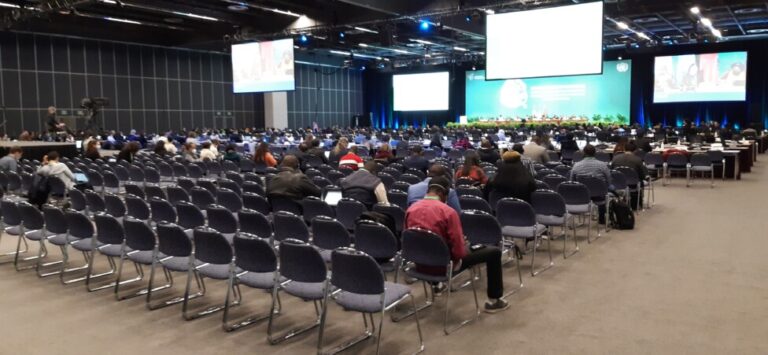
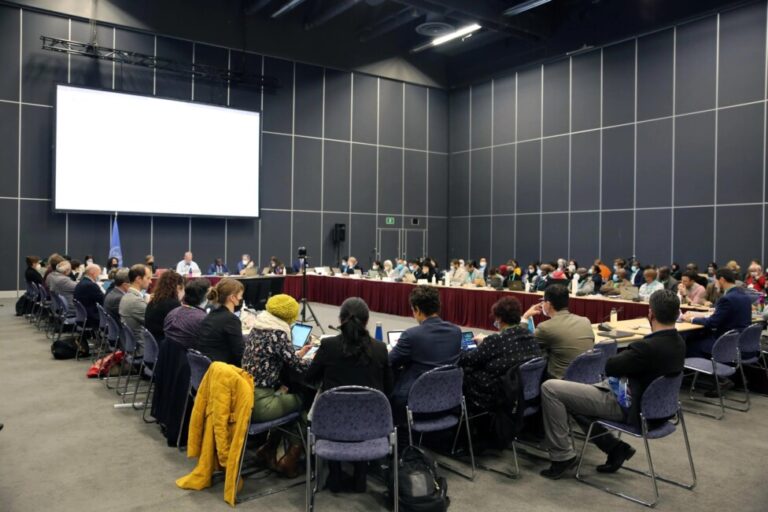
Discussions at the Convention on Biological Diversity summit intensified in the last few days of COP15 and ran late into the night, as in this session on health and biodiversity. But in the end, agreement was reached on a new Global Framework on Biodiversity, which will be binding on the 196 states parties. CREDIT: IISD/ENB

Discussions at the Convention on Biological Diversity summit intensified in the last few days of COP15 and ran late into the night, as in this session on health and biodiversity. But in the end, agreement was reached on a new Global Framework on Biodiversity, which will be binding on the 196 states parties. CREDIT: IISD/ENB

Major challenge

While the Global Framework has indicators and monitoring mechanisms and is legally binding, it has no actual teeth, and the precedent of the failed Aichi Targets casts a shadow over its future, especially with the world’s poor track record on international agreements.

The Aichi Biodiversity Targets, adopted in 2010 in that Japanese city during the CBD’s COP10 and which its 196 states parties failed to meet in 2020, included the creation of terrestrial and marine protected areas; the fight against pollution and invasive species; respect for indigenous knowledge; and the restoration of damaged ecosystems.

Several estimates put the amount needed to protect biological heritage at 700 billion dollars, which means there is still an enormous gap to be closed.

In more than 30 years, the GEF has disbursed over 22 billion dollars and helped transfer another 120 billion dollars to more than 5,000 regional and national projects. For the new period starting in 2023, the fund is counting on some five billion dollars in financing.

In addition, the Small Grants Program has supported around 27,000 community initiatives in developing countries.

“There is little public funding, more is needed,” Lovera said. “It’s sad that they say the private sector must fund biodiversity. In indigenous territories money is needed. They can do much more than governments with less money. Direct support can be more effective and they will meet the commitments.”

The activist also criticized the use of offsets, a mechanism whereby one area can be destroyed and another can be restored elsewhere – already used in countries such as Chile, Colombia and Mexico.

“This system allows us to destroy 70 percent of the planet while preserving the other 30 percent,” Lovera said. “It is madness. For indigenous peoples and local communities, it is very negative, because they lose their own biodiversity and the compensation is of no use to them, because it happens somewhere else.”

Figueroa said institutions that already manage funds could create direct mechanisms for indigenous peoples, as is the case with the Small Grants Program.

Of the 609 commitments that organizations, companies and individuals have already made voluntarily at COP15, 303 are aimed at the conservation and restoration of terrestrial ecosystems, 188 at alliances, and 159 at adaptation to climate change and reduction of polluting emissions.

The summit also coincided with the 10th Meeting of the Conference of the Parties to the Cartagena Protocol on Biosafety and the 4th Meeting of the Conference of the Parties to the Nagoya Protocol on Access to Genetic Resources and the Fair and Equitable Sharing of Benefits from their Utilization, both components of the CBD.

Images of the planet’s sixth mass extinction reflect the size of the challenge. More than a quarter of some 150,000 species on the IUCN Red List are threatened with extinction.

The “Living Planet Report 2022: Building a nature-positive society”, prepared by the WWF and the Institute of Zoology in London, shows that Latin America and the Caribbean has experienced the largest decline in monitored wildlife populations worldwide, with an average decline of 94 percent between 1970 and 2018.

With a decade to act, each passing day represents more biological wealth lost.

IPS produced this article with support from InternewsEarth Journalism Network.


Digital Treatment of Genetic Resources Shakes Up COP15

The executive secretary of the Convention on Biological Diversity, Elizabeth Maruma Mrema, highlighted on Friday Dec. 16 the results of the Nagoya Protocol on access to genetic resources and fair benefit sharing at an event during COP15 in the Canadian city of Montreal. But the talks have not reached an agreement on the digital sequencing of genetic resources. CREDIT: Emilio Godoy/IPS

The executive secretary of the Convention on Biological Diversity, Elizabeth Maruma Mrema, highlighted on Friday Dec. 16 the results of the Nagoya Protocol on access to genetic resources and fair benefit sharing at an event during COP15 in the Canadian city of Montreal. But the talks have not reached an agreement on the digital sequencing of genetic resources. CREDIT: Emilio Godoy/IPS

By Emilio Godoy
MONTREAL, Dec 16 2022 (IPS)

In addition to its nutritional properties, quinoa, an ancestral grain from the Andes, also has cosmetic uses, as stated by the resource use and benefit-sharing permit ABSCH-IRCC-PE-261033-1 awarded in February to a private individual under a 15-month commercial use contract.


The permit, issued by the Peruvian government’s National Institute for Agrarian Innovation, allows the Peruvian beneficiary to use the material in a skin regeneration cream.

But it also sets restrictions on the registration of products obtained from quinoa or the removal of its elements from the Andean nation, to prevent the risk of irregular exploitation without a fair distribution of benefits, in other words, biopiracy.”The scientific community is willing to share benefits through simple mechanisms that do not unfairly burden researchers in low- and middle-income countries.” — Amber Scholz

The licensed material may have a digital representation of its genetic structure which in turn may generate new structures from which formulas or products may emerge. This is called digital sequence information (DSI), in the universe of research or commercial applications within the CBD.

Treatment of DSI forms part of the debates at the 15th Conference of the Parties (COP15) to the United Nations Convention on Biological Diversity (CBD), which began on Dec. 7 and is due to end on Dec. 19 at the Palais des Congrès in the Canadian city of Montreal.

The summit has brought together some 15,000 people representing the 196 States Parties to the CBD, non-governmental organizations, academia, international bodies and companies.

The focus of the debate is the Post-2020 Global Framework on Biodiversity, which consists of 22 targets in areas including financing for conservation, guidelines on digital sequencing of genetic material, degraded ecosystems, protected areas, endangered species, the role of business and gender equality.

Like most of the issues, negotiations on DSI and the sharing of resulting benefits, contained in one of the Global Framework’s four objectives and in target 13, are at a deadlock, on everything from definitions to possible sharing mechanisms.

Except for the digital twist, the issue is at the heart of the Nagoya Protocol on Access to Genetic Resources and the Fair and Equitable Sharing of Benefits Arising from their Utilization, part of the CBD, signed in that Japanese city in 2010 and in force since 2014.

The delegations of the 196 States Parties to the Convention on Biological Diversity have failed to make progress at COP15 in the negotiations on new targets for the protection of the world's natural heritage, in the Canadian city of Montreal. In the picture, a working group reviews a proposal on the complex issue. CREDIT: IISD/ENB

The delegations of the 196 States Parties to the Convention on Biological Diversity have failed to make progress at COP15 in the negotiations on new targets for the protection of the world’s natural heritage, in the Canadian city of Montreal. In the picture, a working group reviews a proposal on the complex issue. CREDIT: IISD/ENB

Amber Scholz, a German member of the DSI Scientific Network, a group of 70 experts from 25 countries, said there is an urgent need to close the gap between the existing innovation potential and a fair benefit-sharing system so that digital sequencing benefits everyone.

“It’s been a decade now and things haven’t turned out so well. The promise of a system of innovation, open access and benefit sharing is broken,” Scholz, a researcher at the Department of Microbial Ecology and Diversity in the Leibniz Institute’s DSMZ German Collection of Microorganisms and Cell Cultures, told IPS.

DSI stems from the revolution in the massive use of technological tools, which has reached biology as well, fundamental in the discovery and manufacture of molecules and drugs such as those used in vaccines against the coronavirus that caused the COVID-19 pandemic.

The Aichi Biodiversity Targets, adopted in 2010 in that Japanese city during the CBD COP10, were missed by the target year, 2020, and will now be renewed and updated by the Global Framework that will emerge from Montreal.

The targets included respect for the traditional knowledge, innovations and practices of indigenous and local communities related to the conservation and sustainable use of biological diversity, their customary use of biological resources, and the full and effective participation of indigenous and local communities in the implementation of the CBD.

Lack of clarity in the definition of DSI, challenges in the traceability of the country of origin of the sequence via digital databases, fear of loss of open access to data and different outlooks on benefit-sharing mechanisms are other aspects complicating the debate among government delegates.

Through the Action Agenda: Make a Pledge platform, organizations, companies and individuals have already made 586 voluntary commitments at COP15, whose theme is “Ecological civilization: Building a shared future for all life on earth”.

Of these, 44 deal with access and benefit sharing, while 294 address conservation and restoration of terrestrial ecosystems, 185 involve partnerships and alliances, and 155 focus on adaptation to climate change and emission reductions.

Genetic havens

Access to genetic resources for commercial or non-commercial purposes has become an issue of great concern in the countries of the global South, due to the fear of biopiracy, especially with the advent of digital sequencing, given that physical access to genetic materials is not absolutely necessary.

Although the Nagoya Protocol includes access and benefit-sharing mechanisms, digital sequencing mechanisms have generated confusion. In fact, this instrument has created a market in which lax jurisdictions have taken advantage by becoming genetic havens.

Around 2,000 gene banks operate worldwide, attracting some 15 million users. Almost two billion sequences have been registered, according to statistics from GenBank, one of the main databases in the sector and part of the U.S. National Center for Biotechnology Information.

Argentina leads the list of permits for access to genetic resources in Latin America under the Protocol, with a total of 56, two of which are commercial, followed by Peru (54, four commercial) and Panama (39, one commercial). Mexico curbed access to such permits in 2019, following a scandal triggered by the registration of maize in 2016.

There are more than 100 gene banks operating in Mexico, 88 in Peru, 56 in Brazil, 47 in Argentina and 25 in Colombia.

The largest providers of genetic resources leading to publicly available DSI are the United States, China and Japan. Brazil ranks 10th among sources and users of samples, according to a study published in 2021 by Scholz and five other researchers.

The mechanisms for managing genetic information sequences have become a condition for negotiating the new post-2020 Global Framework for biodiversity, which poses a conflict between the most biodiverse countries (generally middle- and low-income) and the nations of the industrialized North.

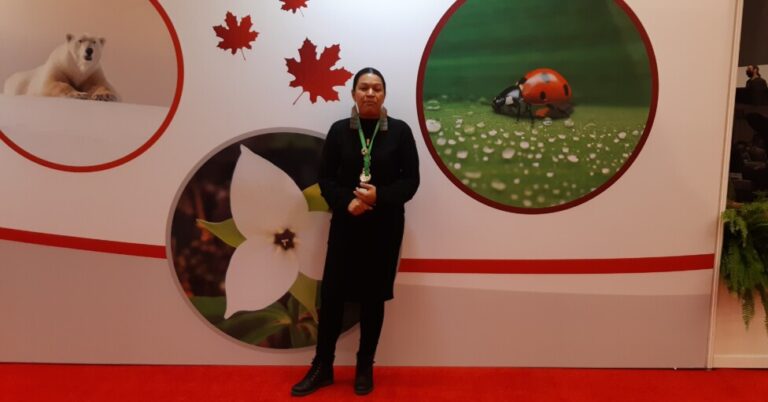
Brazilian indigenous activist Cristiane Juliao, a leader of the Pankararu people, calls for a fair system of benefit-sharing for access to and use of genetic resources and their digital sequences at COP15, being held at the Palais des Congrès in the Canadian city of Montreal. CREDIT: Emilio Godoy/IPS

Brazilian indigenous activist Cristiane Juliao, a leader of the Pankararu people, calls for a fair system of benefit-sharing for access to and use of genetic resources and their digital sequences at COP15, being held at the Palais des Congrès in the Canadian city of Montreal. CREDIT: Emilio Godoy/IPS

Indigenous people and their share

Cristiane Juliao, an indigenous woman of the Pankararu people, who is a member of the Brazilian Coordinator of Indigenous Peoples and Organizations of the Northeast, Minas Gerais and Espírito Santo, said the mechanisms adopted must favor the participation of native peoples and guarantee a fair distribution of benefits.

“We don’t look at one small element of a plant. We look at the whole context and the role of that plant. All traditional knowledge is associated with genetic heritage, because we use it in food, medicine or spiritual activities,” she told IPS at COP15.

Therefore, she said, “traceability is important, to know where the knowledge was acquired or accessed.”

In Montreal, Brazilian native organizations are seeking recognition that the digital sequencing contains information that indigenous peoples and local communities protect and that digital information must be subject to benefit-sharing. They are also demanding guarantees of free consultation and the effective participation of indigenous groups in the digital information records.

Thanks to the system based on the country’s Biodiversity Law, in effect since 2016, the Brazilian government has recorded revenues of five million dollars for permits issued.

The Working Group responsible for drafting the new Global Framework put forward a set of options for benefit-sharing measures.

They range from leaving in place the current status quo, to the integration of digital sequence information on genetic resources into national access and benefit-sharing measures, or the creation of a one percent tax on retail sales of genetic resources.

Lagging behind

There is a legal vacuum regarding this issue, because the CBD, the World Intellectual Property Organization and the International Treaty on Plant Genetic Resources for Food and Agriculture, in force since 2004, do not cover all of its aspects.

Scholz suggested the COP reach a decision that demonstrates the political will to establish a fair and equitable system. “The scientific community is willing to share benefits through simple mechanisms that do not unfairly burden researchers in low- and middle-income countries,” she said.

For her part, Juliao demanded a more inclusive and fairer system. “There is no clear record of indigenous peoples who have agreed to benefit sharing. It is said that some knowledge comes from native peoples, but there is no mechanism for the sharing of benefits with us.”

IPS produced this article with support from Internews’ Earth Journalism Network.

UN Deploys Unarmed Weapon in Humanitarian & Peacekeeping Operations

Armed Conflicts, Civil Society, Featured, Global, Global Governance, Headlines, Humanitarian Emergencies, IPS UN: Inside the Glasshouse, TerraViva United Nations

Credit: IPS

UNITED NATIONS, Nov 28 2022 (IPS) – A sign outside the United Nations reads, perhaps half-seriously, that it is a “No Drone Zone”—and “launching, landing or operating Unmanned or Remote-Controlled aircraft in this area is prohibited”.

The “warning” comes even as Unmanned Aerial Vehicles (UAVs) – or drones – are some of the new weapons of war deployed mostly by the US, and more recently, by Iran, Ukraine and Russia in ongoing military conflicts.


But the unarmed versions continue to be deployed by UN peacekeeping forces worldwide and by national and international humanitarian organizations.

In a recently-released report, the UN Population Fund (UNFPA says for women in Botswana, especially those living in remote communities where medical supplies and blood may not be in stock, giving birth can be life-threatening.

In 2019, the country recorded a maternal mortality rate of 166 deaths per 100,000 births, more than double the average for upper-middle-income countries.

Lorato Mokganya, Chief Health Officer in the Ministry of Health and Wellness, is quoted as saying that when a woman has lost a lot of blood during childbirth and may need to be transferred to a bigger medical facility, she first needs to be stabilized where she is before being driven out of that place. Timely delivery of blood can be lifesaving.

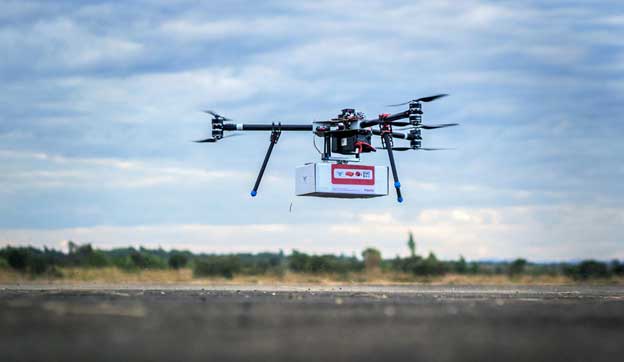
“A drone can be sent to deliver the blood so that the patient is stabilized,”

In an effort to curb the country’s preventable maternal deaths and overcome geographical barriers this innovative initiative will revolutionize the delivery of essential medical supplies and services across Botswana, says UNFPA.

Joseph Chamie, a former director of the UN Population Division and a consulting demographer., told IPS the increased use of drones for humanitarian and peacekeeping missions of the United Nations is certainly a good idea and should be encouraged.

“Why? Simply because the numerous benefits from the use of drones greatly outnumber the possible disadvantages”.

As is the case with all new technologies, he pointed out, resistance to the use of drones is to be expected. The public’s distrust in the use of drones is understandable given their use in military operations and surveillance activities.

Also, it should be acknowledged that drones could be misused and efforts are needed to ensure privacy, security and safety, said Chamie.

“In brief, the use of drones should be promoted and facilitated in the work of the UN’s humanitarian and peacekeeping operations as it will greatly enhance the effectiveness of their vital work,” he declared.

Credit: United Nations

Drones have been deployed in several UN peacekeeping missions, including the Democratic Republic of Congo (DRC), Rwanda and Uganda—going back to 2013.

Although this technology is not a magic solution, “the promise of drones is really tremendous,” says Christopher Fabian, principal advisor on innovation at the UN Children’s Fund (UNICEF).

For UNICEF and other humanitarian and development agencies, he said, in an interview with UN News, drone technology can make a big difference in three ways.

First, drones can leapfrog over broken infrastructure in places where developed transportation networks or roads do not exist, carrying low-weight supplies.

Second, UAVs can be used for remote sensing, such as gathering imagery and data, in the wake of natural disasters like mudslides, to locate where the damage is and where the affected peoples are.

Third, drones can extend wi-fi connectivity, from the sky to the ground, providing refugee camps or schools with access to the Internet.

As big as a Boeing 737 passenger jet and as small as a hummingbird, a huge variety of drones exist. According to research firm Gartner, total drone unit sales climbed to 2.2 million worldwide in 2016, and revenue surged 36 per cent to $4.5 billion.

Although UNICEF’s use of drones has been limited, the agency is exploring ways to scale up the use of UAVs in its operations, Fabian said.

“Hardware itself does not violate human rights. It is the people behind the hardware,” said Fabian, stressing the need to “make sure that any technology we bring in or work on falls within the framing of rights-based documents,” such as the Convention on the Rights of the Child.

UNICEF has a set of guiding principles for innovation, which includes elements like designing with the end-user.

For drone applications to spread further, Fabian said, the UN has a strong role in advocating this technology and ensuring that policy is shared with different governments.

In addition, governments have to clearly define why they need drones and what specifically they will be used for, while also building up national infrastructure to support their use.

The private sector must understand that the market can provide them real business opportunities.

In 10 to 20 years, drones might be “as basic to us as a pen or pencil,” said Fabian.

“I believe this technology will go through a few years of regulatory difficulty but will eventually become so ubiquitous and simple that it’s like which version of the cell phones you have rather than have you ever use the mobile phone at all,” he said.

Meanwhile, armed UAVs are being increasingly used in war zones in the Middle East, Asia, Africa and most recently Ukraine.

The US has launched drone strikes in Pakistan, Syria, Yemen, Somalia, Iraq, Libya and Afghanistan targeting mostly terrorist groups. But the negative fallout has included the deaths of scores of civilians and non-combatants.

In recent months, the use of drones by both Russia and Ukraine has triggered a raging battle at the United Nations while Iran has launched drone attacks inside Iraq.

The US, France, UK and Germany have urged the UN to investigate whether the Russian drones originated in Iran. But Russia has denied the charge and insisted the drones were homemade.

Russia’s First Deputy Permanent Representative to the UN, Ambassador Dmitry Polyanskiy, urged Secretary-General António Guterres and his staff on October 25 not to engage in any “illegitimate investigation” of drones used in Ukraine.

Meanwhile, going back to 2017, Malawi, in partnership with UNICEF, launched Africa’s first air corridor to test the humanitarian use of drones in Kasungu District.

Also with UNICEF, Vanuatu has been testing the capacity, efficiency and effectiveness of drones to deliver life-saving vaccines to inaccessible, remote communities in the small Pacific- island country, according to the United Nations.

Vanuatu is an archipelago of 83 islands separated over 1,600 kilometres. Many are only accessible by boat, and mobile vaccination teams frequently walk to communities carrying all the equipment required for vaccinations – a difficult task given the climate and topography.

To extend the use of drones, UNICEF and the World Food Programmes (WFP) have formed a working group.

In addition, UNICEF, together with the Office of the UN High Commissioner for Refugees (UNHCR), chairs the UN Innovation Network, an informal forum that meets quarterly to share lessons learned and advance discussions on innovation across agencies, the UN points out.

“Drones are also used in other parts of the UN system. The International Atomic Energy Agency (IAEA) and its partners have introduced a new quadcopter drone to visually map gamma radiation at Japan’s Fukushima Daiichi nuclear plant, which was damaged by the devastating 2011 tsunami”.

ROMEO, or the Remotely Operated Mosquito Emission Operation, met the competition’s aim of improving people’s lives. It was designed to transport and release sterile male mosquitoes as part of an insect pest birth control method that stifles pest population growth.

Some UN peacekeeping missions, such as those in the Democratic Republic of the Congo, Mali and the Central African Republic, have deployed unarmed surveillance UAVs to improve security for civilians, according to the UN.

The UN, however, warns that drone technology can be a double-edged sword. UN human rights experts have spoken out against the lethal use of drones.

IPS UN Bureau Report

  Source

Loss and Damage Fund Saves COP27 from the Abyss

Active Citizens, Civil Society, Climate Action, Climate Change, Climate Change Finance, Conferences, Editors’ Choice, Environment, Global, Global Governance, Headlines, IPS UN: Inside the Glasshouse, Latin America & the Caribbean, Regional Categories

Climate Action

Egyptian Foreign Minister Sameh Shoukry, chair of COP27, reads the nine-page Sharm El Sheikh Implementation Plan, the document that concluded the climate summit on Sunday Nov. 20, to an exhausted audience after tough and lengthy negotiations that finally reached an agreement to create a fund for loss and damage, a demand of the global South. CREDIT: Kiara Worth/UN

Egyptian Foreign Minister Sameh Shoukry, chair of COP27, reads the nine-page Sharm El Sheikh Implementation Plan, the document that concluded the climate summit on Sunday Nov. 20, to an exhausted audience after tough and lengthy negotiations that finally reached an agreement to create a fund for loss and damage, a demand of the global South. CREDIT: Kiara Worth/UN

SHARM EL SHEIKh , Nov 20 2022 (IPS) – They were on the brink of shipwreck and did not leave happy, but did feel satisfied that they got the best they could. The countries of the global South achieved something decisive at COP27: the creation of a special fund to address the damage and loss caused by climate change in the most vulnerable nations.


The fund, according to the Sharm El Sheikh Implementation Plan, the official document approved at dawn on Sunday Nov. 20 in this Egyptian city, should enable “rehabilitation, recovery and reconstruction” following extreme weather events in these vulnerable countries.

Decisions on who will provide the money, which countries will benefit and how it will be disbursed were left pending for a special committee to define. But the fund was approved despite the fact that the issue was not even on the official agenda of the summit negotiations, although it was at the center of the public debate before the conference itself.

“We are satisfied that the developed countries have accepted the need to create the Fund. Of course, there is much to discuss for implementation, but it was difficult to ask for more at this COP,” Ulises Lovera, Paraguay’s climate change director, told IPS, weary from a longer-than-expected negotiation, early Sunday morning at the Sharm El Sheikh airport.

“This COP has taken an important step towards justice. I welcome the decision to establish a loss and damage fund and to operationalize it in the coming period,” said U.N. Secretary-General António Guterres. He also described as an achievement that a “red line” was not crossed, that would take the rise in global temperature above the 1.5-degree limit.

More than 35,000 people from nearly 200 countries participated in the 27th Conference of the Parties (COP27) on Climate Change in Sharm El Sheikh, an Egyptian seaside resort on the Red Sea, where the critical dimension of global warming in the different regions of the world was on display, sometimes dramatically.

Practically everything that has to do with the future of the modes of production and life of humanity – starting with energy and food – was discussed at a mega-event that far exceeded the official delegations of the countries and the great leaders present, such as U.S. President Joe Biden and the Brazilian president-elect, Luiz Inácio Lula da Silva.

Hundreds of social organizations, international agencies and private sector stakeholders came here to showcase their work, seek funding, forge alliances, try to influence negotiations, defend their interests or simply be on a stage that seemed to provide a space for all kinds of initiatives and businesses.

At the gigantic Sharm El Sheikh International Convention Center there was also a global fair with non-stop activities from morning to night in the various pavilions, in stands with auditoriums of between 20 and 200 seats, where there was a flurried program of presentations, lectures and debates, not to mention the more or less crowded demonstrations of activists outside the venue.

In addition, government delegates negotiated on the crux of the summit: how to move forward with the implementation of the Paris Agreement, which at COP21 in 2015 set global climate change mitigation and adaptation targets.

United Nations Secretary-General António Guterres walks hurriedly through the Sharm El Sheikh Convention Center during the last intense hours of the COP27 negotiations, when there were moments when it seemed that there would be no agreement and the climate summit would end in failure. CREDIT: Daniel Gutman/IPS

United Nations Secretary-General António Guterres (3rd-R) walks hurriedly through the Sharm El Sheikh Convention Center during the last intense hours of the COP27 negotiations, when there were moments when it seemed that there would be no agreement and the climate summit would end in failure. CREDIT: Daniel Gutman/IPS

On the brink of failure

Once again, the nine-page Sharm El Sheikh Implementation Plan did not include in any of its pages a reference to the need to abandon fossil fuels, but only coal.

The document was the result of a negotiation that should have ended on Friday Nov. 18, but dragged on till Sunday, as usually happens at COPs. What was different on this occasion was a very tough discussion and threats of a walkout by some negotiators, including those of the European Union.

But in the end, the goal of limiting the temperature increase to 1.5 degrees Celsius, established in the Paris Agreement, was maintained, although several countries tried to make it more flexible up to 2.0 degrees, which would have been a setback with dramatic effects for the planet and humanity, according to experts and climate activists.

“Rapid, deep and sustained reductions in global greenhouse gas emissions (are) required – lowering global net greenhouse gas emissions by 43 percent by 2030 relative to the 2019 level – to limit global warming to 1.5°C target,” reads the text, although no mention is made of oil and gas, the fossil fuels most responsible for those emissions, in one of the usual COP compromises, since agreements are reached by consensus.

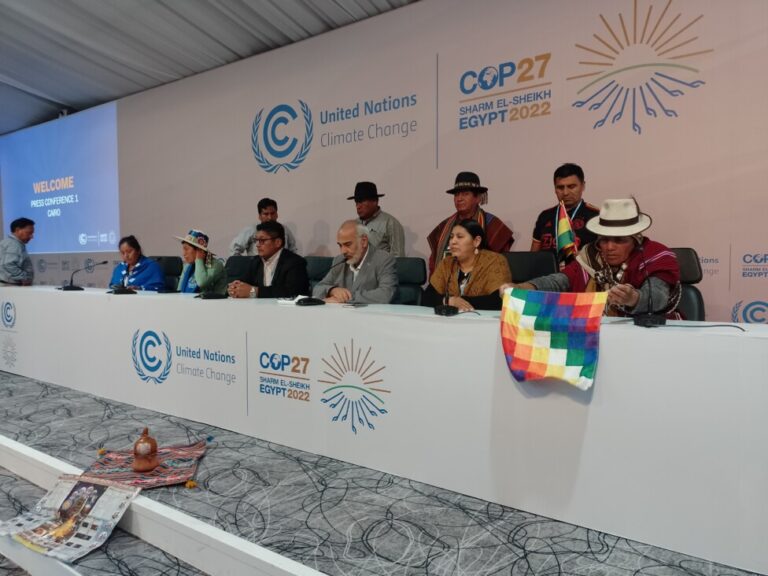
The Bolivian delegation in Sharm El Sheikh, which included officials as well as leaders of indigenous communities from the South American country, take part in a meeting with journalists at COP27 to demand more ambitious action. CREDIT: Daniel Gutman/IPS

The Bolivian delegation in Sharm El Sheikh, which included officials as well as leaders of indigenous communities from the South American country, take part in a meeting with journalists at COP27 to demand more ambitious action. CREDIT: Daniel Gutman/IPS

The priorities of the South

Developing countries, however, focused throughout the COP on the Loss and Damage Fund and other financing mechanisms to address the impacts of rising temperatures and mitigation actions.

“We need financing because we cannot deal with the environmental crisis alone. That is why we are asking that, in order to solve the problem they have caused, the rich nations take responsibility,” Diego Pacheco, head of the Bolivian delegation to Sharm El Sheikh, told IPS.

Environmental organizations, which showed their power in Egypt with the presence of thousands of activists, also lobbied throughout COP27 for greater commitments, including mitigation actions.

“This conference cannot be considered an implementation conference because there is no implementation without phasing out all fossil fuels,” the main cause of the climate crisis, said Zeina Khalil Hajj of the international environmental organization 350.org.

“Together for implementation” was precisely the slogan of COP27, calling for a shift from commitments to action.

“A text that does not stop fossil fuel expansion, that does not provide progress from the already weak Glasgow Pact (from COP26) makes a mockery of the millions of people living with the impacts of climate change,” said Khalil Hajj, head of global campaigning at 350.org.

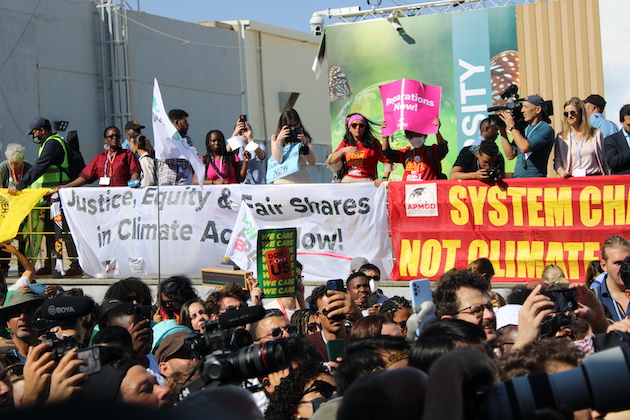
One of the demonstrations by climate activists at COP27 held in Egypt Nov. 6-20, demanding more ambitious climate action by governments, as well as greater justice and equity in tackling the climate crisis. CREDIT: Busani Bafana/IPS

One of the demonstrations by climate activists at COP27 held in Egypt Nov. 6-20, demanding more ambitious climate action by governments, as well as greater justice and equity in tackling the climate crisis. CREDIT: Busani Bafana/IPS

The crises that came together

Humanity – as recognized by the States Parties in the final document – is living through a dramatic time.

It faces a number of overlapping crises: food, energy, geopolitical, financial and economic, combined with more frequent natural disasters due to climate change. And developing nations are hit especially hard.

The demand for financing voiced by countries of the global South thus takes on greater relevance.

Cecilia Nicolini, Argentina’s climate change secretary, told IPS that it is the industrialized countries, because of their greater responsibility for climate change, that should finance developing countries, and lamented that “the problem is that the rules are made by the powerful.”

However, 80 percent of the money now being spent worldwide on climate change action is invested in the developed world, according to the Global Environment Facility (GEF), the world’s largest funder of climate action, which has contributed 121 billion dollars to 163 countries over the past 30 years, according to its own figures.

In this context, the issue of Loss and Damage goes one step further than adaptation to climate change, because it involves reparations for the specific impacts of climate change that have already occurred, such as destruction caused by droughts, floods or forest fires.

“Those who are bearing the burden of climate change are the most vulnerable households and communities. That is why the Loss and Damage Fund must be established without delay, with new funds coming from developed countries,” said Javier Canal Albán, Colombia’s vice minister of environmental land planning.

“It is a moral and climate justice imperative,” added Canal Albán, who spoke at a press conference on behalf of AILAC, a negotiating bloc that brings together several Latin American and Caribbean countries.

But the text of the outcome document itself acknowledges that there is a widening gap between what developing countries need and what they actually receive.

The financing needs of these countries for climate action until 2030 were estimated at 5.6 trillion dollars, but developed countries – as the document recognized – have not even fulfilled their commitment to provide 100 billion dollars per year, committed since 2009, at COP15 in Copenhagen, and ratified in 2015, at COP21 which adopted the Paris Agreement.

It was the absence of any reference to the need to accelerate the move away from oil and natural gas that frustrated several of the leaders at the COP. “We believe that if we don’t phase out fossil fuels there will be no Fund that can pay for the loss and damage caused by climate change,” Susana Muhamad, Colombia’s environment minister, who was at the two-week conference in Sharm El Sheikh held Nov. 6-20, told IPS.

“We have to put the victims first in order to make an orderly and just transition,” she said, expressing the sentiments of the governments and societies of the South at COP27.


What Does it take to Build a Culture of Equality & Inclusion at the UN? Reflections from Inside a Change Process

Civil Society, Democracy, Featured, Gender, Global, Global Governance, Headlines, Human Rights, TerraViva United Nations, Women in Politics

Opinion

“The Quilt in the Making”. Credit: Claudia Steinau

GENEVA, Oct 28 2022 (IPS) – The organisational is personal. Every day since the two of us were asked back in 2020 to co-lead the process of culture transformation at UNAIDS, the United Nations organisation which drives global efforts to end AIDS, we have both felt at our very core how crucial it has been to get it right.


The mission of UNAIDS is vital to ensuring the health and human rights of every person. Staff and partners need to be confident of a supportive and empowering culture that will enable their work.

A 2018 Report by an Independent Expert Panel had shone a light on what were important organisational shortcomings, leading to a comprehensive set of changes in leadership, systems and crucially, culture.

As the Culture Transformation process has got underway, the COVID-19 pandemic has brought unprecedented shifts in work, and a resurgence of global protests, including from the Black Lives Matter movement and for women’s rights, have a generated an inspirational momentum for action to tackle intersectional injustice.

Reflecting almost three years of UNAIDS culture transformation work, what stands out in particular for the two of us is how the “outer work” has required so much “inner work”. We have needed to be, and to help others be, our full selves, and to acknowledge what we don’t yet know of each other’s experiences.

The process has deepened our appreciation of how our differences, both personally and professionally, are a key strength, enabling each situation, each process, to be seen from a combination of unique angles, and how equality is crucial in enabling all these to be brought forth.

Creating safe spaces for our colleagues to speak about their lived experiences was transformative. We asked ourselves and those around us tough and tender questions. We had colleagues tell us they felt heard for the first time. Brave conversations helped colleagues to connect and to advance the tangible changes that matter most to them.

We understood the need for a common reference framework for all of us at UNAIDS. This has led to a first set of feminist principles that guide our way forward.

Through the process, it became ever more clear to both of us that culture transformation begins at the personal level. As a Malawian woman of African-Asian heritage, living and working in Latin America at this time, intersecting identities and multiple cultural heritage became for Mumtaz the centre of personal reflections.

In leading conversations on decolonizing the HIV Response, Mumtaz’s own colonization was calling for attention. For Juliane, too, this has been powerful journey: as someone who has experienced sexual assault in the workplace, this work is deeply personal, driven by a determination to build safe workplaces for everyone, including by addressing inequalities and unhealthy power balances. Our intersectional feminist approach has brought our experiences to our work.

But this work has also highlighted that whilst the organisational is personal, so too the personal is often dependent on the organisational. Engaging with intersectional feminist principles at the personal level was not enough.

That is why we were proud to help UNAIDS become the UN entity to put intersectional feminist principles at the core of its being. It is why vital work continues to integrate those principles into policies and practices to advance a workplace culture in which every individual can flourish.

As we have helped build a movement for change across six regions, engaged in conversation with more than 500 colleagues, and supported some 25 diverse teams in their own journey, we have recognised the centrality of the institutional level.

Cultural transformation is a long and challenging process that requires the tenacity and creativity of many. To weave the stories and aspirations of so many of the champions for change together while preserving their uniqueness, we have borrowed the quilt symbol that is iconic in the AIDS response.

As the change process evolves, new tiles will be added, others might fade or need repairing. But the work is not done. It is a ‘quilt in the making’ – individual and collective work, one tile at a time.

Mumtaz Mia and Juliane Drews have led UNAIDS Culture Transformation since May 2020.

Mumtaz is a Public Health expert with two decades of experience working to end AIDS. Juliane is a change management expert with 15 years of experience in developing inclusive and just organizations in which staff in all their diversity thrive.

The link to UNAIDS Culture Transformation here.

IPS UN Bureau

  Source

Uyghur Violations a Litmus Test for Global Governance & Rules-based International Order

Asia-Pacific, Civil Society, Crime & Justice, Democracy, Featured, Global Geopolitics, Global Governance, Headlines, Human Rights, TerraViva United Nations

Opinion

Protesters in Washington, DC, march against the alleged killing of Uyghur Muslims. June 2022. Credit: Unsplash/Kuzzat Altay

NEW YORK, Oct 3 2022 (IPS) – This week is a momentous one for the world’s premier human rights body. At stake is a resolution to decide whether the UN Human Rights Council in Geneva can hold a debate on a recently released UN report.


The report concludes that rights violations by China’s government in its Xinjiang region ‘may constitute international crimes, in particular crimes against humanity’.

Unsurprisingly, China’s government is doing everything in its power to scotch plans for a debate on the report’s contents. Its tactics include intimidating smaller states, spreading disinformation and politicising genuine human rights concerns – the very thing the Human Rights Council was set up to overcome.

The historic report, which affirms that the rights of Xinjiang’s Uyghur Muslim population are being violated through an industrial-level programme of mass incarceration, systemic torture and sexual violence, attracted huge controversy before it was released on 31 August 2022, minutes before the end of the term of the outgoing High Commissioner for Human Rights, Michelle Bachelet.

The report was supposedly ready in September 2021 but so great was the pressure exerted by the Chinese state that it took almost another year for it to be aired. Absurdly, the 46-page report includes a 122 page annex in the form of a rebuttal issued by China, rejecting the findings and calling into question the mandate of the Office of the High Commissioner for Human Rights.

The Office of the High Commissioner has asserted that the report is based on a rigorous review of documentary evidence with its credibility assessed in accordance with standard human rights methodology. The report’s recommendations are pretty straightforward: prompt steps should be taken to release all people arbitrarily imprisoned in Xinjiang, a full legal review of national security and counter-terrorism policies should be undertaken, and an official investigation should be carried into allegations of human rights violations in camps and detention facilities.

Nevertheless, a proposed resolution to hold a debate on the report’s contents in early 2023 is facing severe headwinds. A number of states inside and outside the Human Rights Council, united by their shared history of impunity for rampant human rights abuses – such as Cuba, Egypt, Laos, North Korea, Pakistan, Saudi Arabia, Syria and Venezuela – have already rallied to China’s defence in informal negotiations on the brief resolution.

What is most worrying is that China appears to be leaning on smaller states that make up the 47-member Human Rights Council by inverting arguments about politicisation of global human rights issues and projecting itself as the victim of a Western conspiracy to undermine its sovereignty.

If China were to have its way, it would be a huge setback for the Human Rights Council, which was conceived in 2006 as a representative body of states designed to overcome the flaws of ‘declining credibility and lack of professionalism’ that marred the work of the body it replaced, the UN Commission on Human Rights.

Former UN Secretary-General Kofi Annan, in his ground-breaking In Larger Freedom report, lamented that states sought membership ‘not to strengthen human rights but to protect themselves against criticism or to criticize others’.

Human Rights Council members are expected to uphold the highest standards in the protection and promotion of human rights. But our research at CIVICUS shows that eight of the Council’s 47 members have the worst possible civic space conditions for human rights defenders and their organisations to exist. In these countries – Cameroon, China, Cuba, Eritrea, Libya, Sudan, United Arab Emirates and Uzbekistan – human rights are routinely abused and anyone with the temerity to speak truth to power is relentlessly persecuted.

Regimes that serially abuse human rights may be motivated to block findings of investigations being aired on the international stage, but the international community has a collective responsibility to the victims. Civil society groups are urging Human Rights Council members to stand firm on the call for a debate on the China report.

Human Rights Council member states that assert the importance of human rights and democracy in their foreign policy are expected to vote in favour. Nevertheless, the influence of regional and geo-political blocs within the Council mean that the issue will essentially be settled by the decisions of states such as Argentina, Armenia, Benin, Brazil, Côte d’Ivoire, Gabon, Honduras, India, Indonesia, Malawi, Malaysia, Mexico, Paraguay, Senegal, Ukraine and Qatar.

China will undoubtedly pressure these states to try to get them to oppose or abstain in any vote that seeks to advance justice for the Uyghur people.

The stakes are particularly high for China’s mercurial leader, Xi Jinping, who is seeking to anoint himself as president for a third term – after abolishing term limits in 2018 – at the Chinese Communist Party’s Congress, which begins on 16 October.

Recognition of the systematic abuses to which Xi’s administration has subjected the Uyghur people would be considered an international affront to his growing power.

If China were to prevail at the Human Rights Council, it would be another blow to the legitimacy of the UN, which is already reeling from the UN Security Council’s inability to overcome Russia’s permanent member veto to block action on the invasion of Ukraine. So much – for the UN’s reputation, and for the hope that human rights violators, however powerful, will be held to account – is resting on the vote.

Mandeep S. Tiwana, is chief programmes officer and representative to the United Nations at global civil society alliance, CIVICUS.

IPS UN Bureau

  Source