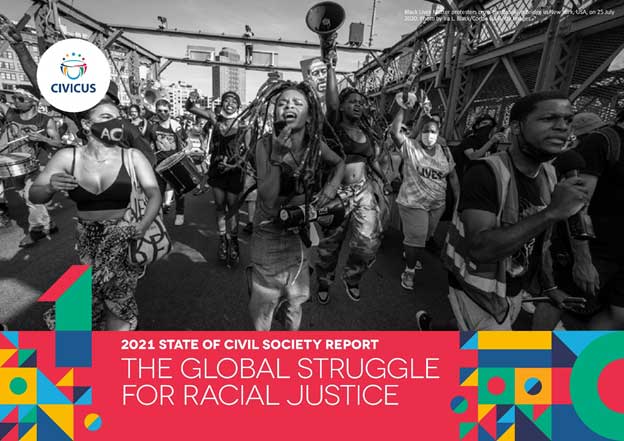
NEW YORK, May 26 2021 (IPS) – It has been one year since the police murder of George Floyd, an outrage that resonated around the world. The killing forced people to the streets, in the USA and on every inhabited continent, to demand respect for Black lives and Black rights, proving that protest was essential even during the pandemic.
The Black Lives Matter (BLM) demonstrations are the latest in a great global wave of protests that started with the Arab Spring 10 years ago and continue today, seen in the brave civil disobedience people are mounting against Myanmar’s military coup and the protests against Israeli violence in Palestine, with people taking to the streets around the world to show solidarity and demand an end to the killing.
Millions of people are protesting because they can see that protests lead to change – the trial of the officer responsible for George Floyd’s killing was an incredibly rare event that would likely not have happened without protest pressure – and because mass mobilisations often offer the only means of resistance to repressive governments.
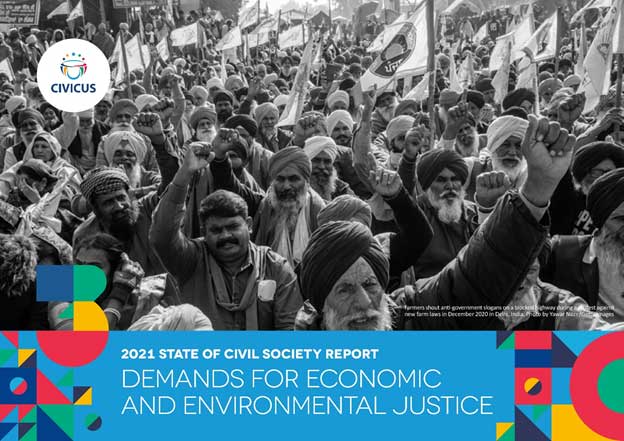
CIVICUS’s just-published 2021 State of Civil Society Report describes how decentralised movements for racial justice and gender equality are challenging exclusion and demanding a radical reckoning with systemic racism and patriarchy.
Threats posed by economic inequality and climate change are enabling people to connect across cultures, spurring mobilisations in many different countries. Today, not only in Myanmar and Palestine, but in Colombia, Lebanon and Thailand among many others, people are demanding economic opportunity, a real say in how they are governed, and an end to discrimination.
Much blood is being spilt in unwarranted violence against protesters by repressive security apparatuses acting on the behest of vested interests. Inarguably, the right to mobilise is being sharply contested because of its potential to redistribute power to the excluded.
Major political transformations in modern history have been catalysed through largely peaceful protests. Sustained mass mobilisations have resulted in significant rights victories including expansion of women’s right to vote, passing of essential civil rights laws, dismantling of military dictatorships, ending apartheid, and legalisation of same-sex marriage.
In the past year, despite the disruptions of COVID-19, populist demagogues have faced stiff resistance from people driven by a hunger for justice and democracy. In Brazil, thousands came out to the streets to protest against horrendous bungling by the Bolsonaro administration in its response to the COVID-19 pandemic which has resulted in a monumental loss of lives.
In India, thousands of farmers remain steadfastly defiant in camps outside Delhi to protest against hurriedly drawn-up laws designed to undermine their livelihoods and benefit big business supporters of Prime Minister Modi’s autocratic government.
In Russia, pro-democracy protests in several cities against the grand corruption of strongman President Putin have so alarmed him that he engineered the imprisonment of his most prominent political opponent. In Uganda, political opposition led protests have inspired people from all walks of life to stand up against President Museveni who’s been in power for 35 years.
In Belarus, protests by ordinary people displaying extraordinary courage helped bring international attention to an election stolen by Alexander Lukashenko, the first and only president the country has known since the present constitution was established in 1994.
Credit: CIVICUS
In the United States, the decentralised Black Lives Matter movement is spurring action on racial justice and the unprecedented prosecution of police officers engaged in racist acts of violence against Black people.
The movement not only helped dispatch a race-baiting disruptive president at the polls, it also had a deep impact beyond the United States by spotlighting racism in places as diverse as Colombia, the Netherlands, South Africa and the United Kingdom.
Notably, women-led movements are challenging gender stereotypes, exposing patterns of exclusion, and forging breakthroughs to lay the groundwork for fairer societies. Concerted street protests by women in Chile helped win a historic commitment to develop a new justice-oriented constitution by a gender-balanced constitutional assembly that will also include Indigenous people’s representation.
In Argentina, legislation to legalise abortion and protect women’s sexual and reproductive rights followed years of public mobilisations by the feminist movement.
Our research finds that, in country after country, young people are at the forefront of protest. Young people have taken ownership of climate change to make it a decisive issue of our time. The Fridays for Future movement which began with a picket in front of the Swedish parliament on school days now has supporters organising regular events to demand urgent political action on the climate crisis on all continents.
Present day movements are deriving strength by taking the shape of networks rather than pyramids, with multiple locally active leaders. Hong Kong’s ‘Water Revolution’ may have been repressed by China’s authoritarian might, but the metaphor of behaving like water – shapeless, mobile, adaptable – holds true for many contemporary movements.
Unsurprisingly, powerful people’s mobilisations are inviting sharp backlash. Protest leaders and organisers are often the first to be vilified through official propaganda and subjected to politically motivated prosecutions.
Many of the rights violations that CIVICUS has documented in recent years are in relation to suppression of protests. Persecution of dissenters, censorship and surveillance to stymie public mobilisations remains rife.
They are all part of a tussle between people joining together in numbers to demand transformative change, and forces determined to stop them. Yet, the principled courage of protesters who mobilise undeterred by repression continues to inspire.
Protests are about challenging and renegotiating power. To succeed they need solidarity and allies across the board. The responsibility to safeguard the right to peaceful assembly enshrined in the constitutions of most countries and in the international human rights framework rests with all of us. History shows us that when people come together as civil society great things are possible.
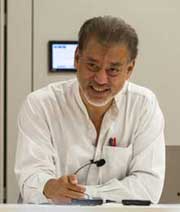
Mandeep Tiwana is Chief Programmes Officer at global civil society alliance CIVICUS. The State of Civil Society Report 2021 can be found online here.
KUALA LUMPUR, Malaysia, May 10 2021 (IPS) – Producers and consumers seem helpless as food all over the world comes under fast growing corporate control. Such changes have also been worsening environmental collapse, social dislocation and the human condition.
Longer term perspective The recent joint report – by the International Panel of Experts on Sustainable Food Systems (IPES-Food) and the ETC Action Group on Erosion, Technology and Concentration – is ominous, to say the least.
Jomo Kwame Sundaram
A Long Food Movement, principally authored by Pat Mooney with a team including IPES-Food Director Nick Jacobs, analyses how food systems are likely to evolve over the next quarter century with technological and other changes.
The report notes that ‘hi-tech’, data processing and asset management corporations have joined established agribusinesses in reshaping world food supply chains.
If current trends continue, the food system will be increasingly controlled by large transnational corporations (TNCs) at the expense of billions of farmers and consumers.
Big Ag weds Big Data The Davos World Economic Forum’s (WEF) much touted ‘Fourth Industrial Revolution’ (IR4.0), promoting digitisation, is transforming food systems, accelerating concentration in corporate hands.
New apps enable better tracking across supply chains, while ‘precision farming’ now includes using drones to spray pesticides on targeted crops, reducing inputs and, potentially, farming costs. Agriculture is now second only to the military in drone use.
Digital giants are working with other TNCs to extend enabling ‘cloud computing’ infrastructure. Spreading as quickly as the infrastructure allows, new ‘digital ag’ technologies have been displacing farm labour.
Meanwhile, food data have become more commercially valuable, e.g., to meet consumer demand, Big Ag profits have also grown by creating ‘new needs’. Big data are already being used to manipulate consumer preferences.
With the pandemic, e-retail and food delivery services have grown even faster. Thus, e-commerce platforms have quickly become the world’s top retailers.
New ‘digital ag’ technologies are also undermining diverse, ecologically more appropriate food agriculture in favour of unsustainable monocropping. The threat is great as family farms still feed more than two-thirds of the world’s population.
IR4.0 not benign Meanwhile, hi-tech and asset management firms have acquired significant shareholdings in food giants. Powerful conglomerates are integrating different business lines, increasing concentration while invoking competition and ‘creative disruption’.
The IPES-ETC study highlights new threats to farming and food security as IR4.0 proponents exert increasing influence. The report warns that giving Big Ag the ‘keys of the food system’ worsens food insecurity and other existential threats.
Powerful corporations will increase control of most world food supplies. Big Ag controlled supply chains will also be more vulnerable as great power rivalry and competition continue to displace multilateral cooperation.
There is no alternative? But the report also presents a more optimistic vision for the next quarter century. In this alternative scenario, collaborative efforts, from the grassroots to the global level, empower social movements and civil society to resist.
New technologies are part of this vision, from small-scale drones for field monitoring to consumer apps for food safety and nutrient verification. But they would be cooperatively owned, open access and well regulated.
The report includes pragmatic strategies to cut three quarters of agriculture’s greenhouse gas emissions and shift US$4 trillion from Big Ag to agroecology and food sovereignty. These include “$720 billion in subsidies” and “$1.6 trillion in healthcare savings” due to malnutrition.
IPES-ETC also recommends taxing junk food, toxins, carbon emissions and TNC profits. It also urges criminal prosecution of those responsible for famine, malnutrition and environmental degradation.
Food security protocols are needed to supercede trade and intellectual property law, and not only for emergencies. But with food systems under growing stress, Big Ag solutions have proved attractive to worried policymakers who see no other way out.
Last chance to change course Historically, natural resources were commonly or publicly shared. Water and land have long been sustainably used by farmers, fisherfolk and pastoralists. But market value has grown with ‘property rights’, especially with corporate acquisition.
Touted as the best means to achieve food security, corporate investments in recent decades have instead undermined remaining ‘traditional’ agrarian ecosystems.
Big Ag claims that the food, ecological and climate crises has to be addressed with its superior new technologies harnessing the finance, entrepreneurship and innovation only they can offer.
But in fact, they have failed, instead triggering more problems in their pursuit of profit. As the new food system and corporate trends consolidate, it will become increasingly difficult to change course. Very timely, A Long Food Movement is an urgent call to action for the long haul.
Food systems summit According to Marchmont Communications, “writing on behalf of the UN Food Systems Summit secretariat”, the “Summit was originally announced on 16 October 2019 by UN Secretary-General António Guterres and was conceived following conversations with the joint leadership of the three Rome-based United Nations agencies…at the High-level Political Forum in July 2019”.
On 12 June 2019, ‘Inspiration Speaker’ David Nabarro announced to the annual EAT Stockholm conference that a World Food Systems Summit (WFSS) would be held in 2021. The following day, a Memorandum of Understanding (MOU) was signed between the World Economic Forum (WEF) and the Office of the UN Secretary-General.
It stirred up so much controversy that the MOU was later removed from the website of the WEF, hardly reputed for its modesty. Unsurprisingly, many believe that the WEF “pressed the Summit onto a reluctant UN Secretary-General”, and can be traced to its Food Systems Initiative.
With so much at stake, representatives of food producers and consumers need to act urgently to prevent governments from allowing a UN sanctioned corporate takeover of global governance of food systems.
KUALA LUMPUR, Malaysia, Apr 27 2021 (IPS) – Producers and consumers seem helpless as food all over the world comes under fast growing corporate control. Such changes have also been worsening environmental collapse, social dislocation and the human condition.
Longer term perspective The recent joint report – by the International Panel of Experts on Sustainable Food Systems (IPES-Food) and the ETC Action Group on Erosion, Technology and Concentration – is ominous, to say the least.
Jomo Kwame Sundaram
A Long Food Movement, principally authored by Pat Mooney with a team including IPES-Food Director Nick Jacobs, analyses how food systems are likely to evolve over the next quarter century with technological and other changes.
The report notes that ‘hi-tech’, data processing and asset management corporations have joined established agribusinesses in reshaping world food supply chains.
If current trends continue, the food system will be increasingly controlled by large transnational corporations (TNCs) at the expense of billions of farmers and consumers.
Big Ag weds Big Data The Davos World Economic Forum’s (WEF) much touted ‘Fourth Industrial Revolution’ (IR4.0), promoting digitisation, is transforming food systems, accelerating concentration in corporate hands.
New apps enable better tracking across supply chains, while ‘precision farming’ now includes using drones to spray pesticides on targeted crops, reducing inputs and, potentially, farming costs. Agriculture is now second only to the military in drone use.
Digital giants are working with other TNCs to extend enabling ‘cloud computing’ infrastructure. Spreading as quickly as the infrastructure allows, new ‘digital ag’ technologies have been displacing farm labour.
Meanwhile, food data have become more commercially valuable, e.g., to meet consumer demand, Big Ag profits have also grown by creating ‘new needs’. Big data are already being used to manipulate consumer preferences.
With the pandemic, e-retail and food delivery services have grown even faster. Thus, e-commerce platforms have quickly become the world’s top retailers.
New ‘digital ag’ technologies are also undermining diverse, ecologically more appropriate food agriculture in favour of unsustainable monocropping. The threat is great as family farms still feed more than two-thirds of the world’s population.
IR4.0 not benign Meanwhile, hi-tech and asset management firms have acquired significant shareholdings in food giants. Powerful conglomerates are integrating different business lines, increasing concentration while invoking competition and ‘creative disruption’.
The IPES-ETC study highlights new threats to farming and food security as IR4.0 proponents exert increasing influence. The report warns that giving Big Ag the ‘keys of the food system’ worsens food insecurity and other existential threats.
Powerful corporations will increase control of most world food supplies. Big Ag controlled supply chains will also be more vulnerable as great power rivalry and competition continue to displace multilateral cooperation.
There is no alternative? But the report also presents a more optimistic vision for the next quarter century. In this alternative scenario, collaborative efforts, from the grassroots to the global level, empower social movements and civil society to resist.
New technologies are part of this vision, from small-scale drones for field monitoring to consumer apps for food safety and nutrient verification. But they would be cooperatively owned, open access and well regulated.
The report includes pragmatic strategies to cut three quarters of agriculture’s greenhouse gas emissions and shift US$4 trillion from Big Ag to agroecology and food sovereignty. These include “$720 billion in subsidies” and “$1.6 trillion in healthcare savings” due to malnutrition.
IPES-ETC also recommends taxing junk food, toxins, carbon emissions and TNC profits. It also urges criminal prosecution of those responsible for famine, malnutrition and environmental degradation.
Food security protocols are needed to supercede trade and intellectual property law, and not only for emergencies. But with food systems under growing stress, Big Ag solutions have proved attractive to worried policymakers who see no other way out.
Last chance to change course Historically, natural resources were commonly or publicly shared. Water and land have long been sustainably used by farmers, fisherfolk and pastoralists. But market value has grown with ‘property rights’, especially with corporate acquisition.
Touted as the best means to achieve food security, corporate investments in recent decades have instead undermined remaining ‘traditional’ agrarian ecosystems.
Big Ag claims that the food, ecological and climate crises has to be addressed with its superior new technologies harnessing the finance, entrepreneurship and innovation only they can offer.
But in fact, they have failed, instead triggering more problems in their pursuit of profit. As the new food system and corporate trends consolidate, it will become increasingly difficult to change course.
Proposed by the WEF, the UN Secretary-General’s Food Systems Summit later this year clearly seeks to promote corporate ‘solutions’. Very timely, A Long Food Movement is an urgent call to action for the long haul.
With so much at stake, representatives of food producers and consumers need to act urgently to prevent governments from allowing a UN sanctioned corporate takeover of global governance of food systems.
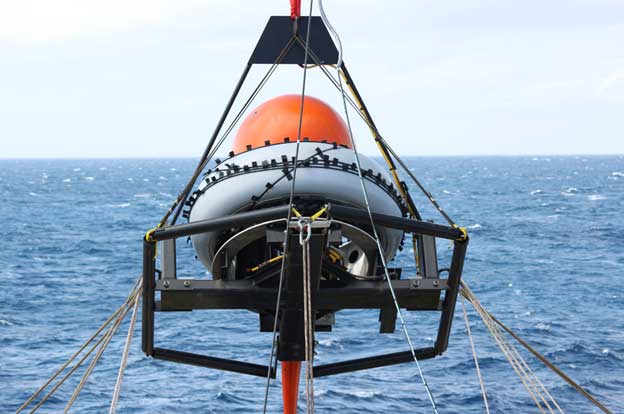
Hydrophone launch. Credit: The Comprehensive Nuclear-Test-Ban Treaty Organization (CTBTO)
NEW YORK, Apr 15 2021 (IPS) – Travel and economic slowdowns due to the COVID-19 pandemic have combined to brake shipping, seafloor exploration, and many other human activities in the ocean, creating a unique moment to begin a time-series study of the impacts of sound on marine life.
Our community of scientists has identified more than 200 non-military ocean hydrophones worldwide and hopes to make the most of the unprecedented opportunity to pool their recorded data into the 2020 quiet ocean assessment and to help monitor the ocean soundscape long into the future.
Our aim is a network of 500 hydrophones capturing the signals of whales and other marine life while assessing the racket levels of human activity. Combined with other sea life monitoring methods such as animal tagging, the work will help reveal the extent to which noise in “the Anthropocene seas” impacts ocean species, which depend on sound and natural sonar to mate, navigate and feed across the ocean.
Sound travels far in the ocean and a hydrophone can pick up low frequency signals from hundreds, even thousands of kilometres away.
Assessing the risks of underwater sound for marine life requires understanding what sound levels cause harmful effects and where in the ocean vulnerable animals may be exposed to sound exceeding these levels.
In 2011, experts began developing the International Quiet Ocean Experiment (IQOE), launched in 2015 with the International Quiet Ocean Experiment Science Plan. Among our goals: to create a time series of measurements of ambient sound in many ocean locations to reveal variability and changes in intensity and other properties of sound at a range of frequencies.
The plan also included designating 2022 “the Year of the Quiet Ocean.” Due to COVID-19, however, the oceans are unlikely to be as quiet as they were in April, 2020 for many decades to come.
COVID-19 reduced sound levels more than we dreamed possible. IQOE, therefore, is focusing project resources to encourage study of changes in sound levels and effects on organisms that occurred in 2020, based on observations from hundreds of hydrophones worldwide in 2019-2021.
Of the 231 non-military hydrophones identified to February 2021, the highest concentrations are found along the North American coasts — Atlantic, Pacific and Arctic — Hawaii, Europe, and Antarctica, with some scattered through the Asia-Pacific region.
Several have agreed to their geographic coordinates and other metadata being shown on the IQOE website (https://www.iqoe.org/systems).
Sparse, sporadic deployment of hydrophones and obstacles to integrating measurements have narrowly limited what we confidently know.
We are therefore creating a global data repository with contributors using standardized methods, tools and depths to measure and document ocean soundscapes and effects on the distribution and behavior of vocalizing animals.
New software, MANTA (at https://bit.ly/3cVNUox), developed by researchers across the USA and led by the University of New Hampshire, will help standardize ocean sound recording data from collaborators, facilitating its comparability, pooling and visualization.
As well, an Open Portal to Underwater Sound (OPUS), is being tested at Alfred Wegener Institute in Bremerhaven, Germany to promote the use of acoustic data collected worldwide, providing easy access to MANTA-processed data. The aggregated data will permit soundscape maps of entire oceans.
Meanwhile, scientists over the past decade have developed powerful methods to estimate the distribution and abundance of vocalizing animals using passive acoustic monitoring.
The fledgling hydrophone network contributes to the Global Ocean Observing System (GOOS), a network of observing assets monitoring currents, temperature, sea level, chemical pollution, litter, and other concerns worldwide.
Precious chance
Seldom has there been such a chance to collect quiet ocean data in the Anthropocene Seas. COVID-19 drastically decreased shipping, tourism and recreation, fishing and aquaculture, naval and coast guard exercises, offshore construction, port and channel dredging, and energy exploration and extraction. The concurrent price war that caused oil prices to dive to zero further quieted maritime energy activities.
The last comparable opportunity followed the terrorist attacks on the United States in September 2001, which disrupted not just air travel; they also led to a shipping slowdown and ocean noise reduction, prompting biologists to study stress hormone levels in endangered North Atlantic right whales in the Bay of Fundy.
With their 2001 data, research revealed higher September stress hormone levels over the next four years as the whales prepared to migrate to warmer southern waters where they calve, suggesting that the industrialized ocean causes chronic stress of animals.
We are on the way to timely, reliable, easily understood maps of ocean soundscapes, including the exceptional period of April 2020 when the COVID virus gave marine animals a brief break from human clatter.
Let’s learn from the COVID pause to help achieve safer operations for shipping industries, offshore energy operators, navies, and other users of the ocean.
We invite parties in a position to help to join us in this global effort to assess the variability and trends of ocean sound and the effects of sound on marine life.
*Jesse Ausubel is the IQOE project originator and Director of the Program for the Human Environment at The Rockefeller University, New York City; Edward R. Urban Jr of the Scientific Committee on Oceanic Research is the IQOE Project Manager
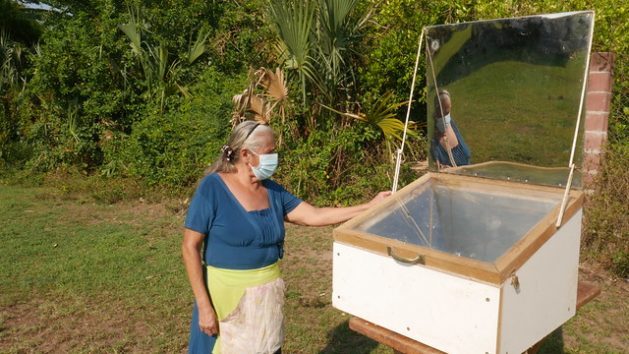
María Luz Rodríguez stands next to her solar oven where she cooked lasagna in the village of El Salamar in San Luis La Herradura municipality. In this region in southern El Salvador, an effort is being made to implement environmental actions to ensure the sustainable use of natural resources. CREDIT: Edgardo Ayala/ IPS
SAN LUIS LA HERRADURA, El Salvador, Mar 31 2021 (IPS) – Salvadoran villager Maria Luz Rodriguez placed the cheese on top of the lasagna she was cooking outdoors, put the pan in her solar oven and glanced at the midday sun to be sure there was enough energy for cooking.
“Hopefully it won’t get too cloudy later,” Maria Luz, 78, told IPS. She then checked the thermometer inside the oven to see if it had reached 150 degrees Celsius, the ideal temperature to start baking.
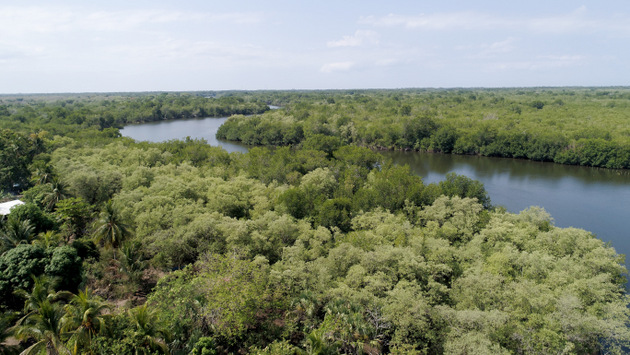
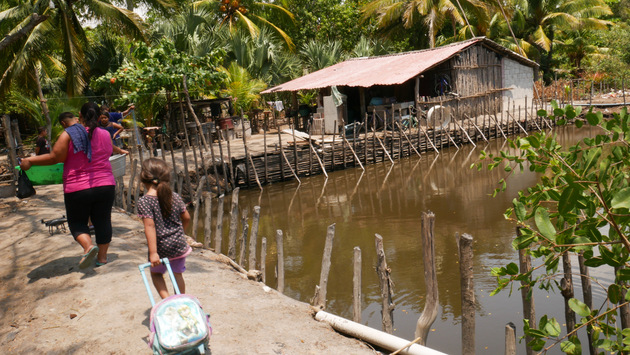
She lives in El Salamar, a coastal village of 95 families located in San Luis La Herradura, a municipality in the central department of La Paz which is home to some 30,000 people on the edge of an impressive ecosystem: the mangroves and bodies of water that make up the Estero de Jaltepeque, a natural reserve whose watershed covers 934 square kilometres.
After several minutes the cheese began to melt, a clear sign that things were going well inside the solar oven, which is simply a box with a lid that functions as a mirror, directing sunlight into the interior, which is covered with metal sheets.
“I like to cook lasagna on special occasions,” Maria Luz said with a smile.
After Tropical Storm Stan hit Central America in 2005, a small emergency fund reached El Salamar two years later, which eventually became the start of a much more ambitious sustainable development project that ended up including more than 600 families.
Solar ovens and energy-efficient cookstoves emerged as an important component of the programme.
Aerial view of Estero de Jaltepeque, in San Luis La Herradura, a municipality on the Pacific coast in southern El Salvador where a sustainable development programme is being carried out in local communities, including the use of solar stoves and sustainable fishing and agriculture techniques. CREDIT: Edgardo Ayala /IPS
The project was financed by the Global Environment Facility‘s (GEF) Small Grants Programme, and El Salamar was later joined by other villages, bringing the total number to 18. The overall investment was more than 400,000 dollars.
In addition to solar ovens and high-energy rocket stoves, work was done on mangrove reforestation and sustainable management of fishing and agriculture, among other measures. Agriculture and fishing are the main activities in these villages, in addition to seasonal work during the sugarcane harvest.
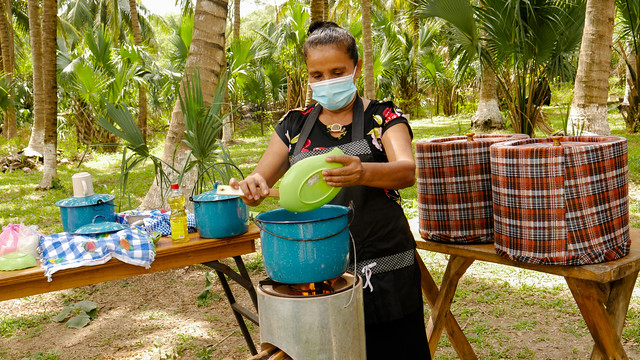
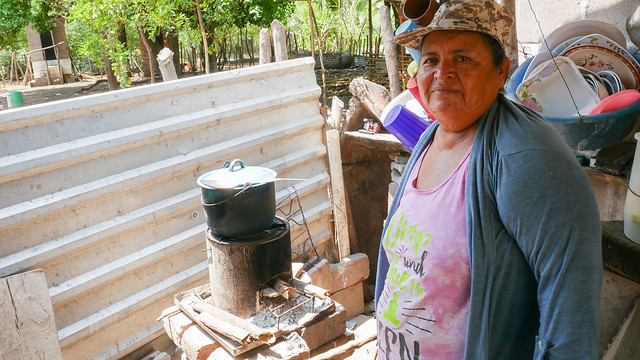
While María Luz made the lasagna, her daughter, María del Carmen Rodríguez, 49, was cooking two other dishes: bean soup with vegetables and beef, and rice – not in a solar oven but on one of the rocket stoves.
This stove is a circular structure 25 centimetres high and about 30 centimetres in diameter, whose base has an opening in which a small metal grill is inserted to hold twigs no more than 15 centimetres long, which come from the gliridicia (Gliricidia sepium) tree. This promotes the use of living fences that provide firewood, to avoid damaging the mangroves.
The stove maintains a good flame with very little wood, due to its high energy efficiency, unlike traditional cookstoves, which require several logs to prepare each meal and produce smoke that is harmful to health.
María del Carmen Rodríguez cooks rice on a rocket stove using a few twigs from a tree species that emits less CO2 than mangroves, whose sustainability is also preserved thanks to the use of the tree. Many families in the community of El Salamar have benefited from this energy-efficient technology, as well as other initiatives promoted along the Pacific coast in southern El Salvador. CREDIT: Edgardo Ayala /IPS
The rocket stove can cook anything, but it is designed to work with another complementary mechanism for maximum energy efficiency.
Once the stews or soups have reached boiling point, they are placed inside the “magic” stove: a circular box about 36 centimetres in diameter made of polystyrene or durapax, as it is known locally, a material that retains heat.
The food is left there, covered, to finish cooking with the steam from the hot pot, like a kind of steamer.
“The nice thing about this is that you can do other things while the soup is cooking by itself in the magic stove,” explained María del Carmen, a homemaker who has five children.
The technology for both stoves was brought to these coastal villages by a team of Chileans financed by the Chile Fund against Hunger and Poverty, established in 2006 by the government of that South American country and the United Nations Development Programme (UNDP) to promote South-South cooperation.
The Chileans taught a group of young people from several of these communities how to make the components of the rocket stoves, which are made from clay, cement and a commercial sealant or glue.
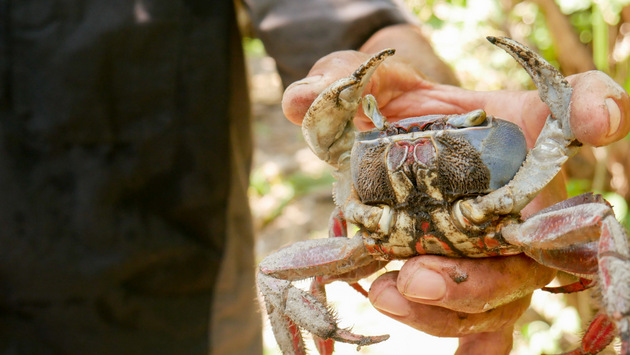
The blue crab is one of the species raised in nurseries by people in the Estero de Jaltepeque region in southern El Salvador, as part of an environmental sustainability project in the area financed by the Global Environment Facility’s Small Grants Programme. CREDIT: Edgardo Ayala/IPS
The use of these stoves “has reduced carbon dioxide (CO2) emissions by at least 50 percent compared to traditional stoves,” Juan René Guzmán, coordinator of the GEF’s Small Grants Programme in El Salvador, told IPS.
Some 150 families use rocket stoves and magic stoves in 10 of the villages that were part of the project, which ended in 2017.
“People were given their cooking kits, and in return they had to help plant mangroves, or collect plastic, not burn garbage, etc. But not everyone was willing to work for the environment,” Claudia Trinidad, 26, a native of El Salamar and a senior studying business administration – online due to the COVID pandemic – at the Lutheran University of El Salvador, told IPS.
Those who worked on the mangrove reforestation generated hours of labour, which were counted as more than 800,000 dollars in matching funds provided by the communities.
In the project area, 500 hectares of mangroves have been preserved or restored, and sustainable practices have been implemented on 300 hectares of marine and land ecosystems.
Petrona Cañénguez shows how she cooks bean soup on an energy-efficient rocket stove in an outside room of her home in the hamlet of San Sebastián El Chingo, one of the beneficiaries of a sustainable development programme in the municipality of San Luis La Herradura, on El Salvador’s southern coast. CREDIT: Edgardo Ayala /IPS
Petrona Cañénguez, from the town of San Sebastián El Chingo, was among the people who participated in the work. She was also cooking bean soup for lunch on her rocket stove when IPS visited her home during a tour of the area.
“I like the stove because you feel less heat when you are preparing food, plus it’s very economical, just a few twigs and that’s it,” said Petrona, 59.
The bean soup, a staple dish in El Salvador, would be ready in an hour, she said. She used just under one kilo of beans, and the soup would feed her and her four children for about five days.
However, she used only the rocket stove, without the magic stove, more out of habit than anything else. “We always have gliridicia twigs on hand,” she said, which make it easy to use the stove.
Although the solar oven offers the cleanest solution, few people still have theirs, IPS found.
This is due to the fact that the wood they were built with was not of the best quality and the coastal weather conditions and moths soon took their toll.
Maria Luz is one of the few people who still uses hers, not only to cook lasagna, but for a wide variety of recipes, such as orange bread.
However, the project is not only about stoves and ovens.
Some families living in coastal villages in the municipality of San Luis La Herradura have dug ponds for sustainable fishing, which was of great help to the local population during the COVID-19 lockdown in this coastal area of southern El Salvador. CREDIT: Edgardo Ayala /IPS
The beneficiary families also received cayucos (flat-bottomed boats smaller than canoes) and fishing nets, plus support for setting up nurseries for blue crabs and mollusks native to the area, as part of the fishing component with a focus on sustainability in this region on the shores of the Pacific Ocean.
Several families have dug ponds that fill up with water from the estuary at high tide, where they raise fish that provide them with food in times of scarcity, such as during the lockdown declared in the country in March 2020 to curb the spread of coronavirus.
The project also promoted the planting of corn and beans with native seeds, as well as other crops – tomatoes, cucumbers, cushaw squash and radishes – using organic fertiliser and herbicides.
The president of the Local Development Committee of San Luis La Herradura, Daniel Mercado, told IPS that during the COVID-19 health emergency people in the area resorted to bartering to stock up on the food they needed.
“If one community had tomatoes and another had fish, we traded, we learned to survive, to coexist,” Daniel said. “It was like the communism of the early Christians.”
ROME, Jan 11 2021 (IPS) – For 2021, Italy has been given chairmanship of the Group of 20, which brings together the world’s 20 most important countries. On paper, they represent 60% of the world’s population and 80% of its Gross Domestic Product (GDP). While the shaky Italian government will somehow perform this task (in the general indifference of the political system), the fact remains that this apparently prestigious position is in fact very deceiving: the G20 is now a very weak institution that brings no kudos to the rotating chairman. Besides, it is actually the institution which bears the greatest part of responsibility for the decline of the UN as the body responsible for global governance, a task that the G20 has very seldom been able to face up to.
Roberto Savio
Let us reconstruct how we arrive at the creation of the G20. It is a long story, that begins in 1975, when France invited the representatives of Germany, Italy, Japan, the United Kingdom and the United States, leading to the name Group of Six, or G6. The idea was to create a space where to discuss the international situation, not for decision making. Then it became the Group of Seven, with the addition of Canada in 1997. Russia was added in 1998, so the summit became known as the G8. And then, in 1980, the European Union was invited as a “nonenumerated participant”. In 2005 the UK government initiated the practice of inviting five leading emergency markets – Brazil, China, India, Mexico and South Africa. Finally, in Washington, in 2005, the world leaders from the group recognized the growth of more emerging countries, and they decided that a meeting of the 20 most important countries of the world would replace the G8 and become the G20.
At the meetings the United Nations, the European Union, and the major international monetary and financial institutions are also invited. Spain is a permanent invitee, together with leaders of the Asian, African Union, of the New Partnership for Africa’s Development, the Financial Stability Board, the International Labor Organization, the International Monetary Fund, the Organization for Economic Cooperation and Development, the World Bank Group, and the World Trade Organization.
Plus. The host country can invite some countries that it feels particularly associated with its foreign policy, at its year of presidency. Until now, 38 countries have been invited, from Azerbaijan to Chad, from Denmark to Laos, from Sweden to Zimbabwe. To complete, it is important to mention that Russia was suspended by the G8 in 2014, because of its annexation of Crimea. And was never readmitted. Trump, in his inexplicable deference to Putin, asked for its readmission to the G8, and this was refused by the other countries. The G7 has kept meeting, as “a steering group of the West”. At the same time, the G20 meets regularly, with Russia as part of his members.
So, Italy has the task to invite all those different actors, establish the agenda and planning and hosting a series of ministerial-level meetings, leading up to summit of head of governments. Italy has decided as agenda “The three P”: People, Planet and Prosperity. This imaginative and original agenda will be structured in 10 specialized meetings, like Finance (Venice July 9-10th); Innovation and Research (Trieste Aug. 5-8th); Environment, Climate, Energy (Naples, July 22nd), just to give a few examples. Beside these 10 specialized meetings, there will be 8 “engagement’s groups”, which will go from business to civil society, youth, etc.
The G20 is formed by countries that are involved in different and often contradictory groups. For instance, after Trump killed the TTP, (the Transatlantic Pacific Partnership), that Obama was able to put together excluding China, with a vast range of counters going from Australia to Mexico, from Canada to Malaysia, China was able to reciprocate, and crate the Regional Comprehensive Economic Partnership, which puts together the same countries plus some others and leave outside completely the United States. This commercial bloc is the largest ever created and has 30% of the world’s population, and 30% of the world GDP. But the European Union, (to which Italy belongs) has explicitly taken a path of European nationalism, to make the EU able to survive in the coming competition between China and the United States. European Union (and therefore Italy) are also members of NATO, where the United States is the indispensable and fundamental partner. And in the G20 China seats with India, which is the only country that has refused to join RCEP, and who is clearly taking an alternative path to China’s expansion in Asia. But this is also Japan’s policy, who is very active in G7, in the G20, and has entered RCEP, and considers, like South Korea, a priority to limit the Chinese expansionism.
Of course, there are a number of other pacts, agreements, treaties and alliances, that would be now boring and useless to enumerate. One country, like Italy, would therefore wear several hats at the same time. The point to make is, that since the arrival of Ronald Reagan as President of the United States in 1981, the multilateral system started to be under attack. Reagan, in Cancun’s Summit for the North-South dialogue, a few months after his election, questioned the idea of democracy and participation as the basis for international relations. Until then, the General Assembly resolutions were considered the basis for global governance. In 1973, the GA passed unanimously a resolution, calling for the reduction of the economic gap between the North and the South of the world, calling rich countries to their duties to establish a New International Economic Order, more just and based on the faster development of the poorer countries. Reagan denounced this as an anti-American maneuver. The US is not the same as Montecarlo, as he famously said (probably he intended Monaco, as Montecarlo is no state), and yet they have a vote each. So, this democracy coming from the UN, was in fact a straitjacket, and the US would proceed on the basis of bilateral relations, and not to be strained by multilateral mechanisms. Reagan was the first to talk of America first, He, together with Margaret Thatcher in Europe, dismantled all the social progress made in the world after the end of the Second World War. The market, with his invisible hand, would be the sole engine of society (that Thatcher said does not exist, only individuals). The State, that he called “the beast”, was the first enemy of the citizen. He declared: the most terrifying words in English are: I am from the Government, and I am here to help”. Any public or social cost was just a brake to the market. Reagan wanted to privatize even the ministry of Education: he and Thatcher left UNESCO, as a symbol of disengagement from the UN. Both he and Thatcher curtailed trade unions, privatized whatever possible, and started the era of neoliberal globalization, whose effect is now widely evident, and that Trump, Bolsonaro and Co. bless every day, because it has created a very large swath of disaffected citizens, who believe they will readdress their destiny.
Is important to note that Reagan did not have any real opposition, from the other rich countries. So, all this fragmentation of the world, with the creation of G7, G8, G20, and other exclusive clubs, was not an exclusive responsibility of Reagan and Thatcher. For forty years, the process of divesting the UN from its responsibility for the world’s peace, development, and democracy went on. Neoliberal globalization was based on finance and trade. Even before the end of the war, finance was delegated to the System of Bretton Wood, by the name of the site where it was founded. Let us just constate a fact: the Financial System was established in a such way, that Finance is the only sector of human activity that has no regulatory body. Today it has clearly separated by the general economy when its original function was to be at its service. And political institutions are not able to control its global structure.
The other engine of globalization was trading. United Nations had the UN Commission on Trade and Development, UNCTAD, which looked to trade as an instrument of development. The creation in 1995 of the World Trade Organization, as an independent organization, envisaging trade as an economic engine, divested the UN from trade too. And more the UN weakens, the easier is to decry its shortcomings.
The stroke of grace to multilateralism has been the arrival of Trump, the heir and an updated version of Ronald Reagan. But with a totally different agenda and vision. His basic idea is not “America First”, but “America Alone”. He pushes Regan’s idea of bilateralism versus multilateralism to the extreme of ignoring the concept of alliances. So, he declared, Europe is even worse than China. But there is a fundamental difference between them: Trump never pretended to be the President of all Americans. On the contrary, he tried immediately to divide and polarize the United States, and he leaves as a legacy the US that will take a very long time to become again a united and pacified country. And his strategy has been taken by several other leaders, from Bolsonaro to Orban, from Erdogan to Salvini.
It will be, therefore, difficult, for the UN to recover its function of the meeting place, to express plans of global governance, based on democracy and participation. It was a vision based on the lessons learned in the Second World War: let us avoid millions of deaths, terrible destruction, and to do so we need to work together. That lesson has been now forgotten. Just compare the kind of political leaders from that time, and the present one, to see the enormous change. Therefore, the expression of national egoisms will continue, with the richest countries in exclusives clubs, like OECD or the G20.
But there is a problem: those clubs are not efficient, because they gather together countries with very different agendas and priorities. Let us take a good example from the last G20, held last November under the very discredited chairmanship of Saudi Arabia. One of the points was the cancellation of the debt from poor countries, evidently urgent, because of the additional burden of the pandemic that is going to bring disproportionate damage. The Pope, the Secretary-General of the UN, Gutierres, pressed for that decision. All that the G20 was able to do, was to freeze the payment of the interest of the debt, for six months. And here, let us divagate for a useful learning exercise of the Third World Debt, and on the nobility of the rich countries.
If you take a loan that you repay over 20 years at 5%, or a mortgage, of 100, at the end you will have repaid 200. And during the first ten years, all you pay are the interest, and only in the second decade, you start to pay back, progressively, the capital. The result is that the poor countries several times renegotiated their debt and every time what they paid where the interest, to start again. And those interests were cumulative. During that process, they paid several times the amount of the capital that they received. But all that they paid went to the interests… At the university, you learn one good example of the perversity of cumulative interests. The old story is that a Dutch settler, Peter Minuit, bought the island of Manhattan from the Algonquin tribe. The price paid was $24 worth of beads, trinkets, a jar of Mayonnaise, two pairs of wooden clogs, a loaf of wonder bread and a carton of Quaker oats. If that amount was put in a loan at 5%with composite interest, it would be by now more than the estimated value of all of Manhattan, which exceeds three trillion dollars. So, the decision of the G20 to freeze interests for six months, amount to nothing. It is interesting to listen to insiders’ voices. The loans of the rich countries are computed in the DAC, Development Assistance Committee, established by OECD (the organizations that gathers all rich countries). The OECD engaged itself, in the old good day of multilateralism, to dedicated 1% of the members’ GDP to the development of the underdeveloped countries. This engagement was never kept, except for the Nordic Countries and Nederland. The US never went over 0,3%. Anyhow, any debt condonation goes into the official statistics of the DAC committee. But new loans are made, by countries that are not in the DAC committee, like China, which has made a very extensive number of loans, especially in Asia and Africa in not public conditions. For the OECD countries (basically the West), to cancel their loans could mean to unleash resources that could go to pay China loans, becoming so China funders. This is a good example of how competing interests, block the G20 from concerted actions.
Decisions on this issue are now expected from the next G20 Summit in Rome, in November. But before, the Global Health Summit, called from the G20 together with the EU in May, will be the occasion to verify what will happen. with vaccinations. But in the same month, Portugal has called for the very important Social Summit of the European Union. Portugal has taken the much more substantial chairmanship of the EU, and this is a very positive contribution to a positive 2021. Portugal is today probably the most civilized country of Europe, a place of tolerance, harmony and civic engagement, much like Sweden in the 80s. And is the only credible country on the issue of immigration. In the Social Summit Lisbon will push to strengthen social Europe, after so many decades of a solely economic Europe. The outgoing German chairmanship was fundamental in abandoning the austerity dogma and move to an unprecedented plan of solidarity and institutional strengthening, made also possible by the blessed departure of England, and its anti-European historical bias. The fact that vaccination is a European plan, and not a hotchpotch of national attempts, is great progress in term of vaccination. And if it will continue on the same path, on the issue of climate control, and technological development, it will recover much trust from the citizens, who felt Brussels an unaccountable institution, far from their priorities. Now the EU deals with unemployment, with the economic and social disaster brought by the virus. It is a tribute to the virtues of multilateralism, solidarity and development. And Portugal will try to complete what the German Presidency was unable to conclude.
But if we look to the obvious need for a world’s vaccination, the reality is much dimmer. Until now the rich countries have bought as many as possible vaccines. f. Europe, with 13% of the world population, has bought 51% of the total production. Israel is a case study. With a population of 9 million people, highly registered and organized in the health system, Netanyahu (who will do everything to stay in power), has bought the vaccines at an extra cost but is fast reaching all the population. Certainly, this cannot be the case of India, with nearly 1.4 billion people, and a very primitive system of health… Even the Pope has launched an appeal for distributing a free vaccine in the poor countries, and India and South Africa (which are a member of the G20), have asked the General Assembly of the World Health Organization for free distribution in poor countries. There has been strong opposition from the rich countries, that have financed at the tune of 10 billion dollars the development of the Pfizer and Moderna vaccines, which now they buy at market prices, several times higher than those of AstraZeneca… And then those two vaccines use a new technology, whose side effects are still unknown, unlike AstraZeneca, which uses a well-experimented technique.
But even if we take the cheaper vaccines, there is a very basic issue: under which ethical and human logic, patents and money can be made over public goods, as the Pope has repeatedly asked? The patent industry has been patenting seeds, rice, plants, which have been existing for hundreds of years, and those new peasants cannot use them without paying a royalty to the company who patented them. And then the pharmaceuticals tried to patent, parts of the human body… Citizens from several parts of the world have been setting up an association, Agorà for Humankind, that is conducting a campaign, for the elimination of patents and profits over public goods, as they belong to humankind. Also, an international alliance has been set up between the public and private sectors, the General Alliance for Vaccine Initiative, GAVI, which has the task to finance vaccination in 93 middle and poor countries. But funding is still far from coming. As things are now, at the end of 2021, only 30% of humankind will be vaccinated, basically from rich countries.
Yet, if there is something that should make all of us aware that we are in the same boat, is this pandemic. Until at least 70% of all humans will be vaccinated, the virus will continue to strike and kill. The British mutation, much more contagious, is a good example. The country with more cases is now Spain, which has no physical contact with the UK. But it went to Gibraltar, the British colony since 1713 in the South of Spain. And from there spread to the surrounding Spanish villages and towns. Did the realization that viruses does not know borders help to make the new treaty for relations between Gibraltar and Spain? The answer is not really: it is trade. Yet, it does not require a virologist to assume that trade spreads the virus…
So, after this long ride among different subjects, its thread should be clear. We have gone from an era when the lessons of the Second World War created a generation of politicians who made of peace and development the common ground for international relations, even during a very dangerous Cold War. Would Trump, Johnson and Putin be at Yalta, instead of Roosevelt, Churchill and Stalin, the outcome would have been very different. Most probably, we would have had no United Nations, no international organizations. Just think that the US, to push for the creation of the UN, agreed in its founding engagement, to pay 25% of its costs.
Then, beginning with Reagan and Thatcher, a profound change came. The interests of my country are more important than international cooperation, and the stronger I am, the more so. Multilateralism, cooperation, went under attack, and so the role of the State, its function of guarantor of social progress, equity and participation. Other organizations started to sprout, and weaken the UN, and the instruments of a social pact, like trade unions. From the spirit of the fall if the Berlin’ Wall, in 1989, a number of clubs of rich countries, like the G7, the G8, the G20, started to substitute the UN, and private clubs, like the World Economic Forum of Davos, attracted more important personalities than the General Assembly of the United Nations.
We are now in a third phase, whose symbol abounds: nationalism, xenophobia, and the illusion that sovereignty is more important than cooperation. Brexit is a notable example. But Trump sets up an unprecedented level of legitimacy to what was once considered the betrayal of civism and democracy: exploit and exasperate the divides of a country, racial, cultural, gender, and run without any compliance to rules and traditions. He is accompanied by a variegated assortment of autocratic, populist, and narcists kind of new political generation: Bolsonaro, Orban, Kacynski, Putin, Modi, Sissi, Nehayanu, Duterte, just to cite the most known, while others, like Salvini, are poised to take the power. The virus, instead of uniting citizens, has further divided them. To wear the mask, is a left-wing declaration, like to worry about the climate, which is a survival’ concern. Military expenses are on a continuous increase. In 2019 they have reached an unprecedented amount of 1917 billion dollars. Enough to solve all problems of food, health and education worldwide. The UN is still the only organization able to provide the world with plans of global significance. Its Agenda 2030 gives a plan for the solution of our most significant problems. It costs a fraction of the military expenses. The G20 has paid some lip services, to Agenda 30, but never anything significant. The new generations of politicians are under general scrutiny, and it is not positive at all… I would say that is representative of our crisis, books still get published on a world of conspiracy, like that the virus is used by Bill Gates to inoculate nanoparticles that will make it possible to control all human bodies, Or myths like the one on Bilderberg Club, one of the private’s clubs meeting, as the place where decisions are taken by a small elite on how to run the world. This, when more than ever is clear that the system has lost its compass, and even the tragedy of climate and soon two million deaths are not able to bring back cooperation and multilateralism… but the explosions of conspiracies is a good sign of the decline of democracy…
So, Italy enters now the chairmanship of the G20. It is a position without any significant weight, with the task to realize a coming Summit, of the head of States, from which nobody expects much. If Trump’s defeat has any significant meaning, by November the political situation could have improved, but we will have a Germany without Merkel, probably more nationalist, and the miraculous social engagement of the European Union, could come to a halt. Italy has a very fragile government, and the dubious distinction of having a very young minister of Foreign Affairs, whose only working experience was to be a steward at Naples’ stadium. On the Health Summit, he does not look particularly commanding respect and authority. This will be Italy’s first test. In May, it will be clear that without vaccination in the world, rich countries will not be out of danger. It should be easy to rally the 20 most important countries of the world, which include India and South Africa, to such obvious actions. But in those times, where interests and selfishness are the reality, it is legitimate to nourish many doubts… Anyhow, if 2021 will not be a year of regeneration and creation, we will be on an irreversible slipping decline… time is running out…
But it looks now like the solution to the problems is beyond the reach of the system…
Publisher of OtherNews, Italian-Argentine Roberto Savio is an economist, journalist, communication expert, political commentator, activist for social and climate justice and advocate of an anti-neoliberal global governance. Director for international relations of the European Center for Peace and Development. Adviser to INPS-IDN and to the Global Cooperation Council. He is co-founder of Inter Press Service (IPS) news agency and its President Emeritus.