Flagship report calls for fundamental reset of global water agenda as irreversible damage pushes many basins beyond recovery.
UNITED NATIONS, Jan 21 2026 (IPS) – The world is already in the state of “water bankruptcy”. In many basins and aquifers, long-term overuse and degradation mean that past hydrological and ecological baselines cannot realistically be restored.
While not every basin or country is water-bankrupt, enough critical systems around the world have crossed these thresholds, and are interconnected through trade, migration, climate feedbacks, and geopolitical dependencies, that the global risk landscape is now fundamentally altered.
The familiar language of “water stress” and “water crisis” is no longer adequate. Stress describes high pressure that is still reversible. Crisis describes acute, time-bound shocks. Water bankruptcy must be recognized as a distinct post-crisis state, where accumulated damage and overshoot have undermined the system’s capacity to recover.
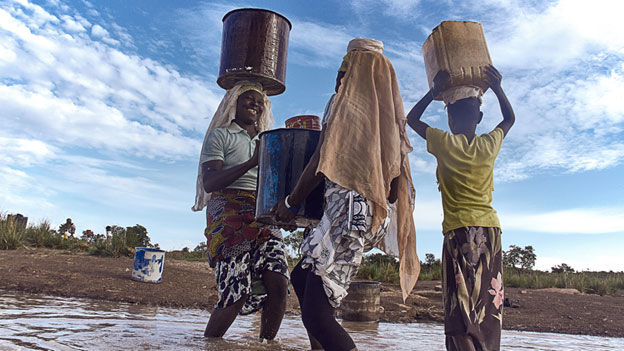
A group of women fetching water from a dam in Taha, Northern Region of Ghana. Credit: Evans Ahorsu. Source: UN University’s Institute for Water, Environment and Health
Water bankruptcy management must address insolvency and irreversibility. Unlike financial bankruptcy management, which deals only with insolvency, managing water bankruptcy is concerned with rebalancing demand and supply under conditions where returning to baseline conditions is no longer possible.
Anthropogenic drought is central to the world’s new water reality. Drought and water shortage are increasingly driven by human activities, over-allocation, groundwater depletion, land and soil degradation, deforestation, pollution, and climate change, rather than natural variability alone. Water bankruptcy is the outcome of long-term anthropogenic drought, not just bad luck with hydrological anomalies.
Water bankruptcy is about both quantity and quality. Declining stocks, polluted rivers, and degrading aquifers, and salinized soils mean that the truly usable fraction of available water is shrinking, even where total volumes may appear stable.
Managing water bankruptcy requires a shift from crisis management to bankruptcy management. The priority is no longer to “get back to normal”, but to prevent further irreversible damage, rebalance rights and claims within degraded carrying capacities, transform water-intensive sectors and development models, and support just transitions for those most affected.
Governance institutions must protect both water and its underlying natural capital. The existing institutions focus on protecting water as a good or service disregarding the natural capital that makes water available in the first place. Efforts to protect a product are ineffective when the processes that produce it are disrupted.
Recognizing water bankruptcy calls for developing legal and governance institutions that can effectively protect not only water but also the hydrological cycle and natural capital that make its production possible.
Water bankruptcy is a justice and security issue. The costs of overshoot and irreversibility fall disproportionately on smallholder farmers, rural and Indigenous communities, informal urban residents, women, youth, and downstream users, while benefits have often accrued to more powerful actors. How societies manage water bankruptcy will shape social cohesion, political stability, and peace.
Water bankruptcy management combines mitigation with adaptation. While water crisis management paradigms seek to return the system to normal conditions through mitigation efforts only, water bankruptcy management focuses on restoring what is possible and preventing further damages through mitigation combined with adaptation to new normals and constraints.
Water can serve as a bridge in a fragmented world. Water can align national priorities with international priorities and improve cooperation between and within nations. Roughly 70% of global freshwater withdrawals are used for agriculture, much of it by farmers in the Global South. Elevating water in global policy debates can help rebuild trust between South and North but also within nations, between rural and urban, left and right constituencies.
Water must be recognized as an upstream sector. Most national and international policy agendas treat water as a downstream impact sector where investments are focused on mitigating the imposed problems and externalities. The world must recognize water as an upstream opportunity sector where investments have long-term benefits for peace, stability, security, equity, economy, health, and the environment.
Water is an effective medium to fulfill the global environmental agenda. Investments in addressing water bankruptcy deliver major co-benefits for the global efforts to address its environmental problems while addressing the national security concerns of the UN member states.
Elevating water in the global policy agenda can renew international cooperation, increase the efficiency of environmental investments, and reaccelerate the halted progress of the three Rio Conventions to address climate change, biodiversity loss, and desertification.
A new global water agenda is urgently needed. Existing agendas and conventional water policies, focused mainly on WASH, incremental efficiency gains and generic IWRM guidelines, are not sufficient for the world’s current water reality. A fresh water agenda must be developed that takes Global Water Bankruptcy as a starting point and uses the 2026 and 2028 UN Water Conferences, the conclusion of the Water Action Decade in 2028, and the 2030 SDG 6 timeline as milestones for resetting how the world understands and governs water.
Global Water Bankruptcy: Living Beyond Our Hydrological Means in the Post-Crisis Era | UN University Institute for Water, Environment and Health (UNU-INWEH) (20 January) (press release)
Support Paper Madani K. (2026) Water Bankruptcy: The Formal Definition, Water Resources Management, 40 (78) doi: 10.1007/s11269-025-04484-0)
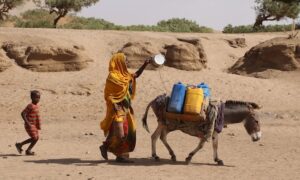
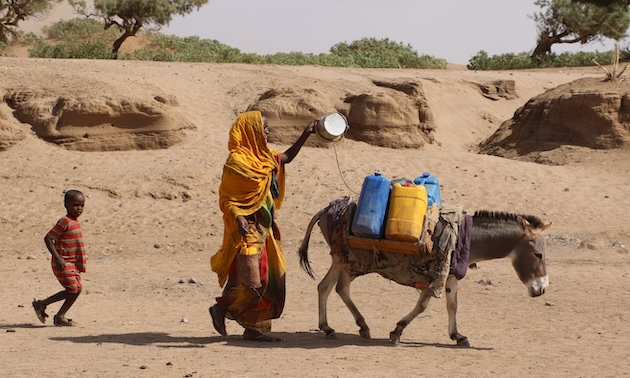
Collecting water in Ethiopia. A new report, ‘Global Water Bankruptcy: Living Beyond Our Hydrological Means in the Post Crisis Era’ warns that many of the earth’s water resources have been pushed to a point of permanent failure. Credit: EU/ECHO/Anouk Delafortrie/IPS
UNITED NATIONS & SRINAGAR, India, Jan 20 2026 (IPS) – The world has entered what United Nations researchers now describe as an era of Global Water Bankruptcy, a condition where humanity has irreversibly overspent the planet’s water resources, leaving ecosystems, economies, and communities unable to recover to previous levels.
The new report, released by the United Nations University Institute for Water, Environment and Health, titled Global Water Bankruptcy: Living Beyond Our Hydrological Means in the Post-Crisis Era. The report argues that decades of overextraction, pollution, land degradation, and climate stress have pushed large parts of the global water system into a permanent state of failure.
“The world has entered the era of Global Water Bankruptcy,” the report reads, adding that “in many regions, human water systems are already in a post-crisis state of failure.”
According to the report, the language of “water crisis” is no longer sufficient to explain what is happening. A crisis implies a shock followed by recovery. Water bankruptcy, by contrast, describes a condition where recovery is no longer realistically possible because natural water capital has been permanently damaged.
In an exclusive interview with Inter Press Service, former Deputy Head of Iran’s Department of EnvironmentProf. Kaveh Madani, who currently is the Director at United Nations University, Institute for Water, Environment and Health, said that declaring that the planet has entered the era of water bankruptcy must not be interpreted as universal water bankruptcy, as not all basins, aquifers, and systems are water bankrupt.
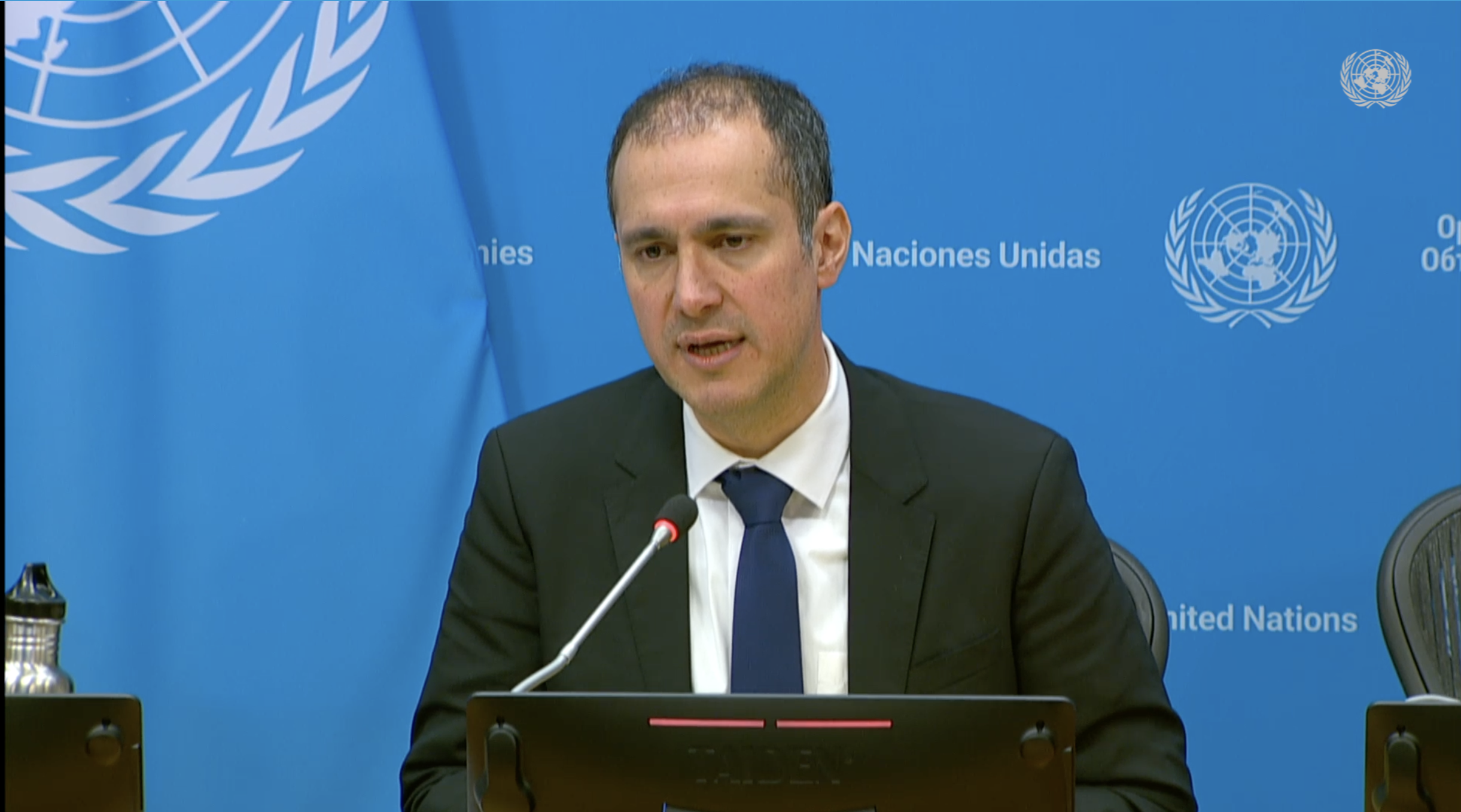
Prof. Kaveh Madani, Director at the United Nations University, Institute for Water, Environment and Health, addresses the UN midday press briefing. Credit: IPS
“But we now have enough critical basins and aquifers in chronic decline and showing clear signs of irreversibility that the global risk landscape is already being reshaped. Scientifically, we know recovery is no longer realistic in many systems when we see persistent overshoot (using more than renewable supply) combined with clear markers of irreversibility—for example aquifer compaction and land subsidence that permanently reduce storage, wetland and lake loss, salinization and pollution that shrink usable water, and glacier retreat that removes a long-term seasonal buffer. When these signals persist over time, the old “bounce back” assumption stops being credible,” Madani said.
“Over decades, societies have withdrawn more water than climate and hydrology can reliably provide, drawing down not only the annual income of renewable flows but also the savings stored in aquifers, glaciers, soils, wetlands, and river ecosystems,” the report says.
The scale of the problem, as per the report, is global. Nearly three-quarters of the world’s population now lives in countries classified as water insecure or critically water insecure.
Madani said, adding that water bankruptcy is best assessed basin by basin and aquifer by aquifer, not by country.
“Please note that, based on the water security definition used by the UN system, water insecurity and water bankruptcy are not equivalent. Water bankruptcy can drive water insecurity, but water insecurity can also stem from limited financial and institutional capacity to build and operate infrastructure for safe water supply and sanitation, even where physical water is available,” he explained.
Madani added that the regions most consistently closest to irreversible decline cluster in the Middle East and North Africa, Central and South Asia, parts of northern China, the Mediterranean and southern Europe, the southwestern United States and northern Mexico (including the Colorado River system), parts of southern Africa, and parts of Australia.
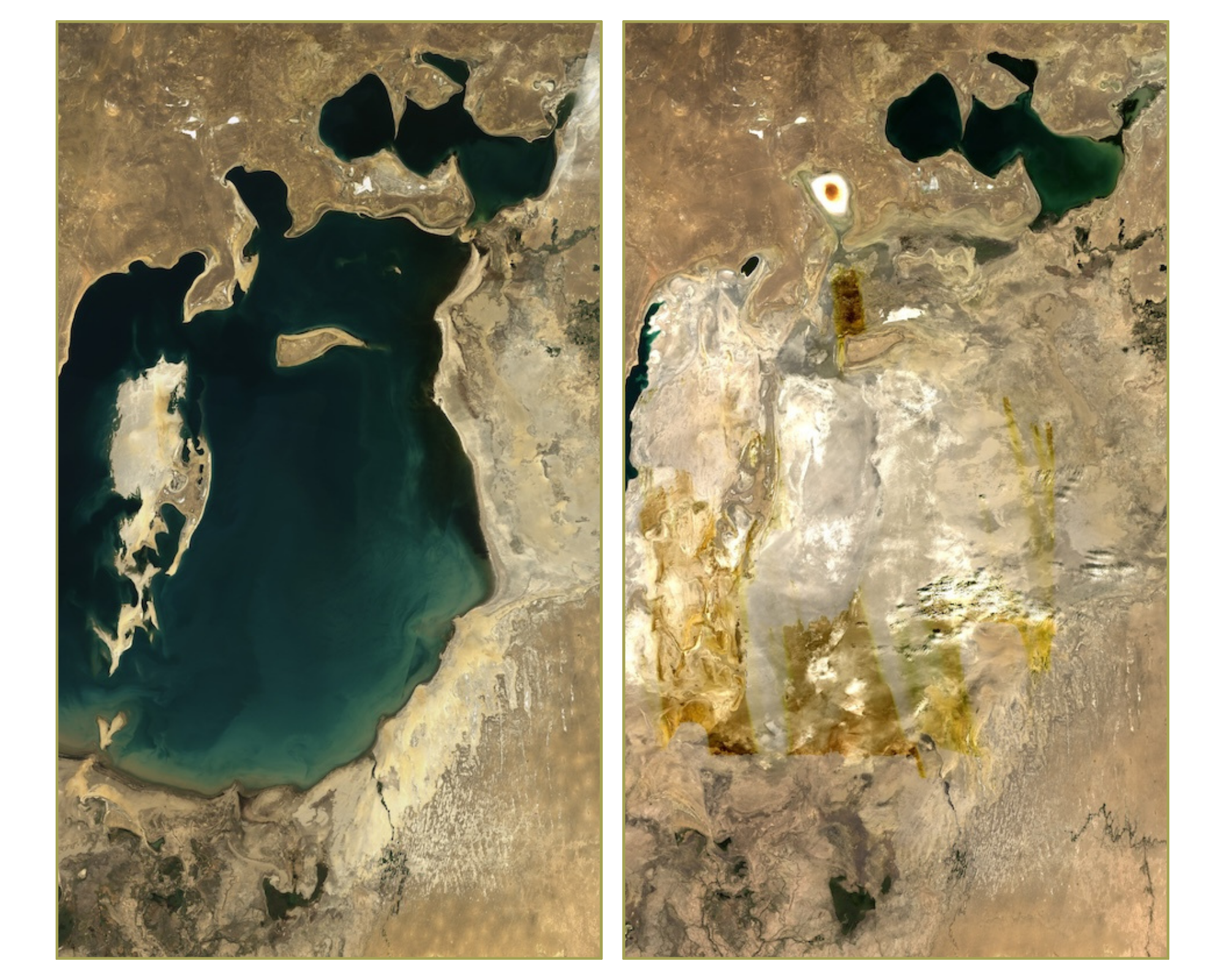
The Aral Sea, which lies between Kazakhstan and Uzbekistan, shows dramatic water loss between 1989 and 2025. Credit: UNU-INWEH
Surface Water Systems Are Shrinking Rapidly
The report shows how more than half of the world’s large lakes have lost water since the early 1990s, affecting nearly one quarter of the global population that depends directly on them. Many major rivers now fail to reach the sea for parts of the year or fall below environmental flow needs.
Massive losses have occurred in wetlands, which serve as natural buffers against floods and droughts. Over the past five decades, the report claims that the world has lost roughly 410 million hectares of natural wetlands, almost the size of the European Union. The economic value of lost ecosystem services from these wetlands exceeds 5.1 trillion US dollars.
Groundwater depletion is one of the clearest signs of water bankruptcy. Groundwater, says the report, now supplies about 50 percent of global domestic water use and over 40 percent of irrigation water. Yet around 70 percent of the world’s major aquifers show long-term declining trends.
“Excessive groundwater extraction has already contributed to significant land subsidence over more than 6 million square kilometers,” the report says, warning that in some locations land is sinking by up to 25 centimeters per year, permanently reducing storage capacity and increasing flood risk.
In coastal areas, overpumping has allowed seawater to intrude into aquifers, rendering groundwater unusable for generations. In inland agricultural regions, falling water tables have triggered sinkholes, soil collapse, and the loss of fertile land.
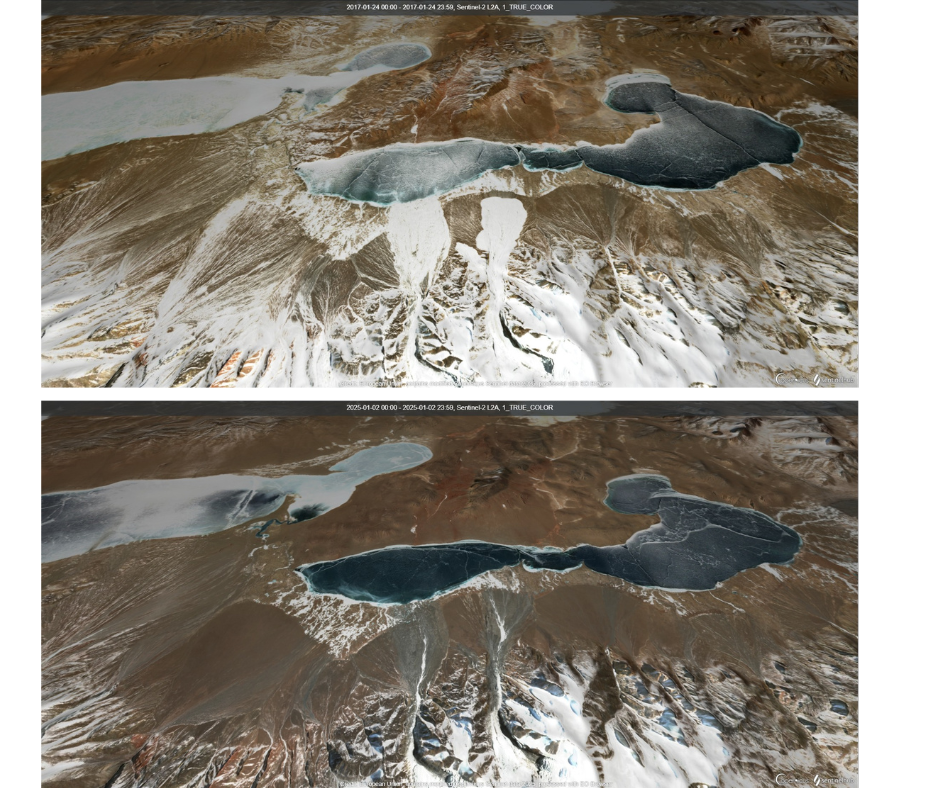
These satellite images show a dramatic impact of the Aru glacier collapses in western Tibet. First image was taken in 2017 and the second in 2025. Credit: UNU-INWEH
The cryosphere, glaciers and snowpacks that act as natural water storage systems are also being rapidly liquidated. The world has already lost more than 30 percent of its glacier mass since 1970. Several low- and mid-latitude mountain ranges could lose functional glaciers within decades.
“The liquidation of this frozen savings account interacts with groundwater depletion and surface water over-allocation to lock many basins into a permanent worsening water deficit state,” says the report.
This loss, as per the report, threatens the long-term water security of hundreds of millions of people who depend on glacier- and snowmelt-fed rivers for drinking water, irrigation, and hydropower, particularly in Asia and the Andes.
Madani said the biggest failure was treating groundwater as an unlimited safety net instead of a strategic reserve.
He says that when surface water tightened, many systems defaulted to “drill deeper” without enforceable caps.
“Authorities often recognize the consequences when it is already late, and meaningful action then faces major political barriers. For example, reducing groundwater use in farming can trigger unemployment, food insecurity, and even instability unless farmers are supported through short-term compensation and a longer-term transition to alternative livelihoods,” he added.
According to Madani, that kind of transition cannot be implemented overnight.
“So, business as usual continues. The result is predictable: groundwater gets “liquidated” to postpone hard choices, and by the time the damage is obvious, recovery is no longer realistic,” he told IPS news.
Agriculture Lies at the Heart of the Crisis
According to the report, farming accounts for approximately 70 percent of global freshwater withdrawals. About 3 billion people and more than half of the world’s food production are located in regions where total water storage is already declining or unstable.
The report states that more than 170 million hectares of irrigated cropland are under high or very high water stress. Land and soil degradation are making matters worse by reducing the ability of soils to retain moisture. The degradation of more than half of the global agricultural land is now moderate or severe.
Drought, once considered a natural hazard, is increasingly driven by human activity. Overallocation, groundwater depletion, deforestation, land degradation, and climate change have turned drought into a chronic condition in many regions.
“Drought-related damages, intensified by land degradation, groundwater depletion and climate change rather than rainfall deficits alone, already amount to about 307 billion US dollars per year worldwide,” the report states.
Water quality degradation further shrinks the usable resource base. Pollution from untreated wastewater, agricultural runoff, industrial effluents, and salinization means that even where water volumes appear stable, much of that water is unsafe or too costly to treat.
The report adds that the planetary freshwater boundary has already been crossed. Both blue water, surface and groundwater, and green water, soil moisture, have been pushed beyond a safe operating space.
Current governance systems, the authors argue, are not fit for this reality. Many legal water rights and development promises far exceed degraded hydrological capacity. Existing global agendas, focused largely on drinking water access, sanitation, and incremental efficiency gains, are inadequate for managing irreversible loss.
“Water bankruptcy must be recognized as a distinct post-crisis state, where accumulated damage and overshoot have undermined the system’s capacity to recover,” the report says.
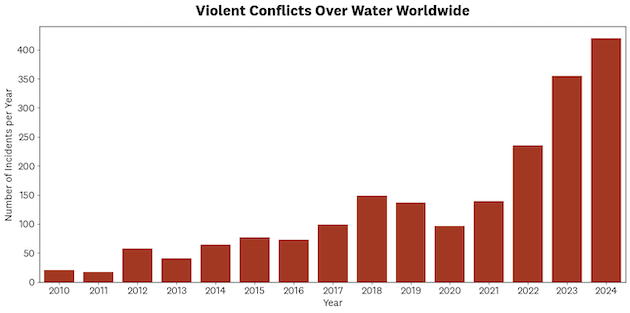
Water bankruptcy could result in a further increase in conflicts. Credit: UNU-INWEH
It warns that the implications of water bankruptcy are dire.
UN Under-Secretary-General Tshilidzi Marwala, Rector of UNU explains, “Waterbankruptcy is becoming a driver of fragility, displacement, and conflict. Managing it fairly—ensuring that vulnerable communities are protected and that unavoidable losses are shared equitably—is now central to maintaining peace, stability, and social cohesion.”
Policy Implications
Instead of crisis management aimed at restoring the past, the report actually pitches for bankruptcy management. That means acknowledging insolvency, accepting irreversibility, and restructuring water use, rights, and institutions to prevent further damage.
The authors lay stress on the fact that water bankruptcy is also a justice and security issue. The costs of overshoot fall disproportionately on small farmers, rural communities, women, Indigenous peoples, and downstream users, while benefits have often accrued to more powerful actors.
“How societies manage water bankruptcy will shape social cohesion, political stability, and peace,” the report warns.
Furthermore, it urges governments and international institutions to use upcoming UN Water Conferences in 2026 and 2028 as milestones to reset the global water agenda, calling for water to be treated as an upstream sector central to climate action, biodiversity protection, food security, and peace.
“This is about a crisis that might arrive in the future. The world is already living beyond its hydrological means,” reads the report.
When asked why the report frames water bankruptcy as a justice and security issue and how governments can implement painful demand reductions without triggering social unrest or conflict, Madani said the demand reduction becomes dangerous when it is treated as a technical exercise instead of a political economy reform. In many water-bankrupt regions, according to him, water is effectively a jobs policy: it keeps low-productivity farming and local economies afloat.
“If you cut water without an economic transition, you create unemployment, food insecurity, and unrest. So the practical pathway is to decouple livelihoods and growth from water consumption. In many economies, water and other natural resources are used to keep low-efficiency systems alive. In most places, it is possible to produce more strategic food with less water and less land, and with fewer farmers—provided that farmers are supported through a transition and offered alternative livelihoods.”
According to Madani, governments should protect basic needs but target the big reductions where most water is used, especially agriculture and besides that, pair caps with a just transition package for farmers—compensation, insurance, buy-down or retirement of water entitlements where relevant, and real income alternatives.
He further suggests that the governments should invest in diversification, including services, industry, value-added agri-processing, and urban jobs, so communities can earn a living without expanding water withdrawals.
“In short, you avoid conflict by making demand reduction part of a broader economic transition, not a standalone water policy.”
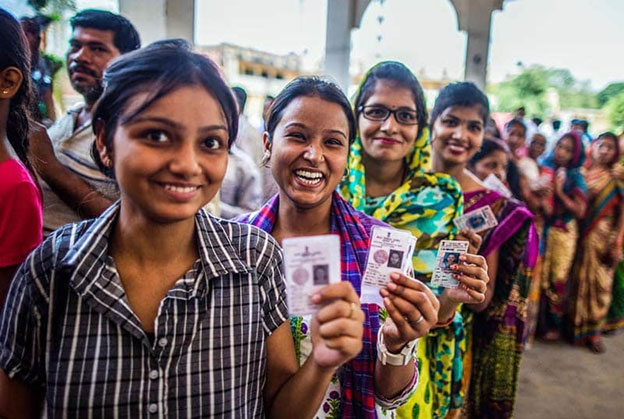
A global survey across 101 countries finds global majority support for a citizen-elected world parliament to handle global issues, reflecting widespread concern over an outdated and undemocratic international order. Credit: Democracy Without Borders
BERLIN, Germany, Jan 20 2026 (IPS) – As democracy faces pressure around the world and confidence in international law drops, a new global survey reveals that citizens in a vast majority of countries support the idea of creating a citizen-elected world parliament to deal with global issues.
The survey, commissioned by Democracy Without Borders and conducted across 101 countries representing 90% of the world’s population, finds that 40% of respondents support the proposal, while only 27% are opposed. It is the largest poll ever carried out thus far on this subject.
Support is strongest in countries of the Global South, especially Sub-Saharan Africa, and among groups often underrepresented in national political systems—young people, ethnic minorities, and those with lower income or education levels. In 85 out of 101 countries surveyed, more respondents support the idea than oppose it.
“The message is clear: people around the world are ready to expand democratic representation to the global scale,” said Andreas Bummel, Executive Director of Democracy Without Borders. “This survey shows there is a growing global constituency that wants a voice in decisions affecting humanity as a whole,” he added.
The findings come at a time when the international system is under increasing strain from climate change, war, geopolitical conflicts, authoritarian resurgence, and stalled global cooperation. The results suggest that many citizens—especially in less powerful countries—see a world parliament as a pathway to fairer and more effective global governance.
In countries with limited political freedoms, support for a world parliament is particularly high. According to Democracy Without Borders, this points to a public perception that global democratic institutions could help advance democracy at home as well.
A notable 33% of respondents globally selected a neutral stance, suggesting unfamiliarity with the concept. An analysis of the survey results argues that this indicates a wide-open space for public engagement. If the idea gains visibility, support could grow substantially, it says.
“The international system created in the last century to prevent war and mass violence is built on the United Nations. But many UN member states do not represent their people. They represent oppressive authoritarian elites who have seized power.
The proposed vision of a citizen-elected world parliament could be a vital step in the discussion about building a more democratic global order,” said Oleksandra Matviichuk, head of the Centre for Civil Liberties in Ukraine awarded with the Nobel Peace Prize.
According to the survey, net opposition found in individual countries is most concentrated in high-income democracies. “This is not a rejection of democracy. It is a reminder that privilege may breed complacency, and that those who benefit from existing arrangements may underestimate how urgently they need renewal,” commented George Papandreou, Greek Member of Parliament and former Prime Minister.
Democracy Without Borders, an international civil society organization, advocates for the establishment of a United Nations Parliamentary Assembly as a step toward a democratic world parliament. The organization says the survey results reinforce the urgency for democratic governments to consider this long-standing proposal.
TOKYO, Japan, Jan 19 2026 (IPS) – Thirty years ago, the groundbreaking report by Graça Machel, renowned and widely respected global advocate for women’s and children’s rights, to the United Nations General Assembly laid bare the devastating impact of armed conflict on children and shook the conscience of the world. It led to the historic decision of the General Assembly to create the mandate of the Special Representative of the Secretary-General for Children and Armed Conflict (SRSG-CAAC).
Special Representatives of the Secretary-General are high-level envoys entrusted with carrying out specific responsibilities on behalf of the Secretary-General. Appointed at the rank of Under-Secretary-General, the SRSG-CAAC has since served as the global advocate for raising the awareness about the condition of children affected by armed conflict as well as their comprehensive protection and reintegration in the society.
Children and armed conflict as a peace and security agenda
The children and armed conflict (CAAC) agenda has evolved significantly over the past three decades. As appropriately affirmed in Security Council resolution 1261 (1999), the impact of armed conflict on children constitutes a matter affecting international peace and security. Subsequent resolutions firmly anchored the CAAC agenda within the work of the Security Council and established critical protection mechanisms.
Among the most significant of these is the Monitoring and Reporting Mechanism (MRM), created by Security Council resolution 1612 (2005). The MRM provides verified, credible, and timely information on grave violations committed against children in situations of armed conflict. It has become the backbone of the United Nations’ engagement with parties to conflict to halt such violations.
Credit: UN News
Through this mechanism, parties to conflict are encouraged to commit to ending and preventing grave violations through the development and implementation of time-bound action plans. To date, forty action plans have been concluded with parties to conflict, including non-State armed groups, in eighteen countries, resulting in full compliance by twelve parties.
UNICEF has played a pivotal role on the ground as the United Nations’ lead agency for children, supporting the operation of the MRM and monitoring the implementation of action plans.
Children and armed conflict as a fundamental child rights issue
Beyond peace and security, children and armed conflict is fundamentally a child rights issue. It was the first thematic area addressed as early as 1992 by the United Nations Committee on the Rights of the Child, the treaty body monitoring implementation of the Convention on the Rights of the Child adopted by the United Nations General Assembly in 1989.
That initiative paved the way for the Graça Machel report and the subsequent establishment of the SRSG-CAAC mandate in 1996. It also led to the adoption, in 2000, of the Optional Protocol to the Convention on the Rights of the Child on the involvement of children in armed conflict.
In March of this year, the Human Rights Council will dedicate its annual day on the rights of the child to children and armed conflict and is expected to adopt a related resolution, underscoring the continued relevance of this agenda.
Thirty years after the inception of the CAAC mandate
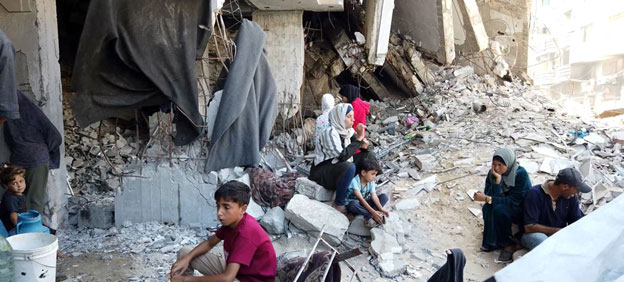
Despite these advances, grave violations against children in armed conflict reached an unprecedented 41,370 cases in 2024 alone. Calls for accountability have understandably grown louder.
The impact of armed conflict on children extends far beyond the six grave violations identified by the Security Council. Today, one in five children worldwide lives in a conflict-affected area, where the full spectrum of their rights is compromised, directly or indirectly.
This stark reality demands renewed urgency, enhanced political will, and more focused action.
Toward child rights-based and child-centred accountability
Children who are victims of armed conflict have too often been excluded from accountability processes.
Some positive developments deserve recognition. In 2023, the Office of the Prosecutor of the International Criminal Court adopted a revised Policy on Children that explicitly embraces a child rights approach. In the same year, the Secretary-General’s Guidance Note on Child Rights Mainstreaming called for the systematic integration of child rights into the mandates of United Nations investigative and accountability mechanisms, including commissions of inquiry and fact-finding missions.
Accountability must be both child rights-based and child-centred. Meaningful child participation is essential. Listening to children and taking their views seriously is fundamental to justice, remedies, and healing. Accountability processes must address children’s immediate and long-term needs, including education, psychosocial support, and family reunification.
Children as peacebuilders
Children want peace. Sustainable peace is the indispensable foundation for the full realization of child rights.
The Convention on the Rights of the Child guarantees the right of children to be heard and to have their views respected in all matters affecting them. Children also have the right to reintegration and to participate in efforts aimed at restoring social cohesion within fractured and traumatized communities.
In many conflict-affected societies, children constitute more than half of the population. Their role as peacebuilders is therefore not optional—it is essential. Recognizing and empowering children as agents of peace will also reinforce both the women, peace and security agenda and the youth, peace and security agenda.
Time for renewed mobilization, in partnership with civil society and children
Graça Machel reminded us that “universal concern for children presents new opportunities to confront the problems that cause their suffering.”
Children and armed conflict goes to the very core of our shared humanity. It demands broader public awareness, stronger political commitment, and sustained global mobilization.
Civil society organizations, working alongside children themselves, have a crucial role to play in advocacy, awareness-raising, and mobilizing support for the CAAC agenda.
The Special Representative of the Secretary-General for Children and Armed Conflict, created by the General Assembly, carries a unique responsibility as the Secretary-General’s envoy to strengthen cooperation and partnerships among United Nations entities, Member States, civil society, and children themselves.
Children and armed conflict must remain at the forefront of the global agenda and be treated as a central priority by the Secretary-General of the United Nations.
Dr. Mikiko Otani, widely recognized as an international human rights lawyer, is currently the President of the Child Rights Connect, a Geneva-based global NGO network promoting child rights. She was the Chair of the United Nations Committee on the Rights of the Child (2021-2023) during her eight-year membership for two terms.
Agnès Callamard is Amnesty International’s Secretary General
Credit: World Economic Forum/Gabriel Lado. Source: Amnesty International
LONDON, Jan 16 2026 (IPS) – “The ‘spirit of dialogue’, the theme for this year’s meeting in Davos, which begins January 19, has been painfully and increasingly absent from international affairs of late. President Trump’s first year back in office has seen the United States withdraw from multilateral bodies, bully other states and relentlessly attack the principles and institutions that underpin the international justice system.
At the same time, the likes of Russia and Israel have continued to make a mockery of the Geneva and Genocide Conventions without facing meaningful accountability.
“A few powerful states are unashamedly working to demolish the rules-based order and reshape the world along self-serving lines. Unilateral interventions and corporate interests are taking precedence over long-term strategic partnerships grounded in universal values and collective solutions.
This was evident in the Trump administration’s military action in Venezuela and its stated intent to ‘run’ the country, which the president himself admitted was at least partially driven by the interests of US oil corporations. Make no mistake: the only certain consequence of vandalizing international law and multilateral institutions will be extensive suffering and destruction the world over.
“When faced with diplomatic, economic and military bullying and attacks, many states and corporations have opted for appeasement instead of taking a principled and united stand. Humanity needs world leaders, business executives and civil society to collectively resist or even disrupt these destructive trends. It requires denouncing the bullying and the attacks, and strong legal, economic, and diplomatic responses.
What should not happen is silence, complicity and inaction. It also demands engaging in a transformative quest for common solutions to the many shared and existential problems we face.
“We need UN Security Council reform to address abuse of veto powers, robust regulation to protect us against harmful new technologies; more inclusive and transparent decision-making on climate solutions; and international treaties on tax and debt to deliver a more equitable, rights-based global economy. But this will only be achievable through cooperation and steadfast will to resist those who seek to strongarm and divide us.”
-Israel’s ongoing genocide against the Palestinians in Gaza
-The USA’s military action in Venezuela, Russia’s war of aggression against Ukraine, and the conflicts in Sudan, DRC and Myanmar
-The importance of revindicating and revitalizing multilateralism
-The need for global tax and debt reform and universal social protection
-The urgent need for a full, fast, fair and funded fossil fuel phase-out
-The need to massively scale up climate finance, including to address loss and damage
-Big Tech, corporate accountability and the risks of deregulation
-How to limit the harmful impact of artificial intelligence on human rights, including the right to a healthy environment
LONDON, Jan 13 2026 (IPS) – The richest 1% have exhausted their annual carbon budget – the amount of CO2 that can be emitted while staying within 1.5 degrees of warming – only ten days into the year, according to new analysis from Oxfam. The richest 0.1% already used up their carbon limit on the 3rd January.
This day – named by Oxfam as ‘Pollutocrat Day’ – highlights how the super-rich are disproportionately responsible for driving the climate crisis.
The emissions of the richest 1% generated in one year alone will cause an estimated 1.3 million heat-related deaths by the end of the century. Decades of over consumption of emissions by the world’s super rich are also causing significant economic damage to low and lower-middle income countries, which could add up to $44 trillion by 2050.
To stay within the 1.5 degrees limit, the richest 1% would have to slash their emissions by 97% by 2030. Meanwhile, those who have done the least to cause the climate crisis – including communities in poorer and climate-vulnerable countries, Indigenous groups, women and girls – will be the worst impacted.
“Time and time again, the research shows that governments have a very clear and simple route to drastically slash carbon emissions and tackle inequality: by targeting the richest polluters.
By cracking down on the gross carbon recklessness of the super-rich, global leaders have an opportunity to put the world back on track for climate targets and unlock net benefits for people and the planet,” said Oxfam’s Climate Policy Lead Nafkote Dabi.
On top of their lifestyle emissions, the super-rich are also investing in the most polluting industries. Oxfam’s research finds that each billionaire carries, on average, an investment portfolio in companies that will produce 1.9 million tonnes of CO2 a year, further locking the world into climate breakdown.
The wealthiest individuals and corporations also hold disproportionate power and influence. The number of lobbyists from fossil fuel companies attending the recent COP summit in Brazil, for example, was more than any delegation apart from the host nation, with 1600 attendees.
“The immense power and wealth of super-rich individuals and corporations have also allowed them to wield unjust influence over policymaking and water down climate negotiations.” Dabi added.
Oxfam calls on governments to slash the emissions of the super-rich and make rich polluters pay through:
Increase taxes on income and wealth of the Super-rich and proactively support and engage on the negotiations for the UN Convention of International Tax Cooperation to deliver a fairer global architecture.
Excess profit taxes on fossil fuel corporations. A Rich Polluter Profits Tax on 585 oil, gas and coal companies could raise up to US $400 billion in its first year, equivalent to the cost of climate damages in the Global South.
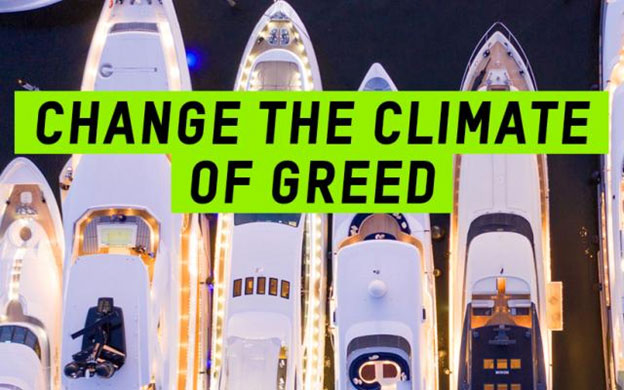
Ban or punitively tax carbon-intensive luxury items like super-yachts and private jets. The carbon footprint of a super-rich European, accumulated from nearly a week of using super yachts and private jets, matches the lifetime carbon footprint of someone in the world’s poorest 1 percent
Build an equal economic system that puts people and planet first by rejecting dominant neoliberal economics and moving towards an economy based on sustainability and equality.