On Nuclear Weapons, Actions Belie Reassuring Words

Armed Conflicts, Civil Society, Featured, Global, Global Geopolitics, Global Governance, Headlines, IPS UN: Inside the Glasshouse, Nuclear Energy – Nuclear Weapons, Peace, TerraViva United Nations

Opinion

Credit: Campaign for Nuclear Disarmament/Henry Kenyon

WASHINGTON DC, Jan 13 2022 (IPS) – On Jan. 3, the leaders of the five nuclear-armed members of the nuclear Nonproliferation Treaty (NPT) issued a rare joint statement on preventing nuclear war in which they affirmed, for the first time, the 1985 Reagan-Gorbachev maxim that “a nuclear war cannot be won and must never be fought.”


The U.S., Chinese, French, Russian, and UK effort was designed in part to create a positive atmosphere for the 10th NPT review conference, which has been delayed again by the pandemic. It also clearly aims to address global concerns about the rising danger of nuclear conflict among states and signals a potential for further cooperation to address this existential threat.

The question now is, do they have the will and the skill to translate their laudable intentions into action before it is too late?

U.S. State Department spokesperson Ned Price hailed the statement as “extraordinary.” A more sober reading shows that it falls woefully short of committing the five to the policies and actions necessary to prevent nuclear war.

In fact, the statement illustrates how their blind faith in deterrence theories, which hinge on a credible threat of using nuclear weapons, perpetuates conditions that could lead to nuclear catastrophe.

The statement asserts that “nuclear weapons—for as long as they continue to exist—should serve defensive purposes, deter aggression, and prevent war.” Yet, such broad language suggests they might use nuclear weapons to “defend” themselves against a wide range of threats, including non-nuclear threats.

Given the indiscriminate and horrific effects of nuclear weapons use, such policies are dangerous, immoral, and legally unjustifiable.

At the very least, if the leaders of these states are serious about averting nuclear war, they should formally adopt no-first-use policies or, as U.S. President Joe Biden promised in 2020, declare that the sole purpose of nuclear weapons is to deter or possibly respond to a nuclear attack.

Even this approach perpetuates circumstances that could lead to nuclear war by accident or miscalculation. The only way to ensure nuclear weapons are never used is “to do away with them entirely,” as President Ronald Reagan argued in 1984, and sooner rather than later.

But on disarmament, the statement only expressed a “desire to work with all states to create a security environment more conducive to progress on disarmament with the ultimate goal of a world without nuclear weapons with undiminished security for all.” This vague, caveated promise rings hollow after years of stalled disarmament progress and an accelerating global nuclear arms race.

A year ago, Russia and the United States extended the 2010 New Strategic Arms Reduction Treaty, but they have not begun negotiations on a follow-on agreement. Meanwhile, both spend billions of dollars annually to maintain and upgrade their nuclear forces, which far exceed any rational concept of what it takes to deter a nuclear attack.

China is on pace to double or triple the size of its land-based strategic missile force in the coming years. Worse still, despite past promises “to engage in the process leading to the total elimination of nuclear weapons,” Chinese leaders are rebuffing calls to engage in arms control talks with the United States and others. The United Kingdom, meanwhile, announced last year it would increase its deployed strategic warhead ceiling.

Fresh statements by the five NPT nuclear-armed states reaffirming their “intention” to fulfill their NPT disarmament obligations are hardly credible in the absence of time-bound commitments to specific disarmament actions.

At the same time, the five, led by France, have criticized the good faith efforts by the majority of NPT non-nuclear-weapon states-parties to advance the 2017 Treaty on the Prohibition of Nuclear Weapons (TPNW). Contrary to claims by the nuclear-armed states, the TPNW reinforces the NPT and the norm against possessing, testing, and using nuclear weapons.

Rather than engage TPNW leaders on their substantive concerns, U.S. officials are pressuring influential states, including Sweden, Germany, and Japan, not to attend the first meeting of TPNW states-parties as observers. Such bullying will only reinforce enthusiasm for the TPNW and undermine U.S. credibility on nuclear matters.

The leaders of the nuclear five, especially Biden, can and must do better. Before the NPT review conference later this year, Russia and the United States should commit to conclude by 2025 negotiations on further verifiable cuts in strategic and nonstrategic nuclear forces and on constraints on long-range missile defenses.

China, France, and the UK should agree to join nuclear arms control talks no later than 2025 and to freeze their stockpiles as Washington and Moscow negotiate deeper cuts in theirs.

Instead of belittling the TPNW, the five states need to get their own houses in order. Concrete action on disarmament is overdue. It will help create a more stable and peaceful international security environment and facilitate the transformative move from unsustainable and dangerous deterrence doctrines toward a world free of the fear of nuclear Armageddon.

Source: Arms Control Today

Daryl G. Kimball is Executive Director of the Arms Control Association, Washington DC.

  Source

Extremists Harm Image of Islam and Pakistan

Civil Society, Featured, Global, Headlines, Human Rights, Inequity, Religion, TerraViva United Nations

Opinion

Family members of Priyantha Kumara, who died in the Sialkot mob attack, taking part in religious rites at his funeral.

COLOMBO, Si Lanka, Dec 13 2021 (IPS) – Every time, breaking news of a barbaric crime or terror act is reported from anywhere in the world, peace-loving Muslims the world over feel dejected and wish it had not been another tragedy that will make others glower at them with suspicion as though they too are complicit in the crime.


But often, what they dread is the case, for more than 90 percent of such inhumane and barbaric acts – like the Sialkot slaying of a Sri Lankan factory manager and the Easter Sunday massacres — are associated with Islamic extremism.

Last Friday’s lynching of factory Manager Priyantha Kumara Diyawadanage in Pakistan by an extremist mob will not be the last of such acts.

No amount of ‘We Are Sorry Sri Lanka’ placards, flowers and candles at makeshift memorials and political statements denouncing the crime can bring back his life that was cruelly brought to an end as a burnt offering on the altar of bigotry in an expression of savagery that has no place in civilized society.

However much Pakistanis who are humiliated by extremism dissociate themselves from the horrible act, however profound their apology is, however remorseful Pakistan Prime Minister Imran Khan, who decried the incident as Pakistan’s day of shame, is, the country will continue to be plagued by violent extremism unless and until extremism is rooted out by radical social reforms in line with the peaceful message of Islam.

The Priyantha Kumara lynching by a mob linked to an extremist outfit called Tehereek-e-Labbaik Pakistan, for tearing off a political poster that allegedly had some religious verses in Urdu warrants the immediate revocation of Pakistan’s blasphemy law or its amendment in keeping with the Islamic virtue of tolerance and magnanimity.

Research shows a higher prevalence of extremism in countries that have blasphemy laws than in countries that do not have such laws. Blasphemy laws are often misused to persecute the minorities or treat them as second-class citizens. Such laws are incompatible with the Islamic teaching which calls for protection of the minorities and non-interference in their worship.

If the Pakistan Government fails to make use of this heartrending incident as an opportunity to bring about radical reforms, it itself will be committing an act of blasphemy because its inaction allows the badly constructed law to distort and disgrace Islam.

Pakistan was carved out of the British Raj for the Muslims of the subcontinent. Its founder Muhammad Ali Jinnah promoted a theory of two nation two state, saying that the Muslims and Hindus were two different nations and belonged to two different civilizations and therefore needed to live in separate states.

The world’s first nation-state to be formed on the basis of religion, Pakistan, however, has never been a theocracy.

In a 2017 BBC interview, historian Ayesha Jalal pointed out that Jinnah envisaged Pakistan as a “homeland for India’s Muslims”, as opposed to an Islamic state. But she said that his theory had been used by Islamists “as an ideological device” to justify claims for Pakistan to be a theocratic state.

This is Pakistan’s existential crisis. While the extremists fight for the setting up of a theocracy, secular politicians skillfully make use of Islam and side with Islamists to swell their vote banks or to whip up nationalistic emotions against archrival India.

Perhaps, this was why Pakistan’s Defence Minister Pervez Khattak was seen belittling the gruesome murder of Priyantha Kumara, by calling it “youthful exuberance of Muslim youngsters” and “happens all the time”.

He reportedly added, “When the youth feel Islam has been attacked, they react to defend it.” This was while Premier Khan vowed to bring the murderous mob to justice and Pakistan police arrested more than 130 people.

If we play with fire, we get burnt. Pakistan has been burnt enough, yet it appears to have not learnt enough. Seven years ago this month, extremists carried out a gruesome school massacre in Peshawar. In this terror attack some 134 schoolchildren, aged between 8 and 18, and 16 staff members were brutally gunned down by the Pakistan Taliban. So why pamper the extremists?

In 2011, Pakistan’s Punjab Province Governor Salman Taseer was shot dead by a police guard over his opposition to the country’s blasphemy law that calls for death sentence to those who insult Islam or its holy personalities.

Taseer was also calling for the release of Asia Bibi, a Christian woman who was falsely accused by her neighbours of insulting the Prophet Muhammad. Taseer’s assassin was hailed as a hero by a large number of extremists who took to the street to celebrate the murder.

As a result of violent extremism, many non-Muslims find it difficult to accept the Muslims’ assertion that Islam is a religion of peace. What many do not understand is that there is little Islam in today’s world, although about 2 billion Muslims constitute one fourth of the world’s 8 billion population.

In Islam, jihad or holy war is not the norm, but a last resort exception to defend the oppressed. Vigilante justice has no place in Islam. The accused should be heard, Islam commands.

To whatever religion they belong, the problem with extremists is their ignorance of the teachings of the religion they are supposed to follow. As historian and comparative religions expert Karen Armstrong would say, “Terrorism has nothing to do with Muhammad, any more than the Crusades had anything to do with Jesus.”

Certainly, violence is not the answer to blasphemy. According to the Quran, the Prophet Muhammad was heaped the worst form of scorn. He was called a liar, a magician, a madman, and possessed. Garbage was thrown over his head and stone-throwing street urchins were set upon him.

Yet as commanded by God, he exercised beautiful patience — Sabran Jameelan — and when his companions sought permission to retaliate, he would teach them the virtues of patience and remind them that he was sent as a mercy to the whole world. He befriended his persecutors by practising the Quranic injunction which exhorts the Muslims to “repel that which is evil with that which is good (and virtuous)”.

Unfortunately, the verses on defensive wars the Prophet and the early Muslims were forced to fight were misinterpreted by latter day Muslim rulers and terrorists for political purposes. Glorification of violence in the name of Islam became the norm. Islam’s peaceful message was forgotten.

Also overlooked is the Quranic message against violence as explained in the story of angels who expressed their deep concern over bloodshed and mischief on earth when God wanted to create man. (Quran 2: 30.)

It appears that instead of Islam, some Muslims are following a violent creed and calling it Islam. The fake Islam is largely practised while the real Islam remains buried. The task before the Muslims is to search for the buried Islam, resurrect it and live it.

Ameen Izzadeen is the deputy editor of the Sunday Times, Sri Lanka. He also writes a weekly column for the Daily Mirror, Sri Lanka, on international politics and good governance issues; and is a visiting lecturer in journalism and international politics.

  Source

School Meals Coalition Hopes to Provide a Meal to Every Child

Aid, Civil Society, Development & Aid, Education, Featured, Food Security and Nutrition, Global, Headlines, Health, Humanitarian Emergencies, Inequity, Poverty & SDGs, TerraViva United Nations

Food Security and Nutrition

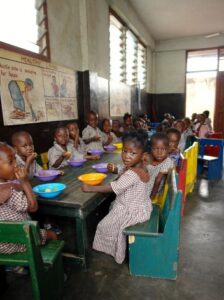
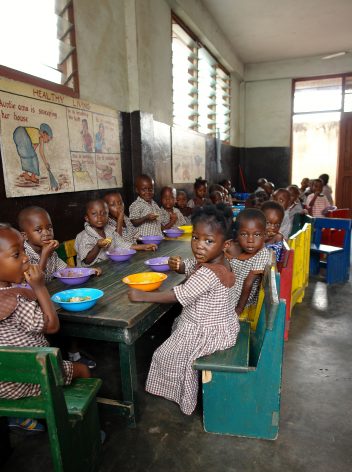
School meals have a host of benefits, including improving enrollments and preventing malnutrition. Now the School Meals Coalition plans to recruit local food producers to assist in the programme. Credit: Bill Wegener/Unsplash

United Nations, Nov 26 2021 (IPS) – Meals at schools not only give each child a nutritious meal but increase enrolments, among other benefits.


This emerged at a recent launch of the School Meals Coalition, a new initiative that aims to give every child a nutritious meal by 2030 through bolstering health and nutrition programmes. The coalition comprises over 60 countries and 55 partners dedicated to restoring, improving and up-scaling meal programs and food systems. Among their partners are UN agencies UNICEF, World Food Programme (WFP), UN Nutrition, Food and Agriculture Organization (FAO), and UNESCO.

In the briefing, the speakers identified School Meals Coalition’s primary goals to restore school meal programmes to the status before the COVID-19 pandemic and reach children in vulnerable areas who have not accessed these plans before. The member countries’ political leaders have come together to support this “important initiative”, according to the permanent representative of Finland to the United Nations, Jukka Salovaara.

“School meals are so much more than just a plate of food. It’s really an opportunity to transform communities, improve education, and food systems globally,” he said.

School meal programmes are a significant safety net for children and their communities. As one of the primary means for children to get healthy meals, they help combat poverty and malnutrition. Their impact on education is seen in increased engagement from students. They also serve as incentives for families to send their children, especially girls, to schools, thus supporting children’s rights to education, nutrition and well-being.

“We see documented jumps of 9 to 12 per cent in enrollment increases just because the meals are present,” WFP Director of School-Based Programmes Carmen Burbano said. “So, these are really important instruments to bring [children] to school.”

The programmes would also provide opportunities for sustainable development practices and transformations in food systems. One key strategy is to promote and maintain home-grown school meal programmes, recruiting local farmers and markets to provide food supplies. Investing in school meal programmes, especially through domestic spending, has proven to increase coverage. In low-income countries, the number of children receiving school meals increased by 36 percent when their governments increased the budgets for these programs.

A WFP study found that at the beginning of 2020, over 380 million children globally received meals through school meal programmes. The closure of schools due to the COVID-19 pandemic effectively disrupted those programmes, depriving 370 million children of what was effectively their main meal for the day. While there have been marked improvements since schools re-opened worldwide, with 238 million children accessing the school meals, there are still 150 million children that don’t have access.

The School Meals Coalition aims to close this gap through a system of collaboration between member countries and their partners. Among their initiatives will be a monitoring and accountability mechanism that is being developed by the WFP and its partners, which will be used to follow the coalition’s accomplishments, and a peer-to-peer information-sharing network, spearheaded by the German government, between members and partners that will use findings to influence their programme output.

Even before the pandemic, school meal programmes did not reach the most vulnerable children, 73 million, who could not access these programmes. Reaching children that have fallen through the cracks can be challenging, but it is significantly more difficult in countries affected by conflict or environmental disruptions.

Education Cannot Wait (ECW) and the World Food Programme (WFP) earlier signed a memorandum of understanding to feed children in protracted crises.

At the signing, WFP Assistant Executive Director, Valerie Guarnieri said: “Simply put, sick children cannot attend school and hungry children cannot learn. It is essential we invest more in the health and nutrition of young learners, particularly girls.”

ECW Director, Yasmine Sherif said a feeding scheme made a massive difference in children’s lives.

“For many children and youth in crisis-affected countries, a meal at school may be the only food they eat all day and can be an important incentive for families to send and keep girls and boys in school. It is also essential for a young person to actually focus and learn,” she said.

The coalition plans to find ways to break the barriers to enable children to reach school or look for alternative learning pathways to reach children who could not physically attend school.

The factors that can prevent children from fully attending schools, such as poverty, complexity in family lives, or conflict, have only been exacerbated over the last nearly two years, thanks mainly to the COVID-19 pandemic. As more schools open worldwide, the restoration of school meal programmes is expected to provide much-needed support for children and their communities in turn.

“This is a very urgent and timely priority,” said Head of the Sustainable Development Unit of the Permanent Mission of France to the United Nations, Olivier Richard. “Because school meals are very important for the recovery of our societies from the impact of the COVID-19 pandemic.”

To learn more about the School Meal Coalitions, you can follow their page.

  Source

Climate Injustice at Glasgow Cop-Out

Civil Society, Climate Action, Climate Change, Development & Aid, Environment, Featured, Global, Headlines, Poverty & SDGs, TerraViva United Nations

Opinion

SYDNEY and KUALA LUMPUR, Nov 23 2021 (IPS) – The planet is already 1.1°C warmer than in pre-industrial times. July 2021 was the hottest month ever recorded in 142 years. Despite the pandemic slowdown, 2020 was the hottest year so far, ending the warmest decade (2011-2020) ever.

Betrayal in Glasgow
Summing up widespread views of the recently concluded Glasgow climate summit, former Irish President Mary Robinson observed, “People will see this as a historically shameful dereliction of duty,… nowhere near enough to avoid climate disaster”.


Anis Chowdhury

A hundred civil society groups lambasted the Glasgow outcome: “Instead of a multilateral agreement that puts forward a clear path to address the climate crisis, we are left with a document that takes us further down the path of climate injustice.”

Even if countries fulfil their Paris Agreement pledges, global warming is now expected to rise by 2.7°C from pre-industrial levels by century’s end. Authoritative projections suggest that if all COP26 long-term pledges and targets are met, the planet will still warm by 2.1℃ by 2100.

The United Nations Environment Programme suggests a strong chance of global warming disastrously rising over 1.5°C in the next two decades. Earlier policy targets – to halve global carbon emissions by 2030, and reach ‘net-zero’ emissions by 2050 – are now recognized as inadequate.

The Glasgow UN Framework Convention on Climate Change 26th Conference of Parties (COP26) was touted as the world’s ‘last best hope’ to save the planet. Many speeches cited disturbing trends, but national leaders most responsible for greenhouse gas (GHG) emissions offered little.

Thus, developing countries were betrayed yet again. Despite contributing less to accelerating global warming, they are suffering its worst consequences. They have been left to pay most bills for ‘losses and damages’, adaptation and mitigation.

Glasgow setbacks
Glasgow’s two biggest hopes were not realized: renewing targets for 2030 aligned with limiting warming to 1.5℃, and a clear strategy to mobilize the grossly inadequate US$100bn yearly – promised by rich country leaders before the Copenhagen COP in 2009 – to help finance developing countries’ efforts.

Jomo Kwame Sundaram

An exasperated African legislator dismissed the Glasgow Leaders’ Declaration on Forests and Land Use as an “empty pledge”, as “yet another example of Western disingenuousness … taking on the role of ‘white saviour’” while exploiting the African rain forest.

Meanwhile, far too many loopholes open to abuse remain, undermining efforts to reduce emissions. Further, no commitment to end fossil fuel subsidies globally – at US$11 million every minute, i.e., around US$6 trillion annually – was forthcoming.

No new oil and gas fields should be developed for the world to have a chance of getting to net-zero by 2050. Nevertheless, governments are still approving such projects, typically involving transnational corporate giants.

Various measures – e.g., ‘carbon capture and storage’ and ‘offsetting’ – have been touted as solutions. But carbon capture and storage technologies remain controversial, unproven at scale, expensive and rarely cost-competitive.

The Glasgow outcome did not include any commitment to fully phase out oil and gas. Meanwhile, the language on coal has been diluted to become virtually toothless: coal-powered plants will now be ‘phased down’, instead of ‘phased out’.

Offsets off track
Offset market advocates claim to reduce emissions or remove GHGs from the atmosphere by some to ‘off-set’ emissions by others. Thus, offsetting often means paying someone poor to cut GHG emissions or forcing them to pay someone else to do so. With more means, big business can more easily afford to ‘greenwash’.

Carbon offset markets have long overpromised, but underdelivered. As they typically exaggerate GHG emission reduction claims, offsetting is a poor substitute for actually cutting fossil fuel use. Meanwhile, disagreements over offset rules have long stalled international climate change negotiations.

Buying offsets allows GHG emitters “to keep polluting”, albeit for a fee. Highly GHG emitting activities by wealthier individuals, companies and nations can thus continue, after “transferring the burden of action and sacrifice to others” – typically to those in poorer nations – via the market.

For Tariq Fancy – who managed ‘sustainable investing’ at BlackRock, the world’s largest fund manager – the market for offsets is a “deadly distraction”, “leading the world into a dangerous mirage, … burning valuable time”.

Meanwhile, most established offset programmes – e.g., the United Nations’ REDD+ programme or the Kyoto Protocol’s Clean Development Mechanism – have clearly failed to meaningfully reduce GHG emissions.

More than 130 countries have committed to achieve net-zero by 2050. But net-zero targeting has actually allowed the world to continue kicking the can down the road, instead of acting decisively and urgently to verifiably cut GHG emissions.

Hence, it is seen as a cynical “scam”, “nothing more than an expensive cover-up for continued toxic emissions”. Trading non-verifiable offsets – supposedly to achieve net-zero – allows continuing GHG emissions with business almost as usual.

Loss and damage?
Vulnerable and poor nations have argued for decades that rich countries owe them compensation for irreversible damage from global warming. In fact, no UN climate conference has delivered any funding for losses and damages to countries affected.

Rich countries agreed to begin a ‘dialogue’ to discuss “arrangements for the funding of activities to avert, minimize and address loss and damage”. Representing developing nations, Guinea expressed “extreme disappointment” at this ruse to delay progress on financing recovery from and rebuilding after climate disasters.

Developed nations account for two-thirds of cumulative emissions compared to only 3% from Africa. Carbon emissions by the wealthiest 1% of the world’s population were more than twice those of the bottom half between 1990 and 2015!

Low-lying small island nations – from the Marshall Islands to Fiji and Antigua – fear losing much of their land to rising sea levels. But their longstanding call to create a ‘loss and damage’ fund was rejected yet again.

South Pacific island representatives have expressed disappointment at lack of funding for losses and damages, and the watered down language on coal. For them, COP26 was a ‘monumental failure’, leaving them in existential peril.

Although historical responsibility for GHG emissions lies primarily with the wealthy countries, especially the US and the European Union, once again, they have successfully evaded serious commitments to address such longstanding problems due to global warming.

Climate injustice
For the UN Secretary-General, “[o]ver the past 25 years, the richest 10% of the global population has been responsible for more than half of all carbon emissions, and the poorest 50% were responsible for just 7% of emissions”.

The World Bank estimates that, if left unchecked, climate change will condemn 132 million more people into poverty over the next decade, while displacing more than 216 million from their homes and land by 2050.

Meanwhile, poorer countries – who have contributed least to cumulative GHG emissions – continue to suffer most. To address climate injustice, rich countries – most responsible for GHG emissions and global warming – must do much more.

Their finance for developing countries ought to be much more ambitious than US$100bn yearly. Financing terms should be far more generous than currently. Also, funding should prioritize adaptation, especially for the poorest countries most at risk.

  Source

Mother of Summits: Sweet and Sour Diplomacy, but Nothing Cooked!

Conferences, Economy & Trade, Featured, Global, Global Geopolitics, Global Governance, Headlines, TerraViva United Nations

SINGAPORE, Nov 22 2021 (IPS) – It has been said that when Greek meets Greek, then comes the tug of war. The summit of the leaders of world’s two strongest powers, the United States and China, came face to face at long last. Albeit virtually. Still, this was undoubtedly the “mother of summits” this year. There were two telephone conversations earlier, but according to US officials this nearly four hours of summitry was far more “candid intense, and deeper interaction”. If there was one single take-away from this meeting, it was the establishment beyond all reasonable doubt of the incontrovertible fact that the US and China were indeed the two most influential global state actors. The decisions between the two, represented by their leaders, would profoundly impact the rest of humanity far into the future.


Dr. Iftekhar Ahmed Chowdhury

Given that in terms of deliverables, the consensus among all analysts was that nothing significant was expected, the event was important in that it put to rest the bickering between the subordinates that was pushing the world towards a precipice. It was about time the supreme political masters, Joe Biden of the US and Xi Jinping assumed the reins of control of the most important relationship of our times. Both sides were intellectually convinced that the stiffest possible competition between the two was on the cards. The challenge was to manage this in a way to prevent a conflict that would be catastrophic. This was one point on which, luckily, there was understanding on both sides.

There was not much on anything else. Prior to the meeting that Biden was focussed on writing the rules of the engagement of China “in a way that is favourable to our interests and our values and those of our allies and partners”. Unsurprisingly, Xi and the Chinese did not play ball. Both sides basically emphatically stated their positions on issues and showed nary an inclination to concede an inch to the other. In the end, as was expected, there were no breakthroughs. The irreconcilable positions remained in- tact, with a vague call by both sides for more cooperation.

A virtual meeting is bereft of the positive influences of informal chats, banquets, and the opportunity of developing personal camaraderie. Still, both leaders exuded friendly demeanours, and Xi called Biden “an old friend”. On Taiwan, the dialogue was tough. Xi reminded Biden of the US position on the Peoples ‘Republic being the sole legitimate government of China , reinforced by here communiques issued in 1972, 1979 and 1982. Following the talks the White House clarified that the “One China’ was also guided by the Taiwan Relations Act and the Six Assurances committing the US to opposing” unilateral efforts to change the status quo”. Xi made it clear that Taiwan for China was a “core issue”; it was a province of China, and any support to its independence was akin to playing with fire. “Whoever plays with fire will get hurt” was a message he strongly underscored.

There seemed a glimmer of hope on one front, though. In the past China has refused to be drawn into any nuclear arms control agreements given that its arsenal was far smaller than those of the US and Russia. But recent significant qualitative improvements of its capabilities have been worrying the US. At the meeting China showed willingness to talk on the subject. However, there is no possibility of agreements beyond the rim of the saucer because the Chinese will naturally demand steep cuts in US numbers which will be unacceptable to Washington. However, there could be forward movement through diplomatic engagements on matters such as Confidence Building Measures (CBMs), will the positivity that would entail.

There is a fundamental difference in the approach of China and the US to negotiations. The US believes in a kind of “a la carte” method of choosing areas where it believes there is scope for collaboration while competition, and even confrontation, continues others. The Chinese on the other hand reject this as “cherry picking” and see the agenda as a comprehensive package. What is the use of understanding on one subject, while differences on another cam lead to war? Unless this basic divergence is resolved, negotiations are unlikely to be able to yield any worthwhile results. Discussions will continue to be both sweet and sour, as the summit deliberations were, but nothing seriously palatable will get cooked!

Xi has in the meanwhile has consolidated his own power in China to a point that he may be set obtain a third term of office. More importantly, he is viewed as the navigator in the journey towards national rejuvenation leading to China becoming a modern fully developed nation by 2049 which will bring him yet closer to the status of the Great helmsman, Chairman Mao Zedong, himself. All these were the outcome of the Sixth plenum of the Chinese Communist Party which met last week and adopted a “historical resolution” that buttressed Xi’s power and position.

Incidentally, in the history of the party this was the third historical resolution. The first was adopted in 1945 under Mao four years prior to the revolutionary victory, and the second by the ‘reformist” Deng Xiaoping. While Mao was the one who restored a sense of pride among the Chinese people enabling them “to stand up” and Deng made them rich through his reforms, Xi, by the dint of this “thought” (which supersedes “theory” in Chinese political lexicon) gave them strength and shared prosperity. In an abstruse political milieu where the count of numbers means a great deal, a Xinhua communique on the meeting mentioned Xi’s name at least fourteen times, compared to seven of Mao and Five of Deng. That tells a lot.

Consequently, it is now all but certain that Xi will be elected to an unprecedented third term in office as party General Secretary at the 20th Party Congress next year. There is also some talk that he may assume the title of “Chairman” as well which will bring him at par with Mao. The plenum also elevated Xi Jinping Thought to 21st Century Marxism, completing the process of “Sinicization” of Marxist philosophy. Xi has been pragmatic in welding the conservatism of Mao, but shunning his repressive methods, with the reforms of Deng, correcting the “capitalist excesses”, and bringing China on a socialist path that would lead to a “modern society” with “shared prosperity “. Small wonder that many Chinese observers are beginning to see him as a “Philosopher King” in the mould of Plato in the West and Confucius in the East, a perfect mix for the cauldron of power and authority. An interesting footnote is that the Chinese Communist Party formally announced its third “historical resolution”, cementing Xi’s powers hours after the Summit, though it was leaked earlier, which pointed to a thought-through calibrated set of actions.

Nowhere the same degree, Joe Biden also seems to have achieved a modicum of success of his own despite powerful head winds. He has managed to create a sense of cohesion among America’s allies, though his path has had numerous pitfalls and bumps. Importantly he has managed to secure the passage into law of the massive legislation in terms of the US $1.2 trillion bill on a revamp of infrastructures, to “build back better”, a campaign pledge. This for him is no mean achievement, proving that persistence pays. But for him and his Democratic Party the future is not as rosy as that what appears to be for his Chinese counterpart. A Republican win in the Presidential race is a distinct possibility. That could lead to turmoil and backlash in US domestic politics, requiring the identification of a common foe to rally the nation. China is the obvious candidate. If, consequently, the “ultimate red line” for China, such as on the issue of Taiwan is crossed, a catastrophe could follow.

Surely the Chinese have made those calculations. From now to then, China and Xi will, while seeking to avoid an immediate conflict, be preparing to, in the words of the Global Times seen as a State media outlet, “to deal with the biggest storms in the world, the most powerful and comprehensive siege from the US and its allies”. Halfway down this decade it will be high- risk for one to wager too much in favour of peace!

Dr Iftekhar Ahmed Chowdhury is the Honorary Fellow at the Institute of South Asia Studies, NUS. He is a former Foreign Advisor (Foreign Minister) of Bangladesh and President & Distinguished Fellow of Cosmos Foundation. The views addressed in the article are his own. He can be reached at: isasiac @nus.edu.sg

This story was originally published by Dhaka Courier.


Glasgow Summit Ends Amidst Climate of Disappointment

Civil Society, Climate Action, Climate Change, Conferences, Development & Aid, Editors’ Choice, Energy, Environment, Featured, Global, Global Governance, Headlines, IPS UN: Inside the Glasshouse, Poverty & SDGs, Regional Categories

Climate Change

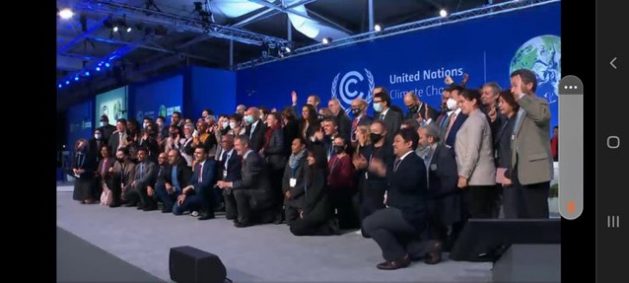
One of the family photos taken after the laborious end of the 26th climate summit in Glasgow, which closed a day later than scheduled with a Climate Pact described as falling short by even the most optimistic, lacking important decisions to combat the crisis and without directly confronting fossil fuels, the cause of the emergency. CREDIT: UNFCCC

One of the family photos taken after the laborious end of the 26th climate summit in Glasgow, which closed a day later than scheduled with a Climate Pact described as falling short by even the most optimistic, lacking important decisions to combat the crisis and without directly confronting fossil fuels, the cause of the emergency. CREDIT: UNFCCC

GLASGOW, Nov 14 2021 (IPS) – Developing countries will surely remember the Glasgow climate summit, the most important since 2015, as a fiasco that left them as an afterthought.


That was the prevailing sentiment among delegates from the developing South during the closing ceremony on the night of Saturday Nov. 13, one day after the scheduled end of the conference.

Bolivia’s chief negotiator, Diego Pacheco, questioned the outcome of the summit. “It is not fair to pass the responsibility to developing countries. Developed countries do not want to acknowledge their responsibility for the crisis. They have systematically broken their funding pledges and emission reduction commitments,” he told IPS minutes after the end of the 26th Conference of the Parties (COP26) on climate change in Glasgow.

The 196 Parties to the United Nations Framework Convention on Climate Change (UNFCCC) ignored the public clamor, which took shape in the demands of indigenous peoples, young people, women, scientists and social movements around the world for substantive measures to combat the climate crisis, even though the goal of containing global warming to 1.5 degrees Celsius is barely surviving on life support.

The Glasgow Climate Pact that came out of the summit finally mentions the need to move away from the use of coal. But it had to water down the stronger recommendation to “phase out” in order to overcome the last stumbling block.

In addition, COP26 broke a taboo, albeit very tepidly, after arduous marches and counter-marches in the negotiating room and in the three drafts of the Glasgow Pact: there was a mention of fossil fuels as part of the climate emergency. And it also stated the need to reduce “inefficient” subsidies for fossil fuels.

But the summit, where decisions are made by consensus, avoided a strong stance in this regard. It also avoided moving from recommendations to obligations for the next edition, to be held in Egypt, and those that follow, while the climate crisis continues causing severe droughts, devastating storms, melting of the polar ice caps and warming of the oceans.

In a plenary session that was delayed by several minutes, the final declaration underwent a last-minute change when India, one of the villains of the meeting – along with Saudi Arabia, Australia and Russia – asked for the phrase “phasing out” of coal to be replaced by “phasing down”, a change questioned by countries such as Mexico, Liechtenstein and Switzerland.

A paradoxical fact at the close of COP26, where civil society organizations complained that they were left out, was the decision of several countries to endorse the final text even though they differed on several points, including the fossil energy face-lifts.

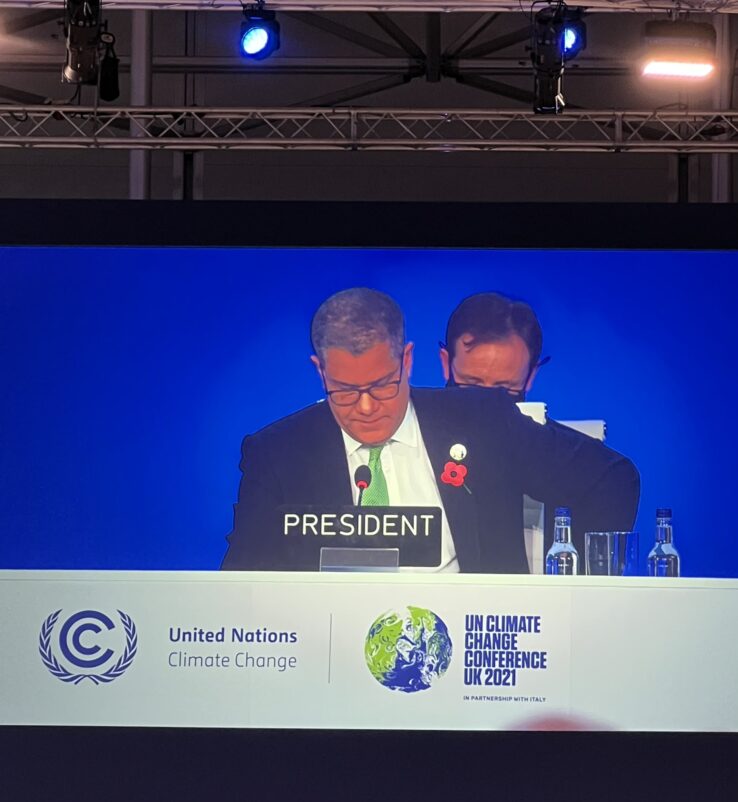
“Today, we can say with credibility that we have kept 1.5 degrees within reach. But its pulse is weak. And it will only survive if we keep our promises. If we translate commitments into rapid action,” said conference chairman Alok Sharma, choking back tears after a pact – albeit a minimal one – was reached by negotiating three drafts and holding arduous discussions on the fossil fuel question, right up to the final plenary.

COP26 chair Alok Sharma blinked back tears during his closing speech at the climate summit, expressing the tension of negotiating the Glasgow Climate Pact, due to the hurdles thrown in the way of a consensus by the big coal and oil producers. CREDIT: UNFCCC-Twitter

COP26 chair Alok Sharma blinked back tears during his closing speech at the climate summit, expressing the tension of negotiating the Glasgow Climate Pact, due to the hurdles thrown in the way of a consensus by the big coal and oil producers. CREDIT: UNFCCC-Twitter

The South is still waiting

Lost amidst the impacts of the climate emergency and forgotten by the industrialized countries, the global South failed to obtain something vital for many of its nations: a clear plan and funding for loss and damage, an issue that was deferred to COP27 in Egypt.

Mohamed Adow, director of the non-governmental Power Shift Africa, said the pact is “not good enough…There is no mention of solidarity and justice. We need a clear process to face loss and damage. There should be a link between emission reduction, financing and adaptation.”

The final decision by China, the United States, India and the European Union to turn their backs on a global fossil fuel exit and deny climate support to the most vulnerable nations left the developing world high and dry.

“There are things that cannot wait to COP27 or 2025. To face loss and damage, the most vulnerable countries need financing to battle the impacts on their territories,” Manuel Pulgar-Vidal, global climate and energy leader for the non-governmental World Wildlife Fund, told IPS.

Climate policies were, at least on the agenda, the focus of COP26.

The summit focused on carbon market rules, climate finance of at least 100 billion dollars per year, gaps between emission reduction targets and needed reductions, strategies for carbon neutrality by 2050, adaptation plans, and the working platform for local communities and indigenous peoples.

But the goal of hundreds of billions of dollars per year has been postponed, a reflection of the fact that financing for climate mitigation and adaptation is a touchy issue, especially for developed countries.

The corridors of the Blue Zone of the Scottish Events Campus, where the official part of the 26th Climate Conference was held in the city of Glasgow, were emptying on Saturday Nov. 13, at the end of the summit, which lasted a day longer than scheduled and ended with a negative balance according to civil society organizations. CREDIT: Emilio Godoy/IPS

The corridors of the Blue Zone of the Scottish Events Campus, where the official part of the 26th Climate Conference was held in the city of Glasgow, were emptying on Saturday Nov. 13, at the end of the summit, which lasted a day longer than scheduled and ended with a negative balance according to civil society organizations. CREDIT: Emilio Godoy/IPS

Offers and promises – on paper

One breakthrough at COP26 was the approval of the rules of the Paris Agreement, signed in the French capital in December 2015, at COP21, to form the basis on which subsequent summits have revolved. By 2024, all countries will have to report detailed data on emissions, which will form a baseline to assess future greenhouse gas reductions.

The agreement on the functioning of carbon markets creates a trading system between countries, but does not remove the possibility of countries and companies skirting the rules.

Industrialized countries committed to doubling adaptation finance by 2025 based on 2019 amounts. In addition, COP26 approved a new work program to increase greenhouse gas cuts, with reports due in 2022.

It also asked the UNFCCC to evaluate climate plans that year and its final declaration calls on countries to switch from coal and hydrocarbons to renewable energy.

Apart from the Climate Pact, the summit produced voluntary commitments against deforestation, emissions of methane, a gas more polluting than carbon dioxide, and the phasing out of gasoline and diesel vehicles.

In addition, at least 10 countries agreed to put an end to the issuing of new hydrocarbon exploration and exploitation licenses in their territories.

Furthermore, some thirty nations agreed to suspend public funding for coal, gas and oil by 2022.

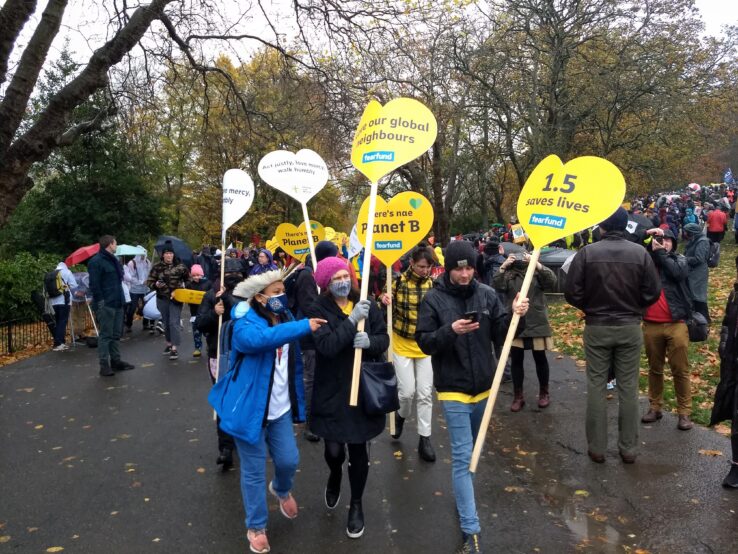
 Demonstrations demanding ambitious, substantive and equitable measures to address the climate crisis continued throughout the 14-day climate summit in Glasgow, which ended on the night of Saturday Nov. 13 with disappointing results for the global South. CREDIT: Emilio Godoy/IPS

Demonstrations demanding ambitious, substantive and equitable measures to address the climate crisis continued throughout the 14-day climate summit in Glasgow, which ended on the night of Saturday Nov. 13 with disappointing results for the global South. CREDIT: Emilio Godoy/IPS

Finally, more than 100 stakeholders, including countries and companies, signed up to the elimination of cars with internal combustion engines by 2030, without the major automobile manufacturers such as Germany, Spain and France joining in, and a hundred nations signed a pact to promote sustainable agriculture.

All of the 2030 pledges, which still need concrete plans for implementation, imply a temperature rise of 2.8 degrees C by the end of this century, according to the independent Climate Action Tracker.

The climate plans of the 48 least developed countries (LDCs) would cost more than 93 billion dollars annually, the non-governmental International Institute for Environment and Development said in Glasgow.

In addition, annual adaptation costs in developing countries would be about 70 billion dollars, reaching a total of 140 to 300 billion dollars by 2030, according to the United Nations Environment Program (UNEP).

But the largest disbursements are related to loss and damage, which would range between 290 billion and 580 billion dollars by 2030, and hence the enormous concern of these nations to obtain essential financing, according to a 2019 study. And their disappointment with the results of the Oct. 31-Nov.13 conference.

During his presentation at the closing plenary, Seve Paeniu, a climate envoy from Tuvalu, an island nation whose very existence is threatened by the rising sea level, showed a photo of his three grandchildren and said he had been thinking about what to say to them when he got home.

“Glasgow has made a promise to guarantee their future. It will be the best Christmas gift that I can bring home,” he said. But judging by the Climate Pact, Paeniu may have to look for another present.

IPS produced this article with the support of Iniciativa Climática of Mexico and the European Climate Foundation.