COVID-19 & its Impact on Textile & Garment Supply Chains in Developing Nations

Civil Society, Development & Aid, Editors’ Choice, Featured, Global, Global Governance, Headlines, IPS UN: Inside the Glasshouse, Poverty & SDGs, TerraViva United Nations

Opinion

Antonella Teodoro is Senior Consultant at the UN Conference on Trade and Development (UNCTAD) & Luisa Rodriguez is Economic Affairs Officer, UNCTAD
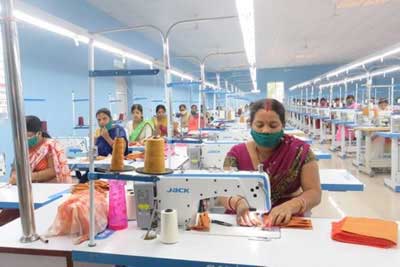
GENEVA, Jun 11 2020 (IPS) In the first quarter of 2020, the coronavirus pandemic led to a 3% drop in global trade values. COVID-19 could trigger the biggest economic contraction since World War II, affecting all industries from finance to hospitality.


As there is significant uncertainty about how the epidemiological and economic situation will evolve, assessing the duration and the gravity of the pandemic seems like an impossible task.

However, recent forecasts suggest: trade volumes decreasing between 13% and 32% in 2020 (WTO, 2020), global growth falling to -3% (IMF, 2020) and different maritime seaborne scenarios ranging from a return to sector average (around 3% p.a.) after 2022 to growth rates falling by 17% by 2024 (Stopford,2020)[i].

Industries whose operations are more globalized (and particularly those that rely on Chinese inputs for production) were most exposed to initial supply chain disruption due to COVID-19. This was the case for precision instruments, machinery, automotive and communication equipment (UNCTAD, 2020).

Given its non-essential nature, the fashion industry faces significant risks. Indeed, in times of COVID-19, as consumers around the world remain in lockdown, they no longer need new products. This industry is characterised by a highly integrated global supply chain.

In it, many developing countries play the role of the supplier of low-cost inputs. This article highlights some of challenges and concerns that some of these countries face, many of which are dependent on textile and garment exports.

The textile industry supply chains, trade logistics and developing countries

The accession of China to the WTO (2001) and the expiry of the WTO Agreement on Textiles and Clothing (which ended a 10-year trade regime managed through quotas) on 1st January 2005 contributed to making China an important centre of textile and clothing global value chains (GVCs).

These two developments led to shift apparel production and sourcing (by globalized retailers and producers) to China and other Asian countries because of low labour costs (UNCTAD, 2005), following the cost-reducing logic of GVCs.

As wages gradually rose in China and Chinese plants moved to produce higher-value goods, countries like Bangladesh, Pakistan and Vietnam, with lower wages costs started attracting factories to relocate their production from China.

At the global level, China remains an important supplier of fashion goods (as shown in Figure 1) but has also become an important consumer of this industry.

Figure 1: Top 20 exporting countries of fashion goods*
(share in global exports), estimated TEU 2019
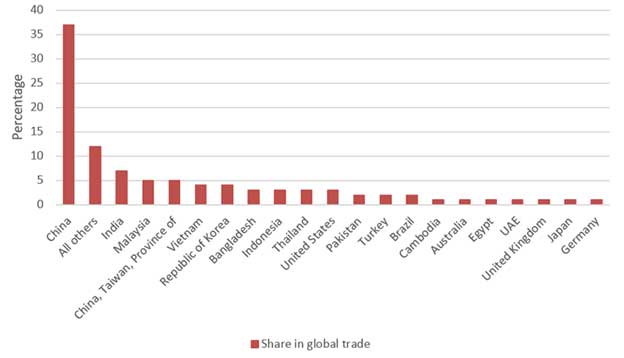
* SITC, 2-digit categories including: Textile fibres, Textiles & made-up articles, Clothing & accessories. (Source: MDS Transmodal, March 2020)

Major exporters of fashion goods for whom exports in the sector represent a significant share of export earnings are shown in Figure 2. Consequently, the Asian country most badly affected by the disease outbreak could be Bangladesh where circa 85% of its exports include fashion goods, as shown in Figure 2.

Figure 2: Top 20 exporting countries of fashion goods*
(share in total country exports), estimated TEU 2019
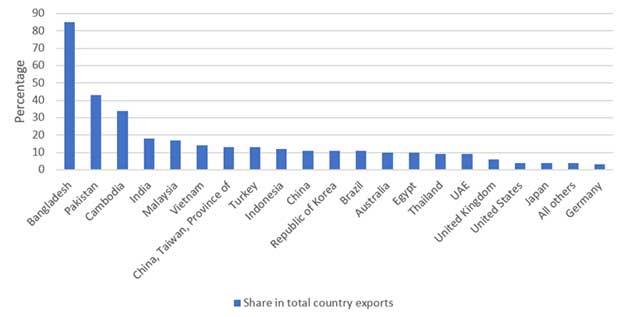
* SITC, 2-digit categories including: Textile fibres, Textiles & made-up articles, Clothing & accessories. (Source: MDS Transmodal, March 2020)

Given the globalized nature of the industry, companies and retailers must transport their goods and raw materials across many countries. Besides China, other countries play an important role as key hubs around which trade of fashion products takes place.

This is the case for the United States (as the most important retail market), and some European countries (such as Belgium, Germany, France and UK), with ports such as Rotterdam and Antwerp featuring prominently in this trade. (CO, 2018).

From a logistics point of view, the textile, apparel and garments industry is considered a time-sensitive industry. Irregularities in making goods reach a particular place at a specified location on time can lead to reduced (or no) profits for the textile owner.

In addition, clothing collections change quickly: their lifecycle is short (as perishable products) and their commercialization is characterized by strong seasonal peaks. In this sense, textile logistics are characterized by small stocks and short delivery times.

These goods and raw materials are usually transported using a combination of land, sea, and air. Within this trade logistics context, strong multimodal interlinkages are key to ensure Just in Time delivery.

E-commerce developments have further accentuated time-related logistics requirements, such as next day delivery, as well as the capacity of handling a large volume of returns and offering the possibility for manufacturers and dealers to check the location of their articles at any time.

Emerging concerns related to COVID19 from the perspective of developing countries

The COVID-19 outbreak led to production stops in China first, followed by closures of shops elsewhere around the world.

For the moment, European and American retailers, the two destination markets for this sector, are still cancelling their orders. Cancelled orders are a cause for concern in many sourcing countries.

As shippers are increasingly invoking ‘force majeure’ clauses within their contracts to halt their payments, on 8 April, the Sustainable Textile of Asian Region (STAR) Network, the body, which brings together representatives of the producing associations from Bangladesh, Cambodia, China, Myanmar, Pakistan and Vietnam, released a joint statement on the issue.

It urged brands and retailers to consider the impact that their purchasing decisions during the coronavirus pandemic could have on workers and small businesses in the supply chain and, therefore, to honour their contracts with their suppliers.

In their statement, the STAR Network invited global businesses to “support business partners in the supply chain as much as possible, and aim at a long-term strategy of business continuity, supply chain unity and social sustainability.”

Supply chain disruption: the reduced production perspective

The evolution of local epidemiologic situation in key sourcing countries, has impacted workforce availability and production, as well as multimodal logistics underpinning global value chains.

One of the concerns in this respect is that production of fashion goods could be moved away to other sourcing countries that are resuming activities faster in the Asian region or that are closer to retailers to diversify their supply chain risk.

Governments in developed countries around the world are implementing unprecedented actions to ease the effect on their economies from measures put in place to limit the spread of the pandemic.

Most developing countries do not have similar financial means, health systems or social safety nets to respond to the COVID-19 pandemic crisis and its economic impacts.

In this context, various assistance packages have been announced by IMF, the World Bank and others with a view to supporting economies, including emerging market economies.

Transport connectivity impact

Observable changes derived from the pandemic concerning maritime transport networks include, for example a reduction in service frequency (blank sailings and idle fleet) and changes in routing affecting particularly Asia-Northern Europe services, a key axis in the trade of fashion goods.

Shipping lines are reducing the number of port calls in the maritime services they offer to adapt to declining demand and cargo imbalances (JOC, 2020).

This is likely to affect the liner shipping connectivity of sourcing countries both in terms of intercontinental as well as intra-regional feeder calls and, if this situation persists, could make economic recovery even harder.

The fashion industry is undoubtedly under pressure in these uncertain times. Depending on the role that countries play in the supply chain, building resilience could entail different needs and approaches.

Prospects appear particularly bleak for low-cost sourcing countries that are highly dependent on textile and garments exports for revenues, concurrently faced with the challenge of limited financial means and less developed health systems and social safety nets to cope with the socio-economic effects of the pandemic.

In the short-term, lockdowns around the world have thrown a spotlight on risks associated with high supply chain interconnectedness and challenges associated with global sourcing.

This has also had an impact on trade logistics, as the glue that holds global value chains together. Observable changes introduced in maritime transport services to cope with reduced demand and cargo imbalances illustrate this.

The key question is what will this mean in the longer term, after surviving this unplanned humanitarian and financial crisis, particularly for the weakest links of the chain?

Driven by growing pressure towards more environmentally friendly lifestyles, the fashion industry was already confronted, before the pandemic, with increased concerns regarding its sustainability footprint, particularly consumption patterns associated with ‘fast fashion’ (increasing levels of expenditures and waste disposal) and associated production patterns (workplace conditions, environmental impact of textiles processing).

Will the current crisis accelerate a transformation in consumption patterns, inducing structural changes to the industry supply chain?

For example, could it lead to generalize new models such as ‘seasonless designs’ or lead to shorter value chains (i.e. increased local or regional sourcing)? Certainly, moving away from the “just in time” or “made- to- order” business models will have an impact on trading and transport patterns.
  Source

Global Solidarity & Effective Cooperation in the Face of COVID-19

Aid, Civil Society, Development & Aid, Economy & Trade, Featured, Global, Headlines, Human Rights, Poverty & SDGs, TerraViva United Nations

Opinion

Charlotte Petri Gornitzka is Assistant Secretary-General and UNICEF Deputy Executive Director, Partnerships; Robert Piper is Assistant Secretary-General, Director of Development Coordination Office; and Ulrika Modéer is Assistant Administrator of UNDP & Director of Bureau of External Relations and Advocacy.

Coronavirus pandemic threatens crises-ravaged communities as UN appeals for global support. Credit: United Nations

UNITED NATIONS, Jun 9 2020 (IPS) – The COVID-19 pandemic upended almost every aspects of life as we know it. Even those countries that are supposed to have the means to manage the spread and mitigate the effects are struggling.


Besides the $5 trillion stimulus package that the G20 economies agreed to deal with the pandemic, individual countries are also devising various measures to shore up their health care systems, stabilize their economies, and assist affected workers and businesses.

Even before the full brunt of the coronavirus outbreak reached some of the poorest countries, the economic impacts are already being felt. With declining global demand for raw materials, breakdown of global supply chain, and mounting debt burden, the economic impact of the COVID-19 pandemic is estimated to exceed $220 billion.

The urgent shouldn’t crowd out the important

With greater uncertainty and fear of global recession looming large, governments are looking for resources needed to lessen the socio-economic pains of the crisis. In this process, official development assistance (ODA) won’t be spared and could come under increased scrutiny.

Decisions made now will have potentially devastating – or transformative – impact for years to come. Despite the economic and political pressure, we must protect ODA, which is needed more than ever.

The spread of COVID-19, especially in places with weak governance and health infrastructures, is expected to be overwhelming if the international community does not act now.

For example, in Sub-Saharan Africa, many countries have the lowest number of physicians per capita in the world while some experience ongoing conflicts, making it difficult to fight the virus.

Credit: UNFPA

The collateral impact of COVID-19 on health, education and nutrition systems will be extremely damaging, and in many cases irreversible, for children and society at large. And when the world opens up again, the resilience of the weakest health systems will dictate how well we do against future threats.

The UN Secretary General argued that “this human crisis demands coordinated, decisive, inclusive and innovative policy action—and maximum financial and technical support for the poorest and most vulnerable people and countries.”

It is critical for the international community to fulfil the humanitarian appeal for COVID-19 response while protecting existing commitments to long-term development and other ‘silent’ emergencies.

Doing so will help protect the most vulnerable people from being exposed to the effects of COVID-19 and preserve hard-earned development gains in fighting global poverty and expanding basic services.

Left to their own devises, fragile nations may risk the breakdown of socio-political order, civil unrest and state collapse, further exacerbating the dire situation.

Flexible funding key to tackling COVID-19

COVID-19 is not only a humanitarian crisis, but also a development crisis. Development agencies are supporting countries to prepare for, respond to, and recover from the crisis.

The effectiveness of their response to certain degree depends on the flexibility afforded to them in funding and operational procedures.

To tackle this uniquely complex health and development crisis, the adequacy and flexibility of funding to development agencies are pivotal. Flexible “core” funding is already making a difference in the COVID-19 response to reach people in need faster, empower local actors, deploy essential supplies to the frontline, and protect the most vulnerable – children, refugees, women.

This enabled the affected communities to practice due diligence and self-driven discretion to immediately respond to threats of the pandemic, while waiting for the pledged assistance to arrive. For instance, in Nigeria, funding flexibility allowed UNICEF to come up with an innovative solution to fight misinformation around COVID-19 while UNDP was able to support the government double the ventilator capacity in the country.

Collaboration, not competition

The COVID-19 pandemic is a devastating crisis in history. But it also posits an opportunity to remind the global community why multilateralism is vital to securing the world’s peace, security, and prosperity.

We witness how the health crisis of today’s globalized world interlinks global economy, geopolitics, and social values. Our effective response to the public health crisis should be seen as key to resolving the ensuing economic, humanitarian, and development challenges.

Understanding this interlinked and complex reality of COVID-19, governments need to work together closely to take coordinated actions and share scientific information, resources and expertise.

It is this strong motion for collaboration that underpins the UN agencies commitment to reinforce the humanitarian-development nexus to jointly respond to the COVID-19 crisis, working closely through the UN Crisis team, humanitarian response plan, UN Response and Recovery Fund for COVID-19.

For example, in Guinea-Bissau, WHO, UNICEF, UNDP, and IOM joined hands to help build isolation facilities and triage space, and procure necessary equipment for COVID-19, both for the national hospital as well as for the re-modelling of the UN clinic.

With strong solidarity and effective cooperation, the international community will not only arrest COVID-19, but also use the emergency to build back better health systems and a more inclusive and sustainable economy.

  Source

Water, Climate, Conflict & Migration: Coping with 1 Billion People on the Move by 2050

Aid, Civil Society, Development & Aid, Economy & Trade, Featured, Global, Headlines, Human Rights, Labour, Migration & Refugees, Poverty & SDGs, TerraViva United Nations

Opinion

Nidhi Nagabhatla is Principal Researcher, Water Security at the UN University’s Institute for Water, Environment and Health, funded by the Government of Canada and hosted by McMaster University in Hamilton, Canada

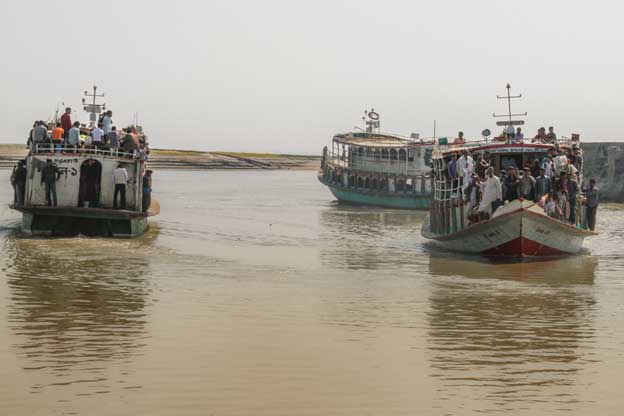
Padma River Basin, Bangladesh Credit: Nidhi Nagabhatla

HAMILTON, Canada, Jun 8 2020 (IPS) – Do migrants willingly choose to flee their homes, or is migration the only option available?

There is no clear, one-size-fits-all explanation for a decision to migrate — a choice that will be made today by many people worldwide, and by an ever-rising number in years to come because of a lack of access to water, climate disasters, a health crisis and other problems.


Data are scarce on the multiple causes, or “push factors,” limiting our understanding of migration. What we can say, though, is that context is everything.

UN University researchers and others far beyond have been looking for direct and indirect links between migration and the water crisis, which has different faces — unsafe water in many places, chronic flooding or drought in others.

The challenge is separating those push factors from the social, economic, and political conditions that contribute to the multi-dimensional realities of vulnerable migrant populations, all of them simply striving for dignity, safety, stability, and sustainably in their lives.

A new report, ‘Water and Migration: A Global Overview,’ (https://bit.ly/3gxDgE7) from UNU’s Institute for Water, Environment and Health, offers insights into water and migration interlinkages, and suggests how to tackle existing gaps and needs.

Its information can be understood easily by stakeholders and proposes ideas for better informed migration-related policymaking, including a three-dimensional framework applicable by scholars and planners at multiple scales and in various settings.

The Report also describes some discomforting patterns and trends, among them:

    • By 2050, a combination of water and climate-driven problems and conflicts will force 1 billion people to migrate, not by choice but as their only option;
    • Links to the climate change and water crises are becoming more evident in a dominant trend: rural-urban migration;
    • That said, there is a severe lack of quantitative information and understanding re. direct and indirect water and climate-related drivers of migration, limiting effective management options at local, national, regional, and global scales
    • Global agreements, institutions, and policies on migration are concerned mostly with response mechanisms. Needed is a balanced approach that addresses water, climate, and other environmental drivers of migration
    • Unregulated migration can lead to rapid, unplanned, and unsustainable settlements and urbanization, causing pressure on water demand and increasing the health risks and burdens for migrants as well as hosting states and communities
    • Migration should be formally recognized as an adaptation strategy for water and climate crises. While it is viewed as a ‘problem,’ in fact it forms part of a ‘solution’
    • Migration reflects the systemic inequalities and social justice issues pertaining to water rights and climate change adaptation. Lack of access to water, bad water quality, and a lack of support for those impacted by extreme water-related situations constitute barriers to a sustainable future for humankind.

Case studies in the report provide concrete examples of the migration consequences in water and climate troubled situations:

    • The shrinking of Lake Chad in Africa and the Aral Sea in Central Asia
    • The saga of Honduran refugees
    • The rapid urbanization of the Nile delta, and
    • The plight of island nations facing both rising seas and more frequent, more intense extreme weather events.

In addition, the added health burdens imposed on people and communities by water pollution and contamination create vicious cycles of poverty, inequality and forced mobility.

While the Sustainable Development Goals (SDGs) agenda does not include an explicit migration target, its mitigation should be considered in the context of SDGs that aim to strengthen capacities related to water, gender, climate, and institutions. These issues resonate even as the world deals with the COVID-19 pandemic.

Recent news stories have chronicled the plight of desperate migrant workers trapped in the COVID-19 crisis in India, and of displaced people in refugee camps where social distancing is unachievable, as is access to soap and water, the most basic preventive measure against the disease.

Add to that the stigma, discrimination, and xenophobia endured by migrants that continue to rise during the pandemic.

Even at this moment, with the world fixated on the pandemic crisis, we cannot afford to put migration’s long-term causes on the back burner.

While the cost of responses may cause concerns, the cost of no decisions will certainly surpass that. There may be no clear, simple solution but having up-to-date evidence and data will surely help.

On World Environment Day ( https://bit.ly/3dnKkks) last week (June 5), we were all encouraged to consider human interdependencies with nature.

Let us also acknowledge that water and climate-related disasters, ecological degradation and other environmental burdens causes economic, health and wellbeing disparities for migrants and populations living in vulnerable settings.

  Source

Checkmate! China’s Coronavirus Connection

Asia-Pacific, Civil Society, Development & Aid, Featured, Global, Headlines, Health, TerraViva United Nations

Opinion

Dr Simi Mehta is the CEO and Editorial Director of Impact and Policy Research Institute (IMPRI), New Delhi. She can be reached at simi@impriindia.org.

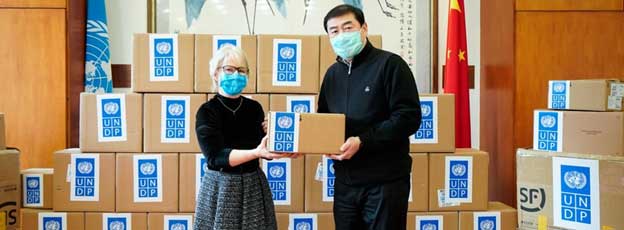
Handover ceremony at UN compound in Beijing for donation of critical medical supplies to the Chinese government. Credit: UNDP China

NEW DELHI, May 20 2020 (IPS) – Coronavirus outbreaks in China and later across the globe have been unprecedented in both its scale and impacts. In the era of changing world order, this pandemic has drawn the global attention towards the threats posed by the non-traditional security challenges.


All military prowess and records of economic progress have been rendered impotent vis-à-vis the coronavirus disease. With a total of around 5 million cases worldwide (and only about 83,000 in China), the wheels of power display of major powers like the US, China, Russia, Spain, France, Germany, Italy have come to a grinding halt.

The objectives of national health policy, health security of the countries, including the concept of collective health security of the World Health Organization (WHO), and the United Nations have raised questions on their seriousness, claimed efficacy and efficiency.

Regarding the origins of the virus, there have been different narratives. This article analyses the discourse claiming that research and development programmes for medicine, vaccines, and treatment for health risks and planning and investment for intensive research on bioweapons by major powers led to the creation of the dangerous strand of contagion called the novel coronavirus.

Allegations on China

There is no denying that the place where it all originated was in Wuhan, China. Thousands of people began to suffer with a respiratory illness that could not be cured. The WHO has described coronavirus as part of the family of viruses, which ranges from the common cold to Middle East Respiratory Syndromes (MERS) and SARS.

It has the capability to transmit between animals and humans. Very soon, a school of thought contrary to the claims of the Chinese government that it was in the wet market selling exotic and wild animals- including bats, that was the cause of this pandemic, began to emerge.

However, counter-claims posit that The Wuhan Institute of Virology National Biosafety Laboratory in the vicinity of the wet market had deliberately created this virus. What raises arguments in favour of the counter-claims include: China did not raise an alarm globally about the existence, leave aside spread of the virus until major outbreaks were reported from late January 2020 onwards.

Various conspiracy theories have been circulating that this virus was made to escape the laboratory as bio-weapons either by accident or design. Some reports have also claimed that this virus was originally stolen by Chinese agents from Canadian laboratory in July 2019, which has level 4 of biosafety- dealing with the most dangerous pathogens for which there are few available vaccines or treatments, similar to that possessed by the Wuhan laboratory.

Further, it has rejected international fact-finding mission into its country. Newspapers like the Wall Street Journal and The New York Times and the Washington Post have suffered collateral damage and some of their employees have been asked to wind up their operations in the country.

Even academic research papers on coronavirus has borne the brunt by the gag-order of the Chinese authorities to intervene in the independence of the scientific process. Those research articles focusing on the COVID-19 have to now undergo extra vetting before they are submitted for publication.

As a result, the initial global empathy for the Chinese suffering from the wrath of this virus steadily turned into suspicion and panic. This culminated into pent up anger seeking reparations from China for being culpable for the origin and spread of COVID-19.

Unfazed by Chinese criticism, US President Donald Trump eloquently named the coronavirus as the Chinese virus. He has also accused the WHO of siding with China in hiding the facts and suspended its contribution to the multi-lateral body and said that the WHO “should be ashamed of themselves because they are like the public-relations agency for China.”.

Calls for an international investigation to know the ‘truth’ behind the origin and spread of the virus have become intense. With its one-party authoritarian system, China was initially on the defensive and flagrantly refused all such calls; which, in effect added to the case in point that there is ‘something’ that it wanted to hide from the rest of the world.

However, with growing international pressures and the most recent draft resolution led by Australia and the EU and supported by 122 countries at the World Health Assembly of WHO, China finally relented and agreed to the call for a “comprehensive review” of COVID-19 pandemic in an “objective and impartial manner”.

It is even pointing to the proactive help it is providing to several countries, in terms of sending protective gears, face masks, gloves, etc. However, complaints have been raised as several of these have malfunctioned and/or were defective.

Conclusion

In 1919 George A. Soper1 wrote that the deadly Spanish Flu pandemic that swept around the earth was without any precedents, and that there had been no such catastrophe ‘so sudden, so devastating and so universal’. He remarked that, “The most astonishing thing about the pandemic was the complete mystery which surrounded it. Nobody seemed to know what the disease was, where it came from or how to stop it. Anxious minds are inquiring today whether another wave of it will come again”.

With close to 3 million positive cases and around 0.2 million deaths worldwide, the coronavirus has compelled people to draw parallels with the history of lethal viruses like the 1918 Spanish flu.

This great human tragedy created by COVID-19 is compounded because of the absence of a definitive cure and/or a vaccine. Experts opine that it would be possible only by the first quarter of 2021. The prevailing obscurity in China with respect to the causes of origin and global spread of the virus has led to conspiracy theories to emanate from various parts of the international community. Demands have begun to be made to hold China accountable for the health crisis and that it should pay the countries of the world for their health and economic hardships.

Trump has indicated that the US has begun its investigations to claim ‘substantial’ damages from China as the ‘whole situation could have been stopped at the source’. The champion of having China included in the world system- Henry Kissinger warned that COVID-19 was a danger to the liberal international order.

Even a veteran Cabinet Minister of Government of India, Nitin Gadkari stated in an interview to a private news channel that the coronavirus is ‘not a natural virus, rather it emerged from a lab’.

This, perhaps explains India’s cautious next steps of charging its northern neighbour China as the country responsible for the manufacture of the virus that has brought incredible and unprecedented mayhem in the lives, livelihoods and economies around the world.

Therefore, it would be in the best interests of China to ensure transparency and allow international investigations into the disease, as it is totally unbecoming of permanent member of the UN Security Council wielding veto powers.

The worldwide panic created by the prevailing health insecurity would redefine the meaning, definition and practical implications for programmes and policy of all countries of the world. Putting it into perspective, the global health management body- the WHO needs to be reformed, and so should the UN Security Council.

It remains to be seen how the world navigates through the crisis and whether comprehensive public health would figure in their national security agendas in the post-COVID-19 world order. Nonetheless, it is time that the multilateral agencies take suo moto cognizance of the havoc created by China and act as per the norms of international law for ensuring collective security.

1 Major George A. Soper was Sanitation Engineer with Department of Health, USA. His area of specialty included study of typhoid fever epidemics. He was also the managing director of American Cancer Society from 1923 to 1928.

  Source

Housing is Both a Prevention & Cure for COVID-19

Civil Society, Development & Aid, Editors’ Choice, Featured, Global, Global Governance, Headlines, IPS UN: Inside the Glasshouse, Poverty & SDGs, TerraViva United Nations

Opinion

Maimunah Mohd Sharif is United Nations Under-Secretary-General and Executive Director of UN-Habitat & Leilani Farha is the former UN Special Rapporteur on the Right to Adequate Housing, and Global Director of The Shift.

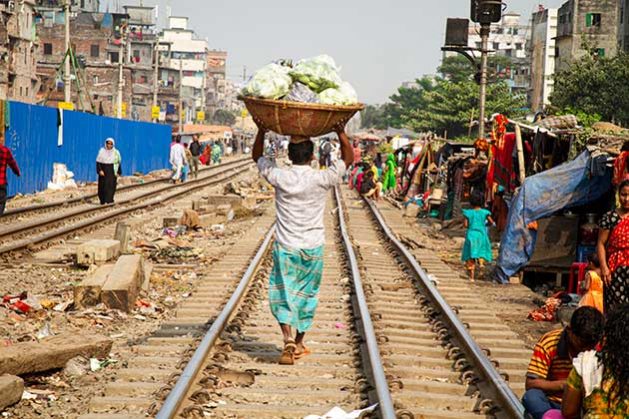
The Bijoy Sarani Railway Slum in Dhaka, Bangladesh. Credit: UNHabitat/Kirsten Milhahn

NAIROBI, Kenya, May 13 2020 (IPS) – Public health officials are calling the “stay home” policy the sacrifice of our generation. To flatten the curve of COVID-19 infections, this call of duty is now emblazoned on t-shirts, in street art and a celebrity hashtag.


But for the 1.8 billion people around the world living in homelessness and inadequate shelter, an appeal to “stay home” as an act of public health solidarity, is simply not possible. Such a call serves to highlight stark and long-standing inequalities in the housing market. It underscores that the human right to shelter is a life or death matter.

Throughout this global pandemic, governments are relying on access to adequate housing to slow the viral spread through self-isolating or social distancing policies. Yet, living conditions in poor or inadequate housing actually create a higher risk of infection whether from overcrowding which inhibits physical distancing or a lack of proper sanitation that makes regular hand-washing difficult.

At the most extreme, people experiencing homelessness must choose between sleeping rough or in shelters where physical distancing and adequate personal hygiene are almost impossible. Homeless populations and people living in inadequate housing often already suffer from chronic diseases and underlying conditions that make COVID-19 even more deadly.

It is now clear, housing is both prevention and cure – and a matter of life and death – in the face of COVID-19. Governments must take steps to protect people who are the most vulnerable to the pandemic by providing adequate shelter where it is lacking and ensuring the housed do not become homeless because of the economic consequences of the pandemic.

These crucial measures include stopping all evictions, postponing eviction court proceedings, prohibiting utility shut-offs and ensuring renters and mortgage payers do not accrue insurmountable debt during lockdowns.

In addition, vacant housing and hotel rooms should be allocated to people experiencing homelessness or fleeing domestic violence. Basic health care should be provided to people living in homelessness regardless of citizenship status and cash transfers should be established for people in urgent need.

Steps should be quickly taken to establish emergency handwashing facilities and health care services for at-risk and underserved communities and informal settlements.

In many cities and countries, emergency measures are already moving in this direction.

Berlin opened a hostel to temporarily house up to 200 homeless people, catering to all nationalities. The Welsh government pledged GBP10 million to local councils for emergency homeless housing by block booking empty lodging like hotels and student dormitories.

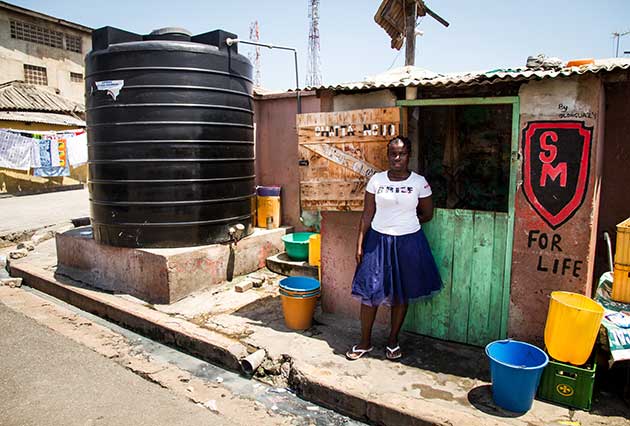
A woman outside a community run water facility in Old Town, Accra Ghana. Credit: UNHabitat/Kirsten Milhahn

In South Africa where under half of all households have access to basic handwashing facilities and in Kenya, where it is under a quarter of households, governments are increasing access to water for residents living in rural areas and informal settlements by providing water tanks, standpipes, and sanitation services in public spaces.

Many jurisdictions, such as Canada’s province of British Columbia, have suspended evictions. The eviction ban means landlords cannot issue a new notice to end a tenancy for any reason and existing orders will not be enforced.

Spain, France, the United Kingdom and the United States have announced mortgage postponements in an effort to curb potential defaults.

National and local governments are also working with the private sector to tackle housing issues. For example, Singaporean firms with government backing are providing accommodation for Malaysian workers who had been commuting to Singapore daily.

And as they are no tourists in Barcelona, the city has agreed with the Association of Barcelona Tourist Apartments to allocate 200 apartments for emergency housing for vulnerable families, homeless people and those affected by domestic violence.

Some cities are leveraging citizen solidarity. Residents of Los Angeles are making hand-washing stations for homeless people living in a depressed area known as Skid Row which are installed and maintained by a local community centre.

All of these urgent measures and more are desperately needed and demonstrate the way in which housing is inherently connected to our collective public health. These successful interventions also show concrete ways that governments and communities can effectively tackle the pre-existing global housing crisis – a crisis which affected at least 1.8 billion people worldwide, even before the pandemic.

In 2018 the European Federation of National Organisations Working with the Homeless reported that homelessness had skyrocketed across the continent. In the United States, 500,000 people are currently homeless, 40 per cent of whom are unsheltered.

In April last year, the Organization for Economic Cooperation and Development (OECD) warned that rent is currently the biggest expense for households accounting on average for one-third of their income. In the last two decades, housing prices have grown three times faster than incomes.

The current global housing system treats housing as a commodity. In times of crisis, the inefficiencies of the market are clear with the public sector expected to absorb liabilities.

This is not sustainable and many cities are struggling to find shelter for their citizens. COVID-19 has brought into sharp relief the housing paradox – in a time when people are in n desperate need for shelter, apartments and houses sit empty. This market aberration needs correcting.

Governments are at a crossroads. They can treat COVID-19 as an acute emergency and address immediate needs without grappling with hard questions and fundamental questions about the global housing system.

Or they can take legislative and policy decisions to address immediate needs, while also addressing the present housing system’s structural inequalities, putting in place long term ‘rights-based’ solutions to address our collective right to adequate shelter. Housing must be affordable, accessible and adequate.

COVID-19 is unlikely to be the last pandemic or global crisis that we face. What we do now will shape the cities we live in, and how resilient we will be in the future.

  Source

NGOs – with Local Groups in the Lead – are on COVID-19 Frontlines

Civil Society, Featured, Global, Headlines, Health, Human Rights, Humanitarian Emergencies, Inequity, TerraViva United Nations

Opinion

Abby Maxman is President & CEO of Oxfam America

Credit: Oxfam America

BOSTON, USA, May 11 2020 (IPS) – NGOs, at the international, national – and most of all local – level are on the frontlines every day.

I just heard from Oxfam staff in Bangladesh, that when asked whether they were scared to continue our response with the Rohingya communities in Cox’s Bazar, they replied: “They are now my relatives. I care about them — and this is the time they need us most.’”


These people – and those that they and others are supporting around the globe – are at the heart of this crisis and response.

As we talk about global figures and strategies, we must remember we are talking about parents who must decide whether they should stay home and practice social distancing or go to work to earn and buy food so their children won’t go hungry; women who constitute 70% of the workers in the health and social sector globally; people with disabilities and their carers; those who are already far from home or caught in conflict; people who don’t know what information to believe and follow, as rumours swirl.

Looking more broadly, we see that the COVID-19 crisis is exposing our broken and unprepared system, and it is also testing our values as a global community. COVID-19 is adding new and exacerbating existing threats of conflict, displacement, gender-based violence, climate change, hunger and inequality, and too many are being forced to respond without the proper resources – simple things like clean water, soap, health care and shelter. We must be creative and nimble to adapt our response in this new reality.

Most vulnerable communities

We know too well that when crisis hits, women, gender diverse persons, people with disabilities and their carers, the elderly, the poor, and the displaced suffer the worst impacts as existing gender, racial, economic and political inequalities are exposed.

Abby Maxman

These communities need to be at the center of our response, and we, as the international community, must listen to their needs, concerns and solutions.

Access

As we continue to ramp up our response, we must have access to the communities most in need. Likewise, COVID-19 cannot be used as an excuse to stop those greatest in need from accessing humanitarian aid.

Border closures are squeezing relief supply and procurement chains; Lockdowns and quarantines are blocking relief operations; And travel restrictions for aid workers have been put in place, disrupting their ability to work in emergency response programs.

Authorities should absolutely take precautions to keep communities safe, but we need to work at all levels to also ensure life-saving aid can still get through and people’s rights are upheld.

Local and national NGOs are on the frontline of the COVID-19 response, and communities’ access to the essential services and lifesaving assistance they provide must be protected. We also know that with effective community engagement, we can gain better and more effective access to communities.

Humanitarian NGOs and partners are adapting our approaches to continue vital humanitarian support while fulfilling our obligation to “do no harm.”

This adaptive approach, and our experience of ‘safe programming,’ shifting to remote management where possible; and scaling back some operations where necessary—will all be crucial as COVID-19 restrictions continue to amplify protection concerns and risk of sexual exploitation and abuse.

Funding

To mount an effective response, we must draw on our collective experience, but this crisis also offers an opportunity to change the way we work, including setting up new funding mechanisms to allow our system to leverage the complementary roles we all play in a humanitarian response.

Overall, NGOs urgently need funding that is flexible, adaptive, and aligned with Grand Bargain commitments. Our work is well underway, but more is needed to get resources to the frontlines.

We need to better resource country based pooled funds, which are crucial for national and local NGOs. Now more than ever, donors must support flexible mechanisms to increase funding flows to NGO partners.

Next Steps

In closing, the international community needs to come together to battle this pandemic in an inclusive and a responsive way that puts communities at the heart of solutions. Even while we respond in our own communities, we must see and act beyond borders if we are ever to fully control this pandemic.

The planning and response to COVID-19 need to be directly inclusive of local and national NGOs, women’s rights organizations, and refugee-led organizations leaders. We must address this new threat, while still responding to other pressing needs for a holistic response.
This means continuing our response to the looming hunger crisis, maintaining access to humanitarian aid, and supporting existing services including sexual and reproductive health and gender-based violence services.

We need to ensure humanitarian access is protected to reach the most vulnerable.

And funding needs to be quickly mobilized through multiple channels to reach NGOs and must be flexible both between needs and countries.

This much is clear: We cannot address this crisis for some and not others. We cannot do it alone. The virus can affect anyone but disproportionately affects the most marginalized. It is our collective responsibility to ensure that our global response includes everyone.

We owe it to those dedicated staff and their honorary “relatives” in Cox’s Bazar, and all those like them around the globe, to get this right.

This article was adapted from Abby Maxman’s comments as the NGO representative at the UN’s Launch of the Updated COVID-19 Global Humanitarian Response Plan on May 7, 2020.

  Source