Young People Bring Solar Energy to Schools in the Argentine Capital

Civil Society, Development & Aid, Editors’ Choice, Education, Energy, Environment, Featured, Headlines, Integration and Development Brazilian-style, Latin America & the Caribbean, Population, Projects, Regional Categories, Special Report, TerraViva United Nations
Energy

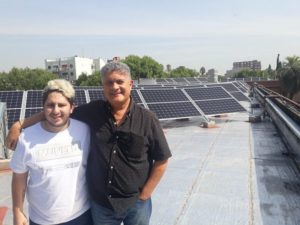
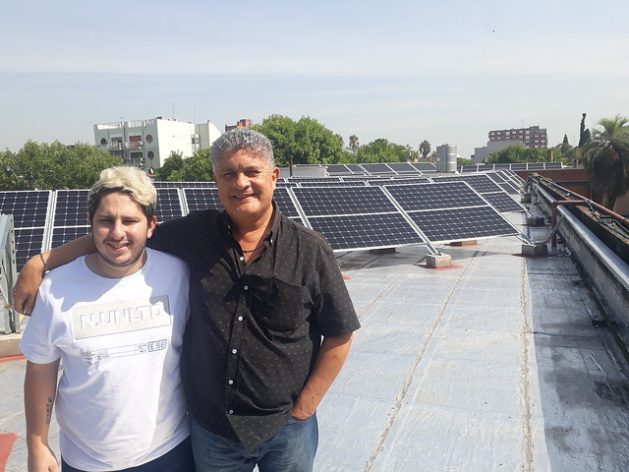
Sebastián Ieraci (L), a member of the group of students who in 2014 pushed for the switch to solar energy at the Antonio Devoto High School, stands next to the school's principal Marcelo Mazzeo on the rooftop of the educational institution located in the Buenos Aires neighbourhood of Villa Devoto. Credit: Daniel Gutman/IPS

Sebastián Ieraci (L), a member of the group of students who in 2014 pushed for the switch to solar energy at the Antonio Devoto High School, stands next to the school’s principal Marcelo Mazzeo on the rooftop of the educational institution located in the Buenos Aires neighbourhood of Villa Devoto. Credit: Daniel Gutman/IPS

BUENOS AIRES , Mar 19 2020 (IPS) – “The idea came to a group of schoolmates and me in 2014, but we never thought it could become a reality,” says Sebastián Ieraci, 23, as he points to a multitude of photovoltaic solar panels shining on the roof of the Antonio Devoto High School in the Argentine capital.


The secondary school is one of the first public centres in Buenos Aires that has managed, since last November, to cover 100 percent of its electricity needs from renewable energy generated in the building itself.

Although today only seven of the city’s public schools have solar panels, the authorities have identified another 140 school buildings with the conditions to generate solar energy, and the plan is to gradually equip all of them with solar panels.

But perhaps the most interesting aspect of this case is that it was the students’ own enthusiasm for clean energy and community involvement that allowed the school to be chosen for an experiment that is new to Buenos Aires.

“Now they come to see us from schools in different parts of the country, to see what we have done and to try to replicate it.” — Marcelo Mazzeo

Ieraci, who arrives in a hurry at his former school after his workday at a paint factory, was in his last year of high school in 2014, when law teachers suggested to him and his classmates that they come up with a project for the programme The Legislature and Schools.

The programme, carried out for over 20 years, invites final-year high school students to submit proposals to the Buenos Aires city legislature, in the areas of environment, public spaces, traffic and transport and security.

Once they do so, the students sit on the city legislature for an afternoon to discuss their proposals with students from other schools.

“We came up with the idea of installing solar panels because we knew that the school’s rooftop was not being used for anything and that doing so could be doubly beneficial, both environmentally and economically, since the school could generate its own energy,” says Ieraci during IPS’s visit to his former school.
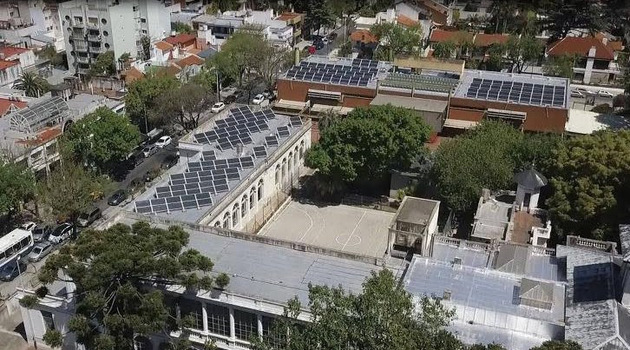
Aerial view of the rooftops of the primary and secondary schools located across from the main square in Villa Devoto, a residential neighborhood in the Argentine capital. The adjacent schools now have 200 solar panels with an installed capacity of 70 kilowatts, and the surplus is injected into the Buenos Aires electricity grid. Credit: Courtesy of Buenos Aires city government

Aerial view of the rooftops of the primary and secondary schools located across from the main square in Villa Devoto, a residential neighborhood in the Argentine capital. The adjacent schools now have 200 solar panels with an installed capacity of 70 kilowatts, and the surplus is injected into the Buenos Aires electricity grid. Credit: Courtesy of Buenos Aires city government

“Then we started looking for information, and after a month we presented the project. Back then it was a utopia and today seeing these panels makes me very proud, because this is a school that generates a sense of belonging,” he explains.

The school is located in a large two-storey building that preserves the style of the old manor house that Italian immigrant Antonio Devoto had built there at the beginning of the 20th century. Devoto is considered the founder of the middle-class residential neighbourhood that today bears his name.

The school is located across from the main square of Devoto, in an area with many old trees and few tall buildings, full of bars and restaurants, and bursting with vitality far from the centre of Buenos Aires.

The Devoto teenagers’ solar panel project was the winner among more than 70 initiatives that students presented in 2014 to the local legislature, and in 2016 the Buenos Aires city government launched it. The first step was to start feasibility studies in more than 600 school buildings.

But it was in 2017 that the school received the definitive push to move towards solar energy, when it once again presented the project in a competition, this time in BA Elige (Buenos Aires Chooses), a citizen participation programme in which the more than three million inhabitants of Buenos Aires proper vote on the projects they want to see carried out.

On that occasion, the residents of Devoto expressed their opinions online, supporting the installation of solar panels in the neighbourhood schools and thus enabling the authorities to allocate budget funds.

The installation of the solar panels began in August 2019 and took three months. Since November, 87 two-by-one meter solar panels have been in operation on the rooftop of the Antonio Devoto High School.

The primary school next door was soon incorporated into the programme, and since January 113 solar panels have been operating, bringing the total to 200 panels on the adjacent rooftops of the two schools that serve a combined total of 500 students.
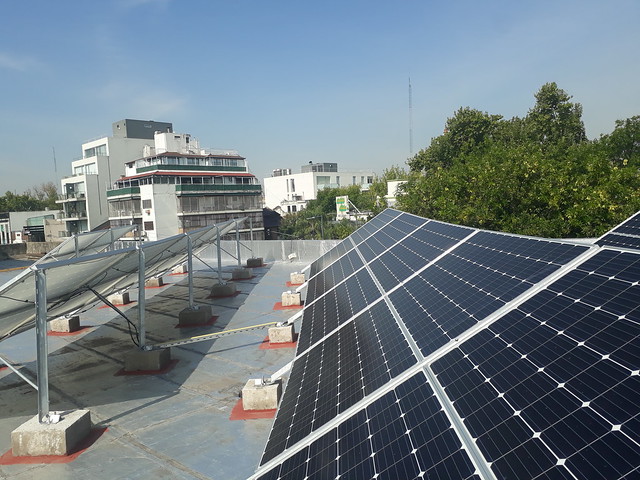
Solar panels nearly cover the entire rooftop of the Antonio Devoto High School in Buenos Aires. Until last year the rooftop area was not put to any use. The idea of using that space to generate renewable energy came from students in their final year in 2014, who presented a project to the Buenos Aires city legislature. Credit: Daniel Gutman/IPS

Solar panels nearly cover the entire rooftop of the Antonio Devoto High School in Buenos Aires. Until last year the rooftop area was not put to any use. The idea of using that space to generate renewable energy came from students in their final year in 2014, who presented a project to the Buenos Aires city legislature. Credit: Daniel Gutman/IPS

“In secondary schools, the panels have 30 kilowatts (kW) of installed capacity, and in primary schools, 40. But the most interesting thing is that the primary school injects its surplus energy into the city’s electricity grid, generating credit with the power company,” engineer Andrés Valdivia, head of climate action in the city government’s Ministry of Education, told IPS.

The Ministry reports that the 140 school rooftops declared suitable for the installation of solar panels – because there are few high buildings surrounding them and they receive good solar radiation – have a combined surface area of 145,000 square meters and could have a total installed capacity of 13 megawatts (MW).

Renewable energies – basically, solar and wind – have experienced major growth in Argentina since a fund was created by law in September 2015 to finance the construction of facilities and to guarantee the purchase of the energy generated.

By late 2019, nearly eight percent of the electricity produced in the country came from renewable sources, up from just 2.2 percent in early 2016, according to official statistics.

However, that growth will not continue because the recession and the devaluation of the local currency in Argentina mean that almost no new projects will be launched, say industry analysts.
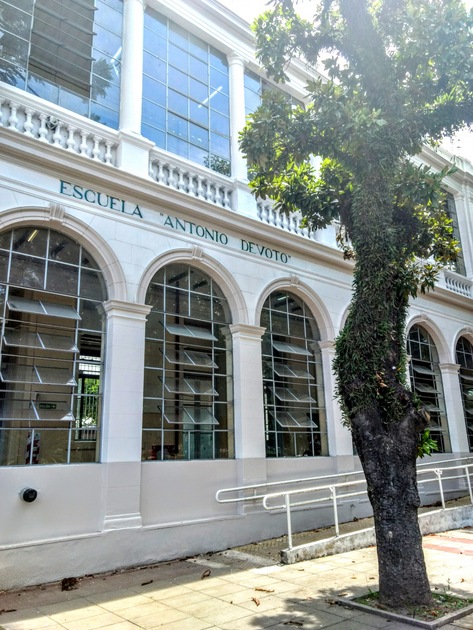
View of the front of the Antonio Devoto High School, which was built in an old manor house belonging to the Italian immigrant recognised as the founder of the Villa Devoto neighbourhood in Buenos Aires, the capital of Argentina. Credit: Courtesy of Marcelo Mazzeo

View of the front of the Antonio Devoto High School, which was built in an old manor house belonging to the Italian immigrant recognised as the founder of the Villa Devoto neighbourhood in Buenos Aires, the capital of Argentina. Credit: Courtesy of Marcelo Mazzeo

“Ours is not a technical school; we have an orientation in economics and administration. But the kids’ interest in the energy transition surprised us and led us to gather a lot of information together about the subject,” said Marcelo Mazzeo, the principal of the Antonio Devoto High School.

“Now they come to see us from schools in different parts of the country, to see what we have done and to try to replicate it,” he told IPS.

Félix Aban, one of the law teachers who worked with the students on the project and is now the school’s vice-principal, said that “one of the most interesting things was that in 2014 the kids suggested that the surplus energy generated by their schools could be injected into the power grid, when that possibility was not even being discussed in Argentina.”

In fact, the law on distributed (or decentralised) energy was not approved by Congress until 2017, under the official name “Regime to foment distributed renewable energy generation integrated into the public electricity grid”.

“They investigated and found that in other countries individual generators fed power into the grid. So we can say that the kids at this school were really ahead of the game,” said Aban.


  Source

Could the Coronavirus Pandemic have been Avoided if the World Listened to Indigenous Leaders?

Active Citizens, Climate Change, Editors’ Choice, Environment, Featured, Global, Headlines, IPS UN: Inside the Glasshouse, Regional Categories, TerraViva United Nations

Climate Change

William Clark Enoch of Queensland. Aboriginal and Torres Strait Islander people, who comprise only 2.5 percent of Australia’s nearly 24 million population, are part of the oldest continuing culture in the world. At a Covering Climate Now panel in New York on Friday, indigenous leaders reiterated the need for the world to listen to them in addressing climate concerns. Credit: Neena Bhandari/IPS

UNITED NATIONS, Mar 19 2020 (IPS) Mina Setra remembers the story clearly. As a Dayak Pompakng indigenous person from Indonesia, when  visitors from the city who came into her community; brought bottled water with them because they were worried about the water not being suitable for drinking. 

Setra, who is the deputy secretary-general of the Indigenous Peoples’ Alliance of the Archipelago (AMAN), recalls one of the elders telling the visitors, “This is the problem of you city people: You eat and drink all the dead things. Like the water that is already in a bottle? It is dead water. The vegetables that you buy from the freezer in the supermarket, they’re all dead plants.”

The anecdote sums up a much bigger conversation that is relevant today: how climate change is linked to coronavirus, and why it’s important to listen to indigenous leaders on the matter.

Setra shared the story with IPS when asked about links between climate change and coronavirus, during a panel talk by Covering Climate Now in New York on Friday, where indigenous leaders reiterated the need for the world to listen to them in addressing climate concerns — and reminding them how climate change can lead to or exacerbate a global health crisis as grave as the current virus. 

The talk took place as global communities scrambled to take effective measures against the deadly virus, and just as the U.S. announced a global emergency while struggling to contain its coronavirus cases. More than two months since the world became aware of coronavirus — and increasingly learned of its alarming implicants — the pandemic has globally claimed 8,810 lives, with more than 218,800, cases. 

While global conversations have mainly focused on the issue of death rate, or the racism attached to the virus, or different countries’ isolation methods (or lack thereof), little has been said about the link to climate change.

This remains a much bigger conversation that indigenous leaders want people to be aware of: how climate change can exacerbate the dangers of something like the coronavirus, and why the world should’ve been listening to indigenous leaders to avoid such a catastrophic spread.  While many believe that coronavirus started with a bat, experts argue it’s not so black and white. A February report established what the leaders discussed at the talk: how deforestation can lead to a loss of habitat for many wild animals and species. As a result, they move to habitat that brings them to closer proximity to humans which can lead to repeated contact between them.  

“The inequilibrium of our planet is not just about climate change, but it’s also about the global economy,” Levi Sucre Romero, a member of the BriBri indigenous community from Costa Rica, told IPS at the panel talk. “So coronavirus is now telling the world what we have been saying for thousands of years: that if we do not help protect biodiversity and nature, that we will face this and worse future threats.”

Romero, a coordinator of the Mesoamerican Alliance of Peoples and Forests, further highlighted a United Nations’ statement for why it’s important for global communities to work with indigenous leaders and learn from their knowledge. United Nations for Indigenous Peoples did not respond to the IPS’ request for comments. 

While wild animals and species are forced to find a home in close proximity to humans as a result of deforestation, another crucial concern is the treatment of animals by people from commercial hubs and cities that can act as a catalyst for such a global crisis.

“Our animals are not contaminated by themselves. They get contaminated by people,” Tuxá said in response to IPS’ question about the link between coronavirus and climate change. “And the proof is that these viruses start in the commercial centres of the world. There is a direct correlation between this and coronavirus and other pandemics that are to come.”

Tuxá added the next pandemic’s cure can be found in the diversity of indigenous peoples’ lands. 

“That’s why it’s really important to demarcate and recognise our lands, to protect our lands and our biodiversity because future life depends on it,” he said.

  Source

The 2020 NPT Review Conference: From the Sublime to the Ridiculous

Armed Conflicts, Civil Society, Featured, Global, Global Geopolitics, Global Governance, Headlines, IPS UN: Inside the Glasshouse, Nuclear Energy – Nuclear Weapons, Peace, TerraViva United Nations

Opinion

VIENNA, Mar 12 2020 (IPS) – This year marks the 50th anniversary of the nuclear Non-Proliferation Treaty (NPT) and coincidentally the tenth quinquennial (five yearly) review conference is scheduled to be held at the United Nations in New York from 27 April to 22 May.


With 191 States parties, the NPT is the cornerstone of the global regime for nuclear non-proliferation, nuclear disarmament and peaceful uses of nuclear energy.

An unexpected complication is that of the novel coronavirus (COVID-19) and its impact on the NPT review conference – thus far, there is an inexplicable thundering silence from the UN regarding the postponement of the conference.

COVID-19

Yesterday, the World Health Organization (WHO) declared the COVID-19 to be a global pandemic affecting more than 114 countries with 118,000 people infected, 4,291 fatalities and many thousands more fighting for their lives in hospitals.

The WHO stated that this is the first pandemic caused by a coronavirus and that never before has there been a pandemic that can be controlled.

In the United States, according to the Centres for Disease Control and Prevention (CDC), the total number of cases as of 11 March is 938, total deaths 29, in 38 states and the District of Columbia). The New York State Department of Health is reporting 52 cases in New York City and 164 in the State.

Thus, it is clear that New York City is affected by COVID-19 and there is a high risk of the further spread of the virus. Add to this, the expected arrival of more than 400 delegates from all parts of the world, to attend the NPT conference, including obviously from countries and regions already afflicted with the corononavirus.

Should this transpire, it would not take a virologist or a rocket scientist to predict a rapid transmission of the virus to many of the delegates all concentrated in the UN General Assembly chamber for several days and in other large meeting rooms for another three weeks.

Furthermore, the US may restrict entry to delegates coming from countries afflicted with coronavirus and either deny visas or place them under quarantine for two weeks or more? In fact, President Donald Trump already has suspended all travel from mainland Europe for 30 days starting on Friday.

So, why has not the UN ordered the postponement of all large conferences till the virus infections subside and the environment is safe again for large and small congregations of people drawn from all corners of the world?

And, why have not the diplomats accredited to the UN in New York, from States parties to the NPT, already decided to postpone the NPT review conference? What is it about COVID-19 that they do not understand and why are they delaying taking the common sense decision to postpone the event?

The UN Secretary-General’s “Message on COVID 19” is limited to bulleted points such as, “All of us face a common threat – the coronavirus – COVID 19. Today’s declaration of a pandemic is a call to action – for everyone, everywhere”, which is not reassuring!

UN General Assembly President Tijjani Muhammad-Bande, on the other hand, has stated that the coronavirus will only be tackled “through a multilateral response” in which the UN “must lead by example” and that the UN should take a “coordinated and coherent approach” regarding decisions on whether major meetings can go ahead.

He added that at the UN Secretariat “we have started the process looking at scaling down, postponing and/or cancelling meetings, as appropriate”. Well, it’s high time to do so – the sooner the better!

Options for the NPT Review Conference

Reportedly, “options” are being considered but no decision has been taken as yet. One option seemingly gathering support, and reportedly pushed by some States, is to convene the NPT Review Conference as scheduled on 27th April but then to immediately prorogue (or adjourn) it to August or later this year after possibly adopting a statement or declaration commemorating 50 years of the NPT.

The stated rationale being that the NPT conference is a scheduled quinquennial event according to the Treaty and therefore must be convened – if only for a day under present circumstances – going from the sublime to the ridiculous!

The logic of such a bizarre “option” can only emanate from New York and capitals, as oftentimes they tend to be oblivious to the calendars of events and meetings in other UN capitals that deal with nuclear matters, namely Vienna (Austria) and Geneva (Switzerland).

Not surprisingly, the reaction in Vienna and Geneva has tended to be one of shock and disbelief. What were these diplomats/officials thinking? Are they not aware that the third session of the Conference on Disarmament in Geneva is scheduled for 3 August to 18 September?

And, do they not realize that in Western Europe the civilized practice of annual vacation in August is nearly sacrosanct! Just because in the United States the concept of taking an annual vacation is generally frowned upon is no reason to subject others to this stress of giving up their vacation time.

Postpone to 2021 and Convene in Vienna

As I have recommended earlier this month, there is only one sound course of action: that to postpone the NPT review conference to 2021 (possibly 26 April to 21 May) and to convene it from then on in Vienna. The following are the reasons for my recommendation, which is beginning to get some traction:

    1. The year following an NPT review conference always is a gap year; hence there should not be any impediment to moving it to next year. No important decisions need to be taken this year and the 50th anniversary of the NPT can be marked by speeches and statements by ministers in capitals, New York, Geneva and Vienna.
    2. At present, there are no prospects for any progress on nuclear disarmament – a key element of the NPT. Both the Russian Federation and the United States are engaged in modernization of their nuclear weapons; and the United States is pursuing a policy of steadily abandoning treaties, multilateralism and striking out in favour of unilateral nationalistic policies. Last year, the United States abandoned the 1987 Intermediate- and Shorter-Range Nuclear Forces (INF) Treaty as well as the Joint Comprehensive Plan of Action (JCPOA) limiting Iran’s peaceful nuclear programme; earlier in 2002 it pulled out of the Anti-Ballistic Missile (ABM) Treaty that formed the basis of strategic stability between Russia and the United States. In addition, thus far, the United States has not indicated any interest in extending the 2010 New START Treaty limiting strategic nuclear weapons that will expire in February 2021, and in preserving the Open Skies Treaty that permits confidence-building aerial overflights. In addition, some officials now are openly verbally attacking those in countries who promote fulfilling the nuclear disarmament obligations under the NPT. Thus, postponing the NPT conference to 2021 provides a respite of a year with the possibility of an improved climate in 2021?
    3. The technical and policy expertise for nuclear verification, safety and security, and peaceful uses always has resided in Vienna (Austria) at the International Atomic Energy Agency (IAEA). The IAEA provides secretariat support and expertise to the NPT review conference on two of the three pillars of the NPT – nuclear non-proliferation and peaceful uses.
    4. The expertise and experience for negotiating multilateral nuclear arms control resides at the Conference on Disarmament in Geneva (Switzerland) – the third pillar of the NPT.
    5. UN New York has no diplomatic or technical expertise related to the NPT; it is basically a political talk shop. Negotiations on resolutions on nuclear arms control matters in the First Committee of the UN General Assembly, as well as in the UN Disarmament Commission, normally are conducted by diplomats coming over to New York from Geneva and from capitals.
    6. Staff from the UN Office for Disarmament Affairs (ODA) in New York, together with IAEA staff form the “secretariat” for NPT review conferences and their preparatory committees. UN ODA New York staff travel to Vienna and Geneva, respectively, to service the preparatory committee sessions held there along with UN ODA staff based in these two European cities. Thus, UN ODA New York staff can easily support the review conference held in Vienna.
    7. The claim that participation in NPT review conferences held in New York is higher as all Member States of the United Nations are represented there is not credible. Of the 191 States Parties to the NPT, generally not more than 150 attend review conferences and then too small delegations only make a showing on the first and last days in order to be listed in the official list of participants. It need not be a burden for small States to attend review conferences in Vienna.
    8. Given concerns about the effect on the climate from air travel and current tendency to minimize long distance travel by air to reduce the carbon footprint; convening the review conference from 2021 onwards in Vienna also can have a positive impact in reducing the carbon burden of attendance. The geographic location of Vienna in Central Europe will greatly reduce distances to be travelled by delegates from Asia, Africa and Oceania, as well as of course by European countries – these regions put together comprise the largest number of countries in the world. Only the North and South American delegates will have increased travel distances, but these obviously are a minority compared to those from the regions noted above.
    9. It is obvious that costs of hotel accommodation in New York are inordinately high with tax upon taxes, as are the high costs of food and meals. Hotel and food costs in Vienna are much cheaper than in New York or Geneva, as are hotel costs. Thus, significant savings can be incurred by foreign ministries in connection with participation in the review conference held in Vienna. Such savings would be even more beneficial for civil society representatives, who obviously cannot draw upon tax payer funding as can official delegates.
    10. Finally, there is now no rationale to hold NPT review conferences at any location in any nuclear-weapon State (NWS), especially since 25 years after the indefinite extension of the NPT the deficit in nuclear disarmament remains significant, nuclear weapons are being modernized in some NWS, the threshold of possible use of nuclear weapons has been lowered, and existing treaties are under threat. Better to hold review conferences in a “neutral” country such as Austria that is a strong champion on nuclear non-proliferation and nuclear disarmament.

Decide Now

The longer this decision is delayed to move the NPT review conference to 2021 in Vienna, the higher the costs incurred this year in cancelling New York flights and hotel rooms. While government delegates may well be able to afford such penalties as tax dollars pay for their expenses, for civil society participants cancellation costs would be onerous and unaffordable as they either self-finance or rely on charitable donations.

Thus, as I have described in some detail above, there are no compelling reasons at all to convene the presently scheduled NPT review conference in New York this year. It makes eminent common and fiscal sense to convene it next year in April-May and to hold it in Vienna – the historic capital location of important conferences for more than two centuries and imbued with the intangible “spirit of Vienna” that encourages harmony and compromise.

* Tariq Rauf has attended all nuclear Non-Proliferation Treaty (NPT) meetings since 1987 as a delegate, including as senior adviser to the chair of Main Committee I (nuclear disarmament) in 2015 and to the chair of the 2014 preparatory committee; as alternate head of the International Atomic Energy Agency delegation to the NPT; and as a non-proliferation expert with the Canadian delegation from 1987. Personal views are expressed here.

  Source

UN Reaches 90:90 Gender Parity in Senior Leadership Transforming Organizational Culture

Civil Society, Editors’ Choice, Featured, Gender, Global, Global Governance, Headlines, Human Rights, IPS UN: Inside the Glasshouse, TerraViva United Nations, Women & Economy

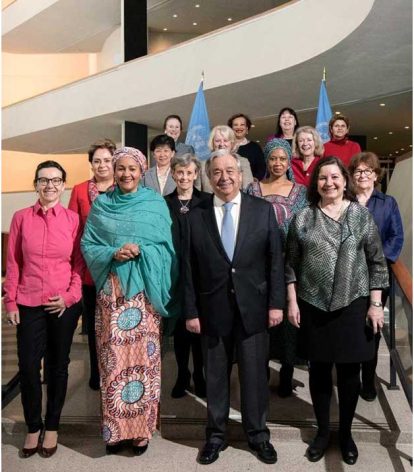
Secretary-General António Guterres poses with women who comprise part of the leadership team, including Deputy Secretary-General Amina Mohammed (centre left) and Chef de Cabinet Maria Luiza Ribeiro Viotti. Credit: United Nations

UNITED NATIONS, Mar 11 2020 (IPS) – The United Nations claims it has reached one of its primary goals relating to women’s rights in the world body: gender parity at senior levels of management and in the highest echelons of the Organization.


Leading the way, besides the UN Secretariat, is UN Women, ‘the United Nations Entity for Gender Equality and the Empowerment of Women’, created by the UN General Assembly back in July 2010.

Katja Pehrman, UN Women’s Senior Advisor on Gender Parity and the Focal Point for Women in the UN System, told IPS that 85% of UN Women at senior management (at D1 level or higher) are female.

“Achieving gender parity at the top level is indeed a major accomplishment and takes place for the first time in UN’s history,” she pointed out, as the UN commemorated International Women’s Day (IWD) on March 8.

Secretary-General, Antonio Guterres, “is truly leading by example, and this achievement comes at an opportune time as we are celebrating the twenty-fifth anniversary of the Beijing Declaration and Platform for Action, where the goal of equal representation of women and men was established”.

As the Secretary-General also has made clear, she pointed out, the parity agenda is not merely about numbers but also about transforming the organizational culture. Only that can guarantee sustainable results.

As part of its strong mandate, and through the network of 350 Gender Focal Points, UN-Women helps to guide the UN system on how to build a more inclusive and equal work environment in support of gender parity, she noted.

“This happens through the Enabling Environment Guidelines for the UN system which were published last year and include recommendations on standards of conduct, family-friendly policies, recruitments and flexible working arrangements,” she declared.

Florencia Soto Nino-Martinez, UN Associate Spokesperson, told IPS “We have full parity in (the ranks of) Under Secretaries-General (USGs) and Assistant Secretaries-General (ASGs) in the Secretariat and the Funds and Programmes – 90 men and 90 women”.

“This represents a first step for full gender parity in 2028 at all levels of the UN which remains our basic objectives,” she said.

In the UN hierarchy, the Secretary-General is the chief administrative officer (CAO), followed by the Deputy Secretary-General, Under-Secretaries-General (USGs), Assistant Secretaries-General (ASGs) and Directors (D-1 level and higher).

Guterres told delegates on March 9 that in January this year “we achieved gender parity – 90 women and 90 men – in the ranks of our full-time senior leadership, two years ahead of the target that I set at the start of my tenure, and we have a roadmap for parity at all levels in the coming years”.

Still, he complained that “women in parliaments are still outnumbered three-to-one by men, women still earn just 77 cents for every dollar earned by men, and unpaid care and domestic work remain stubbornly feminized the world over”.

In some areas, he said, progress towards gender equality has stalled or even gone into reverse.

“Some countries have rolled back laws that protect women from violence; others are reducing civic space; still others are pursuing economic and immigration policies that indirectly discriminate against women,” Guterres said.

Outlining some of the steps he plans to take in the future, the Secretary-General said: “I have reminded the entire senior leadership team about the special measures we have in place to advance parity throughout the system”.

If a male candidate is hired in an office or department that has not yet achieved gender parity, and where an equally competent female candidate had been identified, an explanation must be sent to my office detailing the reasoning for the decision prior to final selection being made, he declared.

Ian Richards, President of the 60,000-strong Coordinating Committee of International Staff Unions and Associations (CCISUA), told IPS the biggest problem remains the low representation of women in the field.

“Women certainly face greater challenges than men in certain field locations, particularly regarding access to relevant healthcare, and there is a lot the UN can do to improve the field working environment,” he said.

But the Secretary-General’s proposal– now before the General Assembly– to only fire men during downsizing exercises is not the way forward and is legally and ethically dubious, he added.

There needs to be a change in how the field is marketed.

“There are plenty of women in the field making successful careers at every grade yet the overall impression remains that the field is mainly for men.”

He said women in the field need to be held up as role models so that others follow. Human Resources needs to listen to their experiences and understand what the challenges are and how they can be overcome.

Aside from having better diversity on the frontline, said Richards, a key reason to have more women in the field is because those who rise to the top of the UN are more likely to have passed through the field on their way up.

Looking at it from another angle, a surefire way to get better gender equality in the field would be to make it compulsory for all staff who want to get to senior positions to take up at least one prior assignment in the field, with no opt-puts according to gender.

“But it wouldn’t be to the taste of everyone,” declared Richards.

The United Nations-wide Gender Parity Strategy, launched in September 2017, sets targets for equal representation of women and men, with specific commitments leadership and accountability; senior management; recruitment and retention; creating an enabling environment; and field operations.

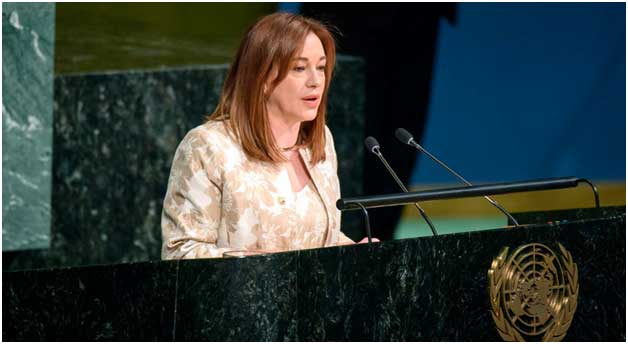
Maria Fernanda Espinosa of Ecuador, only the fourth female to be elected as President of the General Assembly in its 74-year history of overwhelmingly male Presidents. Credit: United Nations

While the UN secretariat and the UN’s affiliated agencies have made progress on gender parity and gender empowerment, the 193 member states have lagged far behind.

In its 74-year history, the General Assembly has elected only four women as presidents – Vijaya Lakshmi Pandit of India (1953), Angie Brooks of Liberia (1969), Sheikha Haya Rashed Al-Khalifa of Bahrain (2006) and Maria Fernanda Espinosa of Ecuador (2018)

And that’s four out of 74 Presidents, 70 of whom were men.

The 15-member Security Council’s track record is probably worse because it has continued to elect men as UN Secretaries-General, rubber-stamped by the General Assembly.

And that’s zero out of nine male UN chiefs (Trygve Lie of Norway, Dag Hammarskjold of Sweden, U. Thant of Burma (now Myanmar), Kurt Waldheim of Austria, Javier Perez de Cuellar of Peru, Boutros Boutros-Ghali of Egypt, Kofi Annan of Ghana, Ban Ki-moon of South Korea and, currently, Antonio Guterres of Portugal).

You can find more about the UN’s gender parity strategy at the UN here: https://reform.un.org/content/gender-parity-strategy

A few additional sources of information:

    • • UN Women produced the biennial Secretary-General’s Report on the Improvement in the Status of Women. Available:

https://www.unwomen.org/en/digital-library/publications/2019/07/improvement-in-the-status-of-women-in-the-united-nations-system-2019

    • • In 2019 UN Women produced the ‘Enabling environment guidelines for the United Nations system’ in support of the ‘Secretary-General’s system-wide strategy on gender parity’. Available:

https://www.unwomen.org/en/digital-library/publications/2019/02/supplementary-guidance-on-the-enabling-environment-guidelines-for-the-united-nations-system

    • • The recent UN resolution A/RES/74/128, ‘Follow-up to the Fourth World Conference on Women and full implementation of the Beijing Declaration and Platform for Action and the outcome of the twenty-third special session of the General Assembly’, reiterated the political commitment to gender parity, including recognizing the role of UN Women and calling on the UN system to use the Enabling Environment Guidelines (see especially para 30-23). Available:

https://undocs.org/en/A/RES/74/128

    • • The goal of the equitable distribution of positions between men and women at the UN Headquarters was enshrined in the Beijing Platform for Action (see especially 913c). Available:

https://www.unwomen.org/en/digital-library/publications/2015/01/beijing-declaration

The writer can be contacted at thalifdeen@aol.com

  Source

Feminists Rewrite Their Realities Across the Global Map

Civil Society, Gender, Global, Headlines

Opinion

Laila Malik is Information, Communication and Media Coordinator, Association for Women’s Rights in Development (AWID)

Mar 6 2020 (IPS) – In November 2019, thousands of Chileans took to the streets to perform an anti-rape, anti-femicide choreography organized by a small feminist collective called Las Tesis. The group created the choreographed chant in response to an upswing in violence against women and human rights violations in Chile, where 42 cases of sexual abuse are reportedto the police each day, with only around 25% resulting in judicial rulings.


It is a violence faced by women, trans and non-binary people all over the world. And it often results in complex, inconvenient, expensive and exhausting circumnavigations – or avoidance – of public space, even when the reality is that gender-based violence is just as likely to be committed in private as it is in public.

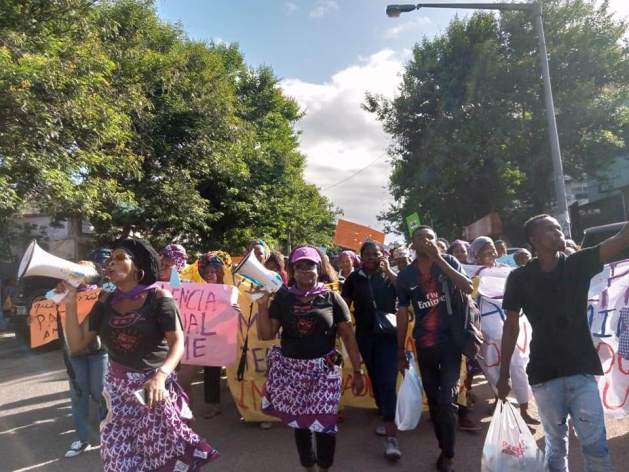
So when, months after the first Chilean feminist flash mobs, women from Nairobi to Karachi, Maputo to Istanbul and beyond, continue to creatively reclaim their own streets with local grievances and demands, they are collectively rewriting the global map. This rewriting is an example of a Feminist Reality – a way in which feminists take action to create, and re-create spaces and communities to be more equitable and just.

[embedded content]

Roaring together in the face of police brutality and complicity 

“The patriarchal behaviour is deep in our society and no one is doing anything,” says Nzira De Deus from Mozambique’s Fórum Mulher, the network of women’s rights and gender equality organizations that organized Chilean-inspired feminist flashmobs in the cities of Maputo and Beira.

“What we are doing with that song is denouncing the impunity we see in our community. We know who the rapist is but the police is doing nothing, and is in complicity with that situation. We need to continue to spread this kind of campaign, adapting an African version, denouncing not just in words, but also with this kind of thing.”

Coming together to address police impunity was also a powerful experience for Hum Aurtein, a group of womxn and non-binary people who advocate for gender justice who performed the choreography in Karachi.

[embedded content]

“It was electric as we yelled “Yeh police, Yeh nizam, Yeh jagirdar, Yeh sarkar [This police, this system, these feudal land-owners, this government]” as men in a police van watched on and we pointed at them. So there was a sense of collective reclamation,” recalls Atiya Abbas, Hum Aurtein organizer.

When women speak truly they speak subversively — they can’t help it: if you’re underneath, if you’re kept down, you break out, you subvert. We are volcanoes. When we women offer our experience as our truth, as human truth, all the maps change. There are new mountains.

Ursula LeGuin

In Nairobi, members of Maisha Girls’ Safe House decided to take the choreography to three locations in Nairobi where rape and other sexual violations are rampant, in slum areas and around local administration offices. The performance allowed girls and young women survivors of sexual violence to directly confront perpetrators, including agents of law enforcement.

“We did it in our small way and the impact it left was amazing,” says Florence Keah from Maisha Girls’ Safe House. “I can walk in the community and l hear the young children (some of whom were conceived from rape) chanting “And the rapist is you!”’

“We hope the message to the police reached home.”

Meanwhile in Istanbul, several hundred women who gathered to perform the choreography were tear gassed, dispersed and arrested by riot police for insulting state institutions. But a week later, eight Turkish women MPs used their parliamentary immunity to perform the chant in Turkish parliament, while colleagues held up some 20 pictures of the faces of women said to be killed in domestic violence.

Creating and harnessing the power of new feminist words

If there is one thing the global Las Tesis-inspired tsunami has shown, it’s that feminists are infinitely collaborative, creative, and keenly aware of their specific contexts and needs.

In Karachi, Hum Aurtein added a stanza to their chant about class, religion and labour to speak to forced conversions, honour killings and labour-based discrimination and harassment faced by women in Pakistan.

In Mozambique, Fórum Mulher changed the line “It’s the judges!” to “It’s the MPs!” to reflect their discontent with the ongoing impunity of the MP accused of raping a child. Beirut organizers adapted the chant to Arabic, adding new content around media responsibility and sexual harassment, while maintaining the rhyme. One Beirut organizer described participants as “full of rage”, saying, “They will translate it in every way possible, and the flash mob came out as a beautiful means to do so.”

In other instances, feminists have had to adopt entirely new language to adequately express specific gender injustices.

“The word for rape in Urdu is “ismatdari,”” says Abbas, “which links rape to a woman’s honour. That is not what the violence of rape is. Rape happens because rapists commit these acts of dominance and terror – and not for any other reason.”

To shift this mis-association, Hum Aurtein organizers added new lines to their chant, saying, “Hear this, it is rape [adopting the English word]! Not “female honour”!”

“Language is power, and language is responsibility,” reflects Abbas. “One can hope the reproduction of knowledge through language continues to be feminist in its approach and that a generation from now, our efforts to do that will realize meaningful change.”

Indeed, future humans may reap benefit from the courage, creativity and collaboration of today’s global feminists, but the volcanoes have been simmering for generations. Feminists all over the planet are linking with one another, shedding fear and finding untold strength and collective intelligence in community. The new map is already here, and its seismic energy is palpable.

Aurat March (Women’s march) in Pakistan. Credit: Shehzil Malik.

  Source

There Can Be No Green Peace Without Gender Equality

Civil Society, Development & Aid, Editors’ Choice, Featured, Gender, Global, Global Governance, Headlines, IPS UN: Inside the Glasshouse, Regional Categories, TerraViva United Nations

Opinion

This article is part of special IPS coverage of International Women’s Day on March 8 2020


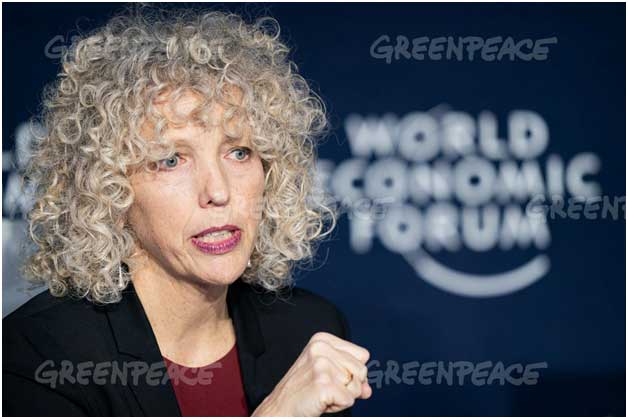
Jennifer Morgan is the Executive Director of Greenpeace International

AMSTERDAM, the Netherlands, Mar 5 2020 (IPS) – Gender inequality – like the climate emergency – is not inevitable, but is kept in place by the poor choices too many cis men make on a daily basis. And it is not just womxn who are hurt and trapped by this patriarchal problem, but girls and non-binary people too, as well as many boys and men.


For millennia, gender inequality has been working very well for the majority of men. Globally, men hold 85% of senior leadership roles in companies, for example, while the 22 richest men in the world have more wealth than all of the womxn in Africa. None of this is by accident and many men are reluctant to change a system they think benefits them.

Meanwhile womxn remain on the frontlines of gender inequality and the climate emergency. And due to the patriarchy, unsurprisingly they are rarely heard on issues that deeply impact them, which as a result, affects society as a whole.

A great number of men do believe in gender equality and this needs to be acknowledged. But it is easy for men to merely ‘believe’ in something they subsequently reap social rewards for. Accepting that gender inequality exists – as much as the climate emergency – and taking positive action is crucial if we are to achieve a more equitable, peaceful and green planet.

Because the fact is equity across the world and spectrum would lead to more life satisfaction, better security and economies, and more sustainable solutions to climate change.

That’s why this International Women’s Day, I call on men to be more than feminist; to do more than just celebrate womxn.

For a start, we need men to be anti-patriarchal and anti-misogynist, and to be actively campaigning against climate denial, for the benefit of all. Only then would we begin to get closer to the #IWD2020 theme of equality.

Jennifer Morgan

What I am calling for may sound overwhelming, but small individual changes in attitude can lead to huge progressive shifts in the stale social norms that are damaging too many people at our collective detriment.

“We are all parts of a whole. Our individual actions, conversations, behaviors and mindsets can have an impact on our larger society,” as the IWD organizers say.

Men can proactively start to promote gender equality in the spaces they dominate in many straightforward ways: by listening to womxn and not talking over them; crediting them for their ideas; rejecting male only settings; ensuring womxn are included on panels and sports teams; refusing to play into stereotypes, and calling out others who are being anti-womxn, anti-diversity and anti-science.

In my privileged position as a white Western female leading a global and diverse environmental organization, I strive to use my leadership to empower and protect, and include people of all backgrounds.

It often strikes me how I have more access to the halls of power than those with the experience of living on the frontlines of the climate emergency. Those dealing with the devastating droughts, floods and fires linked to climate change, who predominantly are womxn who are Black, Indigenous, of color, from the Global South.

They are truly powerful people, from whom I get much inspiration, and yet their voices remain too often unheard by decision-makers, policymakers, the media, and beyond, due to the patriarchy. Amplifying these womxn’s voices and increasing their access to opportunities and platforms is central to my mission, and the mission of Greenpeace.

For there can be no green peace without gender equality. At Greenpeace, we aspire to become a leader in building and supporting a workforce that more accurately reflects the diversity of the global community Greenpeace serves, as well as the values the organization espouses, and have initiatives on harassment prevention, unconscious bias and structural power.

We take a zero-tolerance position on sexual, verbal, or physical harassment, bullying and any kind of discrimination based on gender, race, sexual orientation, gender identity, disability, faith, or any other aspect of our beings.

We will continue to examine how systematic marginalization and issues of equity intersect with our core mission and values as Greenpeace. We do this work readily because people power is linked to virtually everything Greenpeace does, from the impact we can make in the world to our ability to thrive as part of a movement.

We must always try to act in a way that sees, values, and embraces people in all their diversity. Boosting the voices of those the patriarchy actively tries to silence will lead to greater equity and better climate solutions.

Remarkable womxn are already leading the charge from Autumn Peltier and Brianna Fruean, the matriarchs of Wet’suwet’en fighting the Coastal Gas Link pipeline, to Vanessa Nakata and Winona LaDuke, among the many others.

But the patriarchy is man-made, much like climate change. It is more than time for cis men to combat gender inequality and the climate emergency alongside womxn, whom they should truly accept as their equals.

  Source