UNRWA Faces Donor Backlash Amidst Charges of Sexual Misconduct & Nepotism

Civil Society, Editors’ Choice, Featured, Gender, Global, Headlines, Human Rights, IPS UN: Inside the Glasshouse, TerraViva United Nations
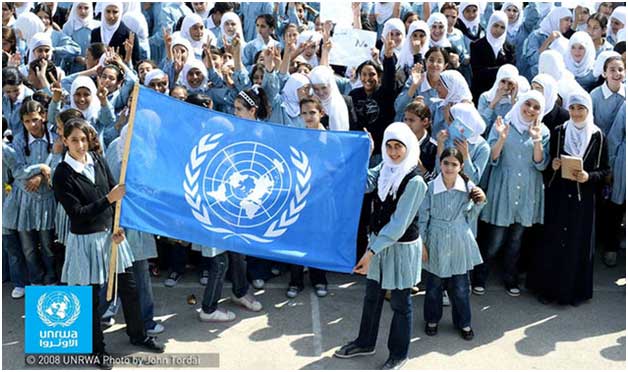
UNITED NATIONS, Aug 2 2019 (IPS) – The UN Relief and Works Agency (UNRWA), which has been undermined by a sharp cut in US contributions, has been embroiled in a scandal that threatens to jeopardize its very future.


A report from the Ethics Office has found “credible and corroborated” evidence that the senior management of UNRWA engaged in “sexual misconduct, nepotism, retaliation, discrimination and other abuses of authority, for personal gain, to suppress legitimate dissent, and to otherwise achieve their personal objectives.”

As a result, two of the donors, Switzerland and the Netherlands, have suspended payments to UNRWA, with the possibility of others to follow.

In January 2018, the Trump administration announced it was withholding $65m out of a $125m aid package earmarked for UNRWA, a veritable lifeline for more than five million registered Palestinian refugees, for nearly 70 years.

That move was prompted primarily for political reasons.

Paula Donovan and Stephen Lewis, co-directors of AIDS-Free World and its Code Blue Campaign, which seeks to end impunity for sexual abuse by UN personnel, told IPS the incriminating report was received in the Secretary-General’s office eight months ago.

“He should immediately have suspended the principals involved and replaced them with interim appointments. Had he done so, Switzerland and the Netherlands would not have suspended payment to UNRWA and the indispensable work of the agency would not have been compromised.”

“If the UNRWA story had not been broken by the media, the Secretary-General would not have acted. Alas, that’s the pattern,” they added.

Secretary-General Antonio Guterres told reporters August 1: “I have been acting quite significantly to make sure that we strengthen UNRWA and UNRWA’s capacity to deliver”.

“I’ve been appealing for the support to UNRWA to all countries of the world as I think we should distinguish what are the revelations made, or accusations made, in relation to members of the management of UNRWA, from the needs to preserve UNRWA, to support UNRWA, and to make UNRWA effective in the very important action in relation to the Palestine refugees, and I’ve been acting consistently to support that.”

As you know in the present situation, he pointed out, the deputy of UNRWA has resigned, and “so I decided that it would be important to immediately appoint a new deputy as acting deputy and, as I said, in relation to any intervention that might [be] justified, I will wait, according to due process, for the results of the inquiry and, based on the results of the inquiry, I will act accordingly.”
According to UNRWA, the UN agency is funded almost entirely by voluntary contributions.

The only exception is a very limited subsidy from the Regular Budget of the United Nations, which is used exclusively for administrative costs.

“The work of UNRWA could not be carried out without sustained contributions from state and regional governments, the European Union and other government partners, which represented 93.28 per cent of all contributions in 2018.”

In 2018, said UNRWA, 50 per cent of the Agency’s total pledges of $ 1.27 billion came from EU member states, who contributed $643 million, including through the European Commission.

The EU (including the European Commission), Germany and Saudi Arabia were the largest individual donors, contributing a cumulative 40 per cent of the Agency’s overall funding. The United Kingdom and Sweden were also among the top five donors.

The Trump administration said last August it has carefully reviewed the issue and determined that the United States will not make additional contributions to UNRWA.

“When we made a US contribution of $60 million in January, we made it clear that the United States was no longer willing to shoulder the very disproportionate share of the burden of UNRWA’s costs that we had assumed for many years,” according to the US State Department.

“Beyond the budget gap itself and failure to mobilize adequate and appropriate burden sharing, the fundamental business model and fiscal practices that have marked UNRWA for years– tied to UNRWA’s endlessly and exponentially expanding community of entitled beneficiaries– is simply unsustainable and has been in crisis mode for many years,” it continued.

“The United States will no longer commit further funding to this irredeemably flawed operation.”

UN Deputy Spokesperson Farhan Haq told reporters July 30 that Guterres believes it’s essential that UNRWA gets the support it needs and “so we will be looking to make sure that all of the countries that have been generous in donating to UNRWA will continue to be able to support that, and will look at engaging with them to see what can be done to satisfy them”.

“Clearly, this is an agency – as we have been saying in the last few years, when, as you know, it faced a financial crisis – this is an agency whose work is critical to the lives, to the health, to the education of millions of people, millions of Palestinians across the region, and they have been a vital source of stability, not just for those people but for the region itself,” he added.

Asked for a response about the charges against UNRWA, Haq said there is an ongoing investigation on the allegations contained in the report.

“Until this investigation is completed, the Secretary General is not in a position to make any further comments on this matter. As he has shown in the past, the Secretary General is committed to acting swiftly, as appropriate, upon receiving the full report. The Secretary General continues to consider the work undertaken by UNRWA as absolutely essential to Palestinian refugees,” he added.

Asked who was conducting the investigation, Haq said: “This is happening by our Office of Internal Oversight Services (OIOS). Now, I’ll leave it for you to evaluate the sufficiency of the steps that are taken once we take them; but, like I said, I’ve assured you the Secretary General is ready to take action upon receiving this… the full report”.

In a statement released August 1, Code Blue said the ethics report asserts that the alleged conduct of UNRWA’s senior leaders—Commissioner-General Pierre Krahenbuhl, Deputy Commissioner-General Sandra Mitchell, Chief of Staff Hakam Shahwan, and Senior Adviser to the Commissioner-General Maria Mohammedi—presents “an enormous risk to the reputation of the UN” and “their immediate removal should be carefully considered.”

The ethics report was leaked to the media this week. But it was completed and delivered to the UN Secretary-General in December 2018. That was eight months ago. Mitchell and Shahwan have since left the agency of their own accord. Both Krahenbuhl and Mohammedi remain in their posts, said the statement.

Code Blue also said the Secretary-General has ignored the ethics report’s recommendation that Krahenbuhl and Mohammedi be removed with “immediate” effect.

Instead, the UN has responded to the report by ordering yet another internal investigation, this time by the Office of Internal Oversight Services (OIOS), which is ongoing. In effect, the UN has taken no substantive action to address the crisis at UNRWA.

The Netherlands and Switzerland have responded to the revelations by suspending funding to UNRWA. The United Kingdom is considering such a step. It should go without saying that the work of UNRWA is too important to be sacrificed to the UN’s willingness to allow the crisis to worsen, Code Blue added.

The writer can be contacted at thalifdeen@ips.org

 

Tackling Inequality: A Focus on Cities can Improve Upward Economic Mobility

Civil Society, Democracy, Development & Aid, Editors’ Choice, Global, Global Governance, Headlines, Inequity, Population, TerraViva United Nations

Opinion

Tarik Gooptu is in his second and final year of the master’s of philosophy in economics at the University of Oxford. Originally from Washington, DC, he received his bachelor’s degree from the University of Michigan in economics and political science*.

OXFORD, UK, Jul 31 2019 (IPS) – Tackling inequality in the 21st century requires us to understand and address barriers to upward mobility that segments of people face within countries. In a world with high and increasing levels of urbanization, the conversation on challenges to mobility must start with cities.


By addressing the drivers of inequality in cities, policymakers can alleviate conditions that perpetuate within-country inequality. Efficiently planning public transportation investments to target metropolitan communities with low connectivity is a crucial step to reducing disparities in upward mobility.

Doing this provides low-income residents with improved access to jobs, schools, hospitals, and other benefits of living in an urban area. A smart urban planning framework, enabled by effective partnership between the public and private sector, would enable citizens to enjoy a more level playing field.

As a result, cities can transform into drivers of global economic convergence in living standards.

In the past three decades, the world has experienced a global convergence between countries, mainly due to increased international trade, advancements in technology, and economic integration.

However, these same factors have led to a relatively new phase of inequality seen in the 21st century. Works by Atkinson, Piketty, and Saez (2011) and Lakner and Milanovic (2016) have depicted a world suffering from inequality within countries, characterized by disparities between “gainers” and “losers” in the globalized economy.

People have proposed multiple explanations for this, including skill-biased technological change, increased automation, and outsourcing of jobs to regions with cheaper labor—to name a few. Perhaps somewhat overlooked are the large disparities between people living within the cities themselves.

Why cities? Rapid urbanization and severe intracity inequality are the two primary reasons policymakers should focus on cities when thinking about how to tackle the broader issue of inequality.

According to the World Urbanization Report, 55 percent of the global population resides in urban areas—an increase from 30 percent in 1950. The global urbanized population is projected to increase even further, to 68 percent, by 2050 (UN 2018).

In addition, the UN Population Division reports that “urbanization has been faster in some less developed regions compared to historical trends in the more developed regions” (UN DESA 2018. The convergence in the growth of urbanization, between developing and advanced economies, also suggests that the problems of cities increasingly affect countries at all income levels.

In addition to rapid urbanization, cities have become a locus of the most severe inequality we see today. A 2014 article by Kristian Behrens summarizes the issue of inequality within cities.

Behrens shows that within-country Gini indexes are highest as population densities increase and that under current conditions, cities tend to disproportionately reward people in the top income percentiles (Behrens 2014). In addition, cities draw people primarily from the top and bottom of the income distribution.

The global economic restructuring, outlined above, is expected to create more polarized income distribution within countries. This, combined with Behrens’s evidence, suggests that inequality within cities is expected to worsen, under current conditions.

The countries of the world are simultaneously experiencing unprecedented urbanization and severe inequality. While cities are currently the nexus of the worst inequality, there are opportunities to convert them into means for economic convergence.

The concept of “agglomeration economies” is summarized well by Edward Glaeser as the benefits realized from people and firms locating close to one another, in cities and industrial clusters, which are primarily gained through reduced transportation costs (Glaeser 2010).

But some areas in cities are not as well connected as others. This drives disparities between people in metropolitan localities. In order to address this, policymakers must address inequality of access to jobs and services between communities of different income status.

Underinvestment in roads, buses, train lines, and subways can cut off districts within large cities from jobs, education, and services. Higher mobility costs, in the form of longer commute times and lack of affordable transportation, are barriers to the upward mobility of lower-income people in cities.

Local governments and the private sector can work together to improve access to jobs and services by building a better public transportation infrastructure within cities. However, misallocation of both land and public resources worsens conditions for marginalized communities, contributing to intracity inequality.

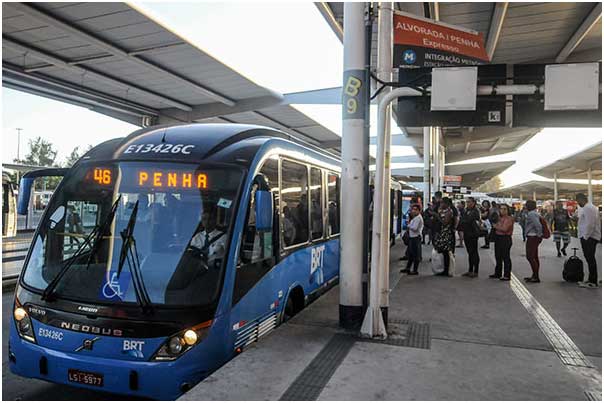
The 2016 Rio Olympics, which have been heavily criticized for putting the city in an adverse fiscal situation, is as an example of how misallocation of public resources can actually perpetuate inequality in a city. Rio de Janeiro’s bus rapid transit (BRT) system is a designated-lane integrated bus system planned and funded via a public-private partnership.

City officials said that Rio’s BRT was needed to help transport Olympic spectators and will provide long-term rapid and affordable travel for city residents. While Rio’s BRT successfully reduced average transportation costs, its routes served to aggravate inequality between high- and low-income citizens.

An urban planning study conducted by the Fluminese Federal University shows how Rio’s major daily traffic flows run from lower-income neighborhoods (in the north and west) to downtown Rio (South Zone and part of the North Zone), where 60 percent of Rio’s formal employment is concentrated (Johnson 2014).

But, instead of providing lower-income residents access to the city center, the BRT allocates routes to an upper-income residential area. Jobs here are predominantly in the informal sector: not registered with the government, with lower salaries, and without health or other benefits.

Furthermore, the city government cut spending on health and police as a result of going over budget on Olympics expenditures, which worsened the health and safety of the poor.

Rio’s BRT system exemplifies how public infrastructure can be misallocated, without proper planning and an understanding of citizens’ demand for jobs and services. However, when policymakers implement well-planned public infrastructure, it can combat inequality within cities.

Curitiba’s BRT is a well-known example of effective urban planning yielding positive outcomes for city expansion. Planning of the bus line construction was orchestrated by the Institute for Research and Urban Planning of Curitiba in the 1970s.

Funding and implementation were conducted via a public-private-partnership between the Urban Development Agency of Curitiba, and private bus companies that operate the routes. The partnership model allows policymakers to develop creative ways to ease the cost burden of providing public infrastructure.

The result of Curitiba’s plan was a low-cost, fast, and efficient means of transportation, running on green energy, that has operated successfully for 35 years. A diagram from a 2010 World Resources Institute report shows that the integrated transit system provides a means for citizens in all areas of the expanding city to access all parts of it.

However, despite its initial success, even Curitiba’s sustainable transit system faces difficulties. A 2012 CityLab article says that in recent years, the city has failed to integrate its growing suburbs into its BRT system (Halais 2012).

As a result, low-income residents are cut off while upper-income residents switch to cars—an inconvenience for everyone that harms the poor more severely. Curitiba’s example shows that policymakers require a constant and proactive awareness of cities’ changing needs.

With available economic data and the implementation of origin-destination surveys, we can better understand where populations need to be connected and their demands for particular services.

An efficient way to tackle inequality is to address lack of mobility in cities, which drives unequal access to jobs, education, and services. Improving access to public infrastructure allows people of all income levels to benefit from the agglomeration effects of living in an urban area.

Well-planned public transportation systems bring cities closer to this goal through better access for low-income populations to jobs, schools, and hospitals in the city center. Thus, growing cities can serve as sources of economic convergence rather than divergence.

Public transportation not only helps lower inequality, it also helps reduce cities’ carbon footprint. As many megacities begin to suffer the ill effects of heavy pollution, policy that addresses both inequality and sustainability would be welcome.

*Following a global essay competition for graduate students on how best to tackle inequality, Tarik Gooptu’s submission was selected as the runner-up. To learn of future Finance & Development ( F&D) essay competitions, sign up for the newsletter here. F&D is a publication of the International Monetary Fund (IMF).


A Rural Sanitation Model That Works

Asia-Pacific, Civil Society, Development & Aid, Headlines, Poverty & SDGs, Regional Categories, Water & Sanitation

Opinion

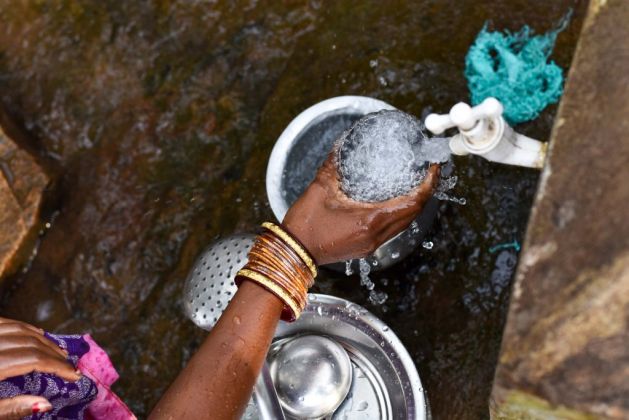
A woman collects the drinking water from the third tap in Simlipadar village in Thuamul Rampur, Kalahandi | Picture courtesy: Ajaya Behera

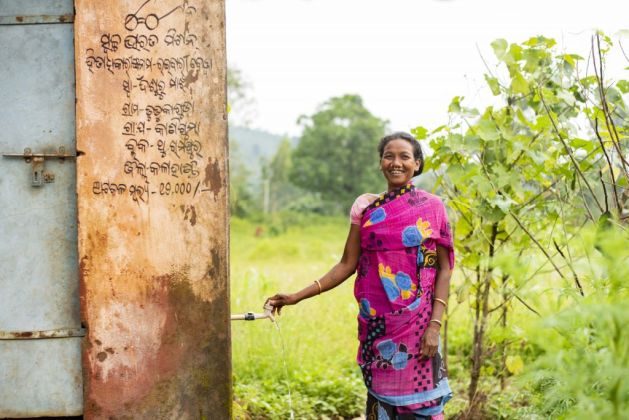
Raibari Bewa standing near the toilet, bathroom unit and collecting water from the third tap in Dudukaguda village, in Thuamul Rampur block, Kalahandi district of Odisha. On the walls, details of Swachh Bharat Mission benefits availed by her in Odia | Picture courtesy: Ajaya Behera

BHUBANESWAR, Odisha, India, Jul 30 2019 (IPS) – Research and experience across more than two decades in rural Odisha, India, show that an effective rural sanitation model requires both financial assistance and an integrated water supply.


There are studies and field reports that have analysed the Swachh Bharat Mission (SBM) in terms of coverage and use of toilets in rural India. The official government survey, the NARSS 2018-19, shows that 93 percent of rural households have access to a toilet and 96 percent of those having a toilet use them. Critiques of the survey point out the contradictions between NARSS and micro-level assessments in different parts of India. Other studies point out issues related to how comprehensive the approach to sanitation needs to be, if SBM is to truly address the large scale problems of ill-health, malnutrition, and poor quality of life caused by poor sanitation practices.

The Ministry of Drinking Water and Sanitation has already issued guidelines for follow-up components, such as the ‘Advisory on ODF Sustainability interventions‘. It is quite likely that with the Prime Minister and his government taking charge for the second term, the sustainability of the first generation SBM efforts will be given high priority. In this context, it is pertinent to throw light on some micro–level issues, based on more than two decades of experience in rural Odisha.

A rural sanitation model that works

Gram Vikas, the organisation I lead, started its work in rural sanitation in the year 1994. Our model of 100 percent coverage of all households in a village, all of them building and using household level toilets and a bathing room with piped water supply, has been recognised as a best practice nationally and globally.

Infrastructure alone is insufficient to sustain health benefits. Additional efforts are needed to motivate people to adopt safe sanitation practices…There are other aspects of personal hygiene and sanitation, including personal habits, disposal of child faeces, and menstrual hygiene; these need to be addressed by demonstrating workable models, accompanied by education

The integrated water, sanitation, and hygiene (WSH) intervention that we support rural communities with, is built on the following principles:

  • Participation of 100 percent of the habitation’s households; it is all, or none.
  • Cost sharing by the household, partially towards construction of the facilities, and fully for operations and maintenance.
  • Ownership and management by a village water and sanitation committee, consisting of representatives of all sections in the village.
  • A sanitation corpus fund built from a one-time contribution by all, towards providing cash incentives for future families in the village to build toilets and bathing rooms (ensuring 100 percent coverage at all times).
  • A maintenance fund through regular household fee collection, for maintenance of the piped water supply system.

In 25 years (up to March 2019), the Gram Vikas WSH model has been implemented in more than 1,400 villages, covering close to 90,000 households. The villages are financed primarily through the sanitation and rural drinking water schemes of the government, and Gram Vikas has mobilised private resources to fill in gaps.

What we learnt

Over the past two decades, working with rural communities of different types, we have realised that bringing about attitudinal and behaviour changes towards safe sanitation is not easy. When we began in the mid-1990s, saying that every house in the village will have toilets, bathing rooms, and piped water, most people laughed.

Between 1994 and 1999, we could cover only 30 villages—this resulted from our own efforts at motivating people, and not any felt desire on their part. Then started the gradual process of change—fathers of unmarried girls motivating future sons-in-laws’ village elders to take up the sanitation project; women taking the lead to convince their men to build toilets, and even stopping cooking for a day or two to make their husbands see reason; migrants who worked outside Odisha coming back to their own villages and motivating their parents, and so on.

When it comes to rural sanitation, government financial assistance matters  

Between 1999 and 2007, the government’s support to sanitation, as part of the then newly launched Total Sanitation Campaign, was INR 300 per household, for below poverty line families. Support for community-led, piped water supply projects came much later, in the form of Swajaldhara in 2003.

The prevalent thinking among policy makers in the early 2000s was that financial incentives were not necessary to promote rural sanitation. This was based on the limited success of the subsidy-led Central Rural Sanitation Programme, that ran between 1986 and 1998.

Financial incentives to rural households for building toilets is more than a subsidy, it’s about society meeting part of the costs of helping rural communities build a better life. To compare, urban dwellers who may have built their own household toilets, do not pay anything for removing the human waste from their premises; municipal governments ensure sewage lines and treatment plants. The cost of this (which is borne by the government) is not seen as a subsidy. And yet, the upfront payment made to rural households to help build toilets is looked down upon as wasteful expenditure.

In 2011, the policy moved to a higher level of financial incentives to rural households for constructing individual household latrines, mostly likely in recognition of the fact that rural households needed the financial incentive as motivation to change sanitation behaviours. But today, with statistics showing 93 percent or more coverage of toilets, the policy prescription is likely to move to the pre-2011 phase–big financial incentives are not needed for building rural household toilets.

Our experience has taught us that nothing can be further from the truth. First, actual coverage of usable toilets is likely much less than what the numbers show. Second, households will need support for repairs and upgradation of the already built latrines. In addition, there are two categories for whom the financial assistance must continue: those who, for various reasons, have not constructed latrines so far; and new households that have come up in villages that have already been declared open defecation free (ODF).

Availability of water in the toilet is critical to encouraging use and maintenance of the facility 

In most cases, where water is not available in proximity, the load on women to carry water has increased. A pour-flush latrine, the type mostly preferred, requires at least 12 litres of water per use. With 4-5 members in the household, the minimum daily requirement becomes about 60 litres, forcing women to collect at least three times the water they would otherwise collect. We have observed that without water in the household premises, women’s water carrying load increases to more than twice the pre-latrine times.

The addition of a bathing room, affords women more privacy, and a better way to keep themselves clean and hygienic. In most villages we have worked with, women especially, equate this part of their physical quality of life to what people in the city enjoy.

During the last few years, financial allocation for rural water supply has decreased. While the allocation to drinking water has reduced from 87 percent (2009-10) to 31 percent (2018-19), the allocation to rural sanitation has increased from 13 percent to 69 percent in the same period. This is definitely not a desirable situation, as noted by many.

Mainstreaming the community-owned and managed method of rural water supply will ensure equitable distribution 

Doing this, rather than pushing for large water supply projects across many villages, will give rural communities and local governments greater control over managing their resources and meeting the needs of every household in an equitable manner. The Swajal programme of the Ministry of Drinking Water and Sanitation, which talks about village level, community-based water projects, is a step in the right direction. Much greater push is needed by the central government to ensure that the state-level apparatus moves to a more enabling and empowering approach in addressing rural drinking water needs.

Research and experience across more than two decades in rural Odisha, India, show that an effective rural sanitation model requires both financial assistance and an integrated water supply.

A woman collects the drinking water from the third tap in Simlipadar village in Thuamul Rampur, Kalahandi | Picture courtesy: Ajaya Behera

Second generation challenges

The water and sanitation infrastructure, when first built, contributes to a substantial decrease in water-borne diseases in villages. These are borne out of several studies conducted in villages in Odisha.

After the initial round of benefits, we find that the infrastructure alone is insufficient to sustain health benefits. Additional efforts are needed to motivate people to adopt safe sanitation practices. The ensuing issues have been highlighted by many. For instance, changing long-standing beliefs and attitudes related to toilet use requires intensive hand holding, particularly for older people. There are other aspects of personal hygiene and sanitation, including personal habits, disposal of child faeces, and menstrual hygiene; these need to be addressed by demonstrating workable models, accompanied by education.

From Gram Vikas’ experience in Odisha, we have been able to enumerate several challenges that need to be addressed. Even when piped drinking water exists, households prefer to store drinking water. We have found that handling of stored drinking water is an area that needs better education.

Disposal of child faeces, especially by mothers who do not think the child’s faecal matter is harmful, is another area of concern. We are also coming across new forms of discrimination in households, where menstruating women are not allowed to use the toilets and bathrooms.

While issues related to personal hygiene and washing hands with soap are already quite widely discussed, the next set of challenges relate to safe disposal and/or managing liquid and solid waste at the household and community level.

A charter of demands

We hope that the next iteration of Swachh Bharat Mission will truly lead to a Swachh Bharat. Based on our experience, we would like to draw the following charter of demands:
.

1. Strengthen the ways of providing household sanitation infrastructure

  • Add a bathing room component to the design and costing provided in the national guidelines; increase financial support per household to INR 18,000 for new entrants; allow additional funding of INR 6,000 per household for those wanting to add a bathroom to their existing toilets. 
  • Create provisions for repair or upgradation of toilets built, till 2018; provide for additional assistance to households whose toilets were built by contractors without involvement of the household. 
  • Provide financial assistance for new households in villages already declared ODF. 
  • Correct errors in the baseline of deserving households. 

2. Integrate piped water supply with sanitation at the household level, and facilitate greater community control over rural drinking water projects

  • Enlarge the scope for Swajal scheme by allocating more funds. 
  • Where ground water availability challenges dictate building of larger projects, it will make sense to separate the pumping and supply, from household distribution of water. The former could be done centrally for a large number of villages, while the latter could be managed by the communities at their level.
  • Make individual householdlevel piped water supply the standard design principle for rural water supply projects. 
  • Build community capacities to manage groundwater resources and undertake watershed and springshed interventions. 
  • Integrate water quality management as a communitylevel initiative, by demystifying testing technologies, and creating wider network of testing laboratories. 

3. Deepen and integrate WSH interventions for better health and nutrition outcomes at the community-level

  • Incentivise states to achieve stronger schematic and financial convergence between National Health Mission and the Integrated Child Development Services at the intermediate and gram panchayat level.  

4. Create a multi-stakeholder institutional platform to deepen and sustain SBM across rural India

  • Incentivise states to enablPanchayati Raj Institutions to play a greater role in the SBM process.
  • Allow for more active participation of civil society organisations as facilitators and implementors, to support rural communitybased institutions to adopt sustainable sanitation interventions. Provide financial incentives to such organisations based on outputs and outcomes.

Liby Johnson is the executive director of Gram Vikas, Odisha

This story was originally published by India Development Review (IDR)


Power is a Privilege & a Responsibility: Q&A with Justin Trudeau, Prime Minister of Canada

Civil Society, Development & Aid, Editors’ Choice, Featured, Gender, Global, Global Governance, Headlines, Human Rights, IPS UN: Inside the Glasshouse, TerraViva United Nations

Opinion

In a special conversation, Katja Iversen, President/CEO of Women Deliver speaks with Justin Trudeau, Prime Minister of Canada, about Canada’s role in taking action for gender equality at home and abroad and our collective and individual responsibility to share power to build a gender equal world.

NEW YORK, Jul 29 2019 (IPS) – It’s on all of us to make gender equality a reality – which means harnessing our collective power to build a gender equal world.

By empowering girls and women, realizing sexual and reproductive health and rights, tackling gender-based violence, and confronting the combinations of sexism, misogyny, racism, and colonialism, we can take steps towards true gender equality.


Coming off the heels of the Women Deliver 2019 Conference in Vancouver, we both explore the need to use – and share – power to deliver transformative change for girls and women.

Katja Iversen: At the Women Deliver 2019 Conference we focused on power, and how it can drive – or hinder – progress and change for girls and women, and therefore for all. How will you use your power?

Justin Trudeau: Power is a privilege and a responsibility. Ultimately, the best thing you can do with power is share it. As we saw at Women Deliver, grassroots advocates and activists are creating change on the ground. Young people, like Natasha Wang Mwansa, are not just the leaders of tomorrow, but the leaders of today.

We need to amplify the work they’re doing, pass them the microphone, and make sure there’s a seat at the table for people of diverse identities and perspectives.

Katja Iversen: In the lead up to and during the Women Deliver 2019 Conference, we have seen unprecedented energy and enthusiasm for advancing gender equality. How do we take that energy and commitment and turn it into action? From world leaders and business leaders to advocates and influencers, what is your call to action to keep up the momentum?

Justin Trudeau: At Women Deliver, we announced new steps forward on everything from funding for women’s health and women’s organizations, to support for women entrepreneurs and housing commitments that will benefit women.

We announced that Canada will increase our investment to $1.4 billion to support women and girls’ health globally, positioning us as a leading donor worldwide on comprehensive sexual and reproductive health rights. $700 million of this annual investment is dedicated to sexual and reproductive health rights.

We’re focusing on the most neglected areas of this field. This is a game changer. We welcome other leaders to join us.

Globally, and here at home, we are seeing attacks on women’s rights, whether it’s undermining a woman’s fundamental right to choose, or violence against Indigenous women and girls. We can’t take our foot off the pedal, not even for a moment.

There’s simply too much at stake. We all need to work together to move forward, and to build more sustainable, more inclusive movements. It’s on all of us to make gender equality a reality.

Katja Iversen: Over the last several years we have heard more world leaders and private sector executives make public statements about the importance of gender equality. This is certainly critical, commendable, and encouraging! But we also need to see these leaders “walk the talk” and move toward action.

This is something you have emphasized throughout your administration from appointing a gender equal cabinet to developing gender-responsive federal budgets – both of which are crucial for moving policies and programs to actual impact. What impact have these actions had in Canada and around the world and what will you do next to move the needle for girls and women?

Justin Trudeau: Our government has put gender equality at the heart of everything we do. This means grappling with interlocking issues like sexism and misogyny, racism and colonialism. These challenges are complex and layered.

We won’t always get it right, but we will always keep trying. We know that it’s time to put an end to violence against all women and transgender, non-binary, and two spirit people, which is why we launched the first ever national strategy on gender-based violence.

We know that advancing gender equality hinges on economic equality, too. We will continue to demand that women and men receive equal pay for work of equal value, that everyone has a safe place to live, and that parents can share equally in both the joys and the responsibilities of raising children.

That’s why we introduced historic proactive pay equity legislation, and created more flexible parental leave options. And it’s why we launched a housing strategy where a minimum of 25% specifically supports women, girls, and their families.

There is much more work to do, and Canada is in it for the long haul. We will keep fighting for gender equality and concrete change – not just when it is popular, but always.

Katja Iversen: From driving Canada’s first Feminist International Assistance Policy to establishing the first Gender Equality Advisory Council to a G7 Presidency, you have led the way for political leadership toward gender equality – with an emphasis on improving girls’ and women’s sexual and reproductive health and rights.

Why should world leaders like you prioritize gender equality and women’s right to decide on their own bodies on international agendas and what more do you plan to do? Please provide 1-2 specific examples.

Justin Trudeau: Women don’t have to imagine not being able to access healthcare when they need it. They don’t have to imagine being denied the right to choose what’s best for their health and their future. For far too many people, that’s their reality. And that’s unacceptable.

Governments need to stand with those on the frontlines as partners and as allies. Leaders should prioritize gender equality and women’s right over their own bodies because it makes our countries, our communities, our workplaces, our governments, and our families stronger.

When women are healthy, free to make decisions about their lives, and can equally participate in our economies, we all benefit.

Katja Iversen: From the hallways of power to the main stage of global convenings, what argument have you found to be most effective in converting more people – especially decision makers – to join you as gender equality champions?
Justin Trudeau: Gender equality is not only the right thing to do, but it is also the smart thing to do. It powers our economies, and changes our communities for the better. Everyone should be able to get behind that.

Katja Iversen: You have spoken about raising your sons with an awareness of power dynamics and to act as allies of girls and women. Part of this involves a shift in mindset, from the idea that boys and men are losing power to the idea that power is shared with girls and women, to the benefit of all.

Why is it so important to you and your wife – Mme Sophie Grégoire Trudeau, a Deliver for Good Influencer – to raise your sons as young feminists, and how have you encouraged them to be effective and supportive allies for gender equality?

Justin Trudeau: Sophie and I want to help our kids grow up to be strong allies and empathetic adults, who walk through the world with openness, compassion, and a commitment to justice. That’s why raising our kids as feminists is such a priority for us.

We want our daughter, Ella-Grace, to have the same opportunities as her brothers, Hadrien and Xavier. And we want our sons to escape the pressure to be ‘a particular kind of masculine’ that can be damaging to men and to the people around them.

We want all three of them to be confident in being themselves, to stand up for what is right, and to do so with pride. We try to instill in our children the notion that everyone should be treated equally, and that there’s work left to do so that everyone shares the same rights and freedoms. We hope our children learn that they have a responsibility – and the power – to shape our world for the better.


Is Civil Society Arguing Itself out of Political Space?

Active Citizens, Civil Society, Development & Aid, Global, Headlines, Regional Categories

Opinion

Felix Dodds is Adjunct Professor at the University of North Carolina and Associate fellow at the Tellus Institute

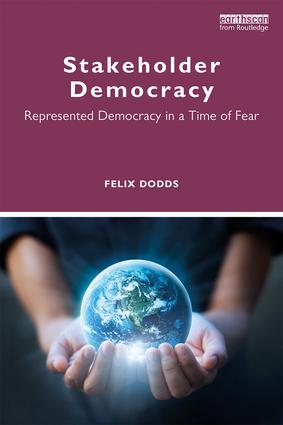
NEW YORK, Jul 29 2019 (IPS) – As some of you will know I have a new book out Stakeholder Democracy: Represented Democracy in a Time of Fear.  (other contributors to the book were:  Jan-Gustav Strandenaes, Carolina Duque Chopitea, Minu Hemmati, Susanne Salz, Bernd Lakemeier, Laura Schmitz, and Jana Borkenhagen). 


The book’s theory of change is very simple involving stakeholders in the decision making makes better-informed decisions and that those decisions are more likely to be implemented with those stakeholder’s support either singularly or in partnership.

The book places Stakeholder Democracy within the spectrum of Representative to Participatory Democracy.

It argues that we need to strengthen represented democracy in a time of fear through engaging stakeholders. It recognizes that in many places politicians are no longer believed but they need to make difficult decisions. To help them do this engaging with the support of stakeholders can help them to have the political courage to address climate change or the wave of new technologies coming or migration or the many other difficult issues we will be facing in the next ten years up to 2030.

Two discourses

Since around 1992 we have had two different political discourses in play that of stakeholders and that of civil society.

Under the leadership of Maurice Strong, Chip Lindner, and Nitin Desai the Earth Summit moved away from the old NGO discourse. This was that in the UN everyone who wasn’t a government or an intergovernmental organization was an NGO as far as the UN was concerned.

The Earth Summit changed that. Agenda 21 recognized 9 stakeholder groups in society who should be involved in policy development and in helping to deliver Agenda 21 and the Rio Conventions. These were:

  1. Women
  2. Children and Youth
  3. Indigenous Peoples
  4. Non-Governmental Organizations
  5. Local Authorities
  6. Workers and Trade Unions
  7. Business and Industry
  8. Scientific and Technological Community
  9. Farmers

By the way, these were enlarged in the development of the 2030 Agenda to include others such as older people and the disabled.

At the same time in the  World Social Summit (1995), the Financing for Development space (2002) and those around the Bretton Woods Institutions a different political discourse evolved that of civil society.

This discourse recognized only two different groups than government and intergovernmental bodies these two were industry and civil society. What did this mean?

Civil Society concept increases space for industry

We often hear in the civil society discourse of the increased space that industry has.

Well, the conceptual framework for civil society by its nature increases the space of industry from one of nine to one to two.

So let’s be clear the advocates for this by their own actions are giving up massive space for industry and reducing space for other stakeholders.

It also allows governments and intergovernmental organizations to just group anyone who isn’t industry into a catch-all group.

Who is Civil Society?

Well, there are many definitions out there and the book looks at some of them. But what it tends to be is a space dominated by NGOs…it does subjugate women, youth, community groups etc into this one space no longer having their individual and unique voices.

By doing this it dilutes the gender perspective – it reduces the voice of the next generation.

Civil Society also excludes a number of key stakeholders that includes academics and scientists, Indigenous Peoples – they are a “Peoples” and should, of course, have not to be subjugated to other views.

It excludes local and subnational government who is seen as a level of government but whose voices freedom found with their national government.

The book goes into examples where this course has resulted in the wrong people being at the table.

The Stakeholder discourse, on the other hand, requires an ongoing stakeholder mapping process to ensure the right people are at the table.

It gives them individual space to articulate for a gender perspective or youth a next-generation perspective. It enables new relevant stakeholders that have emerged over the last 25 years to be recognized and given space such as older people or people with disabilities.

Civil Society discourse is a lazy discourse

What amazes me is how groups that do not benefit from the civil society discourse seem to accept it without question.

I can only think it is because its easier than to argue for the individual voice of relevant stakeholders.

For governments and intergovernmental organizations, it makes their life much easier.

They don’t have to show what they are doing for engaging each of the stakeholders they leave it to a broad engagement with this catch-all group of civil society.

What it has done in many UN bodies that have adopted this reduces the staff support for stakeholders and increase it for industry – a good example of this is UNEP.

After all, now intergovernmental bodies would only be servicing two groups… resulting in the need for only a form of parity between civil society support and industry. Previously there needed to be evidence of support for women, youth, Indigenous Peoples etc.

You can hear from some of those lazy people the comments like…

“ahh how do you decide which stakeholder group you should be a member of”

They go on to say “what if you are a woman and a young person and work for an NGO.

Well, the engagement isn’t and shouldn’t be based on the individual it’s based on the organization in all cases. To be clear it should be based on what the organization’s policy priorities are. If the organization is focused on youth policies then it should engage with the youth caucus, if its work is gender then it should engage with the women’s stakeholder group and if it’s a mixture well work in a number of different stakeholder groups.

Who benefits from the Civil Society discourse?

I always like to look at who benefits to see if that has a bearing.

It’s clear that there is a number that benefit.

Governments and Intergovernmental organizations benefit as they don’t have to address the different voices and leave that coordination to whoever is organizing the civil society group.

Industry benefits as they gain a huge additional space vacated by key stakeholders one of 2 is so much better than one of 9 or more for them.

Also, large well organized northern-based NGOs benefit as they can assert a larger influence on one space than many.

So if you are happy with giving more space to industry, reducing space for women and youth and other key stakeholders, not recognizing Indigenous Peoples right for their own space, do not want academics and scientists to be able to represent their research then do continue to use the civil society concept but understand what you are doing.

You are actively taking part in reducing space for all other stakeholders.


Human Rights Watch Disappoints on Human Rights

Armed Conflicts, Civil Society, Crime & Justice, Global, Headlines, Human Rights, Migration & Refugees, Natural Resources, Peace, Press Freedom, TerraViva United Nations

Opinion

Michelle Bachelet, UN High Commissioner for Human Rights. Credit: Jean-Marc Ferré/UN Photo.

GENEVA, Jul 25 2019 (IPS) – On 22 July 2019, Kenneth Roth published an article in Publico, Lisbon, entitled: “UN Chief Guterres has disappointed on Human Rights”.


This essay lampooning Antonio Guterres is not a voice “against the tide” but very much mainstream – and demonstrably skewed. Major NGOs headquartered in rich advanced countries and enjoying generous funding from the Establishment may not always think “out of the box” and are as likely, as are the interest groups which support them, to politicize human rights and therefore to disappoint rights holders in smaller or weaker countries.

While they do contribute to exposing situations of human rights violations worldwide , they are not exempt from biases which reflect the structure of their central governing bodies or the cultural environment within which they operate. They cannot arrogate to themselves the sole legitimacy to speak in the name of the civil society of many countries , and when they claim to do so, they may disappoint rightsholders, particularly in the developing countries, whose priorities are frequently different from theirs.

Kenneth Roth’s bludgeoning of the UN Secretary General in this regard is yet another expression of grandstanding and even of a measure of arrogance. HRW’s criticism of China, Russia, Cuba, Nicaragua, Venezuela, would be more persuasive if the organisation addressed with the same intensity the egregious violations of human rights in many other countries

Sober analysis and stocktaking are necessary to determine whether and to what extent the priorities and agendas of NGOs’s like HRW are set by the overall interests of the established power-structures and multiple elites in many countries. Kenneth Roth’s article expressing disappointment at the human rights performance of Secretary General Antonio Guterres fails to identify the root causes of human rights violations.

His admonitions have little or no preventative value, and do not formulate constructive recommendations such as, for instance, the provision of advisory services and technical assistance to many countries that need it and have asked for it.

HRW’s “naming and shaming” strategy has been inconclusive at best because “naming and shaming” depends on the authority of the “namer” and the impartiality of the methodology. Kenneth Roth’s bludgeoning of the UN Secretary General in this regard is yet another expression of grandstanding and even of a measure of arrogance. HRW’s criticism of China, Russia, Cuba, Nicaragua, Venezuela, would be more persuasive if the organisation addressed with the same intensity the egregious violations of human rights in many other countries.

For instance, Mr. Roth does not mention the denial of the right of self-determination to millions of people, the retrogression in the enjoyment of economic, social and cultural rights (prohibited by the Covenant on Economic, Social and Cultural Rights), the looting of natural resources and degradation of the environment by transnational corporations and their neocolonial schemes, the impunity enjoyed by politicians who engage in aggressive wars and by paramilitaries and private security companies, the devastating human rights impact of blockades by source countries and economic sanctions on the populations of Gaza, Syria, Iran and Venezuela, which have caused and continue to cause tens of thousands of deaths.

The politicization or as we now witness with concern, the“weaponization” of human rights is taking the world on a slippery slope. When the Universal Declaration of Human Rights (UDHR)was adopted in 1948, Eleanor Roosevelt, Charles Malik, René Cassin and others spoke of human dignity and the inalienable rights of human beings, but article 29 of UDHR also reminded us that “everyone has duties to the community”.

Indeed, what is most necessary is global education in human rights, including the human right to peace, education in empathy and solidarity with others – compassion, not predatory competition in “the human rights industry” on a “holier than thou” ticket.

Meanwhile, Secretary-General Antonio Guterres should not be expected to act as a Human Rights NGO. This high office is not that of an unaccountable activist. It is neither that of a general that can blast any state at will nor is it a secretary that has to be subservient to the prevailing powers that be.

That high official must recognize the reality of the power balance that he cannot fundamentally alter but must strive with obduracy and at times courage to stretch the international community towards more compliance with the purposes and principles of the United Nations. Most importantly this means the promotion of peace through conflict-prevention, good offices, impartial mediation, disarmament and yes, human rights. When all diplomacy fails and only then may “naming and shaming” become an option. But it is a default option and a sign of diplomatic failure.

In the experience of both of us as Special Rapporteurs of the Human Rights Council, we have delivered on our mandates, not by openly challenging the authority of states or claiming to teach them lessons in human rights but by giving quiet diplomacy a chance .

This is how one of us together with another Independent Expert facilitated a lifting of the sanctions on Sudan and this is how we are again currently engaging with protagonists of other conflicts. We have succeeded in confidence-building and contributed to the release of detainees. Persevering and discrete advocacy bears fruit.

We want a SG that puts values above politics in human rights matters and this is, in our opinion, what Guterres is doing. We have a Secretary General that can speak for truth and can at least listen to the narratives of the smaller and weaker states who have no access to the world media and whose action is distorted by biased reporting.

Of course the murder of Khashoggi is a tragedy because beyond the tragic loss of a human life, it is the freedom of expression that is targeted. But Kenneth Roth does not mention the thousands of migrants whose lives end in the liquid graves of the oceans because saving them at sea is becoming a criminal offence in some « enlightened » nations.

Are there different values attached to life according to the « exploitability » of its loss for political aims? We do not think that the Secretary General should go down along this road, even if this may cause disappointment in some quarters.

We would be really concerned if the Secretary general were to follow the path of selective indignation advocated implicitly by Mr Roth, because he would lose the moral leadership that we all, people of good will, can identify with across the world. THAT would be a major disappointment.

We welcome in Antonio Guterres a Secretary General who does not hesitate to call a spade a spade, a SG who promotes peace and does not stoke conflict, who challenges unilateral economic sanctions, who supports the Right to Development1 and places the Secretariat of the United Nations in its service. We welcome a SG who, together with the new UN High Commissioner for Human Rights, Michelle Bachelet, are engaging all of humanity in the noble task – day by day – of implementing civil, cultural, economic, political and social rights in larger freedom – and in good faith.

Idriss Jazairy Special Rapporteur, UN Human Rights Council
Alfred de Zayas Former Independent Expert, UN Human Rights Council