Hard Battle Ahead for Independent Arab Media

Civil Society, Crime & Justice, Democracy, Featured, Global, Headlines, Human Rights, Press Freedom, TerraViva United Nations

Opinion

This article is part of a series on the current state of civil society organisations (CSOs), the focus of International Civil Society Week (ICSW), sponsored by CIVICUS, which concluded in Belgrade, April 12

 
Mouna Ben Garga is an Innovation Officer with CIVICUS, a global alliance of civil society organisations.
TUNIS, Apr 12 2019 (IPS) – Sometimes a peak into the future reminds us just how stuck we are in the past and present.

It was the talk of the Middle East’s largest annual media industry gathering: a robot journalist – the region’s first – that wowed some 3,000 industry leaders and practitioners at the Arab Media Forum (AMF) in Dubai recently.


In an address titled “Future News Anchors”, the robot, known as A20-50, waxed lyrical about robots that would report ‘tirelessly’ all day, every day and be programmed to do any task.

At a conference organised around the theme, “Arab Media: From Now to The Future”, it was ironic that journalism produced by programmed automatons was held up as a glimpse of what the future held for media in the Arab world.

Ironic because, considering the state of journalism in the Middle East, it doesn’t sound as much like the future as the region’s present and past.

Looking at news output in this polarized landscape, it often seems that journalists (and their organisations) are like robots, programmed to produce and promote certain political agendas ‘tirelessly’, all day, every day.

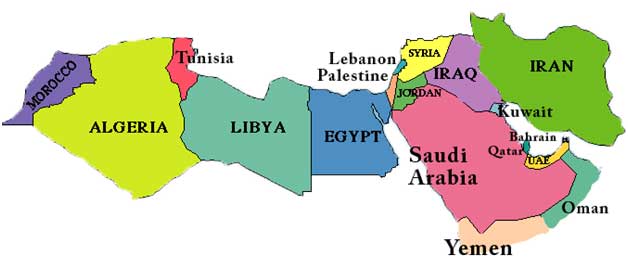
From Egypt to Kuwait, most news outlets support specific positions, usually those espoused by the companies or organisations that own or control them – often either toeing the official line or supporting rival agendas or political opposition.

Following the 2013 coup in Egypt and the civil wars in Syria, Yemen and Libya over the past decade, the pro-government media used the fear of instability and war to silence citizens and twist the facts.

For instance, the Egyptian mainstream media convinced its audience that the 2013 massacre of more than 900 people in Cairo was the only way to fight against terrorism.

In the context of the Middle Eastern media coverage of the killing of the Saudi journalist Khashoggi, both Al-Jazeera and Al-Arabiya television channels took up positions in front of the Saudi Consulate in Istanbul and resumed the fierce row between Qatar and Saudi Arabia, from there.
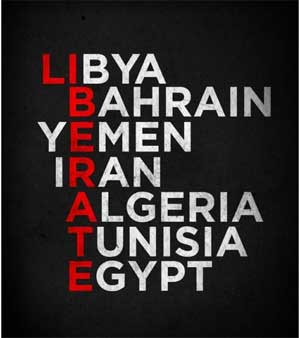
The truth was lost in this fierce political conflict and the Arab viewer had to cross-check the presented facts with other international reporting. This implicit bias and lack of balance polarized Arab public opinion and pushed news consumers to social media in search of trusted factual information, crushing the credibility in traditional media.

And when they aren’t busy working to manipulate bias in news coverage, Arab authorities are old hands at plain old media repression. Not surprisingly, nations in the Middle East and North Africa again find themselves at the bottom of Reporters Without Borders’ World Press Freedom Index of 2018.

Across the region, journalists and media organisations are under attack for their reporting – from intimidation to arrests, detention, prosecution and the shuttering of outlets. Four Arab countries – Egypt, Saudi Arabia, Bahrain and Syria – top the list of the world’s worst jailers of journalists ,according to the 2018 press freedom report by the Committee to Protect Journalists (CPJ).

Egypt jailed the most number of journalists on “false news” charges – 19, amid heightened global rhetoric about so-called fake news; The murder of exiled Saudi journalist Jamal Khashoggi by Saudi agents in the country’s Instanbul consulate illustrated the extreme lengths the Gulf kingdom’s leaders would go to stop published criticism.

And in Syria, 13 journalists were killed in 2017, and more than 40 journalists and citizen-journalists are currently detained, kidnapped or have disappeared.

In this complex context of divisions, repression and lack of public trust, the future of trustworthy Arab media is in the hands of alternative media, journalists’ unity and active citizens.

Since the Arab spring, independent journalism platforms such as Daraj, Nawaat in Tunisia, and Beirut-based Raseef22 have emerged, offering alternative narratives that counter state propaganda and mainstream media self-censorship.

But the challenges for these organisations are their limited reach – many mainstream news consumers consider them elitist and targeting “intellectual” users – and their financial sustainability.

The key here is inclusivity. One of the most successful news outlets is AJ+ Arabic, a project that grew out of Al Jazeera’s Incubation and Innovation Group, focusing exclusively on social platforms targeting millennials.

The other major challenge – financial survival – calls for new, sustainable journalism business models developed around new forms of storytelling and original content production supported by creative funding approaches including crowdfunding and data sales or services, for example.

Empowering citizen journalism is another possible solution to producing independent media in the Arab world. Indeed, citizen journalists, young bloggers, and active tweeps are not governed by the same relationship between the state and media professionals and are authentic voices and channels to the Arab street – they speak its language and represent its concerns and challenges.

Alternative media leaders need to build the citizen capacity beyond data collection and reporting to include online security, storytelling and counter-narratives. Increasing the transfer of these savoir-faire to citizens would amplify more voices to tackle the polarization effect through facts.

But of course, there is a place in the future of quality Arab media for professional journalism. Professional bodies have a role to play in fight for press freedom in the region.

Local unions have to wage numerous battles for their own independence through advocating for better legislation that affords greater protection to reporters and that prohibits prosecutions for reporting.

They have to promote the development of more journalistic organisations and more actively resist government attempts to contain and control the media by positioning themselves as defenders of free, independent media, creating strong alliances with alternative media, citizens journalists and social media influencers.

They need to be inclusive to promote a positive narrative about the role of the media in citizens’ lives and bridge the social gap between journalists and the general public to increase support for stronger independent media.

As a major regional proxy war rages on in the region, dominating headlines and geopolitical agendas, the battle for a future independent Arab media that is trusted and trustworthy, is one that seeks to do away with robotic journalists and organisations programmed only to serve the interests of the powerful.
 

Shining a Spotlight on the Strengths & Challenges of Civil Society in the Balkans

Armed Conflicts, Civil Society, Development & Aid, Europe, Headlines, Human Rights, Population, Press Freedom, TerraViva United Nations

Opinion

This article is part of a series on the current state of civil society organisations (CSOs), which is the focus of International Civil Society Week (ICSW), sponsored by CIVICUS, and scheduled to conclude in Belgrade, April 12.

 
Lysa John, Secretary-General of CIVICUS, in her opening address to the International Civil Society Week (ICSW)

Credit: CIVICUS

BELGRADE, Apr 11 2019 (IPS) – It is an incredible privilege to welcome you all to the ‘International Civil Society Week’. I am going to remind us of the reasons that make it so important for us to be here in Belgrade this week.


This is our 16th global convening of civil leaders and 4th edition of the International Civil Society Week in particular – following on from events held in South Africa, Colombia and Fiji.

Our first World Assembly, as it was known then, was held in Hungary in 1997, and this time we have gathered in the Balkans – and we are very grateful to our peers in Serbia for hosting us.

Serbia currently features on the CIVICUS Monitor’s “Watch List” which draws attention to countries where there are serious and ongoing threats to civic space.

By hosting ICSW 2019 in Serbia, we hope to shine a spotlight on the strengths and challenges of civil society in this region, and find ways to amplify and support their efforts.

Civic freedoms are currently under attack in 111 countries. In other words, over six billion people face serious challenges in the exercise of freedoms of expression, association and peaceful assembly which are essential to an empowered and enabled civil society.

There is a continuing crisis facing civil society organisations and activists across the world – a global civic space emergency. Our job is to find ways to ensure this does not become the ‘new normal’.

We cannot be the generation that lost the fight to protect civic freedoms and democratic values. We owe the citizens, civic leaders and communities of the future a significantly stronger basis to organise for and achieve their rights.

There aren’t many people in the world who can genuinely claim to wake up every morning thinking about how to make the world a more just, more honest and more compassionate place. And yet, we have close to 1,000 people in this very room who do just that.

With over 900 delegates from 100+ countries gathered here, you can safely expect to meet every major form of civil society that works to defend and promote human rights worldwide – ranging from community groups, social entrepreneurs, academic organizations, campaigning networks, think tanks and foundations — in one place over the next few days.

We have the opportunity to connect lessons and inspirations while we are together here. Yet it is the changes that we will test and activate when we return to our personal and professional spaces that make being here worthwhile.

This could be refreshed strategies to challenge discrimination and exclusion or new ways to demonstrate innovation and accountability as a sector.

Our deliberations must reflect the urgency and intent required to make the changes we need to see in the real world – and in this gathering right here we have exactly the kind of determination and optimism needed to see this through. Thank you for being here – we wish you a truly inspired week!

I cannot end without thanking again our hosts in Serbia, Civic Initiatives and the Balkans Civil Society Network, for their warm and generous hospitality without which we wouldn’t be here.

A special mention is also due to the hosts of the previous ICSW held in Fiji – the Pacific Island NGO Forum – who are also here. Thank you for the lessons and achievements of our last gathering, which has enabled us to be more prepared and more ambitious this year.


No Story Worth Dying For?

Active Citizens, Civil Society, Conferences, Editors’ Choice, Featured, Headlines, TerraViva United Nations

Civil Society

This article is part of a series on the current state of civil society organisations (CSOs), which will be the focus of International Civil Society Week (ICSW), sponsored by CIVICUS, and scheduled to take place in Belgrade, April 8-12.

Infringements of press freedom and the targeting of journalists is one of the topics being discussed at the International Civil Society Week (ICSW 2019) – an annual gathering of civil society leaders, activists and engaged citizens taking place in the Serbian capital Apr. 8-12. Courtesy: CIVICUS

BELGRADE, Apr 11 2019 (IPS) – “Stay safe. There’s no story worth dying for.”
That’s the message to journalists from Nada Josimovic, programme coordinator of Amsterdam-based media rights organisation Free Press Unlimited.


Most journalists would agree with her. But beyond the threat of physical harm, women reporters and journalists of colour run another risk: being harassed online, with the spouting of sexist and racist venom.

This, of course, happens to rights defenders as well, all over the world. But in the case of women, the harassment is “sexualised … sometimes with threats of rape,” said Josimovic.

“How does one protect oneself?” she asked, during a panel discussion on press freedom at International Civil Society Week (ICSW 2019) – an annual gathering of civil society leaders, activists and engaged citizens taking place in the Serbian capital Apr. 8-12.

Co-hosted by the Johannesburg-based global civil society alliance CIVICUS, the meeting is focusing on a range of issues that include infringements of press freedom and the targeting of journalists.

As the event took place, news surrounding the deaths of media workers continued. On Apr. 11, the Director-General of the United Nations Educational, Scientific and Cultural Organisation (UNESCO), Audrey Azoulay, issued a statement condemning the killing of a sports reporter in the north-western Mexican town of Salvador Alvarado on Mar. 24.

“I condemn the killing of Omar Iván Camacho Mascareño,” stated Azoulay. “I trust the investigation underway will enable the authorities to bring the perpetrator of this crime to justice.”

Mascareño, of local radio broadcaster Chavez Radiocast, was found dead with signs of severe head trauma and injuries indicating that he had been beaten to death, according to media reports.
UNESCO issues its “condemnations” on a regular basis, given the frequency of attacks.

The UN agency has the mandate to promote the safety of journalists and does so “through global awareness-raising, capacity building and a range of actions, notably the UN Plan of Action on the Safety of Journalists and the Issue of Impunity”, according to the organisation.

This includes a module on Combatting Online Abuse: When Journalists and Their Sources are Targeted, but Josimovic and others stress that enough isn’t being done to end the specific harassment of women journalists.

“I think that media outlets don’t have good support systems for this kind of attacks,” she told IPS. “The legal aspect is also complicated.”

Social media companies, for instance, will not reveal the address of the perpetrators when the targeted individual complains, she said. Additionally, there is sometimes a lack of solidarity from editors and colleagues who have never experienced the harassment.

“Because it’s not happening in the real world, people kind of minimise the effect,” she added. “But women in general face more harassment on-line. In every sector, it’s there.”

Anyone who has doubts about this has only to look at some of the reports via the International Women’s Media Foundation, she said.

Rights activists say that broad coalitions were needed to promote the protection of rights and that journalists and human rights advocates need to work together. Courtesy: CIVICUS

Because of the similarity in methods used to attack rights defenders globally, press freedom groups and civil society organisations should increase ways of working together, said some delegates at the ICSW meeting.

Vukasin Petrovic, senior director for programme strategy at Washington DC-based rights monitoring organisation Freedom House, said that broad coalitions were needed to promote the protection of rights.

“Journalists and human rights advocates are the centrepiece of any strategy,” he told IPS. “The protection of freedom of expression and freedom of assembly are in the interests of both.”

Responding to a question about required journalistic “distance” and impartiality, he acknowledged that sometimes the relationship between the media and civil society can become too close.

“We do need transparency and accountability on all sides,” he said. “But building coalitions can make advocacy more powerful.”

For Dragan Sekulovski, executive director of the Association of Journalists of Macedonia – a country that’s “a champion when it comes to wiretapping” – part of the defence of media needs to come from the sector itself.

That includes promoting quality journalism and “leaving this to the audience to judge”, he said. In this way, public opinion may swing in favour of the media, helping to deter attacks and harassment.

“Quality” journalism requires resources, however, and as various media groups point out, the sector has been ravaged over the past years by job losses, low pay, copyright abuses and other ills.

This is compounded by declining public trust – because of a range of factors, including smear campaigns, accusations of purveying “fake news”, journalists’ own behaviour, and, of course, calling media “the enemy of the people” as American President Donald Trump has done.

According to the Committee to Protect Journalists, many of Trump’s tweets so far as president has “insulted or criticised journalists and outlets, or condemned and denigrated the news media as a whole”.

It has thus become an uphill battle to get some sections of the public to see the importance of journalists’ work, and to engage actively in protecting media freedom, said activists at the ICSW meeting.

“Media organisations need to engage with citizens to make them understand why (citizens) need them,” said Josimovic.

Whether this would stop the attacks and harassment, especially of women journalists, is anyone’s guess. The issue will no doubt be raised again during discussions May 1-3, when the “main celebration” of UNESCO’s World Press Freedom Day takes place in Addis Ababa, Ethiopia.


Attacks on Media in the Balkans Sound Alarm Bells for Democracy

Armed Conflicts, Civil Society, Development & Aid, Europe, Featured, Headlines, Human Rights, Population, Press Freedom, TerraViva United Nations

Opinion

This article is part of a series on the current state of civil society organisations (CSOs), which is the focus of International Civil Society Week (ICSW), sponsored by CIVICUS, and scheduled to conclude in Belgrade, April 12.

 
Susan Wilding is the head of the Geneva office at CIVICUS, a global alliance of civil society organisations.

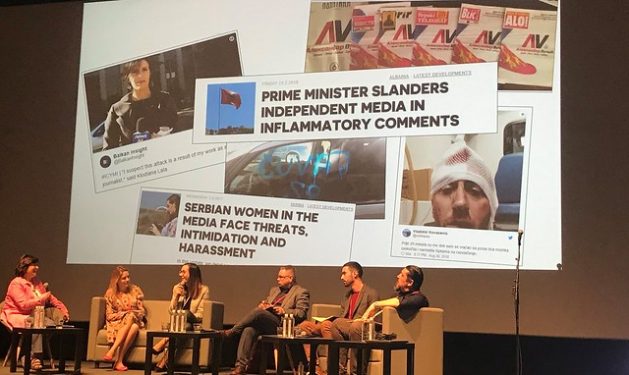
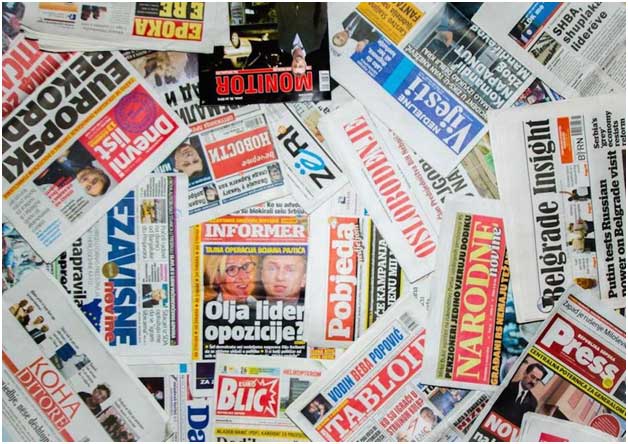
GENEVA, Apr 11 2019 (IPS) – Anti-government protesters invading Serbia’s state-owned television station, demanding that their voices be heard. Journalism bodies writing to the Albanian prime minister over plans to censor online media outlets. A Belgrade corruption-busting reporter forced to flee his house that had been torched; a Montenegrin investigative journalist shot in the leg outside her home.


These are just some of the violations emerging from the western Balkans as a clampdown on media freedom – and civil liberties – undermines Serbia’s and Montenegro’s bids to join the European Union.

It’s little wonder that Serbia tumbled 10 spots to rank 76th on the 2018 Reporters without Borders Press Freedom Index, which states bluntly: “Serbia has become a country where it is unsafe to be a journalist.” Its neighbours fare little better: Albania is in 75th place, Kosovo is ranked 78th and Montenegro is a dismal 103rd.

Smear campaigns against courageous journalists; impunity for those assaulting media players; collusion between politicians and brown-envelope reporters; high levels of concentration of media ownership in a few hands; threats of cripplingly expensive litigation; the chilling effect of self-censorship on reportage. The list of media abuses in the Balkans goes on and on.

Belgrade, Serbia is playing host to International Civil Society Week, running thro Friday April 12, bringing together over 900 delegates to debate solutions to some of the world’s most pressing challenges. Some of the questions on the agenda will be: What more can we, as civil society, do to ease this stranglehold on free expression? How can we raise our voices to protect individual and media liberties?

Such restrictions on the media are incompatible with participatory democracy, which depends on three fundamental human rights – freedom of peaceful assembly, freedom of association and freedom of expression – which are also protected under international law. Any government that claims to have free and fair elections, and claims to be a democracy, cannot deny its citizens access to information and the right to be heard.

According to findings by the CIVICUS Monitor, an online platform that tracks threats to civil society in 196 countries, states are generally using two types of tactics to restrict civic freedoms, and the crack down on media freedoms is no exception.

The first is legal: imposing or enforcing laws that restrict democratic freedoms and criminalise free speech. For example, this includes bringing trumped-up judicial charges against journalists or media houses, thereby diverting energy and resources from watchdog journalism.

The second type comes in the form of extrajudicial means and are even more contemptible: including intimidating the media into submission through carefully coordinated smear campaigns and public vilification, and sometimes through physical intimidation and outright repression.

While such states may make an elaborate show of using (or abusing) the laws of the land to rein in the media, such censorship is clearly a perverse parody of democracy – an expression of a growing trend in which the ‘rule by law’ replaces the rule of law.

Sometimes these attacks on media are coming from “strongmen” leaders with the ambition of concentrating power and eliminating any checks and balances. In other instances, we see these kinds of restrictions imposed by governments that feel threatened and see media clampdowns as another way to hold onto power.

A weakened state or leaders who came to power through dubious means or with a small majority are likely to mute the civic space to cling to power. It may therefore, not be surprising that it’s happening in the Balkans, given the area’s fraught political history.

When popular dissent swells against unpopular policies and actions, a vulnerable state’s first target is the media, because of their potential role in unseating power. It is also something we see as a classic copy-and-paste tactic: questionable leaders see their regional neighbours getting away with it, with few if any repercussions, and follow suit.

Even the online space – the ultimate democratic arena of the 21st century, where the gladiatorial thrust and parry of views is essential to robust debate – is not being spared in this battle to seize ideological control of the marketplace of ideas.

Some countries have already shown that it’s entirely possible to shut down or control social media platforms, denying citizens their fundamental right to participate in debate and in policymaking.

The reasons that States give for silencing media vary but often include similar statements such as journalists are writing “defamatory” articles or disseminating “fake news”. Often, they maintain, the reportage is “unpatriotic”, “goes against our culture or values” or “does not advance our nationalist agenda”.

With the restrictions on media freedoms increasing in the Balkans, we should be highlighting the situation and sharing tried and tested strategies for pushing back and opening the space for a free and independent media.

We should be concerned that the world so easily shifted its attention away from the region after the terrible conflict that claimed so many lives 20 years ago. Why did we not linger a while to monitor the aftermath? Do we turn a blind eye to human rights abuses, as is the case in China and elsewhere, as long as there is peace, development and economic prosperity?


Smears, Laws, Lack of Cooperation: Tools Against Activists

Active Citizens, Civil Society, Conferences, Europe, Featured, Global, Headlines, Human Rights, IPS UN: Inside the Glasshouse, Population, Regional Categories, TerraViva United Nations

Civil Society

This article is part of a series on the current state of civil society organisations (CSOs), which will be the focus of International Civil Society Week (ICSW), sponsored by CIVICUS, and scheduled to take place in Belgrade, April 8-12.

Michel Forst, Special Rapporteur on the situation of human rights defenders next report will focus on impunity, as only about 5 percent of attacks on rights defenders have been investigated and the perpetrators “brought to justice”. Credit: AD McKenzie/IPS

BELGRADE, Apr 10 2019 (IPS) – The murder of Brazilian politician and human rights activist Marielle Franco just over a year ago and attacks on other rights activists around the world have galvanised civil society organisations, with the United Nations heightening its own strategy to protect rights defenders.


However, some countries aren’t interested in cooperating with civil society or international governmental bodies and even actively engage in smear campaigns against rights advocates.

“An increasing number of states have now refused to cooperate with the UN,” said Michel Forst, Special Rapporteur on the situation of human rights defenders, in the Office of the United Nations High Commissioner for Human Rights.

“They don’t want to invite any more special rapporteurs to visit the countries or to produce reports,” he told journalists at a press briefing during International Civil Society Week (ICSW 2019), an annual gathering of civil society leaders, activists and citizens taking place in the Serbian capital this week, Apr. 8-12.

The meeting – co-hosted by the Johannesburg-based global civil society alliance CIVICUS – has brought together more than 850 delegates who are focusing on issues ranging from “the crackdown on media freedom to emergency assistance for NGOs under attack”. It is also addressing the “power” of solidarity alongside greater accountability.

Forst said he was attending the event to learn from the participants. His next report, to be presented during the UN General Assembly in the fall, will focus on impunity, as only about 5 percent of attacks on rights defenders have been investigated and the perpetrators “brought to justice”, he told journalists.

A growing problem in protecting rights defenders is the way in which some states try to defame activists, Forst said. In regions from Europe to Latin America, there are on-going campaigns to discredit rights advocates, and public opinion can be influenced by the derogatory terminology.
“These campaigns are dangerous for defenders,” he said. “They are called ‘enemies of the state’, they are called ‘promoters of western values’, they are (said to be) ‘against development’.”

In some countries, activists are also accused of having links to terrorism and of opposing progress when they try to block projects that are disastrous for the environment or for indigenous peoples.

“What is also a matter of concern for me is that these campaigns are led by politicians, by political actors, prime ministers, ministers of foreign affairs, ministers of defence,” Forst added.

He said the Belgrade ICSW meeting was important for activists to see that what is happening in their home country or region may also be taking place elsewhere, so that they can try to build bridges and strengthen links.

The meeting has in fact highlighted similarities in methods of repression around the world – methods that include not only physical attacks, but surveillance, travel bans, on-line harassment and the use of government structures and legislation to try to suppress freedoms.

Even as the ICSW meeting takes place, rights organisations elsewhere have been issuing alarms about breaches of civic and media rights. Separately from the event in Belgrade, rights organisation PEN America on Apr. 9 warned that the “Trump administration’s targeting of journalists has reached a new level”.

The group pointed to reports from the U.S.-Mexico border (and leaked documents from a Department of Homeland Security whistle-blower) indicating that “U.S. government agencies have been tracking and monitoring over 50 individuals, mostly journalists and immigration advocates, as they report on the humanitarian situation” at the U.S. southern border.

Government entities have reportedly participated in the “tracking and monitoring of these journalists, including the creation of a U.S. government database containing sensitive personal information”, PEN America said. The group called the database “a shocking and unwarranted violation of journalists’ First Amendment rights” and “an appalling violation of press freedom”.

In France, meanwhile, the national branch of Amnesty International criticised a French “anti-riot” law that could threaten freedom of assembly and expression. The law, adopted by parliament, would allow police to systematically search protestors, and, despite certain assurances, it “remains a serious infringement on public freedom and the balance of power”, Amnesty France stated Apr. 9.

The law comes as France’s Gilets Jaunes (or Yellow Vests) continue their protests, with thousands marching on Apr. 6 in Paris and other cities for the 21st weekend in a row. Certain lawmakers say the legislation is necessary to prevent further destruction of property and life-threatening fires started by protestors during some of the demonstrations.

But France also uses other legislation “to target those defenders who are trying to help and rescue migrants coming to Europe via the Mediterranean sea,” said Forst, who is French.
“We’re seeing more and more the criminalisation of (rights) defenders”, through the use of the law, he said.

In Serbia, anti-government demonstrators are set to intensify their actions Apr. 13 — the day after ICSW 2019 ends — with what promises to be the biggest gathering since protests began last December.

Protestors are calling for free and fair elections and greater media freedom. (Last month some forced their way into the offices of Serbia’s state-run television network, to show dissatisfaction with what they called one-sided reporting.)

At the opening ceremony of ICSW, Serbian activists slammed President Aleksandar Vučić for repressive policies, often without naming him, and some called for protection of the media.

“We will stand up for freedom of journalists… the freedom not to be threatened in any way,” said Maja Stojanovic, of Serbian organisation Civic Initiatives, a co-host of the meeting.

Ahead of ICSW, Serbia was added to a watchlist of “nations where civic freedoms are under serious threat”. The watchlist – released by the CIVICUS Monitor, an online platform that tracks threats to civil society across the globe – said Serbian authorities have “orchestrated a smear campaign against demonstrators, labelling government opponents as ‘paid’ activists working against Serbian interests”.

The confused and disquieting developments in many countries further highlight the need to find cross-border solutions and to create links between rights defenders, Forst said.

The European Union, for instance, has guidelines for embassies of member states abroad on “how to protect rights defenders”, and funding is available for embassies to relocate individuals at risk, Forst told reporters. In addition, a network of shelter cities exists (the number of these is growing with continued attacks).

But it is difficult to relocate at-risk female activists who may have children, and here, too, there is often lack of cooperation or agreement on asylum requests.

While some countries can effectively help rights defenders in far-off regions, they seem powerless when it comes to their own neighbours.

Still, defenders are becoming “more efficient” in forming local, national and international networks, Forst said. “It is a battle … solidarity is important.”

He said the good news is that some countries that were “blocked in the past” are now granting access to international bodies to help protect defenders and to end impunity.

In contrast to states like the Philippines that are dangerous for rights defenders and don’t wish to “do anything to solve the problem”, other countries “like Mexico, Colombia, Honduras, Brazil now – maybe – do recognise, because of the number of killings … that they need to solve the problem,” Forst added.

In Brazil, meanwhile, activists and others are still asking: who killed Marielle Franco?


Civil Society Leaders Meet Amid Protests, Attacks on Rights

Civil Society, Conferences, Editors’ Choice, Featured, Global, Global Geopolitics, Global Governance, Globalisation, Headlines, IPS UN: Inside the Glasshouse, Regional Categories, TerraViva United Nations

Civil Society

This article is part of a series on the current state of civil society organisations (CSOs), which will be the focus of International Civil Society Week (ICSW), sponsored by CIVICUS, and scheduled to take place in Belgrade, April 8-12.

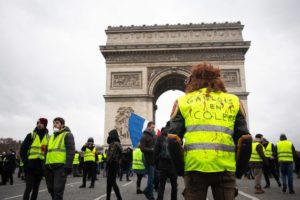
Representatives said that civil society and concerned citizens worldwide have started to respond with “renewed determination” to the unprecedented challenges facing the world, and that this resolve will be in the spotlight during International Civil Society Week (ICSW). Pictured here is a protest by France’s Gilets Jaunes (or Yellow Vests) from earlier this year. Credit: Olivier Ortelpa/CC By 2.0

PARIS, Apr 7 2019 (IPS) – Amid rising attacks on rights campaigners, and mass protests in countries such as France and Serbia, civil society groups are urging governments to ensure the protection of “democratic values” and freedom of expression.

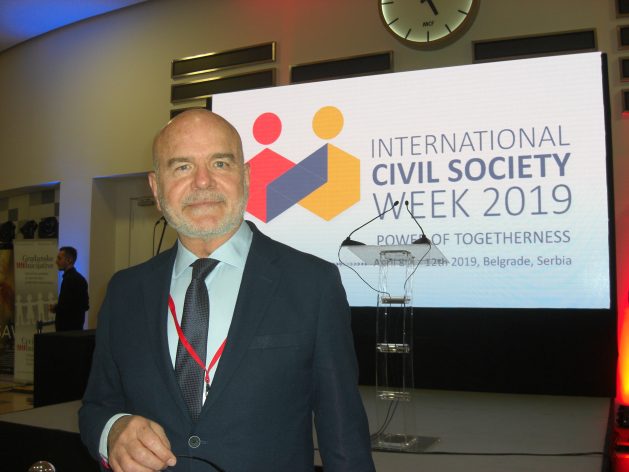
In Belgrade, some 850 human rights campaigners, civil society leaders and engaged citizens will meet Apr. 8 to 12 for the annual International Civil Society Week (ICSW) – a gathering co-hosted by the Johannesburg-based global civil society alliance CIVICUS and Serbian association Civic Initiatives, with the support of the Balkans Civil Society Development Network.

Under the theme, “The Power of Togetherness”, ICSW 2019 “seeks to generate deep conversations among civil society leaders, social justice advocates, development practitioners, members of the philanthropic community, diplomats and others on emerging global challenges and how civil society should be responding to these,” said Mandeep Tiwana, CIVICUS’ chief programmes officer.

“Defence of democratic values, civic space and participation, along with citizen action, will be among the topics of discussion,” he told IPS in an email interview while en route to Belgrade.

“Our message to governments is that the right to peaceful protest is a basic human right enshrined in constitutional and international law. Governments have an inherent responsibility to enable the right to peaceful protest as an integral element of the defence of democracy,” he added.

The ICSW meeting comes at a time when human-rights organisations, campaigners and media workers in many regions have experienced growing repression, including arrests, beatings and killings that have shocked and outraged international observers.

“In country after country, democracy is under attack, with populist and right-wing movements gaining ground and democratic regression being witnessed even in countries historically considered bastions of democracy,” CIVICUS says.

“Activists, journalists and people who speak out against growing restrictions are persecuted. A historic rise of populist leaders continues to erode fundamental freedoms, heightening political polarisation and sowing division,” the group adds.

Representatives said that civil society and concerned citizens worldwide have started to respond with “renewed determination” to the unprecedented challenges facing the world, and that this resolve will be in the spotlight during ICSW, which includes a large youth participation.

“This year’s event in Serbia comes at a critical and opportune time for civil society and the world’s citizens to realise the power of unified, collective action to challenge a global trend that threatens our fundamental freedoms,” said Lysa John, CIVICUS’ Secretary General.

The discussions will take place against a backdrop of unrest in various countries: massive public demonstrations have been continuing in Serbia, for instance, while France’s Gilets Jaunes (or Yellow Vests) marched again on Apr. 6 in Paris and other cities for the 21st weekend in a row.

This latest French strife began last November in response to fuel price increases, and the demonstrators say they won’t give up until their demands are met for a restructuring of French society so that the “elite” aren’t always in charge.

During earlier marches, rights groups such as Amnesty International and Human Rights Watch criticised the French police for using “excessive force” and “heavy-handed” crowd control and anti-riot measures.

But some protestors have also participated in violence, looting and the targeting of media professionals, as reporters covering the marches have come under attack.

Media workers, in fact, often find themselves between a rock and a hard place, caught amongst the security forces and protestors as they try to report on turbulent events. CIVICUS said that the role of the media and their relationship with civil society will be a key topic of discussion at ICSW, alongside the focus on protecting rights campaigners.

“CIVICUS is working in several ways to stop attacks on members of the media and civil society activists targeted for exposing rights violations or speaking truth to power,” Tiwana said. “We engage with a broad range of civil society organisations that support press freedom using several approaches ranging from in-depth participatory research and analysis to raising awareness of attacks on the media, strategic coalition building, and directly engaging decision-makers at the national and international levels.”

He told IPS that joint efforts had contributed to the “release of journalists and the scrapping of repressive bills that restrict media freedoms” in some instance, while in others the efforts had “helped put serious  violations of media freedoms on the UN’s radar through its various human rights mechanisms”.

The choice of Serbia’s capital as the 2019 ICSW venue will draw attention to current protests and also recall the bloody recent history of the Balkans, highlighting the need for international vigilance in protecting rights, according to civil society groups.

“During the 1990s, authoritarian regimes produced conflicts, severe human rights violations and genocide. Today, as we approach European Union membership, internal and international independent monitoring mechanisms show shrinking media freedoms, a lack of separation of power and rule of law, and deterioration of freedom of elections,” stated Maja Stojanovic, of Civic Initiatives.

“This region, and particularly Serbia, demonstrates that changing laws, strategies or governments offers no guarantees – democracy does not exist if it is not built constantly. By hosting this year’s event in Belgrade, we will convene and send messages rooted in local circumstances and, in the same time, fully reflecting global challenges,” she said.

Ahead of the meeting, Serbia and four other countries have been added to a global watchlist of countries that have seen an “escalation in serious threats to fundamental freedoms in recent weeks and months”, according to CIVICUS Monitor, an online platform that tracks threats to civil society across the world.

Citizens of all five countries (Afghanistan, Saudi Arabia, Sudan, and Venezuela are the others) are experiencing increasing rights violations that “include killings, attacks on protesters, media restrictions and arbitrary detentions of human rights defenders”.

“It is deeply concerning to see escalated threats to basic rights in these countries,” said Marianna Belalba Barreto, CIVICUS’ Civic Space Research Lead.

“It is critical that these five governments wake up to their failure to respect international law and take swift action to respect their citizens’ most basic freedoms in a democratic society,” Belalba said.

CIVICUS is also calling upon “neighbouring states and international bodies to put pressure on these countries to end the repression”.