Gaza: Physicians Call For Unimpeded Aid To Restore Reproductive Healthcare

Aid, Armed Conflicts, Civil Society, Development & Aid, Editors’ Choice, Featured, Gender, Headlines, Health, Human Rights, Humanitarian Emergencies, Middle East & North Africa, Population, Sustainable Development Goals, TerraViva United Nations, Women’s Health
Armed Conflicts

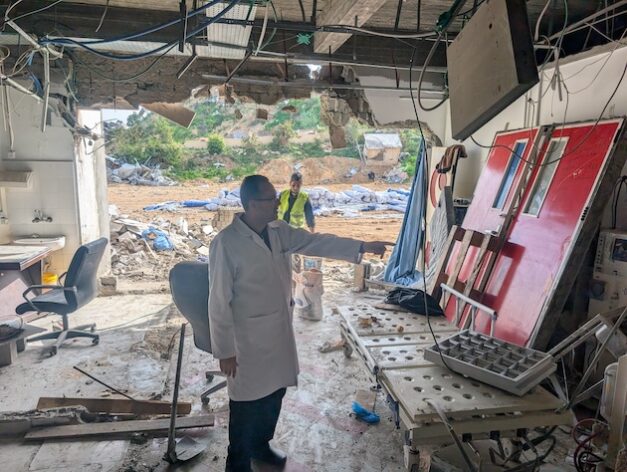
Cardiologist Dr. Marwan Sultan, then Director of the Indonesian Hospital in north Gaza, in February 2025 showing damage to hospital equipment following an Israeli attack on the facility a few months prior. In July 2025, Dr. Sultan was killed in an Israeli strike on the apartment where he was sheltering with his family. Credit: PHR/GHRC

Cardiologist Dr. Marwan Sultan, then Director of the Indonesian Hospital in north Gaza, in February 2025 showing damage to hospital equipment following an Israeli attack on the facility a few months prior. In July 2025, Dr. Sultan was killed in an Israeli strike on the apartment where he was sheltering with his family. Credit: PHR/GHRC

BRATISLAVA, Jan 14 2026 (IPS) – Israel must lift all restrictions on medicine, food and aid coming into Gaza, rights groups have demanded, as two reports released today (Jan 14) document how maternal and reproductive healthcare have been all but destroyed in the country.


In two separate reports released jointly, Physicians for Human Rights (with the Global Human Rights Clinic at the University of Chicago Law School) and Physicians for Human Rights–Israel (PHR-I) show how the war in Gaza has led to rising maternal and neonatal mortality, births under dangerous conditions, and the systematic destruction of health services for women in Gaza.

The reports from the two groups, which are independent organizations, provide both detailed clinical analysis of the collapse of Gaza’s health system and its medical consequences as well as firsthand testimonies from clinicians and pregnant and breastfeeding women in Gaza forced to live and care for their newborns in extreme conditions.

And the organizations say that with conditions improving only marginally for many women despite the current ceasefire, Israel must roll back restrictions placed on aid and immediately help ensure people in Gaza get access to the healthcare they need.

Israel’s destruction of Gaza’s health infrastructure, combined with untreated malnutrition resulting from restrictions on food and medical supplies, including baby formula, has created an environment in which the fundamental biological processes of reproduction and survival have been systematically destroyed, resulting in known and foreseeable harm, pain, suffering, and death,” Sam Zarifi, Physicians for Human Rights (PHR) Executive Director, said.

“Israel must immediately allow food and essential medical material to enter Gaza with a proper medical plan for helping the besieged population,” he added.

Israeli military operations following Hamas’s attack on Israel on October 7, 2023, have left massive destruction across Gaza, including to healthcare facilities. According to UNICEF, 94 percent of hospitals have been damaged or destroyed.
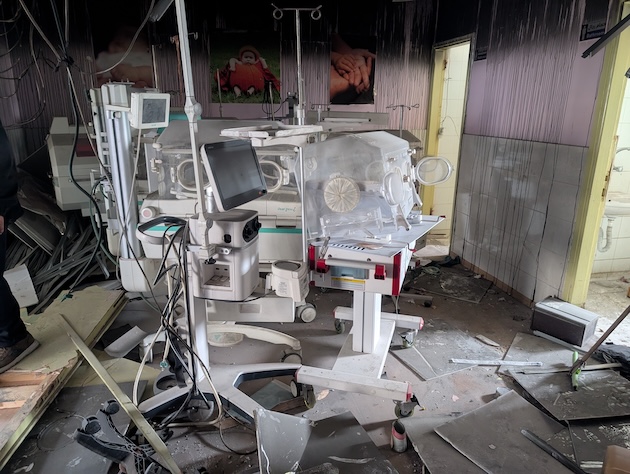
1.Destroyed incubators and equipment at the Kamal Adwan Hospital Neonatal Intensive Care Unit in north Gaza, following the targeting and raid of the facility by the Israeli forces in December 2024. Credit: PHR/GHRC

Destroyed incubators and equipment at the Kamal Adwan Hospital Neonatal Intensive Care Unit in north Gaza, following the targeting and raid of the facility by the Israeli forces in December 2024. Credit: PHR/GHRC

Maternal and reproductive healthcare has suffered. Before the war, Gaza had eight neonatal intensive care units with 178 incubators. Today, the number of incubators has dropped by 70 percent. In the north, there were 105 incubators across three NICUs, now there are barely any functional units remaining, UNICEF told IPS.

It says that the numbers of low birth weight babies have nearly tripled compared to pre-war levels and the number of first-day deaths of babies increased by 75 percent.

The PHR and PHR-I reports paint a similar picture.

The PHR report, which focuses on the period between January 2025 and October 2025 when a ceasefire was agreed, details how between May and June last year, the Palestinian Ministry of Health reported a 41 percent decrease in the birth rate in Gaza compared to the same time period in 2022; there was a significant increase in miscarriages that affected more than 2,600 women, and 220 pregnancy-related deaths that occurred before delivery.

The ministry also reported a sharp increase in premature births and low birth weight cases; over 1,460 babies were reported to be born prematurely, while more than 2,500 were admitted to neonatal intensive care. Newborn deaths also increased, with at least 21 babies reported to have died on their first day of life.

Meanwhile, the PHR-I report includes personal testimonies illustrating the severe problems pregnant women and women with newborns have faced in Gaza during the war, from lacking safe routes to care and being forced to give birth in unsanitary, dangerous conditions to battling hunger and severe food shortages as they try to breastfeed their children.

One woman, Samah Muhammad Abu Mustafa, a 30-year-old mother of two from Khuza’a, Khan Youni, described how when her contractions began in the middle of the night, because there were no vehicles and very few ambulances, which are reserved for shelling or other critical emergencies, she had to walk a long distance through rain. When she eventually reached the hospital, she said it was “horrifying.”

“I swear, one woman gave birth in the corridor, and her baby died. It was very crowded, and the doctors worked nonstop. I felt as though I could give birth at any moment. After giving birth to my eldest daughter, I was told I should not deliver naturally again because my pelvis was too narrow. Despite this, the doctors said I would have to deliver naturally because a cesarean section required anesthesia, and there was not enough available. I stood for three hours until it was finally my turn, without sitting even for a moment,” she said.

But despite the October 2025 ceasefire, massive problems remain with women’s access to and the provision of, maternal and reproductive healthcare in Gaza.

“Maternal health units in Gaza are largely non-functional and face critical shortages of essential medicines, consumables, and equipment,” Lama Bakri, project coordinator in the Occupied Territories Department at PHR-I, told IPS.

“Neonatal and diagnostic equipment remains scarce or blocked, including portable incubators for premature and low-birth-weight newborns. Although some aid has entered since the ceasefire, these gaps are not being addressed at the scale required, and meaningful improvement in the immediate future remains unlikely.”

Malnutrition also remains a serious problem.

“The ceasefire has allowed us to significantly scale up our nutrition response, but we are still treating pregnant and breastfeeding women for acute malnutrition in alarmingly high numbers,” Ricardo Pires, Communication Manager, Division of Global Communications & Advocacy at UNICEF, told IPS.

He said that between July and September 2025 about 38 percent of pregnant women screened were diagnosed with acute malnutrition.

“In October alone, we admitted 8,300 pregnant and breastfeeding women for treatment, about 270 a day, in a place where there was no discernible malnutrition among this group before October 2023,” he added.

UNICEF has documented almost 6,800 children admitted for acute malnutrition treatment in November 2025 compared to 4,700 cases in November 2024. So far, the number of admitted cases more than doubled in 2025 compared to 2024: almost 89,000 admissions of children to date in 2025, compared to 40,000 cases in 2024, and almost none before 2023.

“What we’re seeing is that no child meets minimum dietary diversity standards, and two-thirds of children are surviving on just two food groups or less. Around 90 percent of caregivers reported their children had been sick in the previous two weeks, which compounds the malnutrition crisis,” Pires said.

And there are fears for the longer-term demographic future of Gaza given the damage to maternal and reproductive healthcare.

“For Gaza’s demographic future, the implications are serious. Even with reconstruction, we will be dealing with a generation of children who were scarred before they took their first breath, children who may face lifelong health complications, developmental challenges, and the effects of stunting. The rebuilding must start now, but we should be clear-eyed: the damage to maternal and newborn health will echo for years, potentially decades,” said Pires.

But others say that with cooperation between international actors and the right political will, the situation need not remain so dire.

“To rehabilitate the population after everything that has happened is going to be a real issue, [but] now there is a Board of Peace, the needs of pregnant women and maternal and reproductive healthcare can be prioritized,” Zarifi told IPS.

“The capacity and the will exist among Gazans and Gazan healthcare workers to rebuild the healthcare system, including maternal and reproductive health services,” added Bakri. “The primary obstacle is not technical or professional but political: Israel’s control over Gaza’s borders and the restrictions on the entry of essential equipment, medical supplies, and reconstruction materials. With unrestricted access to what is needed to rehabilitate hospitals, rebuild destroyed units, and restock essential medicines, recovery is entirely feasible. Whether maternal and reproductive healthcare can return to pre-war levels depends on sustained international pressure to allow that access.”

Although some aid has entered since the ceasefire, these gaps are not being addressed at the scale required, and meaningful improvement in the immediate future remains unlikely.

However, while both NGOs like PHR and PHR-I and others, alongside international bodies like the UN, stress that any recovery and reconstruction in Gaza requires the ceasefire to hold and consolidate, repeated violations underline its fragility, and the effect that has on women.

Meanwhile, PHR and PHR-I point out that extreme weather and ongoing Israeli restrictions on medicine and food getting to Gaza to this day continue to severely affect pregnant women, new mothers, and babies. On top of this, Israel has also announced it will bar 37 international aid groups from working in Gaza, potentially compounding the problems.

Bakri said such measures were jeopardizing what small gains had been made since the ceasefire and “raise serious concerns about whether the situation can improve.”

“Even after the ceasefire, while bombardment has decreased, the reality these women face remains catastrophic – not only for their bodies and well-being but for the survival of the entire society,” said Bakri.

Zarifi added, “We are worried that the restrictions placed by Israel on some of the major actors in the humanitarian response will hamper access to assistance for those that need it. We have raised questions with the Israeli government as to why specific medicines are not allowed to be brought into Gaza and they say that they are not stopping them from being brought in but they can be brought in by commercial means. That is hard for people who can barely put any money together. These medicines should definitely be coming in through humanitarian channels.”

He also highlighted how important the issue of accountability is in ensuring any progress is made in rebuilding healthcare in Gaza and also limiting the probability of similar devastation in the future.

Both reports concluded that the harms caused by Israeli attacks are not isolated incidents but part of an ongoing pattern of systematic damage to the health of women and their children in Gaza, amounting to reproductive violence.

Israel has denied this and said that attacks on hospitals in Gaza have been because the medical facilities are being used by Hamas, and it has maintained that its forces adhere to international law.

While under international law healthcare facilities have special protection even in war, and attacks on them are prohibited, that protection is lost if they are deemed to fulfill criteria to be considered military objectives, such as housing militaries and arms.

However, any attack on them must still comply with the fundamental principles of distinction, proportionality and precautions in attack and failure to respect any of these principles constitutes a breach of international humanitarian law, according to the UN.

“These attacks are part of a deliberate policy designed to create a domino effect of suffering. From starvation and militarized aid distribution by the GHF, to lack of access to clean water, repeated displacement orders, living in shelters under continuous bombardment, and exposure to infections, disease, and harsh weather, the attacks on maternal and reproductive healthcare are another piece of this puzzle. Together, these conditions were created to systematically destroy the fabric of life in Gaza and reduce the population’s ability to survive,” said Bakri.

“The Israeli government has justified attacks on healthcare facilities by saying this was a problem caused by Hamas. We haven’t had an indication of this but it might be true. But in any case there has to be an investigation of these incidents and we hope the Israeli government will carry out such an investigation,” said Zarifi.

“But what is really alarming to us is that the norms prohibiting attacks on healthcare have been repeatedly violated, and there are also laws governing the protection of women and children that appear to have been violated. The only thing that makes these norms work is accountability. There has to be accountability for what happened, as it is the only way we can ensure that what has happened won’t happen in other conflicts. Impunity is watched by other actors around the world,” he added.

IPS UN Bureau Report
  Source

Richest 1% have Blown Through their Fair Share of Carbon Emissions for 2026 –in just 10 Days

Civil Society, Climate Change, Development & Aid, Environment, Featured, Global, Headlines, Humanitarian Emergencies, Sustainable Development Goals, TerraViva United Nations

Opinion

Credit: Oxfam

LONDON, Jan 13 2026 (IPS) – The richest 1% have exhausted their annual carbon budget – the amount of CO2 that can be emitted while staying within 1.5 degrees of warming – only ten days into the year, according to new analysis from Oxfam. The richest 0.1% already used up their carbon limit on the 3rd January.


This day – named by Oxfam as ‘Pollutocrat Day’ – highlights how the super-rich are disproportionately responsible for driving the climate crisis.

The emissions of the richest 1% generated in one year alone will cause an estimated 1.3 million heat-related deaths by the end of the century. Decades of over consumption of emissions by the world’s super rich are also causing significant economic damage to low and lower-middle income countries, which could add up to $44 trillion by 2050.

To stay within the 1.5 degrees limit, the richest 1% would have to slash their emissions by 97% by 2030. Meanwhile, those who have done the least to cause the climate crisis – including communities in poorer and climate-vulnerable countries, Indigenous groups, women and girls – will be the worst impacted.

“Time and time again, the research shows that governments have a very clear and simple route to drastically slash carbon emissions and tackle inequality: by targeting the richest polluters.

By cracking down on the gross carbon recklessness of the super-rich, global leaders have an opportunity to put the world back on track for climate targets and unlock net benefits for people and the planet,” said Oxfam’s Climate Policy Lead Nafkote Dabi.

On top of their lifestyle emissions, the super-rich are also investing in the most polluting industries. Oxfam’s research finds that each billionaire carries, on average, an investment portfolio in companies that will produce 1.9 million tonnes of CO2 a year, further locking the world into climate breakdown.

The wealthiest individuals and corporations also hold disproportionate power and influence. The number of lobbyists from fossil fuel companies attending the recent COP summit in Brazil, for example, was more than any delegation apart from the host nation, with 1600 attendees.

“The immense power and wealth of super-rich individuals and corporations have also allowed them to wield unjust influence over policymaking and water down climate negotiations.” Dabi added.

Oxfam calls on governments to slash the emissions of the super-rich and make rich polluters pay through:

Increase taxes on income and wealth of the Super-rich and proactively support and engage on the negotiations for the UN Convention of International Tax Cooperation to deliver a fairer global architecture.

Excess profit taxes on fossil fuel corporations. A Rich Polluter Profits Tax on 585 oil, gas and coal companies could raise up to US $400 billion in its first year, equivalent to the cost of climate damages in the Global South.

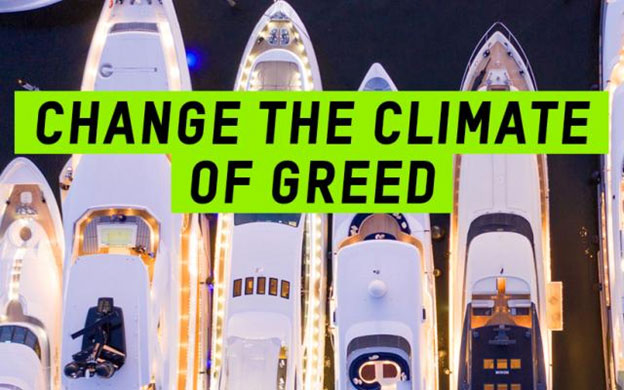
Ban or punitively tax carbon-intensive luxury items like super-yachts and private jets. The carbon footprint of a super-rich European, accumulated from nearly a week of using super yachts and private jets, matches the lifetime carbon footprint of someone in the world’s poorest 1 percent

Build an equal economic system that puts people and planet first by rejecting dominant neoliberal economics and moving towards an economy based on sustainability and equality. 

The International Court of Justice (ICJ), the world’s highest court, has confirmed that countries have a legal obligation to reduce emissions enough to protect the universal rights to life, food, health, and a clean environment. 

IPS UN Bureau

  Source

Refugees Forced to Fill Gaps as Funding, Power and Legal Recognition Move Out of Reach

Active Citizens, Africa, Armed Conflicts, Asia-Pacific, Civil Society, Development & Aid, Disaster Management, Editors’ Choice, Featured, Global, Human Rights, Humanitarian Emergencies, Middle East & North Africa, Migration & Refugees, Sustainable Development Goals, TerraViva United Nations

Migration & Refugees

A new global synthesis report and refugee voices from East Africa and the Middle East warn that reductions in humanitarian footprints risks breaking the refugee protection system.

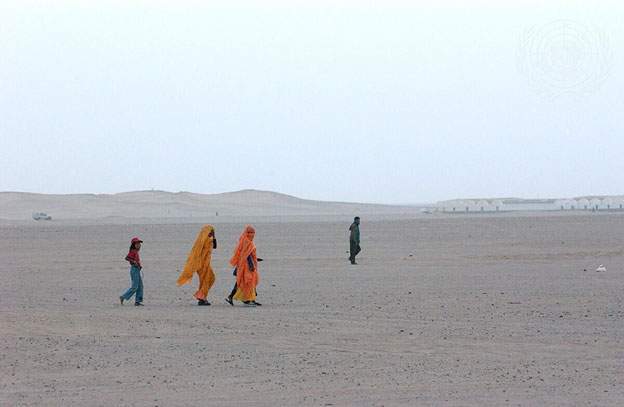
Sahrawi refugees walk near the Awserd Refugee Camp in the Tindouf Province of Algeria. Credit: UN Photo/Evan Schneider

Sahrawi refugees walk near the Awserd Refugee Camp in the Tindouf Province of Algeria. Credit: UN Photo/Evan Schneider

SRINAGAR, India, Dec 16 2025 (IPS) – The global refugee system is entering a period of deep strain. The delivery of protection and assistance is undergoing a transformation due to funding cuts, institutional reforms, and shifting donor priorities.


Against this backdrop, a new Global Synthesis Report titled From the Ground Up highlights the many issues faced by refugees in the Middle East and Africa.

Regional Perspectives on Advancing the Global Compact on Refugees has highlighted a rare, refugee-centered assessment of what is working, what is failing, and what must change. The report draws on regional roundtables held in East Africa and the Middle East and North Africa, followed by a global consultation in Geneva, to feed into the 2025 Global Refugee Forum progress review

According to the report, refugee-led and community-based organizations are increasingly taking on responsibilities, but they are not receiving power, funding, or legal recognition. As international agencies scale back under what is being called the Humanitarian Reset and UN80 reforms, refugees are expected to fill widening gaps without the authority or resources required to do so safely and sustainably.

The East Africa roundtables, held in Kampala with participation from refugee organizations in Uganda, Kenya, and Ethiopia, highlight a region often praised for progressive refugee policies. Countries here host millions displaced by conflict, hunger, and climate stress from South Sudan, Sudan, Somalia, and the Democratic Republic of the Congo.

Laws and regional frameworks promise freedom of movement, inclusion in national systems, and meaningful participation. The lived reality, however, remains uneven.

Education emerged as a central concern. Refugee children are enrolling in schools at higher rates, especially where they have been integrated into government-aided systems. Yet access remains unequal. Refugee students struggle to have prior qualifications recognized.

Many are treated as international students at universities and charged higher fees. Refugee teachers, often qualified and experienced, receive lower pay than nationals or are excluded from formal recognition. Language barriers and lack of psychosocial support further undermine learning outcomes. Refugee-led groups are already stepping in with mentorship, counseling, and bursary support, but they do so with fragile funding and limited reach.

Documentation and freedom of movement form another critical fault line. Uganda is widely cited for its rapid issuance of refugee IDs and settlement-based approach. Kenya and Ethiopia have made progress through new refugee laws and policy reforms. Still, gaps between policy and practice persist. Refugees in urban areas remain undocumented in large numbers. Identity documents often have short validity, forcing repeated renewals.

Travel documents are difficult to obtain, especially in Ethiopia, limiting cross-border movement, livelihoods, and participation in regional or global policy forums. Without documentation, refugees face arrest, harassment, and exclusion from services. For refugee organizations, lack of legal registration means operating in constant uncertainty.

Access to justice, described in the report as one of the least discussed yet most pivotal issues, cuts across all others. Refugees cannot claim rights or seek redress without functioning justice pathways. Language barriers in courts, xenophobic profiling, and lack of legal aid remain common.

Refugee-led organizations already provide mediation, paralegal support, and court accompaniment, often acting as the first point of contact between communities and authorities. Yet their work is rarely formalized or funded at scale.

These findings came alive during a webinar held at the launch of the report, where refugee leaders from different regions spoke directly about their experiences. One participant from East Africa reflected on repeated engagement in international forums. This event was his third such process, following meetings in Uganda and Gambia. He noted that participation was no longer symbolic. Governments and institutions were beginning to listen more closely.

He pointed to concrete differences across countries. In Kenya, refugees do not require exit visas. In Ethiopia, they do. Sharing such comparisons, he argued, helps governments rethink restrictive practices and adapt lessons from neighbors.

From the Middle East and North Africa, the discussion shifted to documentation and access to justice. A Jordan-based lawyer explained that civil documentation is not mere paperwork. It is the foundation of rights and accountability. Without birth registration, children cannot access education.

Without legally recognized marriages, women and children remain unprotected. Many Syrian refugees arrived in Jordan without documents, having lost them during flight or lacking legal awareness. Over time, Jordan introduced measures such as fee waivers, legal aid, and even Sharia courts inside camps like Zaatari to facilitate birth and marriage registration. Civil society groups have provided thousands of consultations and legal representations, bridging gaps between refugees and state systems.

The webinar also highlighted language as a structural barrier. In Jordan, Arabic serves as a common language for Syrians, easing communication. In East Africa, linguistic diversity complicates access to justice and services. Uganda hosts South Sudanese, Sudanese, and Congolese refugees, each with distinct languages, while official processes operate in English and Kiswahili. Governments have made efforts to provide interpretation, but gaps remain, particularly in courts and police interactions.

In Ethiopia, where Amharic dominates official institutions, refugee organizations often rely on founders or leaders who speak the language fluently, limiting broader participation.

As the conversation turned to the future of the humanitarian system, the tone grew more urgent. Participants acknowledged that funding cuts have already halted programs and exposed vulnerabilities. One speaker stressed that legal aid and documentation cannot be seen as optional sectors.

Without sustained support, entire protection systems risk collapse. Empowerment, he argued, goes beyond providing lawyers. It means building refugees’ confidence and capacity to navigate legal systems themselves.

Another participant addressed donors and UN agencies directly. Localization, he said, will fail if refugee organizations are treated only as implementers of predesigned projects. Power must shift alongside responsibility.

Refugee organizations should help design programs, raise resources, and make decisions based on community priorities. Otherwise, localization becomes another layer of outsourcing rather than a genuine transfer of agency.

The speaker’s final intervention starkly highlighted the stakes involved. With funding shrinking and uncertainty growing, refugees may soon have no option but to rely on themselves. Investing in refugee-led organizations, the speaker said, is not a luxury. This represents the final line of hope for refugees on the ground.

The MENA roundtables echo many of these concerns but in a more restrictive political context. Civic space is tighter. Legal recognition for refugee organizations is often impossible or risky. In Jordan, refugees cannot legally register organizations. In Egypt, civil society laws limit advocacy.

In Türkiye, registration is technically possible but bureaucratically daunting. Despite this, refugee-led initiatives have multiplied, filling gaps in education, protection, and livelihoods as international actors retreat.

The report warns of a dangerous paradox. Localization is advancing by necessity, not design. International agencies withdraw. Local actors step in. Yet funding, decision-making, and protection remain centralized. Refugee organizations absorb risk without safeguards. Participation is often tokenistic. Refugees are present in meetings but absent from real influence.

IPS UN Bureau Report

  Source

UN Pact for the Future Requires Global Solidarity and Localized Solutions

Civil Society, Development & Aid, Featured, Global, Headlines, Humanitarian Emergencies, Sustainable Development Goals, TerraViva United Nations

IPS UN: Inside the Glasshouse

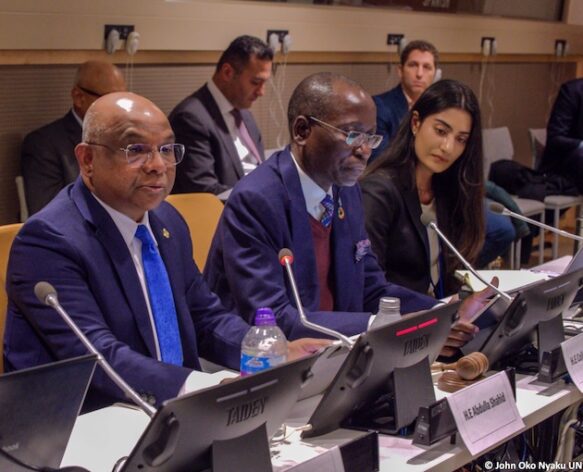
H.E. Abdulla Shahid (left), former President of the UN General Assembly, and Collen Kelapile (center), former UN ambassador to Botswana and former vice-president of the UN Economic and Social Council, speak as panelists at the launch event of ICO's flagship report. Credit: John Okyo Nyaku/UN

H.E. Abdulla Shahid (left), former President of the UN General Assembly, and Collen Kelapile (center), former UN ambassador to Botswana and former vice-president of the UN Economic and Social Council, speak as panelists at the launch event of ICO’s flagship report. Credit: John Okyo Nyaku/UN

UNITED NATIONS, Dec 9 2025 (IPS) – More than one year since its adoption, the UN Pact for the Future is held up as a critical framework for countries to address today’s issues through global cooperation. Its agenda for global governance and sustainable development is ambitious, and it is for this reason the Pact poses implementation challenges when it comes to the direct impact on local communities. It will require the joint efforts of governments, civil society and international organizations to achieve the goals laid out in the Pact.


The efforts of the International Communities Organisation (ICO), a UK-based international NGO, demonstrate what implementing the Pact would look like. Since 2016, ICO has worked to empower minority communities in conflict-affected areas through education and capacity-building opportunities. ICO focuses on directly supporting efforts to build up underrepresented groups’ involvement in community initiatives and diplomatic dialogue and address systemic, societal inequalities.

On December 3, ICO launched its flagship report, For Our Future: Best Practice for the Implementation of the UN Pact for the Future, at the UN Headquarters in New York, presenting a practical framework to support UN member states in advancing the objectives outlined in the Pact for the Future. Several Permanent Missions to the UN, including Bahrain, Guyana, Hungary, Kuwait, Samoa, Singapore, Tajikistan, Tonga, and Uganda, co-sponsored the event.

The UN Pact for the Future represents a shared set of global commitments to sustainable development, peace and security, and redefining global governance for member states. While its adoption marks a decisive moment of global consensus, there remains the challenge of translating the Pact’s guiding principles into meaningful action at the national and regional levels.  Through its ‘Best Practices’ blueprint, the ICO report distills their findings into an adaptable methodology designed to equip policymakers with the tools they need to implement the Pact’s goals effectively.

James Holmes, ICO founder and Secretary General, said, “The Pact reminds us that the strength of nations is measured not only by the power of their armies or the size of their economies, but also by the inclusiveness of their societies and the recognition of all who live within.” “How we treat minority peoples, those who are few in number, vulnerable, or historically marginal, is the true test of our progress and the true test of whether the fact for the future is being successful.”

H.E. Abdulla Shahid, ICO International Ambassador and former President of the 76th United Nations General Assembly, said it was crucial for the world to unite.

“The UN Pact for the Future calls for renewed unity in tackling humanity’s greatest challenges. This report demonstrates that lasting peace is built not only at negotiation tables but also through empowering communities themselves, ensuring that no group is left behind.”

“As UN Secretary-General António Guterres noted at the opening of the ‘Summit of the Future’ in September 2024, ‘21st-century challenges require 21st-century solutions: frameworks that are networked and inclusive and that draw on the expertise of all humanity.’

He added that the ICO’s report embodies this principle, showing how global aspirations can intersect with local action.

Prominent UN diplomats and civil society members were present at the launch event, demonstrating and remarking on their commitment to the Pact for the Future, and specifically to ICO’s work on the ground. Current and former high-ranking UN officials were also in attendance.

“One year after the adoption of the Pact, this discussion is timely,” said Themba Kalua, the UN Director, Pact for the Future Implementation Kalua remarked during the event. “While the world has grown more complex since the adoption of the Pact for the Future, the Pact continues to be central in realizing multilateralism, navigating the current geopolitical complexities and shaping our collective action on the global agenda.”

Kalua noted the efforts made by the UN system towards the Pact, including global panels on the governance of artificial intelligence (AI) and the political declarations that emerged from UN conferences on social development in Qatar and financing for development in Spain. He expressed that the Pact was a “strategic priority” for the UN and its Secretary-General, António Guterres.

“From our side in the UN system and the Secretariat, we are committed to doing our part in supporting the implementation of the Pact,” Kalua told IPS.

Presenting the report, ICO’s UN Programme Manager Mia Sawjani broke down its findings and recommendations. She emphasized that countries would need to empower and promote the agency of local actors. This includes building up their capacity and skills to enact positive change in their communities. Countries must recognize adaptability in assessing situations on the ground, particularly in conflict settings that transform institutions and structures.

“The implementation of the Pact can be tangibly realized for all, but particularly to serve marginalized communities. It’s a transformative opportunity and it is our collective responsibility to follow through,” said Sawjani.

After the event, Holmes was heartened by the outpouring of support for ICO’s work, noting that many more countries had agreed to partner with them for future projects. By maintaining their focus on working with minority communities, ICO can “play a major global role” in implementing the Pact for Future.

“I have a big vision, and I have a lot of ambition for ICO,” Holmes told IPS. “We already have a global team, and I see that growing, and I see us having a bigger and bigger role in helping to implement the Pact.”

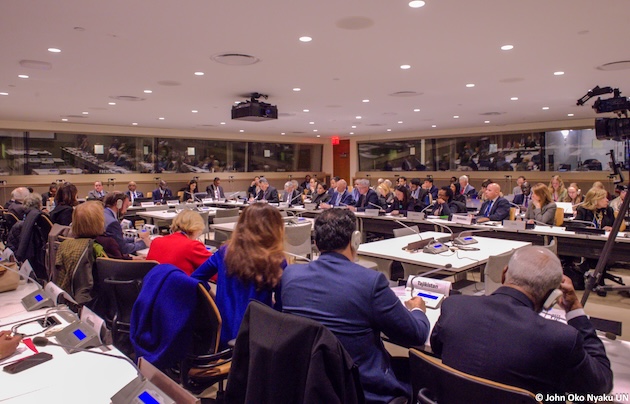
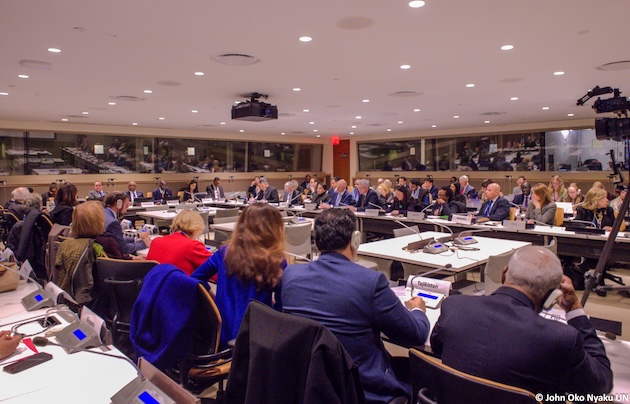
The launch event of ICO's flagship report on the UN Pact for the Future at UNHQ in New York. The event was attended by high-ranking UN diplomats. Credit: John Okyo Nyaku/UN

The launch event of ICO’s flagship report on the UN Pact for the Future at UNHQ in New York. The event was attended by high-ranking UN diplomats. Credit: John Okyo Nyaku/UN

Local actors and stakeholders, namely governments, academia, the private sector and civil society, would play a key role in implementing the Pact’s agenda. Organizations like ICO could serve as a bridge to translate the issues to the national context.

“The more we are able to bridge communities, the more successful it will be for states to deal with Track I diplomacy,” Shahid said to IPS, referencing the formal channel of diplomacy between governments on international issues.

Implementing the Pact for the Future must also mean recognizing the specific needs and challenges that these countries face. Island states like Samoa and Tonga, for example, are uniquely impacted by climate change, energy, and the global financial structures that need to better serve developing countries.

“For us in the Pacific, progress is measured not by rhetoric, but by real improvements that are felt in our villages, outer islands and vulnerable communities,” said Viliami Va’inga Tōnē, the Permanent Representative of Tonga.

Accountability and transparency will also be crucial to ensure countries follow through on the promises of the Pact. This must be present at all levels. Participants at the event emphasized the need for monitoring mechanisms that would measure progress.

The timing of the report coincides with the ongoing reform negotiations under the UN80 Initiative introduced this year. Discussions around the Pact went hand in hand with recognizing the critical step toward reforming the UN system that will optimize its ability to live up to its founding principles and the Pact’s promises.

If the Pact represents ‘what’ the UN and member states need to achieve in the global agenda, then UN80 represents ‘how’ the UN can implement the agenda.

“The UN80 initiative is really part of the UN response to how it can deliver on the ground,” said Fatumanava-o-Upolu III Dr. Pa’olelei Luteru, the Permanent Representative of Samoa. He said to IPS, “When you look at all the individual actions that need to be taken, these are at the global level, the UN [level], regional level, and national level. They’re all important, because we can’t continue to work in silence. Everything is interconnected now. So we need to make those connections and work together, and you don’t want duplication.”

While New York hosts reform discussions around the UN and its mandates, the organization’s impact will ultimately be felt by local communities across the world.

Dr. Agnes Mary Chimbiri-Molande, Permanent Representative of Malawi, told IPS that the people who serve in multilateral systems like the UN need to “renew or even rebuild trust” with local communities. At a time when people are questioning the UN’s relevance, she said, these discussions must be held and all perspectives need to be respected.

“We need to hear the voices of the local people. Because here we are working for them. We are not working for ourselves,” Chimbiri-Molande said. “So in fact, to be hearing the voices of those peoples, it’s very, very important to inform our work here, whether we are making an impact or we are making differences in the lives of the people in the community.”

Shahid reiterated that the decisions made in the halls of UN Headquarters will affect local communities, adding that the UN’s success is also contingent on its partnerships with civil society and how important it is for civil society to recognize the UN’s relevance.

During his time as President of the General Assembly from 2021-2022, the world was in the midst of the COVID-19 pandemic. His ‘presidency of hope’ championed the progress made by the international system despite the challenges brought on by the pandemic. He also made efforts to promote inclusivity by opening the General Assembly to more participants, including civil society groups.

Shahid invited young diplomats from underrepresented member states to the President’s office to witness international diplomacy firsthand.

Even after his presidency ended, he told IPS, he wanted to continue to deliver on the ideals that defined his tenure.

“I thought that there’s no need to end the presidency of hope after one year. Let us keep delivering the message of hope through other platforms. And ICO provides me the platform, because it is a platform through which I can actually reach out to communities at [the] household level and inspire them not to give up. Keep working, keep aiming to change the status.”

IPS UN Bureau Report

  Source

UN Pact for the Future Requires Global Solidarity and Localized Solutions

Civil Society, Development & Aid, Featured, Global, Headlines, Humanitarian Emergencies, Sustainable Development Goals, TerraViva United Nations

IPS UN: Inside the Glasshouse

H.E. Abdulla Shahid (left), former President of the UN General Assembly, and Collen Kelapile (center), former UN ambassador to Botswana and former vice-president of the UN Economic and Social Council, speak as panelists at the launch event of ICO's flagship report. Credit: John Okyo Nyaku/UN

H.E. Abdulla Shahid (left), former President of the UN General Assembly, and Collen Kelapile (center), former UN ambassador to Botswana and former vice-president of the UN Economic and Social Council, speak as panelists at the launch event of ICO’s flagship report. Credit: John Okyo Nyaku/UN

UNITED NATIONS, Dec 9 2025 (IPS) – More than one year since its adoption, the UN Pact for the Future is held up as a critical framework for countries to address today’s issues through global cooperation. Its agenda for global governance and sustainable development is ambitious, and it is for this reason the Pact poses implementation challenges when it comes to the direct impact on local communities. It will require the joint efforts of governments, civil society and international organizations to achieve the goals laid out in the Pact.


The efforts of the International Communities Organisation (ICO), a UK-based international NGO, demonstrate what implementing the Pact would look like. Since 2016, ICO has worked to empower minority communities in conflict-affected areas through education and capacity-building opportunities. ICO focuses on directly supporting efforts to build up underrepresented groups’ involvement in community initiatives and diplomatic dialogue and address systemic, societal inequalities.

On December 3, ICO launched its flagship report, For Our Future: Best Practice for the Implementation of the UN Pact for the Future, at the UN Headquarters in New York, presenting a practical framework to support UN member states in advancing the objectives outlined in the Pact for the Future. Several Permanent Missions to the UN, including Bahrain, Guyana, Hungary, Kuwait, Samoa, Singapore, Tajikistan, Tonga, and Uganda, co-sponsored the event.

The UN Pact for the Future represents a shared set of global commitments to sustainable development, peace and security, and redefining global governance for member states. While its adoption marks a decisive moment of global consensus, there remains the challenge of translating the Pact’s guiding principles into meaningful action at the national and regional levels.  Through its ‘Best Practices’ blueprint, the ICO report distills their findings into an adaptable methodology designed to equip policymakers with the tools they need to implement the Pact’s goals effectively.

James Holmes, ICO founder and Secretary General, said, “The Pact reminds us that the strength of nations is measured not only by the power of their armies or the size of their economies, but also by the inclusiveness of their societies and the recognition of all who live within.” “How we treat minority peoples, those who are few in number, vulnerable, or historically marginal, is the true test of our progress and the true test of whether the fact for the future is being successful.”

H.E. Abdulla Shahid, ICO International Ambassador and former President of the 76th United Nations General Assembly, said it was crucial for the world to unite.

“The UN Pact for the Future calls for renewed unity in tackling humanity’s greatest challenges. This report demonstrates that lasting peace is built not only at negotiation tables but also through empowering communities themselves, ensuring that no group is left behind.”

“As UN Secretary-General António Guterres noted at the opening of the ‘Summit of the Future’ in September 2024, ‘21st-century challenges require 21st-century solutions: frameworks that are networked and inclusive and that draw on the expertise of all humanity.’

He added that the ICO’s report embodies this principle, showing how global aspirations can intersect with local action.

Prominent UN diplomats and civil society members were present at the launch event, demonstrating and remarking on their commitment to the Pact for the Future, and specifically to ICO’s work on the ground. Current and former high-ranking UN officials were also in attendance.

“One year after the adoption of the Pact, this discussion is timely,” said Themba Kalua, the UN Director, Pact for the Future Implementation Kalua remarked during the event. “While the world has grown more complex since the adoption of the Pact for the Future, the Pact continues to be central in realizing multilateralism, navigating the current geopolitical complexities and shaping our collective action on the global agenda.”

Kalua noted the efforts made by the UN system towards the Pact, including global panels on the governance of artificial intelligence (AI) and the political declarations that emerged from UN conferences on social development in Qatar and financing for development in Spain. He expressed that the Pact was a “strategic priority” for the UN and its Secretary-General, António Guterres.

“From our side in the UN system and the Secretariat, we are committed to doing our part in supporting the implementation of the Pact,” Kalua told IPS.

Presenting the report, ICO’s UN Programme Manager Mia Sawjani broke down its findings and recommendations. She emphasized that countries would need to empower and promote the agency of local actors. This includes building up their capacity and skills to enact positive change in their communities. Countries must recognize adaptability in assessing situations on the ground, particularly in conflict settings that transform institutions and structures.

“The implementation of the Pact can be tangibly realized for all, but particularly to serve marginalized communities. It’s a transformative opportunity and it is our collective responsibility to follow through,” said Sawjani.

After the event, Holmes was heartened by the outpouring of support for ICO’s work, noting that many more countries had agreed to partner with them for future projects. By maintaining their focus on working with minority communities, ICO can “play a major global role” in implementing the Pact for Future.

“I have a big vision, and I have a lot of ambition for ICO,” Holmes told IPS. “We already have a global team, and I see that growing, and I see us having a bigger and bigger role in helping to implement the Pact.”

The launch event of ICO's flagship report on the UN Pact for the Future at UNHQ in New York. The event was attended by high-ranking UN diplomats. Credit: John Okyo Nyaku/UN

The launch event of ICO’s flagship report on the UN Pact for the Future at UNHQ in New York. The event was attended by high-ranking UN diplomats. Credit: John Okyo Nyaku/UN

Local actors and stakeholders, namely governments, academia, the private sector and civil society, would play a key role in implementing the Pact’s agenda. Organizations like ICO could serve as a bridge to translate the issues to the national context.

“The more we are able to bridge communities, the more successful it will be for states to deal with Track I diplomacy,” Shahid said to IPS, referencing the formal channel of diplomacy between governments on international issues.

Implementing the Pact for the Future must also mean recognizing the specific needs and challenges that these countries face. Island states like Samoa and Tonga, for example, are uniquely impacted by climate change, energy, and the global financial structures that need to better serve developing countries.

“For us in the Pacific, progress is measured not by rhetoric, but by real improvements that are felt in our villages, outer islands and vulnerable communities,” said Viliami Va’inga Tōnē, the Permanent Representative of Tonga.

Accountability and transparency will also be crucial to ensure countries follow through on the promises of the Pact. This must be present at all levels. Participants at the event emphasized the need for monitoring mechanisms that would measure progress.

The timing of the report coincides with the ongoing reform negotiations under the UN80 Initiative introduced this year. Discussions around the Pact went hand in hand with recognizing the critical step toward reforming the UN system that will optimize its ability to live up to its founding principles and the Pact’s promises.

If the Pact represents ‘what’ the UN and member states need to achieve in the global agenda, then UN80 represents ‘how’ the UN can implement the agenda.

“The UN80 initiative is really part of the UN response to how it can deliver on the ground,” said Fatumanava-o-Upolu III Dr. Pa’olelei Luteru, the Permanent Representative of Samoa. He said to IPS, “When you look at all the individual actions that need to be taken, these are at the global level, the UN [level], regional level, and national level. They’re all important, because we can’t continue to work in silence. Everything is interconnected now. So we need to make those connections and work together, and you don’t want duplication.”

While New York hosts reform discussions around the UN and its mandates, the organization’s impact will ultimately be felt by local communities across the world.

Dr. Agnes Mary Chimbiri-Molande, Permanent Representative of Malawi, told IPS that the people who serve in multilateral systems like the UN need to “renew or even rebuild trust” with local communities. At a time when people are questioning the UN’s relevance, she said, these discussions must be held and all perspectives need to be respected.

“We need to hear the voices of the local people. Because here we are working for them. We are not working for ourselves,” Chimbiri-Molande said. “So in fact, to be hearing the voices of those peoples, it’s very, very important to inform our work here, whether we are making an impact or we are making differences in the lives of the people in the community.”

Shahid reiterated that the decisions made in the halls of UN Headquarters will affect local communities, adding that the UN’s success is also contingent on its partnerships with civil society and how important it is for civil society to recognize the UN’s relevance.

During his time as President of the General Assembly from 2021-2022, the world was in the midst of the COVID-19 pandemic. His ‘presidency of hope’ championed the progress made by the international system despite the challenges brought on by the pandemic. He also made efforts to promote inclusivity by opening the General Assembly to more participants, including civil society groups.

Shahid invited young diplomats from underrepresented member states to the President’s office to witness international diplomacy firsthand.

Even after his presidency ended, he told IPS, he wanted to continue to deliver on the ideals that defined his tenure.

“I thought that there’s no need to end the presidency of hope after one year. Let us keep delivering the message of hope through other platforms. And ICO provides me the platform, because it is a platform through which I can actually reach out to communities at [the] household level and inspire them not to give up. Keep working, keep aiming to change the status.”

IPS UN Bureau Report

  Source

COP30 Was Diplomacy in Action as Cooperation Deepens—Says Climate Talks Observer

Active Citizens, Civil Society, Climate Change Finance, Climate Change Justice, COP30, Development & Aid, Editors’ Choice, Environment, Featured, Gender, Humanitarian Emergencies, Sustainable Development Goals, TerraViva United Nations, Women & Climate Change | Analysis

COP30


These processes are all about people. We should never lose our humanity in the process. There should not be a ‘COP of the people’ pitted against a ‘COP of negotiators.’ We need to approach COP jointly as a conference of the people, by the people, and for people. —Yamide Dagnet, NRDC’s Senior Vice President, International

Yamide Dagnet, Senior Vice President, International at the Natural Resources Defense Council. Credit: Joyce Chimbi/IPS

Yamide Dagnet, Senior Vice President, International at the Natural Resources Defense Council. Credit: Joyce Chimbi/IPS

BELÉM, Brazil, Nov 24 2025 (IPS) – As observers at the Conference of Parties closely monitored proceedings in Belém, many, such as Yamide Dagnet, approached the UN Climate Summit as an implementation COP. They are advocating for tangible signals to ignite crucial climate action before the climate crisis reaches irreversible levels.


For Dagnet, Senior Vice President International at the Natural Resources Defense Council (NRDC), it is an all hands-on deck situation where talks need to turn into action on the ground, which in turn must inform the acceleration expected from the negotiations.

“As COP focuses more on how we do things, we know the stakes will be more complex,” said Dagnet. “This is why the Paris Agreement set up improvement five-year-policy cycles, acknowledging that we might not get it right the first time, despite good intentions, and in view of possible unintended consequences and trade-offs.”

As a former negotiator now overseeing the international program at NRDC, an international nonprofit environmental organization that uses science, law, convening, and advocacy to mobilize a wide range of stakeholders to safeguard the Earth, Dagnet understands all too well how difficult the task ahead will be.

She points out that with increased geopolitical headwinds and development remaining front and center for countries around the globe, “we are not dealing just with a climate COP but a socio-economic COP.” To succeed, the multilateral process and climate action need to be designed in a way that is just, inclusive, and participatory.

Like many other observers, Dagnet believes that cooperation among nations and across regions is still moving in the right direction despite the United States’ withdrawal from the Paris Agreement.

“This COP was about diplomacy in action. Only one country has withdrawn from the Paris Agreement; the rest broadly remain on course. There are many issues that will make or break this conference, including the matter of scaling up finance for adaptation and for limiting loss and damage due to climate change. To manage these challenges, you need to measure, and to measure, you need to be guided by indicators, especially those that actually help us to move from just risk and vulnerability assessments to opportunity frameworks and value creation.”

But mobilization cannot be left to the government alone, she cautions.

“It requires support from multilateral and domestic financial institutions, as well as private capital investment. The private sector has for far too long seen climate finance for adaptation as an investment that brings no financial or economic returns. But the tide is changing. Insurance companies, asset managers, pension funds, commercial development, and small and medium companies realize it is an imperative to address adaptation. We need to amplify and demonstrate how there are a multitude of financial resources that could be saved through adaptation,” says Dagnet.

The need of the hour is to design investment as well as financial and insurance models that work for climate scenarios. Insurance business models are largely based on making money from what the company believes is unlikely to happen or happens rarely.  Such is not the case when it comes to climate disasters, which there are going to be a lot more of.

A COP at the mouth of the Amazon and the proximity to the world’s largest tropical forest is not only symbolic but also provides the context to find new ways to value nature and attract funding to make nature and the people who depend on it, more resilient

Addressing whether the intense activism and lobbying at COP30 translated to shaping negotiation outcomes, Dagnet reminds us that the lobbyists from the fossil fuel industry have felt threatened by the Paris Agreement and are worried about the inevitable journey towards greener economies, something that challenges their business model.

“Over the past 10 years, lobbyists have become very good at using these spaces to delay transition,” added Dagnet. Analysis reveals one in 25 of COP30 participants represent the fossil fuel industry, with over 1600 lobbyists given access.

Sonia Guajajara, Minister for Indigenous Peoples of Brazil attends the "Global March: The Answer is Us" during the 30th Conference of the Parties (COP30). Credit: Hermes Caruzo/COP30

Sonia Guajajara, Minister for Indigenous Peoples of Brazil attends the “Global March: The Answer is Us” during the 30th Conference of the Parties (COP30). Credit: Hermes Caruzo/COP30

Indigenous-led protests in Belem have consistently called for climate action and justice, as well as fossil fuel phase-outs and a halt to deforestation. Dagnet has frequent interactions with the Indigenous People, especially women, in Brazil. This includes Puyr Tembe, the first Indigenous woman to head a state secretariat in Pará; Joenia Wapichana, current president of the National Commission for the Defense of the Rights of Indigenous Peoples; Sonia Guajajara, who followed in Wapichana’s steps; and Indigenous leader Célia Xakriabá.

Dagnet stresses the importance of ensuring the protection of these environmental and human rights guardians. Add to that, she pushes for the need to amplify their stories, told in their own words with their voices. She believes that the world has a lot to learn from indigenous communities about living in harmony with nature and also about the increasing and complex threats they face that often cost them their lives.

Dagnet also highlights that climate talks and actions must be inclusive, and no one should be left behind, least of all women, local communities, and indigenous people, who want to be at the table rather than on the menu. “We need to engage with them in a meaningful way and move beyond tokenism,” she says.

NRDC has been integrating gender equity into its environmental initiatives, especially in India. Their multifaceted approach includes promoting women’s economic agency. Implemented through partnerships with organizations like Self-Employed Women’s Association (SEWA) in India, NRDC fosters women’s access to clean energy in rural communities, helping them replace diesel water pumps with solar-powered ones, enabling clean cooking through biogas plants, and providing access to clean transportation. “This has helped increase their household income, improve health, save time and money, and position them as clean-energy leaders in their communities,” says Dagnet.

More recently, NRDC has identified finance as the connecting thread to various complex issues driven by climate change. At COP30, NRDC launched the Fostering Investable National Planning and Implementation (FINI) for Adaptation and Resilience collaborative in partnership with the Atlantic Council’s Climate Resilience Center. FINI connects capital to climate solutions. It is a collaborative effort to unite 100 organizations, including governments, philanthropies, investors, civil society, and more, to develop pipelines of USD 1 trillion worth of investments by 2028 for adaptation and resilience projects that will support countries and communities on the frontlines of the climate crisis.

When all is said and done at COP, with the negotiations, diplomacy, lobbying, and activism, Dagnet says, “These processes are all about people. We should never lose our humanity in the process. There should not be a ‘COP of the people’ pitted against a ‘COP of negotiators.’ We need to approach COP jointly as a conference of the people, by the people, and for people.”

IPS UN Bureau Report

  Source