Explainer: Inside COP30’s 11th Hour Negotiations for Legacy-Building Belém Climate Deal

Climate Action, Climate Change, Climate Change Finance, Climate Change Justice, Conferences, COP30, Editors’ Choice, Environment, Featured, Global, Headlines, Human Rights, Humanitarian Emergencies, Latin America & the Caribbean, Sustainable Development Goals, TerraViva United Nations
COP30


The COP30 Presidency is urging all “negotiators to join in a true mutirão—a collective mobilization of minds, hearts, and hands,” saying this approach helps “accelerate the pace, bridge divides, and focus not on what separates us, but on what unites us in purpose and humanity.”

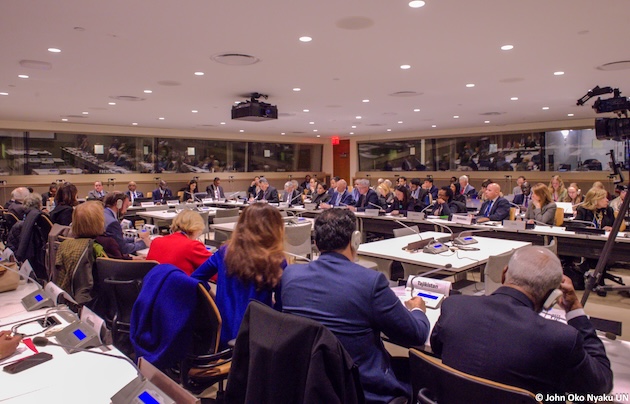
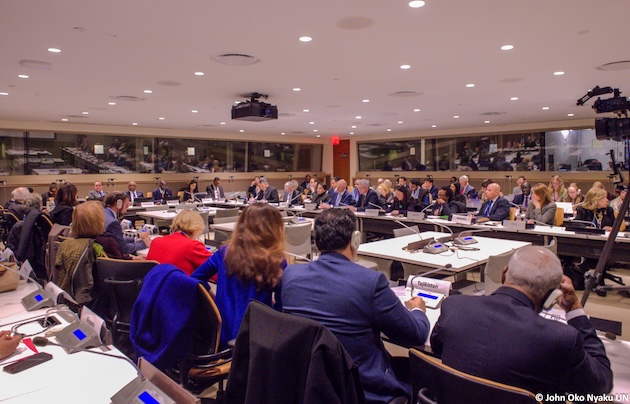
Negotiations take place throughout the day and now late into the night. Credit: UN Climate Change/Kiara Worth

Negotiations take place throughout the day and now late into the night. Credit: UN Climate Change/Kiara Worth

BELÉM, Brazil, Nov 19 2025 (IPS) – At a Conference of the Parties, where science intersects with politics, reaching agreements is often a tricky business. What is inside the last-minute negotiations as the COP presidency tries to get the parties to agreement at the final plenary?


COP negotiators are diplomats and government officials who meet at the Conference of the Parties to negotiate and agree on how to address climate change. They are also often joined by COP delegates’ representatives from civil society, social movements and businesses.

As representatives of their respective countries that are parties to the UNFCCC treaty, they discuss, debate, and haggle over their preferred wording of texts and legally binding agreements regarding how to address climate change during closed-door sessions.

Windowless Closed-Door Meetings

These closed-door meetings are often also windowless, and negotiators often lose track of time as they work through extensive documentation and diverse national positions to form a final agreement towards the end of the COP summit schedule.

COP 30, Belém, is posting a daily photographic glimpse into the collective effort to build trust, dialogue, and cooperation to accelerate meaningful climate action and deliver its benefits to all. Many hope this message will permeate inside these rooms.

The UN climate summit has now entered its final stages. The Brazilian COP30 Presidency has extended working hours, scheduling late-night meetings for the last two nights—Monday and Tuesday, Nov 17 and 18, 2025.

Tonight might not be any different, as the COP30 Presidency pushes for a rapid compromise and conclusion of a significant part of negotiations to pave the way for a “plenary to gavel the Belém political package.”

After all, the COP is where the science of the Paris Agreement intersects with politics.

The Elusive True Mutirão 

The COP30 Presidency is urging all “negotiators to join in a true mutirão—a collective mobilization of minds, hearts, and hands,” saying this approach helps “accelerate the pace, bridge divides, and focus not on what separates us, but on what unites us in purpose and humanity.”

But this is the point in the negotiations, even in a ‘COP of truth,’ as COP30 was staged to be, where the real claws come out amid accusations of protectionism, trade tensions and geopolitical dynamics as the worlds of business, politics and human survival intersect.

Even as UN officials urge parties to accelerate the pace, warning that “tactical delays and procedural obstructions are no longer tenable” and that deferring challenging issues to overtime results in collective loss, reconciling deep differences among nations is proving easier said than done even within the Global Mutirão—a concept championed by the COP30 presidency.

It calls for worldwide collective action on climate change, inspired by the Brazilian and Indigenous Tupi-Guarani tradition of mutirão, which means “collective effort.” The bone of contention at this juncture is what some parties see as weak climate commitments, insufficient financial pledges from the global North to South, and trade measures.

Protectionism

Trade measures are turning contentious and deeply debatable in Belém because of a difference of perspective—developing countries view them as protectionism, while some developed countries see them as necessary to level the playing field for their climate policies.

For developing countries, protectionism is a deliberate strategy by more developed countries to limit imports to protect their industries from foreign competition and therefore give them an undue advantage.  Developing nations say this is unfair because it restricts their ability to export and gain access to larger markets.

The core of the debate at COP30 is the inclusion of issues like the EU’s Carbon Border Adjustment Mechanism (CBAM) in climate talks. For some countries, CBAM is a direct part of climate action and belongs at COP. Others say it is an agenda best discussed at the World Trade Organization.

The EU’s Carbon Border Adjustment Mechanism (CBAM) is a tool to put a price on the carbon emissions of certain imported goods, ensuring that the carbon price for imports is equivalent to that for domestic EU production. Its main goals are to prevent “carbon leakage,” or companies moving production to countries with weaker climate policies, encourage cleaner production globally, and protect EU businesses by creating a level playing field.

How to Go About a Just Transition?

The business of climate change is not the only thing that is complex and divisive. There are also small island states calling for rapid emissions cuts vis-à-vis the positions of major emerging economies. G77 and China are an intergovernmental coalition of 134 developing countries that work together to promote their collective economic and developmental interests within the United Nations framework.

China is not an official member and does not pay dues. It has been a partner since 1976, providing significant financial support and political backing to the G77. Developed countries such as the UK, Norway, Japan, and Australia are pushing back against their proposed global just transition, thereby prolonging the negotiations.

Developed nations are refusing the global just transition proposal by the G77 and China because they see it as a new and unnecessary mechanism and a duplication of existing structures. They refuse to accept the financial and technical support these countries are asking for to facilitate this transition. Simply put, they want a less strict framework that allows their own interpretations of existing institutions and funding structures for the just transition.

Where is the Adaptation Financing?

Finance for adaptation is similarly a sticking point. Developed nations are dragging their feet around committing sufficient funds to support developing nations to adapt to climate impacts and transition their energy systems. It is still not clear whether financial commitments will be embedded inside adaptation goals or remain as they are—separate.

Lobbyists and the Fossil Fuel Debate

Amidst growing tensions, it is also not clear whether this COP will phase out or phase down fossil fuels in the final agreement. The large delegation of fossil fuel lobbyists suggests it is too early to call. On the Global Goal on Adaptation (GGA), those who want indicators for measuring adaptation progress directly linked to financial commitments will not budge. The settlement of this matter could potentially take two years (or more).

Disagreements are ongoing about the mandate of the Mitigation Work Program, which seeks to raise ambitions on national emissions reduction. In general, insiders to the negotiations are saying general negotiation tactics are at play.

Some participants are employing delay tactics to buy time and ultimately weasel out of certain commitments; a lack of trust continues, as it has in previous COPs, along with generally slow progress on building consensus around various contentious issues.

This feature is published with the support of Open Society Foundations.


IPS UN Bureau Report


Faith Leaders Endorse Fossil Fuel Non-Proliferation Treaty at COP30

Active Citizens, Africa, Civil Society, Climate Change, Climate Change Justice, Conferences, COP30, Editors’ Choice, Featured, Headlines, Human Rights, Humanitarian Emergencies, Latin America & the Caribbean, North America, Religion, Sustainable Development Goals, TerraViva United Nations

COP30


Some of you might be shocked that even though fossil fuels are 86 percent of the cause of climate change, it took 28 years before the words ‘fossil fuels’ could even be mentioned in the COP document. It is as absurd as Alcoholics Anonymous holding 28 years of conferences before they get the backbone to mention alcohol in an outcome document. —Kumi Naidoo, President of the Fossil Fuel Non-Proliferation Treaty

Kumi Naidoo with Brazilian First Lady Janja Lula da Silva and Brazilian Cultural Minister Margareth Menezes and others at a panel, “Narratives and Storytelling to Face the Climate Crisis” during the 30th Conference of the Parties (COP30). Credit: Aline Massuda/COP30

Kumi Naidoo with Brazilian First Lady Janja Lula da Silva and Brazilian Cultural Minister Margareth Menezes and others at a panel called “Narratives and Storytelling to Face the Climate Crisis” during the 30th Conference of the Parties (COP30). Credit: Aline Massuda/COP30

BELÉM, Brazil, Nov 18 2025 (IPS) – Decades ago, a little girl was born in a place called Cleveland, Ohio, in the heart of the United States of America. Born to a woman from the deep South, the place of Martin Luther King, her mother left her ancestral lands for the economic opportunities in the north.


“Off she went, making it all the way to the east side of Cleveland,” says Rev. Dr. Angelique Walker-Smith. “To the place where most people who look like me lived, and still live, and are subjected to policies of injustice, race and gender.”

Here, she found a more pressing issue.

“I couldn’t breathe, my mother couldn’t breathe, and we all couldn’t breathe,” she narrates.

This urbanization, driven by fossil fuels, occurred in Cleveland, Ohio, where her mother relocated and where her relatives still live today. During the Great Migration, over six million people of African descent traveled from the South, believing that economic opportunities would be better in the North.

Rev. Dr Angelique Walker-Smith, regional president of the World Council of Churches, speaks at an event titled ‘Faith for Fossil Free Future.’ Credit: IPS

Rev. Dr Angelique Walker-Smith, regional president of the World Council of Churches, speaks at an event titled ‘Faith for Fossil Free Future.’ Credit: IPS

“Upon our arrival, we discovered that we just couldn’t breathe.”

As one of eight regional presidents representing the World Council of Churches, Walker-Smith says for the World Council of Churches in over 105 countries, over 350 million adherents, and over 350 national churches all over the world, supporting the Fossil Fuel Non-Proliferation Treaty “is all about the issue of injustice, life and life more abundantly.”

“We are saying yes to the transition from fossil fuels to renewable life-giving energy.”

Kumi Naidoo, a prominent South African human rights and environmental justice activist and the President of the Fossil Fuel Non-Proliferation Treaty, says if the goal is renewable life-giving energy, the world has been going the wrong way for the past 30 years.

“If you come home from work and see water coming from the bathroom, you pick up the mop. But then you realized you left the tap running and the sink stopper on. What will you do first? Of course! You’ll turn off the water and pull the stopper. You will not start mopping the floor first.”

“For 30 years since the time science told us we need to change our energy system and many of our other systems, what we’ve been doing is mopping up the floor. If fossil fuels—oil, coal, and gas—account for 86 percent of what drives climate change, then we must turn off the tap.”

Masahiro Yokoyama was speaking at an event titled Faith for a Fossil-Free Future co-sponsored by Soka Gakkai International. Credit: Joyce Chimbi/IPS

Masahiro Yokoyama was speaking at an event titled Faith for a Fossil-Free Future co-sponsored by Soka Gakkai International. Credit: Joyce Chimbi/IPS

Naidoo was speaking at an event titled ‘Faith for Fossil Free Future’ co-sponsored by several organizations, including Soka Gakkai International (SGI), Laudato Si’ Movement, GreenFaith—a global interfaith environmental coalition and EcoJudaism, a Jewish charity leading the UK Jewish Community’s response to the climate and nature crisis.

He spoke about the contradiction of the climate talks at the doorsteps of the Amazon, while licensing for drilling is still ongoing in the Amazon even as the people in the Amazon protest, calling for a fossil-free Amazon.

Continuing with the thread of contradictions, Naidoo said, “Some of you might be shocked that even though fossil fuels are 86 percent of the cause of climate change, it took 28 years before the words ‘fossil fuels’ could even be mentioned in the COP document. It is as absurd as Alcoholics Anonymous holding 28 years of conferences before they get the backbone to mention alcohol in an outcome document.

If we continue on this path, we’ll warm up the planet to the point where we destroy our soil and water, and it becomes so hot we can’t plant food. The end result is that we’ll be gone. The planet will still be here. And the good news is, once we become extinct as a species, the forests will grow back, and the oceans will recover.

“And actually, staying with that analogy, can you imagine how absurd it is that the largest delegation to this COP this year, last year, and every year is not even the host country?

“It’s not even Brazil—for every 25 delegates that are attending the COP, one of them is from the fossil fuel industry. That’s the equivalent of Alcoholics Anonymous having the largest delegation to its conference annually from the alcohol industry.”

People, groups and movements of different faiths and consciousness are increasingly raising their voices in robust support of a rapid fossil fuel phase-out, a massive and equitable upsurge in renewable energy, and the resources to make it happen—in the form of a Fossil Fuel Non-Proliferation Treaty.

Naidoo says the treaty is “a critical success ingredient for us not (only) to save the planet, but to secure our children and their children’s future, reminding ourselves that the planet does not need any saving.

“If we continue on this path, we warm up the planet to the point where we destroy our soil and water, and it becomes so hot we can’t plant food. The end result is that we’ll be gone. The planet will still be here. And the good news is, once we become extinct as a species, the forests will grow back, and the oceans will recover.”

This treaty is a proposed global agreement to halt the expansion of new fossil fuel exploration and production and to phase out existing sources like coal, oil, and gas in a just and equitable manner.

The initiative seeks to provide a legal framework to complement the Paris Agreement by directly addressing the supply side of fossil fuels.

Its ultimate goal is to support a global transition to renewable energy and is supported by a growing coalition of countries, cities, organizations, scientists, and activists. More importantly, it has multi-faith support.

Masahiro Yokoyama of the SGI, which is a diverse global community of individuals in 192 countries and territories who practice Nichiren Buddhism, spoke about the intersection between faith and energy transition and why the fossil fuel phase-out cannot wait.

“The just transition is also about how young people in faith can be the driving force to transformations.”

“So, a fossil fuel non-proliferation treaty, in my view, is not only about phasing out other fossil fuels but it also represents an ethical framework.”

“It’s a way to move forward while protecting people’s livelihoods and dignity within the context of the environment and also the local business and economies. So, a just transition is not merely a technical issue but a question of ethics, inclusion and solidarity,” Masahiro Yokoyama said.

The most pressing issue at hand is how to implement the treaty in the current environmental context.

“The pathway that we are following is a pathway that has been followed before. We are not going to negotiate this treaty within the COP or within the United Nations system. We’re going to do what the Landmine Treaty did.

“The landmine treaty was negotiated by 44 countries outside of the UN system and then brought to the UN General Assembly for ratification. The second question that people ask, justifiably, is, what about the powerful exporting countries, for example?” Naidoo asked.

“They’re not going to sign it. And to that we find answers in the landmine treaty. Up to today, the United States, Russia and China have not signed the Landmine treaty. But once the treaty was signed, the social license to continue as business as usual was taken away. And you saw a drastic change.”

Note: This article is brought to you by IPS Noram in collaboration with INPS Japan and Soka Gakkai International in consultative status with ECOSOC.

IPS UN Bureau Report

  Source

Faith Leaders Endorse Fossil Fuel Non-Proliferation Treaty at COP30

Active Citizens, Africa, Civil Society, Climate Change, Climate Change Justice, Conferences, COP30, Editors’ Choice, Featured, Headlines, Human Rights, Humanitarian Emergencies, Latin America & the Caribbean, North America, Religion, Sustainable Development Goals, TerraViva United Nations

COP30


Some of you might be shocked that even though fossil fuels are 86 percent of the cause of climate change, it took 28 years before the words ‘fossil fuels’ could even be mentioned in the COP document. It is as absurd as Alcoholics Anonymous holding 28 years of conferences before they get the backbone to mention alcohol in an outcome document. —Kumi Naidoo, President of the Fossil Fuel Non-Proliferation Treaty

Kumi Naidoo with Brazilian First Lady Janja Lula da Silva and Brazilian Cultural Minister Margareth Menezes and others at a panel, “Narratives and Storytelling to Face the Climate Crisis” during the 30th Conference of the Parties (COP30). Credit: Aline Massuda/COP30

Kumi Naidoo with Brazilian First Lady Janja Lula da Silva and Brazilian Cultural Minister Margareth Menezes and others at a panel called “Narratives and Storytelling to Face the Climate Crisis” during the 30th Conference of the Parties (COP30). Credit: Aline Massuda/COP30

BELÉM, Brazil, Nov 18 2025 (IPS) – Decades ago, a little girl was born in a place called Cleveland, Ohio, in the heart of the United States of America. Born to a woman from the deep South, the place of Martin Luther King, her mother left her ancestral lands for the economic opportunities in the north.


“Off she went, making it all the way to the east side of Cleveland,” says Rev. Dr. Angelique Walker-Smith. “To the place where most people who look like me lived, and still live, and are subjected to policies of injustice, race and gender.”

Here, she found a more pressing issue.

“I couldn’t breathe, my mother couldn’t breathe, and we all couldn’t breathe,” she narrates.

This urbanization, driven by fossil fuels, occurred in Cleveland, Ohio, where her mother relocated and where her relatives still live today. During the Great Migration, over six million people of African descent traveled from the South, believing that economic opportunities would be better in the North.

Rev. Dr Angelique Walker-Smith, regional president of the World Council of Churches, speaks at an event titled ‘Faith for Fossil Free Future.’ Credit: IPS

Rev. Dr Angelique Walker-Smith, regional president of the World Council of Churches, speaks at an event titled ‘Faith for Fossil Free Future.’ Credit: IPS

“Upon our arrival, we discovered that we just couldn’t breathe.”

As one of eight regional presidents representing the World Council of Churches, Walker-Smith says for the World Council of Churches in over 105 countries, over 350 million adherents, and over 350 national churches all over the world, supporting the Fossil Fuel Non-Proliferation Treaty “is all about the issue of injustice, life and life more abundantly.”

“We are saying yes to the transition from fossil fuels to renewable life-giving energy.”

Kumi Naidoo, a prominent South African human rights and environmental justice activist and the President of the Fossil Fuel Non-Proliferation Treaty, says if the goal is renewable life-giving energy, the world has been going the wrong way for the past 30 years.

“If you come home from work and see water coming from the bathroom, you pick up the mop. But then you realized you left the tap running and the sink stopper on. What will you do first? Of course! You’ll turn off the water and pull the stopper. You will not start mopping the floor first.”

“For 30 years since the time science told us we need to change our energy system and many of our other systems, what we’ve been doing is mopping up the floor. If fossil fuels—oil, coal, and gas—account for 86 percent of what drives climate change, then we must turn off the tap.”

Masahiro Yokoyama was speaking at an event titled Faith for a Fossil-Free Future co-sponsored by Soka Gakkai International. Credit: Joyce Chimbi/IPS

Masahiro Yokoyama was speaking at an event titled Faith for a Fossil-Free Future co-sponsored by Soka Gakkai International. Credit: Joyce Chimbi/IPS

Naidoo was speaking at an event titled ‘Faith for Fossil Free Future’ co-sponsored by several organizations, including Soka Gakkai International (SGI), Laudato Si’ Movement, GreenFaith—a global interfaith environmental coalition and EcoJudaism, a Jewish charity leading the UK Jewish Community’s response to the climate and nature crisis.

He spoke about the contradiction of the climate talks at the doorsteps of the Amazon, while licensing for drilling is still ongoing in the Amazon even as the people in the Amazon protest, calling for a fossil-free Amazon.

Continuing with the thread of contradictions, Naidoo said, “Some of you might be shocked that even though fossil fuels are 86 percent of the cause of climate change, it took 28 years before the words ‘fossil fuels’ could even be mentioned in the COP document. It is as absurd as Alcoholics Anonymous holding 28 years of conferences before they get the backbone to mention alcohol in an outcome document.

If we continue on this path, we’ll warm up the planet to the point where we destroy our soil and water, and it becomes so hot we can’t plant food. The end result is that we’ll be gone. The planet will still be here. And the good news is, once we become extinct as a species, the forests will grow back, and the oceans will recover.

“And actually, staying with that analogy, can you imagine how absurd it is that the largest delegation to this COP this year, last year, and every year is not even the host country?

“It’s not even Brazil—for every 25 delegates that are attending the COP, one of them is from the fossil fuel industry. That’s the equivalent of Alcoholics Anonymous having the largest delegation to its conference annually from the alcohol industry.”

People, groups and movements of different faiths and consciousness are increasingly raising their voices in robust support of a rapid fossil fuel phase-out, a massive and equitable upsurge in renewable energy, and the resources to make it happen—in the form of a Fossil Fuel Non-Proliferation Treaty.

Naidoo says the treaty is “a critical success ingredient for us not (only) to save the planet, but to secure our children and their children’s future, reminding ourselves that the planet does not need any saving.

“If we continue on this path, we warm up the planet to the point where we destroy our soil and water, and it becomes so hot we can’t plant food. The end result is that we’ll be gone. The planet will still be here. And the good news is, once we become extinct as a species, the forests will grow back, and the oceans will recover.”

This treaty is a proposed global agreement to halt the expansion of new fossil fuel exploration and production and to phase out existing sources like coal, oil, and gas in a just and equitable manner.

The initiative seeks to provide a legal framework to complement the Paris Agreement by directly addressing the supply side of fossil fuels.

Its ultimate goal is to support a global transition to renewable energy and is supported by a growing coalition of countries, cities, organizations, scientists, and activists. More importantly, it has multi-faith support.

Masahiro Yokoyama of the SGI, which is a diverse global community of individuals in 192 countries and territories who practice Nichiren Buddhism, spoke about the intersection between faith and energy transition and why the fossil fuel phase-out cannot wait.

“The just transition is also about how young people in faith can be the driving force to transformations.”

“So, a fossil fuel non-proliferation treaty, in my view, is not only about phasing out other fossil fuels but it also represents an ethical framework.”

“It’s a way to move forward while protecting people’s livelihoods and dignity within the context of the environment and also the local business and economies. So, a just transition is not merely a technical issue but a question of ethics, inclusion and solidarity,” Masahiro Yokoyama said.

The most pressing issue at hand is how to implement the treaty in the current environmental context.

“The pathway that we are following is a pathway that has been followed before. We are not going to negotiate this treaty within the COP or within the United Nations system. We’re going to do what the Landmine Treaty did.

“The landmine treaty was negotiated by 44 countries outside of the UN system and then brought to the UN General Assembly for ratification. The second question that people ask, justifiably, is, what about the powerful exporting countries, for example?” Naidoo asked.

“They’re not going to sign it. And to that we find answers in the landmine treaty. Up to today, the United States, Russia and China have not signed the Landmine treaty. But once the treaty was signed, the social license to continue as business as usual was taken away. And you saw a drastic change.”

Note: This article is brought to you by IPS Noram in collaboration with INPS Japan and Soka Gakkai International in consultative status with ECOSOC.

IPS UN Bureau Report

  Source

Belém’s Hunger, Poverty Declaration Places World’s Most Vulnerable Populations at Centre of Global Climate Policy

Active Citizens, Africa, Aid, Artificial Intelligence, Asia-Pacific, Civil Society, Climate Action, Climate Change, COP30, Development & Aid, Editors’ Choice, Featured, Food and Agriculture, Food Systems, Global, Headlines, Humanitarian Emergencies, Latin America & the Caribbean, TerraViva United Nations, Trade & Investment

Food Systems


If we do not have our land and healthy territory, we do not have healthy food, and without food we do not survive. Food must become a centerpiece in the global climate discourse, and it is not just about any food, but healthy food that aligns with our ancestry and local traditions and spirituality. —Juliana Kerexu Mirim Mariano, activist

Juliana Kerexu Mirim Mariano, coordinator for the Guarani Yvyrupa Commission that advocates for the rights of Guarani peoples in southern and southeastern Brazil. Credit: Joyce Chimbi/IPS

Juliana Kerexu Mirim Mariano, coordinator for the Guarani Yvyrupa Commission that advocates for the rights of Guarani peoples in southern and southeastern Brazil. Credit: Joyce Chimbi/IPS

BELÉM, Brazil, Nov 14 2025 (IPS) – A young woman at COP30 speaks about retracing her father’s footsteps. At only 16, her father and her grandfather were among the first families displaced by an unfolding climatic crisis of erratic weather and worsening climate conditions that goes on to date from their ancestral village in Sundarbans. Nearly 60 years later, she is on a mission to reclaim her ancestral lands.


The Sundarbans is the world’s largest mangrove forest, located on the delta of the Ganges, Brahmaputra, and Meghna rivers in the Bay of Bengal, straddling the border of India and Bangladesh.

This complex ecosystem is a vital habitat for the Royal Bengal tiger and other wildlife, while also providing critical ecosystem services like storm protection and livelihoods for millions of people. It is a UNESCO World Heritage Site and faces threats from climate change, rising sea levels, and human activities.

She said farming activities in the Sundarbans have been severely disrupted and degraded by environmental changes, primarily increased soil and water salinity, more frequent and intense cyclones, and sea-level rise. These factors have led to a decline in crop productivity, changes in traditional farming patterns, and a shift in livelihoods towards aquaculture and migration.

But the Sundarbans do not stand alone. From across the global South, delegates are speaking about their shared tragedies of weather patterns out of joint with their farming systems.

Juliana Kerexu Mirim Mariano, the coordinator of the Guarani Yvyrupa Commission, told IPS her organization advocates “for the rights of Guarani peoples in southern and southeastern Brazil, particularly the recovery of their ancestral lands in the Atlantic Forest.

The Belém Declaration on Hunger, Poverty, and Human-Centered Climate Action, launched during the COP30 Leaders Summit, places the world’s most vulnerable populations at the center of global climate policy. Credit: Joyce Chimbi/IPS

The Belém Declaration on Hunger, Poverty, and Human-Centered Climate Action, launched during the COP30 Leaders Summit, places the world’s most vulnerable populations at the center of global climate policy. Credit: Joyce Chimbi/IPS

“Its mission is to organize a political struggle for land demarcation, which is vital for preserving cultural traditions and way of life. The commission works to secure land rights, and its efforts align with the preservation of the Atlantic Forest biome, as the Guarani have lived in the region for centuries and their culture is deeply connected to its biodiversity.”

“Within our territories, we do annual plantations for us to continue producing our sacred food, preserving our traditional ceremonies, which are linked to us and to spirituality. Our spirituality is directly connected to our food, to our plantations, to our land,” she explained.

“But all these are now under threat. We have seen this abrupt change and emergencies caused by climatic changes. So, for example, in our village, we have not been able to harvest food for more than three years.

“We have only managed to keep our sacred seeds because either it rains too much or it rains too little—at the time of the annual plantations, we have only managed to maintain the part of the traditional ceremonies that is spiritual.”

Njagga Touray, Party representative from the Gambia in West Africa, told IPS that “the food situation in the country, just like many others, is not very promising. Climate change leads to land degradation due to increasingly erratic rainfall, which decreases our production; we need to feed a growing population and plan for the next generation.”

The COP30 agenda is alive in this dire situation. The Belém Declaration on Hunger, Poverty, and Human-Centered Climate Action, announced and endorsed by 44 countries last week, launched a new Climate-Resilient Social Protection and Smallholder Agriculture Finance Partnership.

Delegates say this progress has instilled a renewed sense of optimism—proving that elevating adaptation and unleashing technology within the world’s farming systems helps the global community to redefine resilience, transforming vulnerability into strength and ambition into action.

Recognizing the fundamental role of combating hunger and poverty for climate justice, a new Climate-Resilient Social Protection and Smallholder Agriculture Finance Partnership has already been launched under the COP30 Action Agenda.

This partnership supports the Plan to Accelerate Solutions (PAS) by setting clear goals to encourage action and monitor progress, which includes helping countries like Benin, Ethiopia, Kenya, Zambia, and the Dominican Republic create plans for social protection, support small farms, and improve access to water.

The PAS brings countries together with international partners and subnational networks to align national ambition with local action, integrate local priorities into NDCs, and institutionalize multilevel governance as a foundation for achieving the Paris Agreement’s goals.

By 2028, the plan is expected to have established a joint coordination group of climate finance donors to align portfolios in support of efforts to combat hunger and poverty. Importantly, the launch builds on the November 7, 2025 adoption of the Belém Declaration on Hunger, Poverty, and Human-Centered Climate Action by 44 countries, a landmark commitment developed with the Global Alliance Against Hunger and Poverty during the COP30 Leaders Summit held just days before the start of the UN climate conference.

Furthermore, two innovative digital tools have also been launched to support climate-smart agriculture at scale. Brazil and the UAE, in partnership with the Gates Foundation, Google, and leading global agricultural institutions, announced the world’s first open-source AI Large Language Model (LLM) for agriculture, a breakthrough toward a more resilient and equitable global food system.

Secondly, the AIM for Scale, a farmer-centered AI forecasting tool, could empower over 100 million farmers by 2028 by providing real-time insights that strengthen climate-smart decision-making, risk preparedness, and inclusive innovation across agricultural systems worldwide.

The Agricultural Innovation Showcase high-level event will serve as a media and political platform for governments and philanthropic leaders to announce a multi-billion-dollar package of support to fund agricultural innovations that help farmers in lower-income regions adapt to the impacts of climate change and build resilience. Nearly USD 2.8bn has been announced for farmer adaptation and resilience to strengthen global food systems.

International donors have also announced over USD 2.8bn for farmer adaptation and resilience to strengthen global food systems. In support of the COP30 Brazil Presidency’s call to make COP30 the COP of implementation, the commitments are aimed at increasing support for smallholder farmers in poorer regions who are bearing the brunt of worsening weather extremes. The donor funds will be invested in technologies and tools to help farmers adapt, build resilience, and strengthen local food systems that feed and employ billions of people.

“Agricultural innovation is the engine of climate resilience,” Martin van Nieuwkoop, Director of Agricultural Development, Gates Foundation.

Back to those on the frontlines of climate change, where it intersects with food systems, ancestry, and traditions, like those of Mirim Mariano—it is a race against time.

“If we do not have our land and healthy territory, we do not have healthy food, and without food we do not survive. Food must become a centerpiece in the global climate discourse, and it is not just about any food, but healthy food that aligns with our ancestry and local traditions and spirituality.”

This feature is published with the support of Open Society Foundations.

IPS UN Bureau Report

  Source

Nuclear Disarmament Conversations Cannot Lose Traction

Active Citizens, Civil Society, Editors’ Choice, Featured, Global, Headlines, Human Rights, Humanitarian Emergencies, IPS UN: Inside the Glasshouse, Nuclear Disarmament, Peace, TerraViva United Nations

Nuclear Disarmament

Titan II ICBM - decommissioned nuclear missile - at the Titan Missile Museum, Green Valley, Sahuarita, Arizona. Credit: Stephen Cobb/Unsplash

Titan II ICBM – decommissioned nuclear missile – at the Titan Missile Museum, Green Valley, Sahuarita, Arizona. Credit: Stephen Cobb/Unsplash

UNITED NATIONS, Nov 6 2025 (IPS) – In recent days, nuclear state leaders have flouted the regulations and norms around nuclear non-proliferation and are flirting more openly with nuclear might in the name of projecting strength.


In the last week, the United States and the Russian Federation have made public shows of their nuclear messaging. On the 27th of October, President Vladimir Putin revealed a new nuclear-powered missile capable of staying airborne far longer than conventional missiles and even evading missile defense systems. Some experts have suggested that this is meant to reinforce Russia’s nuclear might, which Putin has leaned on since the start of the Ukraine invasion in February 2022.

More recently, on 29 October, President Donald Trump announced via social media that he wanted to resume nuclear testing for the first time in thirty years. In his post he wrote, “Because of other countries testing programs, I have instructed the Department of War to start testing our Nuclear Weapons on an equal basis.”

As he made this announcement just before his meeting with President Xi Jinping, some experts have considered that China’s expanding nuclear arsenal has prompted some calls in Washington D.C. to quickly modernize the U.S.’s own nuclear forces. Nuclear testing by major powers like China, Russia or the U.S. has not been conducted in decades. Yet analyses have warned that such an act would only further complicate relations between this triad.

All these developments should not come as a surprise. Even as countries have been aware of the dangers of nuclear weapons since 1945, this has not completely stopped them from expanding their forces. As of June 2025, there are over 12,400 nuclear warheads in the world in only a small percentage of countries. The U.S. and Russia account for 90 percent of those warheads, both possessing more than 5,000 nuclear warheads. According to the Stockholm International Peace Research Institute (SIPRI), nearly all nine of the nuclear states moved to modernize their existing nuclear arsenals and acquire new missiles in 2024.

Increasing geopolitical tensions have increased feelings of uncertainty and instability, which seems to have led countries to prioritize national security. The nuclear-armed states have made moves to expand the capabilities of their arsenals. SIPRI estimates that China now owns 600 nuclear warheads. Both the United Kingdom and France have ongoing programs to develop strategic weapons, including missiles and submarines. North Korea continues to expand its military nuclear program, accelerating the production of fissile material to make more nuclear warheads.

Headlines reflecting concerns around nuclear testing. Credit: IPS

Concerns about nuclear testing have been reflected in headlines. Credit: IPS

The threat of nuclear weapons seemed to loom over major events this year, even as their efficacy as a deterrent was thrown into question. As India and Pakistan engaged in aerial battles and strategic strikes in May, the conflict demonstrated to the world how close two nuclear powers could come to war.

Meanwhile, in the context of the ongoing war in Ukraine and the perceived threat from Russia, European nations, including France and the U.K., are moving to prioritize investments in defense, including deterrence. Germany, Denmark and Lithuania are among some of the countries that have also expressed interest in hosting nuclear weapons for the nuclear states.

William Potter, Director of the James Martin Center for Nonproliferation Studies, expressed concern over the dangers posed by nuclear weapons due to miscalculations and misperceptions at a time when “there is a total lack of trust, respect, and empathy among the nuclear weapons possessors.”

“The more nuclear weapons, the greater the risk of their inadvertent use, but even more dangerous is the absence of a political climate in which serious arms control and disarmament measures can be pursued,” Potter told IPS.

The safeguards for nuclear arms control are also being challenged. The NEW-Start treaty, the last remaining arms control treaty between the U.S. and Russia, is set to expire in February 2026, though both countries have considered voluntarily maintaining the limits on deployed strategic nuclear weapons for one year. Yet in this past week, that promise has been undercut by both parties.

At the same time, there are the continuous calls for nonproliferation and disarmament. Advocates from all over have raised awareness on the impacts of radiation on communities, on public safety and on the environment. The United Nations has platformed and rallied these advocates and has raised the alarm for disarmament since its official beginning on 24 October, 1945.

Amidst this, there is the fear of a new nuclear arms race. During the high-level meeting on the elimination of nuclear weapons in September this year, the UN’s Chef de Cabinet Courtenay Rattray, who delivered remarks on behalf of Secretary-General António Guterres, said that the world was “sleepwalking” into this new arms race, now defined by new technologies and new domains for conflict such as cyberspace. Rattney warned that “the risks of escalation and miscalculation are multiplying.”

So if the nuclear states are modernizing their arsenals, how do modern technologies fit in? Artificial intelligence (AI) is the latest frontier that countries are navigating and investing significant resources in to achieve progress. Given that, national and global regulations on the safe governance of AI are still nascent as countries still work to agree on universal agreements for the frameworks for the ethical applications of AI.

As it becomes increasingly sophisticated and more accessible, member states have been investing resources into incorporating AI in the military domain. Given that it does not fit neatly into pre-existing deterrence frameworks, this has also raised concerns over AI’s possible “destabilizing effects,” according to Wilfred Wan, Director of the SIPRI Weapons of Mass Destruction Programme.

It has prompted stakeholders to engage in serious negotiations on AI governance in the military domain, including guardrails to reduce the risk of escalation, Wan told IPS. At the multilateral level, he cites the example of the Blueprint for Action that came out of the second summit on Responsible AI in the Military Domain (REAIM) in 2024. It is a non-binding agreement among 61 countries, including nuclear powers like the U.S., the U.K., France and Pakistan, that provides a framework for the responsibility that parties need to take in integrating AI, and recognizing gaps that policymakers must take into account. There is also the UN General Assembly Resolution 79/239 on “[AI] in the military domain and its implications for international peace and security.”

“This is certainly not a substitute for disarmament progress, but in the current strategic context, it can help rebuild some of the trust and confidence necessary for revitalizing those efforts,” Wan said.

Researchers from SIPRI have found there are no governance frameworks specifically for the nuclear-AI nexus compared to those for conventional military systems. “In the nuclear context, discussions have largely centered on retaining human control in nuclear decision-making. This is an essential principle but does not address other ways in which AI integration can affect the environment in which nuclear decisions are made, directly or indirectly,” Wan explained.

“Absent a framework that addresses these aspects, including through regulatory and technical measures, there remains the risk of accelerated integration of AI among nuclear-armed states in a manner that destabilizes the security environment, threatens strategic stability, and impacts the risk of nuclear use.”

When assessing the existing approaches to the governance of military AI, it shows common areas of concern, such as raising awareness through multi-stakeholder engagement and preserving the capacity for human intervention, along with applying safety and security measures to mitigate escalation risks.

At this time, nuclear disarmament and nonproliferation are critical and may even provide insight into negotiating the governance of AI in nuclear forces. The approaches to fostering multi-stakeholder dialogue that include policymakers, non-nuclear states, experts and the private sector could similarly apply to discussions around AI in nuclear forces. Though it should be noted that their limited knowledge of nuclear force structures may constrain meaningful contributions to the debate. Nevertheless, their participation must be facilitated if nuclear parties truly value human control in this factor.

Nuclear and non-nuclear states must recommit to the anti-nuclear agreements, including the Nuclear Non-Proliferation Treaty, the Treaty for the Prohibition of Nuclear Weapons, and the Comprehensive Nuclear Test Ban Treaty. Potter stressed the importance of disarmament and nonproliferation education, particularly to empower future generations to “pursue creative ways to reduce pressing nuclear dangers.”

The UN can employ its influence in advancing disarmament efforts through dialogue and awareness efforts from the General Assembly and the Office of Disarmament Affairs (UN-ODA). The UN has also confirmed it will convene an independent scientific panel to assess the effects of nuclear warfare and an Expert Group on Nuclear-Free War Zones.

“Nuclear disarmament is more important today than ever before, but it is not simply a question of securing lower numbers of nuclear weapons,” Potter said. “At a time when the “nuclear taboo” has been eroded and discussions about the use of nuclear weapons have been normalized, it is vital that policymakers act boldly in a fashion commensurate with the threat.”

IPS UN Bureau Report

Note: This article is brought to you by IPS Noram in collaboration with INPS Japan and Soka Gakkai International in consultative status with ECOSOC.

  Source

Rajagopal PV’s Blueprint for Another World: Peace

Active Citizens, Africa, Asia-Pacific, Civil Society, Conferences, Editors’ Choice, Featured, Global, Headlines, Human Rights, Humanitarian Emergencies, Peace, Population, Sustainable Development Goals, TerraViva United Nations

Peace

Rajagopal P.V. at the International Civil Society Week (ICSW2025) in Bangkok. Credit: Zofeen Ebrahim/IPS

Rajagopal P.V. at the International Civil Society Week (ICSW2025) in Bangkok. Credit: Zofeen Ebrahim/IPS

BANGKOK, Nov 4 2025 (IPS) – “If nations can have defense ministries, why not peace ministries?” asks Rajagopal PV, the soft-spoken yet formidable founder of Ekta Parishad. “We are told to see issues through a gender lens—why not a peace lens? Why can’t we imagine a business model rooted in non-violence or an education system that teaches peace?”


Founded in 1989, Ekta Parishad—literally Forum for Unity—is a vast people’s movement of more than 250,000 landless poor, now recognized as one of India’s largest and most disciplined grassroots forces for justice.

To Rajagopal, these aren’t utopian dreams—they’re blueprints for a possible world.

Over the decades, Ekta Parishad has secured land rights for nearly half a million families, trained over 10,000 grassroots leaders, protected forests and water bodies, and helped shape key land reform laws and policies in India.

All this has been achieved not through anger, but through disciplined, nonviolent marches that stretch across hundreds of kilometers. Along the way, many leaders have walked beside him—among them, the current Prime Minister of Armenia.

In an age marked by deep disorder—where wealth concentrates in few hands, poverty spreads, and the planet itself trembles under human greed—the 77-year-old Gandhian remains unshaken in his belief that peace alone can redeem humanity.

“We must rescue peace from the clutches of poverty and all its evils,” he told IPS on the sidelines of the International Civil Society Week, standing on the football ground of Bangkok’s Thammasat University.

“And it can be done,” he insists—and his life is proof. In 1969, the centenary year of Mahatma Gandhi’s birth, the Government of India launched a unique exhibition on wheels, a ten-coach train carrying Gandhi’s life and message across the nation. Rajagopal was part of the team that curated and travelled with it.

“For an entire year, we journeyed from state to state. Thousands of schoolchildren would gather at railway platforms, their faces lit with curiosity, waiting to meet Gandhi through our displays,” he recalls.

Yet somewhere along those long railway tracks, Rajagopal began to feel that displaying Gandhi’s ideals wasn’t enough. “The exhibition was beautiful,” he says, “but what was the use of preaching non-violence if we couldn’t live it, breathe it, and bring it to life?”

That realization led him to one of the most daring experiments in peacebuilding India had ever seen—negotiating with the feared bandits of the Chambal valley. “It was 1970,” he recalls. “We moved cautiously, first meeting villagers on the periphery to build trust. Once we had their confidence, we sent word to the dacoits: we wanted to talk. With the government’s consent, we ventured into what we called a ‘peace zone’—often by night, walking for hours through deep ravines—to meet men the world only knew as outlaws.”

The dialogues continued for four years. Eventually, as many as 570 bandits laid down their arms before a photograph of Mahatma Gandhi—a sight India had never seen before. The government, in turn, promised they would not face the death penalty and would receive land and livestock to rebuild their lives. Rehabilitation took another four painstaking years, but it was a victory of conscience over fear.

“They didn’t just surrender their weapons—they surrendered their anger,” Rajagopal says quietly. “There was real repentance, and that takes time—but it lasts.” His commitment came at a cost. At his ashram—a spiritual retreat he had founded—he was threatened, beaten, and ordered to abandon his peace efforts. He talked them through to accepting his presence.

“Today that same region is heaven,” he smiles, his eyes crinkling with memory. “Fifty years ago, people trembled at sunset—terrified of the bandits. Today, you can travel at 2:00 pm in the night, where fear ruled once.”

The mass surrender may have looked like a triumph for the state, but Rajagopal urges people to look deeper. “It’s the invisible violence—poverty, injustice, and oppression—that breeds the visible one: dacoities, kidnappings, and killings,” he explains.

Though Rajagopal and his companions had ended one form of violence, the deeper, quieter kind—born of poverty and neglect—still festered. Until that was confronted, he knew, peace would remain incomplete.

Years of working alongside the poor had taught him one truth: non-violence needs structure. If India’s Indigenous and landless communities were to be heard, they had to be organized.

“We began training young people from dozens of villages,” he says. “They went door to door, teaching others not only about their rights—especially the right to land—but also how to claim them peacefully.”

With that foundation, a five-year plan took shape. Each village home chose one member to take part. Every day, the family set aside one rupee and a fistful of rice—a humble but powerful act of commitment.

They even created a “playbook” of possible scenarios—how to stay calm under provocation, how to respond to setbacks, and how to practice non-violence in thought and action. “In one of our marches, a truck ran over three of our people, killing them,” he recalls softly. “There was grief, but no retaliation. Instead, they sat in silence and meditated. That was our true test.”

In 2006, 500 marchers walked 350 kilometers from Gwalior to Delhi, demanding land rights. Nothing changed. But they didn’t stop.

A year later, in 2007, 25,000 people—many barefoot—set out again on the national highway. “Imagine that sight,” Rajagopal says, eyes gleaming. “Twenty-five thousand people walking for a month, powered only by hope.”

The march displayed not just India’s poverty but also its power—the quiet power of the poor united. It was among the most disciplined mobilizations the country had ever seen. “There was one leader for every hundred people,” Rajagopal explains. “We walked by day and slept on the highway by night. Those in charge of cooking went ahead each morning so that by sundown, a single meal was ready for all.”

In a later march, Rajagopal recalls, the government sent a large police force. “I was worried,” he admits. “I called the authorities to tell them this was a non-violent protest—we didn’t need protection. The officer replied, ‘They’re not there for you; they’re here to learn how disciplined movements should be.’”

Along the route, villages greeted them like family—offering bags of rice, water, and prayers. “There was never a shortage of food,” Rajagopal smiles. “When your cause is just, the world feeds you.”

By the time the march reached Delhi, the government announced a new land reform policy and housing rights and agreed to enact the Forest Rights Act.

The government dispersed the marchers with hollow promises and the reforms never happened.

So Ekta Parishad planned an even larger march—a Jan Satyagraha of 100,000 people in 2012.

“Halfway through, the government came running.”

Rajagopal’s face lights up as he recalls the event. “They agreed to our ten-point agenda and signed it in front of the people. That moment was historic—governments almost never do that; the Indian government certainly never does it!”

The agreement included land and housing rights, a national task force on land reform, the prime minister’s oversight of policy implementation, and fast-track courts to resolve land disputes.

Today, because of these long, barefoot marches, more than three million Indigenous people in India now have legal rights to land and housing. The struggle also gave birth to India’s Land Acquisition, Rehabilitation, and Resettlement Act—a landmark in people’s movements.

“The Act also safeguards fertile land,” Rajagopal explains. “Before the government can acquire any area, a social impact study must be done. And if farmland is taken, the owners receive four times its value in compensation.”

“The purpose of our marches,” Rajagopal says, “is not to fight the government, but to win it over. The government is not the enemy; injustice is. We must stand on the same side of the problem.”

For Rajagopal, peace is not a sentiment but a system—something that must be built, brick by brick, through dialogue and respect. “Non-violence,” he says, “isn’t passive. It’s active patience—listening, accepting differences, never policing thought.” The same principle, he believes, can heal families, neighborhoods, nations—and the world itself.

His next mission is to create a Youth Peace Force, ready to enter conflict zones and resolve disputes through dialogue. He has also launched the Peace Builders Forum, or Peace7, uniting seven countries—South Africa, Japan, Costa Rica, Switzerland, Canada, India, and Armenia. His dream is to expand it to Peace20, where, as he smiles, “wealth will never be a criterion for membership.”

IPS UN Bureau Report