CIVICUS Report Exposes a Civil Society Under Attack

The State of Civil Society report from CIVICUS, the global civil society alliance which was officially launched on March 30, 2023, exposes the gross violations of civic space. Credit CIVICUS

The State of Civil Society report from CIVICUS, the global civil society alliance which was officially launched on March 30, 2023, exposes the gross violations of civic space. Credit CIVICUS

By Joyce Chimbi
NAIROBI, Mar 31 2023 (IPS)

As conflict and crises escalate to create human emergencies that have displaced over 100 million people worldwide, civil society’s vital role of advocating for victims and monitoring human rights cannot be over-emphasised.


The 2022 Nobel Peace Prize award to activists and organisations in Belarus, Russia and Ukraine for working to uphold human rights in the thick of conflict underpins this role.

Yet this has not stopped gross violations of civic space as exposed by the State of Civil Society report from CIVICUS, the global civil society alliance, which was officially launched on March 30, 2023.

“This year’s report is the 12th in its annual published series, and it is a critical look back on 2022. Exploring trends in civil society action, at every level and in every arena, from struggles for democracy, inclusion, and climate justice to demands for global governance reform,” said Ines Pousadela from CIVICUS.

The report particularly highlights the many ways civil society comes under attack, caught in the crossfire and or deliberately targeted. For instance, the Russian award winner, the human rights organisation Memorial, was ordered to close in the run-up to the war. The laureate from Belarus, Ales Bialiatski, received a 10-year jail sentence.

Mandeep Tiwana stressed that the repression of civic voices and actions is far from unique. In Ethiopia, “activists have been detained by the state. In Mali, the ruling military junta has banned activities of CSOs that receive funding from France, hampering humanitarian support to those affected by conflict. In Italy, civil society groups face trial for rescuing migrants at sea.”

Ines Pousadela at the launch of the CIVICUS State of Civil Society Report. Credit: Joyce Chimbi/IPS

Ines Pousadela at the launch of the CIVICUS State of Civil Society Report. Credit: Joyce Chimbi/IPS

Spanning over six chapters titled responding to conflict and crisis, mobilising for economic justice, defending democracy, advancing women’s and LGBTQI+ rights, sounding the alarm on the climate emergency and urging global governance reform, the analysis presented by the report draws from an ongoing analysis initiative, CIVICUS Lens.

On responding to conflict and crisis, Oleksandra Matviichuk from the Center for Civil Liberties in Ukraine spoke about the Russian invasion and the subsequent “unprecedented levels of war crimes against civilians such as torture and rape. And, a lack of accountability despite documented evidence of crimes against civilians.”

Bhavani Fonseka, from the Centre for Policy Alternatives, Sri Lanka, addressed the issue of mobilising for economic justice and how Sri Lanka captured the world’s attention one year ago through protests that start small in neighbourhoods and ultimately led to the President fleeing the country.

Launched in January 2022, CIVICUS Lens is directly informed by the voices of civil society affected by and responding to the major issues and challenges of the day.

Through this lens, a civil society perspective of the world as it stands in early 2023 has emerged: one plagued by conflict and crises, including democratic values and institutions, but in which civil society continues to strive to make a crucial difference in people’s lives.

On defending democracy, Amine Ghali of the Al Kawakibi Democracy Transition Center in Tunisia spoke about the challenge of removing authoritarian regimes, making significant progress in levels of democracy only for the country to regress to authoritarianism.

“It starts with the narrative that democracy is not delivering; let me have all the power so that I can deliver for you. But they do not deliver. All they do is consolidate power. A government with democratic legitimacy demolishing democracy is where we are in Tunisia,” he said.

Erika Venadero from the National Network of Diverse Youth, Mexico, spoke about the country’s journey that started in the 1960s towards egalitarian marriages. Today, same-sex marriages are provided for in the law.

On global governance reforms, Ben Donaldson from UNA-UK spoke about global governance institutional failure and the need to improve what is working and reform what is not, with a special focus on the UN Security Council.

“It is useful to talk about Ukraine and the shortcomings of the UN Security Council. A member of the UN State Council is unable to hold one of its members accountable. There are, therefore, tensions at the heart of the UN. The President of Ukraine and many others ask, what is the UN for if it cannot stop the Ukraine invasion?”

Baraka, a youthful climate activist and sustainability consultant in Uganda, spoke about ongoing efforts to stop a planned major pipeline project which will exacerbate the ongoing climate crisis, affecting lives and livelihoods.

His concerns and actions are in line with the report findings that “civil society continues to be the force sounding the alarm on the triple threat of climate change, pollution and biodiversity loss. Urging action using every tactic available, from street protest and direct action to litigation and advocacy in national and global arenas.”

But in the context of pressures on civic space and huge challenges, the report further finds that “civil society is growing, diversifying and widening its repertoire of tactics.”

Moving forward, the report highlights 10 ideas, including an urgent need for a broad-based campaign to win recognition of civil society’s vital role in conflict and crisis response as well as greater emphasis by civil society and supportive states on protecting freedom of peaceful assembly.

Additionally, the need for civil society to work with supportive states to take forward plans for UN Security Council reform and proposals to open up the UN and other international institutions to much greater public participation and scrutiny.

In all, strengthening and enhancing the membership and reach of transnational civil society networks to enable the rapid deployment of solidarity and support when rights come under attack was also strongly encouraged.

IPS UN Bureau Report


!function(d,s,id){var js,fjs=d.getElementsByTagName(s)[0],p=/^http:/.test(d.location)?’http’:’https’;if(!d.getElementById(id)){js=d.createElement(s);js.id=id;js.src=p+’://platform.twitter.com/widgets.js’;fjs.parentNode.insertBefore(js,fjs);}}(document, ‘script’, ‘twitter-wjs’);  

Source

The Need for a Strong Legal Treaty on Business & Human Rights

The open-ended intergovernmental working group on transnational corporations and other business enterprises with respect to human rights was established in 2014 in response to Human Rights Council resolution 26/9 with a mandate to elaborate an international legally binding instrument to regulate, in international human rights law, the activities of transnational corporations and other business enterprises.

By Simone Galimberti
KATHMANDU, Nepal, Mar 31 2023 (IPS)

The ongoing discussions on an internationally treaty, described as a “legally binding instrument” on business and human rights, remains one of the most neglected issues that should instead command the attention of the public.


Such a legal tool would bind companies to uphold high standards and most importantly, it would entail mandatory guarantees for accessible and inclusive remedy and therefore, clear liabilities for victims of alleged abuses perpetrated by companies.

It all started in 2014 when two nations of the South, Ecuador and South Africa successfully pushed for a resolution at the UN Human Rights Council on the establishment of a so called “international legally binding instrument on transnational corporations and other business enterprises with respect to human rights”.

By reading the title of the resolution you can immediately realize that one of the conundrums being discussed is the overarching scope of such treaty especially in the reference of the nature of the companies being subject to it.

In practice, would only multinational or also national private corporations come under its jurisdiction?

Interestingly, at the Intergovernmental Working Group (IGWG) created to draft the text of the treaty, many developing nations, for example, like Indonesia, were strongly advocating for only multinationals to be included.

This is a position of convenience that would exclude local major operators involved in the plantations business from coming under scrutiny of the treaty.

Other complex issues are centered on the liability especially in relation to instances where a corporation is “only” directly linked to the harm rather than cause.

As explained by Tara Van Ho, a lecturer at the University of Essex School of Law and Human Rights Centre, if “a business is only “directly linked to” the harm, it does not need to provide remedies but can instead use its “leverage” to affect change in its business partners.”

The difference between causing or contributing to harm and instead being only liked to it can be subtle and remain an exclusive debate among scholars, but its repercussions could or could not ensure justice to millions of people victims of corporate abuses.

Another point of attrition is the complex issue of the statutes of limitations and the role of domestic jurisdiction over the future treaty.

With all these challenges, after 8 years of negotiations, the drafting is moving in slow motion amid a general disinterest among state parties, as explained by Elodie Aba for Business & Human Rights Resource Centre

An issue that should capture global attention has instead become a realm of technical discussions among governments, academicians and civil society members without generating mass awareness about it.

The need for a treaty related to abuses of corporations is almost self-evident, considering the gigantic proofs that have been emerging both in the North and South.

Despite nice words and token initiatives, the private sector has been more than often keen to close its eyes before abuses occurring through its direct actions or throughout its supply chains.

Amid weak legislations, especially in developing countries, the hard job of trying to keep companies accountable, until now, has depended on a set of non-binding, voluntary procedures formally known as the Guiding Principles on Business and Human Rights.

The Principles, prepared by late Harvard Professor John G. Ruggie in his capacity as UN Special Representative on Business and Human Rights, proved to be a useful but at the same time inadequate tool.

It has been useful because it was instrumental in raising the issue of human rights within the corporate sector, something that was for too long and till recently, a taboo.

In order to further mainstream it, for example, a UN Working Group on Business and Human Rights has been established as a special procedure within UN Human Rights.

Along the years, this independent group, composed by pro bono academicians, has carried out considerable work to strengthen both the understanding of and the adherence to the Principles.

There is no doubt that there have been attempts at going deeper, especially from the legal point of view on the Principles, especially on their articles related to right to remedy, the thorniest issue.

In this regard, the Accountability and Remedy Project have been providing a whole set of insights through multiple consultations and discussions, a process that still ongoing with the overall purpose of making a stronger cases on “the right to remedy, a core tenet of the international human rights system”.

Yet principles, UN Global Compact, are toothless tool and showed considerable limitations, starting from the most obvious element, the fact that they are not binding.

In the meantime, in 2021 the UN Working Group on Business and Human Rights, on occasion of their 10th anniversary of the Principles, launched road map for the next 10 years.

It is actions, despite their intrinsic limitations due to the nature of the Principles, should be supported but more financial resources are indispensable. Yet finding the financial resources or better the political will to do so remains an issue.

A recommendation from late Prof. Ruggie to create a Voluntary Fund for Business and Human Rights did not go anywhere.

“The Fund would provide a mechanism for supporting projects developed at local and national levels that would increase the capacity of governments to fulfill their obligations in this area as well as strengthen efforts by business enterprises and associations, trade unions, non-governmental organizations and others seeking to advance implementation of the Guiding Principles”.

Even more worrisome is the fact that till now a new Special Representative for Business and Human Rights has not been appointed yet.

Having an authoritative figure, especially a former head of state rather than an academician, could help bring more visibility to the ongoing “behind the curtain” discussions related to the need for a strong Treaty.

Such a political figure could not only command a stronger attention on the issue but also provide “cover” to the delicate work of the UN Working Group on Business and Human Rights, complementing and strengthening its mandate.

Engagement with the education sector, law and business schools, as advocated by a report published by Business and Human Rights Asia, a UNDP Program, can be essential.

Together with a stronger media coverage, students and academicians can help elevate the issue of human rights and its linkages with the private sector.

We could imagine competitions among students at national and international levels on how the principles can be better implemented as a “bridge” tool towards a binding legal mechanism.

Students could also have a major say on the opaque drafting process of this treaty.

At the end of the day, there will be compromises and shortcomings, but with a bigger bottom-up approach, a strong Treaty could become a “global” Escazu’, the first ever binding environment agreement in Latin America and the Caribbean.

UNDP with its Business and Human Rights Asia unit that recently organized in Kathmandu an excellent 4th UN South Asia Forum on Business and Human Rights. But it could also be bolder.

The forum did a great job at giving voice to indigenous people, one of the key stakeholders in the global negotiations for the treaty.

A lot of discussions were rightly held on the impact of issues like climate change and migration and their links with businesses’ attitudes and behaviors towards local populations.

Yet, there was no conversation nor on the treaty nor on the future evolution of the principles. It might certainly be an issue of a limited “mandate” but UNDP could, together with UN Human Rights, be a neutral enabler on a global discussion on the treaty and on how the Principles can further evolve while we wait for such a legal tool.

The Principles should also be better linked with the UN Compact, creating more synergies and coordination between the two.

The fact that nations like France, Germany and the Netherlands have been stepping up with new vigorous legislations in the field of business and human rights is extremely positive.

Equally important is the commitment of the EU to come up with Corporate Sustainability Due Diligence Directive (CSDDD) or the OECD to revise its Guidelines on Responsible Business Conduct but the nations behind these initiatives must commit to the drafting process of the Treaty.

Otherwise, we run the risk that discussions will continue without anyone caring about them. Such an unfortunate situation must truly be “remedied’ with the right smart mix, political will, starting from the Secretary General and a powerful alliance of progressive nations in the both South and North driving the process and involving other peer nations.

Ultimately civil society must also step up beyond their technical and legal recommendations and truly engage the people.

Simone Galimberti is the co-founder of ENGAGE and of the Good Leadership, Good for You & Good for the Society.

Opinions expressed are personal.

IPS UN Bureau


!function(d,s,id){var js,fjs=d.getElementsByTagName(s)[0],p=/^http:/.test(d.location)?’http’:’https’;if(!d.getElementById(id)){js=d.createElement(s);js.id=id;js.src=p+’://platform.twitter.com/widgets.js’;fjs.parentNode.insertBefore(js,fjs);}}(document, ‘script’, ‘twitter-wjs’);  

Source

China and Russia Fail to Defund UN Human Rights Work

Civil Society, Global, Global Governance, Headlines, Human Rights, Humanitarian Emergencies, TerraViva United Nations

Opinion

UN Human Rights Council meeting in Geneva

NEW YORK, Feb 15 2023 (IPS) – United Nations member states agreed to fully fund UN human rights mechanisms that China, Russia, and their allies had sought to defund in the 2023 budget. This should set a precedent for UN human rights funding in the future.


Human Rights Watch has warned for years about China and Russia-led efforts to slash funding for UN human rights work, which was aimed at undermining decisions by the UN Human Rights Council, General Assembly, and Security Council.

During the General Assembly’s budget negotiations in late 2022, China, Russia and allies proposed a resolution to defund human rights investigations in Sri Lanka, Iran, Venezuela, Russia, Ukraine, Nicaragua, North Korea, Belarus, Syria, and Eritrea. Ethiopia proposed a resolution to defund an investigation of war crimes and abuses in Ethiopia itself.

Israel also urged states to deny funding for an International Court of Justice advisory opinion on the legal consequences of its 55-year occupation of Palestinian territory.

All these efforts failed. The Czech Republic, as European Union president, countered by proposing full funding for human rights mechanisms at the level proposed by Secretary-General António Guterres. The resolution passed by a sizable majority.

There’s more good news. Not only did the defunding efforts fail, the highly problematic recommendations put forward by the UN Advisory Committee on Administrative and Budgetary Questions (ACABQ) were rejected.

The Advisory Committee is supposed to be an independent body of experts, but in recent years, its “experts” from countries like China and Russia have been pushing their governments’ anti-human rights agendas and advocating for sharp cuts in funding for human rights work, with no good reasons.

Due to divisions between Western countries and developing states, the standard UN funding compromise had become accepting the non-binding Advisory Committee recommendations. For example, if its recommendations had been adopted, the staff and budget for the Iran commission of inquiry would have been cut in half.

UN member countries should treat the successful UN budget outcome as a blueprint for the future. The job of the Fifth Committee – which oversees UN budget matters – is to allocate resources, not question mandates approved by UN legislative bodies.

They should also reform or replace the Advisory Committee on Administrative and Budgetary Questions with an advisory body staffed by genuinely independent experts, not diplomats doing the bidding of their governments.

Meanwhile, UN delegations should build on this success and ensure reliable full funding for all UN human rights mandates.

Louis Charbonneau is UN Director Human Rights Watch

IPS UN Bureau

  Source

Outlook for 2023: Children in ‘Polycrisis’

Armed Conflicts, Civil Society, Global, Global Governance, Headlines, Human Rights, Humanitarian Emergencies, TerraViva United Nations

Opinion

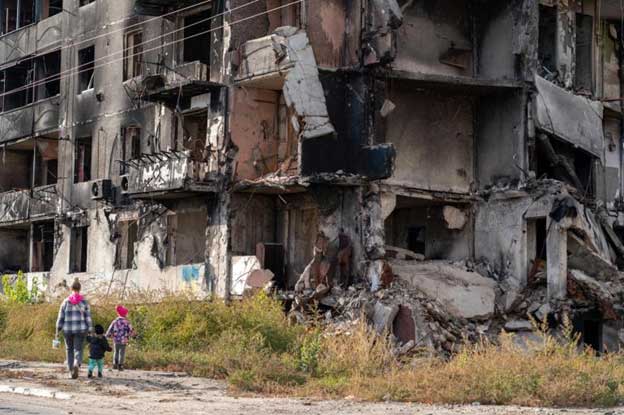
A family walks past a heavily damaged building in Borodianka, Ukraine. Multiple threats are converging to leave families reeling. But putting children at the centre of the response can help shape a brighter future. Credit: UNICEF/UN0765276/Filippov

UNITED NATIONS, Feb 14 2023 (IPS) – The year 2022 was incredibly difficult for people around the world. We were confronted by a series of major crises, including a continuing pandemic, a major war in Europe, an energy crisis, rising inflation and food insecurity.


These events hit children particularly hard, compounding the already severe impacts of the COVID-19 pandemic. Millions of children had to flee their homes because of conflict or extreme weather events. At the same time, child malnutrition and the number of children in need of humanitarian assistance rose.

The war in Ukraine, for example, has led to higher food and energy prices, which in turn has contributed to rising global hunger and inflation. Efforts to address inflation through rising interest rates in the US have driven up the value of the dollar against other currencies, making developing countries’ imports, debt repayments and their ability to access external financing more difficult.

As we explain in our new report, ‘Prospects for Children in the Polycrisis: A 2023 Global Outlook’, these realities have added up to what has been termed a ‘polycrisis’ – multiple, simultaneous crises that are strongly interdependent.

As we look to 2023, it’s clear that the polycrisis is likely to continue shaping children’s lives. The effects of these intertwined and far-reaching trends will be difficult to untangle, and solutions will be difficult to find as policymakers struggle to keep up with multiple urgent needs.

The situation is particularly dire in economically developing countries. Higher food and energy prices have contributed to a rise in global hunger and malnourishment, with children among the most affected.

The polycrisis is also limiting access to healthcare for many children, making it harder for them to receive treatment and routine vaccinations. Recovery from learning losses caused by the closure of schools will be slow and felt for years to come, while the shift to remote learning has left children from low-income families facing the greatest challenges in catching up.

At the same time, the combination of higher financing needs, soaring inflation and a tighter fiscal outlook will widen the education financing gap needed to achieve the Sustainable Development Goals.

Climate change, too, is also a part of this polycrisis, with visible effects, including devastating floods in Pakistan and droughts in East Africa, making it harder for children to access education, food and healthcare, and causing widespread displacement of populations.

All these factors have led UNICEF to estimate that 300 million children will be in need of humanitarian assistance this year. This staggering number highlights the urgency for international organizations and governments to step in and provide assistance.

But the polycrisis doesn’t have to lead to further instability or, ultimately, systemic breakdown. Some of the stresses we saw in 2022 have already weakened, and new opportunities may arise to alleviate the situation.

For example, food and oil prices have dropped from their peaks, and good harvests in some countries may help to lower global food prices. Fortunately, we know there are solutions and strategies that work.

One potential solution is to increase investment in social protection programmes, such as cash transfers and food assistance, which can help alleviate the immediate economic impacts of the polycrisis on families. These programmes can also help to build resilience and reduce vulnerabilities.

The establishment of learning recovery programmes will help tackle the learning losses and prevent children from falling further behind. And early prevention, detection and treatment plans for severe child malnutrition have been effective in reducing child wasting.

Ultimately, a coordinated and collective effort is needed to protect the rights and well-being of children. This includes not only providing immediate assistance but also addressing the underlying causes of the polycrisis and building resilience for the future.

This cannot be achieved without a more coordinated and collective effort from international organizations and governments to help mitigate the effects of the polycrisis and protect children’s futures.

And, crucially, we must listen to children and young people themselves so that we can understand the future they want to build and live in. In fact, we followed this approach when we were assessing trends for ‘Prospects for Children in the Polycrisis’, asking young people from across the world age 16 to 29 to give us their views on some of the challenges their generation faces.

It’s critical that we take action to protect the most vulnerable among us. The future may be uncertain, but by working together we can help to build a better future for our children.

Jasmina Byrne is Chief of Foresight and Policy, UNICEF Innocenti – Global Office of Research and Foresight.

Prospects for Children in the Polycrisis: A 2023 Global Outlook’, produced by UNICEF Innocenti – Office of Global Research and Foresight, unpacks the trends that will impact children over the next 12 months.

Source: UNICEF

IPS UN Bureau

  Source

Humanitarian Aid to Earthquake Victims Hindered by Politics– & Limited Access

Civil Society, Development & Aid, Editors’ Choice, Featured, Global, Headlines, Humanitarian Emergencies, TerraViva United Nations

Credit: World Health Organization (WHO)

UNITED NATIONS, Feb 13 2023 (IPS) – As the toll in last week’s earthquakes in Turkey and Syria exceeds a staggering 28,000 people dead and more than 78,000 injured–and counting– the United Nations is in an emergency-footing struggling to provide humanitarian aid, along with several international humanitarian organizations.


The devastated cities in both countries—by an earthquake described as one of the world’s top 10 deadliest in history at a magnitude of 7.8— are urgently in need of food, water, medicine, clothes and shelter—even as after-shocks have triggered the collapse of additional buildings with a new search for more survivors in a doomed scenario.

But the flow of aid is being hindered by several factors, including power politics, sanctions and limited border crossings in a 12-year long civil war in conflict-ridden Syria.

Asked about these limitations, UN Secretary-General Antonio Guterres told reporters last week: “This is the moment of unity, not to politicize or to divide, but it is obvious that we need massive support, and so I would be of course very happy if the Security Council could reach a consensus to allow for more crossings to be used, as we need also to increase our capacity to deliver on crossline operations into Idlib from Damascus.”

Over the years, Russia and China, two veto-wielding permanent members of the Security Council, have remained supportive of Syrian President Bashar al-Assad, while the remaining three permanent members, the US, UK and France, have been critical of Assad’s authoritarian regime accused of war crimes and use of chemical weapons.

But the humanitarian crisis in Syria is not likely to change the power politics in a divided Security Council.

Louis Charbonneau, United Nations Director at Human Rights Watch, told IPS: “We hope the UN Security Council moves quickly and Russia won’t block expansion of cross-border aid, as the secretary-general has requested.”

But Security Council approval, he pointed out, is not a legal prerequisite to conduct cross-border aid operations into Syria. Cooperation from de facto authorities on both sides of any border, in line with humanitarian law obligations, is.

“If the Security Council is deadlocked, and the UN determines it’s feasible and safe, the UN should push ahead to address the crisis and help victims,” he declared.

The White Helmets, a civil society organization which has been operating in opposition-held areas in Syria, was critical of the slow movement of aid.

“Had international rescue teams come into Syria in the first hours, or even the second day, there was a big hope that these people who were under the ruins could have been brought out alive”, Mohamed al—Shibli of the White helmets was quoted as saying.

At his press briefing, Guterres said: the first United Nations convoy crossed into northern Syria through the Bab al-Hawa crossing, and it included 6 trucks carrying shelter and other desperately needed relief supplies. “More help is on the way, but much more, much more is needed.”

But the New York Times ran a hard-hitting story February 10 under the headline: “UN Aid Trickles into Syria, but Residents say it is too Little, too Late”.

Still, the UN and its agencies have responded with all the means at their disposal, including assistance from the International Organization for Migration (IOM), the World Food Programme (WFP), the UN children’s agency UNICEF, the World Health Organization (WHO), the UN Population Fund (UNFPA), among others, and a task force led by the Emergency Relief Coordinator Martin Griffiths.

After his arrival in the Syrian capital February 12, United Nations Special Envoy for Syria
Geir O. Pedersen told reporters the earthquake was “one of the biggest humanitarian or natural disasters that we have seen recently”.

While expressing his condolences, he said: “And I think, you know, when we see the images, the heartbreaking images, we really feel the suffering. But we’re also seeing a lot of heroism, you see, you know, individuals, civilians, humanitarians trying to save lives, and it is this effort that we need to support.”

He assured that “the UN humanitarian family will do whatever they can to reach out to everyone that needs support. So, we are trying to mobilize whatever support there is. We are reaching out to countries, we are mobilizing funding, and we’re trying to tell everyone to put politics aside because this is a time to unite behind a common effort to support the Syrian people”.

Still, Pendersen said: “We need all the access we can have, crossline, cross-border and we need more resources. So, I’m in close touch with the UN humanitarian family, we’re working together to try to mobilize this support and that of course is my key message during this visit to Syria.

The issue of access was also raised by the US Ambassador to the UN Linda Thomas-Greenfield who said last week that she spoke with Presidents of InterAction and the International Rescue Committee, who both underscored the dire situation on the ground as humanitarian workers and first responders attempt to save lives while also facing personal tragedy.

She also spoke with representatives of Save the Children, CARE, and the White Helmets, who described the urgent need for shelter, clean water, and cash assistance, as well as increased access into Syria to allow local NGOs to deliver life-saving aid.

Ambassador Thomas-Greenfield voiced U.S. support for additional cross-border access points from Türkiye into northwest Syria to facilitate deliveries of earthquake-specific aid. She commended the search and rescue efforts by the White Helmets, which have saved thousands of people from collapsed buildings in northern Syria.

So far, the UN has released about $50 million from its emergency fund. But it is making a “Flash Appeal” for more funds from the international community.

Asked how much was needed, UN Spokesperson Stephane Dujarric said February 9: “We are trying to figure out how much. We’re still doing the needs assessment and I would also encourage – the public can also give through on the OCHA (Office for the Coordination of Humanitarian Affairs) website, the UN Foundation websites. There are ways for people, for the public to give to the appeal,” he said.

Meanwhile, the crisis in Turkey has also been tainted with domestic politics. The slow or belated response has been blamed on the Turkish government led by President Recep Tayyip Erdogan, up for re-election on May 14.

Kemal Kilicdaroglu, the leader of the opposition party and a potential presidential candidate, was quoted as saying: “It is the ruling party that has not prepared the country for an earthquake for 20 years”.

IPS UN Bureau Report

  Source

UN Deploys Unarmed Weapon in Humanitarian & Peacekeeping Operations

Armed Conflicts, Civil Society, Featured, Global, Global Governance, Headlines, Humanitarian Emergencies, IPS UN: Inside the Glasshouse, TerraViva United Nations

Credit: IPS

UNITED NATIONS, Nov 28 2022 (IPS) – A sign outside the United Nations reads, perhaps half-seriously, that it is a “No Drone Zone”—and “launching, landing or operating Unmanned or Remote-Controlled aircraft in this area is prohibited”.

The “warning” comes even as Unmanned Aerial Vehicles (UAVs) – or drones – are some of the new weapons of war deployed mostly by the US, and more recently, by Iran, Ukraine and Russia in ongoing military conflicts.


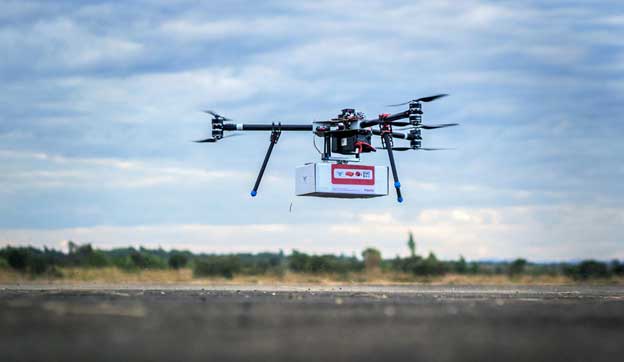
But the unarmed versions continue to be deployed by UN peacekeeping forces worldwide and by national and international humanitarian organizations.

In a recently-released report, the UN Population Fund (UNFPA says for women in Botswana, especially those living in remote communities where medical supplies and blood may not be in stock, giving birth can be life-threatening.

In 2019, the country recorded a maternal mortality rate of 166 deaths per 100,000 births, more than double the average for upper-middle-income countries.

Lorato Mokganya, Chief Health Officer in the Ministry of Health and Wellness, is quoted as saying that when a woman has lost a lot of blood during childbirth and may need to be transferred to a bigger medical facility, she first needs to be stabilized where she is before being driven out of that place. Timely delivery of blood can be lifesaving.

“A drone can be sent to deliver the blood so that the patient is stabilized,”

In an effort to curb the country’s preventable maternal deaths and overcome geographical barriers this innovative initiative will revolutionize the delivery of essential medical supplies and services across Botswana, says UNFPA.

Joseph Chamie, a former director of the UN Population Division and a consulting demographer., told IPS the increased use of drones for humanitarian and peacekeeping missions of the United Nations is certainly a good idea and should be encouraged.

“Why? Simply because the numerous benefits from the use of drones greatly outnumber the possible disadvantages”.

As is the case with all new technologies, he pointed out, resistance to the use of drones is to be expected. The public’s distrust in the use of drones is understandable given their use in military operations and surveillance activities.

Also, it should be acknowledged that drones could be misused and efforts are needed to ensure privacy, security and safety, said Chamie.

“In brief, the use of drones should be promoted and facilitated in the work of the UN’s humanitarian and peacekeeping operations as it will greatly enhance the effectiveness of their vital work,” he declared.

Credit: United Nations

Drones have been deployed in several UN peacekeeping missions, including the Democratic Republic of Congo (DRC), Rwanda and Uganda—going back to 2013.

Although this technology is not a magic solution, “the promise of drones is really tremendous,” says Christopher Fabian, principal advisor on innovation at the UN Children’s Fund (UNICEF).

For UNICEF and other humanitarian and development agencies, he said, in an interview with UN News, drone technology can make a big difference in three ways.

First, drones can leapfrog over broken infrastructure in places where developed transportation networks or roads do not exist, carrying low-weight supplies.

Second, UAVs can be used for remote sensing, such as gathering imagery and data, in the wake of natural disasters like mudslides, to locate where the damage is and where the affected peoples are.

Third, drones can extend wi-fi connectivity, from the sky to the ground, providing refugee camps or schools with access to the Internet.

As big as a Boeing 737 passenger jet and as small as a hummingbird, a huge variety of drones exist. According to research firm Gartner, total drone unit sales climbed to 2.2 million worldwide in 2016, and revenue surged 36 per cent to $4.5 billion.

Although UNICEF’s use of drones has been limited, the agency is exploring ways to scale up the use of UAVs in its operations, Fabian said.

“Hardware itself does not violate human rights. It is the people behind the hardware,” said Fabian, stressing the need to “make sure that any technology we bring in or work on falls within the framing of rights-based documents,” such as the Convention on the Rights of the Child.

UNICEF has a set of guiding principles for innovation, which includes elements like designing with the end-user.

For drone applications to spread further, Fabian said, the UN has a strong role in advocating this technology and ensuring that policy is shared with different governments.

In addition, governments have to clearly define why they need drones and what specifically they will be used for, while also building up national infrastructure to support their use.

The private sector must understand that the market can provide them real business opportunities.

In 10 to 20 years, drones might be “as basic to us as a pen or pencil,” said Fabian.

“I believe this technology will go through a few years of regulatory difficulty but will eventually become so ubiquitous and simple that it’s like which version of the cell phones you have rather than have you ever use the mobile phone at all,” he said.

Meanwhile, armed UAVs are being increasingly used in war zones in the Middle East, Asia, Africa and most recently Ukraine.

The US has launched drone strikes in Pakistan, Syria, Yemen, Somalia, Iraq, Libya and Afghanistan targeting mostly terrorist groups. But the negative fallout has included the deaths of scores of civilians and non-combatants.

In recent months, the use of drones by both Russia and Ukraine has triggered a raging battle at the United Nations while Iran has launched drone attacks inside Iraq.

The US, France, UK and Germany have urged the UN to investigate whether the Russian drones originated in Iran. But Russia has denied the charge and insisted the drones were homemade.

Russia’s First Deputy Permanent Representative to the UN, Ambassador Dmitry Polyanskiy, urged Secretary-General António Guterres and his staff on October 25 not to engage in any “illegitimate investigation” of drones used in Ukraine.

Meanwhile, going back to 2017, Malawi, in partnership with UNICEF, launched Africa’s first air corridor to test the humanitarian use of drones in Kasungu District.

Also with UNICEF, Vanuatu has been testing the capacity, efficiency and effectiveness of drones to deliver life-saving vaccines to inaccessible, remote communities in the small Pacific- island country, according to the United Nations.

Vanuatu is an archipelago of 83 islands separated over 1,600 kilometres. Many are only accessible by boat, and mobile vaccination teams frequently walk to communities carrying all the equipment required for vaccinations – a difficult task given the climate and topography.

To extend the use of drones, UNICEF and the World Food Programmes (WFP) have formed a working group.

In addition, UNICEF, together with the Office of the UN High Commissioner for Refugees (UNHCR), chairs the UN Innovation Network, an informal forum that meets quarterly to share lessons learned and advance discussions on innovation across agencies, the UN points out.

“Drones are also used in other parts of the UN system. The International Atomic Energy Agency (IAEA) and its partners have introduced a new quadcopter drone to visually map gamma radiation at Japan’s Fukushima Daiichi nuclear plant, which was damaged by the devastating 2011 tsunami”.

ROMEO, or the Remotely Operated Mosquito Emission Operation, met the competition’s aim of improving people’s lives. It was designed to transport and release sterile male mosquitoes as part of an insect pest birth control method that stifles pest population growth.

Some UN peacekeeping missions, such as those in the Democratic Republic of the Congo, Mali and the Central African Republic, have deployed unarmed surveillance UAVs to improve security for civilians, according to the UN.

The UN, however, warns that drone technology can be a double-edged sword. UN human rights experts have spoken out against the lethal use of drones.

IPS UN Bureau Report

  Source