NITERÓI, Brazil, Jan 9 2026 (IPS) – “We moved from a context of socio-environmental exclusion to one of environmental justice,” said Dionê Castro, coordinator of the Sustainable Oceanic Region Program which led Brazil’s largest nature-based solutions project.
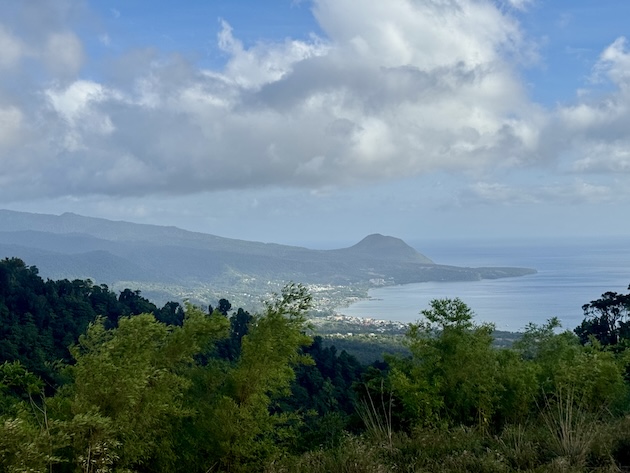
Having won national and global awards, the Orla Piratininga Park (POP) built 35,000 square meters of filtering gardens and improved the water quality of the Piratininga lagoon, in the oceanic south of Niterói, a municipality in metropolitan Rio de Janeiro, across the Guanabara Bay.
The project, named after the late Brazilian environmentalist Alfredo Sirkis, began in 2020, and aims to environmentally restore an area of 680,000 square meters on the lagoon’s shores whose waters cover an area of 2.87 square kilometers.
[embedded content]
At the heart of the project are the treatment systems for the waters of the Cafubá, Arrozal, and Jacaré rivers, which flow into the lagoon. Sedimentation and pollution were deteriorating the water resource and the quality of life in the surrounding area.
A weir, which receives the river flow, a sedimentation pond, which removes solid waste, and the filtering gardens make up the chain that partially cleans the water before releasing it into the lagoon, reducing environmental impacts, in a process called phytoremediation.
The gardens are small reservoirs where aquatic plants called macrophytes are planted, which feed on the nutrients from the pollution, explained Heloisa Osanai, the biologist specialized in environmental management of the Sustainable Oceanic Region Program (PRO Sustainable).
Three polluted water treatment stations are in the neighborhoods crossed by the rivers, based on natural resources, “without the use of electrical energy, chemicals, or concrete,” explained Castro, the coordinator of PRO Sustainable.
Furthermore, some macrophytes produce abundant flowers. Only native Brazilian species are planted, with priority given to biodiversity, added Osanai.
Along with these water treatment systems, 10.8 kilometers of bike paths, 17 recreation centers, a 2,800-square-meter Eco-Cultural Center, and other environmental works with social goals were built.
The bike path, generally along a pedestrian sidewalk, caters to physical and leisure activities but is also a factor in protecting the lagoon shoreline by blocking urban occupation and real estate invasions, explain the officials.
The area where the water system was built at the mouth of the Cafubá river was highly degraded by an open-air dump and flooding. A reformed “belt channel,” in some sections also reinforced by macrophyte islands, corrected the waterlogging.
On the other side of the lagoon, 3.2 kilometers of bioswales improve the drainage of rainwater. They are trenches with pipes, stones, and other materials, plus vegetation, that accelerate drainage and prevent pollutants from reaching the lagoon.
The main result, according to Castro, reconciled the local population with the lagoon. The old houses that “turned their backs on the lagoon” are joined by new buildings facing the water, some with balconies overlooking the new landscape, said Mariah Bessa, the engineer in charge of hydraulic aspects of the project.
The local population was highly involved in the design and construction of the new environmental and social facilities that transformed the lagoon shoreline. This led to new attitudes, such as not littering on the ground or in the water and preventing others from doing so, according to Castro.
The Ecocultural Center promotes permanent environmental education, with films, children’s games, audiovisual resources, and a large space for visits and classes.
“We moved from a context of socio-environmental exclusion to one of environmental justice,” said the coordinator of PRO Sustainable.
Food solutions were on display everywhere around COP30—from the 80 tonnes of local and agroecological meals served to concrete proposals for tackling hunger—but none of this made it into the negotiating rooms or the final agreement. —Elisabetta Recine, IPES-Food panel expert
Agriculture is both a challenge and a solution for climate change. Busani Bafana/IPS
BULAWAYO, Jan 9 2026 (IPS) – As they ate catered meals, COP30 negotiators had no appetite for fixing broken food systems, a major source of climate pollution, experts warn.
Food systems are the complete journey food takes—from the farm to fork—which means its growing, processing, distribution, trade and consumption and even the waste.
The International Panel of Experts on Sustainable Food Systems (IPES-Food) warns that the final COP30 agreement risks deepening climate and hunger crises. It failed to address global warming emissions from food systems and the escalating damages caused by fossil-fuel-dependent industrial agriculture.
Food appears only once in the negotiated text, as a narrow indicator on ‘climate resilient food production’ under the Global Goal on Adaptation, IPES-Food pointed out.
“There is no mention of food systems, no roadmap to tackle deforestation, and no recognition that industrial agriculture drives nearly 90 percent of forest loss worldwide,” noted the think tank, emphasizing that negotiators also weakened language in the Mitigation Work Programme from addressing the ‘drivers’ of deforestation to vague ‘challenges.’
IPES-Food argued that the omission of food systems in the COP30 agreement was in stark contrast to the summit itself, which was held in the heart of the Amazon. Thirty percent of all food served during COP30 came from agroecological family farmers and traditional communities, and concrete public policy proposals for a just transition of food systems were on full display, IPES-Food said.
By not supporting a transition to environmentally friendly and low-emission agriculture, the agreement has left the global food system—and the billions who depend on it—highly vulnerable to the very climate shocks it helps cause, experts said.
“Food solutions were on display everywhere around COP30—from the 80 tonnes of local and agroecological meals served to concrete proposals for tackling hunger—but none of this made it into the negotiating rooms or the final agreement,” said Elisabetta Recine, IPES-Food panel expert and president of the Brazilian National Food and Nutrition Security Council (Consea), in a statement.
“Despite all the talk, negotiators failed to act, and the lived realities of people most affected by hunger, poverty, and climate shocks went unheard.”
Big Oil and Big Ag, Bigger voice
More than 300 industrial agriculture lobbyists were registered as delegates to COP30. They are blamed for influencing discussions and promoting false solutions to climate change.
“COP30 was supposed to be the Implementation COP—where words turned into action,” Danielle Nierenberg, an expert on sustainable agriculture and food issues and President of Food Tank, told IPS. “But once again, corporate interests won over people, nature, and the future of our food and agriculture systems as part of the solution to the climate crisis.”
Raj Patel, IPES-Food panel expert and professor at the University of Texas, argues that agribusiness lobbyists captured COP30 to influence outcomes favoring industrial agriculture and big oil interests.
“Food systems are second only to oil and gas as a driver of the climate crisis, and unlike oil wells, they are also the first victim of the chaos they create, Patel noted.
Obstacles and Opportunities
Scientists have warned that carbon emissions, including those from agriculture, must be cut considerably if the world is to meet the goals of the Paris Agreement to limit global warming to 2°C or less.
Even if fossil fuel emissions were eliminated immediately, emissions from the global food system alone would make it impossible to limit warming to 1.5°C and difficult even to realize the 2°C target, scientists have said.
Selorm Kugbega, a Research Fellow at the Stockholm Environment Institute, agrees that despite many promises made to tackle agriculture-linked emissions, COP30 turned out to be a damp squib for agrifood systems.
Initiatives such as RAIZ to restore 500 million hectares of degraded agricultural land by 2030 and TERRA to scale out climate solutions for smallholder farmers through blended finance, which were launched at COP30 omitted to highlight the effects of industrial food systems. Over 300 industrial agriculture lobbyists participated in discussions at COP30, leading to accusations of swaying the outcomes.
Analysts warn the final agreement at COP30 in Belém, Brazil, risks deepening climate and hunger crises. Credit: Raimundo Pacco/COP30
Kugbega observed that after several years of slow progress and momentum in integrating food systems in climate negotiations, COP30 should have been the opportunity to seal agriculture’s centrality in future COPs. However, it ended with no clear agreements on grant-based public finance for adaptation in agriculture or redirection of public funds that subsidize industrial systems.
The climate negotiations demonstrated power inequality in climate negotiations with the implicit protection of industrial agriculture interests, which weakened the credibility of any global efforts at mitigating agriculture-based emissions, Kugbega observed, highlighting that smallholders bear a high burden of climate risks and have little adaptation financing.
Kugbega argued the most powerful countries, which are generally less dependent on agriculture, tend to prioritize sectors such as energy and transport in climate negotiations. However, many least developed countries, particularly in Africa, are highly dependent on agriculture for employment and economic stability and face urgent climate risks.
“Yet these countries often lack the political influence to elevate agriculture and food systems as central issues in COP negotiations,” he said. “COP30 in Brazil presented a major opportunity to shift this imbalance, making the failure to position food systems at the center of the climate agenda particularly troubling.”
Frugal Financing for Food and Farmers
According to the Climate Policy Initiative (CPI) and the UN’s Standing Committee on Finance, agriculture receives a small and insufficient share of total global climate finance.
Of the available approximate total global climate finance of USD 1.3 trillion per year on average, agriculture gets around USD 35 billion per year. This is a huge shortfall given that food systems are estimated to be responsible for roughly one-third of global greenhouse gas emissions and are one of the sectors most vulnerable to climate impacts, according to the CPI. Worse still, smallholder farmers, who produce up to 80 percent of food in developing countries, only receive 0.3 percent—a striking imbalance, yet they feed the world and are more exposed to climate impacts.
Will COP31 Deliver?
While COP30 highlighted the need to tackle climate change impacts through the transformation of food systems, such as highlighted in the Belém Declaration on Hunger, Poverty and Human-Centered Climate Action, it remains to be seen if COP31 will deliver a positive outcome on food systems.
Waiting for COP31 to save the world is surrendering because agribusiness lobbyists do not take holidays, argues IPES-Food panel’s Raj Patel.
“The test is not whether diplomats can craft better language in Antalya, but whether farmers’ movements, indigenous movements, and climate movements can generate enough political pressure to make governments fear inaction more than they fear confronting corporate power,” he said.
COP31, to be hosted by Turkey with Australia as negotiations president in 2026 , is expected to prioritize an action agenda centered on adaptation finance, fossil fuel phase-out, adaptation in Small Island Developing States, and oceans.
While this agenda aligns with broader climate justice goals, it means food systems risk becoming indirectly addressed rather than explicitly championed, Kugbega said.
Given the stalled negotiations on financing sustainable agriculture transitions and the postponement of the Sharm el-Sheikh Joint Work on Agriculture, Kugbega said COP31 will likely focus more on developing new roadmaps and agreements than on full-scale implementation.
COP32 could be a greater opportunity for the implementation of the work program under Ethiopia’s COP32 presidency, given the country’s direct exposure to climate risks in agriculture, he noted.
“COP31 will likely shape whether the world arrives at COP32 ready to implement and operationalize sustainable food systems or once again be forced to renegotiate what is already known.”
This feature is published with the support of Open Society Foundations.
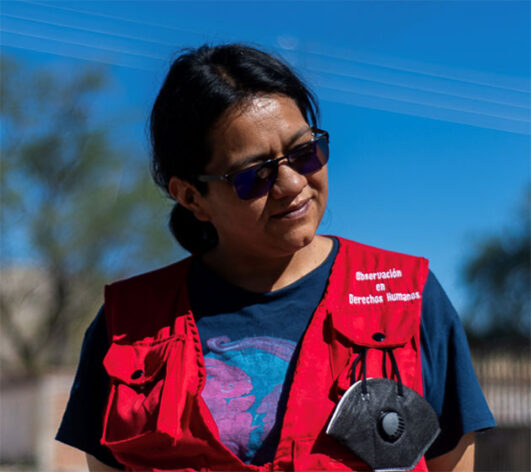
Claudia Ignacio Álvarez in San Lorenzo de Azqueltan, Jalisco, Mexico. Credit : Eber Huitzil
MICHOACÁN, Mexico , Dec 18 2025 (IPS) – My niece Roxana Valentín Cárdenas was 21 years old when she was killed. She was a Purépecha Indigenous woman from San Andrés Tziróndaro, a community on the shores of Lake Pátzcuaro in the Mexican state of Michoacán.
Roxana was killed during a peaceful march organised by another Indigenous community commemorating the recovery of their lands. Forty-six years earlier, three people had been murdered during that same land struggle. This time, the commemoration was once again met with gunfire.
Roxana was not armed and was not participating in the march. She encountered the demonstration and was struck by gunfire. Her death was deeply personal, but it took place within a broader context of long-standing violence linked to land and territory.
That violence has intensified in Michoacán recently, where the assassination of a mayor in November this year underscored how deeply insecurity has penetrated public life and how little protection exists for civilians, community leaders and local authorities alike.
Across Mexico, Indigenous people are being killed for defending land, water and forests. What governments and corporations often describe as “development” is experienced by our communities as dispossession enforced by violence – through land grabbing, water theft and the silencing of those who resist.
A way of life under threat I come from San Andrés Tziróndaro, a farming, fishing and musical community. For generations, we have cared for the lake and the surrounding forests as collective responsibilities essential to life. That way of life is now under threat.
In Michoacán, extractive pressure takes different forms. In some Indigenous territories, it is mining. In our region, it is agro-industrial production, particularly avocados and berries grown for export. Communal land intended for subsistence is leased for commercial agriculture. Water is extracted from Lake Pátzcuaro through irregularly installed pipes to irrigate agricultural fields, depriving local farmers of access.
Agrochemicals contaminate soil and water, forests are deliberately burned to enable land-use change, and ecosystems are transformed into monocultures that consume vast amounts of water. This is not development. It is extraction.
Violence as a method of enforcement When Indigenous communities resist these processes, violence follows.
Two cases illustrate this reality and remain unresolved.
José Gabriel Pelayo, a human rights defender and member of our organisation, has been forcibly disappeared for more than a year. Despite an urgent action issued by the United Nations Committee on Enforced Disappearances, progress has been blocked. Authorities have delayed access to the investigation file, and meaningful search efforts have yet to begin. His family continues to wait for answers.
Eustacio Alcalá Díaz, a defender from the Nahua community of San Juan Huitzontla, was murdered after opposing mining operations imposed on his territory without consultation. After his killing, the community was paralysed by fear, and it was no longer possible to continue human rights work safely.
Together, these cases show how violence and impunity are used to suppress community resistance.
Militarisation is not protection It is against this backdrop of escalating violence and impunity that the Mexican state has once again turned to militarisation. Thousands of soldiers are being deployed to Michoacán, and authorities point to arrests and security operations as indicators of stability.
In practice, militarisation often coincides with areas of high extractive interest. Security forces are deployed in regions targeted for mining, agro-industrial expansion or large infrastructure projects, creating conditions that allow these activities to proceed while community resistance is contained.
Indigenous people experience this not as protection, but as surveillance, intimidation and criminalisation. While companies may claim neutrality, they benefit from these security arrangements and rarely challenge the violence or displacement that accompanies them, raising serious questions about corporate complicity.
A global governance failure Indigenous territories are opened to extractive industries operating across borders, while accountability remains fragmented. Corporations divide their operations across jurisdictions, making responsibility for environmental harm and human rights abuses difficult to establish.
Voluntary corporate commitments have not prevented violence or environmental degradation. National regulations remain uneven and weakly enforced, particularly in regions affected by corruption and organised crime. This is not only a national failure. It is a failure of global governance.
International responsibility, now In this context, I have recently spent ten days in the United Kingdom with the support of Peace Brigades International (PBI), meeting with parliamentarians, officials from the Foreign, Commonwealth and Development Office, and civil society organisations.
These discussions are part of a broader international effort to ensure that governments whose companies, financial systems or diplomatic relationships are linked to extractive activities take responsibility for preventing harm and protecting those at risk.
While the UK is only one actor, its policies on corporate accountability and support for human rights defenders have consequences far beyond its borders.
Why binding international rules are necessary For years, Indigenous peoples and civil society organisations have called for a binding United Nations treaty on business and human rights. The urgency of this demand is reflected in the lives lost defending land and water and in the defenders who remain disappeared.
A binding treaty could require mandatory human rights and environmental due diligence across global supply chains, guarantee access to justice beyond national borders, and recognise the protection of human rights defenders as a legal obligation. It could make Free, Prior and Informed Consent enforceable rather than optional.
Such a treaty would not prevent development. It would ensure that development does not depend on violence, dispossession and impunity.
Defending life for everyone Indigenous peoples are not obstacles to progress. We are defending ecosystems that sustain life far beyond our territories. Indigenous women are often at the forefront of this defence, even as we face extraordinary risks.
When defenders disappear, when others are murdered, and when young women like my niece lose their lives, it is not only our communities that suffer. The world loses those protecting land, water and biodiversity during a deep ecological crisis.
Defending life and land should not come at the cost of human lives.
Claudia Ignacio Álvarez is an Indigenous Purépecha feminist, lesbian, and environmental human rights defender from San Andrés Tziróndaro, Michoacán. Through the Red Solidaria de Derechos Humanos, she supports Indigenous and rural communities defending their territories from extractive industries and organised crime. Her work has been supported by Peace Brigades International (PBI) since 2023.
Regional leaders say the outcome of the ‘mixed bag’ climate talks once again overlooks the real and mounting threats faced by Caribbean countries.
A coastal community in the Eastern Caribbean. Small island states say their extreme climate vulnerability is still not reflected in global finance decisions made at COP30. Credit: Alison Kentish/IPS
CASTRIES, St Lucia, Dec 1 2025 (IPS) – Caribbean small island states say this year’s UN climate conference has once again failed to deliver the urgency and ambition needed to tackle escalating climate devastation across the region. From slow-moving climate finance to frustrating political gridlock, leaders say COP30 did not reflect the realities that small islands are living through every day.
Jamaica is recovering from Hurricane Melissa, which left over 30 percent of the country’s GDP in losses and billions of dollars in damage. While the country has been able to respond rapidly thanks to a suite of innovative developmental finance tools, including a USD 150 million catastrophe bond, parametric insurance and a disaster savings fund, its Minister for Water, Environment and Climate Change, Matthew Samuda, warns that the vast majority of Caribbean islands do not have similar mechanisms.
Speaking at a press conference organized by Island Innovation and themed “Islands, the Climate Finance Gap, and COP30 Reflections,” Samuda said this is precisely why global negotiations must center the lived experiences of SIDS.
“I think I perhaps may be a little more disappointed than I am usually at the end of a COP because seeing what Jamaica is going through, seeing what Vietnam is going through, seeing extreme weather events pop up all around the world over the last 10 days, you would think that the urgency and the facts staring us in the face would have brought about greater ambition,” he said, adding that “unfortunately, the global geopolitical landscape didn’t allow for us to go much further.”
A Struggle Just to be Heard?
For many small islands and territories, simply participating meaningfully at COP30 was an uphill battle. The British Virgin Islands, like other Caribbean territories, had to rely on partners, including the Organisation of Eastern Caribbean States and the Caribbean Community Climate Change Centre for accreditation and access to the negotiations.
“We try to split up and cover as much as we can,” said Dr. Ronald Berkeley, Permanent Secretary in the Ministry of Environment, Natural Resources and Climate Change. “Our reliance on partners shows how limited our reach still is.”
Berkeley said that despite the Caribbean’s visible and worsening climate impacts, it remains difficult to get major emitters to understand the region’s urgency.
“For small islands, this is real. I’m not sure a lot of the big players believe us,” he said. “Until you live through being almost blown to smithereens by a Category Five hurricane, you will never understand.”
The BVI recently established its own climate trust fund, currently funded with about US$5.5 million, to address some financing shortfalls, but Berkeley emphasized that this cannot make up for reliable, large-scale climate funding.
Barriers to Pledges
Caribbean officials are echoing the same concern—that climate finance exists on paper but rarely reaches small, vulnerable nations at the speed or scale required.
“At COP there were positive commitments, about US$1.3 trillion annually by 2035 for climate action, the tripling of adaptation finance and operationalizing the Loss and Damage Fund,” said Dr. Mohammad Rafik Nagdee, Executive Director of the Caribbean Centre for Renewable Energy and Energy Efficiency (CCREEE).
“But the elephant in the room is the global finance gap,” he said. “Even where access exists, it’s not accessible at the speed the climate crisis demands. Processes are lengthy, requirements heavy and small governments simply don’t have the technical capacity.”
Nagdee said the region needs “greater predictability, simpler pathways and finance that is actually ready to disburse.”
Living Through it—Not Debating it
For Jamaica, which is emerging from one of the most devastating storms in its history, the mismatch between climate impacts and climate action is glaring.
“In the past four years, Jamaica has had its hottest day on record, its wettest day on record, its worst droughts, two tropical storms, a Category 4 hurricane and now what could be classified as a Category 6,” Samuda said. “That’s climate change in reality. That’s not an academic debate for us.”
Caribbean leaders widely described COP30 as a ‘mixed bag,’ with negotiations with incremental progress overshadowed by inadequate urgency.
“We cannot talk about building back better if the resources arrive slowly,” Nagdee said.
For small island states living on the frontlines of warming seas, rising temperatures and record-breaking storms, the message from COP30 is clear and becoming all-too familiar—that climate change is accelerating and the price of delay is already being paid.
This feature is published with the support of Open Society Foundations.
Oceans contribute to climate regulation by absorbing over a quarter of human-caused CO₂ emissions and around 90 percent of excess heat but attract only 1.7 percent of everything that’s invested in science.
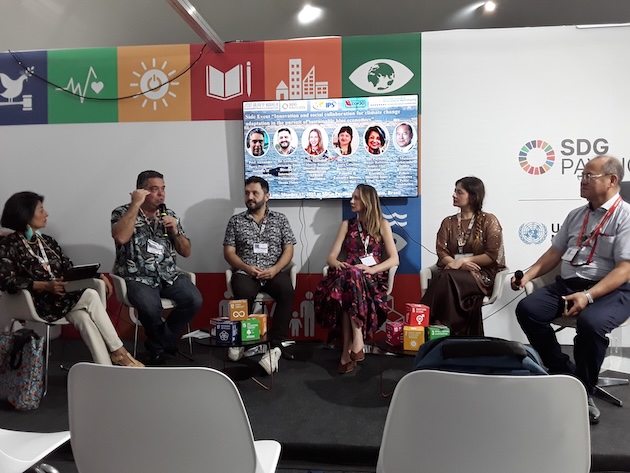
Moderators Masanori Kobayashi (far right) and Farhana Haque Rahman, Senior Vice President and Executive Director, Inter Press Service (far left), at a COP30 side event titled ‘Innovation and social collaboration for climate change adaptation in the pursuit of sustainable blue economies.’ Credit: Joyce Chimbi/IPS
BELÉM, Brazil, Nov 20 2025 (IPS) – The oceans are a fundamental part of Earth’s climate system, regulating it by absorbing and storing vast amounts of solar heat, redistributing that heat around the globe through currents, and absorbing a significant portion of human-caused carbon dioxide (CO₂) emissions—yet scientific research into them remains underfunded.
Oceans contribute to climate regulation by absorbing over a quarter of human-caused CO₂ emissions and around 90 percent of excess heat. But COP30 participants heard during a side event titled ‘Innovation and social collaboration for climate change adaptation in the pursuit of sustainable blue economies’ that the amount of money invested in ocean science is only about 1.7 percent of everything that’s invested in science.
During the side event, Meredith Morris, Senior Director of Strategic Philanthropy (Planet) at XPRIZE spoke of opportunities to tackle humanity’s toughest challenges with bold, scalable breakthroughs. XPRIZE, she said, does its part by inviting the world’s brightest minds to turn audacious ideas into lasting impact for people and the planet.
Owned by the XPRIZE Foundation, the nonprofit organization designs and operates large-scale incentive competitions.
It has supported numerous projects across various fields, including space exploration, carbon removal, global health, and education, by using large-scale incentive competitions to drive breakthrough innovations.
“I lead the portfolio around energy, climate, and nature. We are a 30-year-old incentivized prize model that sets a bar for the change we want to see in the world and incentivizes innovators to reach that bar or exceed it. We do not honor and celebrate work that’s already being done.
“At XPRIZE, what we’re trying to do is really catalyze systemic change.” Morris continues, “We believe in philanthropy, but we also believe it has to create value. And at the end of investing in doing something like protecting nature or addressing climate change, there should be viable businesses and industries on the other side of that.”
Moderated by Masanori Kobayashi, Senior Research Fellow of the Sasakawa Peace Foundation and Farhana Haque Rahman, Senior Vice President and Executive Director of Inter Press Service, the side event was an insight into life-transformative scientific projects that can only be born at the intersection between science and funding.
Haque Rahman spoke extensively of the urgent need to communicate science in a manner that helps connect with the places on the frontlines of the climate crisis. Masanori Kobayashi confirmed the need to amplify blue economy solutions, as raising awareness can and does lead to more action.
The XPRIZE Carbon Removal, a USD 100 million competition, incentivized the development of scalable solutions for removing carbon dioxide directly from the atmosphere or oceans. Winning projects included using enhanced rock weathering on farms to lock away CO₂ and technologies that permanently store CO₂ in concrete.
The Shell Ocean Discovery XPRIZE challenged teams to develop autonomous underwater technologies for rapid, high-resolution ocean floor mapping. The winning technology helped dramatically reduce the time estimated to map the entire ocean from centuries to just a decade.
Alexander Turra, Professor at the Oceanographic Institute of the University of São Paulo and head of the UNESCO Chair on Ocean Sustainability, based at the Oceanographic Institute and the Institute of Advanced Studies of the University of São Paulo, spoke about Brazil’s Oceans Without Plastics initiative.
Formally known as the National Strategy for a Plastic-Free Ocean, the initiative is a comprehensive, six-year plan (2025–2030) launched by the federal government to address marine pollution by targeting the entire lifecycle of plastics, from production to disposal.
The primary goal is to prevent, reduce, and ultimately eliminate plastic waste from entering Brazil’s marine and coastal environments. Brazil, with a vast Atlantic coastline, is a top-ten global contributor to marine plastic pollution, an issue that impacts biodiversity, human health, fishing, and tourism.
Also on the panel was Leonardo Valenzuela Perez, who serves as the Director of International Partnerships at Ocean Visions, where he leads the Global Ecosystem for Ocean Solutions. He spoke to participants about carbon removal at scale and the place of science in these efforts. What is needed is an unparalleled level of investment, mobilization of resources, and scale of action.
“We Colombians are the only country in South America with both the Pacific and Caribbean coasts, and we have various ecosystems as well as culturally diverse traditional peoples and communities,” said Laura Catalina Reyes Vargas, Founder and Executive Director of Ocean Hub.
“And, mostly, Afro-descendants and Indigenous communities on both coasts happen to be the poorest people in the country. It’s all about racism sometimes, economic inequality, infrastructure, poverty and lack of sanitation—it’s about almost all of the challenges that are being addressed throughout the 17 SDGs.”
“When it comes to the blue economy,” she continues, “We prioritize not only talking about scientific research. As a scientist myself, of course, I truly believe we will be able to address and understand the major steps needed to achieve not only the SDGs but also national plans with very high standards, as we have in Colombia.”
It was also crucial to address the regional organizational challenges.
COP30 has demonstrated a commitment to placing oceans at the center of global climate initiatives and announced the Task Force on Oceans earlier this week during a high-level ministerial meeting. Led by Brazil and France, the initiative integrates oceans into a global mechanism that accelerates the adoption of marine solutions in national climate plans —encouraging countries to set protection targets for the ocean when updating their NDCs.
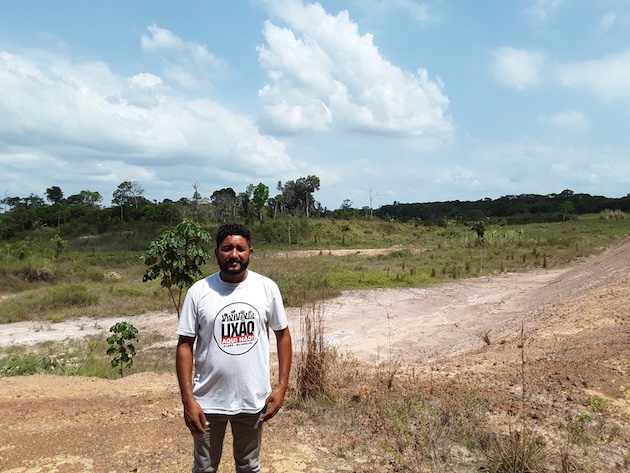
Fabio Nogueira, a leader of the Menino Jesus Quilombola Afro-descendant community, stands in front of a proposed landfill, which is 500m from their homes. Credit: Joyce Chimbi/IPS
BELÉM, Brazil, Nov 20 2025 (IPS) – Just 30 minutes from where the UN climate negotiations are unfolding in the port city of Belém, Afro-descendant communities are engaged in a fierce struggle for the full recognition and legal titling of their ancestral territories—critical as their security and livelihoods are compromised by businesses wanting to set up contaminating landfill sites and drug cartels.
A boat ride along the expansive Amazon basin takes you inside the forest. It is the largest rainforest in the world, estimated to be 5.5 to 6.9 million square kilometers and spanning eight countries.
In the forest are the Quilombos or communities founded by descendants of Africans who escaped enslavement. They have defended their rights for generations. Across Latin America and the Caribbean, they may be known by different names, but they are all Afro-descendant communities with shared histories.
Well over 130 million people in Latin America identify as Afro-descendant, descendants of those forcibly brought to the Americas during the transatlantic slave trade. In Brazil, Ecuador, Colombia, and Suriname, these communities collectively hold recognized management rights to nearly 10 million hectares, or nearly 24 million acres, of land.
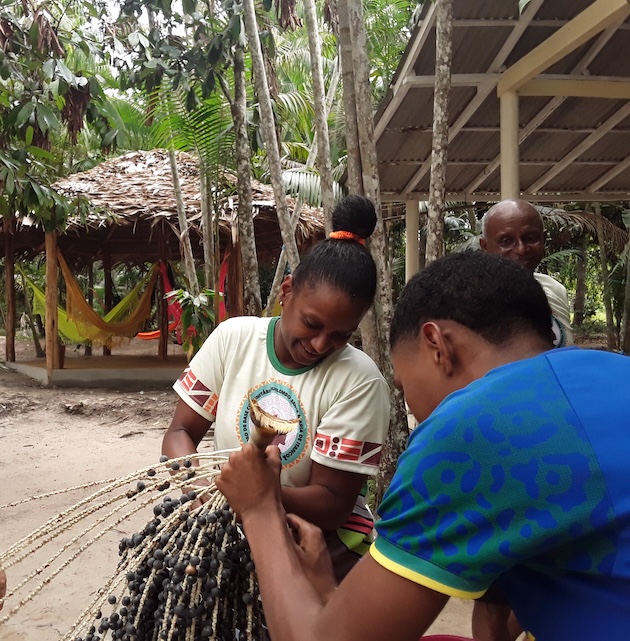
Açaí is harvested in an Afro-descendant community near Belém, Brazil, where COP30 is underway. Açaí is part of the daily diet and is historically known as a source of subsistence. Credit: Joyce Chimbi/IPS
But the Amazon is the backdrop for the struggle for the full recognition and legal titling of their ancestral territories, as guaranteed by the Brazilian Constitution of 1988.
IPS spoke to Fabio Nogueira, a leader among the Menino Jesus Quilombola community home to 28 families about their struggles and successes.
“Without titles, Quilombolas are exposed to invasion and displacement from big companies, ranchers, farmers and land grabbers.”
Alarmingly, criminal gangs target the Quilombola communities and their leaders for illegal activities.
Increased surveillance and drug seizures on direct routes from Latin America to Europe have turned the Amazon into a drug corridor. In Brazil, drug traffickers use ‘rios de cocaine,’ or cocaine rivers, jeopardizing the safety of the Quilombos along the Amazon rainforest.
Major rivers and remote areas in many Quilombola territories serve as key “cocaine corridors” for drug trafficking. The lack of state presence and land titling makes these communities soft targets.
Today, the Amazon rainforest is also the scene of a fierce struggle against landfills or sites for the disposal of waste material. He says landfills in the Amazon cause significant problems, including contaminating the soil and water with heavy metals and other toxins and releasing greenhouse gases like methane.
“We are currently 15 kilometers away from the lixão de Marituba landfill and it still pollutes our air and environment. Now they want to bring a landfill only 500 meters from our community. The landfill will be 200 hectares in size. We are saying no to landfills and have a case in court,” Nogueira said.
“The Menino Jesus quilombola community is in a legal dispute. We are resisting the proposed landfill project.”
Belém is a port city and gateway to Brazil’s lower Amazon region. A 30-minute boat ride through the expansive Amazon River takes you inside the forest. Credit: Joyce Chimbi/IPS
The project was planned without recognition of their existence or the impact it would have on them. The Public Defender’s Office of Pará has filed legal action and recommended the project’s suspension, citing that the land is public and part of the area traditionally occupied and claimed by the community for twenty years.
If the Brazilian State maintains the current pace of land regularization of quilombola territories, it will take 2,188 years to fully title the 1,802 processes currently open at the National Institute for Colonization and Agrarian Reform.
The slow pace of titling negatively affects forest preservation. Despite two studies indicating that the Quilombola play a crucial role in climate solutions, their ongoing struggle for basic recognition makes it difficult for them to secure their rights or access climate finance in formal spaces, such as COP30, according to Malungu, the coordinator of Associations of Remaining Quilombo Communities of Pará, which represents and advocates for the Quilombola communities in the state.
Two recent studies indicate that titling is a determining factor for the success of Quilombos in protecting the Amazon and titled territories maintain 91 percent of their forests, while non-titled territories preserve 76 percent.
“Alarmingly, self-declared territories that do not yet have certification (necessary for starting the titling process) had a rate of forest loss 400 percent higher than that of titled territories, highlighting the urgency of recognition to halt degradation.”
During COP30, a visit to the two Quilombos—Menino Jesus and Itaco-Miri—in the Amazon rainforest demonstrates the significance of communal land titling. It illustrates how this titling enhances the well-being of Afro-descendant peoples across the Amazon and how secure land tenure contributes to climate goals through carbon absorption, forest protection, and biodiversity preservation through traditional agriculture.
Throughout six generations, Quilombola communities stand out as caretakers and conservers of the Amazon rainforest’s biodiversity, using sustainable practices passed down through generations.
Menino Jesus and Itacoã-Miri territories and other Afro-descendant community lands ‘have high biodiversity and irrecoverable carbon and were associated with a 29 to 55 percent reduction in forest loss compared to control sites.’
Still, communities deliver better results with tenure security. Key data from Instituto Social Ambiental’s Study on Quilombo Territories in the Brazilian Amazon shows that while Quilombos face significant land tenure challenges, approximately 47 percent of mapped Quilombos lack even basic delimitation or fixing of boundaries, and over 49 percent of communities have not even passed the first step.
Along the Amazon basin, communities often live in houses facing the river. The forest is their backyard. Credit: Joyce Chimbi/IPS
Meanwhile, they remain outstanding in their conservation performance. They have preserved nearly 92 percent of mapped Quilombo territories, including forests and native vegetation. From 1985 to 2022, these territories lost only 4.7 percent of original forest cover, compared to 17 percent loss in private areas.
But political recognition has moved much more slowly than scientific recognition. Shortly before COP30, President Luiz Inácio Lula da Silva visited the Afro-descendant communities of Menino Jesus and Itacoã-Miri near Belém, Pará, as part of an agenda of preparatory meetings for the COP30 climate conference.
It has taken 30 COPs for a historic breakthrough, as COP30 has included the term ‘people of African descent’ in draft negotiating texts of the UN climate convention for the first time. This inclusion is a significant step toward formally recognizing this population in global climate policy.
The term ‘people of African descent’ has been incorporated into draft documents, including those related to the Just Transition and the Gender Action Plan. This had never happened in the history of the UN climate convention system, which has often been more technical and less focused on human rights and racial justice.
The Belém Declaration on Fighting Environmental Racism is a political commitment that was joined by 19 countries at the leaders’ summit before COP30 began. The text acknowledges the disproportionate exposure of people of African descent, Indigenous Peoples, and local communities to environmental harms and climate risks.
This declaration is an international agreement that seeks to foster a global dialogue on the intersection of racial equality, climate change, and environmental justice. The declaration recognizes the global ecological and racial justice crises as intertwined and proposes cooperative actions to overcome historical inequalities affecting access to environmental resources.
Its goals include reinforcing human rights and social justice in environmental policy, broadening the scope of equality in sustainable development, and building a more equitable future for all.
Coelho Teles from the Quilombo community told IPS that he is not aware of this recognition because they have “been sidelined. We do not know how to get involved and participate in COP30.”
Brazil identified forests and oceans as twin priorities and launched the Brazil-led Tropical Forests Forever Facility at COP30, seeking to compensate countries for preserving tropical forests, with 20 percent of funds reserved for Indigenous Peoples.
Science has shown communities keep forests standing. For the Tropical Forests Forever Facility to achieve desired results, those in Quilombo territories say their recognition and participation will need to be significantly more substantial.