Let’s Get Climate Action into Traction with Gender Equality

Civil Society, Climate Change, Featured, Global, Green Economy, Headlines, Peace, TerraViva United Nations, Women & Climate Change

Opinion

Ulrika Modéer is UNDP’s Assistant Administrator and Director of the Bureau of External Relations and Advocacy, and Anita Bhatia is UN Women’s Deputy Executive Director for Resource Management, Sustainability and Partnerships.
Credit: UN Women

UNITED NATIONS, Sep 11 2019 (IPS) – Climate change is already altering the face of our planet. Research shows that we need to put all our efforts over the coming decade to limit warming to 1.5°C and mitigate the catastrophic risks posed by increased droughts, floods, and extreme weather events.


But our actions will not be effective if they do not include measures to ensure social justice, equality and a gender perspective. So, how do we integrate gender equality in climate change actions?

The impact of climate change affects women and girls disproportionately due to existing gender inequalities. It also threatens to undermine socio-economic gains made over previous decades.

With limited or no access to land and other resources including finance, technology and information, women and girls suffer more in the aftermath of natural disasters and bear increased burdens in domestic and care work.

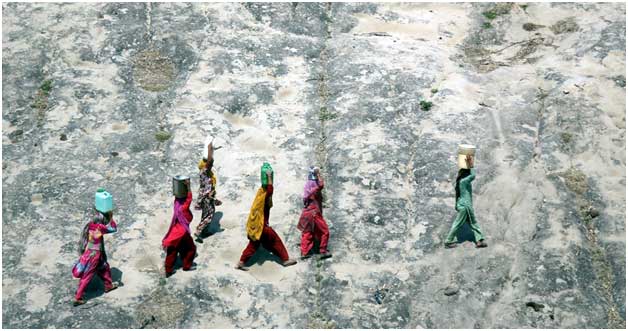
Women and girls have also seen their water collection time increased and firewood and fodder collection efforts thwarted in the face of droughts, floods and deforestation, occupying a significant portion of their time that could have been used for their education or leisure.

This is not only theory. For example, women and children accounted for more than 96 per cent of those impacted by the flash floods in Solomon Islands in 2014 and in Myanmar, women accounted for 61 percent of fatalities caused by Cyclone Nargis in 2008.

Women and girls also remain marginalized in decision-making spheres — from the community level to parliaments to international climate negotiations. Global climate finance for mitigation and adaptation programmes remain out of reach for women and girls because of their lack of knowledge and capacity to tap into these resources.
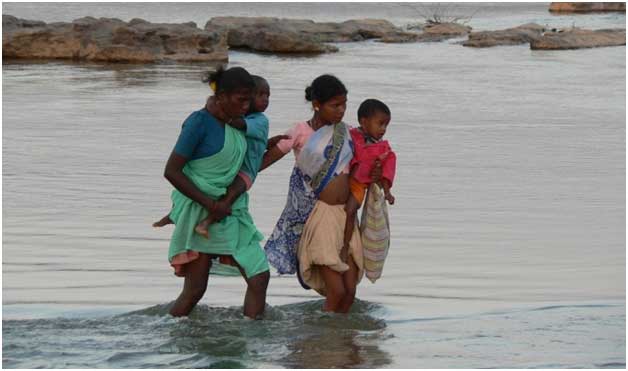
Despite these challenges, women and girls play a critical role in key climate related sectors and have developed adaptation and resilience-building strategies and mitigation techniques, such as driving the demand for renewable energy at the household and community levels for lighting, cooking and productive use solutions that the international community must now support.

Women are holders of traditional farming methods, first responders in crises situations, founders of cooperatives, entrepreneurs of green energy, scientists and inventors, and decision-makers with respect to the use of natural resources.

Women comprise an average of 43 percent of the agricultural work force in developing countries1 and manage 90% of all household water and fuel-wood needs in Africa. Some studies have shown that if women were afforded equal access to productive resources as men, their agricultural outputs would exceed men’s by 7 to 23 percent. It is therefore imperative to embrace and scale-up the initiatives of the 51 per cent of the world’s population.

In recent times, women and girls have used their knowledge and experience to lead in mitigation efforts. From developing apps to track and reduce the carbon emitted as a result of individual consumption, to reducing food by connecting neighbors, cafes, and local shops to share leftover and unsold food 2.

Young women scientists, like South-African teenager Kiara Nirghin, are making a difference in the fight against climate change. They are building on the legacies of women and girls such as Nobel Prize winner Wangari Maathai, who empowered communities to manage their natural resources in a sustainable way.

At the same time, UNDP and UN Women have been collaborating to advance gender equality and women’s leadership on climate change. For example, in Ecuador, the two UN agencies have teamed up with the government to support the inclusion of gender in the country’s climate action plans.

UNDP and UN Women have also collaborated globally to ensure that gender remains a key factor when world leaders make critical decisions on climate change.

If policies and projects take into account women’s particular roles, needs and contributions to climate action and support women’s empowerment, there will be a greater possibility to limit warming to 1.5°C in line with the 2030 Agenda for Sustainable Development. We must continue to engage women and women’s organizations, learning from their experiences on the ground to build the evidence for good practices and help replicate more inclusive climate actions.

The UN Secretary-General’s Climate Action Summit in New York on September 23, 2019 is a unique opportunity to elevate at the highest level the need for substantive participation of women and girls in efforts against climate change.

At the Summit, there will be several initiatives put forth to address climate change, including one focusing on gender equality. The initiative recognizes the differential impact of climate change on women and girls, and seeks support for their leadership as a way to make climate actions more effective.

It calls for the rights, differentiated needs and contributions of women and girls to be integrated into all actions, including those related to climate finance, energy, industry and infrastructure. It promotes support for women and girls in developing innovative tools and participating in mitigation and adaptation efforts and calls for accountability by tracking and reporting progress towards achieving these goals.

For climate action to get more traction and be effective, we need a critical mass of Governments and other stakeholders to sign on to the Climate Action Summit’s gender-specific initiative. The world cannot afford to keep limiting the potential of women and girls in shaping climate actions, as all evidence points towards the benefits of their involvement.

There is already interest by United Nations Member States, as shown in the increased integration of gender considerations in their national climate plans, but a broader movement is needed. We need multi-stakeholder partnerships and engage a critical mass of supporters – governments, UN entities, financial mechanisms, and civil society organizations to support the gender-specific initiative of the SG’s Climate Action Summit.

The time for gender-responsive climate action is now.

1 Food and Agriculture Organization of the United Nations (FAO), The State of Food and Agriculture: Closing the Gender Gap for Development (Rome: FAO, 2011a).
2 Olio, a food-sharing app was founded by women from Sweden, the UK and USA. For more info: https://unfccc.int/climate-action/momentum-for-change/women-for-results/women-leading-a-food-sharing-revolution; One Million Women was founded by a woman in Australia to get one million women to change their lifestyles to mitigate climate change. The group has an app that provides the tools to cut carbon pollution in home energy savings and clean energy options, minimising food waste, reducing over-consumption, investing and divesting (your money) wisely, sustainable fashion, low-impact travel, etc. For more info: https://www.1millionwomen.com.au/
  Source

U.N. Criticised for Link-up with Saudi Prince MBS

Armed Conflicts, Civil Society, Crime & Justice, Editors’ Choice, Featured, Global, Global Governance, Headlines, Human Rights, IPS UN: Inside the Glasshouse, Middle East & North Africa, Peace, Press Freedom, Regional Categories, TerraViva United Nations

Human Rights

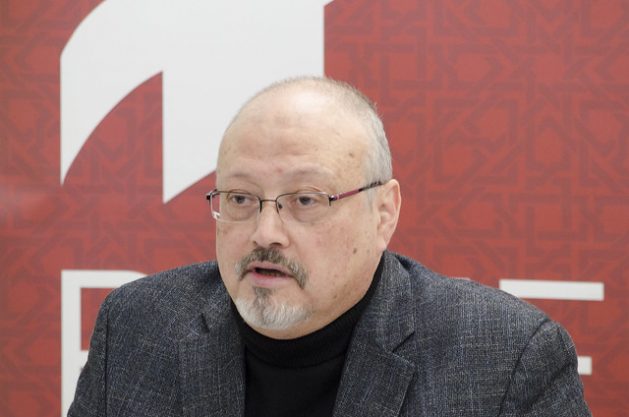
Jamal Kahshoggi, a US-based journalist who frequently criticised the Saudi government, was killed while visiting the Saudi consulate in Istanbul, where he was collecting papers for his wedding. Courtesy: POMED/CC by 2.0

UNITED NATIONS, Sep 4 2019 (IPS) The United Nations is under growing pressure to scrap an event it is co-hosting with the private foundation of Saudi Arabia’s crown prince Mohammad bin Salman, who has been linked to the killing of journalist Jamal Khashoggi.


On Tuesday, Sunjeev Bery, director of Freedom Forward, became the latest leader of a campaign group to press the U.N. to cancel the Sept. 23 event, saying it would help repair bin Salman’s reputation over the Khashoggi murder. 

The event, known as the Misk-OSGEY Youth Forum, is a partnership between the U.N.’s youth envoy, Jayathma Wickramanayake, and the Misk Foundation, a culture and education foundation chaired by bin Salman, who is better known as MBS.

“No one — especially not the U.N. — should be partnering with MBS or his personal Misk Foundation,” Bery told IPS.

“Saudi Arabia’s brutal crown prince is responsible for the deaths of thousands of Yemeni children. His thugs imprisoned leading women’s rights activists and murdered Jamal Khashoggi.”

Kenneth Roth, the director of Human Rights Watch, a campaign group, last week accused the world body of helping to “whitewash” MBS’s record; Mandeep Tiwana, from Civicus, a rights group, called the event “disturbing”.

The U.N. youth envoy’s office declined to comment on the row. U.N. spokesman Stephane Dujarric said the world body had repeatedly issued “very strong statements … calling for accountability” in Khashoggi’s killing.

The Misk-OSGEY Youth Forum will take place in New York only 10 days before the first anniversary of Khashoggi’s murder on Oct. 2 last year, when Saudi government agents killed and dismembered the journalist inside the country’s consulate in Istanbul.

The CIA later determined that MBS had personally ordered the hit. Saudi officials, who initially said Khashoggi had left the consulate alive, now say the journalist was killed in a rogue operation that did not involve MBS.

Saudi Arabia’s mission to the U.N. did not answer requests for comment from IPS.

The four-hour workshop for 300 young people at the New York Public Library will occur on the sidelines of the U.N. General Assembly and promote green themes, corporate responsibility and other aspects of the U.N.’s Sustainable Development Goal (SDG) agenda.

It will feature Alexandra Cousteau, an environmentalist and granddaughter of French explorer Jacques-Yves Cousteau; and Bart Houlahan, an entrepreneur who promotes sustainable business practices.

Other speakers include Andrew Corbett, an expert on entrepreneurship at Babson College, Paul Polman, former CEO of consumer goods firm Unilever, and Ann Rosenberg, an author and U.N. technology expert.

Dr. Reem Bint Mansour Al-Saud, a Saudi princess and an envoy to U.N. headquarters in New York, who advocates for empowering women and development in the Gulf kingdom, will also speak at the workshop.

Khashoggi, a United States-based journalist who frequently criticised the Saudi government, was killed while visiting the Saudi consulate in Istanbul, where he was collecting papers for his wedding.

U.N. expert Agnes Callamard issued a report in June that described the assassination as a “deliberate, premeditated execution,” and called for MBS and other Saudi officials to be probed.

The Misk-OSGEY Youth Forum comes after years of tensions between the U.N. and Riyadh over the war in Yemen, where Saudi Arabia is leading a military coalition against the country’s Houthi rebels. 

The conflict has killed tens of thousands of people and caused led to a major humanitarian crisis. 

“The crown prince and his violent government must be held accountable for their human rights crimes,” said Bery, who advocates for the U.S. to cut ties with Saudi Arabia and other authoritarian regimes.

“Instead, misguided U.N. staff are absurdly giving the crown prince a public relations platform as he attempts to wipe away the blood of so many dead Yemeni children.”

  Source

Human Rights Watch Disappoints on Human Rights

Armed Conflicts, Civil Society, Crime & Justice, Global, Headlines, Human Rights, Migration & Refugees, Natural Resources, Peace, Press Freedom, TerraViva United Nations

Opinion

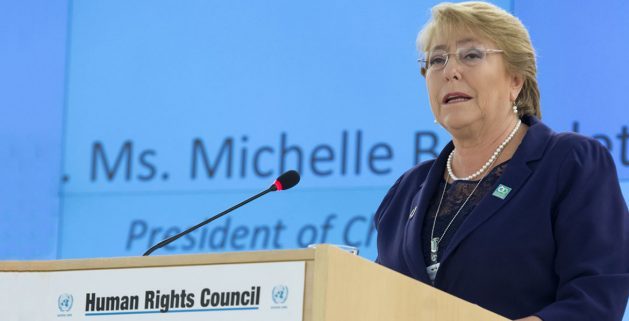
Michelle Bachelet, UN High Commissioner for Human Rights. Credit: Jean-Marc Ferré/UN Photo.

GENEVA, Jul 25 2019 (IPS) – On 22 July 2019, Kenneth Roth published an article in Publico, Lisbon, entitled: “UN Chief Guterres has disappointed on Human Rights”.


This essay lampooning Antonio Guterres is not a voice “against the tide” but very much mainstream – and demonstrably skewed. Major NGOs headquartered in rich advanced countries and enjoying generous funding from the Establishment may not always think “out of the box” and are as likely, as are the interest groups which support them, to politicize human rights and therefore to disappoint rights holders in smaller or weaker countries.

While they do contribute to exposing situations of human rights violations worldwide , they are not exempt from biases which reflect the structure of their central governing bodies or the cultural environment within which they operate. They cannot arrogate to themselves the sole legitimacy to speak in the name of the civil society of many countries , and when they claim to do so, they may disappoint rightsholders, particularly in the developing countries, whose priorities are frequently different from theirs.

Kenneth Roth’s bludgeoning of the UN Secretary General in this regard is yet another expression of grandstanding and even of a measure of arrogance. HRW’s criticism of China, Russia, Cuba, Nicaragua, Venezuela, would be more persuasive if the organisation addressed with the same intensity the egregious violations of human rights in many other countries

Sober analysis and stocktaking are necessary to determine whether and to what extent the priorities and agendas of NGOs’s like HRW are set by the overall interests of the established power-structures and multiple elites in many countries. Kenneth Roth’s article expressing disappointment at the human rights performance of Secretary General Antonio Guterres fails to identify the root causes of human rights violations.

His admonitions have little or no preventative value, and do not formulate constructive recommendations such as, for instance, the provision of advisory services and technical assistance to many countries that need it and have asked for it.

HRW’s “naming and shaming” strategy has been inconclusive at best because “naming and shaming” depends on the authority of the “namer” and the impartiality of the methodology. Kenneth Roth’s bludgeoning of the UN Secretary General in this regard is yet another expression of grandstanding and even of a measure of arrogance. HRW’s criticism of China, Russia, Cuba, Nicaragua, Venezuela, would be more persuasive if the organisation addressed with the same intensity the egregious violations of human rights in many other countries.

For instance, Mr. Roth does not mention the denial of the right of self-determination to millions of people, the retrogression in the enjoyment of economic, social and cultural rights (prohibited by the Covenant on Economic, Social and Cultural Rights), the looting of natural resources and degradation of the environment by transnational corporations and their neocolonial schemes, the impunity enjoyed by politicians who engage in aggressive wars and by paramilitaries and private security companies, the devastating human rights impact of blockades by source countries and economic sanctions on the populations of Gaza, Syria, Iran and Venezuela, which have caused and continue to cause tens of thousands of deaths.

The politicization or as we now witness with concern, the“weaponization” of human rights is taking the world on a slippery slope. When the Universal Declaration of Human Rights (UDHR)was adopted in 1948, Eleanor Roosevelt, Charles Malik, René Cassin and others spoke of human dignity and the inalienable rights of human beings, but article 29 of UDHR also reminded us that “everyone has duties to the community”.

Indeed, what is most necessary is global education in human rights, including the human right to peace, education in empathy and solidarity with others – compassion, not predatory competition in “the human rights industry” on a “holier than thou” ticket.

Meanwhile, Secretary-General Antonio Guterres should not be expected to act as a Human Rights NGO. This high office is not that of an unaccountable activist. It is neither that of a general that can blast any state at will nor is it a secretary that has to be subservient to the prevailing powers that be.

That high official must recognize the reality of the power balance that he cannot fundamentally alter but must strive with obduracy and at times courage to stretch the international community towards more compliance with the purposes and principles of the United Nations. Most importantly this means the promotion of peace through conflict-prevention, good offices, impartial mediation, disarmament and yes, human rights. When all diplomacy fails and only then may “naming and shaming” become an option. But it is a default option and a sign of diplomatic failure.

In the experience of both of us as Special Rapporteurs of the Human Rights Council, we have delivered on our mandates, not by openly challenging the authority of states or claiming to teach them lessons in human rights but by giving quiet diplomacy a chance .

This is how one of us together with another Independent Expert facilitated a lifting of the sanctions on Sudan and this is how we are again currently engaging with protagonists of other conflicts. We have succeeded in confidence-building and contributed to the release of detainees. Persevering and discrete advocacy bears fruit.

We want a SG that puts values above politics in human rights matters and this is, in our opinion, what Guterres is doing. We have a Secretary General that can speak for truth and can at least listen to the narratives of the smaller and weaker states who have no access to the world media and whose action is distorted by biased reporting.

Of course the murder of Khashoggi is a tragedy because beyond the tragic loss of a human life, it is the freedom of expression that is targeted. But Kenneth Roth does not mention the thousands of migrants whose lives end in the liquid graves of the oceans because saving them at sea is becoming a criminal offence in some « enlightened » nations.

Are there different values attached to life according to the « exploitability » of its loss for political aims? We do not think that the Secretary General should go down along this road, even if this may cause disappointment in some quarters.

We would be really concerned if the Secretary general were to follow the path of selective indignation advocated implicitly by Mr Roth, because he would lose the moral leadership that we all, people of good will, can identify with across the world. THAT would be a major disappointment.

We welcome in Antonio Guterres a Secretary General who does not hesitate to call a spade a spade, a SG who promotes peace and does not stoke conflict, who challenges unilateral economic sanctions, who supports the Right to Development1 and places the Secretariat of the United Nations in its service. We welcome a SG who, together with the new UN High Commissioner for Human Rights, Michelle Bachelet, are engaging all of humanity in the noble task – day by day – of implementing civil, cultural, economic, political and social rights in larger freedom – and in good faith.

Idriss Jazairy Special Rapporteur, UN Human Rights Council
Alfred de Zayas Former Independent Expert, UN Human Rights Council


​Media and Web Freedom Threatened in Sudan Turbulence

Africa, Civil Society, Featured, Global Governance, Headlines, Human Rights, IPS UN: Inside the Glasshouse, Peace, Press Freedom, Regional Categories, TerraViva United Nations | Analysis

Press Freedom

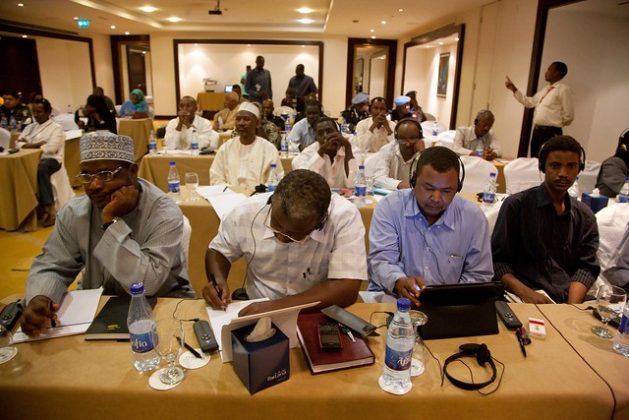
The United Nations said the current internet shutdown in Sudan forms part of a larger effort to stifle the free expression and association of the Sudanese population, and to curtail the ongoing protests in the country. In this dated picture, Sudanese journalists attend a press conference. Courtesy: Albert González Farran /UNAMID

UNITED NATIONS, Jul 9 2019 (IPS) – The United Nations has condemned an internet shutdown and the blocking of social media channels during Sudan’s political crisis, as fears persisted over a crackdown on media freedoms in the turbulent African country.


The U.N.’s independent expert on the human rights situation in Sudan, Aristide Nononsi, and two other officials, said in a statement that web blocking by Zain-SDN and other internet providers was stifling the freedoms of expression and association.

“In the past few weeks, we have continued to receive reports on internet blocking of social media platforms by the Transitional Military Council [TMC],” the experts said, referencing the TMC, which has run Sudan since the ouster of former president Omar al-Bashir in April.

“The internet shut down is in clear violation of international human rights law and cannot be justified under any circumstances. We urge the authorities to immediately restore internet services.”

The statement was co-signed by Clement Nyaletsossi Voule, the U.N.’s Special Rapporteur on rights to freedom of peaceful assembly and of association, and David Kaye, a special rapporteur Special Rapporteur on the promotion and protection of the right to freedom of opinion and expression .

The three officials said mobile operator Zain-SDN was behind the “most extensive blocking scheme” and had closed access to all key social platforms, which are used to share news and to arrange protests. Other providers MTN, Sudatel and Kanartel had also cut web access, they said.

“The internet shutdown forms part of a larger effort to stifle the free expression and association of the Sudanese population, and to curtail the ongoing protests,” the experts said in a statement on Monday.

“Restricting or blocking access to internet services not only adversely affects the enjoyment of the rights to freedom of expression, assembly and participation, but it also has severe effects on protesters demands’ regarding economic and social rights.”

Sudan’s military rulers ordered the internet blackout as a security measure on Jun. 3, when security forces also killed dozens of protesters as they cleared a sit-in outside the Defence Ministry in the centre of the capital, Khartoum.

The web blackout has affected most ordinary users of mobile and fixed line connections and is reportedly harming the economy and humanitarian operations in the African nation of some 40 million people.

Sudanese journalists have also raised concerns about the treatment of reporters during the ongoing political crisis.

On Jun. 20, journalist Amar Mohamed Adam was arrested and detained by the Rapid Support Forces (RSF), a paramilitary outfit under the TMC, before being handed over to the intelligence services, according to the Sudanese Journalists Network.

At the end of May, the TMC also ordered Qatar-based Al Jazeera Television offices in Khartoum closed, with officers from various Sudanese security branches turning up at the premises and seizing broadcast gear.

Sherif Mansour, a regional coordinator for the Committee to Protect Journalists, a watchdog and campaign group, described a “worrying sign” designed “to suppress coverage of pro-democracy events”. He urged the TMC to “reverse course”.

Protesters had been demanding the restoration of internet services as one of their conditions for getting back around the negotiation table with the TMC and forming a transitional administration made up of civilians and military officers.

Hopes were raised of a breakthrough last week, after Sudan’s military chiefs and protest leaders announced they had struck a deal on the disputed issue of a new governing body in talks aimed at ending the country’s months-long political crisis

The two sides reportedly agreed on a joint sovereign council to rule for a little over three years while elections are organised. Both sides say a diplomatic push by the United States and its Arab allies was key to ending a standoff that had raised fears of all-out civil war.


Sri Lanka on Security Alert Long After Easter Bombings

Asia-Pacific, Civil Society, Featured, Global, Global Governance, Headlines, Human Rights, IPS UN: Inside the Glasshouse, Peace, TerraViva United Nations

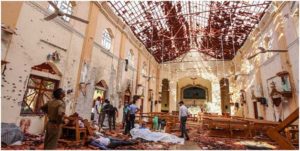
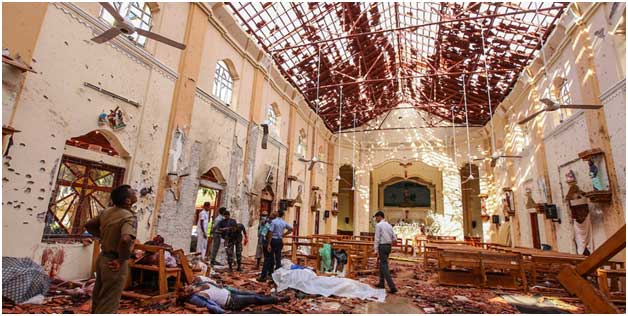
NEW YORK, Jul 3 2019 (IPS) – Sri Lanka continues to be on a security alert long after the devastation caused by a string of bombings on Easter Sunday this year.

Raisa Wickrematunge, Editor of Groundviews, told IPS: “There has been a tightening of security. There are now security checks being carried out outside hotels and shopping malls – either through scanners or bag and body searches”.


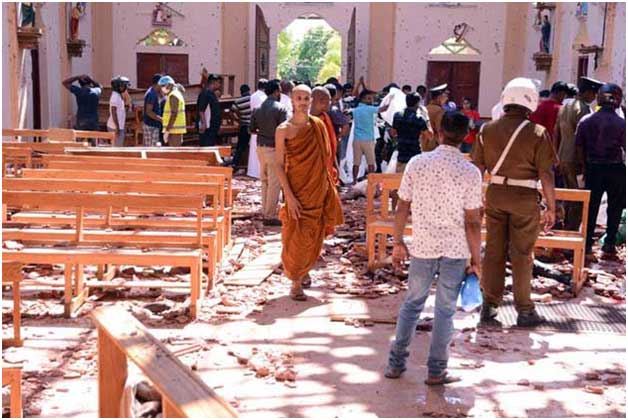
“At the St Anthony’s Church, where the first blast occurred, there are bag and body searches conducted before worshippers can go inside, and bags are left outside the Church premises. Many churches and some schools have also increased their security.”

Curfews were put into place and a social media ban was enacted temporarily, in order to prevent the graphic nature of the tragedies from being broadcast publicly. There has been much damage of the emotional and physical varieties in the once war ridden nation.

For one thing, this attack was not expected by the Christian minority in Sri Lanka. Despite this, they have persevered.

Father Rohan Dominic of the Claretian NGO told IPS: “For quite some time, there were attacks on the Muslim and Christian minorities by extremist Buddhists. In places, where the Buddhists were the majority, Christians lived in fear.”

However, in a turn of events that left many in shock, one of the minority groups seemed to be the ones that initiated the attacks that occurred on Easter.

All seven of the perpetrators allegedly belonged to a local Islamist group, National Thowheeth Jama’ath, according to government officials from the country.

In response to this, there have been bans put in place for burqas and niqabs, traditional facial coverings worn by Muslims and people have been denied entrance into establishments, even while wearing hijabs.

There were smaller bombings in Dematagoda and Dehiwala later on that same day. With a death toll of 290 people and 500 injured, domestic measures to protect the citizens were taken.

After its 26 year long civil war between the Tamil and Sinhalese ethnic groups came to an end in 2009, conditions in Sri Lanka were mostly calm.

However, on 21 April, 2019, the country erupted into violence. Three churches in the cities of Negombo, Batticaloa and Colombo, along with three hotels in the city of Colombo, were targeted in bombings by a group of seven Sri Lankan citizens.

The churches were St. Sebastian’s Church, Shrine of St. Anthony Church and Zion Church and the hotels were Cinnamon Grand, Kingsbury Hotel and Shangri-La Hotel.

Sri Lanka is a country that is primarily Buddhist with a large Hindu population and Christian and Muslim minorities.

Father Dominic said that, “The Catholic Church in Sri Lanka was able to recover from the attack quickly and aided the survivors and the families of the victims by consoling and caring for them. The Church also has guided the Christian community at moments of anger and frustration in controlling their emotions and not to blame the Muslims. This position of the Church has helped to prevent violence and created common understanding and religious harmony.”

According to Wickrematunge, there has been much help in helping the community adjust to life after the attacks and in restoring what has been lost.

Other efforts have been led by organisations such as the Red Cross, Kind-hearted Lankans, the Archbishop of Colombo and the Church of the American Ceylon Mission in Batticaloa. There have also been crowdfunding efforts on popular websites like GoFundMe.

Since the attacks have affected lives in a physical and emotional way, the state has given financial support to the affected as of 21 June.

There has also been a trust fund set up for children who have lost family members to the attacks.

Some of the industries affected, such as tourism, have been offered subsidized loans in order to help with paying employees. Psychological support and educational resources are being provided to citizens as well.

While it has only been three months since the attacks affected the lives of many, steps towards rebuilding have been made and the future appears to be promising.


Are We Fighting a Losing Battle in the War Against Drugs?

Civil Society, Crime & Justice, Featured, Global, Global Governance, Headlines, Human Rights, IPS UN: Inside the Glasshouse, Peace, Poverty & SDGs, TerraViva United Nations

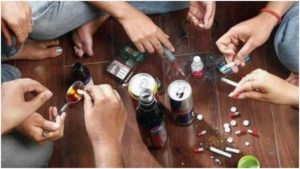
UNITED NATIONS, Jul 3 2019 (IPS) – How effective is the global war on drugs?

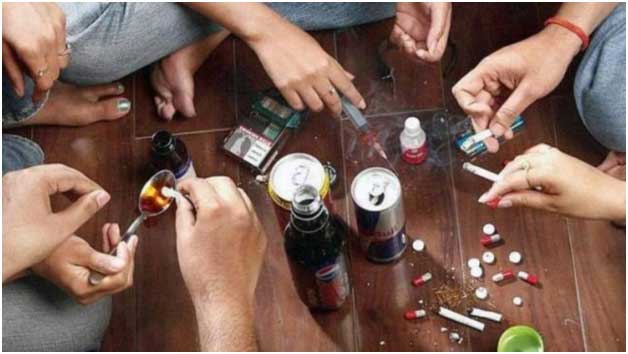
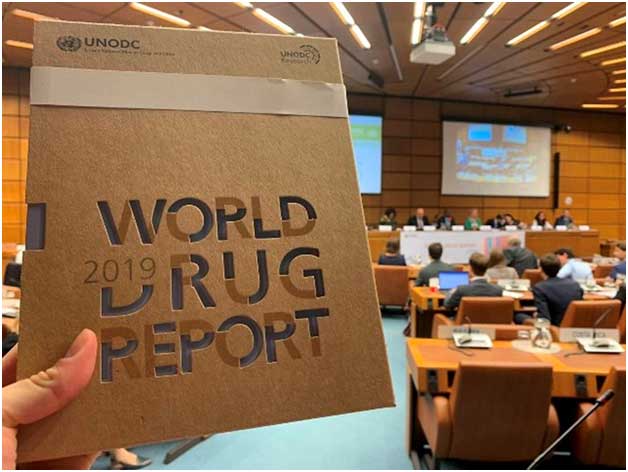
The latest statistics released by the UN Office on Drugs and Crime (UNODC) are staggering: 35 million people across the globe currently have a substance use disorder, and as of 2017, 585,000 people have died worldwide as a result of drug use.


According to a recently-released UNODC report, the lack of proficient drug treatment and facilities for those that need it is impacting mortality rates at alarming levels.

Hence, it stands to reason that treatment and prevention are immensely falling short of the mark on a global scale.

Prisons are also no exception to these shortcomings. In fact, the Report unmasked that those incarcerated for drugs are more likely to continue being exposed to drugs.

The Report also highlighted that out of the 149 countries that were surveyed, about 1 in 3 people reported that they consumed drugs in prison at least once while incarcerated, and 1 in 5 people who are currently incarcerated reported that they have used drugs within the past month.

“In terms of data, we did some data collection, always trying to get as much as possible, in terms of socio-economic characteristics, we would have this type of data, I imagine, and this is also something that will run throughout the new report, and is being discussed now.” Chloé Carpentier, Chief of the Drug Research Section told IPS.

The issue between drugs and human rights is on Secretary General António Guterres’ radar as well.

“Together, we must honour the unanimous commitments made to reduce drug abuse, illicit trafficking and the harm that drugs cause, and to ensure that our approach promotes equality, human rights, sustainable development, and greater peace and security.” Secretary General António Guterres stated on the International Day Against Drug Use and Illicit Trafficking.

“We will make sure that no one with a drug problem is left behind” Dr. Miwa Kato assured, during the official launch of the Report on June 26.

Dr. Kato continued to push this message throughout her speech and cited that “Health and justice need to work hand in hand.”

Beyond the UN, this is a topic of interest for the academia world as well, since young people are heavily susceptible to a substance use disorder.

“It is important that we say people— not user or addicts, that language itself is stigmatizing.” Dr. Danielle Ompad, Associate Professor, College of Global Public Health and Deputy Director, Center for Drug Use and HIV Research at New York University (NYU) told IPS.

Dr. Ompad highlighted the importance of person-first language, citing that “It is important how we refer to people, and view them as humans, and not just the behavior (the substance use).

In terms of the World Drug Report, she noted that “The war on drugs, if you look at it, hasn’t really been an effective war”, and elaborated that the focus should not be supply- side intervention, because in the long run, drugs are going to be produced and sold no matter what, which leads to mass incarceration, which doesn’t benefit any party.

It is also important to recognize that “not everyone needs treatment, and those that do should absolutely have access to it. But just because you use marijuana does not mean you are an addict”.

She went on to suggest a harm- reduction approach. The harm-reduction approach blends a plethora of strategies from safer use to managed use to abstinence- it meets the need of the person.

www.HarmReduction.org

Meanwhile, tracing back to the issue of treatment, the Report affirmed that over 80% of the world’s population lack access to adequate treatment with only 1 out of 7 people with a substance use disorder receiving treatment each year.

The Report showcased that women cited a strong sense of fear that kept them from seeking the help that they needed for a variety of reasons that ranged from possible legal issues to the lack of childcare while in treatment.

Another issue is several countries, particularly in Asia, is the death penalty for any person found guilty of a drug ‘offense.’

Last month, Sri Lanka’s President, Maithripala Sirisena signed death warrants for four convicts- thus pushing the notion that those who have a substance use disorder are ‘dirty’ and should be disposed of.

Similarly, in a 2014 study conducted by Johns Hopkins Bloomberg School of Public Health, it was shown that having a substance use disorder was viewed more negatively than mental illness. Ironically, however, the two are all but intertwined.

This is also evidenced by the Report- about half of the world’s population that develop a mental disorder will also experience a substance use disorder in their lifetime.

However, it is to be noted, that despite all of the above, the Report only cited the “lack of effective treatment interventions based on scientific evidence and in line with human rights obligations.” but made no further elaborations on the what’s and how’s and was only discussed briefly at the official Report launch.

That said, the issue of ensuring those that do have a substance use disorder are provided for while figuring out more beneficial and healthier initiatives to reduce drug rates across the globe are currently being discussed among the United Nations (UN) and United Nations Office on Drugs and Crime (UNODC).

Dr. Ompad said for better or worse, licit, and illicit drug use is part of our world.

“Focus a little bit more on harm reduction,” Dr. Ompad stated, and above all “We need to stop the war on the people who use drugs,” she declared.