Global Governance and Information

Civil Society, Civilisations Find Alliances, Climate Change, Development & Aid, Education, Environment, Featured, Global, Global Governance, Headlines, Human Rights, Natural Resources, Peace, Poverty & SDGs, TerraViva United Nations

Opinion

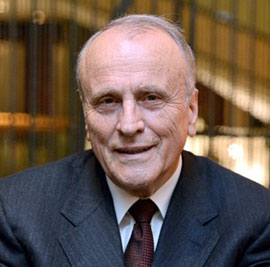
Ambassador Walther Lichem* of Austria is President Inter Press Service (IPS).

VIENNA, Apr 16 2019 (IPS) – The past seventy years since the end of the second world war have been marked by profound changes in our international system. Relations between states have become more horizontally structured interactions with a rising significance of the common good articulated and pursued by newly-created international programmes and organisations.


Ambassador Walther Lichem

The international agenda increasingly consists of items addressing internationally and globally-shared challenges of dependencies and interdependencies.

The traditional security and peace focus has been broadened into areas of concern which require contributions and activities not only by states but by international organisations and programmes who jointly with non-state actors such as academic institutions and associations, civil society organisations, the private sector including those who joined the Global Compact, have contributed to a new pattern of leadership in the processes of defining our global goals and in the implementation of the related programmes of action.

Another characterizing element in our Global Agenda related-approach is the inter-sectoral interdependence reflected in the international community’s agenda marked by “AND” – “climate change and international security”, “human rights and societal cohesion” etc.

These agenda—and interrelated-ness—require, however, also institutional integration cutting across the institutional development marked by sectoral segregation. There is a rising need for each agenda sector to be fully up-to-date regarding the entire pattern of global challenges and the related plans of action, using this level of information for the development of institutional integration.

There is also a rising need for information flows between governmental/ intergovernmental and non-governmental organizations (NGOs).

The new global agenda benefits from the work and conclusions of academic institutions and programmes, a relationship which regrettably has not yet been fully recognized by the international system.

Many of our important global agenda items based their policy approach on research and academic discourse – e.g. the issue of environmental protection, the concept of sustainability, the process of climate change, the societal development needs and human rights etc.

Another dimension of the pluralisation of global governance affectedness and responsibility is the role of each and every citizen on the globe to know and understand these challenges and assume a rising responsibility in addressing them.

Certain agenda areas, such as environmental protection, the sustainable development and use of our natural resource systems, human rights and human security have given the citizen an almost central role in the achievement of the declared objectives.

Today, every citizen can contribute to the recognition of the dignity of the other and the related human rights. The impact of citizen-focused human rights programmes is visible in human rights cities in all regions of the world. The citizen creating conditions of societal cohesion also essentially contributes to peace and security.

Private sector decisions can make important contributions to both the natural resources related and societal cohesion-related challenges. Academic institutions must adjust their programmes of research and of university education to the global agenda-related challenges.

The cultural sector provides important inputs into the development of values and related behavioural patterns related to the challenges of pluri-identity societies and the integration of otherness.

All these new patterns of responsibility and contributions to achievements for our Global Agenda, however, do require qualified information. It must be recognized that complex academic or policy-process related studies and reports are not accessible to the general citizenship including those in positions of responsibility at local and national levels.

Even governmental institutions and the international diplomatic community cannot internalize all the documents which are to serve as a basis for multilateral negotiations.

The development of this new participatory system of global governance with intergovernmental institutions and processes, national governments and local authorities has led to the recognition of an urgent need for qualified patterns of information which translate challenges, achievements and failures to the political responsibilities at local, national and also international levels, to governmental, inter-governmental and non-governmental institutions who have increasingly shaped our Global Agenda and articulated the rising need for societal understanding and information.

Media are the classical providers of such information combining data with assessments and the vision of our common future. Yet, as analysis of the current situation underlines, there is an urgent need to strengthen qualified information systems which would provide not only governmental, intergovernmental and non-governmental institutions and the citizens but also the media with pertinent and needed information.

There is no way into a future of shared global responsibility without a qualified and also ethically committed system of information related to our processes of global change.

There is a need to recognize that such highly pertinent information related to our common future requires recognition and support from the global society as a contribution to our shared global public space.

This implies that support is to be provided from governmental, intergovernmental and non-governmental institutions. A respective policy discourse with participation from these institutions is to be envisaged in order to prevent the decay or elimination of qualified programmes like Inter Press Service.

*Walther Lichem, retired Austrian Ambassador with studies in law and oriental archaeology (Univ. of Graz, Austria) and political science (Univ. of North Carolina, Chapel Hill; Institute for Advanced Studies, Vienna) started his professional career in 1966 at the United Nations Secretariat in New York in the field of international water resources with development cooperation missions to Ethiopia (1971), Argentina (1971-74) and to the Senegal River Development Organisation (1980). He was also Rapporteur on international river basins at the International Conference on Water Law (Caracas, 1976) and at the IVth World Water Conference (Buenos Aires, 1982).
Ambassador Lichem undertook major assignments in the UN system at the Human Rights Summit in Vienna in 1992 and as Ambassador to Chile and to Canada, as a member of the UN Committee on the Peaceful Uses of Outer Space and as an adviser to the 16 countries sharing the Guinea Current in West and Central Africa on the creation of a regional organisation.
 

Civil Society Under Attack in Name of Counterterrorism

Active Citizens, Civil Society, Conferences, Development & Aid, Editors’ Choice, Featured, Global, Global Governance, Headlines, Human Rights, IPS UN: Inside the Glasshouse, Peace, Population, Regional Categories, TerraViva United Nations

Civil Society

This article is part of a series on the current state of civil society organisations (CSOs), which was the focus of International Civil Society Week (ICSW), sponsored by CIVICUS, and which took place in Belgrade, April 8-12.

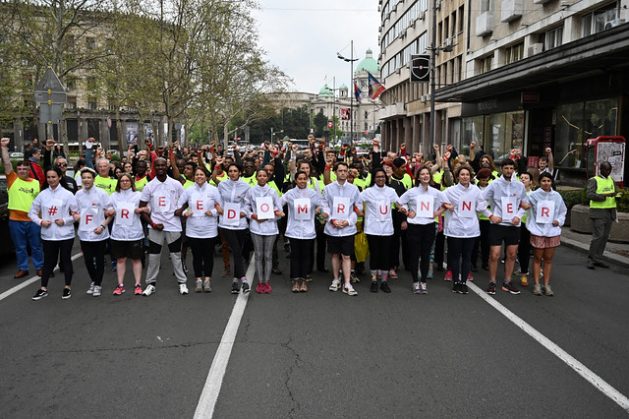
More than 200 civil society leaders and human rights activists from some 100 countries took to the streets of Belgrade, Serbia in solidarity with those whose basic freedoms are at risk. They participated in the International Civil Society Week (ICSW), sponsored by CIVICUS, which took place in Belgrade, April 8-12. Courtesy: CIVICUS

UNITED NATIONS, Apr 15 2019 (IPS) – Counterterrorism measures are not only affecting extremist groups, but are also impacting a crucial sector for peace and security in the world: civil society.


Civil society has long played a crucial role in society, providing life-saving assistance and upholding human rights for all.

However, counterterrorism measures, which are meant to protect civilians, are directly, and often intentionally, undermining such critical work.

“Civil society is under increased assault in the name of countering terrorism,” Human Rights Watch’s senior counterterrorism researcher Letta Tayler told IPS, pointing to a number of United Nations Security Council resolutions as among the culprits.

“Nearly two decades after the September 11 attacks, we are seeing a very clear pattern of overly broad counterterrorism resolutions. We are seeing a clear pattern of violations on the ground that are being carried out in the name of complying with binding Security Council counterterrorism resolutions,” she added.

Just two weeks after September 11, 2001, the UN Security Council unanimously adopted Resolution 1373 which called states to adopt and implement measures to prevent and combat terrorism.

Since then, more than 140 countries have adopted counterterrorism laws.

The newly approved Resolution 2462, passed at the end of March, requires member states to criminalise financial assistance to terrorist individuals or groups “for any purpose” even if the aid is indirect and provided “in the absence of a link to a specific terrorist act.”

While the resolution does include some language on human rights protections, Tayler noted that it is not sufficient.

“It is not sufficiently spelled out to make very clear to member states what they can and cannot do that might violate human rights on the ground,” she said.

Blurred Lines

Among the major issues concerning these resolutions is that there is no universal, legal definition of terrorism, allowing states to craft their own, usually broad, definitions. This has put civil society organisations and human rights defenders (HRDs) alike at risk of detention and left vulnerable populations without essential life-saving assistance.

“I think it is irresponsible of the Security Council to pass binding resolutions that leave up to States to craft their own definitions of terrorism…that’s how you end up with counterterrorism laws that criminalise peaceful protest or criticising the state,” Tayler said.

Oxfam’s Humanitarian Policy Lead Paul Scott echoed similar sentiments to IPS, stating: “The Security Council, by being overly broad, is just giving [governments] the tools to restrict civil society.”

According to Front Line Defenders, an Irish-based human rights organisation, 58 percent of its cases in 2018 saw HRDs charged under national security legislation.

Special Rapporteur on the promotion and protection of human rights while countering terrorism Fionnuala Ní Aoláin found that 67 percent of her mandate’s communications regarding civil society were related to the use of counter-terrorism, and noted that country’s counterterrorism laws are being used as a “shortcut to targeting democratic protest and dissent.”

In April 2018, thousands of people took to the streets in Nicaragua to protest controversial reforms to the country’s social security system.

According to the Office of the UN High Commissioner for Human Rights, over 300 people have been killed, more than 2,000 injured, and 2,000 arrested—some of whom were reportedly subject to torture and sexual violence when detained.

Many of those arrested will also be tried as terrorists due to a new law that expanded the definition of terrorism to include a range of crimes such as damage to public and private property.

At least 300 people, including human rights defenders, face charges of terrorism.

The Central American country said that the law was passed to comply with the Financial Action Task Force (FATF), an intergovernmental body that works alongside the Security Council to combat terrorist financing.

A Civil Society Facing Uncivility

Tayler also pointed to the lack of consequences for States that pass counterterrorism laws that do not abide by their obligations under international law.

In Resolution 2462, member states are told to comply with international humanitarian law when cracking down on terrorist financing but does not require countries to consider the effect of such measures on humanitarian activities such as providing food and medical care.

“In the zeal to be as tough looking as they can possibly can, governments have overlooked very very easy ways to protect those of us who are providing life-saving aid,” Paul told IPS.

The lack of protections for civil society and its impacts was most visible during the 2011 famine in Somalia.

In an effort to restrict “material support” to terrorist groups, countries such as the United States enacted counterterrorism legislation which blocked aid into areas controlled by Al-Shabab.

This not only impeded local and international organisations from doing their job, but one report noted that the constraints contributed to the deaths of over 250,000 people in the East African nation.

The problem has only gotten worse since then, Paul noted.

“The measures imposed by governments are unnecessarily broad and they prevent us from working in areas that are controlled by designated terrorist entities. What they have essentially done is criminalise humanitarian assistance,” he said.

Tunisia has used its terrorism financing laws to shut down a number of civil society organisations.

According to the Euro-Mediterranean Human Rights Monitor, approximately 200 organisations were dissolved and almost 950 others were delivered notices, referring them to courts on charges of “financial irregularities” or “receiving foreign funds to support terrorism” despite the lack of substantive evidence.

Many of the dissolved organisations provided aid and relief for orphans and the disabled.

All Eyes on Deck

Tayler highlighted the importance of the UN and civil society to monitor how counterterrorism resolutions such as Resolution 2462 are used on the ground.

“While we would love to see amendments to this resolution, pragmatically the next best step is for all eyes—the eyes of civil society, the UN, regional organisations—to focus on just how states implement this resolution to make sure that overly broad language is not used by states to become a tool of repression,” she said.

“The UN and leaders of countries around the world should use International Civil Society Week as an opportunity to take stock of the risk that this trend has posed on both to life-saving aid organisations and human rights defenders and to reverse this dangerous trend,” Tayler added.

Paul pointed to the need to educate both the public and policymakers on counterterrorism and its spillover effects as well as the importance of civil society in the global system.

“Civil society is a key part of effective governance. We don’t get effective public services, we don’t get peace, we don’t get to move forward with the anti-poverty agenda if civil society actors aren’t strong and empowered,” he said.

“If governments aren’t careful about protecting our right to stand up for marginalised and vulnerable populations, everyone will hurt. Not just those populations. It will have an effect broadly on our societies,” Paul added.



