Rural Education: Moving Past “Poor Solutions for Poor People”

Asia-Pacific, Civil Society, Development & Aid, Education, Headlines, Poverty & SDGs, Regional Categories, TerraViva United Nations
Education

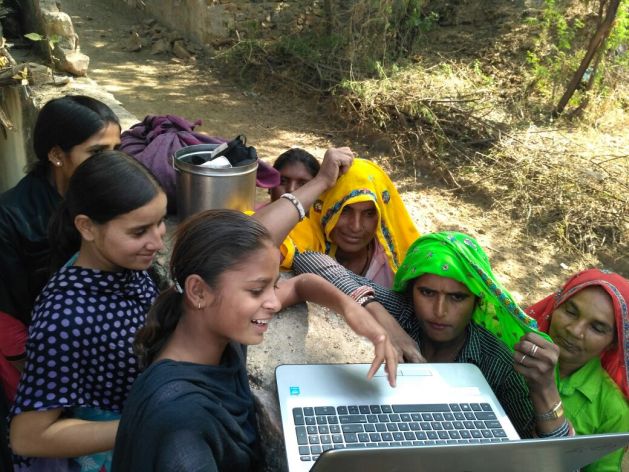
People often believe that the problems in the education space have more to do with curricula or pedagogy, or with the capacity of teachers. We disagree. The main issue is that today, communities are missing from the school ecosystem.

Photo Courtesy: Sachin Sachdeva

NEW DELHI, May 6 2019 (IPS) – Communities are treated as passive recipients, giving them no say in the functioning of their schools. Here’s why this needs to change.


During our work with people living around the Ranthambhor National Park on issues of conservation, livelihoods, and eco-development, a constant question we were asked was how long we thought we could continue helping them. And then, an accompanying question — would their children never be in a position to help themselves? To advocate for and implement the change they wanted to see?

People had been led to believe that sending children to school was a precondition for a better future. Despite this, what they kept seeing was that the education system accessible to them was not equipping their children with the skills and abilities that they required to negotiate better futures for themselves.

Poor solutions for poor people

Working in Sawai Madhopur made us painfully aware of the community’s past experiences with education. Over time they had experienced the Shiksha Karmi Programme (which trained daughters-in-law to run schools), and the Rajiv Gandhi Pathshalas (which trained a young person who had passed Class 10, to run schools), not counting their countless experiences with government schools in the larger villages, most of which were sub-optimal.

When we look at the pitfalls of the government schooling system — be it teacher absenteeism, quality of textbooks, a lack of adequate infrastructure, constrained budgets and human resources — and the plans or schemes that have been created to address them, we realise that most of them could be categorised as ‘poor solutions for poor people’.

People often believe that the problems in the education space have more to do with curricula or pedagogy, or with the capacity of teachers. We disagree. The main issue is that today, communities are missing from the school ecosystem.

The current school system has made communities passive recipients of whatever the government tosses at them, giving them no say in the functioning of the school. It does not work with the community to help them actively engage with the process.

People don’t understand the gap between their aspirations and reality

The idea that any kind of education should lead to a job (preferably a government one) is prevalent amongst the communities we work with. However, what is less clear is how exactly that will happen, and what the probability is of it happening at all.

People had begun to realise that their education system was leaving children under prepared – they may have completed class 10 or 12, but their capacities and skill sets were far lower than they should have been – making it impossible for them to find the job they dreamed of, or continue on an educational path that would get them there.

What’s worse, by dedicating most of their time and resources to school, these children were sometimes unable to take up their traditional occupations – be it in agriculture or livestock rearing – making them incapable of earning a substantial income.

In such a situation, with huge gaps between their reality and aspirations, young people often found themselves helpless. There was scarcely anyone in the village who could have told them what needed to be done to become a doctor, engineer, bureaucrat, lawyer, entrepreneur – or what it entailed.

Despite this, children would go through their schools and come to urban centres looking for opportunities – be it that elusive government job or being a professional. It was only upon reaching the cities that they would realise how under-prepared they were, and as a result end up taking whatever work they could get–as waiters, drivers, cleaners, helpers, construction workers and similar positions in the informal sector.

It is no surprise then, that when it came to education, people in the community were losing faith in government schools.

Communities are the main stakeholder in their education

People often believe that the problems in the education space have more to do with curricula or pedagogy, or with the capacity of teachers. We disagree. The main issue is that today, communities are missing from the school ecosystem.

The community is the biggest stakeholder in the education space, and they need to be treated as such. People need to have a real idea of what they can expect from the system, and they need the system to be accountable to them. This has never happened.

So while there is plenty of work being done to train teachers, help principals, build the skills of School Management Committees (SMCs), design curriculum and change pedagogy, there is not enough being done with parents and community members. Even though parents make up the bulk of the SMC, they tend to be involved only in issues related to infrastructure or for instance, looking at teacher attendance or organising events – essentially any activity that is easy to monitor and does not demand engagement in processes.

It is time that we understood that education is about creating the right ecosystem for learning to happen, and that a village and its community are part of that process. When families have a better understanding of learning processes, they will also ensure that the home environment provides the right encouragement. When community members are able to offer their knowledge—as farmers, mechanics or officers in government—to students, they are teaching children about different possibilities in their future. It is only through involvement of the community that people will learn to ask the right questions, to seek accountability from the system. SMCs, being a subset of the community, offer a channel to do this. And if the community is aware, the SMCs will also function well.

For change to occur, communities must be more aware, and in charge of their education.
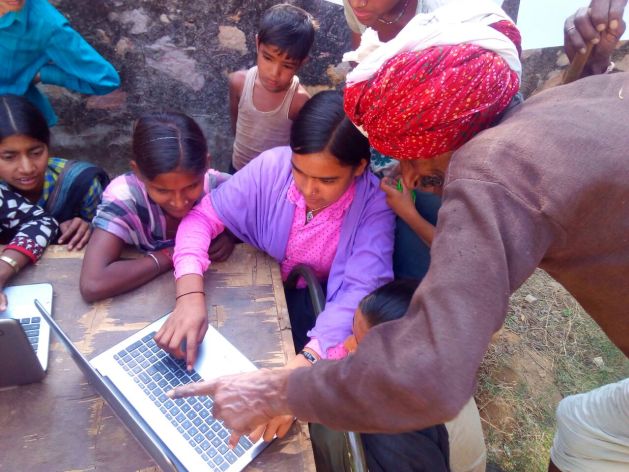
People often believe that the problems in the education space have more to do with curricula or pedagogy, or with the capacity of teachers. We disagree. The main issue is that today, communities are missing from the school ecosystem.

Photo Courtesy: Sachin Sachdeva

Working with communities to improve the education system

Having said that, we have to keep in mind that today, most communities, having been passive recipients of education thus far, are unprepared to challenge the system. It is therefore essential that we work to change this.

Based on our work at Gramin Shiksha Kendra (GSK) – an organisation which works with communities to enhance the quality of education in government schools – over the last 14 years, here are some suggestions on how this can be done:

1. Give them positions of seniority/power

Include members of the local community in your organisation board and involve them in the decision making. For example, at GSK we have people from the community on our board – some of them are parents who missed the opportunities of a quality education for their children, and two of them have never been to school but bring in their insights, wisdom and understanding of the local context.

These community members have guided and helped the organisation evolve its strategies, brought concerns and aspirations of the people to the board, and cautioned us against taking decisions that might not have the right impact.

2. Change your metrics of success

For example, we have kept the strength and management capacities of the school management committees as our apex indicator of success/failure, rather than only focussing on learning outcomes. We believe that when the schools and government-appointed school teachers become accountable to the SMC, and the SMC is in a position to guide and manage, the initiative will have succeeded.

3. Involve them in the work being done

Members from the community are invited to teach in the schools as guest teachers. Their experiences add to the curriculum of the school and are adapted for the schools. To be a teacher is still a valued profession, which gives parents a sense of importance and respect in the area.

Additionally, in an attempt to create a community-led ecosystem for education, we have an annual education festival called Kilol in our villages. The village community takes responsibility to organise Kilol’s and GSK shares, through exhibits and processes, our ways of teaching science, language, math, as well as the importance of components like pottery, sport and carpentry. The festival gives everyone in the community an opportunity to celebrate learning and understand what happens in school.

4. Give the initiative that is for them, to them

Our latest attempt is in handing over one of the schools that GSK set up back to the community to manage. That is when the school will become truly community-owned and community-managed.

We made this possible by, over the last 14 years, giving different members from the community a chance to be a part of the SMC. This has resulted in over 35 members in the community who have at one point or another been members of the SMC.

Because of their experience, the SMCs will soon be able to take over the management of the school and run it. GSK plans to facilitate this process and will help the SMC and the community evolve a future course of action – whether that leads to a science education initiative in the area, a comprehensive school, or an outreach programme.

This is important, as it defines our education initiative in the area. We don’t intend running the schools for ever, we want the community to take over. This will be our biggest success and we will continue providing them the technical support – or any other support that they may require. Most importantly, by giving the school back to the community, we are giving power back to the people – which is where it should be.

Sachin Sachdeva is a Co-Founder of Gramin Shiksha Kendra, www.graminshiksha.org.in , an organisation which works with communities to enhance the quality of education in government schools. Sachin has worked with development initiatives over the past 25 years and has been working with communities to help them look at their futures from a position of strength. GSK works with over 70 schools around the Ranthambhor National Park and along with the community runs three schools, one of which has been set up in a rehabilitated village. He is currently Director of the Paul Hamlyn Foundation’s India programme.

This story was originally published by India Development Review (IDR)
 

Want Social Change? Give Communities More Agency

Asia-Pacific, Civil Society, Development & Aid, Featured, Headlines, Human Rights, Poverty & SDGs, TerraViva United Nations

Human Rights

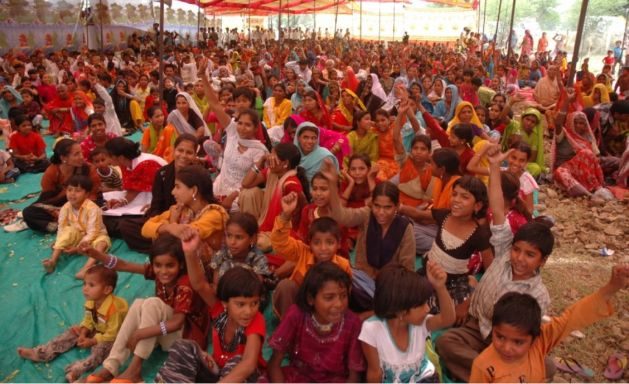
if issues around social justice had to be taken to scale, and if we wanted to create deeper impact,we needed to involve the communities affected.

Photo Courtesy: Jan Sahas.

DEWAS, India, May 3 2019 (IPS) – No external force can bring about real change in society. Only the community itself can.


There are 650 districts in India. However, most nonprofits work only in a few districts. Given how large our country is, there are only two types of people that can work towards creating change at scale – the communities that are facing the issues first hand, and the government.

The government has not been able to work on issues related to social justice in the last 60 years. Perhaps they think that this is not important enough, or there is no political will to do it. So, we at Jan Sahas, chose to involve the community.

We realised that if issues around social justice had to be taken to scale, and if we wanted to create deeper impact,we needed to involve the communities affected. If it didn’t become the community’s own initiative, or if they kept thinking that some civil society organisation or government agency would come and work on their issues, it would never be sustainable.

That’s why in 2001, we started a national campaign named Rashtriya Garima Abhiyan. Centred around the idea of dignity, this campaign was aimed at mobilising Dalit manual scavengers, all of whom were women. We wanted to empower them to move out of this work and enable them to scale up the programme on their own. We thought that working with manual scavengers would be a good entry point to work on ending exclusion.

Caste-based marginalised communities in our country have faced historical injustice — not just for the last five-six generations, but for the last 2,500 years

But caste-based marginalised communities in our country have faced historical injustice — not just for the last five-six generations, but for the last 2,500 years. Even if they earn money and stop doing caste-based work, the social stigma never goes away. Even if the person becomes a collector, or starts an enterprise, the discrimination continues.

We need three types of rehabilitation

If people have to come out of caste-based work, they need three types of rehabilitation:

1. Economic or livelihood rehabilitation

In the caste-based work of manual scavenging, the biggest issue is that the oppressor or employer provides them food, clothing and shelter. In rural India, they get two rotis every day, clothes twice a year — during Holi and Diwali, and the panchayat gives them a place to stay, So, in essence, their basic needs of roti-kapda-makaan are taken care of by the person or the institution that employs them. What this means though is that they are unable to negotiate with their employers.

If you are going to get paid in cash for work, you can negotiate. For instance, if the employer says ‘I will give you INR 20’, you can say, ‘No, I will charge INR 50’. But if your life itself is dependent on what they give you, then you can never negotiate.

Therefore, if we have to start changing the way caste is viewed and reinforced, we have to start with economic rehabilitation. If marginalised caste groups get work which pays them in cash, they can negotiate the terms for their wages, working conditions, dignity and relationships at the workplace.

However, this is only step one. The second, and more important one, is social rehabilitation.

2. Social rehabilitation

The government never thinks about this aspect. Under social rehabilitation, if someone gives up their (caste-based) work, they should be given work that factors in the social aspect as well.

For instance in 2013, we appealed to several state governments; we said that when you appoint ICDS workers and helpers — positions that do not require an educational background, offer INR 3,000-4,000 monthly salary and where the employee has to be a woman, give priority to the women from the manual scavenging community.These women could prepare the meals provided under the ICDS scheme, and all children regardless of their caste would eat that food.

This process was started in Uttar Pradesh but many powerful groups forced the state to rescind the order; today it is no longer compulsory. In Madhya Pradesh on the other hand, while there was some struggle to start with, it has now been firmly established in many districts.

The discrimination extends across several government schemes. In many villages, where the PMAY is being implemented, Dalit communities are given homes in a separate place. They call it a ‘colony’ and it is commonly understood to be land outside the village. However, all the resources such as electricity, water, anganwadis are available only inside the village.

If you want to stop caste-based practices, you cannot work with the excluded people alone. Other related stakeholders have to be held accountable. Like they say in the gender discourse — if you want to end sexual violence, you have to get the male members of the community involved.

3. Political rehabilitation

Being political is not about party politics. It is about the power of representation. If women from excluded communities want to be part of the local panchayat, they should have the space to do so. The problem is, that today, they don’t have this space.

For example, we started a campaign with rape survivors, that they should contest elections for the panchayat. As a result of this campaign, 104 women participated in panchayat elections. Almost 50 percent of them won. Many of them contested on unreserved seats. They fought and they won. The idea was for them to challenge the power structure.

In some places we had to work with their family members as well, in some with the society at large. When these excluded women gain power, then at some level, the discrimination stops.

We realised that if issues around social justice had to be taken to scale, and if we wanted to create deeper impact,we needed to involve the communities affected.

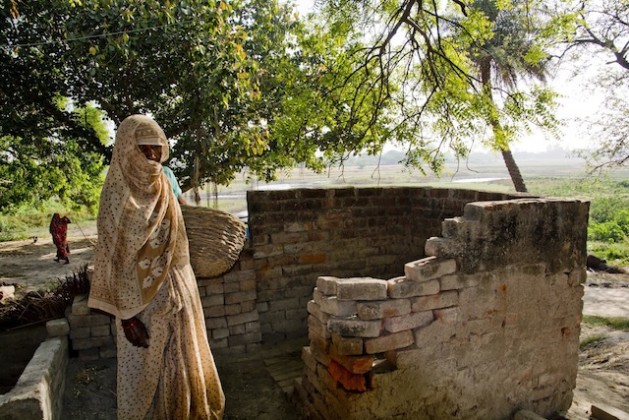
A Dalit woman stands outside a dry toilet located in an upper caste villager’s home in Mainpuri, in the northern Indian state of Uttar Pradesh. Credit: Shai Venkatraman/IPS

It takes years to break social barriers, even among the marginalised

Jan Sahas works with manual scavengers, rape survivors and young girls who have been forced into commercial sexual exploitation. One of the biggest challenges we face is that it is very difficult to make these communities come together. Getting ‘outsiders’ to change their social behaviour requires work at a different level. But even within these disadvantaged groups, people follow discrimination and untouchability practices.

For example, in Bhaurasa, a village in Madhya Pradesh, we had women who had managed to stop doing caste-based work.  There were 17 women from the Valmiki community, and 10 from the Hela community. Valmiki is a Dalit Hindu community, while Hela is a Muslim community. It took us three years to bring them together in one place for a meeting.

For two and a half years, we conducted meetings with adults in the community to convince them. Despite that we failed to change their beliefs. But when we started working with the young — using games and activities — it took almost no time.

One of the games we played was taking one child from the Valmiki community and the other from the Hela — one a Dalit and the other a non-Dalit. We told them that the Dalit child would become non-Dalit for a day, and vice versa.

We observed a big change in behaviour. The children soon realised that what one was doing with another human being was not based on any rationale. There is no rationale for caste discrimination, and that it didn’t make sense to follow this nonsensical practice.

The activities brought about a change in the children; they then started convincing their families and the families changed because of the children’s intervention.

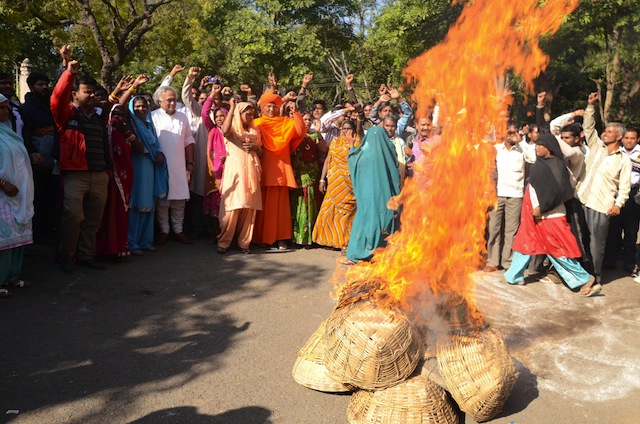
At a rally in New Delhi, Dalit women burn baskets used to collect human waste as a sign of protest against the caste-based practice of ‘manual scavenging’. Credit: Shai Venkatraman/IPS

Communities can solve their own problems. All they need are platforms.

Most of us in civil society who work with marginalised communities feel that ‘we are going to give them something’, ‘deliver’ something. In reality though, no one really is in a position to deliver anything to the community. What do we really know about the communities? How can we assume leadership on their behalf when we don’t know enough?

Consider the Dignity March where 25,000 rape survivors travelled over 10,000 kms and spoke openly in public forums about being raped. Jan Sahas might have coordinated the march, but the idea was not ours.

We were conducting a meeting in a village. There were four rape survivors along with their family members. One of the women said that there had been a conviction in her case, while a second women said that she was still struggling with her case and was facing many problems. The families were fighting among themselves, and demanding answers from us, saying if  one woman’s case was solved, why wasn’t there a judgement yet in the second case?

One of the rape survivors told us: “You don’t explain what the problems are; let the woman who got the conviction explain to the others what steps need to be taken and how they can bring their own case to a closure”.

When she started explaining, the idea clicked in our minds; that instead of us doing this work — going to each village and talking to all the families about how to fight their cases — what if 1,000 rape survivors came together in one place and travelled all over the country and explained how to get a conviction to other survivors.

Nonprofits should only play the role of facilitators

We can’t be leaders of the manual scavengers, or rape survivors, or communities who are involved caste-based commercial sexual exploitation. They are their own leaders because they know what that pain has meant in how they live their lives. We cannot even imagine how much power or courage is required to change this situation.

No one else can do it — no Chief Minister or Prime Minister can work on it as effectively as a rape survivor can work on rape, or manual scavengers can work on their own issues. We need to understand this.

The role of the government or nonprofits is limited in this. We can help create appropriate forums for them; but it is they who will come up with the strategies. During the march, we observed this very clearly: people who’ve been facing oppression and discrimination, were ready to take up the struggle; they were ready to find solutions. What they needed was a platform to talk about their issues.

The current strategies which are made by the government or other institutions, rarely involve the affected communities. But no external force can bring about real change in society. Only the community itself can.

Translations from Hindi to English by Anupamaa Joshi.

Ashif Shaikh is an Indian social activist, known for his role in Rashtriya Garima Abhiyan, a campaign for the eradication of manual scavenging. He is also a co-founder of Jan Sahas, a human rights organisation. Since 2000, Jan Sahas has been working to end caste- and gender-based slavery and violence through the eradication of manual scavenging, caste-based sex work, forced labour, and trafficking. He has won several awards for this work, including the Sadbhavana Award and the Times of India Social Impact Award.

This story was originally published by India Development Review (IDR)
 

UN’s Empty Promises to World’s Indigenous Peoples

Tupac Enrique Acosta is a member of the Nahuatl Nation and serves as firekeeper for the Nahuacalli, Embassy of Indigenous Peoples in Phoenix, Arizona.

The 18th Session of the United Nations Permanent Forum on Indigenous Issues (UNPFII) will take place 22 April 3 May 2019. The theme of the session will be: “Traditional knowledge: Generation, Transmission and Protection”

PHOENIX, Arizona, Apr 19 2019 (IPS) – The United Nations, as in so many other areas, gives lip service in support of Indigenous issues while lacking the political will and enforcement power over individual member states to comply with the protection of fundamental human rights for the Original Nations of Indigenous Peoples of the world.


It took 47 years since the 1960’s UN declaration in support of the right of “all peoples” to self-determination to be extended to Indigenous Peoples, with the adoption of the 2007 UN Declaration on the Rights of Indigenous Peoples.

But twelve years later, those words have not moved far off the paper on which they are written. Indigenous issues are still being subsumed under the individual domestic rubric of the member states of the UN Nations General Assembly, in defiance of the commitment to universal human rights that self-determination invokes and professes for all humanity.

It is no accident that the last four nation states to support the Declaration – Australia, New Zealand, Canada and the United States – were precisely those nations where the Anglo-European colonizers of the British Empire globally entrenched their colonial relationship with the Indigenous Peoples subsequent to the decline of Great Britain as a world power.

The devastation and genocide of Indigenous Nations and territories continues till today, but under a new mantle of progress called “Development”

For the Original Nations of Indigenous Peoples of the Great Turtle Island Abya Yala [Americas], we know that the subjugation of Indigenous Peoples started 526 years ago with the sword and the cross are now perpetrated with trade agreements and the empty promises of dead letters from the United Nations.

It is all a reflection of the continuing pernicious influence of the Doctrine of Discovery, the series of 15th century papal bulls in which a succession of popes authorized European explorers “discovering” lands in the New World that were not occupied by Christians to consider those lands vacant – terra nullius, in the words of the Doctrine – and to seize those lands in the names of their sovereign and enslave those people who lived there.

Pope Francis, the first pontiff from the Americas, in a 2015 speech in Bolivia went so far as to apologize for the sins of the Church – not individual conquistadores, but the Church itself – in the subjugation and colonization of Indigenous peoples during the conquest of the Americas.

But even as the Pope denounced the “new colonialism” of global capital oppressing Indigenous peoples, he ignores the pleas by a wide array of Christian denominations, including the World Council of Churches, for the Church to renounce the Doctrine. It is ancient history; the Papal Nuncio at the United Nations has said.

But it is not ancient history. It remains the basis of all Indigenous land law in the United States, and across the continent. In Mexico, the entire legal infrastructure since independence from Spain in 1836 is also based on the dictates of the Doctrine, known as the legaloid concept of Original Property of the State.

That is why Indigenous peoples take Mexican President Andres Manuel Lopez Obrador’s recent letter to the Spanish king and the Pope asking for apologies for those genocidal colonial campaigns with little more than a grain of salt.

We know the Doctrine of Discovery’s impact is still pernicious. We see it in the Trump Administration’s racist immigration and refugee policies in the United States, which refuses to even recognize the historical reality of the descendants of those Indigenous peoples who have traveled freely across the US-Mexican border region before it even existed.

We see it in Brazil, where President Jair Bolsinairo has emboldened racist attacks on Indigenous Amazonian communities in the name of promoting even more destruction of ancient forest and waterways that sustain the entire planet.

We see it in Mexico, where President Lopez Obrador has pushed ahead with the tourism-promoting “Maya Train” across the Yucatan peninsula, tearing through the jungles and rivers in Indigenous homelands without even legitimately consulting the indigenous peoples who have lived there since time immemorial.

And we see it in the continuing devastation that a capital-centered economy, with its extractive industries that destroy the air and water we all rely on for survival, threatens the very future of global humanity. The stakes could not be higher.

We had hoped the UN’s creation of the Permanent Forum and passage of the Declaration on the Rights of Indigenous Peoples had started to turn the battleship of oppression at long last, but we have been disappointed. Instead of extending the universal human rights enshrined in those actions to include protection for Indigenous Peoples, the UN member states have subsumed them to the interests of the nation states that wield the most power with the UN’s halls.

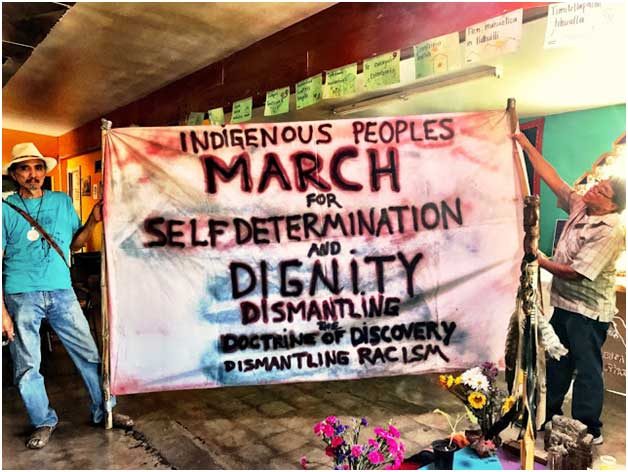
That is why we will take to the streets on Monday, April 22, in New York across from the UN on the first day of this year’s session of the Permanent Forum on Indigenous Issues to let delegates know that we will not be quiet, and we will not ignore the continuing impact of the racist and white-supremacist policies let loose on the Western Hemisphere by the Doctrine of Discovery.

And we will continue to call on the United Nations to live up to the commitments it has made to ensuring that the universal human rights it professes to champion before the world extends to the Indigenous peoples as it has, at least in word, committed. We call for world peace, and peace with Mother Earth.

We know the United Nations is far better at its words than at its deeds. We are here to say that is not enough.


Global Governance and Information

Civil Society, Civilisations Find Alliances, Climate Change, Development & Aid, Education, Environment, Featured, Global, Global Governance, Headlines, Human Rights, Natural Resources, Peace, Poverty & SDGs, TerraViva United Nations

Opinion

Ambassador Walther Lichem* of Austria is President Inter Press Service (IPS).

VIENNA, Apr 16 2019 (IPS) – The past seventy years since the end of the second world war have been marked by profound changes in our international system. Relations between states have become more horizontally structured interactions with a rising significance of the common good articulated and pursued by newly-created international programmes and organisations.


Ambassador Walther Lichem

The international agenda increasingly consists of items addressing internationally and globally-shared challenges of dependencies and interdependencies.

The traditional security and peace focus has been broadened into areas of concern which require contributions and activities not only by states but by international organisations and programmes who jointly with non-state actors such as academic institutions and associations, civil society organisations, the private sector including those who joined the Global Compact, have contributed to a new pattern of leadership in the processes of defining our global goals and in the implementation of the related programmes of action.

Another characterizing element in our Global Agenda related-approach is the inter-sectoral interdependence reflected in the international community’s agenda marked by “AND” – “climate change and international security”, “human rights and societal cohesion” etc.

These agenda—and interrelated-ness—require, however, also institutional integration cutting across the institutional development marked by sectoral segregation. There is a rising need for each agenda sector to be fully up-to-date regarding the entire pattern of global challenges and the related plans of action, using this level of information for the development of institutional integration.

There is also a rising need for information flows between governmental/ intergovernmental and non-governmental organizations (NGOs).

The new global agenda benefits from the work and conclusions of academic institutions and programmes, a relationship which regrettably has not yet been fully recognized by the international system.

Many of our important global agenda items based their policy approach on research and academic discourse – e.g. the issue of environmental protection, the concept of sustainability, the process of climate change, the societal development needs and human rights etc.

Another dimension of the pluralisation of global governance affectedness and responsibility is the role of each and every citizen on the globe to know and understand these challenges and assume a rising responsibility in addressing them.

Certain agenda areas, such as environmental protection, the sustainable development and use of our natural resource systems, human rights and human security have given the citizen an almost central role in the achievement of the declared objectives.

Today, every citizen can contribute to the recognition of the dignity of the other and the related human rights. The impact of citizen-focused human rights programmes is visible in human rights cities in all regions of the world. The citizen creating conditions of societal cohesion also essentially contributes to peace and security.

Private sector decisions can make important contributions to both the natural resources related and societal cohesion-related challenges. Academic institutions must adjust their programmes of research and of university education to the global agenda-related challenges.

The cultural sector provides important inputs into the development of values and related behavioural patterns related to the challenges of pluri-identity societies and the integration of otherness.

All these new patterns of responsibility and contributions to achievements for our Global Agenda, however, do require qualified information. It must be recognized that complex academic or policy-process related studies and reports are not accessible to the general citizenship including those in positions of responsibility at local and national levels.

Even governmental institutions and the international diplomatic community cannot internalize all the documents which are to serve as a basis for multilateral negotiations.

The development of this new participatory system of global governance with intergovernmental institutions and processes, national governments and local authorities has led to the recognition of an urgent need for qualified patterns of information which translate challenges, achievements and failures to the political responsibilities at local, national and also international levels, to governmental, inter-governmental and non-governmental institutions who have increasingly shaped our Global Agenda and articulated the rising need for societal understanding and information.

Media are the classical providers of such information combining data with assessments and the vision of our common future. Yet, as analysis of the current situation underlines, there is an urgent need to strengthen qualified information systems which would provide not only governmental, intergovernmental and non-governmental institutions and the citizens but also the media with pertinent and needed information.

There is no way into a future of shared global responsibility without a qualified and also ethically committed system of information related to our processes of global change.

There is a need to recognize that such highly pertinent information related to our common future requires recognition and support from the global society as a contribution to our shared global public space.

This implies that support is to be provided from governmental, intergovernmental and non-governmental institutions. A respective policy discourse with participation from these institutions is to be envisaged in order to prevent the decay or elimination of qualified programmes like Inter Press Service.

*Walther Lichem, retired Austrian Ambassador with studies in law and oriental archaeology (Univ. of Graz, Austria) and political science (Univ. of North Carolina, Chapel Hill; Institute for Advanced Studies, Vienna) started his professional career in 1966 at the United Nations Secretariat in New York in the field of international water resources with development cooperation missions to Ethiopia (1971), Argentina (1971-74) and to the Senegal River Development Organisation (1980). He was also Rapporteur on international river basins at the International Conference on Water Law (Caracas, 1976) and at the IVth World Water Conference (Buenos Aires, 1982).
Ambassador Lichem undertook major assignments in the UN system at the Human Rights Summit in Vienna in 1992 and as Ambassador to Chile and to Canada, as a member of the UN Committee on the Peaceful Uses of Outer Space and as an adviser to the 16 countries sharing the Guinea Current in West and Central Africa on the creation of a regional organisation.


South-South Cooperation: a Path to Implementing UN’s 2030 Agenda

Civil Society, Conferences, Development & Aid, Editors’ Choice, Featured, Global, Global Governance, Globalisation, Headlines, IPS UN: Inside the Glasshouse, Poverty & SDGs, TerraViva United Nations

Opinion

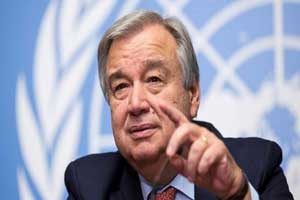
António Guterres, is Secretary-General of the United Nations

BUENOS AIRES, Mar 25 2019 (IPS) – I see five issues that will be central to implementing the Paris Agreement on climate change and achieving the 2030 Agenda for Sustainable Development. South-South Cooperation can offer solutions to all of them.

First, rising inequality both between and within countries is eroding trust and deepening a sense of injustice. Globalization has enabled many people to escape poverty – but its benefits are not shared equitably and its costs fall disproportionately on the poor and vulnerable.


António Guterres

Cooperation can enable developing countries to learn from each other and grow more quickly, close income gaps and build inclusive, resilient societies.

Second, climate change is the defining issue of our time, and we are losing the race. 2018 was the fourth hottest year on record and natural disasters are impacting nearly every region.

That is why I am bringing world leaders together at a climate action summit in New York in September. I am calling on leaders to bring concrete, realistic plans that raise ambition on mitigation, adaptation, finance and innovation.

We must enhance nationally determined contributions by 2020, in line with reducing greenhouse gas emissions by 45 percent over the next decade.

We need fundamental shifts to support green financing and increase investment in climate action from billions to trillions.

The Green Climate Fund must become fully resourced and operational. And the pledge to mobilize 100 billion dollars a year by 2020 for climate action in the developing world, including mitigation and adaptation, must be implemented.

South-South cooperation will be vital to ensure mutual support and exchange of best practices, to enhance adaptation and increase the resilience of developing countries and communities facing the devastating impacts of climate change.

South-South Cooperation can also support the transformation of economies dependent on fossil fuels, with strategies that reinforce both sustainable development and environmental protection.

Third, infrastructure and energy needs are set to expand enormously, thanks to population growth and urbanization in the Global South.

Some 60 percent of the area that is expected to become urban by 2030 has yet to be built. If we get this wrong, we will lock ourselves into a high-emissions future with potentially catastrophic consequences.

But if we get infrastructure right, it will be an opportunity for development cooperation, industrial transition and growth, cross-border trade and investment, climate change mitigation and adaptation, and sustainable development.

Fourth, gender has been described as the docking station for the SDGs, since it offers opportunities to engage on different crosscutting issues. It must be at the heart of all efforts if we are to succeed.

We have seen significant progress for women over the past forty years. More girls are in school; more women are doing paid work. Harmful practices like female genital mutilation and child marriage are in decline.

But this progress is not complete; indeed, we are seeing a pushback against our efforts and in some cases the gender equality gap is widening.

This affects us all, because where women are better represented in politics, we see improved social protection and increased spending on development. When women have access to land and credit, harvests increase. When girls are educated, they contribute more to their communities and break cycles of poverty.

And let’s not forget that countries with the highest number of women in parliament, in national security institutions, and as farmers, are indeed in the Global South.

Fifth, the multilateral development system must be better positioned to support South-South cooperation and implement the 2030 Agenda.

South-South cooperation has evolved significantly over the last decades – but multilateral institutions, including the United Nations, have not kept up.

I am grateful to Member States for recognizing the role of the United Nations in the outcome document for the South-South Conference (in Buenos Aires). We will take up the mandates you are entrusting to us, and you can count on my personal commitment to make sure the ongoing reforms of the United Nations reinvigorate our support for South-South cooperation.

We also need to realign financing for sustainable development and unlock the trillions that will deliver the 2030 Agenda.

South-South cooperation can never be a substitute for official development assistance or replace the responsibilities of the Global North set out in the Addis Ababa Action Agenda and the Paris Agreement.

South-South Cooperation must also involve young people, civil society, the private sector, academia and others, building innovative partnerships and extending the reach of initiatives. It must harness the potential of new technologies and digitalization that create opportunities and promote inclusivity.

South-South cooperation is a global exercise of all countries of the South to benefit everyone, including the Least Developed Countries. Every country, every partner has something to share or teach, whatever their circumstances.

This conference is a starting point.

Later this year, over the course of a week in September, Heads of State will gather in New York for the Sustainable Development Goals Summit and the Climate Action Summit. They will discuss Universal Health Coverage, Financing Sustainable Development and the Global Partnership to support Small Island Developing States.

All these meetings are aimed at accelerating implementation of the 2030 Agenda and the Paris Agreement, which were born from a consensus on the common interests that bind us together.

Now is the time to stake out that common ground again and take bold and transformative action.

Together, we can achieve the Sustainable Development Goals, we can beat climate change, and transform the lives of people around the world.

I thank the Government and people of Argentina for hosting this Conference.

Forty years ago, the landmark international conference on South-South Cooperation resulted in the Buenos Aires Plan of Action for Promoting and Implementing Technical Cooperation among Developing Countries.

Since then, the Buenos Aires Plan of Action, known as BAPA, has been the foundation and reference point for South-South cooperation, based on principles of national ownership, equality and non-conditionality.

BAPA transformed the dynamics of international cooperation.

It highlighted the value of a different form of cooperation, based on the exchange of knowledge and appropriate technologies among nations facing similar development challenges.

Across the global South, we have seen remarkable advances since BAPA. Thanks in part to South-South cooperation, millions of women, men and children have been lifted out of extreme poverty. Developing countries have achieved some of the fastest economic growth rates ever seen and have set global standards for sustainable development.

As we gather again in Buenos Aires, we recognize and celebrate the long journey we have walked together.

But we also recognize our common challenges.

Today, we are here to ensure that South-South cooperation remains responsive to the evolving realities of global development and the changing needs of developing countries as they implement the 2030 Agenda.

We have an opportunity to develop and strengthen frameworks for South-South cooperation; improve systems and tools; increase transparency; and strengthen accountability.

*Extracts from a keynote address by Secretary-General Antonio Guterres to the Conference on South-South Conference in Buenos Aires on March 20, 2019.


South-South Cooperation Now Triangulates with the North

Civil Society, Conferences, Development & Aid, Editors’ Choice, Featured, Global, Global Governance, Globalisation, Headlines, IPS UN: Inside the Glasshouse, Latin America & the Caribbean, Poverty & SDGs, Regional Categories, TerraViva United Nations

South-South

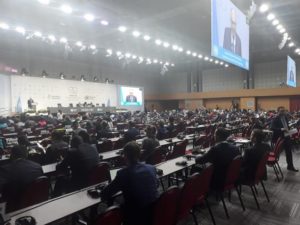
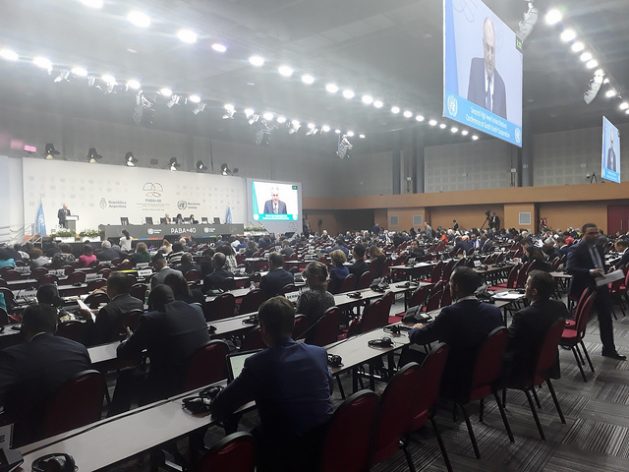
The Second High-Level United Nations Conference on South-South Cooperation was held at the Exhibition and Convention Centre in the Argentine capital, forty years after the Conference on Technical Cooperation among Developing Countries produced the Buenos Aires Plan of Action (BAPA) in 1978. Credit: Daniel Gutman/IPS

The Second High-Level United Nations Conference on South-South Cooperation was held at the Exhibition and Convention Centre in the Argentine capital, forty years after the Conference on Technical Cooperation among Developing Countries produced the Buenos Aires Plan of Action (BAPA) in 1978. Credit: Daniel Gutman/IPS

BUENOS AIRES, Mar 23 2019 (IPS) – It sounds like a contradictory play on words, but the countries of the industrialised North are currently the big supporters of South-South cooperation, as was demonstrated at the United Nations Second High-Level Conference on this subject, held in the Argentine capital.


If there is one thing that the three-day meeting in Buenos Aires, which ended on Friday Mar. 22, made clear, it is that the space created 40 years ago as an arena for mutual assistance and exchange of experiences among countries of the South, aimed at mutually promoting their development, no longer belongs only to them and has in fact become triangular.

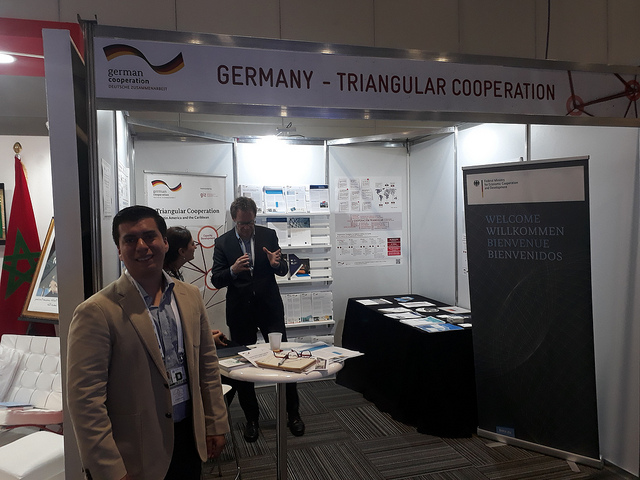
Francisco Quintanar is a Salvadoran engineer who was in the Argentine capital to participate in the conference – not as a representative of El Salvador, but as part of the German delegation attending the meeting, which brought together 1,500 representatives from 193 countries.

“In the past, triangular cooperation was seen simply as a way of adding funding to South-South collaborative projects, but in which donors were passive actors. Now, instead, we do joint projects.” — Noel González Segura

He came to tell the story of an energy efficiency project born in February 2016, which benefited 10 textile, chemical and other companies in El Salvador and Nicaragua. The initiative was developed with technical assistance from Mexican experts and German funding.

“The Salvadoran companies were able to reduce their energy consumption by the equivalent of 2.5 million dollars a year thanks to this project, so the positive result was not only economic but also environmental,” Quintanar told IPS.

“This is an example of triangular cooperation: Germany provided the resources, Mexico provided technical expertise, and El Salvador and Nicaragua were the beneficiaries,” he added.

Hundreds of similar projects were exhibited at events parallel to the conference, which was inaugurated on Wednesday, Mar. 20 by U.N. Secretary General Antonio Guterres, along with Argentine President Mauricio Macri, and featured South-South/North triangular cooperation.

The meeting took place forty years after the U.N. Conference on Technical Cooperation among Developing Countries, held in 1978 also in Buenos Aires, when the last military dictatorship of this South American country (1976-1983), responsible for serious human rights violations, was at the height of its power.

In the midst of the Cold War, that conference was characterised as an effort by countries in Africa, Latin America, the Caribbean and Asia, aimed at strengthening their negotiating power and making their voices heard more on the international stage, while at the same time promoting mutual cooperation between their countries and regions.

The result of the 1978 conference was the Buenos Aires Plan of Action (BAPA), which built a bridge of political collaboration and economic and social cooperation among developing countries in what is now called the global South.

Salvadoran engineer Francisco Quintanar (L) was part of the German delegation that attended the South-South Cooperation Conference in Buenos Aires. His project on energy efficiency is an example of triangular cooperation between countries of the South, with the support of one or more countries of the industrialised North. Credit: Daniel Gutman/IPS

Salvadoran engineer Francisco Quintanar (L) was part of the German delegation that attended the South-South Cooperation Conference in Buenos Aires. His project on energy efficiency is an example of triangular cooperation between countries of the South, with the support of one or more countries of the industrialised North. Credit: Daniel Gutman/IPS

Forty years later, in the gigantic lobby of the Buenos Aires Exhibition and Convention Centre, a two-storey underground building inaugurated less than two years ago, it looked like just another international meeting, similar to any other major U.N. conference.

On the stage of the High Level Conference, known in U.N. slang as BAPA+40, the sober suits of the diplomats from Japan, Norway or Switzerland contrasted with the colourful outfits of the African representatives.

And in the exhibition hall the participants could visit the stands of the Spanish or German development aid agencies, or the stand of Argentina’s Foreign Ministry, since it does not have a cooperation agency.

“The United Nations Sustainable Development Goals (SDGs) and the climate agenda make it necessary for the world to work in a very different way than it has in the past,” said Marc-André Blanchard, Canada’s permanent representative to the U.N.

“Neither the North nor the South can do it alone. That’s why Canada was so eager to be here,” he told IPS.

“Think of foreign aid to emerging countries. It is essential for them, but it is only two percent of the money needed to implement Agenda 2030 for Sustainable Development,” which is articulated in the 17 SDGs, he added.

Blanchard concluded: “We need to find the remaining 98 percent and we can only do that with new forms of collaboration. That’s why countries in the South need countries like Canada as partners.”

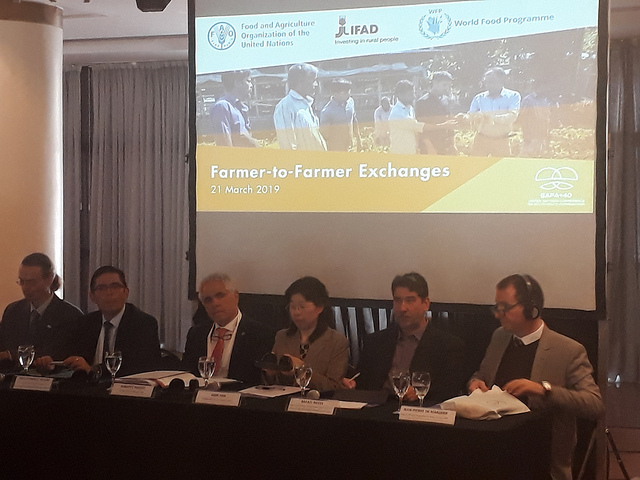
The South-South Cooperation Conference was accompanied by a number of parallel events, organised for example by the Food and Agriculture Organisation (FAO), the International Fund for Agricultural Development (IFAD) and the World Food Programme (WFP), which discussed how to promote direct farmer-to-farmer cooperation among developing countries. Credit: Daniel Gutman/IPS

The South-South Cooperation Conference was accompanied by a number of parallel events, organised for example by the Food and Agriculture Organisation (FAO), the International Fund for Agricultural Development (IFAD) and the World Food Programme (WFP), which discussed how to promote direct farmer-to-farmer cooperation among developing countries. Credit: Daniel Gutman/IPS

“We have knowledge or financial resources, but they are limited,” admitted Noel González Segura, director of planning at the Mexican Agency for International Development Cooperation.

“So through triangular cooperation with a traditional partner like the United States, Germany or Spain, we can multiply our capacity for action in favour of third countries,” he told IPS.

According to González Segura, “in the past, triangular cooperation was seen simply as a way of adding funding to South-South collaborative projects, but in which donors were passive actors. Now, instead, we do joint projects.”

“So, for example, the Germans come with money, knowledge and proposals, we add an international organisation and together we build a stronger partnership,” he said.

The Final Document of the Buenos Aires Conference, which unusually was distributed before the beginning of the meeting, speaks of the need to “better understand triangular cooperation and to provide more evidence and rigorous information on its magnitude, scope and effects.”

The text, signed by heads of delegations and senior government representatives, argues that triangular cooperation “offers an adaptable and flexible approach to the evolving problems of development.”

One of the cases reported during the conference was the cooperation of technicians from the National Institute of Agricultural Technology (INTA) of Argentina to help rural Haitians improve their ability to grow food after the devastation caused by Hurricane Jeanne, which in 2004 left more than 3,000 dead in the Caribbean island nation.

“After the tragedy there was a tremendous lack of fresh food. We traveled and worked there with Haitian technicians and 4,000 volunteers, 60 percent of whom were women,” said Francisco Zelaya, a technician at INTA, which depends on the Secretariat of Agroindustry.

“We reached 40,000 families and developed 13 local species of seeds,” he told IPS.

Zelaya said that “Argentina did not have the financial capacity to collaborate on a project like this. So the initiative was planned with Canada, which acted as a funder because it has a particular interest in Haiti, since it tends to receive many migrants from that country.”

For Roberto Ridolfi, assistant to the Director-General of the U.N. Food and Agriculture Organisation (FAO), “we must abandon the idea that two countries in the South can make a wonderful agreement and then ask a third country to foot the bill.”

“What we need are triangles, in which everyone brings something and takes something away. Innovative forms of South-South cooperation must be found. If we want to replicate North-South collaboration projects, it will be difficult,” he told IPS.

“It is about finding ways to combine skills, money and human resources from the three sides of the triangle. We don’t want to measure everything by money, but development is supported by investment,” Ridolfi said.