Q&A: Important to Treat Anyone Suffering from Leprosy as an Equal Individual

Aid, Asia-Pacific, Civil Society, Conferences, Development & Aid, Featured, Headlines, Health, IPS UN: Inside the Glasshouse, Population, Poverty & SDGs, Regional Categories, Sustainability, TerraViva United Nations, World Social Forum
Health

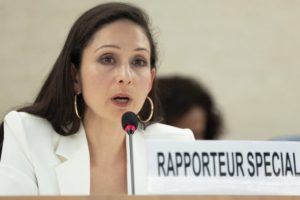
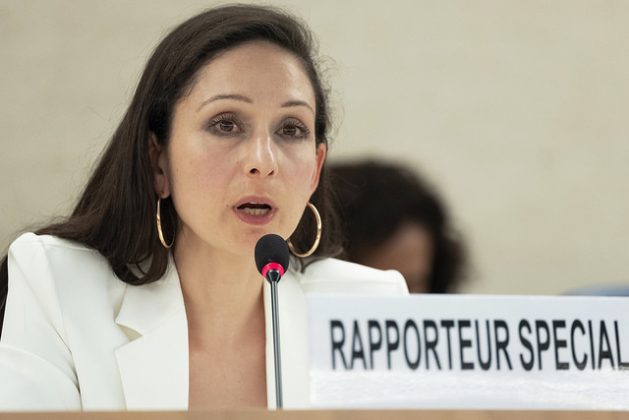
Alice Cruz is the United Nations Special Rapporteur on the elimination of discrimination against persons affected by leprosy and their family members, says divorce on the grounds of leprosy, allowed by laws or not, is a prevailing reality. Credit: U.N. Photo / Jean-Marc Ferré

MANILA, Mar 5 2019 (IPS) – Discrimination against women who are affected by leprosy or Hansen’s Disease is a harsh reality, says Alice Cruz is the United Nations Special Rapporteur on the elimination of discrimination against persons affected by leprosy and their family members.


“Divorce on the grounds of leprosy, allowed by laws or not, is a prevailing reality. In settings where women are not economically independent, it can lead to the feminisation of poverty, throwing too many women affected by leprosy into begging or even prostituting,” says Cruz, who was speaking via audio link at Regional Assembly of Organisations of People Affected by Leprosy in Asia that was held in Manila, Philippines. The Sasakawa Memorial  Health Foundation/the Nippon Foundation (TNF) which supports leprosy projects across the world sponsored the meeting.

A professor at the Law School of University Andina Simon Boliver in Ecuador, Cruz has extensive knowledge of the social stigma and discrimination faced by the people who are affected by leprosy which also amount to the violation of their human rights.

In an interview to IPS, Cruz speaks of the layers and levels of stigma that men, women and children of leprosy-affected people face and how the U.N. has been trying to end it. Finally, she lists the simple ways that every ordinary person can contribute to end the stigma that people living with leprosy face and how to help them become integral to society. Excerpts of the interview follow:

Inter Press Service (IPS): What is the link between human rights violation and the leprosy-affected people? 

Alice Cruz (AC): Throughout history leprosy has become much more than a disease: it became a label, mainly used to exclude. Leprosy came to embody what was socially prescribed as shameful and disrupting. It became a symbol, a powerful metaphor, for everything that should be kept apart, whether it was attributed to punishment for sinful conduct, unregulated behaviour, past offences and socially constructed ideas of racial inferiority, among others harmful myths and stereotypes, which led to massive human rights violations of persons affected by leprosy, but also their family members.

IPS: Can you describe some of the ways the rights of leprosy affected people are violated?

AC: Women, men and children affected by leprosy were, and continue to be in many contexts, denied not only their dignity, but also an acknowledgement of their humanity. It is not a coincidence that it is commonly said that persons affected by leprosy experience a civil death.

They have been consistently subjected to: stigmatising language; segregation; separation from their families and within the household; separation from their children; denial of care; denial of the means of subsistence; denial of a place to live; denial of education; denial of the right to own property; impediments to marry; impediments to have children; restrictions on their freedom of movement; denial of their right to participate in community, public and political life; physical and psychological abuse and violence; compulsory internment; forced sterilisation; institutionalised silencing and invisibility.
There are still more than 50 countries in the world with discriminatory laws against persons affected by leprosy in force.

IPS: What is the UN doing to prevent and end these violations?

AC: In 2010, the General Assembly, in a landmark move, adopted resolution 65/215 and took note of the principles and guidelines on the elimination of discrimination against persons affected by leprosy and their family members. In so doing, it established leprosy as a human rights issue and stressed that persons affected by leprosy and their family members should be treated as individuals with dignity and entitled to all human rights and fundamental freedoms under customary international law, the relevant conventions and national constitutions and laws. In June 2017, the Council adopted resolution 35/9, establishing the mandate of the Special Rapporteur on the elimination of discrimination against persons affected by leprosy and their family members. It called on States and all relevant stakeholders to cooperate with the Special Rapporteur in the discharge of the mandate. I assumed this role on Nov. 1, 2017.

IPS: How far have we come in achieving the 2020 target leprosy eradication?

AC: I am afraid we are very far from such a scenario. By the one hand, eradication of leprosy is not on the horizon given the lack of a vaccine. By the other hand, official reports of around 150 countries to the [World Health Organisation] WHO in 2016 registered more than new 210 000 cases of leprosy, with high incidence among children, which means ongoing transmission.

IPS: How can every ordinary person contribute to eradication of leprosy and ending stigma towards leprosy affected people? 

AC: Acknowledging that persons affected by leprosy are the same as everyone else and fighting harmful stereotypes in daily life. Remembering that anyone, including you and me, can come to suffer from any disease or disability and that diversity and dignity in diversity is what makes us humans.
 

Q&A: Leprosy-affected People Live Not at the Bottom, but Outside the Social Pyramid

Active Citizens, Aid, Asia-Pacific, Civil Society, Conferences, Development & Aid, Featured, Headlines, Health, Human Rights, Population, Poverty & SDGs, Regional Categories, Sustainability, TerraViva United Nations

Health

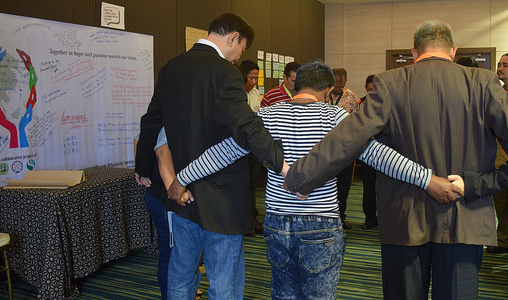
Takahiro Nanri (left – black jacket), Executive Director of Sasakawa Memorial Health Foundation, joins hands with a leprosy survivor (right). Credit: Stella Paul/IPS

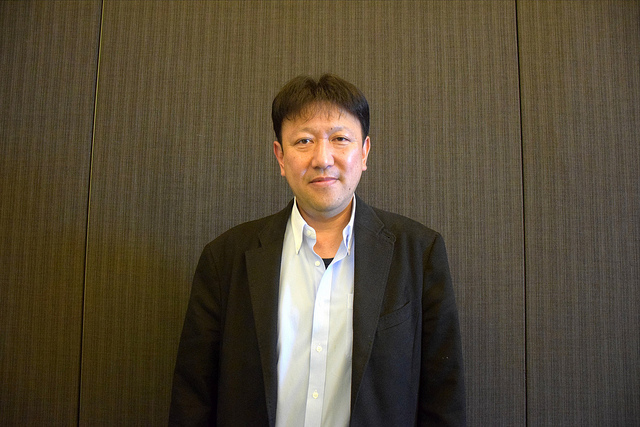
MANILA, Mar 5 2019 (IPS) – Takahiro Nanri is the Executive Director of Sasakawa Memorial Health Foundation which has been supporting the global fight against leprosy for almost five decades. Since 2014, Nanri has been leading the foundation’s leprosy projects across the world and has deep insights into the challenges faced by the people affected by leprosy as well as the organisations that work with them.


He also shares the dream of Yohei Sasakawa – the chairman of Nippon Foundation – to see a leprosy-free world and believes that despite several challenges and roadblocks, this dream is indeed possible to realise.

In an exclusive interview with IPS, Nanri talks about the idea behind the regional assembly of leprosy-affected people in Asia that was held in Manila.

He also tells how people who are affected by leprosy  are treated as social outcasts and why they must be integrated with the rest of the society. Finally, Nanri shares his views on how and why leprosy-affected people’s organisations should become sustainable.  Excerpts of the interview follow:

Takahiro Nanri is the Executive Director of the Sasakawa Memorial Health Foundation which has been supporting the global fight against leprosy for five decades. Credit: Stella Paul/IPS

Inter Press Service (IPS): Is there a reason behind Mr Sasakawa’s personal interest in leprosy? Why has the foundation continued even when it is not a big global threat anymore?

Takahiro Nanri (TN): As far as I know it was in the 1960s [when the Sasakawa family] visited leprosariums in some countries like Korea, South Korea, Nepal and at that time there was no Multidrug Therapy ( MDT) and the situation in the sanatoriums was very severe. So they had decided to fight against leprosy and launched the leprosy elimination programme and even established the Sasakawa Memorial Health Foundation.

I am very proud of the fact that this foundation has continued to work on the same issue for 50 years because, although compared to other diseases, this may have decreased, but there is still no end to leprosy.

IPS: How long have you been working on leprosy and what has been your biggest observation?

TN: I have been working on leprosy since 2014. But I have been working on poverty issues for the past 25 years. People affected by leprosy are really poor. So, working for leprosy is in a way working on poverty too.
Several years ago, there was the concept of the bottom of the pyramid; and we talked of the people living at the bottom of the pyramid and how to uplift them. We talked of using microfinance, social business approach etc. But I have realised that the people living with leprosy are actually living outside of the pyramid. That is why I feel integration is very, very important.

IPS: How did you come up with the idea of the Regional Assembly of Organisations of Leprosy- Affected People in Asia?

TN: Last September, we had a small meeting. We invited and had a discussion with some of the people’s organisations from India, Indonesia, Brazil and Ethiopia on what could be done. This September, there will be the World Congress on Leprosy where there will be academics, experts, governments. The congress is a crucial event but often organisations of the affected people are left behind. So, we came up with the idea of organising a pre-congress event where the affected people’s organisations so that it can also be a way for preparing themselves for the congress.

IPS: Why is sustainability still such a big issue for organisations of leprosy–affected people?

TN: Sustainability is not only an issue of leprosy affected people, but also for all the NGOs of the world. I don’t really have an answer here. It depends on each organisation, each leader. Every NGO, every organisation has to find its own way and its own strategy to sustain itself. Should they approach foundations, survive on external grants, seek membership fees, donations , do social business—it’s up to them. As foundations we can provide financial grant, but not forever. What we can do, however, is think together on what could be the next step.

IPS: There are many hidden cases in the world of leprosy. Can you share an example of a good action by a government that tried to act on this.

TN: In India, the government made a very brave decision. In 2016 they started a campaign to identify the endemic leprosy cases all over the country. And since then, every year, they do case detection camps. It has brought in the open many new cases that were previously hidden. It also resulted in an increase in the number of leprosy cases in the country, but after that it started to decrease as the cases were treated . So, this is an example I feel other governments can also follow.

IPS: How are you feeling now that the assembly has concluded?

TN: My expectation is very simple: this venue is for the people affected by leprosy. They should be able to discuss whatever they want to and decide whatever they want to decide.
Here, we saw is they are trying to be more pro-active, opening up,coming up with some issues, some ideas on how they can strengthen their partnership, soI am happy.