LILONGWE-(MaraviPost)-The Boxing Federation of Malawi is taking the July 2026, Glasgow Commonwealth games in Scotland seriously as they have geared up with preparations.
The body has secured a sponsorship from Mulungu Simunthu Butchery to host the boxing non-title bout on 1st January 2026 at Mitundu Trading Centre in the Capital, Lilongwe.
Vice General Secretary for the Boxing Federation of Malawi Alex Sakala hailed Mulungu Simunthu Butchery for the support of the games.
“We are very thankful for the support, Boxing a minority sport as others call it, lacks sponsorship hence its exciting to have people who value the sport.
“The boxers who will participate in these games are anticipated to take part in the Commonwealth games in Glasgow, Scotland in July next year. So it is important for us to organize more bouts of this nurture to keep them fit”, Said Sakala.
Speaking after the support Manager for the Mulungu Simunthu Butchery Anthony Kandege stated he made the support to compliment government’s effort to develop different sports codes in the country.
“It is important for business people to support government initiatives, the boxers are expected to go into camp in preparation for the fourth coming Commonwealth games in Glasgow where they will represent the country. Therefore, there is a need to prepare them thoroughly”.Kandege stated.
In the main bouts, Elias Bonzo from Malawi will take on Kasongo from the Democratic Republic Of Congo (DRC), Alex Chimbalanga will rockhorns with Yohane Banda.
In supporting bouts,Elijah Kaunda vs Alinafe Bonzo
Hanreck Chiduke vs Michael Masamba (DRC)
Black Eagle Vs Rashid Tcheta.
Share this:
Like this:
LikeLoading…
Discover more from The Maravi Post
Subscribe to get the latest posts sent to your email.
President Trump doubles down on demanding Hamas disarm after meeting with Israel’s prime minister, and warned Iran not to rebuild its nuclear program. Ukraine’s president presses the White House for decades-long U.S. security guarantees as part of a proposed peace deal with Russia. And a year after DOGE’s push to shrink government, agencies are smaller, spending is higher, and millions of Americans’ data remains in play.
Want more analysis of the most important news of the day, plus a little fun? Subscribe to the Up First newsletter.
<
p class=”readrate”>Today’s episode of Up First was edited by Ruth Sherlock, Anna Yukhananov, Mohamad ElBardicy, and Alice Woelfle.
<
p class=”readrate”>
<
p class=”readrate”>It was produced by Ziad Buchh, Nia Dumas and Christopher Thomas.
<
p class=”readrate”>
<
p class=”readrate”>We get engineering support from Stacey Abbott. And our technical director is Carleigh Strange.
<
p class=”readrate”>
<
p class=”readrate”>Our Supervising Senior Producer is Vince Pearson.
<
p class=”readrate”>(0:00) Introduction (03:13) Trump Pushes Hamas Disarmament (07:25) Ukraine Peace Talks (10:45) A Year Of DOGE
BLANTYRE-(MaraviPost)-As Malawi embraces a fresh chapter under the stewardship of President Professor Arthur Peter Mutharika, the nation witnesses not only a renewed leadership at the helm but also a meticulously selected cabinet that signals serious intent to restore and propel the country’s fortunes.
It has been nearly three months since Mutharika took office, and shortly thereafter, he appointed a 15-member cabinet—Malawi’s leanest ever—underscoring his commitment to streamlined governance and efficient service delivery.
This decisive move comes against a backdrop of a nation previously burdened by economic turmoil, mismanagement, and leadership distracted by extravagant travels, notably under the former administration of Lazarus Chakwera who, as many observe, prioritized sightseeing over national service.
This cabinet, carefully entrusted with the responsibilities to revive Malawi’s multifaceted sectors, is now approaching the two-month mark in office.
The MaraviPost is poised to undertake a thorough evaluation of each minister’s performance after six months, an exercise that will critically assess their dedication and effectiveness in serving the people of Malawi.
This coming assessment aims to ensure accountability and to provide recommendations on the ministers’ suitability to continue in their roles under President Mutharika’s future vision.
In the meantime, understanding the crucial roles and responsibilities assigned to each minister helps illuminate the expectations placed upon them and the vital tasks ahead.
The Minister of Education, Bright Msaka, shoulders the critical duty of shaping Malawi’s human capital by ensuring access to quality education, improving infrastructure, and enhancing teacher training to nurture a skilled future workforce.
Education is the foundation for long-term national development, and Msaka’s leadership in this portfolio is pivotal.
Alfred Gangata, the Minister of State, acts as a key coordinator within government operations, facilitating smooth inter-ministerial collaboration and ensuring that presidential directives are effectively implemented.
His role is central to maintaining governmental coherence and efficiency.
At the helm of Malawi’s foreign relations is Minister George Chaponda, whose responsibility is to strengthen diplomatic ties, attract foreign investment, and promote Malawi’s image on the global stage. His role is vital for securing partnerships that can aid economic recovery and development.
Minister of Information, Shadrek Namalomba, plays a strategic role in shaping public communication, transparency, and the flow of information between the government and citizens. In a democracy, an informed public is a powerful ally, making this ministry indispensable.
Joseph Mwanamveka, as Minister of Finance, carries the enormous responsibility of managing Malawi’s fiscal policies, budgeting, and financial reforms. His stewardship is crucial in stabilizing the economy, curbing inflation, and restoring confidence among investors and the citizenry.
In the health sector, Minister Chimwemwe Baloyi is tasked with overseeing public health services, improving healthcare infrastructure, and ensuring the availability of essential medicines. A healthy population is the backbone of a productive society, placing immense weight on Baloyi’s portfolio.
Roza Mbilizi, Minister of Agriculture, is entrusted with revitalizing Malawi’s agricultural sectors, including staples such as maize and tobacco, which form the economic backbone of the nation. Her role involves enhancing food security, increasing productivity, and supporting farmers through sustainable practices.
Ben Phiri, Minister of Local Government, has the crucial task of strengthening decentralization, empowering local councils, and improving grassroots governance. This ministry bridges the gap between the central government and communities, fostering inclusive development.
Minister of Transport, Feston Kaupa, is responsible for improving Malawi’s transport infrastructure, promoting safe and efficient movement of people and goods. This portfolio is key to unlocking economic potential through enhanced connectivity.
Jean Mathanga, Minister of Energy, shoulders the mission to increase access to reliable and affordable energy sources, promoting sustainable energy solutions vital for industrial growth and improved living standards.
Mary Navicha, Minister of Gender, undertakes the important work of promoting gender equality, protecting women’s rights, and addressing social issues related to gender-based violence and empowerment. Her ministry fosters social cohesion and inclusivity.
Defence Minister Chimwemwe Chipungu is charged with safeguarding national security, overseeing the armed forces, and ensuring Malawi’s sovereignty remains intact amidst regional and global challenges.
Peter Mukhito, Minister of Homeland, plays a critical role in internal security, law enforcement, and maintaining public order. His portfolio is essential for creating a safe environment conducive to growth and stability.
Joel Masina Chigona, Minister of Labor, is responsible for labor policies, employment promotion, and workplace standards. His work supports the creation of decent jobs and fair labor conditions, fundamental for economic progress.
George Partridge, Minister of Industrialization, carries the task of promoting industrial growth, attracting manufacturing investments, and facilitating value addition to Malawi’s raw materials. Industrialization is a cornerstone for sustainable economic diversification.
Patricia Wisikesi, Minister of Sports, promotes national unity and youth development through sports, nurturing talent, and encouraging healthy lifestyles that contribute to social well-being.
Jappie Mhango, Minister of Lands, manages land policy, registration, and dispute resolution. Land reforms and security of tenure are vital for economic activities, especially in agriculture and housing.
Charles Mhango, Minister of Justice, oversees the judiciary, legal reforms, and ensures the rule of law is upheld. Justice and fairness underpin democratic governance and citizen confidence.
Supporting some of these ministries are deputy ministers who provide additional leadership and assist in policy implementation.
Martha Ngwira Munthali, Deputy Minister of Gender, and Norman Chisale, Deputy Minister of Homeland, along with Francis Folley, Deputy Minister of Education, play supportive yet significant roles in their respective sectors, ensuring that ministerial objectives are met with diligence.
This carefully curated cabinet reflects President Mutharika’s strategic approach to governance—lean, focused, and results-oriented. The ministers are not merely figureheads but custodians of Malawi’s development agenda, tasked with translating policy into tangible improvements in the lives of ordinary Malawians.
As the country navigates the complex challenges of economic recovery, social cohesion, and infrastructural development, their leadership will be instrumental.
The MaraviPost’s upcoming evaluation after six months will be an important milestone, providing an objective gauge of how well these ministers are performing. It will examine their effectiveness in policy formulation, implementation, resource management, and responsiveness to the needs of Malawians.
The assessment aims to foster accountability and ensure that those who genuinely serve the nation’s interests continue to hold office, while also identifying areas for improvement.
President Mutharika’s early days in office have been met with cautious optimism, as noted by commentators like Wonderful Mkhutche, who praised the tangible improvements in the economy and governance after a period of stagnation.
The ministers’ roles are challenging, but their success will be pivotal in sustaining this new momentum.
Malawi stands at a promising crossroads with a cabinet designed to address the country’s most pressing issues head-on. Each minister carries the weight of responsibility to deliver on their mandates, contributing to the collective goal of national progress.
The MaraviPost’s forthcoming performance review will not only spotlight individual achievements and challenges but also reinforce the culture of accountability essential for democracy and development.
Under President Mutharika’s watchful eye, Malawi’s journey towards stability and prosperity is underway, with its ministers steering key sectors toward a brighter future.
Feedback: +265992082424 jonesgadama@gmail.com
Share this:
Like this:
LikeLoading…
Discover more from The Maravi Post
Subscribe to get the latest posts sent to your email.
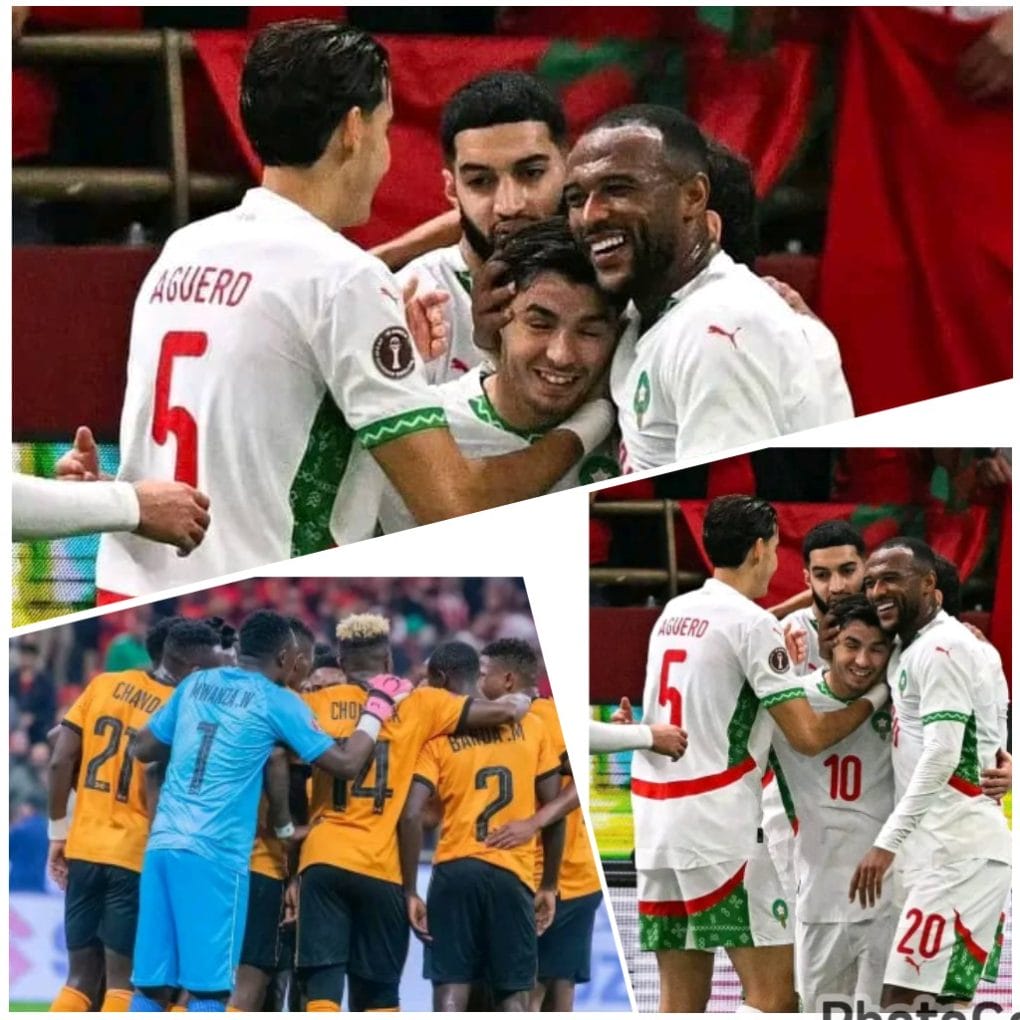
RABAT-(MaraviPost)-Morocco’s technical superiority and ball retention skills were on full display as they stormed to a 3-0 win over Zambia, securing top spot in Group A.
Ayoub El Kaabi’s stunning bicycle kick and Brahim Diaz’s composed finish sealed the deal, showcasing Morocco’s attacking firepower and Zambia’s defensive frailties.
Zambia’s inability to capitalize on their previous defensive resilience proved costly, as Morocco’s relentless pressure paid off, exposing gaps in the Chipolopolo’s setup.
Morocco’s dominance was evident, with possession and set-piece expertise proving decisive in their favor, leaving Zambia struggling to cope.
The win propels Morocco into the knockout stage, while Zambia’s chances now hinge on favorable outcomes elsewhere, highlighting their need for tactical overhaul.
Zambia’s 11-match winless streak at AFCON looms large, emphasizing urgent need for improvement, as Morocco prepares for tougher tests ahead.
Share this:
Like this:
LikeLoading…
Discover more from The Maravi Post
Subscribe to get the latest posts sent to your email.