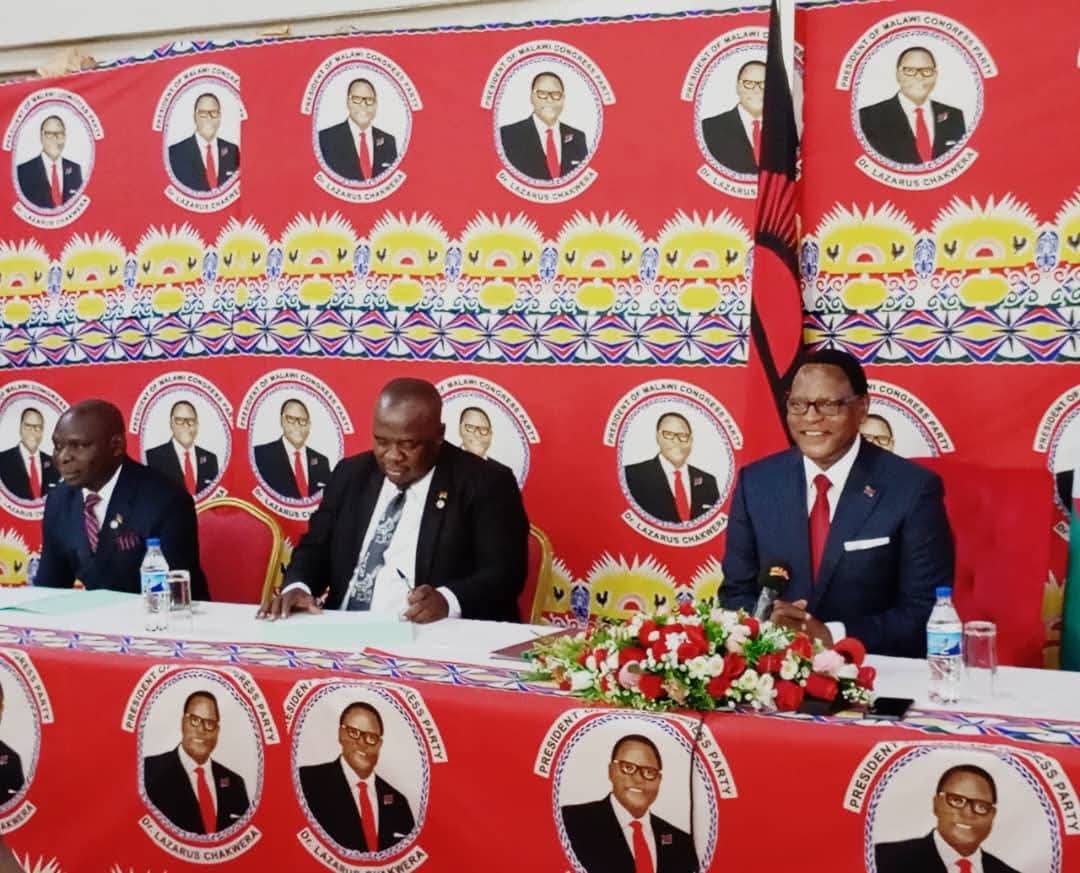
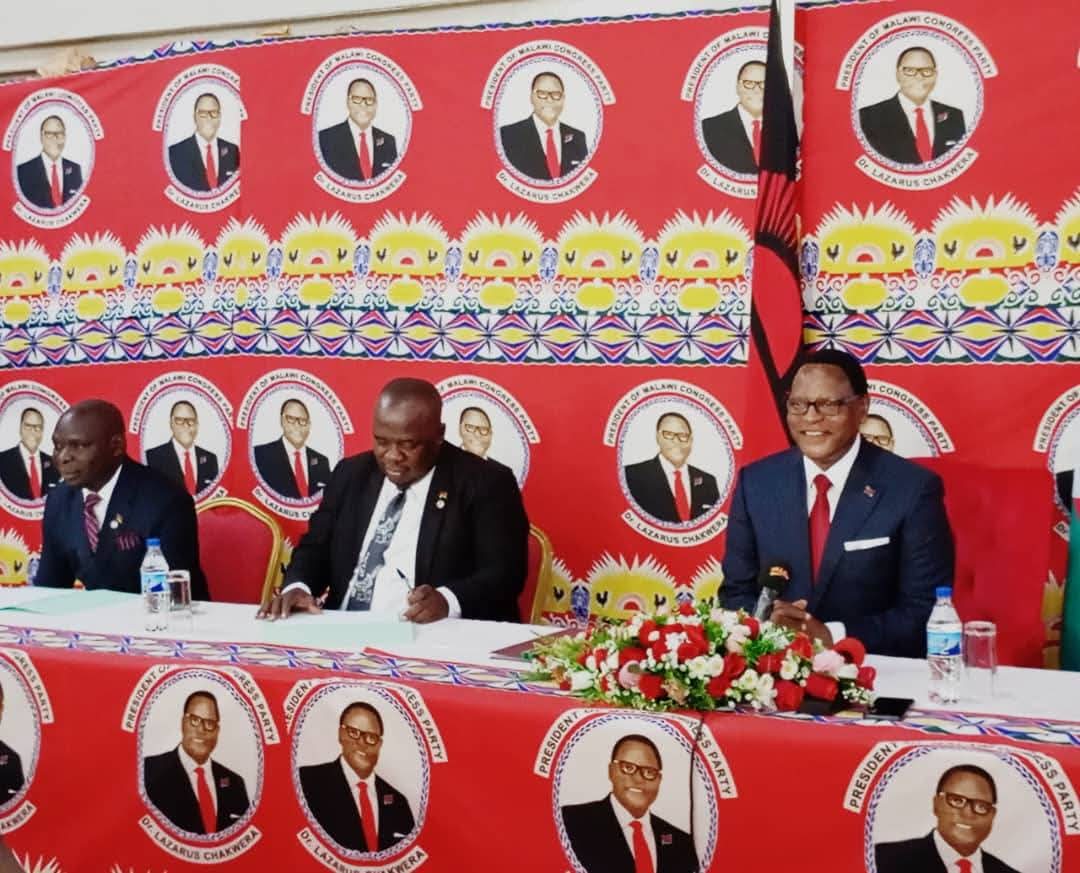
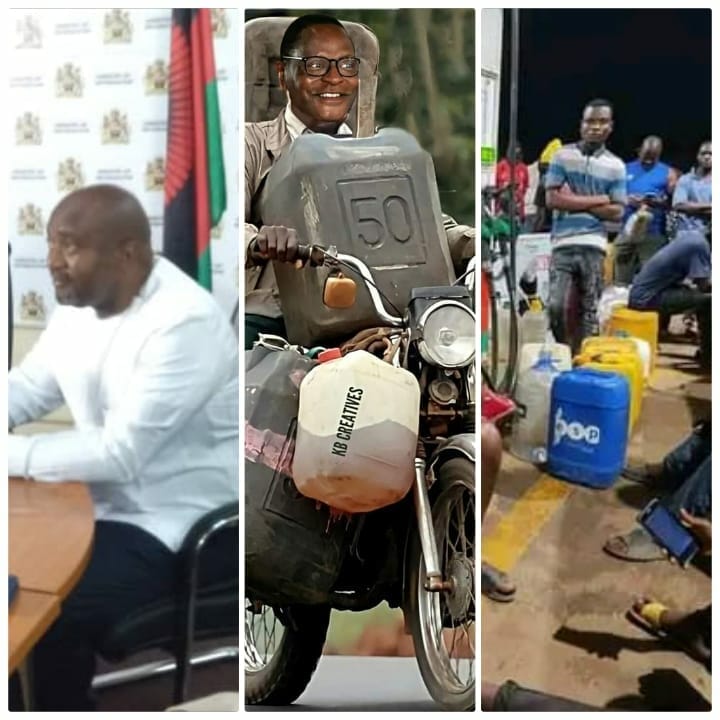
When Malawi Congress Party (MCP) president Lazarus Chakwera addressed the nation in Lilongwe, what stood out most was his unwavering faith in God despite the party’s loss in the September 16, 2025 Presidential Election.
His message carried a tone of resilience and spiritual conviction, suggesting that defeat had not diminished his sense of purpose or calling.
Chakwera’s posture reflected the mindset of a leader who sees political setbacks not as endings but as moments of reflection and recalibration.
By grounding his message in faith, he reminded Malawians that leadership is not only about winning elections but also about maintaining moral clarity in difficult moments.
His remarks also hinted at a deliberate effort to steady the MCP during a period of uncertainty, projecting stability to supporters who may still be grappling with the election outcome.
Chakwera’s confidence in divine guidance suggested that he views MCP’s current challenges as temporary hurdles rather than permanent barriers.
This spiritual framing could help calm internal tensions within the party, particularly among factions that may be questioning the party’s direction post-election.
It also positioned Chakwera as a leader prepared to continue shaping Malawi’s political landscape, regardless of his position outside government.
In a country where faith strongly influences public perception, Chakwera’s message is likely to resonate widely among citizens who value humility and steadfastness in leadership.
His comments ultimately conveyed the image of a man unwilling to let political defeat define his legacy, choosing instead to reaffirm the values he believes will anchor both the party and the nation moving forward.
For many Malawians, this statement may serve as a reminder that leadership grounded in faith can be a source of national unity in times of political transition.
Share this:
Like this:
LikeLoading…
Discover more from The Maravi Post
Subscribe to get the latest posts sent to your email.
BLANTYRE-(MaraviPost)-In a political landscape hungry for clarity and direction, former President Lazarus Chakwera’s recent press briefing on Monday was anticipated as a pivotal moment for Malawi’s public discourse.
After months of silence following his electoral defeat, many citizens, stakeholders, and political analysts alike were eager to hear from him—not just as a former leader, but as a key figure in shaping Malawi’s future trajectory amidst pressing national concerns.
Instead, what unfolded was a brief announcement about his acceptance of a Commonwealth assignment to Tanzania, leaving the nation grappling with disappointment, unanswered questions, and a sense of missed opportunity.
The timing and content of the press briefing have sparked widespread condemnation and intense debate across social, political, and media circles.
For a man who once commanded the highest office in Malawi and enjoyed the trust of millions who voted for him, one would expect a more comprehensive engagement with the public. Yet, Chakwera chose to dedicate this rare public appearance to inform the nation of his new role abroad, without addressing the urgent domestic issues that many feel demand his insight and leadership.
The Commonwealth assignment to Tanzania, aimed at supporting peace and stability efforts, is undoubtedly important.
It reflects the recognition of Chakwera’s stature on the international stage and his potential to contribute to regional peacebuilding initiatives.
However, the manner in which this announcement was delivered—through what many perceive as an overhyped press briefing rather than a simple press release—raises questions about the strategic counsel surrounding the former president. Was this briefing genuinely necessary? Or was it a misstep that squandered a crucial platform to reconnect with a nation still grappling with unresolved challenges?
Critics argue that Chakwera’s advisors failed him and, by extension, the Malawian public. Calling a press briefing implies a substantive engagement, a sharing of significant news or perspectives that warrant public attention and dialogue.
The expectation was not simply to hear about a foreign assignment, but to gain insight into Chakwera’s reflections on his political journey since the elections, his views on national reconciliation, and his stance on ongoing issues such as the tragic Chikangawa plane crash proposed fresh commission of inquiry.
This disaster, which claimed numerous lives, has generated calls for a fresh commission of inquiry, underscoring a broader demand for accountability and transparency from all leaders, including former presidents.
Instead, Chakwera’s silence on these critical matters has left many feeling abandoned at a time when the country yearns for unity and leadership beyond electoral politics. The public’s hunger for answers and direction was palpable.
They wanted to hear whether Chakwera would support efforts to heal the nation, contribute to meaningful dialogue on governance and justice, or outline his future plans within Malawi’s political or civic arena. Instead, the briefing offered a narrow focus, confined to his personal career move, without acknowledging the broader national mood or the responsibility that comes with his past role.
This episode also highlights a deeper issue about political communication and leadership accountability in Malawi.
Public figures, especially those who have held the highest offices, carry a responsibility that transcends personal ambitions. Their words and actions can either foster hope or deepen disillusionment.
By failing to seize this moment to speak candidly and comprehensively, Chakwera inadvertently fueled skepticism about his commitment to national interests and raised doubts about the quality of advice he receives.
There is also a broader lesson to be learned about managing public expectations.
A press briefing is not merely a formality; it is a platform that can shape narratives, build trust, and influence public sentiment.
When used effectively, it can unify a nation and inspire collective action. When squandered, as in this case, it risks alienating the very people who once placed their faith in a leader.
Many observers have suggested that if the sole purpose was to announce an international assignment, a straightforward press release or a smaller media statement would have sufficed, preserving the gravitas of a formal briefing for more substantive engagements.
Moreover, the timing of this announcement—coming at a moment when the nation is grappling with sensitive issues—raises questions about priorities.
Malawi is at a crossroads, facing challenges that require dialogue, healing, and visionary leadership. The Chikangawa tragedy alone demands attention from all leaders, including former presidents, to restore public confidence in governance and safety.
By sidestepping these issues, Chakwera missed an opportunity to demonstrate empathy, responsibility, and continued engagement with the country’s well-being.
In essence, this press briefing was a test of leadership beyond office, a chance for Chakwera to redefine his role as a statesman and elder figure in Malawi’s political landscape.
Unfortunately, the narrowness of the message and the absence of engagement on critical issues have left many feeling that he has retreated from public life rather than embraced it in a new, more mature capacity.
The silence on pressing national matters after such a long absence from the public eye felt like a void where leadership should have been.
Looking forward, the expectations for former President Chakwera remain high.
Malawi, like many nations, benefits from the active participation of experienced leaders who can offer wisdom, bridge divides, and champion causes that transcend partisan politics.
If Chakwera is to maintain relevance and respect, he must consider how best to communicate with his countrymen in ways that acknowledge their concerns and aspirations.
Future engagements should demonstrate openness, accountability, and a willingness to contribute constructively to national discourse.
For now, the legacy of this press briefing is one of missed potential and public frustration.
It serves as a reminder that leadership is not just about titles or assignments abroad but about meaningful connection and service to one’s people at home.
Chakwera’s journey post-presidency is still unfolding, and whether he chooses to respond to this moment with renewed commitment to Malawi’s pressing issues remains to be seen.
But the nation watches, hopeful that the next time he steps into the public eye, it will be with a message that truly matters and a vision that inspires.
The former president’s decision to call a press briefing only to announce his foreign assignment, while omitting commentary on pressing national issues, reflects poorly on his leadership and advisory team. It was a missed opportunity to re-engage with a nation eager for direction and reassurance.
Malawi deserves better from its leaders, past and present, and should expect them to rise to the occasion when history calls.
Share this:
Like this:
LikeLoading…
Discover more from The Maravi Post
Subscribe to get the latest posts sent to your email.
In today’s digital age, personalities like Bakili Muluzi TV (BMTV)-which has been operating undercover) have become household names, particularly among Malawians who follow online platforms for news, commentary, and public discourse. With a style that is both bold and unfiltered, Muluzi has captured the attention — and sometimes the ire — of audiences across the country.
Sylvester Kalizang’oma recently weighed in on Muluzi’s approach, urging people to “speak up like a brave person.”
Indeed, watching Bakili Muluzi TV, it is easy to see why such advice resonates. His on-screen presence is audacious, direct, and unapologetic — qualities that often make viewers either cheer or cringe.
Kalizang’oma notes that some may be tempted to label Muluzi as reckless, brash, or even arrogant.
Yet, as Muluzi himself has implied with the phrase “akulu akulu” — referring to leaders or people in authority — his approach is purposeful. Even if his style causes temporary discomfort, it often challenges those in power to reflect and, in some cases, respond.
This tension between audacity and responsibility is what makes Muluzi’s platform so compelling. In a media landscape where cautious reporting is the norm, he chooses to push boundaries.
His commentary is bold, but it is also rooted in a desire to hold leaders accountable and provoke public discussion.
Of course, the very qualities that make him popular also invite criticism. Some accuse him of sensationalism, while others suggest his unfiltered commentary risks misunderstanding or conflict.
But in an era where ordinary citizens struggle to have their voices heard, figures like Bakili Muluzi TV remind us of the value of fearless communication.
Kalizang’oma’s advice — to speak boldly yet responsibly — applies not only to media personalities but to all citizens who wish to engage with governance, policy, or public debate.
Muluzi’s work demonstrates that speaking out, even when it ruffles feathers, can serve a greater purpose: holding leaders accountable and encouraging open discourse.
In the end, Bakili Muluzi TV is more than just an online personality.
He symbolizes the power of audacity, the influence of digital media, and the role of fearless voices in shaping public dialogue.
As Kalizang’oma aptly puts it, if we are to speak out, we must do so like brave individuals — unafraid, thoughtful, and ready to stand by our words.
Share this:
Like this:
LikeLoading…
Discover more from The Maravi Post
Subscribe to get the latest posts sent to your email.
Malawians have currently expressed a series of criticisms or concerns regarding the actions and decisions of Malawi President Arthur Peter Mutharika (APM).
Firstly, Mutharika’s ad hoc approach to cabinet appointments during a significant economic crisis has been criticized for being inconsistent and ineffective.
For instance, at the time of fuel scarcity, APM took a long time to appoint the Minister of Energy, Jean Mathanga.
Secondly, the appointment of individuals with allegations of crime and corruption, such as Alfred Gangata, Enoch Chihana, and Richard Luhanga, has raised concerns about governance and integrity.
Unfortunately, there is another school of thought that such appointments may propagate the corruption culture thereby creating a conflict of interest.
Furthermore , there have been complaints regarding the lack of proper procedures in the appointments of key positions, such as the Director General of the Malawi Revenue Authority (MRA) and the Anti-Corruption Bureau (ACB).
Some have contended that the acting Director General of MRA should have been chosen from within the organization, even without the involvement of the board.
Additionally, the process of selecting the Director General of ACB was not properly followed by APM. It should have included merit-based interviews for potential candidates, with the ultimate decision of appointment resting with the president.
Unfortunately, Mutharika has also been accused of favoring the Lhomwe tribe in public office appointments, leading to claims of tribalism and lack of inclusivity in governance.
This is against the background that Mutharika was evenly voted into power across all regions and tribes of Malawi.
Some critics have questioned Mutharika’s absence at the military fallen heroes ceremony as exhibiting a lack of respect and commitment to the nation and its armed forces.
It is therefore unfortunate that the ongoing shortages of essential commodities such as fuel, food, foreign exchange, water, and electricity have been a significant concern for the populace, reflecting poorly on Mutharika’s leadership.
Although it is premature to make a final assessment of Mutharika’s administration, the government has not provided any concrete explanation or proposed solutions for the current predicaments.
Lastly, Mutharika’s warnings against holding constitutional demonstrations have been interpreted as an attempt to suppress dissent and limit citizens’ rights to protest.
In conclusion, these listed factors represent a variety of concerns about Mutharika’s leadership that have been currently brought up in public discussions.
It is important for the Mutharika administration to promptly address these criticisms in order to maintain the public’s confidence in his leadership.
Share this:
Like this:
LikeLoading…
Discover more from The Maravi Post
Subscribe to get the latest posts sent to your email.
The death of a former president is ordinarily a moment of national reflection, unity, and respect.
It is a time when a country collectively honors the contributions and sacrifices of its past leaders, setting aside political differences in acknowledgment of shared history.
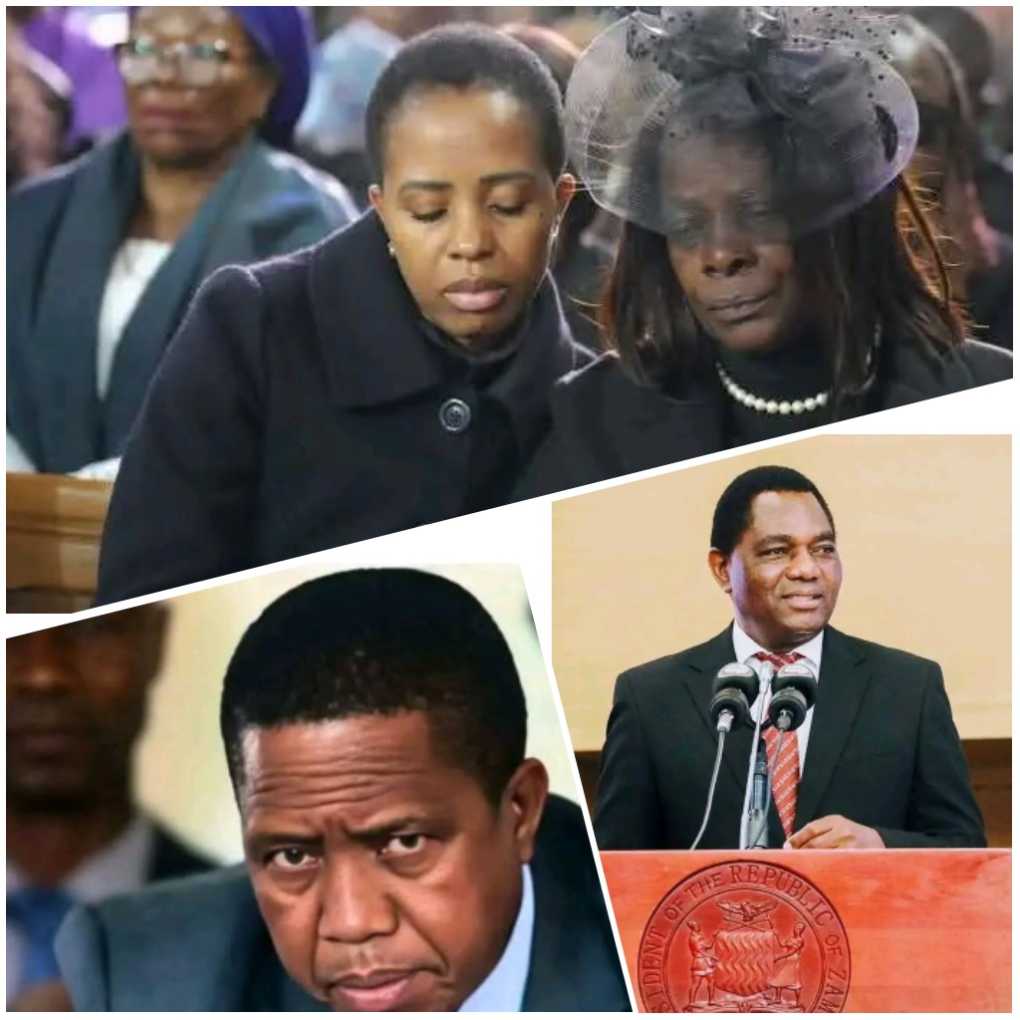
However, the case of Edgar Lungu, Zambia’s late president, presents a starkly different scenario—one that demands critical examination of the government’s role during his final days and the ethical implications of its involvement in his state funeral.
Edgar Lungu’s passing in June 2025 has been met with an unusual and uncomfortable silence from many quarters, not least from the current government under President Hakainde Hichilema.
This silence is not only about the delay in his burial, which remains unresolved months after his death, but also about the profound dissonance between how Lungu was treated during his illness and how the state now seeks to honor him in death.
To understand why it is imperative for President Hichilema’s government to abstain from participating in the burial of Edgar Lungu, one must look closely at the treatment Lungu received while bedridden.
It is well documented that the government stripped him of all privileges ordinarily accorded to former heads of state.
This was not a mere political distancing or symbolic rebuke; it was a tangible withdrawal of support and dignity.
The government denied him his medical entitlements, forcing his family to shoulder the burden of hospital bills and healthcare costs.
This abandonment was not only a breach of protocol but also a profound moral failure.
The legal arguments presented in court by Lungu’s family highlight this glaring contradiction.
They pointed out the glaring hypocrisy in seeking to accord Lungu a state funeral—a mark of honor and respect—when, during his lifetime, the very government now orchestrating this honor denied him the rights and privileges that justified such a send-off.
The family’s lawyer posed a powerful question: How could a government that deliberately withdrew medical support and stripped entitlements from a former president suddenly claim to mourn his death with a state funeral? This question strikes at the heart of the issue and demands a response grounded in sincerity rather than political expediency.
The optics of the government’s involvement in the funeral are troubling.
Rather than being seen as a gesture of respect or remorse, it risks being interpreted as an opportunistic celebration of Lungu’s demise—an event that some might view as a political victory for President Hichilema.
This perception is fueled by the government’s previous actions, which appeared to have been aimed at hastening Lungu’s exit by denying him the care he was entitled to.
Such an interpretation casts a long shadow over the funeral proceedings, robbing them of the solemnity and dignity they should command.
Moreover, the government’s insistence on taking part in the burial could be deeply hurtful to Lungu’s family and supporters.
The family, who bore the financial and emotional burden of his final days, deserve the space and respect to mourn their loved one without the political overtones that the government’s presence inevitably brings.
The burial should be a private, dignified affair led by those who cared for Lungu most intimately—not a stage for political grandstanding.
The courts have a critical role to play in this delicate matter.
They must weigh the arguments of the Lungu family with empathy and fairness, recognizing that despite Lungu’s status as a former president, the government’s treatment of him was far from that of a respected statesman.
The legal system should safeguard the rights of the deceased’s family to conduct the burial according to their wishes, free from unnecessary state interference that could compound their grief.
This situation also raises broader questions about how societies treat their former leaders and the ethical responsibilities of governments beyond political cycles.
Stripping a former president of privileges and denying medical care is not just an administrative decision—it is a reflection of a deeper erosion of respect for the office and the individual who once held it.
Such actions risk setting dangerous precedents for future leadership transitions, undermining national unity and the very fabric of democratic governance.
The Zambian government’s conduct during Edgar Lungu’s illness and subsequent death reveals a troubling disregard for human dignity and respect. By denying him the medical care he was entitled to, the government effectively contributed to his demise.
This reality cannot be ignored or whitewashed by a state funeral that lacks genuine remorse or compassion.
The government should honor the memory of Edgar Lungu by stepping back and allowing his family to mourn and bury him with the dignity they deserve, free from political interference.
True respect for a former leader is shown not only in death but in the compassion extended during their final days—a lesson that Zambia’s current government must seriously reflect upon.
Edgar Lungu died in June 2025, but his burial remains unresolved.
The time has come for the government to recognize the pain it has caused and to act with humility by letting the family lead the way in honoring their lost loved one.
Only then can Zambia begin to heal from this painful chapter in its history.
Share this:
Like this:
LikeLoading…
Discover more from The Maravi Post
Subscribe to get the latest posts sent to your email.
Matola (Energy Minister), Chakwera and motorists spending nights for fuel
BLANTYRE-(MaraviPost)-Malawi finds itself grappling with a severe fuel shortage that has paralyzed key sectors of its economy and disrupted the daily lives of its citizens.
At the heart of this crisis lies a troubling legacy of mismanagement and corruption linked to the Malawi Congress Party (MCP) government under former President Lazarus Chakwera.
As the nation struggles to fill its empty fuel reserves, which have been depleted since July 2024, the Democratic Progressive Party (DPP) government has stepped forward with decisive action aimed at stabilizing the situation and restoring confidence in the country’s energy security.
The roots of the current fuel shortage run deep, tracing back to the MCP administration’s failure to effectively manage the National Oil Company of Malawi (NOCMA) and maintain adequate fuel reserves.
Our investigations reveal that the MCP regime allowed systemic corruption and financial malfeasance to fester unchecked within the fuel supply chain.
The siphoning off of an estimated 22 billion kwacha through questionable fuel suppliers under MCP’s watch was not merely a case of poor planning but a deliberate plundering of resources that were critical for sustaining Malawi’s energy needs.
This corruption scandal exposed the fragile underbelly of Malawi’s fuel infrastructure.
Instead of safeguarding the country’s reserves and ensuring steady fuel availability, the MCP administration’s cadres allegedly prioritized personal gain over national interest.
The consequences have been dire: since mid-2024, Malawi’s fuel reserves have been empty, leaving the nation vulnerable to economic shocks and operational paralysis in sectors dependent on reliable energy supplies.
Citizens have borne the brunt of this crisis, facing soaring transport costs, scarcity of essential goods, and an uncertain economic future.
In stark contrast, the DPP government, now at the helm, has adopted a markedly different approach to tackling the crisis.
Recognizing the gravity of the situation, the new administration has prioritized transparency and accountability as fundamental pillars in restoring Malawi’s fuel security.
The DPP has initiated comprehensive audits of NOCMA’s operations to uncover the full extent of mismanagement and corruption inherited from the previous regime.
These audits are crucial for identifying weaknesses and enforcing corrective measures that prevent a repeat of such a debilitating crisis.
Moreover, the DPP has emphasized the importance of stringent oversight mechanisms to ensure that fuel procurement and distribution processes are conducted with integrity.
By instituting rigorous vetting procedures for suppliers and empowering independent watchdogs to monitor NOCMA’s activities, the current government is sending a clear message that graft and embezzlement will no longer be tolerated.
This proactive stance is not only stabilizing the immediate fuel supply but also laying the groundwork for sustainable management practices that can safeguard Malawi’s energy future.
The economic stakes could not be higher. Should the fuel shortage have persisted unchecked, Malawi’s economy would have faced catastrophic disruptions.
Transportation networks, which are vital for moving goods and people, would have suffered severe interruptions, exacerbating inflation and limiting access to essential commodities.
The ripple effects would extend to increased unemployment and heightened social unrest, deepening poverty levels and eroding public trust in governance.
The urgency with which the DPP has acted highlights its commitment to averting these potential disasters and cushioning ordinary Malawians from further hardship.
It is important to acknowledge the resilience and determination demonstrated by the DPP in the face of a crisis not of its making.
While the MCP government’s negligence and corruption created the fuel scarcity, the DPP has taken up the mantle of responsibility with vigor and transparency.
The administration’s efforts to rebuild trust through accountability and reform are critical not only for resolving the current shortage but also for restoring hope in Malawi’s institutional capacity to manage public resources effectively.
Yet, the path ahead remains challenging. Rebuilding fuel reserves and ensuring uninterrupted supply require sustained political will, financial investment, and continuous vigilance.
The lessons from the MCP era must serve as a cautionary tale, underscoring the dangers of complacency and corruption in managing strategic national resources.
The DPP’s ongoing reforms must be supported by all stakeholders, including civil society and international partners, to foster an environment where transparency and good governance become the norm rather than the exception.
The fuel crisis in Malawi is a stark reminder of how poor leadership and corruption can jeopardize national security and economic stability.
The MCP government’s failure to maintain adequate fuel reserves and its entanglement in corrupt practices have left the country vulnerable to avoidable hardship.
Conversely, the DPP’s prompt and transparent response to the crisis signals a renewed commitment to good governance and public accountability.
By confronting the challenges head-on and instituting reforms, the DPP is not only working to stabilize the current situation but also striving to ensure that Malawi’s energy sector can support sustainable development and prosperity for all its citizens in the years to come.
Share this:
Like this:
LikeLoading…
Discover more from The Maravi Post
Subscribe to get the latest posts sent to your email.