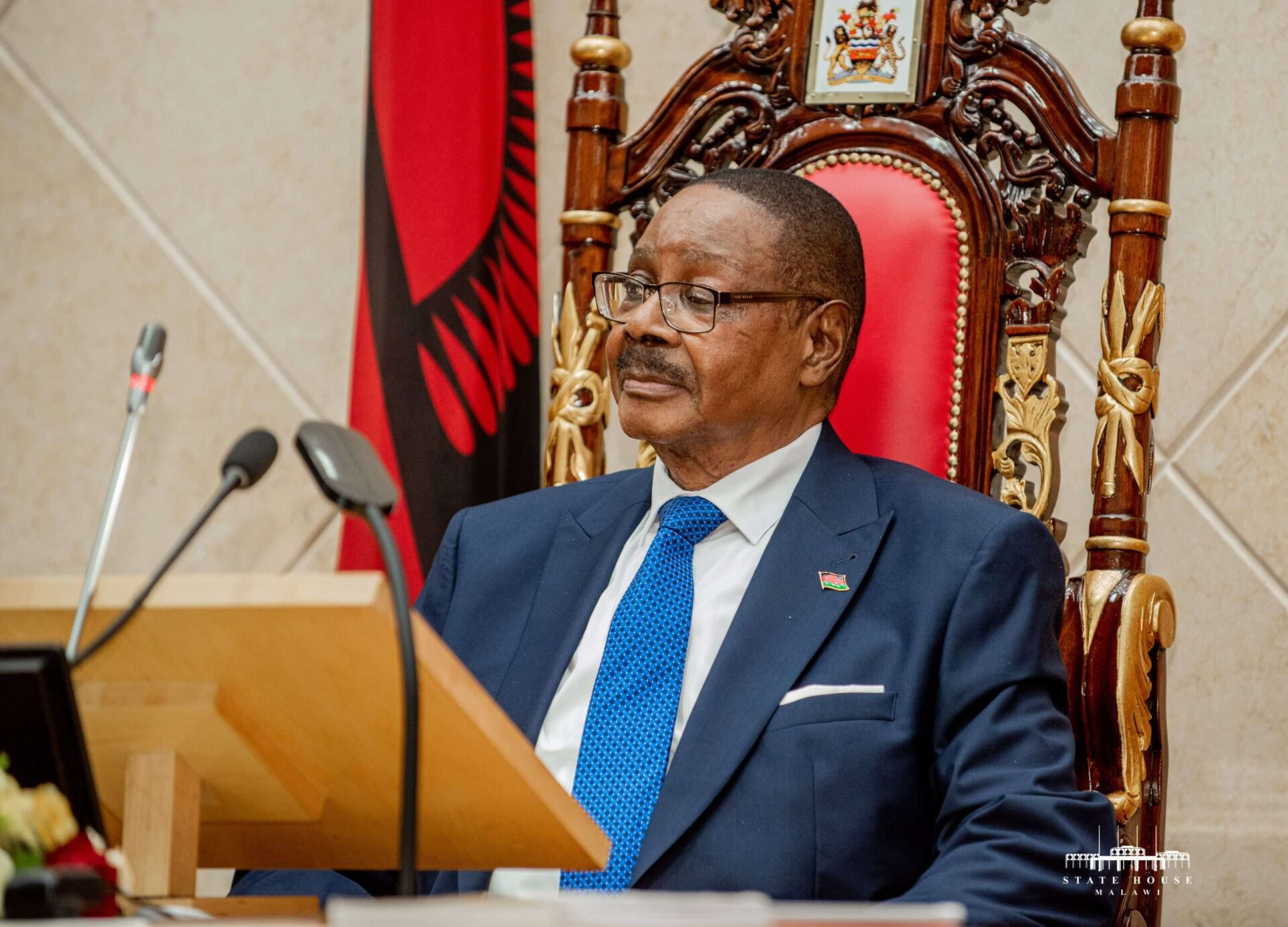
NAP lauds strong anti-corruption drive in Mutharika’s 2026/27 SONA

LILONGWE-(MaraviPost)-The National Advocacy Platform (NAP) has hailed the latest State of the Nation Address (SONA) as a bold and reassuring declaration of intent on governance, particularly in the fight against corruption.

Speaking after the address, NAP Executive Director, Benedicto Kondowe, described the President’s message as a strong signal that government is ready to confront long standing governance challenges head on.

Kondowe said the President’s firm declaration that there will be no “sacred cows” in the fight against corruption demonstrates a renewed commitment to transparency, accountability and the rule of law.

He observed that corruption has for years eroded public trust in state institutions, weakened service delivery systems and slowed down Malawi’s national development agenda.

According to Kondowe, the President’s stance comes at a critical time when citizens are demanding decisive leadership and practical solutions to governance failures.

He further welcomed the President’s appeal to the three arms of government to act in the national interest, describing it as a reaffirmation of constitutional accountability and institutional responsibility.

Kondowe stressed that effective governance depends not only on powerful speeches but also on consistent, fair and impartial enforcement of the law, regardless of political affiliation or social standing.

He said if backed by genuine political will, the President’s approach could significantly rebuild public confidence and strengthen democratic institutions.

“Malawians want to see institutions empowered to act without fear or favour. That is the true test of commitment,” Kondowe emphasized.

He also underscored the importance of adequately resourcing and protecting anti corruption bodies from political interference to ensure their independence and effectiveness.

Kondowe noted that strong oversight institutions are essential for preventing abuse of power and ensuring public resources are used responsibly.

He added that improving governance systems will not only curb corruption but also create a stable environment for economic growth, investment and improved public service delivery.

NAP urged the government to translate its promises into measurable action, saying citizens are eager to witness tangible results in the ongoing fight against corruption.
The Maravi Post

Mixed reactions to Mutharika’s 2026/27 SONA

Praises, ululations and jubilations have erupted among the ruling Democratic Progressive Party (DPP) supporters following President Mutharika’s State of the nation address (Sona) which exudes a ray hope to Malawians regarding the availability of fuel, reduced inflation rates, availability of cheap and affordable maize, a major staple food crop in the country

The majority of Malawians are optimistic about the commitments made in the Sona, including the acquisition of seven new airplanes within the next five years, ensuring fairness and justice for all citizens, a strong stance against corruption, plans to build two-storey market structures in Blantyre, Lilongwe, and Mzuzu cities, and most importantly , the introduction of dialysis services at Mzuzu central hospital.

Nonetheless, the Sona received substantial backlash from opposition parties, civil society groups, and economic experts.

Jessie Kabwira, spokesperson for the Malawi Congress Party (MCP), expressed disappointment with the address, stating that the administration had neglected the central region in their implementation of the Farm Input Subsidy Program (FISP).

Furthermore, critics from the opposing party contended that the government’s assertion of providing free secondary education was deceptive, pointing out that only a small amount (K10,000) was waived from fees. Is this sufficient? They wondered.

Additionally, Simplex Chithyola Banda, the leader of the Opposition, voiced his disapproval of the speech for its failure to address rampant robberies and abductions, and for lacking a comprehensive homeland security strategy.

According to Kabambe, an experienced economist and the president of UTM, the majority of efforts in the Sona have been directed towards treating the symptoms rather than tackling the underlying issues in the economy.

From the standpoint of the UTM Party, Kabambe emphasized the need for a comprehensive stabilization plan that prioritizes growth through production, rather than relying on temporary emergency measures.

Undule Mwakasungula, a proponent of good governance, denounced the recent tax hikes as contradicting the DPP’s pledges during their campaign. He argued that these increases unfairly burden regular citizens and small enterprises.

Although the SONA pledged to tackle corruption without any exceptions, activists like Onjezani Kenani expressed doubt about the genuineness of these efforts, citing personnel appointments that seemed contradictory to the anti-corruption commitments.

According to experts from the Economics Association of Malawi (Ecama) and other analysts, Mutharika’s “discipline-first” plan for economic recovery may face constraints due to the country’s high debt levels and ongoing foreign currency shortages.

Experts also pointed out that Mutharika’s portrayal of himself as the main force behind reform could result in him bearing the brunt of criticism if his ambitious economic goals, such as lowering inflation from 28.7% to under 21%, are not achieved.

In a nutshell, it is not surprising that Mutharika’s Sona attracted mixed reactions among many Malawians.

The Maravi Post

Mutharika’s straightforward-factual 2026/27 SONA shames Chakwera’s sugar-coated, empty-handed SONAs

By Manson Msukwa

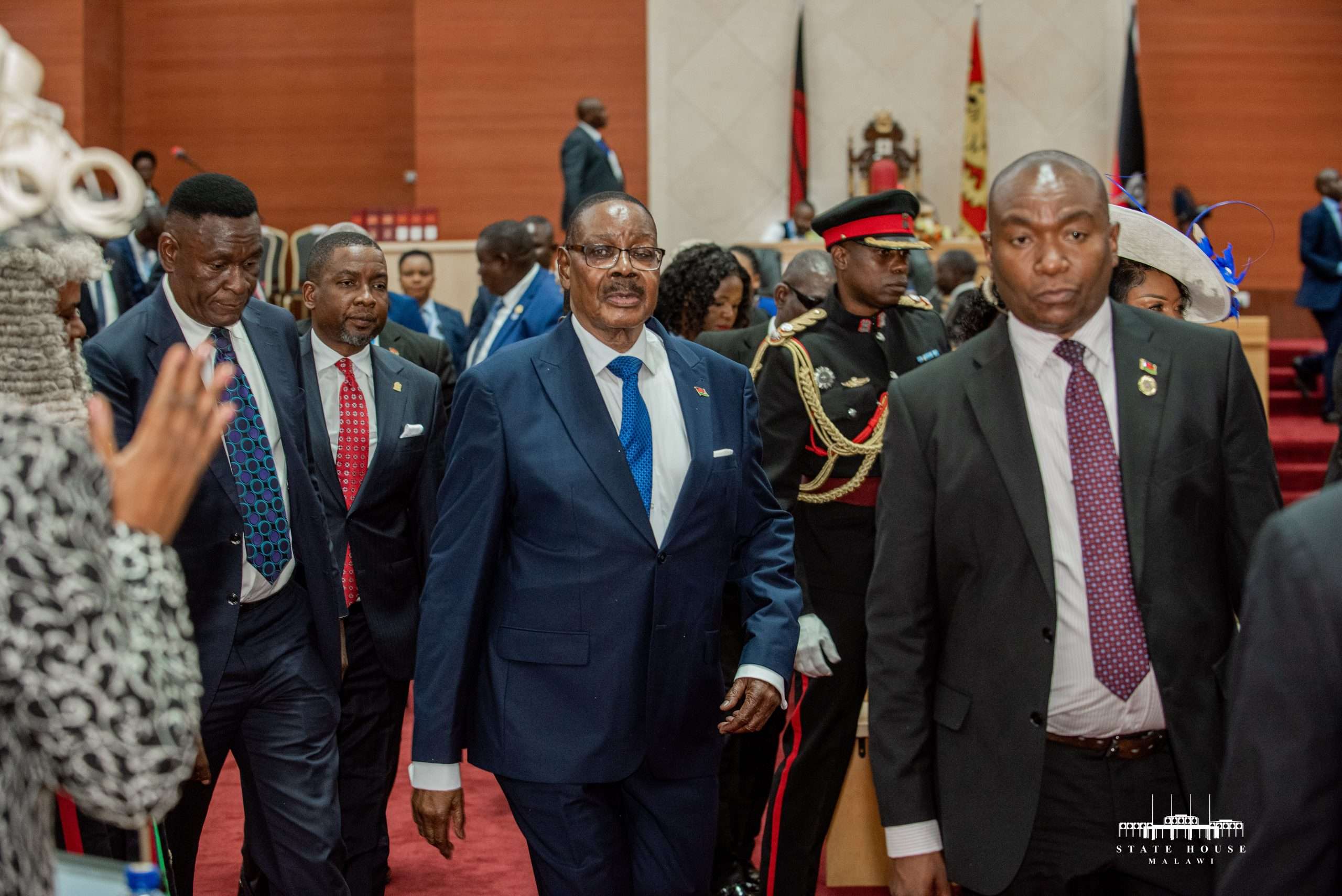
MZUZU-(MaraviPost)-In stark contrast to the backlash faced by former President Lazarus Chakwera’s ‘sugar-coated’ 2025 State of the Nation Address (SONA), President Arthur Peter Mutharika has garnered significant praise for his succinct delivery during the 2026 address on February 13, 2026, at Parliament in Lilongwe.

Political analysts and citizens alike commended the clarity and relevance of Mutharika’s speech to pressing issues in Malawi.

Silvester Ayuba James, a prominent legal practitioner and MCP-affiliated lawmaker for Nkhotakota Central Constituency, lauded Mutharika’s no-nonsense approach.

He stated, “APM’s SONA. No fake accent. No empty poetry. No useless foreplay. Just straight to business.”

James further contrasted this with Chakwera’s previous address, which he described as filled with “spells,” highlighting Mutharika’s clarity that cut through the noise like a knife through butter.

Adding to the praise, social commentator Joshua Chisa Mbele echoed these sentiments on Facebook.

He observes, “President Mutharika’s State of the Nation 2026. No unnecessary adjectives. No flowery and embroidered words. Straight to the point.”

Mbele rated the address at “100% Relevant,” emphasizing the President’s focus on real and urgent challenges, along with tangible outcomes.

Furthermore, within just five months in office, Mutharika has announced notable achievements, including the implementation of a free secondary school initiative.

He also revealed ambitious plans to construct Blantyre and Chikwawa District Hospitals in the upcoming 2026-27 financial year.

In addition to these projects, he highlighted plans to double national fuel storage capacity from 60 million litres to 120 million litres through the construction of new storage facilities in Blantyre, Lilongwe, and Mzuzu.

He further stated that maize is now selling for between MK38,000 and MK55,000 per 50kg bag, compared to around MK100,000 before his government took over.

These initiatives underscore his commitment to effectively addressing national needs and proving that actions speak louder than words.

In light of these accomplishments, it is worth noting that last year, MCP Member of Parliament for Rumphi-West, Jona Mkandawire, openly challenged Chakwera’s SONA, accusing him of presenting false information about developments in his constituency.

The Maravi Post

Editorial: Mutharika’s 2026/27 SONA unveils bold economic rescue plan with people-centered agenda

The official opening of the 2026/2027 Budget Meeting marked a defining political and economic moment for Malawi, as President Arthur Peter Mutharika addressed the nation with a message of urgency, reform, and renewed direction.

President Mutharika described the meeting as historic, emphasizing that it symbolized the first comprehensive implementation phase of the DPP’s agenda since its return to power.

He recounted the state in which he found the country upon assuming office, describing Malawi as being trapped in a deep man-made crisis characterized by hunger, shrinking businesses, soaring inflation, and weakened public institutions.

The President stressed that the crisis was not irreversible and announced that his administration had moved to restore order, rebuild trust, and stabilize the economy.

He disclosed that fraudulent contracts had been stopped, reckless expenditure curtailed, and ghost workers removed from the government payroll.

Appointments to public office are now being made strictly on merit, signaling a departure from patronage and favoritism.

The President emphasized that macroeconomic stability was the cornerstone of recovery, outlining targeted interventions to stimulate growth and reduce inflationary pressures.

Emergency maize purchases were made to cushion vulnerable households, fertilizer procurement was expedited, and fuel stocks were replenished to revive the private sector.

Inflation is projected to fall below 21% in 2026, and economic growth is expected to rise from 2.7% to 3.8% in 2026 and 4.9% in 2027.

Austerity measures include reduced fuel entitlements for ministers and restricted local and international travel.

The Constituency Development Fund (CDF) has been increased from MK220 million to MK5 billion per constituency annually, with management responsibility transferred to local authorities.

Agricultural interventions include maize price stabilization, fertilizer procurement, and plans for local fertilizer production.

The President announced plans to transition Malawi from a consumption-driven economy to one anchored in production and exports.

Industrialization efforts include development of Special Economic Zones and support for cooperatives and micro, small, and medium enterprises.

Tourism sector reforms include operationalization of the Tourism Authority and flagship projects like the Salima Integrated Tourism Resort.

Energy sector reforms aim to increase national generation capacity from 551 megawatts to over 1,000 megawatts by 2030.

Mining sector reforms include suspension of new licenses, audits of the registry, and a ban on export of raw minerals.

Transport infrastructure rehabilitation includes resumption of road maintenance and reinstatement of the fuel Automatic Pricing Mechanism.

Civil aviation reforms include expansion of Malawi Airlines’ fleet and increased international destinations.

The President reaffirmed commitment to rule of law, fiscal discipline, and zero tolerance for corruption.

He called for unity among the Executive, Legislature, and Judiciary, emphasizing the need for shared responsibility in rebuilding Malawi.

The Maravi Post