
By Watipaso Mzungu
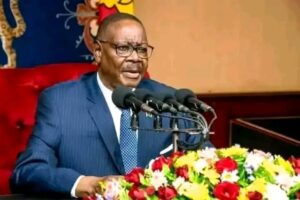
Amid calls from the Public Affairs Committee (PAC) to President Professor Arthur Peter Mutharika to fire Cabinet ministers and government officers with outstanding corruption cases, governance and human rights advocates have urged the President to exercise caution.
Recently, the Public Affairs Committee (PAC) – a quasi-religious grouping, which together with the Catholic Bishops, spearheaded the birth of multiparty democracy in 1992, called upon President Mutharika to sack officials facing corruption and other charges.
However, a seasoned governance and human rights advocate Undule Mwakasungula cautioned the President against acting on the calls wholesome, fearing this could be a recipe for disaster.
He reminded Malawians that hasty decisions have ruined lives and careers for innocent citizens before, citing the case of former Minister of Agriculture, Dr. George Chaponda, who was victimized for a crime he never committed.
“PAC’s call to fire ministers and senior officials over corruption allegations deserves attention. However, it does not automatically mean the President made a mistake in appointing them. First, the President acted on the information available at the time of the appointments. Many of those appointed had strong qualifications, experience, and a proven track record. For this reason, it will be unfair to say the President failed in make the right choices,” reacted Mwakasungula.
He wondered why PAC is raising this issue now when they were silent when the appointments were being made.
Mwakasungula urges PAC and other groups to avoid handling this matter emotionally or politically, emphasizing that government needs stability to function well.
“If every allegation leads to immediate removal, government operations may be seriously affected. Then also a risk that such calls could be used politically to weaken the administration rather than to promote justice. Much as oversight is necessary, but it should strengthen, not be used to paralyze government functions. We must also keep the principle of “innocent until proven guilty” at the center. Allegations are not proof. Removing ministers or officials based only on accusations is creating fear and instability, and may encourage the use of rumors as political weapons. This would harm our governance more than it would help,” emphasized the most revered governance and human rights advocate.
In a separate interview, a human rights lawyer, Alfred Munika, echoed Mwakasungula’s views, stressing that it would be unfair to punish someone who is still presumed innocent.
“We have seen cases where officials are acquitted after being dismissed, only to be left without a job or reputation. The case of George Chaponda, former Minister of Agriculture, is a stark reminder of the dangers of knee-jerk reactions. Dr. Chaponda was dismissed from the cabinet over maize-gate allegations, only to be acquitted and cleared by the court. This shows how hasty decisions can ruin lives and careers,” said Munika.
He further argued that it is not practical for a president to work with entirely new faces, who did not accompany him on his campaign trail.
“These are people he knows, trusts, and has worked with. Replacing them overnight could lead to a vacuum in leadership and disrupt government operations,” said Munika.
As Mwakasungula concluded, while accountability is crucial, due process must be respected. The Constitution guarantees the right to a fair hearing, and it’s essential that this principle is upheld.
“The President should focus on ensuring that the law takes its course rather than pre-empting it,” said Mwakasungula.
Mutharika’s predecessors have faced similar pressures, often with disastrous consequences.
In 2013, Joyce Banda sacked several officials over corruption allegations, only to see some reinstated or cleared later. This created uncertainty and undermined government effectiveness.
The PAC’s call for sackings may be well-intentioned, but it’s essential to consider the broader implications.
Malawi needs stability and continuity, not a revolving door of officials. Mutharika should resist this pressure and prioritize prudent governance over populist posturing.
Instead, the President could consider suspending officials with cases in court, allowing them to defend themselves while ensuring they don’t interfere with investigations.
This balanced approach would demonstrate commitment to accountability while upholding the principles of fairness and justice.
As Mwakasungula puts it, “A president can’t just wake up one morning and decide to start afresh with new faces. That’s not how governance works.”
Mutharika would do well to heed this advice and prioritize wise counsel over hasty decisions.