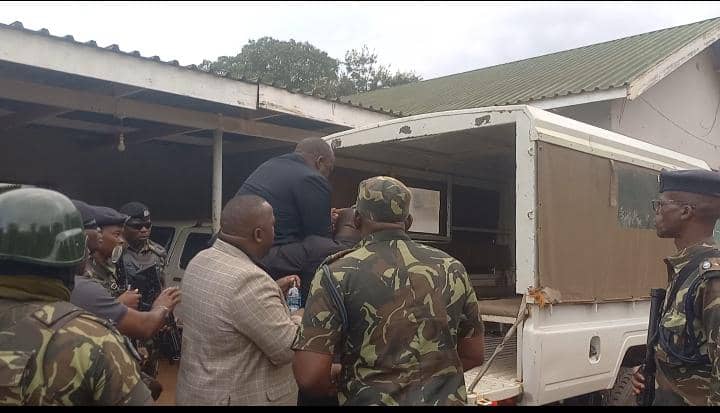
LILONGWE-(MaraviPost)-The opposition Malawi Congress Party (MCP) Secretary General Richard Chimwendo Banda will remain in police custody as he awaits a ruling from High Court Judge Mzondi Mvula on his bail application.
It means Chimwendo will spend Christmas in cell unless the court grants him bail by close of business today.
The bail application came up for hearing today at the High Court, where lawyers representing Chimwendo Banda presented their arguments, while the State also responded.
After hearing submissions from both sides, the court adjourned the matter for a ruling.
The judge indicated that the ruling will be delivered via email once it is ready.
During today’s court bail proceedings, State lawyer Dzikondianthu Malunda has asked the court not to release Richard Chimwendo Banda, arguing that the applicant is a person of influence and is capable of influencing or intimidating witnesses, thereby jeopardizing the case.
Chimwendo Banda’s lawyer George Kadzipatike has asked the court to release his client, arguing that the State has so far failed to formally charge him.
Kadzipatike adds that the client is not a flight risk and is currently admitted at the hospital, where he is receiving medical treatment.
The MCP SG is accused of attempting to kill Frank Chiwanda in 2022 in Dowa.
Share this:
Like this:
LikeLoading…
Discover more from The Maravi Post
Subscribe to get the latest posts sent to your email.
Initially, it is crucial to recognize that the president or former president of Malawi, like any other person, has a right to privacy despite holding a prominent position in the public eye.
No wonder, debates have ensued in various social media platforms as what really constitutes personal, private and public visits by the former or state president of Malawi.
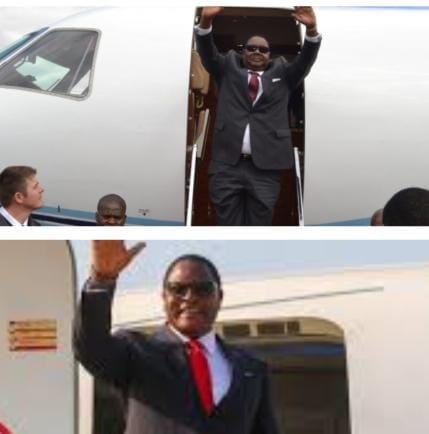
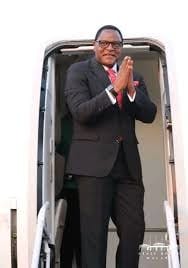
A couple of days back, ex-president Lazarus Chakwera declared that he would be taking a personal trip to Dubai for about two weeks to relax and enjoy his vacation.
It was surprising to many Malawians that the expenses for his private journey were completely covered by taxpayers’ funds.
Critics argue that why is it necessary to call it a personal trip when public funds are being utilised.
Similarly, the current president, Peter Mutharika, also traveled to South Africa for a trip that was labeled as a private visit.
To everyone’s surprise, APM traveled to Bakili Muluzi Airport with Government officials and used public funds to charter a plane.
Let’s start with the basics. A presidential personal trip is defined as a voyage undertaken by the president, regardless of their current or past status, that is not associated with official state responsibilities.
Personal trips have personal motives such as visiting family, holidaying, or attending a private event.
It is important to appreciate that personal trips are funded personally or by private sponsors and do not involve government resources such as security, official aircraft, or diplomatic protocol.
Therefore, the recent travels of Chakwera and Mutharika are not personal as they utilized government funds.
Next, let’s move forward to presidential private trips which are initiated by the current president or former president for personal reasons but may still use some government‑provided resources.
Such benefits may include first‑class ticket entitlement or chartering a plane under the President’s Salaries and Benefits Act.
Most of the times, presidential private visits include medical appointments , family visits only that government resources may cover specific costs.
Appreciation must be in order to note that a presidential private trip is not officially announced as a state visit but may be acknowledged by the Office of the President and Cabinet (OPC) as the case may be.
In this vein of argument, it is appropriate to classify the trips of Mutharika and Chakwera as private visits, as they were funded by government resources despite having a personal purpose.
Lastly, now, let’s discuss a presidential public or official trip, which is essentially a travel taken by the president in their official role to fulfill responsibilities for the state.
Official trips made by the president serve various purposes, such as participating in summits, ratifying agreements, acting as a representative for Malawi at global conferences, or even engaging in diplomatic activities.
It should be noted that all expenses for presidential public trips are covered by the state, including security, transportation, and diplomatic protocol. These trips are also officially announced to the public.
These trips directly relate to governance, national interest, or foreign policy objectives, just to mention a few.
For example, former President Lazarus Chakwera’s extensive trips to countries such as China, Angola, Qatar, Saudi Arabia, and the USA were official diplomatic endeavors with the goal of enhancing relationships and wooing investments.
It should be emphasized that President Mutharika, who took office in October 2025, has not participated in any official foreign trip.
In conclusion, it is crucial for the Malawi Government to accurately inform the public about the nature of the trips being taken by the current and former presidents.
Share this:
Like this:
LikeLoading…
Discover more from The Maravi Post
Subscribe to get the latest posts sent to your email.
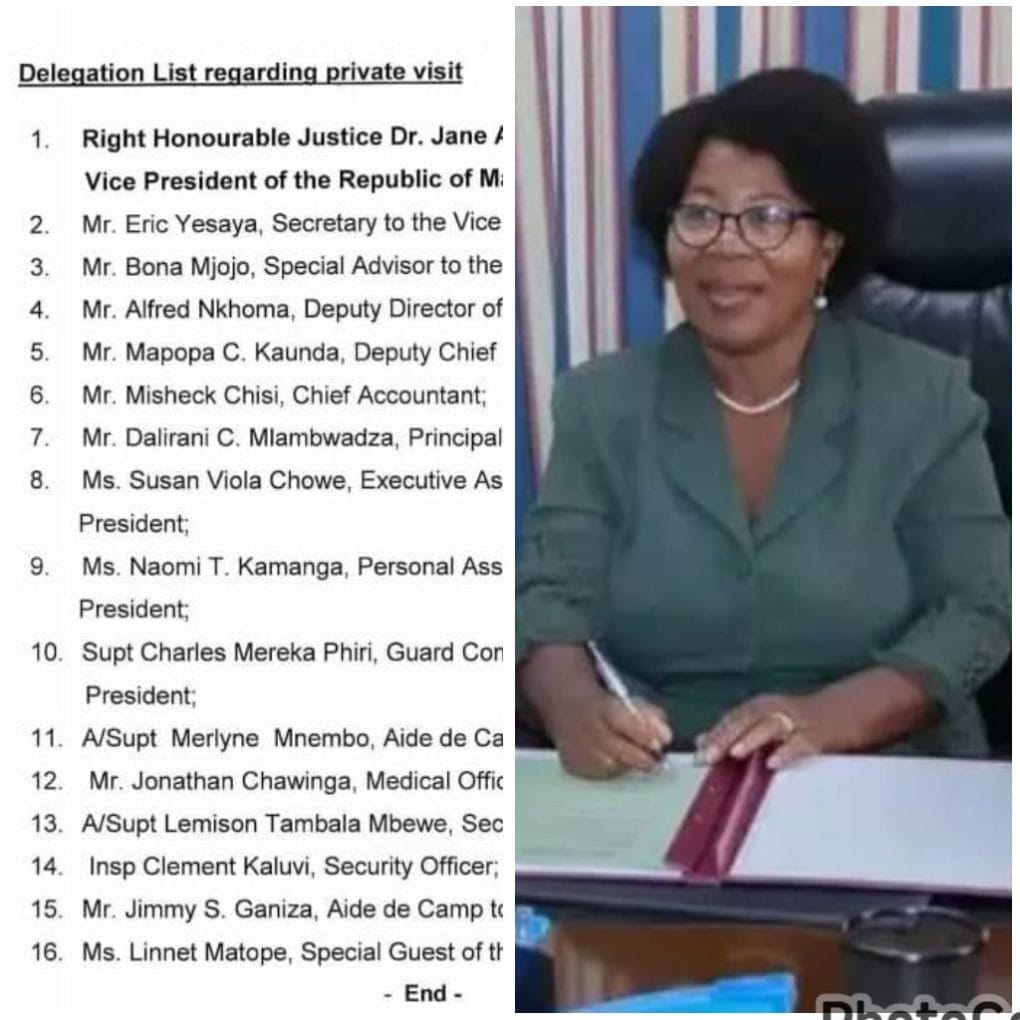
BLANTYRE-(MaraviPost)-Concerned citizen Edward Kambanje has expressed serious concern over reports that the government has approved an official trip by the country’s Vice President to the United Kingdom, with costs estimated at MK2 billion.
He described the reported expenditure as alarming given the current economic hardships facing the country.
Kambanje said the move raises questions about government priorities at a time when many citizens are struggling to meet basic needs due to rising prices and reduced incomes.
He noted that such spending appears insensitive to the realities ordinary Malawians are experiencing daily.
According to Kambanje, this is a period when the government should be exercising strict financial discipline.
He argued that every public resource must be carefully safeguarded and used only for purposes that bring clear and direct benefits to the nation.
He further stated that leaders have consistently urged citizens to endure tough measures in the name of economic recovery.
In his view, those in authority should set an example by avoiding expenditures that may be perceived as unnecessary or excessive.
Kambanje questioned the necessity of the Vice President’s proposed UK visit, asking whether its objectives could not be achieved through less costly alternatives.
He said exploring such options would demonstrate a commitment to prudent use of public funds.
The concerned citizen believes the reported K2 billion could significantly improve service delivery if redirected to these priority areas.
He emphasized the importance of transparency and accountability in public spending.
Kambanje called on the government to clearly outline the purpose of the trip and the tangible outcomes expected from it.
He added that citizens have a right to understand how major financial decisions are made, especially during a time when the country is under severe economic strain.
Kambanje urged leaders to remain mindful that public funds come from taxpayers who expect responsible and respectful management of their contributions.
Share this:
Like this:
LikeLoading…
Discover more from The Maravi Post
Subscribe to get the latest posts sent to your email.
LAGOS-(MaraviPost)-Former First Lady, Aisha Buhari, has revealed that she has no plans to remarry, describing the decision as pragmatic rather than moralistic.
“She will not remarry, she says, almost with a shrug,” she told Dr Charles Omole, author of the new 600-page biography titled From Soldier to Statesman: The Legacy of Muhammadu Buhari, which was unveiled at the State House, Abuja, on Monday.
“It is not a moral pronouncement so much as a pragmatic one: she has grandchildren; one husband was enough,” the book added.
The 22-chapter biography traces Buhari’s life from his early years in Daura, Katsina State, to his final hours in a London hospital in mid-July 2025.
It presents Mrs. Buhari’s stance on remarriage as a refusal to conform to cultural binaries that often portray widows as either betrayers or saints.
“In a culture that sometimes reads remarriage as betrayal or saintliness, her answer refuses both scripts. It is simply a woman naming the contours of her future,” the book explained.
“Looking ahead, Mrs. Buhari plans a quieter public life, dividing her time between family, philanthropy, and travel.
“Her plans are domestic and cosmopolitan at once. She will holiday with friends and associates. She will dote on grandchildren so they will remember her not as a moving figure behind tinted glass but as a presence in their childhood rooms.
“She will run her foundation, the Aisha Buhari Foundation, and the cardiovascular and medical centre in Kano that has already completed over two hundred procedures.
“She will host, collaborate, and extend the same ethic of care that animated her politics into a quieter, more sustainable hospitality,” the book noted.
Omole described Mrs. Buhari’s decision as a personal reset after years in the political spotlight.
“If the republic expects a politics of eternal return, she offers a politics of departure instead: let others take the stage; let the house heal,” he said.
“For Aisha Buhari, her marriage served as both a refuge and a trial.
“It gave her a platform to voice her opinions, only to punish her for doing so. It opened doors to the decision-making spaces, but those spaces became unwelcoming.
“In 2014, she was entrusted with meeting the nation’s expectations; by 2014, she was excluded from acknowledgement,” it further read.
After his divorce in 1988, Muhammadu Buhari married Aisha Buhari on 2 December 1989.
Born in 1971 in Adamawa State, she became First Lady when Buhari returned to power in 2015.
The couple were married for 35 years and had five children.
Source: tribuneonlineng.com
Share this:
Like this:
LikeLoading…
Discover more from The Maravi Post
Subscribe to get the latest posts sent to your email.
LILONGWE–(MaraviPost)–Barely three months after Malawians went to the polls and decisively voted to remove the Malawi Congress Party (MCP) administration, former President Lazarus Chakwera is once again under fire for the very behavior many believe cost him the presidency: a relentless appetite for international travel.
Political analysts and ordinary citizens alike have expressed dismay as news emerged that the former leader has already visited Tanzania and is currently in Dubai, United Arab Emirates. For many, these trips signify a “tone-deaf” approach to the concerns that led to his crushing defeat in the September 16, 2025, general elections.
A Campaign Defined by the “Globetrotter” Label
During his five years in office, Chakwera was frequently criticized for his frequent foreign trips, often accompanied by large entourages.
Critics nicknamed him the “Globetrotter-in-Chief,” arguing that while the country’s economy was in a tailspin—marked by 33% inflation, chronic fuel shortages, and a lack of foreign exchange—the President was busy collecting per diems in foreign capitals.
“The election was a referendum on his lifestyle and his detachment from the suffering of the common man,” said Lilongwe-based political commentator, Kondwani Phiri. “Malawians expected that after losing, he would take a period of quiet reflection at home. Instead, he is back at the airport. It seems he has learned nothing and forgotten nothing.”
Tanzania and Dubai: The Post-Presidency Itinerary
While Chakwera was recently appointed as a Commonwealth Special Envoy to Tanzania to assist with mediation efforts following their own disputed elections—a role that technically justifies his travel—it is the subsequent trip to Dubai that has raised eyebrows.
Social media platforms have been flooded with comments from Malawians who feel that the former president should have prioritized “image repair” by staying grounded in Malawi.
“We voted him out because he loved the sky more than the soil of Malawi,” wrote one user on X (formerly Twitter). “To see him in Dubai now just proves he never really cared about our concerns. He is addicted to the jet-set life.”
The “Changed Man” Opportunity Missed
Political strategists argue that the post-election period offered Chakwera a unique opportunity to prove his critics wrong. By staying at home, engaging with his party’s grassroots, and showing solidarity with Malawians still struggling with the economic mess his administration left behind, he could have built a narrative of a “reformed statesman.”
Instead, the sight of him in international lounges has reinforced the perception of a leader who is more comfortable in the company of foreign dignitaries than in the markets of Area 25 or Limbe.
The Road Ahead for MCP
As the Malawi Congress Party begins the painful process of soul-searching and preparing for life in the opposition, the actions of its leader continue to cast a long shadow.
With Peter Mutharika now back at the helm and promising a “tough and painful” return to economic stability, the MCP needs to convince the electorate that it can be a responsible alternative.
However, as long as its leader continues to prioritize international travel over domestic presence, that remains a difficult sell.
For now, it appears that for Lazarus Chakwera, the world is still his stage—even if the Malawian people have already pulled the curtain on his performance.
Disclaimer: The views expressed in the article are those of the author not necessarily of The Maravi Post or Editor
Share this:
Like this:
LikeLoading…
Discover more from The Maravi Post
Subscribe to get the latest posts sent to your email.
LILONGWE-(MaraviPost)-Chairperson of the Malawi Electoral Commission (MEC) Justice Annabel Mtalimanja has been recognised for her outstanding service and exemplary leadership.
Justice Mtalimanja was honoured during the NPM Awards, an event that celebrates individuals who have demonstrated exceptional commitment and professionalism in their respective fields.
The recognition highlights her role in strengthening Malawi’s electoral processes and promoting democratic governance.
As head of the MEC, Justice Mtalimanja has been at the centre of critical electoral reforms aimed at enhancing transparency, credibility, and public trust in elections.
Her leadership has been marked by firmness, independence, and adherence to constitutional principles, especially during periods of heightened political tension.
The award also acknowledges her personal integrity and dedication to public service, qualities that have earned her respect both nationally and internationally.
Observers note that under her stewardship, MEC has taken significant steps to improve electoral management and institutional accountability.
The honour serves as a testament to the importance of principled leadership in safeguarding democracy.
Justice Mtalimanja’s recognition sends a strong message that commitment to fairness, rule of law, and service to the nation does not go unnoticed.
The NPM Awards continue to play a vital role in celebrating individuals whose work positively impacts Malawi’s social, political, and democratic development.
Share this:
Like this:
LikeLoading…
Discover more from The Maravi Post
Subscribe to get the latest posts sent to your email.