WASHINGTON-(MaraviPost)-US President Donald Trump has announced expanded entry restrictions on foreign nationals from 24 countries, citing “demonstrated, persistent, and severe deficiencies in screening, vetting, and information-sharing” that pose national security and public safety risks.
The new proclamation includes full suspensions for eight countries and partial suspensions for 16 others, affecting both immigrants and certain nonimmigrants, including travelers and students on B-1, B-2, B-1/B-2, F, M, and J visas.
Countries facing full suspension include Burkina Faso, Nigeria, Mali, Niger, Sierra Leone, South Sudan, Syria, and individuals using Palestinian Authority–issued or endorsed travel documents.
The administration cited terrorism concerns, conflict and instability, high visa overstay rates, and claims that countries have not consistently accepted the return of removable nationals.
The partial suspension list includes Angola, Antigua and Barbuda, Benin, Côte d’Ivoire, Dominica, Gabon, The Gambia, Malawi, Mauritania, Nigeria, Senegal, Tanzania, Tonga, Turkmenistan, Zambia, and Zimbabwe.
The administration cited a mix of overstay rates, screening challenges, and concerns around certain citizenship-by-investment programs.
The White House said the steps are intended to prevent entry of individuals the US lacks sufficient information to vet, while enforcing immigration laws and advancing national security objectives. Restrictions on some Turkmenistan nonimmigrant visas are lifted while immigrant entry remains suspended.
The affected countries are spread across Africa, Asia, the Caribbean, and Oceania.
Nigeria’s inclusion has raised concerns, with the country’s foreign minister expressing worries about the impact on trade deals and energy partnerships.
Trump defended the expanded entry restriction, saying it builds on his previous policies aimed at protecting national security and public safety. The Supreme Court has upheld similar restrictions in the past, ruling they are within presidential authority.
The move has sparked debate, with some arguing it undermines global cooperation and trade opportunities.
As the US continues to tighten its immigration policies, the impact on affected countries and individuals remains to be seen.
Share this:
Like this:
LikeLoading…
Discover more from The Maravi Post
Subscribe to get the latest posts sent to your email.
LILONGWE-(MaraviPost)-Human rights activist Chimwemwe Mbeya Mhango has described the repeated arrests of Malawi Congress Party (MCP) zealot Dala Kadula as a stark reminder of how politicians exploit young people for political gain.
Mhango, a former Malawi Defence Force (MDF) officer, said the situation should serve as a wake-up call for the country’s youth to steer away from politically motivated violence and instead focus on contributing to national development.
He was reacting to a new warrant of arrest linking Kadula to the alleged attempted murder of Frank Kachiwanda — a case in which MCP Secretary General Richard Chimwendo Banda is also implicated.
“This is a young man full of potential, yet he chose to allow himself to be used by politicians to harass others, believing he would be shielded,” said Mhango. “He could have channeled his political connections into something productive, but now he is battling multiple charges in court.”
Kadula is facing a range of allegations, including verbal threats against Mhango, leading a panga-wielding gang that attacked CDEDI director Sylvester Namiwa and other public figures, and inciting violence on behalf of MCP leadership.
Mhango urged Malawian youths to distance themselves from political violence, often orchestrated by party elites. “Malawi needs young people who are innovative, focused on development, and not pawns in political battles,” he said.
With the shift in political leadership, Kadula is now facing justice for his alleged role in a series of violent acts committed during the Chakwera-MCP era.
Share this:
Like this:
LikeLoading…
Discover more from The Maravi Post
Subscribe to get the latest posts sent to your email.
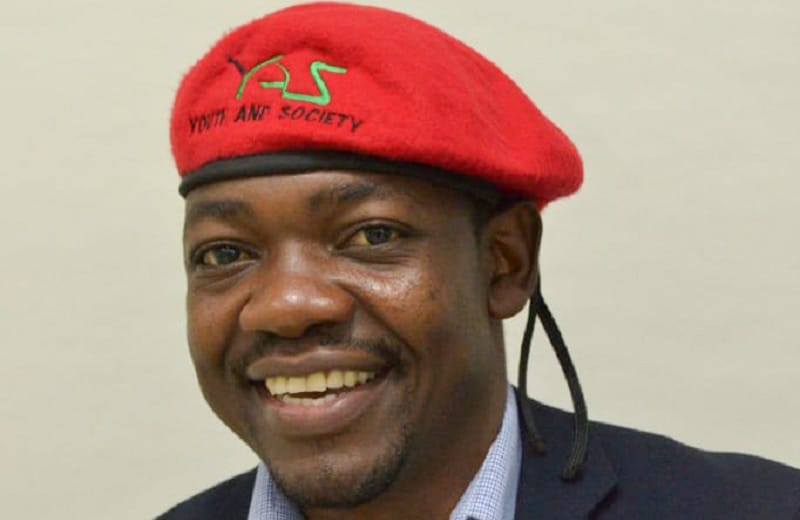
BLANTYRE-(MaraviPost)-A frontline human rights activist and governance advocate Charles Kajoloweka has declined his appointment to the board of the Technical, Entrepreneurial and Vocational Education and Training Authority (TEVETA).
In a letter dated December 15, 2025, addressed to Chief Secretary Justin Saidi, Kajoloweka who is also the founder and Executive Director (ED) of Youth and Society (YAS) says his decision has been made based on the principles of ethics, accountability, and institutional integrity.
He notes that accepting the appointment could potentially compromise, or be perceived to compromise, the independence of YAS and the credibility of its advocacy work.
“It is therefore in the best interests of accountable governance, public trust, and institutional clarity that I respectfully decline the offer,” says Kajoloweka Kajoloweka in the statement.
This is not the first time Kajoloweka has turned down a public appointment.
In September 2020, he also declined an appointment to the board of the National Youth Council (NYC).
Share this:
Like this:
LikeLoading…
Discover more from The Maravi Post
Subscribe to get the latest posts sent to your email.
Op-Ed Columnists, Opinion contributors and one submissions are posted under this Author. In our By-lines we still give Credit to the right Author. However we stand by all reports posted by Maravi Post Reporter.
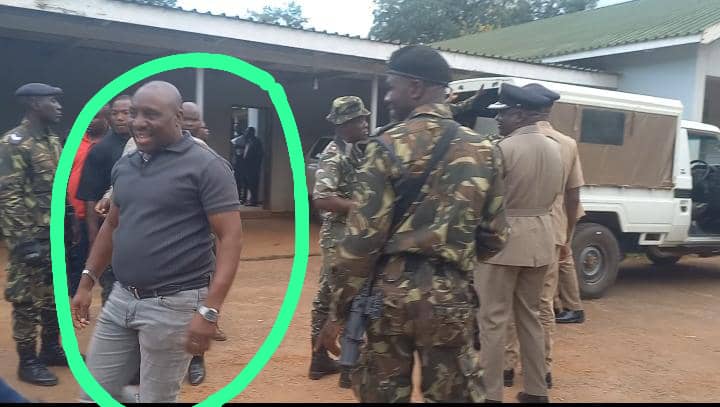
LILONGWE-(MaraviPost)-Lilongwe Chief Resident Magistrate Austin Banda on Monday afternoon ordered that Malawi Congress Party (MCP) Secretary General Richard Chimwendo-Banda be remanded to prison, subject to being taken to a hospital of his choice for medical examination today.
On the issue of the other suspect Alfred Dala Kadula, the court wondered how the state managed to bring him before the court if he was not arrested.
He says since there is an injunction restraining his arrest and detention, he will not remand him.
Background
Banda and Kadula have been charged with attempted murder and appeared before the Chief Resident Magistrate’s Court.
The State said the suspects were brought before the court for committal to the High Court and applied for their further remand.
However, lawyer George Kadzipatike told the court that the defence has preliminary issues that may affect the decision.
He argued that Kadula cannot be detained as he is protected by an injunction restraining the State from arresting or detaining him in connection with political violence cases.
The injunction was presented in court.
Kadzipatike also raised concern over Chimwendo Banda’s health, saying he has been seriously ill since his arrest on Friday.
He told the court that despite informing Kanengo Police and requesting that Chimwendo Banda be taken to the hospital, no action was taken.
He said Chimwendo Banda has a long-standing medical condition and was referred to South Africa for treatment in 2024, adding that the condition worsened while he was in police custody.
The defence asked the court to order that Chimwendo Banda be taken to a hospital of his choice if remanded, until he is certified fit to be held in prison.
Share this:
Like this:
LikeLoading…
Discover more from The Maravi Post
Subscribe to get the latest posts sent to your email.
LILONGWE -(MaraviPost)-The arrest of Malawi Congress Party (MCP) figures Vitumbiko Mumba, Richard Chimwendo Banda, and Jessie Kabwira, occurring alongside the private foreign trip of former president Lazarus Chakwera, has produced a politically charged moment that demands careful, sober analysis rather than rushed conclusions.
These events, unfolding in close temporal proximity, have triggered intense public debate about accountability, power, institutional independence, and the enduring influence of political leadership in Malawi’s democratic journey.
At the heart of the discussion is the question of whether these arrests reflect the impartial application of the law or whether they are entangled with political timing, factional dynamics, and narrative control.
Vitumbiko Mumba, known for his combative political style and high public profile, has long been a lightning rod for controversy, making his arrest symbolically significant beyond the specifics of any alleged offense.
Richard Chimwendo Banda, a seasoned political strategist with deep roots in party organization and governance, represents institutional continuity, which magnifies the implications of his detention.
Jessie Kabwira, as a prominent female political voice within MCP, adds a further layer of complexity, particularly in how gender, power, and accountability intersect in public perception.
Together, the arrests of these three figures create a powerful image that reshapes the political landscape and forces both supporters and critics to reassess assumptions about immunity and influence.
In any democracy, arrests of high-ranking political actors can signal a maturation of institutions when conducted transparently and fairly.
Conversely, in contexts with a history of selective justice, such arrests can deepen mistrust if motives appear opaque or inconsistently applied.
Malawi’s past experiences with high-profile prosecutions that either stalled or collapsed weigh heavily on public interpretation of the current developments.
Citizens have learned to distinguish between the announcement of arrests and the delivery of justice, and they will judge this moment accordingly.
The credibility of the legal process will therefore rest not on the drama of the arrests but on the professionalism, evidence, and procedural integrity that follow.
If investigations proceed efficiently and trials are conducted openly, confidence in the justice system may be strengthened.
If delays, political statements, or procedural missteps dominate the process, cynicism will deepen.
The arrests also place the MCP itself under intense scrutiny, testing its stated commitment to the rule of law.
A party that claims reformist credentials must demonstrate that accountability applies internally as much as it is demanded externally.
How MCP leadership communicates about these arrests will shape public understanding of whether the party sees justice as principle or as inconvenience.
Defensiveness risks appearing self-serving, while restraint could signal respect for institutional independence.
Silence, too, will be interpreted, either as confidence in due process or as avoidance.
Simultaneously, the private foreign trip by former president Lazarus Chakwera introduces a parallel narrative that complicates interpretation.
Although former presidents are entitled to private travel, the timing of such a trip amid domestic political turbulence inevitably attracts political reading.
In politics, absence can be as communicative as presence, especially when crises or controversies emerge.
Supporters may view Chakwera’s departure as evidence that institutions are now sufficiently autonomous to function without presidential oversight.
Critics may see the move as strategic distancing from unfolding events linked to his political legacy.
Others may interpret the trip as personal necessity unrelated to politics, a reminder that public figures are also private individuals.
Yet in a highly polarized environment, neutral interpretations are often the least persuasive.
The optics of a former president leaving the country while senior figures from his political camp face arrest create a striking contrast that fuels speculation.
This contrast raises broader questions about leadership responsibility beyond formal office.
Former presidents often retain informal influence that can stabilize or destabilize political processes depending on how it is exercised.
Whether Chakwera chooses to comment publicly, engage quietly, or remain silent will be closely analyzed for meaning.
Any statement risks being seen as interference, while silence risks being read as detachment.
The convergence of arrests and travel also highlights the enduring importance of symbolism in Malawian politics.
Political narratives are not shaped solely by facts but by timing, sequencing, and perception.
This moment illustrates how quickly public focus can shift from policy debates to questions of power and accountability.
For opposition parties, the situation presents both opportunity and danger.
There is an opportunity to demand institutional reform and equal application of the law.
There is also the danger of appearing to exploit legal processes for political gain.
Civil society organizations occupy a critical space in this moment as guardians of democratic norms.
Their role is to insist on transparency and fairness without aligning prematurely with any political camp.
The media, too, bears significant responsibility in shaping understanding.
Sensationalism may drive short-term attention but risks distorting complex realities.
Sustained, factual reporting will better serve the public interest.
The judiciary and law enforcement agencies are perhaps the most tested institutions in this unfolding scenario.
Their conduct will determine whether this moment is remembered as a step forward or a missed opportunity.
Professionalism, independence, and procedural rigor are now under the microscope.
International partners and observers are also watching closely.
Governance, rule of law, and political stability remain key benchmarks for international confidence and cooperation.
Any perception of politically motivated justice could have implications beyond domestic politics.
Conversely, credible accountability can enhance Malawi’s democratic standing.
The arrests also raise deeper questions about the culture of power and entitlement within political systems.
Do political leaders truly accept that public office comes with legal vulnerability?
Or do they expect informal shields that only fall when political winds change?
How this question is answered in practice will shape citizen trust for years to come.
The issue of corruption, often central to political arrests, further complicates interpretation.
Selective anti-corruption efforts can undermine genuine reform.
Comprehensive, consistent enforcement can rebuild faith in institutions.
Malawians are therefore less interested in who is arrested than in whether standards are applied universally.
The broader lesson of this moment lies in the distinction between legality and legitimacy.
Actions may be legal yet lack legitimacy if perceived as politically motivated.
Actions may be politically costly yet gain legitimacy if transparently grounded in law.
The challenge for Malawi’s institutions is to align legality with legitimacy.
Ultimately, the arrests of Mumba, Chimwendo Banda, and Kabwira, alongside Chakwera’s private trip, expose the fragile intersection of justice, power, and perception.
They remind political actors that public trust is earned through consistency, not convenience.
They remind citizens that democracy is sustained by institutions, not personalities.
They remind the nation that accountability is not a moment but a process.
The true implications of these events will therefore be revealed not in headlines but in outcomes.
If Malawi emerges with stronger institutions and clearer standards, this period may be seen as a necessary reckoning.
If not, it risks becoming another chapter in contested justice and political suspicion.
In the end, the most important question remains whether Malawi chooses principle over expediency.
The answer will define not only this moment but the future trajectory of the nation’s democratic life.