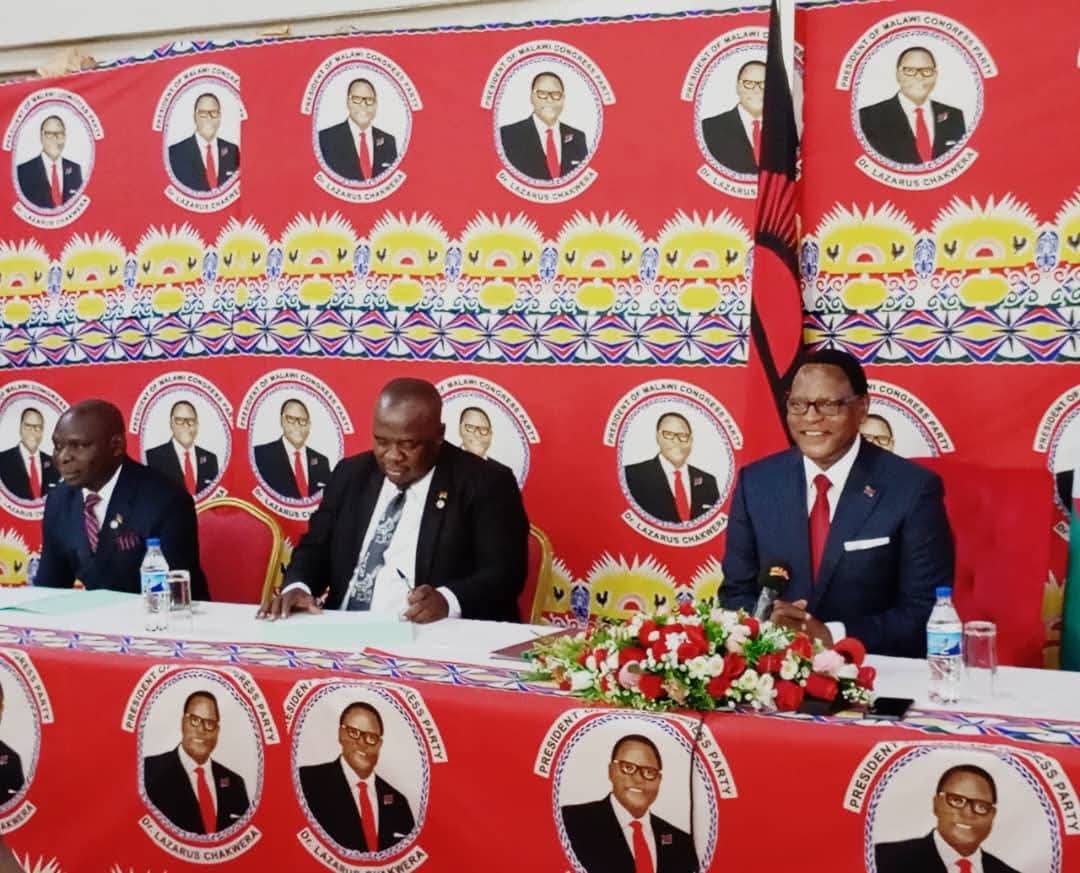
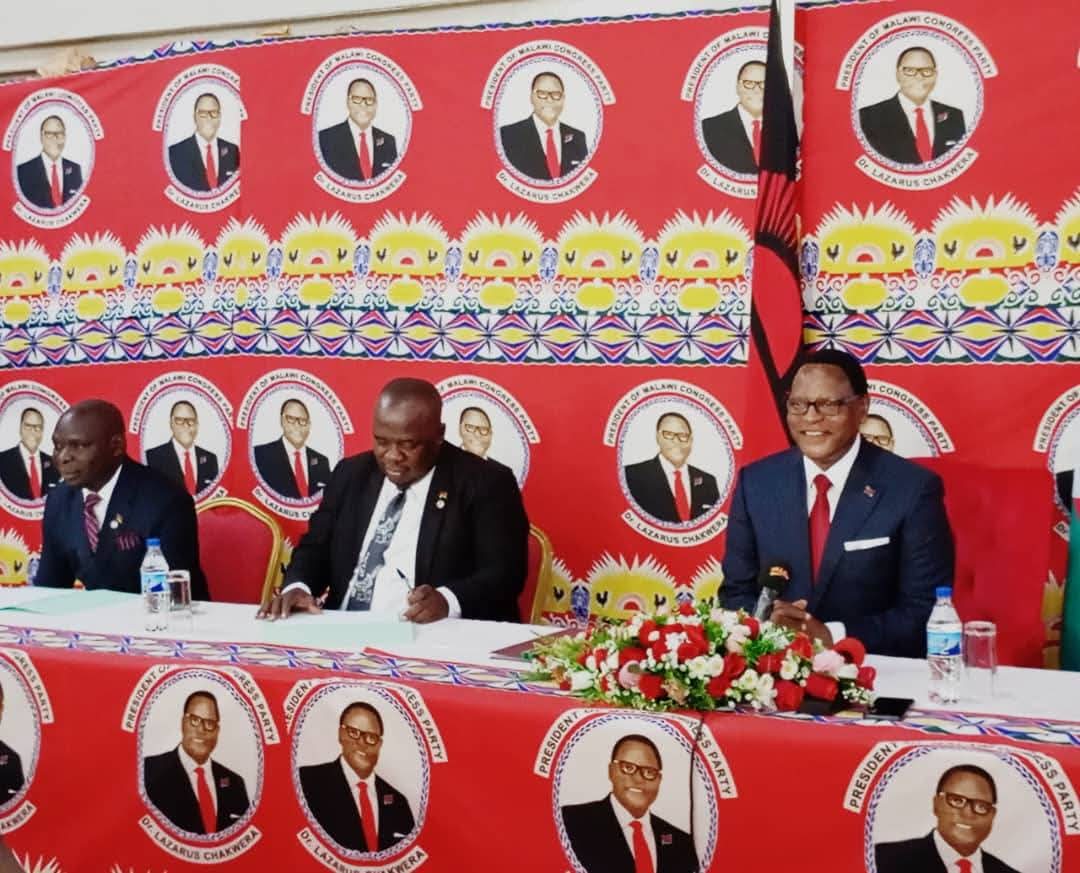
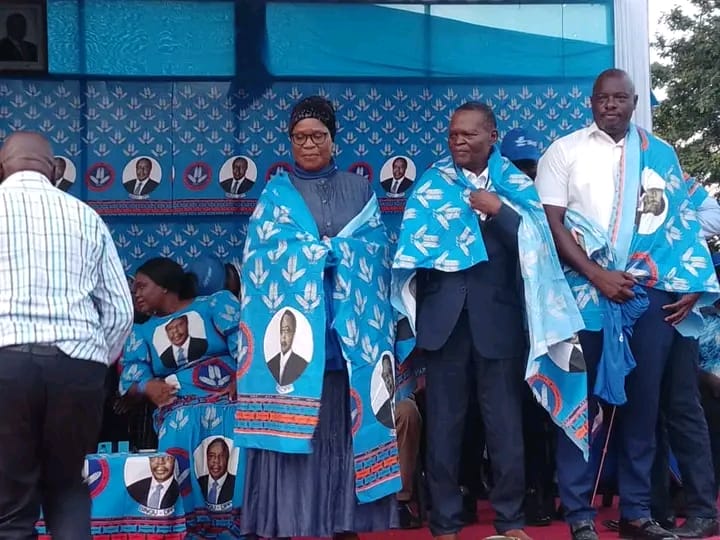
When Malawi Congress Party (MCP) president Lazarus Chakwera addressed the nation in Lilongwe, what stood out most was his unwavering faith in God despite the party’s loss in the September 16, 2025 Presidential Election.
His message carried a tone of resilience and spiritual conviction, suggesting that defeat had not diminished his sense of purpose or calling.
Chakwera’s posture reflected the mindset of a leader who sees political setbacks not as endings but as moments of reflection and recalibration.
By grounding his message in faith, he reminded Malawians that leadership is not only about winning elections but also about maintaining moral clarity in difficult moments.
His remarks also hinted at a deliberate effort to steady the MCP during a period of uncertainty, projecting stability to supporters who may still be grappling with the election outcome.
Chakwera’s confidence in divine guidance suggested that he views MCP’s current challenges as temporary hurdles rather than permanent barriers.
This spiritual framing could help calm internal tensions within the party, particularly among factions that may be questioning the party’s direction post-election.
It also positioned Chakwera as a leader prepared to continue shaping Malawi’s political landscape, regardless of his position outside government.
In a country where faith strongly influences public perception, Chakwera’s message is likely to resonate widely among citizens who value humility and steadfastness in leadership.
His comments ultimately conveyed the image of a man unwilling to let political defeat define his legacy, choosing instead to reaffirm the values he believes will anchor both the party and the nation moving forward.
For many Malawians, this statement may serve as a reminder that leadership grounded in faith can be a source of national unity in times of political transition.
Share this:
Like this:
LikeLoading…
Discover more from The Maravi Post
Subscribe to get the latest posts sent to your email.
BLANTYRE-(MaraviPost)-In a political landscape hungry for clarity and direction, former President Lazarus Chakwera’s recent press briefing on Monday was anticipated as a pivotal moment for Malawi’s public discourse.
After months of silence following his electoral defeat, many citizens, stakeholders, and political analysts alike were eager to hear from him—not just as a former leader, but as a key figure in shaping Malawi’s future trajectory amidst pressing national concerns.
Instead, what unfolded was a brief announcement about his acceptance of a Commonwealth assignment to Tanzania, leaving the nation grappling with disappointment, unanswered questions, and a sense of missed opportunity.
The timing and content of the press briefing have sparked widespread condemnation and intense debate across social, political, and media circles.
For a man who once commanded the highest office in Malawi and enjoyed the trust of millions who voted for him, one would expect a more comprehensive engagement with the public. Yet, Chakwera chose to dedicate this rare public appearance to inform the nation of his new role abroad, without addressing the urgent domestic issues that many feel demand his insight and leadership.
The Commonwealth assignment to Tanzania, aimed at supporting peace and stability efforts, is undoubtedly important.
It reflects the recognition of Chakwera’s stature on the international stage and his potential to contribute to regional peacebuilding initiatives.
However, the manner in which this announcement was delivered—through what many perceive as an overhyped press briefing rather than a simple press release—raises questions about the strategic counsel surrounding the former president. Was this briefing genuinely necessary? Or was it a misstep that squandered a crucial platform to reconnect with a nation still grappling with unresolved challenges?
Critics argue that Chakwera’s advisors failed him and, by extension, the Malawian public. Calling a press briefing implies a substantive engagement, a sharing of significant news or perspectives that warrant public attention and dialogue.
The expectation was not simply to hear about a foreign assignment, but to gain insight into Chakwera’s reflections on his political journey since the elections, his views on national reconciliation, and his stance on ongoing issues such as the tragic Chikangawa plane crash proposed fresh commission of inquiry.
This disaster, which claimed numerous lives, has generated calls for a fresh commission of inquiry, underscoring a broader demand for accountability and transparency from all leaders, including former presidents.
Instead, Chakwera’s silence on these critical matters has left many feeling abandoned at a time when the country yearns for unity and leadership beyond electoral politics. The public’s hunger for answers and direction was palpable.
They wanted to hear whether Chakwera would support efforts to heal the nation, contribute to meaningful dialogue on governance and justice, or outline his future plans within Malawi’s political or civic arena. Instead, the briefing offered a narrow focus, confined to his personal career move, without acknowledging the broader national mood or the responsibility that comes with his past role.
This episode also highlights a deeper issue about political communication and leadership accountability in Malawi.
Public figures, especially those who have held the highest offices, carry a responsibility that transcends personal ambitions. Their words and actions can either foster hope or deepen disillusionment.
By failing to seize this moment to speak candidly and comprehensively, Chakwera inadvertently fueled skepticism about his commitment to national interests and raised doubts about the quality of advice he receives.
There is also a broader lesson to be learned about managing public expectations.
A press briefing is not merely a formality; it is a platform that can shape narratives, build trust, and influence public sentiment.
When used effectively, it can unify a nation and inspire collective action. When squandered, as in this case, it risks alienating the very people who once placed their faith in a leader.
Many observers have suggested that if the sole purpose was to announce an international assignment, a straightforward press release or a smaller media statement would have sufficed, preserving the gravitas of a formal briefing for more substantive engagements.
Moreover, the timing of this announcement—coming at a moment when the nation is grappling with sensitive issues—raises questions about priorities.
Malawi is at a crossroads, facing challenges that require dialogue, healing, and visionary leadership. The Chikangawa tragedy alone demands attention from all leaders, including former presidents, to restore public confidence in governance and safety.
By sidestepping these issues, Chakwera missed an opportunity to demonstrate empathy, responsibility, and continued engagement with the country’s well-being.
In essence, this press briefing was a test of leadership beyond office, a chance for Chakwera to redefine his role as a statesman and elder figure in Malawi’s political landscape.
Unfortunately, the narrowness of the message and the absence of engagement on critical issues have left many feeling that he has retreated from public life rather than embraced it in a new, more mature capacity.
The silence on pressing national matters after such a long absence from the public eye felt like a void where leadership should have been.
Looking forward, the expectations for former President Chakwera remain high.
Malawi, like many nations, benefits from the active participation of experienced leaders who can offer wisdom, bridge divides, and champion causes that transcend partisan politics.
If Chakwera is to maintain relevance and respect, he must consider how best to communicate with his countrymen in ways that acknowledge their concerns and aspirations.
Future engagements should demonstrate openness, accountability, and a willingness to contribute constructively to national discourse.
For now, the legacy of this press briefing is one of missed potential and public frustration.
It serves as a reminder that leadership is not just about titles or assignments abroad but about meaningful connection and service to one’s people at home.
Chakwera’s journey post-presidency is still unfolding, and whether he chooses to respond to this moment with renewed commitment to Malawi’s pressing issues remains to be seen.
But the nation watches, hopeful that the next time he steps into the public eye, it will be with a message that truly matters and a vision that inspires.
The former president’s decision to call a press briefing only to announce his foreign assignment, while omitting commentary on pressing national issues, reflects poorly on his leadership and advisory team. It was a missed opportunity to re-engage with a nation eager for direction and reassurance.
Malawi deserves better from its leaders, past and present, and should expect them to rise to the occasion when history calls.
Share this:
Like this:
LikeLoading…
Discover more from The Maravi Post
Subscribe to get the latest posts sent to your email.
LILONGWE-(MaraviPost)-The Centre for Democracy and Economic Development Initiatives (CDEDI) has released a hard-hitting statement warning that Salima Sugar Company Limited (SSCL) has become a “ticking bomb” due to massive mismanagement, corruption and political interference.
Addressing the news conference on Monday, CDEDI Executive Director Sylvester Namiwa,accuses senior executives and politically connected individuals of siphoning billions of kwacha from the company through fraudulent contracts, irregular payments and reckless decision-making.
CDEDI says the situation threatens the survival of the company and risks severe losses for the Malawian economy.
SSCL was originally formed as a joint venture between the Malawi Government through Greenbelt Holdings Limited and India’s AUM Sugar and Allied Limited. Its mandate was to introduce competition in the sugar market and provide affordable sugar to ordinary Malawians.
Instead, CDEDI says the company has been turned into a breeding ground for corruption.
The organisation links the current crisis to a 2023 directive by then Secretary to the President and Cabinet, Colleen Zamba, who instructed that all company matters be routed through Executive Chairman Wester Kossam. This position allowed Kossam to assume control over crucial operations of SSCL.
Although he appointed an acting CEO, Roy Apoovra, the CEO reportedly left Malawi for India shortly after his appointment, leaving Kossam to combine the duties of Managing Director and Chief Executive Officer without oversight.
According to CDEDI, the consequences have been catastrophic. During the 2024–2025 crushing season, SSCL produced only 8,400 metric tonnes of sugar against a target of 20,000 tonnes, compared to 18,000 tonnes produced the previous season.
The organisation warns that this sharp decline puts the company on the brink of losing around K30 billion in revenue. With rains already falling, hundreds of sugarcane farmers now fear their uncrushed cane will go to waste.
The poor output has been attributed to chronic machine breakdowns and failure to maintain the company’s sugar mill, which has the capacity to crush up to 300,000 metric tonnes of cane annually.
CDEDI also reports that the drip irrigation system collapsed during the growing season, causing large portions of the crop to dry up before harvest.
Beyond operational failures, the organisation has raised serious allegations of personal enrichment. It claims Kossam authorised a K15 million payment for his private super-link trailer and awarded a lucrative K1.3 billion sugar import contract to ESTT Holdings, a firm linked to a politically influential individual, Ronald Mdoka.
A delegation sent to Brazil to inspect the purchased sugar reportedly found stock that was already destined for another country and the sugar has never arrived in Malawi. The payment remains unrecovered.
Further allegations include the use of a foreign currency account belonging to an honorary consul in the Middle East to facilitate the Brazil transaction and the issuing of unpaid credit facilities worth about K1 billion to politically connected individuals.
CDEDI also reveal scandalous fertiliser deals in which suppliers received hundreds of millions of kwacha upfront but delivered nothing.
On governance, CDEDI argues that Kossam’s recent suspension is meaningless because his term effectively expired when the Greenbelt Authority board was dissolved in August 2024 and again reconstituted in 2025 without his name.The organisation says government cannot suspend someone whose mandate ended long ago.
CDEDI has urged the government to ensure that all funds allegedly acquired unlawfully are refunded. It wants law enforcement agencies to summon all individuals involved, including those linked to the failed sugar import deal.
The organisation is also calling for an urgent audit of the entire company and for the Ministries of Finance and Agriculture to explore ways to rescue SSCL from a crippling loan that is costing the company over K1.1 billion every month.
CDEDI Executive Director Sylvester Namiwa warns that unless decisive action is taken, Salima Sugar Company is headed for total collapse, leaving cane growers stranded and Malawians counting heavy losses.
Share this:
Like this:
LikeLoading…
Discover more from The Maravi Post
Subscribe to get the latest posts sent to your email.
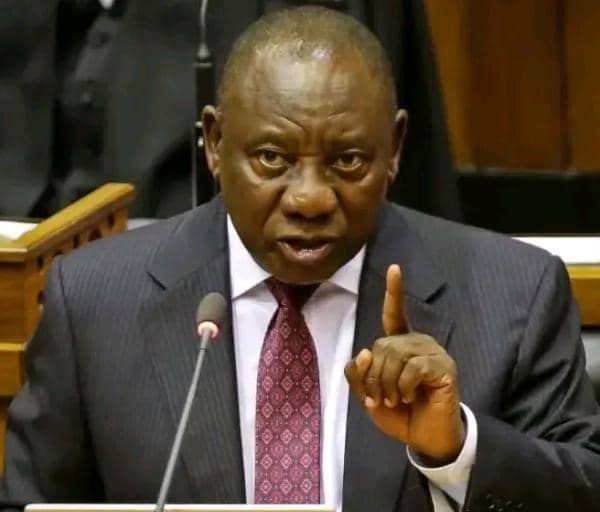
PRETORIA-(MaraviPost)-African National Congress (ANC) President Cyril Ramaphosa has delivered a bold challenge to his internal rivals, daring them to publicly state the date on which they want him to step down.
Addressing the ANC National Executive Committee (NEC) during what insiders described as a tense and heated political session, Ramaphosa confronted detractors directly.
He urged those plotting his removal to stop discussing his exit “in dark corners like cowards” and instead present their demands openly and transparently.
Ramaphosa further indicated that should the NEC formally request his resignation, he would comply immediately, signaling a willingness to abide by party processes.
The dramatic confrontation occurs amid escalating factional battles within the ANC, with some figures reportedly pushing for leadership changes and suggesting the creation of a national task team to replace the NEC.
Ramaphosa, however, insisted that the party cannot operate “mafia-style” and called for lifestyle audits of NEC members to enforce accountability and transparency.
His remarks come amid media speculation that he might resign following the G20 summit this weekend, heightening political tension within the party.
Despite the visible factionalism, ANC spokespersons maintain that the party remains united and that Ramaphosa intends to serve his full term until 2027.
Nevertheless, his daring statement exposes the depth of internal turmoil and pressures his opponents either to formalize their rebellion or abandon their behind-the-scenes campaign against him.
Share this:
Like this:
LikeLoading…
Discover more from The Maravi Post
Subscribe to get the latest posts sent to your email.
LILONGWE-(MaraviPost)-Former President Dr. Lazarus Chakwera is set to hold a highly anticipated press conference tomorrow at the Malawi Congress Party (MCP) headquarters in Lilongwe, starting at 10:00 a.m.
This will be Chakwera’s first press briefing since his defeat in the September 16 elections, fueling speculation about the topics he might address.
Chakwera’s administration was marred by economic challenges and corruption allegations, which many attribute to his loss in the elections, even in his traditional stronghold.
His successor, President Peter Mutharika, has been working to address these issues and revive the country’s economy.
The press conference comes amidst ongoing political developments and rumors about Chakwera’s future plans.
During his tenure, Chakwera’s government implemented notable initiatives like infrastructure development projects in Lilongwe, such as quality highway roads.
Chakwera’s MCP had campaigned on a platform of continuity and progress, highlighting achievements in education, healthcare, and infrastructure.
Despite his electoral defeat, the party remains a significant force in Malawian politics.
Tomorrow’s press conference will provide an opportunity for Chakwera to share his perspective on the current political landscape and possibly outline his party’s strategy going forward.
As Malawi navigates its post-election period, Chakwera’s words are expected to offer insights into his vision for the country’s future.
The event is likely to attract significant attention from Malawians, political analysts, and supporters eager to hear Chakwera’s reflections on the election outcome and his plans moving forward.
Share this:
Like this:
LikeLoading…
Discover more from The Maravi Post
Subscribe to get the latest posts sent to your email.
BLANTYRE-(MaraviPost)-In a significant blow to the United Democratic Front (UDF), several senior leaders have defected to the Democratic Progressive Party (DPP) in Malawi’s Eastern Region.
The joining leaders include regional governor Yaumi Mpaweni, deputy director of political affairs Gilbert Mwechumu, secretary general Janet Gwaza, former director of political affairs Yusuf Mwawa, and former publicity secretary Ken Ndanga.
Speaking after being welcomed into the DPP, Ndanga cited the party’s fulfillment of campaign promises, particularly the implementation of free secondary education, as a key reason for their decision to join the DPP.
Bright Nsaka, DPP Vice President for the Eastern Region, welcomed the leaders, saying their decision was a testament to the party’s growing strength and influence.
The defection is a significant boost for the DPP, which has been making strides in consolidating its position in Malawian politics.
The party has welcomed several high-profile leaders from other parties in recent months, and this latest development is likely to further strengthen its presence in the Eastern Region.
The DPP has also welcomed some UTM district leaders for Mangochi, further expanding its reach in the region.
The party’s growing influence is seen as a major shift in Malawi’s political landscape, with the DPP emerging as a dominant force.
The UDF, on the other hand, is facing a challenging time, with several senior leaders leaving the party in recent months.
The party’s leadership is yet to comment on the defection, but analysts say it is a significant blow to their efforts to regain momentum.
Share this:
Like this:
LikeLoading…
Discover more from The Maravi Post
Subscribe to get the latest posts sent to your email.