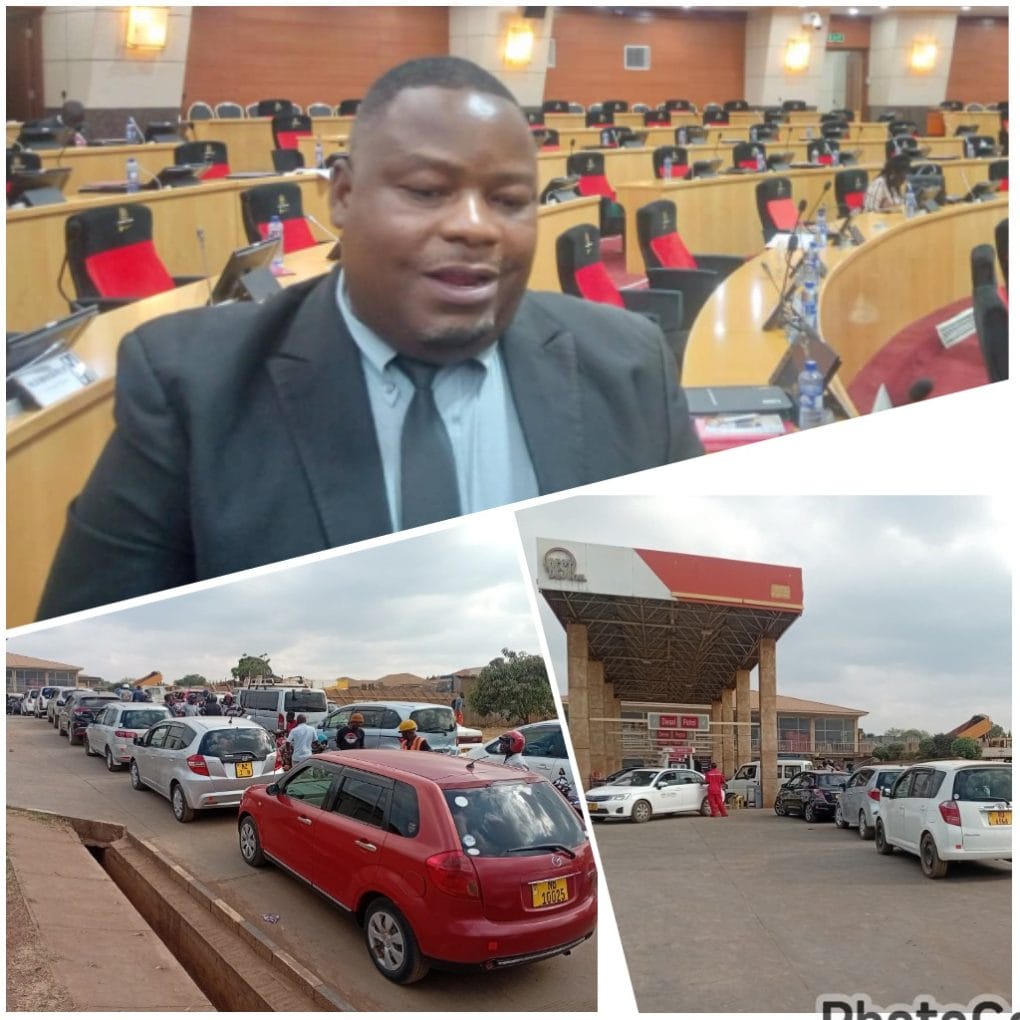
LILONGWE-(MaraviPost)-Member of Parliament (MP) for Mulanje Central, Kondwani Nankhumwa, has called on the Democratic Progressive Party (DPP) leadership to demonstrate its capability by addressing the country’s pressing challenges, including the ongoing fuel crisis, water shortages, and other critical national issues.
Speaking in Parliament on Thursday, Nankhumwa emphasized the need for the government to take decisive action to ease the suffering of Malawians.
He said the current situation demands “proven leadership that delivers real solutions, not just promises.”
“The people of Malawi are looking to us for answers. We must show that we have the capacity and commitment to tackle these problems head-on,” Nankhumwa said.
The legislator urged the DPP leadership to rise to the occasion and provide tangible results, noting that citizens are losing patience with continued hardships.
Nankhumwa’s remarks come amid growing public frustration over persistent shortages of fuel ,water and daily blackouts which have disrupted daily life and economic activities across the country.
Share this:
Like this:
LikeLoading…
Discover more from The Maravi Post
Subscribe to get the latest posts sent to your email.
LILONGWE-(MaraviPost)-President for People’s Land Organization Vincent Wandale on Wednesday afternoon, November 5, 2025 presented a petition to the National Assembly of Malawi, calling for a national debate on the proposed establishment of the Federal Republic of the United States of Malawi.
Wandale personally delivered the letter to the Sergeant-at-Arms, Major Kaliati, at Parliament Building in Lilongwe.
Wandale told The Maravi Post that the petition outlines his call for open discussions on federalism as a potential framework for Malawi’s future governance.
In his submission, Wandale also addressed concerns surrounding the oath of allegiance sworn by Members of Parliament to the Republic of Malawi.
He further proposed the creation of a new institution, the Order of the Worldwide Holy Mbamirian Empire Including Self-Governing Dominions (OWED), which he described as a symbolic structure aimed at promoting unity and self-determination.
Speaking after delivering the petition, Wandale emphasized that his initiative seeks to inspire national reflection on Malawi’s constitutional identity and political direction.
Share this:
Like this:
LikeLoading…
Discover more from The Maravi Post
Subscribe to get the latest posts sent to your email.
The Leader of Opposition, Simplex Chithyola, has once again demonstrated his party’s penchant for hypocrisy and double standards.
His recent outcry over alleged police brutality and human rights abuses is not only unfounded but also laughable, considering the Malawi Congress Party (MCP’s) track record of tolerating and perpetuating violence and impunity.
Let’s set the record straight. When MCP thugs invaded Parliament and smashed a vehicle belonging to Hon. Grace Mkwezalepeta, did the MCP take any action?
Did they condemn the violence or offer to repair the damaged vehicle? No, they did not.
Instead, they chose to remain silent, and Chithyola now has the audacity to complain about the current government’s response to similar incidents.
The MCP’s selective outrage is not limited to this incident.
When human rights activist Sylvester Namiwa was assaulted in full view of the police for exercising his right to demonstration, did the MCP condemn the act or demand justice? No, they did not.
When the Dowa women were assaulted by MCP thugs, did the party take any action? No, they remained silent.
The MCP’s human rights record is a sham. They only speak out when it suits their political agenda.
Chithyola’s concerns about the silence of the churches and development partners are equally hypocritical.
Did the MCP criticize the church’s silence when their thugs terrorized Lilongwe and damaged an MP’s vehicle? No, they did not.
It’s amusing that Chithyola cites examples of alleged police brutality under the current government while ignoring the atrocities committed by his own party.
The unresolved cases of Robert Chasowa, Issa Njaunju, and the Tambala family are a testament to the MCP’s incompetence and lack of commitment to justice.
Moreover, Chithyola’s call for the government to investigate and prosecute those behind these incidents is rich, coming from a party that had ample opportunity to do so when they were in power.
The MCP’s failure to prosecute those responsible for violence and human rights abuses during their tenure is a stark reminder of their hypocrisy.
The people of Malawi remember the MCP’s reign of terror, and they will not be fooled by Chithyola’s selective outrage.
The current government may not be perfect, but it is working to address the country’s challenges and uphold the rule of law.
The MCP’s hypocrisy will not go unnoticed, and their attempts to tarnish the government’s reputation will fail.
Chithyola and the MCP need to take a long, hard look at their own house before criticizing others.
They should apologize to the people of Malawi for the violence and human rights abuses they committed during their tenure and work towards genuine reforms rather than pursuing a hypocritical agenda.
Share this:
Like this:
LikeLoading…
Discover more from The Maravi Post
Subscribe to get the latest posts sent to your email.
LILONGWE-(MaraviPost)-Leader of UTM in Parliament, Patricia Kaliati, has called on the Minister of Homeland to investigate the circumstances surrounding the plane crash in Chikangawa that claimed the life of late former Vice President Saulos Chilima.
Speaking in Parliament, Kaliati observes that the loss of prominent figures is deeply painful and requires urgent attention.
She urged the minister to ensure that Malawi does not continue losing key human resources in such manner.
The UTM leader in Parliament therefore called for a fresh inquiry, pointing out the need to understand why influential individuals continue to be lost and to hold responsible parties accountable.
On 10 June 2024, a Malawian Defence Force Dornier 228 carrying Vice-President of Malawi Saulos Chilima, former First Lady Patricia Shanil Muluzi, and seven other occupants, crashed in Chikangawa Forest Reserve in Nkhata Bay District; all on board died.
Despite Commission of Inquiry and German Federal agency findings, Malawians remain unsatisfied.
Share this:
Like this:
LikeLoading…
Discover more from The Maravi Post
Subscribe to get the latest posts sent to your email.
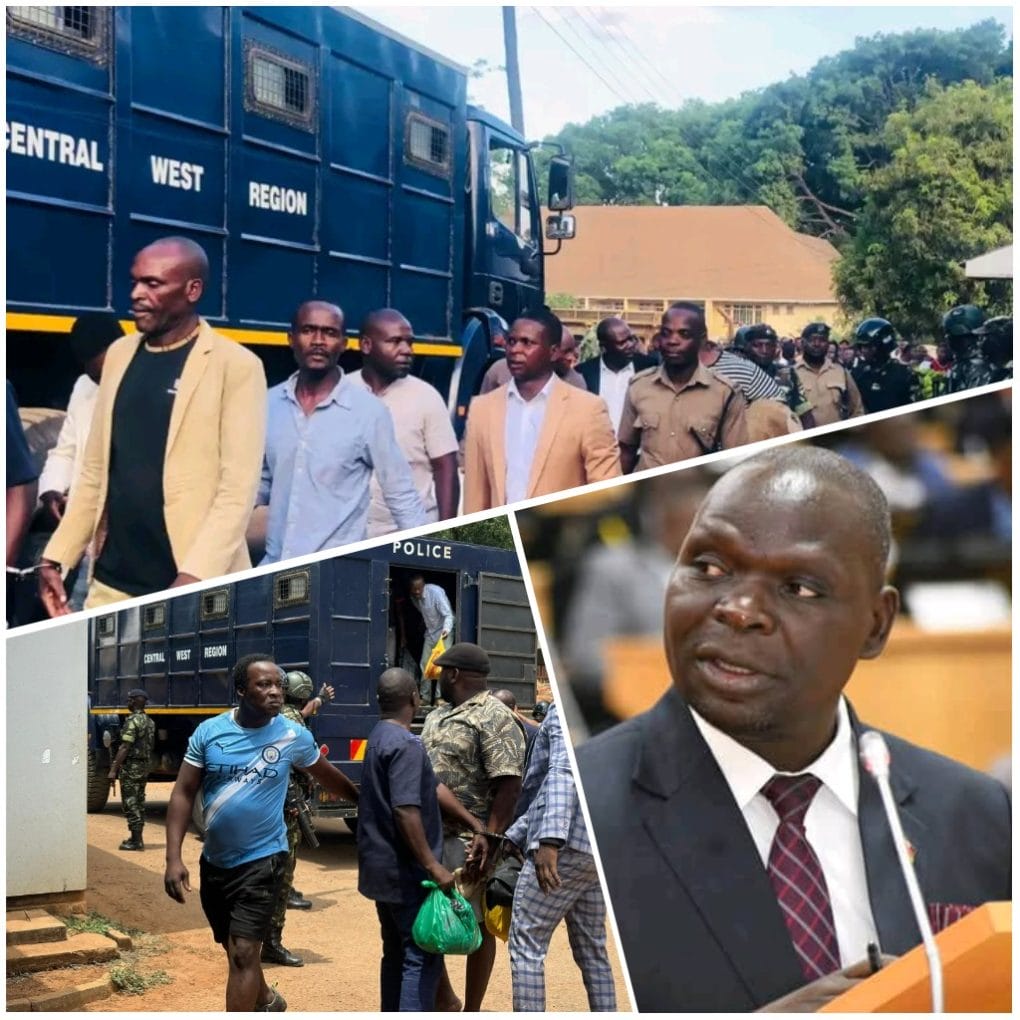
LILONGWE-(MaraviPost)-Leader of Opposition Simplex Chithyola has expressed deep concern over reports of police brutality and what he described as “systematic harassment” of 15 individuals recently arrested and allegedly re-arrested without proper case consolidation.
Speaking in Parliament, Chithyola said it was “regrettably shocking” to hear that the detainees were being mistreated in police custody.
He accused law enforcement agencies of violating human rights and fundamental freedoms.
“Mr Speaker Sir, are we transforming this country into a police state?” he asked. “We have intel that the accused are being physically harassed and assaulted while in custody.”
The opposition leader drew comparisons with incidents under the former DPP administration, where, he said, no arrests were made despite several violent occurrences.
During our time,” Chithyola recalled, “a man was killed in Ndirande there were no arrests. Another was killed in Phalombe still, no arrests. The Presidential convoy was stoned in Chikwawa and Ndirande no arrests.
“Even when MCP supporters were harassed in Thyolo during the commissioning of district offices, no one was detained. Activist Billy Mayaya was assaulted in full view of the police, yet no action was taken.”
Chithyola further questioned the “deafening silence” of Development Partners, Civil Society Organizations (CSOs), Non-Governmental Organizations (NGOs), and faith-based institutions on the recent human rights concerns.
“Why are our development partners silent? Why are the CSOs and Human Rights Organizations not speaking out? Why are the churches quiet?” he queried.
The opposition leader also reminded Parliament of unresolved high-profile cases, including the deaths of Robert Chasowa, Issa Njaunju, and the Tambala family, saying no tangible progress had been made to bring the perpetrators to justice.
“Can the DPP government, with the same vigour and energy used in arresting political opponents, investigate and bring to book those behind these tragic incidents including the recent assault of Mr. Kasakula at MBC?” Chithyola asked.
Turning to governance and service delivery, Chithyola lamented the persistence of social challenges such as fuel shortages, power blackouts, and water supply interruptions, despite government promises to address them.
He also condemned political victimization within the public service, warning that Malawians should not bear the cost of unjust suspensions and dismissals.
“As per President Peter Mutharika’s own pronouncements in the State of the Nation Address, we must unite in pursuit of socio-economic and governance needs,” he said.
In his closing remarks, Chithyola pledged that the opposition would continue to play a constructive role in national development.
“Mr Speaker Sir, let me assure this House that the opposition will not oppose for the sake of opposing. We will offer constructive alternatives, support policies that serve the national interest, and work towards a Malawi that is united, prosperous, and just.”
Echoing the same concerns, Member of Parliament for Zomba Malosa, Grace Mkwelepeta, criticized the Malawi Congress Party (MCP) for expressing outrage over the recent arrests, saying the party had turned a blind eye to similar acts of lawlessness during its own tenure.
“The MCP should not be overly concerned about the current arrests,”
“When they failed to act against the same gangs who invaded Parliament during the administration of former President Lazarus Chakwera,”said Mkwelepeta.
Share this:
Like this:
LikeLoading…
Discover more from The Maravi Post
Subscribe to get the latest posts sent to your email.
LILONGWE-(MaraviPost)-Human Rights activist and former Malawi Defence Force (MDF) officer Chimwemwe Mbeya (Ntchindi) Mhango has slummed the arrested Panga-wielding thugs for intimidating police officers during court appearance.
The reaction comes barely days after the suspected Malawi Congress Party (MCP) regime’s notorious panga-wielding thugs threatened prosecutors while waiting for court proceedings on Monday.
In a video circulating on social media of suspected MCP thugs are heard threatening prosecutors while in a waiting shelter before court proceedings.
“Tikukuwonanitu! Tidzathana nanu Nchifukwa chiyani mukulimbana ndife mmalo mothana ndi mabvuto mdziko muno. Mesa mumkalifuna bomali. (We take very seriously on what you are doing to us. Will deal with you later. Why are busy with us instead of addressing economic challenges the nation is facing. I thought you said you wanted power”, one of suspects was heard threatening police prosecutors.
In reacting to the outburst, Mhango who is also a victim of the same suspected MCP regime’s thugs observes that such threats must be taken serious.
“Imagine they have guts, threatening police prosecutors while appearing before court for the crimes they committed during MCP regime.
“This shows how dangerous they are. They were being used by politicians, and now they are alone facing crimes charges,” observes Mhango.
He told The Maravi Post that, “The law must take its course on them. There shouldn’t be a room for intimidation. Noone is above the law in Malawi. Justice must prevail till the end of the case”.
Mhango appeals, “Young people must refrain from being used by politicians to fulfill their agenda.
“Youngsters must be engaged in productive activities for the development of this nation.
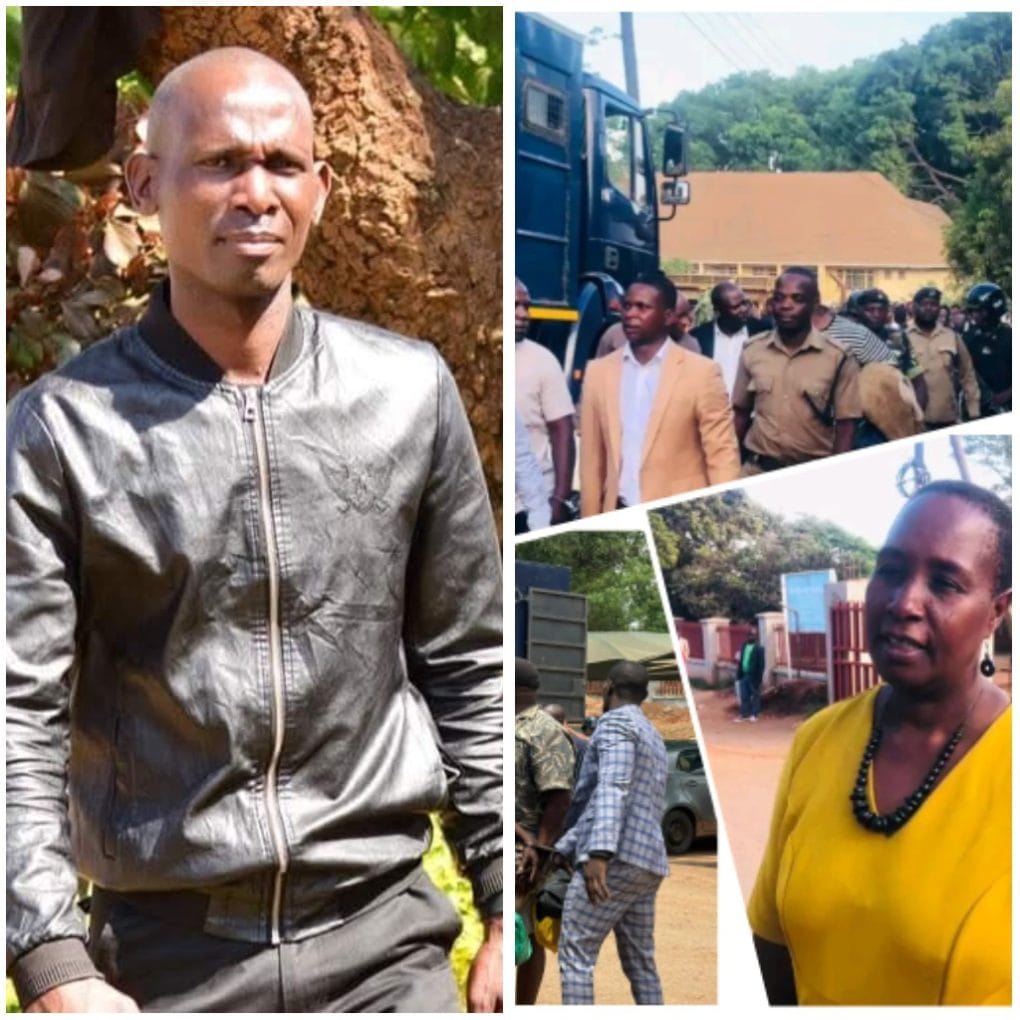
About 17 suspected MCP regime’s notorious panga-wielding thugs are in court answering a number of assaults charges.
The thugs” ringleaders including Bruno Munlo Makina (37), of Mponda Vge, T/A Msamala in Balaka; Erick Phakamisa (40), of Undi Vge, T/A Kaphuka in Dedza; and Hanif Banda (23), of Wimbe Vge, T/A Wimbe in Kasungu.
Share this:
Like this:
LikeLoading…
Discover more from The Maravi Post
Subscribe to get the latest posts sent to your email.