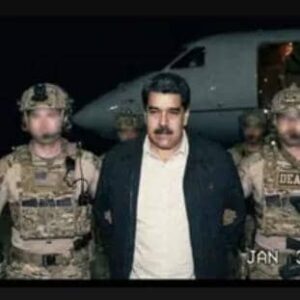
US President Donald Trump announced on Saturday that the United States has carried out a “large scale” strike against Venezuela, resulting in the capture of President Nicolas Maduro and his wife, Cilia Flores.
Trump made the announcement on his Truth Social platform, stating that the operation was conducted in conjunction with US law enforcement.
According to Trump, Maduro and his wife have been “captured and flown out of the country”.
The Venezuelan government has confirmed that Maduro and his wife are missing, with Vice President Delcy Rodriguez demanding “proof of life”.
The strikes, which began around 2 a.m. local time, targeted multiple locations across northern Venezuela, including the capital city of Caracas.
Reports indicate that at least seven explosions were heard, and low-flying aircraft were seen in various parts of the city.
The US has accused Maduro of running a “narco-state” and rigging the 2024 presidential election.
Maduro, who has been in power since 2013, has denied these allegations, claiming that the US is attempting to take control of Venezuela’s oil reserves.
The operation is reportedly part of Operation Southern Spear, a US military campaign targeting alleged criminal networks in Venezuela.
The US has deployed significant military assets to the region, including the aircraft carrier USS Gerald R. Ford.
Venezuelan opposition sources suggest that Maduro’s capture may be a “negotiated exit” with the US.
However, the Venezuelan government has denounced the military aggression, declaring a state of emergency and vowing to resist.
US Attorney General Pam Bondi has announced that Maduro and his wife will face charges related to narcoterrorism in the US.
Secretary of State Marco Rubio has stated that Maduro will stand trial on criminal charges in the US.
Trump is scheduled to hold a news conference at his Mar-a-Lago resort in Florida to provide further details on the operation.
Share this:
Like this:
LikeLoading…
Discover more from The Maravi Post
Subscribe to get the latest posts sent to your email.
16 Rejoice always, 17 pray continually, 18 give thanks in all circumstances; for this is God’s will for you in Christ Jesus. – 1 Thessalonians 5:16-18
“Open up prayer for all governmental leaders and their institutions so we can be quietly about our business of living simply, in humble contemplation.” —1 Timothy 2:2
The year 2025 continues to be a year where the country and the world is losing many of its greats – forming what we call the Bad. It is also the year many disastrous and Downright Ugly things have happened, right along there with the Good. Among those we have lost in 2025 are relatives, nationals, and international icons. While this week we outline the Downright Uglies of 2025, a section is reserved for the Bad. Losing loved ones or icons are Bad and unbearable experiences.
This week, as the year draws to its twilight, the Mayombo clan weeps again; this time with the loss of our brother, cousin, uncle, and friend, Ronald Mtisunge Mbekeani; he is the second from the clan to breathe his last. Earlier this year, we lost Rogers Zamachetcha Mbekeani.
From the international scene, former New York Congressman Charles Wrangle passed away this year. Others are musician Marianne Faithful, Brandon Clackson (husband to TV personality Kelly Clackson), Dolly Parton’s husband Carl Dean, a song writer and married to the singer for 60 years, died early in 2025. Phil Robertson, Ruth Buzzi, Uche Ujeh, David Lynch, and Diego Jota were all lost to us in 2025.
Three very gruesome killings took place in 2025. These include the slaying by gunshot of a Republican Party activist, an actor/director and his wife, and Hanukkah celebrants in Australia.
On September 10, 2025, an assassin gunned down, Charles James Kirk. He was an American right-wing political activist, entrepreneur, and media personality. He co-founded the conservative student organization Turning Point USA in 2012, and was a member of the Republican Party, and a highly influential figure in the Make America Great Again (MAGA) Movement. The assassination took place while Kirk was speaking at an outdoor campus debate at Utah Valley University in Orem, Utah. Twenty-two year old Tyler James Robinson, from Washington, Utah later surrendered to Police.
Acclaimed director, producer, screenwriter and actor Rob Reiner and wife Michele Reiner (née Singer), were found dead in their Brentwood, California, home on December 14, 2025. Their son Nick has been charged with two counts of first-degree murder. The cause of death was from knife wounds.
The shocking headline read: At least 15 killed in mass shooting at Hanukkah event on Sydney’s Bondi Beach. The assassins turned out to be a pair of father-and-son duo who used two “basic” improvised explosive devices that were found at the scene of the slaying. Among the dead was Rabbi Eli Schlanger, assistant rabbi at Chabad of Bondi and a key organizer of the event.
This killing took Australians by surprise as mass shootings are rare in Australia. It also took place during the annual Jewish festivity and celebration of Chanukah by the Sea, an event celebrating the start of Hanukkah. Meanwhile,Australian Prime Minister Anthony Albanese on Sunday called the shooting a “targeted attack against Jewish Australians” and a “terrorist incident.”
“An attack on Jewish Australians is an attack on every Australian,” Albanese said in a statement posted on social media. “There is no place for this hate, violence and terrorism in our nation. Let me be clear. We will eradicate it.”
Turning to the US, let us continue to seek God’s face and pray, especially for President Donald Trump. The American leader is a gifted, highly admired gifted, and skillful communication professional. Let us pray that in 2026 President Trump uses his skills to bring global and national unity and peace beyond measure – in Europe, in the Middle East, in Latin America, and everywhere.
Let us pray that he uses his communication skills to bring an end to divisive, corrosive hatred, and racism. Let us pray, praising the LORD our God, that President Trump will bring about lasting respect for the rule of law and order within and even outside the USA.
Lastly, as the USA marches toward its celebration of the 250th Anniversary of Independence, let us pray that Mr. Trump will genuinely lead America to be the loveable country this land of the brave and free, land of opportunity continues to be the true bulwark of democracy it has been all these years. Let us pray, believe, and hold to be true that with God’s Mighty Hand, this President of the United States can do it.
Yes, he can, by God’s grace!
Share this:
Like this:
LikeLoading…
Discover more from The Maravi Post
Subscribe to get the latest posts sent to your email.
The Malawi Revenue Authority’s (MRA) recent decision to cancel the tender award intended for Masters Security Services, Iringa Security Services, and Kamu Guard Services raises serious concerns about fairness, transparency, and the integrity of procurement processes in Malawi.
The hard truth is that this cancellation is not justifiable and appears to be a reaction driven by political pressure rather than a sound business or ethical rationale.
The hard truth is that these companies have demonstrated operational excellence and delivered high standards of security services long before this tender. Masters Security Services, owned by Alfred Gangata, has a proven track record that commands respect.
To suggest that there is any conflict of interest simply because Mr. Gangata is associated with the government is to undermine the very principles of business and governance.
The question must be asked: Does holding a political office or affiliation automatically disqualify one from running a legitimate and successful business?
The hard truth is that conflating political involvement with corruption or malpractice in business is a dangerous precedent that threatens entrepreneurship and economic growth.
The hard truth is that these firms have been repeatedly successful in winning tenders from MRA and other government agencies in the past, reflecting the quality and reliability of their services. So, what has suddenly changed to warrant the cancellation of this tender? The absence of an official explanation from MRA only fuels speculation and mistrust among the public and stakeholders.
The hard truth is that transparency is paramount in public procurement, and withholding reasons for such a significant reversal undermines public confidence in the institution.
The hard truth is that the backlash from political factions such as the MCP’s wing, the Human Rights Defenders Coalition (HRDC), and others should not dictate the course of business decisions.
If MRA’s leadership bowed to such pressure, it raises questions about the independence and resilience of public institutions in the face of political interference. Should public entities be swayed by political clout rather than objective evaluation criteria? The answer is an emphatic no.
The hard truth is that the cancellation, coming after an initial notice of intention to award the contracts, disrupts the operations of these companies and places their employees and clients in uncertain positions. Security services are essential for the protection of assets and people, and any disruption can have ripple effects on safety and trust.
The hard truth is that such abrupt reversals without clear justification reflect poor governance and disrespect for contractual processes.
Furthermore, the hard truth is that the MRA Commissioner General Felix Tambulasi’s letter to Masters Security Services, while formally communicating the cancellation, conspicuously lacks any explanation.
This omission is critical. How can stakeholders assess the legitimacy of this decision without understanding the reasons? Is this a fair practice? Is this in line with procurement laws and principles of natural justice? These questions demand answers.
The hard truth is that allegations of conflict of interest should be handled transparently and with due process.
If there were genuine concerns, MRA should have conducted a thorough investigation and communicated findings openly rather than cancelling the tender abruptly. This would preserve public trust and uphold the rule of law.
The hard truth is that politics should not be a barrier to business success. Malawi, like many nations, benefits when capable individuals contribute to both governance and economic development.
The notion that one cannot hold political influence and run a legitimate business simultaneously is not only unfair but also counterproductive.
The hard truth is that this incident sends a chilling message to other business owners who may have political affiliations or backgrounds.
It risks discouraging investments and entrepreneurship, which are crucial for Malawi’s growth and development. Should Malawi’s business environment be hostage to political rivalries and vendettas? The answer must be a resolute no.
The hard truth is that the cancellation of the tender by MRA, without transparent justification and seemingly influenced by political pressure, undermines the principles of fairness, transparency, and good governance. It is an injustice to Masters Security Services, Iringa Security Services, and Kamu Guard Services, who have proven their capability and reliability over time.
Malawi’s institutions must uphold integrity and resist undue political influence to foster a healthy business environment and safeguard public trust.
So, the critical questions remain: Why was the tender cancelled without explanation? Was political interference more important than merit and service quality? How can Malawi build a fair and transparent procurement system if decisions are reversed without accountability? These are questions every Malawian should ponder as we strive for a just and equitable society.
Feedback:+265992082424
Email: jonesgadama@gmail.com
Share this:
Like this:
LikeLoading…
Discover more from The Maravi Post
Subscribe to get the latest posts sent to your email.
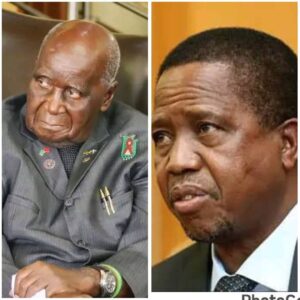
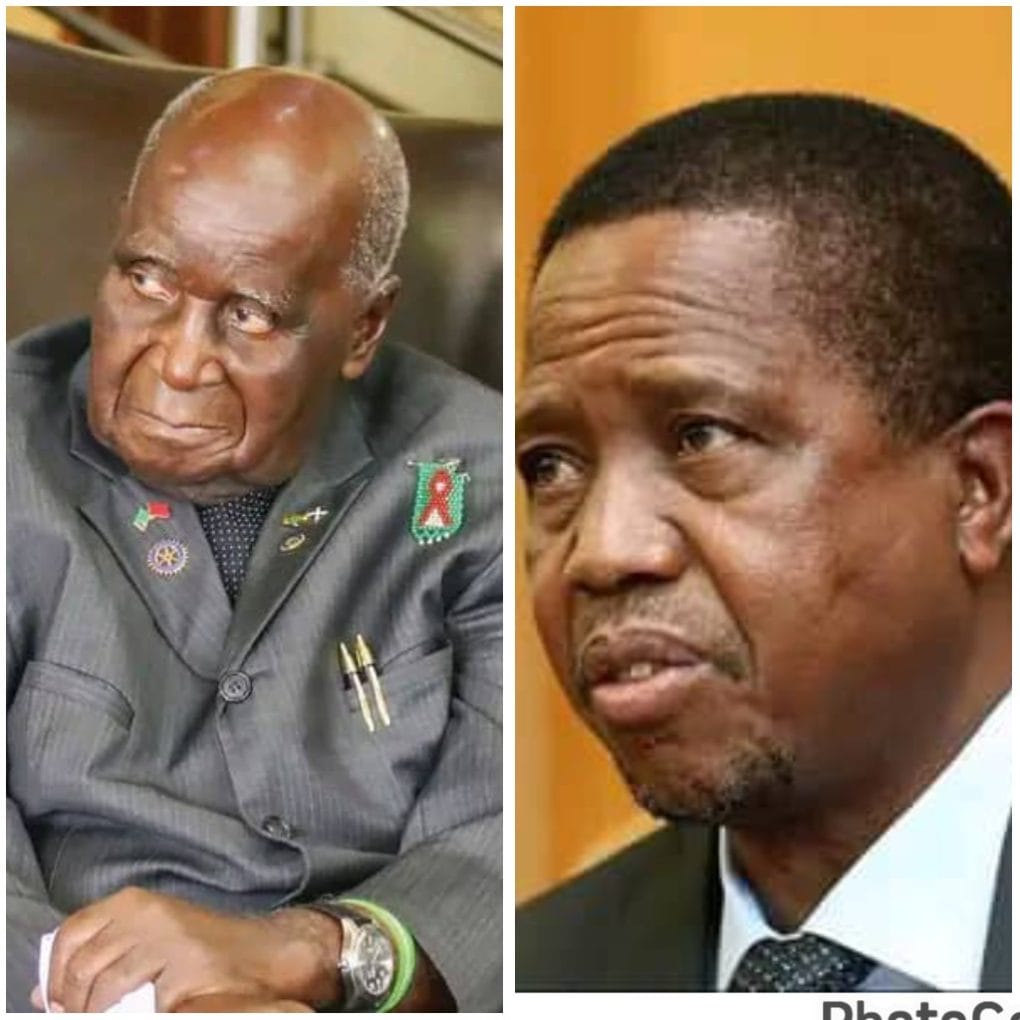
In the intricate tapestry of political legacies and state protocols, the story of former Zambian president Edgar Lungu’s unresolved burial stands out as a striking example of poetic irony.
It is a tale that not only reflects the complexities of power and tradition but also serves as a mirror to the very actions that shaped his own political journey.
The juxtaposition is hard to ignore: Edgar Lungu, who in June 2021 as sitting president insisted on Kenneth Kaunda’s burial at a national heroes’ site against the wishes of Kaunda’s family, now faces a similar dispute over his own final resting place, years after his death in June 2025.
The narrative’s irony is palpable. When Kenneth Kaunda, Zambia’s founding president, passed away, his family wished to bury him privately on his farm next to his late wife.
Edgar Lungu, the then president, firmly denied this wish, citing national protocol and a desire to honor Kaunda’s legacy through burial at the official Heroes’ Acre—a prestigious site reserved for national leaders.
The family’s efforts to challenge this decision in the High Court proved unsuccessful, cementing the government’s authority in matters of state burials.
Fast forward four years, and Edgar Lungu’s own body remains in limbo, preserved in a mortuary in South Africa.
His family demands a private burial, a wish reminiscent of the Kaunda family’s own plea four years earlier. Yet the Zambian government insists on a national burial, invoking the very same protocols Lungu once championed.
The dispute remains unresolved, embodying a bitter twist of fate where the enforcer of a rule becomes ensnared by it.
This unfolding drama invites a profound reflection on the interplay between personal wishes, political symbolism, and the often rigid structures of statecraft.
In many nations, especially those with turbulent political histories, the burial site of a leader is not merely a resting place but a powerful symbol of national identity and legacy.
The Heroes’ Acre in Zambia is more than just a cemetery; it is a hallowed ground where leaders who shaped the nation’s trajectory are commemorated collectively. To be buried there is to be enshrined in the national memory, an honor that transcends personal or familial preferences.
Edgar Lungu’s insistence on Kaunda’s burial at the Heroes’ Acre was arguably motivated by a desire to consolidate national unity and pay homage to the founding father. Yet it also highlighted the tension between individual legacy and state narrative. By denying Kaunda’s family the right to a private burial, Lungu was emphasizing the primacy of the state’s vision over personal wishes.
This act, while legally upheld, may have sown seeds of discord and underscored the limits of familial agency in state matters.
Now, with Lungu himself caught in the same predicament, the story turns into a cautionary tale about the cyclical nature of power and the consequences of decisions made under the weight of authority.
The family’s insistence on a private burial reflects a deeply human desire to honor the individual’s personal history and intimate connections, rather than conforming to an abstract national ideal.
Their struggle challenges the government’s rigid stance and raises important questions: Who ultimately owns a leader’s legacy—the family who knew him best or the state that shaped his public image?
How do we balance respect for personal dignity with the collective memory that political leaders embody?
This irony also shines a light on the broader political culture in Zambia and perhaps many other countries grappling with similar issues. The tension between private grief and public commemoration is an enduring challenge.
Leaders are often elevated to iconic status, their lives and deaths appropriated to serve grand narratives of nationhood. Yet beneath the grandeur lies the reality of human relationships, loss, and the need for personal closure that families seek.
Moreover, this unresolved burial dispute may reflect deeper fissures in Zambia’s political landscape.
It suggests a government cautious about setting precedents that could dilute the sanctity of national burial sites or open the door to more personalized or politicized funerals.
It also points to possible disagreements within the ruling establishment about how to handle former leaders’ legacies, especially those with contentious histories or divided popular support.
What makes this situation compelling is the human dimension nestled within the political drama.
Edgar Lungu was once a powerful figure, shaping policy and national discourse, yet in death, his wishes remain contested, and his body lies in limbo far from home.
The family’s pain is palpable, as is the government’s desire to uphold tradition.
This deadlock is a poignant reminder that even the most powerful cannot fully control their posthumous narrative.
In the final analysis, the irony of Edgar Lungu’s burial dispute is a rich narrative about power, legacy, and the paradoxes of leadership.
It reveals how decisions made in the crucible of political authority can return in unexpected ways, challenging the very foundations on which they were built.
It urges us to consider a more compassionate and nuanced approach to honoring leaders—one that respects both the collective memory of the nation and the intimate wishes of those who loved them most.
As Zambia watches this drama unfold, it serves as an invitation to reflect on how societies commemorate their heroes and the delicate balance between public duty and private humanity.
Edgar Lungu’s story, intertwined with that of Kenneth Kaunda, reminds us that history is often written not just by the victors, but also by the ironies that time reveals.
And in this story of burial and legacy, the past and present converge in a profound, almost poetic, dance of fate.
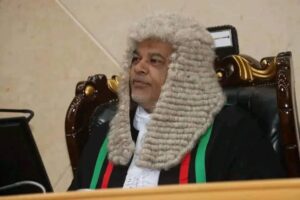
LILONGWE-(MaraviPost)-Against widespread skepticism and harsh public judgment, newly appointed Speaker of Parliament Sammer Suileman has begun his tenure with a level of authority and professionalism that has surprised many critics and observers alike.
Social media had been abuzz with doubts about Suileman’s leadership capacity, especially following past parliamentary confrontations in which he was repeatedly ejected from the chamber under Standing Order 105.
For many, these incidents painted him as short-tempered and unfit for the highly disciplined role of Speaker of the National Assembly.
However, Suileman’s recent conduct in the august House has signaled a dramatic shift in tone one marked by firmness, order, and a clear commitment to parliamentary discipline.
In his first decisive remarks as Speaker, Suileman issued a stern warning to Members of Parliament, urging them to take parliamentary business seriously by attending sittings consistently.
He emphasized that absenteeism would no longer be tolerated and warned that MPs who fail to attend proceedings without valid reasons risk having their allowances deducted.
“The people of Malawi expect seriousness, responsibility, and accountability from this House,”
“Parliament is not a ceremonial space; it is a working institution, and attendance is not optional.”Suileman said.
The statement alone sent a strong message across party lines, drawing mixed reactions but earning praise from governance advocates who have long criticized chronic absenteeism in Parliament.
Many Malawians had dismissed Suileman as a potential embarrassment to the House, branding him “uneducated” and ill-equipped for such a high office.
Yet his early handling of proceedings has challenged that narrative, demonstrating that effective leadership extends beyond academic credentials.
Observers note that Suileman has enforced Standing Orders impartially, allowing debate while swiftly curbing disorder a balance that past Speakers often struggled to maintain.
“Leadership is not measured by certificates alone,” commented one parliamentary analyst.
“So far, Suileman has shown that discipline, decisiveness, and respect for procedure can command authority even in a divided House.”
Ironically, the very traits once used to criticize him firmness and intolerance for chaos are now proving to be assets in restoring order and seriousness to parliamentary business.
As Parliament continues its sessions under his stewardship, expectations remain cautiously optimistic.
Whether Suileman can sustain this momentum and rise above political pressure remains to be seen.
Share this:
Like this:
LikeLoading…
Discover more from The Maravi Post
Subscribe to get the latest posts sent to your email.
KAMPALA-(MaraviPost)-Bobi Wine has written on his Facebook page, highlighting the challenges his presidential campaign has faced in Uganda.
The opposition leader stated that his campaign has been met with ongoing brutality and interference from the regime, including intimidation, teargassing, arrests, and attacks on supporters.
Wine claimed that his team has been blocked from accessing towns, main roads, and campaigning in some districts, severely hindering their efforts.
Bobi Wine
Despite these obstacles, Wine emphasized that the reception from the people has been overwhelmingly positive, with millions of Ugandans turning out to welcome him and assert their desire for change.
The opposition leader expressed his determination to reclaim the country and stand for a New Uganda, rallying his supporters to join him in this quest.
Wine’s New Year address has galvanized support for his #ANewUgandaNow campaign, with many calling for a #ProtestVote2026 to bring about change in Uganda.
The hashtag #PeoplePowerOurPower has trended, reflecting the growing momentum behind Wine’s presidential bid.
Share this:
Like this:
LikeLoading…
Discover more from The Maravi Post
Subscribe to get the latest posts sent to your email.