

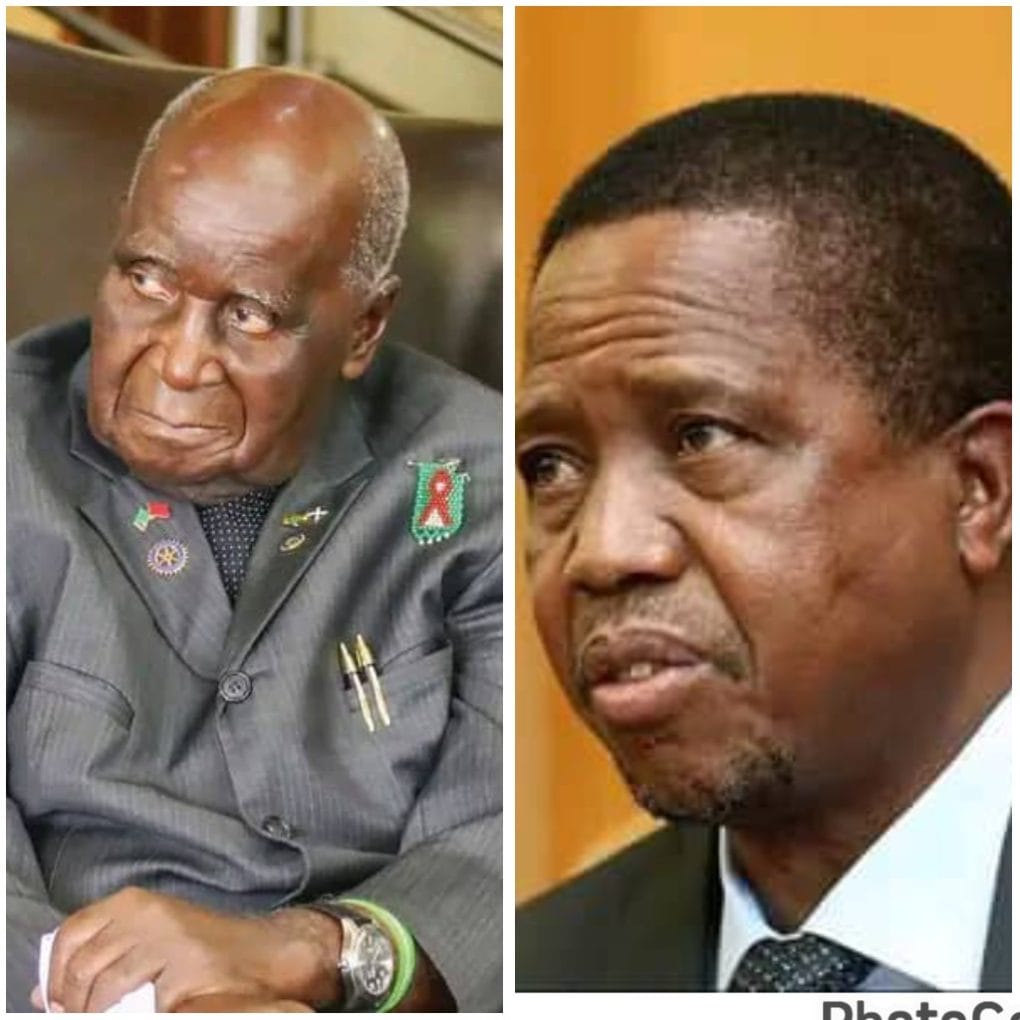
In the intricate tapestry of political legacies and state protocols, the story of former Zambian president Edgar Lungu’s unresolved burial stands out as a striking example of poetic irony.
It is a tale that not only reflects the complexities of power and tradition but also serves as a mirror to the very actions that shaped his own political journey.
The juxtaposition is hard to ignore: Edgar Lungu, who in June 2021 as sitting president insisted on Kenneth Kaunda’s burial at a national heroes’ site against the wishes of Kaunda’s family, now faces a similar dispute over his own final resting place, years after his death in June 2025.
The narrative’s irony is palpable. When Kenneth Kaunda, Zambia’s founding president, passed away, his family wished to bury him privately on his farm next to his late wife.
Edgar Lungu, the then president, firmly denied this wish, citing national protocol and a desire to honor Kaunda’s legacy through burial at the official Heroes’ Acre—a prestigious site reserved for national leaders.
The family’s efforts to challenge this decision in the High Court proved unsuccessful, cementing the government’s authority in matters of state burials.
Fast forward four years, and Edgar Lungu’s own body remains in limbo, preserved in a mortuary in South Africa.
His family demands a private burial, a wish reminiscent of the Kaunda family’s own plea four years earlier. Yet the Zambian government insists on a national burial, invoking the very same protocols Lungu once championed.
The dispute remains unresolved, embodying a bitter twist of fate where the enforcer of a rule becomes ensnared by it.
This unfolding drama invites a profound reflection on the interplay between personal wishes, political symbolism, and the often rigid structures of statecraft.
In many nations, especially those with turbulent political histories, the burial site of a leader is not merely a resting place but a powerful symbol of national identity and legacy.
The Heroes’ Acre in Zambia is more than just a cemetery; it is a hallowed ground where leaders who shaped the nation’s trajectory are commemorated collectively. To be buried there is to be enshrined in the national memory, an honor that transcends personal or familial preferences.
Edgar Lungu’s insistence on Kaunda’s burial at the Heroes’ Acre was arguably motivated by a desire to consolidate national unity and pay homage to the founding father. Yet it also highlighted the tension between individual legacy and state narrative. By denying Kaunda’s family the right to a private burial, Lungu was emphasizing the primacy of the state’s vision over personal wishes.
This act, while legally upheld, may have sown seeds of discord and underscored the limits of familial agency in state matters.
Now, with Lungu himself caught in the same predicament, the story turns into a cautionary tale about the cyclical nature of power and the consequences of decisions made under the weight of authority.
The family’s insistence on a private burial reflects a deeply human desire to honor the individual’s personal history and intimate connections, rather than conforming to an abstract national ideal.
Their struggle challenges the government’s rigid stance and raises important questions: Who ultimately owns a leader’s legacy—the family who knew him best or the state that shaped his public image?
How do we balance respect for personal dignity with the collective memory that political leaders embody?
This irony also shines a light on the broader political culture in Zambia and perhaps many other countries grappling with similar issues. The tension between private grief and public commemoration is an enduring challenge.
Leaders are often elevated to iconic status, their lives and deaths appropriated to serve grand narratives of nationhood. Yet beneath the grandeur lies the reality of human relationships, loss, and the need for personal closure that families seek.
Moreover, this unresolved burial dispute may reflect deeper fissures in Zambia’s political landscape.
It suggests a government cautious about setting precedents that could dilute the sanctity of national burial sites or open the door to more personalized or politicized funerals.
It also points to possible disagreements within the ruling establishment about how to handle former leaders’ legacies, especially those with contentious histories or divided popular support.
What makes this situation compelling is the human dimension nestled within the political drama.
Edgar Lungu was once a powerful figure, shaping policy and national discourse, yet in death, his wishes remain contested, and his body lies in limbo far from home.
The family’s pain is palpable, as is the government’s desire to uphold tradition.
This deadlock is a poignant reminder that even the most powerful cannot fully control their posthumous narrative.
In the final analysis, the irony of Edgar Lungu’s burial dispute is a rich narrative about power, legacy, and the paradoxes of leadership.
It reveals how decisions made in the crucible of political authority can return in unexpected ways, challenging the very foundations on which they were built.
It urges us to consider a more compassionate and nuanced approach to honoring leaders—one that respects both the collective memory of the nation and the intimate wishes of those who loved them most.
As Zambia watches this drama unfold, it serves as an invitation to reflect on how societies commemorate their heroes and the delicate balance between public duty and private humanity.
Edgar Lungu’s story, intertwined with that of Kenneth Kaunda, reminds us that history is often written not just by the victors, but also by the ironies that time reveals.
And in this story of burial and legacy, the past and present converge in a profound, almost poetic, dance of fate.
Feedback: +265992082424
Email: jonesgadama@gmail.com
Discover more from The Maravi Post
Subscribe to get the latest posts sent to your email.






