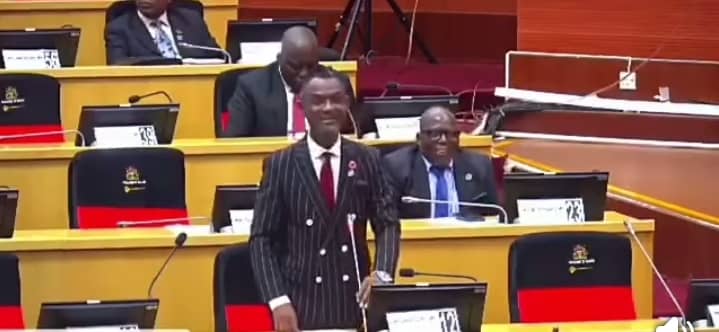
BLANTYRE-(MaraviPost)-The Blantyre Magistrate Court on Friday, November 21, 2025 granted bail to social media personality VJ Ken who is facing charges of Child abduction and having sexual activities with a minor.
The bail has been granted on the condition that the suspect pays MK100, 000, reports weekly to the Ndirande police, and surrenders his travel documents.
Senior Resident Magistrate Mercy Bonongwe granted the bail and adjourned the case to 19th December.
During the hearing, Lawyer from the office of Director of Public Prosecutions, Josephine Gwaza, stated that two witnesses, who are minors, have already given their statements.
Gwaza further said that four witnesses will attend the December 19 session, which will be a public hearing.
Share this:
Like this:
LikeLoading…
Discover more from The Maravi Post
Subscribe to get the latest posts sent to your email.
The CDC quietly rewrites its vaccine guidance online to suggest shots might cause autism, raising new questions about political influence over public health. President Trump unveils a 28-point Ukraine peace plan that leans on territorial concessions Kyiv has repeatedly rejected. And New York City mayor-elect Zohran Mamdani heads to the White House for a meeting with a president who has labeled him a radical threat.
Want more comprehensive analysis of the most important news of the day, plus a little fun? Subscribe to the Up First newsletter.
<
p class=”readrate”>Today’s episode of Up First was edited by Jane Greenhalgh, Rebekah Metzler, Megan Pratz, Mohamad ElBardicy, and Alice Woelfle.
<
p class=”readrate”>
<
p class=”readrate”>It was produced by Ziad Buchh, Nia Dumas and Christopher Thomas.
<
p class=”readrate”>
<
p class=”readrate”>We get engineering support from Stacey Abbott. And our technical director is Carleigh Strange.
<
p class=”readrate”>
<
p class=”readrate”>Our Executive Producer is Jay Shaylor
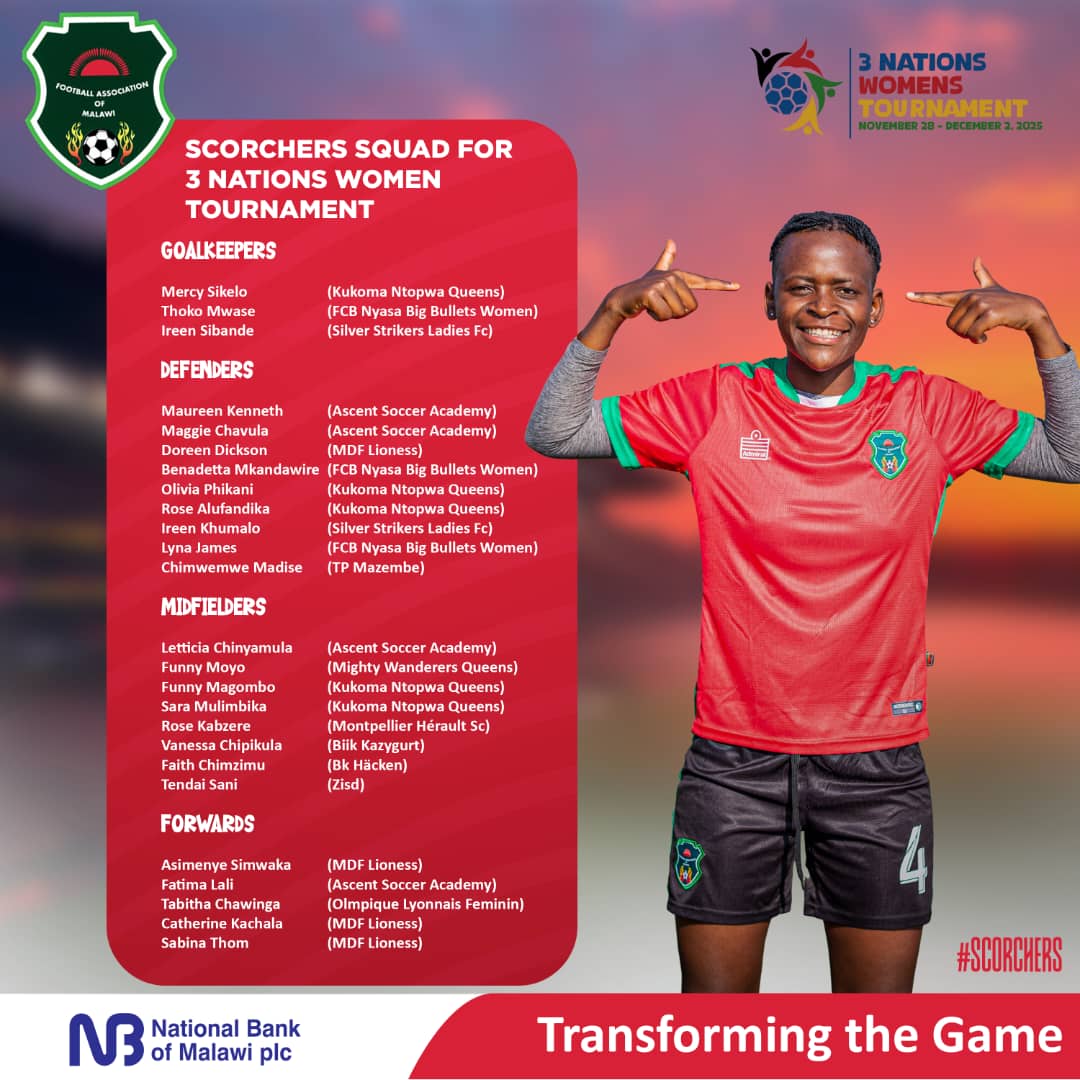
BLANTYRE-(MaraviPost)-Scorchers head coach Lovemore Fazili says he has avoided introducing new faces into the national team because this is not the right time for experiments, stressing that the squad needs stability ahead of the Three Nations Women’s Tournament from November 28 to December 2, 2025.
He explained that their recent performance against Angola in the WAFCON qualifiers showed that the group is functioning well, balanced and still playing with confidence.
Fazili said the team is currently “hot,” and maintaining the same players will help them keep their rhythm as they prepare for upcoming fixtures.
Despite sticking to his core squad, Fazili said opportunities remain open for players doing well in the NBM Women’s Premiership, noting that football is unpredictable and anything can change.
He emphasized that outstanding performers can still earn a call-up for WAFCON if they continue to shine at club level and show consistency.
Fazili also thanked the Football Association of Malawi (FAM) for organizing the women’s tournament, saying proper planning and preparation are key to building a successful team.
He said the competition will help the Scorchers assess their strengths and weaknesses as they fine-tune their tactics ahead of future assignments.
Confirming the squad, Fazili revealed that he has retained 24 of the 25 players who featured against Angola in the qualifiers.
The only change comes in the goalkeeping department, where Thoko Mwase of FCB Nyasa Big Bullets Women replaces injured Chimwemwe Kaonga of MDF Lioness.
Fazili said Mwase was brought in because she has been performing well and provides the needed depth in the goalkeeping position.
He added that maintaining the rest of the squad will help keep continuity as the players already understand each other’s style of play.
With the squad now confirmed, the Scorchers will focus on intensifying their preparations for the Three Nations Women’s Tournament.
Scorchers’ goalkeepers for the Three Nations Women’s Tournament are Mercy Sikelo (Kukoma Ntopwa Queens), Thoko Mwase (FCB Nyasa Big Bullets Women) and Ireen Sibande (Silver Strikers Ladies FC).
The defenders include Maureen Kenneth and Maggie Chawula (Ascent Soccer Academy), Doreen Dickson (MDF Lioness), Benedatta Mankandwire and Lyna James (FCB Nyasa Big Bullets Women), Olivia Phikani and Rose Alufandika (Kukoma Ntopwa Queens), Ireen Khumalo (Silver Strikers Ladies FC) and Chimwemwe Madise (TP Mazembe).
Midfielders called up are Letticia Chinyamula (Ascent Soccer Academy), Funny Moyo (Mighty Wanderers Queens), Funny Magombo and Sara Mulimbika (Kukoma Ntopwa Queens), Rose Kabzere (Montpellier Hérault SC France), Vanessa Chiputula (Bilik Kazygurt Kazakhstan), Faith Chibhimtizu (Bik Hacken Sweden) and Tendai Sani (Zisd).
The forwards in the squad are Asimenye Simwaka (MDF Lioness), Fatima Laili (Ascent Soccer Academy), Tabitha Chawinga (Olympique Lyonnais Féminin France), Catherine Kachala and Sabina Thom (MDF Lioness).
Share this:
Like this:
LikeLoading…
Discover more from The Maravi Post
Subscribe to get the latest posts sent to your email.
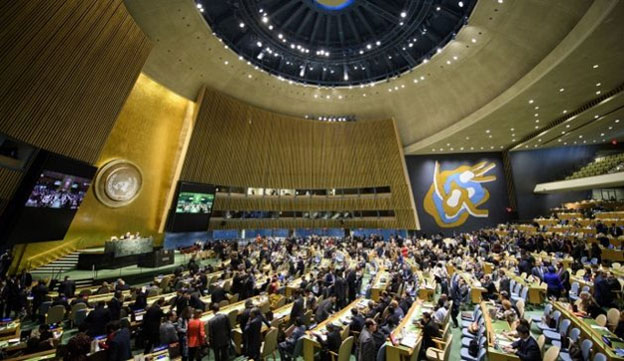
The UN General Assembly in session. Credit: UN Photo/Manuel Elias
UNITED NATIONS, Nov 21 2025 (IPS) – The 193-member General Assembly (GA), the UN’s highest policy-making body, has long been the repository for scores of long-winded outdated resolutions accumulated over several decades– and lying in cold storage.
As part of the proposed restructuring of the United Nations, which is facing a severe liquidity crisis, there is now a move to streamline and revitalize the General Assembly which has been mired in a bureaucratic backlog.
The President of the General Assembly (PGA), Annalena Baerbock, has called on each Main Committee to review its working methods and propose concrete measures to enhance efficiency, including:
• Merging similar agenda items to avoid repetition; • Reducing the frequency, length and number of resolutions; • Using biennial or triennial cycles where appropriate; • Limiting explanations of vote to five minutes; and • Simplifying adoption procedures — one gavel, one decision, all texts.
These recommendations, mostly spelled out in a recent resolution, would help re-shape the General Assembly to respond to global challenges with agility and coherence. But unless these reforms are implemented, they remain just words on paper, just another resolution.
“Business as usual will not suffice. We need fewer repetitive resolutions, shorter debates, and smarter scheduling. No more ‘resolutions for resolutions’ sake,” the PGA said.
“We cannot preach on Sunday that we need fewer resolutions, then proceed to submit one for consideration on Monday. And this is, unfortunately, taking place”, she warned.
Dr Palitha Kohona, a former Chief of the UN Treaty Section and one-time Permanent Representative of Sri Lanka to the United Nations, told IPS the UN is burdened under a heavy baggage of resolutions piled up over 80 years.
“Many are no longer relevant, others are superfluous, and some repetitive. Given its current perilous financial situation, it would be appropriate for each department and office to review rigorously the resolutions under their purview and identify those that could be terminated.”
This, he said, may be done through an omnibus resolution. Some might require delicate negotiations with member states which might claim ownership to resolutions that they had proposed. Sensitively, handled, this could deliver considerable financial and staffing dividends.
New resolutions, he pointed out, should be vetted carefully to avoid redundancies. UN staff could proactively assist in this process. Even where resolutions are to be implemented within existing resource allocations, there will be some cost involved, including time.
Where a proposed resolution could not be implemented due to resource constraints, it should be vetoed from the beginning, said Dr Kohona, who until recently, was Sri Lanka’s Ambassador to the People’s Republic of China.
Action officers should be located or moved to an office where a resolution is most likely to be implemented and it would be most effective. For example, the responsibility for implementing UNDP-related resolutions should be allocated to Nairobi, he proposed. Peacekeeping should also be moved to Nairobi as most peacekeeping now happens in Africa, he declared.
Baerbock said: “We have seen the Main Committees put forward resolutions for three-day conferences, with no budget attached, fully aware of the fiscal situation we are debating at the same moment. We have seen over 160 sides events during High-Level Week, despite the call for less, or the call by some, for no side events at all”.
“And we have seen, already, three or four high-level meetings submitted for consideration for the 81st High-Level Week (next year), with four for each of the 82nd and 83rd, despite the decision of this Assembly – so by all of us – to limit this to a maximum of three.”
“While we all want to protect the things we care about, each of us must make concessions in this time of reform”, she declared.
Dr. Purnima Mane, a former Deputy Executive Director (Programme) and UN Assistant-Secretary-General (ASG) at the UN Population Fund (UNFPA), told IPS the major ongoing effort to review the working methods of each of the Committees of the UN GA and enhance their efficiency is certainly laudable.
It is a golden opportunity to challenge some of the so-called ‘givens’ of the ways in which the GA functions and focus on what matters in a streamlined fashion.
The currently proposed solutions however are somewhat peripheral even if they indicate a desire for change. One of the major problems faced by the Committees is the range of issues taken on without clear prioritization including a lack of focus on neglected, key issues. And the absence of a sense of urgency, she pointed out
“The suggestions offered touch on enhancing efficiency of working but avoid tougher issues perhaps due to lack of time and sometimes will on the part of some members to take the risk of proposing solutions which might necessitate dismantling of well-entrenched methods of working”.
Another barrier, she said, might be concerns about potential difficulties that are likely to be experienced in getting agreement on these methods and more so the possibility of limited involvement by member states in their implementation.
“Perhaps starting small and identifying possibly achievable objectives for how the committees are run and managed might be a good beginning, but without the commitment of member States to the issues being prioritized and to implement the resolutions being proposed, all this change and effort is unlikely to achieve any benefits, including saving of resources”, she said.
Reducing agenda items and avoiding repetitive resolutions and endless debates are all a good start but it requires the will of the member states to implement these resolutions, once passed, she added.
And while the will to implement is understood as a given, in reality that is exactly where the problem sometimes lies. How to encourage and ensure implementation is really the true challenge, said Dr Mane, a former President and CEO of Pathfinder International.
Andreas Bummel, co-founder and Executive Director of Democracy Without Borders, told IPS ironically, the issue of revitalizing the General Assembly itself has become a ritualistic item.
“Tackling the number of annual resolutions and avoiding useless repetition year after year is a no-brainer. This should have been implemented long ago. But deeper changes are needed”.
For instance, he said, there needs to be continuity and institutional memory in the office of the President of the General Assembly. It should be a two-year tenure and receive proper funding.
Further, by creating a Parliamentary Assembly, the instrument of Citizens’ Initiative and Citizens’ Assemblies, the General Assembly can become a center of innovation and inclusion for the entire UN system. This should be on the agenda.
Use or not use at your discretion. The final two sentences are the most important as far as I am concerned, declared Bummel.
Meanwhile, revitalization is also being extended to the Office of the President of the General Assembly (OPGA).
The 80th session, Baerbock said, benefited from an early, seamless handover from the 79th — allowing us to hit the ground running. Yet the volume of work remains immense.
“Our High-Level Week featured over seven major meetings in just a few days; The remainder of the session will see nearly twenty intergovernmental processes and multiple mandated High-Level Meetings; And the total number of resolutions has barely changed — many nearly identical to those of past sessions.”
But this is not sustainable, she said. And it’s contradicting the call from smaller missions that they cannot be in three meetings at the same time.
Transitions matter. Preparation matters. “We must ensure each presidency is set up for success”.
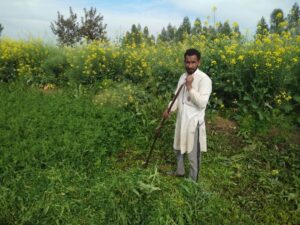
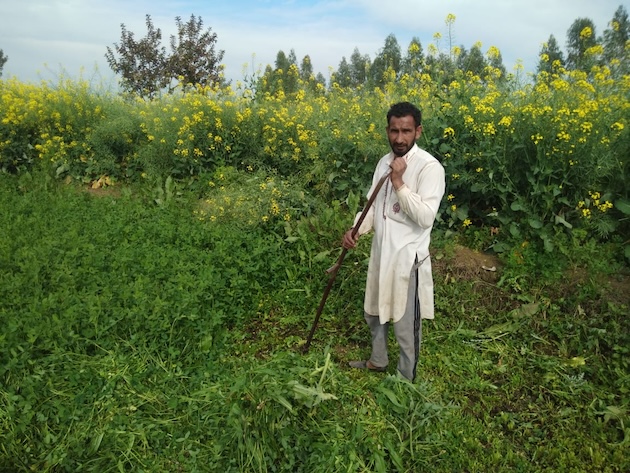
The Global Environment Facility’s food systems program found that its programs are highly relevant to global efforts to curb deforestation, land degradation, biodiversity loss and greenhouse gas emissions from agriculture, fisheries, and commodity supply chains. Pictured here is a farmer in Kashmir’s frontier hamlet of RS Pura bordering Pakistan, farmers in this region have been affected by both climate change and conflict. Credit: Umar Manzoor Shah/IPS
WASHINGTON, D.C & SRINAGAR, Nov 21 2025 (IPS) – A new independent evaluation of the Global Environment Facility’s food systems programs says they are delivering strong environmental and livelihood gains in many countries but warns that a narrow focus on farm production, weak political analysis, and shrinking coordination budgets are holding back deeper transformation.
The Evaluation of GEF Food Systems Programs, prepared by the GEF Independent Evaluation Office for the 70th GEF Council in December 2025, reviews five major programs from GEF 6 to GEF 8. Together they cover 84 projects in 32 countries, backed by about USD 822 million in GEF finance and more than USD 6 billion in co-financing.
The report finds that the programs are highly relevant to global efforts to curb deforestation, land degradation, biodiversity loss and greenhouse gas emissions from agriculture, fisheries and commodity supply chains. They also respond to growing pressure on food systems as the world’s population rises and millions still lack access to healthy diets.
“Food systems are major drivers of global forest and biodiversity loss, land degradation, water pollution and greenhouse gas emissions,” the report notes. It says GEF funding has helped countries design more integrated approaches that connect environmental goals with farming, fisheries and rural development.
Results Most Visible at Community Level
During a webinar to launch the report, Fabrizio Mario Dante Felloni, Deputy Director of the Independent Evaluation Office, said the team had used a systemic lens, looking at the whole food system rather than isolated projects. The evaluation drew on document reviews, geospatial analyses, surveys, interviews, and case studies in Ghana, Indonesia, Peru, and Tanzania.
Felloni said the programs mark a clear shift from earlier, more fragmented efforts. They try to connect ministries and sectors that often work in isolation. “Because it was a food system, looking at the different sectors involved” was central to the design, he explained during the presentation.
The evaluation confirms that GEF food systems projects address several environmental pressures at once. Most initiatives target land and soil degradation, deforestation and biodiversity loss, often through better land use planning, sustainable farming practices, and stronger governance of coastal fisheries. Many projects also seek to link environmental gains with better incomes, skills for women and youth, and improved food security.
Results are most visible at the community level. The report highlights gains in biodiversity, improved land management and reduced emissions when farmers have adopted climate-smart or ecosystem-friendly practices. Socioeconomic benefits include higher yields and incomes, new skills for women, and greater youth engagement in agriculture.
At a meso level, some projects are improving value chains through better market access, traceability and basic processing support. At the macro level, the evaluation records progress on policies and governance, including multi-stakeholder platforms, land use and marine planning, and early steps toward aligning national and local policies.
Yet the evaluation also finds clear gaps. While more than 90 percent of projects focus on the production stage, only about 40 percent look seriously at postharvest issues such as storage, processing, transport and markets. Very few tackle food loss, waste or dietary change, even though these are critical for shifting entire food systems.
“Despite having an ambition to look at the food system and value chains, there was still a production-focused type of approach,” Felloni said. Environmental drivers and biophysical issues receive strong attention in design, but only 40 percent of projects examine the political context, and around 30 percent look closely at socioeconomic drivers.
That limited attention to political economy and social dynamics restricts transformational potential, the report argues. It notes that many designs assume that coordination and platforms will naturally lead to policy alignment, without fully analyzing power relations, trade offs or vested interests.
‘Coordination Budgets Are Shrinking’
Jessica Kyle of ICF, who led parts of the evaluation, told the webinar that private sector engagement has been a “key feature” of the food systems programs. Around two-thirds of country projects include some engagement with businesses, from public private partnerships and capacity building to support for national commodity platforms. At the global level, partners such as the International Finance Corporation have mobilized significant private finance for sustainable commodities.
However, she said scaling these efforts remains difficult. Fragmented supply chains, often weak regulatory incentives for sustainability, and unclear business cases are some of the challenges. Programs have also struggled to link global work on standards and finance with activities in country projects.
On the program approach itself, Kyle said the evaluation found real added value. Stronger program governance, shared design frameworks and knowledge pathways have improved the coherence of activities and allowed influence to extend beyond individual project boundaries. The programs have generated many knowledge products, trainings and learning events and have increasingly shifted from broad global exchanges to more targeted regional and commodity-focused dialogues.
Even so, the report finds “relatively limited evidence” that countries are applying this knowledge in a systematic way. Timing is one reason. In some cases, guidance arrived before projects were ready to use it. In others, knowledge products were not tailored to local needs, or project teams were reluctant to adjust activities mid-course.
To address this, the evaluation calls for stronger “country docking” so that global coordination projects can provide support when countries actually need it and in forms they can absorb. It also urges more participatory processes to identify country demands for technical assistance and learning.
A recurring concern is that coordination budgets are shrinking, even as the scope of programs widens. Coordination funding fell from about 10 percent of total program cost in GEF 6 food systems programs to around 7 percent in GEF 8, even though the number of countries and commodities grew. The report warns that this gap risks undermining the entire programmatic promise, since meaningful integration and tailored support require time, travel and staff.
The Catalytic Capital
Speaking for the GEF Secretariat, Peter Mbanda Umunay, thematic lead for food systems and land use, welcomed the evaluation and said many of its findings were already shaping the design of GEF 8 and early thinking on GEF 9. He described it as “one of the less contentious evaluations,” noting that the Secretariat agreed with most points.
Umunay traced the evolution from the first Integrated Approach Pilots in 2015, focused on resilient food systems in sub-Saharan Africa and commodity supply chains, to the FOLUR Impact Program in GEF 7 and the Food Systems Integrated Program in GEF 8. Over time, he said, the Secretariat has tried to tighten links between global coordination platforms and country projects and to use limited GEF funds more strategically as catalytic capital.
He highlighted efforts to promote “country docking” so that information and technical support flow more clearly between global hubs and national projects. The aim is to empower coordination platforms with enough resources and authority to structure strong connections with governments.
On private finance, Umunay said the evaluation had reinforced the case for using GEF resources to unlock much larger flows. By using GEF grants to de-risk investments or support blended finance, he argued, programs can shift perceptions that agriculture and land use are too risky for private investors and bring in both large companies and small and medium enterprises.
He also accepted the criticism that programs focus too much on production and not enough on postharvest value chains. This, he said, is now being addressed in GEF 8 and in plans for GEF 9, including through work on processing, storage, school meal schemes and nutrition outcomes, which can also bring in more ministries and strengthen policy coherence.
The evaluation ends with four main recommendations. It calls on the GEF to sharpen the focus of food systems programs and consider phasing them across replenishment periods so that countries can move from readiness and pilots to larger-scale investments over longer time frames. It urges a broader focus beyond production, especially on value chain integration and demand-side measures, where this can secure environmental and social gains.
The report also recommends deeper analysis of political economy and behavior change at design and during implementation and stronger country docking to turn knowledge and global services into real changes on the ground.
Umunay said the Secretariat had already prepared a management response and would use the findings to strengthen current and future programs. He stressed that the GEF remains country-driven. Governments must see these programs as supporting their priorities, from climate plans and food security strategies to rural development.
“We have been very successful in some countries that have continuously applied this program all across,” he told participants. “We will continue to do that, and this evaluation is eye-opening for the next steps.”
LILONGWE-(MaraviPost)-Members of Parliament (MPs) have expressed growing concerns over being barred from attending and speaking at local council meetings, raising questions about oversight and accountability at the local government level.
MPs Yona Dadawisa Nkandawire and Richard Chimwendo Banda brought the matter to Parliament on 20th November 2025, during ongoing deliberations in Lilongwe.
They highlighted instances where some local councils have imposed restrictions on MPs, limiting their ability to participate fully in council proceedings.
Banda reported that, although he was allowed to attend a council session, he was denied the right to speak, which he described as a challenge to Parliament’s role in ensuring transparency in local governance.
He emphasized that such restrictions undermine MPs’ ability to monitor the activities of local councils effectively.
Responding to the concerns, Local Government Minister Ben Phiri stated that MPs do have the right to inquire about the use of council funds, stressing that oversight by Parliament is essential to promote accountability.
However, he clarified that a court ruling currently prevents MPs from participating in voting during council meetings, which limits their direct influence over council decisions but does not negate their oversight functions.
Speaker of Parliament Sameer Sulemani confirmed that Parliament is actively addressing the matter.
He indicated that measures are being considered to ensure MPs can carry out their oversight responsibilities effectively without infringing on the legal frameworks governing local councils.
The debate underscores ongoing tensions between Parliament and local councils regarding transparency, governance, and the monitoring of public funds.
MPs’ concerns reflect a broader demand for strengthened accountability mechanisms, particularly in ensuring that local authorities operate openly and in line with legal standards.
As the discussions continue, the issue highlights the delicate balance between local council autonomy and parliamentary oversight, emphasizing the importance of collaboration between different arms of government to protect public interest and maintain good governance practices.
Share this:
Like this:
LikeLoading…
Discover more from The Maravi Post
Subscribe to get the latest posts sent to your email.