
KALW Almanac – Tuesday March 3, 2026

March 3 is the 62nd day of the year

303 days remain until the end of the year.

16 days until spring begins

Sunrise at 6:37:51 am

and sunset will be at 6:06:30 pm.

We will have 11 hours and 28 minutes of daylight today

The solar transit will be at 12:22:10 pm.

Water temperature in San Francisco Bay today is 57.2°F.

The first low tide will be at 4:24 am at 1.36 feet

The first high tide of the day will be at 10:18 am at 5.89 feet

The next low tide at 4:45 pm at -0.19 feet

The final high tide of the day at Ocean Beach will be at 11:17 pm 5.63 feet

The Moon is currently 99% visible

We just had a 100 percent Full Moon this morning at 3:38 am

The Penumbral Eclipse of the moon ended less than a half hour ago at 6:23:06 am

We may not have another “Red Moon” for another 3 years

The March Full Moon is called the Snow Moon

The Cree called this the Bald Eagle Moon or Eagle Moon.

The Bear Moon by the Ojibwe

The Black Bear Moon by the Tlingit

The Dakota called this the Raccoon Moon

Algonquin peoples named it the Groundhog Moon.

The Haida named it Goose Moon.

The Cherokee names this the “Month of the Bony Moon” and “Hungry Moon”

Today is….

33 Flavors Day

Canadian Bacon Day

I Want You to be Happy Day

National Cold Cuts Day

National Moscow Mule Day

National Mulled Wine Day

National Soup it Forward Day

National Sportsmanship Day

Peace Corps Day

Peach Blossom Day

Purim

Also known as Festival of Lots

Talk in Third Person Day

TB-303 Appreciation Day

Unique Names Day

What if Cats and Dogs Had Opposable Thumbs Day

Today is also….

Hinamatsuri or “Girl’s Day” in Japan

Liberation and Freedom Day in Charlottesville, Virginia

Liberation Day in Bulgaria

Martyrs’ Day in Malawi

Mother’s Day in Georgia

Sportsmen’s Day in Egypt

World Hearing Day

World Wildlife Day

On this day in Women’s History….

1873 – Censorship in the United States: The U.S. Congress enacts the Comstock Law, making it illegal to send any “obscene literature and articles of immoral use” through the mail. Some of that “obscene” and “immoral” literature included valuable information for women about their reproductive rights.

The National Woman Suffrage Parade, 1913.

On March 3, 1913, 5,000 women marched up Pennsylvania Avenue in Washington, DC, demanding the right to vote. Their “national procession,” staged the day before Woodrow Wilson’s presidential inauguration, was the first civil rights parade to use the nation’s capital. The event brought women from around the country to Washington in a show of strength and determination to obtain the ballot. The extravagant parade—and the near riot that almost destroyed it—kept women’s suffrage in the newspapers for weeks.

2005 – Margaret Wilson is elected as Speaker of the New Zealand House of Representatives, beginning a period lasting until August 23, 2006, where all the highest political offices (including Elizabeth II as Head of State), were occupied by women, making New Zealand the first country for this to occur.

If today is your birthday, Happy Birthday To You! You share your special day with….

1678 – Madeleine de Verchères, Canadian rebel leader (died 1747)

1778 – Frederica of Mecklenburg-Strelitz (died 1841)

1872 – Frida Felser, German opera singer and actress (died 1941)

1880 – Florence Auer, American actress and screenwriter (died 1962)

1882 – Elisabeth Abegg, German anti-Nazi resistance fighter (died 1974)

1893 – Beatrice Wood, American illustrator and potter (died 1998)ed 1962)

1900 – Edna Best, British stage and film actress (died 1974)

1902 – Ruby Dandridge, African-American film and radio actress (died 1987)

1911 – Jean Harlow, American actress (died 1937)

1913 – Margaret Bonds, American pianist and composer (The Ballad of the Brown King), pianist, arranger, and teacher, born in Chicago, Illinois (d. 1972)

1917 – Sameera Moussa, Egyptian physicist and academic (died 1952)

1921 – Diana Barrymore, American actress (died 1960)

1923 – Tamara Lisitsian, Soviet film director and screenwriter (died 2009)

1933 – Lee Radziwill, American socialite, sister of Jacqueline Kennedy Onassis (died 2019)

1945 – Hattie Winston, American actress

1947 – Jennifer Warnes, American singer-songwriter and producer (“Up Where We Belong; “Famous Blue Raincoat”),

1949 – Bonnie J. Dunbar, American engineer, academic, and astronaut

1949 – Roberta Alexander, American lyric and operatic soprano (Metropolitan Opera, 1983-91), born in Lynchburg, Virginia (d. 2025)

1950 – Re Styles [Shirley Macleod], Dutch-American actress (Space Is The Place), designer, and rock vocalist (The Tubes, 1976-79), born in the Netherlands (d. 2022)

1955 – Michele Singer Reiner, American film producer (died 2025)

1956 – Stephanie McCallum, Australian concert pianist and educator, born in Sydney, Australia

1958 – Miranda Richardson, English actress

1961 – Mary Page Keller, American actress and producer

1961 – Fatima Whitbread, English javelin thrower

1962 – Jackie Joyner-Kersee, American heptathlete and long jumper

1964 – Laura Harring, Mexican-American model and actress, Miss USA 1985

1970 – Julie Bowen, American actress

1980 – Katherine Waterston, English-American actress

1982 – Jessica Biel, American actress, singer, and producer

1983 – Sarah Poewe, South African swimmer

1986 – Stacie Orrico, American singer-songwriter (“Stuck”), born in Seattle, Washington

1987 – Shraddha Kapoor, Indian actress, singer, and designer

1988 – Teodora Mirčić, Serbian tennis player

1991 – Park Cho-rong, South Korean singer-songwriter and actress

1991 – Anri Sakaguchi, Japanese actress

1994 – Umika Kawashima, Japanese singer and actress

1995 – Maine Mendoza, Filipina actress

1997 – Camila Cabello, Cuban-American singer-songwriter and actress (Fifth Harmony – “Work from Home”; solo – “Señorita”; “Havana”), born in Cojimar, Cuba

Source

A New World Order Where Might is Right

Armed Conflicts, Civil Society, Crime & Justice, Democracy, Featured, Global, Headlines, Human Rights, International Justice, IPS UN: Inside the Glasshouse, TerraViva United Nations

A New World Order Where Might is Right

Credit: Global Centre for the Responsibility to Protect

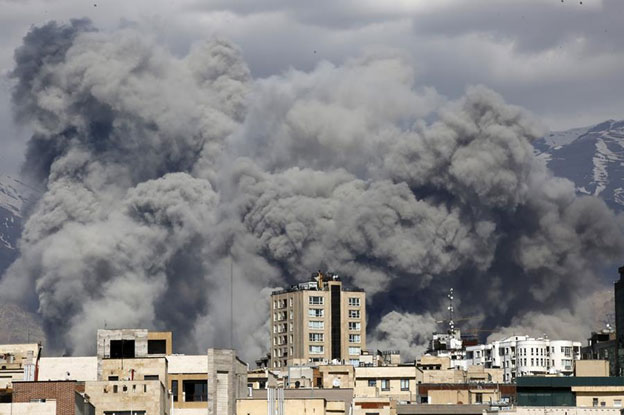
UNITED NATIONS, Mar 3 2026 (IPS) – As the build-up for a proposed “new world order” continues, a lingering question remains: will the country with the most powerful military reign supreme?

The United Nations remains politically impotent. The UN charter is in tatters. The sovereignty of nation states and their territorial integrity have been reduced to political mockery. And the law of the jungle prevails—be it Palestine, Ukraine, Venezuela or Iran.


What’s next: Colombia? Cuba? Greenland? North Korea?

The widespread condemnation of the ongoing conflicts – including charges of war crimes and genocide— has continue to fall on deaf ears.

UN Secretary-General Antonio Guterres told the Security Council that under Article 2 of the UN Charter, all member states shall “refrain in their international relations from the threat or use of force against the territorial integrity or political independence of any state.”

But is anybody out there listening?

Norman Solomon, executive director, Institute for Public Accuracy and national director, RootsAction.org, told IPS killing from the sky has long offered the sort of detachment that warfare on the ground can’t match. Far from its victims, air power remains the height of modernity

Reliance on overwhelming air power is key to what the U.S. is doing in tandem with Israel. Bombing from the skies while not attacking with ground forces is the ultimate way of killing without suffering many casualties.

This reduces political blowback at home in a political and media culture that values American lives but sees the lives of “others” as readily expendable, he pointed out.

“This flagrant war of shameless aggression, launched by the United States and Israel, cannot be contained — much less rolled back — by the typical diplomatic euphemisms and caution.”

The U.S. and Israeli governments, said Solomon, are too completely run by psychopathic leaders who adhere only to the “principle” that might makes right. If ever there were a time that the vaunted “international community” should step up and confront an alliance of reckless outlaw governments, this is it.

The European allies of the United States, he said, should stop their cowardly vagueness and finally step up to demand a halt to this aggression that is setting the Middle East tinderbox on fire. The EU should be threatening huge countermeasures against the United States and Israel unless that pair of sociopathic governments immediately halts their assault on Iran.

“Playing evasive games with Washington makes the leaders in London, Paris, Berlin and elsewhere accomplices to methodical ongoing war crimes”, declared Solomon, author of “War Made Invisible: How America Hides the Human Toll of Its Military Machine”

According to the Global Centre for the Responsibility to Protect, the US-Israeli act of aggression against Iran was undertaken in violation of international law and the UN Charter, as they exercised use of force without authorization from the UN Security Council (UNSC) or without a demonstrated threat to their security that would trigger the right to self-defense under Article 51 of the UN Charter.

“The attack came amid ongoing nuclear talks between the US and Iran and just hours after Oman’s Foreign Minister – a key mediator in the negotiations – shared details on progress achieved and announced that a breakthrough was near. The attack also mirrors the recent unlawful actions undertaken by the US in Venezuela on 3 January, culminating in the kidnapping of the head of state and setting in motion profound uncertainty for the region and the global order.”

Meanwhile, the Geneva-based UN refugee agency, the UNHCR, said it is deeply concerned about the escalation of conflict in the Middle East and its impact on civilians and further displacement in the region.

“Many affected countries already host millions of refugees and internally displaced people. Further violence risks overwhelming humanitarian capacities and placing additional pressure on host communities”.

“We echo the UN Secretary-General’s urgent call for dialogue and de-escalation, respect for human rights, the protection of civilians and full adherence to international law”.

James Jennings, President of Conscience International, told IPS the joint US-Israeli attack on Iran was misguided, illegal, and based on lies. It will retard, not advance, any future nuclear agreement, perhaps for decades.

It was illegal, he pointed out, because it violates both the US constitution and international law as enshrined in the UN Charter. It was based on lies because the nuclear watchdog groups have clearly indicated in essence that “There’s nothing to see here.”

“Trump regularly claims that June’s joint “Operation Midnight Hammer” obliterated Iran’s nuclear capability, yet his weak case for the current “Operation Epic Fury” war rests on the idea that perhaps someday in the future Iran might get a bomb. Several US administrations have worked diplomatically to prevent that, yet Trump tore the agreement up”.

Trump claims to be limited by no law, constitution, or the UN Charter. Guided only by his own morality, as he said recently, he followed Israel obediently in launching a massive war against a sleeping country of 92 million people, said Jennings.

“All the while, his amateur diplomats were negotiating deceptively for a compromise like Imperial Japan did in the run-up to the WW II Pearl Harbor attack. Ask the parents of the more than l00 schoolgirls killed on the first horrifying day of joint US-Israel bomb attacks at Minaj, Iran, and they will probably not see Mr. Trump as particularly moral”.

George W. Bush called himself “The Decider, so he foolishly decided to take the US into two unwinnable wars that most politicians in Washington, and even Trump himself, now consider monumental mistakes. Trump campaigned vigorously on keeping the US out of mistaken Middle East wars that became “Forever Wars,” said Jennings.

“Yet here he is being pulled around by the nose by Mr. Netanyahu. According to a classic rule when launching a war, one must recognize that two things cannot be changed: one is history and the other is geography. It is stunning that the leader of the United States is cavalier about going to war without understanding that or clearly stating the mission’s purpose or end game.”

Pundits and TV reporters are calling the attack on Iran “a war of choice,” said Jennings.

“Why not call it what it really is–a war of naked aggression? Nobody knows when will it end. Trump’s claim that the war will be over in a few days is a cruel joke. The other side gets a vote. Iran celebrated its 2,500th anniversary in 1971. Maybe people who have been around so long know a few things about survival,” declared Jennings.

IPS UN Bureau Report

  Source

Cuba Has its Back Against the Wall

Civil Society, Featured, Global Governance, Headlines, IPS UN: Inside the Glasshouse, Latin America & the Caribbean, TerraViva United Nations

Opinion

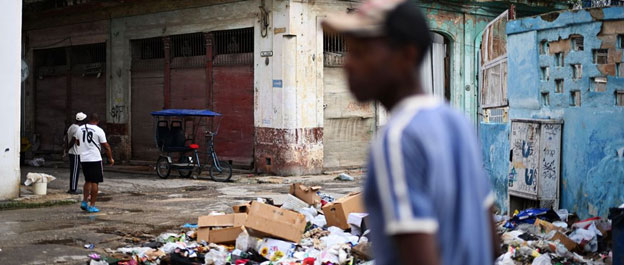
BERLIN, Germany, Mar 2 2026 (IPS) – The crisis could scarcely be more dramatic. The US is blocking practically all oil deliveries to Cuba. The island depends on imports for all diesel, petrol and kerosine. Without diesel trucks cannot move, food cannot reach Cuban towns and hospitals will not get any oxygen.


The airports are already without kerosine and several airlines have already suspended flights to and from Havana. The strategy is clear: strangulation. The US extreme right is jubilant; at last, they have found the ‘choking point’ that may finally bring Havana to its knees, 67 years after Fidel Castro’s revolution.

Trump says that negotiations are already under way, outside of declaring that Cuba is a ‘failed state’ and the government there needs to make a deal. But Trump says a lot of things. Even a sober look at the alternatives, however, is fairly terrifying. There are basically four scenarios:

Scenario 1: Cuba continues to be denied oil deliveries. The government can impose austerity measures and commit itself to heroic resistance. But without new petrol or diesel the current crisis will become a humanitarian catastrophe within weeks. Havana could pin the blame for this on the US and with complete justification. For all its own faults, no other Caribbean island could withstand such an oil embargo, whatever its political system. But what good would playing the blame game do in the end? The social and human costs would be horrendous. Without diesel even international humanitarian aid deliveries couldn’t get from the ports to the towns that need them.

Moscow says that it is willing to supply Cuba with oil, but so far it hasn’t followed through.

Scenario 2: Some oil tankers reach the island, perhaps from Moscow, from spot market purchases or from other sources. This could relieve the worst of it, no doubt. But the question remains, to what degree? And for the foreseeable future? Trump’s threats of punitive tariffs and the seizure of proscribed tankers are already sufficient deterrent.

Even Mexico had to pull its support under pressure from Washington. But who else is up for incurring America’s wrath? Moscow says that it is willing to supply Cuba with oil, but so far it hasn’t followed through.

On top of that, Russian airlines are bringing their passengers home and suspending flights. Up until the US military strikes on Maduro on 3 January Venezuela had provided 70 per cent of Cuba’s oil imports. Instead of demanding hard currency payments, it settled for Cuban medical personnel. Who will take over this role?

Scenario 3: The desperate situation intensifies, leading to protests, unrest and the fall of the government. This is what the hardliners in Miami have been dreaming of. But for all the pent-up frustration Washington’s own policy is stymying mobilisation. Already in Venezuela Trump and Rubio ignored the opposition and made deals only with the post-Maduro elite.

If Trump is now saying that negotiations with Havana are already going on and the regime will fall of its own accord, who on the island will be inclined to put themselves on the line in demonstrations or protests? No doubt there’ll be outbreaks of desperation, windows may be smashed and sporadic looting.

But if the message is that only the power struggle between Washington and Havana really counts it makes more sense for the populace to see how things develop, waiting until things have been decided by those at the top.

Scenario 4: The US oil blockade could be lifted in the course of negotiations. But even though Havana has resumed communications with Washington dialogue remains a distant prospect. Some possible steps seem realistic. The Cuba government could order the release of hundreds of prisoners, held in the protests of 11 July 2021.

It could also remove particularly controversial sections of the penal code, push ahead with market reforms or improve investment possibilities for Cuban emigrees. And all without undermining the foundations of the system. This would not only serve US interests, but also many of the civilian population. In return, Washington could permit a resumption of oil deliveries to Cuba from Mexico and elsewhere. Restrictions on remittances from US Cuban expats could be lifted. A first milestone would be reached.

Never been weaker

Nevertheless, it is difficult to imagine what kind of common denominator could be found that would ease the tension and usher in some kind of new normal. Cuba has been a worldwide symbol for the left since the revolution in 1959. But the same could be said for the right in the US.

Indeed, the latter would like nothing better than to see it fall. Trump won’t say what kind of deal he wants. But rest assured it will involve Cuba once more within the US sphere of influence and a US-friendly government in Havana.

Cuba really has its back against the wall. Its negotiating position has never been weaker. Venezuela has shown, however, that the US wants more than political alignment and access to resources. It also desires stability. The government in Caracas may have changed, but the military and the police, the state apparatus and even para-military forces remain intact.

Cuba isn’t a complete match in this respect, but if the US doesn’t want to put boots on the ground it will continue to need the state’s existing forces of order: police, military and administration. This gives the Cuban side at least something to bring to the negotiating table.

Nevertheless, Havana will have to cross a lot of red lines to reach an agreement with this US administration. And what’s more, under the constant shadow of the latent threat that Washington will again turn off the oil tap. The US government would be well advised to be pragmatic enough to allow the other side to save face.

But this is unlikely given the intoxicating fantasy of omnipotence by which Washington is currently spellbound. Cuban-born hardliners in the US Congress are already demanding that the Department of Justice bring the 94-year-old Raúl Castro to trial.

Or perhaps everything will be resolved very quickly. The power bloc around Raúl Castro’s family and its associated network controls not just the military and the security apparatus, but also by far the biggest business entity in the country, the military holding GAESA. The profound crisis of recent years has enabled them to invest with grim determination in the expansion of luxury hotels, transferring state-run restaurants into private management and acquiring stakes in lucrative online supermarkets that emigrants in Miami and elsewhere use to support their families on the island.

Could the upshot be a form of capitalism that maintains their economic privileges, with American partners in the hotels, while the old networks retain control?

None of the four scenarios seem entirely credible, but surely one of them, or some combination, will be realised in the not-too-distant future. But maybe not, if all those who are currently mute in fear of falling victim to Trump’s random impulses actually come together. Not out of nostalgia for the Cuban revolution, but to stand up and be counted as the Washington regime calls into question the basic norms of coexistence between peoples and states, whether in Cuba or Greenland.

Professor Dr Bert Hoffmann is Lead Research Fellow at the GIGA German Institute for Global and Area Studies in Hamburg and Honorary Professor at Freie Universität Berlin.

Source: International Politics and Society, Brussels

IPS UN Bureau

  Source