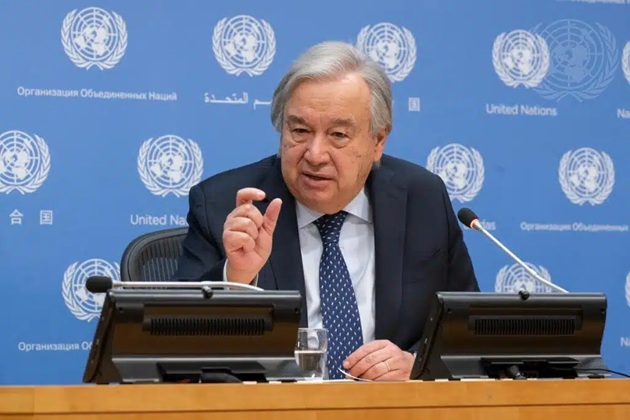
UN Secretary-General Antonio Guterres, “shocked by reports of violence and excessive use of force by Iranian authorities against protesters”, is urging restraint and immediate restoration of communications, as unrest enters its third week. 11 January 2026. Credit: United Nations
NEW YORK, Jan 15 2026 (IPS) – Unlike ever before, Iran’s Islamic regime is facing a revolt led by a generation that has lost its fear. Young and old, men and women, students and workers, are flooding the streets across the country.
Iran’s future may well hinge on whether its military chooses to act and save the country, driven by economic collapse, corruption, and decades of repression. Women and girls are at the forefront, protesting without headscarves, defying the clergy that once controlled every aspect of their lives. They don’t want reform; they are demanding freedom, economic relief, and the end of authoritarianism.
Shutting down the internet, arresting nearly 17,000 protesters, killing at least 3,000, including children, and Trump’s threat to use force to stop the Iranian regime have not prevented the mullahs from continuing their onslaught. The regime’s ruthless crackdown has been a calamitous wave of repression, taking thousands of lives in a brutal attempt to crush dissent. Yet even in the face of such peril, the public remains undeterred, determined to continue their fight.
Now, however, they need the support of the most powerful domestic—not foreign—power to come to their aid. The Iranian military is the most pivotal institution in the country, capable of catalyzing the downfall of the regime. The military is the key player, with significant internal influence and the capability to drive the necessary change from within, ultimately leading to regime change.
Every officer in the military should stop and think, how do I want to serve my country.
Do I want to continue to prop up a bunch of reactionaries, self-obsessed old men who have long since lost their relevance, wearing the false robe of piety to appear sanctimonious while subjugating the people to hardship and hopelessness?
Should I not support the younger generation who are yearning for a better life, for opportunity, for a future that gives meaning to their existence?
Should I not participate in sparking the revival of this magnificent nation from the doldrums of the past 47 years that have consumed it from within?
Should I continue to prepare for war against Israel, or extend a peaceful hand and invest in building my country with such immense natural and human riches and be in the forefront of all other modern democratic and progressive nations, and restore the glory of ancient Persia?
Do I truly want to continue to wear blinders and let my country be destroyed from within, or should I become part of a newly reborn nation and take personal pride in helping to revive it?
The answer to these questions should be clear to every officer. The military should establish a transitional government and pave the way for a legitimate, freely elected government, and restore the Iranian people’s dignity and their right to be free.
The idea that the Shah’s son, Reza Pahlavi, could return and restore a monarchy is just the opposite of what the Iranian people need. Instead of another form of corruption or an old kingdom, they deserve a democracy and genuine freedom.
In the final analysis, Iran’s destiny may rest on a single profound choice—whether its military steps forward to reshape the nation’s destiny.
Dr. Alon Ben-Meir is a retired professor of international relations, most recently at the Center for Global Affairs at NYU. He taught courses on international negotiation and Middle Eastern studies.
The worker who yelled “pedophile protector” at President Donald Trump during his visit to a Ford plant in Michigan Tuesday has been suspended. 40-year-old TJ Sabula, a United Auto Workers Local 600 line worker at the factory, told The Washington…
LILONGWE-(MaraviPost)-Maria Asghar, the primary head of Lilongwe Private School, has departed the institution amidst controversy and chaos, bringing an end to her tumultuous tenure.
On Tuesday, 13 January, Asghar packed her belongings and bid farewell to the school. As she apologised to teachers for her years of mistreatment, they listened in silence, unmoved by her tears.
Her presence was ignored by staff, who had openly challenged her to leave. In a bid to deflect racism allegations, Asghar attempted to reallocate standard one classes, but the children caused a scene, crying and refusing to leave their teachers.
As news of the chaos reached the school board Asghar ignored their calls and hastily packed her belongings with cleaners’ help.
She then announced plans to establish her own school, citing Lilongwe Private School’s lack of resources.
Her announcement was met with incredulity and amusement from parents and teachers, who questioned her leadership and reputation.
Asghar’s crisis stems from allegations of mismanagement, favoritism, and poor working conditions.
Teachers claim she’s created a toxic environment, isolating staff and fostering division.
Specific incidents include racism allegations, unprofessional behavior, mismanagement, and staff intimidation.
The school board’s response has been criticized as inadequate, with some members defending Ms. Asghar despite concerns.
Teachers are calling for urgent administrative intervention to restore professionalism and respect. The school community is likely to breathe a sigh of relief, looking forward to a brighter future.
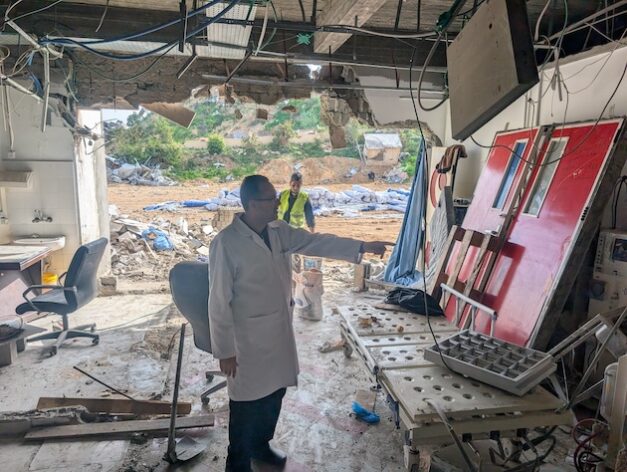
Cardiologist Dr. Marwan Sultan, then Director of the Indonesian Hospital in north Gaza, in February 2025 showing damage to hospital equipment following an Israeli attack on the facility a few months prior. In July 2025, Dr. Sultan was killed in an Israeli strike on the apartment where he was sheltering with his family. Credit: PHR/GHRC
BRATISLAVA, Jan 14 2026 (IPS) – Israel must lift all restrictions on medicine, food and aid coming into Gaza, rights groups have demanded, as two reports released today (Jan 14) document how maternal and reproductive healthcare have been all but destroyed in the country.
The reports from the two groups, which are independent organizations, provide both detailed clinical analysis of the collapse of Gaza’s health system and its medical consequences as well as firsthand testimonies from clinicians and pregnant and breastfeeding women in Gaza forced to live and care for their newborns in extreme conditions.
And the organizations say that with conditions improving only marginally for many women despite the current ceasefire, Israel must roll back restrictions placed on aid and immediately help ensure people in Gaza get access to the healthcare they need.
“Israel’s destruction of Gaza’s health infrastructure, combined with untreated malnutrition resulting from restrictions on food and medical supplies, including baby formula, has created an environment in which the fundamental biological processes of reproduction and survival have been systematically destroyed, resulting in known and foreseeable harm, pain, suffering, and death,” Sam Zarifi, Physicians for Human Rights (PHR) Executive Director, said.
“Israel must immediately allow food and essential medical material to enter Gaza with a proper medical plan for helping the besieged population,” he added.
Israeli military operations following Hamas’s attack on Israel on October 7, 2023, have left massive destruction across Gaza, including to healthcare facilities. According to UNICEF, 94 percent of hospitals have been damaged or destroyed.
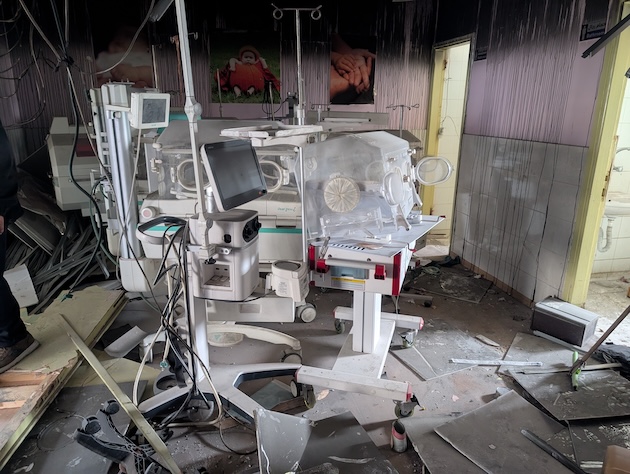
Destroyed incubators and equipment at the Kamal Adwan Hospital Neonatal Intensive Care Unit in north Gaza, following the targeting and raid of the facility by the Israeli forces in December 2024. Credit: PHR/GHRC
Maternal and reproductive healthcare has suffered. Before the war, Gaza had eight neonatal intensive care units with 178 incubators. Today, the number of incubators has dropped by 70 percent. In the north, there were 105 incubators across three NICUs, now there are barely any functional units remaining, UNICEF told IPS.
It says that the numbers of low birth weight babies have nearly tripled compared to pre-war levels and the number of first-day deaths of babies increased by 75 percent.
The PHR and PHR-I reports paint a similar picture.
The PHR report, which focuses on the period between January 2025 and October 2025 when a ceasefire was agreed, details how between May and June last year, the Palestinian Ministry of Health reported a 41 percent decrease in the birth rate in Gaza compared to the same time period in 2022; there was a significant increase in miscarriages that affected more than 2,600 women, and 220 pregnancy-related deaths that occurred before delivery.
The ministry also reported a sharp increase in premature births and low birth weight cases; over 1,460 babies were reported to be born prematurely, while more than 2,500 were admitted to neonatal intensive care. Newborn deaths also increased, with at least 21 babies reported to have died on their first day of life.
Meanwhile, the PHR-I report includes personal testimonies illustrating the severe problems pregnant women and women with newborns have faced in Gaza during the war, from lacking safe routes to care and being forced to give birth in unsanitary, dangerous conditions to battling hunger and severe food shortages as they try to breastfeed their children.
One woman, Samah Muhammad Abu Mustafa, a 30-year-old mother of two from Khuza’a, Khan Youni, described how when her contractions began in the middle of the night, because there were no vehicles and very few ambulances, which are reserved for shelling or other critical emergencies, she had to walk a long distance through rain. When she eventually reached the hospital, she said it was “horrifying.”
“I swear, one woman gave birth in the corridor, and her baby died. It was very crowded, and the doctors worked nonstop. I felt as though I could give birth at any moment. After giving birth to my eldest daughter, I was told I should not deliver naturally again because my pelvis was too narrow. Despite this, the doctors said I would have to deliver naturally because a cesarean section required anesthesia, and there was not enough available. I stood for three hours until it was finally my turn, without sitting even for a moment,” she said.
But despite the October 2025 ceasefire, massive problems remain with women’s access to and the provision of, maternal and reproductive healthcare in Gaza.
“Maternal health units in Gaza are largely non-functional and face critical shortages of essential medicines, consumables, and equipment,” Lama Bakri, project coordinator in the Occupied Territories Department at PHR-I, told IPS.
“Neonatal and diagnostic equipment remains scarce or blocked, including portable incubators for premature and low-birth-weight newborns. Although some aid has entered since the ceasefire, these gaps are not being addressed at the scale required, and meaningful improvement in the immediate future remains unlikely.”
Malnutrition also remains a serious problem.
“The ceasefire has allowed us to significantly scale up our nutrition response, but we are still treating pregnant and breastfeeding women for acute malnutrition in alarmingly high numbers,” Ricardo Pires, Communication Manager, Division of Global Communications & Advocacy at UNICEF, told IPS.
He said that between July and September 2025 about 38 percent of pregnant women screened were diagnosed with acute malnutrition.
“In October alone, we admitted 8,300 pregnant and breastfeeding women for treatment, about 270 a day, in a place where there was no discernible malnutrition among this group before October 2023,” he added.
UNICEF has documented almost 6,800 children admitted for acute malnutrition treatment in November 2025 compared to 4,700 cases in November 2024. So far, the number of admitted cases more than doubled in 2025 compared to 2024: almost 89,000 admissions of children to date in 2025, compared to 40,000 cases in 2024, and almost none before 2023.
“What we’re seeing is that no child meets minimum dietary diversity standards, and two-thirds of children are surviving on just two food groups or less. Around 90 percent of caregivers reported their children had been sick in the previous two weeks, which compounds the malnutrition crisis,” Pires said.
And there are fears for the longer-term demographic future of Gaza given the damage to maternal and reproductive healthcare.
“For Gaza’s demographic future, the implications are serious. Even with reconstruction, we will be dealing with a generation of children who were scarred before they took their first breath, children who may face lifelong health complications, developmental challenges, and the effects of stunting. The rebuilding must start now, but we should be clear-eyed: the damage to maternal and newborn health will echo for years, potentially decades,” said Pires.
But others say that with cooperation between international actors and the right political will, the situation need not remain so dire.
“To rehabilitate the population after everything that has happened is going to be a real issue, [but] now there is a Board of Peace, the needs of pregnant women and maternal and reproductive healthcare can be prioritized,” Zarifi told IPS.
“The capacity and the will exist among Gazans and Gazan healthcare workers to rebuild the healthcare system, including maternal and reproductive health services,” added Bakri. “The primary obstacle is not technical or professional but political: Israel’s control over Gaza’s borders and the restrictions on the entry of essential equipment, medical supplies, and reconstruction materials. With unrestricted access to what is needed to rehabilitate hospitals, rebuild destroyed units, and restock essential medicines, recovery is entirely feasible. Whether maternal and reproductive healthcare can return to pre-war levels depends on sustained international pressure to allow that access.”
Although some aid has entered since the ceasefire, these gaps are not being addressed at the scale required, and meaningful improvement in the immediate future remains unlikely.
However, while both NGOs like PHR and PHR-I and others, alongside international bodies like the UN, stress that any recovery and reconstruction in Gaza requires the ceasefire to hold and consolidate, repeated violations underline its fragility, and the effect that has on women.
Meanwhile, PHR and PHR-I point out that extreme weather and ongoing Israeli restrictions on medicine and food getting to Gaza to this day continue to severely affect pregnant women, new mothers, and babies. On top of this, Israel has also announced it will bar 37 international aid groups from working in Gaza, potentially compounding the problems.
Bakri said such measures were jeopardizing what small gains had been made since the ceasefire and “raise serious concerns about whether the situation can improve.”
“Even after the ceasefire, while bombardment has decreased, the reality these women face remains catastrophic – not only for their bodies and well-being but for the survival of the entire society,” said Bakri.
Zarifi added, “We are worried that the restrictions placed by Israel on some of the major actors in the humanitarian response will hamper access to assistance for those that need it. We have raised questions with the Israeli government as to why specific medicines are not allowed to be brought into Gaza and they say that they are not stopping them from being brought in but they can be brought in by commercial means. That is hard for people who can barely put any money together. These medicines should definitely be coming in through humanitarian channels.”
He also highlighted how important the issue of accountability is in ensuring any progress is made in rebuilding healthcare in Gaza and also limiting the probability of similar devastation in the future.
Both reports concluded that the harms caused by Israeli attacks are not isolated incidents but part of an ongoing pattern of systematic damage to the health of women and their children in Gaza, amounting to reproductive violence.
Israel has denied this and said that attacks on hospitals in Gaza have been because the medical facilities are being used by Hamas, and it has maintained that its forces adhere to international law.
While under international law healthcare facilities have special protection even in war, and attacks on them are prohibited, that protection is lost if they are deemed to fulfill criteria to be considered military objectives, such as housing militaries and arms.
However, any attack on them must still comply with the fundamental principles of distinction, proportionality and precautions in attack and failure to respect any of these principles constitutes a breach of international humanitarian law, according to the UN.
“These attacks are part of a deliberate policy designed to create a domino effect of suffering. From starvation and militarized aid distribution by the GHF, to lack of access to clean water, repeated displacement orders, living in shelters under continuous bombardment, and exposure to infections, disease, and harsh weather, the attacks on maternal and reproductive healthcare are another piece of this puzzle. Together, these conditions were created to systematically destroy the fabric of life in Gaza and reduce the population’s ability to survive,” said Bakri.
“The Israeli government has justified attacks on healthcare facilities by saying this was a problem caused by Hamas. We haven’t had an indication of this but it might be true. But in any case there has to be an investigation of these incidents and we hope the Israeli government will carry out such an investigation,” said Zarifi.
“But what is really alarming to us is that the norms prohibiting attacks on healthcare have been repeatedly violated, and there are also laws governing the protection of women and children that appear to have been violated. The only thing that makes these norms work is accountability. There has to be accountability for what happened, as it is the only way we can ensure that what has happened won’t happen in other conflicts. Impunity is watched by other actors around the world,” he added.
KAMPALA-(MaraviPost)-President Museveni held his last rally at Kololo Independence Grounds in Kampala, showcasing the unwavering love and support of Ugandans.
Party supporters think and believe Museveni will win, as the affection Ugandans have for him mirrors the devotion Kenyans had for Raila Amolo Odinga.
Museveni declared in his final rally that Bobi Wine had planned to rig the election using hackers from the West, but unfortunately for him, his team is far ahead of the game.
However, Robert Kyagulanyi, popularly known as Bobi Wine, has once again emerged as Uganda President Yoweri Museveni’s main challenger.
Bobi Wine, a pop star-turned-politician, has become a symbol of hope for Uganda’s youth, who make up over 80% of the population, and is determined to challenge Museveni’s nearly 40-year rule.
He has driven himself to risk everything in taking on the long-serving president, citing issues of youth joblessness, corruption, and authoritarian rule.
Bobi Wine’s National Unity Platform (NUP) has gained significant traction, especially among young people in urban areas, and has become the strongest challenger to Museveni’s rule.
Despite facing repeated arrests, beatings, and threats, Bobi Wine remains committed to bringing democratic reforms and ending Museveni’s rule.
His campaign focuses on addressing the pressing issues facing Uganda’s youth, who are eager for change and economic opportunities.
Museveni, on the other hand, has been in power since 1986 and has maintained a tight grip on Uganda, often using tactics to suppress opposition and dissent.
The upcoming election is shaping up to be a crucial test of Uganda’s democratic process, with Bobi Wine’s challenge posing a significant threat to Museveni’s rule.
As the country heads towards the polls, the world is watching closely to see whether Uganda will continue on its current path or embark on a new journey towards democracy and reform.
Veteran federal prosecutors in Minnesota resign after pressure from Justice Department leaders to investigate the widow of Renee Macklin Good, the woman killed by an ICE agent, raising new questions about political interference. President Trump takes his economic message on the road, pitching affordability as voters remain frustrated by high prices. And while gas prices have dipped, rising heating costs, grocery prices, and stubborn inflation show why relief still feels out of reach for many families.
Want more analysis of the most important news of the day, plus a little fun? Subscribe to the Up First newsletter.
Today’s episode of Up First was edited by Rebekah Metzler, Gigi Douban, Krishnadev Calamur, Mohamad ElBardicy and Alice Woelfle.
It was produced by Ziad Buchh, Nia Dumas and Christopher Thomas.
We get engineering support from Neisha Heinis. Our technical director is Carleigh Strange.
And our Supervising Producer is Michael Lipkin.
(0:00) Introduction (02:19) Minnesota Prosecutors Quit (06:10) Trump in Detroit (09:52) Inflation Report