Inclusivity, Impact, and Innovation Needed to Meet SDGs, UN Civil Society Conference Hears

Active Citizens, Civil Society, Conferences, Development & Aid, Editors’ Choice, Featured, Headlines, Poverty & SDGs, Sustainable Development Goals, TerraViva United Nations, Youth Thought Leaders

Sustainable Development Goals

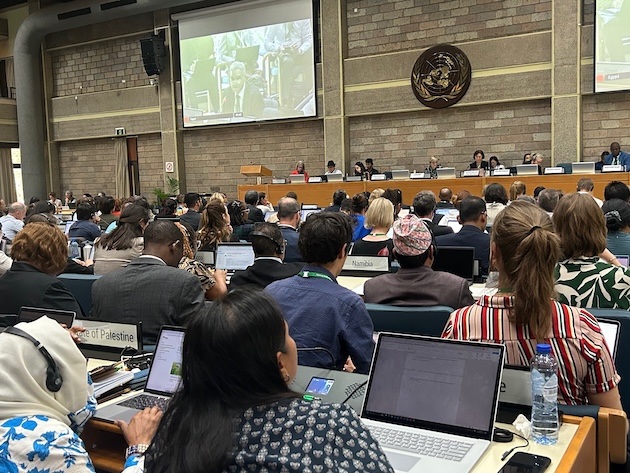
The United Nations Office at Nairobi is hosting the 2024 United Nations Civil Society Conference on May 9 and 10, under the theme Shaping a Future of Global and Sustainable Progress. Credit: Joyce Chimbi/IPS

The United Nations Office at Nairobi is hosting the 2024 United Nations Civil Society Conference on May 9 and 10, under the theme Shaping a Future of Global and Sustainable Progress. Credit: Joyce Chimbi/IPS

NAIROBI, May 9 2024 (IPS) – The world is neither on track to meet the Sustainable Development Goals (SDGs) nor is it leveraging emerging opportunities to effectively address global concerns such as extreme hunger, poverty, conflict, and climate change. Global concerns have outpaced existing structures for international cooperation and coping.


To forge a global perspective, the United Nations Office in Nairobi is currently hosting the 2024 United Nations Civil Society Conference under the theme Shaping a Future of Global and Sustainable Progress. Bringing together more than 2,000 participants from civil society organizations, academic institutions, think tanks, member states, private sector companies, UN entities, change-makers, and other relevant stakeholders from across the globe.

“That civil society engagement remains a critical cog in the wheel of development is well established. Greater collaboration between civil society organizations, governments, and the private sector can therefore not be more urgent at this time as we gear up for the Summit of the Future,” says Carole Ageng’o, Global Initiatives Lead & Africa Regional Representative at HelpAge International.

Indeed, civil society participation will contribute greatly towards meeting the aspiration of an international system that is better prepared to manage the challenges we face now and, in the future, for the sake of all humanity and for future generations.”

Since 1947, sixty-eight civil society conferences have resulted in successful outcomes due to previous interactions with civil society organizations. The ongoing conference is the premier event on the civil society calendar at the United Nations and the first of the UN’s civil society conferences to be held in Africa.

Born in Zimbabwe and currently working in South Africa as a human rights defender, Constance Mukarati told IPS that the role of civil society organizations and, more so, human rights defenders cannot be overstated towards ensuring that no one is left behind.

“For us, SDG 5 is really SDG 1. As a matter of urgency, women and girls everywhere must have equal rights and opportunities. We are still in an era where girl child education is not a priority and a gathering such as this is an opportunity for a revolution in how we think about issues of national and global concern, how we talk about these issues, who is in the room and how we execute and implement commitments towards sustainable development,” says Mukarati from the African Initiative of Women Human Rights Defenders.

The ongoing gathering of civil society and other stakeholders is on track to provide preliminary discussions and data ahead of the world’s leaders’ Summit of the Future on September 22–23, 2024, at the UN Headquarters in New York. The Summit is part of a monumental effort to reset global cooperation towards accelerating efforts to meet our existing international commitments and take concrete steps to respond to emerging challenges and opportunities.

Ultimately, the Summit of the Future is about rethinking what multilateralism means in a world characterized by plummeting levels of trust in public institutions, glaring wealth inequalities, and a majority of the world’s population in underdeveloped and developing nations being left furthest behind, falling deeper into extreme hunger and poverty. To address global concerns, the Summit will produce three international frameworks: the Pact for the Future (available as a zero draft), the Global Digital Compact, and the Declaration on Future Generations.

“It is highly urgent that the UN systems relook and redesign how they engage its global citizenry so that the citizens can in turn engage the UN more effectively. This is what is needed to bring the SDGs back on track. What are people saying about the multiple challenges they face today? There is a feeling within the civil society movement that governments’ voices are prioritized within the UN system. This engagement is unique and highly relevant for our voices as activists and human rights defenders, which will inform and influence the direction that the Summit of the Future takes,” Eric Omondi, a Nairobi-based activist, told IPS.

This is a historic gathering aimed at galvanizing collaboration and reinforcing civil society organizations engagement in sustainable development. “We recognize that our generation stands at a critical junction where every action we take can significantly shape the future of our shared planet,” said Florence Syevuo, Executive Director, SDG Kenya Forum, and Co-Chair, Coalition for the UN We Need, Nairobi.

She stressed that the need to recognize the urgency of addressing global concerns such as climate change has never been more tangible as the effects of human interactions with nature become even more evident, underpinning why the outcome of the conference matters to all.

The Civil Society Conference and the Summit of the Future are critical platforms for deepening the engagement of citizens in international cooperation. As a prelude to the Summit of the Future, the Civil Society Conference features in-depth dialogues, a variety of workshops, and exhibits centered on three main objectives: inclusivity, impact, and innovation.

Inclusivity helps broaden the scope of discourse on global issues by enhancing the visibility and impact of diverse voices. On impact, participants are shaping global multi-stakeholder coalitions to advocate for and push the key issues that will be the outcome of the September Summit of the Future. On innovation, the two-day gathering is redefining the interaction between civil society and intergovernmental processes, showcasing a new model of collaboration that spans generations and sectors.

“The inclusion of youths and young voices in the SDG processes and other related commitments must become a priority. I recently completed my studies in law at Kampala International University and I intend to use my legal knowledge to amplify the most pressing problems facing young people in the global south and the communities in which they live,” Kiconco Shallom Esther, a youth participant from Uganda, told IPS.

As the curtain fell on the first day of the landmark civil society conference, there was consensus around the need to promote civil society’s insights and initiatives to bolster the Member State-led Summit of the Future process. Further emphasizing that a reinvigorated, organized civil society group can more effectively hold governments and powers accountable for progress towards a just, fair, and equitable shared future.

IPS UN Bureau Report


Lao PDR Lawmakers Meet to Further ICPD25 Programme of Action

Conferences, Development & Aid, Featured, Gender, Gender Violence, Headlines, Population, Sustainable Development Goals

Population

Delegates at the workshop on Harnessing Demographic Dividend through the Roadmap to 2030 for Lao PDR. Credit: APDA

Delegates at the workshop on Harnessing Demographic Dividend through the Roadmap to 2030 for Lao PDR. Credit: APDA

VIENTIANE, Apr 29 2024 (IPS) – A recent workshop of lawmakers heard that targeted interventions would be necessary to meet the International Conference on Population and Development (ICPD), its Programme of Action (PoA), and Lao PDR’s national commitments to ICPD25 at the Nairobi Summit 2019.


The Workshop on Harnessing Demographic Dividend through the Roadmap to 2030 for Lao PDR aimed to equip parliamentarians with the knowledge and strategies necessary to address the critical population and development challenges confronting Lao PDR.

Thoummaly Vongphachanh, MP and Chair of Social and Cultural Affairs Committees, National Assembly, told the workshop in her opening address that collective action was important for tackling population and development challenges.

Edcel Lagman, MP Philippines and acting Chair of AFPPD, addressed the ICPD’s emphasis on individual rights, gender equality, and the correlation between development and women’s empowerment. With this in mind, he urged parliamentarians to enact rights-based policies that promote gender equality and social justice, incorporating population dynamics into development planning.

UNFPA Representative to Lao PDR, Dr Bakhtiyor Kadyrov, reiterated the organization’s commitment to supporting parliamentarians and government initiatives in addressing population and development challenges, emphasizing the importance of inclusive policies and partnerships to ensure no one is left behind.

A representative of DoP/MPI, Kaluna Nanthavongduangsy, provided an overall overview of the ICPD and its POA, along with Lao PDR’s national commitments to ICPD25, at the Nairobi Summit 2019. He said its commitment was based on five pillars.

  • Managing and using demographic benefits and investing in youth.
  • Addressing climate change and its impact on the public sector and social protection.
  • Promoting health and well-being, including rights to sexual and reproductive health.
  • Enhancing the availability and use of demographic information.
  • Strengthening partnerships and mobilizing resources.

Latdavanh Songvilay, Director General of the Macroeconomic Research Institute, Lao Academy of Social and Economic Sciences, outlined various challenges hindering the realization of the demographic dividend in Lao PDR. These challenges may include barriers to education and employment, inadequate healthcare infrastructure, and socio-cultural factors impacting women’s empowerment and reproductive health.

Her presentation offered valuable insights into the complex interplay between demographic changes, socio-economic development, and policy formulation in Lao PDR. By identifying opportunities and addressing challenges, her analysis was crucial for the parliamentarians to make informed decisions and identify targeted interventions that could maximize the benefits of the demographic transition.

The Lao’s Family Welfare Promotion Association’s Executive Director, Dr Souphon Sayavong, emphasized the importance of comprehensive approaches that combine legal frameworks, law enforcement, survivor support services, and community engagement to combat SGBV effectively.

He also noted that harmful practices, such as child marriage and other forms of gender-based violence, needed targeted interventions to raise awareness, provide support to survivors, and change social norms that perpetuate harmful practices.

Sayavong also said that there were socio-economic consequences of gender inequality and SGBV, emphasizing their detrimental effects on individual well-being, community development, and national progress.

Dr Mayfong Mayxay, Member of Parliament and Vice-Rector of the University of Health Sciences, Ministry of Health, Lao PDR, said it was crucial to identify and tackle the various problems encountered by young people, including drug addiction, school dropout, early marriage, adolescent pregnancy, and inadequate nutrition during pregnancy.

He said additional issues like substance abuse, smoking, and alcohol consumption needed targeted interventions, including prevention programmes and awareness campaigns. School dropout issues were often socioeconomic, so it was important to find strategies including scholarships, vocational training opportunities, and community-based support systems to ensure that young people can access education and pursue their aspirations.

During his presentation, he highlighted the risks associated with early marriage and adolescent pregnancies, which pose significant health risks for both mothers and children.

Mayxay emphasized the importance of comprehensive sexual education, access to reproductive health services, and legal reforms to address these issues and protect the rights of young girls.

He underscored the importance of promoting maternal and child health, including the need for nutritional education, prenatal care services, and support systems to address malnutrition and its adverse effects on maternal and child health outcomes.

Solutions he suggested involved holistic approaches encompassing education, healthcare, community support, and policy reforms, to empower young people and ensure their health and well-being.

Dr Usmonov Farrukh, interim Executive Director of AFPPD, reiterated AFPPD’s commitment to supporting parliamentarians’ advocacy on population and development in the Asia-Pacific in his closing speech, emphasizing collective action and partnership.

Vongphachanh’s closing remarks summed up the priorities agreed to in the meeting of the 14 National Commitments at the first National Conference on Population and Development, Demographic Change, held in 2023. She said opportunities, challenges, and policy levers to achieve demographic dividends, women’s empowerment and prevention and response to GBV and harmful practices, commitment to their programme of Family Planning 2030, and the health and future of the young population, particularly the resolutions for social issues they are facing such as drug use, school dropout, early marriage, and adolescent pregnancy, were crucial.

Note: This workshop was supported by AFPPD and APDA, the UNFPA, and the Japan Trust Fund.


Harnessing Science-Policy Collaboration: The Vital Role of IPBES Stakeholders in Achieving Global Nature Targets

Biodiversity, Conferences, Editors’ Choice, Environment, Featured, Global, Headlines, Indigenous Rights, Natural Resources, Sustainability, TerraViva United Nations

Opinion

Dr. Anne Larigauderie, IPBES Executive Secretary

Dr. Anne Larigauderie, IPBES Executive Secretary

BONN, Germany, Apr 26 2024 (IPS) – In December 2022, the fifteenth meeting of the Conference of the Parties to the Convention on Biological Diversity (CBD) saw governments worldwide unite behind a set of ambitious targets aimed at addressing biodiversity loss and restoring natural ecosystems, through the Global Biodiversity Framework – known now as the Biodiversity Plan.


As the world gears up to meet these critical commitments for people and nature, success depends very directly on the concrete choices and actions of people from every region, across all disciplines and at every level of decision-making. In this collaborative effort, non-governmental stakeholders of the Intergovernmental Platform on Biodiversity and Ecosystem Services (IPBES) are vital actors, in addition to the 146 Governments who are members of IPBES.

But who are IPBES stakeholders? Any individual or organization that can benefit from or contribute to the science-policy work of IPBES is an IPBES stakeholder. They include individual scientists, knowledge-holders, experts and practitioners, as well as institutions, organizations, and groups operating within and beyond the fields of biodiversity and nature’s contributions to people.

There are two main self-organized groups of IPBES stakeholders: ONet and IIFBES. ONet provides a broad space for individuals and organizations to exchange knowledge, align actions and deepen engagement with the work of IPBES—with subgroups from the social sciences, young career researchers and many more. IIFBES is a network to bring together the expertise, perspectives and interests of Indigenous Peoples and local communities interested in IPBES’s work. Both of these ‘umbrella’ groups are instrumental in amplifying diverse voices, knowledge systems, and experience, to strengthen science-policy for biodiversity and nature’s contributions to people. This is important not only in support of IPBES, but also to the success of the Biodiversity Plan.

IPBES stakeholders contribute to the achievement of the Biodiversity Plan in three distinct ways. Firstly, they fortify the scientific foundations underpinning policies to protect biodiversity and nature’s contributions to people. Their expertise, channeled into the IPBES assessments, was instrumental in shaping the targets and indicators of the Biodiversity Plan. IPBES stakeholders will also continue to play a central role in ensuring that the actions to meet these targets are grounded in robust scientific knowledge and evidence.

Secondly, IPBES stakeholders are equipped with the resources and tools provided by IPBES: including Assessment Reports and their summaries for policymakers, to advocate for and effect change. These resources offer invaluable insights into national, regional, and global thematic issues. When considered by decision-makers, they become catalysts for evidence-based policies. Effective dissemination and uptake of these resources are paramount in translating global targets into tangible, on-the-ground initiatives that address local challenges. Consequently, stakeholders can make a substantial contribution by widely disseminating IPBES products and providing information for their effective use.

Thirdly, IPBES stakeholders have a tremendous opportunity to engage in the international forums where policy decisions are explored and made. Their active involvement and participation in decision-making bodies within these forums, coupled with their own extensive networks, foster the exchange of knowledge and resources. Collaborations forged in these settings bridge the gap between science and policy. Many IPBES stakeholders are active participants in the CBD processes, for instance, facilitating the exchange of information between these two bodies and thereby driving the Biodiversity Plan’s effective implementation.

Only through collective action and close collaboration between international institutions, policy actors, scientists, local and Indigenous communities, and other relevant stakeholders can we seamlessly translate science into policy and practice, ultimately achieving the goals of the Biodiversity Plan. This is why more individuals and organizations should seize the opportunity to become active IPBES stakeholders. Joining the IPBES community is not only a commitment to a sustainable future for people and nature but is also a positive response to the pressing global biodiversity crisis.

Dr. Anne Larigauderie is the Executive Secretary of IPBES (www.ipbes.net) – the Intergovernmental Science-Policy Platform on Biodiversity and Ecosystem Services, which provides objective scientific assessments about the state of knowledge regarding the planet’s biodiversity, ecosystems and the contributions they make to people, as well as options and actions to protect and sustainably use these vital natural assets.

IPS UN Bureau


Africa Pushing Limits To Boost Renewable Energy Supply Chain, Security

Africa, Climate Action, Climate Change, Conferences, COP28, Development & Aid, Editors’ Choice, Energy, Environment, Featured, Global, Headlines, Sustainable Development Goals, TerraViva United Nations

Energy

Dr. Amani Abou-Zeid is the current African Union (AU) commissioner for Energy and Infrastructure. She believes that cross-border approaches are critical for clean energy affordability. Credit: Aimable Twahirwa/IPS

Dr. Amani Abou-Zeid is the current African Union (AU) commissioner for Energy and Infrastructure. She believes that cross-border approaches are critical for clean energy affordability. Credit: Aimable Twahirwa/IPS

ABU DHABI, Apr 17 2024 (IPS) – Investors, regulators, researchers, policymakers, and representatives of renewable energy companies, acknowledged the key challenges of shifting away from fossil fuels to renewable energy in Africa when they gathered in Abu Dhabi, United Arab Emirates (UAE) this week.


The latest estimates by the African Development Bank show that Africa’s energy potential, especially renewable energy, is enormous, yet only a fraction of it is currently employed. Official projections indicate that the demand for energy could also be around 30 percent higher than it is today over the next decade on the continent. 

Francesco La Camera, the Director-General of the International Renewable Energy Agency (IRENA) stated that the energy transition is accelerating rapidly, but it clearly remains off track, with an unacceptable uneven distribution of renewable growth that still disproportionately affects the Global South.

“African governments and other stakeholders should adopt innovative solutions to overcome pressing challenges and achieve the energy transition,” La Camera told IPS in an interview.

According to him, there is opportunity [for the continent] to prioritize and narrow down collective actions to overcome the structural and systemic barriers that are impeding progress.

In Africa, experts believe that there are multiple dimensions to energy poverty, which is associated especially with the lack of clear plans and a clear understanding of what the continent wants to achieve.

“Electricity remains the backbone of Africa’s new energy systems, powered increasingly by renewables but a large part of the continent is still left out of the energy transition,” said Bruce Douglas, the Chief Executive Officer at the Global Renewables Alliance, one of the global coalitions of leading industry players committed to accelerating the global transition to renewable energy.

Yet several new commitments were made at the latest UN Climate Change Conference (COP 28) that took place in Dubai, UAE, last year, giving further momentum to the energy transition. Experts are now exploring priorities for the energy transition and immediate steps to ensure that current policies on the continent are improved to encourage greater deployment of renewables.

The latest estimates show that, with Africa accounting for around 39 percent of the world’s renewable energy potential, several renewable energy milestones can be achieved.

“Private and public investment is critical to tackling the multiple dimensions of today’s energy crisis on the continent but to ensure energy security, diversification of various sources is also essential,” Douglas told IPS.

Africa, for example, has abundant hydro, solar, wind, geothermal, hydrogen, and bioenergy resources, but still, the continent’s current energy generation mix continues to rely on fossil fuels, while renewable sources account for nearly 18 percent of the electricity output, it said.

Whereas countries committed on the sidelines of last year’s UN Climate Change Conference to accelerate progress towards tripling renewable power capacity globally to at least 11 terawatts (TW) by 2030, some experts believe that this is still not a long-term solution as more than half of the population still lacks access to electricity.

Amani Abou-Zeid, the Commissioner for Infrastructure and Energy of the African Union Commission (AUC) told IPS that a cross-border approach is critical for participating countries in the transition to clean energy affordability.

“Some countries in Africa have embarked on cross-border projects on clean energies but much more effort is needed to develop really sustainable transitions and adequate instruments,” she said.

The Africa Continental Power System Masterplan, a blueprint currently being developed by the African Union Development Agency (AUDA-NEPAD), highlights some key strategies for countries across the continent to identify key components at national and regional levels that will enable the creation of a smart power systems master plan that promotes access to clean, affordable, reliable, and sustainable electricity supplies across the continent by 2040.

Adja Gueye, Director of Promotion and Cooperation at the National Agency for Renewable Energies in Senegal points out that overall, African countries need appropriate plans at the policy level to overcome some key hurdles on the path to clean energies.

“To facilitate this transition, it would be appropriate for African countries to revise their regulatory framework and move towards harmonization, since the continent needs to improve regional and cross-border electricity interconnections,” she told IPS

Both Gueye and Abou-Zeid are convinced that without infrastructure and appropriate green energies policies and strategies at national and regional levels, it is challenging and impossible to buy and sell electricity across borders.

“Top-down governmental policies and long-term plans on clean energies in Africa are essential,” Abou-Zeid said of the current strategy to establish a long-term continent-wide planning process for power generation and transmission involving all five African power pools.

These include the Central African Power Pool (CAPP), East African Power Pool (EAPP), Northern African power Pool (COMELEC), Southern African Power Pool (SAPP) and Western African Power Pool (WAPP).

Dr. Jimmy Gasore, Rwanda’s Minister of Infrastructure, who is also the current chair of the International Renewable Energy Agency (IRENA) points out that Africa’s climate goals necessitate collective recognition that the energy transition is not just about technological change but also about ensuring equity and justice.

“We need to ensure that the benefits of the energy transition are universally accessible, prioritizing the needs of the most marginalized communities,” he said.

To optimize and diversify green energies on the continent, some experts also stress the importance of encouraging effective cooperation between the private and public sectors in renewable energy and energy efficiency projects.

“To prepare for the current transition to renewable energy, partnerships are essential,” said Gueye of the National Agency for Renewable Energies in Senegal, one of the few dedicated national agencies dealing with clean energies in Africa.

IPS UN Bureau Report


Air Quality Sensors Boosting Nairobi’s Fight Against Air Pollution

Africa, Climate Action, Conferences, Development & Aid, Environment, Featured, Headlines, Health, Sustainable Development Goals, TerraViva United Nations

Environment

A mother and her children are seen wading through a cloud of smoke at the Dandora dumpsite, Kenya's largest open landfill. Smoke emanating from the dumpsite is cited as a contributor to air pollution in Nairobi. Credit: Jackson Okata/IPS

A mother and her children are seen wading through a cloud of smoke at the Dandora dumpsite, Kenya’s largest open landfill. Smoke emanating from the dumpsite is cited as a contributor to air pollution in Nairobi. Credit: Jackson Okata/IPS

NAIROBI, Feb 29 2024 (IPS) – Deborah Adhiambo (43) has been battling mild asthma since 2022, a condition she describes as “both a health and economic burden.’’ The mother of three lives within Dandora Estate, nine miles east of Kenya’s capital, Nairobi. Dandora is home to Kenya’s largest open landfill, which receives more than 2,000 metric tonnes of waste daily.

For five years, Adhiambo operated a makeshift restaurant near the dumpsite, where her main clients were waste pickers working within its environs.

“Working near the dumpsite exposed me to the heavy smoke that billows from the dumpsite. I started developing chest pains gradually and would take painkillers to subdue the pain. It was later that I was diagnosed with asthma,’’ Adhiambo told IPS.

Adhiambo’s doctors told her that prolonged and constant exposure to toxic fumes was the root cause of her asthma. She was forced to close her business since she could not venture out of her house early in the morning, late in the evenings or during cold seasons.

“The closure of my business due to sickness crippled me economically as it was my only source of income. Getting medication and feeding my family has been hard because now I have to rely on my husband, who also works at the dumpsite,” she says.

Nairobi’s Air Quality

More than 70 percent of Nairobi’s 5.3 million residents live in informal settlements like Dandora, which analysts say have the worst air quality, with vulnerable populations, particularly women and children, bearing the brunt of polluted air. Vehicles, open burning of waste, and industrial emissions are cited as the major sources of air pollutants in Nairobi. Motor vehicles contribute an estimated 40 percent of Nairobi’s particulate matter (PM2.5) air pollution concentrations, with illegal dumping and open waste burning contributing 25 percent.

And as both the population and economic output of Kenya’s capital keep expanding, the demand for energy from fossil fuels is also on the rise. The rapid expansion of Nairobi has taken an environmental toll on the city, which is evident in the worsening air pollution levels.  Air pollution in Kenya’s capital is 4.2 times higher than the World Health Organization’s (WHO) recommended average annual concentration levels.

According to the World Health Organization, Nairobi’s air pollution is 2.4 times higher than recommended levels, with 19,000 poor air quality deaths being reported in Kenya annually.

Air photo 1- A technician installs a low-cost air quality monitor sensor in Nairobi, Kenya. Air quality monitors are helping Nairobi collect data on air pollution. Credit: Jackson Okata/IPS

A technician installs a low-cost air quality monitor sensor in Nairobi, Kenya. Air quality monitors are helping Nairobi collect data on air pollution. Credit: Jackson Okata/IPS

Tech and Data

To enhance her efforts in combating air pollution, the City of Nairobi has been incorporating the use of technology. The city management has been installing low-cost air quality monitors and sensors to gather and share data on the levels of air pollution trends across the city. The data collected is then analyzed and guided in the formulation of policies and legal frameworks to combat air pollution, even as East Africa’s economic giant works towards realizing her ambitious target of becoming a net-zero green city by 2030.

Dubbed AirQo monitors, the low-cost air quality sensors developed by a team of young engineering and computer science students at Uganda’s Makerere University are in use in eight countries, including Kenya.

Engineer Bainomugisha, an Associate Professor of Computer Science at Makerere University and lead developer of the AirQo monitoring system, says Sub-Saharan Africa lacks usable air quality data that can help in the formulation of proper and effective policies to combat air pollution. AirQo monitors collect information about air pollution levels, types of air pollutants, and air quality

Bainomugisha explains that the air quality monitors main aim is to “close the existing gap in air quality monitoring.” AirQo air quality monitors collect air samples, which are then analyzed through a light scattering technology that quantifies the particulate matter concentration.

The information is then relayed to a cloud-based network that determines the pollution levels in a specific area. The devices measure the air particulate matter PM2.5 and PM10, which is a mixture of solid particles in the air. They also capture ambient meteorological conditions such as humidity and atmospheric pressure

“The air quality monitors run on a 2G GSM-enabled network configuration for loT sim cards and are optimized to work in areas with unstable internet and power connectivity,” says Gideon Lubisia, AirQo’s international operations embedded systems and network support engineer.

AirQo has also developed a mobile app that allows people to receive periodic and real-time updates on the air quality in their city.  The monitors are mounted at strategic points within the city’s Central Business District, industrial areas, markets, along major city highways and in select residential areas. while others are mounted on motorbikes that move from one location to another, collecting data.

Data and Policy Formulation

With the monitors in place, Nairobi City has been able to develop two air quality collocation installations and infrastructure reference grade monitors, according to Nairobi City County Deputy Director in Charge of Air Quality and Climate Maurice Kavai.

“The one-stop center collocation enables our research teams to compare air quality data collected from various points within the city, which is key in developing appropriate action,” Kivai explained.

“The availability of periodic data collected by the monitors enables the city to establish the extent of pollution in particular areas, identify the causes, and develop necessary actions,” he said.

Through air quality data collected through the monitors and establishing the extent of air pollution in the city, Nairobi has been able to develop a city Air Quality Action Plan as well as enact the Nairobi City County Air Quality Act which have become critical policy and legal assets in tackling the problem of air pollution.

AirQo monitors are now in use within select cities in eight African countries, including Uganda, Kenya, Nigeria, Cameroon, Burundi, Ghana, Mozambique, and Senegal.

Global Push for Clean Air

During the Climate and Clean Air Conference(CCAC) 2024 in Nairobi between February 21 and 23, 2024, ahead of the sixth session of the UN Environment Assembly (UNEA-6), member states and partners launched a Clean Air Flagship effort to provide, among other things, data-led policy action towards combating air pollution

Inger Andersen, UNEP’s Executive Director, said, “We need to push harder on superpollutants. Just as you need a superhero to defeat a supervillain, we need super solutions to face down super pollutants. And we need you to mastermind these solutions.”

Speaking on the sidelines of the CCAC, Kenyan environmentalist Elizabeth Wathuti observed that “the very essence of life starts with a breath, a gasp of air that signifies the beginning of our journey on this Earth. Yet, for too many across our globe, this fundamental act of breathing has become a hazard, a risk, and a gamble against the odds of pollution and climate-induced adversities.” According to Wathuti, the commitment to clean air and a stable climate is not just an environmental cause but a fight for the very right to life.

The World Health Organization estimates that 99 percent of the world’s population lives in places with poor air quality, leading to nearly seven million premature deaths per year, primarily in low- and middle-income countries.

According to UNEP, in Africa alone, ambient air pollution caused an estimated 400,000 premature deaths in 2019, while indoor air pollution caused more than one million premature deaths in the same year. Some of the leading air pollution-related ailments that contribute to these premature deaths include pneumonia, heart disease, stroke, diabetes, chronic lung disease, and lung cancer. Ambient air pollution and household air pollution are associated with 6.7 million premature deaths annually.

IPS UN Bureau Report


Landlocked Developing Countries Conference to Address Development

Conferences, Development & Aid, Economy & Trade, Global, Headlines, Sustainable Development Goals, TerraViva United Nations, Trade & Investment

Conferences

Third UN Conference of Landlocked Developing Countries will be an opportunity to address the issues these countries face.

Third UN Conference of Landlocked Developing Countries will be an opportunity to address the issues these countries face.

UNITED NATIONS, Feb 6 2024 (IPS) – Landlocked developing countries need greater support from the international community so that they are no longer left behind when it comes to progressing with the SDGs, says the UN High Representative of the Least Developed Countries.


The Third UN Conference of Landlocked Developing Countries (LLDC3) is set to be hosted in Kigali, Rwanda, in June. A preparatory committee for the conference has been established and convened its first meeting on Monday. 

The overarching theme of the conference, “Driving Progress through Partnerships,” is expected to highlight the importance of support from the global community in enabling LLDCs to meet their potential and achieve the SDGs. The conference invites the participation of multiple stakeholders, including heads of state and government, the private sector, and civil society. Several senior leaders in the UN system, including Secretary-General António Guterres, are expected to attend the LLDC3 Conference.

Thirty-two countries are classified as LLDCs, 17 of which are also classified as Least Developed Countries (LDCs). Sixteen are in Africa, and the remaining are located across Asia, Europe, and South America. This year will mark the first time that the LLDC Conference will be hosted in Africa.

Rabab Fatima, Under Secretary-General and High Representative of the Office for the Least Developed Countries, and the Secretary-General of the LLDC3 Conference, remarked that this conference would be a “once-in-a-decade opportunity” for the global community to address the needs of the LLDCs in order to “ensure that nobody is left behind.”

“The 32 landlocked developing countries are grappling with unique challenges due to their geographical and structural constraints and lack of integration into world trade and global value chains. Their situation has been further exacerbated by the lingering effects of the pandemic, climate change, and conflict,” she said.

The lack of direct access to coastal ports means that LLDCs rely on transit countries to connect them with international markets. This can lead to high trade costs and delays in the movement of goods. In other cases, many of the LLDCs’ transit neighbors are also developing countries with their own economic challenges. According to Fatima, the average cargo travel time for LLDCs was twelve days, compared to seven days for transit countries.

As a result of the slow progress in development, twenty-eight percent of people in LLDCs live in poverty. At least a third of the people are at a high risk of or already live with some form of debt distress, and fifty-eight percent of people deal with moderate to severe food insecurity.

Enkhbold Vorshilov, Permanent Representative of Mongolia to the UN, noted that the conference would be a “critical juncture” for the LLDCs. He also serves as the co-chair of the preparatory committee along with the Permanent Representative of Austria. He added, “Despite our varied cultural and economic structures, we share common challenges that impede our development and economic growth.”

The Preparatory Committee will negotiate the details of the conference’s outcome document, which has been prepared to “encapsulate the challenges and aspirations of the LLDCs,” according to Gladys Mokhawa, Permanent Representative for Botswana and the Chair of the Global Group of Landlocked Developing Countries. Mokhawa expressed that the document has so far received general support from member states and that the final draft would be comprehensive and committed to addressing the challenges that LLDCs face “that align with their specific needs and aspirations.”

“A vision is clear: to transform the geographical challenges and to ensure that our landlocked status is nothing more than a detail of geography,” she said. “We believe that our collective efforts can and will make a difference.”

“Our goal is not merely to draft a document but to build positive, genuine partnerships that will empower landlocked developing countries to overcome their challenges and achieve sustainable prosperity,” said Vorshilov. He added that, along with support from neighboring transit countries, cooperation from development partners and financial institutions would be important to mobilize the resources needed to support the LLDCs.

The document is intended to serve as a guideline for the LLDCs for the next decade and will touch on several areas of interest. In addition to addressing transport and trade, it will focus on emerging issues, such as science, technology, and innovation, and improving capacity and resilience against issues arising from climate change.

Earlier meetings, including the first meeting of the committee, have seen delegations express solidarity with the LLDCs and support for the agenda of the upcoming conference. Ambassador Stavros Lambrinidis, Permanent Representative of the European Union Delegation to the UN, stated that the development challenges call for “more efficient allocation of financial resources on the path toward the SDGs” and that an “essential element” of their partnership would be the development of connections and transport corridors for the benefit of all peoples.

Speaking on behalf of the Africa Group, Ambassador Marc Hermanne Araba of Benin noted that Africa has faced the brunt of the challenges faced by the LLDCs and their neighboring transit countries. He added that the present moment was an opportunity to “chart a transformative agenda for the LLDCs,” and therefore it is important for the global community to reaffirm its’ commitment to address the LLDCs’ challenges together to “ensure that these countries are not left behind.”.

Fatima welcomed the media as a “key partner,” through which the voices of LLDCs would have a platform, and to bridge the gap between the conference and those communities who will be most affected by the outcomes by sharing their perspectives.

IPS UN Bureau Report