The Business of Social Enterprise

Active Citizens, Asia-Pacific, Civil Society, Conferences, Development & Aid, Economy & Trade, Featured, Global, Headlines, Human Rights, Poverty & SDGs, Regional Categories, TerraViva United Nations
Human Rights

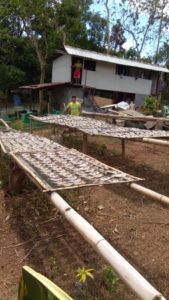
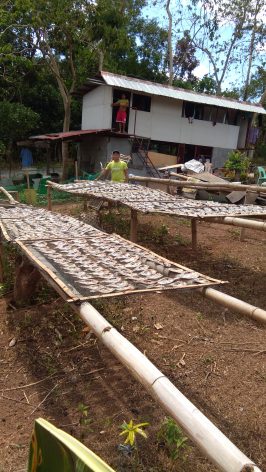
Ariel Lazarte of the Coalition of Leprosy Advocates of the Philippines (CLAP) shows off the dried fish production run by patients of a transient house operated by HD (Hope & Dignity) Philippines. Courtesy: Ariel Lazarte

MANILA, Sep 8 2019 (IPS) – Organisations supporting people affected by Hansen’s disease (leprosy) have social rather than capitalist aims, but they need to take a business-minded approach to their work if they wish to be sustainable, experts at a global conference in Manila, Philippines said.


In workshops conducted at the Global Forum of People’s Organisations on Hansen’s Disease in Manila on Saturday and Sunday, Sept. 7 and 8, representatives of organisations from Asia, Africa, and Latin America agreed that sustainability is the biggest challenge they face.

Every organisation faces some uncertainty over the continuity of donor or government financial support, so reducing or eliminating reliance on external funding is considered a critical priority.

Japan’s The Nippon Foundation (TNF) and Sasakawa Health Foundation (SHF), which sponsored the global forum and provided capacity support to the participating organisations, have long taken the view that sustainability should be the ultimate goal.

At a regional conference of people’s organisations held here in March, SHF Executive Director Dr. Takahiro Nanri stressed that his foundation’s goal was to see its beneficiaries become self-supporting. “In order to be truly sustainable, the organisation needs to develop an income-generating programme,” Nanri said at the time.
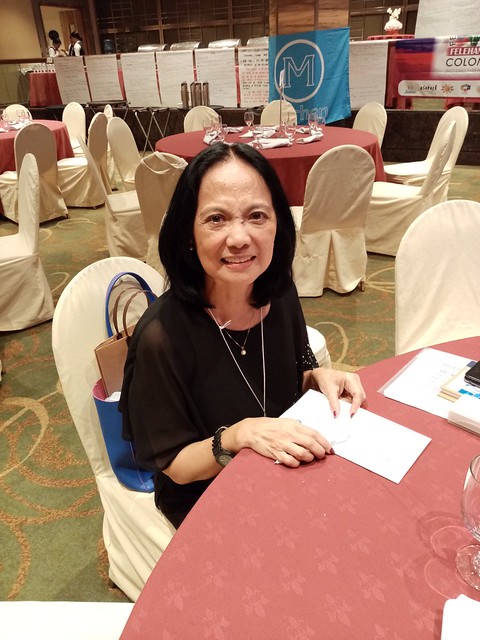
Dr. Marie Lisa Dacanay president of the Institute for Social Entrepreneurship in Asia (ISEA) outlined the fundamentals of effective social enterprises, which were derived from research conducted by ISEA in India, Indonesia, Bangladesh and the Philippines. Credit: Ben Kritz/IPS

Fundamentals of social enterprises

On Sunday Sept. 8, Dr. Marie Lisa Dacanay president of the Institute for Social Entrepreneurship in Asia (ISEA) outlined the fundamentals of effective social enterprises, which were derived from research conducted by the institute in India, Indonesia, Bangladesh and the Philippines.

Social enterprises have three common traits, Dacanay explained:

  • They are driven by a social mission instead of an enterprise mission;
  • Successful social enterprises are wealth-creating organisations that provide some form of marketable products or services; and
  • They follow a distributive enterprise philosophy in that profits are directed towards the social mission rather than being collected as return on investment.

In carrying out its mission, a social enterprise faces a number of external and internal challenges, Dacanay said.

External pressures come in the form of climate or environmental factors – a significant concern of agriculture-based enterprises; unfavourable government policies; harmful industry or market practises; inadequate government support for social programs; and institutional corruption.

Internal challenges include difficulty in accessing needed technology; securing initial financing; organisational and management capacity; production efficiency; and developing practical measures of the enterprise’s social impact.

Based on ISEA’s research, successful social enterprises can be organised following an entrepreneur non-profit model, a social cooperative model, a social business model, or what she described as “social entrepreneurship intervention,” which is a hybrid combining characteristics of all three models.
In determining which form of organisation is most suitable to the social mission, Dacanay told IPS, “I think everything starts with the reality. Every social entrepreneur starts with, ‘what are the needs, and the problem?’”

“The first step is really understanding the stakeholders you want to help,” Dacanay continued, “find out what they are doing already, and look at what gaps there are. That, along with the resources and capabilities available, define a way of moving forward, and then the organisational form will follow.”

Social business is still business

In the Saturday workshop, Earl Parreno, the chairman of the Philippines’ Altertrade Foundation, Inc. (ATFI) conducted a training in business planning basics for the assembled people’s organisations.

Defining a social enterprise as one that pursues a triple bottom line philosophy (financial, social, and environmental results), Parreno explained that the fundamentals of business planning must still be applied, but that organisations that are made up of people who are both the providers and beneficiaries of a social mission are often handicapped by a complete lack of capacity.

“Poverty is not just lack of financial resources,” Parreno told the workshop participants in his presentation, “It’s really incapability, a lack of knowledge.”

Developing the capabilities can be an arduous process, but is achievable. One of ATFI’s areas of focus in the Philippines is among poor farmworkers in Negros Province, a centre for sugar production. Parreno described the success of the social enterprise supported by ATFI in marketing Muscovado sugar – semi-raw sugar that was at one time considered “poor man’s sugar,” but is now a premium-priced staple in organic food stores.

“The business ideation is really critical,” Parreno explained to IPS. “We have a saying here in the Philippines: gaya-gaya puta maya, which means something like ‘copycat.’” A common problem among new social enterprises, Parreno said, is a lack of originality in the revenue-generating product or service they wish to pursue.

“What we stress to our social enterprise partners is that they should not conceive a product or service that’s just better, but one that is truly different and has a ‘solidarity market,’” Parreno said, such as the market of “mindful consumers” for organic Muscovado sugar discovered by the Negros sugar farmers. “That solidarity market is so important. It really gives the people’s organisation a fighting chance.”

According to Parreno, developing a sound business plan, from business ideation through resource mapping, feasibility study, and market analysis answers one of the key concerns expressed by many of the forum participants in the post-workshop discussion: The difficulty in securing initial funding to launch a social enterprise.

“The only difference between this kind of (social) business and a conventional business is where the profits go,” Parreno explained. “The discipline and the steps that need to be taken to develop it are very much the same, and if the result is a good business plan, the investors to get it off the ground will follow.”

A poultry and dried fish production project located in Baras, Rizal Province, east of the Philippine capital, employs about 10 people, all residents of a transient house for leprosy patients. It is a good example of a social enterprise that has proved successful.

Ariel Lazarte, a member of Coalition of Leprosy Advocates of the Philippines (CLAP) who runs the social enterprise, told IPS that sales have been good enough that his out-of-pocket expenses have been fully covered by the revenue, as well as providing much-needed funding for the transient house residents.
The social enterprise, part of HD (Hope and Dignity) Philippines, a non-profit managed by Lazarte, makes about 560 dollars a month.

Half of this is ploughed back into the social enterprise and the remainder is used to pay for the living expenses of the patients, including paying for medicines, transport, food, water, and vitamins.
“The only outside funding we had was for [the pen for the chickens],” Lazarte told IPS, noting that the Tikkun Olam Foundation, which supports Hansen’s disease in the country, provided the funding for this.

“The residents of the house who are capable help to tend the chickens, which are layers, and produce the dried fish. We then sell the eggs and fish in the local market.”

Part of the marketing advantage the poultry project has is that the eggs are organic. “We use organic feed for the chickens,” Lazarte said. “No synthetic feed.”
 

Global Network Key to Strengthening Leprosy Organisations

Active Citizens, Civil Society, Conferences, Development & Aid, Featured, Headlines, Health, Human Rights, Regional Categories

Human Rights

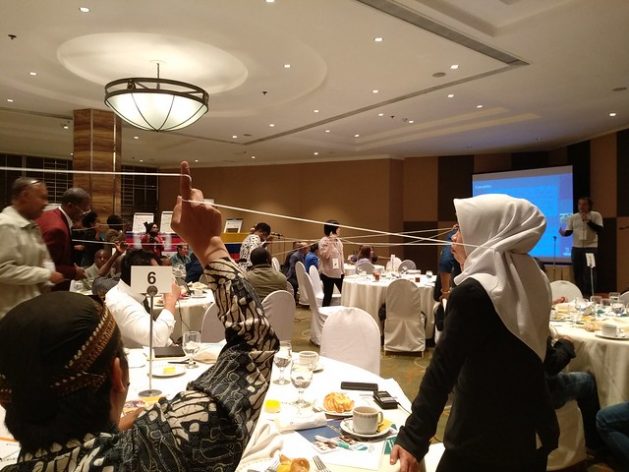
Participants at the first Global Forum of People’s Organizations on Hansen’s Disease which began on Sept. 7 in Manila, Philippines, play a game to build better connectivity among themselves. Credit: Stella Paul/IPS

MANILA, Sep 7 2019 (IPS) – Organisations of people affected by Hansen’s Disease or leprosy agree that a global network of volunteer groups is key to eradicating the disease, but concrete steps need to be taken to move the idea from an often-discussed concept to a reality.


“I don’t think anyone here is not convinced about the importance of a network,” Dr. Arturo Cunanan Medical Director of Culion Sanitarium and General Hospital told attendees following a workshop on volunteers and networking at the Global Forum of People’s Organisations on Hansen’s Disease in Manila on September 7. “But we need to put our foot forward.”

Artur Custodio Moreira de Sousa, who heads Brazil’s Movement for Reintegration of People Affected by Hansen’s Disease (MORHAN), led the workshop and firmly agreed with Cunanan’s observation, but was more upbeat.

“This forum exists because the network already exists,” Sousa said, speaking through an interpreter. “The idea exists, the network is created, the work needs to continue to solidify and formalise it.”

Sousa conducted the workshop at the forum organised by Japan’s Sasakawa Health Foundation (SHF) and The Nippon Foundation to share some ofMORHAN’s success in organising volunteers and networks in Brazil, encouraging the participating groups from Asia, Africa, and South America to consider ways in which they could contribute to an effective global network.

Making the most of volunteers

As Sousa described it, the development of a network is in a sense development of a volunteer organisation writ large. MORHAN, which was formed after the fall of Brazil’s dictatorship in 1981, is itself a network of local volunteer groups. Keeping these human resources organised and making the best use of individual talents and intentions is a significant focus area for MORHAN.

“Attracting the people (volunteers) is easy,” Sousa told the forum attendees. “Maintaining the people is very difficult.” Where MORHAN has been successful in this is by encouraging its volunteers to decide how they can contribute. “The people must be free to create,” Sousa said.

Morhan community outreach volunteer Glaucia Maricato, who was doing double duty at the forum as an English interpreter for her Portuguese-speaking colleagues, is a good example of how MORHAN uses volunteers to the best advantage for the individual and the organisation.

Maricato, an anthropologist, explained that she first was introduced to MORHAN in 2010, after the group made an agreement with a group of geneticists to reunite children who had been separated from their families due to leprosy – with either the children or the parents isolated in a sanitarium. “The idea was to use DNA testing to prove who the children’s parents were,” Maricato explained. “I was interested in the project so I got in touch with MORHAN, and then started doing fieldwork,” as the project was related to Maricato’s doctoral studies.

To Maricato, the volunteer work has far more significance than simply applying a person’s skills to a task. “MORHAN was born with democracy in Brazil [in 1981],” Maricato said. “And that spirit really carries on its work, in the DNA testing project and overall. It’s the sense of building equality, removing barriers between people.”

From local organisation to network

Organising volunteers into effective networks can greatly facilitate management of organisations and the services they provide, the chairperson of the Philippines’ Coalition of Leprosy Advocates of the Philippines (CLAP) Francisco Onde agreed.

“Our country is an archipelago, so traveling from one place to another to deal with situations is sometimes difficult,” Onde told the forum participants.

“For example, we had an issue between one of our groups and the administration of the Tala Sanitarium [located north of Manila], but we’re located in Cebu [in the central Philippines]. But through our network and our Luzon coordinator, we were able to get an attorney to assist our colleagues to resolve the problem.”

Scaling up that sort of effective communication and action to a global level is the aspiration of the people’s organisations gathered at the forum, with representatives from the various groups urging their colleagues to join the effort by applying the tools to organising volunteers discussed in the workshop. Kofi Nyarko, president of International Association for Integration, Dignity, and Economic Advancement (IDEA) Ghana stressed that the key to effective action was for people’s organisations “to first help themselves.”

“If we do this, we can do something for the public as much as the public can do something for us,” Nyarko said. “Inclusiveness is very important.”

Evidently encouraged by Cunanan’s call to not let the idea of a global network “be a talking network just within this four-cornered room,” representatives of the people’s organisations in attendance held an impromptu meeting led by Sousa and Cunanan following the workshop that ended the forum’s first day to discuss formalising efforts to create the global network, the initial details of which Cunanan told attendees he hoped would be available for presentation “at the next meeting”.


Indigenous Rights Approach a Solution to Climate Change Crisis

Biodiversity, Civil Society, Climate Change, Conferences, Development & Aid, Environment, Featured, Global, Headlines, Human Rights, Indigenous Rights, Sustainability, TerraViva United Nations

Indigenous Rights

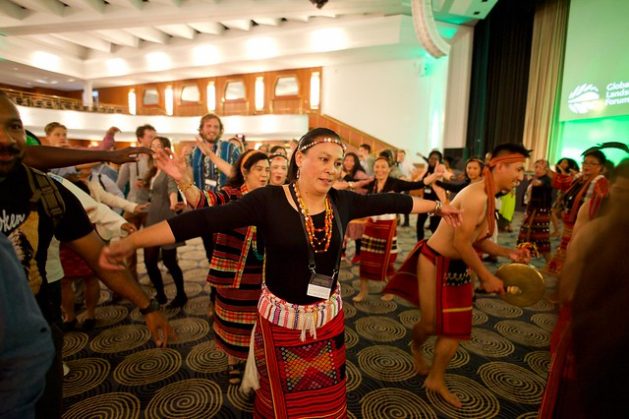
The Global Landscapes Forum (GLF) was held in Bonn, Germany and focused on how to give land rights the visibility needed to showcase that a rights approach, particularly when it comes to indigenous people, is a solution to the climate change crisis. Courtesy: Pilar Valbuena/GLF

Jun 29 2019 (IPS) – The Global Landscapes Forum (GLF) was held in Bonn, Germany to rally behind a new approach to achieving a future that is more inclusive and sustainable than the present – through the establishment of secure and proper rights for all.


On Jun. 22 and 23, experts, political leaders, NGOs and indigenous peoples and communities gathered to deliberate on a methodology that emphasises rights for indigenous peoples and local communities in the management and perseveration of landscapes. The forum took place alongside the  United Nations Framework Convention on Climate Change Bonn Climate Change Conference.

The forum focused giving land rights the visibility needed to showcase that a rights approach is a solution to the climate change crisis, and to develop a ‘gold standard’ for rights.

Indigenous peoples, local communities, women and youth, are believed to be the world’s most important environmental stewards but they are also among the most threatened and criminalised groups with little access to rights.

“We’re defending the world, for every single one of us,” said Geovaldis Gonzalez Jimenez, an indigenous peasant leader from Montes de María, Colombia.

But industries such as fossil fuels, large-scale agriculture, mining and others are not only endangering landscapes but also the lives of the people therein.

Already this year, said Gonzalez, his region witnessed 135 murders, adding that the day before the start of the GLF a local leader was killed in front of a 9-year-old boy.

According to the United Nations, the land belonging to the 350 million indigenous peoples across the globe is one of the most powerful shields against climate change as it holds 80 percent of the world’s biodiversity and sequesters nearly 300 billion metric tons of carbon

It is for this reason that amid the urgency to meet Sustainable Development Goals (SDGs) under pressure from the climate threat, dialogues about the global future have begun to wake up to the fact that indigenous peoples’ relationships with the natural world are not only crucial to preserve for their own sakes, but for everyone’s.

The drafting of the document of rights was led by Indigenous Peoples Major Group (IPMG) for Sustainable Development and the Rights and Resources Initiative in the months leading up to the GLF.

Wider discussions and workshops over the two days served as a consultation on the draft (which is expected to be finalised by the end of the year) as a concrete guide for organisations, institutions, governments and the private sector on how to apply different principles of rights. This includes the rights to free, prior and informed consent; gender equality; respect to cultural heritage; and education.

U.N. Special Rapporteur on the Rights of Indigenous Peoples Vicky Tauli-Corpuz said lands managed by indigenous peoples with secure rights have lower deforestation rates, higher biodiversity levels and higher carbon storage than lands in government-protected areas.

But Diel Mochire Mwenge, who leads the Initiative Programme for the Development of the Pygme in the Democratic Republic of Congo (DRC), one of the largest indigenous forest communities in Central Africa, said he has witnessed more than one million people being evicted from the national parkland where they have long lived. He explained that they had not been given benefits from the ecotourism industries brought in to replace them and were left struggling to find new income sources.

“Our identity is being threatened, and we need to avoid being completely eradicated,” said Mwenge.

In Jharkhand, India, activist Gladson Dungdung, whose parents were murdered in 1990 for attending a court case over a local land dispute, said an amendment to India’s Forest Rights Act currently being reviewed by the Supreme Court could see 7.5 million indigenous peoples evicted from their native forest landscapes. The act can impact a further 90 million people who depend on these forests’ resources for their survival, he said.

The amendment, Dungdung said, would also give absolute power to the national forest guard; if a guard were to see someone using the forest for hunting or timber collection, they could legally shoot the person on-sight.

“Indigenous peoples are right on the frontline of the very real and dangerous fight for the world’s forests,” said actor and indigenous rights activist Alec Baldwin in a video address.

“Granted that indigenous peoples are the superheroes of the environmental movement,” Jennifer Morris, president of Conservation International wondered why they are not heard until they become victims. “Why do we not hear about these leaders until they’ve become martyrs for this cause?”

The examples of intimidation, criminalisation, eviction and hardship shared throughout the first day clearly showcased what indigenous peoples and local communities go through to preserve the forests or ‘lungs of the earth’.

The rights approach, according to conveners of the GLF, aims to strengthen respect, recognition and protection of the rights of indigenous peoples and local communities as stewards and bearers of solutions to landscape restoration, conservation, and sustainable use. It also aims to end persecution of land and environment defenders; build partnerships to enhance engagement and support for rights-based approaches to sustainable landscapes across scales and sectors; and, scale up efforts to legally recognise and secure collective land and resource rights across landscapes.

“By implementing a gold standard, we can both uphold and protect human rights and develop conservation, restoration and sustainable development initiatives that embrace the key role Indigenous peoples and local communities are already playing to protect our planet,” said Joan Carling, co-convener of IPMG.

IPMG recognises that indigenous and local communities are bearers of rights and solutions to common challenges.

“This will enable the partnership that we need to pave the way for a more sustainable, equitable and just future,” added Carling.

And the Center for International Forestry Research (CIFOR) Director General, Robert Nasi, said when rights of local communities and indigenous peoples are recognised, there are significant benefits for the fight against climate change and environmental degradation.

“Whoever controls the rights over these landscapes has a very important part to play in fighting climate change,” he said.

In the climate and development arenas, the most current alarm being sounded is for rights–securing the land rights and freedoms of indigenous peoples, local communities and the marginalised members therein.

How can these custodians of a quarter of the world’s terrestrial surface be expected to care for their traditional lands if the lands don’t, in fact, belong to them? Or, worse, if they’re criminalised and endangered for doing so?

The basic principles of a ‘gold standard’ already exist, such as free, prior and informed consent, according to Alain Frechette of the Rights and Resources Initiative (RRI). What has been lacking, he said, is the application of principles that could be boosted by high-level statements that could “spur a race to the top”.


International conference in Vienna: Successful societies are those that manage diversity and stimulate empathy towards the Other

Conferences, Human Rights, Religion

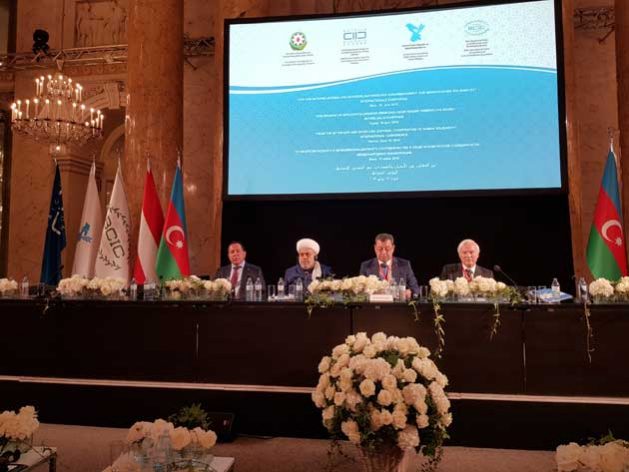
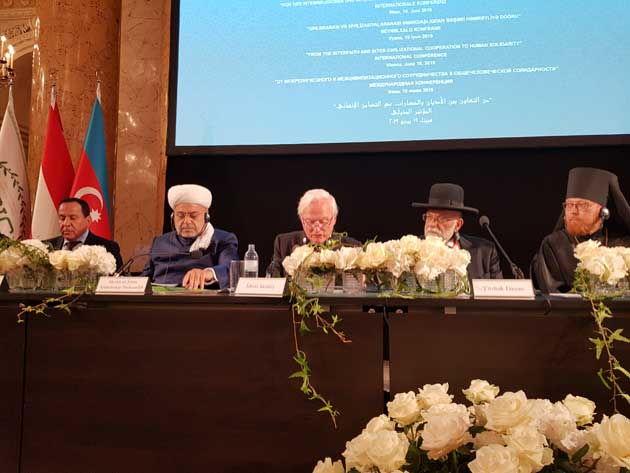
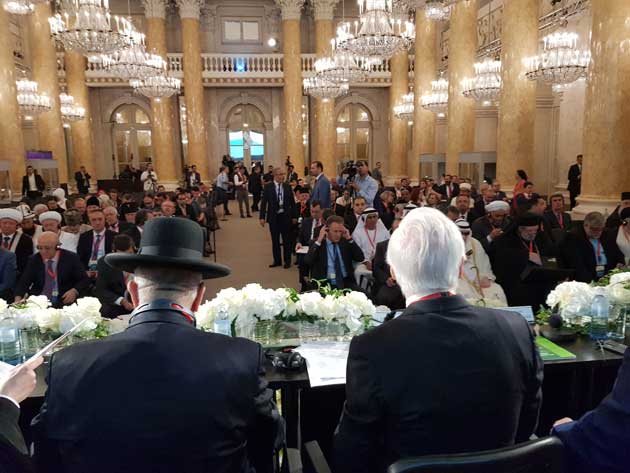
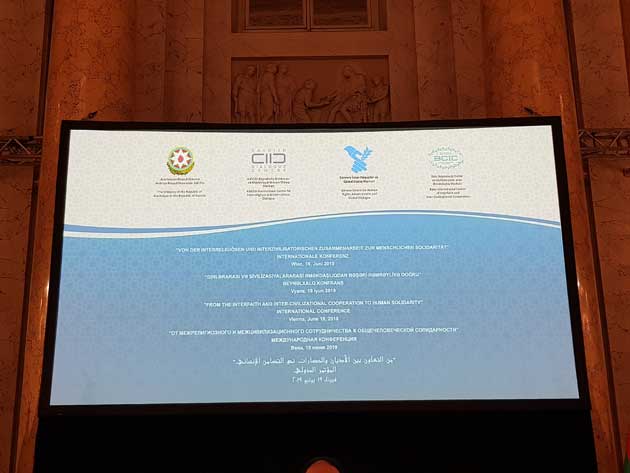
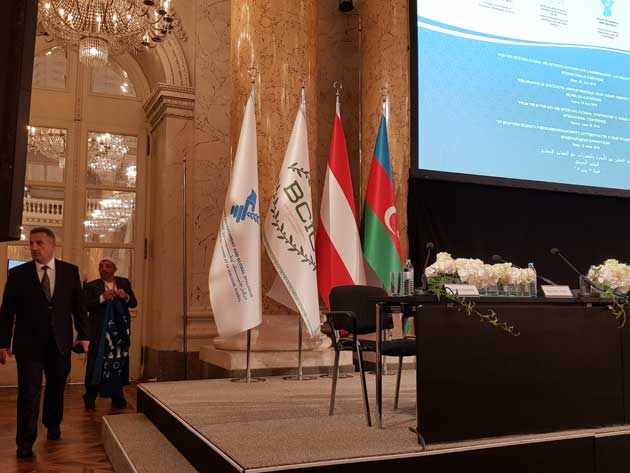
VIENNA, Jun 21 2019 – Societies must work together to build more tolerance, solidarity and peace within and between nations, said the Executive Director of the Geneva Centre for Human Rights Advancement and Global Dialogue, Ambassador Idriss Jazairy, during the 19 June international conference on “From Interfaith, Inter-Civilizational Cooperation to Human Solidarity.” He emphasized that all such societies are built on shared aspirations and not shared ethnicity.


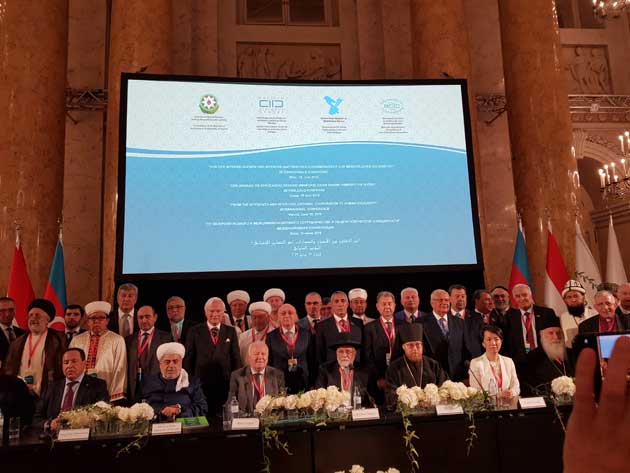
This Geneva Centre was one of the organizers of this major event together with the Baku International Centre for Interreligious and Inter-Civilizational Cooperation and the KAICIID Interreligious and Intercultural Dialogue Centre.

It gathered over 200 high-level experts from 30 countries and 10 international organizations. A special message of greeting was extended to the co-organizers of the conference and the participants by the President of the Republic of Azerbaijan HE llham Aliyev during the inaugural ceremony.

As the moderator of the opening and the first plenary sessions, Ambassador Jazairy stated that although the Berlin Wall was demolished in 1989, new physical and virtual walls were being erected which were breaking up societies and multilateralism.

It is one of the greatest paradoxes of the contemporary world that major world faiths and creeds that all preach human fraternity are being perverted to justify hatred and exclusion. The threat to peoples is not diversity, but poverty. Terrorism has no religion, denomination or nationality. It is a social cancer that affects the whole world,” he said.

To overcome this situation, Ambassador Jazairy highlighted the importance of promoting awareness of both the commonality of values and the specificities of practices of diverse faiths as expressions of enrichment through pluralism. He emphasized that all faiths supported God-given dignity to human beings and the duty of all to uphold it in particular for women and girls and vulnerable groups. Likewise, he recalled that all such faiths equally advocate the love of one’s neighbor.

The Executive Director of the Geneva Centre praised the outcome of the 25 June 2018 World Conference on religions and equal citizenship rights, the World Tolerance Summit organized in November 2018 in Dubai, the historical meeting of 4 February 2019 between the Pope and the Grand Imam of Al Azhar held in Abu Dhabi, and the Fifth World Forum on Intercultural Dialogue held in-May 2019 in Azerbaijan.

In his concluding remarks, the Geneva Centre’s Executive Director underlined that the promotion of equal citizenship rights is the silver-bullet to promote successful societies that manage diversity and stimulate empathy towards the other.

Ambassador Jazairy added: ‘Ethnicity, religious or political affiliations do not convey more rights on some groups than on others. As the US Congress affirmed already in 1782 ‘E pluribus unum.’ This diversity needs to become again the subject of cultural celebration and lay the foundation for social cohesion and the promotion of inclusive societies. There can be no sustainable pursuit of happiness in islands of prosperity surrounded by oceans of poverty.”

The Executive Director of the Geneva Centre concluded his statement by appealing to countries from the Global North and the Global South to jointly promote empathy between different cultures and civilizations and to “speak up together so that the conference message comes out loud and clear and is picked up by politicians who can make it become a reality.”

In the concluding session of the conference, the co-organizers endorsed an outcome declaration welcoming, inter alia, the adoption of the 25 June 2018 World Conference 10-Point Outcome Declaration on “Moving Towards Greater Spiritual Convergence Worldwide in Support of Equal Citizenship Rights” which was sponsored by the Geneva Centre and its partners last year.

The co-organizers likewise adopted a joint message to the President of Azerbaijan HE Ilham Aliyev and to the President of Austria HE Alexander Van der Bellen appealing to both countries to address obstacles to sustainable peace and development, promote inter-civilizational dialogue and to make this conference format replicable at regular intervals in the future.


There’s No Continent, No Country Not Impacted by Land Degradation

Biodiversity, Climate Change, Combating Desertification and Drought, Conferences, Editors’ Choice, Featured, Global, Headlines, Regional Categories, Sustainability, TerraViva United Nations

Combating Desertification and Drought

On all continents you have the issue of land degradation, and it requires governments, land users and all different communities in a country to be part of the solution. Credit: Albert Oppong-Ansah /IPS

ANKARA, Jun 17 2019 (IPS) – The coming decades will be crucial in shaping and implementing a transformative land agenda, according to a scientist at the United Nations Convention to Combat Desertification (UNCCD) framework for Land Degradation Neutrality (LDN).


UNCCD-Science Policy Interface co-chair Dr. Mariam Akhtar-Schuster, who spoke with IPS ahead of the start of activities to mark World Day to Combat Desertification (WDCD) on Monday, Jun. 17, said this was one of the key messages emerging for policy- and other decision-makers.

This comes after the dire warnings in recent publications on desertification, land degradation and drought of the Global Land OutlookIntergovernmental Science-Policy Platform on Biodiversity and Ecosystem Services (IPBES) Assessment Report on Land Degradation and Restoration, World Atlas of Desertification, and IPBES Global Assessment on Biodiversity and Ecosystem Services.

“The main message is: things are not improving. The issue of desertification is becoming clearer to different communities, but we now have to start implementing the knowledge that we already have to combat desertification,” Akhtar-Schuster told IPS.

“It’s not only technology that we have to implement, it is the policy level that has to develop a governance structure which supports sustainable land management practices.”

IPBES Science and Policy for People and Nature found that the biosphere and atmosphere, upon which humanity as a whole depends, have been deeply reconfigured by people.

The report shows that 75 percent of the land area is very significantly altered, 66 percent of the ocean area is experiencing increasing cumulative impacts, and 85 percent of the wetland area has been lost.

“There are of course areas which are harder hit; these are areas which are experiencing extreme drought which makes it even more difficult to sustainably use land resources,” Akhtar-Schuster said.

“On all continents you have the issue of land degradation, so there’s no continent, there’s no country which can just lean back and say this is not our issue. Everybody has to do something.”

Akhtar-Schuster said there is sufficient knowledge out there which already can support evidence-based implementation of technology so that at least land degradation does not continue.

While the information is available, Akhtar-Schuster said it requires governments, land users and all different communities in a country to be part of the solution.

“There is no top-down approach. You need the people on the ground, you need the people who generate knowledge and you need the policy makers to implement that knowledge. You need everybody,” the UNCCD-SPI co-chair said.

“Nobody in a community, in a social environment, can say this has nothing to do with me. We are all consumers of products which are generated from land. So, we in our daily lives – the way we eat, the way we dress ourselves – whatever we do has something to do with land, and we can take decisions which are more friendly to land than what we’re doing at the moment.”

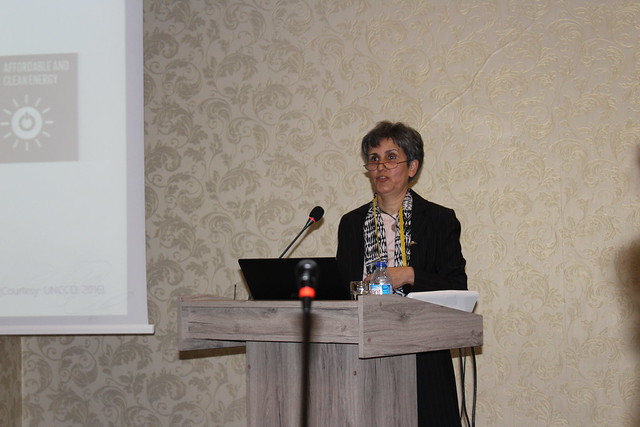
UNCCD-Science Policy Interface co-chair Dr. Mariam Akhtar-Schuster says things are not improving and that the issue of desertification is becoming clearer to different communities. Credit: Desmond Brown/IPS

UNCCD Lead Scientist Dr. Barron Joseph Orr said it’s important to note that while the four major assessments were all done for different reasons, using different methodologies, they are all converging on very similar messages.

He said while in the past land degradation was seen as a problem in a place where there is overgrazing or poor management practices on agricultural lands, the reality is, that’s not influencing the change in land.

“What’s very different from the past is the rate of land transformation. The pace of that change is considerable, both in terms of conversion to farm land and conversion to built-up areas,” Orr told IPS.

“We’ve got a situation where 75 percent of the land surface of the earth has been transformed, and the demand for food is only going to go up between now and 2050 with the population growth expected to increase one to two billion people.”

That’s a significant jump. Our demand for energy that’s drawn from land, bio energy, or the need for land for solar and wind energy is only going to increase but these studies are making it clear that we are not optimising our use,” Orr added.

Like Akhtar-Schuster, Orr said it’s now public knowledge what tools are necessary to sustainably manage agricultural land, and to restore or rehabilitate land that has been degraded.

“We need better incentives for our farmers and ranchers to do the right thing on the landscape, we have to have stronger safeguards for tenures so that future generations can continue that stewardship of the land,” he added.

The international community adopted the Convention to Combat Desertification in Paris on Jun. 17, 1994.

On the occasion of the 25th anniversary of the Convention and the World Day to Combat Desertification in 2019 (#2019WDCD), UNCCD will look back and celebrate the 25 years of progress made by countries on sustainable land management.

At the same time, they will look at the broad picture of the next 25 years where they will achieve land degradation neutrality.

The anniversary campaign runs under the slogan “Let’s grow the future together,” with the global observance of WDCD and the 25th anniversary of the Convention on Jun. 17, hosted by the government of Turkey.


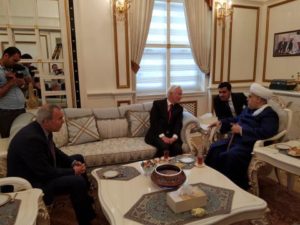
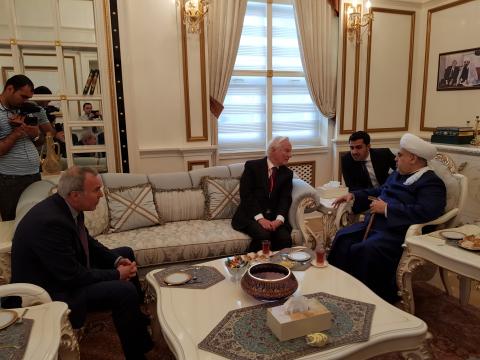
Executive Director of the Geneva Centre received by the Chairman of the Caucasus Muslims Board His Virtue Sheikh-ul-Islam Allahshukur Pashazadeh

Conferences, Religion

BAKU, AZERBAIJAN, May 3 2019 – (Geneva Centre) – The Head of the Religious Community in Azerbaijan His Virtue Shaikh-ul Islam Allahshukur Pashazadeh invited the Executive Director of the Geneva Centre for Human Rights Advancement and Global Dialogue Ambassador Idriss Jazairy to a private audience in his residence in Baku.


During the visit, His Virtue Pashazadeh expressed his appreciation to the endeavours of the Geneva Centre to promote mutual understanding and cooperative relations between people and societies through the holding of the 25 June 2018 World Conference on religions and equal citizenship rights that received strong support from the Secretary General of the United Nations Antonio Guterres.

His Virtue Pashazadeh and Ambassador Jazairy agreed that the Caucasus Muslims Board and the Geneva Centre are united by their vision to promote equal citizenship rights in multi-cultural and multi-religious societies worldwide.

In light of this discussion, the participants highlighted the need to capitalize on the momentum of the World Conference, the Joint Document on Human Fraternity for World Peace and Living Together signed on 4 February 2019 by HH Pope Francis and the Grand Imam of Al Azhar Ahmad Al-Tayib in Abu Dhabi, United Arab Emirates, as well as the Fifth World Forum on Intercultural Dialogue held in Baku to examine inventive ways to carry the process forward to harness the collective energy of religions in the pursuit of equal citizenship rights.

His Virtue Pashazadeh invited the Executive Director of the Geneva Centre to co-organize the 19 June 2019 conference on “From the Inter-faith, inter-civilizational cooperation to human solidarity” to be organized together with the King Abdullah bin Abdulaziz International Centre for Interreligious and Intercultural Dialogue in Vienna, Austria.

Ambassador Jazairy accepted for the Geneva Centre to be a co-sponsor of this important initiative and agreed to present a statement in Vienna on this occasion

The meeting was concluded by an official dinner that was attended by high-level government officials including the Minister of Culture of the Republic of Azerbaijan Abulfas Garayev.