Kenyan Court Restores Seed Freedom: Landmark Ruling Boost for Food Security and Sovereignty

Active Citizens, Africa, Biodiversity, Civil Society, Development & Aid, Economy & Trade, Environment, Featured, Food and Agriculture, Food Systems, Natural Resources, TerraViva United Nations, Trade & Investment
Food Systems

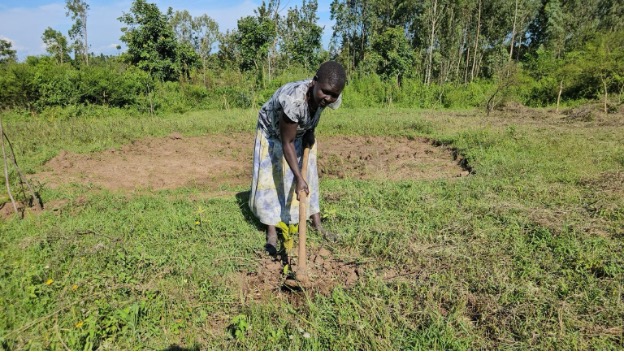
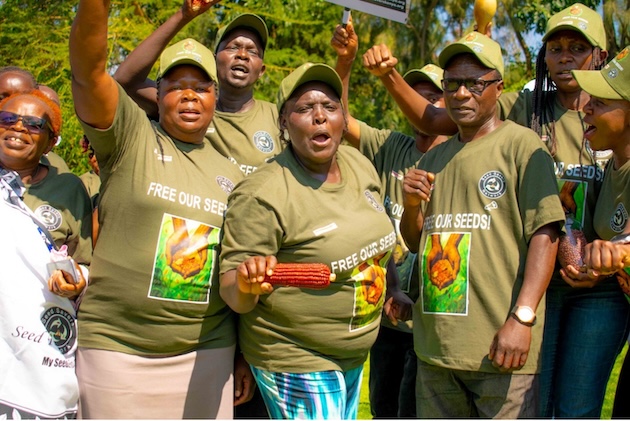
Farmers celebrate in Gilgil town in Kenya, after a court ruling that decriminalized the sharing of indigenous seeds. Credit: Jackson Okata/IPS

Farmers celebrate in Gilgil town in Kenya, after a court ruling that decriminalized the sharing of indigenous seeds. Credit: Jackson Okata/IPS

NAIROBI, Dec 18 2025 (IPS) – For years, smallholder farmers across Kenya have been engaged in a legal battle with the government over a law that criminalizes the practice of saving, sharing and exchanging indigenous seeds.


In 2022, a group of 15 Kenyan smallholder farmers petitioned the country’s High Court, seeking to compel the government to review sections of a law that bans the sharing and exchange of uncertified and unregistered seeds.

Rural smallholder farmers in Kenya rely on informal farmer-managed systems to acquire seeds through seed saving and sharing, but the Seeds and Plant Varieties Act limited their access.

Kenya’s government enacted the law in 2012 to develop, promote, and regulate a modern and competitive seed industry, but farmers are calling for its review.

The informal farmer-managed seed system allows farmers to store a portion of their seeds after harvesting, which guarantees them seeds for the next planting season.

Victory for Farmers

In a decisive victory for food sovereignty and climate justice, the High Court on November 27, 2025, ruled in favor of smallholder farmers, declaring punitive sections of the Seed and Plant Varieties Act unconstitutional.

The judgment effectively decriminalizes the age-old practice of saving, sharing, and exchanging indigenous seeds, affirming that Farmer-Managed Seed Systems (FMSS) are a protected right, not a criminal activity.

Under the punitive law, farmers faced jail terms of up to two years and a fine of 1 million shillings (about 7,800 USD) for selling or exchanging unregistered seeds.

Farmer rights defenders had argued that the law gave control of the country’s food system to multinational corporations.

In her judgment, Justice Rhoda Rutto declared unconstitutional sections of the Act that gave seed inspectors sweeping powers to raid seed banks and seize seeds meant for the next harvest, made it illegal for farmers to process or sell seeds unless they were registered seed merchants, gave extensive proprietary rights to plant breeders and none to farmers, and made it illegal for farmers to save or share seeds from their harvest without prior knowledge of seed proprietors.

Samuel Wathome, a smallholder farmer who was a petitioner in the case, says that “just like his grandmother did, he can now freely save seeds for his grandchildren without fear of police or prison.”

According to Elizabeth Atieno, a Food Campaigner at Greenpeace Africa, the court ruling affirmed the long-known tradition of seed sovereignty.

“The court ruling removed shackles from Kenya’s farmers.  This is not just a legal win; it is a victory for our culture, our resilience, and our future,” Atieno told IPS.

She added, “By validating indigenous seeds, the court has struck a blow against the corporate capture of our food system. We can finally say that in Kenya, feeding your community with climate-resilient, locally adapted seeds is no longer a crime.”

Protecting Biodiversity

According to Gideon Muya, Programs Officer, Biodiversity and Biosafety Association of Kenya, the judgment is a shield for the country’s biodiversity.

“Indigenous seeds are the library of life because they hold the genetic diversity we need to withstand droughts, pests, and a changing climate. The court has recognized that you cannot patent nature’s heritage. We have reclaimed the right to choose what we plant and what we eat, free from the coercion of commercial seed monopolies,” Muya told IPS.

Claire Nasike, an agroecologist, noted that the judgment indicates that the seed is life, and it is sovereign, and whoever controls it influences the lifeline of a generation.

Nasike observes that the ruling is a big boost for biodiversity, climate resilience and food sovereignty since indigenous seeds tend to be well adapted to local conditions like soil types, rainfall patterns, pests and disease traits that are often lost in uniform, certified commercial seeds.

“By enabling farmers to save, exchange and diversify their seed stock, communities can preserve genetic diversity, a key buffer against climate shocks like droughts and pests, as well as a safeguard for long-term food security.”

IPS UN Bureau Report
  Source

Refugees Forced to Fill Gaps as Funding, Power and Legal Recognition Move Out of Reach

Active Citizens, Africa, Armed Conflicts, Asia-Pacific, Civil Society, Development & Aid, Disaster Management, Editors’ Choice, Featured, Global, Human Rights, Humanitarian Emergencies, Middle East & North Africa, Migration & Refugees, Sustainable Development Goals, TerraViva United Nations

Migration & Refugees

A new global synthesis report and refugee voices from East Africa and the Middle East warn that reductions in humanitarian footprints risks breaking the refugee protection system.

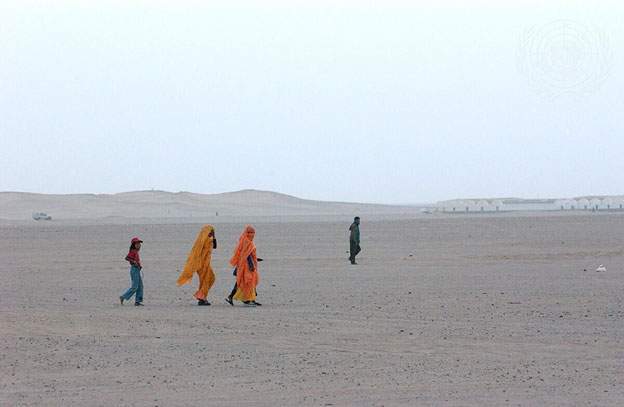
Sahrawi refugees walk near the Awserd Refugee Camp in the Tindouf Province of Algeria. Credit: UN Photo/Evan Schneider

Sahrawi refugees walk near the Awserd Refugee Camp in the Tindouf Province of Algeria. Credit: UN Photo/Evan Schneider

SRINAGAR, India, Dec 16 2025 (IPS) – The global refugee system is entering a period of deep strain. The delivery of protection and assistance is undergoing a transformation due to funding cuts, institutional reforms, and shifting donor priorities.


Against this backdrop, a new Global Synthesis Report titled From the Ground Up highlights the many issues faced by refugees in the Middle East and Africa.

Regional Perspectives on Advancing the Global Compact on Refugees has highlighted a rare, refugee-centered assessment of what is working, what is failing, and what must change. The report draws on regional roundtables held in East Africa and the Middle East and North Africa, followed by a global consultation in Geneva, to feed into the 2025 Global Refugee Forum progress review

According to the report, refugee-led and community-based organizations are increasingly taking on responsibilities, but they are not receiving power, funding, or legal recognition. As international agencies scale back under what is being called the Humanitarian Reset and UN80 reforms, refugees are expected to fill widening gaps without the authority or resources required to do so safely and sustainably.

The East Africa roundtables, held in Kampala with participation from refugee organizations in Uganda, Kenya, and Ethiopia, highlight a region often praised for progressive refugee policies. Countries here host millions displaced by conflict, hunger, and climate stress from South Sudan, Sudan, Somalia, and the Democratic Republic of the Congo.

Laws and regional frameworks promise freedom of movement, inclusion in national systems, and meaningful participation. The lived reality, however, remains uneven.

Education emerged as a central concern. Refugee children are enrolling in schools at higher rates, especially where they have been integrated into government-aided systems. Yet access remains unequal. Refugee students struggle to have prior qualifications recognized.

Many are treated as international students at universities and charged higher fees. Refugee teachers, often qualified and experienced, receive lower pay than nationals or are excluded from formal recognition. Language barriers and lack of psychosocial support further undermine learning outcomes. Refugee-led groups are already stepping in with mentorship, counseling, and bursary support, but they do so with fragile funding and limited reach.

Documentation and freedom of movement form another critical fault line. Uganda is widely cited for its rapid issuance of refugee IDs and settlement-based approach. Kenya and Ethiopia have made progress through new refugee laws and policy reforms. Still, gaps between policy and practice persist. Refugees in urban areas remain undocumented in large numbers. Identity documents often have short validity, forcing repeated renewals.

Travel documents are difficult to obtain, especially in Ethiopia, limiting cross-border movement, livelihoods, and participation in regional or global policy forums. Without documentation, refugees face arrest, harassment, and exclusion from services. For refugee organizations, lack of legal registration means operating in constant uncertainty.

Access to justice, described in the report as one of the least discussed yet most pivotal issues, cuts across all others. Refugees cannot claim rights or seek redress without functioning justice pathways. Language barriers in courts, xenophobic profiling, and lack of legal aid remain common.

Refugee-led organizations already provide mediation, paralegal support, and court accompaniment, often acting as the first point of contact between communities and authorities. Yet their work is rarely formalized or funded at scale.

These findings came alive during a webinar held at the launch of the report, where refugee leaders from different regions spoke directly about their experiences. One participant from East Africa reflected on repeated engagement in international forums. This event was his third such process, following meetings in Uganda and Gambia. He noted that participation was no longer symbolic. Governments and institutions were beginning to listen more closely.

He pointed to concrete differences across countries. In Kenya, refugees do not require exit visas. In Ethiopia, they do. Sharing such comparisons, he argued, helps governments rethink restrictive practices and adapt lessons from neighbors.

From the Middle East and North Africa, the discussion shifted to documentation and access to justice. A Jordan-based lawyer explained that civil documentation is not mere paperwork. It is the foundation of rights and accountability. Without birth registration, children cannot access education.

Without legally recognized marriages, women and children remain unprotected. Many Syrian refugees arrived in Jordan without documents, having lost them during flight or lacking legal awareness. Over time, Jordan introduced measures such as fee waivers, legal aid, and even Sharia courts inside camps like Zaatari to facilitate birth and marriage registration. Civil society groups have provided thousands of consultations and legal representations, bridging gaps between refugees and state systems.

The webinar also highlighted language as a structural barrier. In Jordan, Arabic serves as a common language for Syrians, easing communication. In East Africa, linguistic diversity complicates access to justice and services. Uganda hosts South Sudanese, Sudanese, and Congolese refugees, each with distinct languages, while official processes operate in English and Kiswahili. Governments have made efforts to provide interpretation, but gaps remain, particularly in courts and police interactions.

In Ethiopia, where Amharic dominates official institutions, refugee organizations often rely on founders or leaders who speak the language fluently, limiting broader participation.

As the conversation turned to the future of the humanitarian system, the tone grew more urgent. Participants acknowledged that funding cuts have already halted programs and exposed vulnerabilities. One speaker stressed that legal aid and documentation cannot be seen as optional sectors.

Without sustained support, entire protection systems risk collapse. Empowerment, he argued, goes beyond providing lawyers. It means building refugees’ confidence and capacity to navigate legal systems themselves.

Another participant addressed donors and UN agencies directly. Localization, he said, will fail if refugee organizations are treated only as implementers of predesigned projects. Power must shift alongside responsibility.

Refugee organizations should help design programs, raise resources, and make decisions based on community priorities. Otherwise, localization becomes another layer of outsourcing rather than a genuine transfer of agency.

The speaker’s final intervention starkly highlighted the stakes involved. With funding shrinking and uncertainty growing, refugees may soon have no option but to rely on themselves. Investing in refugee-led organizations, the speaker said, is not a luxury. This represents the final line of hope for refugees on the ground.

The MENA roundtables echo many of these concerns but in a more restrictive political context. Civic space is tighter. Legal recognition for refugee organizations is often impossible or risky. In Jordan, refugees cannot legally register organizations. In Egypt, civil society laws limit advocacy.

In Türkiye, registration is technically possible but bureaucratically daunting. Despite this, refugee-led initiatives have multiplied, filling gaps in education, protection, and livelihoods as international actors retreat.

The report warns of a dangerous paradox. Localization is advancing by necessity, not design. International agencies withdraw. Local actors step in. Yet funding, decision-making, and protection remain centralized. Refugee organizations absorb risk without safeguards. Participation is often tokenistic. Refugees are present in meetings but absent from real influence.

IPS UN Bureau Report

  Source

A Guide To Your Best Holiday Hair In Cape Town

Ladies love getting their hair done while on holiday, so we’ve compiled a list of some of the best places in the city to get it all done – from braids and weaves to balyage and blow outs.

Here are a few of our favourites places:

For Braids, Wigs, and Extensions

Afro Corner

This City Centre hair salon is your one-stop shop for braids, hair colouring, natural hair styling, and extensions. Professional stylists treat your hair with the care it deserves, ensuring you leave looking and feeling amazing!

Location: 33 Strand St, Cape Town City Centre
Website: www.afrocorner.co.za

ASANA Beauty

ASANA is a high-end dreadlocks and natural hair salon founded in 2019 by friends Gugu Nonjinge and Nomahlubi Hewu. But it’s more than just a place for hair; it’s a community and a safe space where you can relax. Treatments include hot oil and scalp treatments for dreadlocks, deep cleans, and protein treatments for natural hair.

Location: The Herringbone, 44 Yew St, Salt River
Website: www.asanabeauty.co.za

Ester Hair Salon

Looking for a wig supplier and expert installations? Ester Hair Salon offers that and more. It’s the spot for ladies to treat themselves, upgrade their looks, and leave feeling fabulous. Hair extensions and quality products complete your perfect style.

Location: No 32 St Georges Mall, Cape Town City Centre
Website: EsterHairSalonSA

Afrosundae

Afro Sundae is all about natural hair done right. This Table View salon specialises in coils, curls, and kinks, giving every strand the love it deserves. Kids are welcome too, with gentle, fun treatments that make hair time a breeze.

Location: 14 Merlot Avenue, Table View,
Website: instagram.com/afrosundae/

For A Luxe Pampering

Excentric Hair Salon

With locations in Kloof Street and Sea Point, Excentric Hair Salon is all about pushing the boundaries. Living by the motto ‘Dare to be different,’ the team specialises in everything from precision cutting and advanced colour techniques to results-driven treatments. They’re constantly exploring the latest trends, like balayage, contouring, geode, rainbow, and unicorn hair.

Location: 39 Kloof Street and 73 Regent Road, Sea Point
Website: www.excentric-hair.co.za

Sorbet

With branches across Cape Town, Sorbet’s hairbars handle it all: cuts, colour, treatments, styling, extensions, and straightening. And with an in-salon nail, lash, and brow menu, you can get the full pampering experience and walk out with that unbeatable, ‘just-been-treated’ feeling. Location: Various locations in the city. Details here.
Website: www.sorbet.co.za

Blue Lemon Hair & Beauty

“Good Hair Days, Every Day!” That’s the motto at Blue Lemon Hair & Beauty in Green Point. Step in and treat yourself to a full range of hair and beauty services, from blow dries and tints (parting, hairline, and roots) to highlights, Brazilian treatments, perms, and even gents’ cuts and colour.

Location: Shop 3, Portside, 41 Main Rd, Green Point, Cape Town, 8005, South Africa
Website: www.bluelemonhair.com

Snippets Hair Salon

Balayage specialists in Claremont, Snippets Hair Salon turn every appointment into an experience. They’re warm, welcoming, and happy to accommodate German-speaking travellers. While you’re there, kick back with free Wi-Fi, and if hunger strikes, they’ll happily order from the sushi bar or Jack’s Bagel next door.

Location: 22 Dreyer St, Claremont, Cape Town, 7708, South Africa
Website: snippetshairsalon.co.za

Marios Hair Atelier

One of Cape Town’s top hair salons, Marios Atzemoglou and his team have built a true hair sanctuary. Women, men, and kids are all welcome. The menu includes quick blow dry, balayage-Ombre, Bio-Ionic Japanese straightening, and Brazilian Keratin treatments.

Location: 2nd Exhibition building, 81 Main Rd, Green Point, Cape Town
Website: marioshairatelier.com

Head Spas

Plush Head Spa

Inspired by viral trends and growing demand, Plush combines traditional head spa techniques with modern treatments and premium products. The treatment aims to bring deep relaxation, enhance scalp health, and promote overall rejuvenation.

Location: Unit A5, Office Park, Heron Crescent, Century Dr, Century City
Website: www.plushheadspa.co.za

Headspace SA

Blending ancient Chinese techniques with modern wellness, this head spa in Claremont promotes deep relaxation and scalp rejuvenation. Guests can choose between a Mini Experience (perfect for those short on time) or the Complete Ritual for a full pampering session. The treatment includes two luxurious washes: one with a clarifying shampoo to cleanse, followed by a nourishing shampoo and hydrating hair mask. This is paired with a head massage, hydro steam therapy, and other calming elements.

Location: Shop 12e, 11 Warwick St, Claremont.
Website: headspacesa.co.za

KITANA Japanese Head Spa

The Claremont Head Spa is by appointment only, and it’s a treat for the whole family! Their Asian-inspired head and scalp treatments cater to women, men, teens, and kids. Whether you’re popping in for a simple blow dry, a dandruff detox scrub, or a traditional hair-growth scalp oil, they’ve got you covered. Guys swear by the Alpha Ritual.

Location: 223 Imam Haron Rd, Claremont
Website: kitana_asian_headspa_capetown

Stylist Tip for Cape Town Hair

Book ahead! Cape Town is in peak season (November to February) and can get busy. Reputable salons, especially those specialising in intricate work like braiding or complex colour, get booked up weeks in advance. Secure your spot before you arrive to avoid disappointment!

The post A Guide To Your Best Holiday Hair In Cape Town appeared first on Cape Town Tourism.


Discover more from The Maravi Post

Subscribe to get the latest posts sent to your email.

The Maravi Post

12 Days of Summer Giveaways: Day 4 – Shark Explorers

We’re embracing the festive spirit this summer, and from 4 to 19 December 2025, you can win some of the best experiences in Cape Town.

Day 4: Win a shark cage diving experience for 2 valued at R7500, courtesy of Shark Explorers.

Get up close and personal with South Africa’s most iconic ocean predators with Shark Explorers. Located in Simon’s Town, enjoy  an unforgettable, safe, and educational shark cage diving experience for the whole family (ages 5 and up).

As an internationally recognised, award-winning operator, Shark Explorers is dedicated to ocean adventure, conservation, and showcasing South Africa’s incredible marine biodiversity.

The competition ends on 9 December 2025, at 23:59 pm SAST. The winner will be announced the next day, at 9am.

To enter, complete and submit the online entry form below.

Terms and Conditions:

  • The prize is valid for 12 months from the date of issue, and is subject to availability and weather conditions.
  • The voucher is non-transferable and cannot be redeemed for cash.
  • Standard Shark Explorers trip policies apply.
  • The winner will be required to sign the Shark Explorers indemnity form on the day of the trip.
  • Transport to and from Simon’s Town is not included in this prize.
In addition to the above, please view our T’s and C’s here.

The post 12 Days of Summer Giveaways: Day 4 – Shark Explorers appeared first on Cape Town Tourism.


Discover more from The Maravi Post

Subscribe to get the latest posts sent to your email.

The Maravi Post

Farmers Earn While Reviving Native Forests Through a Blockchain-Powered App

Africa, Biodiversity, Civil Society, Development & Aid, Economy & Trade, Editors’ Choice, Environment, Featured, Food and Agriculture, Food Systems, Gender, Green Economy, Sustainable Development Goals, Trade & Investment, Women & Economy

Africa Climate Wire

Caroline Awuor tends to tree seedlings on her farm in Siaya County, Western Kenya. She is a beneficiary of the My Farm Trees Project. Credit: Jackson Okata/IPS

Caroline Awuor tends to tree seedlings on her farm in Siaya County, Western Kenya. She is a beneficiary of the My Farm Trees Project. Credit: Jackson Okata/IPS

SIAYA, Kenya , Dec 8 2025 (IPS) – For years, Morris Onyango had been trying to reforest his degraded land on the shores of River Nzoia, in Siaya county, 430 kilometers from Kenya’s Capital, Nairobi. But every time he planted trees on his farm, his efforts bore little fruit, as floodwaters would not only wash away his tree seedlings but also fertile topsoil on his land.


“The land became unproductive and bare. I tried reclaiming the land through reforestation, but the trees’ survival rate was too low,” Onyango said.

Siaya County has a 5.23 percent forest cover and is ranked 44th out of Kenya’s 47 counties. Judy Ogeche, a scientist from the Kenya Forestry Research Institute (KEFRI), says that the compromised forest and tree cover in the county and the lack of any gazetted forests have discouraged the integration of tree and crop farming.

“Communities here do not see tree growing as a lucrative venture. Some myths and beliefs discourage tree growing. For example, some people believe that growing the Terminalia mentalis (often known as the Panga Uzazi) tree attracts death,” says Ogeche.

According to Ogeche, another challenge is gender inequality in land ownership, with men owning most available land and making decisions on what should be planted.

“We have many women interested in restoring tree cover, but their husbands would not allow it,” Ogeche said.

Across Africa, reforestation projects struggle to survive beyond the seedling stage. However, in parts of Kenya, a groundbreaking digital innovation is transforming the landscape by empowering rural farmers to earn a living while restoring degraded lands with native trees.

Tech and Reforestation

In a bid to restore lost biodiversity and enhance tree cover in Kenya, Alliance Bioversity International and CIAT, in partnership with the International Union for Conservation of Nature (IUCN), launched the My Farm Trees project, a blockchain-based platform that offers guidance to subsistence farmers on seed selection, planting, and post-plant care, ensuring that seedlings survive and thrive in harsh conditions.

Implemented in the counties of Siaya, Turkana and Laikipia, MFT emphasizes genetically robust native species that support biodiversity, improve soil health, and provide long-term ecological and economic benefits.

Ogeche observes that the My Farm Trees project has motivated communities in Siaya to grow trees.

“They are given free seedlings and taught how to plant and take care of them, and when the trees grow, they are paid,” she said.

To provide the right seedlings, the project is partnering with the Kenya Forestry Research Institute (KEFRI), the Kenya Forest Services (KFS) and private tree nursery operators in the respective counties.

For farmers like Onyango, the My Farm Trees Project gave them the much-needed solution to their degraded lands and soils

“The project gifted me 175 seedlings of various trees, which I planted along the riverbank. The trees have helped me reclaim my land, prevent erosion and get paid for taking care of my own trees,” Onyango says.

How it Works

In the My Farm Trees project, participating farmers are registered on the MyGeo Farm App, which allows them to monitor seedlings from planting to growing. Through the app, farmers can track and report progress.

Francis Oduor, the National Project Coordinator, says since its rollout, the project has seen over 1,300 farmers registered on the MyGeo Tree App, and over 100,000 seedlings have been planted across the three counties.

“The project is especially interested in using indigenous trees for landscape restoration, which are native to specific areas, and to enhance genetic diversity,” says Oduor.

Oduor explains that My Farm Trees uses monitoring, verification, and incentives to empower local communities to become leaders and stewards of tree-planting projects that provide immediate short-term benefits.

“The project does not just focus on payment to farmers but the long-term benefits of restored landscapes for improved agricultural productivity, water regulation, and climate resilience,” said Oduor.

To ensure the use of native varieties and guarantee the production of quality tree seedlings, the project team collaborates with KEFRI to provide technical assistance to local tree nursery operators.

Lawrence Ogoda, a tree nursery operator, is among the project beneficiaries. He has been trained on seed collection, raising seedlings and record keeping.

“Through the MyGeo Tree and MyGeo Nursery Apps, I can collect data and track progress on seed collection, propagation and development at the nurseries.”

Before joining the My Farm Trees project, Caroline Awuor had not given much attention to growing trees. She received 110 seedlings, 104 of which have successfully survived and are earning her cash incentives.

“Most of them are fruit trees, including mangoes, avocado and jackfruit, while there are also some timber trees. In addition to the incentives from the project, I also earn money by selling the fruit,” she says.

Caroline intends to plant an additional 1,000 tree seedlings on her land, strategically located near the River Nzoia.

According to Joshua Schneck, the Green Climate Fund (GCF) Portfolio Manager for Global Programs at IUCN, My Farm Trees is an innovative project driven towards sustainable transformation.

The Impact

In Kenya, My Farm Tree has supported 3,404 farmers, 56 percent of whom are women. A total of 210,520 trees have been planted, with a survival rate of over 60 percent beyond the first year, with 1,250 hectares of land being restored across Siaya, Turkana, and Laikipia counties.

The program has released KES 26 million (approximately USD 200,000) in digital payments, directly benefiting 1,517 farmers. Additionally, 13 local nurseries have been strengthened in partnership with the Kenya Forestry Research Institute.

Also implemented in Cameroon, the project has seen the restoration of 1,403 hectares of forest land with over 145,000 seedlings being planted and 2,200 farmers registered on the platform. The project has also seen the restoration of 423 community lands and 315 sacred forests, with USD 130,000 in incentives distributed to farmers.

Oduor noted that the My Farm Trees project offers a scalable blueprint for  forest restoration by combining science and Blockchain technology in tree selection, post-planting support, and farmer incentives, which gives it  global relevance.

“MFT is a scalable model that aligns with climate action, poverty reduction, and ecosystem recovery. This approach supports the goals of the Paris Agreement, the United Nations Convention to Combat Desertification, and the UN Decade on Ecosystem Restoration,” Oduor said.
IPS UN Bureau Report

  Source

Faith Leaders Endorse Fossil Fuel Non-Proliferation Treaty at COP30

Active Citizens, Africa, Civil Society, Climate Change, Climate Change Justice, Conferences, COP30, Editors’ Choice, Featured, Headlines, Human Rights, Humanitarian Emergencies, Latin America & the Caribbean, North America, Religion, Sustainable Development Goals, TerraViva United Nations

COP30


Some of you might be shocked that even though fossil fuels are 86 percent of the cause of climate change, it took 28 years before the words ‘fossil fuels’ could even be mentioned in the COP document. It is as absurd as Alcoholics Anonymous holding 28 years of conferences before they get the backbone to mention alcohol in an outcome document. —Kumi Naidoo, President of the Fossil Fuel Non-Proliferation Treaty

Kumi Naidoo with Brazilian First Lady Janja Lula da Silva and Brazilian Cultural Minister Margareth Menezes and others at a panel, “Narratives and Storytelling to Face the Climate Crisis” during the 30th Conference of the Parties (COP30). Credit: Aline Massuda/COP30

Kumi Naidoo with Brazilian First Lady Janja Lula da Silva and Brazilian Cultural Minister Margareth Menezes and others at a panel called “Narratives and Storytelling to Face the Climate Crisis” during the 30th Conference of the Parties (COP30). Credit: Aline Massuda/COP30

BELÉM, Brazil, Nov 18 2025 (IPS) – Decades ago, a little girl was born in a place called Cleveland, Ohio, in the heart of the United States of America. Born to a woman from the deep South, the place of Martin Luther King, her mother left her ancestral lands for the economic opportunities in the north.


“Off she went, making it all the way to the east side of Cleveland,” says Rev. Dr. Angelique Walker-Smith. “To the place where most people who look like me lived, and still live, and are subjected to policies of injustice, race and gender.”

Here, she found a more pressing issue.

“I couldn’t breathe, my mother couldn’t breathe, and we all couldn’t breathe,” she narrates.

This urbanization, driven by fossil fuels, occurred in Cleveland, Ohio, where her mother relocated and where her relatives still live today. During the Great Migration, over six million people of African descent traveled from the South, believing that economic opportunities would be better in the North.

Rev. Dr Angelique Walker-Smith, regional president of the World Council of Churches, speaks at an event titled ‘Faith for Fossil Free Future.’ Credit: IPS

Rev. Dr Angelique Walker-Smith, regional president of the World Council of Churches, speaks at an event titled ‘Faith for Fossil Free Future.’ Credit: IPS

“Upon our arrival, we discovered that we just couldn’t breathe.”

As one of eight regional presidents representing the World Council of Churches, Walker-Smith says for the World Council of Churches in over 105 countries, over 350 million adherents, and over 350 national churches all over the world, supporting the Fossil Fuel Non-Proliferation Treaty “is all about the issue of injustice, life and life more abundantly.”

“We are saying yes to the transition from fossil fuels to renewable life-giving energy.”

Kumi Naidoo, a prominent South African human rights and environmental justice activist and the President of the Fossil Fuel Non-Proliferation Treaty, says if the goal is renewable life-giving energy, the world has been going the wrong way for the past 30 years.

“If you come home from work and see water coming from the bathroom, you pick up the mop. But then you realized you left the tap running and the sink stopper on. What will you do first? Of course! You’ll turn off the water and pull the stopper. You will not start mopping the floor first.”

“For 30 years since the time science told us we need to change our energy system and many of our other systems, what we’ve been doing is mopping up the floor. If fossil fuels—oil, coal, and gas—account for 86 percent of what drives climate change, then we must turn off the tap.”

Masahiro Yokoyama was speaking at an event titled Faith for a Fossil-Free Future co-sponsored by Soka Gakkai International. Credit: Joyce Chimbi/IPS

Masahiro Yokoyama was speaking at an event titled Faith for a Fossil-Free Future co-sponsored by Soka Gakkai International. Credit: Joyce Chimbi/IPS

Naidoo was speaking at an event titled ‘Faith for Fossil Free Future’ co-sponsored by several organizations, including Soka Gakkai International (SGI), Laudato Si’ Movement, GreenFaith—a global interfaith environmental coalition and EcoJudaism, a Jewish charity leading the UK Jewish Community’s response to the climate and nature crisis.

He spoke about the contradiction of the climate talks at the doorsteps of the Amazon, while licensing for drilling is still ongoing in the Amazon even as the people in the Amazon protest, calling for a fossil-free Amazon.

Continuing with the thread of contradictions, Naidoo said, “Some of you might be shocked that even though fossil fuels are 86 percent of the cause of climate change, it took 28 years before the words ‘fossil fuels’ could even be mentioned in the COP document. It is as absurd as Alcoholics Anonymous holding 28 years of conferences before they get the backbone to mention alcohol in an outcome document.

If we continue on this path, we’ll warm up the planet to the point where we destroy our soil and water, and it becomes so hot we can’t plant food. The end result is that we’ll be gone. The planet will still be here. And the good news is, once we become extinct as a species, the forests will grow back, and the oceans will recover.

“And actually, staying with that analogy, can you imagine how absurd it is that the largest delegation to this COP this year, last year, and every year is not even the host country?

“It’s not even Brazil—for every 25 delegates that are attending the COP, one of them is from the fossil fuel industry. That’s the equivalent of Alcoholics Anonymous having the largest delegation to its conference annually from the alcohol industry.”

People, groups and movements of different faiths and consciousness are increasingly raising their voices in robust support of a rapid fossil fuel phase-out, a massive and equitable upsurge in renewable energy, and the resources to make it happen—in the form of a Fossil Fuel Non-Proliferation Treaty.

Naidoo says the treaty is “a critical success ingredient for us not (only) to save the planet, but to secure our children and their children’s future, reminding ourselves that the planet does not need any saving.

“If we continue on this path, we warm up the planet to the point where we destroy our soil and water, and it becomes so hot we can’t plant food. The end result is that we’ll be gone. The planet will still be here. And the good news is, once we become extinct as a species, the forests will grow back, and the oceans will recover.”

This treaty is a proposed global agreement to halt the expansion of new fossil fuel exploration and production and to phase out existing sources like coal, oil, and gas in a just and equitable manner.

The initiative seeks to provide a legal framework to complement the Paris Agreement by directly addressing the supply side of fossil fuels.

Its ultimate goal is to support a global transition to renewable energy and is supported by a growing coalition of countries, cities, organizations, scientists, and activists. More importantly, it has multi-faith support.

Masahiro Yokoyama of the SGI, which is a diverse global community of individuals in 192 countries and territories who practice Nichiren Buddhism, spoke about the intersection between faith and energy transition and why the fossil fuel phase-out cannot wait.

“The just transition is also about how young people in faith can be the driving force to transformations.”

“So, a fossil fuel non-proliferation treaty, in my view, is not only about phasing out other fossil fuels but it also represents an ethical framework.”

“It’s a way to move forward while protecting people’s livelihoods and dignity within the context of the environment and also the local business and economies. So, a just transition is not merely a technical issue but a question of ethics, inclusion and solidarity,” Masahiro Yokoyama said.

The most pressing issue at hand is how to implement the treaty in the current environmental context.

“The pathway that we are following is a pathway that has been followed before. We are not going to negotiate this treaty within the COP or within the United Nations system. We’re going to do what the Landmine Treaty did.

“The landmine treaty was negotiated by 44 countries outside of the UN system and then brought to the UN General Assembly for ratification. The second question that people ask, justifiably, is, what about the powerful exporting countries, for example?” Naidoo asked.

“They’re not going to sign it. And to that we find answers in the landmine treaty. Up to today, the United States, Russia and China have not signed the Landmine treaty. But once the treaty was signed, the social license to continue as business as usual was taken away. And you saw a drastic change.”

Note: This article is brought to you by IPS Noram in collaboration with INPS Japan and Soka Gakkai International in consultative status with ECOSOC.

IPS UN Bureau Report

  Source