Agenda for Nuclear Non-Proliferation Review Conference Still Unclear

Aid, Armed Conflicts, Civil Society, Editors’ Choice, Featured, Global, Headlines, Human Rights, International Justice, IPS UN: Inside the Glasshouse, Nuclear Disarmament, Nuclear Energy – Nuclear Weapons, Peace, Sustainable Development Goals, TerraViva United Nations
Nuclear Disarmament

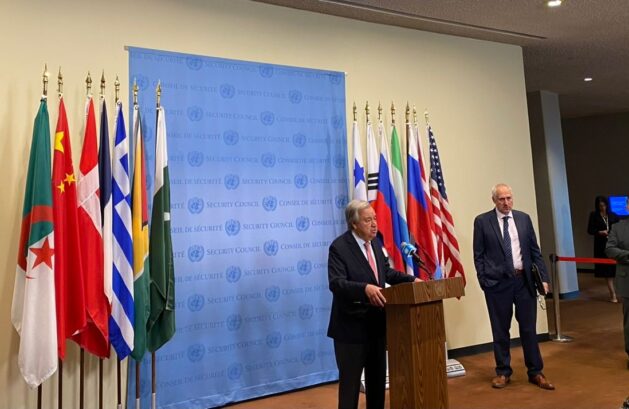
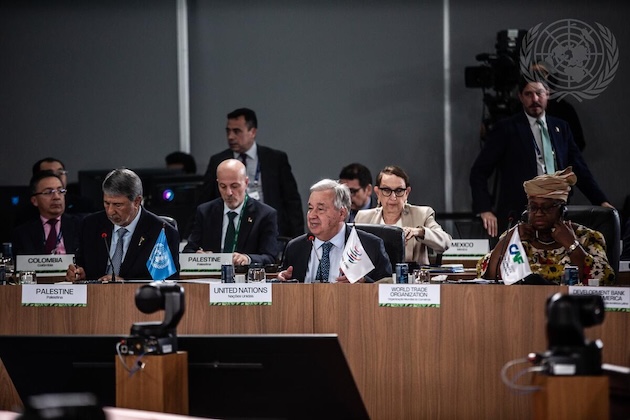
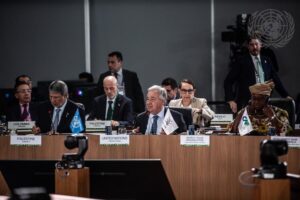
The closing session of the Preparatory Committee for the 2026 Review Conference of the Parties to the Treaty on the Non-Proliferation of Nuclear Weapons (NPT). Credit: UN TV

The closing session of the Preparatory Committee for the 2026 Review Conference of the Parties to the Treaty on the Non-Proliferation of Nuclear Weapons (NPT). Credit: UN TV

NEW YORK, May 21 2025 (IPS) – The Treaty on the Non-Proliferation of Nuclear Weapons must not be allowed to collapse under the weight of geopolitical cynicism, the preparatory committee at the UN heard.


This year, the Third Session of the Preparatory Committee for the 2026 Review Conference of the Parties to the Treaty on the Non-Proliferation of Nuclear Weapons (NPT) (April 28-May 9) was intended to address procedural issues related to the treaty and the upcoming conference next year. The meeting was the third and final preparatory session before the review conference next year. As such, the session was an opportunity for countries to reaffirm the principles of the NPT by agreement.

Throughout the two weeks, delegations expressed their positions and deliberated over recommendations that would shape the agenda for the 2026 conference. Beyond member states, other stakeholders such as civil society groups were emphatic in expressing the urgency of the nuclear issue and calling for member states to take action.

“The continued existence of nuclear weapons remains one of the most urgent and existential dangers facing life on this planet,” said Florian Eblenkamp, an advocacy officer for the International Coalition Against Nuclear Weapons (ICAN). He went further to state, “The non-proliferation norm must not be allowed to collapse under the weight of geopolitical cynicism. If the NPT is to have a future, States Parties must send an unambiguous signal: Nuclear weapons are not to be spread. Not to be shared. Not to be normalized.”

The committee’s chair, Ambassador Harold Agyeman, who serves as the Permanent Representative of Ghana to the United Nations, told reporters early on that the success of the review conference in 2026 would be “dependent on the political will of state parties” in demonstrating progress on their obligations of the treaty and to “strengthen accountability for the related implementation of existing commitments.”

“Indeed, many around the world are concerned by the lack of raw progress on nuclear disarmament, and emerging proliferations risk that could undermine the hard-won norms established to bring about a world free of nuclear weapons and a regime to achieve that goal,” said Agyeman.

The third preparatory session took place in a time of increasing global anxiety over nuclear proliferation and even escalation. The most recent conflict between India and Pakistan has the world on edge that two nuclear powers might engage in war. Since April, Iran and the United States have been in negotiations over a new nuclear deal, which at times has seen both sides at a deadlock over limiting Iran’s nuclear programme.

Given that context, plus pre-existing tensions between other global powers, such as Russia and the war in Ukraine, this session was an opportunity for countries to act with urgency towards non-proliferation and to respect their obligations under the NPT. By the end of the conference, however, it seemed no agreement was reached. Revised recommendations for the review conference failed to reach consensus. This continues a concerning pattern of preparatory meetings that also failed to adopt an outcome.

As the meeting reached its conclusion on May 9, delegations expressed regret that the draft agreement did not reach consensus. “We regret that the desired breakthrough on transparency and accountability in the context of the strengthened due process was not reached,” said one delegate from Egypt. “The discussion was mature and based itself on mutual respect and commitment to multilateralism.

Many delegations made sure to reaffirm their commitment to the NPT and to strengthening the review process. Yet there was also a recurring acknowledgement of the “complex geopolitical situation” that presented a challenge in reaching consensus.

Civil society organizations have also been vocal in their disappointment at the lack of agreement or outcome document. ICAN stated that the lack of an agreement reflected a “horrifying lack of urgency in response to current risks.” Reaching Critical Will went further to criticize nuclear-armed states for refusing to comply with international law and their obligations to the NPT, which calls for them to eliminate nuclear weapons.

The NPT Review Conference (RevCon) is expected to be held in New York from 27 April to 22 May 2026. The PrepComm nominated Vietnam to chair the RevCon. Ambassador Dang Hoang Giang, Permanent Representative of Vietnam to the United Nations, stated that the presidency would be “characterized by inclusive, transparent, and balanced proceedings” that would ensure that the perspectives and interests of all state parties would be respected.

“The road ahead will be challenging, but we remain confident that through collective wisdom and shared determination, meaningful progress is not only possible but achievable. A robust and effective treaty ensures a safer and more secure work for everyone,” said Giang.

The presence—and threat—of nuclear weapons looms large. For good reason, they cannot simply be relegated to history as a relic of hubris and ambition when we can observe their influence in modern geopolitics. If the spirit for nuclear nonproliferation is indeed still there, then the international community must be vigilant in advocating for the NPT and other disarmament treaties, rather than let a small percentage of parties dictate the global agenda. This must be an ongoing process, lest we see the continued undermining of nonproliferation and multilateralism.

Note: This article is brought to you by IPS Noram in collaboration with INPS Japan and Soka Gakkai International in consultative status with ECOSOC.

IPS UN Bureau Report

IPS UN Bureau, IPS UN Bureau Report, NUCLEAR ABOLITION

  Source

Rights with No Age Limit: Hopes for a Convention on the Rights of Older People

Armed Conflicts, Civil Society, Climate Change, Featured, Global, Headlines, Health, Human Rights, TerraViva United Nations

Opinion

Cover photo by Defensoría del Pueblo de Bolivia

BRUSSELS, Belgium / MONTEVIDEO, Uruguay, May 9 2025 (IPS) – The world’s population is ageing. Global life expectancy has leapt to 73.3 years, up from under 65 in 1995. Around the world, there are now 1.1 billion people aged 60-plus, expected to rise to 1.4 billion by 2030 and 2.1 billion by 2050.

This demographic shift is a triumph, reflecting public health successes, medical advances and better nutrition. But it brings human rights challenges.


Ageism casts older people as burdens, despite the enormous social contribution many older people make through family roles, community service and volunteering. Prejudice fuels widespread human rights violations, including age discrimination, economic exclusion, denial of services, inadequate social security, neglect and violence.

The impacts are particularly brutal for those facing discrimination for other reasons. Older women, LGBTQI+ elders, disabled seniors and older people from other excluded groups suffer compounded vulnerabilities. During conflicts and climate disasters, older people face disproportionate hardships but receive disproportionately little attention or protection.

These challenges aren’t limited to wealthy countries such as Japan, where more than one in 10 people are now aged 80 and over. Global south countries are experiencing population ageing too, and often at a much faster pace than occurred historically in the global north. Many people face the daunting prospect of becoming old in societies with limited infrastructure and social protection systems to support them.

Despite these escalating challenges, no global human rights treaty specifically protects older people. The current international framework is a patchwork that looks increasingly out of step as global demographics shift.

The first significant international breakthrough came in 2015, when the Organization of American States adopted the Inter-American Convention on Protecting the Human Rights of Older Persons. This landmark treaty explicitly recognises older people as rights-bearers and establishes protections against discrimination, neglect and exploitation. It demonstrates how legal frameworks can evolve to address challenges faced by ageing populations, although implementation remains uneven across signatory countries.

Globally, the World Health Organization’s Decade of Healthy Ageing (2021-2030) represents progress in promoting age-friendly environments and responsive healthcare systems. But it’s a voluntary framework without legally enforceable protections. Only a binding treaty can deliver human rights guarantees.

That’s why the UN Human Rights Council’s decision on 3 April to establish an intergovernmental working group to draft a convention on older persons’ rights offers real hope. In the current fractured geopolitical landscape, the resolution’s adoption by consensus is encouraging.

This positive step came as a result of over a decade of dogged advocacy through the Open-ended Working Group on Ageing, established by the UN General Assembly in 2010. Through 14 sessions, states, civil society and national human rights institutions built an overwhelming case for action, culminating in an August 2024 recommendation to develop a treaty. Strategic cross-border campaigning and coalition-building by civil society organisations such as AGE Platform Europe, Amnesty International and HelpAge International were instrumental in advancing the cause.

Now the crucial phase of transforming principles into binding legal protection begins. The Human Rights Council resolution sets out the path forward. The first meeting of the drafting working group is due before the year’s end. Once drafted, the text will advance through the UN system for consideration and adoption. If adopted, this convention will follow in the footsteps of those on the rights of children in 1989 and people with disabilities in 2006, which have significantly advanced protections for their target groups.

This convention offers a rare opportunity to redefine how societies value their older members. The journey from declaration to implementation will demand persistent civil society advocacy, first to ensure the text of the convention delivers meaningful, enforceable protections rather than mere aspirational statements, and then to prevent the dilution of protections through limited implementation. But the potential reward is profound: a world where advancing age enhances rather than diminishes human dignity and rights.

Samuel King is a researcher with the Horizon Europe-funded research project ENSURED: Shaping Cooperation for a World in Transition and Inés M. Pousadela is Senior Research Specialist at CIVICUS: World Alliance for Citizen Participation, writer at CIVICUS Lens and co-author of the State of Civil Society Report.

For interviews or more information, please contact research@civicus.org

  Source

UN Needs to Protect its Vital, Yet Underfunded, Human Rights Work

Armed Conflicts, Civil Society, Global, Global Governance, Headlines, Human Rights, Humanitarian Emergencies, International Justice, IPS UN: Inside the Glasshouse, TerraViva United Nations

Opinion

Louis Charbonneau is UN director, Human Rights Watch

Karla Quintana (centre), head of the Independent Institution on Missing Persons in Syria, visits Al Marjeh Square in Damascus, a place where families of missing persons display photos in the hope of finding their loved ones. Credit: IIMP Syria

May 8 2025 (IPS) – Major-power cutbacks and delayed payments amidst conflict and insecurity are testing the very principles and frameworks upon which the international human rights infrastructure was built nearly 80 years ago.


Human rights need defending now more than ever, which is why the United Nations leadership needs to ensure that its efforts to cut costs don’t jeopardize the UN’s critical human rights work.

The Trump administration’s review of US engagement with multilateral organizations and its refusal to pay assessed UN contributionswhich account for 22 percent of the UN’s regular budget—have pushed the cash-strapped international organization into a full-blown financial crisis.

China, the second biggest contributor, continues to pay but has been delaying payments, exacerbating the UN’s years-long liquidity crisis. With widespread layoffs looming, UN Secretary-General Antonio Guterres has been forced to dig deep for cost-saving measures.

A six-page memo seen by Human Rights Watch—entitled “UN80 structural changes and programmatic realignment” and marked as “Strictly Confidential”—outlines proposals for eliminating redundancies and unnecessary costs across the UN.

The proposals include consolidating apparently overlapping mandates, reducing the UN’s presence in expensive locations like New York City, and cutting some senior posts.

While some UN80 proposals have merit, the section on human rights is worrying. It suggests downgrading and cutting several senior human rights posts and merging different activities. But at a time when rights crises are multiplying and populist leaders hostile to rights are proliferating, any reduction of the UN’s human rights capacities would be shortsighted.

Efficiency and cost-effectiveness are important, but the UN’s human rights work has long been grossly underfunded and understaffed. The Office of the High Commissioner for Human Rights gets just 5 percent of the UN’s regular budget.

Countless lives depend on its investigations and monitoring, which help deter abuses in often ignored or inaccessible locales. Investigations of war crimes and other atrocities in places like Sudan, Ukraine, Israel/Palestine, and elsewhere are already struggling amidst a UN-wide hiring freeze and pre-Trump liquidity shortfall.

For years, Russia and China have lobbied to defund the UN’s human rights work. There is now a risk that the United States, which has gutted its own funding for human rights worldwide, will no longer oppose these efforts and will instead enable them.

During these trying times, the UN should be reminding the world that its decades-long commitment to human rights is unwavering.

IPS UN Bureau

  Source

Lives at Risk After Some States Withdraw From Landmine Treaty

Active Citizens, Armed Conflicts, Asia-Pacific, Civil Society, Development & Aid, Editors’ Choice, Europe, Featured, Headlines, Human Rights, Humanitarian Emergencies, Peace, Sustainable Development Goals, TerraViva United Nations

Armed Conflicts

A HALO de-mining worker carefully probes for mines in Ukraine. Credit: Tom Pilston/HALO

A HALO demining worker carefully probes for mines in Ukraine.
Credit: Tom Pilston/HALO

BRATISLAVA, May 5 2025 (IPS) – As a string of European states announce withdrawals from a global treaty banning antipersonnel landmines, campaigners are warning countless lives could be put at risk as decades of progress fighting the weapons come under threat.


On April 16, Latvia’s parliament approved the country’s withdrawal from the Ottawa Convention. This came just weeks after Estonia, Lithuania, Poland, and Finland all announced their intention to pull out of the treaty.

The countries have argued the move is a necessary security measure in light of growing Russian aggression.

But campaign groups have said that pulling out of the treaty is undermining the agreement itself with serious humanitarian implications.

“While far from the end of the treaty, this is a very big setback for the treaty and a very depressing development. Antipersonnel landmines are objectionable because they are inherently indiscriminate weapons and because of their long-lasting humanitarian impact,” Mary Wareham, deputy director of the Crisis, Conflict and Arms Division at Human Rights Watch, which is a co-founder of the International Campaign to Ban Landmines (ICBL), told IPS.

“The supposed military benefits of landmines are far outweighed by the devastating humanitarian implications of them,” she added.

The 1997 Ottawa Treaty bans the use, production, transfer, and stockpiling of antipersonnel landmines. It has been ratified or accepted by 165 countries—Russia, the United States, China, North Korea, Iran, and Israel are among those that are not signatories.

 A HALO de-mining worker carefully probes for mines in Ukraine. Credit: Tom Pilston/HALO

HALO demining in action. Credit: Tom Pilston/HALO

Campaign groups supporting the ban highlight the devastation landmines cause not just from direct casualties but also from driving massive displacement, hindering the delivery of humanitarian aid and impeding socio-economic recovery from conflict.

Meanwhile, the vast majority of those killed by landmines—80%—are civilians, with children particularly vulnerable.

“The presence of mines and other explosive ordnance continues to cause high levels of fatalities and serious injury, often resulting in life-long disabilities, with disproportionate impacts on children, persons with disabilities, and those forced to return under desperate conditions,” Shabia Mantoo, UNHCR spokesperson, told IPS.

“In addition to the high death toll, injuries and their aftereffects, including psychological damage, the presence of explosive devices hinders access to local livelihoods such as pastures, fields, farms, and firewood, as well as community infrastructure. They also affect the delivery of humanitarian aid and development activities. For humanitarian actors, their ability to safely reach communities with high levels of humanitarian needs and vulnerabilities and deliver life-saving assistance and protection  are often seriously constrained due to risks posed by explosive devices,” Mantoo added.

Humanitarian groups say the treaty has been instrumental in reducing landmine casualties from approximately 25,000 per year in 1999 to fewer than 5,000 in 2023. The number of contaminated states and regions has also declined significantly, from 99 in 1999 to 58 in 2024.

The treaty also includes measures requiring member countries to clear and destroy them as well as to provide assistance to victims, and as of the end of last year, 33 states had completed clearing all antipersonnel mines from their territory since 1999.

But in recent years, landmine casualties have grown amid new and worsening conflicts.

Data from the ICBL’s Landmine Monitor (2024) showed that in 2023, at least 5,757 people were killed or injured by landmines in 2023—a rise of 22 percent compared with 2022—in 53 countries.

The highest number of casualties—1,003—was recorded in Myanmar. This was three times the number in 2022. This was followed by Syria (933), Afghanistan (651), Ukraine (580), and Yemen (499).

In a special report on the continuing risks posed by mines and explosive remnants of war (ERW), the presence of which is known as ‘weapon contamination,’ released earlier in April, the International Committee for the Red Cross (ICRC)  warned that in 2025, the humanitarian impact of weapon contamination would likely continue to rise.

“The increased use of improvised explosive devices, shifting frontlines, and worsening security conditions will make survey and clearance efforts even more complex and therefore leave communities exposed to greater danger,” the report stated.

In two of the world’s most landmine-contaminated countries, Myanmar and Ukraine, the severe humanitarian impact of massive landmine use is being made horrifyingly clear.

In Myanmar, local aid groups say the ruling military junta’s use of landmines has escalated to unprecedented levels, while rebel groups are also deploying them. Roads and villages have been mined—ostensibly for military purposes, although many observers say they are just as often used to terrorize local populations—leading to not just civilian deaths and horrific injuries but also hindering vital medical care and aid efforts. Mines have been used in all 14 Myanmar states and regions, affecting about 60 percent of the country’s townships.

The mines have been an extra problem in the aftermath of the devastating earthquake at the end of March. The International Committee for the Red Cross (ICRC) said just days after the disaster, which killed more than 3,000 people, that as people relocated to areas less impacted by the earthquake and local and international organizations planned their response, ERWs were threatening not just the lives of those moving but also the safe delivery of humanitarian relief.

A group of HALO deminers with their equipment prepare for work. Credit: Tom Pilston/HALO

A group of HALO deminers with their equipment prepare for work. Credit: Tom Pilston/HALO

In Ukraine there has been extensive landmine use since Russia’s full-scale invasion of the country in February 2022. Russian forces have mined vast swathes of land, while there have been reports that Ukrainian forces have also used anti-personnel mines. It is estimated approximately 174,000 square kilometers, almost 30 percent of Ukraine’s territory, are affected by landmines and ERWs.

“According to NATO, Ukraine is now the world’s most mine-affected country and has seen the most mine laying since World War II.  The humanitarian impact of this contamination has been multifaceted—as well as vast swathes of prime farming land being contaminated, adversely affecting food security, civilian areas are also badly affected, including schools, residential zones, roads, and key infrastructure, leading to widespread displacement,” a spokesperson for the HALO Trust, a major humanitarian NGO carrying out demining operations around the world, including Ukraine, told IPS.

The spokesperson added that the effects of extensive landmine laying in the country may be felt for decades to come.

“HALO deminers are working in liberated areas, but it will take many years—if not decades— to clear Ukraine of landmines. Areas closest to the frontlines, such as Kharkiv and Sumy, are the areas where most people have been displaced, and some parts of these regions may remain uninhabitable until made completely safe. Any additional minelaying will extend the risk to civilian populations, agricultural production, and global trade for decades to come,” they said.

Anti-landmine campaigners also warn that if countries pull out of the Ottawa Convention, there is a risk that the use of landmines will become normalized.

“Increased acceptance [of landmines] could lead to wider proliferation and use, recreating the extensive contamination seen in Ukraine, Myanmar, and other conflict zones. In addition, withdrawal risks normalizing the rejection of humanitarian standards during times of insecurity, potentially undermining other crucial international norms. The ICBL has warned of a dangerous slippery slope where rejecting established norms during tense periods could lead to reconsideration of other banned weapons (e.g., chemical and biological weapons),” Charles Bechara, Communications Manager at ICBL, told IPS.

“Landmine survivors worldwide are shocked and horrified that European countries are about to undermine such progress and make the same mistake that dozens of other countries now regret. When European nations withdraw [from the Ottawa Convention], this sends a problematic message to countries facing internal or external security threats that such weapons are now acceptable,” he added.

However, it is not just withdrawals from the Ottawa Convention that are worrying anti-landmine groups.

Funding for demining efforts as well as services to help victims are under threat.

While the United States is not a signatory to the Ottawa Convention, it has been the largest contributor to humanitarian demining and rehabilitation programs for landmine survivors over the past 30 years. In 2023, it provided 39 percent of total international support to the tune of USD 310 million.

But the current halt to US foreign aid funding means that critical programs are now at risk, according to the ICBL.

“The US funding suspension threatens progress in heavily contaminated countries where casualty rates had been significantly reduced through consistent mine action work,” said Bechara.

He added the stop on funding would have “severe consequences for treaty implementation goals,” including the disruption or cessation of mine clearance operations in over 30 countries, a pause on victim assistance programs providing prosthetics and rehabilitation services, curtailment of risk education initiatives that help communities avoid mines, job losses at demining organizations, and problems implementing other humanitarian and development work because agencies depend on mine clearance to safely access areas.

Meanwhile, supporters of the Ottawa Convention are urging the countries currently intending to leave the landmine treaty to rethink their decisions.

“For Latvia and other countries considering withdrawal from the Mine Ban Convention, the ICBL is clear that weapons that predominantly kill and injure civilians cannot safeguard any nation’s security. Military experts, including Latvia’s own National Armed Forces commander, have concluded that modern weapon systems offer more effective defensive capabilities without the indiscriminate harm to civilians,” said Bechara.

“Despite the threats against the Mine Ban Treaty, the ICBL’s message is for countries to immediately cease their withdrawals and stand behind the treaty. Long-term security and safety cannot be ensured by a weakened international humanitarian law, which was conceived specifically to protect civilians in dire security situations,” he added.

IPS UN Bureau Report
  Source

The Vietnam and Gaza Wars Shattered Young Illusions About US Leaders

Armed Conflicts, Civil Society, Global Governance, Headlines, Human Rights, IPS UN: Inside the Glasshouse, Middle East & North Africa, TerraViva United Nations

Opinion

Protestors gather in front of the White House on Pennsylvania Avenue in 1966 to protest the Vietnam War. Credit: White House Historical Association

SAN FRANCISCO, USA, May 2 2025 (IPS) – Eight years before the U.S.-backed regime in South Vietnam collapsed, I stood with high school friends at Manhattan’s Penn Station on the night of April 15, 1967, waiting for a train back to Washington after attending the era’s largest antiwar protest so far.


An early edition of the next day’s New York Times arrived on newsstands with a big headline at the top of the front page that said “100,000 Rally at U.N. Against Vietnam War.” I heard someone say, “Johnson will have to listen to us now.”

But President Lyndon Johnson dashed the hopes of those who marched from Central Park to the United Nations that day (with an actual turnout later estimated at 400,000). He kept escalating the war in Vietnam, while secretly also bombing Laos and Cambodia.

During the years that followed, antiwar demonstrations grew in thousands of communities across the United States. The decentralized Moratorium Day events on October 15, 1969 drew upward of 2 million people. But all forms of protest fell on deaf official ears. A song by the folksinger Donovan, recorded midway through the decade, became more accurate and powerful with each passing year: “The War Drags On.”

As the war continued, so did the fading of trust in the wisdom and morality of Johnson and his successor, Richard Nixon. Gallup polls gauged the steep credibility drop. In 1965, just 24 percent of Americans said involvement in the Vietnam War had been a mistake. By the spring of 1971, the figure was 61 percent.

The number of U.S. troops in Vietnam gradually diminished from the peak of 536,100 in 1968, but ground operations and massive U.S. bombing persisted until the signing of the Paris Peace Accords in late January 1973. American forces withdrew from Vietnam, but the war went on with U.S. support for 27 more months, until – on April 30, 1975 – the final helicopter liftoff from the roof of the U.S. embassy in Saigon signaled that the Vietnam War was indeed over.

By then, most Americans were majorly disillusioned. Optimism that public opinion would sway their government’s leaders on matters of war and peace had been steadily crushed while carnage in Southeast Asia continued. To many citizens, democracy had failed – and the failure seemed especially acute to students, whose views on the war had evolved way ahead of overall opinion.

At the end of the 1960s, Gallup found “significantly more opposition to President Richard Nixon’s Vietnam policies” among students at public and private colleges than in “a parallel survey of the U.S. general public: 44 percent vs. 25 percent, respectively.” The same poll “showed 69 percent of students in favor of slowing down or halting the fighting in Vietnam, while only 20 percent favored escalation.

This was a sharp change from 1967, when more students favored escalation (49 percent) than de-escalation (35 percent).”

Six decades later, it took much less time for young Americans to turn decisively against their government’s key role of arming Israel’s war on Gaza. By a wide margin, continuous huge shipments of weapons to the Israeli military swiftly convinced most young adults that the U.S. government was complicit in a relentless siege taking the lives of Palestinian civilians on a large scale.

A CBS News/YouGov poll in June 2024 found that Americans opposed sending “weapons and supplies to Israel” by 61-39 percent. Opposition to the arms shipments was even higher among young people. For adults under age 30, the ratio was 77-23.

Emerging generations learned that moral concerns about their country’s engagement in faraway wars meant little to policymakers in Washington. No civics textbook could prepare students for the realities of power that kept the nation’s war machine on a rampage, taking several million lives in Southeast Asia or supplying weapons making possible genocide in Gaza.

For vast numbers of Americans, disproportionately young, the monstrous warfare overseen by Presidents Johnson and Nixon caused the scales to fall from their eyes about the character of U.S. leadership. And like President Trump now, President Biden showed that nice-sounding rhetoric could serve as a tidy cover story for choosing to enable nonstop horrors without letup.

No campaign-trail platitudes about caring and joy could make up for a lack of decency. By remaining faithful to the war policies of the president they served, while discounting the opinions of young voters, two Democratic vice presidents – Hubert Humphrey and Kamala Harris – damaged their efforts to win the White House.

A pair of exchanges on network television, 56 years apart, are eerily similar.

In August 1968, appearing on the NBC program Meet the Press, Humphrey was asked: “On what points, if any, do you disagree with the Vietnam policies of President Johnson?”

“I think that the policies that the president has pursued are basically sound,” Humphrey replied.

In October 2024, appearing on the ABC program The View, Harris was asked: “Would you have done something differently than President Biden during the past four years?”

“There is not a thing that comes to mind,” Harris replied.

Young people’s votes for Harris last fall were just 54 percent, compared to 60 percent that they provided to Biden four years earlier.

Many young eyes recognized the war policy positions of Hubert Humphrey and Kamala Harris as immoral. Their decisions to stay on a war train clashed with youthful idealism. And while hardboiled political strategists opted to discount such idealism as beside the electoral point, the consequences have been truly tragic – and largely foreseeable.

Norman Solomon is the national director of RootsAction.org and executive director of the Institute for Public Accuracy. The paperback edition of his latest book, War Made Invisible: How America Hides the Human Toll of Its Military Machine, includes an afterword about the Gaza war.

IPS UN Bureau

  Source

‘The International Response Should Follow the Principle of ‘Nothing about Us, Without Us’’

Armed Conflicts, Civil Society, Crime & Justice, Europe, Featured, Gender, Gender Violence, Global, Headlines, Health, Human Rights, Labour, Migration & Refugees, Press Freedom, TerraViva United Nations

May 1 2025 (IPS) – CIVICUS speaks with Ukrainian gender rights activist Maryna Rudenko about the gendered impacts of the war in Ukraine and the importance of including women in peacebuilding efforts.

Russia’s full-scale invasion of Ukraine has profoundly impacted on women and girls. Many have been displaced and are struggling with poverty and unemployment. Those who’ve stayed endure daily missile attacks, damaged infrastructure, lack of basic services and sexual violence from Russian forces if they live in occupied territories. Women activists, caregivers and journalists are particularly vulnerable. The international community must increase support to ensure justice for victims and women’s inclusion in peace efforts.


Maryna Rudenko

What have been the impacts of the war in Ukraine, particularly on women and girls?

The war began in 2014 when Russia annexed Crimea, with Indigenous women, particularly Crimean Tatars, immediately and severely affected. They risked losing their property and livelihoods, and to continue working they were forced to change their citizenship. Pro-Ukraine activists had to flee and those who stayed faced arrest. This placed a heavier burden on many women who were left in charge of their families.

At the same time in 2014, Russia began supporting separatist movements in eastern Ukraine, leading to the occupation of territories such as Donetsk and Luhansk and the displacement of over a million people. When Russia launched its full-scale invasion in 2022, many lost their homes again. Nearly seven million fled to European countries. This population loss poses a significant demographic challenge to Ukraine’s post-war development.

Since 2015, conflict-related sexual violence has been a major issue. Around 342 cases have been documented. The International Criminal Court recognised that conflict-related sexual violence has been committed in the temporarily occupied territories since 2014.

Ukraine also experienced the largest campaign of child abduction in recent history: Russia took close to 20,000 Ukrainian children from occupied territories and sent then to ‘camps’ in Crimea or Russia, where the authorities changed their names and nationalities and gave them to Russian families. Ukrainian children were forced to change their national identity. This is evidence of genocidal approach in Russia’s war activities.

The war has also devastated infrastructure and the economy. In my town, 30 km from Kyiv, the heating station was hit by 11 ballistic missiles, leaving us without electricity or water for a long time. It was very scary to stay at the apartment with my daughter and know that Russian ballistic missiles were flying over our house. Roughly 40 per cent of the economy was destroyed in 2022 alone, causing job losses at a time when the government spends over half its budget on the military. Civilians, including a record 70,000 women, have taken up arms.

Beyond the immediate human cost, the war is causing serious environmental damage, with weapons and missile debris polluting soil and water beyond national borders. Russia’s occupation of Zaporizhzhia, the largest nuclear power plant in Europe, poses a very real risk of a nuclear disaster for Ukraine and Europe as a whole.

How have Ukrainian women’s organisations responded?

Starting in 2014, we focused on advocacy, championing United Nations (UN) Security Council Resolution 1,325, which reaffirms the role of women in conflict prevention and resolution. The government adopted its National Action Plan on the implementation of the resolution in 2016. We formed local coalitions to implement this agenda, leading to reforms such as opening military roles to women, establishing policies to prevent sexual harassment, integrating gender equality in the training curriculum and gender mainstreaming as part of police reform.

Following the full-scale invasion, Ukrainian women’s civil society organisations (CSOs) shifted to providing immediate humanitarian relief, as survival became the top priority. Women’s CSOs began helping people, particularly those with disabilities, relocate to western Ukraine and providing direct aid to those who remained. As schools, hospitals and shelters for survivors of domestic violence were destroyed, women’s CSOs tried to fill the gap, providing food, hygiene packages and cash and improvising school lessons in metro tunnels.

People stood up and helped. In Kharkiv, which is located 30 km from the boarder with Russia, the local government created underground schools. It’s unbelievable that this happened in the 21st century and because of the aggression of a permanent member of the UN Security Council. Our children, women and men can’t sleep normally because every night there are missile and drone attacks.

In the second half of 2022, women’s CSOs and the government tried to refocus on long-term development. One of the first initiatives was to amend the National Action Plan on Women, Peace and Security to better address conflict-related sexual violence in both occupied and liberated areas. This was a much-needed response given the many reported cases of killing, rape and torture. This involved training law enforcement officers, prosecutors and other officials on how to document these crimes and properly communicate with survivors, who often blame themselves due to stigma surrounding the violence.

We have also reported Russia’s violations of the Geneva Conventions, particularly those concerning women, to UN human rights bodies.

Women’s groups are pushing for more donor support for psychological services to address trauma and helping plan for long-term recovery, aiming to rebuild damaged infrastructure and improve services to meet the needs of excluded groups. Some donors, like the Ukrainian Women’s Fund, have agreed to support the costs of mental recovery for women activists to help them restore their strength and support others.

How should women’s voices be integrated into recovery and peacebuilding efforts?

Women must have a real seat at the negotiation table. Genuine participation means not just counting the number of women involved but ensuring their voices are heard and their needs addressed. Unfortunately, the gender impacts of the war remain a secondary concern.

We have outlined at least 10 key areas where the gender impacts of the war should be discussed and prioritised in negotiations. However, it looks like these are being largely ignored in the current high-level negotiations between Russia and the USA. We heard that President Volodymyr Zelenskyy highlighted the importance of returning Ukrainian children when he met with Donald Trump. It’s highly important for the mothers and fathers of these children and for all Ukrainians.

Women’s CSOs are working to ensure all survivors can access justice and fair reparations, and that nobody forgets and excuses the war crimes committed. We urgently need accountability; peace cannot be achieved at the expense of truth. This is particularly important because the Council of Europe’s Register of Damage for Ukraine only accepts testimonies of war crimes that happened after the 2022 invasion, leaving out many survivors from crimes committed since 2014. We are working to amend this rule.

The international response should follow the principle of ‘nothing about us, without us’. International partners should collaborate directly with women-led CSOs, using trauma-informed approaches. For women affected by combat, loss or abduction, recovery must start with psychological support, and civil society can play a vital role in this process.

The effective implementation of Resolution 1,325 also requires reconstruction funds that incorporate a gender perspective throughout. Ukrainian women’s CSOs prepared a statement to highlight the importance of analysing the war’s impact on the implementation of the UN’s Beijing Platform for Action on gender equality and we used this as common message during the recent meeting of the UN Commission on the Status of Women.

Additionally, we believe it’s time to consider the successes and failures in implementation of Resolution 1,325 and its sister resolutions, because it’s 25 years since its adoption and the world is not safer.

We appreciate any platforms where we can speak about the experience of Ukraine and call for action to support Ukraine to help make a just and sustain peace in Europe and the world.

GET IN TOUCH
LinkedIn

SEE ALSO
Ukraine: ‘Civil society remains resilient and responsive, but financial constraints now hamper its efforts’ CIVICUS Lens | Interview with Mykhailo Savva 25.Feb.2025
Russia: Further tightening of restrictions on ‘undesirable’ organisations CIVICUS Monitor 30.Jul.2024
Russia and Ukraine: a tale of two civil societies CIVICUS Lens 24.Feb.2024

  Source