From Taliban to Taliban: Cycle of Hope, Despair on Women’s Rights

Asia-Pacific, Civil Society, Gender, Headlines, Human Rights, TerraViva United Nations

Opinion

Heather Barr is associate women’s rights director at Human Rights Watch
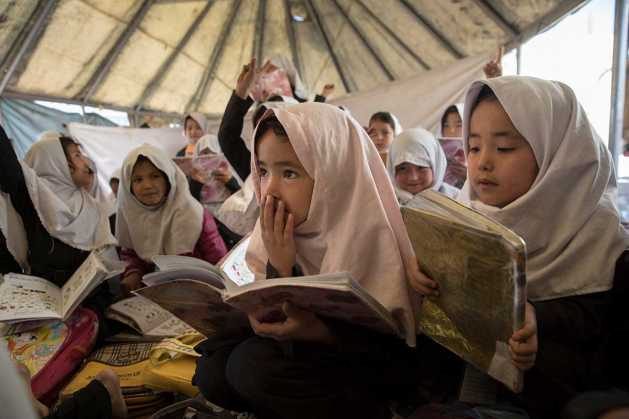
Taliban violations of the rights of women and girls are uniquely extreme. No other country openly bars girls from studying on the basis of gender. Credit: 2017 Paula Bronstein for Human Rights Watch

LONDON, Oct 29 2021 (IPS) – Secondary schools have reopened for boys but remain closed to the vast majority of girls. Women are banned from most employment; the Taliban government added insult to injury by saying women in their employ could keep their jobs only if they were in a role a man cannot fill—such as being an attendant in a women’s toilet. Women are mostly out of university, and due to new restrictions it is unclear when and how they can return. Many female teachers have been dismissed.


The policy of requiring a mahram, a male family member as chaperone, to accompany any woman leaving her home, is not in place according to a Kabul official but Taliban members on the street are still sometimes enforcing it, as well as harassing women about their clothing. The Taliban have systematically closed down shelters for women and girls fleeing domestic violence. Women’s sports have been banned.

The Taliban have appointed an all-male cabinet. They abolished the Ministry of Women’s Affairs, and handed over the women’s ministry building to the reinstated Ministry of Vice and Virtue, which was responsible for some of the worst abuses against women during the Taliban’s previous period in power from 1996 to 2001.

This was the situation two months after the Taliban had regained control of the Afghan capital, Kabul, as the US and its allies departed, wrapping up their 20-year engagement in Afghanistan’s 40-year war.

Afghan women are fighting for their rights. They tried to negotiate with the Taliban, and when that failed, they protested. The Taliban broke up their protests, beating protesters and the journalists covering the protests, and then banned unauthorized protest.

The US and the whole international community seem a bit stunned and unsure of what to do. It forms a sadly perfect bookend to the days after the 9/11 attacks, when the US and its allies grieved and raged and then emphasized Taliban abuses of women and girls to help them build support for their invasion of Afghanistan.

The US has long had an uneven—and self-serving—track record on defending women’s rights abroad. But the US is not alone being unsure of what to do to protect the rights of women and girls under Taliban rule.

Even governments priding themselves on their commitment to women’s rights have struggled to find solutions. They have also struggled to make the rights of Afghan women and girls a top priority at a moment when troop-contributing nations are licking their wounds, and concerns about Afghanistan again becoming a host to international terrorist operations could overshadow concerns about human rights.

Humanitarian crisis

Taliban attacks on rights are not the only problem women and girls are facing. Afghanistan’s economy is in free fall, set off by widespread lost income, cash shortages, rising food costs, being severed from global financial systems, and an abrupt halt to the development assistance that made up 75 percent of the previous government’s budget.

This crisis, like most humanitarian crises, will cause the most harm to women and girls. Officials with the UN and several foreign governments are warning of economic collapse and risks of worsening acute malnutrition and outright famine. Surveys by the World Food Program (WFP) reveal that over nine in ten Afghan families have insufficient food for daily consumption, with half saying that they ran out of food at least once in the previous two weeks. One in three Afghans is already acutely hungry.

In December 2020, the UN Children’s Fund, UNICEF, had already warned that an estimated 3.1 million children—half of Afghanistan’s children —were acutely malnourished. Other United Nations reports warn that over 1 million more children could face acute malnutrition in the coming year. By mid-2022, 97 percent of Afghans may be below the poverty line.

Healthcare workers and teachers, many of them women, have not been paid for months, and the healthcare system is collapsing. Where schools for girls are open, few students attend, out of fear that they cannot move to and from school safely, along with financial problems, and a sense of despair about their future. And unpaid teachers may or may not teach.

Weak international response

Even as it became increasingly clear over the course of years that cheerful US and NATO statements about their progress in defeating the Taliban were papering over huge and growing cracks, few could imagine a Taliban return as abrupt as the one that took place in August 2021. Few would have predicted this level of humanitarian crisis and collapse of essential services within weeks of the end of a 20-year military, political, and development engagement by at least 42 countries costing an estimated $2.3 trillion.

The early weeks of resumed Taliban rule seemed marked by indecision and slow response by the international community, in spite of a G7 pledge on August 24, following an emergency meeting, that “We will work together, and with our allies and regional countries, through the UN, G20 and more widely, to bring the international community together to address the critical questions facing Afghanistan.”

A special session of the UN Human Rights Council on August 24 produced no meaningful progress. The UN Security Council in September renewed the mandate of the UN mission in Afghanistan but did not take specific steps to strengthen the mission’s human rights work, which faced staffing gaps and problems after some staff left their posts or were evacuated.

A subsequent meeting of the Human Rights Council produced agreement to appoint a special rapporteur on human rights in Afghanistan, with a mandate including monitoring and advocating for the rights of women and girls. This is a less powerful mechanism than the fact-finding mission a broad coalition of human rights organizations had called for.

The resolution creating the role of special rapporteur provided the person with greater staffing resources than most special rapporteurs but did not accelerate the on-boarding process. Under the standard timeline, the rapporteur and their team won’t be in place until mid-2022.

An announcement by the International Criminal Court’s prosecutor called into question the role that body will play in protecting human rights in Afghanistan. The court’s Office of the Prosecutor had been considering action in Afghanistan since 2007 and opened an investigation in 2020.

Alleged war crimes and crimes against humanity within the court’s jurisdiction in Afghanistan include: attacks against civil servants including female officials; attacks on schools particularly girls’ schools; and rape and other sexual violence against women and girls. The investigation was suspended nearly as soon as it was opened, however, while the Office of the Prosecutor considered a request from the former Afghan government to defer to national proceedings.

The prosecutor on September 27, 2021, announced that he would seek authorization from the court to resume investigations in the absence of any prospect of genuine national proceedings, but would focus on crimes committed by the Taliban and Islamic State and “deprioritize” other aspects of the investigation.

This approach sends a message that some victims in Afghanistan are more entitled to justice than others, and risks undermining the legitimacy of the court’s investigation.

There is significant variety in the views of key countries about engaging with the new Taliban authorities in Afghanistan. Regional politics are fraught and complex. China and Russia may see themselves as benefitting from a shift in global power dynamics due to the US defeat in Afghanistan, and they and others including Pakistan and Qatar seem more ready than countries that contributed troops to engage with the Taliban. China, Russia and Pakistan were among only five countries that voted against the Human Rights Council resolution to establish a special rapporteur.

“Feminist foreign policy” and the Taliban

Women’s rights activists have made important progress around the world in the 20 years since the Taliban were previously in power, from 1996 to 2001. These advances make the Taliban’s violations of the rights of women and girls even more cruel and intolerable than they were in 2001 and should help spur action by countries that have made progress to right these wrongs.

In recent years, several countries—including Sweden, Canada, Mexico, and France—proclaimed that they have a “feminist foreign policy.” According to the Swedish government, a feminist foreign policy “means applying a systematic gender equality perspective throughout the whole foreign policy agenda.”

Feminist foreign policy is also a recognition that you cannot have human security when half the population is oppressed and living in fear. As Germany’s foreign minister wrote in 2020, “Numerous studies demonstrate that societies in which women and men are on equal footing are more secure, stable, peaceful, and prosperous.”

What Concerned Governments Should Do

How should a world increasingly embracing “feminist foreign policy” respond to Taliban violations of the rights of women and girls in 2021?

The first step is to muster political will. Lack of political may be a particular challenge in the wake of the withdrawal of foreign troops, but it is not a new problem. During the decades of international presence, troop-contributing nations paid lip service and contributed funding toward women’s rights, but rarely political capital, and over time the lip service and cash dwindled too.

In 2011, the Washington Post reported that efforts to support women’s rights were being stripped out of US programs, quoting an official who said, “All those pet rocks in our rucksack were taking us down.” In a disturbing indication of lack of focus on women’s rights, many government and aid organizations have in recent weeks sent all-male delegations to meet with the Taliban, undermining any efforts they are making to press for greater respect for women’s rights.

Then there is a need for the international community to reach as much consensus as possible about what the problems are and what should be done. There are signs that even countries that have been more open to engaging with the Taliban have been disappointed by their unwillingness to appoint an inclusive government and their violations of women’s and girls’ rights.

The Taliban government excludes not just women but also largely excludes religious minorities and most non-Pashtun ethnic groups. Even China, Russia, Pakistan and Iran have all called for the Taliban to form an “inclusive government.” Pakistan Prime Minister Imran Khan has said that banning girls from education in Afghanistan would be “un-Islamic.” Qatar’s foreign minister called the Taliban’s ban on girls’ education “very disappointing.”

The Taliban’s unbending stance on the rights of women and girls is so extreme that this, and its opposition to an inclusive government, may drive broad concern about their actions and help the international community build consensus about how to engage. The US may not be the most able leader for this process and may prefer not to lead.

Other countries and institutions, including countries that have pledged to have a feminist foreign policy, majority Muslim countries, and organizations like the EU, should consider taking on greater leadership than they have so far, in response to a weak response from the US.

Next comes the need for a plan. Whatever the plan is, it should avoid any actions that would worsen Afghanistan’s deepening humanitarian crisis and disproportionately affect women and girls. There are signs of emerging agreement for humanitarian assistance and essential services, with the United Nations Development Program having made arrangements to pay salaries of healthcare workers on a temporary basis.

But major issues remain unresolved, suffering from a lack consensus by the international community, including how to respond to Taliban efforts to exclude women from working for aid agencies . Women workers are essential to ensure that aid reaches women and women-headed households. so permitting women humanitarian workers to do their jobs is not setting a condition on humanitarian assistance so much as an operational necessity to be able to deliver that assistance.

The international community has struggled to identify what leverage they have that can be used to influence the Taliban. The situation has been complicated by opaqueness on the Taliban side. Governments and donors need to figure out what the Taliban want from the international community, how much and where the Taliban are willing to compromise to get what they want. And they need to identify what other pressures—including the demands of their own members and the risk of Taliban fighters defecting to the Islamic State—constrain the Taliban from compromise.

Equipped with this knowledge, the international community should recognize that almost every country on the planet—except six, conspicuously including the US, plus Iran, Palau, Somalia, Sudan, and Tonga—has ratified the Convention on the Elimination of All Forms of Discrimination against Women (CEDAW). Afghanistan ratified the convention in 2003. The convention requires countries to “pursue by all appropriate means and without delay a policy of eliminating discrimination against women.”

This promise has not been fulfilled in any country; no country has achieved full gender equality and disparities in access to education and employment, wage gaps, and failure to adequately respond to gender-based violence are common around the world. But even in that context, Taliban violations of the rights of women and girls are uniquely extreme.

No other country openly bars girls from studying on the basis of gender. It is shocking to see a country intentionally destroy its system for responding to gender-based violence and dismantle institutions such as the Ministry of Women’s Affairs that were designed to strengthen compliance with CEDAW.

The leverage the international community has to influence the Taliban needs to be deployed in defense of the rights of women and girls. Doing this will be a complex, difficult, and long-term task. But as

CEDAW members, and, in many cases, countries that used women’s rights to sell a war and spent 20 years promising eternal solidarity to Afghan women and girls, the international community owes them this effort.


  Source

How the Social Sector Thinks About Tech Is Wrong

Asia-Pacific, Civil Society, Development & Aid, Headlines

Opinion

Instead of investing resources in building a solution from scratch, it’s smarter to research existing solutions and tools that can be modified for specific needs, the authors say. Credit: Unsplash / Marvin M

Oct 26 2021 (IPS) – Today, technology has become integral to almost all aspects of work—from implementing and standardising processes and collecting data to monitoring and evaluation and helping an organisation scale. This was increasingly apparent during the COVID-19 pandemic, when all organisations turned to technologies like WhatsApp and Zoom to stay connected and deliver their programmes to communities. And yet in the nonprofit sector, tech is viewed as an overhead rather than being fundamental to the functioning of an organisation.


When building budgets for programmes, nonprofits (and donors) must change their mindsets and look at tech as core infrastructure; without this orientation, organisations lose out because they are bearing the cost of technology anyway. It makes no sense not to account for it properly.

We misunderstand technology

1. Tech is an enabler, not the solution

When it comes to nonprofits implementing tech, there are a few misconceptions or assumptions we have encountered during our work at Tech4Dev. The first misconception is that tech is the solution. Tech is, in fact, an enabler—it enables an effective, efficient solution. It cannot by itself solve problems. For example, using tech for mobile data collection is superb.

However, to use this technology effectively, an organisation must have the processes and systems in place to know what data to collect, the audience from whom they will collect the data, and the field staff trained in the system and reasonably knowledgeable about data collection and biases. In such a scenario, tech enables high-quality data collection, but the secret is in the organisation process.

2. It’s not about the size of an organisation

The second misconception is that there is a ‘right size’ an organisation needs to get to before implementing tech solutions. In other words, tech is not for smaller grassroots organisations. A better way to think about this would be to ask yourself: Do I currently have a solution for the problem at hand, and do I have a systematic way of implementing that solution? If the answer is yes, then size should not be a factor at all.

For instance, we’ve seen small organisations use Google Sheets extremely effectively. So you can use cheap tech at a small scale, and you can also use cheap tech on a large scale. We’ve also seen really poor tech being used in both small organisations as well as large ones.

So it’s not about size but about having a systematic approach, because even though tech makes things more efficient, it also tends to add more complexity and introduce another element that employees will have to learn and work with.

We were working with a nonprofit organisation—let’s call it Team Health—that had a large number of fieldworkers, from whom they would receive data via multiple channels including WhatsApp, emails, and phone calls. None of this data arrived in a standardised or structured manner, nor was any of it recorded. Team Health wanted to change this.

They were keen to introduce an app, assuming that all their fieldworkers would know how to enter the requisite information in the exact way that the tech required, and that would lead to them having standardised data exactly how they needed it.

But because their processes at the time were not standardised, and their fieldworkers were accustomed to a certain way of submitting data, the app would not solve their problem. In fact, it might have made things worse had they gone down that path.

3. Asking donors to ‘fund tech

The third misconception among organisations is that funders are hesitant to pay for tech. Instead of asking donors to ‘fund technology’, nonprofits should articulate why technology is important to the organisation’s core functioning.

They must incorporate it as such in their proposals. We need to educate the funder ecosystem as well as the nonprofit ecosystem for this to become a reality.

Take the case of an organisation—Team Sanitation—working on community toilets for the urban poor in India. They used a fair amount of technology for data collection and geographic information system (GIS) mapping in their day-to-day operations.

These tools were core to their project, and so Team Sanitation started incorporating all costs associated with using these technologies (for example, licensing and operational costs) as necessary project costs in their funding proposals.

And they haven’t got any pushback from donors for doing so. As long as organisations can demonstrate the need for tech within their programmes, most donors will not have any issues supporting such core expenses.

4. Thinking that a custom tech solution needs to be built from scratch

The fourth mistake many organisations make is to think that they need to build custom tech solutions from scratch. But before thinking about this nonprofits need to define their problems and needs.

Detailing what their top problems are, why they are important, and how they impact the work that they are trying to do can help them understand where tech might help, and where it might not. If tech is in fact the way to go, then it’s important to acknowledge that very few nonprofits have a unique problem that they need solved.

The context, communities, and resources might differ, but fundamentally the problem a nonprofit is trying to solve has likely been attempted or solved by somebody else already.

For instance, let’s take the case of an organisation that is in the business of training primary school teachers, and finds that doing this at scale, in person, is cost-prohibitive. Surely, there are others that have faced this issue of cost and scale, and have worked on a solution.

Even still, in the nonprofit sector, there is a tendency to build custom tech platforms when they are not needed. Both funders and nonprofits have been burnt by this, where a solution was built, and in some cases the investment had to be written off, and in others there was little progress to show for it.

Custom tech is not only a waste of resources, time, and effort, but it is also not scalable. For this reason, instead of investing resources in building a solution from scratch, it’s smarter to research existing solutions and tools that can be modified for specific needs.

We’ve seen multiple custom builds of mobile data collection platforms, case management systems, and customer relationship management (CRM) systems across different nonprofits, most of which were inferior and lacking compared to the current open-source and commercially available solutions. ‘Research before build’ is a mantra we follow quite religiously within Tech4Dev.

We need to build a culture of collaboration and sharing knowledge where everyone benefits

Given that there are existing solutions to problems that several nonprofits are trying to solve, the question arises: What are the barriers to accessing such information?

Most nonprofits do not have the technological knowledge or expertise that is helpful in thinking about what tools might be useful for their specific problem. Connecting the dots between the problem and potentially useful technologies is usually the responsibility of the software partner.

However, since software partners often have limited experience in the social sector, their approach to an organisation’s problem is to simply build a solution specifically for the nonprofit. This is far from ideal. Not only do we need software partners that are well versed with the social sector and the problems nonprofits are trying to solve, but we also need nonprofits to strengthen their understanding of tech.

In order to do this, we need to build a knowledge base for tech that everyone can learn from—nonprofits, donors, and software partners. This kind of open ecosystem will also help funders realise when they are funding similar solutions across multiple organisations, and it will help organisations learn from each other’s work.

We must prioritise open-source publishing of the work

To build an accessible ecosystem, the first step is to share existing knowledge with all the relevant stakeholders. Nonprofits should publish their programmes, challenges, solutions, and learning in the public domain. For example, if a nonprofit is spending 300 hours working on a project, it should spend at least 10 hours creating open-source material that helps people understand what it is that they are doing.

Creating awareness through open-sourced content is crucial for organisations in the social sector so they can learn from and support each other better. While this might not happen right away, as more and more nonprofits share their expertise, the social sector can start to build these broader ecosystems faster. Organisations must ideally move beyond the fear of sharing their ‘trade secrets’, in recognition of the fact that paying it forward will benefit them in the long run.

Donors and intermediary organisations have an important role to play

Organisations like IDinsight do an amazing job publishing their work on a timely basis as seen from their blog and LinkedIn pages. Sharing this information helps distribute knowledge across a wide variety of ecosystem players, hence strengthening the ecosystem.

Donors can nudge these organisations to publish their work as it is being done to help disseminate the knowledge as early as possible. We should never wait till we have the perfect, well-crafted report. Publishing things as the work is being done is another mantra for the projects we run within Tech4Dev.

In India today, the onus of facilitating the building of an ecosystem falls more on funders and intermediary organisations than it does on nonprofits. This is because nonprofits are resource-constrained and devote majority of their efforts to their programmes. Moreover, they do not have the kind of influence and clout that donors have, and might not have the skills either.

The first step that funders can take is to move away from traditional contracts that restrict sharing of content and intellectual property (IP) and towards sharing IP in the public domain. Further, given that funders typically work with multiple organisations within a specific sector, they might be better positioned to see the bigger picture here.

They can also help nonprofits choose software partners. Here, they must be sensitive to the skewed funder–nonprofit power dynamic, and play a supportive role rather than a directive one. There is a lot that funders can do to strengthen the tech ecosystem within the social sector. Unfortunately, there are very few donors and organisations focused on this ecosystem.

We need a much greater push towards building ecosystems and platforms at a much faster rate, and providing adequate support to sustain them. The social sector needs such spaces so they can integrate technology better and more smartly across the work they do.

Donald Lobo serves as executive director of the Chintu Gudiya Foundation, a private family foundation based in San Francisco, CA, that funds US-based nonprofits and organisations developing open-source software for the public good. 

Sanjeev Dharap is an entrepreneur and start-up adviser, and has worked in Silicon Valley for over 25 years. He holds an MTech in Computer Science from Pune University, India, and a PhD in Computer Science from Penn State University. He has been involved with Tech4Dev since early 2019

This story was originally published by India Development Review (IDR)

  Source

The Future of Food & Water Systems in Pakistan & Central Asia?

Asia-Pacific, Civil Society, Development & Aid, Editors’ Choice, Environment, Featured, Food and Agriculture, Headlines, Poverty & SDGs, Regional Categories, TerraViva United Nations, Water & Sanitation

Opinion

Clara Colton Symmes, Princeton-in-Asia Fellow, International Water Management Institute (IWMI), Sri Lanka

 
In an Interview with Dr Mohsin Hafeez, Country Representative – Pakistan, Regional Representative – Central Asia

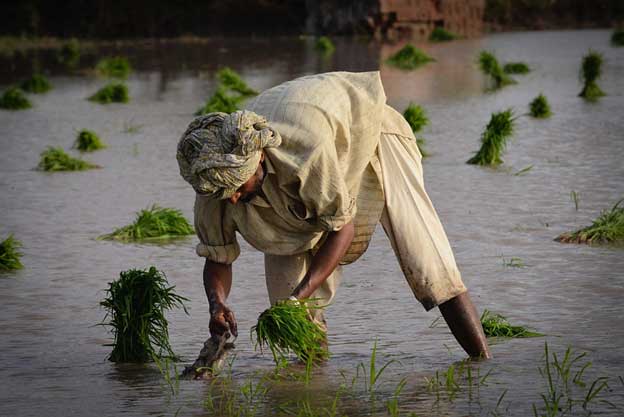
Farmer working in a paddy field in Pakistan. Credit: Faseeh Shams / IWMI

COLOMBO, Sri Lanka, Sep 3 2021 (IPS) – An intense monsoon season in Pakistan means the country’s food system faces the challenge of both extreme floods and extended droughts.

In an effort to address these challenges through cross-sectoral collaboration, Dr. Mohsin Hafeez, IWMI’s Country Representative for Pakistan and Regional Representative for Central Asia, convened a regional dialogue in advance of the UN Food Systems Summit (which is scheduled to take place at the United Nations, September 23) .


Human actions are at the root of much water scarcity, but these international dialogues are an opportunity for humans to be a part of the solution by working to reconcile our damages through transforming how we approach food systems.

Pakistan ranks 88th out of 107 countries on the Global Hunger Index and extreme weather, intensified by climate change, has made farming a challenging venture there. Much of Pakistan’s food is now imported from overseas.

Dr. Hafeez’s work centers around improving the resiliency and efficiency of Pakistan’s water systems. This includes innovating water capture and storage systems in Islamabad and Rawalpindi, where he is working to introduce nature-based solutions like recharging groundwater with rainfall runoff.

By convening April’s regional dialogue and organizing four provincial dialogues in the time since, Dr. Hafeez provided the collaborative platforms necessary for reaching sustainably-managed water sources in his region. It is only through cross-sectoral dialogues and work that Pakistan will achieve sustainable food systems management.

“There is an urgent need for promoting inter-sectoral cooperation through evidence-based information to ensure water-food-energy security and environmental sustainability for food system transformation in Pakistan,” Dr. Hafeez said.

The pre-summit hosted in Italy was another opportunity to bring together diverse stakeholders in food systems in the leadup to the UNFSS. On the IWMI blog, we will be exploring what country managers in Uzbekistan and Pakistan hope to achieve through the UNFSS process.

A Q&A with Dr Hafeez:

How are water and food systems connected?

Water supply systems are first and fundamental in food systems. In Pakistan more than 90 to 95% of our total water resources is used for irrigating crops. It’s a water system intrinsically linked with the food system.

When there is a water shortage, we see a direct impact on food production because this is an arid environment, and farmers are not able to do agriculture without the artificial applying of water.

What are the most pressing challenges facing food and water systems in your region?

Pakistan is a food insecure country. We don’t even have food to eat, let alone nutritious options. Around 45% of the children have stunted growth. People don’t have enough food to meet their caloric needs. We’re importing all the other major crops in the last 4 to 5 years from overseas.

And the food system is dependent on water. When we don’t have enough water, the farmers are not able to grow anything, which impacts the lives and livelihoods of everyone.

If you’re talking about even the linkages between the water system and food system: the current water storage systems are only able to cope for 30 days of water supply.

Then there is also the issue of water quality. There is a lot of wastewater and effluents that mix directly into the into the water supply system including the canals and water networks. This also impacts the food system, so that what we grow may not have a same nutritious value.

Why is water storage so essential in Pakistan?

80% of annual rainfall happens during the monsoon season, which is around 60 to 90 days between July and September. The remaining nine months we receive only 16-20% of the water supply.

Water systems here are not resilient, so water storage capacity is quite low. And when we face extreme climate shocks like droughts, this stresses the water and food systems. Either we are facing three months of floods, or nine months without enough water.

What would a water secure world look like for Pakistan and what needs to happen in order to achieve that?

We need to make water systems more efficient, and that will only happen if we improve the efficiency of the irrigation system, which would make water more available for the other sectors. We also need to make water systems more resilient.

There has been a lot of focus on building large dams, but they require a lot of capital resources. I believe we should also focus on improving water resilience through nature-based solutions like rainwater harvesting and groundwater recharging at the localized level.

We need local, nature-based solutions and the government of Pakistan is planning to introduce 3000 small ponds across Pakistan so farmers will have more water available.

A holistic approach and reliable database on water resources and their usage across Pakistan is key to achieving food, water, and energy security. We are the fifth most climate-vulnerable country in the world and there is an urgent need for promoting inter-sectoral cooperation through evidence-based information.

We also need groundwater management policy. Even though we have a national water policy and provincial water acts, we don’t have a comprehensive groundwater plan. Ministries, like those for climate change and food security policy, must stop working in silos and collaborate.

The regional dialogue we convened did this. It brought ministries together and made them talk about how each could help the other in the water, food, energy (WEF) nexus.

How were you able to give voice during the dialogue to historically underrepresented groups like smallholder farmers, women, children, and rural communities?

We invited people from various government and private sectors and farmers. But because they were held in English, we faced the challenge of a language barrier. Many rural farmers do not speak English. So, we invited some and did what we could to help them with translators.

Another challenge is that this dialogue was conducted virtually, and many smallholder farmers did not have access to that. So, we had only two or three farmers participate.

But we had many government agencies that are directly involved in the farmers community. They were able to represent the farmers and a group called the Farmer’s Federation was also able to attend.

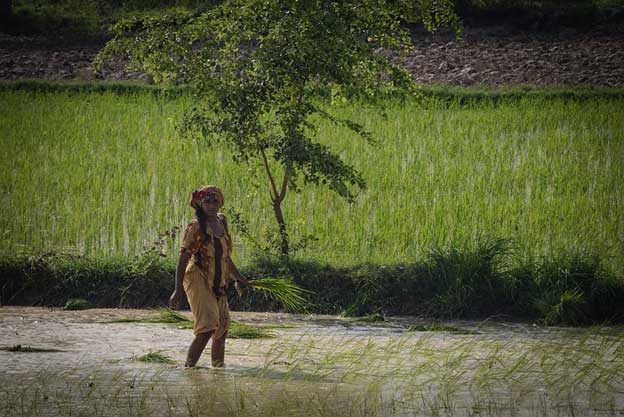
Woman working in a paddy field. Credit: Faseeh Shams / IWMI

How do events like the regional dialogues and then the larger UNFSS affect water systems in your region? And what would you like to see as a result of the UNFSS?

When people talk about the food systems, they talk about production, the food value chain, and consumption. And they often ignore the importance of water. This is really the first time in 10 years when we’re talking holistically about food in a way that includes every aspect of the system.

At a recent provincial dialogue, part of the Member State Dialogue, we had people working on nutrition, agriculture, the value supply chain, traditional agriculture, water, and policy. It provided a platform where people worked together and thought beyond their own specialty: identifying real issues and how they could be improved in the future together.

Pakistan joined a UNFSS coalition for developing countries facing food insecurity. The Pakistani government is emphasizing the need to build resilient societies and improve food accessibility. There will be actions and pledges made to invest more into food systems areas which have been typically ignored.

What upcoming IWMI projects do you think will affect the kind of food system transformation desired by the UNFSS?

IWMI and International Food Policy Research Institute are designing a CGIAR Initiative to scale up the integrated management of water, energy, food, land, biodiversity, and forests for inclusive, sustainable development in transboundary river basins in the context of a changing climate.

The NEXUS Gains Initiative will be a game changer, but also many other IWMI projects will be helpful in interconnected thinking about improving the food security and water systems.

As IWMI and the other One CGIAR centers work together, we will be able to make change in a more systematic, holistic way that will change the mindset around food systems and ultimately improve the resilience of water supply systems.

What is making you feel hope about the future of food and water systems in Pakistan and Central Asia?

The current government is Pakistan is saying that food security is one of their highest priorities. They have initiated so many social initiatives in that field, including a resource program where they are providing food to vulnerable communities, with a focus on gender and the stunted growth of children.

The government also emphasized a need to understand the challenges in agriculture sector, linking from the basic production system towards the value supply chain, because as I mentioned that 22% of the system level losses are there.

  Source

Parliamentarians Determined to Reach ICPD 25 Goals

Africa, Asia-Pacific, Conferences, COVID-19, Gender, Gender Violence, Headlines, Health, Human Rights, Population, TerraViva United Nations, Women & Economy, Women in Politics

Gender

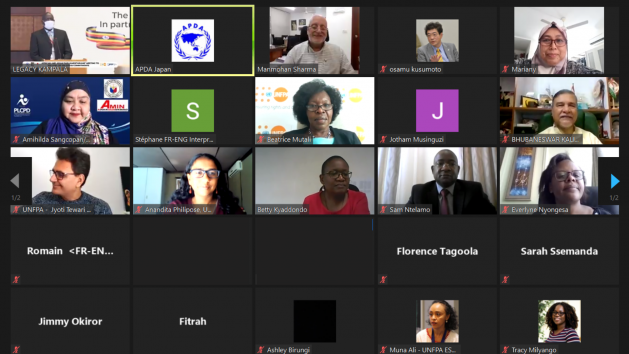
Delegates from Asia and Africa met during a two-day conference to discuss ICPD25 programme of action. Credit: APDA

Johannesburg, South Africa, Aug 23 2021 (IPS) – Politicians from Asia and Africa shared activism anecdotes demonstrating their determination to meet ICPD 25 commitments. They were speaking at a hybrid conference held simultaneously in Kampala, Uganda, and online.


Ugandan MP Kabahenda Flavia dramatically told the conference that women parliamentarians in her country “stampeded the budget process” to ensure there was potential to recruit midwives and nurses at health centres. Another told of a breastfeeding lawmaker who brought her child to parliament, forcing it to create inclusive facilities for new mothers.

Yet, despite these displays of determination, there was consensus at the meeting, organised by the Asian Population and Development Association and Ugandan Parliamentarians Forum of Food Security, Population and Development, that the COVID-19 pandemic had set the ICPD25 programme of action back, and it needed to be addressed.

In his opening remarks, former Prime Minister of Japan and chair of the APDA, Yasuo Fukuda, commented that the pandemic had “dramatically changed the world. It has exposed enormous challenges faced by African and Asian countries, which lack sufficient infrastructure in health and medical services.”

With only nine years until 2030 to achieve the Sustainable Development Goals (SDGs)
Fukuda told parliamentarians they needed to respond to the swift pace of global change.

His sentiments were echoed by Ugandan MP Marie Rose Nguini Effa, who said in Africa, the pandemic had “affected the lives of many people, including the aged, youth and women. Many young people lost their jobs while girls’ and young women’s access to integrated sexual and reproductive health information, education and services have plunged.”

Addressing how parliamentarians can make a difference, Pakistani MP Romina Khurshid Alam intimated legislation was not the only route.

Other actions were needed to achieve SDGs, especially those relating to women. For example, the act of paying women the same as their male counterparts would more than compensate for the estimated $264 billion costs over ten years of achieving SDG 5 on gender equality.

Alam, who is also the chair of the Commonwealth Women Parliamentarians forum, quoted figures from the World Economic Forum, which had looked at the benefits of pay equity. Each year the discrimination “takes $16 trillion off the table”.

“If we just started paying women the same amount of money that we pay men for the same job. Your country will generate that GDP. We will not have to beg anyone for that money,” she said.

The ‘shadow pandemic’ also threatens to destroy any progress made on agenda 2030, Alam said.
People were put into lockdown to prevent the spread of the disease – but not all people live in three-bedroom houses. Overcrowding in poor areas, the stress of lockdowns led to a 300 percent increase in violence.

Flavia said in Uganda, women’s issues were taken extremely seriously – their role, she said, should not be underestimated.

“Women don’t only give birth. They are the backbone of most economies,” she noted, adding that more than 80 percent of the informal sector is made up of women. She listed various laws created to ensure women are accorded full and equal dignity, including article 33 of the Ugandan constitution, which enshrined this.

Women parliamentarians saw their role as custodians of the ICPD 25 programme as action – and were prepared to act if their demands were not taken seriously, including holding up the budgeting process until critical health posts were funded.

Constatino Kanyasu, an MP from Tanzania, called for collective action.

“Developing countries should merge those efforts with other issues, by addressing Covid-19 together with ICPD+25 commitments horizontally,” she said.

In a presentation shared at the conference, Jyoti Tewari, UNFPA for East and South African regions, showed some progress indices since the ICPD conference, including a 49 percent decrease in maternal mortality before the pandemic.

However, he said there was still a long way to go, with 80 000 women dying from preventable deaths during pregnancy. However, the lockdowns during the two waves of the COVID-19 pandemic had prolonged disruptions to SRHR services.

It was necessary to “sustain evidence-based advocacy to promptly
detect changes to service delivery and utilization, and support countries to implement mitigation strategies,” Tewari said.
Ugandan Deputy Speaker Anita Annet Among expressed concern that one in five adolescent girls falls pregnant in Africa – many of whom drop out of school. With schools closed, the situation had worsened.

She called on parliamentarians to be the voice of the voiceless and ensure “you make strong laws that protect the women and youth. Ensure the appropriation of monies that support these marginalized people.”

A declaration following the meeting included advocating for increased budgets to meet the ICPD 25 commitments, including sexual and reproductive health services for all and contributing to the three zeros – preventable maternal deaths, unmet family planning needs, and eliminating gender-based violence.

• The meeting was held under the auspices of the Asian Population and Development Association (APDA) in partnership with The United Nations Population Fund (UNFPA) and hosted by Ugandan Parliamentarians Forum of Food Security, Population and Development (UPFFSP&D).


Flaws in Asia’s Pearl

Armed Conflicts, Asia-Pacific, Civil Society, Crime & Justice, Featured, Headlines, Health, Human Rights, Humanitarian Emergencies, TerraViva United Nations

Opinion

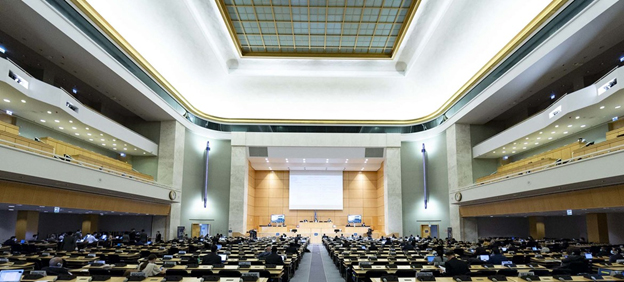
In March 2021, the UN Human Rights Council was given a mandate to collect and preserve information and evidence of crimes related to Sri Lanka’s 27-year long civil war that ended in 2009. Meanwhile, Western nations taking a cue from the Human Rights Council’s highly critical resolution on Sri Lanka appear to be tightening the noose. Credit: UN Photo / Violaine Martin. 43rd session of the Human Rights Council.

LONDON, Jul 5 2021 (IPS) – For well over a century Ceylon, now Sri Lanka, has been known to the world as the ‘Pearl of the Indian Ocean’ for its multifaceted attractions. That is until blurb writers ruined it all with hyperbolic epithets that obscured the country’s magnetic charms, which attracted visitors from around the globe.


But one particular epithet has lived up to its name. Called ‘a country like no other’, Sri Lanka is increasingly beginning to prove this true – though not for the reasons that originally prompted it.

Over the years, groups of professional politicians and those drawn to the sphere, not to serve the public but by thoughts of self-aggrandisement and avarice, have dragged this once prosperous country, with its many natural resources and strong democratic institutions, towards its nadir.

From being Asia’s first democracy, with universal franchise granted in 1931– even before independence from Britain in 1948– political commentators and increasingly the public now fear that the country is teetering on the brink of militarism, with retired and serving senior officers in key positions in the civil administration, and others appointed to virtually oversee Sri Lanka’s 25 administrative districts.

While there is both international and local disquiet over the deterioration of democratic values, of more immediate concern is the country’s dire economic state. The situation is so critical that less than two weeks ago, the respected Sunday Times wrote that President Gotabaya Rajapaksa’s government is ‘steps away from bankruptcy’.

At the same time, well-known economists were pressing alarm bells, warning about the possible breakdown of the banking system ‘causing a collapse of the economy’. The direct cause of the current crisis was the sudden hike in fuel prices in late June, which is bound to have a ripple effect on other commodities and services.

Bakers are already threatening to raise their prices, which could well have happened by the time this article appears.

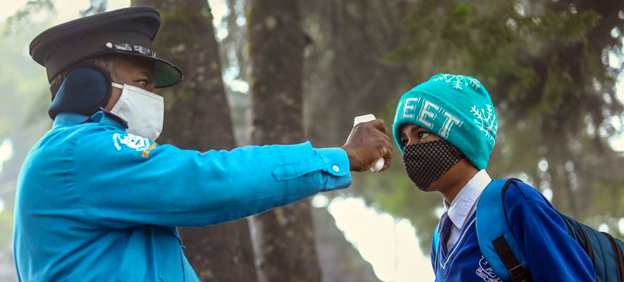
A thermometer gun is used to take a boy’s temperature in Sri Lanka. Credit: UNICEF/Chameera Laknath

With the prices of staples such as rice and vegetables unbearably high, the average consumer, already burdened by the steepening cost of living, is being pushed to the wall by a government that came to power some 20 months or so ago promising to reduce poverty and improve living standards.

Rising living costs are compounded by a still uncontrollable Covid pandemic. This has compelled the government to impose lockdowns and curb travel – restrictions which are haphazardly lifted and re-imposed, despite the best medical advice – as daily wage earners run out of cash to buy food for their families and meet other domestic needs.

Political commentators and increasingly the public fear that the country is on the brink of militarism

Last month, the Sri Lanka Medical Association urged President Gotabaya Rajapaksa to continue lockdown restrictions without interruption–”considering that over 2,000 Covid 19 cases and over 50 deaths are being reported daily” and also the detection of the highly dangerous Indian variant’.

At the time of writing, health authorities reported another 52 fatalities and put the daily count of positive cases at 2,098. But such statistics seems to matter little to politicians and their military and medical cohorts, tasked with combating the spreading pandemic but ignoring the accumulating data and the advice of specialist medical professionals.

Meanwhile, the vaccination of the population, according to a pre-determined programme, has been disrupted by politicians who have drawn up their own priority lists and even threatened doctors and health workers who refused to accept their dictates, raising law enforcement issues and public criticism.

Those with power and influence find backdoor means to gain access to vaccinations, at the expense of an increasingly frustrated and angry public, who stand in long queues for hours awaiting their turn.

While the overall Covid containment programme is reportedly in a mess, along with an economy going steadily downhill, another pearl turned up in the Indian Ocean close to Colombo port. The X-Press Pearl, a Singapore-registered container ship, was carrying noxious cargo, including a leaking nitric acid container. With Qatar and India refusing to admit the vessel for repairs, it turned up in Colombo

That poisonous pearl spewed nitric acid into the ocean and then self-immolated, burning for days before part of it went down on June 2. As a result of the incident, more than 150 marine animals, including 100 turtles, 15 dolphins, three whales and scores of birds and fish beached in various parts of the country, not to mention the kilometres of beach covered with plastic pollutants, leading a UN representative in Colombo to describe the episode as a ‘significant damage to the planet’.

Meanwhile, the original pearl of the Indian Ocean is struggling to keep its head above water. The Sunday Times’ economics columnist Dr Nimal Sanderatne, an agricultural economist, former central banker and academic, painted a bleak picture in his weekly column in late June: ‘The external finances of the country are in a perilous state. External reserves have fallen, the trade deficit is widening, the balance of payments deficit is increasing and there are foreign debt repayments of about US$4 billion during the rest of the year.’

His views about the parlous state of the economy were echoed by several other economists, including the spokesman of Sri Lanka’s main opposition party SJB, Dr Harsha de Silva, and Dr Anila Dias Bandaranaike, a former assistant governor of the Central Bank.

In a desperate bid to boost reserves, Sri Lanka went for a currency swap of US$200 million with Bangladesh, once a struggling new nation in South Asia. Prudent economic policies and management, and national interest, brought Bangladesh to its current flourishing status.

When the currency swap was announced, one Sri Lankan wag remarked that it would have made more sense if Sri Lanka had swapped its advisors for those from Bangladesh, and the swap should be permanent to protect the country’s self-respect

Only a country that has lost its political sense and perceptiveness, or has abandoned all concern for its struggling people, could seek government sanction to import nearly 300 vehicles costing Rs 3.7 billion for its 225 parliamentarians and unnamed others, in the midst of a severe foreign currency crisis, when begging and borrowing seem the only options.

What is even worse, Sri Lanka’s premier state bank was ordered to open letters of credit one month or so before cabinet approval had been sought. Whoever ordered this remains unknown to the public at the time of writing.

Critics of the government say it is fast losing its one-time popularity as ill-considered and sudden policy decisions are heaped on existing economic and health problems, such as the snap decision to ban chemical fertiliser and pesticides, so essential right now for agriculture and export crops such as tea.

Scant wonder the government is being assailed by even close associates of the Rajapaksa family. One such is the head of the Catholic Church, Malcolm Cardinal Ranjith, who, in a strongly critical statement recently said that ‘even nature seemed to be turning against the rulers’.

Meanwhile, western nations taking a cue from the UN Human Rights Council’s highly critical resolution on Sri Lanka last March appear to be tightening the noose.

At the end of June, the European Parliament moved a resolution, with almost 90 per cent voting for it, urging the EU authorities to consider suspending the Generalised System of Preference (GSP Plus) trade concessions to Sri Lanka, which would be a serious blow to exports.

Later the Core Group of Western nations that sponsored the UNHRC resolution issued a statement condemning Sri Lanka’s human rights situation and new changes to the Prevention of Terrorism Act.

Bleak times lie ahead.

Source: Asian Affairs Magazine

Neville de Silva is a veteran Sri Lankan journalist who held senior roles in Hong Kong at The Standard and worked in London for Gemini News Service. He has been a correspondent for foreign media including the New York Times and Le Monde. More recently he was Sri Lanka’s deputy high commissioner in London

  Source

Universal Civil Registration and Vital Statistics Are Critical for Truth, Trust and COVID Recovery in Asia and the Pacific

Asia-Pacific, Civil Society, Development & Aid, Featured, Headlines, Health, Human Rights, Humanitarian Emergencies, TerraViva United Nations

Opinion

BANGKOK, Thailand, Jun 28 2021 (IPS) – With health systems at a breaking point, hospitals at capacity and desperate family members searching for oxygen for loved ones, the devastating second wave of COVID-19 that has swept across South Asia has felt ¬surreal. Official figures have indicated record-breaking daily coronavirus cases and deaths, not only in South Asia, but across the entire Asia-Pacific region during the latest surge. As devastating as it has been, the truth is we may never know how many people have died during the pandemic.


Armida Salsiah Alisjahbana

Underreporting of deaths is common across the Asia-Pacific region, with an estimated 60 per cent of deaths occurring without a death certificate issued or cause of death recorded. One reason for this is the lack of a coordinated civil registration system to accurately record all vital events. This issue is exacerbated in times of crisis, as many of the poor die as they lived: overlooked or without being officially counted.

Civil registration and vital statistics (CRVS) systems record deaths and other key life events such as births and marriages. A complete approach to civil registration, tracking vital statistics and identity management relies on multiple arms of government and institutions working together to collect, verify and share data and statistics so they are reliable, timely and put to right use. Without such official data and records during catastrophes such as a pandemic, we see how fast people get left out of extended social protection, vaccination drives and emergency cash transfers. Conversely, it significantly limits the ability of the most vulnerable groups to claim this access and their rights.

The need for accurate data and reporting mechanisms is critical at all times and even more crucial during humanitarian situations, whether a natural disaster or health emergency, when urgent decisions are required and hard choices have to be made. Governments, health authorities and development partners need timely and complete data to know the extent of the issue. This data can guide evidence-based decisions on where resources should be deployed and assess which interventions have been most effective. The more complete, accurate and trustworthy the data, the better the decisions. Or at least, the leadership is unable to use the excuse of ”we did not know.”

Kanni Wignaraja

In 2014, the United Nations Economic and Social Commission for Asia and the Pacific (ESCAP) convened the first Ministerial Conference on Civil Registration and Vital Statistics, during which the Asian and Pacific CRVS Decade (2015-2024) was declared. Governments later set a time frame for realizing their shared vision – that all people in the region will benefit from universal and responsive CRVS systems.

These are complex and vast systems that need both technological and human capabilities to do it correctly, and the political commitment to sustain the effort. Development partners, including ESCAP, the United Nations Development Programme (UNDP) and the United Nations Children’s Fund (UNICEF), continue to actively work with governments and institutions to support the development of national civil registration systems, vital statistics systems and identity management systems such as national population registers and national ID card schemes.

A challenge facing governments has been transitioning from a standalone paper-based registration system to an integrated and interoperable digital one. UNICEF has worked with countries in the region on the registration of newborns, digitalization of old records and creation of integrated digital birth registration systems. UNICEF is also working with the World Health Organization (WHO) to improve integration of health services and civil registration, allowing governments to provide uninterrupted civil registration services and respond faster to health priorities, especially during crises.

Omar Abdi

UNDP and UNICEF play leading roles in implementing the UN Legal Identity Agenda, which aims to support countries in building holistic, country-owned, sustainable civil registration, vital statistics and identity management systems. Recognizing the importance of protecting privacy and personal data, UNDP advises countries on the appropriate legal and governance framework and has been engaged in supporting civil registration, national ID cards and legal identity in countries.

It is clear from the report by ESCAP, Get Every One in the Picture: A snapshot of progress midway through the Asian and Pacific CRVS Decade, that many countries in our region have seen improvements. However, we need to do more to ensure that all countries are able to produce reliable official statistics. And to use this to also learn and look forward.

The human toll of the COVID-19 crisis has been immense with far reaching consequences for the most vulnerable families. To respond effectively to disasters and build back better, it is time we get everyone in the picture.

Armida Salsiah Alisjahbana is the Executive Secretary of the United Nations Economic and Social Commission for Asia and the Pacific (ESCAP)

Kanni Wignaraja is the Director of the UNDP Regional Bureau for Asia and the Pacific, UNDP
Omar Abdi is the Deputy Executive Director of Programmes, UNICEF

  Source