Why Empowering National Human Rights Institutions Helps on the Quest for Healthy Earth?

Asia-Pacific, Civil Society, Climate Change, Development & Aid, Education, Environment, Featured, Global, Headlines, Human Rights, Population

Claudia Ituarte-Lima, Stockholm University, Sweden and University of British Columbia, Canada

 
Claudia Ituarte-Lima is researcher on international environmental law at the Stockholm Resilience Centre, and affiliated senior researcher at the Raoul Wallenberg Institute of Human Rights and Humanitarian Law. She is currently a visiting researcher at the Institute for Resources, Environment and Sustainability, University of British Columbia. She holds a PhD from the University College London and a MPhil from the University of Cambridge.
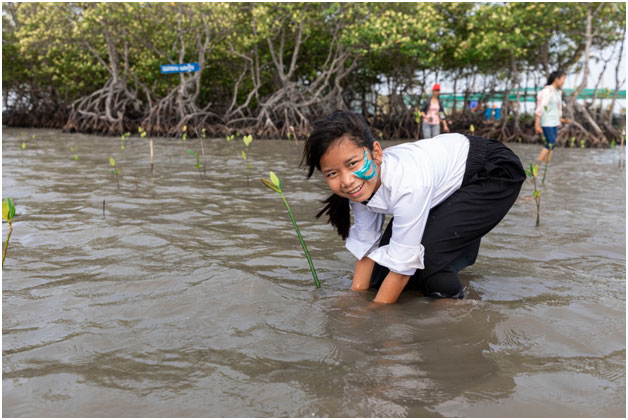
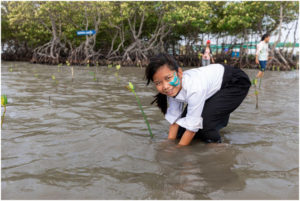
On March 2020, over 330 students, women champions, government officials, NGO members and community members from around Kampot and Kep gathered in an effort to plant 3,000 mangroves and conserve Cambodia’s coastline. The local activity took place as part of a larger mangrove planting and marine exhibition under Action Aid’s 100,000 Mangroves campaign, supported by the United Nations Development Programme (UNDP) under the project ‘Strengthening Climate Information and Early Warning Systems in Cambodia’. The campaign aims to plan 100,000 mangroves in eight community fisheries by May 2020, and raise awareness of the importance of marine ecosystems. Credit: ManuthButh/UNDP Cambodia

VANCOUVER, British Columbia, Canada, Mar 24 2020 (IPS) – We are living in a critical time. As we face existential environmental challenges from climate crises to the mass extinction of species, it is difficult sometimes to see solutions and new ideas. This is why we all need to celebrate and give visibility to creative and courageous efforts of people and organizations striving towards a healthy planet for all.


I write today about the key role played by National Human Rights Institutions (NHRIs) in the Global South in our collective fight against climate change. The time has come to empower NHRIs.

Their unique position mandated by law yet independent from the government can make an urgent needed bridge between legal and policy advances, and ground-up efforts such as youth and women movements, thereby contributing to the enjoyment of the right to a healthy environment.

I have recently had the chance of learning real-world success stories by brave NHRIs working in some of the most challenging contexts. While being a member of the facilitators’ team of a series of webinars* for technical staff and decision-makers working in NHRIs and prior face-to-face interaction with them, it became crystal clear that strengthening the skills and capacities of NHRIs can contribute positive outcomes for both human rights and the environment.

In Mongolia, for instance, the NHRI with the support of civil society organizations and environmental researchers has recently developed a draft law for safeguarding the rights of environmental defenders.

The NHRIs have also intervened in a variety of sectoral issues from pesticides and agriculture in Costa Rica, to mining in South Africa and the connections between coal mining and transportation in Mongolia. The Morocco NHRI has prompted other African NHRIs and civil society organizations to actively participate in international climate negotiations.

Business and human rights was a key issue raised by our NHRIs colleagues.
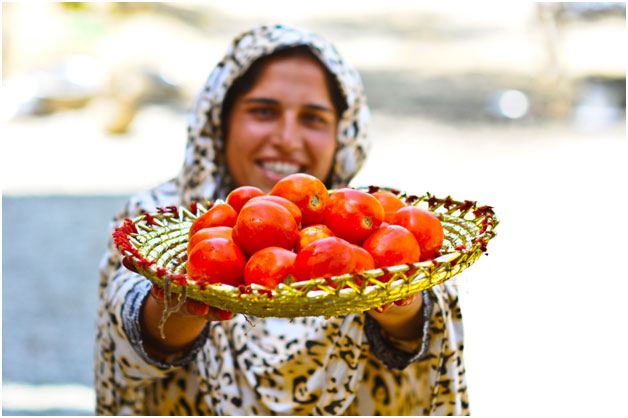
Nazia, 38, proudly shows off her home-grown tomatoes in Nadirabad village, Pakistan. She participated in kitchen gardening training offered under the joint UNDP-EU Refugee Affected and Host Areas (RAHA) Programme in Pakistan. Credit: UNDP Pakistan

The significant legal, institutional and financial obstacles that national duty bearers face to investigate transnational corporations and their responsibilities concerning their impacts to a safe climate has not proved insurmountable for NHRIs.

The Philippine’s NHRI has a mandate to promote human rights which, creatively interpreted, allowed it to investigate the climate change and human rights nexus beyond its national borders.

The systemic nature of climate change justified a national inquiry rather than a field visit. Because climate change is an existential issue not only to Filipino people but globally, the Philippines national inquiry on climate change turned into an inquiry with strong global dimensions.

It included public hearings in the Philippines, New York and London, virtual hearings and expert advice from the former UN Special Rapporteur on human rights and environment, academics from different parts of the world and the Asia-Pacific regional network of NHRIs.

A major comparative advantage presented by the NHRIs is their unique position in working hand in hand with right holders in addressing environmental – human rights gaps facing the most vulnerable populations.

Costa Rica NHRI has found, for instance, that women, girls, men and boys and elder living in coastal areas become especially vulnerable to climate change because their access to clean drinking water and fish become scarce.

The South African NHRI together with food sovereignty civil society organizations has developed a draft climate charter, to be presented to the parliament, with a more holistic approach to the current climate policy.

In recent years, the awareness of the linkages between human rights and climate change has greatly increased. The legal recognition of the right to a healthy environment in more than 150 countries, together with judicial decisions, and academic studies on the safe climate dimension of this right has grown rapidly. NHRIs can be instrumental in translating them into results and action, including under difficult circumstances.

Their role in advising duty bearers, working together with right-holders helps to understand and act upon systemic environmental challenges. Their synergies with environmental human rights defenders can also contribute to more effective investigation and advocacy, not least in the context of informal and unregulated business activities where it is especially difficult to collect data and hold businesses accountable.

Time has come for the international community to do more to support NHRIs in the Global South, a key player often overlooked in climate and biodiversity talks, debates and funding. Due to the intrinsic connections between human rights and environment, the NHRIs need to be further supported to perform their innovative roles in safeguarding life-support systems at various jurisdictional scales, including advocating for the global recognition of the right to a healthy environment by the United Nations.

* The series was organized by the Global Alliance for National Human Rights Institutions (GANHRI), UNDP, the UN Special Rapporteur on Human Rights and the Environment, the Swedish Environmental Protection Agency and UN Environment. A final report with key messages from the webinar series is available on the UNDP website.

  Source

India’s Citizenship Law Triggered by Rising Right-Wing Ideology

Active Citizens, Asia-Pacific, Civil Society, Democracy, Editors’ Choice, Education, Featured, Fostering Global Citizenship, Global, Global Governance, Headlines, Human Rights, Inequity, IPS UN: Inside the Glasshouse, Population

Credit: Foreign Policy

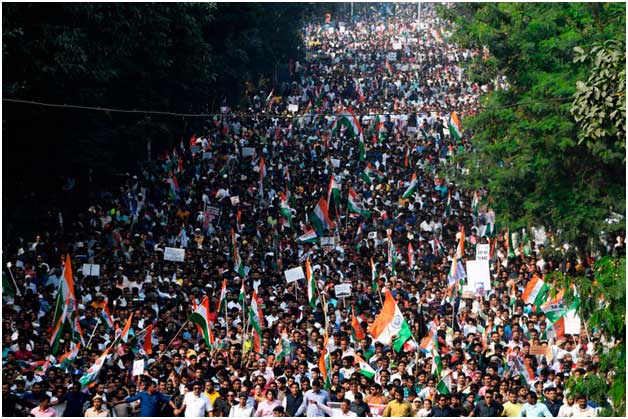
UNITED NATIONS, Jan 6 2020 (IPS) – “Fire bullets at the traitors of the country,” chanted mobs of Bharatiya Janata Party, or BJP, supporters wrapped in Indian flags in Delhi last week.


It’s been less than a month since protests emerged against the BJP’s Citizenship Amendment Act (CAA), a new law to redefine and restrict who is considered an Indian citizen. In a violent crackdown, 27 peaceful protesters have been killed and police have detained 1500 others. BJP vigilante mobs continue to threaten and beat people protesting this controversial bill.

The CAA became law on December 11th, 2019 to provide a path to citizenship for minorities that fled from Afghanistan, Bangladesh, and Pakistan prior to 2014, but its most controversial point is that it specifically excludes Muslims. Critics call it discriminatory and say it threatens the secular nature of India’s constitution by trying to establish a Hindu religious state, or a “Hindu Rashtra,” akin to other religious states like Saudi Arabia or Israel’s attempt for a Jewish nation state.

In addition to the CAA, the Indian government is also planning to implement a National Register of Citizens, also known as the NRC, across the whole nation by 2021. The most recent NRC was implemented by the Indian government in the state of Assam in 2015 forcing Indians to provide documented proof of their citizenship to be considered Indian citizens. The result was the disenfranchisement of 1.9 million mostly Muslim residents who now risk being sent to illegal detention camps as they do not have what the government considers sufficient documentation or “legacy documents” which must date back to the 1970s. People fear that its extension to the rest of the country will not only affect Muslims who are not safeguarded by the CAA, but also the poorest, unlettered parts of society.

According to Indian historian and executive-director of the Tricontinental Institute for Social Research, Vijay Prashad, the BJP has couched the CAA as a progressive refugee policy which is redundant given that India is already a signatory of the Global Compact for Migration as well as other international treaties on migration and refugees.

“Why not bring these treaties to be ratified by India, why bother to create your own bizarre thing if there’s already an international framework to say that we accept refugees and migration?” he asked rhetorically. “Well it’s because they’ve used the question of migration not for migration itself but to define what is an Indian citizen, which is a very chilling thing because now they are making the claim that Muslims are not citizens in India,” Prashad told IPS News.

Prashad says this is a core part of the BJP’s right-wing ideology. India’s home minister Amit Shah even referred to undocumented Muslim migrants coming from Bangladesh to India as “termites” and “infiltrators” and threatened to throw them into the Bay of Bengal.

India is currently the world’s largest democracy which historically has not used religion as a prerequisite for citizenship. According to Ramya Reddy, human rights lawyer from Georgetown University Law Center, the CAA puts India’s democracy at risk by violating Articles 14 and 21 of the Indian constitution, which deal with equality and liberty.

Protests

Daily protests have been met with extreme violence by the police who have fired stun grenades, smoke bombs, tear gas, and even used live ammunition to shoot and kill protestors. Police have attempted to stop protests by imposing Section 144 of the Penal Code, a draconian law from the British Raj historically used to crush freedom fighters by prohibiting the assembly of more than 4 people. The section of this law, however, is being applied selectively.

“When the radical Hindutva supporters gather, this is not considered an unlawful gathering according to the police because they’re pro-government. The police even escort them,” said Aatir Arshad a Bachelor’s student from Jamia Millia University who’s been involved in recent protests.

Jamia Millia Islamia University, a public college in New Delhi with a majority-Muslim student body, became the center of the protest movement in Delhi after police stormed the university campus, dragged out several students, beat them up and arrested them, including those who were not participating in the demonstrations.

“They rushed into the library, where students were not even protesting, they were just studying for their exams and the police beat them up,” Arshad told IPS News. “That moment was apocalyptic for Jamia Milia Islamia. They also harassed students and then claimed they did nothing.”

Arshad adds that police also entered the mosque on the university campus, beat up the Imam, as well as the guards of the university. Protests are still going on because of the events from that day.

Ahla Khan, an alumnus from Jamia Millia and resident of the Jamia Nagar area, explained to IPS News how on the first day of protests her and her sister were just walking to Jamia University when they got caught in the middle of a confrontation between police and protesters. They ran to the sidewalk and watched as police hit students with batons.

“I was watching a guy standing there, just looking at his phone doing nothing. The police ask him ‘where are you going’ and he doesn’t say anything. And just like that the police start beating him up,” says Khan.

She explains how the protesters have been highly organized and peaceful in Delhi. Many have volunteered to distribute tea in the biting cold weather, organized assemblies and facilitated plays and book readings. Chants and slogans have called for repealing the CAA as well as for Azaadi, or freedom. Police have been more restrained than in Uttar Pradesh (UP) where police violence has been lethal. The Chief Minister of UP called a meeting in late December threatening to seize property of those involved in protests “to compensate damage to public property.”

“In UP police and RSS goons have been barging into people’s houses, hitting them, beating people up, thrashing their entire houses, looting them, TVs and fridges broken,” said Khan.

The government has also made several attempts to prevent media outlets from covering police violence and has blocked the internet is several parts of India where there are massive protests. Internet shutdowns have become commonplace, with the shutdown in Kashmir being the longest ever in a democracy.

International Response

While many protesters are still languishing in jail, the United Nations has voiced concern over the CAA with Secretary-General Antonio Guterres’ spokesperson, Stephane Dujarric, calling for “restraint and urg[ing] full respect for the rights of freedom of opinion and expression and peaceful assembly.” UN Human Rights Commissioner Michelle Bachelet’s spokesperson stated that the law “would appear to undermine the commitment to equality before the law enshrined in India’s Constitution.”

Despite this, Reddy says that this doesn’t have any enforcement as domestic law always takes precedence over international law. Even though the UN has criticized the CAA, “[changes have] to happen domestically or with pressure,” she said. And right now, no other major international powers like the UK, the US, and Canada have come out against this because they’re strong allies [of India],” Reddy told IPS News.

In fact, on a recent visit to Washington, D.C. India’s External Affairs Minister Subrahmanyam Jaishankar cancelled a meeting with the House Foreign Affairs Committee after the other members of Congress refused to exclude Rep. Pramila Jayapal (D-Wash.), a critic of the CAA, NRC, and India’s actions in Kashmir.

South Asian students in the United States are expressing their dismay with the Indian government by launching a campaign demanding their House of Representatives “express their disapproval through targeted sanctions against Modi government officials until both laws are repealed.” So far, the letter has been signed by the Yale South Asian Society, Harvard College U.S.-India Initiative, Columbia University South Asian Organization, University of Pennsylvania South Asia Society Board, Cornell University South Asian Law Students Association, Brown University South Asian Students Association and Dartmouth University Muslim Students Association Al-Nur, and many other student groups.

Democratic Deficit

Implementing a nationwide National Register of Citizens will cause massive economic disruption, according to a recent report by the Wire. The article states that the NRC in the state of Assam alone, which makes up just 3% of the population, “took almost a decade, required the involvement of over 50,000 government employees and cost more than Rs. 1,200 crore,” or just over 168 million US dollars. While the Indian development dream is flailing with its ranking in hunger slipping annually and unemployment rising, the implications of implementing these exclusionary laws go beyond the marginalization of Muslims to also draining resources from some of the world’s poorest residents.

“This is not about a policy you can really implement,” said Prashad. “You can’t actually, practically expatriate 200 million Muslims.” Prashad also pointed out in his recent article that India’s Muslims form the eighth-largest country in the world.

The point, he adds, is that “this is a marker saying we are redefining citizenship and emboldening the hard-right and mobs on the street to make it clear to Muslims that they are not welcome here and that India is a Hindu country,” Prashad told IPS.

Despite the hard attempt by the government quell any resistance to the CAA, protests have been occurring daily with Muslims, Dalits, Buddhists, Christians, Sikhs, farmers, lawyers, workers, writers, and journalists joining together to prevent what could leave millions stateless in “the largest disenfranchisement in human history.”

When asking Aatir Ashad, who’s been protesting daily, about his experience he tells IPS News that whenever there’s a call for a protest, the police just close all of the metro stations so that no one can reach the protest site.

“Great democratic country we’re living in,” he says sarcastically, distressingly, as he prepares for another day of joining the protests.

  Source

Mainstreaming Leprosy-affected People a Big Challenge in Bangladesh

Asia-Pacific, Conferences, Development & Aid, Featured, Headlines, Health, Human Rights, Poverty & SDGs, TerraViva United Nations

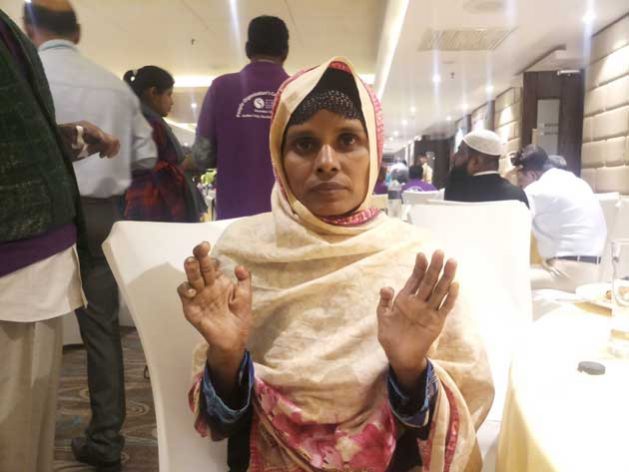
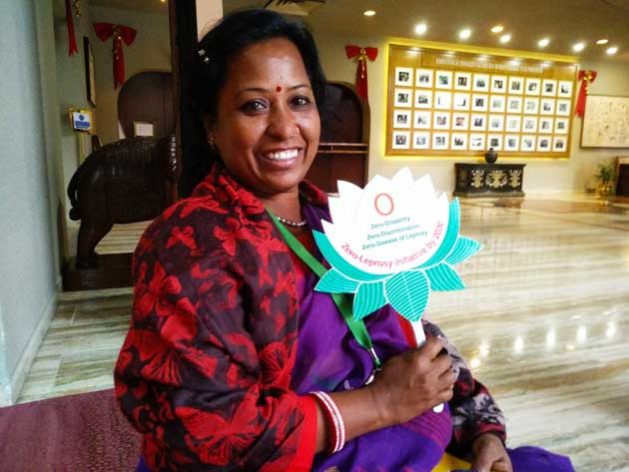
Feroza Begum, Leprosy activist. Credit: Rafiqul Islam / IPS

DHAKA, Bangladesh, Dec 12 2019 (IPS) – When Feroza Begum was first diagnosed with leprosy in 2006, it felt as though she had been struck by a thunderbolt due to the deep-seated prejudice in her society that the disease is a curse from Allah (God).


“ I was affected with leprosy disease, nobody accepted me (in the past). They had made me isolated. I cannot forget the plight I suffered at that time. Even my family was broken as I was left by my husband,” she told IPS. The 35-year old says she was ostracized and made to feel like a lesser person.

Feroza travelled about 200 kilometres from Bogura district to Dhaka, the capital city to attend the first-ever Conference of organizations of persons affected by leprosy. Feroza came to listen and talk to other people who had similar stories and also to engage with organizations that are fighting for an end to discrimination of people with leprosy.

“I got married in 2006 and a few days later, I was diagnosed as a leprosy patient’. She says after the diagnosis, members of her husband’s family started ignoring her. ‘They ignored me and did not talk to me and one day sometime in 2007 my husband divorced me and sent me back to my father’s home.”

After returning home, she started treatment with support from a local NGO and she eventually recovered from the Hansen disease. But as a result of the disease, she could not avoid disability.

Leprosy stigma in Communities

Although there is a stigma around leprosy in her society, Feroza is living with a disability and is leading a normal life. “Fighting stigma for a leprosy patient is a hard task in our society and leading a normal life is a challenging task too,” she added.

“Now my mother and I prepare mats and sell them in a local market. This is our only livelihood option but I never bow down to the stigma,” Feroza said.

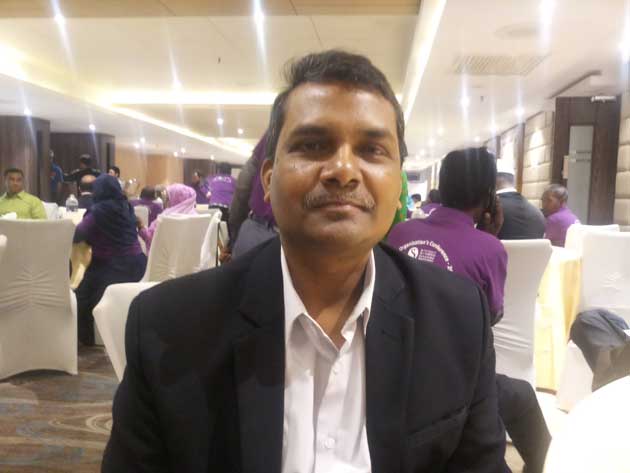
Dr David Pahan, Country Director of Lepra Bangladesh, said Prime Minister Sheikh Hasina’s announcement of the ‘Zero Leprosy Initiative’ to eliminate the Hansen disease from the country by 2030 is commendable.

“Bringing leprosy patients into the mainstream of society is big for us as there is a negative perception about leprosy in our society,” he told IPS on the sidelines of the conference.

Now it is time for an Action Plan

Although the Zero Leprosy Initiative was announced, formulation of policies and action plans to eliminate leprosy is also a challenging task which lies ahead, he added.

Dr Pahan, who has been working on leprosy elimination since 1996, said leprosy patients must raise their voice together so that the authorities concerned take proper steps to bring them into the mainstream of society.

Dr David Pahan, Country Director of Lepra Bangladesh. Credit: Rafiqul Islam / IPS

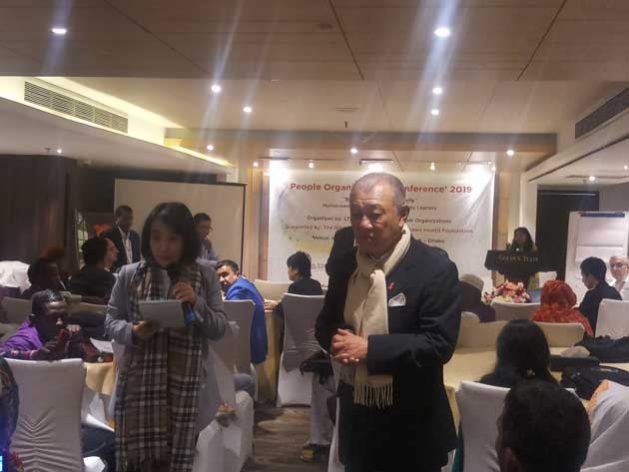
Close to 100 leprosy patients and representatives from several organizations working in the field of leprosy attended the landmark leprosy conference in Dhaka which was organized by members of the Leprosy and TB Coordinating Committee (LTCC) and People Organizations, with support from The Nippon Foundation and Sasakawa Health Foundation.

The conference allowed people from across the country to share their experiences about the long plight in the recovering period of the disease.

Bangladesh is still a high burden leprosy country. The registered prevalence of leprosy was 0.7 percent, 0.27 percent and 0.2 percent in 2000, 2010 and 2016 respectively, and stood at 0.19 per 10,000 population in 2018, according to official data. The data also shows that about 4,000 patients were detected per year in the country over the last few years, with this figure standing at 3,729 in 2018.

Access to resources limited

Sonia Prajapoti of HEED Bangladesh, a local NGO working on leprosy control, said the case of leprosy is highly prevalent among tea workers in Sylhet, Habiganj and Moulvibazar districts as they are not aware of the leprosy disease and have limited access to civic amenities.

She said a social awareness must be created among the tea workers to keep them free from leprosy, while the leprosy patients could be brought into the mainstream of society by increasing their social status, providing proper healthcare and creating working opportunities for them.

“Prime Minister Sheikh Hasina’s announcement of the ‘Zero Leprosy Initiative, will increase the voice of the people who have been working on leprosy elimination, and this will help them fight leprosy together,” said participant Shandha Mondal, district coordinator of local NGO Shalom (leprosy) in Meherpur.

Speaking as the chief guest at the conference, Chairman of The Nippon Foundation and WHO Goodwill Ambassador for Leprosy Elimination, Yohei Sasakawa, assured Bangladesh of continuing support of the implementation of ‘the Zero Leprosy Initiative’ which was announced by Prime Minister Sheikh Hasina and which aims to eliminate leprosy by 2030.

“The government has already announced the Zero Leprosy Initiative that will help eliminate the discrimination the leprosy patients have been facing,” he said.

“You, the leprosy patients, know better about the disease than doctors…your government is working to eliminate leprosy by 2030. And we are here to know how we can help your government fight leprosy,” Sasakawa said.

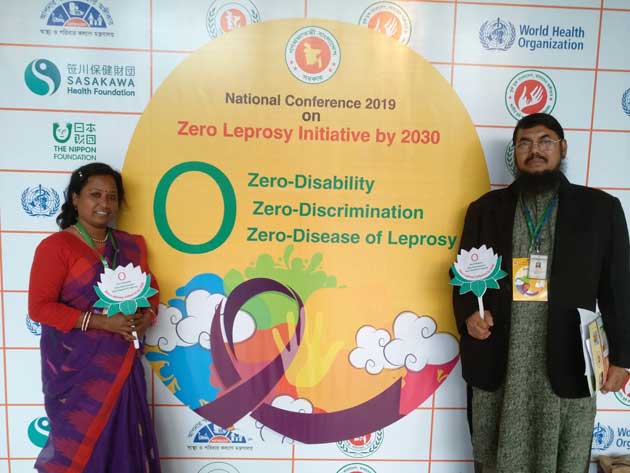
The Nippon Foundation and the Sasakawa Health Foundation of Japan organized a national conference on leprosy in Dhaka on December 11 under the theme “ZeRo leprosy initiative”.


Sasakawa Vows to Continue Support for Fighting Leprosy in Bangladesh

Asia-Pacific, Conferences, Development & Aid, Featured, Headlines, Health, Human Rights, Poverty & SDGs, TerraViva United Nations, Women’s Health

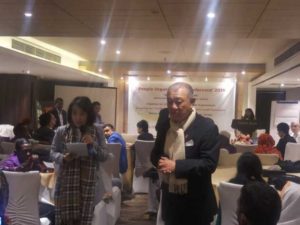
Chairman of the Nippon Foundation and Sasakawa Health Foundation in Japan Yohey Sasakawa speaking at the Conference of Organizations of Persons Affected by Leprosy in Dhaka, Bangladesh. Credit: Rafiqul Islam / IPS

DHAKA, Bangladesh, Dec 12 2019 (IPS) – Chairman of The Nippon Foundation and Sasakawa Health Foundation, Yohei Sasakawa, has assured Bangladesh of continuing support for the Zero Leprosy Initiative announced by the country’s Prime Minister, Sheikh Hasina, aimed at eliminating leprosy by 2030.


Sasakawa was speaking at the opening of the first ever meeting of organizations working on leprosy in Bangladesh.

“The government has already announced the Zero Leprosy Initiative that will help eliminate the discrimination the leprosy patients have been facing,” he told a conference in the country’s capital. Prime Minister Hasina on Wednesday (December 11) also addressed the conference and Sasakawa reminded activists that the country’s leader expressed her commitment to make Bangladesh free from leprosy in the next decade.

Several organizations working in the field of leprosy, like members from the Leprosy and TB Coordinating Committee (LTCC) and People Organizations with support from The Nippon Foundation and Sasakawa Health Foundation, are attending the gathering.

Bangladesh’s leprosy burden ranks fourth-highest in the world. Four thousand new cases are detected annually – an average of 11 to 12 cases per day over the last 10 years. Every year an estimated 3000 leprosy sufferers are affected by complications that require specialized treatment in hospital.

Although the the number of leprosy cases are declining, more than one-third of leprosy patients are facing the threat of permanent and progressive physical and social disability.

Govenment needs help

Calling upon the leprosy patents to extend their support to the government in this regard, Sasakawa said Bangladesh’s Ministry of Health could not fight leprosy alone.

Sasakawa, also a World Health Organisation (WHO) Goodwill Ambassador, said: “You, the leprosy patents, know better about the disease than doctors. Your government is working to eliminate leprosy by 2030. And we are here to learn how we can help your government fight leprosy.”

He asked the participants to play a strong role in eliminating leprosy in Bangladesh. “I hope you will convey the lessons you learnt from the conference today to your community.

“If you all raise voice together, it would be stronger. So, you have to be stronger to fight leprosy (in Bangladesh). Your support is important to reach the goal,” he said.

About his journey as WHO goodwill ambassador, Sasakawa said he has been working on fighting leprosy around the world for the last 40 years.

“I have been providing assistance to about 120 countries, while I have traveled to different parts of the world 700 times to help (leprosy patients),” he said. “No matter which country I visited, the plight of the leprosy patients is the same.”

Sasakawa said he came here to share his opinion and experiences on leprosy from his journey. “I am very happy seeing the faces of leprosy patients who are participating in the conference, as this is the first time … we have met together,” he added.

Highlighting the nature of leprosy patients, the Nippon Foundation chief said the people who get disabilities suffering from leprosy and those become disabled due to road accidents are not the same, because leprosy is an infectious disease.

“That’s why leprosy patients fear to meet and their communities also do not accept it,” he said.

Role of NGO’s in the fight against Leprosy-free world

Sasakawa also praised the role of the NGOs, including Lepra Bangladesh and the Damien Foundation, in fighting leprosy in the country.

Shandha Mondal, district coordinator of SHALOM (leprosy), a local NGO working in Meherpur, said Prime Minister Hasina’s announcement on the Zero Leprosy Initiative will increase the voice of the people who have been working on leprosy elimination, and this will help them fight leprosy together.

Motiur Rahman, a leprosy patient of Gazipur, said the prime minister always gives priority to leprosy patients. For example, he said he had sought accommodation from the Bangladesh premier and he received a house from the Government.

The participants attending the national conference said that the prime minister’s call to local pharmaceuticals to produce medicines and distribute among leprosy patients free of cost is really commendable.

Speaking at the National conference on Zero Leprosy Initiative 2030, Prime Minister Hasina said many Bangladeshi pharmaceutical companies export medicines, and she called on these companies to produce drugs for leprosy locally and distribute those among leprosy patients free of charge.

But, they said, the PM should also instruct the authorities concerned to launch a new programme and announce a special budget for leprosy. This would be more helpful in fighting leprosy in Bangladesh, they said.

The Nippon Foundation and the Sasakawa Health Foundation of Japan organized a national conference on leprosy in Dhaka on December 11 under the theme “ZeRo leprosy initiative”.


Taking Bangladesh to Zero-Leprosy, One New Case at a Time

Asia-Pacific, Conferences, Development & Aid, Featured, Headlines, Health, Human Rights, Labour, Poverty & SDGs, TerraViva United Nations

Sandhya Mandal – a community health worker working on leprosy in Meherpur district of Bangladesh. Credit: Stella Paul / IPS

DHAKA, Bangladesh, Dec 11 2019 (IPS) – Sandhya Mandal has never felt so vindicated. For the past four years, the 36-year-old community health worker from Meherpur – a rural district bordering India – has been traveling 50 km every day along dusty roads on an old motorbike, searching for leprosy patients who needed urgent treatment. But in her community, instead of compliments, neighbours and relatives raised questions about her work and her character. “They ask why I come home so late and what is this ‘work’ that I really do. Some even imply that I might be doing something like prostitution,” Mandal tells IPS.


However, Mandal – project manager at an NGO called Shalom, which works with the government to end leprosy, sat in an audience of diplomats, ministers and health experts from all over the country, listening to Sheikh Hasina – the prime minister of Bangladesh – at a national conference on leprosy. “Nobody can doubt me or my work now,” she says, proudly clutching the yellow invitation card she received from the organizers of the conference – her first to a national-level event.

Mandal has every reason to be in the conference: since 2015 she has searched and found over 300 new leprosy cases. In fact, in November this year, she found 10 new cases on a single day – the result of an intense door-to-door search in Gangni, a small town with a high rate of leprosy. “We opened our database of old patients and contacted each one of them individually. We asked them if they knew anyone around them who had leprosy. Nobody could give us any concrete information, so I went from one house to other and from morning to evening I covered 40 families,” she recalls the drill. It was hard and Mandal did not have any time to eat or drink. But by day-end, she had found eight adults and two children who had visible signs of leprosy. She arranged for all of them to visit the TB and Leprosy Clinic (TLC) in Meherpur, a facility run by the government.

Early detection in leprosy key

Early detection and early treatment are the key to complete cure for anyone affected by leprosy, tells Mujibur Rahaman – a doctor at the TLC Meherpur. “The treatment is free. We have enough medicines. But bringing the affected ones to the treatment facility remains the biggest challenge,” Rahman tells IPS. Bangladesh eliminated leprosy in 1998, but new cases continued to be detected. In 2018, 3 729 new leprosy cases were detected.

Earlier this week, in her opening speech at the national conference, Prime Minister Hasina asserted that Bangladesh was committed to become leprosy-free by 2030. According to Rahman, dedicated community workers like Sandhya Mandal are the key to realizing the zero-leprosy status.

“Identifying a new patient is one thing; convincing them to see a doctor is entirely different. It takes very different level of skills,” he adds.

Providing counseling services

Mandal throws a little light on that skill: every time she finds a villager with a suspicious white patch with numbness, she tells him that it is a skin disease that needs urgent medical attention. “I never tell him it’s leprosy because, only a doctor can declare that after a test and also, if I spoke of leprosy, it would shock the person as everyone is still afraid of the disease,” Mandal reveals.

Mandal also counsels and provides emotional support to the person after a doctor has confirmed his or her leprosy. “Women are more scared than men because they feel their husbands will abandon them if they find out about their sickness. They are also scared of how their community would react. I tell them that they must tell their husbands but explain that its curable. To the neighbours, they can say it is a skin disease. I hold their hands, spend time with them. It calms them and it also makes them feel confident,” she tells IPS.

Listening to the prime minister has been an inspiring experience, Mandal says. At present there are not enough community health workers on leprosy. For example, in her own NGO, there are just two health workers. So, to achieve zero-leprosy in the next 10 years, Bangladesh would need many more community health workers, she says. Equipping the field workers at the rural NGOs with a motorbike would also help, as transportation remains a huge challenge in the villages. If these gaps are plugged, there is no reason why Bangladesh could not be leprosy-free, she says.
For those doubting her work, Mandal now has an answer: “Even the prime minister has shown an interest in leprosy, in our collective work. If anyone still doesn’t know why I work on leprosy for such long hours, they can ask the prime minister!”

The Nippon Foundation and the Sasakawa Health Foundation of Japan organized a national conference on leprosy in Dhaka on December 11 under the theme “ZeRo leprosy initiative”.


Nippon Foundation Announces US$ 2m Support for the Education of Rohingya Children in Bangladesh

Asia-Pacific, Conferences, Development & Aid, Education, Featured, Headlines, Health, Human Rights, Migration & Refugees, Poverty & SDGs, TerraViva United Nations

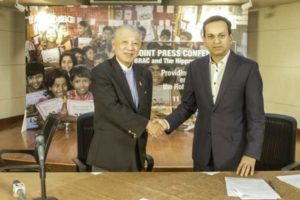
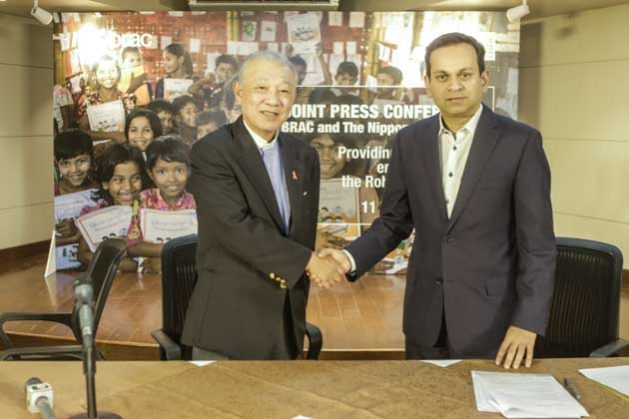
Chairman of The Nippon Foundation Yohei Sasakawa and BRAC Executive Director Asif Saleh announcing $2 million partnership. Credit: Rafiqul Islam / IPS

DHAKA, Bangladesh, Dec 11 2019 (IPS) – In the light of limited access to education for displaced Rohingya children, the Nippon Foundation has announced US$ 2 million support to BRAC to launch a project to ensure educational facilities to both Rohingya and local community children.


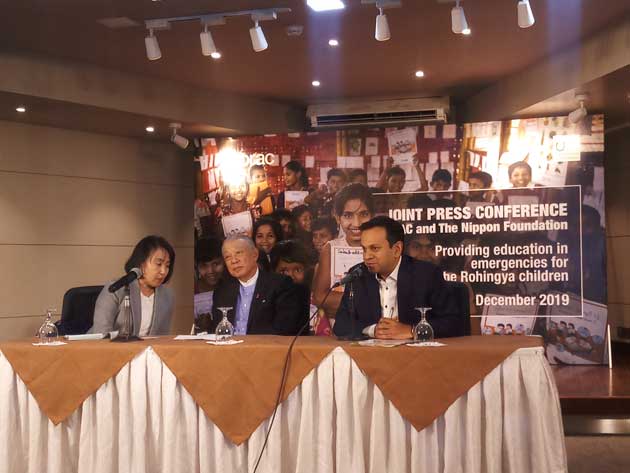
The Nippon Foundation made the announcement at a press conference at the BRAC Centre in Dhaka, which was attended by Nippon Foundation chairman Yohei Sasakawa and BRAC Executive Director Asif Saleh.

Under the US$ two million project, BRAC will build 50 steel-structured two-storey learning centres at Rohingya camps in Cox’s Bazar to provide an educational facility for Rohingya children. This project aims to provide educational access to 8,000 Rohingya children aged between 4 and 14 years. The Nippon Foundation is also supporting BRAC to open and operationalize 100 pre-primary centres for 3,000 host community children aged between 5 and 6 years through this funding.

Learning centres will educate Rohingya children

The project will ensure education access of Rohingya children to incoming children and existing children at the newly constructed learning centres.

As the host community in Ukhya, Teknaf and Ramuupazila of Cox’s Bazar are under significant stress. The project targets 3,000 host community children aged 5-6 years to get pre-primary education from BRAC-operated learning centres to prepare them for primary education. Engagement with parents, as well as the broader community, will be prioritised to select the location of centres, which will be established on the community premises.

Providing humanitarian support

The chairman of The Nippon Foundation Yohei Sasakawa said he visited the Rohingya camps in Cox’s Bazar to personally witness the reality there. “When I was there, I found the situation is much more serious.

“I have seen the refugee camps from the Myanmar side and Bangladesh side as well. And as a result of that, I actually saw, on my own eyes, how difficult the situation is. And under such a different situation, the Bangladesh government is trying to provide humanitarian aid (to the displaced Rohingyas),” he said.

Chairman of The Nippon Foundation Yohei Sasakawa and BRAC Executive Director Asif Saleh. Credit: Rafiqul Islam / IPS

Sasakawa, who is also a World Health Organization (WHO) Goodwill Ambassador, said given the circumstances, women and children are the most vulnerable in conflict-prone areas across the world and “that is why we need to provide support to women and children”. “With the partnership with BRAC, we will be able to provide more humanitarian support,” he added.

Regarding the long-standing Rohingya crisis, he said: “I hope the Rohingya problem will be resolved soon and the refugee camps (set up in Bangladesh) will not be permanent”. Bangladesh is hosting more than one million Rohingya refugees.

In August of 2017, a small group of Rohingya militants launched an attack against local police forces in Myanmar. This led to clashes between the Rohingya and the non-Rohingya population, Buddhist monks and police. This led to mass killings, abuses and abductions and s ost of the Rohingya fled to Bangladesh where the refugees now live in camps where they receive essential assistance and basic medical care

(http://www.ipsnews.net/2019/01/the-rohingya-the-forgotten-genocide-of-our-time/.

Promoting education to local and Rohingya children

BRAC Executive Director Asif Saleh said about 55 percent of the displaced Rohingya people staying in Cox’s Bazar are children and they have very limited access to education.

Apart from facilitating education to the Rohingya children, he said this project will provide support to 3,000 children of the host community as they are also very vulnerable and have limited access to education. “Our vision is to promote the facility to the poor and those who are still lagging behind,” he added.

Saleh said the support of the Nippon Foundation and the Japanese government are very important for Bangladesh, stating: “We always welcome such support”.

The Nippon Foundation has been working in Bangladesh since 1971. Its activities were focused on supporting health, education, human resource development and support for people with disabilities. These include, for example, supporting flood or cyclone victims, providing anti-leprosy drugs, scholarship programs, prevention of the cholera epidemic and supporting projects for relief and the rehabilitation of refugees in Bangladesh.

The Nippon Foundation, a Japanese private, non-profit grant-making organisation established in 1962, has decided to further support those projects in Bangladesh for basic human needs, including education and learning opportunities.

BRAC is a leading development organisation in Bangladesh dedicated to alleviating poverty by empowering the poor to bring about change in their own lives in Bangladesh.

The Nippon Foundation and the Sasakawa Health Foundation of Japan organized a national conference on leprosy in Dhaka on December 11 under the theme “ZeRo leprosy initiative”.

  Source