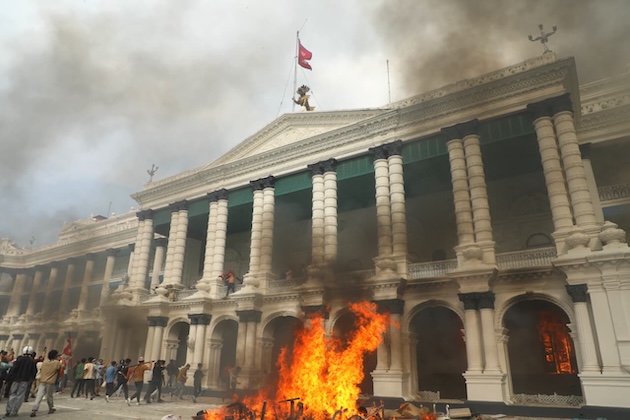
Protestors torched the administrative headquarters of Nepal, the palace of Singha Durbar. This was one of several public properties that were set alight. Credit: Barsha Shah/IPS
KATHMANDU, Sep 10 2025 (IPS) – Nepal entered into a new era of constitutional and political crisis after deadly protests by the deeply frustrated young generation (Gen-Z). Prime Minister KP Sharma Oli resigned on Tuesday after protests grew out of control.
Gen-Z protestors took to the streets on Monday, where the government used force. Security forces opened fire at youth protests against corruption, nepotism, and a social media ban. At least 19 people were killed on a single day. It’s one of the deadliest protest days in Nepal’s history. So far, at least 24 people have been confirmed to be dead during this ongoing unrest.
Protesters took to the streets after the government of Nepal banned most social media last week. Social media ban was the final straw, and on TikTok and Reddit, Gen-Z (13-28 years old) users organized peaceful protests, but they escalated. Now the Himalayan country with nearly 30 million people is facing uncertainty.
On Tuesday many of the government agencies and courthouses were set on fire. The country’s administrative headquarters and parliament house burned down. The homes of political leaders were also torched.
Initially reluctant, Oli resigned on Tuesday, citing “the extraordinary situation” in the country. He submitted his resignation to the President effectively immediately.
Later Tuesday, Nepal President Ramchandra Paudel issued a statement urging protestors to cooperate for a peaceful resolution.
“In a democracy, the demands raised by the citizens can be resolved through talks and dialogue, including Gen-Z representatives,” he said in a statement. Paudel urged Gen-Z representatives to “come to talk.”
Balen Shah, mayor of Kathmandu metropolitan city, who is seen as one of the possible leaders, also urged youth protestors to stop destroying public property and come to talk.
“Please gen Z, the country is in your hands; you are the ones who will be building. Whatever is being destroyed is ours; now return home,” he wrote on social media on Tuesday evening.
After the security situation got out of control, the Nepal Army deployed throughout the country from late evening on Tuesday. Army chief also urged protesters to come forward to talk with the president to find solutions.
After the rapidly escalating situation, international agencies, including the United Nations, issued their concerns.
Expressing deep concern over the deaths and destruction, UN human rights chief Volker Türk called on authorities and protesters to de-escalate the spiraling crisis. In a statement, Türk said he was “appalled by the escalating violence in Nepal that has resulted in multiple deaths and the injury of hundreds of mostly young protesters, as well as the widespread destruction of property.”
“I plead with security forces to exercise utmost restraint and avoid further such bloodshed and harm,” he said. “Violence is not the answer. Dialogue is the best and only way to address the concerns of the Nepalese people. It is important that the voices of young people are heard.”
The UN Secretary-General is also closely following the situation, according to his spokesperson. During Tuesday’s daily briefing in New York, Stéphane Dujarric said António Guterres was “very saddened by the loss of life” and reiterated his call for restraint to prevent further escalation.
“The authorities must comply with international human rights law, and protests must take place in a peaceful manner that respects life and property,” Dujarric said, noting the dramatic images emerging from Nepal.
The UN Country team in Nepal urges authorities to ensure that law enforcement responses remain proportionate and in line with international human rights standards.” UN Resident Coordinator Hanaa Singer-Hamdy described the situation as “so unlike Nepal.”
Nepal is known for its political insatiability and has seen more than a dozen governments since it transitioned to a republic after abolishing its monarchy. In 2008, after long protests and a decade-long Maoist war, Nepal transitioned into a republic and got its new construction in 2015.
One decade later, Nepal has again found itself in a political crisis.
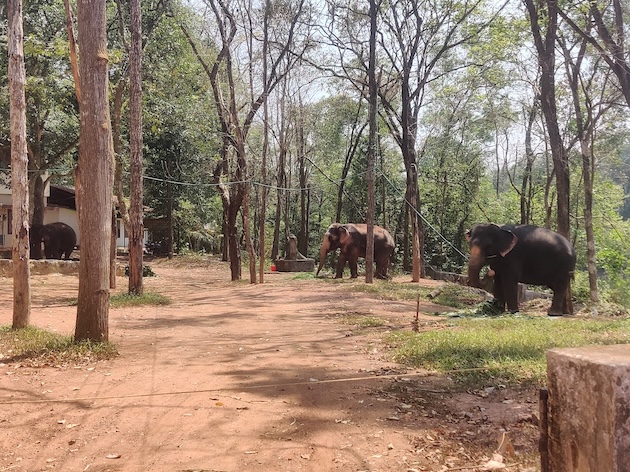
Elephants at the Kappukadu elephant rehabilitation center in Kottoor.
NEW DELHI, Sep 5 2025 (IPS) – In the early part of this year, two deaths in Kerala garnered major media attention. A farmer in Wayanad and a female plantation worker in Idukki were killed in two separate events, within a matter of a few days, by wild elephants.
Arikomban, another wild elephant, has become a media favorite recently due to his brushes with human settlements near his habitat. Named so because of his love for ari (rice), the elephant had been relocated from Kerala to Tamil Nadu in 2023 following constant protests from people who also claimed him to be ‘life-threatening.’ Kerala’s news outlets widely covered Arikomban’s relocation.
These aren’t one-off cases in Kerala, which has seen a spike in human–wildlife conflict, especially involving elephants.
According to a news report, 451 people have been killed in wildlife conflicts in the past five years alone in the state, with 102 of them caused by elephants.
However, wildlife biologists and environmentalists have been at odds with the narratives promoted by the media and society regarding what constitutes conflict.
“I think we shouldn’t be using the terminology ‘wildlife conflict’ itself. I would prefer addressing it as ‘negative wildlife interaction,’” says Dr. P.S. Easa, who holds a PhD on Elephant Ecology and Behavior and is a member of the National Board for Wildlife and the IUCN, Asian Elephant Specialist Group.
The conflict between wild animals and humans has been going on for centuries, and what we witness in the current era has been influenced by the transformation in the behavior of both these groups, as well as humans’ perception towards wildlife in general, he adds.
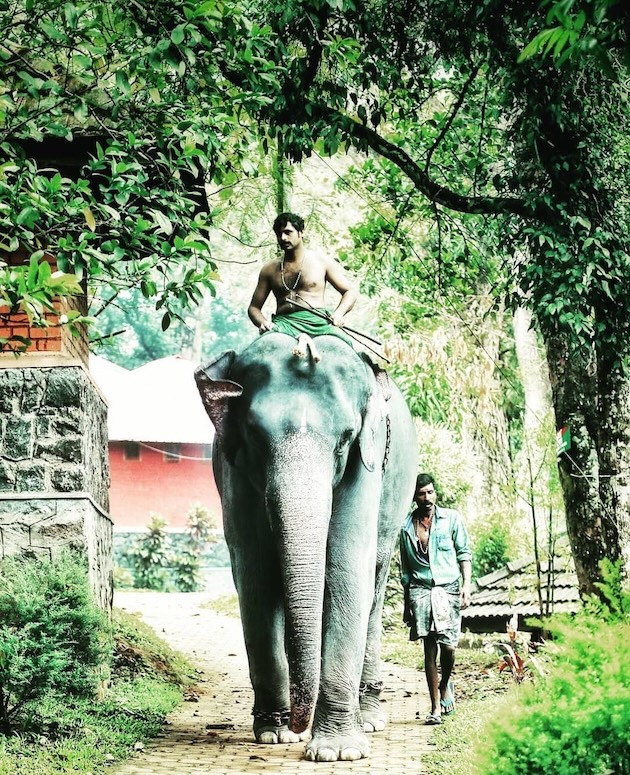
In Kerala’s social framework, the rising phenomenon of human–elephant conflict takes on a much deeper and more complex meaning than the broader topic of conflict with wildlife. Elephants have been an integral part of Kerala’s culture and tradition for centuries—domesticated not just for heavy labor but also as part of temple festivals. In the last few decades, machines have replaced elephants in much of the labor environment in the state, yet the land giants continue to be a part of the festival parades. Animal behavioral experts and activists have been consistently raising their voices against this practice in this century, citing the need to treat elephants as solely wild animals.
Easa refuses to even use the term “domesticated” for them.
“Captive elephants are the only right way to address them in this age and time,” he says.
In 2024 alone, there had been nine reported deaths in Kerala by such captive elephants. The Hindu reported six such deaths, including an elephant mahout, within the first two months of this year. Although there have been stricter rules and regulations in recent years on using captive elephants for temple festivals, they have mostly been restricted to paper. The religious nature of the festivals that these elephants are made to be a part of makes the topic even more sensitive, and political parties tend to stay away from addressing the issue.
Kerala’s elephant reserves have been categorized mainly into four regions, namely Wayanad, Nilambur, Anamudi, and Periyar. Periyar Reserve had the highest count of elephants, followed by the Anamudi Reserve. According to the Kerala Government’s Forest Statistics and the report of the ‘Wild Elephants Census of Kerala,’ the four reserves have a combined total extent of 11,199.049 sq. km., out of which only 1,576.339 sq. km. is assessed to be devoid of elephant population. According to a 2024 official assessment, Kerala had an elephant population of just under 1800, a decline of more than 100 from the previous year.
As Kerala’s elephant reserves border the neighboring states of Tamil Nadu and Karnataka, natural factors that affect the elephant population, like extreme drought and heavy, abrupt rainfall, influence the elephants’ migration across the states during the year.
In Kerala, particularly, shrinking forest habitats caused by deforestation and the increasing presence of human settlements in regions historically occupied by elephant populations, coupled with climate change and the invasive plant species erasing the elephants’ natural food sources, are some of the factors causing unnatural elephant migration, according to experts, and as a consequence, resulting in frequent interactions with humans.
The phrase “descent of wildlife into human settlements” itself is a misnomer, Eesa says.
“In almost all such cases, human settlements had crossed over to those places where the wildlife had existed peacefully before. Wayanad and Idukki are classic examples of this.”
“There was a report that I had come across a while ago—of an ‘elephant attack’ that happened in Sholayar Forest Reserve. Look at the irony of that news. It’s a forest reserve—the habitat belongs to the elephant, not the people who were driving through it. What I’m saying is, every time an elephant conflict is reported, you need to dissect all the circumstances surrounding it. Where—was it within the jungle or outside it? When was it, during the daytime or at night? And how? What were the circumstances leading up to the interaction?” he explains.
The drastic increase in food waste owing to tourism in Kerala has been another factor for wild animals encroaching into human spaces lately. Elephants, wild boars, and monkeys have been observed to have come to human settlements to feed on the food waste.
There is no one, foolproof method to resolve the human–elephant conflict, scientists opine. Easa points out that several techniques that had been fruitful in African countries proved ineffective when used in countries like Sri Lanka and Indonesia.
A mahout is seen riding a captive elephant. Kerala continues to make use of elephants for temple festivals and parades.
Wildlife biologist Sreedhar Vijayakrishnan, in an interview given to Mongabay in 2023, suggests five main long-term measures that will help mitigate human-elephant conflict. This includes initiating long-term studies to understand elephant movements and spatiotemporal patterns of conflict, which will help ascertain where and how interventions are required; tracking areas of elephant movement and identifying regions of intense use while installing alert lights at vantage points that can be triggered in case of elephant sightings; raising awareness among local populations to discourage feeding elephants or unwanted interactions; training local rapid response teams to prevent negative interactions and indiscriminate drives; and fitting satellite collars on elephants that frequently cause issues.
Kerala also has an elephant rehabilitation center established in Kottoor, Thiruvananthapuram, for rescuing, rehabilitating, and protecting both captive and wild elephants. The state, like other forest reserves in India, has historically chosen to turn many of the captured conflict-making elephants into ‘Kumkis’ (a Kumki elephant is a specially trained and domesticated elephant used in rescue operations and to train other wild elephants and manage wildlife conflict).
Apart from the above, one of the most effective measures that has been implemented in Kerala is through the Wayanad Elephant Conflict Mitigation Project by the Wildlife Trust of India (WTI). The project, first initiated in 2002–2003 by WTI, has evolved into a successful model for tackling human–elephant conflict in Kerala. The model has focused on relocating human settlements from places identified as ‘elephant corridors’ in the Wayanad district of Kerala. Wayanad, spanning a total of 2,131 sq. km., has an elephant reserve spread over 1,200 sq. km., with an elephant density of 0.25 elephants/sq. km.
Shajan M.A., a Senior Field Officer with WTI who handles the project currently, tells me, “Our method is to buy such sensitive land from the people, including both tribal and other communities, and relocate them to safer regions, away from wildlife conflict.” Ultimately, WTI hands over the purchased land to the Kerala Forest Department.
In regions like the Tirunelli–Kudrakote elephant corridor, the human–elephant conflict had escalated so much that it had resulted in several human deaths. For the communities, leaving a land they had occupied for decades and considered home is never easy, Shajan acknowledges. But of all the tried and tested methods to deal with the human–wildlife conflict, this approach has been the most effective in the long run, he points out.
Shajan also muses on the question of what exactly comprises a ‘conflict.’
“Conflict can hold different meanings. From a monkey stealing food from the house to a tiger or an elephant attack on a human, even leading to deaths, it’s all considered a human–wildlife conflict. Sadly, we, as a society, tend to be reactive once it transforms into a conflict and place the blame wholly on the wildlife.”
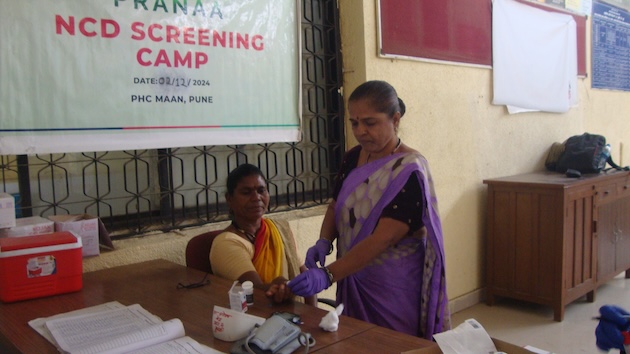
A patient being checked for BP at Mann PHC. Credit: Rina Mukherji/IPS
MANN, India, Aug 26 2025 (IPS) – Generally thought to be diseases of the wealthier classes, non-communicable diseases (NCDs) like hypertension and diabetes are on the rise among India’s underprivileged working classes in semi-urban and rural sprawls.
Take the case of Mohan Ahire. A middle-aged gardener in Pune, Mohan never realized that the heaviness in his head was a symptom of hypertension. Last summer, a mid-morning visit to the market saw him fall unconscious on return. Upon regaining consciousness, his wife and sons discovered the paralysis on the right side of his body, leading doctors to diagnose it as a stroke.
Bahinabai Gaekwad, a 56-year-old sweeper in Mann village, was at work when she suddenly collapsed and died. Doctors from the Primary Health Centre (PHC) next door found that she had been suffering from undiagnosed hypertension for a long time. The ailment ultimately led to a fatal cardiac arrest.
The worst problem is that most patients from underprivileged sections are not aware of their health condition.
Praful Mahato, a migrant laborer from Balasore in Odisha, who is currently employed in a dhaba (roadside eatery) in Mann, a fast-industrializing rural outpost of Pune city, had been suffering from heaviness and dizzy spells for some time. But he attributed his symptons to long hours at work and resulting fatigue. A chance visit to a medical camp confirmed high blood pressure and diabetes. Since the last four months, medication has controlled his blood pressure and brought down his sugar level.
Jagdish Mondol, in his 50s, did not realize he had hypertension and diabetes until he needed to undergo a hernia operation at a government hospital in Bhadrak, Odisha. This was despite blurred vision and difficulty in walking. Thankfully, the operation got him to wake up to his health condition. Regular medication has now improved his blood pressure and sugar level.
Fortunately, some patients may seek help on their own. Lalita Parshuram Jadhav, a 40-year-old migrant construction worker from Yavatmal, is one such. “Since the last two years, I have been experiencing pain in my legs; it became quite acute over the past year,” she tells IPS. A medical check-up confirmed hypertension and high sugar levels.
India’s Hypertension and Diabetes Epidemic
The cases cited above exemplify the rising burden of India’s non-communicable disease (NCD) of Hypertension and Diabetes. Ranked among the top ten NCDs responsible for untimely deaths worldwide, these two diseases are interlinked. This means those with hypertension are also vulnerable to developing prediabetes and diabetes.
According to the World Health Organization (WHO), an estimated 1.28 billion adults in the 30-79 age group suffer from hypertension, with two-thirds of them living in low- and middle-income countries. Yet, only 21 percent of those affected have their hypertension under control, while around 46 percent of these remain unaware of their condition and remain undiagnosed and untreated.
Diabetes, notably, can be of two varieties. Type 1 Diabetes is a congenital condition, while Type 2 diabetes is a lifestyle disease that develops later in life. South Asians, Pacific Islanders, and Native Americans have a significantly higher risk of developing the disorder.
The International Diabetes Federation (IDF) recorded a dramatic increase in the number of people affected by Type 2 Diabetes globally since the 1990s, and since 2000, the rise has been dramatic. In India, there are an estimated 77 million people above the age of 18 years suffering from diabetes (type 2), while nearly 25 million are prediabetic (at a higher risk of developing diabetes in the future). Yet, more than 50 percent of these are unaware of their diabetic status.
In India, the prevalence of Diabetes rose from 7.1 percent in 2009 to 8.9 percent in 2019. Meanwhile, 25.2 million adults are estimated to have Impaired Glucose Tolerance (IGT), a prediabetic condition that is estimated to increase to 35.7 million in the year 2045. It is also estimated that approximately 43.9 million people suffering from diabetes remain undiagnosed and untreated in India, posing a major public health risk.
It is a matter of concern that most deaths from these diseases occur in the 30- to 70-year-old age group, posing a major economic loss.
In Mann, doctors at primary health centers (PHCs) are battling this scourge, with hypertension affecting around 28 percent of the population and 12 percent being diabetic. The scenario is similar to that at Mullaheera, in rural Haryana, located just outside the national capital region of Delhi.
Dr. Sona Deshmukh, from the People-to-People Foundation, which is collaborating with the Government of India on its Viksit Bharat @2047 initiative and the in-charge for the Pranaa Project, tells me, “Diabetes is common among the older population, but hypertension is rising among the youth.”
Dangers Posed by Hypertension and Diabetes
The problem with both Hypertension and Diabetes is socio-cultural, with most people viewing these diseases as benign. Yet, ignoring them can lead to paralytic strokes and ultimately, death.
Characterized by headaches, blurred vision, nosebleeds, buzzing in the ears, and chest pain, uncontrolled and untreated hypertension can lead to—
chest pain (also termed angina);
heart attack, which occurs when the blood supply to the heart is blocked and heart muscle cells die from lack of oxygen.
heart failure, which occurs when the heart cannot pump enough blood and oxygen to other vital body organs; and
sudden death due to irregular heartbeat.
This is because excessive blood pressure can harden arteries, decreasing the flow of blood and oxygen to the heart. This elevated pressure and reduced blood flow can result in the complications listed above, besides bursting or blocking arteries that supply blood and oxygen to the brain, causing a stroke. It can also cause kidney damage, resulting in kidney failure.
In the case of Diabetes, the body is unable to either produce or use insulin effectively. While individuals with Type I diabetes have a congenital condition wherein the insulin-producing cells in the pancreas are attacked and destroyed, patients with Type II diabetes—which is a preventable lifestyle-related disease—either do not produce enough insulin or are unable to use insulin effectively for the body’s needs. Uncontrolled diabetes can lead to blindness and organ failures that affect the kidneys, heart, and nerves, ultimately leading to diabetic strokes and death.
Reasons Behind the Spurt
So, what are the reasons behind the spurt? Government Medical Officers Dr. Mayadevi Gujar and Dr. Vaishali Patil say, “The transition of many rural outposts into semi-urban industrialized zones has brought in lifestyle changes. Locals, who once partook of healthy home-cooked millets or cereals, now eat cheap, oily snacks from wayside kiosks cooked in reused palm oil. With more disposable income, workers lean towards sugary soft drinks and fast food, making them prone to diabetes. Addictions like tobacco and alcohol are on the rise. Tobacco-chewing remains common to both men and women in rural India.”
Additionally, with climate change affecting agricultural incomes in rural India, the younger generation is stressed with employment issues. These make a potent recipe for hypertension and diabetes.
Dr. Sundeep Salvi, a noted specialist in cardiovascular diseases, who heads the Pulmocare Research and Education (PURE) Foundation and has chaired the respiratory group for the Global Burden of Disease Study, adds, “Unlike in the past, people eat and sleep late, watch late-night television, drink endless cups of tea and coffee, and work late hours. Skipping meals is common, with little time for exercise. Sleep deprivation is a fallout of this. Stress and inadequate sleep are a deadly combination, feeding hypertension and diabetes.”
Salvi calls for hydration and good nutrition to stave off hypertension and diabetes. “Excess tea and coffee are harmful. Caffeine-present in tea and coffee-is a diuretic; it prevents hydration. A dehydrated constitution results in hypertension and diabetes, which, in turn, cause heart disease, stroke, kidney diseases, and eventually, death.”
He also views air pollution as a major risk.
“By air pollution, I am referring to both indoor and outdoor pollution. In rural areas, the burning of crop waste causes outdoor pollution. But indoor pollution in rural homes and urban slums is 5–10 times greater than outdoor pollution. High levels of particulate matter contribute to 20 percent of the global burden of diabetes, as well as hypertension.
Diabetologist and Director of the Diabetes Unit at Pune’s KEM Hospital Prof. Chittaranjan Yajnik, who has been working on this issue for over two decades, has an interesting take on the matter based on his findings.
Yajnik sees a direct correlation between vulnerability to diabetes and poor intrauterine growth.
“Poor intrauterine growth reflects in poor organ growth, especially of the infra-diaphragmatic organs (liver, pancreas, kidneys, and legs), reducing their capacity to perform adequately in later years. Such individuals, when faced with overnutrition and calories later in life, end up with prediabetes and diabetes.”
Yajnik’s research found that two-thirds of prediabetic girls and a third of the prediabetic boys were underweight at birth.
“These findings are suggestive of a ‘dual teratogenesis’ concept, which envisages a combination of undernutrition and overnutrition over a life course due to rapid socio-economic and nutritional transition…” This means intrauterine programming of diabetes needs to be supported in growth-retarded babies since metabolic abnormalities develop very early in life.
Yajnik certainly has a point, since anemia in expectant mothers and low birthweight babies is a major problem all over India. The National Family Health Surveys conducted over the years by the Government have shown a persistently high prevalence of fetal growth restriction in Indian babies. This phenomenon is linked to low birth weight in newborns, which is as high as 18.24 percent, according to the latest data.
The Solution
Recently, the Ministry of Health and Family Welfare (MOHFW) of the Government of India has implemented several schemes nationwide at the primary health level, starting with nutrition, medical care, and immunization for pregnant mothers while ensuring institutional delivery. Offspring are also extended comprehensive help for the 4 D’s (defects at birth, diseases, deficiencies, and developmental delays), immunization, supplementary nutrition, and WASH interventions. These continue through adolescence to prepare a healthy population for reproductive age.
Meanwhile, weekly wellness sessions have been introduced all over India. Deshmukh adds, “Regular screenings for hypertension and diabetes are done every few months for early detection and follow-up. Counselling sessions encourage people to adopt healthier lifestyles, while Yoga is being popularized through events like the International Yoga Day.”
These initiatives, one hopes, will arrest the epidemic.
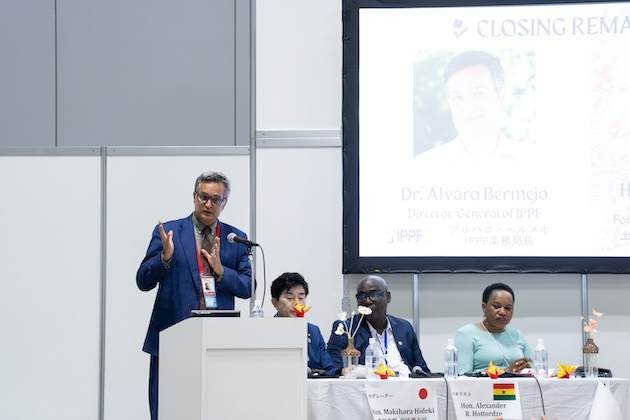
Dr. Alvaro Bermejo, Director General of the International Planned Parenthood Federation (IPPF) addresses the Let’s Discuss the Future of Africa Together seminar that took place last week (August 21) on the sidelines of TICAD9 in Yokohama City, Japan. Credit: APDA
YOKOHAMA CITY, Japan & JOHANNESBURG, South Africa, Aug 25 2025 (IPS) – As funding for sexual and reproductive health rights was on a “cliff edge,” parliamentarians now needed to play a “visionary” leadership role because “financing strong, resilient health systems for all their people rests with governments,” said Dr. Alvaro Bermejo, Director General of the International Planned Parenthood Federation (IPPF).
He was speaking at the Let’s Discuss the Future of Africa Together seminar that took place last week (August 21) on the sidelines of TICAD9 in Yokohama City, Japan.
The session was organized by the Asian Population and Development Association (APDA), in collaboration with the Forum of Arab Parliamentarians for Population and Development (FAPPD) and the African Parliamentary Forum on Population and Development (FPA).
“Africa’s health faces a serious challenge: According to WHO’s latest analysis, health aid is projected to decline by up to 40% this year compared to just two years ago. This is not a gradual shift—it is a cliff edge,” Bermejo said. “You know as well as I do that lifesaving medicines are sitting in warehouses, health workers are losing jobs, clinics are closing, and millions are missing care.”
While this reality was outrageous, it needed to be adapted to.
“And in this crisis lies an opportunity—an opportunity to shake off the yoke of aid dependency and embrace a new era of sovereignty, self-reliance, and solidarity,” with a clear mission to protect the health and lives of women and vulnerable populations through delivering high-quality sexual and reproductive health services.
Parliamentarians engaged in debates during a policy dialogue seminar organized by the Asian Population and Development Association (APDA), in collaboration with the Forum of Arab Parliamentarians for Population and Development (FAPPD) and the African Parliamentary Forum on Population and Development (FPA). Credit: APDA
This seminar and another in the series, Policy Dialogue on the Africa-Japan Partnership for Population and Development, were both supported by the UN Population Fund (UNFPA) Arab States Regional Office (ASRO), the Japan Trust Fund (JTF) and IPPF.
During the discussions, a wide range of topics about population dynamics in Africa and Africa-Japan cooperation were discussed.
In his opening remarks, Ichiro Aisawa, a member of the House of Representatives of Japan, told the seminar it was necessary to take joint action across borders and generations.
“Youth holds the key to unlocking Africa’s future. By 2050, it is predicted that approximately 70 percent of Africa’s population will be under the age of 30. As African countries enter a demographic dividend period, the role played by parliamentarians in each country will be extremely important.
Aisawa said it was necessary to listen to the voices of the community in addressing issues related to youth empowerment, gender equality, and sexual and reproductive health (SRH).
Parliamentarians should take “concrete action through legislation and policies; it is essential to harnessing the potential of young people, directly linking them to social and economic growth, and creating a society in which no one is left behind.”
Yoko Kamikawa, Chairperson of Japan Parliamentarians for Population (JPFP), addresses a seminar for African and Asian parliamentarians on the sidelines of the TICAD9 in Yokohama City, Japan. Credit: APDA
During the discussions, representatives from Africa gave examples of how Japan had supported their health initiatives, especially important in a climate of decreasing aid.
Maneno Zumura, an MP from Uganda, said what compounded the issues in her country and in Africa was “the changes in climate. The unpredicted climate has affected agricultural activities by 40 percent, especially in drought-prone areas of the country.” This had resulted in nearly a quarter (24 percent) of children experiencing malnutrition.
However, she noted that Japan had made considerable contributions to education and health.
“As we assess Uganda’s development and Japan’s impact, it’s clear that sustainable progress thrives on global solidarity and local governance. Key achievements include a 62 percent rise in women’s incomes through cooperatives, a 50 percent drop in maternal mortality in refugee settlements, and supporting the road infrastructure and education, illustrating how policy-driven interventions can break cycles of poverty and inequality.”
There were several specific projects she alluded to, including education experts from Japan who contributed to an improvement of the quality of primary education in districts of Wakiso, Mbale, and Arua through the Quality Improvement in Primary Education Project (2021-2023). They also trained 1,500 teachers in participatory teaching methods.
“The Government of Japan supported the vulnerable communities like refugees and host communities by strengthening the social services like health in refugee camps like Rhino Camp,” Zumura continued, including construction of a health center with antenatal facilities serving over 300,000 people in camps of Bidibidi and Rhino Camp. They also trained 200 health workers in the management of childhood illnesses and maternal health care.
Mwene Luhamba, MP, Zambia, said his country was looking forward to partnering with Japan in expanding One-Stop Reproductive Health Services, enhancing parliamentary engagement, and investing in youth programs.
Bermejo said part of the solution to the development issues is to confront constraints.
“Some countries in Africa do need global solidarity, but what Africa needs from the world, more than anything else, is fair terms. We must also confront the structural constraints. Debt service burdens are crowding out social investments. Let us seize this moment, not just to repair but to transform,” he said. “Sexual and reproductive health services save lives. They empower individuals, promote dignity, and drive national development.”
In her closing remarks, Yoko Kamikawa, Chairperson of Japan Parliamentarians for Population (JPFP), said that it was through dialogue across borders and sectors that “we build consensus, strengthen legal frameworks, and ensure that national strategies reflect the voices of all people and empower them—especially women and youth.”
Fiji is a Pacific Island nation renowned for its tourism industry, but it has also endured four armed coups and 38 years of political instability. Credit: Julie Lyn
SYDNEY, Aug 14 2025 (IPS) – Fiji, a nation located west of Tonga in the central Pacific, is renowned for its natural beauty and beach resorts. But for 38 years it has endured a political rollercoaster of instability with four armed coups that overturned democratically elected governments and eroded human rights.
Now, following a peaceful transition of power at the last 2022 election, Prime Minister Sitiveni Rabuka and his coalition government want to deal with the past with a Truth and Reconciliation Commission (TRC) to pave the way for a more peaceful and resilient future.
The commission will “facilitate open and free engagement in truth-telling regarding the political upheavals during the coup periods and promote closure and healing for the survivors,” Rabuka, who led the first coup, told parliament before supporting legislation that was passed in December last year. Now he has pledged to oversee the country’s reconciliation and return to democratic norms.
The TRC is tasked with investigating what happened during the coups d’état of 1987, 2000 and 2006, related human rights abuses and the grievances that have driven the relentless struggle for power between Fiji’s indigenous and Indo-Fijian communities. Its focus is on truth-telling and preventing a repetition of conflict; it will not prosecute perpetrators of abuses or provide reparations to victims.
“This commission aims to serve the people of Fiji to come to terms with your own history… the purpose is not to put blame and to deepen the trauma and the difficulties, but to help the people of Fiji to move on for a better future for everyone,” Dr. Marcus Brand, the TRC chairman, who has extensive experience with transitional justice initiatives and held senior roles in the United Nations and European Union, said in January.
He is joined by four Fijian commissioners, namely former High Court Judge Sekove Naqiolevu, former TV journalist Rachna Nath, former Fiji Airways Captain Rajendra Dass, and leadership expert Ana Laqeretabua.
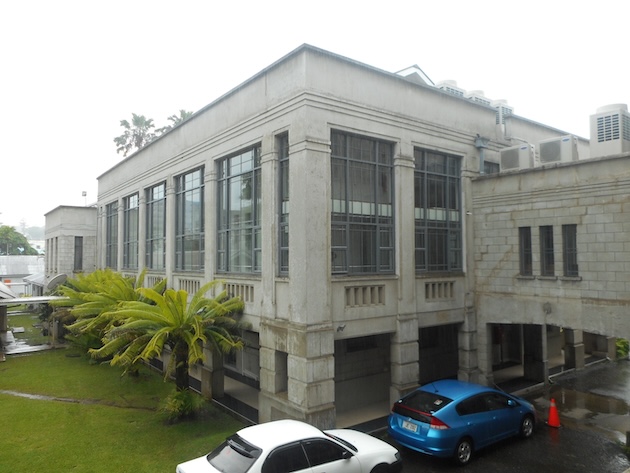
The Fiji Parliament, Suva, Fiji. Credit: Josuamudreilagi
Florence Swamy, Executive Director of the Pacific Centre for Peacebuilding, a non-governmental organization based in the capital, Suva, told IPS that the TRC is important to building trust in the country, where many people still experience fear and anxiety about the violence they witnessed.
“As a first step, it is creating a safe space for people to talk about what happened to them,” she emphasized.
Fiji’s political turmoil has roots in the past. British colonization in the nineteenth century was accompanied by policies that were intended to strengthen indigenous land rights and prevent dispossession, rights that were reinforced in Fiji’s first constitution at Independence in 1970.
But, at the same time, Fijian society was irrevocably changed by the organized immigration of Indians to work on sugar plantations and boost development of the colony. By the mid-twentieth century, the Indo-Fijian population was larger than the indigenous community and their demands for equal rights increased.
“Fijian Indians were brought to the country, in many cases, under the false pretense of better work and wage opportunities, to develop the economy of Fiji…while indigenous Fijians were hardly consulted about such a momentous decision,” Dr. Shailendra Singh, Head of Journalism at the University of the South Pacific in Fiji, told IPS.
Soon the country’s politics were mired in a fierce contest for power. And in 1987, Rabuka, then an officer in the Fiji military, led the overthrow of the first elected Indo-Fijian government under Prime Minister Timoci Bavadra.
Rabuka then became Prime Minister from 1992 to 1999 before another Indo-Fijian government, led by Mahendra Chaudhry, was voted in. This triggered a second coup instigated by nationalist George Speight in 2000 in which the government was held hostage in the nation’s parliament for weeks. Then, in 2006, Frank Bainimarama, head of the armed forces, orchestrated the third coup, which he claimed was necessary to eliminate corruption and divisive policies in the government of the day presided over by Prime Minister Laisenia Qarase. For the next eight years he oversaw an authoritarian military government until democratic elections were held again in 2014.
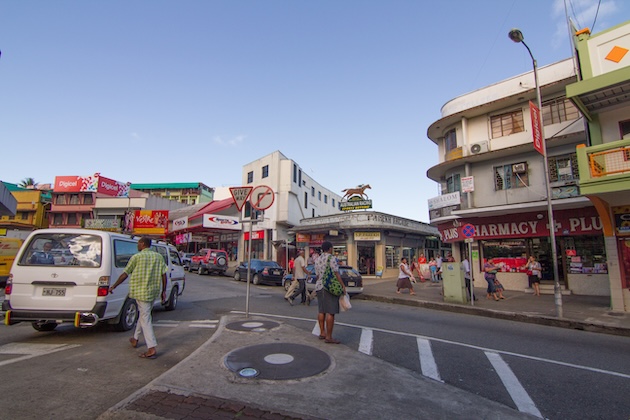
Fiji’s capital city Suva. Credit: Maksym Kozlenko
The coups inflicted a significant human cost. Lawlessness, inter-community violence, military and police brutality, and arrests and torture of people critical of the regime occurred increasingly after 2006.
Three years later, Amnesty International called for “an immediate halt to all human rights violations by members of the security forces and government officials, including the arbitrary arrests, intimidation and threats, and assaults and detentions of journalists, government critics and others.” It also called for the repeal of the Public Emergency Regulations imposed by the government in 2009 that led to impunity for state officials involved in abuses.
Today, the demographic balance has shifted again in the wake of an outward exodus of Indo-Fijians, who now comprise about 33 percent of Fiji’s population of about 900,000, while Melanesians constitute about 56 percent. But societal divisions remain entrenched and the past has not been forgotten.
The commission is now preparing to hold hearings over the next 18 months. And Rabuka has promised to be one of the first to testify of his involvement in the political upheavals.
I will swear to say everything, the truth… I want to continue to live with a clear conscience. I want people to know that at least they understand my reasons for doing it,” he told the media in January. But the TRC also promises to place victims and survivors at the center of its mission, claiming that “their lived experiences are vital to fostering accountability, encouraging healing and building a more united and compassionate society.”
However, there are voices of caution, too, warning of the risks of reviving memories of conflict and pain and the need to prevent this from inflaming divisions.
While experts in the country speak of the need to go beyond the TRC and tackle structural issues of inequality and disenfranchisement, which have driven community grievances, “to make everyone feel a sense of belonging and loyalty to the country of their birth,” Singh said.
In particular, “indigenous fears concerning political dominance in Fiji” and “Indo-Fijians’ feeling of being marginalized by the state and not treated as equal citizens” need to be addressed, she continued.
The Fijian armed forces, which played a decisive role in executing the coups, often justifying their actions in protecting Fiji’s internal order, are also critical to the success of the country’s return to democratic governance.
In 2023 an internal reconciliation process began, aimed at ending military intervention in the country’s politics and elections. In April, during an official meeting with the TRC, the military leadership pledged ‘to ensure that past mistakes are not repeated, and that its role as a guardian of Fiji’s constitutional order remains anchored in service to all citizens, regardless of ethnicity, background or political belief.’
After the commission has concluded its estimated two years of work, it will make recommendations in its final report for public measures and policy reforms to support the country’s social cohesion. Here Swamy emphasizes that it is crucial the recommendations do not remain on paper but are acted on.
“In terms of the recommendations, who will be responsible for them? Will they ensure that the recommendations are implemented? And what mechanisms will be put in place to make sure that institutions are held accountable?” she declared.
Looking into the future, Swamy said that she would like to see her country become one “where everyone feels safe, where there is equal opportunity… a country where everyone can realize their potential.”
Note: This article is brought to you by IPS Noram in collaboration with INPS Japan and Soka Gakkai International in consultative status with ECOSOC.
A buoy in a sea of Vladivostok, Russia is tracking movement of waves. Early warning system is vital for effective disaster management. Credit: Unsplash/Ant Rozetsky
BANGKOK, Thailand, Aug 8 2025 (IPS) – Significant progress has been made globally in implementing national and local disaster risk reduction strategies. Yet, the impact of disasters on lives and economies persists and disaster resilience is one of the most regressed areas in Sustainable Development Goal implementation.
Traditionally, early warning systems (EWS) have focused on saving lives. While reasonable, this narrow framing often leaves potential co-benefits untapped. Given today’s strained economic and political context, investments in resilience must also generate broader economic and developmental benefits.
This potential payoff is no myth, latest studies show that every US$1 invested in adaptation is expected to yield over $10.50 in benefits over a 10 year period.
The Triple Dividend of Resilience model offers a comprehensive rationale for investment, emphasizing three interconnected benefits:
1: Saving lives and avoiding losses
The 2024 Global status on MHEWS found that countries with less comprehensive multi-hazard early warning systems (MHEWS) have a disaster-related mortality ratio that is nearly six times higher than that of countries with ‘substantial’ to ‘comprehensive’ MHEWS. Moreover, providing just 24 hours’ notice of an impending storm can reduce potential damage by 30 per cent.
For small island developing states, this potential can be higher – one study found that over 80 per cent of Cyclone Evans’ economic destruction in Samoa, amounting to 28 per cent of the country’s GDP, could have been avoided through efficient EWS.
Largely untapped, heat early warning systems also have proven benefits, from saving lives (see Ahmedabad’s Heat Action plan, which averts an estimated 1,190 heat-related deaths annually) to demonstrating clear economic benefits (for example, Adelaide’s Heat Health Warning System with a benefit-cost ratio of 2.0–3.3 by reducing heat-related hospital admissions and ambulance callouts).
2. Resource Management and Optimization
EWS enhance decision-making across sectors such as agriculture, water management, and energy, providing reliable, timely forecasts to support more efficient and sustainable operations. Crop advisory services boost yields by an estimated $4 billion and $7.7 billion annually in India and China, respectively. Some studies demonstrating that a 1 per cent increase in forecast accuracy results in 0.34 per cent increase in crop yields.
Similarly, fisherfolk earnings can be optimised when supported by Fishing Zone advisories that take into account the changing climate (in the same study, India’s fisherfolk are reported to earn Rs.17,820 more each trip when using the Potential Fishing Zone advisory of INCOIS).
3. Unlocking Co-Benefits
In disaster-prone regions, the constant threat of extreme weather creates persistent uncertainty that discourages long-term investments, limits entrepreneurship, and shortens planning horizons. By improving hazard detection and forecasting, EWS boosts confidence for both local and foreign investments. Beyond economic gains, the third dividend also delivers social and environmental co-benefits, regardless of whether disasters occur.
When EWSs are developed with active community involvement, social cohesion often follows (Viet Nam’s community-based early warning demonstrate this intangible benefit clearly).
Regional collaboration is a pathway to unlocking the triple dividend of resilience.
A key outcome of the 4th International Conference on Financing for Development (FfD4) in Seville reaffirmed the importance of multilateralism as a framework for addressing global challenges.
Established by the Trust Fund is an example of reduced DRR costs maximising benefits: the Regional Integrated Multi-Hazard Early Warning System (RIMES) has developed into a fit-for-purpose operational hub, now supporting 62 countries across Asia, Africa and the Pacific with advances and interoperable early warning solutions.
Through shared infrastructure, forecasting data, and governance mechanisms, these partnerships help countries lower individual costs, improve transboundary risk monitoring, and attract more sustained technical and financial support.
These regional disaster risk management approaches go beyond saving lives and deliver social, economic, and environmental co-benefits, unlocking a cycle of development and risk reduction. As disasters are turning more complex with compounding and cascading impacts, our shared early warning should remain agile, sustained and leverage the advances in artificial intelligence and machine learning.
Looking ahead, the pay-off from preparedness will be realised when policy and financial environments are reframed to truly optimise the return on investment of sustained DRM efforts at all levels.
As the UNDRR Global Assessment Report 2025 highlights, disaster and climate risks must be embedded at the heart of financial decisions and policy frameworks, not simply as crises to respond to. To do this, dedicated financing mechanisms are required to ensure sustained and predictable support for regional DRM initiatives. Of equal importance is national governments support for the integration of EWS into national and regional development planning.
ESCAP is uniquely placed to support this shift by scaling multi-hazard early warning systems that deliver the triple dividend of resilience., The upcoming ESCAP Committee on Disaster Risk Reduction provides a timely opportunity for countries to endorse a forward-looking agenda that reinforces early warning as essential infrastructure.
In today’s climate-uncertain world, the policy case for investing in disaster resilience is clear. DRM is crucial not only for lifesaving but also a driver of sustainable growth.
Temily Baker is Programme Management Officer, Disaster Risk Reduction Section (DRS); Morgan Schmeising Barnes is Intern, DRS; and Sanjay Srivastava is Retired, Former Chief DRS. SDGs 1, 13, 17