‘Zambia Has Environmental Laws and Standards on Paper – the Problem Is Their Implementation’

Active Citizens, Africa, Civil Society, Crime & Justice, Energy, Environment, Featured, Food and Agriculture, Headlines, Health, TerraViva United Nations

Dec 29 2025 (IPS) –  
CIVICUS discusses environmental accountability in Zambia with Christian-Geraud Neema, Africa editor at the China Global South Project, an independent journalism initiative that covers and follows China’s activities in global south countries.


Zambia has environmental laws and standards on paper – the problem is their implementation’

Christian-Geraud Neema

A group of 176 Zambian farmers has filed a US$80 billion lawsuit against a Chinese state-owned mining company over a major toxic spill. In February, the collapse of a dam that was supposed to control mining waste released 50 million litres of toxic wastewater into the Kafue River system, killing fish, destroying crops and contaminating water sources for thousands of people. The compensation demand highlights broader questions about mining governance, environmental oversight and corporate accountability.

What’s this lawsuit about, and why are farmers seeking US$80 billion?

The farmers are suing Sino-Metals Leach Zambia, a subsidiary of the Chinese state-owned China Nonferrous Metal Mining Group, because on 18 February, the company’s tailings dam collapsed, releasing an estimated 50 million litres of acidic, toxic wastewater and up to 1.5 million tonnes of waste material into the Kafue River. This led to water pollution affecting communities in Chambishi and Kitwe, far beyond the immediate mining area.

The lawsuit reflects real harm and frustration. From the farmers’ perspective, the company is clearly responsible. Their livelihoods have been destroyed, their land contaminated and their future made uncertain. In that context, seeking accountability through the courts is a rational response.

That said, the US$80 billion figure is likely exaggerated. It shows the absence of credible damage assessments rather than a precise calculation. When no one provides clear data on losses, communities respond by anchoring their claims in worst-case scenarios.

This case also highlights a broader accountability gap. Mining companies should be held responsible, but governments must also be questioned. These projects are approved, inspected and regulated by state authorities. If a dam was unsafe, why was it authorised? Why was oversight insufficient?

It should be noted that Zambia’s legal framework allows communities to bring such cases domestically, which is a significant step forward compared to earlier cases where affected communities had to sue foreign companies in courts abroad.

What caused the toxic spill?

There is no single, uncontested explanation. There were clear structural weaknesses in the tailings dam. Reports from civil society and media suggest the dam was not built to the required standards under Zambian regulations. But the company argues the dam complied with existing standards and that it was encroachment by surrounding communities that weakened the structure over time.

These two narratives are not mutually exclusive. Even if community interactions with the site occurred, the primary responsibility still lies with the company. Mining operations take place in complex social environments, and companies are expected to anticipate these realities and design infrastructure that is robust enough to withstand them. Ultimately, this incident reflects governance and regulatory failures. It was not an isolated accident.

What were the consequences of the spill?

The impacts have been severe and multidimensional. The spill polluted large sections of the Kafue River, reportedly extending over 100 kilometres. It killed large numbers of fish, contaminated riverbeds and disrupted ecosystems. Agriculturally, farmers using river water for irrigation saw their crops destroyed or rendered unsafe. Livestock and soil quality were also affected. Acidic and toxic substances entered water sources used daily for cooking, drinking and washing, and communities were exposed to serious health risks.

What makes the situation particularly troubling is the lack of reliable and independent data. There has been no transparent and comprehensive assessment released by the government, the company or an independent body. This absence has left communities uncertain about long-term environmental damage and health effects, and fuelled emotionally charged debates instead of evidence-based responses.

Was the disaster preventable?

Absolutely. At a technical level, stronger infrastructure, better-quality materials and stricter adherence to safety standards could have significantly reduced the risk. At an operational level, companies know mining sites are rarely isolated, and community proximity, informal access and social dynamics must be factored in when designing and securing tailings dams.

But prevention also depends heavily on governance. Mining companies are profit-driven entities, and in weak governance environments, the temptation to cut costs is high. This is not unique to Chinese firms. The main difference in how companies operate is not their origin but their context: the same companies often operate very differently in countries with weak or strong regulatory oversight. Where rules are enforced, behaviour improves; where oversight is weak, shortcuts become the norm.

The key issue here is enforcement. Zambia has good environmental laws and standards on paper. The problem is their implementation.

Could this case set a precedent?

This case has the potential to strengthen existing accountability mechanisms rather than create a new precedent. Zambia has seen similar cases before, including lawsuits involving western mining companies. What is different now is the increased legal space for communities to act locally.

If successful, the case could reinforce civil society advocacy for responsible mining, greater transparency and stronger enforcement of environmental regulations. It could also raise awareness among communities living near mining sites about their rights and the risks they face.

GET IN TOUCH
Website
Facebook
TikTok
Twitter
YouTube
Christian-Geraud Neema/LinkedIn

SEE ALSO
South Africa: ‘Environmental rights are enforceable and communities have the right to be consulted and taken seriously’ CIVICUS Lens | Interview with The Green Connection 12.Dec.2025
DRC: ‘International demand for coltan is linked to violence in the DRC’ CIVICUS Lens | Interview with Claude Iguma 09.Jul.2025
Ghana: ‘We demand an immediate ban on illegal mining and strict enforcement of environmental laws’ CIVICUS Lens | Interview with Jeremiah Sam 29.Oct.2024
  Source

A Grim Year for Democracy and Civic Freedoms – but in Gen Z There Is Hope

Active Citizens, Armed Conflicts, Civil Society, Climate Change, Crime & Justice, Democracy, Economy & Trade, Environment, Featured, Gender, Global, Headlines, Human Rights, Inequality, LGBTQ, TerraViva United Nations

Opinion

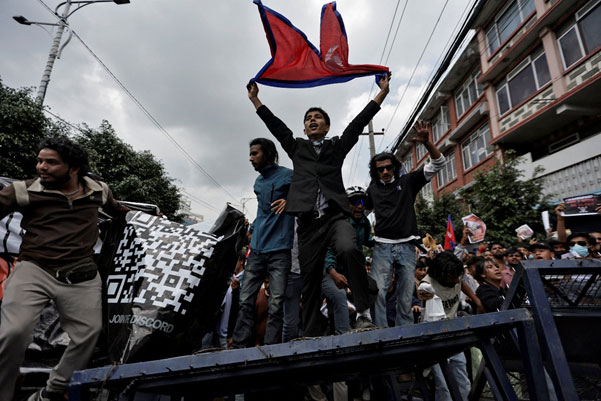
People take part in an anti-corruption protest in Kathmandu, Nepal on 8 September 2025. Credit: Navesh Chitrakar/Reuters via Gallo Images

NEW YORK, Dec 24 2025 (IPS) – 2025 has been a terrible year for democracy. Just over 7 per cent of the world’s population now live in places where the rights to organise, protest and speak out are generally respected, according to the CIVICUS Monitor, a civil society research partnership that measures civic freedoms around the world. This is a sharp drop from over 14 per cent this time last year.


Civic freedoms underpin healthy democracies, and the consequences of this stifling of civil society are apparent. At the end of the first quarter of the 21st century, the world is experiencing 19th century levels of economic inequality. The wealth of the richest 1 per cent is surging while some 8 per cent of the world’s population – over 670 million people – suffer from chronic hunger. Weapons-producing firms, closely intertwined with political elites, are reaping windfall profits as death and destruction rains down in Gaza, Myanmar, Sudan, Ukraine and many other places. It should surprise no one that the political leaders fomenting these conflicts are also squashing civic freedoms to avert questions about their motivations.

From Lima to Los Angeles, Belgrade to Dar es Salaam and Jenin to Jakarta, far too many people are being denied the agency to shape the decisions that impact their lives. Yet these places have also been the site of significant protests against governments this year. Even as authoritarianism appears to be on the march, people are continuing to pour onto the streets to insist on their freedoms. As we speak people in Sofia in Bulgaria are demonstrating in large numbers against endemic corruption which recently forced the government to resign.

History shows that mass demonstrations can lead to major advances. In the 20th century, people’s mobilisations helped achieve women’s right to vote, liberation of colonised peoples and adoption of civil rights legislation to address race-based discrimination. In the 21st century, advances have been made in marriage equality and other LGBTQI+ rights, and in highlighting the climate crisis and economic inequality through protests. But in 2025, the right to protest, precisely because it can be effective, is under assault by authoritarian leaders. Around the world, the detention of protesters is the number one recorded violation of civic freedoms, closely followed by arbitrary detentions of journalists and human rights defenders who expose corruption and rights violations.

This backsliding is now happening in major established democracies. This year, the CIVICUS Monitor downgraded Argentina, France, Germany, Italy and the USA to an ‘obstructed’ civic space rating, meaning the authorities impose significant constraints on the full enjoyment of fundamental rights. This regression is being driven by anti-rights nationalist and populist forces determined to degrade constitutional checks and balances and advance ballot box majoritarianism that denies minorities a fair say in economic, political and social life.

The push to degrade democracy by anti-rights forces now coming to fruition has been many years in the making. It accelerated this year with the return of Donald Trump. His administration immediately withdrew support to international democracy support programmes and instead built links to politicians responsible for crushing civic freedoms and committing grotesque human rights violations. Trump has laid out of the red carpet to El-Salvador’s Nayib Bukele, Hungary’s Victor Orbán, Israel’s Benjamin Netanyahu, Russia’s Vladimir Putin and Saudi Arabia’s Mohammed bin Salman, ushering in a new era of values-free might-is-right diplomacy that threatens to undermine decades of painstaking progress achieved by civil society.

The fallout is clear. Many wealthy democratic governments that traditionally fund civil society activities have significantly reduced their contributions. At the same time, they have linked their remaining support for civil society to narrowly defined strategic military and economic interests. In doing so, they have played directly into the hands of powerful authoritarian states such as China, Egypt, Iran, Nicaragua and Venezuela that seek to discredit domestic calls for accountability. Countries including Ecuador and Zimbabwe have introduced laws to limit the ability of civil society organisations to receive international funding.

All these developments are negatively impacting on civil society efforts for equality, peace and social justice. Yet the story of 2025 is also one of persistent resistance, and some successes. The courage demonstrated by Generation Z protesters has inspired people around the world. In Nepal, protests triggered by a social media ban led to the fall of the government, offering hope for a much-needed political reset. In Kenya, young protesters continued to take to the streets to demand political reform despite state violence. In Moldova, a cash-rich disinformation campaign run by a fugitive oligarch failed to sway the course of the national election away from human rights values. In the USA, the number of people joining the No-Kings protests just keeps on growing.

With over 90 per cent of the world’s population living with the institutional denial of full civic freedoms, anti-rights forces must be feeling pretty smug right now. But democratic dissent is brewing, particularly among Generation Z, denied political and economic opportunities but understanding that another world – one more equal, just, peaceful and environmentally sustainable – is possible. It’s far from game over yet, and even in difficult times, people will demand freedoms – and breakthroughs may be just around the corner.

Mandeep S Tiwana is Secretary General of CIVICUS, the global civil society alliance.

  Source

Myanmar’s Sham Election: Trump Legitimises Murderous Military Dictatorship

Active Citizens, Armed Conflicts, Asia-Pacific, Civil Society, Crime & Justice, Democracy, Featured, Headlines, Human Rights, Migration & Refugees, Press Freedom, TerraViva United Nations

Opinion

Credit: Issei Kato/Reuters via Gallo Images

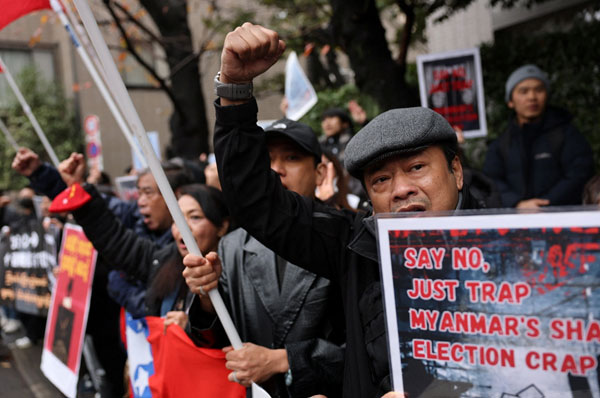
MONTEVIDEO, Uruguay, Dec 22 2025 (IPS) – Myanmar is heading for an election, beginning on 28 December, that’s ostensibly an exercise in democracy – but it has clearly been designed with the aim of conferring more legitimacy on its military junta.


Almost five years after its February 2021 coup, the regime continues to fight pro-democracy forces and ethnic armed organisations, barely controlling a fifth of Myanmar’s territory. The junta has acknowledged that voting won’t be possible in much of the country.

The upcoming election fails every test of democratic legitimacy. The main democratic parties — the National League for Democracy and the Shan Nationalities League for Democracy — are banned. What remains is the Union Solidarity and Development Party, the military’s puppet party, plus minor groups that won no seats in the democratic election held in 2020. Independent media outlets have been crushed, journalists are arrested and intimidated daily and internet access is heavily restricted. In areas that resist military rule, civilians face escalating violence and arbitrary detention.

This election is designed not to reflect the popular will but to entrench military power. It comes as the regime continues its systematic campaign of violence against civilians: weeks before the junta announced the vote, Myanmar’s air force bombed a school in Oe Htein Kwin village, killing two teachers and 22 children, the youngest only seven years old.

The Assistance Association for Political Prisoners has confirmed 6,231 civilians have been killed by the military since the coup, though true figures could be much higher. Nearly half of all civilian deaths are estimated to have been caused by airstrikes. These are not indiscriminate military operations where civilians are collateral damage; they are deliberate attacks where civilians are the targets. The majority of locations of airstrikes have been sites with protected status under international law: camps for displaced people, churches, clinics and schools, often with no presence of armed groups nearby.

The junta has some powerful international allies. China backs it with billions in aid and advanced weapons. Russia supplies the fighter jets that drop bombs on civilians. India quietly sells arms. The three have long provided diplomatic cover and shielded the junta from international accountability. Meanwhile, the Association of Southeast Asian Nations (ASEAN) continues pursuing its failed Five-Point Consensus agreed with the regime in April 2021, despite its systematic violation of every commitment. Regional powers have negotiated exclusively with the junta without input from the National Unity Government — the government in exile formed by democratically elected lawmakers — effectively treating the military regime as Myanmar’s legitimate rulers.

Now recent decisions by the Trump administration threaten to tip the balance decisively in favour of legitimising military rule. Trump has lifted sanctions, cut independent media funding and eliminated the protections formerly afforded to Myanmar’s refugees in the USA. Consistent with his transactional approach, he’s choosing access to rare earth minerals over democracy.

The concern now is that ASEAN member states may follow suit, using the sham election as justification to normalise relations with the military regime. Some have already started moving in this direction, with the junta leader invited to regional meetings.

Myanmar’s pro-democracy forces continue to resist despite the shifting international context. The People’s Defence Forces and ethnic armed groups maintain coordinated operations across most of the country. Civil society continues documenting violations, providing aid to displaced people and advocating for international action. They deserve better than to watch the world legitimise their oppressors.

The junta’s control on the ground remains tenuous, but its diplomatic position is strengthening. Whether this consolidation continues depends on how the world responds to the election. The international community must be clear that treating the election as legitimate would signal to authoritarians everywhere that democratic institutions can be overthrown with impunity, war crimes carry no real consequences and regimes that bomb schools and imprison elected leaders can secure international acceptance.

Inés M. Pousadela is CIVICUS Head of Research and Analysis, co-director and writer for CIVICUS Lens and co-author of the State of Civil Society Report. She is also a Professor of Comparative Politics at Universidad ORT Uruguay.

For interviews or more information, please contact research@civicus.org

  Source

‘No Solution Will Work If the Institutions Responsible for Abuses Remain in Charge of Implementing It’

Active Citizens, Civil Society, Crime & Justice, Featured, Headlines, Human Rights, Latin America & the Caribbean, TerraViva United Nations

Oct 13 2025 (IPS) –  
CIVICUS discusses enforced disappearances in Mexico with a member of the International Network of Associations of Missing Persons.

The crisis of disappearances in Mexico has reached alarming proportions, with over 52,000 unidentified bodies in morgues and mass graves. On 1 July, the Mexican Congress approved controversial changes to the General Law on Disappearances, which promise to modernise the search process through a national biometric system, but which human rights organisations and victims’ groups claim could establish an unprecedented system of mass surveillance.


What are the main changes and how will they affect searches?

The changes seek to strengthen the mechanisms for searching for, locating and identifying missing persons. The main innovations include the creation of a National Investigation File Database and a Single Identity Platform that will integrate various databases. The revised law also provides for the strengthening of the Unique Population Registry Code (CURP) through the incorporation of biometric data such as iris scans, photographs and fingerprints.

The law obliges authorities and individuals to provide information useful for search processes and incorporates new institutions such as the National Guard and the Ministry of Security into the National Search System. It also increases the penalties for the crime of enforced disappearance.

The new system aims to ensure faster and more efficient searches through technology and inter-institutional coordination. It also provides for the use of satellite imagery and advanced identification technologies, under the coordination of the National Search System.

What risks are posed by the authorities’ access to biometric data?

There are serious concerns that the changes give security and justice institutions, including prosecutors’ offices, the National Guard and the National Intelligence Centre, immediate and unrestricted access to public and private databases, including those containing biometric information. The official argument is that this will speed up searches.

However, civil society warns that the Single Identity Platform and the biometric CURP could become instruments of mass surveillance. It is feared the authorities could misuse the information and, instead of helping to find missing persons, use it to help control the population, putting the rights to privacy and security at risk.

How have victims’ groups reacted?

Victims’ collectives have rejected the reform as opaque and rushed. They complain that, although round table discussions were organised, these were merely symbolic and their proposals were not taken into account.

The families of missing persons argue the changes focus on technological solutions that don’t address the underlying structural problems of corruption, cronyism, organised crime and impunity. But no technological solution will work as long as the institutions responsible for abuses and cover-ups remain in charge of implementing it.

This law runs the risk of repeating the mistakes of the 2017 General Law on Enforced Disappearances. That was an important step forward, as it criminalised the offence, created a national search system and sought to guarantee the participation of families in locating and identifying missing persons. Unfortunately, it was never properly implemented. There are fears this new law, in the absence of effective enforcement mechanisms, will only deepen frustration and perpetuate impunity.

What alternatives do victims’ groups propose?

Their demands go beyond legislative changes: they demand truth and justice through thorough investigations, the prosecution of those responsible in state institutions and organised crime groups and an effective search in the field, with the coordination and active participation of victims’ groups.

The collectives also stress the urgency of identifying the over 52,000 unnamed people in morgues and mass graves, and are calling for the creation of an Extraordinary Forensic Identification Mechanism. And they demand real protection for those searching for their relatives, who continue to face threats and attacks.

Above all, they demand an end to impunity through the dismantling of the networks of corruption and collusion between authorities and organised crime. As one local activist summed it up, at the end of the day, without a genuine National Plan for Missing Persons, none of this will work. Each state also needs its own plan. Otherwise, we will remain in the same situation: without results, without reports and without answers about our disappeared.

GET IN TOUCH
Website
Facebook

SEE ALSO
Mexico’s judicial elections consolidate ruling party power CIVICUS Lens 23.Jun.2025
The disappeared: Mexico’s industrial-scale human rights crisis CIVICUS Lens 22.Apr.2025
‘The discovery of the torture centre exposed the state’s complicity with organised crime’ CIVICUS Lens | Interview with Anna Karolina Chimiak 09.Apr.2025

  Source

‘Angola produces large quantities of oil and diamonds, yet most people don’t see the benefits’

Active Citizens, Africa, Civil Society, Crime & Justice, Democracy, Development & Aid, Economy & Trade, Energy, Featured, Headlines, Human Rights, Labour, Natural Resources, TerraViva United Nations

Sep 5 2025 (IPS) –  
CIVICUS discusses recent protests in Angola with Florindo Chivucute, founder and executive director of Friends of Angola, a US-based civil society organisation established in 2014 that works to promote democracy, human rights and good governance in Angola.


The Angolan government’s 1 July decision to remove diesel subsidies, sharply pushing up public transport costs, triggered a series of protests. Angola is one of Africa’s biggest oil producers, but many have seen little benefit from its oil wealth and continue to live in poverty. People have taken to the streets in unprecedented numbers to demand an end to corruption and mismanagement, presenting the ruling party, in power for 50 years, with its biggest test. Security forces have responded to incidences of looting and vandalism with lethal violence. At least 30 people have been killed, 277 injured and over 1,500 arrested.

What triggered the protests?

Fuel subsidy cuts sparked the crisis. The protests began on 28 July, after the government’s decision to remove diesel subsidies immediately pushed up fuel prices. What started as a drivers’ strike in Luanda, the capital, quickly spread to other provinces and escalated into bigger protests.

The impact was devastating. For many families, even a small rise in fuel costs is crushing, because wages have been eroded by years of recession and currency devaluation. When transport costs rise, food prices and school fees rise too, leaving those already struggling unable to make ends meet.

But fuel was just the trigger. The unrest reflected much deeper frustrations, including high unemployment, particularly among young people, growing poverty and anger at corruption and mismanagement. People see public resources channelled into luxury spending and infrastructure deals benefiting a few powerful figures connected to the ruling People’s Movement for the Liberation of Angola (MPLA), while basic services and jobs are neglected. Combined with the immediate shock of higher fuel prices, these grievances fuelled widespread anger.

Why are people struggling in such a resource-rich country?

This is the irony at the heart of the crisis. Angola produces large quantities of oil, along with diamonds, yet most people don’t see the benefits. Mismanagement and entrenched corruption are central to the problem. Revenues from natural resources have too often been captured by networks close to political power and channelled abroad or invested in ways that don’t create jobs.

Angola’s dependence on fuel imports makes the situation worse. We don’t have sufficient domestic refining capacity. Instead of using oil revenues to build refineries and strengthen local industry, a system emerged in which those with political connections profited from importing refined products back into the country. This removed incentives to invest in local processing or agriculture. The result is a tiny wealthy elite and a large majority with very low wages and limited access to services.

What do these protests reveal about the government’s grip on power?

The protests have marked a turning point. The MPLA has dominated politics since independence in 1975, and large-scale protests are not common. The fact that so many people were willing to take to the streets, particularly in and around the capital, shows growing discontent with the government and ruling party.

The authorities’ reaction has been heavy-handed. Security forces have used teargas and live ammunition in some cases, and carried out numerous arrests, including of union leaders and journalists. In some areas protests were accompanied by looting and, tragically, by deadly clashes with security forces. Civil society has since called for investigations into the killings and for accountability for those responsible.

The government’s strategy risks backfiring. By responding with force and detentions, it risks creating a greater sense of mistrust and frustration, which could influence how people engage with political processes as we approach the 2027 election.

How is civil society organising and what challenges does it face?

Civil society – including church groups, trade unions and local associations — has mobilised quickly to call for accountability and transparency. New coalitions are forming; for example, groups such as the Bishops’ Conference of Angola and São Tomé and Príncipe’s Episcopal Commission for Justice and Peace, Friends of Angola, the Justice, Peace and Democracy Association and Pro Bono Angola are working with religious organisations to push for investigations into the killings and provide humanitarian support to families affected by the unrest.

But the environment is hostile. Funding for democracy and human rights work is scarce, so organisations struggle to pay staff or sustain programmes.

State surveillance creates another barrier. The state has invested heavily in surveillance infrastructure, and civil society organisations are often targeted by cyber intrusions and closely monitored. The legacy of communist authoritarian rule creates deep mistrust, which makes organising more difficult.

Language barriers limit international support. Much of the work happens in Portuguese, which limits reach to the wider international audience that often communicates in English, French or Spanish.

Additional restrictions threaten to further tighten civic space. Recent draconian measures include the 2024 National Security Bill and the Bill on the Crime of Vandalism of Public Goods and Services. In addition, the 2023 draft law on Non-Governmental Organizations, approved by presidential decree, imposed harsh regulations. These restrictive laws and policies undermine fundamental freedoms and, if fully implemented, risk worsening the already limited environment for civil society in Angola.

What would it take to address the underlying problems?

Strong political will is needed to tackle corruption and manage public finances transparently. This means opening up procurement and fiscal data, pursuing accountability for past abuses, and ensuring resource revenues are channelled into public priorities such as hospitals, local industry and schools. Investment in education, healthcare and small-scale agriculture would create jobs, strengthen livelihoods and reduce dependence on imports.

Institutional reform is equally vital. This means protecting property rights, improving the business environment so investment generates employment and strengthening an independent judiciary and electoral processes so people can seek change through democratic channels.

International partners have a role to play by supporting electoral transparency and demanding accountability from companies and governments that operate in Angola.

The 2027 election will offer a crucial test. The international community should pay close attention and support reforms that increase transparency and electoral integrity. Electoral reforms and the clear, public release of results at the local level would go a long way towards restoring confidence in democratic processes.

GET IN TOUCH
Website
Facebook
Instagram
LinkedIn
Twitter

SEE ALSO
Angola: ‘Criticising the government means risking arbitrary detention, intimidation and physical assault’ CIVICUS Lens | Interview with Pedro Paka 30.Jul.2025
Angola: Repressive new laws threaten civic space CIVICUS Monitor 15.Sep.2024
Angola: ‘The untrue government narrative reveals an aversion to civil society denouncing malpractice’ CIVICUS Lens | Interview with Emilio José Manuel 01.Jan.2025

  Source

Togo’s Young Generation Challenges Six Decades of Dynastic Rule

Active Citizens, Africa, Civil Society, Crime & Justice, Democracy, Energy, Featured, Headlines, Human Rights, Labour, Press Freedom, TerraViva United Nations

Opinion

Credit: Pascal.Van, licensed under CC BY-SA 2.0

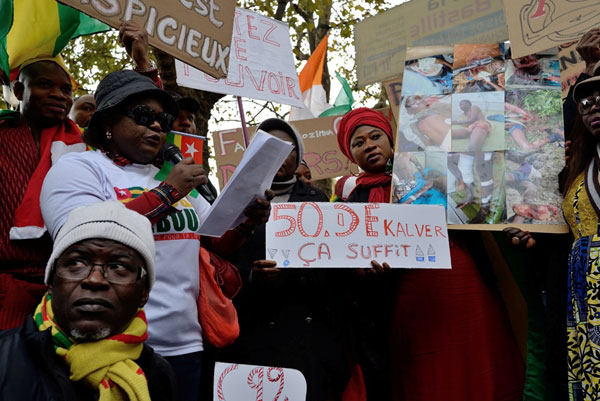
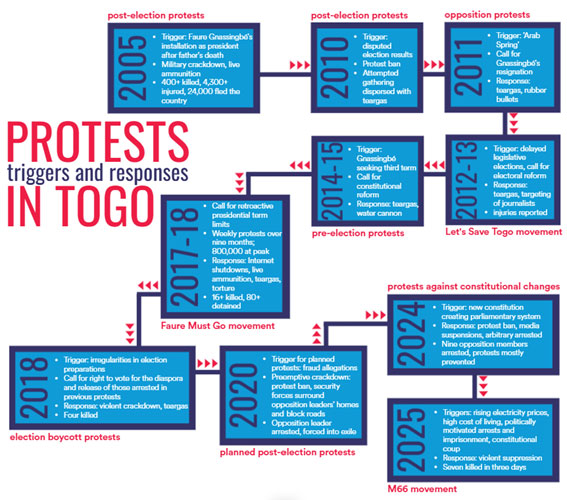
MONTEVIDEO, Uruguay, Sep 2 2025 (IPS) – In late June, thousands flooded the streets of Lomé, Togo’s capital, presenting the ruling dynasty with its biggest challenge in decades.

The catalyst was constitutional manoeuvring by President Faure Gnassingbé to maintain his grip on power. In March 2024, his government pushed through constitutional amendments that transformed Togo from a presidential to a parliamentary system. This created a new position, the President of the Council of Ministers – effectively Togo’s chief executive – elected by parliament rather than by popular vote, and with no term limits. Gnassingbé assumed this new role in May, making it abundantly clear the changes were only about keeping him in power indefinitely.


This constitutional manoeuvre was the latest episode in a 58-year family saga that began when Faure’s father, Gnassingbé Eyadéma, seized power in a 1967 coup. For 25 years, the elder Gnassingbé ruled over a one-party state, staging ritual elections that reached absurd heights in 1986 when he claimed re-election with close to 100 per cent of votes on an implausible 99 per cent turnout. Even after nominal multiparty democracy arrived in 1992, elections remained charades with predetermined outcomes, as opposition parties faced systematic obstacles that made fair competition impossible.

When Eyadéma died in 2005, the military simply appointed his son Faure as successor, despite the constitution mandating immediate elections. International pressure forced a hastily organised vote, but this followed the familiar script of violence, fraud and repression. The pattern repeated in 2010, 2015 and 2020, with each election offering a veneer of legitimacy for continued authoritarian rule – and eliciting successive waves of protest that were either violently repressed or pre-emptively suppressed.

Now, two decades after Faure took power, this latest constitutional gambit has triggered the most significant challenge to his rule. The constitutional changes designed to keep him in power have instead galvanised opposition, creating a focal point for decades of accumulated grievances.

The current protests differ from their predecessors by being overwhelmingly led by young people who’ve never known any other leaders than the Gnassingbés. Raised on promises of multiparty democracy, they’ve witnessed systematic electoral fraud to perpetuate a government wholly unresponsive to their needs. They connect their daily struggles with unemployment, power outages and crumbling infrastructure with the long-term denial of their democratic freedoms.

The arrest in May of a popular rapper and TikToker, Aamron – for posting a video calling for street protests to coincide with Gnassingbé’s birthday on 6 June – galvanised discontent, turning simmering frustration into organised resistance. Aamron’s detention sparked the formation of the 6 June Movement (M66), led by young artists, bloggers, diaspora-based activists and civil society figures who rely heavily on social media to coordinate protests, bypassing state-controlled channels.

The government’s response, however, has followed a familiar path of authoritarian crackdown. In late June, security forces killed at least seven people, including 15-year-old Jacques Koami Koutoglo, and they’ve also used teargas, beatings and mass arrests against protesters. The regime has detained journalists, forced deletion of protest footage and imposed internet shutdowns during protests. It has suspended international media outlets including France 24 and RFI for their protest coverage. it has even issued international arrest warrants for M66 leaders based abroad, accusing them of terrorism and subversion.

Protests have continued despite repression. The leadership of young people, less intimidated by the security apparatus and better connected through social media, has allowed for the diversification of opposition tactics, with activists shifting between street protests, legal challenges and international advocacy as circumstances dictate. The diaspora is also playing a role, with Togolese communities abroad organising solidarity protests and advocating with international organisations for sanctions against the Gnassingbé regime.

Significant obstacles however remain. Gnassingbé controls all levers of power, including security forces, the electoral commission and the Constitutional Court. For a democratic transition to result, international pressure would need to intensify, including the imposition of targeted sanctions on regime officials and their economic interests. Regional bodies, particularly the Economic Community of West African States, would need to act, including by threatening to suspend Togo until democratic reforms are implemented.

Whether these protests trigger democratic change or become yet another chapter in the history of repressed dissent will ultimately depend on the ability of pro-democracy forces to sustain pressure and whether the international community finally decides to act. Gnassingbé’s constitutional manoeuvre may prove to be his final act, not because it succeeded in keeping him in power, but because it awakened a new generation. Togo’s young people have discovered the power of collective action—and that could prove decisive.

Inés M. Pousadela is CIVICUS Senior Research Specialist, co-director and writer for CIVICUS Lens and co-author of the State of Civil Society Report.

For interviews or more information, please contact research@civicus.org

  Source