Sri Lanka: Why a Feudal Culture & Absence of Meritocracy Bankrupted a Nation

Asia-Pacific, Civil Society, Crime & Justice, Featured, Headlines, Human Rights, Humanitarian Emergencies, TerraViva United Nations

Opinion

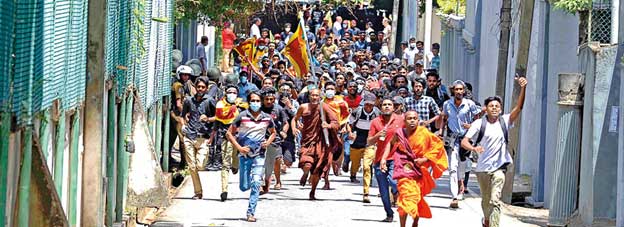
Credit: Sunday Times, Sri Lanka

BROMLEY, UK, Jul 19 2022 (IPS) – Sri Lanka is officially bankrupt and a failed state in all but name. How did a country of 22 million people with a level of literacy on par with most of the developed world end up in such a dire position where the state coffers did not have the measly sum of 20 million dollars to purchase fuel to keep the country functioning beyond the next working day?


Whilst the vast majority of the population have concluded that the blame for this economic armageddon is due to the gluttony of corruption and greed, instigated and enabled by the Rajapaksa family , its acolytes and sycophantic nodding dogs, my own assessment is different.

It is a fact that vast sums , amounting to billions of dollars, were indeed stolen and moved overseas through various illegal networks by the Rajapaksa clan and their accomplices.

Many billions were also squandered on gargantuan white elephant vanity projects in order to glorify the Rajapaksa legacy. However, the seeds for the bankruptcy were sown when the country attained its independence from Great Britain in 1948.

Sri Lanka proudly proclaims itself as one of the oldest democracies in Asia which has had a functioning democracy since 1948. The democratic process has functioned like it should do and parliamentarians elected as they should be and the leaders who represent the aspirations and values of the people appointed as they should be.

Why then has the country reached this abyss?

For democracy to enrich the lives of the people and bring about economic prosperity, two essential and fundamental criteria have to be satisfied. The election of individuals based on merit and the adherence to a universal justice system.

In the absence of meritocracy and a universal justice system, democracy becomes meaningless – an utterly futile process which will not achieve what it is intended for.

Meritocracy is however an alien concept in Sri Lanka!

A universal justice system does not exist in Sri Lanka!

Meritocracy does not exist in Sri Lanka because the cultural DNA is that of a feudal society. Sri Lankan culture promotes race, religion, nepotism, old school connections, social connections, social influences, political influences and servitude (where one class of people are held in perpetual bondage or servants for life ) over and above the attributes and qualities of the individual.

That is a primitive mindset and a recipe for disaster.

In Sri Lanka, people are judged not by the content of their character but by their race, their religion, their socio-economic background, their family connections, the schools they attended, where they live, and who they know. (with apologies to the Rev Martin Luther King for using his words in a manner he did not intend)

When a society functions in such a feudal manner, such values permeate throughout and has a direct correlation with the workings of the justice system. The justice system replicates the culture and ultimately ends up being not fit for purpose.

If a justice system is unable to function based on facts and objectivity, the fabric of society slowly starts to tear apart because the checks and balances needed for a society to progress and for nations to grow, slowly start to dissipate.

Since 1948, Sri Lankan democracy has existed on the basis of nepotism, feudal, racial and religious criteria.

The feudal culture masquerading as democracy has elected the Senanayake family, the Bandaranaike family, the Premadasa family and the Rajapaksa family into the highest offices of the land.

The singular qualification that Prime Minister Dudley Senanayake had was that he was the son of the father.

The singular qualification Prime Minister Mrs Bandaranaike had was that she was the wife of the husband

The singular qualification President Chandrika B had was that she was the daughter of the father and the mother

The singular qualification that Prime Minister Ranil Wickremesinghe (now acting President) has is that he is the nephew of President JR Jayewardene.

The singular qualification that Sajith Premadasa has is that he is the son of the father

The singular qualification Gotabaya Rajapaksa has is that he is the brother of Mahinda

The singular qualification Namal has is that he is the son of the father

The singular qualification Basil has is that he is the brother of Mahinda and Gotabaya.

The singular qualification Thondaman had was that that he was the son of the father.

And this is called Democracy?

This is a banana republic in all but name where Nepotism is the ultimate passport to success – and all done through the ballot box !

This is a culture of entitlement masquerading as democracy , which in turn has given birth to a nation whose leaders are elected not by the content of their character but by their name and association.

It is the equivalent of death by a thousand cuts for what has been spawned is a society where quality has been superseded by mediocrity at best and incompetence at worst.

The end result is the economic armageddon that has destroyed the country.

When leaders of a nation are elected in such a manner, those who serve them and the very fabric of society itself replicates the structural fault line that promotes feudal nepotistic values. It becomes self-fulfilling, promotes mediocrity, encourages malpractice, and creates a culture of corruption.

The legal system, which on paper is there to oversee the rule of law, sadly becomes an extension of the structural fault line which then ensures that impunity and immunity against corruption , theft or even murder, becomes standard operating procedure.

Einstein’s definition of “insanity” is where he states that if we do the same thing over and over again, we end up with the same result. Sri Lanka’s sham democracy since 1948 has been exactly that. A culture based on feudal nepotistic values which enables the same results over and over again.

The people of Sri Lanka must break this vicious cycle if they are ever to escape from the death spiral they have created for themselves.

The critical mass of people who have recently demonstrated for structural change and the complete transformation of government and governance, have achieved more in the last few months than most of the corrupt incompetent deluded half-wits in parliament ever will.

A fundamental new approach to governance based on competence and the rule of law is a pre-requisite to stop Sri Lanka disintegrating into anarchy and chaos.

Does real democracy exist in Sri Lanka ? No !

Real democracy in Sri Lanka doesn’t exist because the culture prevents those with real ability and competence from being elected on merit alone. The vast majority of the electorate simply doesn’t understand that real democracy that provides a positive outcome is based on merit, first, second and last.

It is also unlikely that the majority of the electorate will understand this any time soon.

Can the country find a leader that replicates Singapore’s Lee Kuan Yew ? It is imperative that it does find such a leader who leads by example and who creates a structural transformation of society itself where honesty, integrity and the adherence to the rule of law becomes sacrosanct .

However, does such a leader exists within the current crop of parliamentarians? If not within in parliament , then where ?

A leader who will also ensure that all those who have been culpable in this bringing about this catastrophe are forced to change their ways as well as bringing to justice those who have systematically looted and stolen the countries’ wealth – politicians and non-politicians .

Does a universal justice system exist in Sri Lanka – No !

A justice system in a secular democracy has to be independent of parliament. The justice system is meant to be independent of state machinery and should not be influenced by state operatives.

However, in Sri Lanka the parliament overrules and effectively instructs how the justice system should act which in turn makes the whole system corrupt and not fit for purpose.

The country has huge numbers of legal eagles with more qualifications than they have had hot dinners and who know the finer points of the law better than most in the world.

However, they are rendered impotent and toothless because they are beholden to the political masters they serve – either through choice or otherwise.

The corrosive and toxic nature of a feudal culture which promotes false values over merit and the rule of law ensures even the greatest minds of the land are reduced to corrupt sycophantic nodding ponies.

The legal system in Sri Lanka is also an organised money printing racket where the ordinary citizen or client is entirely at the mercy of the corrupt and dysfunctional bureaucracy.

Those who operate within the system make the equivalent of monopoly money by effectively fleecing the unsuspecting and manipulating a system that is not fit for purpose.

As I write this , the elected leader of the country whose policies and incompetence were the catalyst for the economic meltdown, has fled overseas – the ultimate ” runner viruwa ” !

The man appointed as the acting leader of the nation is one whose party has a single seat in parliament – his own ! And that too not due to electoral votes but due to a corrupt system which enables ” grace and favour ” appointments to parliament.

Such is the abyss that Sri Lanka is in.

What truly beggars belief is that there are millions in the country who still believe that this corrupt rotten s–t show of a system can still be tweaked here and there and made to work.

It cannot and the saddest reality of all this is that millions of Sri Lankans will still cling to their delusional sense of self-importance and righteousness and even at this point where mass starvation is a real possibility, carry on repeating the same mistakes over and over again.

A country whose majority population follows the teachings of one of the greatest philosophers the world has known, is simply incapable of understanding some of the most basic lessons the great sage from Lumbini taught – honesty, integrity, introspection, reflection and truth !

If however, a NEW set of leaders with competence, honesty and integrity, whose primary purpose is to serve the people, can be found within parliament, within the Aragalaya movement , within the commercial sector or a combination of individuals from all three , there is still hope for Sri Lanka.

If however the same corrupt incompetent rotten thieves who still occupy positions of huge powers are allowed to maintain the status quo , the failed state that is Sri Lanka will descent into complete anarchy and bloodshed.

At the end of all that, arising out of the ashes, there will be a breakaway part of the country ………called Eelam !!!!!!!!

Charles Seevali Abeysekera, a semi-retired sales and marketing professional, has worked in the UK mailing industry for over 35 years. He also scribes a blog on current affairs as well as reflections and thoughts on his own life journey “

IPS UN Bureau

  Source

Indigenous Peoples Must Continue To Challenge Human Rights Violations: PODCAST

Civil Society, Global, Headlines, Human Rights, Indigenous Rights, Multimedia, Podcast, TerraViva United Nations

Indigenous Rights

KATHMANDU, Jul 7 2022 (IPS) – Today we are starting a new series focused on human rights. For people working to create a more sustainable and just world – as we are – a human rights based approach makes sense as it starts from the premise that only by recognizing and protecting the dignity inherent in all people can we attain those goals.


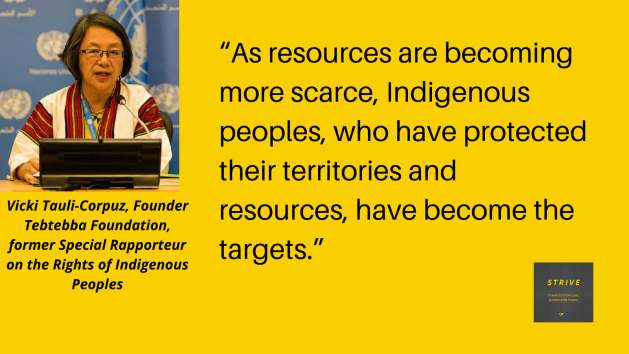
Today’s guest, Victoria Tauli-Corpuz, has immense experience in human rights. She is the founder and executive director of Tebtebba Foundation, which works to improve the lives of Indigenous peoples in the Philippines, her home country, and beyond. She was the Chairperson of the United Nations Permanent Forum on Indigenous Peoples from 2005 To 2010, and UN Special Rapporteur on the Rights of Indigenous Peoples from 2014 to 2020.

We cover a lot of ground in this episode — from Vicky’s analysis of her time as special rapporteur to recent rhetoric around ‘building back better’, the circular economy and other touted economic reforms, versus the reality on the ground. Indigenous communities are facing growing pressure from both states and the private sector to extract the natural resources that they are trying to protect. This dichotomy between the words and deeds of these powerful actors must be continually exposed and challenged by Indigenous peoples, says Vicky.

Asked whether governments of poorer countries are doing enough to protect human rights, without hesitating Vicky answers no. But she also points out that these countries are themselves pressured by international agreements, brokered largely by rich countries, that leave them with few options but to exploit natural resources.

She also tells me about an exciting project — the Committee on the Elimination of Discrimination against Women, a body of 23 global experts, is creating a General Recommendation on Indigenous women and girls. Among other things, it recognize the individual and collective rights of Indigenous women, the latter including respect for their rights to land, languages and other culture. Vicki says it is the first time that a UN treaty body is developing a recommendation focussed on Indigenous women.

Resources

Tebtebba Foundation

UN Permanent Forum on Indigenous Peoples

UN Special Rapporteur on the Rights of Indigneous Peoples

IPS Coverage About Indigenous Peoples Rights

The dichotomy between the words and deeds of powerful actors must be continually exposed and challenged by Indigenous peoples, says today’s guest, Victoria Tauli-Corpuz

  Source

Sri Lankan Beggar’s Opera

Asia-Pacific, Civil Society, Crime & Justice, Featured, Headlines, Human Rights, Humanitarian Emergencies, TerraViva United Nations

Opinion

The ongoing financial crisis in Sri Lanka has also triggered a sharp drop in the value of the country’s currency.

LONDON, Jul 6 2022 (IPS) – When Ceylon- now Sri Lanka- gained independence from Britain in 1948 after almost 450 years of colonial rule under three western powers, it was one Asia’s most stable and prosperous democracies.


Today, after years of misrule, rampant corruption by the ruling class and a politicised administration, the country is bankrupt, its economy on the verge of collapse, and society in disarray while a discredited president still clings to power and manipulating the political system, determined to serve the rest of his term.

While the original 18th century Beggar’s Opera was a satire on the injustice in London society of the day and Prime Minister Robert Walpole’s corrupt government, Sri Lanka has not turned to opera but to begging and possibly borrowing if any international lending institution is willing to lend to a country that has recently defaulted on debt repayment for the first time in its post-independence history.

That speaks volumes for the fiscal and monetary policies of President Gotabaya Rajapaksa’s government, and its unthinking and ill- considered actions in the last two and a half years, that has “collapsed” the country’s economy— as the prime minister told parliament the other day.

Under the 10-year rule of elder brother Mahinda Rajapaksa (2005-2015), the government borrowed heavily from China for massive infrastructure projects. That included a huge international airport at Mattala in nearby Rajapaksa territory in the deep south. Some of them continue to be white elephants.

A joke at the time and resonating now and then was that even herds of roaming wild elephants in the area spurn the airport because of the colour bar!

Since Gotabaya Rajapaksa came to power in November 2019 and a year later brother Mahinda led their Sri Lanka People’s Party (SLPP) to a parliamentary victory, the Rajapaksas, now at the helm of power, strengthened their already close relationship with Beijing at the expense of ties with the West and international lending institutions and alienating UN bodies such as the UN Human Rights Council.

But in the last few months it has been a begging-bowl ‘opera’ as Sri Lanka scoured the world for loans after its foreign reserves started dipping drastically and leading international rating agencies took to downgrading the country’s sovereign rating.

Eventually the Rajapaksa government reneged on its debt repayments, humiliating Sri Lanka which had never defaulted in its 74-year history.

Trapped by a plunging economy Sri Lanka turned to Bangladesh to save it from emerging bankruptcy. Nothing could be more ironic. In its early years Bangladesh was perceived as a recipient of financial support, not a lender.

At that time Sri Lanka’s economy seemed stable enough despite its near 30 years of war against Tamil Tiger separatists.

In early, June Bangladesh agreed in principle to another currency swap of US$ 200 million. This is in addition to last year’s currency swap of $200 million whose repayment date of three months was extended to one year at Sri Lanka’s request last August.

Today, the country’s 22 million people are almost without petrol, cooking gas, kerosene, food, medicines, powdered milk, and other essentials as the government has no foreign currency to import them.

A common scenario in many parts of Sri Lanka are queues of people-men, women and even children- spending many hours and even days to buy the essentials that are scarce and a food shortage is predicted in the coming months.

As I sat down to write this, news reports said the 12th man died seated in his vehicle at a queue for fuel. A few days later the Sunday Times Political Editor upped the death toll to 16.

Meanwhile physical clashes are becoming common at filling station where thugs have muscled in. The other day a soldier was caught on video assaulting a policeman.

Such is the tension building up in society that the Sunday Times Political Editor reported of concerns among local intelligence services about national security.

While the long-drawn out covid pandemic did cripple the tourism industry, a major foreign currency earner, much of the blame rests on President Gotabaya Rajapaksa’s short-sighted policies as well as those of some of his ministers and close advisers whose arrogance and ignorance brushed aside warnings sounded a year or two ahead by reputed economists, former Central Bank professionals, academics and trade chambers.

Rajapaksa having denied any culpability for these errors of judgement ultimately conceded his responsibility but only when mass protests erupted in Colombo and elsewhere in the country with even the peasantry-a vital support base of the Rajapaksas- took to the streets castigating him and his government for creating shortages of essential fertilizers for agriculture.

After almost two months, thousands of anti-government protestors who set up camp on the seaside promenade opposite the presidential secretariat in the heart of Colombo, are still there raising their clarion call which has now spread across the country- “Gota Go Home”-demanding that the president return to whence he came.

While Sri Lanka struggles to survive and the Rajapaksas gradually reappear into public view, there has been a perceptible change in the government’s world view. Though Chinese leaders have often declared that Beijing is Colombo’s “all weather friend” it has been slow to come to Sri Lanka’s aid at a time of real crisis.

An appeal to China by the Rajapaksa government to restructure its loans as one of its biggest lenders had not produced the expected reaction from Beijing. Nor had there been a positive response at the time for another credit line of US$ 1.5 billion when Colombo’s foreign reserves were fast drying out.

Even President Xi Jinping’s birthday greeting to President Rajapaksa last month made no mention of any concrete assistance except references to the long-standing Sri Lanka-China relations.

Observers claimed that China was coaxing-if not actually pressuring- Sri Lanka to distance itself from India, its competitor for political positioning and an expanding stake in the strategically- located island.

While the immediate target was India, Beijing was also pointing its finger at Sri Lanka’s growing ties with the US and international institutions such as the IMF.

The fact that since January India has provided assistance to Sri Lanka with currency swaps, credit lines, loan deferments and humanitarian assistance to meet the mounting crisis and supported Colombo’s call for IMF aid, appeared unwelcome news to China which has been trying to persuade Sri Lanka to enter into a trade agreement with it.

In late June, a high-powered Indian delegation led by Foreign Secretary Vinay Kwatra made a quick few- hour visit to Colombo to meet President Rajapaksa and Prime Minister Ranil Wickremesinghe and discuss further strengthening of Indo-Lanka ties and bilateral investment partnerships including infrastructure and renewal energy.

New Delhi pointed out that this unprecedented recent economic, financial and humanitarian assistance including medicines and food valued at over US$ 3.5 b was guided by Prime Minister Narendra Modi’s “Neighbourhood First” policy.

Had it not been for the Indian central government and the Tamil Nadu state government responding fast with generous assistance Sri Lanka would have been struggling to find scarce food, fuel and medicines.

Meanwhile a nine-member team of senior IMF officials spent 10 days in Sri Lanka in late June to assess whether it could come up with a reform package to restore macroeconomic stability and debt sustainability.

Since Colombo approached the IMF for a bailout programme early this year the international lending institution has been monitoring the country’s economic and political situation, neither of which presented much confidence.

It is not only sustainable economic reforms that the IMF is after. It seeks substantial efforts to improve governance and a stable corruption-free government that the IMF and other lending institutions such as the World Bank and Asian Development Bank and donor nations could have confidence in.

The current government of bits and pieces could hardly provide evidence that it is fighting corruption when one of its stalwarts who was convicted the other day on extortion and sentenced to two years rigorous imprisonment but suspended for five years was reappointed to the cabinet by President Rajapaksa and made chief government whip in addition.

It is the need for clean government that causes concerns with President Rajapaksa reneging on promises he made to introduce constitutional amendments that will substantially prune the plethora of powers he grabbed on coming to power.

This is hardly likely as the world will see when the new 21st constitutional amendment is gazetted in a few days.

Neville de Silva is a veteran Sri Lankan journalist who held senior roles in Hong Kong at The Standard and worked in London for Gemini News Service. He has been a correspondent for the foreign media including the New York Times and Le Monde. More recently he was Sri Lanka’s Deputy High Commissioner in London

Source: Asian Affairs, London

IPS UN Bureau

  Source

Smelter Finally Closes Due to Extreme Pollution in Chilean Bay

Active Citizens, Civil Society, Editors’ Choice, Environment, Featured, Headlines, Latin America & the Caribbean, Regional Categories, TerraViva United Nations

Environment

The municipality of Puchuncaví in central Chile turns greens after days of rain, but next to it are the smokestacks of the industries located in this development pole that turned this town and the neighboring town of Quintero into "sacrifice zones", with the emission of pollutants that damaged the environment and the health of local residents, which will finally begin to be dismantled. CREDIT: Orlando Milesi / IPS - The smelter is an outdated facility that has suffered repeated episodes of industrial pollution, one of the chemicals causing the deteriorating health of the inhabitants of Quintero and Puchuncaví

The municipality of Puchuncaví in central Chile turns greens after days of rain, but next to it are the smokestacks of the industries located in this development pole that turned this town and the neighboring town of Quintero into “sacrifice zones”, with the emission of pollutants that damaged the environment and the health of local residents, which will finally begin to be dismantled. CREDIT: Orlando Milesi / IPS

QUINTERO, Chile, Jul 4 2022 (IPS) – A health crisis that in 20 days left 500 children poisoned in the adjacent municipalities of Quintero and Puchuncaví triggered the decision to close the Ventanas Smelter, in a first concrete step towards putting an end to a so-called “sacrifice zone” in Chile.


The measure was supported by President Gabriel Boric who reiterated his determination to move towards a green government.

The decision by the state-owned National Copper Corporation (Codelco), the world’s leading copper producer, was announced on Jun. 17, following a temporary stoppage of the plant eight days earlier, and was opposed only by the powerful Federation of Copper Workers.

The union reacted by calling a strike, which ended after two days, when the leaders agreed to discuss an organized closure of the smelter, which will take place within a maximum of five years. The smelting and refining facility will be replaced by another modern plant at a site yet to be determined.

The smelter is an outdated facility that has suffered repeated episodes of sulfur dioxide pollution, one of the chemicals causing the deteriorating health of the inhabitants of Quintero, a city of 26,000, and Puchuncaví, population 19,000.

In the last three years Codelco invested 152 million dollars to modernize the smelter but without success, admitted Codelco’s president, Máximo Pacheco.

Pacheco argued that the closure was due to “the climate of uncertainty that has existed for decades, which is very bad for the workers, their families and the community.”

Sara Larraín, executive director of the non-governmental organization Sustainable Chile, said the definitive closure of the plant does justice.

“It is the first step for Quintero and Puchuncaví to get out of the category of damage that is called a ‘sacrifice zone’ where for decades the emission standards have been exceeded,” she told IPS.

“Sacrifice zones” are areas that have suffered excessive environmental damage due to industrial pollution. Residents of poor communities in these areas bear a disproportionate burden of pollution, toxic waste and heavy industry.

The back of the Ventanas Smelter reveals the poor operating conditions of the copper processing facility in Chile, which will be replaced by a new one within a maximum of five years at an as yet undefined site. CREDIT: Orlando Milesi / IPS

The back of the Ventanas Smelter reveals the poor operating conditions of the copper processing facility in Chile, which will be replaced by a new one within a maximum of five years at an as yet undefined site. CREDIT: Orlando Milesi / IPS

The two adjacent municipalities, 156 kilometers west of Santiago, qualify as a sacrifice zone, as do Mejillones, Huasco and Tocopilla, in the north, and Coronel in southern Chile, because the right to live in a pollution-free environment is violated in these areas.

In Quintero and Puchuncaví the main source of sulfur dioxide is the Ventanas Smelter, responsible for 61.8 percent of emissions of this element, causing widespread health problems.

Fisherman-diver forced to move away returns to Quintero

Carlos Vega, a fishermen’s union leader in Quintero, is the third generation of divers in his family.

“My grandfather, a fisherman, taught me how to make fishing nets. He had a restaurant on the coast,” he told IPS, visibly moved, adding that his two brothers are also fishermen and divers, who catch shellfish among the rocks along the coast.

“Fishing was profitable here. We were doing well and making money,” he said.

He added that people are well-organized in the area. “At one time we were the largest producer” of seafood and fish for central Chile, “because we had management and harvesting areas. But they had to close because of the pollution,” he said, describing the poverty that befell the local fishers in the late 1980s.

Then the health authorities found copper, cadmium and arsenic in the local seafood and banned its harvest. As a result, the small fishermen’s bay where they keep their boats and sell part of their catch lost their customers.

The crisis forced him to move to the south where he worked for 15 years as a professional diver in a salmon company.

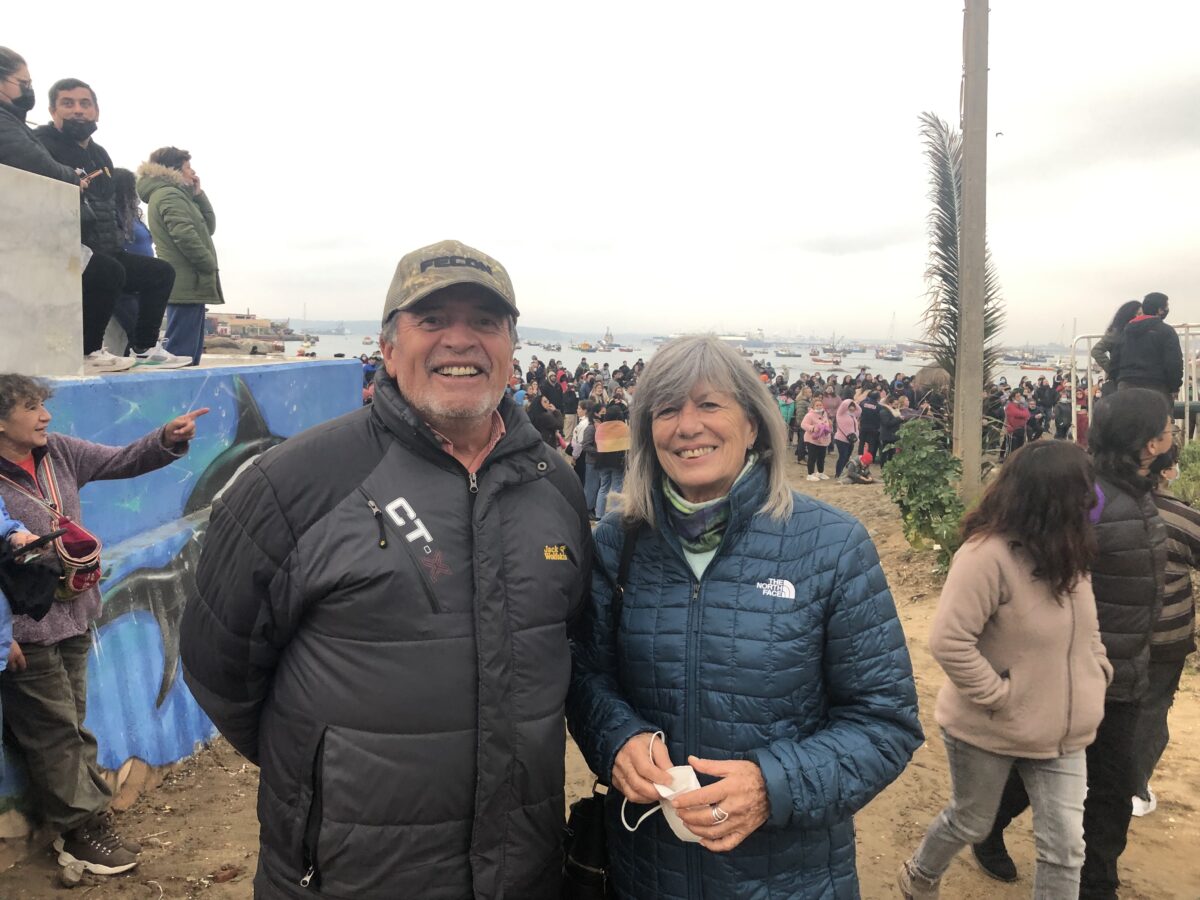
Carlos Vega, a fisherman, diver and trade union leader, and Kata Alonso, spokeswoman for Women of Sacrifice Zones in Resistance, pose for a photo in the bay of Quintero, during the celebrations in that town and in neighboring Puchuncaví for the announcement of the definitive closure of the Ventanas Smelter of the state-owned Codelco copper company, whose polluting emissions have damaged the local environment and made local residents sick for decades. CREDIT: Orlando Milesi / IPS

Carlos Vega, a fisherman, diver and trade union leader, and Kata Alonso, spokeswoman for Women of Sacrifice Zones in Resistance, pose for a photo in the bay of Quintero, during the celebrations in that town and in neighboring Puchuncaví for the announcement of the definitive closure of the Ventanas Smelter of the state-owned Codelco copper company, whose polluting emissions have damaged the local environment and made local residents sick for decades. CREDIT: Orlando Milesi / IPS

Today, back in Quintero, with two sons who are engineers and a daughter who is a teacher, he continues to dive, albeit sporadically. He participates along with 27 fishermen in the management area granted to the north of the sacrifice zone, where they extract shellfish quotas two or three times a year.

“The social fabric was broken down here, that is the hardest thing that has happened to us,” said Vega.

Codelco is not the only polluter

Codelco is the main exporter in Chile, a long narrow country of 19.1 million people sandwiched between the Pacific Ocean and the Andes Mountains where the big mines are located. In 2021 it produced 1.7 million tons of copper and its pre-tax income totaled nearly 7.4 billion dollars.

“Chile is the leading global copper producer and the world is going to become more electric every day,” said Pacheco. “And copper is the conductor par excellence, there is no substitute. We have to be ready for copper to be increasingly in demand in this energy transition.”

The president of Codelco emphasized that the wealth does not lie in exporting concentrate, which has 26 percent copper, but anodes with 99 percent purity, “and for that we need a smelter and a refinery.”

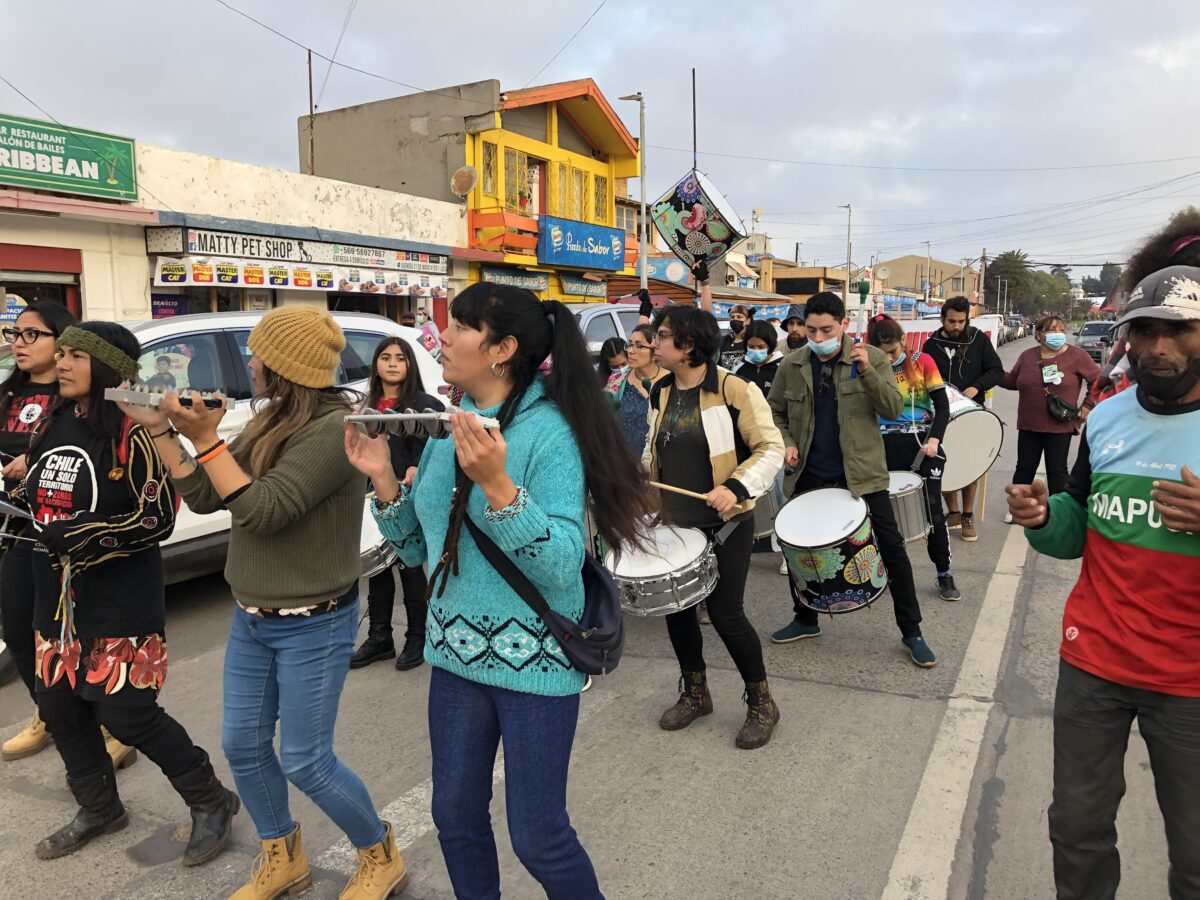
Young residents of Quintero and Puchuncaví came out in a drum line to celebrate the closure of the Ventanas Smelter and participate in a Festival for Life which lasted eight hours and was joined by a hundred local and national artists. Thousands of people gathered in the square which is on the edge of Quintero on Saturday, Jun. 25. CREDIT: Orlando Milesi / IPS

Young residents of Quintero and Puchuncaví came out in a drum line to celebrate the closure of the Ventanas Smelter and participate in a Festival for Life which lasted eight hours and was joined by a hundred local and national artists. Thousands of people gathered in the square which is on the edge of Quintero on Saturday, Jun. 25. CREDIT: Orlando Milesi / IPS

But the smelter, he explained, must be modern and not like Ventanas, which only captures 95 percent of the gases released. In the last three years, Codelco has lost 50 million dollars in the Ventanas smelter, which has a production scale of 420,000 tons. A modern Flash furnace produces 1.5 million tons and captures 99.8 percent of the gases.

The Ventanas Smelter employs 348 people and another 400 in associated companies. Half of them do not live in the area but in Viña del Mar, Villa Alemana or Quilpué, towns that are also in the region of Valparaíso, but are located far from the pollution.

The smelter is part of an industrial cluster that includes 16 companies.

After the latest health crisis, the authorities decreed contingency plans in plants and maritime terminals of six companies for emitting volatile organic compounds (VOCs) and applied an Atmospheric Prevention and Decontamination Plan.

Four coal-fired thermoelectric plants also pollute the area, one of which was definitively closed in December 2020 and another that was to be closed last May, although the measure was postponed.

According to environmentalist Larraín, when the smelter and the four thermoelectric plants are closed “better standards can be achieved, at least with respect to sulfur dioxide and heavy metals,” in Quintero and Puchuncaví.

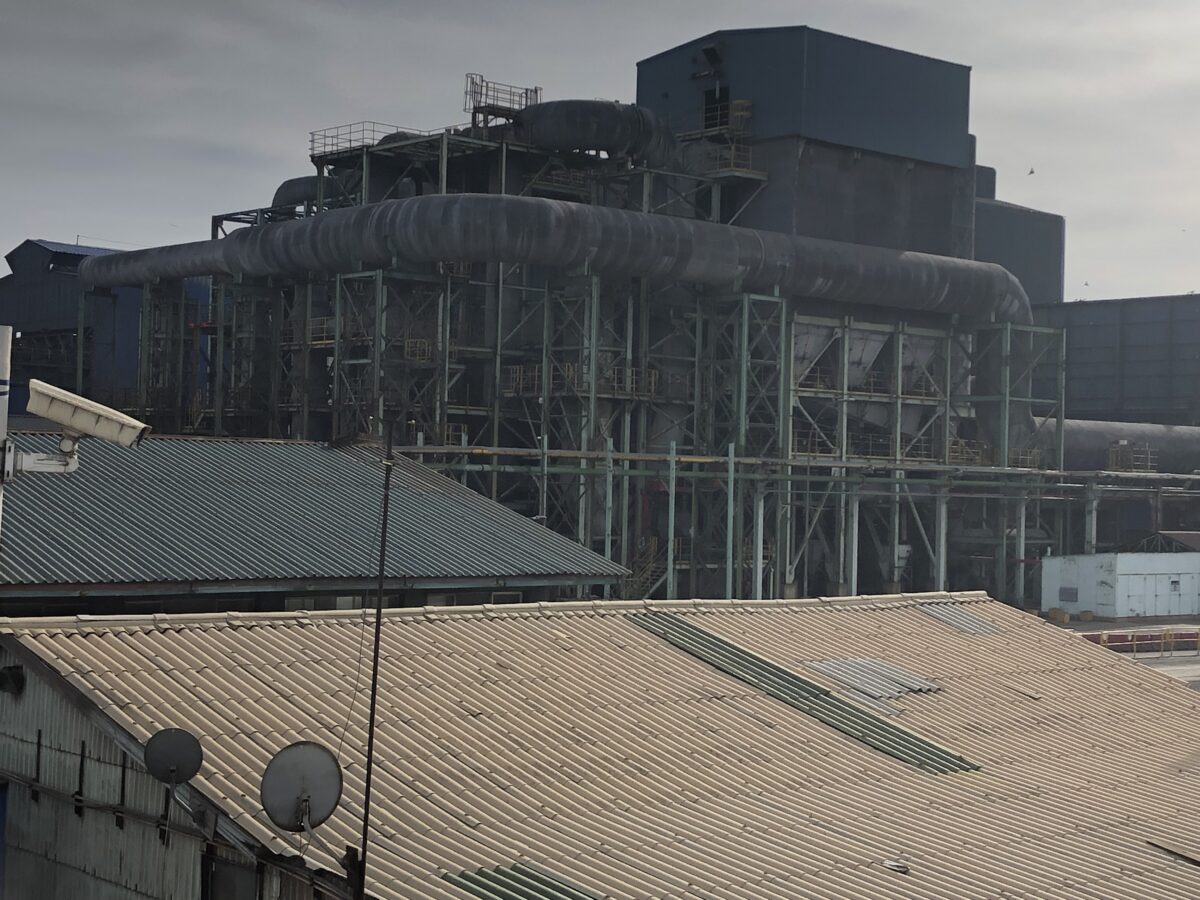
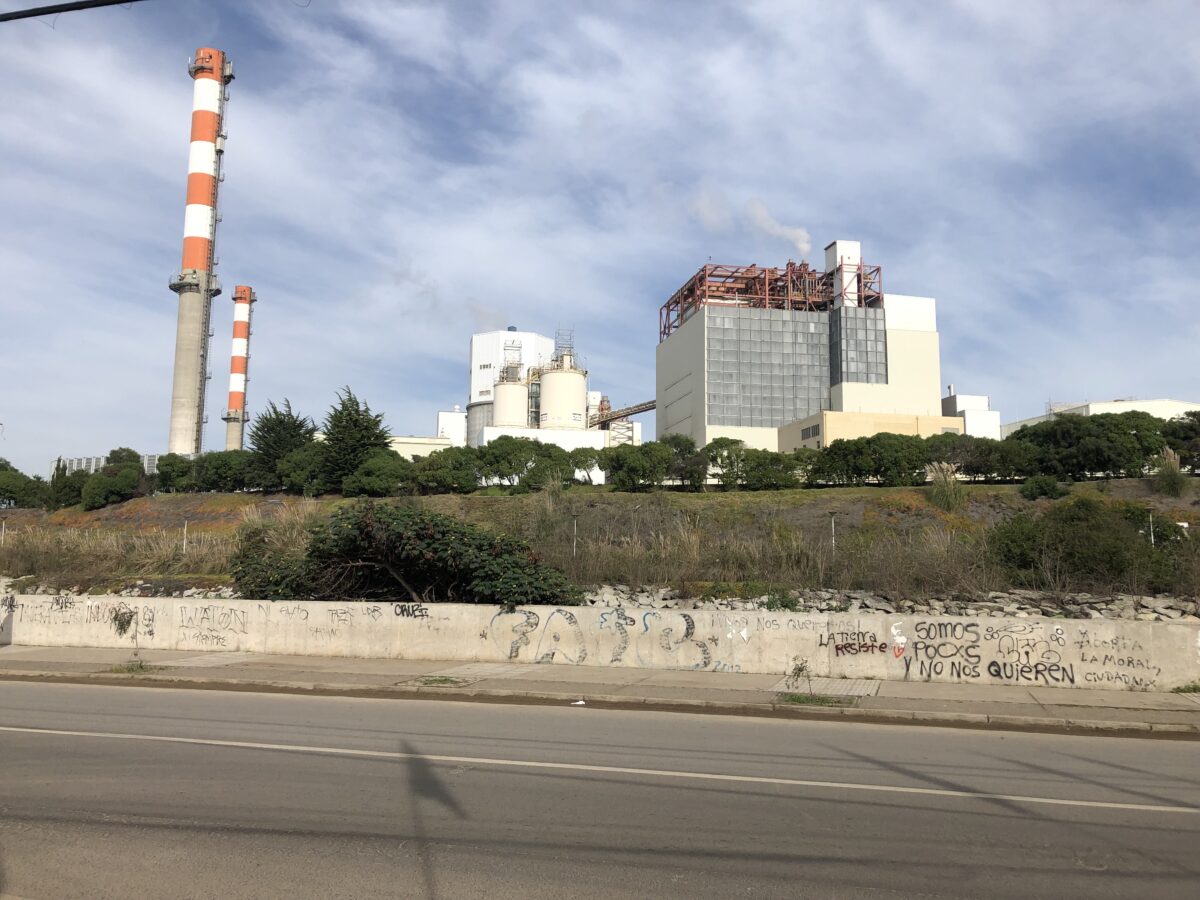
View from the road of the Ventanas Smelter, in central Chile, which has been temporarily shut down since Jun. 9 and whose antiquated facilities will be permanently closed in a maximum of five years. They are adjacent to populated areas that have been turned into so-called "sacrifice zones" where local residents periodically suffer environmental and health emergencies due to sulfur dioxide fumes. CREDIT: Orlando Milesi / IPS

View from the road of the Ventanas Smelter, in central Chile, which has been temporarily shut down since Jun. 9 and whose antiquated facilities will be permanently closed in a maximum of five years. They are adjacent to populated areas that have been turned into so-called “sacrifice zones” where local residents periodically suffer environmental and health emergencies due to sulfur dioxide fumes. CREDIT: Orlando Milesi / IPS

The plan to continue decontaminating

Other pollutants are VOCs linked to the refineries of the state-owned oil company Empresa Nacional de Petróleo (Enap) and the private company Gasmar.

Kata Alonso, spokeswoman for the Mujeres en Zona de Sacrificio en Resistencia (Women in Sacrifice Zone in Resistance) collective, told IPS that “the prevention plan is good so that people don’t continue to be poisoned, so that they can breathe better, and so that the companies that pollute can close their doors, instead of the schools.

“There are companies that were built before the environmental law was passed that have not taken health measures. So what we are asking is for each company to be evaluated, and those that do not comply with the regulations must leave,” she said.

The repeated crises occur despite the fact that Chile’s environmental standards are below those of the World Health Organization (WHO).

For level 10 particulate matter, the mixture of solid particles and liquid droplets in the air, the ceiling in Chile is 150 milligrams per cubic meter (m3) and the WHO ceiling is 50.

For particulate matter 2.5 (fine inhalable particles), in Chile the limit is 50 milligrams per m3, while the WHO guideline is 25. And the Chilean ceiling for sulfur dioxide is 250 milligrams per m3 compared to the WHO’s limit of 20.

Three years ago, the Chilean Pediatric Society and the Chilean Medical Association requested that Chile raise its emission standards to WHO levels.

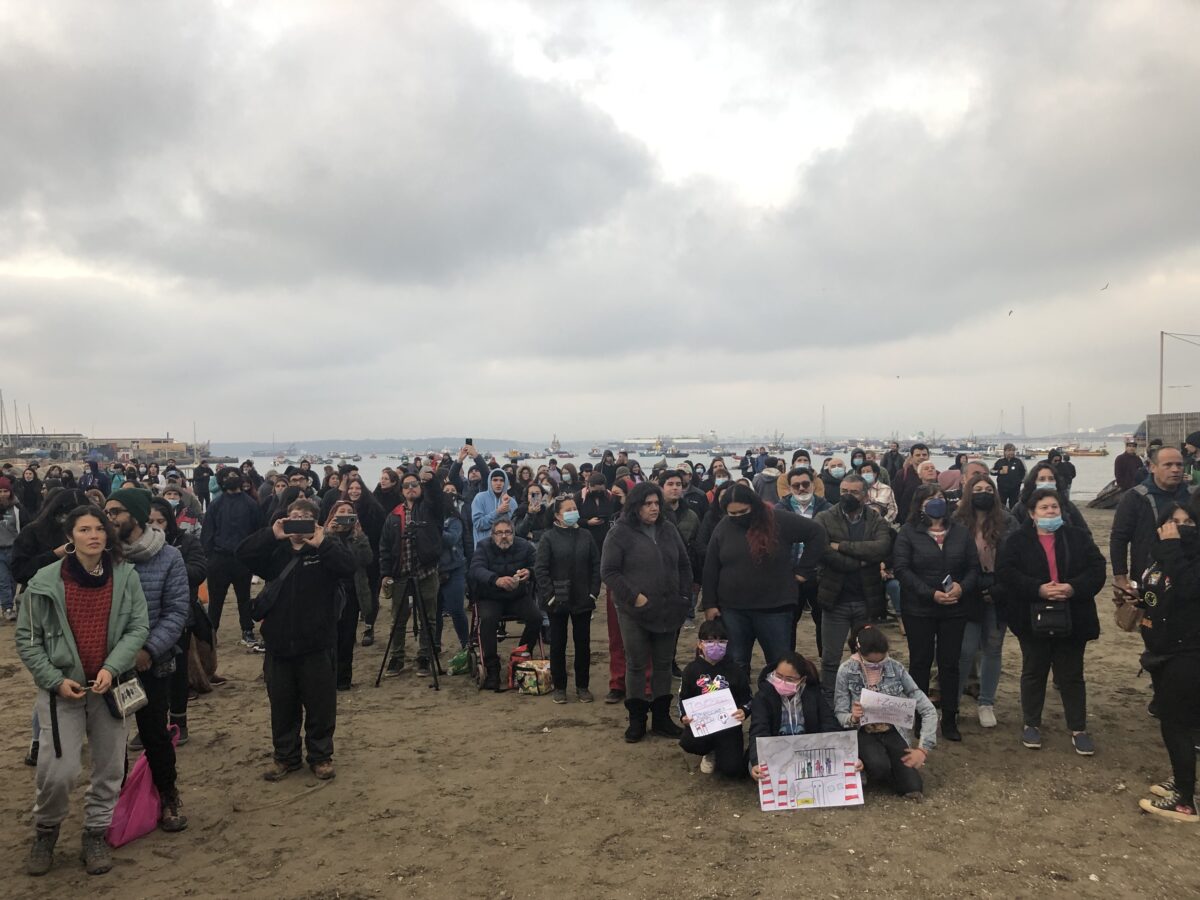
Part of the audience at the Festival for Life, which celebrated the closure of a copper smelter, that along with 15 other industrial plants turned the municipalities of Quintero and Puchuncaví into "sacrifice zones" in central Chile. Performances by musicians and other artists from around the country were interspersed with messages calling for a life free of pollution in the area. CREDIT: Orlando Milesi / IPS

Part of the audience at the Festival for Life, which celebrated the closure of a copper smelter, that along with 15 other industrial plants turned the municipalities of Quintero and Puchuncaví into “sacrifice zones” in central Chile. Performances by musicians and other artists from around the country were interspersed with messages calling for a life free of pollution in the area. CREDIT: Orlando Milesi / IPS

Alonso the activist said that “my two neighbors died of cancer, whoever you ask in Puchuncaví has relatives who died of cancer. Today people are dying younger, breast and uterine cancer have increased in young women, and there are so many miscarriages.

“The statistic we have is that one in four children in Puchuncaví are born with severe neurological problems, down syndrome, autism. Here in Quintero there are two special education schools and many children with learning disabilities,” she said.

Larraín called for “government support for those who have been affected by irreversible diseases, asthma, lung cancer and others that have been proven to be caused by coal combustion and heavy metals.”

The Catholic University conducted a study using data on hospitalizations and mortality in Tocopilla, Mejillones, Huasco, Quintero and Puchuncaví.

“The rates for cardiovascular disease associated with industrial processes are clear. In some cases they are 900 percent higher. Calling them sacrifice zones is real, it refers to impacts that are occurring today,” said Larraín.

The environmentalist said it would be difficult to revive Quintero Bay “because it has a gigantic layer of coal at the bottom, dead phyto and zooplankton because water is used for cooling in industrial processes and is dumped back out with antialgaecides that kill marine life.”

She believes, however, that “over the years, the capacity for regeneration is possible, even in agriculture that has been lost due to sulfur dioxide emissions. There may also be a recovery in fishing and tourism.”

But Larraín demanded “a just transition that restores healthy levels and regenerates ecosystems so that local communities can sustain their economy in a healthy and ecologically balanced environment.”

  Source

The World Is Melting Down and the Cause is Corruption- The G20 Needs to Take Action

Civil Society, Economy & Trade, Global, Headlines

Opinion

The G20 needs to strengthen regulatory authorities across its membership and expand sanctions for violating Anti-Money Laundering requirements.

WASHINGTON DC, Jul 1 2022 (IPS) – The G20 is meeting again next week in Indonesia for the second time this year- at a moment when the world is facing the most difficult economic, political and social challenges for decades.


At their core, these problems are driven by corruption- from the “weaponization” of graft by Russia in Ukraine to the lack of regulation of the enablers of corruption in G20 countries such as the UK. This malfeasance costs lives and livelihoods- and is directly responsible for everything from energy black-outs to food and fuel shortages.

Critical decisions are being made by the G20 about the ways that governments can collectively manage what is now considered a significant transnational threat to peace and prosperity. But despite the earnest anti-corruption commitments made by G20 countries annually, follow-up and delivery on these commitments is a challenge.

Despite the earnest anti-corruption commitments made by G20 countries annually, follow-up and delivery on these commitments is a challenge

Civil society has to make its voice heard on these issues now, before it is too late. The Civil-20 (C20)– which we Co-Chair- engages the G20 on behalf of civil society. Over the past several months we have collectively gathered ideas from civil society around the world related to five central corruption challenges on which the G20 must take action immediately: Anti-Money Laundering (AML) and asset recovery; beneficial ownership transparency; countering corruption in the energy transition; open contracting; and the transparency and integrity of corporations.

This is what the C20 members are telling the G20 it needs to do now. First, effective anti-money laundering efforts are key to detecting illicit financial flows from corrupt activities in countries like Russia.

The G20 needs to strengthen regulatory authorities across its membership and expand sanctions for violating AML requirements, in particular for large financial institutions and what are called Designated Non-Financial Businesses and Professions (DNFBPs) that facilitate illicit financial flows (such as lawyers or accountants).

Similarly, when assets are returned they need to be aligned to GFAR principles, including through the engagement of civil society and community groups to support the transparency of this process.

Second, the G20 has committed to lead by example on beneficial ownership transparency (the real ownership of companies) and has the opportunity to strengthen this commitment by strengthening G20 High-Level Principles on Beneficial Ownership Transparency in line with improved global standards, including those recommended by the Financial Action Task Force (FATF).

One challenge is integrating data and G20 member countries should also implement the Beneficial Ownership Data Standard to share and analyze data more easily- which would dramatically improve the ability of citizens to understand who owns companies that might be involved in corruption.

Third, there is massive amounts of corruption as the world transitions to clean energy, but corruption risks in the renewables sector are not unique- they follow many of the same patterns we have seen in infrastructure and the extractives industries, for example. As more and more countries transition towards renewable energy, it is important to prioritize resource governance in ways that align with existing agreed-upon high-level principles and best practices.

The G20 must regulate lobbying activities around clean energy- including through lobbying registries; enforce a strong and credible sanctions regime, including public databases of companies banned from tenders; and support independent civil society monitoring of large-scale energy projects through integrity pacts and other similar vehicles that help to ensure transparent procurement.

Fourth, government contracting is rife with collusion, nepotism and graft. The G20 must open up contracting processes and strengthen open data infrastructure by sharing information across the whole cycle of procurement for projects- from planning to contracting to awards and implementation.

Governments must also publish high-quality open data that is readily machine-readable so it can be used across multiple systems. This does not mean starting from scratch- there are standards for this, like the Open Contracting Data Standard (OCDS) and the Open Contracting for Infrastructure Data Standard (OC4IDS). It is a question of commitment.

Finally, not all G20 member countries are party to the OECD Anti-Bribery Convention and private sector bribery is not criminalized in every G20 member country as per the UNCAC provisions. This means companies can legally offer bribes to win contracts, and this has to be outlawed immediately.

The EU Directive for Corporate Responsibility Due Diligence includes requirements that the G20 should adopt immediately- for instance to identify the actual or potential adverse human rights impacts of corruption; to prevent or mitigate the potential impacts of bribery; and improve public communication around due diligence processes.

G20 members should also regulate the “revolving doors” through which government and business people can engage in favoritism; and invest in better partnerships between entities working on these issues such as regulators, law enforcement agencies and civil society.

This might all seem quite technical- but the negative impacts of corruption are not felt in government meeting rooms, but in the everyday lives of citizens. The G20 has for too long made excuses for the lack of action on this topic, and we are now seeing the devastating effects. Unless action is taken now, it will be too late.

These ideas were gathered through a consultative process as part of the C20 Anti-Corruption Working Group (ACWG), and represent the inputs of many civil society organizations.

Blair Glencorse is Executive Director of Accountability Lab and is Co-Chair of the C20 ACWG.

Sanjeeta Pant is the Global Programs and Learning Manager at the Lab. Follow the Lab on Twitter @accountlab.

  Source

Colombia Votes for Social Justice

Armed Conflicts, Civil Society, Development & Aid, Featured, Headlines, Human Rights, Latin America & the Caribbean, Regional Categories, TerraViva United Nations

Opinion

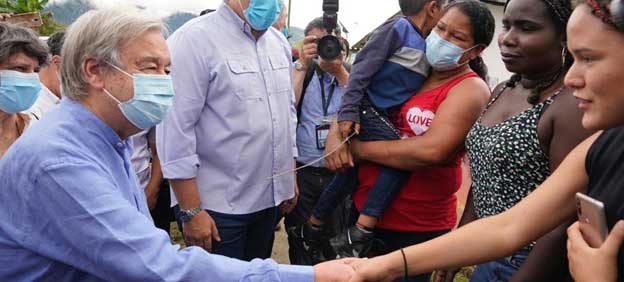
Secretary-General António Guterres talks to villagers in Llano Grande, Colombia, where he witnessed how the peace process was developing in Colombia. November 2021. Credit: UNMVC

BOGOTA, Colombia, Jun 22 2022 (IPS) – On Sunday, 19 June 2022, the hopes of millions of Colombians working for a more democratic, safer, ecological, and socially just country came true.


Senator Gustavo Petro, in a duo with his Afro-Colombian vice-presidential candidate, environmental expert Francia Márquez, received approximately 50.44 per cent or 11,281,013 of the votes cast, and has been elected the 42nd President of Colombia.

Both his predecessor Iván Duque and his opponent Rodolfo Hernández publicly congratulated him on his election victory.

Some 22,445,873 people or 57.55 per cent exercised their right to vote in the run-off election on 19 June 2022, about 3.7 per cent more than in the first round three weeks ago. Only in 1998 was the turnout higher.

Getting people to the polls is not always easy in Colombia: Thousands of people in some parts of the country again had to travel for several hours, even days, to reach one of the polling stations. In some regions, heavy rain also prevented people from voting. In addition, threats, violence, and vote-buying continue to restrict voting, especially in remote rural areas.

Oliver Dalichau

For the first time in the country’s history, neither a conservative nor a member of the Liberal Party will lead the government of Latin America’s fifth largest economy.

With Gustavo Petro, the winning streak of leftist movements and parties in Latin America continues and provides further momentum for the upcoming elections in Brazil in October 2022.

Gustavo Petro’s opponents

In this historic situation for Colombia, what will matter is how the losers behave. On Sunday, Petro not only relegated his direct challenger, the anti-women and anti-migrant 77-year-old self-made millionaire and populist, Rodolfo Hernández, to second place, but with him also the country’s previous political elite.

With 47.31 per cent or 10,580,412 votes, Hernández received much less support than the polls had predicted.

However, significantly more people than in the last elections opted for neither candidate: 490,118 or 2.23 per cent gave a voto blanco.

This is a Colombian peculiarity that allows voters to express their disagreement with the candidates but, unlike abstention, allows them to exercise their democratic right.

Precisely because this triumph is so unique, President Petro should now reach out to his critics, remind the losers of their responsibility in state politics and call on the opposition to work constructively. At the moment, it is unclear whether the losers will be able to accept their new role.

The military, traditionally strong in Colombia, also remains a key player in this phase of the democratic transition. It is expected that the military leadership will soon send out signals that leave no doubt about Gustavo Petro’s election victory.

He will also be their commander-in-chief after his inauguration on 7 August. Should the recognition fail to materialise publicly, Petro’s presidency would be tainted from the outset and rumours of an imminent coup d’état would continue to do the rounds. Both Colombian NGOs and the international community should keep a close eye on this.

Six urgent challenges

In any case, the new president faces enormous challenges. It is already questionable whether Petro will find a majority in the Colombian parliament for a fundamental change of the unequal living conditions, the high unemployment, inflation rate, national debt, and the necessary socio-ecological transformation of the country.

Although quite a few deputies of his left-progressive alliance Pacto Histórico support Petro after the congressional elections in March, he lacks a legislative majority of his own.

Moreover, the newly elected representatives must first prove that they can stick together and also lead a government together, especially now that the ministers are to be appointed. Tensions are already pre-programmed in the colourful spectrum of the Pacto Histórico.

The government’s most urgent tasks include:

Reviving the peace process: In the last four years under Iván Duque’s ultra-right government, the peace process signed in 2016 with the former guerrilla group FARC was hardly implemented.

President Petro needs to relaunch it, push for its implementation, and ensure that social and local leaders are better protected from displacement, violence, and assassination. This year alone, more than 60 of these líderes sociales have been murdered.

After this process, a dialogue with the guerrilla organisation ELN would be necessary too. It is up to the new government to send out signals define conditions as to whether and how negotiations can take place.

A new economic policy: Petro takes over a country with the highest inflation rate of the last 21 years from his unpopular predecessor. With a current debt of around 63 per cent of gross domestic product (GDP) and a budget deficit of over six per cent, the president-elect has announced that he will begin his term with a structural tax reform.

This envisages an increase in the tax burden for the richest 0.01 per cent of the population. This idea is vehemently opposed by the political right. During the election campaign, they left no stone unturned to discredit Petro, accusing him of preparing the country’s economic decline.

Commitment to women’s rights and greater equality: Petro proposes the creation of a Ministry of Equality led by Francia Márquez, which would be responsible for formulating all policies to empower women, people of all sexual orientations, the different generations, and ethnic and regional diversity in Colombia.

Under Petro, women in particular could expect to gain priority access to public higher education, credit, and the distribution and formalisation of land ownership.

Petro and Marquez are proposing an energy transition that will rule out new developments of future oil fields.

Land reform and protection of indigenous people, peasants, and Afro-Colombian women: The extremely unequal distribution of land is one of the structural causes of the armed conflict in Colombia. The internal displacement of recent decades has led to the expansion of arable land: the resulting tensions are at the root of conflicts between ethnic communities (indigenous and Afro-Colombian) and peasant women over access to this land.

All these groups have been and continue to be excluded from the development of the country. At the same time, they are among the most affected by the armed conflict’s violent dynamics.

Petro’s government will need to ensure a more equitable distribution that enables the integration of ethnic and farming communities into the production and development circuits.

Better education for more people: During the social protests last year (and already in 2019 and 2020), the demand for more public and quality education was one of the central messages of the mostly peacefully demonstrating Colombians.

Petro promises to provide them with a higher education system in which public universities and secondary schools in particular are properly funded.

More environmental protection: Under the Duque government, environmental and climate protection in Colombia was largely neglected, deforestation increased, and the first fracking pilot wells were approved. Petro and Marquez have announced fundamental change.

They are focusing on a more environmentally-friendly production and service model and are proposing an energy transition that will rule out new developments of future oil fields. This process is to be accompanied by a land reform on unproductive lands – mostly resulting from illegal forest clearance.

A Colombia of social justice

Beyond these urgent reform tasks, the president and his government will also have to find answers in other important areas, such as integrated security reform, a diversified new foreign policy, a different drug policy, and on the regulation of narcotics.

At the same time, they must not disregard the necessary coalition with civil society that ultimately lifted them into office.

Gustavo Petro and Francia Márquez achieved something historic on that memorable Sunday in June 2022. The expectations for both are huge, perhaps even unrealistic. On the one hand, the winning couple must stick together and remain capable of compromise.

At the same time, both have raised many hopes and are exemplary for the new Colombia: both want a more social, a more ecological, a more secure, and a more democratic republic.

President Petro will make mistakes and he will hardly be granted the usual 100 days grace period.

The fact that the ultra-conservative and liberal power elites were voted out of office by the majority of Colombians is a political turning point for the country. The losers will hardly accept the new opposition role constructively – and as an important element of a consolidated democracy.

It is more likely that they will torpedo the new government from day one and do everything they can to make it fail.

President Petro will make mistakes and he will hardly be granted the usual 100 days grace period – neither by his hopeful supporters from civil society, nor by the more than ten million people he has failed to convince of his programme and person.

He will have to govern openly, transparently, and with a certain flexibility to be able to react appropriately to national and international challenges. He will have to change his behaviour, which is often described as arrogant and self-centred.

And he should emphasise the social team spirit that was the basis for the victory of the Pacto Histórico. That is the only way he can succeed in breathing new life into the peace process and achieve the urgently needed reforms in economic and social policy for Colombia. And he will need many allies to succeed, both at home and abroad.

German and European politicians would be well advised to pledge their support to the new president and strengthen the peace process along the way. At the same time, this would contribute to the consolidation of democratic institutions after this historic change of government.

Both remain crucial for a sustainable, peaceful development of the country, and necessary for a Colombia of social justice.

Oliver Dalichau heads the office of the Friedrich-Ebert-Stiftung in Colombia.

Source: International Politics and Society (IPS)-Journal published by the International Political Analysis Unit of the Friedrich-Ebert-Stiftung, Hiroshimastrasse 28, D-10785 Berlin

IPS UN Bureau

  Source