International Volunteer Year (IVY) 2026: An Opportunity to Re-imagine UNV?

Civil Society, Global, Global Governance, Headlines, Human Rights, IPS UN: Inside the Glasshouse, TerraViva United Nations

Opinion

KATHMANDU, Nepal, Dec 2 2025 (IPS) – This coming International Volunteer Day (IVD), celebrated every year on 5 December, is special because the United Nations will launch the International Volunteer Year 2026 or IVY 2026.


This is going to be a great opportunity to re-set the global agenda of volunteerism, one of the most important tools to promote civic engagement, the bedrock of our societies.

Civic engagement, expressed through volunteerism, can make local communities more inclusive and people centered.

Because volunteerism in essence is by the people, for the people and with the people, is not just a tool but it is a catalyst for meaningful human-to-human experiences.

If it can be designed, planned and managed properly including investing in the people that are engaged in it and driving it, volunteerism provides unique opportunities to grow and become better human beings.

In an era in which artificial intelligence (AI) is rapidly evolving and challenging some of the most foundational aspects of our lives, volunteerism could offer a new meaning, new ground to forge connections by helping others.

“In an era of political division and social isolation, volunteering offers a powerful way to forge connections and foster our shared humanity” shares UN Secretary-General António Guterres in his official message for this year’s IVD.

Yet, almost inexplicably, volunteerism struggles to be recognized for its vital role and for the functions it plays in our lives. Volunteerism should be something that can really rally people together, a glue that can help with re-establishing connections with others.

In short, volunteerism is a precious, universal unifying element in our lives. Unfortunately, we are still unable to, not only upholding its values on a daily basis but we are also far we far from practicing it, truly making it an inextricable part of our being. After all, there is a common understanding that policy makers around the world have more serious things to deal with.

Instead of considering volunteering as something transformational, it is just seen as something nice while instead it should be at the core of any serious policy promoting social cohesiveness, something that should be a priority for any government.

But will IVY mark a turnaround? Will this special initiative really make a difference? Will IVY then be embraced by leaders in a tokenistic way as normally happens or will be there a serious effort to center volunteering as a key enabler of local wellbeing and prosperity?

These might sound as rhetorical questions that can be easily shrugged off and dismissed because there are more important issues to be worried about.

UNV, the United Nations program that is formally part of UNDP, has a unique role in boosting volunteerism around the world.

I have personally a great admiration for this organization but unfortunately, it falls short of the urgent priority to turbo-charge volunteerism, spreading it, mainstreaming it. At the end I do believe that UNV is failing in what it is its central mission.

Recently I came across a post on LinkedIn about how the government of Uzbekistan is stepping up its support for UNV. This should be great news because for too long, the agency was seen as too westernized, too much modeled to reflect only a certain and partial version of promoting and practicing volunteerism.

I do recognize and praise UNV’s efforts to change and embrace a more diverse strategic outlook and engage with emerging economies, new nations like Uzbekistan.

But as I was going through the post, I immediately felt that this new type of engagement was as much as promoting volunteerism but also about strategically building a pipeline of future UN staff from the Central Asian nation.

Because UNV has always been an entry door to join the ranks of the United Nations system and this is something that always bothered me. I never understood why this agency should promote what are in practice full time jobs that have, basically, nothing to do with volunteerism and are more similar to professional internship or fellowships that, in essence, offer cheaper manpower comparatively to the UN’s pay standards.

To me, this approach does not make sense. Then why do not we entrust UNOPS, the operational arm of the UN with the tasks of running schemes that can offer tangible opportunities to those youths who dream of joining the UN?

I am aware that the UN is undergoing a drastic overhaul. I am concerned about it but I also see this process, driven by immense aid cuts by the American and other administrations, as a chance to redeem the UN as a more effective development force.

I do not know what will happen to UNV. I do appreciate and value the part of the agency that tries to elevate volunteerism in the policy making processes around the world.

This coming IVY could offer a great platform to better promote, pitch volunteerism around the world.

A new edition of The State of the World’s Volunteerism Report, a massive global undertaking, will also be unveiled. With the new global report, a new Framework for the Global Volunteer Index will also be launched, an undertaking led by the University of Pretoria.

Having more data, more parameters and indicators to measure, assess the numbers of volunteers around the world and importantly, their impact, is essential.

In this type of tasks, UNV has developed a unique degree of expertise and it can really exercise the best of the convening powers that the United Nations have been famed for.

In the eventuality of any restructuring, this component of UNV must be not only protected and safeguarded but it must also be boosted. Perhaps UNV needs to shed itself of the outsourcing and onboarding functions it ended up assuming.

They were not supposed to become so central in the agency’s identity but they became the most important, budget wise, component of the agency. Either another agency takes up these responsibilities or UNV can fully separate such functions from its core business agenda.

An autonomous, semi-independent function could operate as it is already working now but it should be sealed off from other dimensions.

This would constitute a semi spin-off of the operation of placing full time United Nations Volunteers (UNV Volunteers) in UN Agencies, a task that is deemed strategically important for many nations as the case of Uzbekistan I ran into tells us.

In envisioning such restructuring, each government willing to sponsor its UNV volunteers, should be charged an additional budget item that could be directed to support the core functions of UNV.

I still imagine UNV running volunteering schemes around the world but these should be part time and only in partnership with civil society. The current model of UNV Volunteers should be re-branded and decontextualized from any association with volunteerism.

The reason for this is simple: these promising young professionals, all well-meaning and well-motivated, are not volunteers nor they are not engaged in any volunteerism centered activity.

If UNV wants to still facilitate and deploy full time volunteers, then, the model being championed by VSO, centered on partnership with local organizations and offering small living stipends to its volunteers, should be considered.

This year’s theme of IVD is “Every Contribution Matters”.

A new and different UNV, more grounded, more agile and closer to local communities and civil society organizations, can be imagined, ensuring that every contribution would “really” matter.

Simone Galimberti writes about the SDGs, youth-centered policy-making and a stronger and better United Nations.

IPS UN Bureau

  Source

COP30 Was Diplomacy in Action as Cooperation Deepens—Says Climate Talks Observer

Active Citizens, Civil Society, Climate Change Finance, Climate Change Justice, COP30, Development & Aid, Editors’ Choice, Environment, Featured, Gender, Humanitarian Emergencies, Sustainable Development Goals, TerraViva United Nations, Women & Climate Change | Analysis

COP30


These processes are all about people. We should never lose our humanity in the process. There should not be a ‘COP of the people’ pitted against a ‘COP of negotiators.’ We need to approach COP jointly as a conference of the people, by the people, and for people. —Yamide Dagnet, NRDC’s Senior Vice President, International

Yamide Dagnet, Senior Vice President, International at the Natural Resources Defense Council. Credit: Joyce Chimbi/IPS

Yamide Dagnet, Senior Vice President, International at the Natural Resources Defense Council. Credit: Joyce Chimbi/IPS

BELÉM, Brazil, Nov 24 2025 (IPS) – As observers at the Conference of Parties closely monitored proceedings in Belém, many, such as Yamide Dagnet, approached the UN Climate Summit as an implementation COP. They are advocating for tangible signals to ignite crucial climate action before the climate crisis reaches irreversible levels.


For Dagnet, Senior Vice President International at the Natural Resources Defense Council (NRDC), it is an all hands-on deck situation where talks need to turn into action on the ground, which in turn must inform the acceleration expected from the negotiations.

“As COP focuses more on how we do things, we know the stakes will be more complex,” said Dagnet. “This is why the Paris Agreement set up improvement five-year-policy cycles, acknowledging that we might not get it right the first time, despite good intentions, and in view of possible unintended consequences and trade-offs.”

As a former negotiator now overseeing the international program at NRDC, an international nonprofit environmental organization that uses science, law, convening, and advocacy to mobilize a wide range of stakeholders to safeguard the Earth, Dagnet understands all too well how difficult the task ahead will be.

She points out that with increased geopolitical headwinds and development remaining front and center for countries around the globe, “we are not dealing just with a climate COP but a socio-economic COP.” To succeed, the multilateral process and climate action need to be designed in a way that is just, inclusive, and participatory.

Like many other observers, Dagnet believes that cooperation among nations and across regions is still moving in the right direction despite the United States’ withdrawal from the Paris Agreement.

“This COP was about diplomacy in action. Only one country has withdrawn from the Paris Agreement; the rest broadly remain on course. There are many issues that will make or break this conference, including the matter of scaling up finance for adaptation and for limiting loss and damage due to climate change. To manage these challenges, you need to measure, and to measure, you need to be guided by indicators, especially those that actually help us to move from just risk and vulnerability assessments to opportunity frameworks and value creation.”

But mobilization cannot be left to the government alone, she cautions.

“It requires support from multilateral and domestic financial institutions, as well as private capital investment. The private sector has for far too long seen climate finance for adaptation as an investment that brings no financial or economic returns. But the tide is changing. Insurance companies, asset managers, pension funds, commercial development, and small and medium companies realize it is an imperative to address adaptation. We need to amplify and demonstrate how there are a multitude of financial resources that could be saved through adaptation,” says Dagnet.

The need of the hour is to design investment as well as financial and insurance models that work for climate scenarios. Insurance business models are largely based on making money from what the company believes is unlikely to happen or happens rarely.  Such is not the case when it comes to climate disasters, which there are going to be a lot more of.

A COP at the mouth of the Amazon and the proximity to the world’s largest tropical forest is not only symbolic but also provides the context to find new ways to value nature and attract funding to make nature and the people who depend on it, more resilient

Addressing whether the intense activism and lobbying at COP30 translated to shaping negotiation outcomes, Dagnet reminds us that the lobbyists from the fossil fuel industry have felt threatened by the Paris Agreement and are worried about the inevitable journey towards greener economies, something that challenges their business model.

“Over the past 10 years, lobbyists have become very good at using these spaces to delay transition,” added Dagnet. Analysis reveals one in 25 of COP30 participants represent the fossil fuel industry, with over 1600 lobbyists given access.

Sonia Guajajara, Minister for Indigenous Peoples of Brazil attends the "Global March: The Answer is Us" during the 30th Conference of the Parties (COP30). Credit: Hermes Caruzo/COP30

Sonia Guajajara, Minister for Indigenous Peoples of Brazil attends the “Global March: The Answer is Us” during the 30th Conference of the Parties (COP30). Credit: Hermes Caruzo/COP30

Indigenous-led protests in Belem have consistently called for climate action and justice, as well as fossil fuel phase-outs and a halt to deforestation. Dagnet has frequent interactions with the Indigenous People, especially women, in Brazil. This includes Puyr Tembe, the first Indigenous woman to head a state secretariat in Pará; Joenia Wapichana, current president of the National Commission for the Defense of the Rights of Indigenous Peoples; Sonia Guajajara, who followed in Wapichana’s steps; and Indigenous leader Célia Xakriabá.

Dagnet stresses the importance of ensuring the protection of these environmental and human rights guardians. Add to that, she pushes for the need to amplify their stories, told in their own words with their voices. She believes that the world has a lot to learn from indigenous communities about living in harmony with nature and also about the increasing and complex threats they face that often cost them their lives.

Dagnet also highlights that climate talks and actions must be inclusive, and no one should be left behind, least of all women, local communities, and indigenous people, who want to be at the table rather than on the menu. “We need to engage with them in a meaningful way and move beyond tokenism,” she says.

NRDC has been integrating gender equity into its environmental initiatives, especially in India. Their multifaceted approach includes promoting women’s economic agency. Implemented through partnerships with organizations like Self-Employed Women’s Association (SEWA) in India, NRDC fosters women’s access to clean energy in rural communities, helping them replace diesel water pumps with solar-powered ones, enabling clean cooking through biogas plants, and providing access to clean transportation. “This has helped increase their household income, improve health, save time and money, and position them as clean-energy leaders in their communities,” says Dagnet.

More recently, NRDC has identified finance as the connecting thread to various complex issues driven by climate change. At COP30, NRDC launched the Fostering Investable National Planning and Implementation (FINI) for Adaptation and Resilience collaborative in partnership with the Atlantic Council’s Climate Resilience Center. FINI connects capital to climate solutions. It is a collaborative effort to unite 100 organizations, including governments, philanthropies, investors, civil society, and more, to develop pipelines of USD 1 trillion worth of investments by 2028 for adaptation and resilience projects that will support countries and communities on the frontlines of the climate crisis.

When all is said and done at COP, with the negotiations, diplomacy, lobbying, and activism, Dagnet says, “These processes are all about people. We should never lose our humanity in the process. There should not be a ‘COP of the people’ pitted against a ‘COP of negotiators.’ We need to approach COP jointly as a conference of the people, by the people, and for people.”

IPS UN Bureau Report

  Source

The UN General Assembly, Over Burdened with Repetitive Resolutions, Aims at Revitalization

Civil Society, Featured, Global, Global Governance, Headlines, International Justice, IPS UN: Inside the Glasshouse, TerraViva United Nations

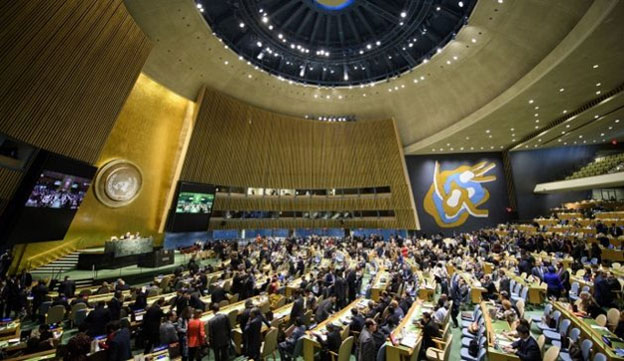
The UN General Assembly in session. Credit: UN Photo/Manuel Elias

UNITED NATIONS, Nov 21 2025 (IPS) – The 193-member General Assembly (GA), the UN’s highest policy-making body, has long been the repository for scores of long-winded outdated resolutions accumulated over several decades– and lying in cold storage.


As part of the proposed restructuring of the United Nations, which is facing a severe liquidity crisis, there is now a move to streamline and revitalize the General Assembly which has been mired in a bureaucratic backlog.

The President of the General Assembly (PGA), Annalena Baerbock, has called on each Main Committee to review its working methods and propose concrete measures to enhance efficiency, including:

• Merging similar agenda items to avoid repetition;
• Reducing the frequency, length and number of resolutions;
• Using biennial or triennial cycles where appropriate;
• Limiting explanations of vote to five minutes; and
• Simplifying adoption procedures — one gavel, one decision, all texts.

These recommendations, mostly spelled out in a recent resolution, would help re-shape the General Assembly to respond to global challenges with agility and coherence. But unless these reforms are implemented, they remain just words on paper, just another resolution.

“Business as usual will not suffice. We need fewer repetitive resolutions, shorter debates, and smarter scheduling. No more ‘resolutions for resolutions’ sake,” the PGA said.

“We cannot preach on Sunday that we need fewer resolutions, then proceed to submit one for consideration on Monday. And this is, unfortunately, taking place”, she warned.

Dr Palitha Kohona, a former Chief of the UN Treaty Section and one-time Permanent Representative of Sri Lanka to the United Nations, told IPS the UN is burdened under a heavy baggage of resolutions piled up over 80 years.

“Many are no longer relevant, others are superfluous, and some repetitive. Given its current perilous financial situation, it would be appropriate for each department and office to review rigorously the resolutions under their purview and identify those that could be terminated.”

This, he said, may be done through an omnibus resolution. Some might require delicate negotiations with member states which might claim ownership to resolutions that they had proposed. Sensitively, handled, this could deliver considerable financial and staffing dividends.

New resolutions, he pointed out, should be vetted carefully to avoid redundancies. UN staff could proactively assist in this process. Even where resolutions are to be implemented within existing resource allocations, there will be some cost involved, including time.

Where a proposed resolution could not be implemented due to resource constraints, it should be vetoed from the beginning, said Dr Kohona, who until recently, was Sri Lanka’s Ambassador to the People’s Republic of China.

Action officers should be located or moved to an office where a resolution is most likely to be implemented and it would be most effective. For example, the responsibility for implementing UNDP-related resolutions should be allocated to Nairobi, he proposed. Peacekeeping should also be moved to Nairobi as most peacekeeping now happens in Africa, he declared.

Baerbock said: “We have seen the Main Committees put forward resolutions for three-day conferences, with no budget attached, fully aware of the fiscal situation we are debating at the same moment. We have seen over 160 sides events during High-Level Week, despite the call for less, or the call by some, for no side events at all”.

“And we have seen, already, three or four high-level meetings submitted for consideration for the 81st High-Level Week (next year), with four for each of the 82nd and 83rd, despite the decision of this Assembly – so by all of us – to limit this to a maximum of three.”

“While we all want to protect the things we care about, each of us must make concessions in this time of reform”, she declared.

Dr. Purnima Mane, a former Deputy Executive Director (Programme) and UN Assistant-Secretary-General (ASG) at the UN Population Fund (UNFPA), told IPS the major ongoing effort to review the working methods of each of the Committees of the UN GA and enhance their efficiency is certainly laudable.

It is a golden opportunity to challenge some of the so-called ‘givens’ of the ways in which the GA functions and focus on what matters in a streamlined fashion.

The currently proposed solutions however are somewhat peripheral even if they indicate a desire for change. One of the major problems faced by the Committees is the range of issues taken on without clear prioritization including a lack of focus on neglected, key issues. And the absence of a sense of urgency, she pointed out

“The suggestions offered touch on enhancing efficiency of working but avoid tougher issues perhaps due to lack of time and sometimes will on the part of some members to take the risk of proposing solutions which might necessitate dismantling of well-entrenched methods of working”.

Another barrier, she said, might be concerns about potential difficulties that are likely to be experienced in getting agreement on these methods and more so the possibility of limited involvement by member states in their implementation.

“Perhaps starting small and identifying possibly achievable objectives for how the committees are run and managed might be a good beginning, but without the commitment of member States to the issues being prioritized and to implement the resolutions being proposed, all this change and effort is unlikely to achieve any benefits, including saving of resources”, she said.

Reducing agenda items and avoiding repetitive resolutions and endless debates are all a good start but it requires the will of the member states to implement these resolutions, once passed, she added.

And while the will to implement is understood as a given, in reality that is exactly where the problem sometimes lies. How to encourage and ensure implementation is really the true challenge, said Dr Mane, a former President and CEO of Pathfinder International.

Andreas Bummel, co-founder and Executive Director of Democracy Without Borders, told IPS ironically, the issue of revitalizing the General Assembly itself has become a ritualistic item.

“Tackling the number of annual resolutions and avoiding useless repetition year after year is a no-brainer. This should have been implemented long ago. But deeper changes are needed”.

For instance, he said, there needs to be continuity and institutional memory in the office of the President of the General Assembly. It should be a two-year tenure and receive proper funding.

Further, by creating a Parliamentary Assembly, the instrument of Citizens’ Initiative and Citizens’ Assemblies, the General Assembly can become a center of innovation and inclusion for the entire UN system. This should be on the agenda.

Use or not use at your discretion. The final two sentences are the most important as far as I am concerned, declared Bummel.

Meanwhile, revitalization is also being extended to the Office of the President of the General Assembly (OPGA).

The 80th session, Baerbock said, benefited from an early, seamless handover from the 79th — allowing us to hit the ground running. Yet the volume of work remains immense.

“Our High-Level Week featured over seven major meetings in just a few days;
The remainder of the session will see nearly twenty intergovernmental processes and multiple mandated High-Level Meetings; And the total number of resolutions has barely changed — many nearly identical to those of past sessions.”

But this is not sustainable, she said. And it’s contradicting the call from smaller missions that they cannot be in three meetings at the same time.

Transitions matter. Preparation matters. “We must ensure each presidency is set up for success”.

IPS UN Bureau Report

  Source

Cold or Heat, A Disputed Roadmap to Leave Fossil Fuels Behind in COP30

Biodiversity, Civil Society, Climate Action, Climate Change, Conferences, COP30, Editors’ Choice, Environment, Headlines, Integration and Development Brazilian-style, Latin America & the Caribbean, Natural Resources, Sustainability, Sustainable Development Goals, TerraViva United Nations

Climate Change

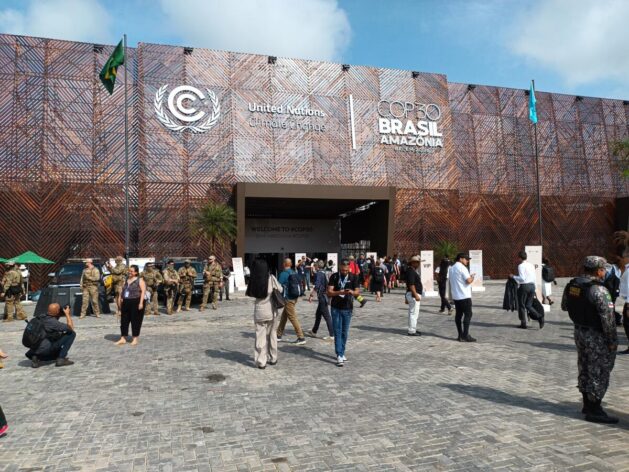
Entrance to the Hangar Convention Center of the Amazonia in the northeastern Brazilian city of Belém. The climate summit, which began on November 10 and is due to conclude on Friday the 21st, is debating issues such as the phase-out of fossil fuels and adaptation goals. Credit: Emilio Godoy / IPS

Entrance to the Hangar Convention Center of the Amazonia in the northeastern Brazilian city of Belém. The climate summit, which began on November 10 and is due to conclude on Friday the 21st, is debating issues such as the phase-out of fossil fuels and adaptation goals. Credit: Emilio Godoy / IPS

BELÉM, Brazil, Nov 20 2025 (IPS) – The heat in the Hangar Convention Center of the Amazonia, in the northeastern Brazilian city of Belém, has reached the negotiation rooms of the climate summit. Over the past 72 hours, one of the most delicate and significant discussions of this climate meeting has been taking place: the path to progressively abandon the production and use of coal, gas, and oil.


In recent hours, a global coalition of rich and developing countries, led by Colombia, has doubled down on pushing for a fossil fuel phase-out roadmap, while major producer countries resist it.

“The plan must have differentiated commitments, the elimination of fossil fuel subsidies, and the reform of the international financial system, because foreign debt payments are punishing us,” Colombian Environment Minister Irene Vélez explained to IPS.

For the official, the 30th United Nations Conference of the Parties (COP30) on climate change must result in a roadmap. “People are mobilizing, demanding climate action; we have to start now,” she urged.

In Belém, the gateway to the planet’s largest rainforest, it is no longer just about reducing emissions but about transforming the foundation of the energy system, thus acquiring a moral, political, and scientific urgency. What was initially meant to be the “Amazon COP” has mutated into the “end-of-the-fossil-era-COP,” but the roadmap to achieve it is a toss-up.

“The plan must have differentiated commitments, the elimination of fossil fuel subsidies, and the reform of the international financial system, because external debt payments are punishing us” –Irene Vélez.

Two years after the world agreed at COP28, held in 2023 in Dubai, to move away from fossil fuels, Belém is the moment of truth, upon which the effort to keep global warming below the 1.5° Celsius limit largely depends—a goal considered vital to avoid devastating and inevitable effects on ecosystems and human life.

Thus, the discussion among the 197 parties to the United Nations climate convention has shifted from the “what” to the “how,” and especially to the “when,” questions that have turned potential coordinates into a geopolitical labyrinth.

In that vein, a coalition of over 80 countries emerged on Tuesday the 18th to push the roadmap, including Colombia, Chile, Guatemala, and Panama among the Latin American countries.

One challenge for the roadmap advocates is that the issue is not explicitly part of the main agenda, a resource that the Brazilian presidency of COP30 could use to shirk responsibility on the matter.

The issue appears on the thematic menu of COP30, which started on the 10th and is scheduled to conclude on the 21st, and whose official objectives include approving the Global Goal on Adaptation to climate change and securing sufficient funds for that adaptation.

Approximately 40,000 people are attending this climate summit, including government representatives, multilateral agencies, academia, and civil society organizations.

An unprecedented indigenous presence is also in attendance, with about 900 delegates from native peoples, drawn by the ancestral call of the Amazon, a symbol of the menu of solutions to the climate catastrophe and simultaneously a victim of its causes.

Also present and very active in Belém are about 1,600 lobbyists from the hydrocarbon industry, 12% more than at the 2024 COP, according to the international coalition Kick Big Polluters Out.

The clamor from civil society demands an institutional structure with governance, clear criteria, measurable objectives, and justice mechanisms.

“The roadmap has become a difficult issue to ignore; it is already at the center of these negotiations, and no country can ignore it. The breadth of support is surprising, with rich and poor countries, producers and non-producers, indicating that an agreement is about to fall,” Antonio Hill, Just Transitions advisor for the non-governmental and international Natural Resource Governance Institute, told IPS.

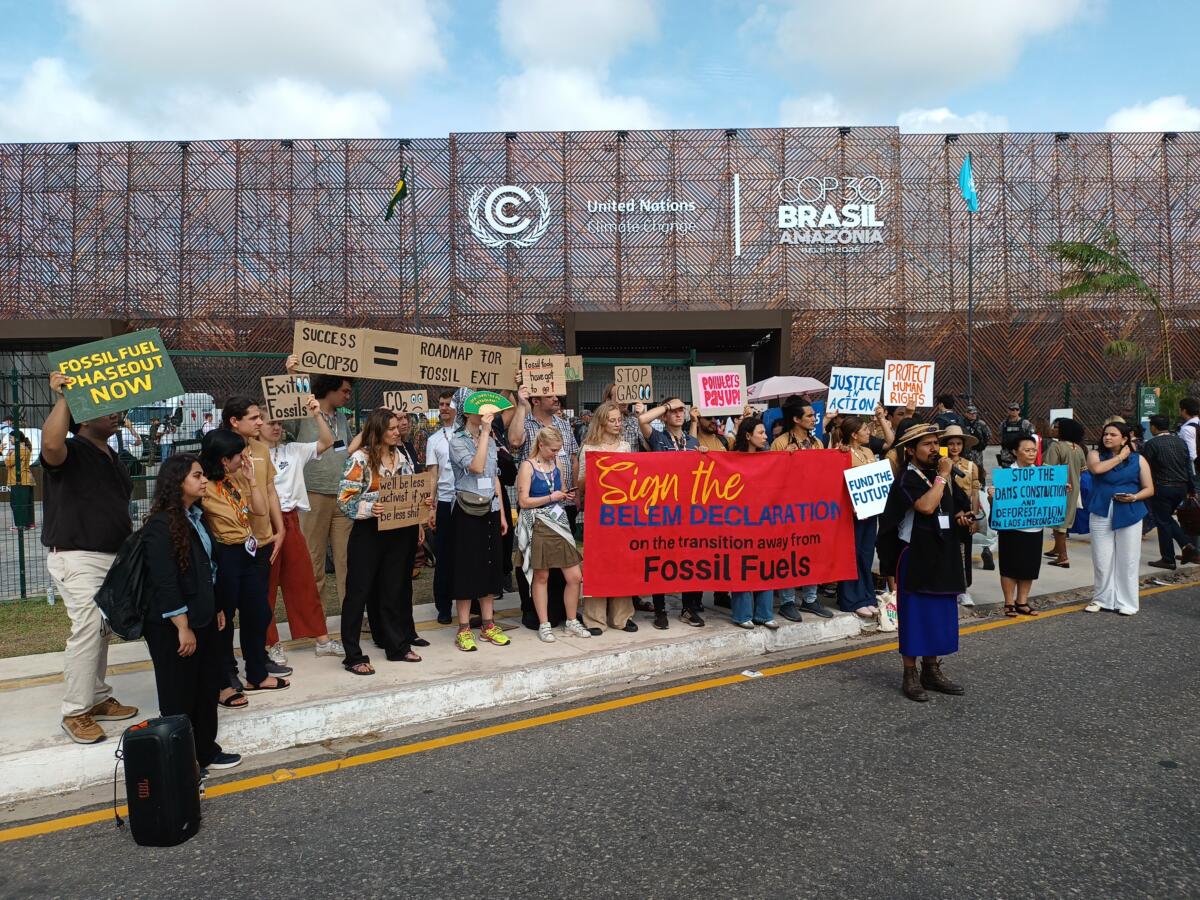
Activists protest on Wednesday the 19th against fossil fuel exploitation at the entrance to the venue of the Belém climate summit, in the Amazonian northeast of Brazil. Credit: Emilio Godoy / IPS

Activists protest on Wednesday the 19th against fossil fuel exploitation at the entrance to the venue of the Belém climate summit, in the Amazonian northeast of Brazil. Credit: Emilio Godoy / IPS

Poisoned

The push for the roadmap comes from the Fossil Fuel Non-Proliferation Treaty, promoted by civil society organizations, strongly adopted by Colombia, and which so far has the support of 18 nations, but no hydrocarbon-producing Latin American country, such as Argentina, Brazil, Ecuador, Mexico, or Venezuela.

Colombia, despite also being a producer and exporter of fossil fuels, has presented its Roadmap for a Just Energy Transition, with which it seeks to replace income from coal and oil with investments in tourism and renewable energy.

Colombia’s 2022-2052 National Energy Plan projects long-term reductions in fossil fuel production. The country announced US$14.5 billion for the energy transition to less polluting forms of energy production.

But for the rest of the region, the duality between maintaining fossil fuels and promoting renewable energies persists.

A prime example of this duality is the COP30 host country itself, Brazil. While the host President, Luiz Inácio Lula da Silva, and his Minister of Environment and Climate Change, Marina Silva, have insisted on the need to abandon fossil fuels, the government is promoting expansive oil and gas extraction plans.

In fact, just weeks before the opening of COP30, the state-owned oil group Petrobras received a permit for oil exploration in the Atlantic, just kilometers from the mouth of the Amazon River.

But Lula and his team committed that this summit in the heart of the Amazon would be “the COP of truth” and “the COP of implementation,” and the issue of fossil fuels has become central to the negotiations, which Lula joined on Wednesday the 19th to give a push to the talks and the outcomes.

In their Nationally Determined Contributions (NDCs)—the set of mitigation and adaptation policies countries must present to comply with the Paris Agreement on climate change signed in 2015 at COP21—Argentina, Brazil, Mexico, or Chile avoid mentioning a managed phase-out of fossil fuels.

Simply put, they argue they cannot let go of the old vine before grasping the new one. This stance also involves a delicate aspect, as nations like Ecuador depend on revenues from hydrocarbon exploitation.

Therefore, the Global South has insisted on its demand for funding from rich nations, due to their contribution to the climate disaster through fossil fuel exploitation since the 17th century.

The result of the presented policies is alarming: although many countries have increased their emission reduction targets on paper, they lack details on phasing out production. The only existing roadmap is the growing extractive one.

In fact, the Global Stocktake of the Paris Agreement process, originating from COP28, demanded that countries take measures to move towards a fossil-free era.

The argument is unequivocal: various estimates indicate that fossil fuels contribute 86% of greenhouse gas emissions, the cause of global warming.

But a key point is where to start. For Uitoto indigenous leader Fanny Kuiru Castro, the new general coordinator of the Coordinator of Indigenous Organizations of the Amazon Basin –which  brings together the more than 350 native peoples of the eight countries sharing the biome–, the starting point must precisely be at-risk regions like the Amazon.

“It is a priority. If there isn’t a clear signal that we must proceed gradually, it means the summit has failed and does not want to adopt that commitment. We will have another 30 years of speeches,” she told IPS, alluding to that number of summits without substantial results.

In the Amazon, oil blocks threaten 31 million hectares or 12% of the total area, mining threatens 9.8 million, and timber concessions threaten 2.4 million.

And in that direction, a major obstacle arises: how to finance the phase-out. The roadmap has a direct link to the financial goals aimed at the Global South, with a demand for US$1.2 trillion in funding for climate action starting in 2035.

“Can the COP deliver the financial backing that countries need to reinvent their economies in time to guarantee just and inclusive development?” Hill questioned.

The atmosphere in Belém is of a different urgency compared to Dubai or Baku, where COP29 was held a year ago. The roadmap to a world free of fossil fuel smoke remains a blurry map, drawn freehand on ground that is heating up far too quickly.

In Belém, humanity is deciding whether to brake gradually or to accelerate, with the air conditioning on and a full tank.


AI and the Future of Learning

Artificial Intelligence, Civil Society, Global, Global Governance, Headlines, IPS UN: Inside the Glasshouse, TerraViva United Nations

Opinion

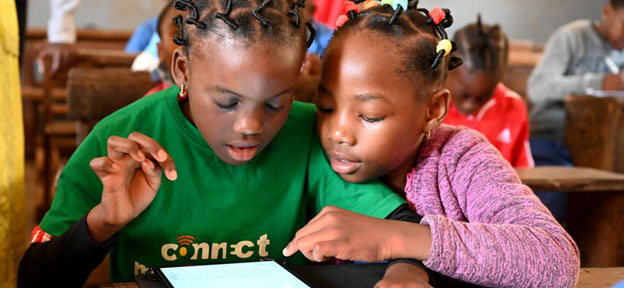
Artificial intelligence is reshaping how learners, teachers, and creators engage with education across the continent. A new wave of AI innovation transforming learning across countries on the African continent — from chat-based tutors to hybrid hubs and gamified farms. Credit: UNICEF

 
Through initiatives such as Digital Skills for Africa, Lumo Hubs, and Luma Learn, innovators are breaking barriers of access, cost, and language to build inclusive, localized learning systems.

UNITED NATIONS, Nov 19 2025 (IPS) – “Sometimes the best way to grasp a concept,” says Chris Folayan, co-founder and executive officer of Luma Learn, “is to learn it in your native language.”


Seventeen-year-old South African Simphiwe is one of more than 10,000 learners already using Luma Learn, an AI-powered tutor platform. For him, artificial intelligence isn’t an abstract idea: it is a personal tutor that is patient, consistent, and always online.

When on his phone, he’s not always chatting with a classmate or scrolling through social media. Many times, he’s studying physics with Luma Learn, that replies instantly, even in IsiZulu, his mother tongue.

Across several countries on the African continent, innovators like Folayan, Nthanda Manduwi, and Anie Akpe are reimagining what education can look like: localised, practical, and accessible to anyone with a phone or connection.

Together, they’re building a new learning ecosystem: one where AI isn’t replacing teachers but multiplying their reach.”

Nthanda Manduwi: Turning digital skills into interactive ecosystems

“I’ve always believed that technology can democratize opportunity,” says Nthanda Manduwi, founder of Digital Skills for Africa (DSA) and Q2 Corporation. “AI gives us a real chance to leapfrog the barriers that have slowed Africa’s progress, from infrastructure gaps to unequal access to training.”

Her journey began with Digital Skills for Africa, a platform designed to equip young people with practical tech competencies from AI and automation to no-code tools and digital marketing.

“Our courses like ‘Effective Use of AI’ or ‘AI and the Future of Digital Marketing’ were created to help learners not only understand AI but actually apply it,” she explains. “You leave with real, marketable skills you can use to build something or get hired.”

But scaling that vision revealed a challenge many edtech startups face. “We realised enthusiasm alone doesn’t pay the bills,” she says. “There was low willingness to pay for courses, even from institutions. So, we had to rethink how to make digital learning sustainable.”

That rethink led to Q2 Corporation, her new venture linking learning with livelihood. Under Q2’s umbrella sits Kwathu Farms—an innovative gamified agricultural simulator where users learn how to manage farms, predict supply chain issues, and test business models before investing real money.

“AI makes the learning immersive,” Ms. Manduwi explains. “Through simulations, learners can see how weather or market shocks affect yield, and how small decisions impact entire value chains. It turns agriculture into a classroom. And a business lab.”

Behind these simulations run Q2’s proprietary engines, NoxTrax and AgroTrax, which apply AI to real-time logistics and resource management. “It’s about showing that AI isn’t just for coders,” she says. “It’s for farmers, small businesses, anyone who wants to think and plan more intelligently.”

Ms. Manduwi’s mission remains rooted in access. “For Africa to truly benefit from AI, it can’t be an elite tool. It must live where people already are: on their phones, in their communities, in local languages.”

Anie Akpe: Creating spaces where AI meets human creativity

Where Ms. Manduwi builds ecosystems, Anie Akpe builds spaces. Through her work with African Women in Technology (AWIT)and Lumo Hubs, Ms. Akpe has spent over a decade helping innovators, especially women, turn curiosity into competence.

“With AWIT, I started by organising conferences across the continent,” she recalls. “We created safe spaces where women could connect with mentors and learn skills that weren’t taught in schools: digital literacy, entrepreneurship, coding, design.”

Soon, even male students began asking to participate. “That’s when I realized it wasn’t just about women in technology. It was about us (Africans) finding a place in a digital world that was changing fast.”

The next step came naturally. “When AI began to disrupt industries, I saw that we couldn’t just talk about skills. We had to create environments where people could use those skills,” she says. “That’s how Lumo Hubs was born.”

Each hub combines education, creativity, and entrepreneurship. “In one space, you might find a student learning AI-assisted graphic design, a seamstress using AI to plan production, and a young podcaster recording a show in a studio powered by the hub,” Ms. Akpe explains. “The model is hybrid, physical and digital, so even small towns can host a Lumo Hub.”

She is also deliberate about sustainability. “Community members pay; students pay less. It’s important that we don’t depend only on grants,” she says. “That balance keeps the hubs alive and the learning continuous.”

At the heart of Lumo Hubs lies mentorship. “You can’t separate technology from human guidance,” Akpe insists. “AI helps scale learning, but mentorship builds confidence.” Her approach remains rooted in empowerment. “AI can level the playing field if used right. A young person in Lagos or Uyo doesn’t have to wait for opportunity. They can create it.”

Chris Folayan: A tutor that never sleeps

For Chris Folayan, the idea behind Luma Learn came from a simple observation: “The continent doesn’t just have an access problem. It has a teaching gap too.”

According to UNESCO, Sub-Saharan Africa will need 15 million new teachers in the next five years to meet demand. “With classrooms that sometimes have over 100 students per teacher, no one can give every child the help they need,” Mr. Folayan says. “That’s where Luma Learn steps in.”

Luma Learn is an AI tutor that runs on WhatsApp, not a separate app.

“We chose WhatsApp for a reason,” he explains. “It’s already on most phones, it’s free to message, works on low bandwidth, and keeps data safe through encryption. That means a child in a rural area can learn without worrying about internet costs or app installations.”

The platform adapts to the learner’s grade level, curriculum, and preferred language. “Whether you need algebra in English or history in Swahili, Luma Learn can teach, quiz, and explain at your level,” he says. “It learns how you learn.”

Mr. Folayan shares two powerful testimonies. In Durban, a mother named Happyness wrote that her son, after years of illness, seizures, and missed schooling, caught up with the rest of the class with help from Luma Learn.

“Every time Vuyo wants to know something about school, we just ask Luma! What’s great is that Luma explains in our native language, IsiZulu.”

In another case, Simphiwe, a Grade 11 student from KwaZulu-Natal, sent over 1,200 messages to Luma. “Luma Learn wasn’t just another study resource,” he said. “It became the personal teaching assistant I desperately needed.”

Shared goals: One vision, many pathways

Three innovators. Three different models. One shared purpose: to make AI work for Africa’s learners, not the other way around. Across their stories, several threads stand out.

First, access—from WhatsApp tutors to open learning hubs to gamified ecosystems that teach real-world problem-solving.

Second, localisation—learning in local languages, within familiar tools, and around community realities.

Third, empowerment—every model links knowledge directly to opportunity.

From Ms. Manduwi’s gamified farms to Ms. Akpe’s creative hubs, to Mr. Folayan’s WhatsApp tutor, future classrooms are already here — decentralised, digital, and deeply human.

As Ms. Manduwi puts it, “We must stop treating AI as something imported. It’s a tool we can mold to fit our own systems.”

Ms. Akpe echoes that sentiment: “Africa doesn’t lack talent. It lacks platforms that meet learners where they are.”

And Mr. Folayan completes the picture: “No teacher wants their student left behind. With AI, we can make sure no one is.”

At the end of the day, a student in Durban learns physics through Luma. A young designer in Uyo experiments with AI tools at a Lumo Hub. A farmer in Lilongwe tests market scenarios on Kwathu Farms. Each represents a different face of the same revolution — a continent using intelligence, both human and artificial, to learn without limits.

As Ms. Akpe says: “The vision is simple: a generation that doesn’t just survive AI disruption but thrives because of it.” And as Ms. Manduwi concludes: “AI is not a threat to Africa. It’s our greatest chance to catch up. And lead.”

Anie Akpe and Chris Folayan were participants at the Global Africa Business Initiative (GABI): Unstoppable Africa2025, held in New York City on the margins of the UN General Assembly in September. The platform helps foster networking, exposure to potential business partners, and garner support for their initiatives.

Source: Africa Renewal, United Nations

IPS UN Bureau

  Source

Faith Leaders Endorse Fossil Fuel Non-Proliferation Treaty at COP30

Active Citizens, Africa, Civil Society, Climate Change, Climate Change Justice, Conferences, COP30, Editors’ Choice, Featured, Headlines, Human Rights, Humanitarian Emergencies, Latin America & the Caribbean, North America, Religion, Sustainable Development Goals, TerraViva United Nations

COP30


Some of you might be shocked that even though fossil fuels are 86 percent of the cause of climate change, it took 28 years before the words ‘fossil fuels’ could even be mentioned in the COP document. It is as absurd as Alcoholics Anonymous holding 28 years of conferences before they get the backbone to mention alcohol in an outcome document. —Kumi Naidoo, President of the Fossil Fuel Non-Proliferation Treaty

Kumi Naidoo with Brazilian First Lady Janja Lula da Silva and Brazilian Cultural Minister Margareth Menezes and others at a panel, “Narratives and Storytelling to Face the Climate Crisis” during the 30th Conference of the Parties (COP30). Credit: Aline Massuda/COP30

Kumi Naidoo with Brazilian First Lady Janja Lula da Silva and Brazilian Cultural Minister Margareth Menezes and others at a panel called “Narratives and Storytelling to Face the Climate Crisis” during the 30th Conference of the Parties (COP30). Credit: Aline Massuda/COP30

BELÉM, Brazil, Nov 18 2025 (IPS) – Decades ago, a little girl was born in a place called Cleveland, Ohio, in the heart of the United States of America. Born to a woman from the deep South, the place of Martin Luther King, her mother left her ancestral lands for the economic opportunities in the north.


“Off she went, making it all the way to the east side of Cleveland,” says Rev. Dr. Angelique Walker-Smith. “To the place where most people who look like me lived, and still live, and are subjected to policies of injustice, race and gender.”

Here, she found a more pressing issue.

“I couldn’t breathe, my mother couldn’t breathe, and we all couldn’t breathe,” she narrates.

This urbanization, driven by fossil fuels, occurred in Cleveland, Ohio, where her mother relocated and where her relatives still live today. During the Great Migration, over six million people of African descent traveled from the South, believing that economic opportunities would be better in the North.

Rev. Dr Angelique Walker-Smith, regional president of the World Council of Churches, speaks at an event titled ‘Faith for Fossil Free Future.’ Credit: IPS

Rev. Dr Angelique Walker-Smith, regional president of the World Council of Churches, speaks at an event titled ‘Faith for Fossil Free Future.’ Credit: IPS

“Upon our arrival, we discovered that we just couldn’t breathe.”

As one of eight regional presidents representing the World Council of Churches, Walker-Smith says for the World Council of Churches in over 105 countries, over 350 million adherents, and over 350 national churches all over the world, supporting the Fossil Fuel Non-Proliferation Treaty “is all about the issue of injustice, life and life more abundantly.”

“We are saying yes to the transition from fossil fuels to renewable life-giving energy.”

Kumi Naidoo, a prominent South African human rights and environmental justice activist and the President of the Fossil Fuel Non-Proliferation Treaty, says if the goal is renewable life-giving energy, the world has been going the wrong way for the past 30 years.

“If you come home from work and see water coming from the bathroom, you pick up the mop. But then you realized you left the tap running and the sink stopper on. What will you do first? Of course! You’ll turn off the water and pull the stopper. You will not start mopping the floor first.”

“For 30 years since the time science told us we need to change our energy system and many of our other systems, what we’ve been doing is mopping up the floor. If fossil fuels—oil, coal, and gas—account for 86 percent of what drives climate change, then we must turn off the tap.”

Masahiro Yokoyama was speaking at an event titled Faith for a Fossil-Free Future co-sponsored by Soka Gakkai International. Credit: Joyce Chimbi/IPS

Masahiro Yokoyama was speaking at an event titled Faith for a Fossil-Free Future co-sponsored by Soka Gakkai International. Credit: Joyce Chimbi/IPS

Naidoo was speaking at an event titled ‘Faith for Fossil Free Future’ co-sponsored by several organizations, including Soka Gakkai International (SGI), Laudato Si’ Movement, GreenFaith—a global interfaith environmental coalition and EcoJudaism, a Jewish charity leading the UK Jewish Community’s response to the climate and nature crisis.

He spoke about the contradiction of the climate talks at the doorsteps of the Amazon, while licensing for drilling is still ongoing in the Amazon even as the people in the Amazon protest, calling for a fossil-free Amazon.

Continuing with the thread of contradictions, Naidoo said, “Some of you might be shocked that even though fossil fuels are 86 percent of the cause of climate change, it took 28 years before the words ‘fossil fuels’ could even be mentioned in the COP document. It is as absurd as Alcoholics Anonymous holding 28 years of conferences before they get the backbone to mention alcohol in an outcome document.

If we continue on this path, we’ll warm up the planet to the point where we destroy our soil and water, and it becomes so hot we can’t plant food. The end result is that we’ll be gone. The planet will still be here. And the good news is, once we become extinct as a species, the forests will grow back, and the oceans will recover.

“And actually, staying with that analogy, can you imagine how absurd it is that the largest delegation to this COP this year, last year, and every year is not even the host country?

“It’s not even Brazil—for every 25 delegates that are attending the COP, one of them is from the fossil fuel industry. That’s the equivalent of Alcoholics Anonymous having the largest delegation to its conference annually from the alcohol industry.”

People, groups and movements of different faiths and consciousness are increasingly raising their voices in robust support of a rapid fossil fuel phase-out, a massive and equitable upsurge in renewable energy, and the resources to make it happen—in the form of a Fossil Fuel Non-Proliferation Treaty.

Naidoo says the treaty is “a critical success ingredient for us not (only) to save the planet, but to secure our children and their children’s future, reminding ourselves that the planet does not need any saving.

“If we continue on this path, we warm up the planet to the point where we destroy our soil and water, and it becomes so hot we can’t plant food. The end result is that we’ll be gone. The planet will still be here. And the good news is, once we become extinct as a species, the forests will grow back, and the oceans will recover.”

This treaty is a proposed global agreement to halt the expansion of new fossil fuel exploration and production and to phase out existing sources like coal, oil, and gas in a just and equitable manner.

The initiative seeks to provide a legal framework to complement the Paris Agreement by directly addressing the supply side of fossil fuels.

Its ultimate goal is to support a global transition to renewable energy and is supported by a growing coalition of countries, cities, organizations, scientists, and activists. More importantly, it has multi-faith support.

Masahiro Yokoyama of the SGI, which is a diverse global community of individuals in 192 countries and territories who practice Nichiren Buddhism, spoke about the intersection between faith and energy transition and why the fossil fuel phase-out cannot wait.

“The just transition is also about how young people in faith can be the driving force to transformations.”

“So, a fossil fuel non-proliferation treaty, in my view, is not only about phasing out other fossil fuels but it also represents an ethical framework.”

“It’s a way to move forward while protecting people’s livelihoods and dignity within the context of the environment and also the local business and economies. So, a just transition is not merely a technical issue but a question of ethics, inclusion and solidarity,” Masahiro Yokoyama said.

The most pressing issue at hand is how to implement the treaty in the current environmental context.

“The pathway that we are following is a pathway that has been followed before. We are not going to negotiate this treaty within the COP or within the United Nations system. We’re going to do what the Landmine Treaty did.

“The landmine treaty was negotiated by 44 countries outside of the UN system and then brought to the UN General Assembly for ratification. The second question that people ask, justifiably, is, what about the powerful exporting countries, for example?” Naidoo asked.

“They’re not going to sign it. And to that we find answers in the landmine treaty. Up to today, the United States, Russia and China have not signed the Landmine treaty. But once the treaty was signed, the social license to continue as business as usual was taken away. And you saw a drastic change.”

Note: This article is brought to you by IPS Noram in collaboration with INPS Japan and Soka Gakkai International in consultative status with ECOSOC.

IPS UN Bureau Report

  Source