Argentina’s Small Farming Communities Reach Consumers Online

Active Citizens, Civil Society, Cooperatives, Development & Aid, Economy & Trade, Editors’ Choice, Featured, Food and Agriculture, Green Economy, Headlines, Integration and Development Brazilian-style, Latin America & the Caribbean, Poverty & SDGs, Projects, Regional Categories

Food and Agriculture

This article is part of IPS’ coverage of World Food Day, celebrated Oct. 16, whose 2021 theme is: Grow, nourish, sustain. Together.
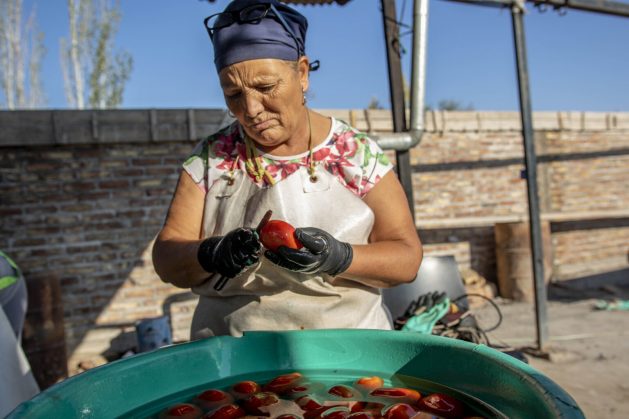
One of the Argentine small farmer groups participating in the digital marketing project uses agroecological irrigation and tomato crushing techniques in the province of Mendoza. CREDIT: Nicolás Heredia/Alma Nativa

One of the Argentine small farmer groups participating in the digital marketing project uses agroecological irrigation and tomato crushing techniques in the province of Mendoza. CREDIT: Nicolás Heredia/Alma Nativa

BUENOS AIRES, Oct 14 2021 (IPS) – “The biggest problem for family farmers has always been to market and sell what they produce, at a fair price,” says Natalia Manini, a member of the Union of Landless Rural Workers (UST), a small farmers organisation in Argentina that has been taking steps to forge direct ties with consumers.


The UST, which groups producers of fresh vegetables, preserves and honey, as well as goat and sheep breeders, from the western province of Mendoza, opened its own premises in April in the provincial capital of the same name.

In addition, it has just joined Alma Nativa (“native soul”), a network created to market and sell products from peasant and indigenous organisations, which brings together more than 4,300 producers grouped in 21 organisations, and now sells its products over the Internet.

“Selling wholesale to a distributor is simple, but the problem is that a large part of the income does not reach the producer,” Manini told IPS from the town of Lavalle in Mendoza province.

“The aim is to mobilise consumers to buy products from Latin American ecosystems that are made with respect for the environment, while small producers benefit from visibility and logistical support so that local products reach the entire country.” — Guadalupe Marín

The rural leader argues that, due to cost considerations, farmers can only access fair trade through collective projects, which have received a boost from the acceleration of digital changes generated by the covid-19 pandemic.

Alma Nativa is a marketing and sales solution formally created in 2018 by two Argentine non-governmental organisations (NGOs) focused on socio-environmental issues: Fibo Social Impact and the Cultural Association for Integral Development (ACDI). Their approach was to go a step beyond the scheme of economic support for productive development projects.

“Back in 2014 we began to ask ourselves why small farmer and indigenous communities could not secure profitable prices for the food and handicrafts they produce, and to think about how to get farmers to stop depending on donations and subsidies from NGOs and the state,” Fibo director Gabriela Sbarra told IPS in an interview in Buenos Aires.

Sbarra was a regular participant in regional community product fairs, which prior to the restrictions put in place due to the pandemic were often organised in Argentina by the authorities, who financed the setting up of the stands, accommodation and travel costs from their communities for farmers and craftspeople.

It was only thanks to this economic aid that farmers and artisans were able to make a profit.

“The effort was geared towards finding a genuine market for these products, which could not be sold online because it is very difficult to generate traffic on the Internet and they cannot reach supermarkets either, because they have no production volume. Informality was leaving communities out of the market,” Sbarra explained.
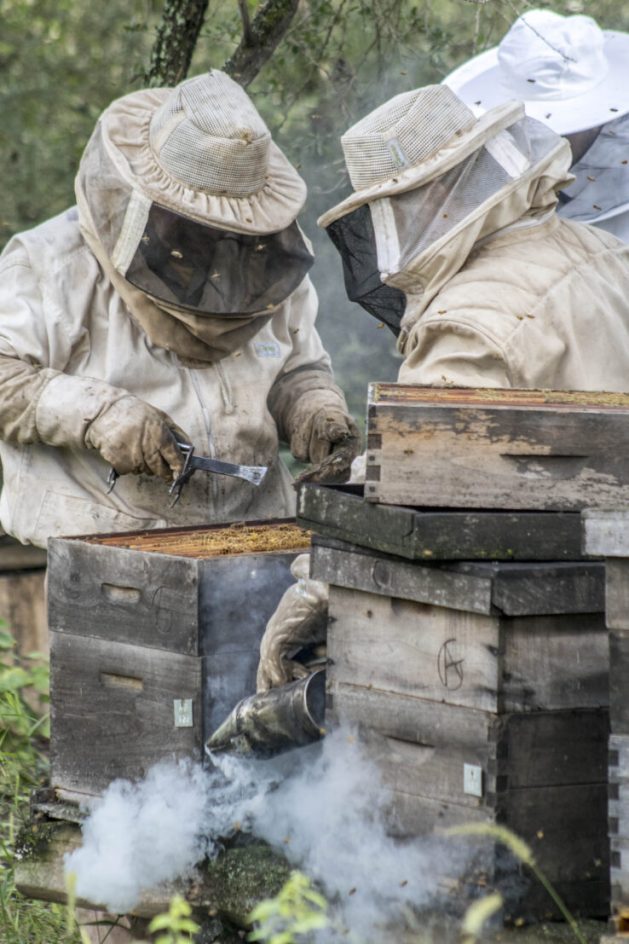
Three cooperatives in the Chaco region, the great forested plain that Argentina shares with Bolivia and Paraguay, are dedicated to honey production and are part of the Alma Nativa project, through which they sell their products to consumers throughout the country via the Internet. CREDIT: Nicolás Heredia/Alma Nativa

Three cooperatives in the Chaco region, the great forested plain that Argentina shares with Bolivia and Paraguay, are dedicated to honey production and are part of the Alma Nativa project, through which they sell their products to consumers throughout the country via the Internet. CREDIT: Nicolás Heredia/Alma Nativa

E-commerce, the new market

So the founders of Alma Nativa knocked on the doors of Mercado Libre, an e-commerce giant born in Argentina that has expanded throughout most of Latin America. The company agreed not to charge commissions for sales by an online store of agroecological food produced by local communities.

Alma Nativa then set up a warehouse in the town of Villa Madero, on the outskirts of Buenos Aires, where products arriving from rural communities throughout the country are labeled for distribution.

“The pandemic has created an opportunity, because it helped to open a debate about what we eat. Many people began to question how food is produced and even forced agribusiness companies to think about more sustainable production systems,” said Manini.

Norberto Gugliotta, manager of the Cosar Beekeeping Cooperative, emphasised that the pandemic not only accelerated the process of digitalisation of producers and consumers, but also fueled the search by a growing part of society for healthy food produced in a socially responsible manner.

“We were prepared to seize the opportunity, because our products were ready, so we joined Alma Nativa this year,” said the beekeeper from the town of Sauce Viejo. Gugliotta is the visible face of a cooperative made up of some 120 producers in the province of Santa Fe, in the centre of this South American country, who produce certified organic, fair trade honey.

Argentina, Latin America’s third largest economy, is an agricultural powerhouse, with a powerful agribusiness sector whose main products are soybeans, corn and soybean oil, which in 2020 generated 26.3 billion dollars in exports, according to official figures.

Behind the success lies a huge universe of family farmers and peasant and indigenous communities. According to the latest National Agricultural Census, carried out in 2018, more than 90 percent of the country’s 250,881 farms are family-run.

But the infrastructure and technological lag in rural areas is significant, as demonstrated by the fact that only 35 percent of farms have Internet access.

The deprivation is particularly acute in the Chaco, a neglected region in the north of the country, home to some 200,000 indigenous people belonging to nine groups whose economy is closely linked to natural resources, according to the non-governmental Fundapaz.
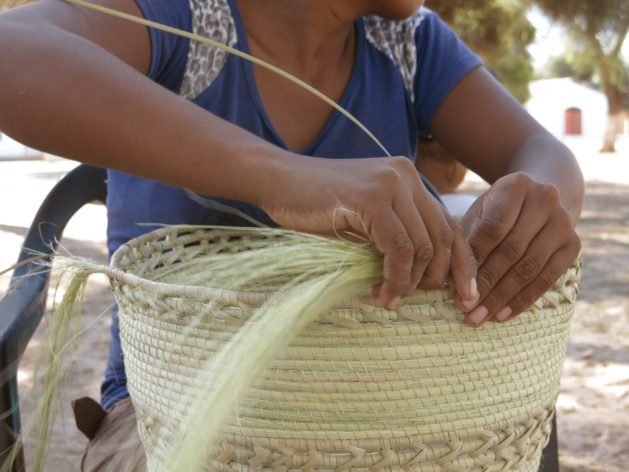
Indigenous artisans from the Pilagá community in the northern province of Formosa, within the Gran Chaco region, have begun selling their baskets online throughout Argentina. CREDIT: Rosario Bobbio/Alma Nativa

Indigenous artisans from the Pilagá community in the northern province of Formosa, within the Gran Chaco region, have begun selling their baskets online throughout Argentina. CREDIT: Rosario Bobbio/Alma Nativa

New platform for indigenous handicrafts

Communities from the Chaco, a vast region of low forests and savannas and rich biodiversity covering more than one million square km in Argentina, Bolivia and Paraguay, which is home to a diversity of native peoples, also began to market their handicrafts over Mercado Libre in the last few weeks.

“This initiative originated in Brazil with the ‘Amazonia em Pé’ programme and today we are replicating it in Argentina, in the Gran Chaco area. It seeks to build bridges between local artisans and consumers throughout the country,” explained Guadalupe Marín, director of sustainability at Mercado Libre.

“The aim is to mobilise consumers to buy products from Latin American ecosystems that are made with respect for the environment, while small producers benefit from visibility and logistical support so that local products reach the entire country,” she told IPS in Buenos Aires.

On Sept. 27, Mercado Libre launched the campaign “From the Gran Chaco, for you”, which offers for sale more than 2,500 products in 200 categories, such as baskets, indigenous and local art, decorative elements made with natural fibers, honey, weavings and handmade games.

It includes not only Alma Nativa, but also Emprendedores por Naturaleza (“entrepreneurs by/for nature”), a programme launched by the environmental foundation Rewilding Argentina, which works for the conservation of the Chaco and now promotes the sale of products made by 60 families living in rural areas adjacent to the El Impenetrable national park, the largest protected area in the region.

“The idea for the project arose last year, after we conducted a socioeconomic survey among 250 families in the area that found that the only income of 98 percent of them comes from welfare,” said Fatima Hollmann, regional coordinator of the Rewilding Argentina Communities Programme.

She told IPS that “people raise livestock for subsistence and sometimes work on fencing a field or some other temporary task, but there are no steady sources of employment in El Impenetrable.”

“That is why we are trying to generate income for local residents,” Hollmann explained in an interview in Buenos Aires. “Our production lines are focused on ceramics, since most people have built their houses there with adobe. Many also know how to make bricks and we have held trainings to teach people to turn a brick into an artistic piece, inspired by native fauna, which transmits the importance of conserving the forest.”

According to the figures released by the expert during the first week of the programme “From the Gran Chaco, for you” in early October, 644 products were offered for sale, of which 382 were sold to buyers from more than 10 Argentine provinces, including 100 percent of the textiles available and 76 percent of the wooden handicrafts.

“The alternative is to cut down the native forests,” Hollmann says. “We are proposing a transition from an extractivist economy to a regenerative one, which contributes to the reconstruction of the ecosystem, and gives consumers in the cities the chance to contribute to that goal.”
  Source

Winning the Human Race, Together

Armed Conflicts, Civil Society, Climate Change, COVID-19, Development & Aid, Education, Education Cannot Wait. Future of Education is here, Environment, Gender, Global, Headlines, Health, Human Rights, Humanitarian Emergencies, Migration & Refugees, Poverty & SDGs, TerraViva United Nations

Opinion

NEW YORK, Oct 14 2021 (IPS) – “Now is the time for a stronger, more networked and inclusive multilateral system anchored in the United Nations,” said UN Secretary-General António Guterres in his latest report “Our Common Agenda.” Indeed, there is a fork in the road: we can either choose to breakdown or to breakthrough.


Yasmine Sherif

Making this moral choice and adopting this legal imperative is more relevant today than ever. The estimated 75 million children and adolescents caught in emergencies and protracted crisis who suffer from disrupted education has now dramatically increased from 75 million to 128 million due to the pandemic. These vulnerable girls and boys are now the ones left furthest behind in some of the world’s toughest contexts, in Afghanistan, the Middle East, Sub-Saharan Africa and South America.

The current education financing gap amounts to US$1.48 billion for low- and middle-income countries. A gap that is increasingly widening. In reviving the multilateralism that is so urgently needed, the UN Secretary-General will convene a crucial, timely summit on Transforming Education in 2022.

Despite all that we do, despite all our investments, we cannot win ‘the human race’ unless we invest in our fellow human beings, now. It is the children and young people impacted by armed conflicts, climate-crisis induced disasters, forced displacement and protracted crises who are in a sprint against time, with their lives and futures on the line.

We can no longer let “an entire generation facing irreversible losses be left behind in the ruins of armed conflicts, in protracted refuge, on a planet whose climate-change threatens us all,” as the UN Special Envoy for Global Education and Chair of Education Cannot Wait’s High-Level Steering Group, The Rt. Hon. Gordon Brown stated at the launch of Education Cannot Wait’s Annual Results Report: Winning the Human Race, on 5 October 2021.

Education is the foundation, the DNA and the absolute prerequisite for achieving all other Sustainable Human Development Goals and Universal Human Rights. Education means investments in the limitless possibilities of human potential: the workforce, governance, gender-equality, justice, peace and security.

“Access to quality education is key to addressing 21st century challenges, including accelerating the fight to end poverty and climate change,” says The LEGO Foundation’s new CEO, Anne-Birgitte Albrectsen, in this month’s ECW Newsletter high-level interview.

The time has come to connect the dots between individual human beings and our collective humanity and life on this planet. We are now investing more and more in Mother Earth through significant climate change financing. We must now also invest in the human beings populating the planet. The correlation between the positive impact of education upon on all aspects of life on the planet is indispensable and inescapable.

    Higher education levels lead to higher concern for the environment, and adaptation to climate change. If education progress is stalled, it could lead to a 20% increase in disaster-related fatalities per decade.
    Education is the one unique investment that can prevent conflict and forced displacement. High levels of secondary school enrollment have been shown to be associated with an increase a country’s level of stability and peace and reduce crime and violence.
    Every additional year of schooling reduces an adolescent boy’s risk of becoming involved in conflict by 20 percent. This effect reflects both education’s economic benefits and its role in social cohesion and national identity.
    Conversely, lack of education often leads to political disempowerment and regression to group allegiances. Across 22 countries in sub-Saharan Africa, sub-national regions with very low average education had a 50 per cent probability of experiencing the onset of conflict within 21 years, while the corresponding interval for regions with very high average education was 346 years.
    Education is also the most secure means of ending extreme poverty. For nations, each additional year of schooling can add up to 18 per cent to GDP per capita. For individuals, one more year of education brings a 10 per cent increase in personal income. If all children were to learn basic reading skills, the impact would be 171 million fewer people living in extreme poverty. *Footnotes below.

Education Cannot Wait is a multilateral global UN fund. Our Annual Results Report of 2020, Winning the Human Race, launched at the UN in Geneva this month, testifies to what we can achieve when we think and act multilaterally: when we connect the dots, become one, and act for all.

Through multilateralism, we reached more than 29 million crisis-affected girls and boys in 2020 alone through ECW’s COVID-19 emergency response, working with our strategic partners, including host governments, our 21 donors, UNICEF, UNHCR, UNESCO, UNDP, WFP, our civil society partners, such as INEE, Jesuit Refugee Service, AVSI, Save the Children, Plan International, Norwegian Refugee Council, International Rescue Committee and numerous local civil society organizations across 34 countries. Through joint programming, we were also able to jointly deliver quality education to more than 4.6 million children and youth, of whom 51% were girls and adolescent girls, 38% were refugees – all while we increased ECW allocations to children and youth with disabilities.

This is made possible because ODA governments, private sector and philanthropic partners are scaling up their support for the catalytic ECW global fund whereby their investments are part of multilateral efforts that work as closely as possible to those we serve, establishing links conducive to numerous, diverse SDGs and human rights. The full list of our 21 generous donor partners can be found at the end of this Newsletter.

In connection with the UNGA week this year, ECW strategic donors advancing multilateralism, such as Germany, the United States, the European Union/European Commission, France, The LEGO Foundation and Porticus took giant steps and committed $138.1 million to ECW, bringing the total resources mobilized thus far in 2021 alone to $156.1 million and the total since ECW’s inception to $1.85 billion ($827 million mobilized for the Trust Fund; and, over $1 billion worth of programmes aligned with ECW MYRPs, as leveraged by ECW with partners).

Furthermore, the Global Hub for Education in Emergencies celebrated its new collective space under the ECW umbrella in Geneva, thanks to Switzerland which is the second biggest UN capital for humanitarian and development actors after New York City. The Global Hub brings together NGOs, the UN, academia, foundations, and governments to inspire more commitment and resources to quality education for those left furthest behind in emergencies and protracted crisis.

Multilateralism through the United Nations works.

Still, this is just the start of a major global effort to work through the multilateral coordination system to reach those left furthest behind and bring education from the margins to the center. Based on empirical evidence, ECW calls for an additional $1 billion to contribute to an innovative model that has proven to work.

Political leaders, governments, private sector, UN and civil society – all part of ECW’s multilateral UN system – recognize that education is a precondition for achieving the Sustainable Development Goals and Universal Human Rights. Together, we think long-term and act now. Together, we connect the dots and see things from afar and within. Together, we work on what the world needs most right now: A Common Agenda to Win the Human Race.

Yasmine Sherif is Director,
Education Cannot Wait
The UN Global Fund for Education in Emergencies and Protracted Crises

  Source

Rural Communities in El Salvador United to Supply Water for Themselves – VIDEO

Civil Society, Development & Aid, Headlines, Integration and Development Brazilian-style, Multimedia, Poverty & SDGs, TerraViva United Nations, Video, Water & Sanitation

Water & Sanitation

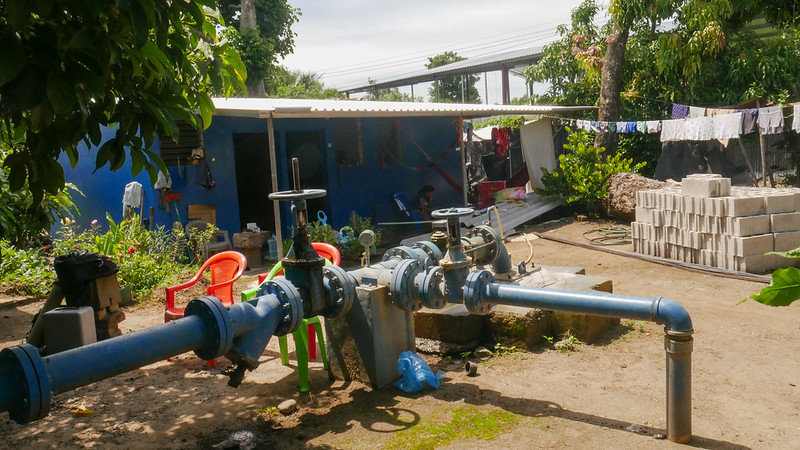
LA LIBERTAD, El Salvador, Oct 8 2021 (IPS) – As the saying goes, united we stand, divided we fall, hundreds of families in rural communities in El Salvador are standing together to gain access to drinking water.


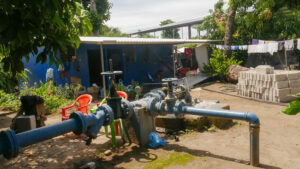
The Salvadoran state fails to fulfill its responsibility to provide the resource to the entire population, and the families, faced with the lack of service in the countryside, have organized in “Juntas de Agua”: rural water boards that are community associations that on their own manage to drill a well and build a tank and the rest of the system.

It is estimated that in El Salvador there are about 2,500 rural water boards, which provide service to 25 percent of the population, or some 1.6 million people, according to data from the non-governmental Foro del Agua (Water Forum), which promotes equitable and participatory water management.

One of those community systems has been set up in the small village of Desvío de Amayo, in the canton of Cangrejera, part of the municipality and department of La Libertad, on the central coastal strip of El Salvador.

[embedded content]

The system provides water to 468 families in Desvío de Amayo and eight other nearby villages.

“Governments have the constitutional obligation to provide drinking water in each country, but when they are not able to do it, as it happens here, the families decided to meet to take decisions and seek support either from NGOs or municipal governments to set up drinking water projects”, José Dolores Romero, treasurer of the Cangrejera Drinking Water Association, told IPS.

Created in the 1980s, this board finally obtained in 2010 a contribution of US$ 117,000 from the National Administration of Aqueducts and Sewers (Anda), the sector’s authority, for the expansion and improvement of its network infrastructure, he explained.

For more information, you can read an article on the subject of this video here.

As agreed by those involved in this effort, each family pays seven dollars for 20 cubic meters a month. If they consume more than that, they pay 50 cents per cubic meter.

“We benefit from the water, it is a great thing to have it at home, because we no longer have to go to the river, remember that we cannot go there because it overflows during the rainy season, so this community system benefits us a lot”, María Ofelia Pineda, from the village of Las Victorias, told IPS, while washing a frying pan and other dishes.

“Before, we had two or three hours of water during the day, and now we have it all day long, I am very happy for that, because I have it all day and all night,” said Ana María Landaverde.

  Source

UN Warned of Two Dangers Ahead: Health of the Human Race & Survival of the Planet

Civil Society, Climate Action, Climate Change, Conservation, Environment, Featured, Global, Headlines, Natural Resources, TerraViva United Nations

Opinion

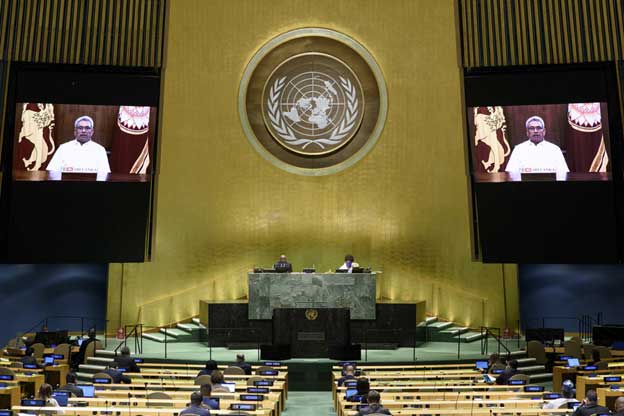
President Gotabaya Rajapaksa (on screen) of Sri Lanka addresses the general debate of the General Assembly’s seventy-fifth session. Credit: UN Photo/Loey Felipe

LONDON, Oct 5 2021 (IPS) – Addressing the UN General Assembly last month President Gotabaya Rajapaksa of Sri Lanka raised several concerns, two that had to do with health. One concerned the health of the human race; the other the health of Planet Earth on which man struggles increasingly to survive.


It is understandable for the President to draw the world’s attention to the current pandemic that plagues the people of Sri Lanka as it does the populations of most other nations that constitute the UN family that have struggled in the last two years to overcome COVID-19 which has brought some nations almost to their knees.

As we know some countries have dealt with the spreading virus more effectively and efficiently than others because they relied on the correct professional advice and had the right people in the places instead of dilettantes with inflated egos.

The immediacy of the pandemic with its daily effects on health care and peoples’ livelihoods is seen as urgent political and health issues unlike the dangers surrounding our planet which, to many, appear light miles away while still others treat it with large doses of scepticism.

Quite rightly President Rajapaksa pointed to the dangers ahead for the survival of the planet – as underscored in the recent report of the Inter-government Panel on Climate Change (IPCC) — due to human activity and said that Sri Lanka, among other measures, aims to increase its forest cover significantly in the future.

What really matters is whether those on the ground — like some of our politicians and their acolytes who seem to think that saving the planet is somebody else’s responsibility but denuding the forests and damaging our eco-systems for private gain is theirs — pay heed to the president’s alarm signals that should appropriately have been sounded at least a decade ago.

But what evoked a quick response was not the call for international action to save the people from the pandemic or the planet from climate change as President Rajapaksa told the UN but what he told the UN chief Antonio Guterres at their New York meeting.

While reiterating Sri Lanka’s stance that internal issues should be resolved through domestic mechanisms what aroused interest was the president’s sudden and unexpected readiness to invite the Sri Lankan Tamil diaspora scattered across the Global North and in smaller numbers elsewhere, for discussions presumably on reconciliation, accountability and other outstanding matters.

One would have thought that there would be a gush of enthusiasm from some sections of the Tamil diaspora which had previously shown an interest in being involved in a dialogue with the Sri Lanka Government over a range of issues that concern the Tamil community.

But the few reactions that have been reported from a few Tamil organisations appear lukewarm. Yes, the Non-Resident Tamils of Sri Lanka (NRTSL), a UK-based group, welcomed the President’s announcement saying that “engagement with the diaspora is particularly important at the time when multiple challenges face Sri Lanka”.

However, there was a caveat. The NRTSL is supportive of “open, transparent and sincere engagement of the government of Sri Lanka,” the organisation’s president V. Sivalingam was quoted as saying.

The better-known Global Tamil Forum (GTF) called it a “progressive move” and welcomed it. But its spokesman Suren Surenderan questioned what he called President Rajapaksa’s “sudden change of mind”.

Surendiran said that in June President Rajapaksa was due to meet the Tamil National Alliance (TNA) but that meeting was put off without a new date been fixed.

“When requests are made by democratically elected representatives of Tamil people in Sri Lanka to meet with the President, they are “deferred with flimsy excuses”, {and} now from New York he has declared that he wants to engage with us, Tamil diaspora,” Surendiran said rather dismissively in a statement.

Though the Sri Lanka Tamil diaspora consists of many organisations and groups spread across several continents there has been a studied silence from most of them, a sign that many of them are sceptical about how genuine the gesture is.

In March this year, after the UN Human Rights Council passed a highly critical resolution on Sri Lanka, the Rajapaksa government proscribed several Tamil diaspora organisations and more than 300 individuals labelling them terrorist or terrorist linked. These included Tamil advocacy organisations such as the British Tamil Forum, Global Tamil Forum, Canadian Tamil Congress, Australian Tamil Congress and the World Tamil Coordinating Committee.

Precisely seven years earlier in March, the Mahinda Rajapaksa government banned 424 persons and 16 diaspora organisations.

The problem for the present administration is that if it is intent on inviting Tamil organisations to participate in talks it would have to lift the existing bans on individuals and groups without which they are unlikely to talk with the government.

As transpired before peace talks at various times between the government and the LTTE, the Tamil groups are most likely to insist on participation as legitimate organisations untainted by bans. That is sure to be one of the key conditions, if not the most important pre-condition.

It is also evident that the Tamil diaspora is not a homogenous entity. It consists of moderate organisations that are ready to resolve the pressing issues within a unitary Sri Lanka, to those at the other end of the spectrum still loyal to the LTTE ideology and demanding a separate state.

If the Government cherry-picks the participants-particularly the ones that are more likely to collaborate with the administration, it would be seen as an attempt to drive a huge wedge in the Tamil diaspora.

That could well lead to the excluded groups strengthening their existing links with political forces in their countries of domicile including politicians in government as one sees in the UK and Canada, for instance, and Tamil councillors in other elected bodies to increase pressure on Sri Lanka externally.

That is why some Tamil commentators already brand this as a “diversionary move” to lessen the international moves against Colombo.

What would be the reactions of powerful sections of the Buddhist monks and the ultranationalist Sinhala Buddhists who strongly supported a Gotabaya presidency?.

And across the Palk Strait there are the 80 million or so Tamils in Tamil Nadu and an Indian Government watching developments with a genuine interest and concern.

Neville de Silva is a veteran Sri Lankan journalist who was Assistant Editor of the Hong Kong Standard and worked for Gemini News Service in London. Later he was Deputy Chief-of-Mission in Bangkok and Deputy High Commissioner in London.

  Source

IUCN World Conservation Congress Warns Humanity at ‘Tipping Point’

Biodiversity, Civil Society, Climate Action, Climate Change, Conferences, Conservation, Environment, Featured, Global, Headlines, Natural Resources, TerraViva United Nations

Conservation

President Macron and Harrison Ford among speakers at the Congress Opening Ceremony. Credit: IUCN Ecodeo

St Davids, Wales, Oct 4 2021 (IPS) – The world’s most influential conservation congress, meeting for the first time since the onset of the COVID-19 pandemic, has issued its starkest warning to date over the planet’s escalating climate and biodiversity emergencies.


“Humanity has reached a tipping point. Our window of opportunity to respond to these interlinked emergencies and share planetary resources equitably is narrowing quickly,” the International Union for Conservation of Nature (IUCN) declared in its Marseille Manifesto at the conclusion of its World Conservation Congress in the French port city.

“Our existing systems do not work. Economic ‘success’ can no longer come at nature’s expense. We urgently need systemic reform.”

The Congress, held every four years but delayed from 2020 by the pandemic, acts as a kind of global parliament on major conservation issues, bringing together a unique combination of states, governmental agencies, NGOs, Indigenous Peoples’ Organisations and affiliate members. Its resolutions and recommendations do not set policy but have shaped UN treaties and conventions in the past and will help set the agenda for three key upcoming UN summits – food systems security, climate change and biodiversity.

“The decisions taken here in Marseille will drive action to tackle the biodiversity and climate crises in the crucial decade to come,” said Dr Bruno Oberle, IUCN Director-General.

“Collectively, IUCN’s members are sending a powerful message to Glasgow and Kunming: the time for fundamental change is now,” he added, referring to the UN Climate Change Conference (COP26) to be hosted by the UK in November, and the UN Convention on Biological Diversity (COP 15) to be held in China in two parts, online next month and in person in April-May 2022.

The week-long IUCN Congress, attended in Marseille by nearly 6,000 delegates with over 3,500 more participating online, was opened by French President Emmanuel Macron who declared: “There is no vaccine for a sick planet.”

He urged world leaders to make financial commitments for conservation of nature equivalent to those for the climate, listing such tasks as ending plastic pollution, stopping the deforestation of rainforests by eradicating their raw materials in supply chains, and phasing out pesticides.

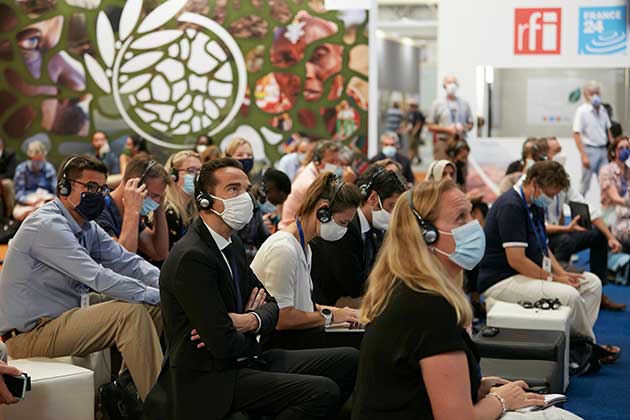
Congress participants during an Exhibition event of the Sixth Global Coral Reef Monitoring Network. Credit: IUCN Ecodeo

China’s prime minister, Li Keqiang, said in a recorded message that protecting nature and tackling the climate crisis were “global not-traditional security issues”.

While noting that some scientists fear that the climate emergency is “now close to an irreversible tipping point”, the Marseille Manifesto also spoke of “reason to be optimistic”.

“We are perfectly capable of making transformative change and doing it swiftly… To invest in nature is to invest in our collective future.”

Major themes that dominated the IUCN Congress included: the post-2020 biodiversity conservation framework; the role of nature in the global recovery from the pandemic; the climate emergency; and the need to transform the global financial system and direct investments into projects that benefit nature.

Among the 148 resolutions and recommendations voted in Marseille and through pre-event online voting, the Congress called for 80 percent of the Amazon and 30 percent of Earth’s surface—land and sea—to be designated “protected areas” to halt and reverse the loss of wildlife.

Members also voted overwhelmingly to recommend a moratorium on deep-sea mining and reform the International Seabed Authority, an intergovernmental regulatory body.

“The resounding Yes in support for a global freeze on deep seabed mining is a clear signal that there is no social licence to open the deep seafloor to mining,” Jessica Battle, leader of the WWF’s Deep Sea Mining Initiative, said, quoted by AFP news agency.

The emergency motion calling for four-fifths of the Amazon basin to be declared a protected area by 2025 was submitted by COICA, an umbrella group representing more than two million indigenous peoples across nine South American nations. It passed with overwhelming support.

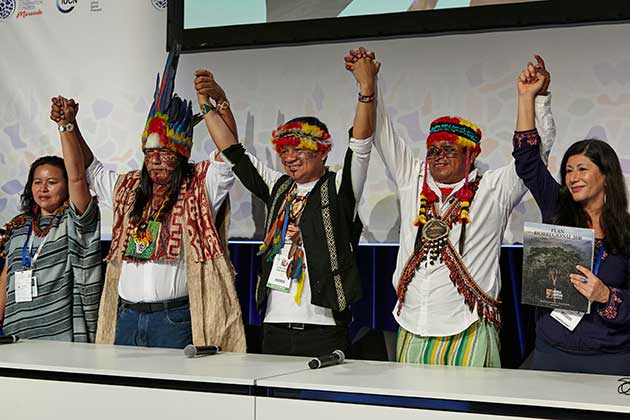
Representatives from COICA and Cuencas Sagradas present their bioregional plan for the Amazon during a press conference. Credit: IUCN Ecodeo

Jose Gregorio Diaz Mirabal, general coordinator of COICA and a leader of the Curripaco people in Venezuela, said the proposal was a “plan for the salvation of indigenous peoples and the planet”.

The Amazon has lost some 10,000 square kilometres every year to deforestation over the past two decades. Brazil is not an IUCN member and thus could not take part in the vote which runs against President Jair Bolsonaro’s agenda.

The five-page Marseille Manifesto makes repeated references to indigenous peoples and local communities, noting “their central role in conservation, as leaders and custodians of biodiversity” and amongst those most vulnerable to the climate and nature emergencies.

“Around the world, those working to defend the environment are under attack,” the document recalled.

Global Witness, a campaign group, reported that at least 227 environmental and land rights activists were killed in 2020, the highest number documented for a second consecutive year. Indigenous peoples accounted for one-third of victims. Colombia had the highest recorded attacks.

The resolution calling for 30 percent of the planet’s land and ocean area to be given protected status by 2030, said selected zones must include “biodiversity hotspots”,  be rigorously monitored and enforced, and recognise the rights of indigenous peoples to their lands, territories and resources. The  ‘30 by 30’ target is meant as a message to the UN biodiversity summit which is tasked with delivering a treaty to protect nature by next May.

Many conservationists are campaigning for a more ambitious target of 50 percent.

However, the 30 by 30 initiative, already formally backed by France, the UK and Costa Rica, is of considerable concern to some indigenous peoples who have been frequently sidelined from environmental efforts and sometimes even removed from their land in the name of conservation.

The IUCN Congress also released its updated IUCN Red List. The Komodo dragon, the world’s largest lizard, was reclassified from ‘vulnerable’ status to ‘endangered’, while 37 percent of shark and ray species are now reported to be threatened with extinction. Four species of tuna are showing signs of recovery, however.

Craig Hilton-Taylor, head of IUCN’s Head of Red List Unit, said the current rate of species extinctions is running 100 to 1,000 times the ‘normal’ or ‘background’ rate, a warning that Earth is on the cusp of the sixth extinction event. The fifth, known as the Cretaceous mass extinction event, occurred 65 million years ago, killing an estimated 78 percent of species, including the remaining non-avian dinosaurs.

One of the more controversial motions adopted – on “synthetic biology” or genetic engineering – could actually promote the localised extinction of a species. The motion opens the way for more research and experimentation in technology called gene drive. This could be used to fight invasive species, such as rodents, snakes and mosquitos, which have wiped out other species, particularly birds, in island habitats.

It was left to Harrison Ford, a 79-year-old Hollywood actor and activist, to offer hope to the Congress by paying tribute to young environmentalists.

“Reinforcements are on the way,” he said. “They’re sitting in lecture halls now, venturing into the field for the very first time, writing their thesis, they’re leading marches, organising communities, are learning to turn passion into progress and potential into power…In a few years, they will be here.”

Andrea Athanas, senior director of the African Wildlife Foundation, affirmed there was a sense of optimism in the Marseille air, in recognition that solutions are at hand.

“Indigenous systems were lauded for demonstrating harmonious relationships between people and nature. Protected areas in some places have rebounded and are now teeming with wildlife. The finance industry has awoken to the risks businesses run from degraded environments and are calculating those risks into the price of capital.

“Crisis brings an opportunity for change, and the investments in a post COVID recovery present a chance to fundamentally reshape our relationship with nature, putting values for life and for each other at the centre of economic decision-making,” he told IPS.

View the complete Marseille Manifesto here.


Leprosy has a Cure, so has Prejudice, says Miss Universe for Brazil

Civil Society, Development & Aid, Featured, Gender, Headlines, Health, Human Rights, Inequity, TerraViva United Nations

Human Rights

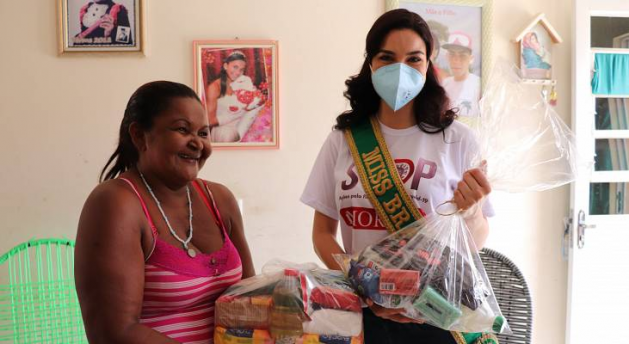
Julia Gama, Miss Brazil Universe working with Morhan to deliver food baskets to people affected by Hansen’s disease, with support from the Sasakawa Health Foundation. Credit: Morhan

NAIROBI, KENYA, Sep 29 2021 (IPS) – A new dawn has come, and it was through the work of Yohei Sasakawa, the WHO Goodwill Ambassador for Leprosy Elimination, that those affected by leprosy now had a voice to speak for themselves.


So said Faustino Pinto, a person affected by leprosy and Vice National Coordinator of Movement for the Reintegration of People Affected by Hansen’s disease (Morhan), at a webinar with the theme ‘Hansen’s Disease/Leprosy as Human Rights issue’.

Sasakawa, who is also the chairperson of the Nippon Foundation, and Dr Alice Cruz, UN Special Rapporteur on the Elimination of Discrimination against Persons Affected by Leprosy, addressed the webinar. Guests included Caroline Teixeira, Miss World Brazil 2021 and Julia Gama, Miss Universe Brazil 2020. The Sasakawa Health Foundation, in collaboration with Morhan, were co-conveners. The event forms part of a 10-month-long campaign dubbed ‘Do not Forget Leprosy’.

The celebrity guests applauded his sentiments.

Faustino Pinto, a person affected by leprosy and Vice National Coordinator of Morhan. Credit: Joyce Chimbi

Gama, also working with Morhan, told IPS: “Hansen’s disease has a cure, and I believe so does prejudice. I will use my voice to ensure that those who were silenced are heard. I believe togetherness is our strength, and together we can eradicate Hansen’s disease.”

Pinto praised Sasakawa for his lifelong commitment to improving the lives of those affected by the disease.

“We were taught to just accept what we were told: Take the medicine, keep the appointments, open your mouth to check if you did take the medicine, do not abandon the treatment,” says Pinto. This changed when Sasakawa became involved.

Pinto appealed for those affected by leprosy to be heard, seen, and involved in efforts towards zero leprosy.

He lauded the Sasakawa and the Foundation “for always talking about us and including us in the debate” and for “truly listening to us and giving us a voice”. It is this voice that Pinto used to appeal to the global community, saying, “Don’t Forget Hansen’s Disease. Don’t Forget Us.”

At the heart of discussions was the bid to draw the world’s attention to a disease in equal measure, a medical and social problem. Furthermore, the meeting was a key platform where participants were urged to approach leprosy as a human’s rights issue.

While concerted efforts have today led to less than one case of leprosy in a population of 10 000 people as per WHO estimates, with at least 200 000 new cases reported annually, experts say leprosy is still very much a concern.

“There are more than one billion people in the world living with disabilities, including persons affected by leprosy. We need to create an inclusive society where everyone can have an education, find work, and get married if they want to. People have passion and motivation. Often, all they lack is opportunity,” says Sasakawa.

Governments efforts to respond to COVID-19 is believed to have setback the progress towards zero leprosy.

“Persons affected by leprosy face multiple discrimination. They are often discriminated against on various grounds – like leprosy, but also gender, age, poverty, disability, sexuality, and race. They also struggle with violence from the State and society and with interpersonal violence,” says Cruz.

Caroline Teixeira, Miss World Brazil, with Morhan’s national coordinators Artur Custódio (centre) and Lucimar Batista (right), and the director of the National Beauty Contest and Morhan volunteer, Marina Fontes (left). Credit: Morhan

“There is such ability and potential in the world, and to have everyone participate in society will create a truly wonderful future. That is why it is important for persons affected by leprosy to have confidence and speak out,” Sasakawa emphasises.

“To support them, Sasakawa Health Foundation and The Nippon Foundation are helping them to build up their organisational capacity. I would like to see a society in which everyone is active, able to express their opinions to the authorities with confidence, and their contribution is valued,” he adds.

Over ten months, the campaign, which leverages Sasakawa’s 20th anniversary as Goodwill Ambassador, will raise awareness of why the world should stay focused on leprosy.

“It was a great honour to be chosen Miss World Brazil and thus become an ambassador of the fight against Hansen’s disease in Brazil, the country with the highest incidence of the disease in the world,” Teixeira told IPS.

“In the coming days, I will be part of a Morhan delegation visiting several cities in the north of the country, sensitising governments to action in defence of the rights of persons affected. We will certainly unite many voices so that Hansen’s disease is not forgotten,” she says.

Nevertheless, left untreated, leprosy can result in permanent disability. Worldwide, three to four million people live with some form of disability due to leprosy, as per WHO estimates.

There is growing concern that COVID-19 and the fear of discrimination could further prevent people from visiting hospitals, leading to diagnosis and treatment delays.

As it is, WHO’s 2020 statistics show an estimated 40 percent drop in the detection of new leprosy cases, which, experts warn, will lead to increased transmission of leprosy and more cases of disability.

Discrimination and stigma remain a primary concern for Sasakawa. He decries that “people who should be part of society remain isolated in colonies facing hardships. The more you look into it, the more you see the restrictions they live under, including legal restrictions in some cases. Is it not strange that someone cured of a disease cannot take their place in society?”

“I belatedly realised that if the human rights aspect wasn’t addressed, then elimination of leprosy in a true sense would not be possible. I would like to create a society where everyone feels fully engaged, able to express their opinions, and appreciated. The coming era must be one of diversity, and for that, we need social inclusion.”

  Source