Is the USA Fit to Rejoin the UN Human Rights Council?

Civil Society, Democracy, Featured, Global, Headlines, Human Rights, North America, TerraViva United Nations

Opinion

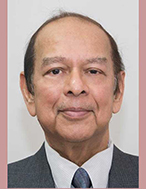
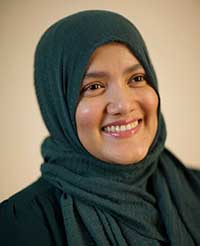
Emily Standfield is CIVICUS Member and data volunteer.
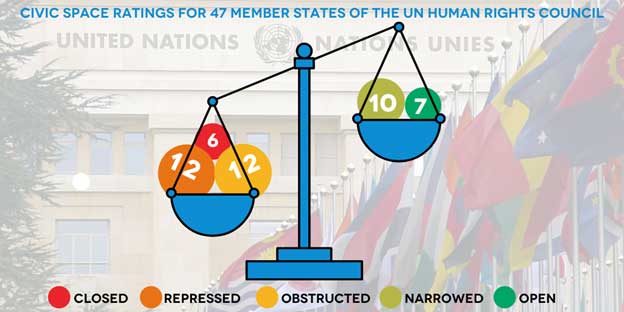
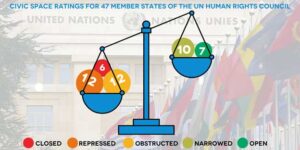
National civic space ratings from the CIVICUS Monitor, which uses up-to-date information and indicators to assess the state of freedom of association, peaceful assembly and expression for all UN Member States. Credit: CIVICUS Monitor

TORONTO, Canada, Feb 24 2021 (IPS) – A month into Joe Biden’s presidency, the U.S. has rejoined nearly all the multilateral institutions and international commitments that it withdrew from under Trump. These include the World Health Organization and the Paris Climate Accords.


Most recently, on February 8th, the U.S. announced it would also rejoin the United Nations Human Rights Council (HRC) as an observer. The U.S.’ role in the human rights forum looks different than it did four years ago in light of its recent track record on civil liberties.

The HRC has two primary functions: to draft and adopt new standards for human rights and to conduct investigations into specific human rights issues. In 2018, U.S. Ambassador to the UN Nikki Haley and U.S. Secretary of State Mike Pompeo announced that the U.S. would be leaving the HRC, claiming that it was a barrier to any genuine global human rights protection. The U.S. had two primary grievances.

First, that the HRC has an “unconscionable” and “chronic bias” against Israel. And second, that the HRC’s membership criteria allows chronic human rights abusers to have a seat on the Council. Neither of which are entirely baseless claims.

Israel remains the only country-specific agenda item covered at every HRC meeting and Russia, China, and Eritrea — to name a few — all currently hold seats on the Council and have some of the worst human rights records in the world.

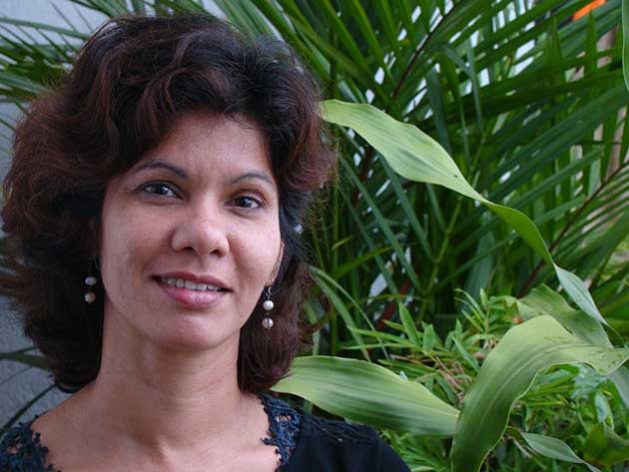
Emily Standfield. Credit: CIVICUS

On Monday, the HRC’s 47 member states met for its 46th session, it’s third time meeting since the beginning of the pandemic. The further decline of political and civil rights as enshrined in international law will be an unavoidable hot topic.

The CIVICUS Monitor which rates UN member states’ track records of upholding the legal tenets of freedom of expression, freedom of peaceful assembly and freedom of association finds that 30 of the Council’s full member states routinely and severely restrict these rights.

And in the case of its newest observer state, the USA was recently downgraded to the Monitor’s third worst civic space rating of ‘Obstructed’. The body is a long way off from adequately representing its values.

In the case of the USA, the rating change and decline in rights is reflected by the police response to the Black Lives Matter (BLM) protest movement. During protests in 2020, law enforcement detained thousands of demonstrators, used teargas and projectiles to disperse crowds, and attacked journalists, despite the fact that most wore media credentials.

President Trump and other authority figures encouraged police officers to respond forcefully and, in some cases, requested such violent actions for their own benefit. In a perfect example of this, the Attorney General ordered the use of teargas against peaceful protesters so that President Trump could have a photo-op in front of a church.

While the BLM protests may have made the decline in civic freedoms abundantly clear, this rating change represents a longer deterioration of political and civil rights.

In response, in June the HRC unanimously passed a mandate that called for a report on ‘systemic racism’ targeted at individuals of African descent. Philonise Floyd, the brother of George Floyd, whose murder at the hands of white police officers began the mass protests, called on the human rights body to examine the U.S.’ history of racial injustice and police brutality.

In the end, the final resolution passed by the HRC called for an investigation of systemic racism globally and regrettably did not single out the U.S.

While Biden has rejoined the HRC as an observer, the U.S. must win elections in October 2021 if it wants to regain its seat on the Council. In 2019, Biden said, “American leadership on human rights must begin at home” and — in some ways — it has.

The BLM protests have sparked a degree of state and local level police reform, and Biden has made a commitment to achieving racial equity. While the U.S. should focus on improving freedoms within its borders, it should also not exempt itself from becoming a full member of the HRC again in October.

Former President Barack Obama ran for a seat on the Council because he believed the U.S. could do more to advance human rights as a member of the body. This turned out to be true— the U.S. supported the creation of several important international commissions of inquiry to investigate human rights violations.

If the rationale by Trump was that leaving the council would do more for human rights than holding a seat, it’s clear that this has not come to fruition. Whether it is freedom of speech or the right to peacefully protest, today more of the world’s population lives in ‘Closed’, ‘Repressed’ or ‘Obstructed’ countries as compared to four years ago, finds the CIVICUS Monitor.

Leadership is needed at the UN Human Rights Council on these issues, but it must come from those that have a full seat at the table and have a demonstrated track record of upholding their commitments. The U.S. is currently disqualified on both accounts. Credibility and moral leadership must come from somewhere else.

Instead, the U.S. must support other member states that are leading by example on these issues. Seven members of the HRC — Denmark, Germany, Uruguay, Netherlands, Marshall Islands, and Czechia — are rated ‘Open’ by the CIVICUS Monitor, the highest civic space rating a country can achieve.

These countries are adequately representing the values that the HRC is committed to defending. While there are surely other issues at the HRC that the U.S. will prove influential, the country is far from the inspirational example it often likes to present itself on these world stages.

At the current session of the HRC, which began on February 22nd, the U.S. should champion these members who have made meaningful progress on civil liberties and be prepared to take a backseat on issues that it so obviously falls short on.
  Source

The Boon and Bane of LDC Graduation: The Bangladesh Experience

Asia-Pacific, Civil Society, Development & Aid, Economy & Trade, Education, Food & Agriculture, Gender, Headlines, Health, TerraViva United Nations

Opinion

SINGAPORE, Feb 22 2021 (IPS) – Bangladeshis at the present time share a modicum of justifiable pride in the fact that the world merits this country worth watching in terms of its economic potentials. To my mind , we have reached this stage for the following reasons: First, effective utilization of early foreign assistance; second a steady ,albeit sustained, move away from a near -socialistic to an open and liberal economy; third , a shift from agriculture to manufacturing as land-space shrank to accommodate urbanization; fourth , an unleashing of remarkable entrepreneurial spirit among private sector captains of industry, as evidenced in the Ready Made Garments industry: fifth, the prevalence of a vibrant civil society intellectually aiding the social transformation with its focus on health, education, and gender issues: and finally ,a long period of political stability notwithstanding the traditional predilections of Bengali socio-political activism.


Dr. Iftekhar Ahmed Chowdhury

The philosophical underpinning behind the concept of ‘Least Developed Countries’ (LDCs) devised at the UN in the 1960s was to identify a set of States whose impediment to development was structural, and not due to their own faults. Hence the idea that the global trading system needed to be adjusted by providing these nations ‘special and differential treatment’, such as entailed in non-reciprocal preferential market access. This would, hopefully, create for them a level playing field. Bangladesh joined the Group in 1975, immediately following its UN membership. The conditions for joining the list of LDCs or graduating from it , are determined by the Committee for Development Policy (CDP) based on certain criteria. Out of original 48 six countries have already graduated: Botswana, Cape Verde, Maldives, Samoa, Equatorial Guinea, and Vanuatu. Nepal and Bangladesh are in the cusp of graduation.

Graduation is for Bangladesh a mix of boon and bane. It is a boon because it is an acknowledgment of progress, a major milestone in the nation’s development journey. It would improve the country’s global image which should give it better credit ratings. This would allow it to borrow more cheaply on the world market. It is a bane because it would ultimately lose all the preferences accorded to LDCs in global trade such as under the European Union’s Everything but Arms (EBA) initiative. However, Bangladesh has not quite optimized on those advantages.

Incidentally, as chair of the WTO Committee of Trade and Development, as also of the LDC Group in Geneva in the late 1990s and early 2000, and also as Special Advisor to Secretary General Rubens Ricupero of the United Nations Conference on Trade and Development (UNCTAD), I was involved with the related deliberations with the European Union. Bangladesh has always played a leadership role on behalf of the LDCs in all multilateral negotiations, both at the WTO in Geneva and at the United Nations in New York. Sometimes these involved not only tough deliberations with developed countries and ‘economies in transition’ (former socialist countries) , but also with developing member-States of the Group of 77 (because it entailed the sharing of the cake).Bangladesh’s graduation will in many ways deprive the LDCs of this capacity. Across the diplomatic scene, Bangladesh could also depend on the support of fellow-LDCs on a broad range of issues. I would gratefully recall the contribution in this regard of the so-called “Utstein Sisters” of Europe (named after a venue in Northern Europe where they met), five women Development Cooperation Ministers, including Evelyn Herfkens of the Netherlands and Claire Short of the UK. They were ardent advocates of LDC aspirations, and were instrumental, among other things, in the WTO’s acceptance, unlike in the case its predecessor, the General Agreement on Trade and Tariff (GATT), of the broad principle that trade is a key tool of development.

Following graduation, Bangladesh will need to negotiate a continuation of international support measures to render the graduation process smooth and sustainable. If needs be, even after the grace period of quota-free duty- free market access vis-à-vis Europe till 2029. Though in Brussels the EU could cut Bangladesh some slack because of its performance, at the WTO, Bangladesh, will be well advised to attempt a norm setting exercise with regard to graduating countries with the new Director General, Dr Ngozi Okonjo-Iweala, who is empathetic, as well as with the membership. This will take some skillful diplomacy. But I would like to strongly underscore that negotiations are but the tip of the ice- berg. The main challenge would lie in tackling the fundamentals beneath. For instance, in addressing domestically the 27 requirements, including corruption, non-compliances, and other inadequacies, across the governance spectrum to achieve GSP -plus status. Also, to derive other global market benefits.

Comparative advantages would have to be transformed into competitive advantage. Low-wages will tend to perpetuate poverty. So wage-rise, an essential tool for poverty mitigation, would need to be carefully calibrated with the increase in productivity. Economy should diversify, particularly into services, which do not face goods tariff and hence less affected by loss of preferences. The Internet sector, on which the government is prudently laser-focused, can help Bangladesh leapfrog into economic modernity. The pharmaceutical industry should seriously reflect on how to navigate WTO regulations on Trade in Intellectual Property, or TRIPS. Mutually rewarding arrangements with other Asian economic powerhouses are called for. For instance, Free Trade Agreement with a country like Singapore could, and I use the word ‘could’ advisedly, unlock potentials, but that would require further serious study and examination.

Throughout my negotiating career I had felt that preferences tend only to prolong pain. There are no such things as friends in the marketplace. The sooner we start to confront the real world of competition the better off we are. Indeed, if we can play our cards right, the graduation could be our ‘’break-out” moment to reflect on reforms, on raising productivity and on boosting growth. Efforts must be directed towards moving up the value chain by attracting quality FDI. From my current perch in the corporate sector in Singapore, I see Vietnam as an example worthy of emulation.

So, to conclude, graduation is inevitable if progress is the goal, as it must be, and indeed desirable, just as, in our individual lives, coming of age, that is of turning 21, is. Readiness is key. From what I see, there is nothing like the last minute in speeding up requisite preparations. Doubtless, there is much work to be done. But we must bear in mind that if there is a hill to climb, waiting will not make it any smaller!

Dr Iftekhar Ahmed Chowdhury is the Honorary Fellow at the Institute of South Asia Studies, NUS. He is a former Foreign Advisor (Foreign Minister) of Bangladesh and President & Distinguished Fellow of Cosmos Foundation. The views addressed in the article are his own. He can be reached at: isasiac@nus.edu.sg

This story was originally published by Dhaka Courier.

  Source

Is This The End of Myanmar’s Quasi-Democracy?

Asia-Pacific, Civil Society, Crime & Justice, Democracy, Featured, Headlines, Human Rights, Migration & Refugees, TerraViva United Nations

NEW DELHI, India, Feb 22 2021 (IPS) – On February 1st, 2021 the military of Myanmar overthrew the country’s democratic government in a coup d’etat followed by arresting more than 40 government officials including Aung San Suu Kyi. The military declared a year-long state of emergency under the rule of it’s Commander-in-Chief Senior General Min Aung Hlaing. Troops took over the streets, a night-time curfew has been put into force. Tens of thousands of protestors have taken to the streets across Myanmar, in what is seen as the biggest street protests in more than a decade. The anti-coup demonstrators are undeterred by police attacks and increasing violence from the security forces.


Yasmin Ullah

According to this list, the military has arrested multiple members of civil society, including activists, writers, musicians, filmmakers. Monitoring group Assistance Association for Political Prisoners said “more than 384 people have been detained, in a wave of mostly night-time arrests”.

The first known casualty of the coup, Mya Thwe Thwe Khaing died on February 9 when a police officer opened fire with live ammunition, hitting her in the head while she was protesting in Naypyidaw. Two more protestors were killed in the city of Mandalay, marking Myanmmar’s bloodiest day since the military seized power. Myanmar’s minority community fears renewed violence after the military coup.

United Nations Secretary General António Guterres condemned the use of deadly violence in Myanmar, “The use of lethal force, intimidation & harassment against peaceful demonstrators is unacceptable. Everyone has a right to peaceful assembly. I call on all parties to respect election results and return to civilian rule,” António Guterres said.

The military in Myanmar alleges that the recent landslide election win by Aung San Suu Kyi was marred by fraud. Following the coup, the military has already announced replacements for a number of ministers.

Witnesses in Mandalay reported seeing soldiers from the 33rd Light Infantry Division, which led the deadly campaign against Rohingya Muslims in Rakhine state in 2017. The United Nations Special Rapporteur, Tom Andrews said, “The 33rd Light Infantry Division was reportedly involved in the lethal attacks in Mandalay today – the same division responsible for mass atrocity crimes against the Rohingya in 2017. A dangerous escalation by the junta in what appears to be a war against the people of Myanmar.”

“The very idea of Aung San Suu Kyi taking the trip to Hague at the end of 2019 to defend the actions of the military spoke volume about who she is as a person, and where she stands in her understanding of how democratic transition in Myanmar should progress,” says Yasmin Ullah, a Rohingya Social Justice Activist to IPS News.

“We have had three coups so far since 1962, and that memory still lives very deeply with a lot of Myanmar citizens. The pain and hurt that comes with it still reminds them of the glory that the country could never actually achieve.

“We have lived under a military regime for decades, without unifying, without taking to the streets, and making it known to the world that we reject this unconstitutional ceasing of power. The citizens are out on the streets because they will not have another chance at this, people are done with the fact that they will have to live under a culture of impunity where the military is untouched,” says Yasmin.

Following the coup in Myanmar, Washington has imposed sanctions on the military, urging other U.N members to follow suit. The UK too announced asset freezes and travel bans on three generals in Myanmar and is also going to be putting in place new measures to prevent UK aid. Singapore warned that there will be “serious adverse consequences” for Myanmar if the situation there continues to escalate. The European Union’s foreign affairs chief Joseph Borrell urged the military and “all security forces in Myanmar to immediately stop violence against civilians.”

Rights group Human Rights Watch in its report, Myanmar, Sanctions, and Human Rights said, “it supports the use of certain types of sanctions – including targeted sanctions and travel bans, and restrictions on military, trade, financial, economic, and other relations – as a means to condemn situations involving grave widespread human rights abuses or humanitarian law violations, to assert pressure to end those abuses, to hold those responsible to account, and as a means to deter other parties from becoming complicit in abuses.”

“We are calling on the United Nations Security Council to impose a global arms embargo. Separately, the UN General Assembly can also endorse individual governments or regional organizations imposing unilateral sanctions on Myanmar’s military, something the General Assembly has done in the past (e.g., during South Africa during apartheid.), the report stated.

International rights defenders have expressed concerns over grave human rights violations in Myanmar following the Feb. 1 military coup. “What we are witnessing in Myanmar didn’t just suddenly happen. You cannot leave the perpetrators of grave crimes under international law on the loose and then act surprised when they trample human rights again,” said Amnesty International’s Deputy Director of Advocacy Sherine Tadros.

“It was already ingrained in us Rohingyas to be intimidated, to fear the military, to fear authority, because that has always been the tactics used on us. The same kind of tactics we see now – the psychological warfare, night raids, shooting of people, arbitrary arrest, restrictions of movements – all of the things that the protestors are dealing with right now have been used on every single ethinic community and the Rohingyas,” says Yasmin.

It’s been thirty-three years since the uprising in 1988 in Myanmar against the military dictatorship, also known as the 8-8-88 Movement. The armed forces continued to rule until 2011, when a new government began a return to civilian rule. The military’s current threat to revoke the constitution only revealed the fact that it is willing to overturn any political – democratic system when its interests are threatened.

“Without a real change and reform within Myanmar to the very foundation to rip off the military power because they have infested different parts of the country that makes Myanmar what it is, without doing that there is no democracy that could take place,” says Yasmin.

The author is a journalist and filmmaker based out of New Delhi. She hosts a weekly online show called The Sania Farooqui Show where Muslim women from around the world are invited to share their views.

  Source

Climate Change & Policy Making in Nepal

Asia-Pacific, Civil Society, Climate Change, Development & Aid, Environment, Farming Crisis: Filling An Empty Plate, Food & Agriculture, Headlines, TerraViva United Nations

Opinion

Simone Galimberti is Co-Founder of ENGAGE, a not-for-profit NGO in Nepal. He writes on volunteerism, social inclusion, youth development and regional integration as an engine to improve people’s lives.

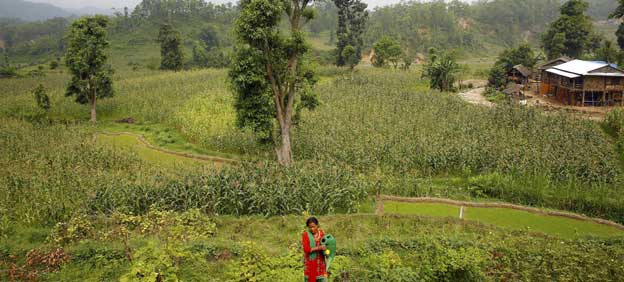
Rural woman farmer Chandra Kala Thapa works in the fields near Chatiune Village, Nepal. Over $39 million has been earmarked by a UN-backed fund to combat effects of climate change in Nepal. Credit: UN Women/Narendra Shrestha

KATHMANDU, Nepal, Feb 16 2021 (IPS) – Raju Pandit Chhetri is one of the most acclaimed climate change policy experts in Nepal and South Asia. As Director of the Prakiriti Resource Centre, an action focused think tank based in Kathmandu, Pandit Cheetri shares his opinion on the latest climate focused policies being undertaken by the Government of Nepal, especially the 2nd Nationally Determined Contribution NDC that was recently submitted by the Government.


Q: Before discussing the second Nationally Determined Contribution (NDC) released by the Government in December, what is your assessment of the first one published in October 2016?

Raju: The first NDC was much more inclusive as it tried to balance between the adaptation, mitigations and means of implementation. It was done it a short period of time and no proper format existed then. It was prepared to demonstrate Nepal’s commitment to the Paris Agreement.

Q: Coming now to the second NDC, it states that “Nepal is formulating a long-term low greenhouse gas emission development strategy by 2021 with the aim to achieve net-zero greenhouse gas emission by 2050”. Given the fact that Nepal’s emissions are minimal, were you expected such goal?

Raju: Given the emission scenario and context of Nepal, achieving net-zero GHG by 2050 is doable, if there is political commitment and actions, we can achieve this even earlier. It’s great that Nepal has this vision and wants to implement it via a strategy. Given Nepal’s forest coverage, potential for renewable energy and low per capita emission this is a realistic target. Nationally we need to do more.

Q: Shouldn’t the NDC be already providing a roadmap to achieve this goal? Do we need another strategy just because the NDC document is fairly a generic one?

Raju: I guess for now, the NDC is more of a visioning paper for next five to 10 years. It would have been good if the details were presented but, in any case, for a least developed country (LDC) country with insignificant amount of carbon emission, it isn’t a bad thing. The current version does give the vision if not every detail of the targets. However, it is true that Nepal just loves preparing policies, plans and strategies rather than focusing on implementation. We have great policies not actions, unfortunately.

Q: There has been skepticism about net-zero greenhouse gas emission by 2050, especially in relation to the financial contributions that Nepal is committing itself (we are talking only of mitigation measures here) through what are called the unconditional commitment that will amount to $ 3.4 billion, resources that Nepal is pledging to mobilize on its own. Is it feasible?

Raju: The total cost gives at US$ 25 billion for mitigation and Nepal’s own share is arbitrary (don’t know where this is coming from). There is no basis for accounting and detail analysis. Principally, it would have been better if the numbers with commitments from Nepal were not there, after all Nepal’s emission is very low and with no historical responsibility.

However, there is no harm in submitting the second NDCs, it’s great to demonstrate that even a country like Nepal is serious on climate actions and would pressurize the rich responsible countries to come forward. But I do agree that this rush did not help in making the NDC preparation process inclusive and participatory. This is a fundamental drawback. This process would have avoided many of the shortcomings such as finance targets and making it mitigation centric.

Q: Do you think that Nepal’s proposed graduation from the group of LDCs (to the status of a middle income country) in 2024 can have a negative impact for the country’s efforts to find the needed external resources to implement the 2nd NDC?

Raju: When Nepal graduates, it will lose some of the privileges which it enjoyed as a LDC country. However, this may not matter in the short term because there is also transitional period, which it can enjoy for a few more years. Having said that if development process advances to making it a developing country from LDC then it also comes with responsibility and enhanced ability, which it must embrace. It must find other avenues and create opportunities for itself. The good thing is Nepal is often one of the favorites to donors hence, the politics must work on this favorable condition in the short and long run.

Q: Between adaptation and mitigation, how to strike the right balance? In a recent interview, you highlighted that this second NDC should have been more focused on adaptation. Why not being ambitious developing a greener economy as well?

Raju: I am always for developing a greener economy, I would even go further to say that we need much more concrete actions to reduce air pollution, import less fossil fuel and adopt a green development pathway. However, given the global scenario, Nepal is one of the lowest carbon emitting countries but highly vulnerable to the impacts of climate change. This is being clearly seen in the areas of climate induced disasters like landslide and floods. Nepal suffers from food insecurity, poverty, water issues and many other development issues hence in this context- adaptation should not be less prioritize. Nepal’s NDC fails to realize this current reality. NDC is an international document that we submit to international organization (UNFCCC) hence in that context adaptation is always Nepal’s priority. My comment was not that we should not do mitigation but rather give due weightage to adaptation actions reflecting the reality of the county.

Q: What should we expect from the upcoming National Adaptation Plan, NAP?

Raju: There is also a huge adaptation gap in Nepal and we are way behind in fulfilling this gap. NAP should clearly state the current situation of country’s adaptation need and areas of vulnerability. In this context, provide adequate information and focus areas where adaptation is a dire need. It should help prioritize the areas of intervention, partners, identify issues, and ways to address them. Currently, NAP is in the process of making in Nepal, hope this is soon completed and this can be a basis for adaptation actions in the country.

Q: In terms of mitigation in the NDC, there are ambitious forestry targets like maintaining 45% of total area of the country under forest cover in addition to bold announcements on reducing pollution in the transportation sector. Do you remain hopeful the targets will be met?

Raju: It is good that Nepal is having some bold targets but this is not easy for Nepal to meet with the current priorities and enabling environment. There are lots of conflicting aspects when it comes to what is in the policy and what is done in practice. For sure, there is need to maintain our forest cover, address pollution in the cities, manage growing waste and significantly replace the imported fossil fuel by renewable energy. However, this is not possible merely putting it in NDC without actions. Political commitment should ensure partnership between the government, private sectors, financers and other partners to achieve these targets.

Q: Prakriti Resources Centre was one of the leading forces behind the Climate and Development Dialogue in 2019. How useful are such stakeholders ‘meetings?

Raju: We do regular meetings and gathering to share ideas and experiences from the policy to the implementation level. There are about 12 members in the dialogue who regularly exchange information on climate and development issues. We also make policy suggestions and inputs to the government. Many of our inputs have been incorporated into the policy documents. We continue to advocate for the affective implementation of these plans and policies.

Q: With the 2nd NDC being published, what should the government do now? What is the civil society planning to do? Are you going to play a role in shaping the formation of the numerous new “climate” institutions, including the Inter-Ministerial Climate Change Coordination Committee (IMCCCC) and the Climate Change Resource Center? In addition, the NDC says that by 2030, all 753 local governments will prepare and implement climate-resilient and gender-responsive adaptation plans. Is this realistic?

Raju: We will continue to be vigilant on what government does on climate actions – both in terms of policy implementation and raising new issues. We will support where needed but also push on what needs to be done.

There are a lot of things that the government needs to do both in terms of climate adaptation and mitigation. We have not even entered into the debate of loss and damage. A few months back ICIMOD and UNDP produced a report that 25 glacial lake in the Himalayas are at the risk of out-bursting. This is a huge issue for a country like, imagine one lake out bursting and it causing harm in the downstream. This is a case of loss and damage.

Government cannot just make policies and promise, it needs to acts through appropriate institutions, allocating finance and ensuring that the actions are taking place at the local level. Government has promised to make adaptation plans in all the 753 local governments and this cannot merely be an empty promise. It needs to fulfil the promise to meet the expectation of the climate vulnerable communities. But for this high degree of political commitment is a must. It needs to start from awareness building of the local governments and supporting them with technical inputs.

Q: What do you hope Glasgow 2021 will achieve? The Prakriti Resources Centre together with its peers within the Climate Finance Advisory Service, extensively analyzed the disbursement pledge of USD 100 billion goal in annual commitments from the developed countries. Where are we?

Raju: COP26 should help raise the climate ambitions so that the world is in track to achieve 1.5 degrees Celsius by the end of this century. Currently, we are heading to 3 degree world or beyond. By COP26 every country should submit an ambitious NDCs. In order to achieve this, climate finance will play a major role. Developed countries are falling short in fulfilling their promise of meeting the climate finance targets of US$100 billion per year by 2020. This gap should be filled in only then the developing countries will be able to take climate actions. The money should be balance both for mitigation and adaptation, while also prioritizing loss and damage. Developed countries have been double counting their ODA as climate finance, this should not be the case but sincere effort must be made to support climate vulnerable countries like Nepal.

Q: Last but not the least, what are your suggestions to a young graduate in Nepal that would embrace the work you are doing?

Raju: Working in the area of climate change looks appealing but without perseverance it does not last long. This is a wide open and multisectoral area hence focus is imperative. It is not easy as it sounds otherwise, we would have long back solved the problem, in fact we are nowhere near it. No doubt, more young people should join the movement and work on climate change because this is the issue about their future. However, the work must be backed by keen interest to build one’s knowledge, motivation and dedication.

To have more information about Prakiriti Resource Centre, please visit www.prc.org.np
To have more information about Climate Finance Advisory Service, please visit https://www.cfas.info/en
E-mail: simone_engage@yahoo.com
LinkedIn: https://www.linkedin.com/in/simone-galimberti-4b899a3/

  Source

Sri Lanka’s Deteriorating Human Rights Situation Raises Multiple Alarms

Armed Conflicts, Asia-Pacific, Civil Society, Crime & Justice, Featured, Headlines, Health, Human Rights, Humanitarian Emergencies, Religion, TerraViva United Nations

Shreen Saroor

NEW DELHI, India, Feb 1 2021 (IPS) – A decade has passed since the end of Sri Lanka’s civil war between the government and the LTTE, where at least 100,000 people were killed in the over three-decade long conflict. Families of victims of enforced disappearances continue to seek justice, the government is yet to end impunity and put accountability for crimes under international law and human rights violation and abuses in its transitional justice process.


In a recent United Nations Human Rights Office of The High Commissioner report, UN High Commissioner for Human Rights Michelle Bachelet stressed that the failure to deal with the past continues to have devastating effects on tens of thousands of families in Sri Lanka, who are still waiting for justice, reparations – and the truth about the fate of their loved ones. The report warns that the failure of Sri Lanka to address past violations has significantly “ heightened the risk of human rights violations being repeated.”

“Sri Lanka’s current trajectory sets the scene for the recurrence of the policies and practices that gave rise to grave human rights violations.” The report also flags the pattern of intensified surveillance and harassment of civil society organizations, human rights defenders and victims, and a shrinking space for independent media.

“I see the OHCHR report as something that will give more oxygen to continue our many struggles, especially for truth and justice,” says Sri Lanka based human rights activist Shreen Saroor to IPS News. The report has articulated the lack of access to justice and the need for accountability very well. It is robust on militarisation and deep securitisation of Sri Lanka and calls for rigorous vetting and demilitarization with a warning of grave consequences if failed, says Shreen.

“Michelle Bachelet’s criticism on surveillance on CSOs and shrinking space for dissent and the abuses of Prevention of Terrorism Act (PTA) and International Covenant on Civil and Political Rights (ICCPR) Act are alarming. However in order to prevent another round of conflict, the report should emphasize more on the ongoing attacks against countries’ religious minorities,” says Shreen.

Earlier in december 2020, Muslims in Sri Lanka were outraged over the forced cremation of a 20-day-old COVID-19 victim against the family’s wishes. Sri Lanka has been flagged for ignoring the World Health Organization’s (WHO) guidelines which permits both burial and cremations.

In a country where minorities are marginalized and discriminated against, Muslims who fall victim to COVID-19 are unjustly prevented from being laid to rest in accordance with their religious beliefs and are forcibly cremated, said Amnesty International in a statement. Sri Lanka is one of the few countries in the world which has made cremations mandatory for people who have died or are suspected of having died from COVID-19. The rights group urged the Sri Lankan Government to not forget that “ it has a duty to ensure all people in Sri Lanka are treated equitably. COVID-19 does not discriminate on grounds of ethnic, political or religious differences, and nor should the Government of Sri Lanka.”

“Many of us who have witnessed continuous minority rights violations over three decades in Sri Lanka, it is important for OHCHR to take on the issue of growing Sinhala Buddhist majoritarianism and the extreme nationalism that has been mentioned in the OHCHR report.

“It is time for OHCHR to come up with an early prevention strategy, so that another bloody war or religious violence in this country is prevented,” says Shreen.

Human Rights Watch in its recently released 93-page report, Open Wounds and Mounting Dangers: Blocking Accountability for Grave Abuses in Sri Lanka, examines the efforts by the government of President Gotabaya Rajapaksa to thwart justice in seven prominent human rights cases.

“The Sri Lankan government’s assault on justice increases the risk of human rights abuses today and in the future,” said John Fisher, Geneva Director at Human Rights Watch. “The UN Human Rights Council should adopt a resolution at its upcoming session that demonstrates to the Rajapaksa administration that the world won’t ignore its abuses and offers hope of justice to victims’ families, the report stated.

In 2018, just before and during the ongoing session of the UNHRC, Sri Lankan authorities made several announcements to signify their commitments to pledges made in the October 2015 resolution on justice and accountability for abuses during Sri Lanka’s civil war.

President Gotabaya Rajapaksha months into his tenure in November 2019, made several changes including replacing the 19th Amendment of the Sri Lankan Constitution, which was enacted to limit excessive executive power and facilitate independent institutions including the judiciary with the 20th Amendment, which consolidated power in the executive and nullified the independent commissions mainly Sri Lanka’s Human Rights Commissions and Office of the Missing Persons. “Rajapaksa appointed people implicated in war crimes and other serious violations to senior administration positions,” said Shreen.

In February 2020 Sri Lanka withdrew itself from the 2019 UN resolution on post-war accountability and reconciliation, which is scheduled to be taken up in the upcoming session.

Sri Lanka’s main Tamil political parties are now urging for an international probe, and in a joint letter addressed to members of the UN Human Rights Council said, “It is now time for Member States to acknowledge that there is no scope for a domestic process that can genuinely deal with accountability in Sri Lanka.”

According to this report, Sri Lanka is in discussion with India and other countries for support to counter the Core Group’s move which could lead to targeted sanctions, asset freezes and travel bans against alleged perpetrators of grave human rights violations and abuses in the March session of the UN Human Rights Council in Geneva.

The author is a journalist and filmmaker based out of New Delhi. She hosts a weekly online show called The Sania Farooqui Show where Muslim women from around the world are invited to share their views.

  Source

Empowering Women through Wisdom

Asia-Pacific, Civil Society, Featured, Gender, Global, Headlines, Health, IPS UN: Inside the Glasshouse, Poverty & SDGs, TerraViva United Nations, Women’s Health

Opinion

Caryll Tozer* is engaged in social upliftment of women headed-households, and advocates conservation and women and child rights. She is a co-founder of Women In Need crisis center providing refuge for abused women.
 
Soraya M. Deen* is a lawyer, interfaith consultant and award-winning international activist and community organizer. She divides her time between Sri Lanka and Los Angeles and has written extensively on the plight of minorities and minority women.

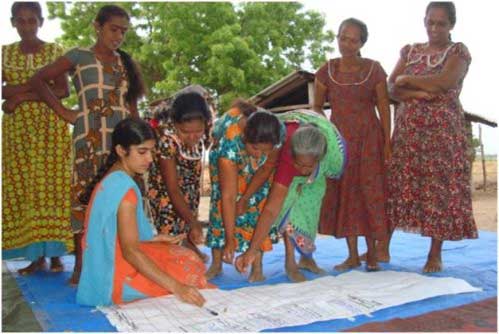
Credit: Oxfam.org

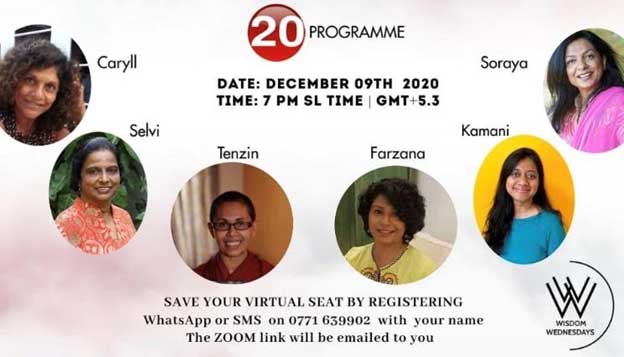
COLOMBO, Sri Lanka, Dec 22 2020 (IPS) – During the COVID 19 lockdown in Sri Lanka, seven women from diverse religious and ethnic backgrounds came together to deliver Wisdom and their message that women must be empowered and their voices for national unity must be heard through this movement.


We called ourselves the Wisdom Women and named the online program we created, “Wisdom Wednesdays”. The program airs every fortnight and since its inception in March 2020, we have hosted 21 stimulating shows, with thousands of people watching from across the world.

https://youtube.com/channel/UC28pnsQlhE1Y5BtYOSU6ZMQ

As co-founders, a Muslim and a Christian, we are determined to continue with the show until enough number of women stand up and say, “our country and the next generations deserve better and therefore we must speak up as a movement of women and work for national unity and reconciliation.”

A thirty-year bloody war has left Sri Lanka divided. One might expect our governments to move forward with a robust agenda for peace building. But nothing has improved, not even a tourniquet to arrest the bleeding. Successive governments have not spelt a serious agenda,

As conservation and environmental activists, we have worked to co-found an organization to support and eradicate abuse through the organization: One Home at a Time, which has built 17 homes for women-led households and wells for villages that need water. We believe that each individual can make a difference, and we have raised money, built homes, for these women and their family that lack basic housing. We have seen what happens when you support a woman who then can raise her family.

Whether we show up in NE Nigeria, Bangladesh or Sri Lanka, women have been dealt a raw hand. Patriarchy and misogyny are institutionalized, structural, interpersonal and intra personal.

An incredible team of powerful women, each one more powerful in their experience and individual body of work comprise the team. The group represents the various ethnicities, religions and gains strength from each other. We have an incredible team.

Along with us there is Selvi Sachithanandam who through her foundation helps peace building and social transformation through spirituality; Kamani Jinadasa who is the founder of a center for troubled youth and works extensively against gender-based violence.

We also have Farzana J. Khan who helps through her foundation supporting education, and works on small and medium enterprise; Ven. Tenzin Leckdron a Bikkuni who belongs to a monastery in Tibetan Buddhism and currently works in remote areas in Australia; and, Ameena Hussein who is engaged in various social work and is a publisher and writer.

All power houses in their own field. Having gone through life’s tremendous challenges and hardships, we know very well what it takes to uplift women and give them the skills to thrive.

Our mission is to educate and inspire women. Teach women some basic skills, but first to let them know they are POWERFUL. The work at Wisdom Wednesdays has just begun.

We are taking our show and our gifts on the road. We have structured workshops to suit one day and residential programs for women. We want to bring them together; inspire them to build power, and organize the community.

Sri Lanka has a female population of 52%, with an abysmal parliamentary representation. Less than 12 % of the representatives are women. COVID has sent a powerful message to the strong-willed women of Sri Lanka. It is a time for reflection and for change.

Women have risen to the challenge to keep their home fires burning, care for their children, face abuse and violence undeterred. Our goal is to tap into that strength and resilience.

We also believe that at a national level, a woman’s voice must be heard at every negotiating table in order to bring in a balanced and cohesive response to issues.

We are subtle activists, not armchair program designers. When we get to the river if we find the water muddy and dirty, we get into the river and clean the water. Our deepest concern now is funding to take this movement to the next level.

Bringing together 35 women to a residential workshop from Friday afternoon to Sunday is costly. But we see something beyond, that when love, expertise and commitment come together, magic can happen. There will be enablers, and there will be minority rights and women’s rights which are in great jeopardy.

The UN has established gender equality as both a stand-alone goal and a central tenet to achieving an inclusive and sustainable development agenda by 2030. We must promote participation. Promoting participation – means recognising we each have something unique and important to contribute to society.

We want to promote two more concepts through our work. Subsidiarity, and ending future conflict. We have not witnessed subsidiarity in the context of social theory, premised upon empowering individuals to resolve issues that affect them without interference from larger, and often more centralised, social, private, religious or government bodies.

Currently, Wisdom Wednesdays is being watched in over 8,000 homes across the world. We receive encouraging comments from diverse audiences. In a divided world hearing a positive message is like a drop of water in the ocean.

There is no good news anymore. People who watch TV know this. Feeding the spiritual is as important as feeding the hungry. People are hungry for hope and a new way forward.

Individual transformation, focused and committed action leads to community transformation. This time we want to mobilize women to take that action. We need women to speak out against divisiveness and bring a stop to racism and bigotry. We want to address these issues through experiences and wisdom of the women. Unified we will be that much stronger.

*Caryll Tozer is a committee member of The Wildlife and Nature Protection Society, the third oldest conservation organization in the world. She lives by the premise that “to remain silent when there is injustice makes one culpable”.

*Soraya M. Deen travels across Sri Lanka mobilizing women, men and interfaith groups to understand and explore contextual realities for the problems they face by bringing together like-minded community members to solve – urgent, relevant, winnable action. She is the Founder of the Muslim Women Speakers Movement, inspiring voices of change. Soraya serves as a resource person and women’s outreach coordinator for the Omnia Institute of Contextual Leadership, a think tank in Chicago that addresses religious based oppression, dominance and violence.

  Source