Cultivating a Culture of Peace

Armed Conflicts, Civil Society, Global, Global Governance, Headlines, Human Rights, IPS UN: Inside the Glasshouse, Peace, TerraViva United Nations

Opinion

UNDP’s peacebuilding work in Afghanistan coordinates efforts, from international to local, and ensures community members, particularly disadvantaged groups, have a meaningful role in shaping their future. Credit: UNDP Afghanistan

UNITED NATIONS, Sep 26 2024 (IPS) – As global peace hits its lowest point since the Second World War, the International Day of Peace on September 21 offered a critical moment to reflect on and strengthen our peacebuilding efforts.


This year’s theme, ‘Cultivating a Culture of Peace’, is a powerful reminder that for peace to be possible, everyone must play a part.

This sentiment is at the heart of the UNDP’s conflict prevention and peacebuilding work, which we call an ‘area-based approach’. Under this model, we ensure that all those who are working towards peace within a community are working together, and towards a common goal.

The work is tailored to the specific needs and conditions of each particular community, and is locally-led. Peace has its greatest chance when communities come together to address the underlying causes of tension or conflict.

Conflict is on the rise

Today’s conflicts are driven by complex factors including shifting global power dynamics, weak governance, rising inequalities, and a range of interconnected threats such as climate change, crime, and terrorism.

The toll of armed conflicts is staggering. By the end of 2023, conflict-related deaths had surged dramatically. Over 117 million people have been forcibly displaced. Violence has cost the global economy an astonishing US$19.1 trillion. Two billion people, one quarter of the world’s population, live in conflict zones.

If we don’t invest sufficiently in peace, we can’t hope to reverse these trends. Yet, international resources are increasingly focused on immediate humanitarian relief rather than at the root causes of conflict.

The OECD estimates humanitarian aid in fragile contexts has reached a historic high of 27.7 percent of the Development Assistance Committee’s official development assistance, while peace building funding has fallen to a 15-year low of 10.8 percent.

In response, the UN Secretary-General António Guterres’s vision for building a more peaceful world, the New Agenda for Peace, calls for greater international cooperation and a decisive shift towards prioritizing conflict prevention.

To effectively address the root causes of violence It emphasizes the importance of national ownership, people-centred strategies, and peace financing. One way of meeting the promise of the New Agenda for Peace is to employ an area-based approach.

Area-based responses keep local communitiess at the centre of the peacebuilding process. Credit: UNDP Syria

What is an area-based approach?

It delivers tailored recovery and development based on context and conflict analysis. It works with local authorities, community groups, and local businesses to analyze and plan locally tailored solutions. In places such as Syria it ensures that responses are locally rooted, and keeps communities at the centre of the process.

Local communities, including vulnerable and excluded groups, define the priorities of area-based approaches. This inclusive engagement creates a shared sense of purpose, which is the foundation for building peace.

In Mozambique this has helped address localized conflict and foster resilience, including ensuring meaningful local participation in navigating entrenched social and political barriers.

In southern Iraq, UNDP is using an area-based approach to harmonize crisis response coordination, basic service delivery, livelihood opportunities, and protection for at-risk groups. It addresses the many facets of recovery and resilience simultaneously, helping build a foundation for lasting peace.

Area-based approaches also provide a coordination framework for international organizations to assess local needs, and design cost-effective responses.

UNDP’s work in Afghanistan coordinates efforts, from international to local, increasing effectiveness and value for money while also supporting local ownership. This ensures that community members, particularly disadvantaged groups, have a meaningful role in shaping their future.

Leveraging over 30 years of experience, UNDP has found area-based approaches to be highly effective in addressing some of the key barriers to peace, such as poverty, inequality, and weak governance.

However, these approaches are not a panacea.

There are challenges in ensuring meaningful participation. Among them are coordinating diverse stakeholders, sustaining long-term impact, managing varying expectations, and overcoming capacity constraints. To be effective peacebuilding programmes must be integrated into broader frameworks, such as national prevention strategies, efforts to mitigate strategic risks, and international cooperation.

Despite their challenges, area-based approaches have great potential for preventing conflict, fostering peace and building community resilience. We’re already seeing the dividends in Mozambique, Syria, Iraq, Afghanistan and beyond.

By focusing on people-centred solutions, fostering national ownership and addressing the root causes of conflict, area-based approaches play a critical role in cultivating a culture of peace from the ground up.

Naysan Adlparvar is Core Government Functions and Research Advisor, UNDP; Giacomo Negrotto is Local Governance Specialist, UNDP; Adela Pozder-Cengic is Core Government Functions Specialist, UNDP

Source UNDP

IPS UN Bureau

  Source

Tanzania’s Maasai Women Adopt Climate-Smart Solutions To Tame Drought

Active Citizens, Civil Society, Climate Action, Climate Change, COP29, Development & Aid, Editors’ Choice, Environment, Featured, Food and Agriculture, Headlines, Natural Resources, Population, Sustainability, Sustainable Development Goals, TerraViva United Nations, The Southern Africa Water Wire

Food and Agriculture

Maria Naeku, a Maasaiwoman in Mikese village in Mvomero district tends to her vegetable garden.Credit: Kizito Makoye Shigela/IPS

Maria Naeku, a Maasaiwoman in Mikese village in Mvomero district tends to her vegetable garden.Credit: Kizito Makoye Shigela/IPS

MVOMERO, Tanzania, Sep 24 2024 (IPS) – In the scorching sun of Mikese village in Tanzania’s eastern Mvomero district, 31-year-old Maria Naeku tirelessly tends to her small vegetable patch. Each time she pulls a weed, the red soil stains her hands as she guides the trickle of water from a maze of pipes through an elevated bed to nurture her plants. In a drought-stricken area, Naeku’s small garden is a lifeline for her family, giving them food and income.


“When the drought hit, our cattle died, and we couldn’t get milk for the children,” Naeku says. “I knew I had to find a way to feed my family, so I had to grow vegetables.” 

The drip irrigation technique, where a network of pipes with tiny holes spit water directly to the plant in a split second, was new to her but she tried. “I didn’t  know how if tiny drops of water could nourish the crops,” she says. “But when I saw green leaves sprouting from the soil, I knew I had a brighter future.”

Naeku’s quickly became an expert, her success inspired other women across  the village to follow her lead. The Maasai, traditionally, known for cattle rearing—a symbol of wealth and security are increasingly adopting climate-smart farming to cope with drought as rains have become erratic due to climate change. Women like Naeku, who once depended entirely on these herds, have been forced to adopt innovative farming techniques to survive.

Shattering the Patriarchy

In Maasai culture, men have long held the reins of power, with women relegated to the roles of caregivers and homemakers. Decision-making, particularly in land and livestock matters, has traditionally been the exclusive domain of men. However, the severe droughts have shifted these dynamics. With their cattle dwindling and their families hungry, Maasai women have begun to step into roles once reserved for men, embracing climate-smart agriculture as an alternative means of survival.

“We are no longer just caretakers of our families,” says 34-year-old Nasarian Lengai, a mother of five who has become a local champion for horticulture farming at Mikese. “We are decision-makers who are shaping the future of our community.”

Initially skeptical, Lengai strongly believe in horticulture using organic farming practices. “When I first heard about these methods, I didn’t think they’d work for us,” she says. “But after seeing how much better my crops are now, I’m sure this is the right way to go.”

For centuries, the Maasai have relied on cattle for their food—milk, meat, and even blood. Switching to farming was a big change from their old ways.

“We used to believe that having many cattle was the only way to keep wealth and ensure security,” says Esuvat Joseph, who leads the Tupendane Maasai women’s group at Mikese village. “But now we understand that we need to cope with drought. We’ve learned to keep fewer cattle and focusing more on farming.”

Tupendane group has also embraced water conservation techniques, constructing ground reservoirs to collect rainwater. “This water is very important,” she explains. “We use it for irrigation when the rivers dry up.”

Climate-smart Solutions

The Maasai women’s adoption of climate-smart agriculture is not just a response to immediate needs but a strategy for long-term resilience. Through initiatives supported by the Norwegian Church Aid—an international charity—these women are learning to diversify their income sources, reducing their dependence on livestock and embracing sustainable horticulture practices.

“We’re teaching these women how to make the most of their small plots of land,” explains Oscar John, the program manager with Norwegian Church Aid. “By diversifying their income sources, they’re less dependent on livestock, which is increasingly vulnerable to drought.”

Conservation agriculture, a key component of this initiative, promotes sustainable farming techniques that improve soil health and increase crop yields without depleting natural resources.

For the women of Mvomero, this has been a divine plan. They are learning to grow drought-resistant crops, rotate their fields, and use organic fertilizers, all of which contribute to better crop yields.

As more women embrace climate-smart agriculture, the ripple effects are being felt in neighboring villages, as women once skeptical of these new methods, are now seeing the success in Mvomero and beginning to learn these practices in their own drought-stricken lands.

Empowerment in Action

The shift from livestock to crop farming has had a huge impact on the social dynamics within the Maasai community. Women, who were once sidelined in decision-making processes, are now taking the lead in managing their families’ resources. This newfound empowerment is improving their social and economic status while challenging the patriarchal norms that have long defined their society.

“We’ve always been made to believe that men are the decision-makers,” says Lengai. “But now we’re showing that women can lead too. We can take care of our families and make better decisions.”

This sense of empowerment is evident in the way the women of Mvomero approach their work. They are tending to their crops and building a future where their voices are heard and their contributions are valued. The construction of rainwater harvesting systems, for example, is a task that these women have taken on with pride. “We don’t wait for our husbands to do it; we build these reservoirs ourselves,” says Joseph. “It’s our way of showing that we can take care of ourselves.”

The men in the community are recognizing the shifting gender roles, and some of them are starting to appreciate the benefits of shared decision-making. While resistance remains, the success of these women is slowly changing attitudes. As the benefits of climate-smart agriculture become more apparent, more men are joining their wives in these efforts, working together to secure a better future for their families.

Challenges on the Horizon

The transition from livestock to crop farming is not without its difficulties, particularly for a community that has long measured wealth by the size of its herds. “There are still some who resist change,” admits Joseph. “They see farming as a lesser occupation compared to cattle herding. But as more of us succeed, the mindset is shifting.”

The path to fully accepting these new practices is slow, and the women of Mvomero know their success is just the start. They face many challenges ahead, including the risk of drought and strong cultural norms that shape gender roles in Maasai society.

But the women are strong. They know that their efforts are not just to overcome the on-going crisis but also about creating a better future for their children.

“We are planting the seeds of change,” says Naeku. “Our daughters will grow up knowing that they can be anything they want to be. They will see that women can lead, that we can innovate, and that we can solve any problems.”

A Model for the Future

The success of the Maasai women in Mvomero is beginning to attract attention from other drought-hit areas in Tanzania. Development organizations and government agencies are taking note of the community’s innovative approach and exploring ways to replicate it in other regions facing similar challenges.

“We see this as a model that can be adapted and implemented in other parts of the country,” says John. “The key is to empower communities, particularly women, to take control of their resources and livelihoods. When people are given the tools and knowledge they need, they can achieve incredible things.”

As Maasai women in pastoral communities make progress, they are not only securing their own future but also creating a stronger and fairer society. Their journey shows determination, innovation, and empowerment—a true example of women’s strength in overcoming challenges.

In Tanzania’s Maasai steppe, where the future of pastoral communities is uncertain, these women are showing that with the right support, even the most marginalized can overcome   their problem and lead a better life.

IPS UN Bureau Report

  Source

Summit of the Future: Youth Driven Action Needed to Tackle Nuclear and Climate Crises

Active Citizens, Civil Society, Climate Change, Conferences, Development & Aid, Editors’ Choice, Featured, Global, Headlines, Human Rights, Humanitarian Emergencies, Nuclear Disarmament, Nuclear Energy – Nuclear Weapons, Sustainable Development Goals, TerraViva United Nations, Youth, Youth Thought Leaders

Nuclear Disarmament

Dr. Tshilidzi Marwala, USG and Rector of the United Nations University, and Ms. Kaoru Nemeto, Director of the United Nations Information Centre during a discussion ‘Building the Future: Synergetic Collaboration on Nuclear and Climate Crises.’ Credit: Naureen Hossain/IPS

Dr. Tshilidzi Marwala, USG and Rector of the United Nations University, and Ms. Kaoru Nemeto, Director of the United Nations Information Centre during a discussion ‘Building the Future: Synergetic Collaboration on Nuclear and Climate Crises.’ Credit: Naureen Hossain/IPS

UNITED NATIONS, Sep 23 2024 (IPS) – Driving the Summit of the Future’s core messages of international solidarity and decisive action are young people who are determined to address the intersecting issues that the world contends with today.


During the Summit’s Action Days (20-21 September), it was young people who led the conversations of increasing and defining meaningful engagement, both on- and off-site from the United Nations Headquarters.

Not only are they driving the conversation, but in the Pact for the Future adopted by world leaders at the United Nations on Sunday (September 22), youth and future generations are at the forefront of global leaders’ concerns, and their role was clearly defined with the first ever Declaration on Future Generations, with concrete steps to take account of future generations in our decision-making, including a possible envoy for future generations.

This includes a commitment to more “meaningful opportunities for young people to participate in the decisions that shape their lives, especially at the global level.”

Building the Future: Synergetic Collaboration on Nuclear and Climate Crises, a side event whose co-organizers included Soka Gakkai International (SGI) and the Future Action Festival Organizing Committee, with the support of the United Nations University (UNU) and the United Nations Information Centre (UNIC), brought together young activists to discuss the intersection between two different crises and what will define meaningful youth engagement.

Kaoru Nemoto, the Director General of UNIC in Tokyo, observed that it was “ground-breaking” to see the agenda of the Summit’s Action Days largely led and organized by youth participants, as signified by the majority of seats in the General Assembly Hall being filled by young activists.


“There is an undercurrent, a common message, that the youth can make this world a better place to live,” said Nemoto. “No matter what agenda you are working on, be it climate change, nuclear disarmament, fighting inequality… youth issues are cross-cutting, very strong cross-cutting issues across the board.”

Nemoto further added that the United Nations needs to do much more to engage youth for meaningful participation. This would mean allowing youth to consult in decision-making and to be in positions of leadership. Youth presence cannot be reduced to tokenism.

The climate and nuclear crises are existential threats that are deeply connected, said Dr. Tshilidzi Marwala, the rector of the United Nations University. Climate instability fuels the factors that lead to conflict and displacement. Conflict, such as what is happening in Sudan, Israel, Palestine, and Ukraine, increases the risk of nuclear escalation. As leaders in the present day tackle the issues, Marwala called on the youth to continue raising their voices and to hold those powers accountable.

Marwala noted that the United Nations University would be committed to “realizing meaningful participation” in all parties. For young people, while they are motivated and demonstrate a care for deeper social issues, they face challenges in having their voices heard or in feeling galvanized to take action. Marwala noted that it was important to reach out to those young people who are either not involved or feel discouraged from getting involved in political work and activism.

Chief among the Summit of the Future’s agenda is increasing youth participation in decision-making processes. It has long been acknowledged that young activists and civil society actors drive greater societal change and are motivated to act towards complex issues. Yet they frequently face challenges in participating in policymaking that would shape their countries’ positions.

Among these challenges are representation in political spaces. Within the context of Japan, young people are underrepresented in local and national politics. As Luna Serigano, an advocate from the Japan Youth Council, shared during the event, there is a wider belief among young voters in Japan that their voices will go unheard by authorities.

This is indicated in voter turnout, which shows that only 37 percent of voters are in their 20s, and only 54 percent of voters believe that their votes matter. By contrast, 71 percent of people in their 70s voted in elections. People in their 30s or younger account for just 1 percent of professionals serving in government councils and forums. The Japan Youth Council is currently advocating for active youth participation in the country’s climate change policy by calling for young people to be directly involved as committee members to work on a new energy plan for the coming year.

Yuuki Tokuda, a co-founder of GeNuine, a Japan-based NGO that explores nuclear issues through a gender perspective, shared that young people are out of decision-making spaces. Although their voices may be heard, it is not enough. As she told IPS, the climate and nuclear crises are on the minds of young people in Japan. And while they have ideas on what could be done, they are not informed on how to act.

There is some hope for increasing participation. Tokuda shared within policymakers on nuclear issues, of which 30 percent include women, have begun to engage with young people in these discussions.

“It is time to reconstruct systems so that youth can meaningfully participate in these processes,” said Tokuda. “We need more intergenerational participation in order to work towards the ban of nuclear weapons and the climate crisis.”

During the event, what meaningful youth engagement should look like was discussed. It was acknowledged that efforts have gone towards giving a space to the perspectives of young people. Including young people in the discussions is a critical step. It was suggested that direction should shift towards ensuring that young people have the authority to take the action needed to resolve intersecting, complex issues. Otherwise, the inclusion is meaningless.

“The future-oriented youth is more needed than ever to tackle the challenges in building and maintaining peace,” said Mitsuo Nishikata of SGI.

“As a youth-driven initiative such as what the Future Action Festival demonstrates, youth solidarity can stand as a starting point for resolving and passing issues.”

Next year (2025) will mark 80 years since the end of World War II and the Hiroshima-Nagasaki atomic bombings. Nishikata pointed out that this will be a time for crucial opportunities to advance the discussions on nuclear disarmament and climate action, ahead of the Third Meeting of State Parties on the Treaty on the Prohibition of Nuclear Weapons and the 30th UN Climate Conference (COP30).

“We will continue to unite in our desire for peace, sharing the responsibility for future generations and expanding grassroots actions in Japan and globally.

Other commitments for the Pact for the Future included the first multilateral recommitment to nuclear disarmament in more than a decade, with a clear commitment to the goal of totally eliminating nuclear weapons.

It also pledged reform of the United Nations Security Council since the 1960s, with plans to improve the effectiveness and representativeness of the Council, including by redressing the historical underrepresentation of Africa as a priority.

The pact has at its core a commitment to “turbo-charge” implementation of the Sustainable Development Goals (SDGs), including the reform of the international financial architecture so that it better represents and serves developing countries.

“We cannot build a future that is suitable for our grandchildren with a system that our grandparents created,” as the Secretary-General António Guterres stated.

This article is brought to you by IPS Noram in collaboration with INPS Japan and Soka Gakkai International in consultative status with ECOSOC.

IPS UN Bureau Report


Summit of the Future: On the Need for Civil Society to Make Its Voice Count at the UN

Civil Society, Climate Action, Conferences, Environment, Gender, Global, Headlines, Human Rights, Sustainable Development Goals, TerraViva United Nations

Opinion

Sarah Strack is Forus Director

Civil society leaders at the Forus General Assembly in Gaborone, Botswana. Credit: Forus

NEW YORK, Sep 20 2024 (IPS) – In a context of shrinking civic space that threatens civil society participation in an increasing number of countries and all the way to some UN processes, world leaders will gather to discuss the “multilateralism we want” at the Summit of the Future at the United Nations headquarters in New York.


The summit aims to tackle one fundamental question: How can the global community cooperate better to meet present needs while preparing for future challenges?

Already in February, over 400 civil society organisations, under the UNmute initiative, issued a collective statement for more meaningful engagement of civil society in the preparatory process of the Summit of the Future. One thing is clear: civil society’s engagement has largely been limited to virtual consultations and written inputs at relatively short notice, signaling a deterioration of opportunities for participation of civil society.

The limited access to informal consultations with Member States, coupled with the lack of interpretation services, further restricts participation for non-English speakers and those outside of the New York “bubble”. This asymmetry creates barriers to meaningful dialogue between civil society and Member States.

Civil society organisations continue to call for designated seats and consistent participation channels to ensure their voices are included and have a genuine impact on the outcomes.

As we approach the Summit of the Future taking place next week in New York, here’s what to expect and some key asks.

It’s time to walk the talk

The Summit of the Future arrives at a moment when it is more important than ever for global institutions to demonstrate accountability and deliver tangible results, to rebuild trust. With the Pact for the Future, the Summit aims to design a roadmap to strengthen multilateralism and advance collective action and accountability for the 2030 Agenda and beyond.

Civil society leaders at the Forus General Assembly in Gaborone, Botswana. Credit: Forus

“Civil society has always warned of the urgency of the polycrisis and has suggested concrete solutions. However, despite strong speeches, country leaders have taken weak action. What we have witnessed is a lack of commitment to life and the planet,” says Henrique Frota, executive director of Abong, the national NGO platform of Brazil, and C20 Chair.

In past summits, we have seen pledges that looked good on paper but failed to translate into systemic changes. The whole Agenda 2030 is increasingly considered “non-binding” with several governments failing to uphold their commitments. In Argentina, newly elected president Javier Milei decided not to pursue a Voluntary National Review in 2024, reversing the previous administration’s commitment. In Colombia, for the first time, the government reviewed only one SDG in 2024—SDG 2 (zero hunger) —a move that raised concerns about the increasing risk of cherry-picking.

These examples reflect a broader global trend: international agendas, including the SDGs, may not be prioritised, raising concerns about potential rollback of commitments. Without clear accountability mechanisms, these global agreements risk remaining aspirational rather than actionable.

“We are at an inflection point that will largely determine what outcomes we harvest by December 2030- the year governments have committed to bringing an end to many of the challenges and crises facing our world today. At the current rate the global goals remain elusive as they were when those commitments were made some 8 years ago. The world needs bold leadership, moving from rhetoric to action. Never again can we wait for another summit before the world sees the changes it so much deserves. That clock stopped ticking already!” says Oyebisi, B. Oluseyi, Executive Director at NNNGO, the national NGO platform in Nigeria.

He adds, to move forward, instead of rushing backwards, governments need to make clear, measurable commitments and introduce robust accountability mechanisms to ensure international agreements lead to real, inclusive outcomes for a better future for people and planet.

Strengthening inclusive governance

While civil society continues to push for a stronger focus on equity, solidarity, inclusion and participation, the final framework for the Summit of the Future is still under negotiation.

The lack of consistent engagement opportunities remains a barrier for civil society to contribute effectively. Each accredited civil society organisation has been allowed to send two representatives to the Summit. However, we recently learned that, due to high demand, civil society representatives may only be able to attend one of the two days of the Summit.

“The Agenda 2030 starts by stating that “All countries and all stakeholders, acting in collaborative partnership, will implement this plan.” This is not possible if civil society is excluded from deliberations and negotiations. Crucially, it also prevents the pledge to leave no one behind from being fulfilled, as civil society is unable to bring to the table the voices of those facing societal and structural discrimination,” says Silla Ristimäki, Advocacy Lead at FINGO, the national NGO platform of Finland.

Ndey Sireng, Executive Director of Gambia’s national NGO platform TANGO, echoes this concern, stressing “the importance of inclusive participation, especially for youth and women”, and urging governments to create an enabling environment for civil society.

“For global governance to truly deliver for both people and planet, civil society must be at the core of decision-making processes. Civil society’s engagement ensures that policies are not only crafted in conference rooms but are rooted in the lived realities and aspirations of the people they aim to serve. Given the closed nature of the consultations leading up to the Summit of the Future, it’s likely that the aspirations of the majority of global citizens have not been fully captured,” says Chris Nkwatsibwe, Policy, Governance & Civic Engagement lead at UNNGOF, the national NGO platform in Uganda.

On the need to protect civil society

While the Summit’s agenda focuses on human rights, it does not emphasize the shrinking civic space worldwide and the lack of an enabling environment for civil society organisations. Civil society organisations encounter increasing restrictions, with freedoms of association, peaceful assembly, and expression being curtailed in many countries.

In Honduras, as shared by the national NGO platform Asonog, in 2023 and 2024 over 18 defenders have been killed for defending their territories – including Honduran environment and anti-corruption activist Juan López, just last week, for his struggle against extractive industries. International solidarity is very important at this time of such impunity and defenselessness – with several countries unable to “defend the defenders” and to provide justice to victims.

Additionally, a wide cross-section of civil society from national NGO platforms to grassroots groups – continues to face various forms of “bureaucratic” and administrative barriers, as reported by members across the Forus network. In vulnerable political contexts, including post-electoral contexts, civil society bears the brunt of repercussions from “civic violence”, despite advocating for peaceful dialogue. A recent Forus study showed that only 4% of our Global Majority members experienced no barrier from current laws and regulations for their activities. Just 7,5% of all Forus members representing more than 24,000 NGOs, worldwide reported receiving effective support from their governments in terms of capacities and resources.

Forus is advocating for reforms that protect civic space and the promotion of an enabling environment for civil society, ensuring that civil society can play its role in holding governments accountable and championing the needs and asks of communities. Without these protections, the ability of civil society to contribute to the implementation and monitoring of global agreements, including the SDGs, will remain severely compromised.

“One cannot imagine inclusive growth and vibrant global institutions without space for civil society,” says Harsh Jaitly, Director of VANI, the national NGO platform of India.

“As civil society actors, we stand on the shoulders of grassroot actors, social movements, human rights defenders and many others who have pushed for civil rights, gender equality, and climate action, in a manner that has indeed changed the world. When looking to the future, we need an inclusive global policymaking to ensure positive change and that the needs of the most vulnerable are kept at the heart of the solutions,” says Mette Müller Kristensen, Director at Global Focus, the national NGO platform of Denmark.

Kathrine Skamris of Global Focus reinforces this, emphasizing that civil society brings “valuable knowledge and diverse perspectives, which are crucial to the discussions at the UN”. She stresses the importance of including these voices at both the Summit of the Future and throughout the follow-up process.

What Comes After the Summit of the Future?

The Summit of the Future is just one stage of the journey towards “the future we want”. It is just one step. Attention will then shift to key events in 2025, including the Fourth International Conference on Financing for Development (FFD4), the World Social Summit, UNFCCC COP 30 in Brazil, and the World Urban Forum. These events will contribute to discussions on shaping the post-2030 Agenda, ensuring that future global cooperation remains focused on sustainability, equity, and inclusion.

In the words of Zia Ur Rehman, of the Asia Development Alliance, a regional NGO platform, the Summit is a beginning, bringing “hope for the commencement of integrated efforts.” Similarly, Arjun Bhattarai from Nepal’s NFN, the national NGO platform of Nepal, highlights the need for civil society to continue advocating for better “global governance, accountability, and a financial architecture that prioritizes the well-being of people and saves the planet. If the Pacts and promises of the Summit of the Future are implemented properly and timely, they could fulfil the hopes and aspirations of youth and future generations.”

We need more than just Summits and events – we need a vision that addresses immediate crises while shaping truly inclusive global cooperation, and more than anything, we need bolder action that doesn’t shy away from putting the rights of people and the planet first.

IPS UN Bureau

  Source

Using Education To Stop the Generational Cycle of Violence Against Women in the Pacific

Active Citizens, Asia-Pacific, Civil Society, Conferences, Development & Aid, Editors’ Choice, Featured, Gender, Gender Identity, Headlines, Human Rights, PACIFIC COMMUNITY, Pacific Community Climate Wire, Population, Sustainable Development Goals, TerraViva United Nations, Women & Climate Change, Women in Politics, Women’s Health

PACIFIC COMMUNITY

Marshall Islands President Hilda C. Heine departs the International Conference Centre after presenting her keynote speech during the first day of the 15th Triennial Conference of Pacific Women. Cr

Dr Hilda C. Heine, President, Republic of the Marshall Islands,
departs the International Conference Centre after presenting her keynote speech during the first day of the 15th Triennial Conference of Pacific Women. Credit: Chewy Lin/SPC

SYDNEY , Sep 20 2024 (IPS) – Parliamentary representation by women in Pacific Island countries remains stubbornly low at 8.4 percent. Yet women leaders across the region have been meeting every year for the past four decades to discuss goals and drive action to address gender inequality and the most pressing development challenges in the Pacific.


One of the critical issues discussed at the 15th Triennial Conference of Pacific Women, convened recently by the regional development organisation, Pacific Community, in Majuro, Republic of the Marshall Islands, was endemic levels of violence against women. Up to 68 percent of women in Pacific Island countries have suffered physical or sexual violence by a partner, more than double the global average of 30 percent, reported by the World Health Organization (WHO).

The conference is an invaluable opportunity for government, civil society and donor stakeholders to monitor progress on addressing this issue and identify action plans. And, for many Pacific women leaders, an important part of the long-term vision is preventing violence against women in the next generation. Educating the youth of today to change attitudes and behaviours that are perpetuating these human rights violations, and the severe socioeconomic repercussions is a critical strategy that the Pacific Community is working to roll out across the region.

“Young men and women can be impactful agents for change on the ground,” Mereseini Rakuita, Principal Strategic Lead for Pacific Women and Girls in the SPC executive team, told IPS. “The root cause of gender-based violence is unequal power relations between men and women. This necessitates the engagement of young men and women in advocacy work to enhance their understanding about this violence and its link to inequality.”

Group photo of delegates to the 15th Triennial Conference of Pacific Women held in Majuro, RMI. Credit: SPC

Group photo of delegates to the 15th Triennial Conference of Pacific Women held in Majuro, RMI. Credit: SPC

Growing the seed of change in young people is the vision behind the Pacific Girl project, managed by Pacific Women Lead at SPC, and also the Social Citizenship Education (SCE) program, which is part of the multi-partner Pacific Partnership to End Violence Against Women. The SCE program is supported by the European Union. It employs a ‘whole of School’ approach by training teachers in four Pacific Island countries, namely Kiribati, Vanuatu, Tuvalu and the Republic of the Marshall Islands, to embed education about human rights, gender equality and gender-based violence into the formal curriculum. And, also, informally, through the cultivation of respectful behaviours and supportive advocacy.

“In Kiribati, the SCE programme has rolled out nationally across all schools, whereas in Vanuatu it’s focused on six schools in the capital, Port Vila. In Tuvalu, it reaches four schools and 22 in the Marshall Islands across urban and rural locations,” Rakuita explained. “It successfully reaches many rural and remote communities; however, there are so many more to reach given the challenges of transport and resources, remembering that several Pacific Island countries have more than 300 islands.”

Senator Daisy Alik-Momotaro (left) with young Marshallese women sing prior to the first session on the third and final day of the 15th Triennial Conference of Pacific Women. Credit: SPC Chewy Lin

Senator Daisy Alik-Momotaro (left) with young Marshallese women sing prior to the first session on the third and final day of the 15th Triennial Conference of Pacific Women. Credit: SPC Chewy Lin

It is a strategy that resonates strongly with national leaders in Pacific Island countries. “I fully support this initiative,” Sokotia Kulene, Director of the Gender Affairs Department in Tuvalu’s Office of the Prime Minister, told IPS. “This is the mandate of the Tuvalu National Gender Equity Policy objective and plan of action, and it will make a difference by changing attitudes, behaviours and mindsets.”

Despite decades of awareness raising and international donor support for reducing the entrenched rates of violence against women, its prevalence remains stubbornly high across the region. The proportion of women who have experienced physical or sexual violence by a partner, ranges from 68 percent in Kiribati and 66 percent in Fiji to 62 percent in Samoa, reports UN Women. Globally, the Pacific Islands ranks the worst in the world for this form of violence. Fifty one percent of women in Melanesia have ever suffered physical or sexual violence, compared to 33 percent in Sub-Saharan Africa and 25 percent in Latin America and the Caribbean, according to WHO.

Marshall Islands’ Minister for Culture and Internal Affairs, Jess Gasper Jr. Credit:

“There is a need for greater investment in addressing the root causes of violence, such as tensions over economic insecurity in a family, which is exacerbated by climate change impacts and loss of livelihoods, and misinterpretation of the bible needs to be supported with transformative approaches to biblical teachings. And media content needs to be produced through various platforms to reach audiences in a way that educates men and boys, as well as women and girls,” Sharon Bhagwan Rolls, Programme Manager for the Pacific Women Mediators Network in Fiji, told IPS.

Gender inequality is the central cause of violence against women and girls. Making tangible progress to address this issue is hampered by additional barriers, including low levels of education in remote areas, perceptions of women’s lower social status, abuse of alcohol and financial abuse within families. And now, in the twenty-first century, the issue is further exacerbated by technology-facilitated gender-based violence.

It is also a major challenge to overcome the strong stigma of domestic and sexual violence in communities that influences the reluctance of survivors of gender-based violence to report these crimes to the police, resulting in a high level of impunity for perpetrators.

“In Fiji, only half of women living with violence have ever told anyone about it and only 24 percent of survivors of violence in Fiji have ever sought help from an agency or formal authority,” Rakuita claims.

From L to R RMI Senator Daisy Alik-Momotaro, Tuvalu Prime Minister and Minister of Gender Equity and Women Empowerment, Mr Feleti Teo, and Marshall Islands’ Minister for Culture & Internal Affairs Jess Gasper Jr. Credit: SPC/Chewy Lin

From L to R: RMI Senator Daisy Alik-Momotaro, Tuvalu Prime Minister and Minister of Gender Equity and Women Empowerment, Feleti Teo, and Marshall Islands’ Minister for Culture & Internal Affairs, Jess Gasper Jr. Credit: SPC/Chewy Lin

Survivors are, therefore, often trapped in a continuous cycle of abuse when spouses or partners control women’s access to financial resources and the means to independence. And the effects on women’s lives are devastating. Beatings and injuries from violent attacks leave deep physical and mental wounds, including disability, while sexual violations expose women to sexually transmitted diseases. The damage to a woman’s mental health ranges from depression and post-traumatic stress disorder to a high risk of suicide.

The broader costs of domestic violence to island societies and nations are immense. In Fiji, 43 women are physically maimed by domestic assaults every day and, in Papua New Guinea, up to 90 percent of all injuries presented by women to health facilities are due to gender-based violence, reports the Pacific Community. Studies in Vanuatu show that children with mothers who suffer domestic violence are far more likely to drop out of school. And it impacts national economies, such as Fiji, where violence contributes to 10 days of lost work time per employee per annum.

The support of Pacific Island governments and male leaders, in partnership with women, is essential to any meaningful progress.

“If most leaders in the Pacific are men, then their engagement is critical,” Rakuita explained. “We have some great examples in the Pacific of male leaders taking on this critical developmental challenge. The PNG National Parliament has a Standing Committee on gender-based violence as an oversight mechanism on the country’s response to GBV efforts. This was driven by male leaders and led by them—male leaders who recognise the deep impacts GBV is having on their communities and have had enough. They have rightly exercised their power whilst in office to create something sustainable.

There are now signs that the SCE programme, Pacific Girl and other initiatives are triggering leadership in young islanders. At SCE there are after-school clubs for students, organised to directly engage boys and girls in more than 150 primary and secondary schools in the four participating countries. “Students who have participated in the clubs are now demonstrating leadership roles in their schools, such as leading school assemblies, building positive and healthy relationships among their peers and conducting awareness sessions about violence against women in schools and communities,” Rakuita said.

For Kulene, there are major long-term gains of reducing gender-based violence, which would significantly “contribute to Tuvalu’s sustainable development goals,” whether it is improving good health, diminishing poverty, or strengthening peace, justice and economic development.

IPS UN Bureau Report


To Kill the Future, Zero the Past

Armed Conflicts, Civil Society, Global Governance, Headlines, Human Rights, Middle East & North Africa, TerraViva United Nations

Opinion

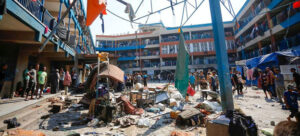
Credit: UNRWA

ATLANTA, Georgia, Sep 17 2024 (IPS) – Today’s weapons are capable of wiping out entire swaths of humanity, demolishing remaining shreds of culture along with them. News coverage of the one-sided Gaza campaign make it plain that’s exactly what’s happening. Destroying the past destroys the future too. The world must band together to make sure these atrocities stop.


Israel’s war crimes against Palestinian civilians in Gaza have now reached a new low, despite continuing international protests and UNESCO complaints over the destruction of culture. After nearly a year of overkill, Israeli jets continue to drop bombs on hospitals, schools, and refugees in flimsy tent camps, killing increasing numbers of people who never had anything to do with starting the war.

Four months ago on May 15, Israeli’s Minister of Defense, Yoav Gallant, reported to Prime Minister Netanyahu that “HAMAS no longer functions as a military organization.” Lately it has been clear to everybody that there are no more military objectives left in Gaza.

It can only mean that the incessant bombing of the last four months, killing scores of innocent people every week, were intended to punish Gaza by intentionally killing civilians. Despite the claim that those being bombed are terrorists, there is no evidence to support that claim. It’s an outrage. War crimes keep piling up.

Just last week, on September 10 2024, after nearly a year of incredibly destructive bombing, Israeli jets struck the flimsy tents in al-Mawasi Camp, formerly declared a safe zone by the IDF itself, killing dozens of people and leaving three craters 30 feet deep.

A day later, the UN school in Jabalia Camp used as a shelter was bombed for the umpteenth time, killing at least 18, including 6 UN/UNRWA staff members, with local people claiming up to 60 deaths. After so many months and so many innocent people killed, what could possibly account for this continuing barbarity?

Deliberately targeting civilians anywhere is illegal under international law, and especially in declared safe zones within United Nations shelters and tent camps. Such overkill is incomprehensible to most of the civilized world, but also to nearly a million Israelis who regularly protest their government’s unwillingness to accept a cease-fire.

They have been in the streets for months begging the Likud-dominated War Cabinet to stop the war and free the diminishing number of Israeli captives. Weak cautions from the US White House have had no effect.

It is difficult to see how any of this benefits Israel. Their actions have raised worldwide scorn for the government in Jerusalem that insists on continuing the war. They have only succeeded in empowering the BDS (Boycott, Divestment, and Sanctions) movement.

How can continued bombing reach any rational objective except to incite Israel’s enemies with more hatred and revenge killing extending far into the future? A military doctrine of “maximum force” can only mean killing large numbers of non-combatant women and children. These one-sided attacks will soon reach the one-year mark.

The only possible reasons for continuing Israel’s eleven-month killing spree in Gaza—since Netanyahu recently blocked a cease fire with HAMAS that might have rescued the hostages—is to decimate Palestine’s future along with its past, an important goal for the government in Jerusalem.

Targeting Palestine’s youth by bombing schools inevitably destroys their future opportunities along with the historical memory of the Palestinian people’s collective nationhood. Young people will be unable either to get jobs or reclaim their rightful heritage.

This barbaric one-sided atrocity in Gaza continues despite President Joe Biden and Democratic Candidate Kamala Harris’ words supporting two states. That formulation is now an improbable dream—far off if it ever happens. Most analysts believe it’s undo-able at this point, after hundreds of thousands of settlers have moved into the West Bank.

Humanity—meaning all of us—continues to struggle today amid an atmosphere of fear and lust for power. Bloody Gaza is at the center of a growing vortex in today’s sea of troubles.

James E. Jennings, PhD is President of Conscience International www.conscienceinternational.org and Executive Director of US Academics for Peace. Jennings has delivered humanitarian aid to Gaza’s hospitals since 1987, including during the first intifada, the al-Aqsa intifada, and Israel’s “Cast Lead” bombing attacks in 2009 and 2014.

IPS UN Bureau

  Source