Opening of the World Social Forum 2024 in Kathmandu
KATHMANDU, Nepal, Feb 23 2024 (IPS) – This week the 2024 annual meeting of the World Social Forum (WSF) was held in Nepal. There were fifty thousand participants from over 90 countries, exchanging strategies to address the multiple global crises, from climate catastrophes to unfettered capitalism, inequality, social injustice, wars and conflict.
The WSF was created in 2001 as a counterbalance to the elitism of the World Economic Forum (WEF). The WEF, founded and chaired by a private financial sector foundation, fosters the influence of the corporate world among governments in the luxury ski resort of Davos (Switzerland).
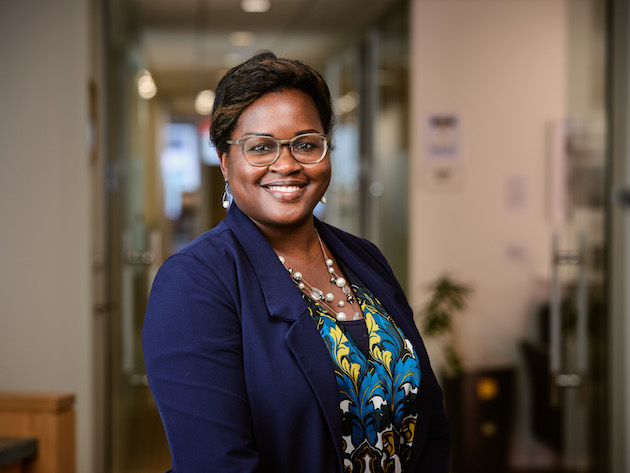
Isabel Ortiz
By contrast, the WSF was created as an arena for alternative thinking, where the grassroots and social avant-garde could gain a voice, challenging the neoliberal idea that “there is no alternative” (TINA); instead affirming that “another world is possible” built upon peace, human rights, real democracy, equity, and justice.
While Davos is the meeting for the 1%, the wealthiest people in the planet, Kathmandu is the meeting for the rest of us. The UN Secretary-General extended his best wishes for WSF 2024 for “restoring hope and finding innovative solutions for people and the planet.”
Indeed, the WSF 2024 was hotbed of ideas, alternative experiences and strategies. There is no concluding summary or annual declaration because the WSF organizers seek to maintain a plurality and diversity of messages. The following points reflect my personal overview of the key topics discussed:
• Denouncing the genocide in Gaza, a demand for an immediate ceasefire and the establishment of a free state of Palestine.
• Refuse militarization and wars: Cut military spending and power, promote peace and democracy. Defense spending is increasing while austerity policies cut social spending, this trend must be reversed.
• Organize against the rise of the far right: Radical right governments around the world have eroded democracy, human rights and civil society. Reports were made of censorship, repression, abuses of justice, unjustified raids and unfair imprisonment of progressive citizens, by the governments of Modi in India, Duterte in Philippines, Orban in Hungary, Duda in Poland, Al-Sisi in Egypt, Trump in the US, Bolsonaro in Brazil, among others There were also many reports of abusive litigation by corporations and politicians against journalists, activist researchers and CSOs, that are silencing critical voices.
• Fight inequality to counter the excessive concentration of power and wealth in the hands of a small elite. Inequality is the result of deliberate political and economic choices, and it can be reversed to build a just, equal and sustainable world.
• End Austerity, illegitimate debt and neoliberal economic policies that have failed citizens resoundingly. These outdated policies, imposed by international financial institutions (IFIs) like the IMF and the World Bank through the Ministries of Finance and G20, mostly benefit corporations and investors in the US and in a few Northen countries, result in real and lasting harm to the lives of ordinary people. There are alternative economic policies, such as the adequate taxation of wealthy millionaires and corporations, that can finance prosperity for people and planet.
• Redress violations of human rights for women, Dalits (the ‘untouchables’) and lower castes, LGBT, persons with disabilities and different ethnicities; demanding enactment and implementation of inclusive policies and strategies to eliminate class, caste, gender and race-based disparities.
• The 2024Feminist Forum focused on addressing systemic barriers that impede women’s rights, from patriarchy to macroeconomic policies, through transformative feminist action that leads to change.
• Ensure public services, universal social security or social protection, and labor rights for all, including informal workers and migrants, instead of the current austerity driven trend to privatize or corporatize public services, to reduce welfare benefits and to deregulate the labor market.
• Peasant protests and movements:La Via Campesina is the largest movement today with two hundred million peasant members fighting for food security, against agribusiness and GMOs. It is very active, has alliances with unions, indigenous peoples’ movements and it is a good model for other movements.
• Climate Justice: A number of sessions discussed climate catastrophes, the IFIs support for fossil fuels, just transitions, habitat, and sustainable development.
The lack of will of the world’s political and economic elites to resolve today’s multiple crisis fuels discontent among citizens and disillusionment with conventional parties. People everywhere are losing faith in governments, institutions, and economic and political systems. Governments and world leaders would do well to listen and to act upon the ideas coming from the World Social Forum.
Isabel Ortiz, Director of the think-tank Global Social Justice, was Director of the International Labor Organization and UNICEF, and a senior official at the United Nations and the Asian Development Bank.
Myriam Miller and Freddy Vargas stand next to one of the three greenhouses on their farm, where tomatoes are growing, anticipating an optimal harvest this year. The couple uses no chemical fertilizers to ensure the healthy development of thousands of plants on their farm in Mostazal, a municipality in central Chile. CREDIT: Orlando Milesi / IPS
MOSTAZAL, Chile , Feb 2 2024 (IPS) – The installation of photovoltaic panels to use solar energy to irrigate small farms is expanding quickly in Chile because it lowers costs and optimizes the use of scarce water resources.
This long, narrow South American country that stretches from the northern Atacama Desert to the southern Patagonia region and from the Andes Mountains to the Pacific Ocean is extremely rich in renewable energies, especially solar and wind power.
“Solar panels have made an immensely important contribution to our energy expenditure. Without them we would consume a lot of electricity.” — Myriam Miller
Last year, 36.6 percent of Chile’s electricity mix was made up of Non-Conventional Renewable Energies (NCREs), whose generation in May 2023 totaled 2392 gigawatt hours (GWh), including 1190 GWh of solar power.
This boom in the development of alternative energies has been mainly led by large companies that have installed solar panels throughout the country, including the desert. The phenomenon has also reached small farmers throughout this South American country who use solar energy.
In family farming, solar energy converted into electricity is installed with the help of resources from the government’s Agricultural Development Institute (Indap), which promotes sustainable production of healthy food among small farmers, incorporating new irrigation techniques.
In 2020 alone, the last year for which the institute provides data, Indap promoted 206 new irrigation projects that incorporated NCREs with an investment of more than 2.1 million dollars.
That year, of the projects financed and implemented, 182 formed part of the Intra-predial Irrigation Program, 17 of the Minor Works Irrigation Program and seven of the Associative Irrigation Program. The investment includes solar panels for irrigation systems.
Within this framework, 2025 photovoltaic panels with an installed capacity of 668 kilowatts were installed, producing 1002 megawatt hours and preventing the emission of 234 tons of carbon dioxide.
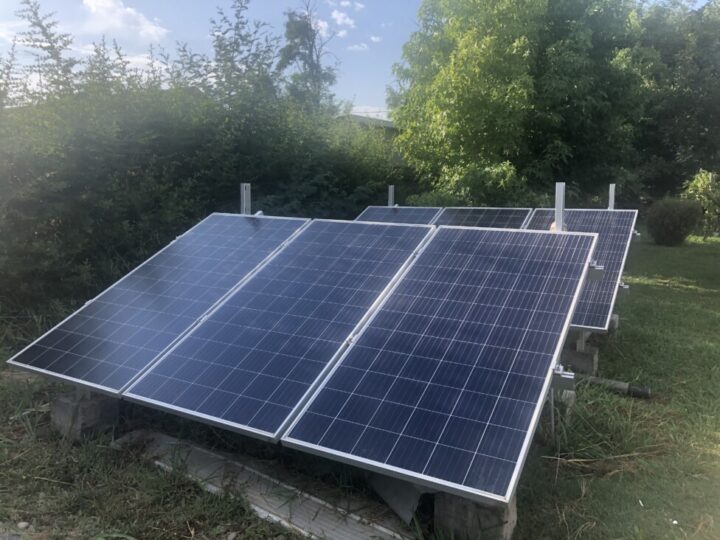
The six solar panels installed on the small farm of Myriam Miller and Freddy Vargas, in the municipality of Mostazal, south of Santiago, Chile, allow them to pump water to their three greenhouses with thousands of tomato plants and to their vegetable garden. They also drastically reduced their electric energy expenditure. CREDIT: Orlando Milesi / IPS
An experience in Mostazal
“Solar panels have made an immensely important contribution to our energy expenditure. Without them we would consume a lot of electricity,” 50-year-old farmer Myriam Miller told IPS at her farm in the municipality of Mostazal, 66 km south of Santiago, where some 54,000 people live in different communities.
Miller has half a hectare of land, with a small portion set aside for three greenhouses with nearly 1,500 tomato plants. Other tomato plants grow in rows outdoors, including heirloom varieties whose seeds she works to preserve, such as oxheart and pink tomatoes.
Indap provided 7780 dollars in financing to install the solar panels on her land. Meanwhile, she and her husband, Freddy Vargas, 51, who run their farm together, contributed 10 percent of the total cost.
In 2023, Miller and Vargas built a third greenhouse to increase their production, which they sell on their own land.
“We’re producing around 8,000 kilos of tomatoes per season. This year we will exceed that goal. We’re happy because we’re moving ahead little by little and improving our production year,” Miller said as she picked tomatoes.
On the land next to the tomato plants, the couple grows vegetables, mainly lettuce, some 7,000 heads a year. They also have fruit trees.
Vargas told IPS that they needed electricity to irrigate the greenhouses because “it’s not easy to do it by hand.”
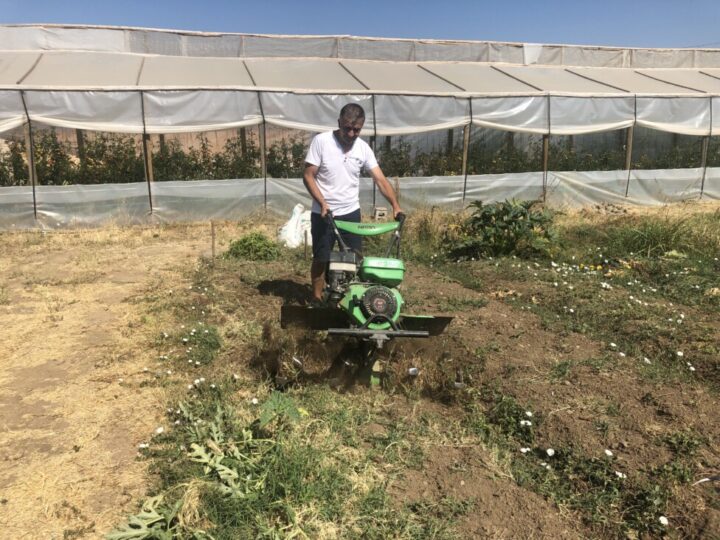
Freddy Vargas turns the soil on his farm in the municipality of Mostazal, south of Santiago, Chile. Lettuce is his star vegetable, with thousands of heads sold on the farm. The farmer plans to buy a mini-tractor to alleviate the work of plowing the land. CREDIT: Orlando Milesi / IPS
The farm has two wells that hold about 30,000 liters of water that arrives once a week from a dam located two kilometers away. This is the water they use to power the pumps to irrigate the greenhouses.
“We have water rights and Indap provided us with solar panels and tools to automate irrigation. They gave us four panels and we made an additional investment, with our own funds, and installed six,” Vargas explained.
The couple consumes between 250 and 300 kilowatts per month and the surplus energy they generate is injected into the household grid.
“We don’t have storage batteries, which are more expensive. Every month the electric company sends us a bill detailing the total we have injected into the grid and what we have consumed. They calculate it and we pay the difference,” Vargas said.
The average savings in the cost of consumption is 80 percent.
“I haven’t paid anything in the (southern hemisphere) summer for years. In the winter I spend 30,000 to 40,000 pesos (between 33 and 44 dollars) but I only pay between 5,000 and 10,000 pesos a month (5.5 to 11 dollars) thanks to the energy I generate,” the farmer said.
Above and beyond the savings, Miller stressed the “personal growth and social contribution we make with our products that go to households that need healthier food. We feel good about contributing to the environment.”
“We have a network, still small, of agroecological producers. There is a lack of information among the public about what people eat,” she added.
Their tomatoes are highly prized. “People come to buy them because of their flavor and because they are very juicy. Once people taste them, they come back and recommend them by word of mouth,” Miller said.
She is optimistic and believes that in the municipalities of Mostazal and nearby Codegua, young people are more and more interested in contributing to the planet, producing their own food and selling the surplus.
“We just need a little support and more interest in youth projects in agriculture to raise awareness that just as we take care of the land, it also gives to us,” she said.
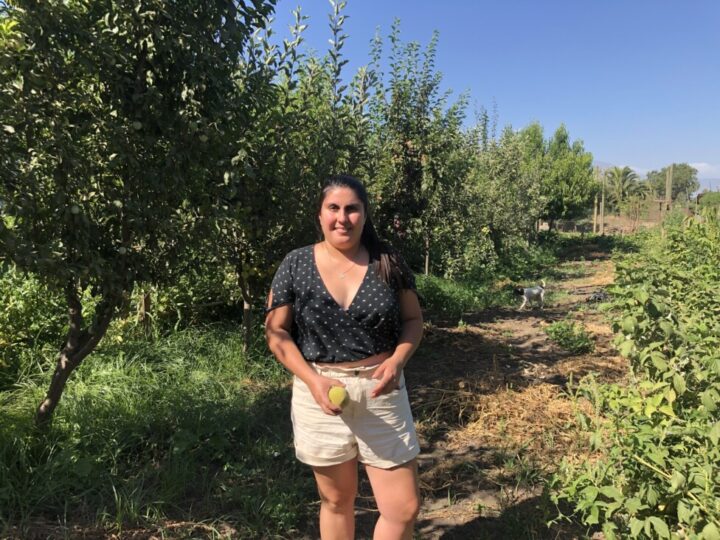
Valentina Martínez stands on her father’s small plot of land in the municipality of María Pinto, north of Santiago, Chile. The fruit trees provide the shade needed to keep the planted vegetables from being scorched by the strong southern hemisphere summer sun in central Chile. CREDIT: Orlando Milesi / IPS
A pesticide-free new generation
Valentina Martínez, 32, is an environmental engineer. Together with her father, Simón, 75, they work as small farmers in the municipality of María Pinto, 60 kilometers north of Santiago. She has a 0.45 hectare plot and her father has a 0.35 hectare plot.
Both have just obtained funding from the Transition to Sustainable Agriculture (TAS) project, which operates within Indap, and they are excited about production without chemical fertilizers and are trying to meet the goal of securing another larger loan that would enable them to build a greenhouse and expand fruit and vegetable production on the two farms.
“It’s a two-year program. In the first year you apply and they give you an incentive of 450,000 pesos (500 dollars) focused on buying technology. I’ve invested in plants, fruit trees, worms, and containers for making preserves,” Valentina told IPS.
In the second year, depending on the results of the first year, they will apply for a fund of 3900 dollars for each plot, to invest in their production.
“This year my father and I will apply for solar panels to improve irrigation,” said Valentina, who is currently dedicated to producing seedlings.
“My father liked the idea of producing without agrochemicals to combat pests,” she said about Simón, who has a fruit tree orchard and also grows vegetables.
In María Pinto there are 380 small farmers on the census, but the real number is estimated at about 500. Another 300 are medium-sized farmers.
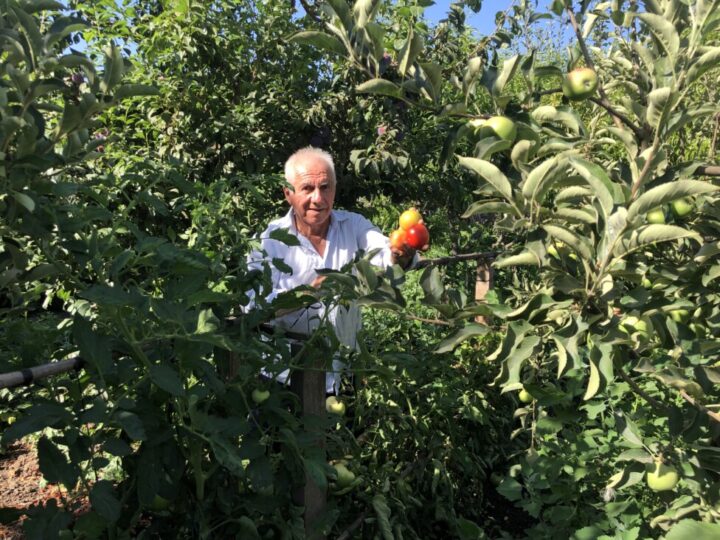
Simón Martínez, 75, proudly shows some of the citrus fruits harvested on his farm where he practices agroecology and does not use agrochemicals. He and his daughter Valentina won a contest to continue improving the sustainability of their farming practices on their adjoining plots, located outside the Chilean town of María Pinto. CREDIT: Orlando Milesi / IPS
The rest of the area is monopolized by large agricultural companies dedicated to monocultures for export. Most of them have citrus, avocado, cherry and peach trees, as well as some walnut trees, and they all make intensive use of chemical fertilizers.
Chile exports mainly copper, followed by iron. But it also stands out for its sales of fish, cellulose pulp and fruit. In 2023, it exported 2.3 million tons of fruit, produced by large farms and bringing in 5.04 billion dollars. Agriculture represents 4.3 percent of the country’s GDP.
Family farms produce 40 percent of annual crops and 22 percent of total agricultural production, which is key to feeding the country’s 19.7 million people.
Valentina is excited about TAS and the meetings she has had with other young farmers.
“It’s fun. We’re all on the same page and interested in what each other is doing. We start in December and January and it lasts all year. The young people are learning about sustainable agriculture and that there are more projects to apply for,” she explained.
She said that 15 young people in María Pinto have projects with pistachio trees, fruit trees, greenhouse gardens, outdoor gardens, animal husbandry and orchards. They are all different and receive group and individual training.
The training is provided by Indap and the Local Development Program (Prodesal), its regional representatives and the Foundation for the Promotion and Development of Women (Prodemu).
“The idea is that more people can learn about and realize the benefits of sustainable agriculture for their own health and for their land, which in a few years will be impossible due to the spraying of monocultures,” Valentina said.
It targets large entrepreneurs who produce avocado and broccoli in up to four harvests a year, both water-intensive crops, even on high hillsides.
“We need to come together, do things properly and recruit more people to create a legal group to reach other places and be able to organize projects. When you exist as an organization, you can also reach other places and say I am no longer one person, we are 15, we are 20, 100 and we need this,” she said.
Celebrating the end of COP28, which ended with an agreement to transition away from fossil fuels. Credit: UNFCCC
DUBAI, Dec 14 2023 (IPS) – While the outcomes of COP28 are being hotly debated in both the scientific and social justice arenas, the climate conference has taken an unprecedented step forward toward a just transition, says Yamide Dagnet, Director for Climate Justice at the Open Society Foundations.
Making some preliminary remarks a day after the climate conference ended, she said: “COP28 ends like it started: imperfect, yet an important and unprecedented step forward in our “course correction” for a just transition towards resilient and greener economies.”
The UN decision acknowledged the need for the decline of coal, oil, and gas for the first time in an agreement that talks about transitioning out of fossil fuels. It will also be known for operationalizing the Loss and Damages Fund, even if the funding falls far below the requirements for climate-stressed countries and communities.
UN Climate Change Executive Secretary Simon Stiell acknowledged these contractions in his final speech.
“While we didn’t turn the page on the fossil fuel era in Dubai, this outcome is the beginning of the end,” Stiell said.
He also noted that climate finance, which he said was a great enabler of climate action, fell short of the trillions needed to support developing countries with clean energy transitions and adaptation efforts.
He urged ordinary people everywhere to not relent in their demands for a climate-just world.
“In the crucial years ahead, your voices and determination will be more important than ever. I urge you never to relent. We are still in this race. We will be with you every single step of the way.”
Yamide Dagnet, Director for Climate Justice at Open Society Foundations. Credit: TJ Kirkpatrick, Open Society Foundations
Dagnet believes that COP28 is the start of a new era in climate justice.
“This is not an end; rather, just the beginning of an implementation journey that we know is hard but can be so positively transformative, and just if we manage to mobilize, in an equitable manner, all hands-on deck. A climate-just journey and outcome require vigilance, creativity, and accountability; stronger solidarity and engagement at all levels; promoting human rights; and shared prosperity for all,” she says.
This COP, Danget says, laid bare the issues with the Paris Agreement, especially with the just transition.
“More specifically, this COP exposed all the contradictions and challenges faced when implementing the promises of the Paris Agreement, especially a managed, equitable transition away from fossil fuels and the sustained mobilization, alignment, and access to financial flows domestically and internationally to decarbonize and build resilience,” Dagnet says. ”
While some signals got clearer with more substantive commitments, challenges remain, however, in how the just and equitable transition is sequenced.
“Inclusive processes matter to foster shared prosperity and benefits throughout the journey, together with adequate safeguards to minimize unintended adverse impacts of climate-related measures and technologies and to protect frontline and marginalized communities.
“Similarly, the just operationalization and continued capitalization of the Loss and Damage Fund will require vigilance, effective guidance, and mechanisms to make sure commensurate funding is actually mobilized and reaches the communities that need it the most in a timely manner. Adequate mobilization of finance for adaptation by the donor community is also essential to tackle losses and damages with dignity. We are happy that a dozen of them committed to join OSF efforts in this regard.”
Colombian President Gustavo Petro presented his environmental plans at COP28 in Dubai and added his country to the small group of nations that support the negotiation of a binding treaty to prevent the proliferation of fossil fuels, despite his country being an oil producer. CREDIT: Emilio Godoy / IPS
DUBAI, Dec 12 2023 (IPS) – One of the most heated debates at the annual climate summit coming to a conclusion in this United Arab Emirates city revolved around the phrasing of the final declaration, regarding the “phase-out” or “phase-down” of fossil fuels within a given time frame.
Experts who talked to IPS at the summit agreed on the magnitude of the bill, which for some Latin American nations could be unaffordable.
“Financial support will be needed. There must be a differentiated approach, differentiated timing, and developed countries must come up with the resources.” — Fernanda Carvalho
Fernanda Carvalho of Brazil, global leader for Energy and Climate Policy at the non-governmental World Wildlife Fund (WWF), referred to the amount without specifying a figure.
“Financial support will be needed. There must be a differentiated approach, differentiated timing, and developed countries must come up with the resources,” the expert, who was present at COP28, held at Expo City on the outskirts of Dubai, told IPS.
COP28 engaged in an acrimonious debate between phase-out and phase-down, with a definite date, of oil, gas and coal, which has already anticipated a disappointing end in Dubai, that in line with the tradition at these summits extended its negotiations one more day, to conclude on Wednesday, Dec. 13.
The “phase-down” concept has been in the climate-energy jargon for years, but it really took off at the 2021 COP26 in the Scottish city of Glasgow, whose Climate Pact alludes to the reduction of coal still being produced and the elimination of inefficient fossil fuel subsidies.
Throughout the climate summits since 1995, developing countries have insisted on differentiated measures for them, in accordance with their own situation, the need for financing from developed nations and the transfer of technology, especially energy alternatives.
Enrique Maurtúa of Argentina, senior diplomacy advisor to the Independent Global Stocktake (iGST) – an umbrella data and advocacy initiative – said they hoped for a political signal to determine regulations or market measures regarding a phase-down or phase-out.
“If a target date is not set, there is no signal. If you set a phase-out for 2050, that is a pathway for the transition. With a deadline, the market can react. And then each country must evaluate its specific context,” the expert told IPS in the COP28 Green Zone, which hosted civil society organizations at the summit.
Available scientific knowledge indicates that the majority of proven hydrocarbon reserves must remain unextracted by 2030 to keep the planetary temperature rise below 2 degrees Celsius, the threshold agreed in the 2015 Paris Climate Change Agreement to avoid massive disasters.
On Sunday, Dec. 10 the non-governmental Climate Action Network (CAN) delivered at COP28 a dishonorable mention to the United States for its role in Israel’s carnage in Gaza, in the traditional Fossil of the Day award for “doing the most to achieve the least” in terms of progress on climate change at the summits. CREDIT: Emilio Godoy / IPS
Failed attempts
In the Latin American region there are unsuccessful precedents of fossil fuel phase-outs.
In 2007, the then president of Ecuador, Rafael Correa (2007-2017), launched the Yasuní-Ishpingo Tambococha Tiputini initiative, which sought the care of the Yasuní National Park in the Ecuadorian Amazon rainforest, in exchange for funds from governments, foundations, companies and individuals of about 3.6 billion dollars by 2024 to leave the oil in the ground.
The aim was to leave 846 million barrels of oil untouched underground. But a special fund created by Ecuador and the United Nations Environment Fund only raised 13 million dollars, according to the Ecuadorian government. So Correa decided to cancel the initiative in 2013, at a time when renewable energies had not yet really taken off.
In a referendum held in August, Ecuadorians decided to halt oil extraction in a block in Yasuní that would provide 57,000 barrels per day in 2022 – the same result sought by Correa, but without foreign funds.
The result of the referendum is to be implemented within a year, although the position of the government of the current president, banana tycoon Daniel Noboa, who took office on Nov. 23, is still unclear.
Meanwhile, in Colombia, President Gustavo Petro has put the brakes on new oil and coal exploration contracts, a promise from his 2022 election campaign.
In addition, the president announced on Dec. 2 in Dubai that his country was joining nine other nations that are promoting the formal initiation of the negotiation of a Fossil Fuel Non-Proliferation Treaty.
Colombia will thus become the first Latin American nation and the largest oil and coal producer to join the initiative that first emerged in 2015 when several Pacific Island leaders and NGOs raised the urgent need for an international mechanism to phase out fossil fuels.
For the undertaking of a just energy transition to cleaner fuels, Petro estimates an initial bill of 14 billion dollars, to come from governments of the developed North, multilateral organizations and international funds.
The latest summit of hope for the climate kicked off on Nov. 30 in this Arab city under the slogan “Unite. Act. Deliver” – the least successful in the history of COPs since the first one, held in Berlin in 1995.
The hopes included commitments and voluntary declarations on renewable energy and energy efficiency; agriculture, food and climate; health and climate; climate finance; refrigeration; and just transitions with a gender focus.
In addition, there were financial pledges of some 86 billion dollars, without specifying whether it is all new money, to be allocated to these issues.
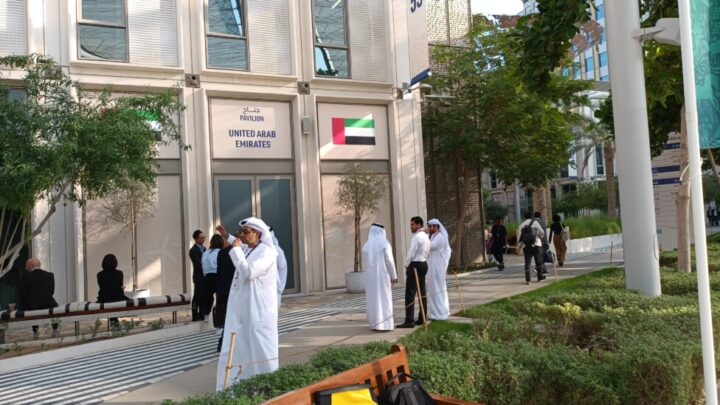
Like many countries, the host of COP28, the United Arab Emirates, has had a pavilion in the so-called Green Zone, which hosts non-governmental organizations, companies and other institutions. The Emirati government bet a lot on the climate summit to deliver results, but without directly targeting the fossil fuels on which its economy depends. CREDIT: Emilio Godoy / IPS
Billions
Given the production and exploration plans of the main hydrocarbon producing countries in the region, the magnitude of the challenge in the medium and long term is enormous.
In October, Brazil, the largest economy in the region and the 11th largest in the world, extracted 3.543 billion barrels of oil and 152 million cubic meters (m3) of gas per day.
This represented approximately two percent of the domestic economy that month.
Mexico, the region’s second largest economy, extracted 1.64 million barrels and 4.971 billion m3 of gas per day in October, equivalent to 52 million dollars in revenues.
Meanwhile, Colombia produced 780,487 barrels of oil in the first eight months of 2023 and 1,568 cubic feet per day of gas, equivalent to 12 percent of public revenues.
“We have to think about decarbonization measures. We want Latin America to be a clean energy powerhouse,” said Carvalho.
As of September, Brazil’s state-owned oil giant Petrobras was working on obtaining 9.571 billion barrels of oil equivalent, according to the Global Oil & Gas Exit List produced by the German non-governmental organization Urgewald.
This represents an excess of 94 percent above the limit set by the 2015 Paris Agreement to keep global warming below two degrees Celsius.
Meanwhile, Mexico’s state-owned oil company Pemex is producing 1.444 billion barrels of oil equivalent, 56 percent above the threshold set by the Paris Agreement.
Finally, the public company Ecopetrol, mostly owned by the Colombian state, is working to obtain 447 million barrels, 98 percent above the Paris Agreement limit, according to Urgewald.
In addition, the cost of action against the climate crisis is far from affordable for any Latin American nation.
For example, Mexico estimated that the implementation of 35 measures, including in the power, gas and oil generation sector, would cost 137 billion dollars in 2030, but the benefits would total 295 billion dollars.
But Maurtúa says the budget question is only relative. “There is a lot of public money with which many things can be done,” complemented by international resources, he argued.
Five fishers pray for a benevolent sea in Dublar, Bangladesh. Credit: Rodney Dekker/Climate Visuals
DUBAI, Dec 11 2023 (IPS) – Wealthier nations must deliver the finances so developing countries can adapt—the time for excuses is over, says Saber Hossain Chowdhury, Bangladesh’s Special Envoy for Climate Change in the Prime Minister’s Office.
In a wide-ranging exclusive interview with IPS, Chowdhury said climate change was at the forefront of Bangladesh’s focus, as one in seven people faces displacement due to climate impacts. With this in mind, the country was focused on building resilience and ensuring resources were directed toward the most marginalized.
“The biggest challenge we will have is the melting of the glaciers in the Himalayas because it means flooding in the short term and sea level rise in the long term. We will lose about one-third of our agriculture GDP between now and 2050, and we can lose up to 9 percent of our GDP by 2100,” Chowdhury said.
“For us, it is not just one sector of our economy; it is an existential challenge for Bangladesh.”
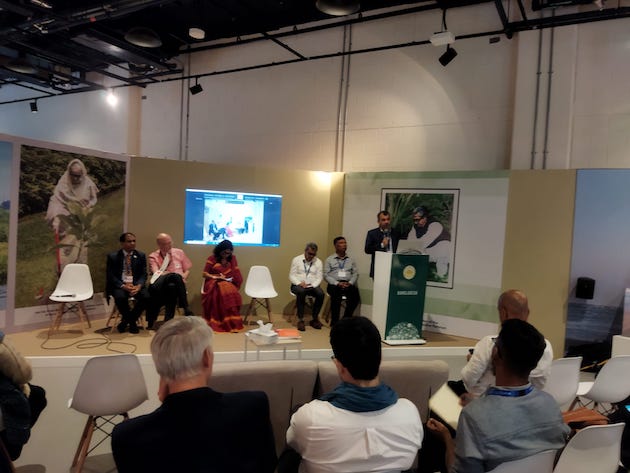
Saber Hossain Chowdhury, Special Envoy for Climate Change, Prime Minister’s Office Bangladesh, addresses an event on climate change at the Bangladesh Pavilion at COP28 in Dubai. Credit: Umar Manzoor Shah/IPS
Here are edited excerpts from the interview:
IPS: In terms of climate change and the government’s actions, where is Bangladesh?
Chowdhury: Bangladesh is giving most importance to the Global Stocktake because it has two dimensions—one is looking back and the other is looking forward. We all know how bad things are when we look back because we know we are nowhere near where we are supposed to be.
But what do we do with that knowledge? How do we move forward across the board in terms of mitigation, adaptation, funding, loss and damage, and, of course, the global goals? And one of the points we are stressing is the continual interconnectedness between mitigation, adaptation, and loss and damage.
The more effective our mitigation in terms of keeping temperatures in check, the more manageable the adaptation becomes, and the more manageable the adaptation becomes, the lesser the burden that we pass on the loss and damage. And it is meaningless to talk about adaptation without the context of mitigation. Because of the rise in temperature to 1.5°C (the threshold to which world leaders pledged to try to limit global warming), there will be a certain level of adaptation that you can do, but if the temperatures are close to 3°C, as it is now said the temperature is likely to rise to, then all adaptation will become loss and damage because there are limits to adaptation and there are limits to resilience.
IPS: What are your views on the ongoing COP 28?
Chowdhury: We got off to a great start. The fact that the Loss and Damage Fund was agreed upon on the first day. In terms of context, we only had this in the agenda last year and it was approved and within a year, the funds have started coming in. That was a huge positive. We know that funds are nowhere near what the needs are. But it is a good start and we are hoping that the same spirit will be seen in other challenges such as mitigation, adaptation, funding, etc.
Also, I believe the presidency has tried to be very inclusive. But at the end of the day, it depends on global solidarity. If members of the conference come together, then we will have the deal we need. Let me say that this COP is a hugely important COP because we don’t have the luxury of tradeoffs. We have to deliver across the board, and mitigation (to keep to the Paris Agreements) of 1.5°C is an absolute must, and if we go beyond that, I think we have lost the game. To what extent we can mitigate will then determine what our adaptation requirements are. The better we manage adaptation, the lesser the burden will be on loss and damage. It is a litmus test. Bangladesh being at ground zero for climate change impact, this is a hugely important event for us.
IPS: Bangladesh is often termed a ‘victim of climate change’ across the globe. Why is that?
Chowdhury: One in seven people in Bangladesh will face displacement because of climate change, and that adds up to about 13–14 million people. We have a huge food security problem because we are losing agricultural land due to sea level rise. The biggest challenge we will have is the melting of the glaciers in the Himalayas, which means flooding in the short term and sea level rise in the long term. We will lose about one-third of our agriculture GDP between now and 2050, and we can lose up to 9 percent of our GDP by 2100. For us, it is not just one sector of our economy; it is an existential challenge for Bangladesh.
IPS: What do you believe is the responsibility of wealthier nations towards Bangladesh?
Chowdhury: Climate justice is all about wealthier nations. They must deliver the finance so that we can adapt; they must rein in the emissions. They need to act as per science and not have any excuses. It is now or never because the window of action is closing very fast. If we don’t get it right in COP 28, whatever we do in subsequent COPs may well be too little, too late. We have to reduce emissions by 43 percent by 2030. We must reduce emissions by 60 percent by 2035, then we can get to net zero. With that, you also must have tripled the amount of renewable energy and doubled your energy efficiency. So, it has to be a package of responses. It is for the wealthier nations to mitigate, to provide funds for loss and damage as well as for adaptation.
IPS: How responsive do you find these developed nations to the climate crisis?
Chowdhury: Responses must be taken at two levels: one is making pledges, and the other is delivering on pledges. There is no point saying we will do this and then, as in the past, not do it. Pledges are the first step, and therefore everybody has to realize that this is the question of global solidarity. It is not the question of Bangladesh and the developed world. What is happening in Bangladesh today will also happen in those countries that we call developed. Greenland will become greener again because the ice is going to melt. They will also face sea level rise. So it is not the question of “if,” it is the question of when.
IPS: Bangladesh has advanced warning systems for the climate. Please tell us about it.
Chowdhury: We have what we refer to as an ‘early warning system’ If you look at the cyclone that hit Bangladesh in the early 1970s, up to a million people died because of it. But now, when the cyclone hits Bangladesh, the number of deaths is in single digits. The reason for that is that through an early warning system, we can evacuate people to cyclone shelters. That has saved lives, and Bangladesh is a model for that.
Our honorable Prime Minister has this program where we are building cyclone shelters all around the coast of Bangladesh so that people can be evacuated there. We cannot stop a storm or a hurricane from coming, but we can prepare ourselves so that the loss of lives is minimal, and that is what Bangladesh has achieved. Also, the early warning system is very basic, and it is community-based.
IPS: What is Bangladesh doing about the agrarian crisis?
Chowdhury: Bangladesh has a huge success story in terms of food production. From a deficit nation, we are now a surplus nation, but climate change threatens that. This is something we look at in terms of food security, so all of the advances and progress that we have made over the years are now at risk because climate change is impacting this sector.
IPS: What is the role of NGOs in terms of tackling climate change and offering support to governments?
Chowdhury: NGOs need to have partnerships with governments where they can take those ideas and scale them up. That is the reason that NGOs need to have a very close relationship with the government. The whole issue is not how much money I have spent; it is what impact I have generated through spending that money.
But the message at the end of the day is that whatever money is spent must be spent on those who are most marginalized. So how do we get funds for the people who are most in need? I think that must be an overriding issue. This is a learning process, and we are all on the learning curve. When we go back to Bangladesh, we need to have a brainstorming session with NGOs and CSOs and find out what is working, how we can make their job easier, and how we can make the collaboration a win-win between various ministries, government departments, and NGOs. IPS UN Bureau Report
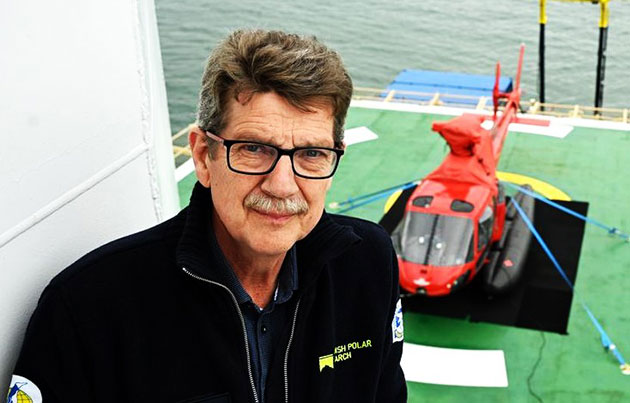
Research team in the Arctic. Professor Tjernström is standing on the left.
STOCKHOLM, Sweden, Dec 4 2023 (IPS) – This year’s UN Climate Change Conference is taking place in Dubai from 30 November to 12 December. The so-called COP summits are organised every year and constitute a means for the global community to agree on ways to address the climate crisis, such as limiting global temperature rise to 1.5 degrees Celsius, supporting vulnerable communities to adapt to the effects of climate change, and achieving net-zero emissions by 2050.
More than 70,000 delegates are attending the COP28 in Dubai. Main delegates are the 47 representatives of the member states (called Parties), which constitute the UN Framework Convention on Climate Change (UNFCCC). Business leaders, young people, climate scientists, Indigenous Peoples, journalists, and various other experts and stakeholders are also among the participants. Officially, COP 28 stands for the 28th meeting of the Conference of the Parties to the UNFCCC.
UNFCCC was established in 1992 to combat “dangerous human interference with the climate system”, in part by limiting the greenhouse gas emissions that compromise Earth’s entire ecosystem, a prerequisite for human existence. Among other items on its agenda COP 28 will address progress made in accordance with the Paris Agreement of 2015, when 195 Parties of the UNFCCC agreed to keep the rise of global temperature to well below 2 °C (3.6 °F), compared to pre-industrial levels, and preferably limit the increase to 1.5 °C (2.7 °F).
To gain a scientific perspective of the meaning and influence of COP28, IPS asked Professor Tjernström about his views on climate change and what he assumes might be done to amend it. Michael Tjernström is since 2001 professor of Meteorology at Stockholm University. He has spent several periods at institutions such as CIRES, The Cooperative Institute for Research in Environmental Sciences (CIRES) and The Earth System Research Laboratory (ESRL) and National Center for Atmospheric Research (NCAR), all in Boulder, Colorado, USA. Professor Tjernström’s main research interests concern climate change in the Arctic. He has participated in several scientific expeditions to Arctic areas and is since 2011 a member of the International Arctic Science Committee.
Michael Tjernström
IPS: Professor Tjernström, can the outcomes of COP28 drastically affect current climate changes?
Michael Tjernström: The COPs are a necessary and essential factor when it comes to addressing climate change. A COP summit might be likened to a regular check-up visit to the dentist. It can be painful, but is necessary for good dental hygiene. The dentist might find that your teeth are in a very bad state and to save them, urgent measures have to be taken – caries has to be amended, maybe a bad tooth has to be extracted, dental bridges inserted, etc . The point is that the dentist is an expert and you have to trust him. However, the decision to save your teeth is all yours. In a similar fashion the COPs intend to amend already present damages to the climate, determine their causes and try to prevent a negative development. But it is up to the members to act.
IPS: How do you perceive the UN’s role in this endeavour?
Michael Tjernström: There is absolutely no other global organization other than the UN which would be able to organize and be in charge of such a process. No other national, international, political or private, organisation would be able to establish a global consensus and general awareness, as well as maintaining the perseverance, stamina, objectivity and legal strength to do so. An endurance against all odds, but nevertheless made possible through the UN’s established rules, combined with its global and local outreach. Of course, there are cracks and concerns, but the administrative structure and operations of the UN are firmly based on the commitment of its member states.
People, who in general are prone to criticize the UN system are often only perceiving the actions of the Security Council and how its commitment is crippled by the veto power of its five permanent members. However, this does not apply to the UNFCCC and its scientific support organisation, ICCP. As a scientist and propagator for awareness about climate change, I perceive the lack of understanding the great importance of the UN as a marketing problem. People are not aware of what this global organisation stands for, and even less so – its support of the global scientific community.
IPS: Will you attend the COP summit in Dubai?
Michael Tjernström: No, most scientists have through their research already made their fair contribution to efforts to combat climate change. The current state of research, results and warnings are comprehensively explained and diffused through the ICCP reports and scientists have thus no need to attend the COPs. Whether or not politicians listen to science or not is not determined by my presence at a COP.
COP summits are more politically than scientifically motivated. However, they are based on the factual basis provided by ICCP reports. The COPs mainly attract other stakeholders than scientists, such as government representatives, spokespersons for environmentalist pressure groups and lobbyists representing the interests of fossil fuel-based industries, as well as oil and coal producing companies. Many such lobbyists try to find a place among decision makers, while environmentalists might be looking for political scapegoats.
People and organisations are trying to highlight their own, often specific interests, some of them being based on doubtful assumptions and moral priorities. Environmentalists have often demanded that certain interest groups be excluded from COP summits, like those lobbying for the use of fossil fuels, interests of oil producers, as well as industrialists who, for the sake of their own profit, try to minimize the threat from global warming.
Nevertheless, it is important that influential stakeholders are present . The global outreach demands this. Everyone has to be allowed to have their voice and concerns heard, as well as being provided with an opportunity to be informed about scientific achievements, new environmentally friendly technologies, and the threats of global warming.
Industrialization based on non-polluting and zero emissions of greenhouse gases, as well as new eco-friendly technology, are essential for change and improvement. Environmentalism’s contributions are also important. Like most revolutionary movements radical environmentalists highlight political and capitalist motivational reasons and misconduct, while they demand change and sacrifice. Historically did socialists and suffragettes contribute to emancipation and justice. However, some revolutionaries have turned into fanatics, and some have concentrated on relatively minor but easily targeted issues while ignoring an overall picture. For example, opponents to air travel are maybe not fully aware of the fact that it actually contributes to only three percent of global greenhouse emissions, while private cars and other fossil-fuel based transportation means account for much more of carbon dioxide emissions . It might be stated that it would be more beneficial for the environment to limit the use of your car, than avoid travelling by air. Veganism may be considered as beneficial when it comes to emission of greenhouse gases, though methane emissions from ruminating animals constitutes less than five percent of greenhouse gas emissions. If we could stop throwing away a third of all the food we produce, this would be much more efficient and would also have other benefits. However, every effort to limit greenhouse emissions is worthy of attention, though decisive and comprehensive political actions are particularly crucial for achieving zero greenhouse gas emissions as quickly as possible. It is not enough to limit them; they must be eliminated.
IPS: But can COPs really have the impact you could wish for?
Michael Tjernström: In several respects, development is moving in the wrong direction, especially when it comes to acquiring knowledge. Many confide in badly informed, or even deceitful, social media and populist politicians. In certain circles a negative attitude to research and science is thriving. Science might by such groups be perceived as an essentially separate activity, practiced by an intellectual elite devoting itself to mutual admiration.
The COPs make participants aware of the fatal threat of global warming. But more than that, it also makes the general public aware and therefore participants can be held accountable for their actions, or lack thereof, and are through legally binding agreements forced to take social and economic measures to amend the ongoing destruction of natural resources, and the atmosphere.
IPS: What exactly is ICCP and what is its connection with the COPs
Michael Tjernström: Generally speaking, people are not knowledgeable, most don’t know what ICCP is. The task of ICCP, i.e. The Intergovernmental Panel on Climate Change, is to advance scientific knowledge about climate change caused by human activities and it does so by examining all relevant scientific literature on the subject. This comprehensive review and dissemination of scientific insights and research results include natural, economic and social impacts and risks. ICCP also covers possible responsive options. IPCC does not conduct its own original research, its mandate is to survey the research situation, while aiming at being objective and comprehensive, and only openly published results that have already been reviewed by experts can be used. Thousands of scientists and other experts then volunteer to review the findings and publications of ICCP, before its key findings are compiled into a Synthesis Report intended for policymakers and the general public. Experts have described the work of ICCP as the biggest peer review of the global scientific community. COP28 will discuss the 6th ICCP Synthesis Report, issued in March 2023.
Most climate-related risks assessed in the Fifth Synthesis Report, issued in 2014, are in the Sixth Report deemed to be higher than earlier predicted and projected long-term impacts are worse than they were assumed to be in 2014. The Sixth Synthesis Report highlights that climatic and non-climatic risks will increasingly interact, creating compound and cascading risks, which will be extremely difficult to manage. The confidence of the conclusions has also been gradually increasing across the reports.
The development of climatological research is quite fast, the lag in actual efforts to halt global warming is mainly to be found in decisive decision-making. The original ICCP reports contain tens of thousands of pages that few decision-makers can assimilate. The summary for policy makers is reviewed and edited by several stakeholders. Efforts may thus be made to mitigate alarming findings and adapt them to political concerns. However, changes and adaptions are carefully wetted in order to secure that none of them contradict actual and fact-based research results, predictions and warnings.
IPS: Do you perceive yourself as a pessimist, or as an optimist?
Michael Tjernström: I am both hopeful and worried. As a researcher I cannot allow myself to fall victim to paralyzing dystopias. As a scientist I contribute to the measurement of climatological processes, while taking the pulse of the current situation, but also looking for trends and measures to mitigate, and perhaps even hinder, a worrisome development. Accordingly, a scientist has to be a kind of optimist even in the face of despair. Furthermore, I consider that my role as a researcher has to involve the popularization and dissemination of research results. A role I appreciate and feel comfortable with.
It is reasonable that we in the West, who so far have contributed by far the most to the ongoing climatological damage, also take our responsibility when it comes to mitigation and adaptation. We have the technological, historical and scientific prerequisites to make amends for all the damage we have caused and should therefore also go into the breach for the realisation of necessary improvements, while contributing to the economic means to do so.
But the picture is complicated. China is making great progress in climate research, but is at the same time contributing to the world’s largest emissions of greenhouse gases in total, and is number two in the world in per capita emissions, yet is still claiming they should still be treated as a developing country and indeed has a large poor population in the face of a rapidly growing middle class. Africa is lagging behind in its industrial development and consequently have limited emissions, but must nevertheless already now end its dependence on fossil fuels.
We in the West live well and safely and could without any major problems dismiss a lot of the gratuitous comfort we currently are enjoying. The drama is undeniable, even when the Paris Agreement was signed it was by some researchers pointed out that the 1.5 target was unattainable in reality. There is much talk about tipping points, when much of the existing ecological balance suddenly collapses, and that this might happen at a two degree rise in global temperature. But contributing factors are manifold and I don’t believe it will be happening in the near future. There is no really compelling evidence for most of these suggested tipping points. The most important thing is to immediately stop the burning of fossil fuels. In spite of all, I assume that much can and will be done to stop the worrisome development.
IPS interchange with Professor Tjernström was quite extensive and informative. In a following article we will return to Professor Tjernström describing his own research and thoughts about current, and future climatological changes.