Bending the Curve: Overhaul Global Food Systems to Avert Worsening Land Crisis

Biodiversity, Civil Society, Climate Action, Climate Change, Combating Desertification and Drought, Conferences, Conservation, COP30, Development & Aid, Editors’ Choice, Environment, Featured, Food and Agriculture, Food Systems, Global, Headlines, Human Rights, Humanitarian Emergencies, Natural Resources, Sustainable Development Goals, TerraViva United Nations
Food Systems

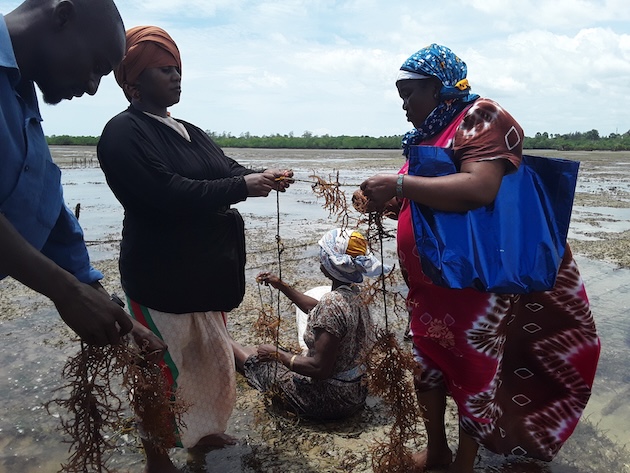
Scientists say replacing just 10 percent of global vegetable intake with seaweed-derived products could free up large portions of land. Credit: Joyce Chimbi/IPS

Scientists say replacing just 10 percent of global vegetable intake with seaweed-derived products could free up large portions of land. Credit: Joyce Chimbi/IPS

Current rates of land degradation pose a major environmental and socioeconomic threat, driving climate change, biodiversity loss, and social crises. Food production to feed more than 8 billion people is the dominant land use on Earth. Yet, this industrial-scale enterprise comes with a heavy environmental toll.


Preventing and reversing land degradation are key objectives of the United Nations Convention to Combat Desertification (UNCCD) and are also fundamental for the United Nations Framework Convention on Climate Change (UNFCCC) and the Convention on Biological Diversity (CBD).

These three conventions emerged from the 1992 Rio Earth Summit to address the interconnected crises of biodiversity loss, climate change and land degradation. A paper published today in Nature by 21 leading scientists argues that the targets of “these conventions can only be met by ‘bending the curve’ of land degradation and that transforming food systems is fundamental for doing so.”

Lead author Fernando T. Maestre of the King Abdullah University of Science and Technology (KAUST), Saudi Arabia, says the paper presents “a bold, integrated set of actions to tackle land degradation, biodiversity loss, and climate change together, as well as a clear pathway for implementing them by 2050.”

“By transforming food systems, restoring degraded land, harnessing the potential of sustainable seafood, and fostering cooperation across nations and sectors, we can ‘bend the curve’ and reverse land degradation while advancing towards goals of the UN Convention to Combat Desertification and other global agreements.”

Co-author Barron J. Orr, UNCCD’s Chief Scientist, says, “Once soils lose fertility, water tables deplete, and biodiversity is lost, restoring the land becomes exponentially more expensive. Ongoing rates of land degradation contribute to a cascade of mounting global challenges, including food and water insecurity, forced relocation and population migration, social unrest, and economic inequality.”

“Land degradation isn’t just a rural issue; it affects the food on all our plates, the air we breathe, and the stability of the world we live in. This isn’t about saving the environment; it’s about securing our shared future.”

The authors suggest an ambitious but achievable target of 50 percent land restoration for 2050—currently, 30 percent by 2030—with enormous co-benefits for climate, biodiversity and global health. Titled ‘Bending the curve of land degradation to achieve global environmental goals,’ the paper argues that it is imperative to ‘bend the curve’ of land degradation by halting land conversion while restoring half of degraded lands by 2050.

“Food systems have not yet been fully incorporated into intergovernmental agreements, nor do they receive sufficient focus in current strategies to address land degradation. Rapid, integrated reforms focused on global food systems, however, can move land health from crisis to recovery and secure a healthier, more stable planet for all,” reads parts of the paper.

Against this backdrop, the authors break new ground by quantifying the impact of reducing food waste by 75 percent by 2050 and maximizing sustainable ocean-based food production—measures that alone could spare an area larger than Africa. They say restoring 50 percent of degraded land through sustainable land management practices would correspond to the restoration of 3 Mkm² of cropland and 10 Mkm² of non-cropland, a total of 13 Mkm².

Stressing that land restoration must involve the people who live on and manage the land—especially Indigenous Peoples, smallholder farmers, women, and other vulnerable people and communities. Co-author Dolors Armenteras, Professor of Landscape Ecology at Universidad Nacional de Colombia, Bogotá, says land degradation is “a key factor in forced migration and conflict over resources.”

“Regions that rely heavily on agriculture for livelihoods, especially smallholder farmers, who feed much of the world, are particularly vulnerable. These pressures could destabilize entire regions and amplify global risks.”

To support these vulnerable segments of the population, the paper calls for interventions such as shifting agricultural subsidies from large-scale industrial farms toward sustainable smallholders, incentivizing good land stewardship among the world’s 608 million farms, and fostering their access to technology, secure land rights, and fair markets.

“Land is more than soil and space. It harbors biodiversity, cycles water, stores carbon, and regulates climate. It gives us food, sustains life, and holds deep roots of ancestry and knowledge. Today, over one-third of Earth’s land is used to grow food – feeding a global population of more than 8 billion people,” says Co-author Elisabeth Huber-Sannwald, Professor, the Instituto Potosino de Investigación Científica y Tecnológica, San Luis Potosí, Mexico.

“Yet today,” she continues, “Modern farming practices, deforestation, and overuse are degrading soil, polluting water, and destroying vital ecosystems. Food production alone drives nearly 20 percent of global emissions of greenhouse gases. We need to act. To secure a thriving future – and protect land – we must reimagine how we farm, how we live, and how we relate to nature – and to each other.”

With an estimated 56.5 Mkm² of agricultural land, cropland, and rangelands being used to produce food, and roughly 33 percent of all food produced being wasted, of which 14 percent is lost post-harvest at farms and 19 percent at the retail, food service and household stages, reducing food waste by 75 percent, therefore, could spare roughly 13.4 Mkm² of land.

The authors’ proposed remedies include policies to prevent overproduction and spoilage, banning food industry rules that reject “ugly” produce, encouraging food donations and discounted sales of near-expiry products, education campaigns to reduce household waste and supporting small farmers in developing countries to improve storage and transport.

Other proposed solutions include integrating land and marine food systems, as red meat produced in unsustainable ways consumes large amounts of land, water, and feed and emits significant greenhouse gases. Seafood and seaweed are sustainable, nutritious alternatives. Seaweed, for example, needs no freshwater and absorbs atmospheric carbon.

The authors recommend measures such as replacing 70 percent of unsustainably produced red meat with seafood, such as wild or farmed fish and mollusks. Replacing just 10 percent of global vegetable intake with seaweed-derived products could free up over 0.4 Mkm² of cropland.

They nonetheless note that these changes are especially relevant for wealthier countries with high meat consumption. In some poorer regions, animal products remain crucial for nutrition. The combination of food waste reduction, land restoration, and dietary shifts, therefore, would spare or restore roughly 43.8 Mkm² in 30 years (2020-2050).

The proposed measures combined would also contribute to emission reduction efforts by mitigating roughly 13.24 Gt of CO₂-equivalent per year through 2050 and help the world community achieve its commitments in several international agreements, including the three Rio Conventions and UN SDGs.

Overall, the authors call for the UN’s three Rio conventions—CBD, UNCCD and UNFCCC—to unite around shared land and food system goals and encourage the exchange of state-of-the-art knowledge, track progress and streamline science into more effective policies, all to accelerate action on the ground.

A step in the right direction, UNCCD’s 197 Parties, at their most recent Conference of Parties (COP16) in Riyadh, Saudi Arabia, have already adopted a decision on avoiding, reducing and reversing land and soil degradation of agricultural lands.

The Findings By Numbers

  • 56%: Projected increase in food production needed by 2050 if we stay on our current path
  • 34%: Portion of Earth’s ice-free land already used for food production, headed to 42% by 2050
  • 21%: Share of global greenhouse gas emissions produced by food systems
  • 80%: Proportion of deforestation driven by food production
  • 70%: Amount of freshwater consumption that goes to agriculture
  • 33%: Fraction of global food that currently goes to waste
  • USD 1 trillion: Estimated annual value of food lost or wasted globally
  • 75%: Ambitious target for global food waste reduction by 2050
  • 50%: Proposed portion of degraded land to be restored by 2050 using sustainable land management
  • USD 278 billion: Annual funding gap to achieve UNCCD land restoration goals
  • 608 million: Number of farms on the planet
  • 90%: Percentage of all farms under 2 hectares
  • 35%: Share of the world’s food produced by small farms
  • 6.5 billion tons: Potential biomass yield using 650 million hectares of ocean for seaweed farming
  • 17.5 million km²: Estimated cropland area saved if humanity adopts the proposed Rio+ diet (less unsustainably produced red meat and more sustainably sourced seafood and seaweed-derived food products)
  • 166 million: Number of people who could avoid micronutrient deficiencies with more aquatic foods in their diet

IPS UN Bureau Report

  Source

Beyond Lives Saved: Why Early Warning Systems Are a Smart Investment

Asia-Pacific, Civil Society, Climate Change, Development & Aid, Environment, Featured, Global, Headlines, International Justice, Natural Resources, Sustainable Development Goals, TerraViva United Nations, Trade & Investment

Opinion

A buoy in a sea of Vladivostok, Russia is tracking movement of waves. Early warning system is vital for effective disaster management. Credit: Unsplash/Ant Rozetsky

BANGKOK, Thailand, Aug 8 2025 (IPS) – Significant progress has been made globally in implementing national and local disaster risk reduction strategies. Yet, the impact of disasters on lives and economies persists and disaster resilience is one of the most regressed areas in Sustainable Development Goal implementation.


Moreover, climate change is intensifying the frequency and severity of disasters. Under a 1.5°C warming scenario, average annualized losses could reach 2.4 per cent of GDP.

Traditionally, early warning systems (EWS) have focused on saving lives. While reasonable, this narrow framing often leaves potential co-benefits untapped. Given today’s strained economic and political context, investments in resilience must also generate broader economic and developmental benefits.

This potential payoff is no myth, latest studies show that every US$1 invested in adaptation is expected to yield over $10.50 in benefits over a 10 year period.

The Triple Dividend of Resilience model offers a comprehensive rationale for investment, emphasizing three interconnected benefits:

1: Saving lives and avoiding losses

The 2024 Global status on MHEWS found that countries with less comprehensive multi-hazard early warning systems (MHEWS) have a disaster-related mortality ratio that is nearly six times higher than that of countries with ‘substantial’ to ‘comprehensive’ MHEWS. Moreover, providing just 24 hours’ notice of an impending storm can reduce potential damage by 30 per cent.

For small island developing states, this potential can be higher – one study found that over 80 per cent of Cyclone Evans’ economic destruction in Samoa, amounting to 28 per cent of the country’s GDP, could have been avoided through efficient EWS.

Largely untapped, heat early warning systems also have proven benefits, from saving lives (see Ahmedabad’s Heat Action plan, which averts an estimated 1,190 heat-related deaths annually) to demonstrating clear economic benefits (for example, Adelaide’s Heat Health Warning System with a benefit-cost ratio of 2.0–3.3 by reducing heat-related hospital admissions and ambulance callouts).

2. Resource Management and Optimization

EWS enhance decision-making across sectors such as agriculture, water management, and energy, providing reliable, timely forecasts to support more efficient and sustainable operations. Crop advisory services boost yields by an estimated $4 billion and $7.7 billion annually in India and China, respectively. Some studies demonstrating that a 1 per cent increase in forecast accuracy results in 0.34 per cent increase in crop yields.

Similarly, fisherfolk earnings can be optimised when supported by Fishing Zone advisories that take into account the changing climate (in the same study, India’s fisherfolk are reported to earn Rs.17,820 more each trip when using the Potential Fishing Zone advisory of INCOIS).

3. Unlocking Co-Benefits

In disaster-prone regions, the constant threat of extreme weather creates persistent uncertainty that discourages long-term investments, limits entrepreneurship, and shortens planning horizons. By improving hazard detection and forecasting, EWS boosts confidence for both local and foreign investments. Beyond economic gains, the third dividend also delivers social and environmental co-benefits, regardless of whether disasters occur.

When EWSs are developed with active community involvement, social cohesion often follows (Viet Nam’s community-based early warning demonstrate this intangible benefit clearly).

Regional collaboration is a pathway to unlocking the triple dividend of resilience.

A key outcome of the 4th International Conference on Financing for Development (FfD4) in Seville reaffirmed the importance of multilateralism as a framework for addressing global challenges.

Initiatives like ESCAP’s multi-donor Trust Fund for Tsunami, Disaster and Climate Preparedness, has proven the success of pooled investments in regional early warning solutions. A recent Cost Benefit Analysis funded by the Swiss Agency for Development and Cooperation, reviewed 20 years of Trust Fund investments and found that each dollar invested had generated equivalent 3.7-5.5 dollars in benefits (see Figure below).

Source: ESCAP Authors

Established by the Trust Fund is an example of reduced DRR costs maximising benefits: the Regional Integrated Multi-Hazard Early Warning System (RIMES) has developed into a fit-for-purpose operational hub, now supporting 62 countries across Asia, Africa and the Pacific with advances and interoperable early warning solutions.

Through shared infrastructure, forecasting data, and governance mechanisms, these partnerships help countries lower individual costs, improve transboundary risk monitoring, and attract more sustained technical and financial support.

These regional disaster risk management approaches go beyond saving lives and deliver social, economic, and environmental co-benefits, unlocking a cycle of development and risk reduction. As disasters are turning more complex with compounding and cascading impacts, our shared early warning should remain agile, sustained and leverage the advances in artificial intelligence and machine learning.

Looking ahead, the pay-off from preparedness will be realised when policy and financial environments are reframed to truly optimise the return on investment of sustained DRM efforts at all levels.

As the UNDRR Global Assessment Report 2025 highlights, disaster and climate risks must be embedded at the heart of financial decisions and policy frameworks, not simply as crises to respond to. To do this, dedicated financing mechanisms are required to ensure sustained and predictable support for regional DRM initiatives. Of equal importance is national governments support for the integration of EWS into national and regional development planning.

ESCAP is uniquely placed to support this shift by scaling multi-hazard early warning systems that deliver the triple dividend of resilience., The upcoming ESCAP Committee on Disaster Risk Reduction provides a timely opportunity for countries to endorse a forward-looking agenda that reinforces early warning as essential infrastructure.

In today’s climate-uncertain world, the policy case for investing in disaster resilience is clear. DRM is crucial not only for lifesaving but also a driver of sustainable growth.

Temily Baker is Programme Management Officer, Disaster Risk Reduction Section (DRS); Morgan Schmeising Barnes is Intern, DRS; and Sanjay Srivastava is Retired, Former Chief DRS.
SDGs 1, 13, 17

IPS UN Bureau

  Source

Spotlight on Landlocked Developing Countries Ahead of Third UN Conference

Africa, Climate Change, Conferences, Development & Aid, Economy & Trade, Editors’ Choice, Featured, Global, Headlines, Human Rights, Humanitarian Emergencies, Inequality, IPS UN: Inside the Glasshouse, Least Developed Countries, Population, Small Island Developing States, Sustainable Development Goals, TerraViva United Nations, Trade & Investment

Sustainable Development Goals

Uganda's Malaba town borders Kenya to the east and is a major entry point for goods destined for landlocked Uganda, Rwanda, and South Sudan from Kenya's Mombasa Port. Credit: Joyce Chimbi/IPS

Uganda’s Malaba town borders Kenya to the east and is a major entry point for goods destined for landlocked Uganda, Rwanda, and South Sudan from Kenya’s Mombasa Port. Credit: Joyce Chimbi/IPS

NAIROBI, Aug 1 2025 (IPS) – Landlocked developing countries face a unique set of challenges. Without coastal ports, they rely on transit nations, causing higher trade costs and delays.


To explore solutions to these complex hurdles, the Third UN Conference on Landlocked Developing Countries (LLDCs) or LLDC3, will take place in Awaza, Turkmenistan, 5–8 August 2025.

May Yaacoub, LLDC3 spokesperson and head of Advocacy and Outreach at the United Nations Office of the High Representative for the Least Developed Countries, Landlocked Developing Countries and the Small Island Developing States (UNOHRLLS), told IPS that the conference is “an opportunity to unlock the full potential of landlocked countries and address the challenges faced by some of the world’s most marginalized countries.”

“In every LLDC the map itself shapes the economy. Without a coastline, even the simplest export, whether cotton lint, copper cathode or cloud‑based software, must first cross at least one foreign border and frequently an entire transit corridor before it reaches a port,” Tomás Manuel González Álvarez, Senior Programme Management Officer and LLDC Team Lead at UNOHRLLS told IPS.

“The UN estimates that this physical detour means average transport costs in LLDCs are about 1.4 times higher than in comparable coastal economies. Those added costs depress profit margins, narrow the range of viable products and deter investors who value just‑in‑time delivery.”

Against this backdrop and while lacking direct sea access causes and exacerbates hurdles in trade, connectivity, and development, Yaacoub says LLDCs host vibrant communities with untapped potential and that these countries “have the ideas and know what they need to prosper. By supporting them at LLDC3 with partnerships, innovations and cooperation, we can help to build a more equitable and prosperous future for all.”

“This conference comes at the heels of the expiration of the Vienna Programme of Actions, which was adopted in Vienna, Austria, in November 2014, during LLDC2. LLDC3 will continue the work of LLDC2 and serve as a platform to explore innovative solutions, build meaningful and strategic partnerships, and increase the investment in LLDCs,” she observed.

The theme of the conference is ‘Driving Progress through Partnerships’, which she says underscores a shift from donor-recipient dynamics to mutual accountability and co-investment. And, that this includes a stronger role for transit countries, enhanced multilateral cooperation, and alignment with the SDGs, Paris Agreement and the Pact of the Future.

Álvarez emphasizes that this key, landlockedness, is experienced very differently and that the conference agenda reflects an understanding of these complexities. In Africa, “for countries such as Niger or Zambia, the critical pain point is the sheer length and fragility of overland routes—1,800 km from Niamey to Cotonou; 1,900 km from Lusaka to Durban.”

“Road and rail bottlenecks meet frequent customs stops and, in parts of the Sahel, insecurity. The result is chronic delays and freight rates that can exceed the f.o.b. (a term that defines who pays for the transportation costs) value of low‑margin agricultural commodities.”

He says in Asia, Kazakhstan or Uzbekistan possess better road and rail grids yet face. At the same time, these economies are accelerating an energy transition, moving from hydrocarbons to renewables and green hydrogen so they now need corridors that can carry high‑voltage electricity and fiber as well as bulk ore.

“Bolivia and Paraguay rely on the 3,300‑km Paraguay–Paraná waterway for almost four‑fifths of their trade. Low river levels during recent droughts have stranded barges and cost Paraguay an estimated USD 300 million in 2024 alone. Moreover, new tolls levied by Argentina highlight the vulnerability that comes with dependence on a single transit state,” he says.

Within this context, Yaacoub says LLDC3 represents a major change in both scope and ambition compared to its predecessors—LLDC1 held in Almaty in 2003, which was a ministerial meeting, and LLDC2 in Vienna in 2014. The first conference of this nature, or LLDC1 focused primarily on transit policy, infrastructure development, international trade, and technical and financial assistance.

LLDC2 expanded to include structural economic transformation, regional integration, and means of implementation. Notably, she says, LLDC3 “introduces a more holistic and forward-looking agenda, emphasizing climate resilience and adaptation, digital transformation and technology access, sustainable industrialization, reforming the global financial architecture, shock-resilience and disaster risk reduction.”

Yaacoub says the LLDC3 agenda reflects the unprecedented global complexities of the current era—climate change, pandemics, geopolitical tensions, and economic shocks. Key thematic areas include climate vulnerability and financing, with an emphasis on operationalizing the Loss and Damage Fund, doubling adaptation finance, and ensuring access to concessional resources.

Álvarez says the conference is particularly focused on converting the narrative from landlocked to land‑linked and that unlocking these countries potential relies on a strategy built on mutually reinforcing pillars that include “how Multibillion‑dollar investments in regional corridors, the Central and Northern Corridors in East Africa, the Trans‑Caspian route into Europe, and new dry‑ports on the Paraguay‑Paraná system can cut door‑to‑port time by 30 percent within the decade.”

He says building climate resilience is critical due to a “heavy reliance of LLDCs on agriculture, especially rain-fed agriculture, as a primary source of income, employment, and sustenance. Climate variability has already begun to disrupt agricultural cycles, reduce crop yields, and threaten food security. These effects ripple across rural economies, deepening poverty and forcing difficult choices for households.”

Álvarez says these issues are critical, as the same remoteness that inflates freight costs also hampers relief when drought, flood or storm strikes. Many LLDCs suffer disproportionately from climate‑related disasters because they lack redundant road and telecom links, and that “as extreme weather intensifies, production shocks travel quickly through thinly diversified economies and can wipe out years of growth.”

Overall, he says, “collectively these headwinds jeopardize progress on at least six Sustainable Development Goals—most visibly Goals 1 (No Poverty), 9 (Industry and Infrastructure) and 13 (Climate Action). Unless structural constraints are eased, many LLDCs risk missing the 2030 milestones by a full generation.”

Álvarez says the “developmental drag created by geography is not merely inconvenient; it is systemic.”

Stressing that high logistics costs shrink the set of competitive exports and that “many LLDCs remain reliant on two or three unprocessed commodities, leaving them vulnerable to price swings and limiting the spill‑overs that normally accompany industrial clustering.”

He says limited fiscal space means that governments struggle to finance education, health and social protection at scale. LLDCs as a group record poverty rates 50–60 percent higher than the global developing‑country average and score lower on the World Bank’s human‑capital index, 0.36 versus 0.48 in 2024.

Yaacoub confirms that all these issues will be explored in depth across key thematic areas that also include the private sector, civil society and youth engagement to foster inclusive partnerships and South-South and Triangular Cooperation with an emphasis on regional and interregional collaboration.

“This inclusive process ensures that the new Awaza Programme of Action is grounded in the lived realities of LLDCs and their partners,” she observes.

After all is said and done, Yaacoub says the most desirable outcome from the Third UN Conference on Landlocked Developing Countries would be the global endorsement and operationalization of the Awaza Programme of Action, which is a transformative and actionable framework that empowers LLDCs to overcome their structural challenges and thrive in a rapidly evolving global landscape.

Stressing that LLDC3 will serve as “a high-level platform to present, promote, and mobilize support for the implementation of the Awaza PoA that was adopted in December 2024. The second outcome would be the mobilization of resources and investment commitments from development partners to support infrastructure, climate resilience, and digital transformation.”

Ultimately, she is optimistic that the conference will lead to strengthened partnerships and regional cooperation to renew and expand transit agreements and regional integration initiatives, including enhanced South-South and Triangular Cooperation frameworks and commitments to multilateral collaboration aligned with the SDGs, the Paris Agreement and the pact of the Future.

IPS UN Bureau Report


‘After Decades of Making Huge Profits, Companies Shouldn’t Be Allowed to Leave Behind a Toxic Legacy’

Active Citizens, Africa, Civil Society, Climate Change, Development & Aid, Economy & Trade, Energy, Environment, Featured, Food and Agriculture, Headlines, Health, TerraViva United Nations

Jul 29 2025 (IPS) –  
CIVICUS speaks with Matthew Renshaw, a partner at a UK law firm that represents Nigerian communities taking legal action against Shell over environmental damage caused by its operations in the Niger Delta.


Matthew Renshaw

Two Nigerian communities, Bille and Ogale, are suing Shell in the UK over decades of oil spills in the Niger Delta that have devastated their land, water and way of life. The High Court has ruled that Shell and its former Nigerian subsidiary can be held liable for ongoing environmental damage, even if caused by oil theft or sabotage, and regardless of how long ago the spills occurred. The decision builds on a 2021 Supreme Court ruling that allowed UK-based parent companies to be sued for harm abroad. A full trial is set for March 2027.

How has oil pollution affected these communities?

Each of the three communities we represent in the Niger Delta have been affected by Shell’s operations in different ways.

The Bodo community endured two major oil spills from Shell pipelines in 2008 that released over half a million barrels of oil, causing the largest devastation of mangrove habitat in history. Families who once depended on fishing can no longer provide for themselves. Even swimming in the waterways is dangerous due to oil contamination. Despite bringing the case before UK courts in 2011, the community is still demanding a proper cleanup that they say has never materialised.

As for the Bille and Ogale communities, they brought their cases against Shell in the UK in 2015. The Ogale community depends primarily on farming and fishing, but since the 1980s, Shell has recorded around 100 spills in and around the area that have resulted in serious contamination of the drinking water. The United Nations conducted tests in 2011 and declared a public health emergency, but very little was done in response. Shell briefly provided safe water to residents, but that ended years ago. With no alternative sources available, many people have been forced to use visibly polluted water to drink and bathe their children.

The Bille community lives on islands in a riverine area where residents depend heavily on fishing and harvesting shellfish. A major pipeline runs directly through the community, very close to where people live. Between 2011 and 2013, multiple oil spills from Shell destroyed mangrove habitats. As with the Bodo community, fishing has become impossible for many people, forcing some to abandon their homes and communities entirely.

Why sue in the UK rather than Nigeria?

The decision to sue Shell in the UK came from our clients. While Shell operates in Nigeria through a local subsidiary, the parent company is based in the UK and has profited immensely from its Niger Delta operations, so our clients view it as equally responsible for the pollution in their communities.

They also believe they can’t get justice in Nigeria. The Nigerian legal system is notoriously slow: cases can take decades to reach judgement due to automatic rights of appeal. Many people won’t live to see justice. Bringing this type of case before Nigerian courts is also prohibitively expensive, because it requires extensive expert evidence that’s inaccessible to most affected communities.

In contrast, UK funding mechanisms make it far more feasible for our clients to pursue justice. They also trust they’ll receive a fairer hearing in London. This approach has already shown results: in the Bodo case, Shell finally brought in international experts to attempt cleanup. International litigation generates meaningful outcomes that wouldn’t happen otherwise.

Even when Shell argued that the case should be heard in Nigeria, in 2021 the UK Supreme Court ruled that because Shell PLC may share responsibility with its subsidiary, the case could proceed in London.

How is Shell defending itself?

Shell claims that most Niger Delta pollution stems from oil theft by local criminals, commonly known as ‘bunkering’. According to Shell, these criminals steal oil from pipelines to sell directly or refine into fuel. The company insists its operations are clean and criminals are to blame, arguing it’s doing its best to stop theft and therefore shouldn’t be held responsible.

This defence is fundamentally flawed. While oil theft is certainly a significant problem in Nigeria, Shell’s claims are overstated. Numerous spills have nothing to do with theft. They’re caused simply by poorly maintained infrastructure and decades-old pipelines that are not fit for purpose. This stands in stark contrast to other countries where maintenance is taken far more seriously.

Even accepting Shell’s argument, our clients contend that Shell should have taken reasonable precautions to prevent foreseeable theft. In other countries, pipelines are buried, fitted with detection systems and monitored closely to detect intrusion attempts or spills. Our clients contend that Shell has failed to implement these basic measures in the Niger Delta.

What did the recent court ruling say, and what do you hope to achieve?

The High Court sided with our position, ruling that if Shell failed to take reasonable steps to prevent foreseeable harm, it can be liable for pollution caused by bunkering. Significantly, the court also rejected Shell’s claims that it couldn’t be held liable for spills older than five years, ruling that if a spill has still not been cleaned up – even if it happened decades ago – the company can still be held accountable.

This ruling has far-reaching implications. It’s particularly significant for the Ogale case where pollution dates back to the 1980s, and it opens the door for many other Niger Delta communities affected by legacy spills dating to the 1970s or earlier. Beyond Nigeria, the ruling sends a warning to multinational companies attempting to divest from polluting operations without accepting responsibility for the damage left behind.

Our clients seek three main outcomes from the 2027 trial: proper cleanup and environmental remediation of their polluted lands, emergency provisions such as access to clean drinking water and compensation for lost livelihoods and damaged property.

A pressing concern is Shell’s recent divestment from its onshore operations in Nigeria. The company has sold its assets to a consortium and is attempting to walk away from decades of pollution. While the communities we represent have at least secured court proceedings, many others have been left behind with no cleanup and no accountability.

We’re determined to prevent Shell and other multinational companies from abandoning polluted sites without taking responsibility. Success in holding Shell accountable, including for decades-old spills, could establish crucial legal precedents. Legally, it would confirm that companies remain responsible for long-term environmental damage. Morally, it’s about basic fairness: after decades of extracting resources and making huge profits, companies shouldn’t be allowed to leave behind a toxic legacy.

While our case won’t create internationally binding precedents, it could significantly influence how similar claims are litigated in other countries, particularly in common law jurisdictions.

GET IN TOUCH
Website
Facebook
Instagram
LinkedIn
Twitter
YouTube

SEE ALSO
Business and Human Rights Treaty: a decade of struggle for corporate accountability CIVICUS Lens 08.Mar.2025
Chiquita verdict offers hope for corporate accountability CIVICUS Lens 29.Jul.2024
Peru’s oil spill raises corporate accountability questions CIVICUS Lens 01.Apr.2022

  Source

Man, Sea, Algae: HOMO SARGASSUM’s Stirring Critique of Human Culpability in the Caribbean

Active Citizens, Arts, Biodiversity, Climate Change, Editors’ Choice, Environment, Global, Headlines, Latin America & the Caribbean, Natural Resources, TerraViva United Nations

Arts

“Plastic Ocean” by Alejandro Duràn, one of the artworks previously on display in the UN lobby. Credit: Jennifer Levine/IPS

“Plastic Ocean” by Alejandro Duràn, one of the artworks previously on display in the UN lobby. Credit: Jennifer Levine/IPS

UNITED NATIONS, Jul 14 2025 (IPS) – The United Nations’ HOMO SARGASSUM exhibition served as a public immersion into the marine world and called upon viewers to take action in the face of the climate crisis, specifically regarding invasive species and water pollution.


For the past month, an art exhibition entitled HOMO SARGASSUM took up residence in the New York headquarters lobby in connection to World Ocean Month and the 2025 UN Ocean Conference. Organized by the Tout-Monde Art Foundation. In its final week on display, visitors walked through the various projected films, sculptures and photographs. The exhibit closed on July 11.

The work is described as an immersive multisensorial art and science exhibition intended to bring together various experts in science, scholarship and creativity from the Caribbean to share their perspectives on the prevalent environmental and social issue. The exhibit is primarily an introspective study of sargassum, a type of seaweed or algae commonly found on the coast of the Americas and in the Caribbean.

Sargassum, which has proliferated significantly in recent years due to pollution and chemical fertilizer, releases toxic gases that harm nearby residents in water and on land. Animals struggle to survive, and humans experience respiratory failures and burns. This algae has inspired fear since Christopher Columbus recorded his crew’s sighting of the plant. Sargassum has also become a symbol recently for climate change in the Caribbean as well as the coexisting nature of marine and human life.

Co-curator and executive and artistic director of the Tout-Monde Art Foundation Vanessa Selk described the exhibit as a journey rather than a singular experience. She said, “Much like sargassum migrating through the Atlantic Ocean, we encounter natural and human-made challenges such as pandemics, pollutants and hurricanes. This narrative of the global ecological crisis, reflected in silent floating algae, warns us to change our existing paradigms and consider ourselves as one with our environment.”

Billy Gerard Frank, one of the featured artists in HOMO SARGASSUM, echoes this sentiment.

Frank created a mixed-media piece entitled “Poetics of Relation and Entanglement” with a painting featuring Columbus’ archival notes and sargassum pigment, as well as a film he shot on the island of Carriacou. The film centered on a large metal tank surrounded by sargassum, which had washed on shore and rusted onto the massive object. He specifically shot the film around the sargassum and the tank, an eyesore for the locals who used the beach and a barrier to boats trying to leave. Growing up in Grenada, Frank recalls sargassum as a mild inconvenience but explained how it has become more prevalent due to climate change.

However, only in recent years has conversation around sargassum shifted towards the impact of climate change and geographical inequities, like, as Frank noted, how smaller islands that produce significantly lower levels of pollution are the worst affected by climate change through natural disasters.

He referenced the recent Hurricane Beryl, a Category 5 storm that “completely devastated” islands like Carriacou. His inclusion of Columbus’ notes brings a decolonial perspective: the threats Caribbean islands face from mounting climate change are exacerbated by their history of occupation, mostly from European colonial powers. In a global organization like the UN where historical, geographical and environmental context is key to making any decision, such an interdisciplinary perspective is key.

From countless gifts from member states to various donations, the UN has been an artistic hub since its inception. As both a tourist attraction and space of work for international diplomats, the UN is a particularly ripe space for more radical, political art—notably Guernica, a tapestry based on a Picasso painting portraying the Spanish Civil War—due to its broad audience.

Speaking to IPS, Frank shared how influential art has been in political, social and intellectual movements, saying, “historically…creators, writers, and artists have been able to forge ahead and create new spaces…it gives us some hope that our work and the calling are even more important.”

Frank also told IPS how important it was for him to have the work featured at the UN.

“Because the UN is also a site of consternation right now, specifically with everything that’s happening globally. And in fact, that’s the space where this type of work should be, where there should be more conversation, and a space in which it could create a critical dialogue amongst people who work there, but also the public facing that too.”

IPS UN Bureau Report

  Source

Bonn Climate Talks: Why World Needs to go Further, Faster, and Fairer

Climate Change, Climate Change Finance, Conferences, COP30, Environment, Featured, Headlines, TerraViva United Nations | Analysis

Climate Change

The June Climate Talks, SB62 under the UNFCCC, in Bonn 16-26 June, Photo Credit: UN Climate Chang/Lara Murillo

The June Climate Talks, SB62 under the UNFCCC, in Bonn 16-26 June, Photo Credit: UN Climate Chang/Lara Murillo

SRINAGAR & BONN, Jul 11 2025 (IPS) – This 62nd meeting of the Subsidiary Bodies (SB62) from June 16 to 26, 2025 revealed the persistent complexities and political tensions that continue to challenge multilateral climate governance. 


The United Nations Framework Convention on Climate Change (UNFCCC) convened its 62nd meeting of the Subsidiary Bodies (SB62) from June 16 to 26, 2025 – a critical juncture in the global climate negotiation process ahead of the 30th Conference of the Parties (COP30) set for November in Belém, Brazil.

Often referred to as a “mini-COP”, SB62 serves as a mid-year platform where negotiators and technical experts advance discussions on implementing the Paris Agreement and lay the groundwork for decisions at the COP.

While some progress was made on adaptation and procedural issues, key areas such as climate finance, technology, and scientific assessments remained contentious. Interviews with climate experts Jennifer Chow of the Environmental Defence Fund and Meredith Ryder-Rude shed light on systemic challenges within the UNFCCC process and offered insights into pathways for more effective climate action.

Jennifer Chow of the Environmental Defense Fund

Jennifer Chow of the Environmental Defense Fund

Deadlock That Foreshadowed the Tense and Fractious Atmosphere

The Bonn conference brought together government delegations, UN agencies, intergovernmental organisations, Indigenous and youth representatives, and civil society observers. The Subsidiary Body for Implementation (SBI) focused on operational matters including finance, capacity-building, and gender equality, while the Subsidiary Body for Scientific and Technological Advice (SBSTA) addressed scientific guidance and technical issues such as carbon markets under Article 6 of the Paris Agreement.

Brazil, as COP30 host, fielded the largest delegation with 173 provisional attendees, signalling its intent to influence the upcoming COP agenda. The Brazilian COP presidency outlined three priorities: reinforcing multilateralism, connecting climate regime outcomes with people’s everyday lives, and accelerating Paris Agreement implementation through institutional reforms.

Yet the meeting’s opening was marked by a two-day delay in adopting the agenda, largely due to disagreements over including discussions on developed countries’ finance obligations under Article 9.1 of the Paris Agreement. This early procedural deadlock foreshadowed the tense and fractious atmosphere permeating the conference.

How Scientific Discussions Remained Politically Sensitive

Adaptation emerged as a focal point, with negotiators agreeing on a refined list of global adaptation indicators, including measures related to access to financing — a key demand from developing countries. Steps were also taken toward transitioning the Adaptation Fund to operate exclusively under the Paris Agreement framework and clarifying loss and damage reporting procedures.

Nonetheless, the broader finance discussions exposed deep divides. The collective quantified goal (NCQG) of USD 300 billion, established at COP29 in Baku, continues to be a source of dissatisfaction, especially among developing nations seeking more predictable and adequate funding. These finance issues cut across multiple agenda items, influencing adaptation, transparency, and just transition talks.

Scientific discussions remained politically sensitive. Although the parties agreed to “take note” of recent scientific reports from the World Meteorological Organisation, stronger language expressing concern about current warming trends was blocked by some countries. This reflected ongoing sensitivity around acknowledging the Paris Agreement’s 1.5°C temperature limit.

Streamlining, Trust, and Effective Finance Delivery

In an exclusive interview with Inter Press Service, Jennifer Chow, Senior Director for Climate-Resilient Food Systems at the Environmental Defense Fund, highlighted structural challenges impeding UNFCCC efficiency and effectiveness:

“As is true for other multilateral processes, it is nearly impossible to address a growing list of issues efficiently without a concerted effort to prioritise, simplify approaches, and partner with others who may not require budgetary support. I think this is more pertinent to focus on than funding fluctuations.”

Chow claimed that the proliferation of agenda items and ballooning delegation sizes have complicated negotiations. “There are too many agenda items—and delegations have ballooned as a result. The secretariat and bureau could closely examine the COP, CMA, and SB agendas, propose streamlining, and develop a list of agenda items to sunset over the next two years, as some issues may no longer require negotiation. In some areas, constituted bodies can take up the work. Closing agenda items does not have to equal a lack of ambition.”

She also pointed to the trust deficit within the process.

“We can focus on giving more time for areas of convergence and less ‘unlimited’ time on issues where there is no consensus. Additionally, we need to give more leadership roles to Small Island Developing States (SIDS) and Least Developed Countries (LDCs). We have conflated progress review and rule-making, and renegotiating matters that were already agreed upon can erode trust.”

On countries’ climate plans, Chow stressed the need to prioritise implementation. “A plan is a plan. Evidence of implementation and progress towards 2030 commitments should be highlighted just as much as new 2035 commitments. Let’s not lose sight of the critical decade and sprint to 2030. Stronger implementation now will result in more ambitious plans later.”

Environmental Defense Fund's expert Meredith Ryder-Rude

Environmental Defense Fund’s expert Meredith Ryder-Rude

Meredith Ryder-Rude, also from the Environmental Defense Fund, shed light on the reasons behind stalled adaptation finance negotiations and the challenges of ensuring funds reach vulnerable communities.

“The recent negotiations stalled because the sticking point has historically been disagreement over which funding sources can be ‘counted’ towards adaptation finance goals. There is no disagreement over the urgent need for dramatically higher adaptation finance, but political and ideological differences remain over what types of funding from developed countries are truly delivering adaptation outcomes.”

She explained the complexity of adaptation finance integration.

“Guidance directs countries to mainstream adaptation in development, economic, and financial planning. Given distrust between parties and the severe impacts and costs involved, finding middle ground is difficult. Developed country budgets are tight, and those controlling funds are often not closely involved in climate discussions or understanding of multilateral climate funds, creating a big gap to bridge.”

On improving the effectiveness of finance delivery, Ryder-Rude highlighted the importance of capacity building in recipient countries. “One of the most critical ways to ensure climate finance reaches vulnerable communities effectively is increasing absorptive and financial management capacity at the local level. Funding levels have remained largely static for decades. We focus much on unlocking more funding—the supply side—but more attention is needed on the demand side.”

She pointed to promising models emerging from developing countries. “National-level organisations serve as aggregators managing multimillion-dollar grants from multilaterals and disbursing smaller grants to local community groups. They mentor these groups to increase independence and ability to manage larger sums over time. Eventually, local organisations can manage funding directly with donors. We need more small grant programmes, more national aggregators familiar with local contexts, and generally more trusting, flexible financing—especially for adaptation.”

Empowering most vulnerable remains critical to the UNFCCC’s future effectiveness

Meanwhile, with the world approaching the COP30 in Belém, Brazil, the outcomes of SB62 reveal both the urgency and difficulty of advancing ambitious climate action. Key issues expected to dominate the COP agenda include operationalising the new collective quantified goal for climate finance, finalising rules for carbon markets under Article 6, and translating adaptation frameworks into real-world support.

Countries were expected to submit updated Nationally Determined Contributions (NDCs) aligned with the 1.5°C target; however, nearly 95 percent missed the informal February 2025 deadline, raising concerns about political will and transparency.

Brazil’s presidency faces scrutiny over inclusiveness and transparency, especially regarding its proposed Circle of Finance Ministers tasked with developing a new climate finance roadmap. Questions about Belém’s capacity to host an effective COP add another layer of complexity.

Geopolitical challenges—including the notable absence of a formal U.S. delegation due to previous administration policies—further underscore the fragility of global climate leadership. In this context, rebuilding trust, streamlining negotiating processes, and empowering the most vulnerable remain critical to the UNFCCC’s future effectiveness.

IPS UN Bureau Report

  Source



