Building a Leprosy Free Bangladesh

Asia-Pacific, Conferences, Development & Aid, Featured, Headlines, Health, Human Rights, Poverty & SDGs, TerraViva United Nations, Women’s Health
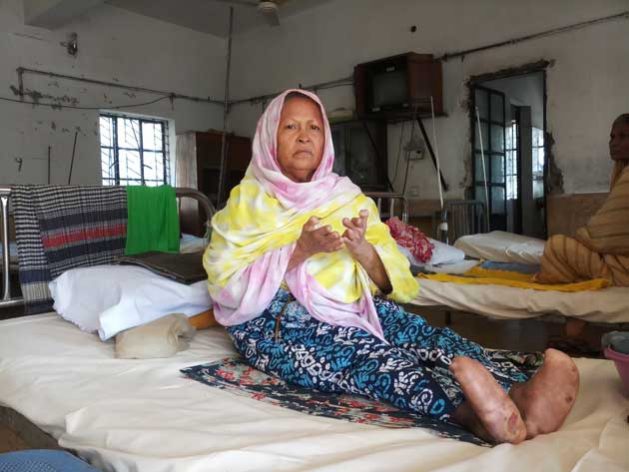
People living with Leprosy receiving care from the Institute of Leprosy Control and Hospital in Dhaka, Bangladesh. Credit: Rafiqul Islam / IPS

DHAKA, Bangladesh, Dec 9 2019 (IPS) – Despite having remarkable success in leprosy control in the last decades, the Bangladesh government is now moving forward with a vision to build a leprosy- free country.


“In 2017, the Bangladesh government revised the Bangladesh Leprosy Control Strategy for 2016-2020 – ‘Accelerating towards a leprosy-free Bangladesh’ – in line with the Global Leprosy Strategy 2016-2020,” programme manager of National Leprosy Programme Dr Md Shafiqul Islam told IPS.

Leprosy continues to be a stigmatized condition deeply embedded in society. Socially marginalized groups such as women and the urban poor are less likely to seek medical attention..

The Global Leprosy Strategy ensured increased commitment towards a further reduction of the burden of Hansen’s disease and prevention of lifelong disability for children affected by leprosy. This strategy focuses on universal health coverage bringing women, children and vulnerable people under the programme so that the sustainable development goal-3, which ensures a healthy life for all, can be achieved by 2030.

Shafiqul said the National Leprosy Programme of the government aims to reduce the leprosy burden further by leprosy elimination at the district level by 2020 as per the global strategy, with targets of zero grade 2 disability (G2D) among paediatric patients and reduction of new leprosy cases with G2D to less than one case per one million people.

To achieve the targets the National Leprosy Programme, in collaboration with partner NGOs, is arranging a national conference on leprosy in Dhaka on December 11 under the theme “ZeRo leprosy initiative”.

Bangladesh Prime Minister Sheikh Hasina is expected to speak at the inaugural session of the conference as the chief guest.

Leprosy in Bangladesh

Bangladesh is still a high burden leprosy country. The registered prevalence of leprosy was 0.7 percent, 0.27 percent and 0.2 percent in 2000, 2010 and 2016 respectively, and stood at 0.19 per 10,000 population in 2018, according to official data.
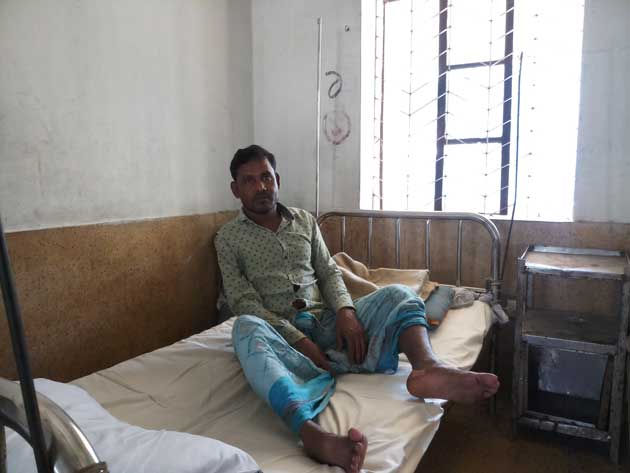
People living with Leprosy receiving care from the Institute of Leprosy Control and Hospital in Dhaka, Bangladesh. Credit: Rafiqul Islam / IPS

The grade 2 disability rate among the newly detected cases was 7.15 percent, 11.52 percent and 9.7 percent in 2000, 2010 and 2016 respectively, which reduced to 7.9 percent in 2018.

The rate of child patients among the newly detected cases was 15.3 percent in 2000, while it reduced to 5.9 percent in 2018.

The data reveals about 4,000 patients were detected per year in the country over the last few years, with this figure standing at 3,729 in 2018. Among the newly detected cases about 41 percent are MB patients.

Major challenges remain

Leprosy is a chronic infectious disease caused by bacteria (Mycobacterium Leprae). It mostly affects the skin, peripheral nerves and mucous membranes of the body. Delayed diagnosis of the disease leads to deformity mainly in the hands, feet and eyes. The bacteria not only destroys the peripheral nerve but also destroys social norms by leading to stigma, discrimination, divorce and isolation. It also affects the person physically, socially, mentally and economically.

The Leprosy programme is now facing several critical challenges after achieving its elimination target due to a gradual decrease in funding allocation for the programme, which has resulted in fewer activities, less training and losing experienced personnel. Ultimately, leprosy is losing its importance as an infectious disease.

Experts say the next major challenge is to sustain knowledge, skills and expertise in leprosy management, especially in less prevalent areas.

“Community education and awareness do not immediately dispel stigma. More evidence is needed for better understanding the causes of stigma and access to the effective intervention to decrease it,” Shafiqul said.

Finally, he said, additional challenges remained for prevention of visible disability and deformity in those who are already taking MDT, as well as community-based rehabilitation for the affected people.

“One of the challenges is to ensure quality care for the people affected by leprosy. There is no room to show our sympathy but it is their right to get quality health care. They also deserve our love, respect, dignity and support so that they can overcome life-struggling situations,” Dr David Pahan, Country Director of Lepra Bangladesh, said.

“We should continue our fight against leprosy bacteria. M. Leprae is a very clever bacteria with a long incubation period (remaining inactive especially in the nerves) before showing any symptoms. Our goal is to unite all our efforts to eradicate this disease and to see leprosy–free Bangladesh as soonest possible,” he added.

History of Leprosy in Bangladesh

The history of leprosy dates back centuries in Bangladesh. Different Christian missionary organizations used to provide leprosy services in various high endemic areas of the country. In 1965 leprosy services were implemented in the government sector through three public hospitals. Dapsone monotherapy was used to treat leprosy patients at that time. Multi-Drug Therapy (MDT) was recommended by the World Health Organization (WHO) for treating leprosy in 1982. The Bangladesh government expanded leprosy services to 120 high endemic upazilas by using MDT in 1985.

After the adaption of the WHO resolution to eliminate leprosy by 2000, the Bangladesh government revised the National Leprosy Elimination programme and expanded MDT services to all upazilas in a phase manner, covering the whole country by 1996. To achieve the time-bound target, the Bangladesh government had involved NGOs working in different endemic areas.

Fighting the stigma

Bangladesh achieved a national target of leprosy elimination as a public health problem (less than one case per 10,000 population) in 1998, two years ahead of the WHO target for leprosy elimination by 2000. At present eight NGOs, including Lepra Bangladesh and Damien Foundation Bangladesh, are working with the National Leprosy Programme with shared responsibilities to completely eradicate the Hansen disease in the country.

  Source

Indigenous Knowledge, a Lesson for a Sustainable Food Future

Biodiversity, Climate Change, Conferences, Development & Aid, Economy & Trade, Environment, Featured, Food & Agriculture, Food Sustainability, Global, Headlines, Health, Indigenous Rights, Poverty & SDGs, TerraViva United Nations, Trade & Investment

BCFN Yes winner Geraldin Lengai is researching bio-integrated crop management among tomato farmers in Tanzania. Credit: Busani Bafana / IPS

MILAN, Italy, Dec 4 2019 (IPS) – Local knowledge systems rooted in traditional practices and culture passed down generations provide sustainable solutions to food and nutritional insecurity on the back of climate change, a conference heard this week.


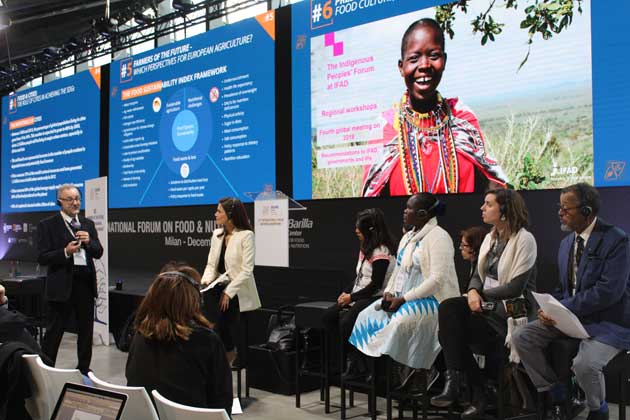
More than 370 million indigenous people, living in 70 countries, make up just 6 percent of the global population, according to the United Nations. But their food systems are models of diet diversity, innovation, conservation and local adaptability the world can benefit from in the face of risks such as climate change, delegates at the 10th Forum on Food and Nutrition convened by the Barilla Centre heard.

Speaking at a panel session on Preserving Mother Earth, Food Culture, Local Traditions and Biodiversity, Mattia Prayer Galletti, lead technical specialist on indigenous peoples and tribal issues at IFAD, said indigenous peoples have a connection with nature. They understand the concept of sustainability and the protection of natural resources.

IFAD has promoted an Indigenous People’s Forum to foster dialogue and consultant among indigenous people organisations and IFAD member countries. Through this Forum, IFAD has supported the economic empowerment of indigenous people, particularly women and the youth. IFAD has also contributed to the improvement in livelihoods of indigenous peoples through the Indigenous Peoples Assistance Facility which has provided small grants of up to US$50 000 for development projects.

He said indigenous food systems provide food security and biodiversity because indigenous communities have cultivated resilient foods, making them ideal in adapting to climate change. This despite the growing threats indigenous communities have faced, including marginalisation, loss of their ancestral lands and the destruction of their way of life.

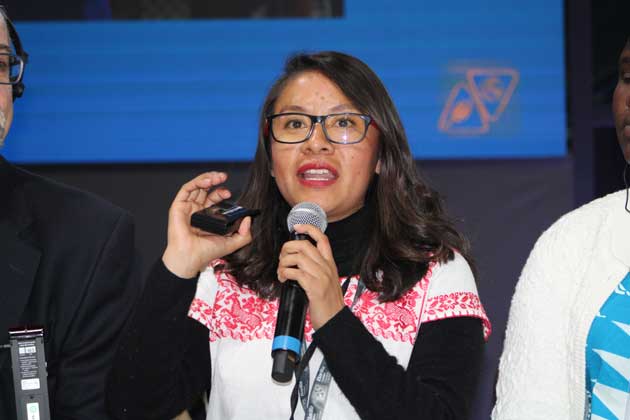
Dali Nolasco Cruz, an advisory board member of the Indigenous Terra Madre (ITM) from Mexico. Credit: Busani Bafana / IPS

Dali Nolasco Cruz, an advisory board member of the Indigenous Terra Madre (ITM) from Mexico, concurred saying indigenous people are being criminalised and killed by big powers that are extracting natural resources in their lands.

“We need alliances, we need to fight for Mother Earth,” Cruz said, “We need to transform our livelihoods by protecting the Earth to help others.”

Indigenous Innovations for food security

Indigenous knowledge provides innovations researchers are convinced can provide models for promoting resilience in our current food systems. Several researchers shared their on-going work on this.

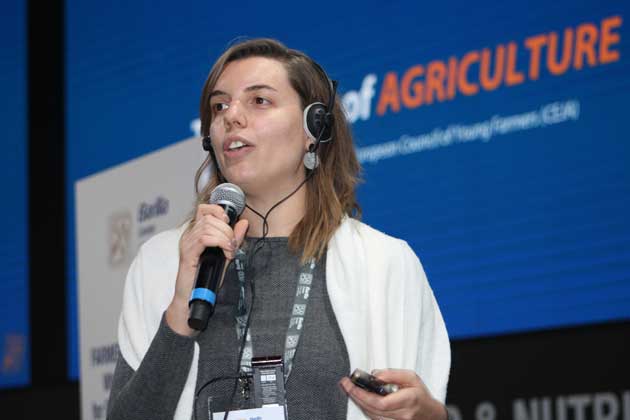
Martina Occelli, a PhD student at the Santa Anna School of Advanced Studies in Pisa, is undertaking multidisciplinary research on how smallholder farmer’s collective knowledge is shaping soil productivity in the Gera Gera region of Ethiopia among 300 smallholder farmers. The research has shown that collective knowledge within and between households which farmers learnt from their fathers was relevant in determining the soil ability, which is critical in food production and resilience.

Martina Occelli speaks at the 10th International Forum on Food and Nutrition. Credit: Busani Bafana / IPS

Occelli is a winner of 2018 BCFN Yes international multidisciplinary contest launched by the BCFN Foundation in 2012 to support research on promoting the intersection of food sustainability and environmental sustainability.

Geraldin Lengai, another BCFN Yes winner, is researching on enhancing sustainable agriculture through the adoption of bio-integrated crop management among tomato farmers in Tanzania comparing conventional and non-conventional farming methods. Her research expects to provide insights into the use of organic pesticide properties of ginger and turmeric – cash crops grown by farmers in Tanzania – in fighting pests and diseases in vegetables. Also, she has researched the efficacy of organic fertilisers such as goat manure and chicken manure on the productivity of the spice coriander and amaranthus, a plant cultivated as a vegetable.

“Sustainable agriculture is important because you need a doctor once in a while, but you need the farmer at least three times a day,” Lengai told IPS. “I believe people should have access to food that is safe and healthy. How we produce the food, process it and how the food reaches the end consumer is the business of sustainable agriculture, and my research is on crop protection because people use crop protection synthetically yet there are alternatives that nature has provides. Before synthetic pesticides, our forefathers used tobacco to control insects, and if we can look at other plants that have the same capacity, we can promote sustainable agriculture.”

Lengai said the benefits of manure has in producing vegetables and the near to zero cost for farmers who keep animals means farmers have a sustainable fertiliser for organic produce which is attractive for global markets. Citing the case of pesticides with the Kenya market for French beans, Lengai said organic produce had secured international markets which have traceability systems in place.

“Growing organic vegetables and using organic pesticides and fertilisers is a win-win for everybody for the environment, for the farmer for the consumer,” said Lengai. She added that synthetic pesticides are favoured because they are easy to apply and cheaper – but come at a cost to the environment and health.


Fixing the Business of Food

Conferences, Development & Aid, Economy & Trade, Environment, Featured, Food & Agriculture, Food Sustainability, Global, Headlines, Health, Poverty & SDGs, TerraViva United Nations, Trade & Investment

Delegates grappled with getting the business of food right. Credit: Busani Bafana / IPS

MILAN, Italy, Dec 4 2019 (IPS) – Milan is the city where Leonardo da Vinci painted his iconic Last Supper. Frozen in time is the moment Christ told his disciples there was a traitor among them. Visitors to the painting can examine the expressions on the faces of the disciples and look the food they might have eaten – the bread and wine, and of course the spilt salt. As one delegate to the 10th International Forum on Food and Nutrition noted, the diet did not seem varied or healthy.


Several centuries later, with the spotlight firmly on the state of our planet, global warming, delegates grappled solutions for producing and consuming food, nutrition and the state of the earth. Taking centre stage was the question of the roles, activists, workers, businesses and leadership play in the food cycle.

Mario Monti, Senator for Life of the Italian Republic; articulated the challenge succinctly. The forum with the theme Fostering Business and Innovation while preserving Mother Earth he said, provided a “beautiful challenge” dedicated to securing food for people to inhabit the planet.

Ertharin Cousin, from the Chicago Council on Global Affairs, referred to a conundrum that while in the United States 1450 deals were signed across 1000 agri-food tech start-ups none of the businesses focused on addressing the challenges of low-income people.

It was clear from the presentation by Jeremy Oppenheim, Founder and Managing Partner, SYSTEMIQ the food system’s hidden costs amounting to $12 trillion, including food subsidies – that the food system is dysfunctional.

Many speakers alluded to resolving the conundrum involving complex interplays between activism; innovative business practice and digital innovation, financing and political commitment.

Changing the culture of business and financing of companies was considered a major consideration which needed change to fix the food system.

Ben Valk, Lead Food and Agriculture Benchmark, commented that, for example, there were solutions which reduce the pressure on land and therefore on deforestation.

“First things we should do is to start to implement those solutions,” he said, but added that it astonishing to that so little money was allocated towards the Sustainable Development Goals. Change was needed and money allocated to sport for, example, should be reduced to ensure the SDGs were achieved.

Charlotte Ersbøll, representing the United Nations Global Compact, commented that businesses should be aware that employees were committed to sustainable practices. She referred to a study done in the US where half of all the staff would accept a salary cut if they were if they could work for a more climate-friendly company. “And if you look at the millennials, it would be two thirds. And, and all of them were frustrated that they really didn’t see the companies following through and really taking the lead.”

Oppenheim concluded his presentation with a note of caution. People at the conference were the converted, people already finding and looking at solutions to food and nutrition.

“What we need to do is to take this room and have thousands of rooms of like this … The real opportunity is to take this agenda to seize it with both hands to translate it into massive business opportunities.”


Right to Food Denied by Poor Policies and Inaction

Africa, Conferences, Development & Aid, Economy & Trade, Environment, Featured, Food & Agriculture, Food Sustainability, Global, Headlines, Health, Multimedia, Poverty & SDGs, TerraViva United Nations, Trade & Investment, Video

MILAN, Italy, Dec 3 2019 (IPS) – Global food systems are ripe for transformation if people are to be nourished and the planet sustainable, says Hilal Elver, Special Rapporteur of the Right to Food of the United Nations Human Rights Council.


Hilal Elver, Special Rapporteur of the Right to Food of the United Nations Human Rights Council speaking at the 10th International Forum on Food and Nutrition convened in Milan. Credit: Busani Bafana / IPS

Elver, told delegates at the 1oth International Forum on Food and Nutrition convened in Milan by the Barilla Centre, that the world needs food citizens who will act responsibly in promoting food equality and reducing food waste, which underlie global food and nutrition insecurity in the world today.

Food citizens are responsible for protecting the right to food through multi-actor actions including promoting a conducive environment that will secure food for all while promoting dialogue around food access, production and equitable distribution.

Citing the situation in Zimbabwe, Elver said the food crisis was a blot on the right to food that the world must respond to with urgency.

“The situation in Zimbabwe in mind boggling,” said Elver who has just returned from a mission to Zimbabwe to access the situation. “We need to know what is going as we talk about the need to diet, many in Zimbabwe eat once a day if they are lucky and food aid basically maize, just one meal a day. .. This is a very serious issue that we do not know it beyond the sustainable.”

Elver spoke with IPS on her mission to Zimbabwe. Excerpts of the interview:

IPS: You have just come back from Zimbabwe, what did you see?

Zimbabwe is an amazing country but if it facing a lot of challenges. It does not have basic public services and only four hours a day electricity and I understand that and government buildings, companies and some restaurants are using generators. But also you need fuel for the generators and for your car – if you have money to buy gas (fuel). The system is collapsing. People do not have time to work, because they either have to wait for gas for hours and hours and have to wait in front of the banks to get cash and 24 hours and transportation is very expensive. It is a vicious cycle and something should give in internally and externally because this has affected the food situation in the country too.

What has these challenges mean for the right to food?

That is a major problem. The root causes are a man-made journey to starvation. Every person in Zimbabwe has a responsibility to act. It did not come from drought. Yes drought is there. Other countries had a drought. Zambia had a drought, Mozambique had a drought and Cyclone Idai but Mozambique had huge aid from outside and Zimbabwe only got ten percent of it because of the sanctions.

What has been the impact of sanction on food security?

The intentional community should consider lifting the sanction because sanctions in the 20 years have had multiple impacts on the ordinary people’s lives. They talk about the targeted sanction but the sanctions are targeted by US, UK and EU, they are living perfectly fine and they do not travel a lot outside as they are high level government officials. It is okay for them but for the ordinary people it is not. They are suffering because all the international aid is blocked in one way or another. Investment is not coming. No one wants to invest in a country under sanctions.

Ask the IMF or World Bank why they cannot give the money to them. All the money they try to help Zimbabwe with goes to the NGOs and international organisations. If you are given $100 million, the people on the ground only get 20 percent of it. This is bad and this must change.

Is lifting sanctions everything to get Zimbabwe out of its challenges?

That is an important question. The government should make some democratic reforms, the freedom of speech, and freedom of association and give the opportunities to the people because the people are peaceful. The first thing is that the government should sit together with the opposition and all parties in a democratic manner and to think about how they can help their people together.

Land reform has been done in the last 20 years gradually here and there and there has been some kind of complaints as to why white farmers need compensation and black farmers are dysfunctional, these are myths going round. Black farmers are dysfunctional because they did not get any help from the government. You need first of all credit and you need technical help and you need seed and the government is in a terrible shape to give all these things. Of course there is disfunctionality but they cannot access resources there is land but they cannot do anything with it. If people find one square metres of land they just produce on it. The main problem is this corn based reliance. People are so obsessed with sadza, who brought maize to Zimbabwe? We should think about that.

Are you saying food diversification is a solution to the food problem?

Of course. The traditional food in Africa is very much good for the environmental conditions. Traditional small grains do to need too much water like maize and they should go back to this.

[embedded content]


Tradition and Technology Take Centre Stage at BCFN Food Forum

Conferences, Development & Aid, Economy & Trade, Environment, Featured, Food & Agriculture, Food Sustainability, Global, Headlines, Health, Poverty & SDGs, TerraViva United Nations, Trade & Investment

Credit: Busani Bafana / IPS

MILAN, Italy, Dec 3 2019 (IPS) – A coffee producer will receive a cent and a half from a $2.50 cup of coffee. This one stark fact stood out as scientists, researchers, activists and grappled with solutions for change in food and nutrition practises, which would benefit the greater community.


While the solutions are many – slow food to artificial intelligence – it was clear that the delegates were united around one idea: Key to the solution is to ensure that the solutions need to be put in the hands of the broad community – not just in the hands of the powerful.

This also needs the commitment of every sector of society – from multi-national businesses to small scale local farmers.

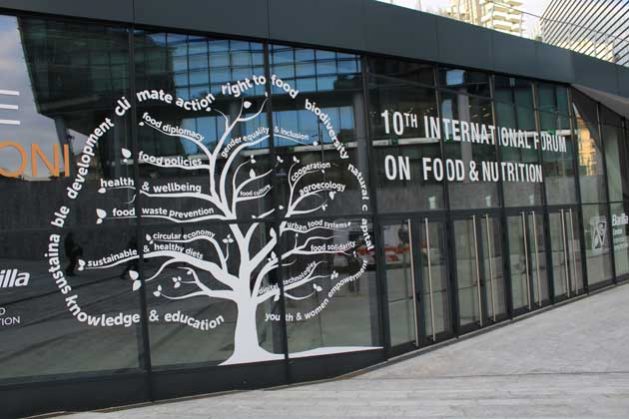
This message was reinforced by Guido Barilla, founder of the Barilla Centre for Food and Nutrition at the 10th International Forum on Food and Nutrition. The forum had the theme of Fostering Business and Innovation while preserving Mother Earth.

He urged all stakeholders come together and educate on the importance of sustainable and virtuous food systems.

Professor Angelo Riccaboni agreed – cooperation between institutions, corporations, NGOs, philanthropic institution and academia was crucial for changing the trajectory.

Ertharin Cousin reminded delegates that biologist Paul Ehrlich once predicted large scale famines, particularly in India – but through innovation in the agricultural sector and community of actors involved in the Green Revolution, these grim visions were overcome.

Even so, she said the challenges are huge – and research suggests that by 2030 half the world’s population would suffer from some form of malnutrition, whether from a shortage of food or micronutrient deficiency.

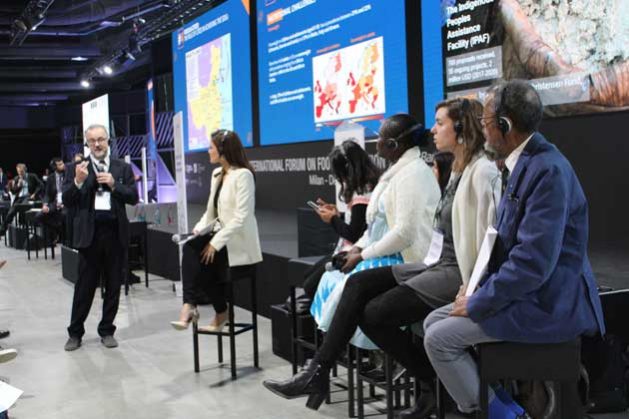
Delegates debate at the 10th International Forum on Food and Nutrition in Milan. Credit: Busani Bafana / IPS

Jeremy Oppenheim, founder of Systemiq, who used the example of the cup of coffee pointed out how starkly pointed out how unequal the chain of production, processing, distribution, consumption and the way it is disposed of requires a radical overall.

The mixed signals were unhelpful, he said.

“We’re sending all these mixed signals, every single day to people … In the next in the run up to Christmas again in the UK, food companies, and retailers will spend, 100 billion pounds – advertising largely unhealthy food.”

Mattia Galletti , IFAD Technical specialist, pointed out 70 million people in the world belong to different indigenous people and in studies in the Amazon, for example, where indigenous farming is practised there was no deforestation.

Carlo Petrini, Founder and President, Slow Food International, agreed. Local communities had the solution in their “DNA” and had essential answers to the critical problems of climate change.

“The biggest challenge today is climate change, and politicians are still ridiculing youth asking for climate justice,” says Petrini.

However, he warned that the economy needed to change – one that was rooted in local communities and not in the hands of a few. It was only then that sustainable development could be achieved. Any other solution was just “blah, blah, blah”, he warned.

However, Galina Peycheva-Miteva suggested that the “idea of farming” had to change.

“Farming is not considered prestigious by the young generation. We have to modernize and digitize farming. We have to make farming attractive again.”

If the return to traditional technologies and systems was a big discussion, so too was the use of modern technologies and artificial intelligence as a solution to food security and diet. The technology could be harnessed for everything from testing the soil, to encouraging people, through the use of Apps, to follow healthy diets.

What is clear, though, is that there needs to be a shared agenda for the future.

“We need everyone to work together, we must travel the same road. We need lawmakers to enact clear rules,” Barilla concluded.

  Source

Climate Summit Kicks Off, Caught Between Realism and Hope

Civil Society, Climate Change, Conferences, Development & Aid, Editors’ Choice, Environment, Europe, Featured, Global, Global Governance, Globalisation, Headlines, IPS UN: Inside the Glasshouse, Poverty & SDGs, Regional Categories

Climate Change

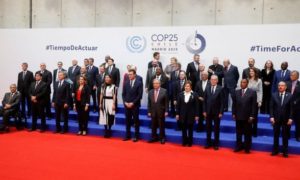
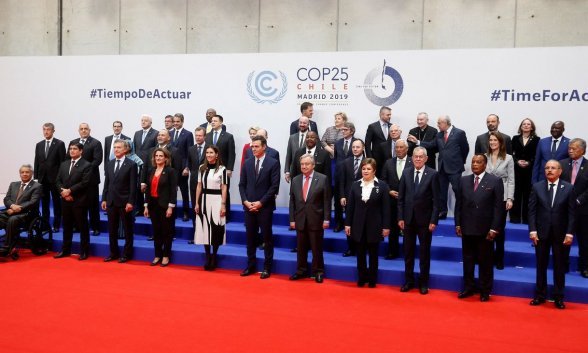
Family photo at the opening of the 25th Conference of the Parties (COP25) on climate change, taking place in Madrid Dec. 2 to 13. Credit: UNFCCC

Family photo at the opening of the 25th Conference of the Parties (COP25) on climate change, taking place in Madrid Dec. 2 to 13. Credit: UNFCCC

MADRID, Dec 2 2019 (IPS) – Tens of thousands of delegates from state parties began working Monday Dec. 2 in the Spanish capital to pave the way to comply with the Paris Agreement on climate change, while at a parallel summit, representatives of civil society demanded that the international community go further.


Calls to combat the climate emergency marked the opening of the 25th Conference of the Parties (COP25) to the United Nations Framework Convention on Climate Change (UNFCCC), in light of the most recent scientific data showing the severity of the crisis, as reflected by more intense storms, rising temperatures and sea levels, and polar melting.

Pedro Sánchez, acting prime minister of Spain – selected as the emergency host country after the political crisis in Chile forced the relocation of the summit – called during the opening ceremony for Europe to lead the decarbonisation of the economy and move faster to reduce emissions of carbon dioxide (CO2), the greenhouse gas generated by human activities.

“Today, fortunately, only a handful of fanatics deny the evidence” about the climate emergency, Sánchez said at the opening of the COP, held under the motto “Time to act” at the Feria de Madrid Institute (IFEMA) fairgrounds.

COP25 is the third consecutive climate conference held in Europe. The agenda focuses on issues such as financing for national climate policies and the rules for emission reduction markets – outlined without specifics in the Paris Agreement, which was agreed four years ago and is to enter into force in 2020.

It will also address the preparation of the update of emissions reductions and funding of the Warsaw International Mechanism for Loss and Damage, designed to assist regions particularly vulnerable to the adverse effects of climate change.

In the 1,000 square metres where COP25 is being held, 29,000 people – according to estimates by the organisers – including some 50 heads of state and government, representatives of the 196 official delegations and civil society organisations, as well as 1,500 accredited journalists, will gather until Dec. 13.

But the notable absence of U.S. President Donald Trump, Russian President Vladimir Putin, Indian Prime Minister Narendra Modi, Chinese President Xi Jinping, Brazilian President Jair Bolsonaro, and UK Prime Minister Boris Johnson does not give cause for optimism.

These include the leaders of the countries that produce the most greenhouse gas (GHG) emissions, making their lack of interest in strengthening the Paris Agreement more serious.

On Nov. 4, U.S. Secretary of State Mike Pompeo said he submitted a formal notice to the United Nations to begin the process of pulling out of the climate accord.

U.N. Secretary-General António Guterres said during the opening ceremony that “The latest, just-released data from the World Meteorological Organisation show that levels of heat-trapping greenhouse gases in the atmosphere have reached another new record high.

“Do we really want to be remembered as the generation that buried its head in the sand, that fiddled while the planet burned?”

In its Emissions Gap Report 2019, the U.N. Environment Programme warned on the eve of the opening of COP25 of the need to cut emissions by 7.6 percent a year between 2020 and 2030 in order to stay within the 1.5 degree Celsius cap on temperature rise proposed in the Paris Agreement.

Many delegations admitted that the world is off track to achieving the proposed 45 percent reduction in GHG by 2030 and to becoming carbon neutral by 2050.

In fact, delegates pointed out on Monday, emissions reached an alarming 55.3 billion tons in 2018, including deforestation.

One of the hopes is that more countries, cities, companies and investment funds will join the Climate Ambition Alliance, launched by Chile, the country that still holds the presidency of the COP, and endorsed by at least 66 nations, 10 regions, 102 cities, 93 corporations and 12 large private investors.

More than 70 countries and 100 cities so far have committed to reaching zero net emissions by 2050.

Social summit

Parallel to the official meeting, organisations from around the world are gathered at the Social Summit for Climate under the slogan “Beyond COP25: People for Climate”, which in its statement to the conference criticises the economic model based on the extraction of natural resources and mass consumption, blaming it for the climate crisis, and complaining about the lack of results in the UNFCCC meetings.

“The scientific diagnosis is clear regarding the seriousness and urgency of the moment. Economic growth happens at the expense of the most vulnerable people,” says the statement, which defends climate justice “as the backbone of the social fights of our time” and “the broadest umbrella that exists to protect all the diversity of struggles for another possible world.”

The first week of the COP is expected to see the arrival of Swedish activist Greta Thunberg, who has unleashed youth mobilisation against the climate crisis around the world.

In terms of how well countries are complying, only Gabon and Nepal have met their Nationally Determined Contributions (NDCs), the mitigation and adaptation measures voluntarily adopted, within the Paris Agreement, to keep the temperature rise below 1.5 degrees Celsius.

But these two countries have practically no responsibility for the climate emergency.

The plans of Bhutan, Costa Rica, Ethiopia and the Philippines involve an increase of up to 2.0 degrees, while the measures of the rest of the countries range from “insufficient” to “critically insufficient”.

Latin America “has to be more ambitious: although progress has been made, the measures are insufficient. We need a multilateral response to the emergency. We have only 11 years to correct the course and thus reach carbon neutrality in 2050 and meet the goal of keeping the temperature rise to 1.5 degrees,” said Manuel Pulgar-Vidal, global head of Climate and Energy at the World Wildlife Fund (WWF).

The Marshall Islands already submitted their NDCs 2020, while 41 nations have declared their intention to update their voluntary measures and 68 nations – including those of the European Union – have stated that they plan to further cut emissions.

In its position regarding the COP25, consulted by IPS, Mexico outlined 10 priorities, including voluntary cooperation, adaptation, climate financing, gender and climate change, local communities and indigenous peoples.