Guinea’s Path to Electoral Autocracy

Active Citizens, Africa, Civil Society, Crime & Justice, Democracy, Featured, Headlines, Human Rights, Press Freedom, TerraViva United Nations
Opinion

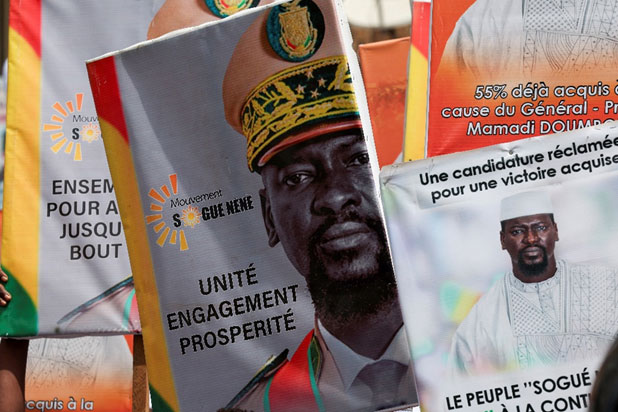
Credit: Luc Gnago/Reuters via Gallo Images

MONTEVIDEO, Uruguay, Jan 20 2026 (IPS) – In December, the dust settled on Guinea’s first presidential election since the military took control in a 2021 coup. General Mamady Doumbouya stayed in power after receiving 87 per cent of the vote. But the outcome was never in doubt: this was no a democratic milestone; it was the culmination of Guinea’s denied transition to civilian rule.


Doumbouya has successfully performed an act of political alchemy, turning a military autocracy into an electoral one. By systematically dismantling the opposition, silencing the press and rewriting laws to suit his ambitions, he has made sure to shield his grip on power with a thin veil of electoral legitimacy.

The architecture of autocracy

The path to this moment was paved with precision. In April 2025, Doumbouya announced a constitutional referendum, a move that may have looked like it would herald the beginning of the end of military rule. But it was something else entirely. By June, Doumbouya had further centralised control by creating a new General Directorate of Elections. This body, placed firmly under the thumb of the Ministry of Territorial Administration, reversed previous efforts to establish an independent electoral institution.

The constitution was drafted in the shadows by the National Council of the Transition, the junta-appointed legislative body. While early drafts reportedly contained safeguards against lifetime presidencies, these were stripped away before the final text reached the public. The result was a document that removed a ban on junta members running for office, extended presidential terms from five to seven years and granted the president the power to appoint a third of the newly created Senate.

When the referendum was held on 21 September, it rubber-stamped de facto rule. Official figures claimed 89 per cent support with an 86 per cent turnout, numbers that defied the reality of a widespread opposition boycott and a palpable lack of public enthusiasm.

A climate of fear

With a blanket ban on protests in effect since May 2022, those who’ve dared challenge the junta’s controlled transition have been met with security force violence. On 6 January 2025, security forces killed at least three people, including two children, during demonstrations called by the opposition coalition Forces Vives de Guinée.

The political landscape was further cleared through administrative and judicial means. In October 2024, the government dissolved over 50 political parties. By August 2025, major opposition groups such as the Rally of the People of Guinea had been suspended. Key challengers, including former Prime Minister Cellou Dalein Diallo, remain in exile, while others, among them Aliou Bah, have been sentenced to prison – in Bah’s case, for allegedly insulting Doumbouya.

The atmosphere of fear has been reinforced by a brutal crackdown on the media. Guinea plummeted 25 places in the 2025 World Press Freedom Index, the year’s largest fall. Independent outlets have had their licences revoked and journalists have been detained. Those still working have learned to practise strict self-censorship to avoid becoming the next target. This meant that as voters went to the polls, there was nobody to provide diverse perspectives, scrutinise the process, investigate irregularities or hold authorities accountable.

Coup contagion

Guinea is no outlier. Since 2020, a coup contagion has swept through Africa, with military takeovers in Burkina Faso, Chad, Gabon, Guinea-Bissau, Madagascar, Mali, Niger and Sudan. In each instance, the script has been similar: military leaders seize power promising to ‘correct’ the failures of the previous regime, only to break their promises of a return to civilian rule.

Guinea is now the third country among this recent wave to move from a military dictatorship to an electoral autocracy. It follows in the footsteps of Chad, where Mahamat Idriss Déby secured victory in May 2024 after the suspicious killing of his main opponent, and Gabon, where General Brice Oligui Nguema won a 2025 election with a reported 90 per cent of the vote.

The international community does little. Doumbouya routinely ignored deadlines and sanctions from the Economic Community of West African States, which once prided itself on a ‘zero-tolerance’ policy for coups, and no consequences ensued. The African Union and the United Nations offered rhetorical concern, but their warnings were not accompanied by tangible diplomatic or economic repercussions.

The world’s willingness to maintain business as usual while Doumbouya steered through a fake transition sends a dangerous message to other aspiring autocrats, in the region and beyond.

Democracy denied

When Doumbouya seized power in 2021, he was greeted with a degree of cautious optimism. His predecessor, Alpha Condé, had controversially amended the constitution to secure a third term amid violent protests and corruption and fraud allegations. Doumbouya promised to fix things, but instead became a mirror image of the man he ousted, using the same tactics of constitutional revision and repression to secure his power.

The statistics of the December election – an 87 per cent victory on a claimed 80 per cent turnout – do not reflect a genuine mandate but rather a vacuum: with no independent media to scrutinise the process and no viable opposition allowed to run, the election was a technicality.

The prospects for real democracy in Guinea appear remote. Doumbouya has secured a seven-year mandate through an election that eliminated the essential infrastructure needed for democracy. In the absence of stronger international pressure and tangible support for Guinean civil society, Guinea faces prolonged authoritarian rule behind a democratic facade, with dismal human rights prospects.

Inés M. Pousadela is CIVICUS Head of Research and Analysis, co-director and writer for CIVICUS Lens and co-author of the State of Civil Society Report. She is also a Professor of Comparative Politics at Universidad ORT Uruguay.

For interviews or more information, please contact research@civicus.org

  Source

A Year of High Expectations and Frustrations

Active Citizens, Asia-Pacific, Civil Society, Crime & Justice, Development & Aid, Economy & Trade, Global, Headlines, Human Rights, TerraViva United Nations, Youth

Opinion

DHAKA, Bangladesh, Jan 8 2026 (IPS) – As many of you know, out of the blue, I have been called in to assist the Interim Government led by Nobel Laureate Professor Muhammad Yunus in stabilising the economy left in ruins by the fallen autocratic-kleptocratic regime that looted the banks, stole public money and robbed small investors in the capital market to siphon off billions of dollars out of the country. I had never served in a government; neither had I ever expected this opportunity. However, my UN experience and political economy understanding have been handy.


Anis Chowdhury

Reflecting back the year that we have just passed, I trust, you have been well as we wished each other at the start of 2025 the best of our health and spirit. Unfortunately, despite our earnest wish, the world was not peaceful during 2025.

Hopes and global disorder

Hopes kindled briefly for justice for the Palestinians as the European powers, including Australia (a European settler colony) were forced to recognise the Palestine State, and Narcissist Trump pushed for some peace in both Ukraine and Gaza in his mad desperation for a Nobel Peace Prize.

Yet Gaza is still being bombarded with Israel’s genocidal intent, making a mockery of deranged Trump’s rhetorical claim of achieving “peace in the Middle East for the first time in 3,000 years”, and the illegal occupation of the West Bank along with settler violence continues unabated with complete immunity in blatant violations of international laws.

Narcissist Trump sanctioned the International Criminal Court (ICC) and International Court of Justice (ICJ) in his desperate attempt to save Israeli war criminals, including Benjamin Netanyahu and justify Israel’s genocide and settler violence. Trump upended his assault on the rule-based order with arbitrary so-called ‘reciprocal tariff’.

Bangladesh

As for the post-fascist Hasina Bangladesh, the year 2025 began with high expectations. And as for me, the year 2025 has been extra-ordinary.

Today, I am pleased to say that we have been able to avert a full-blown crisis. Heart-felt thanks to our ‘remittance fighters’ who whole-heartedly trusted the Interim Government’s various reform initiatives. Expatriate Bangladeshis sent a record $30.04 bn in remittances in the 2024–25 fiscal year, the highest amount ever received in a single fiscal year in the country’s history. Forex reserves surged to $33 bn, hitting 3-year high as December remittances crossed $3bn. You can get a report card by Finance Advisor, Dr. Salehuddin and myself, published in the Daily Star on 18 August 2025.

Of course, not everything has been rosy. The much-hoped systemic transition remains full of uncertainty. I see systemic transition as the process of total transformation of a caterpillar inside a cocoon. We still do not know whether the ‘caterpillar in the cocoon’ will turn out to be a butterfly or a moth. People are genuinely worried as the past systemic transition opportunities were wasted.

I myself found road-blocks at every turn. Bureaucratic inertia and resistance have frustrated my efforts for genuine reforms. It has been a real-life experience of the classic British political satire, “Yes, Minister”. Like Sir Humphrey Appleby, the bureaucrats will display outwardly extra-ordinary humbleness, but will politely defy citing rules of business. Bureaucratic resistance is the main stumbling block for achieving coordination, coherence and integration in policy making and implementation, thus, causing wasteful duplications, inefficiency and lack of effectiveness.

Nevertheless, I achieved some success. One of them is the agreement to expand the voluntary Bangladesh National Cadet Corps programme to cover ALL youths (aged 18) in 10-12 years, so that we can have a disciplined workforce to be readily deployed during any national emergency. Needless to say, that this is an imperative to realise demographic dividend. We are hoping to roll out the programme from July 2026 to coincide with the July Revolution anniversary.

Despite frustrations and uncertainties, I am hopeful as I can see a seismic shift in the political dynamics of the country. This coincides with the demographic shift – the youth (15-30 years) representing nearly 30% of the population. These youths have a different vocabulary of politics; they want justice, inclusion, self-respect, and dignity – they are fiercely nationalist.

Recently martyred Hadi is their embodiment. The establishment is understandably threatened and tried to silence the youth by assassinating Hadi; but they failed to extinguish the flame, instead, everyone has become a Hadi, standing unwavering in their commitment to carry out Hadi’s mission of building a just nation where citizens can live with dignity, free from fear, subjugation, and oppression. Hadi re-centred our national conscience on Insaf: justice, dignity, and fairness not as rhetorical slogans, but as non-negotiable ethical foundations of the State and society.

In an era of moral drift, Hadi reminded the nation that no political order can last without justice at its core. He ignited a generation with civic courage and moral responsibility. Free from fear, patronage, or transactional politics, young people saw in Hadi a new model of leadership: ethical, principled, and accountable. In doing so, he reshaped the future political character of Bangladesh and moved national thinking beyond entrenched legacy power structures toward people-centric, principled governance. He challenged the inevitability of corruption and coercion, insisting instead that politics could be reclaimed as a moral vocation. His life poses an enduring question to those who seek power: Will you serve justice, or merely rule?

Let me end this year-end message with my personal tribute to Khaleda Zia, who has recently passed away after a long illness imposed on her by the vindictive Hasina regime, falsely convicting her and imprisoning in a substandard cell. Like her husband, Shaheed President Zia, she was thrust into the whirlpool of history. They never sought power; but when the responsibility fell on their shoulders, they carried out their duties to the nation whole-heartedly and selflessly; thus, they became a true statesman (woman), winning hearts and minds of their people.

Perhaps Khaleda Zia’s most enduring legacy lies in her extraordinary restraint and dignified disposition, even under severe and prolonged adversity. Her self-restraint, rooted in grace rather than weakness, distinguished her from many of her contemporaries and offers a powerful lesson for today’s often abrasive and confrontational political culture.

Warmest regards and best wishes for the New Year

IPS UN Bureau

  Source

Bombing and Ballots, Myanmar’s Contentious Election

Armed Conflicts, Asia-Pacific, Civil Society, Crime & Justice, Democracy, Editors’ Choice, Featured, Freedom of Expression, Headlines, Human Rights, Press Freedom, TerraViva United Nations

Human Rights

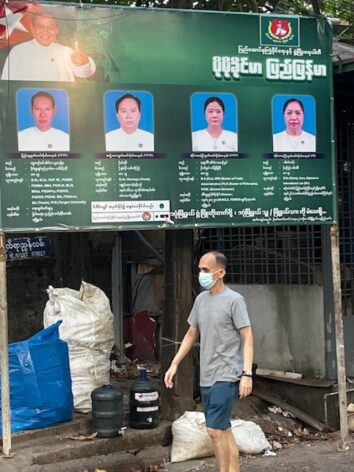
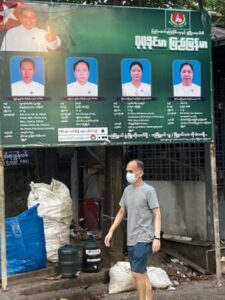
A man walks past a campaign poster for the military’s proxy party USDP ahead of strictly controlled elections in Myanmar. Credit: Guy Dinmore/IPS

A man walks past a campaign poster for the military’s proxy party USDP ahead of strictly controlled elections in Myanmar. Credit: Guy Dinmore/IPS

YANGON, Myanmar and BANGKOK , Jan 6 2026 (IPS) – With thousands of civilians killed in years of civil war and over 22,000 political prisoners still behind bars, no one was surprised that early results from Myanmar’s first but tightly controlled elections since the 2021 coup show the military’s proxy party speeding to victory.


“How can you hold elections and bomb civilians at the same time?” asked Khin Ohmar, a civil rights activist outside Myanmar who is monitoring what the resistance forces and a shadow government reject as “sham” polls.

The junta had already cleared the path towards its stated goal of a “genuine, disciplined multi-party democratic system” by dissolving some 40 parties that refused to register for polls, which they regard as illegitimate, with their leaders and supporters still in prison.

These include the National League for Democracy (NLD) and its leader, Aung San Suu Kyi, who won a landslide second term  in the 2020 elections – only for the results to be annulled by Senior General Min Aung Hlaing, a coup leader and self-appointed acting president. Mass street protests were crushed in early 2021 and war spread across Myanmar.

Although these elections will deliver just a façade of the legitimacy craved by some of the generals, they did succeed in projecting a power and authority that was quickly slipping away just two years ago as long-standing ethnic armed groups and newly formed People’s Defence Forces (PDFs) inflicted a series of humiliating defeats on the junta.

“The tide has turned in favour of the military,” commented a veteran Myanmar analyst in Yangon, crediting China, which reined in the ethnic groups on its shared border, fully embraced Min Aung Hlaing and, along with Russia, delivered the arms, technology and training needed to peg back the resistance.

Campaigners for the pro-military USDP canvas residents and check voters lists in Yangon ahead of the December 28 parliamentary election that excluded major anti-junta parties. Credit: Guy Dinmore/IPS

Campaigners for the pro-military USDP canvas residents and check voters lists in Yangon ahead of the December 28 parliamentary election that excluded major anti-junta parties. Credit: Guy Dinmore/IPS

The regime’s air power and newly acquired drones have been deployed to ruthless effect, often hitting civilian targets in relatively remote areas where the resistance has grassroots support. Air strikes were stepped up as the elections approached. Major cities like Yangon were calm; people subdued.

Bombs dropped on Tabayin township in the Sagaing Region on December 5 killed 18 people, including many in a busy tea shop, AFP reported. On December 10, air strikes on a hospital in the ancient capital of Mrauk-U in Rakhine State were reported to have killed 10 patients and 23 others. The regime accused the insurgent Arakan Army and PDFs of using it as a base.

“I don’t think that anyone believes that those elections will be free and fair,” UN Secretary General Antonio Guterres stated while visiting the region ahead of the polls. He called on the junta to end its “deplorable” violence and find “a credible path” back to civilian rule.

In contrast, the Trump administration declared in November that the junta’s election plans were “free and fair” and removed Temporary Protected Status from Myanmar refugees in the US, saying their country was safe for them to return to.

“I’ll be jailed if I don’t vote,” said Min, a Yangon taxi driver, only half-joking on the eve of voting in Yangon, the commercial capital. “And what difference does it make? We are ruled by China and Xi Jinping, not Min Aung Hlaing,” he added.

With the polls spread over three stages, the first 102 townships voted on December 28. Others will follow on January 11 and January 25 to make a total of 265 of Myanmar’s 330 townships scheduled to vote for the bicameral national parliament and assemblies in the 14 regions and states.

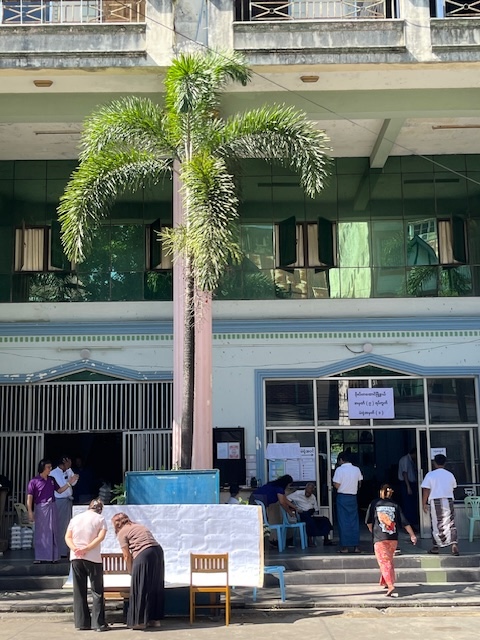
Residents in downtown Yangon check their names on the electoral register and then cast their votes in a polling station on December 28. Credit: Guy Dinmore/IPS

Residents in downtown Yangon check their names on the electoral register and then cast their votes in a polling station on December 28. Credit: Guy Dinmore/IPS

No voting is to be held at all in the remaining 65 townships that the election commission deemed too unsafe.

Voting in the first round in Yangon, an urban and semi-rural sprawl of seven million people, proceeded calmly and slowly on a quiet Sunday – despite intense efforts, and sometimes threats, by the regime to boost the turnout.

In 2020 and 2015 – when Myanmar arguably held the region’s most open and fair elections and the military’s proxy Union Solidarity and Development Party (USDP), was soundly defeated – people gaily posted images of their ink-stained little fingers on social media as evidence of their vote after weeks of packed rallies and vibrant campaign rallies.

But not this time. Social media posts hurled insults, some comic and vulgar, at the regime. Those eager to support the resistance’s boycott but who were afraid of reprisals were relieved if they found their names had been omitted by mistake on electoral lists. Electronic voting machines in use for the first time made it impossible to leave a blank.

But as in past elections, a solid core of people close to the military and its web of powerful economic interests turned out to vote for the USDP.

“We are choosing our government,” declared one man exiting a polling station in central Yangon with his family, apparently USDP supporters. One proudly waved his little finger dipped in indelible ink.

How can you hold elections and bomb civilians at the same time? – Khin Ohmar, civil rights activist

Turnout for the first round was put by regime officials at 52 percent. This compares with about 70 percent in the past two elections. China’s special envoy – sent as an official observer, along with others from Russia, Belarus, Vietnam and Cambodia – praised the elections.

On January 2, the election commission unexpectedly issued partial results: the USDP, led by retired generals, had won 38 of 40 seats in the lower house where votes had been tallied to date. No one blinked.

The USDP campaign message focused on two main elements – get out and vote with all your family, and back a USDP government to restore stability and progress to Myanmar.

Its underlying message was a reminder that the last USDP administration, led by President Thein Sein introduced socio-economic and political reforms and ceasefire negotiations with ethnic groups after securing a large majority in the 2010 elections when the NLD and other opposition groups were also absent.

Aung San Suu Kyi, then under house arrest, was released just after the 2010 polls and went on to contest and win a seat in a 2012 by-election ahead of the NLD’s own sweeping victory in 2015. Aung San Suu Kyi governed in a difficult power-sharing arrangement with the military for the next five years and was thrown back into prison in the coup.

For now a large proportion of Myanmar’s population lives in areas under junta control, including all 14 of the state and regional capitals, swollen by an influx of people fleeing conflict.  The military also holds major seaports and airports and – to varying degrees – the main border crossings for China and Thailand.

But in terms of territory, over half of Myanmar is in the hands of disparate ethnic armed groups and resistance forces. Alliances are fluid and negotiable.

The shadow National Unity Government is trying to establish its own authority over liberated territory, looking to cement a consensus around the concept of a democratic and federal Myanmar free of the military’s interference – something that has eluded the country since independence from British colonial rule in 1948.

Front lines shift back and forth as the military struggles to regain control over the Bamar heartlands of central Myanmar, once considered their bastion, while stretched elsewhere after losing vast tracts of border areas since the coup. Several million people have fled the country or are internally displaced.

Once again there is some speculation that a “smooth” election and the formation of a USDP government in April will lead to a gesture signalling the military’s confidence, such as a possible ending of forced conscription and the release of some political prisoners. Project power, then collect legitimacy.

“Political prisoners are used as bait,” said Khin Ohmar, the civil rights activist in Bangkok. “The world would at least have to applaud.”

IPS UN Bureau Report

  Source

‘Zambia Has Environmental Laws and Standards on Paper – the Problem Is Their Implementation’

Active Citizens, Africa, Civil Society, Crime & Justice, Energy, Environment, Featured, Food and Agriculture, Headlines, Health, TerraViva United Nations

Dec 29 2025 (IPS) –  
CIVICUS discusses environmental accountability in Zambia with Christian-Geraud Neema, Africa editor at the China Global South Project, an independent journalism initiative that covers and follows China’s activities in global south countries.


Zambia has environmental laws and standards on paper – the problem is their implementation’

Christian-Geraud Neema

A group of 176 Zambian farmers has filed a US$80 billion lawsuit against a Chinese state-owned mining company over a major toxic spill. In February, the collapse of a dam that was supposed to control mining waste released 50 million litres of toxic wastewater into the Kafue River system, killing fish, destroying crops and contaminating water sources for thousands of people. The compensation demand highlights broader questions about mining governance, environmental oversight and corporate accountability.

What’s this lawsuit about, and why are farmers seeking US$80 billion?

The farmers are suing Sino-Metals Leach Zambia, a subsidiary of the Chinese state-owned China Nonferrous Metal Mining Group, because on 18 February, the company’s tailings dam collapsed, releasing an estimated 50 million litres of acidic, toxic wastewater and up to 1.5 million tonnes of waste material into the Kafue River. This led to water pollution affecting communities in Chambishi and Kitwe, far beyond the immediate mining area.

The lawsuit reflects real harm and frustration. From the farmers’ perspective, the company is clearly responsible. Their livelihoods have been destroyed, their land contaminated and their future made uncertain. In that context, seeking accountability through the courts is a rational response.

That said, the US$80 billion figure is likely exaggerated. It shows the absence of credible damage assessments rather than a precise calculation. When no one provides clear data on losses, communities respond by anchoring their claims in worst-case scenarios.

This case also highlights a broader accountability gap. Mining companies should be held responsible, but governments must also be questioned. These projects are approved, inspected and regulated by state authorities. If a dam was unsafe, why was it authorised? Why was oversight insufficient?

It should be noted that Zambia’s legal framework allows communities to bring such cases domestically, which is a significant step forward compared to earlier cases where affected communities had to sue foreign companies in courts abroad.

What caused the toxic spill?

There is no single, uncontested explanation. There were clear structural weaknesses in the tailings dam. Reports from civil society and media suggest the dam was not built to the required standards under Zambian regulations. But the company argues the dam complied with existing standards and that it was encroachment by surrounding communities that weakened the structure over time.

These two narratives are not mutually exclusive. Even if community interactions with the site occurred, the primary responsibility still lies with the company. Mining operations take place in complex social environments, and companies are expected to anticipate these realities and design infrastructure that is robust enough to withstand them. Ultimately, this incident reflects governance and regulatory failures. It was not an isolated accident.

What were the consequences of the spill?

The impacts have been severe and multidimensional. The spill polluted large sections of the Kafue River, reportedly extending over 100 kilometres. It killed large numbers of fish, contaminated riverbeds and disrupted ecosystems. Agriculturally, farmers using river water for irrigation saw their crops destroyed or rendered unsafe. Livestock and soil quality were also affected. Acidic and toxic substances entered water sources used daily for cooking, drinking and washing, and communities were exposed to serious health risks.

What makes the situation particularly troubling is the lack of reliable and independent data. There has been no transparent and comprehensive assessment released by the government, the company or an independent body. This absence has left communities uncertain about long-term environmental damage and health effects, and fuelled emotionally charged debates instead of evidence-based responses.

Was the disaster preventable?

Absolutely. At a technical level, stronger infrastructure, better-quality materials and stricter adherence to safety standards could have significantly reduced the risk. At an operational level, companies know mining sites are rarely isolated, and community proximity, informal access and social dynamics must be factored in when designing and securing tailings dams.

But prevention also depends heavily on governance. Mining companies are profit-driven entities, and in weak governance environments, the temptation to cut costs is high. This is not unique to Chinese firms. The main difference in how companies operate is not their origin but their context: the same companies often operate very differently in countries with weak or strong regulatory oversight. Where rules are enforced, behaviour improves; where oversight is weak, shortcuts become the norm.

The key issue here is enforcement. Zambia has good environmental laws and standards on paper. The problem is their implementation.

Could this case set a precedent?

This case has the potential to strengthen existing accountability mechanisms rather than create a new precedent. Zambia has seen similar cases before, including lawsuits involving western mining companies. What is different now is the increased legal space for communities to act locally.

If successful, the case could reinforce civil society advocacy for responsible mining, greater transparency and stronger enforcement of environmental regulations. It could also raise awareness among communities living near mining sites about their rights and the risks they face.

GET IN TOUCH
Website
Facebook
TikTok
Twitter
YouTube
Christian-Geraud Neema/LinkedIn

SEE ALSO
South Africa: ‘Environmental rights are enforceable and communities have the right to be consulted and taken seriously’ CIVICUS Lens | Interview with The Green Connection 12.Dec.2025
DRC: ‘International demand for coltan is linked to violence in the DRC’ CIVICUS Lens | Interview with Claude Iguma 09.Jul.2025
Ghana: ‘We demand an immediate ban on illegal mining and strict enforcement of environmental laws’ CIVICUS Lens | Interview with Jeremiah Sam 29.Oct.2024

  Source

A Grim Year for Democracy and Civic Freedoms – but in Gen Z There Is Hope

Active Citizens, Armed Conflicts, Civil Society, Climate Change, Crime & Justice, Democracy, Economy & Trade, Environment, Featured, Gender, Global, Headlines, Human Rights, Inequality, LGBTQ, TerraViva United Nations

Opinion

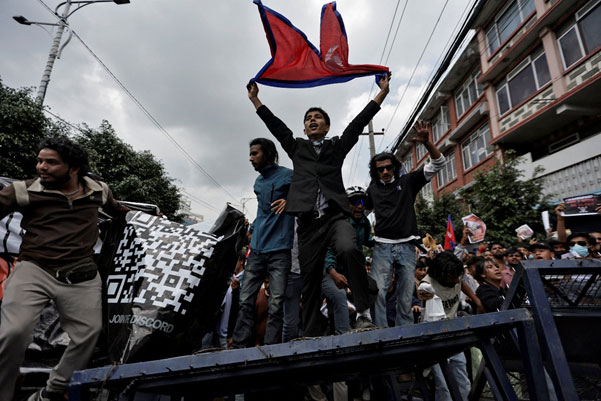
People take part in an anti-corruption protest in Kathmandu, Nepal on 8 September 2025. Credit: Navesh Chitrakar/Reuters via Gallo Images

NEW YORK, Dec 24 2025 (IPS) – 2025 has been a terrible year for democracy. Just over 7 per cent of the world’s population now live in places where the rights to organise, protest and speak out are generally respected, according to the CIVICUS Monitor, a civil society research partnership that measures civic freedoms around the world. This is a sharp drop from over 14 per cent this time last year.


Civic freedoms underpin healthy democracies, and the consequences of this stifling of civil society are apparent. At the end of the first quarter of the 21st century, the world is experiencing 19th century levels of economic inequality. The wealth of the richest 1 per cent is surging while some 8 per cent of the world’s population – over 670 million people – suffer from chronic hunger. Weapons-producing firms, closely intertwined with political elites, are reaping windfall profits as death and destruction rains down in Gaza, Myanmar, Sudan, Ukraine and many other places. It should surprise no one that the political leaders fomenting these conflicts are also squashing civic freedoms to avert questions about their motivations.

From Lima to Los Angeles, Belgrade to Dar es Salaam and Jenin to Jakarta, far too many people are being denied the agency to shape the decisions that impact their lives. Yet these places have also been the site of significant protests against governments this year. Even as authoritarianism appears to be on the march, people are continuing to pour onto the streets to insist on their freedoms. As we speak people in Sofia in Bulgaria are demonstrating in large numbers against endemic corruption which recently forced the government to resign.

History shows that mass demonstrations can lead to major advances. In the 20th century, people’s mobilisations helped achieve women’s right to vote, liberation of colonised peoples and adoption of civil rights legislation to address race-based discrimination. In the 21st century, advances have been made in marriage equality and other LGBTQI+ rights, and in highlighting the climate crisis and economic inequality through protests. But in 2025, the right to protest, precisely because it can be effective, is under assault by authoritarian leaders. Around the world, the detention of protesters is the number one recorded violation of civic freedoms, closely followed by arbitrary detentions of journalists and human rights defenders who expose corruption and rights violations.

This backsliding is now happening in major established democracies. This year, the CIVICUS Monitor downgraded Argentina, France, Germany, Italy and the USA to an ‘obstructed’ civic space rating, meaning the authorities impose significant constraints on the full enjoyment of fundamental rights. This regression is being driven by anti-rights nationalist and populist forces determined to degrade constitutional checks and balances and advance ballot box majoritarianism that denies minorities a fair say in economic, political and social life.

The push to degrade democracy by anti-rights forces now coming to fruition has been many years in the making. It accelerated this year with the return of Donald Trump. His administration immediately withdrew support to international democracy support programmes and instead built links to politicians responsible for crushing civic freedoms and committing grotesque human rights violations. Trump has laid out of the red carpet to El-Salvador’s Nayib Bukele, Hungary’s Victor Orbán, Israel’s Benjamin Netanyahu, Russia’s Vladimir Putin and Saudi Arabia’s Mohammed bin Salman, ushering in a new era of values-free might-is-right diplomacy that threatens to undermine decades of painstaking progress achieved by civil society.

The fallout is clear. Many wealthy democratic governments that traditionally fund civil society activities have significantly reduced their contributions. At the same time, they have linked their remaining support for civil society to narrowly defined strategic military and economic interests. In doing so, they have played directly into the hands of powerful authoritarian states such as China, Egypt, Iran, Nicaragua and Venezuela that seek to discredit domestic calls for accountability. Countries including Ecuador and Zimbabwe have introduced laws to limit the ability of civil society organisations to receive international funding.

All these developments are negatively impacting on civil society efforts for equality, peace and social justice. Yet the story of 2025 is also one of persistent resistance, and some successes. The courage demonstrated by Generation Z protesters has inspired people around the world. In Nepal, protests triggered by a social media ban led to the fall of the government, offering hope for a much-needed political reset. In Kenya, young protesters continued to take to the streets to demand political reform despite state violence. In Moldova, a cash-rich disinformation campaign run by a fugitive oligarch failed to sway the course of the national election away from human rights values. In the USA, the number of people joining the No-Kings protests just keeps on growing.

With over 90 per cent of the world’s population living with the institutional denial of full civic freedoms, anti-rights forces must be feeling pretty smug right now. But democratic dissent is brewing, particularly among Generation Z, denied political and economic opportunities but understanding that another world – one more equal, just, peaceful and environmentally sustainable – is possible. It’s far from game over yet, and even in difficult times, people will demand freedoms – and breakthroughs may be just around the corner.

Mandeep S Tiwana is Secretary General of CIVICUS, the global civil society alliance.

  Source

Myanmar’s Sham Election: Trump Legitimises Murderous Military Dictatorship

Active Citizens, Armed Conflicts, Asia-Pacific, Civil Society, Crime & Justice, Democracy, Featured, Headlines, Human Rights, Migration & Refugees, Press Freedom, TerraViva United Nations

Opinion

Credit: Issei Kato/Reuters via Gallo Images

MONTEVIDEO, Uruguay, Dec 22 2025 (IPS) – Myanmar is heading for an election, beginning on 28 December, that’s ostensibly an exercise in democracy – but it has clearly been designed with the aim of conferring more legitimacy on its military junta.


Almost five years after its February 2021 coup, the regime continues to fight pro-democracy forces and ethnic armed organisations, barely controlling a fifth of Myanmar’s territory. The junta has acknowledged that voting won’t be possible in much of the country.

The upcoming election fails every test of democratic legitimacy. The main democratic parties — the National League for Democracy and the Shan Nationalities League for Democracy — are banned. What remains is the Union Solidarity and Development Party, the military’s puppet party, plus minor groups that won no seats in the democratic election held in 2020. Independent media outlets have been crushed, journalists are arrested and intimidated daily and internet access is heavily restricted. In areas that resist military rule, civilians face escalating violence and arbitrary detention.

This election is designed not to reflect the popular will but to entrench military power. It comes as the regime continues its systematic campaign of violence against civilians: weeks before the junta announced the vote, Myanmar’s air force bombed a school in Oe Htein Kwin village, killing two teachers and 22 children, the youngest only seven years old.

The Assistance Association for Political Prisoners has confirmed 6,231 civilians have been killed by the military since the coup, though true figures could be much higher. Nearly half of all civilian deaths are estimated to have been caused by airstrikes. These are not indiscriminate military operations where civilians are collateral damage; they are deliberate attacks where civilians are the targets. The majority of locations of airstrikes have been sites with protected status under international law: camps for displaced people, churches, clinics and schools, often with no presence of armed groups nearby.

The junta has some powerful international allies. China backs it with billions in aid and advanced weapons. Russia supplies the fighter jets that drop bombs on civilians. India quietly sells arms. The three have long provided diplomatic cover and shielded the junta from international accountability. Meanwhile, the Association of Southeast Asian Nations (ASEAN) continues pursuing its failed Five-Point Consensus agreed with the regime in April 2021, despite its systematic violation of every commitment. Regional powers have negotiated exclusively with the junta without input from the National Unity Government — the government in exile formed by democratically elected lawmakers — effectively treating the military regime as Myanmar’s legitimate rulers.

Now recent decisions by the Trump administration threaten to tip the balance decisively in favour of legitimising military rule. Trump has lifted sanctions, cut independent media funding and eliminated the protections formerly afforded to Myanmar’s refugees in the USA. Consistent with his transactional approach, he’s choosing access to rare earth minerals over democracy.

The concern now is that ASEAN member states may follow suit, using the sham election as justification to normalise relations with the military regime. Some have already started moving in this direction, with the junta leader invited to regional meetings.

Myanmar’s pro-democracy forces continue to resist despite the shifting international context. The People’s Defence Forces and ethnic armed groups maintain coordinated operations across most of the country. Civil society continues documenting violations, providing aid to displaced people and advocating for international action. They deserve better than to watch the world legitimise their oppressors.

The junta’s control on the ground remains tenuous, but its diplomatic position is strengthening. Whether this consolidation continues depends on how the world responds to the election. The international community must be clear that treating the election as legitimate would signal to authoritarians everywhere that democratic institutions can be overthrown with impunity, war crimes carry no real consequences and regimes that bomb schools and imprison elected leaders can secure international acceptance.

Inés M. Pousadela is CIVICUS Head of Research and Analysis, co-director and writer for CIVICUS Lens and co-author of the State of Civil Society Report. She is also a Professor of Comparative Politics at Universidad ORT Uruguay.

For interviews or more information, please contact research@civicus.org
  Source