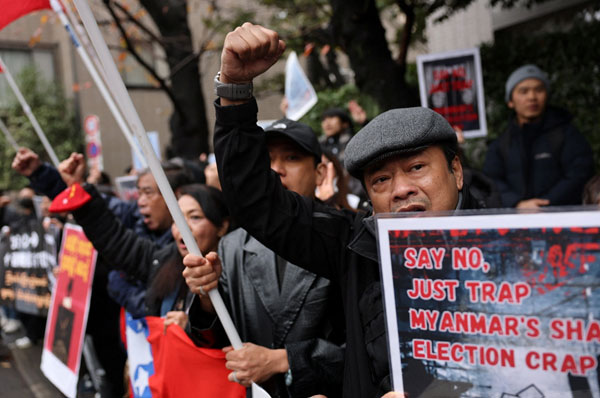
MONTEVIDEO, Uruguay, Dec 22 2025 (IPS) – Myanmar is heading for an election, beginning on 28 December, that’s ostensibly an exercise in democracy – but it has clearly been designed with the aim of conferring more legitimacy on its military junta.
Almost five years after its February 2021 coup, the regime continues to fight pro-democracy forces and ethnic armed organisations, barely controlling a fifth of Myanmar’s territory. The junta has acknowledged that voting won’t be possible in much of the country.
The upcoming election fails every test of democratic legitimacy. The main democratic parties — the National League for Democracy and the Shan Nationalities League for Democracy — are banned. What remains is the Union Solidarity and Development Party, the military’s puppet party, plus minor groups that won no seats in the democratic election held in 2020. Independent media outlets have been crushed, journalists are arrested and intimidated daily and internet access is heavily restricted. In areas that resist military rule, civilians face escalating violence and arbitrary detention.
This election is designed not to reflect the popular will but to entrench military power. It comes as the regime continues its systematic campaign of violence against civilians: weeks before the junta announced the vote, Myanmar’s air force bombed a school in Oe Htein Kwin village, killing two teachers and 22 children, the youngest only seven years old.
The Assistance Association for Political Prisoners has confirmed 6,231 civilians have been killed by the military since the coup, though true figures could be much higher. Nearly half of all civilian deaths are estimated to have been caused by airstrikes. These are not indiscriminate military operations where civilians are collateral damage; they are deliberate attacks where civilians are the targets. The majority of locations of airstrikes have been sites with protected status under international law: camps for displaced people, churches, clinics and schools, often with no presence of armed groups nearby.
The junta has some powerful international allies. China backs it with billions in aid and advanced weapons. Russia supplies the fighter jets that drop bombs on civilians. India quietly sells arms. The three have long provided diplomatic cover and shielded the junta from international accountability. Meanwhile, the Association of Southeast Asian Nations (ASEAN) continues pursuing its failed Five-Point Consensus agreed with the regime in April 2021, despite its systematic violation of every commitment. Regional powers have negotiated exclusively with the junta without input from the National Unity Government — the government in exile formed by democratically elected lawmakers — effectively treating the military regime as Myanmar’s legitimate rulers.
Now recent decisions by the Trump administration threaten to tip the balance decisively in favour of legitimising military rule. Trump has lifted sanctions, cut independent media funding and eliminated the protections formerly afforded to Myanmar’s refugees in the USA. Consistent with his transactional approach, he’s choosing access to rare earth minerals over democracy.
The concern now is that ASEAN member states may follow suit, using the sham election as justification to normalise relations with the military regime. Some have already started moving in this direction, with the junta leader invited to regional meetings.
Myanmar’s pro-democracy forces continue to resist despite the shifting international context. The People’s Defence Forces and ethnic armed groups maintain coordinated operations across most of the country. Civil society continues documenting violations, providing aid to displaced people and advocating for international action. They deserve better than to watch the world legitimise their oppressors.
The junta’s control on the ground remains tenuous, but its diplomatic position is strengthening. Whether this consolidation continues depends on how the world responds to the election. The international community must be clear that treating the election as legitimate would signal to authoritarians everywhere that democratic institutions can be overthrown with impunity, war crimes carry no real consequences and regimes that bomb schools and imprison elected leaders can secure international acceptance.
On a humid morning in August 2025, two small environmental groups in Panama — Centro de Incidencia Ambiental and Adopta Bosque Panamá — found out through social media that they were being sued for “slander” and “crimes against the national economy.” Their offence? Criticising a port project on the country’s Pacific coast.
A few days later, across the border in Costa Rica, two environmental content creators woke up to find their bank accounts frozen and salaries withheld. Their “crime” was posting videos about a tourism project they said was damaging Playa Panamá’s fragile coastline.
In both cases, the message was straightforward: speak out, and you’ll pay for it.
These are part of a growing global trend that is particularly ominous as climate activists, Indigenous defenders, and journalists push their demands upon the upcoming COP30 negotiations. The battle to protect the planet increasingly comes with an additional cost: defending yourself in court.
SLAPPs: Lawsuits Designed to Scare, Not Win
The acronym sounds almost trivial — SLAPP — but its impact is anything but. SLAPP stands for Strategic Lawsuits Against Public Participation, a term coined decades ago to describe legal actions intended not to win on merit but to intimidate, exhaust, and silence those who speak out on matters of public interest.
According to Transparency International, “SLAPPs are also known as frivolous lawsuits or gag lawsuits, as they silence journalists, activists, whistleblowers, NGOs and anyone who brings facts to light in the public interest.”
These are not just lawsuits; they are in fact strategy. They don’t need to win, they just need to drain your time, your money, and your hope.
The claimants are usually powerful, ranging from corporations, politicians, or investors.
In the Costa Rican case, the company linked to the Playa Panama tourism project did not even allege material harm. Yet the court imposed “precautionary embargoes,” blocking credit cards, freezing wages, even restricting property rights, punishing through the process.
In Panama, the developers of the Puerto Barú port project filed a criminal complaint against environmental NGOs who had challenged the project’s environmental impact assessment before the Supreme Court. Those challenges are still pending. Rather than waiting for the judiciary’s ruling, the company launched a separate legal attack, accusing those NGOs of harming the national economy.
Observers call it “judicial intimidation.” The case triggered several alerts across the EU SEE Early Warning Mechanism, warning of a “chilling effect on civic participation.”
‘Unfortunately, in Panama, judicial harassment of journalists and activists by politicians and businesspeople is already common practice because criminal law allows it. Reform is needed in relation to so-called crimes against honour and the grounds for seizure of assets. International organisations such as the Inter-American Press Association have warned about this,’ says Olga de Obaldía, executive director of Transparency International – Panama Chapter, a national member of the EU SEE network.
In Costa Rica, the embargoes imposed on content creators Juan Bautista Alfaro and Javier Adelfang sparked outrage. Within days, 72 organisations and more than 3,000 individuals — from academics to Indigenous leaders — signed an open letter condemning the action as “an assault on public interest advocacy.”
The backlash worked: members of the Frente Amplio Party introduced a bill to restrict the use of preventive embargoes in cases involving public interest speech.
But for those already targeted, the damage – emotional, financial and reputational – has already been done.
We do not just see SLAPPs deployed in Latin America. Examples of SLAPPs as a means of lawfare by the rich and powerful have been around for a long time across the globe.
In Thailand, Thammakaset sued several members of the NGO Fortify Rights and other activists for denouncing abusive working conditions. Still today content posted by communities or NGOs, or even comments under local government posts, are often picked up and turned into criminal defamation cases.
Despite the existence of anti-SLAPP provisions in the Criminal Procedure Code, experiences indicate that they are largely ineffective. The constant threat of facing litigation based on online content disrupts CSO work and chills free speech.
Climate Activism Under Pressure
As the world heads toward another global climate summit in Brazil – where journalist Amanda Miranda faces a SLAPP by government officials for uncovering corruption – we face a paradox: while governments make promises about protecting the environment, environmental defenders are being prosecuted for holding them accountable.
Brazil’s baseline snapshot on an enabling environment also highlights a related trend: environmental defenders are frequently framed as “anti-development,” a narrative used to delegitimise their work and undermine public support. SLAPPs reinforce this strategy. Beyond draining time and resources, these lawsuits inflict reputational harm, serving as tools in broader campaigns to discredit and silence critics.
According to research from the Business & Human Rights Resource Centre, the highest number of SLAPPs – almost half of them – took place in Latin America, followed by Asia and the Pacific (25%), Europe & Central Asia (18%), Africa (8.5%), and North America (9%). Nearly three-quarters of cases were brought in countries in the Global South and 63% of cases involved criminal charges. Furthermore, most individuals and groups facing SLAPPs raised concerns about projects in four sectors: mining, agriculture and livestock, logging and lumber, and finally palm oil.
In an International Center for Non-Profit law – ICNL – study on over 80 cases of SLAPPs across the Global South, out of them “91% were brought by private companies or company officials(…) 41% brought by mining companies and (…) 34% brought by companies associated with agriculture.”
According to data from the CASE Coalition, SLAPP cases have risen sharply in recent years: from 570 cases in 2022 to over 820 in 2023 in Europe alone. Around half of those targeted climate, land, and labor rights defenders. Fossil fuel and extractive industries remain the most frequent initiators.
It is important to remember that those numbers under-represent the extent of SLAPP use, they are based on reported legal cases and can’t include the many cases in which the mere threat of a lawsuit was enough to silence before filing a complaint
The Business & Human Rights Resource Centre has documented that companies linked to mining, tourism, and large infrastructure projects are increasingly using SLAPPs to paralyse critics ahead of international events like COP, when scrutiny intensifies.
The danger of SLAPPs lies in their quietness. They happen behind closed doors, in legal language, far from the marches and hashtags. The trials often do not even end up in lawsuits. Yet their effect is profound. Every frozen bank account, every unpaid legal fee, every public apology extracted under duress weakens the collective courage needed to hold power to account.
Across regions, SLAPPs follow the same playbook: identify outspoken defenders, sue them on vague charges like “defamation” or “economic harm”, drag the process out for years, win by exhausting, not convincing.
Of course, the specific tactics vary by legal context. In some countries, certain charges carry strategic advantages. For example, in the Philippines, authorities frequently rely on serious, non-bailable allegations — including charges like illegal possession of firearms — to keep activists detained for extended periods.
The Philippines remains the most dangerous country in Asia for land and environmental defenders with frequent attacks linked to mining, agribusiness, and water projects.
Authorities have also used fabricated firearms and explosives charges to target activists, journalists, and community leaders, often accompanied by asset freezes, surveillance, and prolonged detention. In these settings, SLAPPs can “weaponise” the criminal justice system itself to remove critics from public life entirely.
SLAPPs have become the invisible front of the climate struggle, a slow-motion suppression campaign that rarely makes headlines.
But implementation remains uncertain. The Vice-President of the European Commission, Vera Jourova, called the Directive “Daphne’s law,” in memory of the Maltese journalist Daphne Caruana Galizia, who was killed in 2017 while she was the victim of numerous legal proceedings against her, and whose tragic story helped raise awareness of the issue.
Beyond the European context, similar efforts to counter SLAPPs have emerged elsewhere, for example in Colombia with the Guerra v. Ruiz-Navarro case. This case illustrates the importance of investigating sexual violence and abuse of power, recognising it as a matter of public interest that warrants protection. This ruling sets a strong precedent against the misuse of courts to silence the press by influential figures and underscores that defending victims and informing the public are acts of defending human rights.
In Indonesia, another country where SLAPPs are being deployed, civil society groups continue to advocate for stronger legal protections, including legislation to protect from SLAPPs. A small step forward came in September 2024, when the Ministry of Environment and Forestry issued Regulation No. 10/2024, on legal protection for environmental defenders.
“While the Ministry of Environment and Forestry Regulation No. 10/2024 represents an initial step toward safeguarding environmental defenders, civil society organisations expect its effective implementation, coupled with broader anti-SLAPP legislation, to ensure comprehensive protection against retaliatory lawsuits and foster a secure environment for public participation in environmental governance,” says Intan Kusumaning Tiyas of INFID, national civil society platform in Indonesia.
These include stronger legal safeguards by enacting robust national anti-SLAPP laws that allow for early case dismissal, ensure defendants can recover legal costs, and penalise those who file abusive lawsuits.
Setting up solidarity and support through regional and global networks can quickly mobilise legal assistance, mental health support, and emergency funding for those targeted.
Finally, actions around visibility and accountability are needed to bring SLAPPs into the public eye and raise awareness. SLAPPs need to be framed not as ordinary legal conflicts, but as violations of human rights that weaken an enabling environment for civil society, democratic participation and obstruct climate justice.
At COP30, negotiators will debate carbon credits and transition funds. But the real test of climate commitment may lie in whether states protect the people defending rivers, forests, and coastlines from powerful interests.
Civil society hopes to push a bold message into COP30 discussions: defending the environment requires defending those who defend it and supporting an enabling environment for civil society.
This article was written with the support of the Forus team, particularly Lena Muhs, and members of the EU SEE network.
Oct 13 2025 (IPS) – CIVICUS discusses enforced disappearances in Mexico with a member of the International Network of Associations of Missing Persons.
The crisis of disappearances in Mexico has reached alarming proportions, with over 52,000 unidentified bodies in morgues and mass graves. On 1 July, the Mexican Congress approved controversial changes to the General Law on Disappearances, which promise to modernise the search process through a national biometric system, but which human rights organisations and victims’ groups claim could establish an unprecedented system of mass surveillance.
What are the main changes and how will they affect searches?
The changes seek to strengthen the mechanisms for searching for, locating and identifying missing persons. The main innovations include the creation of a National Investigation File Database and a Single Identity Platform that will integrate various databases. The revised law also provides for the strengthening of the Unique Population Registry Code (CURP) through the incorporation of biometric data such as iris scans, photographs and fingerprints.
The law obliges authorities and individuals to provide information useful for search processes and incorporates new institutions such as the National Guard and the Ministry of Security into the National Search System. It also increases the penalties for the crime of enforced disappearance.
The new system aims to ensure faster and more efficient searches through technology and inter-institutional coordination. It also provides for the use of satellite imagery and advanced identification technologies, under the coordination of the National Search System.
What risks are posed by the authorities’ access to biometric data?
There are serious concerns that the changes give security and justice institutions, including prosecutors’ offices, the National Guard and the National Intelligence Centre, immediate and unrestricted access to public and private databases, including those containing biometric information. The official argument is that this will speed up searches.
However, civil society warns that the Single Identity Platform and the biometric CURP could become instruments of mass surveillance. It is feared the authorities could misuse the information and, instead of helping to find missing persons, use it to help control the population, putting the rights to privacy and security at risk.
How have victims’ groups reacted?
Victims’ collectives have rejected the reform as opaque and rushed. They complain that, although round table discussions were organised, these were merely symbolic and their proposals were not taken into account.
The families of missing persons argue the changes focus on technological solutions that don’t address the underlying structural problems of corruption, cronyism, organised crime and impunity. But no technological solution will work as long as the institutions responsible for abuses and cover-ups remain in charge of implementing it.
This law runs the risk of repeating the mistakes of the 2017 General Law on Enforced Disappearances. That was an important step forward, as it criminalised the offence, created a national search system and sought to guarantee the participation of families in locating and identifying missing persons. Unfortunately, it was never properly implemented. There are fears this new law, in the absence of effective enforcement mechanisms, will only deepen frustration and perpetuate impunity.
What alternatives do victims’ groups propose?
Their demands go beyond legislative changes: they demand truth and justice through thorough investigations, the prosecution of those responsible in state institutions and organised crime groups and an effective search in the field, with the coordination and active participation of victims’ groups.
The collectives also stress the urgency of identifying the over 52,000 unnamed people in morgues and mass graves, and are calling for the creation of an Extraordinary Forensic Identification Mechanism. And they demand real protection for those searching for their relatives, who continue to face threats and attacks.
Above all, they demand an end to impunity through the dismantling of the networks of corruption and collusion between authorities and organised crime. As one local activist summed it up, at the end of the day, without a genuine National Plan for Missing Persons, none of this will work. Each state also needs its own plan. Otherwise, we will remain in the same situation: without results, without reports and without answers about our disappeared.
NEW YORK, Sep 30 2025 (IPS) – DANGER – WARNING – ALARM: Nobel Peace Prize Laureate Maria Ressa is warning that lies are being weaponized deliberately to manipulate people around the world. Big, profit-oriented, and technology-enabled companies are now disregarding or trampling over the sanctity and veracity of facts and information to speed up disinformation, (using AI) in ways that quickly erase truth and leave people manipulated.
Even democratic elections are getting manipulated to the extent that some 72 per cent of the world is now living under illiberal or authoritarian regimes that have been “democratically” elected. Journalism, fact-checking, and public trust are under attack from this deliberate subversion of information integrity.
Enjoy this interview I conducted with Ms Ressa, (produced, directed and edited by my UN News and Media colleagues, Paulina Kubiak and Alban Mendes De Leon).
[embedded content]
Ben Malor is the Chief Editor, UN Dailies, at UN News.
NEW YORK, Sep 23 2025 (IPS) – No leader responsible for mass atrocities enjoys greater impunity on the international stage than Benjamin Netanyahu. This is due to the strange stranglehold of the pro-Israel lobby on the two major political parties in the United States.
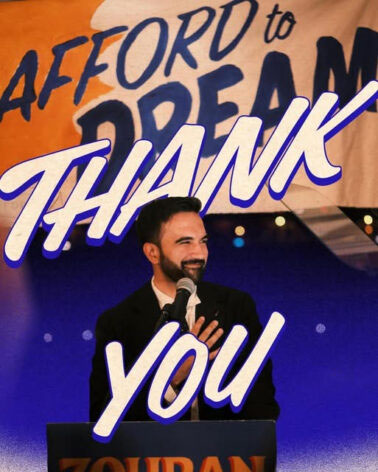
Unsurprisingly, the assertion by New York City mayoral candidate and front runner Zohran Mamdani on September 13 that he would order the arrest of Netanyahu if he ever came there, has attracted blowback from within the mainstream political establishments of both the Democratic and Republic parties, as well from extremist right-wing circles.
Legal experts have gone into a tizzy whether a future mayor of New York can arrest the leader of a foreign government. The unjustified blowback apparently in support of Israel’s televised genocide of the Palestinian people flies in the face of facts, basic principles of humanity and the shifting sands of public opinion in the United States.
A high- powered UN Commission of Inquiry led by a judge who investigated the Rwandan genocide of 1994 has recently concluded that Israel has committed genocide – the worst crime under international law – in Gaza.
The International Criminal Court (ICC) has a standing arrest warrant against Netanyahu and his former defence minister for using starvation as a weapon of war and for deliberately killing thousands of Palestinian civilians in Gaza. But bizarrely, it’s not Israel’s leaders but ICC judges and prosecutors who are being targeted through sanctions by the Trump administration.
Nevertheless, Netanyahu’s cruel war on Gaza is rapidly eroding American public support for Israel. According to the Pew Research Center’s latest findings more than half of American adults now possess an unfavourable opinion of Israel. Just 32 percent have confidence in Netanyahu himself.
However, the negative impacts of the damage done to American democracy by Netanyahu and his hardline supporters will linger on. Under the pretext of containing anti-Israeli sentiment, the Trump administration has attacked universities that were the site of sustained pro-Palestinian protests including Columbia and Harvard.
Academic freedom is a cherished American ideal but that hasn’t prevented the administration from threatening colleges and universities with federal funding cuts and placing restrictions on foreign students if they don’t toe the government’s line. Sadly, several pro-Palestinian student protest leaders have been arbitrarily detained in direct repudiation of constitutional protections on the freedom of speech and the right to peaceful protest drawing criticism from UN experts.
Many of us in civil society have been pointing out for some time that the leaders of the two major political parties in the United States are so beholden to the moneyed interests of their donors that they have become out of touch with the needs and aspirations of the American people.
Indeed, Israel’s belligerence in continuing atrocities on the civilian population in the Occupied Palestinian Territories of Gaza and the West Bank has been sharply rebuked by progressive groups like Jewish Voices for Peace and Jews for Racial and Economic Justice who support a new wave of politicians such as Mahmud Mamdani who are willing to stand up for human rights.
A generation of politicians who represent a more forward looking and inclusive vision for the United States and who enjoy widespread support in New York and beyond such as Alexandria Ocasio Cortez have rallied to Mamdani’s side.
Mamdani’s win in the Democratic primaries for the New York mayoral election was powered by a diverse coalition of supporters in America’s most diverse and vibrant city. He continues to be the front runner for the mayoral election slated on November 4.
So far, his focus has been on the issues that matter to most of the people of New York, such as the high cost of living and the ever- widening gap between millionaires and the rest of the country fueled by pro-big business policies and tax cuts.
Funnily, in blatant negation of diplomatic protocol, Netanyahu has jumped into the political fray by dubbing Mamdani’s proposals for New York City’s mayoral elections as ‘nonsense’.
Notably, Netanyahu is planning to come to New York to address the UN General Assembly on 26 September. When he speaks at the UN, it’s usually to disparage the institution, which will be marking 80 years of its founding from the ashes of war and the horrors of the holocaust.
Last year, a large number of delegates walked out of the UN hall when he came on stage. This year, Netanyahu emboldened by Trump’s support will try his best to repudiate the findings of the UN Commission of Inquiry on genocide in Gaza. Whether the delegates will pay attention is arguable.
However, one thing is certain. If Netanyahu attempts to go on to the streets of New York to campaign against Mamdani he will likely be met by mass protests.
Mandeep S. Tiwana is a human rights lawyer and Secretary General of global civil society alliance, CIVICUS. He is presently based in New York.
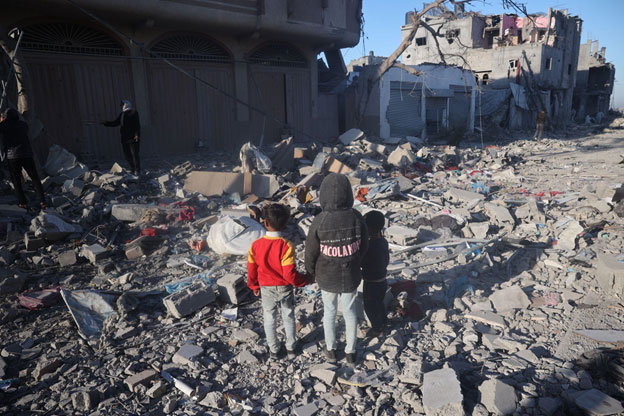
Gazan children standing in the rubble of their demolished home in Rafah. Credit: UNICEF/Eyad El Baba
UNITED NATIONS, Sep 17 2025 (IPS) – On September 16, the Israeli military began its ground offensive in Gaza City, accompanied by intensified bombardment of residential areas and a surge in civilian displacement. Concurrently, the United Nations Independent International Commission of Inquiry on the Occupied Palestinian Territory, including East Jerusalem and Israel, issued a report in which it found that Israel is responsible for committing genocide in Gaza, citing deliberate efforts to destroy Palestinian life, carried out with near-total impunity.
“The responsibility for these atrocity crimes lies with Israeli authorities at the highest echelons who have orchestrated a genocidal campaign for almost two years now with the specific intent to destroy the Palestinian group in Gaza,” said Navi Pillay, Chair of the Commission. “The Commission also finds that Israel has failed to prevent and punish the commission of genocide through failure to investigate genocidal acts and to prosecute alleged perpetrators.”
The Commission found that Israeli forces have repeatedly disregarded orders from the International Court of Justice (ICJ) as well as warnings from UN Member States, human rights groups and civil society organizations. Israeli officials have dismissed the Commission’s findings, accusing it of bias and refusing to cooperate with its investigations.
In response to the Commission, Israeli President Isaac Herzog told journalists, “While Israel defends its people and seeks the return of hostages, this morally bankrupt Commission obsesses over blaming the Jewish state, whitewashing Hamas’s atrocities, and turning victims of one of the worst massacres of modern times into the accused.”
The Commission described its report as the “strongest and most authoritative UN finding to date”, while noting that it operates independently from the UN and does not speak on its behalf. Currently, the UN does not categorize Israel’s actions in Gaza as a genocide, but has been under increasing pressure from its agencies to do so. Back in August, over 500 staff from the Office of the High Commissioner for Human Rights (OHCHR) urged UN Human Rights Chief Volker Türk to explicitly recognize the situation as a genocide. “OHCHR has a strong legal and moral responsibility to denounce acts of genocide,” said the letter signed by the UNHCR Staff Committee in Geneva. “Failing to denounce an unfolding genocide undermines the credibility of the U.N. and the human rights system itself.”
Humanitarian experts project that ongoing bombardments will result in an immense loss of human life and eliminate the remaining prospects of survival for those still in the enclave. The UN Human Rights Council (HCR) noted that controlled detonations in Gaza City have leveled entire neighborhoods and are in the process of wiping out “the last viable element of civilian infrastructure’ essential for survival.
The Commission reports that since October 7, 2023, Israel has repeatedly bombarded densely populated residential areas, often relying on explosive weapons with wide-area impacts. One spokesperson for the Israeli security forces told the Commission that they were “focused on what causes maximum damage”. The Commission has documented numerous instances of Israeli forces targeting high-rise buildings and residential apartment blocks, leading to the destruction of entire neighborhoods and the deaths of almost all civilians involved.
Additionally, the Commission observed that the number of bombs used by Israel in the past two years is unprecedented in comparison to other world conflicts, noting that Israel drops in less than a week the number of bombs the United States used in Afghanistan over an entire year —concentrated in a much smaller and more densely populated area.
Airstrikes and shellings on critical civilian infrastructures have disrupted nearly all aspects of life for Palestinians in Gaza. According to the report, damage to agricultural lands across the entire enclave poses significant long-term risks to food production and accelerated food insecurity, leading to famine.
As of February 2025, 403 school buildings in Gaza have been damaged by Israeli bombardment, including eighty-five that have been completely destroyed and seventy-three left only partly functional. The Commission warns that the strikes have effectively collapsed Gaza’s education system, disrupting schooling for over 658,000 children. Without urgent intervention, thousands are expected to suffer long-term psychological harm and stunted cognitive development due to the loss of education and psychosocial support services.
Furthermore, the widespread destruction of hospitals and the immense number of traumatic injuries from Israeli attacks have overwhelmed hospitals and healthcare centers across Gaza, leading to the collapse of the healthcare system. The siege has led to severe shortages in fuel and electricity, while also causing the looting and damaging of life-saving medical supplies and medications. As a result, patients with chronic illnesses and infections from diseases have been deprioritized, leading to a sharp increase in the number of preventable deaths and complications. Medical experts told the Commission that the targeting of healthcare facilities has severely restricted access to care for thousands of Palestinians, with children being among the most affected.
According to the report, between October 2023 and July 2025, approximately 53,000 Palestinians in Gaza were killed as a direct result of Israeli military operations. The Commission reports that Palestinians in Gaza were also attacked in their homes, in hospitals, as well as shelters, such as schools and religious sites. Israeli forces also repeatedly targeted journalists, healthcare personnel, humanitarian workers, and other protected individuals, sometimes even during ceasefire periods and without warning.
The report also documents Israeli forces targeting Palestinians in evacuation routes and designated safe zones, finding that women and children were most often directly targeted and killed, often while alone and in areas not experiencing active hostilities. In every case reviewed, the Commission found that Israeli forces were aware of civilians’ presence but opened fire regardless. Many of the victims were children carrying makeshift white flags , including toddlers who were reportedly shot in the head by snipers.
Furthermore, the report underscores that the Gaza Humanitarian Foundation (GHF) was largely ineffective in providing direct relief to struggling Palestinians and has been linked to a surge in civilian deaths. As of July 31, at least 1,373 Palestinians had been killed while trying to access food, with 859 killed near GHF sites and 514 along convoy routes—with most fatalities attributed to the Israeli military.
Furthermore, Israeli forces have effectively hindered humanitarian operations through routine bombardments and shellings. From October 2023 to July 2025, the Commission recorded at least 48 staff and volunteers from the Palestine Red Crescent Society (PRCS) that were killed. Additionally, medical personnel also informed the Commission that Israeli forces deliberately shelled ambulances, with many workers stating that they believed that they had been intentionally targeted.
The Commission also found that Israel weaponised the withholding of life-sustaining necessities, such as food, water, fuel, and humanitarian aid, leading to a sharp increase in preventable civilian deaths. According to the report, families in Gaza have less than one liter of water per person per day for drinking, cooking, and hygiene, which is far below international minimum standards for daily water consumption.
Moreover, water shortages have led to a deterioration of the sanitation system, which is particularly pronounced in displacement camps, where nearly 400,000 kilograms of waste piles up each day. This has led to the rampant spread of infectious diseases such as Hepatitis A.
Additionally, more than ninety percent of the population in Gaza has faced acute food insecurity since October 2023, with the most severe cases being concentrated in northern Gaza. According to figures from the Integrated Food Security Phase Classification (IPC), as of July 2025, food consumption has fallen far below the famine threshold in most areas of the enclave and malnutrition has reached the famine threshold in Gaza City.
The report found that Israeli forces were responsible for deliberately starving and depriving civilians in Gaza of resources that are paramount for human survival, with PRCS stating that Gaza is “unable to sustain life in its current state as civilians find their basic needs unmet”.
The Commission warns that the near-total impunity that Israeli forces and officials have emboldened the continuation of atrocities in Gaza, with global pressure mounting from the international community which urgently calls for an immediate de-escalation of hostilities, unimpeded humanitarian access, and credible mechanisms to hold perpetrators accountable.
“The international community cannot stay silent on the genocidal campaign launched by Israel against the Palestinian people in Gaza. When clear signs and evidence of genocide emerge, the absence of action to stop it amounts to complicity,” said Pillay. “Every day of inaction costs lives and erodes the credibility of the international community. All States are under a legal obligation to use all means that are reasonably available to them to stop the genocide in Gaza,” she added.
Following the report’s release, the leaders of twenty aid agencies working in Gaza, including Oxfam International, CARE and Médecins Sans Frontières (MSF), issued a joint statement also urging member states to take action to “prevent the evisceration of life in the Gaza Strip”.
“All parties must disavow violence against civilians, adhere to international humanitarian law and pursue peace. States must use every available political, economic, and legal tool at their disposal to intervene. Rhetoric and half measures are not enough. This moment demands decisive action,” the statement reads.
“The UN enshrined international law as the cornerstone of global peace and security. If Member States continue to treat these legal obligations as optional, they are not only complicit but are setting a dangerous precedent for the future. History will undoubtedly judge this moment as a test of humanity. And we are failing. Failing the people of Gaza, failing the hostages, and failing our own collective moral imperative.”