Billions will Vote this Year – LGBTIQ+ People Must not be Excluded

Civil Society, Democracy, Gender, Global, Global Governance, Headlines, Human Rights, IPS UN: Inside the Glasshouse, LGBTQ, TerraViva United Nations

Opinion

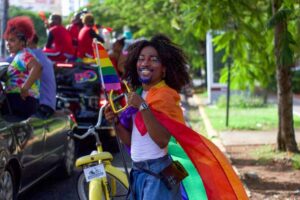
UNDP is working in all regions of the world to integrate LGBTIQ+ people and issues in development efforts. Credit: UNDP Dominican Republic

UNITED NATIONS, May 20 2024 (IPS) – This year has been called the ‘super election’ year, with 3.7 billion people potentially going to the polls. This historic political moment is also an opportunity to reflect on what these billions of voter experiences will look like. Who will vote, who can run for office and who might be excluded from the political process?


It goes without saying and is enshrined in the Universal Declaration of Human Rights, that everyone should have the right to participate in the political processes in their country, and huge strides have been made in recent years to recognize and advocate for LGBTIQ+ rights. But the reality for LGBTIQ+ people is often very different.

Because despite progress, one third of countries maintain laws that make same-sex relationships illegal. For the LGBTIQ+ people living in these countries, what is their experience with elections, as voters or as candidates?

Consider the transgender person who faces harassment whenever they leave their home and is ultimately excluded from their community. Or the LGBTIQ+ groups that are receiving constant online hate because of a wave of social media disinformation. To what extent are they free to express their political views, without fear of discrimination, hate speech or even physical violence?

These experiences do not exist in a vacuum. They are the result of a vast swathe of anti-LGBTIQ+ laws and policies, which in some countries are continuing to gather momentum, compounded by the pervasive stigma and discrimination many LGBTIQ+ people face in their everyday lives.

And they directly impact our political processes by silencing people, limiting the extent to which they can have a voice in their societies and in the decisions which affect them, and entrenching structural discrimination.

UNDP has been working for decades to help break these barriers and to strengthen laws, policies and programmes that respect the human rights of all individuals. This demands we work with a broad range of global partners and advocates, recognizing that LGBTIQ+ people are a diverse group and face multiple and intersecting forms of discrimination.

But with estimates suggesting about half of the global population may vote this year, it does throw into sharp focus the need to ensure that the people determining the leadership and political direction of their countries, truly reflects the full diversity of the world we live in.

We have reason to be hopeful that they will. Because with the steadfast support of partners like Luxembourg, UNDP has been supporting global efforts, including LGBTIQ+ organizations and activists, to help transform LGBTIQ+ rights.

For instance, last October, UNDP launched its global publication ‘Inclusive Democracies: A guide to strengthening the participation of LGBTI+ persons in political and electoral processes,’ in a jointly cohosted event with the LGBTI intergroup of the European Parliament.

Its aim is to provide policymakers, electoral management bodies, legislators, civil society and other stakeholders a clear set of tools to work towards a more equal exercise of civic and political rights, freedom of expression and association, and access to public services. The publication, informed by UNDP’s work globally, includes best practices from over 80 countries, mainly from the Global South.

At the same time, UNDP is working in 72 countries and all regions of the world to integrate LGBTIQ+ people and issues in development efforts.

This includes working with young key populations in Southern Africa – which includes young gay men and other men who have sex with men, lesbian, gay, bisexual, transgender and intersex people – to help challenge some of the negative stereotypes appearing in mainstream media, and to change the negative narratives.

Support has focused on organizing media skills training for young people to build their journalistic skills and enhance the use of digital platforms for advocacy on issues affecting them.

But digital platforms also have the power to do great harm, and LGBTIQ+ individuals often face disproportionate online harassment, posing a threat to their equal political participation. With support from Luxembourg, UNDP has been able to prioritize combating dangerous online speech that targets individuals based on gender, sexual orientation or ethnicity.

For example, the Cabo Verde Free and Equal Campaign, part of UNDP’s efforts, focuses on fighting gender stereotypes and eliminating prejudices through legal and communication channels.

The global efforts to address LGBTIQ+ rights are having an impact. The recent HIV Policy Lab report – produced jointly by Georgetown University’s O’Neill Institute, UNDP and the Global Network of People Living with HIV (GNP+) shows a clear and ongoing trend toward decriminalization of consensual same-sex sex around the world, with more countries removing punitive laws in 2022 than in any single year in the past 25 years.

These advances are part of a collective effort, because building inclusive and equitable societies means building a coalition of partners. At UNDP, the importance of partners like Luxembourg in helping to fund this vital work, and shining a light on the injustices LGBTIQ+ people face, is never underestimated.

This is important because investments in human rights are investments in our societies. And thanks to Luxembourg and our core donors, UNDP has been able to help people, whoever and wherever they are, to have a voice in shaping their societies.

This year, the stakes have never been higher. The decisions made in the elections taking place will set the course for how societies develop, and to what extent human rights are respected. Which is why we must also use this moment to recognize our partners and to renew our commitments to the LGBTIQ+ community.

The world’s attention will be focused on the election winners and losers. But the outcome is only one piece of the puzzle. Ensuring the political processes taking place are inclusive, credible and peaceful is how we ultimately build a world where everyone can vote, anyone can run for office, and most importantly, where no one will be silenced.

Ulrika Modeer is UN Assistant Secretary-General and Director of the Bureau of External Relations and Advocacy, UNDP; Christophe Schiltz is Director General, Directorate for Development Cooperation and Humanitarian Affairs, Ministry of Foreign and European Affairs, Defence, Development Cooperation and Foreign Trade, Luxembourg

Source: UNDP

IPS UN Bureau

  Source

Solomon Islands: A Change More in Style than Substance

Asia-Pacific, Civil Society, Crime & Justice, Democracy, Economy & Trade, Featured, Global, Headlines, Human Rights, Press Freedom, TerraViva United Nations

Opinion

Credit: Saeed Khan/AFP via Getty Images

LONDON, May 16 2024 (IPS) – There’s change at the top in Solomon Islands – but civil society will be watching closely to see whether that means a government that’s grown hostile will start doing things differently.


Jeremiah Manele is the new prime minister, emerging from negotiations that followed April’s general election. He’s part of OUR Party, led by outgoing four-time prime minister Manasseh Sogavare. The party came first, winning 15 of 50 constituencies, but several incumbents who stood for it lost their parliamentary seats, and Sogavare only narrowly held his. Weakened, Sogavare stood aside to allow Manele to prevail as the consensus candidate of the post-election coalition his party stitched together.

China in the spotlight

Voters had to wait to have their say. The election was supposed to be held in 2023 but the government postponed it. It claimed it couldn’t afford to hold the election and host the Pacific Games in the same year, and temporarily suspended constitutional provisions through a parliamentary vote. The opposition accused Sogavare of a power grab and questioned his commitment to democracy.

Political debate in recent years has been dominated by the government’s relations with China, a major funder of the 2023 Pacific Games. Sogavare pivoted towards China shortly after becoming prime minister for the fourth time in 2019. Until then, Solomon Islands was among the small number of states that still recognised Taiwan instead of China. The move was controversial, made with no consultation after an election in which it hadn’t been an issue.

Sogavare then signed a series of agreements with China, including a highly secretive security cooperation deal. For civil society, this raised the concern that Solomon Islands police could be trained in the same repressive techniques used in China, and Chinese security forces could be deployed if unrest broke out. The country has experienced several bouts of conflict, including ethnic unrest and violent protests started by young unemployed men, with some violence targeting people of Chinese origin. Such conflict followed controversial post-2019 election manoeuvres that returned Sogavare to power, and surged again in 2021 over the government’s relations with China. Sogavare blamed ‘foreign powers’ for the 2021 unrest.

China is making extensive economic diplomacy efforts to encourage states to switch allegiance and has developed a keen interest in Pacific Island nations, long neglected by western powers. Its efforts are paying off, with Kiribati and Nauru also abandoning Taiwan in recent years. The Pacific Islands cover a vast oceanic territory, and a major Chinese foreign policy objective is to break up the island chains it sees as encircling it and constraining its reach. It’s long been suspected of coveting a naval base in Solomon Islands.

Further, while the populations may be small, each state has an equal vote in the United Nations, and the more allies China has, the more it can shield itself from criticism of its many human rights violations.

China didn’t just help pay for the Games. It provides direct funding to pro-government members of parliament, and has been accused of outrightly trying to bribe politicians. Daniel Suidani, a strong opponent of deals with China, claims to have been offered bribes to change his position. Suidani was premier of Malaita Province, until 2023, when he was ousted in a no-confidence vote following the central government’s apparent intervention. Police then used teargas against protesters who supported him.

China’s attempts to exert influence extend to the media. Last year, it was reported that the Solomon Star newspaper had received funding from the Chinese state in return for agreeing to publish pro-China content.

Disinformation favourable to China also circulated during the campaign. A Russian state-owned news agency falsely reported that the US government was planning what it called an ‘electoral coup’, a lie repeated by the Chinese Communist Party’s Global Times newspaper. During the campaign, Sogavare also doubled down on his support for China, heaping praise on its political system and suggesting that democracy might open the door to same-sex marriage, which he portrayed as incompatible with his country’s values.

At the same time as China’s media influence has grown, the Solomon Islands government has gained a reputation for attacking media freedoms. It took full control of the public broadcaster, the Solomon Islands Broadcasting Corporation, giving itself the power to directly appoint the broadcaster’s board, and made an attempt to vet all of its news and current affairs programmes, which it dropped after backlash. Following an investigation of relations with China by Australia’s public broadcaster, the government threatened to bar foreign journalists from entering the country if they run stories it deems ‘disrespectful’, accusing media of spreading ‘anti-China sentiments’.

Following criticism, the government also threatened to investigate civil society and accused civil society organisations of fraudulently receiving funds. It’s clear that the other side of the coin of closer relations with China has been growing hostility towards dissent.

Looking forward

China was far from the only issue in the campaign, and many voters emphasised everyday concerns such as the cost of living, the state of education, healthcare and roads, and the economy. Some criticised politicians for spending too much time talking about foreign policy – and will be judging the new government by how much progress it makes on these domestic issues.

The good news is that the vote appears to have been competitive, and so far there’s been no repeat of the post-election violence seen after the 2019 vote. That’s surely a positive to build on.

But Sogavare isn’t gone from politics, taking a new position as finance minister. Meanwhile, Manele, foreign minister in the old government and viewed as another pro-China figure, is unlikely to take a new foreign policy direction. But there’s some hope, at least for civil society, that he’ll be a less polarising and more conciliatory politician than Sogavare. The first test will be how the new government handles its relations with civil society and the media. The government should prove it isn’t in China’s pocket by respecting civic freedoms.

Andrew Firmin is CIVICUS Editor-in-Chief, co-director and writer for CIVICUS Lens and co-author of the State of Civil Society Report.

  Source

Media Freedom Declining Across Europe, With Implications for Rule of Law

Democracy, Editors’ Choice, Europe, Featured, Freedom of Expression, Headlines, Human Rights, Press Freedom, Sustainable Development Goals, TerraViva United Nations

Press Freedom

World Press Freedom Day 2024

Protestors gathered in Bratislava on May 2, 2024 to protest against changes to the public broadcaster, RTVS. The placard in the picture reads: RTVS on a flat-screen TV; STVR about a flat earth. Credit: Ed Holt/IPS

Protestors gathered in Bratislava on May 2, 2024 to protest against changes to the public broadcaster, RTVS. The placard in the picture reads: RTVS on a flat-screen TV; STVR about a flat earth. Credit: Ed Holt/IPS

BRATISLAVA, May 3 2024 (IPS) – A new report has warned media freedom in the EU is close to “breaking point” in many states amid rising authoritarianism across the continent.


In its latest annual report covering 2023, the Berlin-based Civil Liberties Union for Europe (Liberties) highlighted widespread threats, intimidation and violence against journalists and attacks on the independence of public broadcasters in the EU, with roll backs in media freedom down to “deliberate harm or neglect by national governments”.

The group says its research confirms a continuation of alarming trends seen in the previous year, including heavy media ownership concentration, insufficient ownership transparency rules, and threats to the independence and finances of public service media,

And it warns the decline in media freedom seen in a number of EU member states has the potential to pose a direct threat to democracy.

“Media freedom is falling across Europe, and what we see, not just in Europe but in many places around the world, is that where media freedom declines, the rule of law declines too,” Eva Simon, Senior Advocacy Officer at Liberties, told IPS.

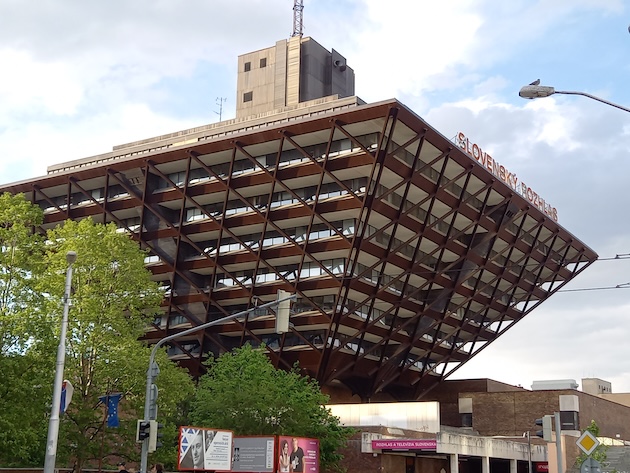
The Slovak Radio building in Bratislava, part of the RTVS public broadcaster. Credit: Ed Holt/IPS

The Slovak Radio building in Bratislava, part of the RTVS public broadcaster. Credit: Ed Holt/IPS

The Liberties report, compiled with 37 rights groups in 19 countries, comes as other media freedom watchdogs and rights groups warn of growing  concentration of media ownership, lack of ownership transparency, surveillance and violence against journalists in EU countries, government capture of public broadcasters, and rising restrictions on freedom of expression.

Press freedom watchdog Reporters Without Borders (RSF) released its annual World Press Freedom Index today (April 3, 2024), warning that politicians in some EU countries are trying to crack down on independent journalism. They single out a number of leaders as being “at the forefront of this dangerous trend,” including Hungary’s pro-Kremlin prime minister, Viktor Orban, and his counterpart in Slovakia, Robert Fico.

It also highlights concerns for press freedom in other places, such as Malta, Greece, and Italy, pointing out that in the latter—which fell in the Index’s rankings this year—a member of the ruling parliamentary coalition is trying to acquire the second biggest news agency (AGI), raising fears for future independence of media.

“One of the main themes of this year is that the institutions that should be protecting media freedom, for example, governments, have been undermining it,” Pavol Szalai, head of the EU/Balkans desk at RSF, told IPS.

Like Liberties, RSF has cited particular concern about media freedom in Hungary and Slovakia among EU states.

Media freedom has been on the decline in Hungary for more than a decade, as autocratic leader Orban has, critics say, steadily cracked down on independent journalism. His party, Fidesz, has de facto control of 80 percent of the country’s media, and while independent media outlets still exist, their sustainable funding is under threat as state advertising is funneled to pro-government outlets.

The government’s effective control of Hungary’s public broadcaster is another major concern.

“Capturing public broadcasters limits access to information and that can have a huge impact on formulating political opinions and then how people vote,” said Simon.

Hungary is also suspected of having arbitrarily monitored journalists using the controversial Pegasus software.

RSF and Liberties both say their worry is not just what is happening to media freedom in Hungary, but that what Orban has done has provided a blueprint for other autocratic leaders to follow.

“Leaders in Europe are being inspired by Orban in his war against independent media. Just look at Fico in Slovakia, who has declared war on independent media,” said Szalai.

For years, Fico has repeatedly attacked and denigrated independent media and journalists.

In 2018, investigative journalist Jan Kuciak—who had been looking into alleged corruption by people close to Fico’s government— and his fiancée Martina Kusnirova were murdered. Critics said Fico’s rhetoric against journalists had contributed to creating an atmosphere in society that allowed those behind the killings to believe they could act with impunity.

Independent journalists continue to face harassment and abuse from Smer MPs today.

Since being elected Prime Minister for the fourth time last autumn, Fico and the governing coalition led by his Smer party have continued their attacks. They also refuse to communicate with critical media, claiming they are biased.

It has also approved legislation—which is expected to be passed in parliament within weeks—that will see the country’s public broadcaster, RTVS, completely overhauled and, critics say, effectively under the control of the government.

“If the bill is passed and signed into law in its current form, RTVS will become a mouthpiece for government propaganda,” said Szalai.

The government has rejected criticism over the bill and argued changes to RTVS are necessary because it is no longer objective, is persistently critical of the government, and is not fulfilling its remit as a public broadcaster to provide balanced and objective information and a plurality of opinions. A senior official at the Slovak Culture Ministry who is among the favorites to take over as head of the public broadcaster in its new form has since suggested that people who support the flat-earth theory should be invited onto shows to air their opinions on the broadcaster.

The bill has led to public protests and threats of a mass strike from current RTVS employees.

However, against this grim backdrop, media watchdogs say new EU legislation provides hope for an improvement in media freedom.

The recently-passed European Media Freedom Act (EMFA), which takes full effect across the EU in August next year,  will, among others, ban governments from pursuing journalists to reveal their sources by deploying spyware, force media to disclose full ownership information, introduce transparency measures for state advertising, and checks on media concentration. It also provides a mechanism to prevent very big online platforms from arbitrarily restricting press freedom.

Another key measure in the legislation is that it enshrines the editorial independence of public service media, setting out that leaders and board members of public media organizations be selected through “transparent and non-discriminatory procedures for sufficiently long terms of office.”

“It is a good law that creates a very important base [for ensuring media freedom], which can be built on in the future. More safeguards [to media freedom] could be added to it in the future,” said Simon.

Szalai agreed, highlighting that the legislation was legally binding for member states. He admitted it had some shortcomings—for example, under some exceptions, journalists could be forced to reveal sources—but emphasized that it would take precedence over any national legislation, “and so governments cannot ignore it or try to get around it.”

But its implementation will be down to individual governments and authorities—something, that media freedom organizations have said must be closely watched.

A new EU body, the European Board for Media Services, is to be set up to oversee the implementation of the laws.

“It is important to make sure that the forces attacking media freedom are held back by this law. It will be up to the European Commission to hold governments to account on its implementation, and the Commission needs to consider press freedom as a priority after the European Parliament elections [in June] and to check on the EMFA’s implementation and take measures against any countries that violate it,” said Szalai.

IPS UN Bureau Report

IPS UN Bureau, IPS UN Bureau Report,

  Source

Civil Registration is Shaping World’s Largest Election Year With 76 Nations Going to the Polls

Asia-Pacific, Civil Society, Democracy, Global Governance, Headlines, Human Rights, IPS UN: Inside the Glasshouse, TerraViva United Nations

Opinion

A smiling Timorese casts his vote at the Second National Village Council (sucos) elections while an election worker looks on. Credit: UN Photo/Martine Perret

BANGKOK, Thailand, Apr 5 2024 (IPS) – Over four billion people will take to the polls in 2024 as 76 countries are set to hold elections. In Asia, this includes populous countries such as Bangladesh, India, Indonesia, Pakistan, and Russia.


These elections range from the world’s largest multi-day legislative election in India, to Indonesia, where the biggest single-day vote took place for the presidential poll in February. These elections will have lasting impacts for many years to come.

In order to vote, eligible citizens need to be included in voter lists. Accurate and credible voter registration is important to ensure trust in the electoral process. Voter lists represent consolidated, official lists of all persons eligible to vote.

But they are often costly and complicated endeavors. This is where civil registration and identity management is an integral structural support for voter registration. A strong Civil Registration and Vital Statistics (CRVS) system not only secures an individual’s legal identity and the resulting human rights, but also supports the collection of voter information, reinforcing the national voter list integrity by linking it with the civil register.

All voter registration systems are broadly categorized as “active” or “passive”. In countries employing ‘active’ systems, the responsibility lies on the shoulders of the individual to update their information which ensures their eligibility to vote. This in turn means that many eligible voters may never be included in the voter list.

The ‘passive’ system, on the other hand, is when voter lists are generated from existing databases such as civil or population registers. Globally, a total of 69 countries (40 per cent) extract data from a civil or population register for their national voter list.

While there is no definitive standard for how voter lists should be produced, countries with a robust and universal CRVS system stand to gain numerous benefits. For the voter, it reduces the burden of having a separate and potentially cumbersome process. For example, consider a woman who marries and subsequently changes her name and residence.

This affects which electoral district or subdivision she belongs to. A well-functioning population register which collects up-to-date information on the occurrence of vital events would facilitate the automatic update of the voter list, ensuring her inclusion in future elections.

Governments also benefit from voter lists established based on civil registers. It has the potential to incur significant savings in financial and human resources needed to compile an independent voter list, and also helps prevent inflated voter numbers as people are automatically removed upon their death.

Traditionally, in countries lacking a robust CRVS system, the electoral management body produces its own voter list, which also has some potential benefits. People who do not own legal identity documents may be included through community identification i.e. on the testimony of village chiefs or teachers.

The choice of voter registration system requires a careful balance between inclusion and accuracy, as well as consideration for the country context. However, robust CRVS/ID systems can contribute to the efficiency, inclusiveness, and accuracy of voter lists.

In the Asia-Pacific region, 15 countries rely solely on data extracted from population or civil registries, while a further eight countries create voter registration lists through a combination of register data and efforts by electoral management bodies.

However, many people are unable to vote because they lack the required ID. Marginalized population groups and people in vulnerable situations often remain ‘invisible’ to their government because their existence has never been recognized through birth registration, potentially creating a barrier for participation in electoral processes. Inclusive electoral processes go hand in hand with complete and universal legal identity.

In Vanuatu, electoral and civil registration authorities joined hands to digitally transform the civil registration system with an aim to produce accurate and credible voter lists, with support from UNDP/Vanuatu Electoral Environment Project (VEEP), funded by the Government of New Zealand.

Although the initial basis for developing a comprehensive civil register based on unique identity arose from the need for accurate voter lists, the initiative has had a far-reaching impact for the overall development of the country through digital transformation.

The new Integrated Identity Management System in Vanuatu is supported by legal reforms to digitally transform civil registration in Vanuatu and is becoming the digital backbone of the Government, as well as the private sector.

Multiple government departments and other partners such as Vanuatu Society for People with Disabilities, are working together on a campaign ‘Disability bai no limitim’ to increase the registration of persons with disabilities, ensuring that they have a national identity card and thus facilitating their right to vote.

The collaborative efforts to improve CRVS goes beyond Vanuatu, as exemplified by the Brisbane Accord Group and the Asia Pacific CRVS Partnership. ESCAP and UNDP are working with partners to support governments in achieving the shared regional vision of universal and responsive CRVS systems that facilitate the realization of their rights, support good governance, health and development.

Chloe Harvey is Associate Population Affairs Officer, Statistics Division, ESCAP; Tanja Sejersen is Statistician, ESCAP; Risa Arai is Programme Specialist (Legal Identity), Governance, BPPS, UNDP and Anne-Sofie Gehard is Chief Technical Adviser & Project Manager, Vanuatu Electoral Environment Project (VEEP), UNDP.

IPS UN Bureau

  Source

Democracy’s Contested Territory

Armed Conflicts, Civil Society, Crime & Justice, Democracy, Featured, Global, Headlines, Human Rights, Press Freedom, TerraViva United Nations

Opinion

Credit: Luis Acosta/AFP via Getty Images

MONTEVIDEO, Uruguay, Mar 19 2024 (IPS) – This year more than half the world’s population has the chance to go to the polls. That might make it look like the most democratic year ever, but the reality is more troubling. Too many of those elections won’t give people a real say and won’t offer any opportunity for change.


2024’s bumper election year comes as a record number of countries are sliding towards authoritarianism, and global advances in democratisation achieved over more than three decades have been all but wiped out. In 2023, no authoritarian state became a democracy, and while some countries made marginal improvements in the quality of their democracies – by improving civic space, making inroads on corruption or strengthening institutions – many more experienced often serious declines.

Nearly three quarters of humanity now live under authoritarian regimes. Defending democracy and holding political leaders to account is becoming harder as civic space is shutting down. The proportion of people living in countries with closed civic space, 30.6 per cent, is the highest in years.

The latest State of Civil Society Report, from global civil society alliance CIVICUS, shows how conflict is exacerbating this regressive trend. In war-torn Sudan, hopes for democracy, repeatedly denied since the 2019 overthrow of dictator Omar al-Bashir, receded further as elections were made impossible by the civil war between the military and militia that erupted last April. Russia’s sustained assault on Ukraine brought intensified repression of domestic dissent, and there were no surprises in the recent non-competitive vote that maintained Vladimir Putin’s grip on power.

The ineffectiveness of civilian governments in dealing with jihadist insurgencies has also been the justification used by military leaders to take or retain power in Central and West Africa. As a result, rule by junta is in danger of becoming normalised after decades in which it appeared on the verge of extinction. A ‘coup belt’ now stretches coast to coast across Africa. None of the states that fell victim to military rule in recent years have returned to civilian government, and two more – Gabon and Niger –joined their ranks last year.

Authoritarian regimes that experienced mass protest movements in recent years, including Iran, Nicaragua and Venezuela, have regained their footing and hardened their grip. In states long characterised by autocratic rule, many civil society activists, journalists and political dissidents have sought safety in exile to continue their work. But they often didn’t find it, with repressive states – China, Turkey, Tajikistan, Egypt and Russia are the worst five abusers –increasingly using transnational repression against them.

Many elections are held with no competition. Last year several non-democratic states of various kinds – including Cambodia, the Central African Republic, Cuba, Eswatini, Uzbekistan and Zimbabwe – held votes in which autocratic power was never in question. Voting was ceremonial, its purpose to add a veneer of legitimacy to domination.

Many more regimes that combine democratic and authoritarian traits have been home to recent elections with less predetermined results, where there was at least some chance of the ruling party being defeated. But incumbent advantage was reflected in the fact that change rarely materialised, as seen in Nigeria, Paraguay, Sierra Leone and Turkey. The outlier was Maldives, where voters have a history of rejecting sitting presidents.

Some hybrid regimes, notably El Salvador, experienced further democratic backsliding through the erosion of freedoms and institutional checks and balances – a road typically travelled by populist authoritarians who claim to speak in the name of the people and insist they need to concentrate power to deal with crises.

When voters do have a genuine say, in free and fair elections, they’re increasingly rejecting mainstream parties and politicians. In a time of economic uncertainty and insecurity, many express disappointment with what democracy is offering them. Anti-rights political entrepreneurs are successfully exploiting their anxieties by scapegoating migrants and attacking women’s and LGBTQI+ people’s rights. Right-wing populists using such tactics recently took control of Argentina, came first in elections in the Netherlands and Switzerland and entered government in Finland. Even where they don’t take office, far-right forces often succeed in shifting the political centre by forcing others to compete on their terms. They’re expected to make big gains in the European Parliament elections in June 2024.

Polarisation is on the rise, fuelled by disinformation, conspiracy theories and hate speech. These are made so much easier by AI-powered technologies that are spreading and evolving faster than they can be regulated. The first elections of 2024, including those in Bangladesh and Indonesia, offered cautionary tales of the unprecedented levels of manipulation that AI can enable. We’re likely to see a lot more of this in 2024.

But our research findings support our hope, because they show movement isn’t all in one direction. In Guatemala, a new party born from mass anti-corruption protests was the unlikely 2023 election winner, and people mobilised in numbers to defend the result in the face of powerful political and economic elites. Despite China’s concerted attempts to derail Taiwan’s election, including through cyberattacks, people vindicated their right to have a say in their own future. In Poland, a unity government pledging to restore civic freedoms came to power after eight years of right-wing nationalist rule, offering new potential for civil society to partner in retrieving democratic values and respecting human rights. In Mexico, which is among the many countries going to the polls in 2024, people mobilised in numbers against the threat posed by a democratically elected leader seeking to override checks and balances. Given the dangers it may entail, civil society is pushing for transnational regulation of AI.

Things would be much worse were it not for civil society, which continues to mobilise against restrictions on freedoms, counter divisive rhetoric and strive for the integrity of electoral processes. Throughout 2024, civil society will keep pushing for elections to take place in free and fair conditions, for people to have the information they need, for votes to be properly counted, for losers to accept defeat and for winners to govern in the common good.

Inés M. Pousadela is CIVICUS Senior Research Specialist, co-director and writer for CIVICUS Lens and co-author of the State of Civil Society Report.

  Source

Freedom of Speech Is Silenced in Nicaragua

Civil Society, Democracy, Editors’ Choice, Featured, Freedom of Expression, Headlines, Human Rights, Latin America & the Caribbean, Press Freedom, Regional Categories, TerraViva United Nations

Press Freedom

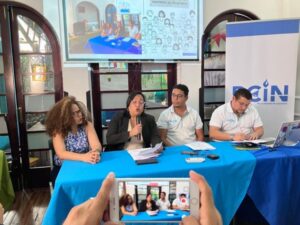
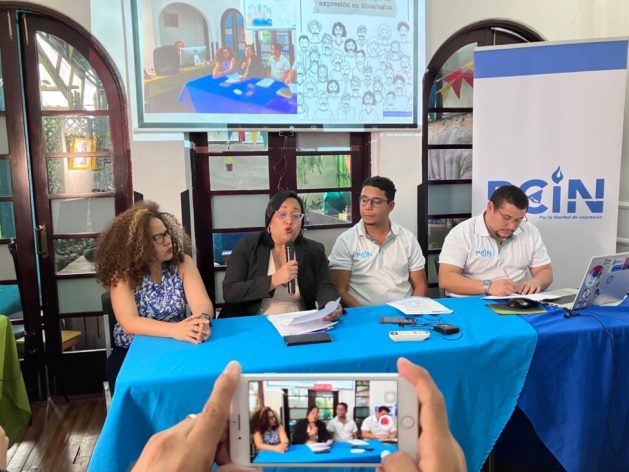
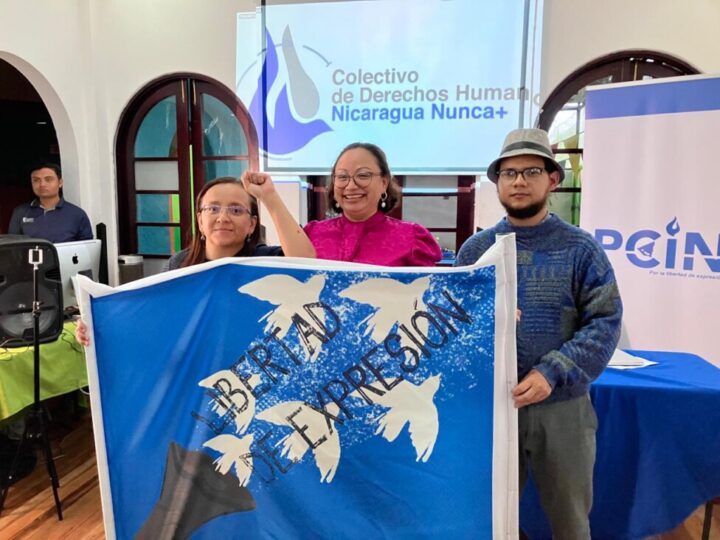
Abigail Hernández (left) appears at a press conference with journalist Wendy Quintero, a member of Independent Journalists and Communicators of Nicaragua at the headquarters of the Nicaragua Nunca Más Rights Collective. CREDIT: José Mendieta / IPS

Abigail Hernández (left) appears at a press conference with journalist Wendy Quintero, a member of Independent Journalists and Communicators of Nicaragua at the headquarters of the Nicaragua Nunca Más Rights Collective. CREDIT: José Mendieta / IPS

MANAGUA, Mar 5 2024 (IPS) – Almost six years after the outbreak of the April 2018 protests, there are no signs left in Nicaragua of the violence that reigned in those days. There is no graffiti on walls or banners with demands or opinions against the leftist regime that has ruled the country since 2007.


Nor are there newspapers or opinion programs or debates on radio and television, let alone press conferences or public rallies.

“The Ortega and Murillo regime’s repressive mechanisms have escalated to dramatic and unimaginable levels. A simple opinion issued on social networks or a criticism of the regime could land you in jail or exile.” — Martha Irene Sánchez

The city of Managua, the capital, is always bustling and active, with markets and shopping malls open at all hours; traffic is usually disorderly and police patrols roam the streets and avenues at all times.

At noon every day, on all radio and television stations, the tired, quiet voice of Vice President Rosario Murillo is heard giving the government’s news, social achievements and propaganda messages such as phrases of love and praise to God.

The program, which has no specific name, is broadcast from Channel 4, the historical property of the Sandinista National Liberation Front (FSLN), the ruling party, to which the other state media are linked. The private media outlets controlled by the presidential family are also connected, together with dozens of radio stations and portals on social networks.

It first emerged in 2007 as “a message from comrade Rosario, from the Communication and Citizenship Council of the People’s President.”

“Here we are, on Valentine’s Day, with love, friendship, and for us, love and peace, because it is with love and in peace that we can walk ahead, move forward, building the future of all, a fraternal future,” she said on Feb. 13.

Murillo has been Nicaragua’s vice president since she was appointed in 2016 by her husband, President Daniel Ortega, the veteran former guerrilla who has been in office since November 2006.

Murillo is also the regime’s spokesperson and the only authorized voice, among the population of 6.7 million inhabitants of this Central American country, who can speak publicly and freely about anything. No one else can do so.

Freedom of expression in Nicaragua is one of the most repressed and abused rights, said journalist Abigail Hernández, director of the Galería News platform.

Journalist and former political prisoner Lucía Pineda Úbau, together with Martha Sánchez, take part in a protest by Nicaraguan journalists exiled in Costa Rica. CREDIT: José Mendieta / IPS

Journalist and former political prisoner Lucía Pineda Úbau, together with Martha Sánchez, take part in a protest by Nicaraguan journalists exiled in Costa Rica. CREDIT: José Mendieta / IPS

Her opinion, tellingly sent via an encrypted messaging application, is based on experience: three years’ exile.

“The media and journalists are a good thermometer for measuring the quality of freedom of expression,” Hernández told IPS.

“When we have less and less access to sources of information, when they limit us from reporting from the streets, when we can’t take photos or videos freely, when we can’t do our work inside the country, it reveals that there is no freedom of expression,” she said.

She is part of a generation of 242 journalists who have had to go into exile since the 2018 protests, which began against Social Security reforms and ended in a bloodbath provoked by military and police forces, with more than 355 civilian deaths, according to the Inter-American Commission on Human Rights (IACHR).

Journalist Martha Irene Sánchez, director of the República 18 platform, holds similar views, also expressed from exile.

“The scenarios for exercising freedom of the press and freedom of expression in Nicaragua have not improved since 2018; on the contrary, we are encountering more and more hostility,” she told IPS.

She is also a member of Independent Journalists and Communicators of Nicaragua (PCIN), a union organization that emerged after the protests and all of whose members went into exile.

“The Ortega and Murillo regime’s repressive mechanisms have escalated to dramatic and unimaginable levels. A simple opinion issued on social networks or a criticism of the regime could land you in jail or exile,” Sánchez said.

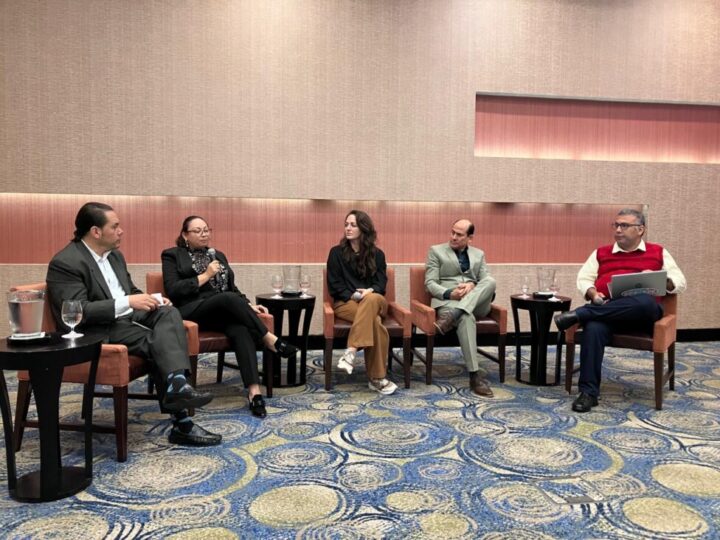
A forum for the presentation of the report on freedom of expression and press freedom in Nicaragua, released in September 2023 in San José, Costa Rica. The panel included journalists from Nicaragua from the Connectas platform, including FLED director Guillermo Medrano, (second-right). CREDIT: José Mendieta / IPS

A forum for the presentation of the report on freedom of expression and press freedom in Nicaragua, released in September 2023 in San José, Costa Rica. The panel included journalists from Nicaragua from the Connectas platform, including FLED director Guillermo Medrano, (second-right). CREDIT: José Mendieta / IPS

She cited the example of Victor Ticay, a local journalist in Nandaime, a municipality in the northwestern department of Granada, who went out one day to cover a procession during the Catholic Holy Week of 2023.

The event had not been authorized by the police, whose agents interrupted the religious ceremony and Ticay filmed the parishioners running away from the patrol cars through the streets of the town.

He was arrested, charged with treason and spreading false news and sentenced to eight years in prison.

Guillermo Medrano, director of the Foundation for Freedom of Expression and Democracy (FLED), explained to IPS that between 2020 and 2021, the Nicaraguan regime passed a series of laws criminalizing the practice of journalism and freedom of expression.

A study that FLED released in September 2023 in San José, Costa Rica, a country bordering Nicaragua and the center of the country’s exile community, documented 1329 press freedom violations, mostly perpetrated by state agents in the 2018-2023 five-year period.

The actions were taken against 338 Nicaraguan journalists and 78 media outlets, between April 2018 and April 2023.

They included the police intervention of several media outlets such as 100% Noticias, Confidencial, Trinchera de la Noticia, Radio Darío and La Prensa, the last newspaper circulating in Nicaragua until August 2022.

According to Medrano, the Special Law on Cybercrime, passed in October 2020, provides for prison sentences for the use of information “which in normal democracies should be freely accessible to citizens and the public.”

In theory, the main objective of this legislation is the prevention, investigation, prosecution and punishment of crimes committed by means of information and communication technologies to the detriment of natural or legal persons.

The press freedom advocate also pointed out that the Ortega-Murillo administration, which controls all state institutions and branches of power, as well as the security forces, established the Law for the Defense of the Rights of the People to Independence, Sovereignty and Self-Determination for Peace, effective since Dec. 22, 2020.

This law gives discretion to judges and prosecutors in terms of the crime of “treason”, which orders the banishment and denationalization of the accused, as well as life imprisonment through a reform of the penal system.

More than 180 people have already been prosecuted under these laws and at least 22 journalists were stripped of their citizenship and banished in 2023.

“Under these laws, freedom of speech and the press has become a high-risk constitutional right for those who exercise it within Nicaragua,” Medrano denounced.

A report by the regional organization Voces del Sur says that Nicaragua ended 2023 with new forms of repression and threats to press freedom applied through banishment, confiscations, illegal detentions and harassment and surveillance of the families of journalists working in exile.

The outlook, the report warns, is of greater silence about social issues.

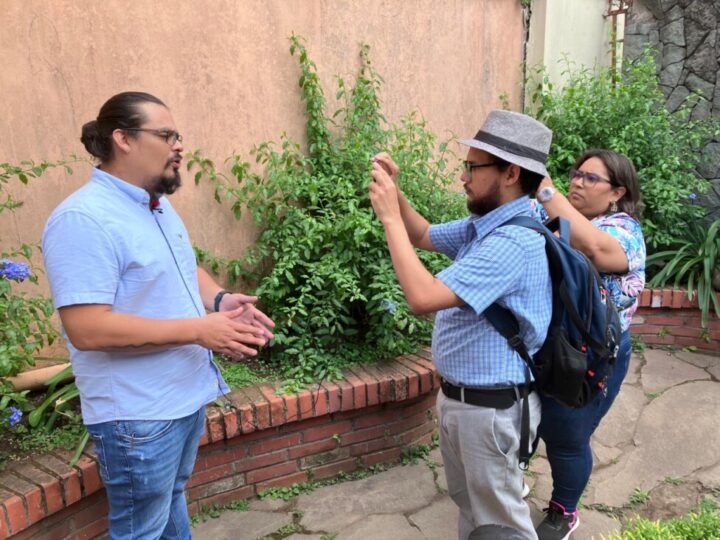
Nicaraguan journalists conduct interviews under risk of persecution or criminalization, denounced several reporters in San José, Costa Rica, in August 2023. CREDIT: José Mendieta / IPS

Nicaraguan journalists conduct interviews under risk of persecution or criminalization, denounced several reporters in San José, Costa Rica, in August 2023. CREDIT: José Mendieta / IPS

According to the report, between 2018 and the end of 2022, 54 media outlets disappeared, including 31 radio stations, 15 television channels and eight print media outlets. Of that total, 16 media outlets were confiscated, including La Prensa, the country’s main daily newspaper.

“Sources, even under conditions of anonymity, are harder and harder to find, and the saddest thing is that the State, through its officials, continues to be the main victimizer of citizens’ rights of expression and journalists’ press rights,” Medrano complained.

The non-governmental Human Rights Collective Nicaragua Nunca Más, made up of human rights defenders and activists in exile, states that the Ortega-Murillo administration “has carried out an unprecedented attack on freedom of expression in this country.”

The organization reports that of 28 resolutions of precautionary measures for journalists in Latin America, which have been issued since 2018 by the IACHR on freedom of expression, 15 have been issued for Nicaragua.

However, it says that “none of the precautionary measures” have been complied with by the State and, on the contrary, harassment against the targets has increased.

“And that reveals to us the seriousness of the problem of a small country with disproportionate and unacceptable restrictions on fundamental freedoms,” said one of the agency’s advocates, on condition of anonymity for security reasons.

These complaints find no responses within Nicaragua, because with the exception of Murillo, no one is authorized to answer, but can simply repeat the official discourse: “Nicaragua lives in peace and security.”

  Source